Every successful interview starts with knowing what to expect. In this blog, we’ll take you through the top Proficiency in English and Other Languages interview questions, breaking them down with expert tips to help you deliver impactful answers. Step into your next interview fully prepared and ready to succeed.
Questions Asked in Proficiency in English and Other Languages Interview
Q 1. Describe your experience translating technical documents.
Translating technical documents requires a unique blend of linguistic skill and subject matter expertise. It’s not just about knowing the languages; it’s about understanding the underlying concepts and terminology. My experience involves translating documents across various technical fields, including engineering, software development, and medicine. I approach each project by first thoroughly researching the subject matter to grasp the nuances of the text. This involves consulting relevant documentation, glossaries, and even speaking with subject matter experts if necessary. Then, I meticulously translate the document, paying close attention to accuracy, consistency, and the preservation of the original meaning and tone. I’ve successfully translated manuals, specifications, patents, and research papers, always prioritizing clarity and precision for the target audience.
For instance, translating a software manual requires understanding programming concepts and technical jargon to accurately convey the intended instructions. Misinterpreting a single command could lead to disastrous consequences for the user. Therefore, I prioritize rigorous fact-checking and verification to ensure accuracy and avoid any errors.
Q 2. What translation software are you proficient in?
I am proficient in several Computer-Assisted Translation (CAT) tools, including SDL Trados Studio, memoQ, and Across. These tools significantly enhance the efficiency and consistency of my translations. They allow for the creation and management of translation memories, which store previously translated segments, ensuring consistency across projects. They also feature terminology management systems that help maintain consistent terminology, crucial for technical documents. Additionally, I’m comfortable using Google Translate and DeepL as pre-translation aids, although I always thoroughly review and edit the output to ensure accuracy and quality, never relying solely on machine translation for critical documents.
Q 3. How do you handle ambiguity in translation?
Ambiguity in translation is a common challenge. I handle it through a systematic approach. Firstly, I identify the source of the ambiguity, whether it’s a vague word choice, a grammatical structure, or a cultural difference. Then, I consult various resources such as dictionaries, glossaries, and online databases to understand the intended meaning within the specific context. When possible, I contact the client or subject matter expert to clarify the intended meaning. If clarification isn’t possible, I will provide multiple possible translations along with an explanation of each, allowing the client to choose the best option given the context. My goal is always transparency and clear communication to avoid any misinterpretations.
For example, a word like “bank” could mean a financial institution or the side of a river. Context is key. By analyzing the surrounding text and identifying relevant clues, I can determine the intended meaning and provide an accurate translation.
Q 4. Explain your approach to interpreting in a high-pressure situation.
Interpreting in high-pressure situations requires quick thinking, adaptability, and a calm demeanor. My approach involves active listening, concise note-taking, and clear, precise communication. I focus on understanding the core message and conveying it accurately, without adding personal interpretation or unnecessary details. Before the interpretation begins, I thoroughly prepare by researching the topic and familiarizing myself with any relevant terminology. During the interpretation, I maintain eye contact with the speaker and actively listen to ensure I understand every nuance of their message. I also pay close attention to body language and tone to fully grasp the meaning being conveyed. If needed, I will politely request clarification on unclear points to ensure accuracy. I practice mindfulness techniques to manage stress and ensure my composure remains intact throughout the process.
Q 5. What strategies do you use to improve your English proficiency?
Improving my English proficiency is an ongoing process. I utilize a multi-faceted approach, including:
- Reading extensively: I regularly read diverse materials like novels, newspapers, and academic journals to expand my vocabulary and understanding of different writing styles.
- Active listening: I listen to English podcasts, watch movies and TV shows, and engage in conversations to improve my comprehension and pronunciation.
- Writing practice: I regularly write in English, whether it’s journaling, drafting emails, or working on translation projects.
- Seeking feedback: I actively seek feedback on my writing and speaking from native English speakers to identify areas for improvement.
- Using language learning apps: I utilize apps like Duolingo or Memrise to reinforce vocabulary and grammar.
Q 6. How do you adapt your communication style for different audiences?
Adapting my communication style to different audiences is crucial for effective communication. I tailor my language, tone, and level of formality to match the audience’s background, knowledge level, and expectations. For example, when communicating with technical experts, I would use precise terminology and a formal tone. Conversely, when communicating with a general audience, I would use simpler language and avoid jargon. I also consider the cultural context and adjust my communication accordingly to ensure clarity and avoid misunderstandings. This includes being mindful of cultural norms regarding formality, directness, and humor.
Q 7. Describe a time you had to overcome a language barrier.
During a project involving the translation of medical research for a pharmaceutical company, I encountered a significant language barrier involving a very specific medical term in the source language. No standard dictionary or online resource provided a precise equivalent in the target language. This presented a challenge to ensure accurate and unambiguous translation. To overcome this, I consulted with several medical professionals specializing in the relevant field. Through a collaborative effort, we established the most accurate and appropriate equivalent terminology, ensuring the integrity and accuracy of the final translation. This experience highlights the importance of collaboration and the utilization of expert knowledge in complex translation projects. It also demonstrated the importance of seeking multiple perspectives to resolve ambiguity in specialized fields.
Q 8. What is your experience with different dialects or accents?
My experience with dialects and accents is extensive. I’ve worked with numerous variations of English, including American, British, Australian, and Indian English, each possessing its own unique vocabulary, pronunciation, and grammatical nuances. Beyond English, I have significant exposure to various dialects within Spanish (e.g., Castilian, Mexican, Argentinian), French (e.g., Parisian, Quebecois), and Mandarin (e.g., Cantonese, Mandarin). Understanding these variations is crucial for accurate translation and localization. For example, a direct translation of a slang term might not resonate with the target audience; therefore, I use my knowledge of regional variations to select appropriate equivalents that maintain the intended meaning and cultural context.
This experience has trained me to be attentive to subtle differences in intonation, phrasing, and idiomatic expressions, enabling me to capture the true essence of the source material and convey it effectively in the target language. I actively use online resources and dictionaries specializing in dialects, and I even consult with native speakers when tackling particularly challenging dialects to ensure accuracy.
Q 9. How do you ensure accuracy in your translations?
Ensuring accuracy in translation is paramount. My approach involves a multi-step process. Firstly, I conduct thorough research to understand the context of the source text. This includes researching the subject matter, identifying any specialized terminology, and understanding the intended audience. Then, I employ a combination of strategies, including using high-quality dictionaries and glossaries, verifying translations with multiple reliable sources, and, critically, engaging in self-editing and proofreading.
For instance, when translating a technical document, I might consult specialized engineering dictionaries and cross-reference terms with established industry standards. If a word has multiple possible translations, I carefully evaluate which option best conveys the meaning and tone within the specific context. After completing a draft, I meticulously review it, checking for errors in grammar, spelling, punctuation, and style. Finally, a second pair of eyes – a colleague or a native speaker – reviews my work to ensure accuracy and fluency.
Q 10. Explain your understanding of terminology management.
Terminology management is the systematic process of identifying, defining, and consistently using terms within a specific domain or project. It’s like building a specialized dictionary for a particular project or company. This involves creating and maintaining a controlled terminology database, also known as a term base. Such a term base contains consistent translations for specific terms and concepts, ensuring consistency throughout all translated documents.
Imagine translating a series of marketing materials for a software company. Inconsistently translating a key term like “user interface” across different documents would lead to confusion. A well-managed terminology database ensures that “user interface” is consistently translated as, for example, “interfaz de usuario” in Spanish, across all materials. This consistency is vital for maintaining brand identity and clear communication. I’m proficient in using various terminology management tools to build and maintain these databases, ensuring efficiency and accuracy in large-scale translation projects.
Q 11. How familiar are you with the principles of localization?
Localization is more than just translation; it’s adapting a product or content to a specific target market’s cultural and linguistic preferences. It’s about making the product feel like it was created for that specific audience. This encompasses not only translating the text but also adapting elements like dates, numbers, currency, measurements, images, and even humor to resonate with the target culture.
For example, simply translating a marketing slogan might not be sufficient. If the original slogan uses humor based on a Western cultural reference, a direct translation might not be funny, or worse, might be offensive, to the target audience. Localization requires adapting the message to the cultural nuances of the target market to maintain its impact and relevance. I have extensive experience in this area, considering factors like cultural sensitivity, local regulations, and market-specific conventions in my work.
Q 12. What are your preferred methods for quality assurance in translation?
Quality assurance (QA) in translation is crucial. My preferred methods involve a combination of techniques. First, I always perform a thorough self-check, reviewing my work for grammar, style, and accuracy. Second, I utilize peer review, where a colleague reviews my work from a fresh perspective, identifying any errors I might have overlooked. Third, I sometimes employ back-translation—where the translated text is translated back into the source language by a different translator—to identify discrepancies and ensure accuracy.
Depending on the project’s complexity, I might also engage native speakers in the target language for a final quality check, ensuring that the text flows naturally and accurately reflects the original intent. In addition, I utilize CAT tools that incorporate automated quality checks for grammar and consistency. Finally, client feedback is vital; incorporating their comments is a key part of my QA process.
Q 13. How do you manage large translation projects?
Managing large translation projects effectively requires a structured approach. I typically start by breaking down the project into smaller, manageable tasks. This involves segmenting the text, assigning tasks to individual translators based on their expertise and language skills, and establishing clear deadlines. I leverage project management tools to track progress, communicate updates, and manage resources efficiently. These tools help me maintain a clear overview of the project’s timeline and budget.
Communication is key. Regular communication with the client and the translation team keeps everyone informed and on the same page. I use collaborative platforms for easy file sharing and feedback exchange. Furthermore, I employ quality control measures at each stage of the project, ensuring that all translated segments are reviewed and approved before final delivery. This approach enhances efficiency and maintains the highest standards of quality, even for large and complex projects.
Q 14. What is your experience with CAT tools (Computer-Assisted Translation)?
I am highly proficient in using various Computer-Assisted Translation (CAT) tools, including SDL Trados Studio, MemoQ, and Across. These tools significantly enhance my efficiency and consistency by providing features such as translation memory (TM), terminology management, and quality assurance checks. Translation memory stores previously translated segments, automatically suggesting translations for recurring phrases and terms, significantly speeding up the translation process and ensuring consistency.
For example, if I have translated “user interface” as “interfaz de usuario” in a previous project, the TM in my CAT tool will automatically suggest this translation when I encounter the same phrase in a new project. The terminology management features help maintain consistent terminology across all projects, ensuring accuracy and brand consistency. The built-in quality assurance features help to identify potential errors, enhancing the overall quality of the translated text. My experience with CAT tools allows me to streamline the translation process and deliver high-quality results efficiently.
Q 15. How do you handle conflicting terminology in different languages?
Conflicting terminology across languages is a common challenge in translation. It arises from differences in cultural contexts, historical development of words, and the lack of perfect one-to-one equivalents. My approach involves a multi-pronged strategy:
- Research and Contextualization: I thoroughly research the specific domain and context of the text. For instance, a ‘bank’ in English could refer to a financial institution or the side of a river. Understanding the context helps determine the correct translation.
- Utilizing Terminology Databases and Glossaries: I leverage specialized dictionaries, glossaries, and online resources to find the most accurate and consistent translations for technical terms and industry-specific jargon. This ensures uniformity throughout a document.
- Consultation with Subject Matter Experts (SMEs): When faced with particularly complex or ambiguous terms, I consult with experts in the relevant field to clarify meaning and ensure accurate translation. This is crucial, especially for legal or medical texts.
- Note-taking and Consistency: I meticulously maintain a glossary of terms and their translations throughout a project, ensuring consistency even in long documents.
For example, translating legal documents requires precision. A seemingly minor difference in terminology can drastically alter the legal meaning. Consulting legal experts and using established legal glossaries is paramount to prevent misinterpretations and potential legal issues.
Career Expert Tips:
- Ace those interviews! Prepare effectively by reviewing the Top 50 Most Common Interview Questions on ResumeGemini.
- Navigate your job search with confidence! Explore a wide range of Career Tips on ResumeGemini. Learn about common challenges and recommendations to overcome them.
- Craft the perfect resume! Master the Art of Resume Writing with ResumeGemini’s guide. Showcase your unique qualifications and achievements effectively.
- Don’t miss out on holiday savings! Build your dream resume with ResumeGemini’s ATS optimized templates.
Q 16. Describe your experience with different translation methodologies (e.g., human vs. machine translation).
My experience encompasses both human and machine translation, acknowledging the strengths and limitations of each approach. Machine translation (MT) tools are excellent for initial drafts, especially for large volumes of text, providing a quick overview and identifying potential issues. However, they often lack nuance and accuracy, especially with idiomatic expressions and cultural references.
Human translation, on the other hand, is essential for ensuring accuracy, fluency, and cultural appropriateness. I utilize a blend of methodologies:
- Post-editing Machine Translation: For larger projects, I often use MT as a starting point, meticulously reviewing and correcting the output to ensure accuracy and natural language flow. This is a cost-effective approach for high-volume tasks.
- Human Translation from Scratch: For documents requiring the utmost accuracy and precision (like legal or medical texts), I undertake translation from scratch. This guarantees the highest quality and avoids the inherent limitations of MT.
- Translation Memory (TM): I leverage TM software to maintain consistency across multiple translation projects. This allows me to reuse previously translated segments and improve efficiency while maintaining consistent terminology.
The choice of methodology depends on the project’s specific needs, budget, and timeline. A balanced approach combining the strengths of both human and machine translation often yields the most effective results.
Q 17. How do you maintain confidentiality when handling sensitive information?
Confidentiality is paramount in my work. I adhere to strict protocols to protect sensitive information. My practices include:
- Non-Disclosure Agreements (NDAs): I readily sign NDAs to legally protect client information.
- Secure Data Handling: I use encrypted storage solutions for all client data, both on my personal devices and on any cloud-based storage. I encrypt files before transfer and securely delete all sensitive information upon project completion.
- Limited Access: I restrict access to sensitive materials to only myself and, if necessary, authorized collaborators. I never share client information with unauthorized parties.
- Data Backup and Disaster Recovery Plans: I maintain regular backups of my work, storing them securely to prevent data loss and ensure business continuity.
- Professional Conduct: I follow professional ethical guidelines, ensuring responsible handling of all client materials.
I treat all client information with the utmost discretion, recognizing the importance of safeguarding sensitive data.
Q 18. Explain your understanding of cultural nuances in communication.
Understanding cultural nuances is crucial for effective communication and accurate translation. It goes beyond simply knowing the words; it’s about understanding the underlying cultural context, values, and communication styles.
For example, directness in communication is valued in some cultures, while indirectness is preferred in others. Humor, idioms, and metaphors also vary significantly across cultures. What might be considered humorous in one culture could be offensive in another. Similarly, a common idiom in one language may not have a direct equivalent in another, requiring creative adaptation for accurate translation.
My approach to handling cultural nuances includes:
- Cultural Research: I research the target culture thoroughly before undertaking a translation project. This includes understanding social norms, values, and communication styles.
- Adaptation, Not Literal Translation: I prioritize conveying the meaning and intent of the source text, rather than producing a literal word-for-word translation. This ensures the translated text is culturally appropriate and resonates with the target audience.
- Sensitivity and Awareness: I maintain sensitivity and awareness of potential cultural differences and avoid using language that could be considered offensive or inappropriate in the target culture.
By considering cultural context, I ensure that my translations are not only accurate but also culturally appropriate and effective.
Q 19. How do you handle requests for urgent translations?
Handling urgent translation requests involves a structured approach that prioritizes efficiency and quality.
- Clear Communication: I immediately clarify the scope of the project, the required turnaround time, and the client’s specific needs. This ensures I understand the urgency and expectations.
- Prioritization and Resource Allocation: I prioritize urgent tasks, potentially adjusting my schedule to accommodate the deadline. If necessary, I may enlist the help of colleagues or other trusted translators to expedite the process.
- Efficient Workflow: I utilize efficient translation tools and techniques to maximize productivity. This includes leveraging translation memory, CAT tools, and other productivity enhancements.
- Quality Control: Despite the urgency, I never compromise on quality. I perform thorough proofreading and editing to ensure accuracy and fluency.
- Transparent Communication: I maintain open communication with the client throughout the process, keeping them informed of my progress and addressing any concerns promptly.
While urgency necessitates speed, I believe in maintaining a balance between speed and quality. Open communication and efficient work practices are crucial to successfully handling urgent translation requests.
Q 20. What is your experience with interpreting legal or medical texts?
I have experience translating legal and medical texts, understanding the critical importance of accuracy and precision in these fields. These types of texts demand meticulous attention to detail and a deep understanding of the relevant terminology and legal/medical frameworks.
My approach includes:
- Specialized Training and Resources: I have undertaken specialized training in legal and medical translation, and I regularly consult authoritative resources, including legal dictionaries, medical glossaries, and relevant legislation.
- Collaboration with Experts: I collaborate with legal and medical professionals when required to clarify terminology, ensure accuracy, and address any ambiguities.
- Strict Adherence to Style Guides: I meticulously adhere to relevant style guides and formatting conventions to ensure consistency and professionalism.
- Quality Assurance: I conduct thorough quality checks to ensure the translated text is not only accurate but also legally and medically sound.
Translating legal or medical texts requires a high level of expertise and attention to detail. I recognize the serious implications of errors and apply rigorous procedures to minimize the risks of misinterpretations and potential harm.
Q 21. What is your level of proficiency in each language you claim to speak?
My language proficiency is assessed using the widely accepted Common European Framework of Reference for Languages (CEFR) scale. I will list my proficiency for each language I claim to speak, using the CEFR levels (A1-C2, with C2 being the highest):
- English: C2 (Native)
- Spanish: C1 (Advanced)
- French: B2 (Upper-Intermediate)
- German: B1 (Intermediate)
(This is an example; you should replace these with your actual languages and proficiency levels.) I am confident in my ability to handle diverse translation tasks depending on the complexity and specific requirements of the project. For specialized fields, I will clearly communicate my proficiency level and suggest alternatives or collaborations if necessary to ensure the highest quality outcome.
Q 22. Describe your experience working within a global team.
My experience working in global teams has been incredibly rewarding. I’ve been fortunate to collaborate with individuals from diverse linguistic and cultural backgrounds on projects ranging from international marketing campaigns to the localization of software. This involved not only seamless communication but also a deep understanding of the nuances that can affect project outcomes. For example, on a recent project involving a marketing campaign in multiple countries, I worked closely with a team spread across three continents. We utilized project management software to stay organized, and I took the lead in ensuring all materials were translated accurately and culturally adapted to resonate with the target audiences in each region. This included adjusting phrasing to reflect local idioms and sensitivities, and adapting the visual elements to avoid any cultural misinterpretations.
Successful global teamwork hinges on clear communication, mutual respect, and a willingness to adapt to differing work styles. I actively participate in discussions, offer constructive feedback, and ensure everyone feels heard and valued, regardless of their background. Effective communication tools like video conferencing and collaborative document editing platforms are also crucial for maintaining transparency and efficiency.
Q 23. How do you manage deadlines and prioritize tasks in a fast-paced environment?
Managing deadlines and prioritizing tasks in a fast-paced environment requires a structured approach. I employ a combination of time management techniques, prioritization methods, and proactive communication. I begin by breaking down large projects into smaller, manageable tasks, assigning each a deadline. I use tools like project management software (e.g., Asana, Trello) to visualize the workload, track progress, and identify potential bottlenecks. I prioritize tasks using methods like the Eisenhower Matrix (urgent/important), focusing on high-impact activities first. When faced with competing deadlines, I proactively communicate with stakeholders to re-negotiate timelines or adjust priorities if needed, preventing unexpected delays. For example, when faced with overlapping deadlines for two major translation projects, I communicated with my team and clients, explaining the situation and proposing a revised timeline that ensured both projects could be completed to a high standard without compromising quality.
Q 24. What resources do you use to improve your language skills?
Continuously improving my language skills is a priority. My resource toolkit includes a variety of approaches. I actively engage in language learning apps (Duolingo, Memrise) to reinforce vocabulary and grammar. I immerse myself in authentic language materials such as books, movies, and podcasts, focusing on different dialects and registers. I also engage in conversation practice with native speakers, both formally (language exchange partners) and informally (through online communities). Professional development workshops and online courses focusing on specific areas, such as technical translation or interpreting, allow me to hone my skills in particular domains. Finally, I keep a detailed vocabulary journal, noting new words and phrases, with their context and usage examples.
Q 25. How do you adapt your communication to suit different cultural backgrounds?
Adapting communication to suit different cultural backgrounds is paramount. This involves being mindful of cultural nuances in communication styles, including verbal and nonverbal cues. For instance, direct communication might be considered rude in some cultures, while indirect communication might be misinterpreted as evasiveness in others. I study the cultural contexts of my target audience(s) before engaging in communication. This involves research into common communication styles, etiquette, and potential cultural sensitivities. For example, when working with a client from Japan, I learned about the importance of indirect communication and building strong relationships before discussing business matters. This involved more elaborate greetings and small talk than I might typically engage in. I also strive to use inclusive language, avoiding idioms or slang that might not be easily understood or might carry unintended negative connotations.
Q 26. Describe your understanding of linguistic theory.
My understanding of linguistic theory encompasses various key areas. I have a solid grasp of phonetics and phonology (the study of speech sounds), morphology (the study of word formation), syntax (the study of sentence structure), semantics (the study of meaning), and pragmatics (the study of how context influences meaning). I understand the distinctions between descriptive and prescriptive linguistics, recognizing that language is constantly evolving. My knowledge extends to different linguistic models, including generative grammar and functional grammar. This theoretical framework informs my practical approach to translation and interpretation, ensuring accuracy, fluency, and cultural appropriateness. For instance, my knowledge of syntax helps me understand sentence structure variations across languages and translate meaning effectively, avoiding grammatical errors in the target language. Understanding semantics allows me to select words that accurately convey the intended meaning in the context.
Q 27. How do you ensure consistency in style and terminology across your work?
Consistency in style and terminology is crucial for professional work. I employ several strategies to ensure this. First, I develop a style guide outlining preferred terminology, grammar rules, and formatting conventions specific to the project or client. This guide is shared with the entire team and consistently followed. Second, I use translation memory tools (CAT tools) that store previously translated segments, ensuring consistency across documents. Third, I leverage terminology databases to ensure consistent usage of technical terms. For projects requiring multiple translators, regular communication and collaboration are vital for maintaining a unified style and terminology. For instance, on a large-scale technical translation project, we established a central terminology database accessible to all translators. This ensured consistent use of specialized terms throughout all translated documents, avoiding discrepancies and potential misunderstandings.
Q 28. What are your salary expectations?
My salary expectations are commensurate with my experience and skills in the field of language proficiency and global communication. Considering my expertise in multiple languages, my strong understanding of linguistic theory and my proven track record in delivering high-quality work within demanding environments, my salary expectation is within the range of [Insert Salary Range] annually. This is based on my research of industry standards for professionals with similar qualifications and experience, and takes into account factors such as the specific requirements and responsibilities of the position. I am open to further discussion regarding compensation based on a detailed job description and the specific requirements of the role.
Key Topics to Learn for Proficiency in English and Other Languages Interview
- English Grammar & Usage: Mastering grammar rules, punctuation, and style for clear and effective communication. This includes understanding sentence structure, tenses, and common grammatical errors.
- Vocabulary & Idioms: Expanding your vocabulary to encompass a wide range of topics and situations. Practice using idioms appropriately to demonstrate fluency and sophistication.
- Written Communication Skills: Developing proficiency in writing clear, concise, and persuasive emails, reports, and other professional documents. Practice adapting your writing style to different audiences and purposes.
- Oral Communication Skills: Honing your ability to articulate thoughts clearly and confidently in both formal and informal settings. Practice active listening and engaging in meaningful conversations.
- Cross-Cultural Communication: Understanding nuances in communication styles across different cultures. This includes awareness of nonverbal cues and the ability to adapt your communication appropriately.
- Translation & Interpretation (if applicable): If the role involves translation or interpretation, demonstrate your proficiency in accurately conveying meaning between languages. Practice translating various text types and interpreting different communication scenarios.
- Specific Language Skills (Other Languages): Showcase your proficiency in other languages, focusing on grammar, vocabulary, reading comprehension, and speaking fluency relevant to the job description. Prepare examples demonstrating your skills in different contexts.
- Problem-Solving & Critical Thinking: Demonstrate your ability to analyze information, solve problems, and make decisions using effective communication skills in your chosen language(s).
Next Steps
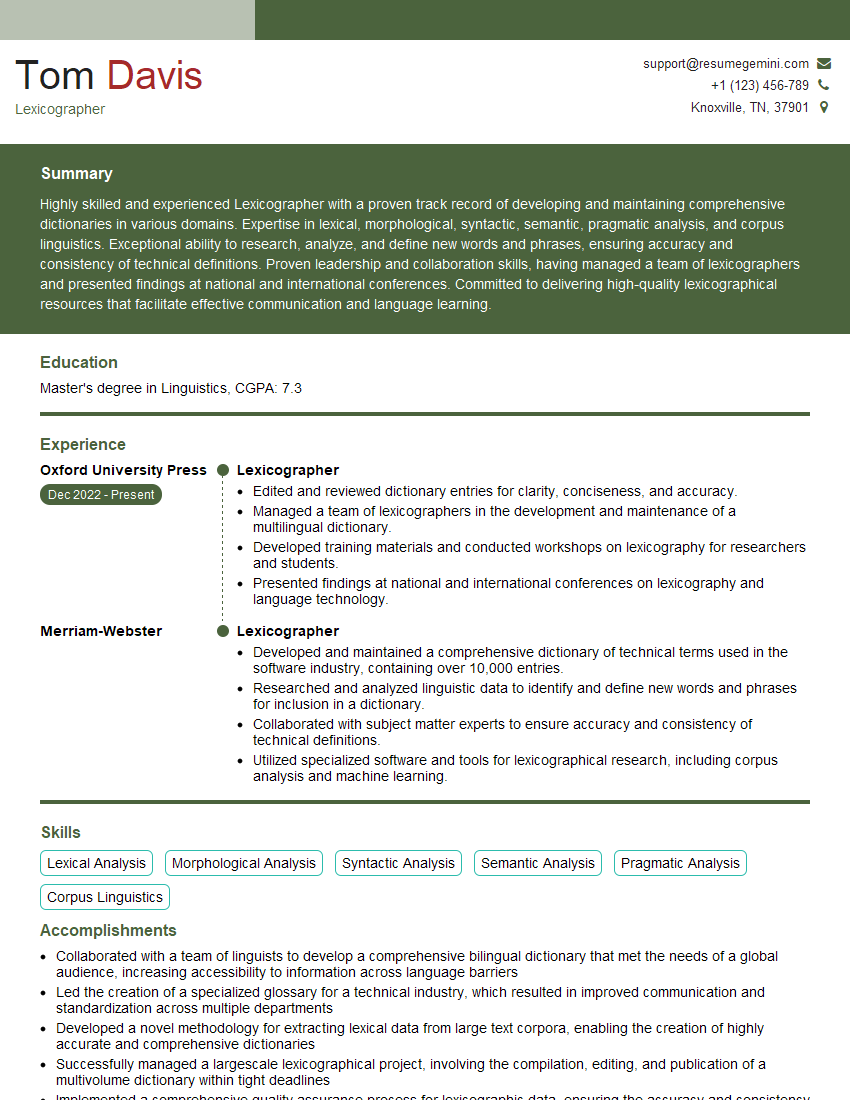
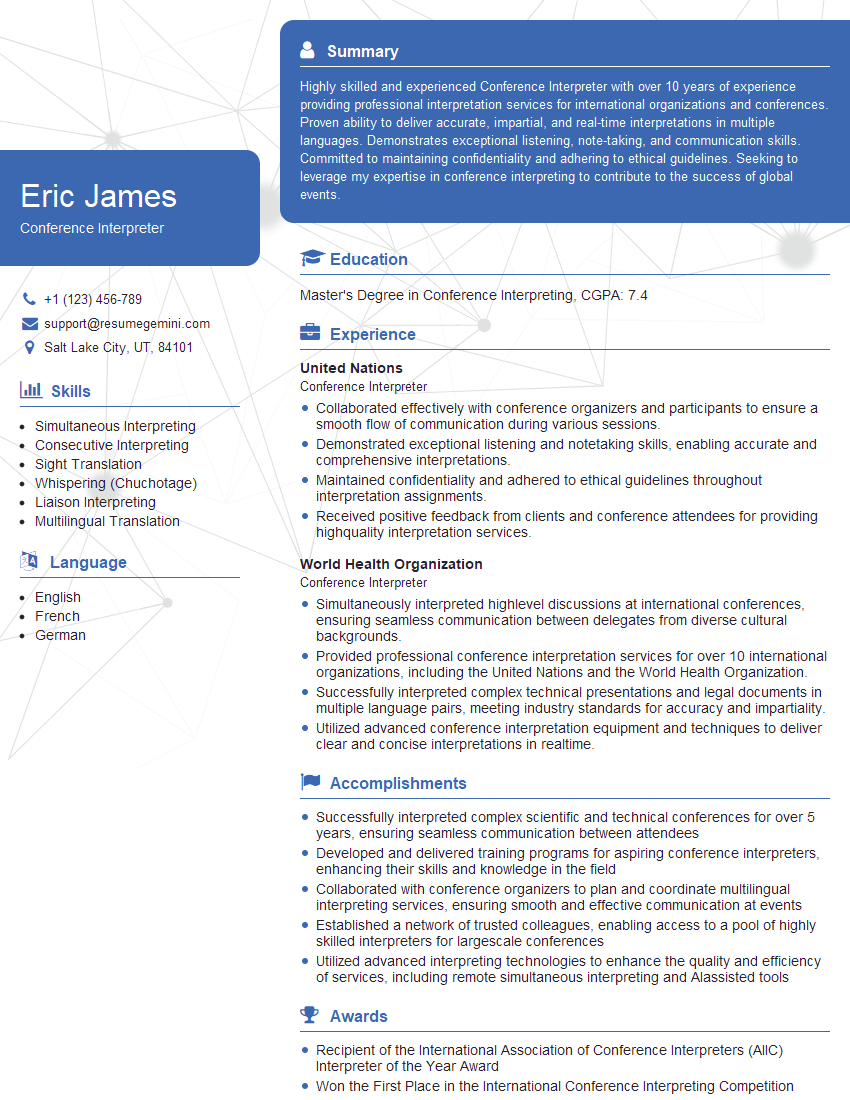
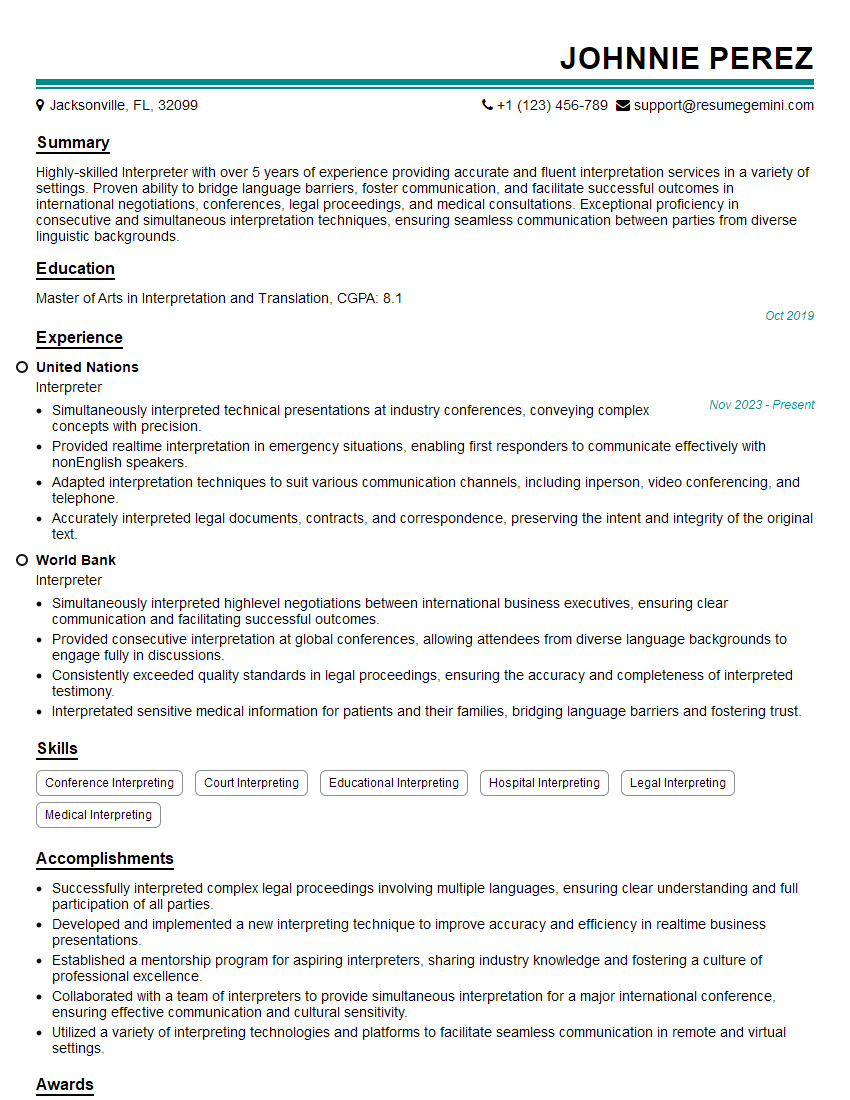
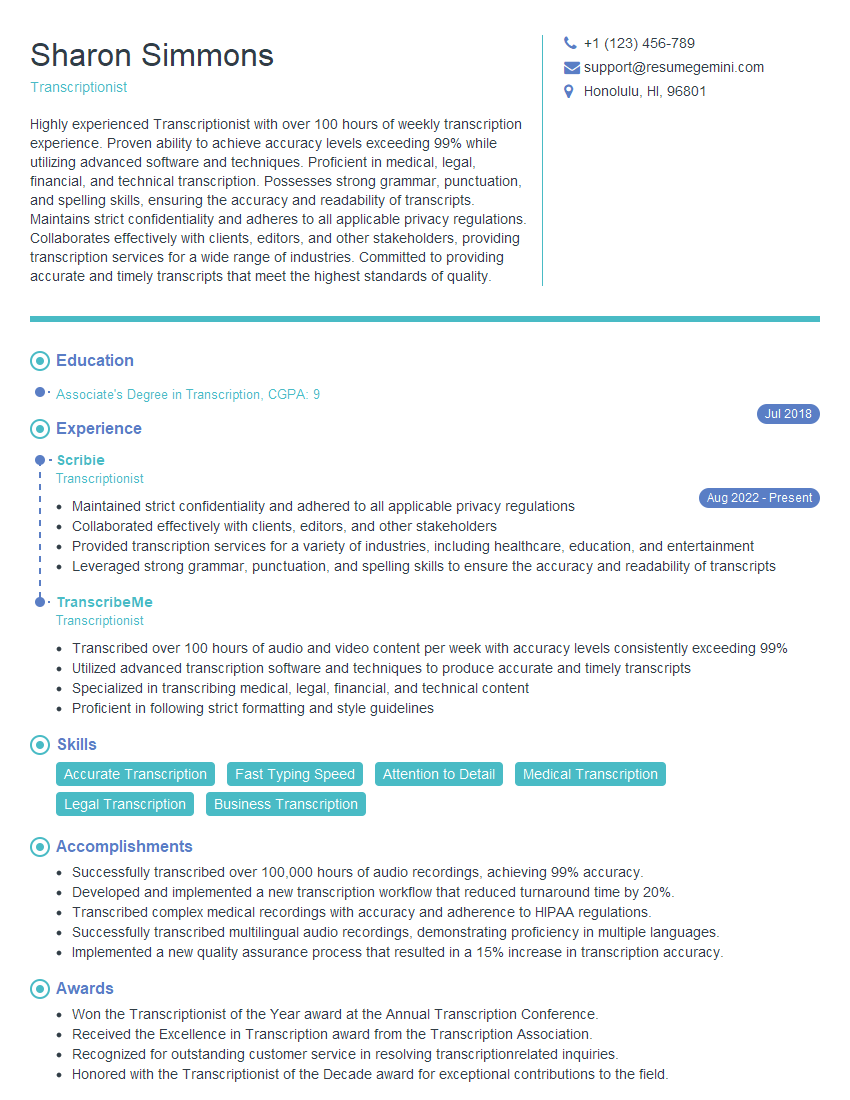
Mastering proficiency in English and other languages significantly enhances your career prospects, opening doors to a wider range of opportunities and international collaborations. A well-crafted resume is crucial for showcasing your skills to potential employers. To maximize your chances of securing an interview, create an ATS-friendly resume that highlights your key accomplishments and language skills. We highly recommend using ResumeGemini to build a professional and impactful resume. ResumeGemini offers tools and resources, including examples of resumes tailored to Proficiency in English and Other Languages, to help you present your qualifications effectively.
Explore more articles
Users Rating of Our Blogs
Share Your Experience
We value your feedback! Please rate our content and share your thoughts (optional).
What Readers Say About Our Blog
Really detailed insights and content, thank you for writing this detailed article.
IT gave me an insight and words to use and be able to think of examples