Interviews are opportunities to demonstrate your expertise, and this guide is here to help you shine. Explore the essential Proficiency in Operating Heavy Equipment interview questions that employers frequently ask, paired with strategies for crafting responses that set you apart from the competition.
Questions Asked in Proficiency in Operating Heavy Equipment Interview
Q 1. Describe your experience operating excavators.
My experience with excavators spans over ten years, encompassing various models and applications. I’ve operated everything from compact excavators for intricate trenching work in urban settings to large hydraulic excavators for massive earthmoving projects on construction sites. I’m proficient in all aspects of excavator operation, including digging, loading, trenching, demolition, and lifting with appropriate attachments. For example, on a recent highway expansion project, I used a 30-ton excavator to excavate and load thousands of cubic yards of earth, ensuring precise grading and efficient material handling to meet the project’s demanding schedule. Another instance involved using a smaller excavator to carefully excavate around underground utilities during a building foundation project, requiring meticulous control and spatial awareness to avoid damage.
Q 2. Explain the pre-operational checks you perform on a bulldozer.
Pre-operational checks on a bulldozer are crucial for safety and efficiency. My routine includes a thorough visual inspection covering all aspects of the machine. This starts with checking fluid levels – engine oil, transmission oil, hydraulic fluid, and coolant – ensuring they are within the acceptable ranges. Next, I inspect the tracks for damage, wear, and proper tension. I check the undercarriage for any loose bolts, broken parts, or potential hazards like debris buildup. The blade and its hydraulic system are then checked for leaks, damage, and smooth operation. I test the steering, brakes, and all control levers for responsiveness and proper functionality. Finally, I complete a walk-around, looking for any external issues and ensuring the machine is free of obstructions. Thinking of it like a pre-flight check on an airplane, this meticulous process ensures the bulldozer is safe and ready to operate, preventing costly downtime and accidents.
Q 3. What are the safety protocols for operating a crane?
Crane safety is paramount. It involves a multi-layered approach, beginning with rigorous pre-operation checks, including inspections of all components—hoist mechanisms, cables, hooks, and load-bearing structures. Then there’s the importance of load charts, ensuring that the crane’s capacity and stability are within the safe operating limits. Understanding the specific load’s weight, center of gravity, and the environmental conditions like wind speed are critical. Communication is key; using hand signals or two-way radios to coordinate with ground personnel ensures everyone is aware of the lift’s progress and potential risks. Establishing exclusion zones around the crane’s operating area keeps unauthorized personnel safe. Regular maintenance, operator training and certification, and adherence to all safety regulations and guidelines are crucial factors that build a culture of safety in crane operation. A real-world example I recall was during a high-rise building project. Before each lift, we held a brief meeting to review the load plan, identify potential hazards, and confirm the designated signal person and spotters were in place. This meticulous approach contributed to a zero-incident safety record.
Q 4. How do you handle unexpected equipment malfunctions?
When unexpected equipment malfunctions occur, my first priority is safety. I immediately shut down the machine and ensure the area is secure, preventing access by others. Depending on the nature of the malfunction, I might perform a basic troubleshooting assessment. If it’s a minor issue, such as a loose connection or minor hydraulic leak, I might attempt a repair, but only if I am qualified to do so. If the problem is more complex or if I suspect a major mechanical or electrical fault, I immediately report the malfunction to the supervisor or maintenance crew. I document the problem in detail, including the time it occurred, the specific symptoms, and the steps I’ve already taken. Communication is vital; a quick response can help minimize project delays and prevent further damage. A recent example involved a sudden hydraulic leak in a loader’s bucket cylinder. I immediately shut down the machine, cleared the area, and notified the maintenance team, who repaired the leak quickly minimizing downtime
Q 5. Describe your experience with different types of loaders.
My experience encompasses a range of loaders, including wheel loaders, skid steer loaders, and telehandlers. Wheel loaders are my most frequent choice for large-scale material handling, such as moving earth, gravel, or aggregates on construction sites. Skid steers are invaluable for smaller jobs requiring maneuverability and precision, like landscaping or working in confined spaces. Telehandlers, with their versatility, have been essential in placing materials at height, a particular advantage in warehouse settings or when building elevated structures. Each type presents unique operating characteristics and safety considerations, and knowing their strengths and weaknesses allows me to select the right tool for the task, optimizing efficiency and productivity.
Q 6. How do you ensure the stability of a load during operation?
Maintaining load stability is crucial for safety and efficient operation. This begins with a proper load assessment; knowing the weight and center of gravity of the load is paramount. Then, careful consideration of the crane’s capacity and stability limits is necessary to ensure the load is within safe operating parameters. The load should be lifted and moved smoothly, avoiding sudden jerks or movements. Appropriate lifting techniques, including keeping the load close to the crane, prevent excessive swing or sway. Proper rigging techniques with secure attachments and load-securing devices are also essential. Environmental factors such as wind speed and ground conditions should also be carefully assessed; adverse conditions can compromise stability and should be taken into account. In essence, safe load handling is about understanding the interaction between the load, the equipment, and the environment.
Q 7. What are the different types of grading techniques you are familiar with?
My grading experience involves various techniques depending on the project’s requirements and the terrain’s characteristics. These include:
- Finish Grading: This involves creating a precise, smooth surface to specifications, often the final stage before paving or landscaping. This requires fine control and precision.
- Rough Grading: This is the initial phase, removing large amounts of earth to prepare the site for subsequent grading or construction. It involves high volumes and less precision.
- Bank Sloping: This technique is used to create stable slopes for embankments or cuts, vital for erosion control and overall stability. Proper calculation of the angle of repose is critical here.
- Cut and Fill: This balancing act involves excavating earth from one area (cut) and depositing it in another (fill) to level the site efficiently.
Q 8. Explain your understanding of load capacity and weight distribution.
Load capacity refers to the maximum weight a piece of heavy equipment can safely lift or carry. Weight distribution is how that load is balanced across the machine’s axles, tires, and chassis. Understanding both is critical for preventing equipment damage, accidents, and ensuring operational efficiency. Think of it like this: a seesaw – if you put all the weight on one side, it tips over. Similarly, uneven weight distribution on a heavy machine can lead to instability and potentially catastrophic failure.
For example, when operating a crane, you must carefully calculate the load’s weight and position it within the crane’s rated capacity. Exceeding the capacity is dangerous and can lead to structural failure. Proper weight distribution ensures the crane remains stable and avoids tipping. I always check the manufacturer’s specifications for load charts and carefully consider the ground conditions before lifting anything substantial.
Another example is with a bulldozer. Pushing a large pile of material from a side angle will put disproportionate stress on one track. It’s better to approach the material head-on and to move smaller amounts at a time to ensure balanced weight distribution, preventing excessive wear on the tracks and potential damage to the undercarriage.
Q 9. Describe your experience with preventative maintenance on heavy equipment.
Preventative maintenance is the cornerstone of safe and efficient heavy equipment operation. My approach is methodical and proactive, following manufacturer recommendations and establishing a thorough checklist. This involves regular inspections, lubrication, fluid changes, and component replacements before issues arise.
- Daily Inspections: I always start with a thorough visual check of all components – tires, tracks, hydraulic lines, fluid levels, lights and warning indicators. I also check for any leaks or damage before beginning work.
- Scheduled Maintenance: Following manufacturer’s recommended intervals, I perform oil changes, filter replacements, and greasing. This involves detailed logging of every service, ensuring that records are always up to date.
- Component Replacements: I’m adept at identifying wear and tear on parts like brake pads, belts, and filters. These are replaced before they fail entirely, to prevent expensive breakdowns and downtime.
I once noticed a slight vibration in a bulldozer’s track system during a routine inspection. This early detection allowed for a minor adjustment of the track tension rather than a complete track replacement which saved time and cost. My experience demonstrates the importance of routine, systematic preventative maintenance in avoiding costly repairs and preventing accidents.
Q 10. How do you maintain awareness of your surroundings while operating heavy equipment?
Maintaining situational awareness is paramount when operating heavy equipment. It’s a combination of visual observation, listening to the machine and surroundings and employing good judgement.
- Visual Scan: I continuously scan my surroundings, checking blind spots and using mirrors and cameras to make sure I know where everything is. Before I even start the engine, I conduct a thorough check of the area, looking for potential hazards such as workers, other machinery, or obstacles.
- Communication: Clear and consistent communication with spotters and other personnel is crucial. Hand signals, radios and agreed procedures should always be established and used appropriately.
- Machine Awareness: I pay close attention to my machine’s performance. Unusual noises or vibrations warrant an immediate investigation to identify potential issues.
For example, I once operated an excavator near a busy road. I established a clear communication system with a spotter to warn me about approaching vehicles. This allowed for me to work safely and efficiently without putting anyone at risk.
Q 11. What is your experience with GPS-guided machinery?
I have significant experience with GPS-guided machinery, primarily in grading and earthmoving applications. This technology has significantly increased accuracy and efficiency. It works by using satellite signals to precisely position the equipment, allowing for automatic guidance and control.
For instance, when operating a GPS-guided grader, I can achieve much greater precision in creating level surfaces or specific slopes. This eliminates guesswork and reduces material waste, which makes for a more efficient and cost-effective operation. The systems I’ve worked with allow for real-time monitoring of the machine’s position and progress, reducing errors and ensuring the work is completed to high standards.
Furthermore, GPS guidance systems often integrate with other technology such as machine control systems which allow for automatic adjustments to blade angles and other controls improving both speed and accuracy of the task.
Q 12. How do you handle challenging terrain conditions?
Challenging terrain demands careful planning, appropriate equipment selection, and skilled operation. My approach involves assessing the conditions before starting work and adapting my techniques accordingly.
- Terrain Assessment: Before engaging with challenging terrain, I inspect the area, looking for potential hazards, such as steep slopes, unstable ground, and hidden obstacles.
- Equipment Selection: The right equipment is crucial. For steep slopes, a machine with excellent stability and traction control is required. For muddy terrain, tracks are generally preferred over wheels.
- Technique Adaptation: I modify my operating techniques to suit the terrain. This may involve slower speeds, reduced loads, or alternative routes to navigate difficult areas safely. I also will use the appropriate gearing to maintain traction.
For example, working on a steep hillside required me to use a crawler excavator with an added counterweight. I employed a careful, step-by-step approach, taking small bites of earth and frequently pausing to assess the machine’s stability. Safety always takes precedence.
Q 13. Describe your experience with different types of soil and ground conditions.
My experience encompasses a wide range of soil and ground conditions, from loose sand to solid rock. Understanding the properties of different soils is vital for safe and effective operation. Different soils require different operating techniques and equipment adjustments.
- Sandy Soil: Requires careful speed and pressure control to avoid sinking. Often special tires or tracks are necessary.
- Clay Soil: Can be very sticky and challenging. Maintaining speed and careful cleaning of attachments is important.
- Rocky Soil: Demands careful use of rippers or other specialized tools to prevent damage to equipment. Lower speed and stronger equipment is often necessary.
On one project, we encountered unexpectedly soft ground conditions. My quick assessment prompted a switch from a wheeled loader to a tracked excavator which had the necessary stability to continue safely. Understanding soil properties prevented a costly delay and equipment damage.
Q 14. Explain your knowledge of different types of attachments and their applications.
Different attachments allow heavy equipment to perform a wide variety of tasks. My knowledge spans many types.
- Excavator Attachments: These include buckets (for digging and loading), rippers (for breaking up hard ground), hammers (for demolition), and grapples (for handling logs or debris).
- Loader Attachments: Common attachments for loaders are buckets, forks (for pallets), and snowplows.
- Bulldozer Attachments: These can include angle blades (for moving and shaping earth), rippers, and push plates.
Choosing the right attachment for the job is essential for both efficiency and safety. For example, using a hammer on a rock-filled site allowed for the efficient breaking up of the rock while a grapple is more suited to handling larger amounts of already broken material. Knowing these differences makes a big difference in both speed and efficiency.
Q 15. How do you communicate effectively with other workers on a site?
Effective communication on a construction site is paramount for safety and efficiency. I prioritize clear, concise, and respectful communication, adapting my style to the individual and the situation.
- Before starting a task: I always confirm the plan with the foreman and other team members, clarifying any uncertainties about procedures or potential hazards.
- During operation: I use hand signals, radios, or visual cues to communicate with spotters, other equipment operators, and workers in the vicinity. For example, I’d use a pre-agreed hand signal before backing up a large piece of equipment.
- After completing a task: I provide a concise update to the foreman, highlighting any issues encountered or potential problems requiring attention. I also ensure all team members are aware of my work progress.
- Addressing conflicts: I approach any disagreements or misunderstandings professionally and calmly, actively listening to all parties involved before seeking a solution.
For instance, on a recent project, I noticed a worker wasn’t using safety harnesses while working at heights. Instead of confrontation, I calmly explained the potential consequences and offered to demonstrate the proper usage. This approach fosters a collaborative environment.
Career Expert Tips:
- Ace those interviews! Prepare effectively by reviewing the Top 50 Most Common Interview Questions on ResumeGemini.
- Navigate your job search with confidence! Explore a wide range of Career Tips on ResumeGemini. Learn about common challenges and recommendations to overcome them.
- Craft the perfect resume! Master the Art of Resume Writing with ResumeGemini’s guide. Showcase your unique qualifications and achievements effectively.
- Don’t miss out on holiday savings! Build your dream resume with ResumeGemini’s ATS optimized templates.
Q 16. What is your experience with working at night or in inclement weather?
I have extensive experience operating heavy equipment in various conditions, including nighttime and inclement weather. Working at night requires extra vigilance, using adequate lighting, and adjusting operating procedures to account for reduced visibility. Inclement weather necessitates even more cautious operation, and I’m familiar with operating equipment in rain, snow, and high winds, always prioritizing safety first.
- Nighttime operations: I’m proficient in using supplemental lighting systems on the equipment and maintaining extra situational awareness to compensate for decreased visibility. I always use extreme caution backing up or operating in low-light conditions.
- Inclement weather: I adjust my operating speed and technique according to weather conditions, slowing down significantly in adverse weather. I also rigorously inspect equipment for proper functioning and address any issues proactively.
For example, during a winter project, I experienced a sudden snow squall. I immediately slowed my operation and alerted the site supervisor. Safety is my number one priority regardless of the conditions, and I understand the need to modify operations when necessary.
Q 17. Describe your understanding of safety regulations related to heavy equipment operation.
My understanding of safety regulations related to heavy equipment operation is comprehensive. I’m familiar with OSHA (Occupational Safety and Health Administration) guidelines and other relevant industry standards specific to the equipment I operate. This includes pre-operational checks, regular maintenance, proper use of Personal Protective Equipment (PPE), and understanding site-specific safety protocols.
- Pre-operational checks: This includes a visual inspection of the equipment for any damage or defects, ensuring all safety systems are functioning correctly, and checking fuel and fluid levels.
- PPE: I consistently wear appropriate PPE, such as hard hats, safety glasses, hearing protection, and high-visibility clothing, always abiding by any additional requirements based on the specific task and site regulations.
- Emergency procedures: I’m well-versed in emergency procedures, including how to respond to equipment malfunctions, accidents, or environmental hazards.
- Site-specific rules: I always familiarize myself with all site-specific regulations and safety procedures before starting work.
For instance, I always ensure that the area around my equipment is clear of personnel before starting any operation, and I regularly check the stability of the ground to prevent tipping or other accidents.
Q 18. How do you react to a safety hazard or emergency situation?
My immediate response to a safety hazard or emergency situation prioritizes the safety of myself and others. My actions follow a structured approach:
- Assessment: I immediately assess the situation to understand the nature and extent of the hazard or emergency.
- Mitigation: I take immediate steps to mitigate the hazard or prevent further escalation, such as stopping the equipment or evacuating the area.
- Alerting: I alert other workers and the site supervisor immediately via radio or other appropriate communication methods.
- Emergency response: I follow the established emergency procedures for the specific situation, including using the appropriate equipment, such as fire extinguishers, first aid kits etc.
- Documentation: Once the situation is under control, I fully document the incident, including causes, actions taken and any injuries sustained.
For example, if I noticed a fuel leak, I would immediately shut down the equipment, clear the area, and report it to the supervisor. I would then follow the site’s established procedures for handling fuel spills.
Q 19. Explain your experience with operating equipment in confined spaces.
Operating equipment in confined spaces demands heightened awareness and specific safety precautions. My experience includes working in trenches, tunnels, and other restricted areas. I always adhere to strict safety protocols, including using appropriate ventilation, ensuring adequate space for equipment maneuverability, and continuously monitoring atmospheric conditions.
- Confined space entry permits: I’m familiar with the procedures for obtaining confined space entry permits and adhere to all necessary documentation and inspections.
- Atmospheric monitoring: Before entering a confined space, I ensure that the atmosphere is safe for entry by checking for oxygen levels, flammable gases, and hazardous fumes.
- Communication: Maintaining constant communication with a standby person outside the confined space is crucial to ensure safety and provide assistance if needed.
- Equipment suitability: Selecting the right equipment for the confined space is essential; I carefully choose equipment sized appropriately for the space and its characteristics.
I’ve worked on several projects involving underground utility work, always employing the necessary safety measures and working closely with safety personnel to ensure a safe working environment.
Q 20. What is your experience with different fuel types used in heavy equipment?
I’m experienced with various fuel types used in heavy equipment, including diesel, gasoline, and propane. Understanding the properties and handling requirements of each fuel is critical for safe and efficient operation.
- Diesel fuel: The most common fuel for heavy equipment, I understand its storage, handling, and environmental impact. I know to follow proper refueling procedures to avoid spills and fires.
- Gasoline: While less common in heavy equipment, I understand its higher flammability and handle it with extra caution during refueling and storage.
- Propane: I am familiar with the safety considerations of using propane-powered equipment, including proper tank handling and pressure monitoring.
- Fuel efficiency: I’m aware of how different fuel types impact equipment efficiency and environmental impact. I understand the importance of proper maintenance to maximize fuel efficiency.
For example, I’ve operated both diesel-powered excavators and propane-powered forklifts, adapting my procedures to the specific fuel type. Understanding these differences is key to both safety and cost-effective operation.
Q 21. How do you ensure compliance with environmental regulations?
Compliance with environmental regulations is a significant part of my work. I understand and adhere to regulations concerning fuel storage, emissions control, and waste disposal. This includes proper handling of used oil, fuel spills, and other potentially hazardous materials.
- Spill prevention and response: I’m trained in spill prevention and response procedures, including proper cleanup and disposal methods for fuel and other hazardous materials.
- Emissions control: I understand the importance of regular equipment maintenance to minimize emissions and comply with air quality standards.
- Waste management: I am careful to properly dispose of waste materials according to regulations, including used oil, filters, and other debris.
- Environmental awareness: I’m conscious of the environmental impact of my work and strive to minimize my ecological footprint by using environmentally friendly practices whenever possible.
For example, I always ensure that fuel is stored in designated areas, and I use appropriate absorbent materials to clean up any spills promptly and correctly. This commitment to environmental compliance is vital for responsible operation.
Q 22. Describe your knowledge of hydraulic systems in heavy equipment.
Hydraulic systems are the lifeblood of most heavy equipment, providing the power for lifting, digging, and maneuvering. They work by using pressurized fluid to generate force. Think of it like this: imagine squeezing a toothpaste tube – the pressure you apply forces the toothpaste out. Similarly, a hydraulic pump creates pressure in a fluid (usually oil), which is then directed to hydraulic cylinders or motors. These components convert the fluid pressure into linear or rotational motion, powering the equipment’s functions.
My understanding encompasses the entire system: pumps (gear, piston, vane), valves (directional control, pressure relief, flow control), actuators (cylinders, motors), and the associated lines and hoses. I’m familiar with both open-center and closed-center systems, and understand the nuances of hydraulic fluid types and their properties, including viscosity and contamination issues. For example, I can diagnose problems stemming from a faulty relief valve by recognizing the symptoms—excessive pressure or a complete lack of function in a particular hydraulic circuit. I’m proficient in understanding hydraulic schematics and interpreting pressure and flow readings from gauges.
Q 23. How do you troubleshoot hydraulic leaks or malfunctions?
Troubleshooting hydraulic leaks or malfunctions requires a systematic approach. First, I would ensure the machine is safely shut down and secured. Then, I’d visually inspect the system for obvious leaks, paying close attention to hoses, fittings, seals, and cylinders. Leaks often manifest as drips or weeping fluid, and their location provides valuable clues.
For example, a leak near a cylinder might indicate a damaged seal, while a leak at a fitting suggests loose or damaged connections. After the visual inspection, I’d check for pressure using gauges at various points in the hydraulic circuit, comparing the readings to the manufacturer’s specifications. If a pressure drop is detected, it points toward a problem within that section of the circuit. I’m also skilled in using diagnostic tools like pressure gauges, flow meters and testing equipment specific to the equipment type. This allows me to isolate the faulty component more precisely. Finally, I’d use my knowledge of hydraulic principles to determine the root cause of the malfunction and implement the correct repair, whether it be replacing a seal, hose, valve, or other component.
Q 24. Explain your experience with different types of brakes and braking systems.
My experience encompasses various braking systems commonly found in heavy equipment, including:
- Hydraulic Brakes: These are frequently used in larger equipment and rely on hydraulic pressure to actuate the brakes. I understand how master cylinders, calipers, and wheel cylinders work together, and how to diagnose problems such as low fluid levels, air in the lines, and brake component failures.
- Air Brakes: Essential for larger vehicles like trucks and heavy haulers, air brakes use compressed air to apply braking force. I’m proficient in inspecting and maintaining air brake components such as air compressors, air tanks, brake chambers, and valves. I am familiar with diagnosing air leaks and addressing issues with air pressure regulation.
- Mechanical Brakes: Simpler systems often found in smaller equipment, typically relying on direct mechanical linkage between the brake pedal and the braking mechanism. I understand how these systems work and can identify wear and tear in components such as brake shoes, drums, or discs.
In all cases, regular inspection, proper maintenance and adherence to safety regulations are paramount. I always prioritize safety and make sure brakes are functioning correctly before operating any equipment.
Q 25. What are your skills in using hand signals and other communication methods?
Effective communication is crucial when operating heavy equipment, especially in a team environment. I’m proficient in using standard hand signals for directing equipment movement, including those relating to starting, stopping, direction changes, and lifting/lowering loads.
Beyond hand signals, I utilize clear and concise verbal communication, ensuring everyone understands instructions. On large projects, I’m adept at using two-way radios to maintain constant communication with other operators and supervisors. In situations with language barriers, I can adapt my communication methods using visual aids or interpreters, always prioritizing safety and understanding. For instance, I can use a combination of hand signals and pointing to help a worker who doesn’t speak my language to avoid a potentially dangerous situation.
Q 26. How do you perform daily maintenance checks on a forklift?
Daily maintenance checks on a forklift are vital for safety and operational efficiency. My routine includes:
- Visual Inspection: Checking for any visible damage to the mast, forks, tires, and body.
- Fluid Levels: Inspecting and topping off engine oil, hydraulic fluid, and coolant as needed.
- Tire Pressure: Ensuring tires are properly inflated.
- Battery (for electric forklifts): Checking the battery charge level and water levels (if applicable).
- Brakes: Testing brake functionality and responsiveness.
- Lights and Signals: Verifying that lights, horns, and safety devices are working correctly.
- Leaks: Checking for fuel, oil, or hydraulic fluid leaks.
This pre-operational checklist takes only a few minutes, but it significantly reduces the risk of accidents and prevents unexpected breakdowns. Documenting these checks is also essential for record-keeping and preventative maintenance scheduling.
Q 27. Explain your knowledge of load charts and weight limits for different equipment.
Load charts and weight limits are non-negotiable in operating heavy equipment. These charts specify the maximum safe load capacity for different equipment configurations, considering factors like boom length, terrain, and attachments. Ignoring these limits can lead to catastrophic equipment failure, property damage, and serious injury.
Before lifting or moving any load, I always check the load chart for the specific piece of equipment and the current configuration. I also take into account the weight of the load, the center of gravity, and any environmental factors that could affect stability. For example, I would never lift a load exceeding the rated capacity of a crane, even if I felt it was possible. I understand that exceeding the weight limits, even slightly, dramatically increases the risk of tipping and potentially disastrous consequences. Accurate load calculations and adherence to weight limitations are crucial for maintaining safety and operational efficiency.
Q 28. Describe your experience with working on large-scale construction projects.
I have extensive experience working on large-scale construction projects, involving diverse heavy equipment such as excavators, bulldozers, loaders, and cranes. My roles have included operating, maintaining, and sometimes overseeing teams of operators.
For example, on a recent highway expansion project, I operated a bulldozer for earthmoving, requiring precise control and an understanding of grading techniques to ensure proper drainage and roadbed stability. Another project involved operating a crane to lift and place prefabricated sections of a bridge, emphasizing meticulous adherence to safety procedures and load limits to ensure precision and prevent accidents. My experience extends beyond solely operating machinery; I’m able to contribute to project planning by understanding the best use of equipment, factoring in limitations and optimizing efficiency. This involves coordinating with other trades and adhering to project schedules and safety requirements. The coordination and teamwork on such large projects required clear communication and cooperation among multiple teams.
Key Topics to Learn for Proficiency in Operating Heavy Equipment Interview
- Safe Operation Procedures: Understanding and adhering to all safety regulations, pre-operation checks, and emergency protocols for various heavy equipment types.
- Equipment Mechanics and Maintenance: Demonstrating knowledge of basic mechanical principles, routine maintenance tasks, troubleshooting common malfunctions, and recognizing signs of wear and tear.
- Operational Techniques: Mastering the precise control and maneuvering of different heavy equipment, including excavators, loaders, bulldozers, and graders, adapting techniques to varied terrain and job site conditions.
- Site Awareness and Safety: Highlighting experience in maintaining awareness of surroundings, communicating effectively with colleagues, and ensuring the safety of both personnel and equipment on the job site.
- Production and Efficiency: Explaining strategies for maximizing efficiency, minimizing downtime, and optimizing workflow within a construction or other relevant operational context.
- Regulations and Compliance: Demonstrating familiarity with relevant industry regulations, safety standards, and environmental considerations related to heavy equipment operation.
- Problem-Solving and Decision-Making: Describing scenarios where you’ve identified and resolved operational issues, demonstrating quick thinking and effective problem-solving skills under pressure.
Next Steps
Mastering proficiency in operating heavy equipment opens doors to rewarding and high-demand careers in construction, mining, and other vital industries. Your expertise translates directly into increased earning potential and career advancement opportunities. To make the most of your skills, crafting a compelling and ATS-friendly resume is crucial. This ensures your application gets noticed by recruiters and hiring managers. ResumeGemini can help you build a professional resume that highlights your qualifications effectively. We provide examples of resumes tailored to Proficiency in Operating Heavy Equipment to guide you, making the process straightforward and ensuring you present yourself in the best possible light.

Crane Operator Resume Sample
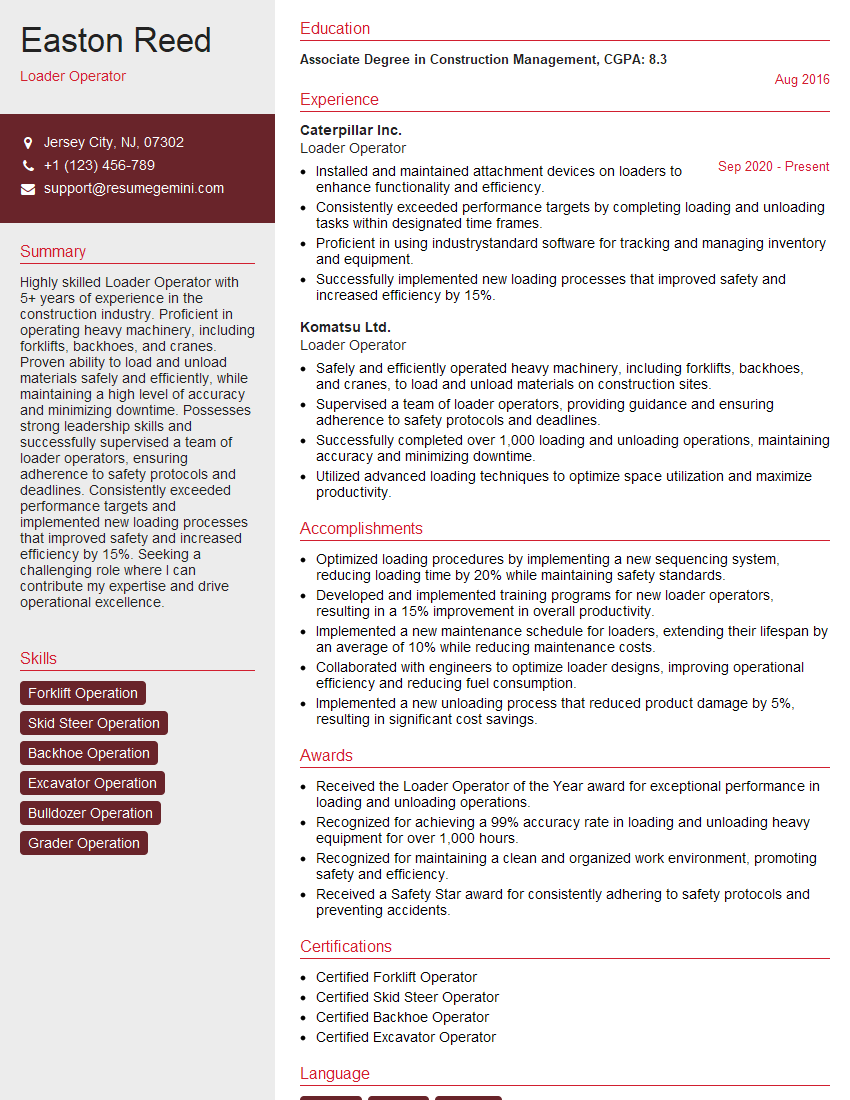
Loader Operator Resume Sample

Heavy Equipment Operator Resume Sample

Roller Operator Resume Sample

Pile Driver Operator Resume Sample
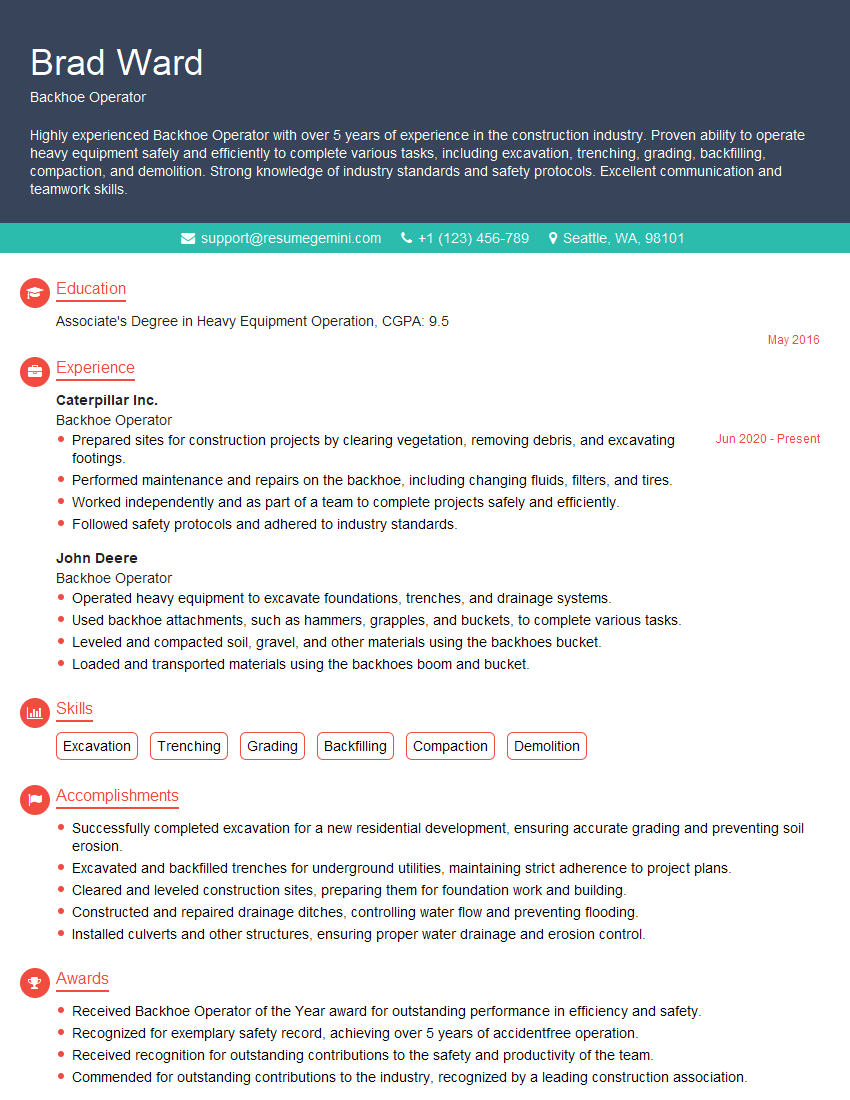
Backhoe Operator Resume Sample
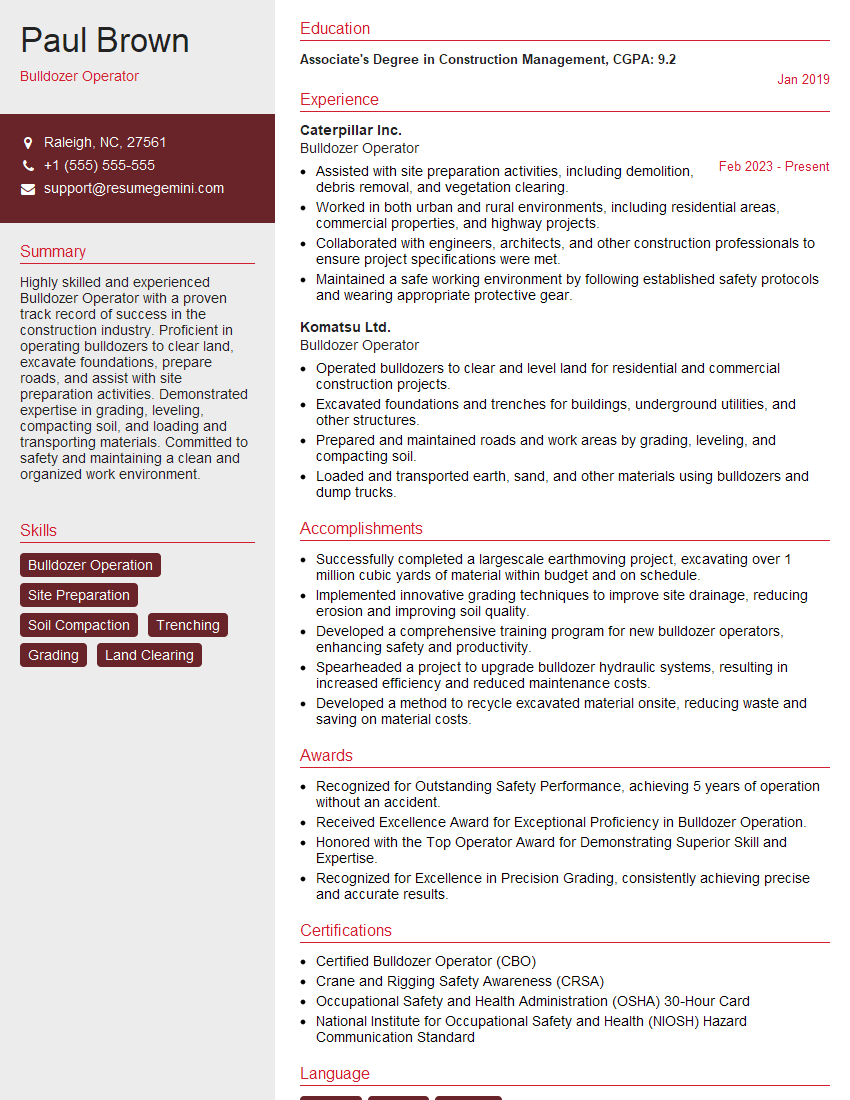
Bulldozer Operator Resume Sample
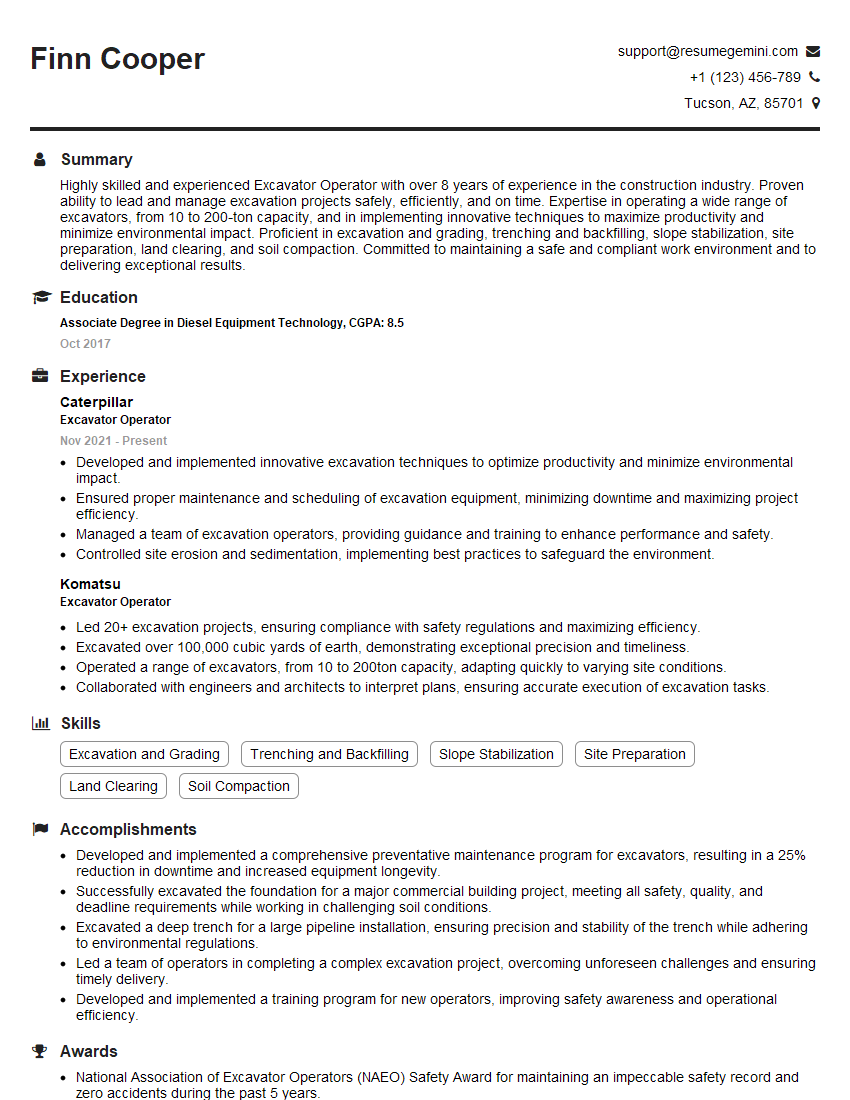
Excavator Operator Resume Sample
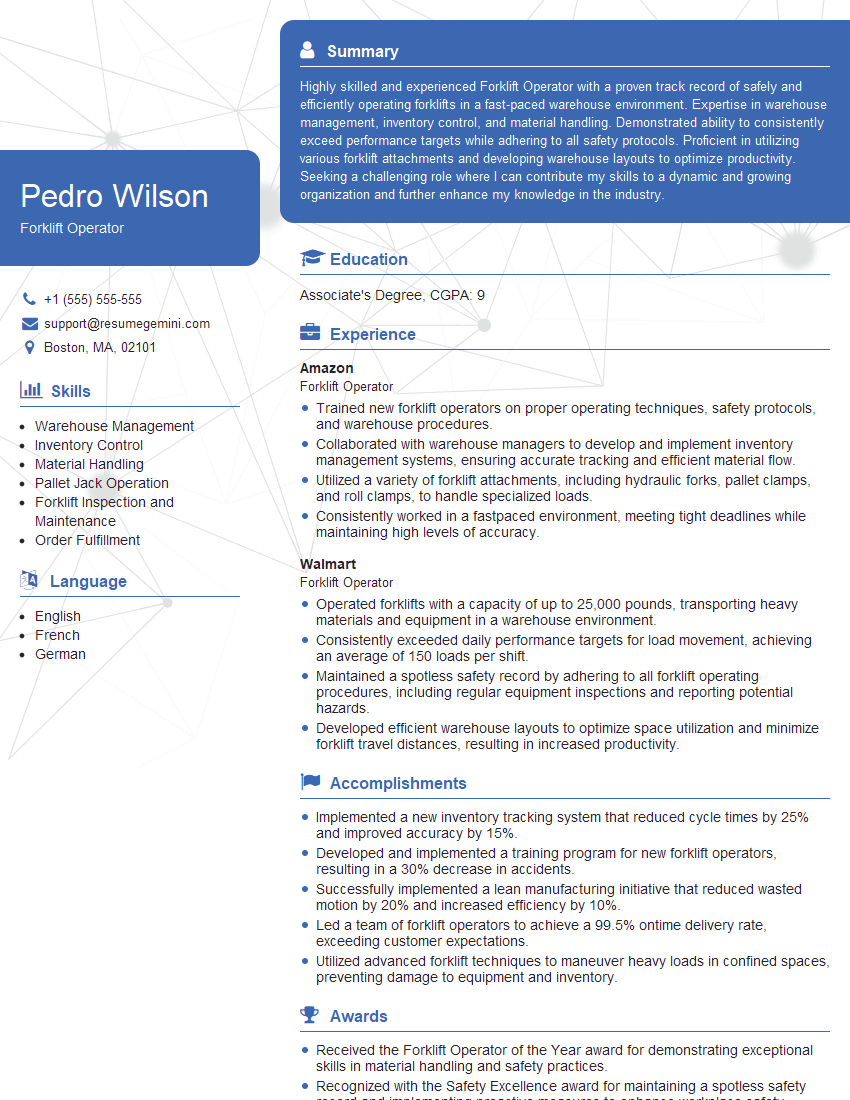
Forklift Operator Resume Sample

Grader Operator Resume Sample
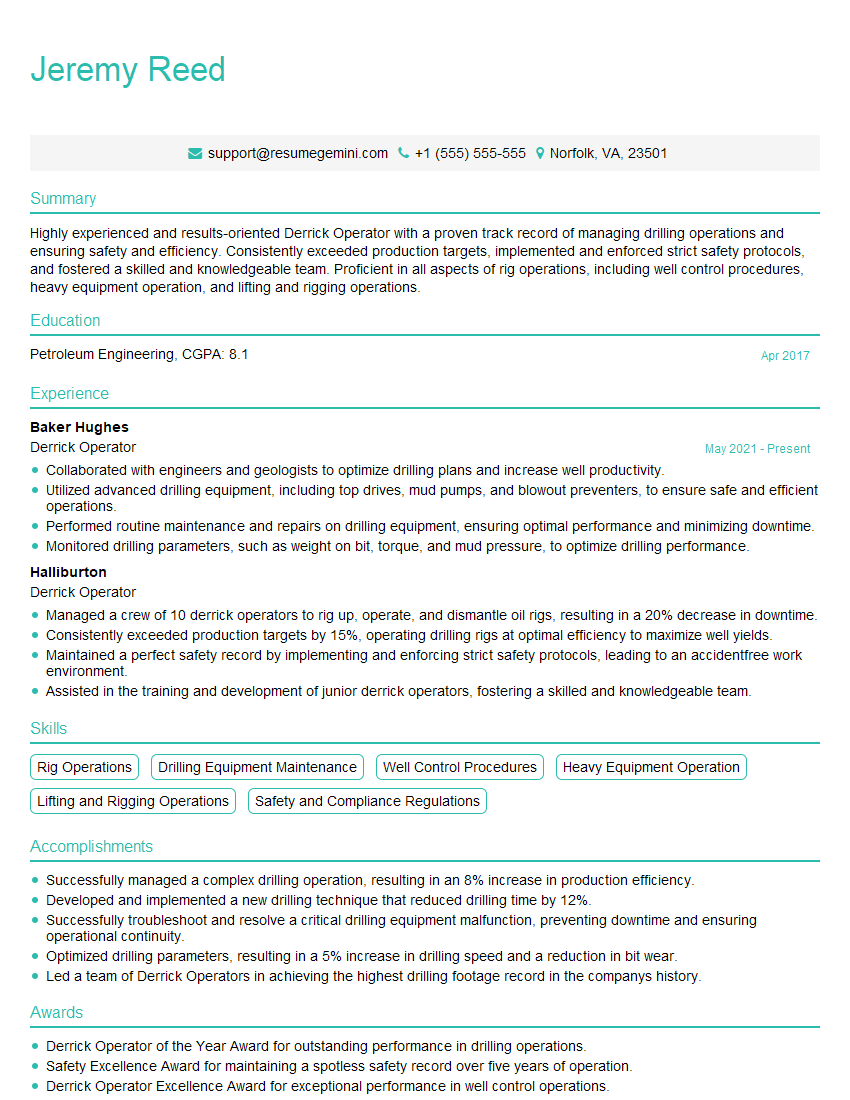
Derrick Operator Resume Sample
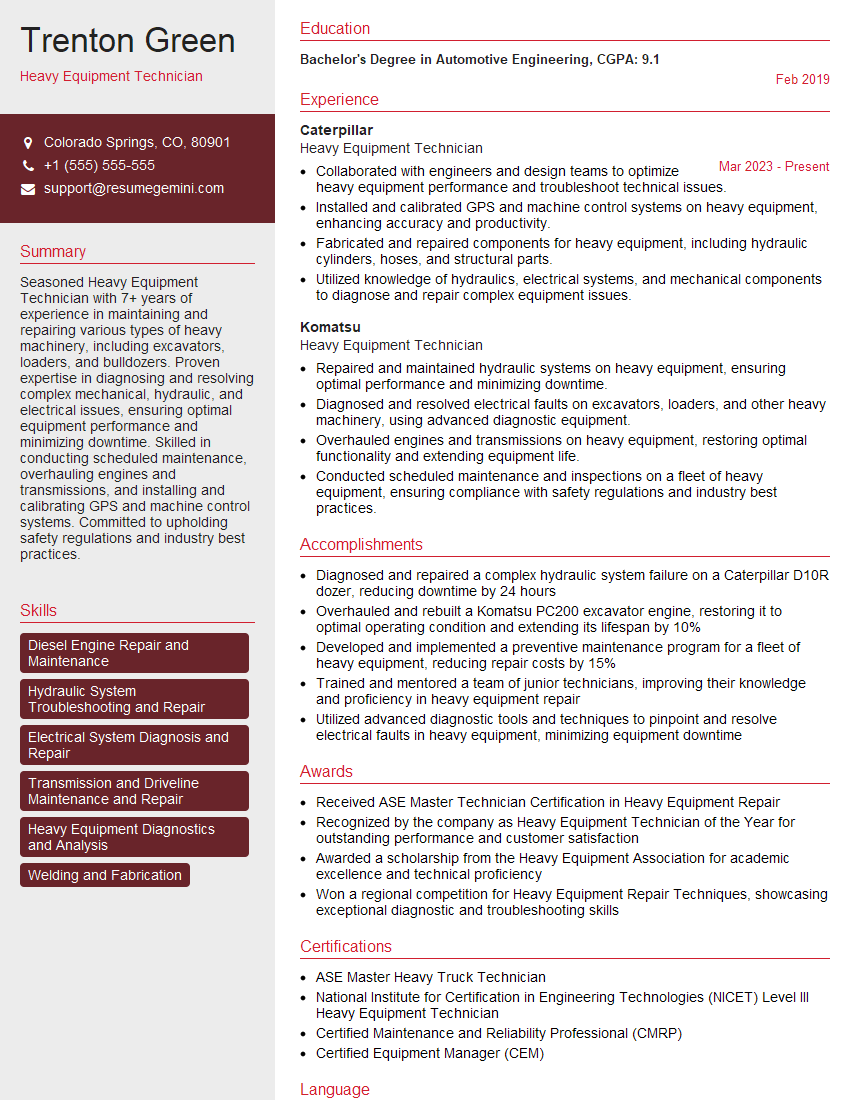
Heavy Equipment Technician Resume Sample
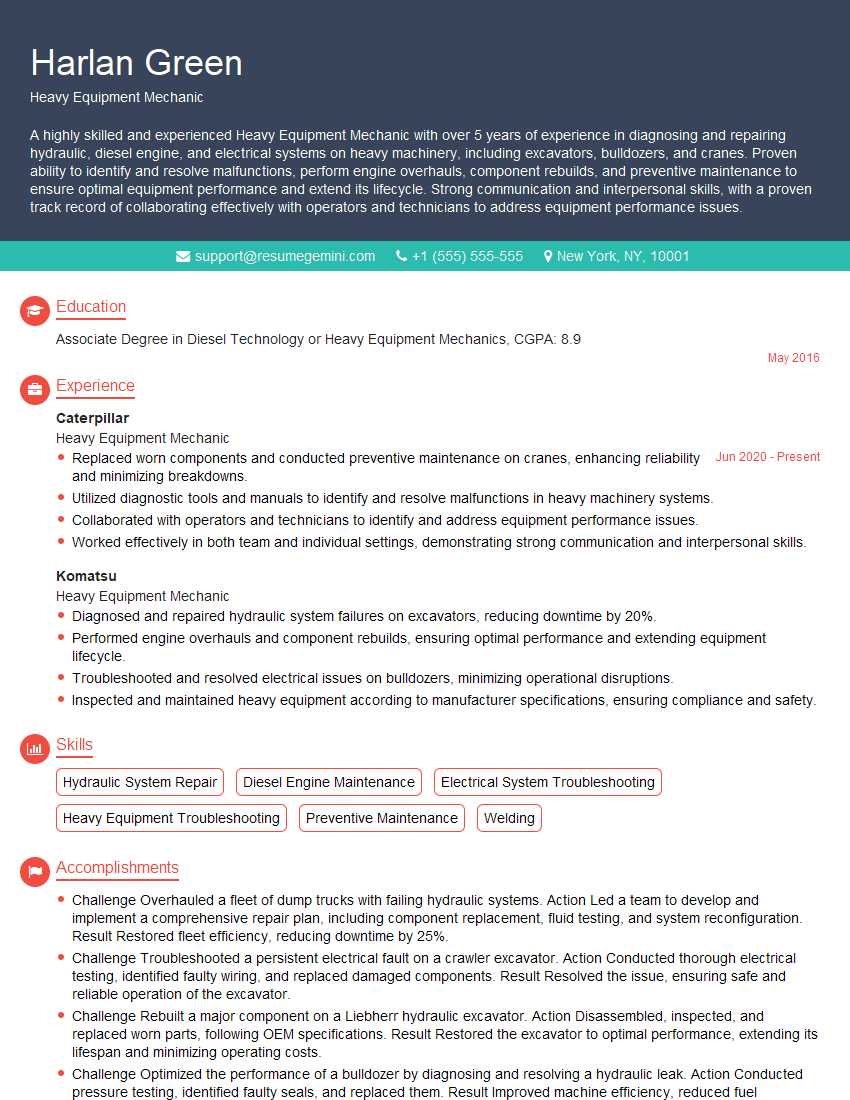
Heavy Equipment Mechanic Resume Sample

Mobile Equipment Mechanic Resume Sample

Overhead Crane Operator Resume Sample
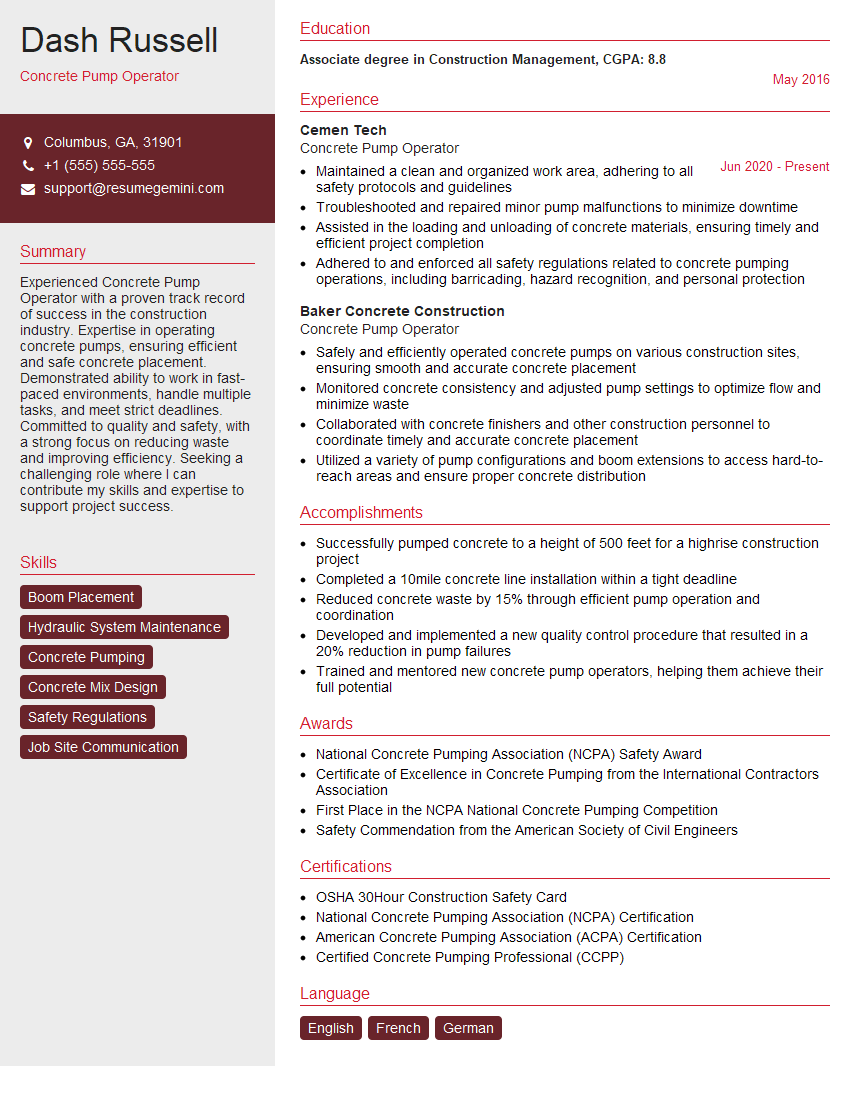
Concrete Pump Operator Resume Sample
- Crane Operator
- Loader Operator
- Heavy Equipment Operator
- Roller Operator
- Pile Driver Operator
- Backhoe Operator
- Bulldozer Operator
- Excavator Operator
- Forklift Operator
- Grader Operator
- Derrick Operator
- Heavy Equipment Technician
- Heavy Equipment Mechanic
- Mobile Equipment Mechanic
- Overhead Crane Operator
- Concrete Pump Operator
Explore more articles
Users Rating of Our Blogs
Share Your Experience
We value your feedback! Please rate our content and share your thoughts (optional).
What Readers Say About Our Blog
Really detailed insights and content, thank you for writing this detailed article.
IT gave me an insight and words to use and be able to think of examples