Unlock your full potential by mastering the most common Proficiency in using weighing software interview questions. This blog offers a deep dive into the critical topics, ensuring you’re not only prepared to answer but to excel. With these insights, you’ll approach your interview with clarity and confidence.
Questions Asked in Proficiency in using weighing software Interview
Q 1. Explain the different types of weighing scales you are familiar with.
I’m familiar with a wide range of weighing scales, categorized primarily by their mechanism and application. These include:
- Analytical Balances: These offer the highest precision, typically used in laboratories for precise measurements in the milligram range. I have extensive experience using Mettler Toledo analytical balances, for instance, known for their accuracy and sensitivity.
- Precision Balances: Offering less precision than analytical balances, but still highly accurate, these are commonly used in industrial settings or quality control where weighing to the nearest 0.1 gram is sufficient. I’ve worked with Ohaus precision balances in various pharmaceutical manufacturing environments.
- Top-Loading Balances: These are robust and durable, designed for faster weighing tasks with slightly lower precision than precision balances. They are ideal for general weighing in a lab or warehouse. I’ve frequently used these for larger sample preparation.
- Floor Scales: These are heavy-duty scales designed for weighing large objects or quantities, often used in warehousing or logistics. My experience includes operating and troubleshooting floor scales in a distribution center, ensuring accurate inventory management.
- Moisture Analyzers: These specialized balances combine weighing with heating to determine the moisture content of a sample, essential in food science and material analysis. I’ve utilized these extensively to ensure product quality control in a food processing plant.
My experience spans different manufacturers and models, giving me a broad understanding of their functionalities and limitations.
Q 2. Describe your experience with calibration procedures for weighing equipment.
Calibration is crucial for maintaining the accuracy of weighing equipment. My experience involves both internal and external calibration procedures. Internal calibration uses internal weights and is performed regularly to ensure the scale is within its tolerance range. This often involves adjusting the calibration settings according to the manufacturer’s instructions. For example, I’ve used the internal calibration feature on many Sartorius balances.
External calibration involves using certified weights traceable to national standards. This is a more formal procedure, typically done annually or as required by regulatory guidelines (like GMP or GLP). I’ve personally overseen and participated in external calibrations, meticulously documenting all steps and results. This includes verifying the traceability of the calibration weights, recording the date and time of the calibration, and ensuring the calibration certificate is properly filed.
The entire process involves strict adherence to documented procedures and the use of appropriate calibration weights, ensuring that any deviation from the expected values is properly investigated and documented.
Q 3. How do you ensure the accuracy and precision of weighing measurements?
Accuracy and precision are paramount in weighing. Accuracy refers to how close a measurement is to the true value, while precision refers to the reproducibility of measurements. To ensure both, I follow several key steps:
- Proper Calibration: Regular calibration, both internal and external, is fundamental. This ensures that the scale is working within its specified tolerances.
- Environmental Control: Factors like temperature fluctuations, drafts, and vibrations can significantly affect weighing results. I always ensure the weighing environment is stable and controlled. For instance, I’ve experienced delays due to improperly controlled temperature in a warehouse setting where accuracy was compromised.
- Proper Weighing Technique: This includes ensuring the balance is level, zeroed properly before each weighing, and using appropriate containers. Avoid jarring the balance during the weighing process.
- Appropriate Sample Size: Using a sample size appropriate for the scale’s capacity ensures accurate results and prevents overloading the balance. If it is too small, however, measurement error can increase disproportionately.
- Repeat Measurements: Taking multiple measurements and averaging the results significantly improves precision and helps identify any outliers.
I document all steps and results meticulously, ensuring traceability and compliance with relevant regulations.
Q 4. What are the common sources of error in weighing processes, and how do you address them?
Several sources of error can impact weighing processes. Common ones include:
- Environmental Factors: Temperature changes, air currents (drafts), and vibrations can all affect readings. Addressing this requires a controlled weighing environment.
- Static Electricity: Static charges can cause inaccurate readings, especially with sensitive analytical balances. I address this by using anti-static devices or grounding techniques.
- Improper Calibration: An uncalibrated or improperly calibrated balance is a major source of error. Regular calibration is crucial.
- Operator Error: Incorrect weighing technique, such as improper zeroing or handling of samples, can introduce errors. Proper training and adherence to standard operating procedures are essential.
- Sample Properties: Hygroscopic samples (those that absorb moisture from the air) can change weight during weighing. I often use desiccators or quickly transfer samples to minimize this effect.
Addressing these errors involves a combination of preventative measures (like environmental control and proper technique) and corrective actions (like recalibration and repeat measurements). Troubleshooting involves systematic investigation, checking each potential source of error until the cause is identified and corrected.
Q 5. Explain your understanding of Good Weighing Practices (GWP).
Good Weighing Practices (GWP) are a set of guidelines aimed at ensuring the accuracy, reliability, and traceability of weighing processes. It’s analogous to Good Manufacturing Practices (GMP) but specifically for weighing. Key aspects of GWP include:
- Calibration and Maintenance: Regular calibration, preventive maintenance, and proper handling of equipment are critical.
- Standard Operating Procedures (SOPs): Clearly defined procedures for all weighing tasks ensure consistency and minimize errors.
- Environmental Control: Maintaining a stable and controlled weighing environment is essential.
- Operator Training: Trained personnel are crucial for minimizing operator error and adhering to SOPs.
- Documentation: Complete and accurate documentation of all weighing activities, including calibration results, measurements, and any deviations, is essential for traceability.
Adhering to GWP ensures the integrity and reliability of weighing results, vital in regulated industries such as pharmaceuticals, food processing, and environmental monitoring. My experience encompasses the practical application of GWP in various settings, resulting in accurate and consistent weighing outcomes.
Q 6. How do you handle discrepancies in weighing results?
Discrepancies in weighing results require careful investigation. My approach involves a structured process:
- Review the weighing procedure: First, I carefully examine the steps followed, checking for any procedural errors (e.g., improper zeroing, incorrect sample handling).
- Check the equipment: I verify the calibration status of the balance, and investigate for any signs of malfunction or damage.
- Examine environmental conditions: I evaluate potential influences from temperature fluctuations, drafts, or vibrations.
- Repeat the weighing: I repeat the weighing process multiple times, following the correct procedure, to assess the reproducibility of the results. This helps rule out random errors.
- Investigate outliers: If there are significant discrepancies among multiple readings, I analyze outliers to identify and correct any errors.
- Consult documentation: Review any relevant documentation, such as calibration certificates or SOPs, to pinpoint potential sources of error.
If the discrepancy persists after this investigation, I escalate the issue to the appropriate personnel for further analysis and resolution. Proper documentation throughout this process is critical, providing traceability and assisting in identifying the root cause of the problem.
Q 7. Describe your experience with different weighing software interfaces.
My experience with weighing software interfaces is extensive. I’m proficient in using several different software packages, each with its unique features and capabilities. These range from simple interfaces displayed directly on the balance itself, like those found on many Mettler Toledo balances, to sophisticated LIMS (Laboratory Information Management System) integrations. For example, I’ve extensively used software from Sartorius that integrates directly with our LIMS system for streamlined data management.
I’m comfortable navigating various software features, including data logging, report generation, data export functionalities, user management, and calibration tracking. The ability to transfer data efficiently from various weighing devices to spreadsheets, databases, or other software is crucial for my workflow, and I’ve developed proficiency in exporting data in different formats, such as CSV and XML.
My approach focuses on efficiently utilizing the specific features of each software interface to maximize data accuracy, manage workflows effectively, and ensure compliance with relevant quality standards.
Q 8. How familiar are you with data logging and reporting features in weighing software?
Data logging and reporting in weighing software are crucial for maintaining accurate records, ensuring traceability, and identifying trends. Most sophisticated weighing systems offer features to automatically record weight data along with timestamps, operator IDs, and other relevant parameters. This data can then be exported in various formats (CSV, Excel, PDF, etc.) for analysis and reporting.
For instance, in a pharmaceutical setting, I’ve used software that automatically logged the weight of each batch of medication, generating a detailed report that included the weight, time, and the technician’s ID. This was essential for regulatory compliance and quality control. The software also allowed for the generation of custom reports, enabling us to track trends in weight variations over time. I’m familiar with various software packages, including those offering advanced features like statistical process control (SPC) charts, which visually represent data variability and help identify potential issues.
- Automatic data logging with timestamps and operator IDs.
- Data export in various formats (CSV, Excel, PDF).
- Custom report generation.
- Integration with other software systems (LIMS, ERP).
- Statistical process control (SPC) charting.
Q 9. How do you troubleshoot common weighing software errors?
Troubleshooting weighing software errors requires a systematic approach. I start by checking the most common issues: is the scale properly calibrated? Are there any communication problems between the scale and the software? Is the software itself up-to-date? Are there any obvious data entry errors?
For example, if the software displays an error message like ‘Communication Error,’ I would first verify the cable connections between the scale and the computer. If the problem persists, I would check the communication settings within the software and the scale’s configuration. I would then try restarting both the computer and the scale. If the issue is related to a software bug, I would check for updates or contact the software vendor’s support team. Sometimes, the issue might be something as simple as a full hard drive, which can cause the software to malfunction.
A more complex scenario might involve inconsistent weighing results. In that case, my approach would involve verifying the calibration of the scale, checking for environmental factors (temperature fluctuations, drafts), and examining the weighing procedure to ensure it’s consistent and follows best practices. I might even use a known weight to check if the reading is consistent, isolating potential issues with the equipment or user interaction.
Q 10. Can you explain the concept of traceability in weighing?
Traceability in weighing refers to the ability to track the history and accuracy of a weighing process. It ensures that all weights and measurements can be linked back to certified standards, guaranteeing the reliability and validity of the data. This is particularly important in regulated industries like pharmaceuticals, food processing, and chemical manufacturing.
Imagine a scenario where a discrepancy arises in a pharmaceutical batch. Traceability allows us to reconstruct the entire weighing process: we can verify that the calibration weights used were traceable to national or international standards; that the scale itself had a recent calibration certificate; and that the software used for data logging accurately recorded all weights and times. This chain of documentation is essential for audits and ensures the integrity of the product.
To achieve traceability, a meticulous system of calibration and record-keeping is necessary. Calibration certificates must be maintained for scales and weights, and data logging software should record all relevant parameters. This detailed documentation chain provides a complete audit trail, making it easy to reconstruct the history of any particular measurement.
Q 11. What is your experience with weight verification procedures?
Weight verification procedures are critical for ensuring the accuracy and reliability of weighing equipment. My experience includes performing both routine verification checks and full-scale calibrations. Routine checks typically involve using known test weights to verify the accuracy of the scale within specified tolerances. This is often done daily or weekly, depending on the criticality of the application and the stability of the environment. A full calibration, which involves adjusting the scale’s internal settings to match certified standards, is done periodically, usually annually, or as required by regulatory bodies or internal quality control procedures.
I’m proficient in using various types of test weights and understand the importance of using weights that are appropriate for the scale’s capacity and readability. I’m also familiar with different calibration methods, including external calibration (using a separate calibration weight) and internal calibration (using the scale’s internal calibration routine).
In a previous role, I was responsible for overseeing the calibration and verification procedures for several high-precision scales in a laboratory setting. I used a documented system to track each scale’s calibration history, ensuring all equipment remained within acceptable tolerances and regulatory guidelines. This included maintaining detailed records of all calibration activities and documenting any out-of-tolerance results.
Q 12. How do you maintain the cleanliness and hygiene of weighing equipment?
Maintaining the cleanliness and hygiene of weighing equipment is vital for accurate and reliable results. Contaminants can significantly affect the weight readings, leading to errors and potential quality control issues. My approach involves regular cleaning and disinfection using appropriate methods and materials. The frequency of cleaning depends on the environment and application – a scale in a clean laboratory might require less frequent cleaning than a scale in a food processing facility.
I usually start by gently brushing away any loose debris. Then I use a suitable cleaning solution, ensuring it is compatible with the scale’s material. For example, I might use isopropyl alcohol for electronic scales, but never anything that could damage the surface. After cleaning, I thoroughly dry the scale to prevent corrosion or damage. In high-hygiene environments, sterile wipes and disinfectants are essential. It’s crucial to always follow the manufacturer’s instructions for cleaning the specific model of the scale. After cleaning, I always perform a zero calibration or a quick verification weight check to confirm the scale’s accuracy hasn’t been compromised.
Q 13. Describe your experience with preventative maintenance of weighing scales.
Preventative maintenance of weighing scales is essential for ensuring their long-term accuracy and reliability. This includes regular calibration checks, as previously discussed, but also extends to other aspects of maintenance. I regularly inspect the scale for any visible damage, loose parts, or signs of wear and tear. I check the level of the scale, ensuring it’s properly balanced and stable. For electronic scales, I check the battery level and ensure there are no issues with the power supply. Additionally, I check the functionality of all buttons, displays, and other components.
In a manufacturing setting, I’ve developed and implemented a preventive maintenance schedule that includes regular cleaning, calibration, and inspections. This schedule helped to minimize downtime and ensured that our scales consistently provided accurate readings. The schedule included specific tasks, frequencies, and responsible personnel, making it easy to manage and track.
A well-maintained scale will require fewer repairs and will provide more accurate data over its lifetime, leading to cost savings in the long run and greater confidence in results.
Q 14. How do you handle out-of-tolerance weighing results?
Handling out-of-tolerance weighing results requires a methodical approach. The first step is to investigate the cause of the discrepancy. Was the scale properly calibrated? Were there any environmental factors that might have affected the reading (temperature changes, drafts)? Was the weighing procedure followed correctly? Was there a possible error in data entry?
Once the cause has been identified, appropriate corrective actions should be taken. If the problem is due to a faulty calibration, the scale needs to be recalibrated. If environmental factors are the cause, steps should be taken to mitigate their impact. If the issue is related to the weighing procedure, staff training might be required. In any case, thorough documentation of the problem, investigation, and resolution is essential for traceability and regulatory compliance. Depending on the severity of the out-of-tolerance result and the industry regulations, further investigation might be required, potentially involving additional verification tests or even product rejection.
For example, in a quality control setting, if a batch of materials was found to be consistently underweight, I would initiate a thorough investigation, involving recalibration of scales, verification of weighing methods, and review of environmental factors. A thorough investigation helps to ensure that future batches meet quality standards.
Q 15. What are the safety procedures you follow when operating weighing equipment?
Safety is paramount when operating weighing equipment. My procedures always begin with a thorough visual inspection of the balance to ensure there’s no damage or debris that could affect accuracy. I then check the levelness of the balance using the built-in level indicator and adjust the feet as needed. Before each weighing, I perform a zero calibration to ensure accurate readings. I always handle samples with appropriate gloves and tools to prevent contamination or damage to the balance. Finally, I’m meticulous about cleaning the weighing pan after each use to maintain accuracy and prevent cross-contamination. For example, if I’m weighing chemicals, I use a different set of tools and cleaning solutions compared to food products. This careful approach avoids errors and ensures safe operation.
Career Expert Tips:
- Ace those interviews! Prepare effectively by reviewing the Top 50 Most Common Interview Questions on ResumeGemini.
- Navigate your job search with confidence! Explore a wide range of Career Tips on ResumeGemini. Learn about common challenges and recommendations to overcome them.
- Craft the perfect resume! Master the Art of Resume Writing with ResumeGemini’s guide. Showcase your unique qualifications and achievements effectively.
- Don’t miss out on holiday savings! Build your dream resume with ResumeGemini’s ATS optimized templates.
Q 16. Describe your experience with different weighing units (grams, kilograms, pounds, etc.).
I’m proficient in using various weighing units, including grams, kilograms, milligrams, pounds, ounces, and troy ounces. My experience spans different industries, requiring conversions between these units regularly. For example, in a pharmaceutical setting, I frequently work with milligrams and grams for precise drug formulation. In a food manufacturing environment, pounds and ounces are commonly used for ingredient quantities. I am comfortable converting between these units, using both manual calculations and the automatic unit conversion features available in most modern weighing software. Understanding these conversions is critical for accuracy and avoiding costly mistakes, especially in industries with strict regulatory requirements.
Q 17. How do you manage large volumes of weighing data?
Managing large volumes of weighing data involves using dedicated software solutions and efficient data management techniques. I typically utilize laboratory information management systems (LIMS) or similar software which allow for automated data logging, analysis, and reporting. These systems allow for easy data retrieval, filtering, and sorting. Data integrity is crucial, so regular data backups and validation checks are essential. For instance, I might use a LIMS to track the weights of samples throughout an entire production run, identifying any outliers or inconsistencies in the data. In addition to the software, I meticulously maintain well-organized spreadsheets or databases with clear naming conventions to ensure easy access and analysis of the data.
Q 18. Explain your experience with integrating weighing systems with other software applications.
I have extensive experience integrating weighing systems with other software applications, particularly LIMS, ERP (Enterprise Resource Planning) systems, and specialized data analysis platforms. This integration often involves using digital interfaces like RS-232 or Ethernet communication protocols. For instance, I’ve worked on projects where weighing data from a balance was automatically transferred to a LIMS to track sample weights throughout a testing process. The automation reduces manual data entry, minimizing errors and improving efficiency. Successful integration requires understanding the data transfer protocols of both systems, potentially involving some custom scripting or configuration. I’m familiar with troubleshooting these integrations and resolving connectivity or data format issues.
Q 19. How do you ensure the security of weighing data?
Ensuring the security of weighing data involves multiple layers of protection. This includes using password-protected software, regularly updating the software to patch security vulnerabilities, and restricting access to authorized personnel only. Data encryption during transfer and storage is also crucial, especially for sensitive data. Regular audits of the weighing systems and data logs help to identify any potential security breaches. For instance, in a regulated environment like pharmaceutical manufacturing, data integrity is paramount, and employing robust security measures is not just best practice; it’s often a regulatory requirement. This could involve using audit trails to track all changes made to weighing data and implementing robust access control policies.
Q 20. What is your experience with using different types of balances (e.g., analytical, precision, top-loading)?
My experience encompasses various balance types, including analytical, precision, and top-loading balances. Analytical balances, known for their high accuracy and sensitivity, are essential in applications like pharmaceutical compounding or research where minuscule differences in mass are significant. Precision balances, offering a good balance between accuracy and speed, are ideal for routine tasks in many industries. Top-loading balances, emphasizing speed and robustness, find use in applications where high precision isn’t as critical. I understand the strengths and limitations of each type and select the appropriate balance based on the specific application’s requirements. For instance, when weighing small amounts of precious metals, an analytical balance is necessary, while weighing larger quantities of raw materials in a manufacturing setting might only necessitate a top-loading balance.
Q 21. Describe your experience with GLP/GMP compliance in weighing processes.
GLP (Good Laboratory Practice) and GMP (Good Manufacturing Practice) compliance are essential in many industries I’ve worked in. This requires strict adherence to procedures, proper documentation, and calibration verification of all weighing equipment. Regular calibration using certified weights and meticulous record-keeping are fundamental. For instance, GMP-compliant weighing in the pharmaceutical industry mandates precise calibration schedules and detailed documentation of every weighing process, including the balance used, the date, the operator, and the results. This ensures data integrity and traceability, vital for regulatory compliance and product quality assurance. I’m thoroughly familiar with these standards and incorporate them into my daily weighing processes.
Q 22. How do you handle equipment malfunctions?
Handling equipment malfunctions starts with a methodical approach. First, I’d ensure the safety of myself and the surroundings, disconnecting power if necessary. Then, I’d systematically check for obvious issues like power supply problems, loose connections, or any visible damage.
My next step would depend on the type of malfunction. If it’s a software glitch, I’d try restarting the system or checking for software updates. For hardware problems, I’d consult the equipment’s manual for troubleshooting guides and common error codes. If the problem persists, I’d document the issue thoroughly, including error messages, timestamps, and any steps I’ve already taken, and contact the manufacturer’s technical support or a qualified service technician.
For instance, if a balance repeatedly displays an ‘Overload’ error even with light weights, I would first check the balance’s maximum capacity and verify that I am not exceeding it. If that’s not the issue, I’d check for obstructions on the weighing pan or internal components. I’d meticulously document all attempts at resolution before escalation.
Q 23. How do you verify the accuracy of a new or recently calibrated weighing instrument?
Verifying the accuracy of a weighing instrument is crucial for reliable results. For a new instrument, I’d first check the calibration certificate provided by the manufacturer, ensuring it’s within the acceptable tolerances. Then, I’d perform a test using calibrated weights – ideally, a set covering a range of weights within the balance’s operational capacity. This involves weighing each weight multiple times and comparing the readings to the known weight values. The difference between the measured and known weight should fall within the balance’s specified accuracy.
For a recently calibrated instrument, the process is similar, but I would compare my test results to the calibration certificate issued after the most recent calibration service. Any significant deviations from the certificate’s specifications should be documented and brought to the attention of the appropriate personnel. Think of it like checking your car’s mileage against the odometer – a small difference is acceptable, but a large discrepancy signals a problem.
Q 24. Describe your experience with different weighing software packages (e.g., specific names).
I have extensive experience with several weighing software packages. I’m proficient in using Sartorius’s YDK software, Mettler Toledo’s LabX, and Ohaus’s DataLink software. My experience spans data acquisition, instrument control, and data analysis using these platforms. I’m comfortable with features like GLP/GMP compliant data logging, user management, and generating reports.
For example, in LabX, I’m adept at creating customized methods for different weighing procedures, automating tasks, and exporting data into various formats like CSV or PDF for seamless integration with other lab systems. With Sartorius YDK, I’ve utilized its statistical analysis tools to evaluate the precision and accuracy of numerous weighing processes. Each software has its strengths; choosing the right one depends on the specific needs of the application and the level of sophistication required.
Q 25. How do you interpret and document weighing results?
Interpreting and documenting weighing results requires meticulous attention to detail. This includes recording the date, time, instrument ID, sample ID, weight value, and any relevant environmental conditions such as temperature and humidity. The format for recording this data should follow established laboratory procedures and regulatory guidelines (e.g., GLP/GMP).
I typically use a dedicated laboratory notebook or electronic data capture system to record the results. I’d also include any observations made during the weighing process, such as unusual fluctuations in the weight display or any issues with the sample itself. For instance, if a sample is hygroscopic (absorbs moisture from the air), I’d note that, as it can affect the accuracy of the measurement. The documentation should be clear, concise, and unambiguous, allowing anyone to understand the weighing procedure and its results.
Q 26. What is your approach to training others on proper weighing techniques?
Training others on proper weighing techniques involves a blended approach of theoretical instruction and hands-on practice. I begin by explaining the principles of weighing, emphasizing the importance of accuracy and precision. This includes discussions on factors that can influence weighing results like environmental conditions, proper use of the weighing instrument, and the significance of calibration.
Practical training is equally important. I guide trainees through step-by-step procedures, showing them how to correctly tare the balance, handle samples carefully, avoid drafts, and interpret the instrument’s display. We then proceed to practice weighing different types of samples, progressively increasing the complexity of the exercises. Finally, I encourage questions and provide feedback, ensuring everyone understands the concepts and techniques. Regular proficiency checks are essential to ensure continued accuracy and adherence to best practices.
Q 27. Describe a time you had to troubleshoot a complex weighing issue.
In one instance, we encountered erratic readings from a high-precision microbalance. Initial troubleshooting steps, including checking the level, calibration, and power supply, didn’t resolve the issue. We noticed that the readings were fluctuating more significantly when the air conditioning system kicked in. This pointed towards air currents as the culprit.
After ruling out other issues, we meticulously investigated the room’s airflow patterns. We discovered a poorly placed ventilation vent near the balance that caused subtle air disturbances. We repositioned the balance away from the vent and installed a small draft shield. This simple adjustment significantly improved the stability of the measurements, demonstrating the importance of considering seemingly minor environmental factors in high-precision weighing.
Q 28. How do you stay updated on the latest technologies and best practices in weighing?
Staying current with weighing technologies and best practices requires continuous learning. I regularly attend industry conferences and webinars focused on laboratory technologies and analytical techniques. I also subscribe to relevant journals and publications, such as those published by organizations like NIST (National Institute of Standards and Technology) that provide updates on weighing standards and best practices.
Additionally, I actively participate in professional networks and online forums to share knowledge and learn from colleagues’ experiences. Participating in manufacturer-provided training on new equipment or software updates is also crucial. Keeping abreast of advancements is vital for maintaining the highest standards of accuracy and efficiency in my work.
Key Topics to Learn for Proficiency in using Weighing Software Interviews
- Understanding Weighing Principles: Grasp the fundamental principles behind various weighing methods (e.g., static, dynamic), including accuracy, precision, and sources of error. Explore different types of weighing scales and their applications.
- Software Functionality: Become proficient in operating specific weighing software packages. Practice navigating menus, configuring settings (calibration, units, etc.), and understanding data logging capabilities. Familiarize yourself with common software features like tare weight, averaging, and data export functions.
- Data Management and Analysis: Learn how to effectively manage and interpret the data generated by weighing software. Practice analyzing weight data to identify trends, outliers, and potential discrepancies. Understand the importance of data integrity and proper record-keeping.
- Troubleshooting and Calibration: Develop skills in troubleshooting common weighing software issues. Understand calibration procedures and the importance of maintaining accurate weighing equipment. Know how to identify and report malfunctions or inconsistencies.
- Safety and Regulatory Compliance: Familiarize yourself with safety procedures related to using weighing equipment and software. Understand relevant industry regulations and standards related to weighing practices and data accuracy.
- Practical Applications: Consider real-world scenarios where weighing software is used (e.g., quality control, research and development, manufacturing processes). Think about how you would apply your skills in these contexts.
Next Steps
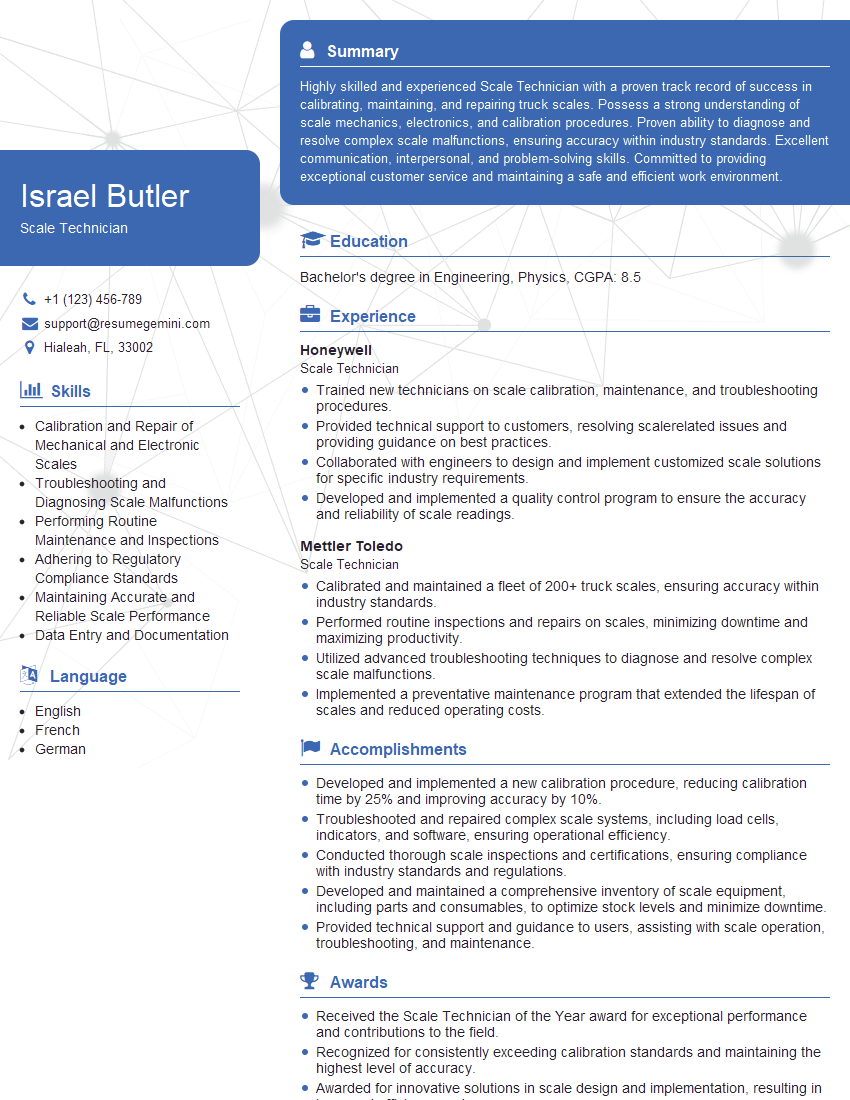
Mastering proficiency in using weighing software opens doors to diverse and rewarding career opportunities in various industries. A strong understanding of these tools demonstrates valuable technical skills and attention to detail, highly sought after by employers. To maximize your job prospects, create a compelling and ATS-friendly resume that effectively showcases your expertise. ResumeGemini can be a valuable tool to help you build a professional and impactful resume that highlights your skills and experience. Examples of resumes tailored to Proficiency in using weighing software are available to guide you. Invest time in crafting a strong resume – it’s your first impression!
Explore more articles
Users Rating of Our Blogs
Share Your Experience
We value your feedback! Please rate our content and share your thoughts (optional).
What Readers Say About Our Blog
Really detailed insights and content, thank you for writing this detailed article.
IT gave me an insight and words to use and be able to think of examples