The thought of an interview can be nerve-wracking, but the right preparation can make all the difference. Explore this comprehensive guide to Proficient in Preventive Maintenance Scheduling interview questions and gain the confidence you need to showcase your abilities and secure the role.
Questions Asked in Proficient in Preventive Maintenance Scheduling Interview
Q 1. Explain the difference between preventive and predictive maintenance.
Preventive maintenance (PM) and predictive maintenance (PdM) are both proactive approaches to equipment maintenance, but they differ significantly in their approach. PM focuses on preventing failures by performing scheduled maintenance tasks at predetermined intervals, based on manufacturer recommendations or historical data. Think of it like changing your car’s oil every 3,000 miles – regardless of its current condition. PdM, on the other hand, relies on predicting potential failures by continuously monitoring equipment performance using sensors and data analysis. It allows for maintenance only when it’s actually needed, maximizing equipment uptime and minimizing unnecessary interventions. Imagine having sensors in your car that predict when the oil needs changing based on actual wear and tear, rather than a fixed mileage.
In essence, PM is time-based, while PdM is condition-based. PM is simpler to implement but can lead to over-maintenance, while PdM is more complex but offers greater efficiency and cost savings in the long run. Many organizations use a combination of both approaches for optimal results.
Q 2. Describe your experience with Computerized Maintenance Management Systems (CMMS).
I have extensive experience with various CMMS (Computerized Maintenance Management Systems), including IBM Maximo, SAP PM, and UpKeep. In my previous role at a large manufacturing plant, I was responsible for implementing and managing Maximo, overseeing the entire maintenance lifecycle from scheduling and work order generation to inventory management and reporting. This involved configuring the system to reflect our specific maintenance strategies, training personnel on its use, and continuously optimizing its functionality to improve efficiency. For example, I developed customized reports to track key performance indicators (KPIs) like mean time between failures (MTBF) and mean time to repair (MTTR), enabling data-driven decision-making for maintenance optimization. I also integrated Maximo with our ERP system to ensure seamless data flow and improved inventory management.
My experience extends to troubleshooting system issues, managing user access and security, and performing regular system backups and updates. I am proficient in data analysis using CMMS data to identify trends and patterns in equipment failures, informing both preventive and predictive maintenance strategies.
Q 3. How do you prioritize preventive maintenance tasks?
Prioritizing preventive maintenance tasks requires a structured approach, considering factors such as criticality, risk, and cost. I typically employ a risk-based prioritization matrix, assigning weights to each factor.
- Criticality: How essential is the equipment to overall operations? A critical piece of equipment with potential for catastrophic failure receives higher priority.
- Risk: What’s the likelihood and impact of failure? A high-risk piece of equipment, even if not critical, might warrant high priority.
- Cost: What’s the cost of maintenance versus the cost of failure? A relatively inexpensive PM task preventing a costly downtime event should be prioritized.
For example, a conveyor belt in a production line is both critical and high-risk; its failure would halt the entire operation. Therefore, its PM tasks would be given the highest priority, even if some other equipment’s PM tasks are slightly cheaper. I use tools like Pareto analysis to identify the 20% of equipment responsible for 80% of downtime, focusing maintenance resources on these critical assets. Software like CMMS helps in automating this prioritization based on configurable rules and algorithms.
Q 4. What key performance indicators (KPIs) do you use to measure the effectiveness of a preventive maintenance program?
Several KPIs are crucial to measure the effectiveness of a preventive maintenance program. These include:
- Mean Time Between Failures (MTBF): This metric measures the average time between equipment failures. A higher MTBF indicates a more effective maintenance program.
- Mean Time To Repair (MTTR): This measures the average time it takes to repair failed equipment. A lower MTTR demonstrates quicker response times and efficient repair processes.
- Overall Equipment Effectiveness (OEE): This holistic KPI combines availability, performance, and quality to gauge the overall efficiency of equipment. A higher OEE shows a healthy and productive maintenance program.
- Maintenance Cost per Unit Produced: This helps assess the cost-effectiveness of the maintenance program relative to production output.
- Number of Reactive Maintenance Events: A decrease in reactive maintenance requests indicates a successful PM strategy.
By tracking these KPIs over time, we can identify areas for improvement and optimize the maintenance strategy to achieve desired results. Regular reporting and analysis of these KPIs are essential to demonstrate the value of the PM program to stakeholders.
Q 5. How do you handle unexpected equipment failures during scheduled maintenance?
Unexpected equipment failures during scheduled maintenance are a challenge. A robust plan is essential, involving:
- Prioritization: Immediately assess the severity of the unexpected failure and its impact on operations. Prioritize repairs based on the criticality of the affected equipment and its impact on production.
- Resource Allocation: Reallocate maintenance personnel and resources to address the urgent failure. This might involve adjusting the scheduled maintenance plan, potentially delaying some lower-priority tasks.
- Communication: Inform relevant stakeholders – production supervisors, management, and potentially clients – about the situation, projected downtime, and recovery plans.
- Root Cause Analysis: Once the immediate issue is addressed, conduct a root cause analysis to identify underlying issues that might have contributed to the failure, and to prevent recurrence. This might involve reviewing maintenance records, examining failed components and exploring potential systematic problems.
A well-stocked inventory of spare parts and effective communication protocols help minimize the impact of such situations. Flexibility and quick decision-making are key during such events.
Q 6. What methods do you use to optimize preventive maintenance schedules?
Optimizing preventive maintenance schedules requires a data-driven approach. I use several methods:
- Data Analysis: Analyzing historical maintenance data, including failure rates, downtime costs, and equipment performance metrics, helps to identify patterns and trends. This data informs adjustments to maintenance intervals, task frequencies, and resource allocation.
- Reliability-Centered Maintenance (RCM): This systematic approach analyzes the potential failure modes of equipment and determines the most effective maintenance strategies to prevent failures. It helps prioritize maintenance tasks based on their impact on equipment reliability and safety.
- Predictive Maintenance Integration: Incorporating predictive maintenance techniques, such as vibration analysis or oil analysis, allows for condition-based maintenance, optimizing schedules based on actual equipment condition rather than fixed intervals. This reduces unnecessary maintenance and improves uptime.
- Simulation and Modeling: Simulation tools can model different maintenance strategies and predict their impact on equipment reliability and operational costs, enabling optimization of maintenance schedules.
Continuous monitoring and improvement are vital. Regularly reviewing and adjusting the maintenance schedule based on performance data ensures its effectiveness over time.
Q 7. Explain your experience with root cause analysis in relation to maintenance.
Root cause analysis (RCA) is critical in preventing equipment failures. When a failure occurs, even during preventive maintenance, I use various RCA techniques, such as the 5 Whys, fault tree analysis (FTA), and fishbone diagrams, to identify the underlying cause of the problem, rather than simply addressing the immediate symptom.
For example, if a pump fails during a scheduled PM, simply replacing the pump doesn’t address the root cause. Using the 5 Whys, we might discover that the pump failed because of excessive vibration, which was caused by misalignment, which resulted from improper installation during a previous maintenance event, which stemmed from insufficient training for the technician. Understanding this chain of events helps us implement corrective actions to prevent future failures, such as improved training protocols, better installation procedures, and more frequent alignment checks. This data is then fed back into the CMMS system to improve maintenance strategies and prevent similar failures in the future.
Beyond solving immediate problems, RCA helps to continuously improve the maintenance program, enhance the reliability of equipment and ultimately reduce overall maintenance costs.
Q 8. How do you ensure compliance with safety regulations during maintenance activities?
Ensuring safety during maintenance is paramount. It’s not just about ticking boxes; it’s about creating a culture of safety. My approach begins with a thorough risk assessment for every maintenance task, identifying potential hazards like electrical shock, working at heights, or exposure to hazardous materials. This assessment informs the development of a detailed safety plan, including the necessary Personal Protective Equipment (PPE), lockout/tagout procedures (to prevent accidental equipment startup), and emergency response protocols.
For instance, when working on high-voltage equipment, we’d implement a strict lockout/tagout procedure, verifying the equipment is de-energized multiple times before starting any work. Team members receive regular safety training, and their compliance is monitored through observation and documentation. We also conduct regular safety audits to identify and rectify any potential hazards before they result in accidents. Pre-job safety briefings are mandatory, ensuring everyone understands the specific risks and safety measures for the day’s tasks. Finally, maintaining clear and up-to-date safety documentation is crucial for compliance and traceability.
Q 9. Describe your experience with developing and implementing preventive maintenance plans.
Developing and implementing preventive maintenance plans is a systematic process. It starts with a comprehensive equipment inventory, identifying critical assets and their failure modes. I then leverage historical maintenance data, manufacturer’s recommendations, and industry best practices to determine optimal maintenance intervals and tasks for each asset. The plan isn’t static; it’s regularly reviewed and updated based on performance data and changes in operational needs.
For example, in a previous role, I developed a preventive maintenance plan for a large manufacturing plant’s conveyor system. This involved analyzing past repair records to identify recurring issues, such as belt slippage and motor bearing wear. Based on this analysis, I established a schedule for regular belt tension checks, lubrication of bearings, and motor inspections, significantly reducing downtime and maintenance costs. The implementation involved creating detailed work orders, assigning tasks to technicians, and tracking completion through a CMMS (Computerized Maintenance Management System). I also incorporated Key Performance Indicators (KPIs) to monitor the effectiveness of the plan, allowing for ongoing adjustments and improvements.
Q 10. How do you communicate maintenance schedules and updates to relevant personnel?
Effective communication is essential. I use a multi-faceted approach. Our CMMS system automatically generates and distributes maintenance schedules and updates to technicians through email and mobile notifications. This ensures everyone has access to the latest information. We also hold regular team meetings to discuss upcoming maintenance activities, address any challenges, and ensure everyone is aligned. For larger projects or significant schedule changes, I’ll use formal communication methods such as memos or project briefings. Transparency is key – keeping everyone informed prevents misunderstandings and delays.
For example, if a critical piece of equipment requires unscheduled maintenance, I’ll immediately notify the production team, providing an estimated downtime and outlining contingency plans. This proactive communication minimizes disruptions and maintains trust.
Q 11. How do you manage spare parts inventory for preventive maintenance?
Managing spare parts is crucial for minimizing downtime. My approach involves a combination of techniques. First, a thorough analysis of historical data identifies the most frequently replaced parts. This informs the establishment of minimum stock levels for these critical items. For less frequently used parts, we maintain a smaller inventory, relying on just-in-time ordering from suppliers. The CMMS helps track inventory levels, automatically generating purchase requisitions when stock falls below the minimum threshold.
We also regularly review and optimize the spare parts inventory, considering factors like obsolescence, storage costs, and lead times. A well-managed inventory prevents stockouts and reduces waste. Regularly reviewing the efficiency of our ordering process ensures that we are not overstocking on items and that we have a reliable supply chain.
Q 12. What software or tools do you use for preventive maintenance scheduling?
I have extensive experience using several CMMS (Computerized Maintenance Management System) software packages, including IBM Maximo, SAP PM, and Fiix. These systems are invaluable for scheduling, tracking, and analyzing maintenance activities. They provide features like work order management, inventory tracking, preventive maintenance scheduling, and reporting capabilities. Choosing the right software depends on the organization’s size, complexity, and specific needs.
For instance, in a previous project, we implemented IBM Maximo to manage the preventive maintenance of a large fleet of vehicles. This improved maintenance scheduling efficiency, reduced downtime, and provided valuable data for optimizing maintenance strategies. The software’s reporting capabilities helped us identify trends, allowing for proactive maintenance and the reduction of unexpected failures.
Q 13. How do you handle changes in production schedules that impact maintenance?
Changes in production schedules require flexibility and proactive communication. When a change affects planned maintenance, I work closely with the production team to reschedule maintenance activities without compromising safety or production targets. This might involve prioritizing critical maintenance tasks, adjusting schedules, or identifying alternative maintenance windows. The CMMS is instrumental in this process, allowing for quick and easy updates to the maintenance schedule and communication of those changes to the relevant teams.
For example, if an unexpected rush order necessitates a change in the production schedule, I would immediately review the impacted maintenance tasks and determine if they can be postponed without significant risk. I would then coordinate with the production team to identify an alternative time window, ensuring that both production and maintenance needs are met. This requires strong communication and collaboration between the maintenance and production teams.
Q 14. Describe your experience with different preventive maintenance strategies (e.g., time-based, condition-based).
I have experience with both time-based and condition-based preventive maintenance strategies. Time-based maintenance follows a predetermined schedule, performing maintenance tasks at fixed intervals (e.g., lubricating a machine every 1000 hours). This approach is simple and easy to implement but can lead to unnecessary maintenance if the equipment is in good condition or insufficient maintenance if it’s deteriorating faster than expected. Condition-based maintenance, on the other hand, relies on real-time data from sensors and other monitoring technologies to determine when maintenance is needed. This approach is more efficient as it targets maintenance based on actual equipment condition, reducing unnecessary work and optimizing maintenance costs.
For example, in a manufacturing setting, using vibration sensors on machinery enables condition-based maintenance. If the vibration levels exceed a pre-defined threshold, it triggers an alert, indicating a potential problem requiring attention. This proactive approach helps prevent catastrophic failures and costly downtime. Often, a blend of both strategies proves most effective, leveraging the simplicity of time-based for routine tasks and the efficiency of condition-based for critical equipment.
Q 15. How do you integrate preventive maintenance with overall production goals?
Integrating preventive maintenance (PM) with production goals requires a strategic approach that balances equipment uptime with production targets. It’s not about simply scheduling PM; it’s about optimizing the schedule to minimize disruptions while maximizing equipment reliability.
For example, imagine a manufacturing plant with multiple production lines. Instead of scheduling PM during peak production hours, we’d analyze production schedules and identify periods of lower demand or planned downtime. This minimizes the impact on output. We might also prioritize PM on critical equipment that directly impacts production throughput, ensuring these assets receive attention before less critical ones. Using a computerized maintenance management system (CMMS) is crucial here, allowing us to visualize production schedules alongside PM schedules and make informed adjustments.
Furthermore, we can use key performance indicators (KPIs) like Overall Equipment Effectiveness (OEE) to measure the impact of PM on production. By tracking OEE before and after implementing optimized PM schedules, we can quantitatively demonstrate the value of strategic PM planning and make data-driven improvements.
Career Expert Tips:
- Ace those interviews! Prepare effectively by reviewing the Top 50 Most Common Interview Questions on ResumeGemini.
- Navigate your job search with confidence! Explore a wide range of Career Tips on ResumeGemini. Learn about common challenges and recommendations to overcome them.
- Craft the perfect resume! Master the Art of Resume Writing with ResumeGemini’s guide. Showcase your unique qualifications and achievements effectively.
- Don’t miss out on holiday savings! Build your dream resume with ResumeGemini’s ATS optimized templates.
Q 16. How do you assess the risk associated with postponing preventive maintenance tasks?
Postponing preventive maintenance tasks introduces several risks, and assessing these requires a systematic approach. The key is to consider the potential consequences – both immediate and long-term – of delaying PM.
- Increased risk of failure: The longer a machine operates without preventative maintenance, the higher the chance of unexpected breakdown. This leads to downtime, production losses, and potential safety hazards.
- Higher repair costs: A small issue neglected during preventative maintenance can escalate into a major repair, significantly increasing costs. A simple bearing replacement during PM might cost a few hundred dollars, while an emergency bearing replacement after a catastrophic failure could cost tens of thousands.
- Reduced equipment lifespan: Consistent, scheduled maintenance helps prolong the lifespan of equipment. Postponing maintenance accelerates wear and tear, shortening its useful life.
- Safety risks: Failing to address critical safety components during PM can lead to workplace accidents. This has significant safety and ethical ramifications.
To assess risk, I would use a Failure Modes and Effects Analysis (FMEA) or similar risk assessment methodology. This involves identifying potential failure modes, their likelihood, and their impact on production. This helps prioritize tasks and determine acceptable postponement periods based on a comprehensive risk profile.
Q 17. Explain your experience with creating and using work orders for preventive maintenance.
Work orders are the backbone of any effective preventive maintenance program. My experience involves creating detailed, clear, and comprehensive work orders that ensure maintenance tasks are completed accurately and efficiently. I’ve utilized both paper-based and computerized systems, but I strongly favor CMMS software.
A well-structured work order includes:
- Equipment identification: Clear identification of the equipment to be serviced.
- Task description: Precise instructions on what needs to be done, including specific procedures and measurements.
- Parts list: A list of all necessary parts and materials.
- Scheduled date/time: A clearly defined schedule to avoid conflicts.
- Assigned technician: The designated individual responsible.
- Completion verification: A mechanism to record completion and confirmation of work done.
In my previous role, we used a CMMS that automated work order generation based on equipment schedules and history. This reduced administrative overhead and improved accuracy. We could also track completion times, parts usage, and technician performance.
For example, a work order for a pump might include steps like inspecting seals, lubricating bearings, and checking for leaks, all with specific tolerances and measurement details. This ensures consistency and high-quality maintenance.
Q 18. How do you track and report on the performance of preventive maintenance activities?
Tracking and reporting on PM performance is essential for continuous improvement. Key metrics provide insights into the effectiveness of the program.
We use a CMMS to gather data on:
- PM completion rates: Percentage of scheduled PM tasks completed on time.
- Mean Time Between Failures (MTBF): Average time between equipment failures, a key indicator of PM efficacy.
- Mean Time To Repair (MTTR): Average time it takes to fix equipment after failure.
- Downtime due to equipment failure: Quantifies the cost of equipment failures.
- Maintenance costs: Tracks the total cost of PM and reactive maintenance.
- Parts usage: Monitors consumption of parts to identify potential issues.
We generate regular reports, both automated and manually created. Automated reports from the CMMS show key metrics across all equipment. Manually created reports might delve deeper into specific equipment or analyze trends over time. Visualizations, such as charts and graphs, are essential for effective communication and identifying areas for improvement.
For instance, a report might show a rising trend in MTBF, indicating that PM is successfully preventing failures. Conversely, a high MTTR could highlight areas where repair processes need optimization.
Q 19. How do you identify and address recurring maintenance issues?
Recurring maintenance issues indicate underlying problems that need addressing beyond simple fixes. Identifying and solving these issues is crucial for optimizing the maintenance program and preventing future problems. A root cause analysis is essential.
My approach involves:
- Data analysis: Analyzing historical maintenance data to identify equipment with frequent issues. This might involve identifying patterns in failures, identifying common causes across different pieces of equipment, or examining the timing of issues to uncover links to operating conditions.
- Root cause analysis: Using techniques like the ‘5 Whys’ to dig deeper into the reasons behind recurring failures. This helps to move beyond the symptoms and identify the underlying causes.
- Corrective actions: Implementing changes in operation, maintenance procedures, or even equipment upgrades to address the root cause of the problem.
- Preventive measures: Modifying PM schedules or tasks to prevent future occurrences. This might include more frequent inspections, upgraded parts, or operator training.
For example, if a particular pump consistently fails due to overheating, we wouldn’t simply keep replacing the pump. Instead, we would investigate the cause of the overheating (e.g., inadequate cooling, clogged filters). The solution could involve improved cooling systems, regular filter cleaning, or operator training to ensure proper operation.
Q 20. What is your experience with using data analytics to improve preventive maintenance?
Data analytics plays a vital role in modern preventive maintenance. By leveraging data, we can move from reactive maintenance to predictive maintenance, significantly improving efficiency and reducing costs.
My experience includes using data analytics to:
- Predict equipment failures: Using machine learning algorithms to analyze sensor data and predict potential failures before they occur. This allows for proactive maintenance, preventing downtime.
- Optimize PM schedules: Analyzing historical data to identify optimal PM intervals for different equipment based on actual failure rates and operational conditions.
- Identify maintenance patterns: Uncovering hidden correlations between operating parameters and equipment failures to identify weak points in the system.
- Improve maintenance resource allocation: Optimizing the allocation of maintenance personnel and resources based on predicted workload and equipment criticality.
For example, using vibration data from sensors on a motor, we could detect bearing wear before it leads to a catastrophic failure. This allows for a scheduled bearing replacement well in advance of a breakdown, preventing unplanned downtime and associated costs.
Q 21. How do you train and supervise maintenance personnel on preventive maintenance procedures?
Training and supervising maintenance personnel are crucial for the success of any PM program. Well-trained technicians are essential for performing tasks correctly and efficiently.
My training approach is multi-faceted:
- On-the-job training: Experienced technicians mentor new hires, providing hands-on training and guidance.
- Formal training courses: Attending external courses on specific equipment or maintenance techniques.
- Manufacturer training: Manufacturer-provided training on specific equipment models and systems.
- Regular meetings and updates: Keeping technicians informed about new procedures, best practices, and safety guidelines.
- Use of manuals and documentation: Providing technicians with clear, concise, and up-to-date maintenance manuals.
- Performance reviews and feedback: Regularly assessing performance to identify areas for improvement and providing constructive feedback.
Supervision involves regular checks on work quality, adherence to procedures, and safety protocols. We leverage the CMMS to monitor technician work order completion rates, response times, and any reported issues. This data helps identify potential areas where additional training or support might be needed.
Q 22. How do you handle conflicting maintenance priorities?
Prioritizing conflicting maintenance tasks requires a systematic approach. I use a multi-criteria decision analysis (MCDA) framework, considering factors like criticality, risk, cost of downtime, and the urgency of the situation. This isn’t just about which task is ‘due’ first; it’s about understanding the potential consequences of delaying one task versus another.
For example, imagine a situation where a critical piece of equipment needs scheduled maintenance, but a minor issue has arisen with another system that could potentially cause inconvenience. Using MCDA, I would weigh the potential loss from downtime of the critical equipment (perhaps impacting the entire production line) against the inconvenience caused by delaying the minor repair. A scoring system based on predefined criteria enables a data-driven, rather than intuitive, decision. This approach ensures that the most impactful tasks are addressed first, minimizing overall risk and maximizing operational efficiency.
Software tools can help automate parts of this process, allowing for the input and weighting of various factors, calculating an overall priority score for each maintenance task. Ultimately, transparent communication with stakeholders is key to ensuring everyone understands the rationale behind the chosen priority.
Q 23. Describe your experience with budgeting for preventive maintenance activities.
Budgeting for preventive maintenance requires a thorough understanding of both current and future needs. I begin by analyzing historical maintenance data to identify trends and patterns in equipment failures. This data informs accurate predictions of future maintenance costs, considering factors like inflation and potential equipment upgrades. Then, I categorize maintenance tasks – from routine inspections to major overhauls – and assign costs to each. This allows for the creation of a comprehensive budget, broken down into manageable line items.
A critical part of budgeting is allocating funds not just for immediate needs, but also for unforeseen circumstances. Contingency planning is crucial. Unexpected equipment failures can significantly impact operational efficiency and profitability. Setting aside a percentage of the budget for unexpected repairs prevents disruptions caused by a lack of funds. Regularly reviewing and adjusting the budget based on actual spending and equipment performance is essential to ensure accurate forecasting and efficient resource allocation. I utilize CMMS (Computerized Maintenance Management System) software to automate much of this data collection and analysis process, streamlining the budget creation and management steps.
Q 24. How do you measure the return on investment (ROI) of preventive maintenance?
Measuring the ROI of preventive maintenance isn’t simply about subtracting maintenance costs from avoided repair costs. It requires a holistic approach that considers both direct and indirect benefits. Direct benefits include reduced repair costs, extended equipment lifespan, and fewer unplanned downtime events. Indirect benefits might encompass improved product quality, enhanced safety, increased production output, and improved employee morale (through a safer, more reliable work environment).
To calculate ROI, I would compare the total cost of preventive maintenance (including labor, parts, and materials) with the cost savings from avoided breakdowns and other tangible benefits. This calculation might involve comparing the cost of preventive maintenance over a set period (e.g., a year) to the costs incurred during that same period in the past (before a robust preventive maintenance program was in place). The difference represents the direct cost savings. To this, I would add the value of the intangible benefits using estimates based on data or industry benchmarks. The resulting figure shows the return in comparison to the investment made in preventive maintenance. It’s essential to present this ROI in a clear, easily understood manner for stakeholders.
Q 25. How do you stay current with the latest trends and technologies in preventive maintenance?
Staying current in the field of preventive maintenance involves continuous learning. I actively participate in industry conferences and webinars, attend training sessions offered by equipment manufacturers and software providers, and engage with online professional communities. This keeps me abreast of the latest technological advancements and best practices.
Specifically, I regularly review industry publications, journals, and online resources specializing in CMMS software, predictive maintenance technologies (such as vibration analysis, thermal imaging, and machine learning), and data analytics techniques applied to equipment maintenance. I also actively seek opportunities to network with other professionals in the field, exchanging insights and learning from their experiences. By actively participating in these activities, I remain at the forefront of the advancements in preventive maintenance.
Q 26. How would you improve the efficiency of a current preventive maintenance program?
Improving the efficiency of a preventive maintenance program often begins with a thorough review of existing processes. This involves analyzing data collected through the CMMS to identify areas for improvement. Often, inefficiencies stem from outdated or incomplete work orders, poorly defined maintenance procedures, or inadequate training for maintenance personnel.
To enhance efficiency, I would implement the following strategies:
- Optimize Maintenance Schedules: Utilize data-driven predictive maintenance techniques (e.g., condition monitoring) to move from time-based to condition-based maintenance, performing maintenance only when necessary rather than on a fixed schedule.
- Improve Work Order Management: Streamline work order creation, routing, and completion processes, ensuring clear communication and adequate resources.
- Implement Training Programs: Provide maintenance staff with adequate training on new equipment and technologies to enhance their efficiency and effectiveness.
- Invest in Technology: Explore the use of advanced technologies such as mobile CMMS platforms, IoT sensors, and predictive analytics to further automate and improve maintenance processes.
- Regular Performance Reviews: Monitor key performance indicators (KPIs) and conduct regular reviews to ensure that the program remains effective and efficient.
By focusing on these areas, we can significantly improve efficiency and reduce overall maintenance costs.
Q 27. Describe a time you had to make a critical decision regarding maintenance scheduling.
In a previous role, we faced a critical decision regarding a major piece of manufacturing equipment. A planned shutdown for preventative maintenance was scheduled during peak production season. However, a critical component showed signs of potential failure, suggesting the need for immediate attention. Delaying the maintenance carried a high risk of significant production downtime and financial losses.
My decision involved weighing the risks and benefits of both options: continuing with the scheduled maintenance, potentially impacting production, or postponing scheduled maintenance to address the immediate issue, risking a more extensive failure later. I analyzed historical data on equipment failure rates, the potential impact on production output, and the associated costs. After presenting my analysis to the management team, we decided to prioritize addressing the critical component immediately with a more limited intervention to minimize production disruption while still scheduling the larger preventative maintenance shortly after. This approach minimized the overall risk to production while still ensuring necessary preventative measures were eventually completed. Careful communication with all stakeholders was essential to ensure buy-in and a smooth execution of the revised plan.
Q 28. How do you ensure data accuracy and integrity within your CMMS?
Data accuracy and integrity within a CMMS are paramount for effective preventive maintenance. I employ several strategies to ensure this. First, I establish clear data entry procedures and provide comprehensive training to all personnel involved in data entry. This includes strict adherence to standardized terminology and data formats.
Regular data audits are conducted to identify and correct any inconsistencies or errors. This involves comparing CMMS data with actual maintenance records and equipment logs. Data validation rules are implemented within the CMMS to prevent the entry of incorrect or illogical data. For example, the system might be programmed to flag instances where a maintenance task is completed before its scheduled start time. Finally, user access controls are implemented to restrict data modification to authorized personnel only. This multi-layered approach helps to maintain the accuracy and integrity of the data stored in the CMMS, improving the reliability of maintenance scheduling and planning activities.
Key Topics to Learn for Proficient in Preventive Maintenance Scheduling Interview
- Understanding Preventive Maintenance Strategies: Explore various PM strategies (e.g., time-based, condition-based, risk-based) and their practical applications in different industrial settings.
- Developing and Implementing PM Schedules: Learn how to analyze equipment criticality, failure modes, and maintenance costs to create effective and cost-optimized PM schedules. Consider using CMMS (Computerized Maintenance Management System) software integration.
- Data Analysis for PM Optimization: Understand how to collect, analyze, and interpret maintenance data to identify trends, predict failures, and improve the efficiency of PM schedules. This includes understanding key performance indicators (KPIs) relevant to maintenance.
- Spare Parts Management within PM Scheduling: Discuss strategies for effective spare parts inventory management to ensure timely repairs and minimize downtime during preventive maintenance activities.
- Communication and Collaboration in PM: Highlight the importance of clear communication and collaboration with maintenance technicians, operations teams, and management to ensure successful PM implementation.
- Root Cause Analysis and Corrective Actions: Even with preventive maintenance, failures happen. Understand how to perform root cause analysis to prevent recurring issues and improve the overall PM program.
- Budgeting and Cost Control in PM: Learn how to effectively budget for PM activities, track expenses, and justify the return on investment (ROI) of a robust PM program.
- Regulatory Compliance and Safety in PM: Discuss the importance of adhering to relevant safety regulations and industry best practices during preventive maintenance procedures.
Next Steps
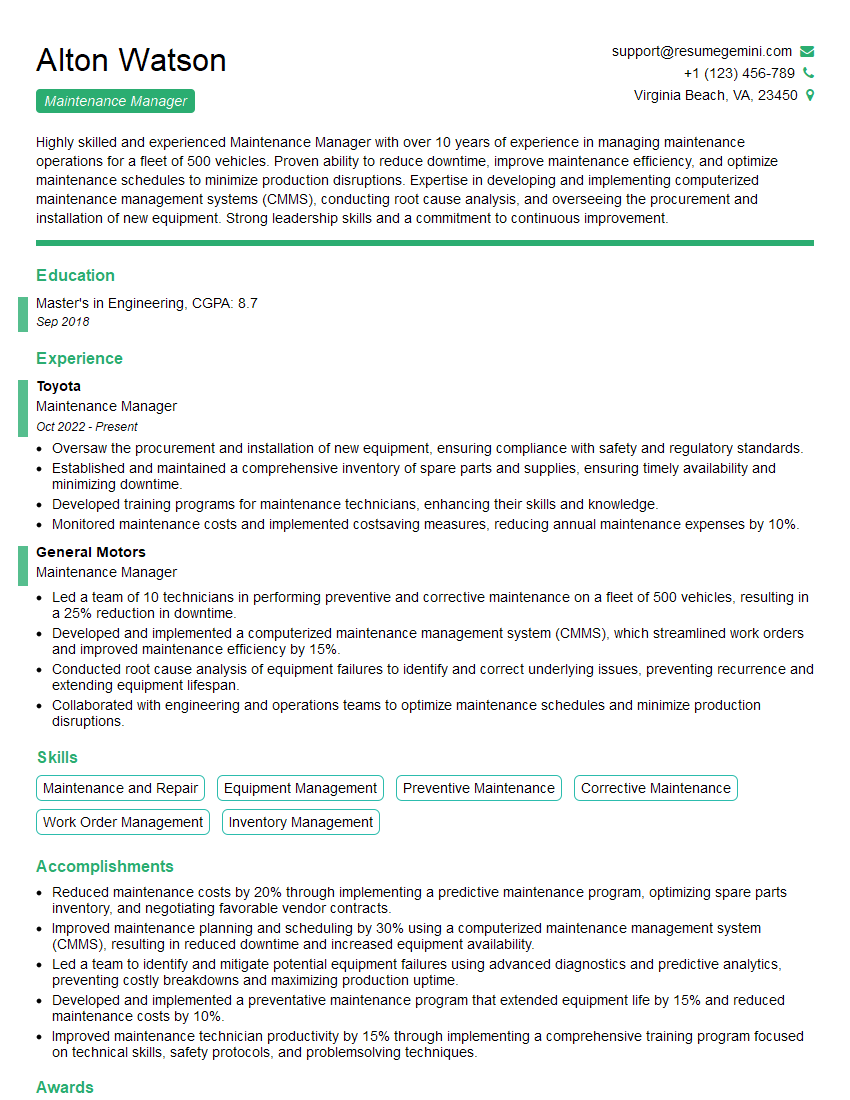
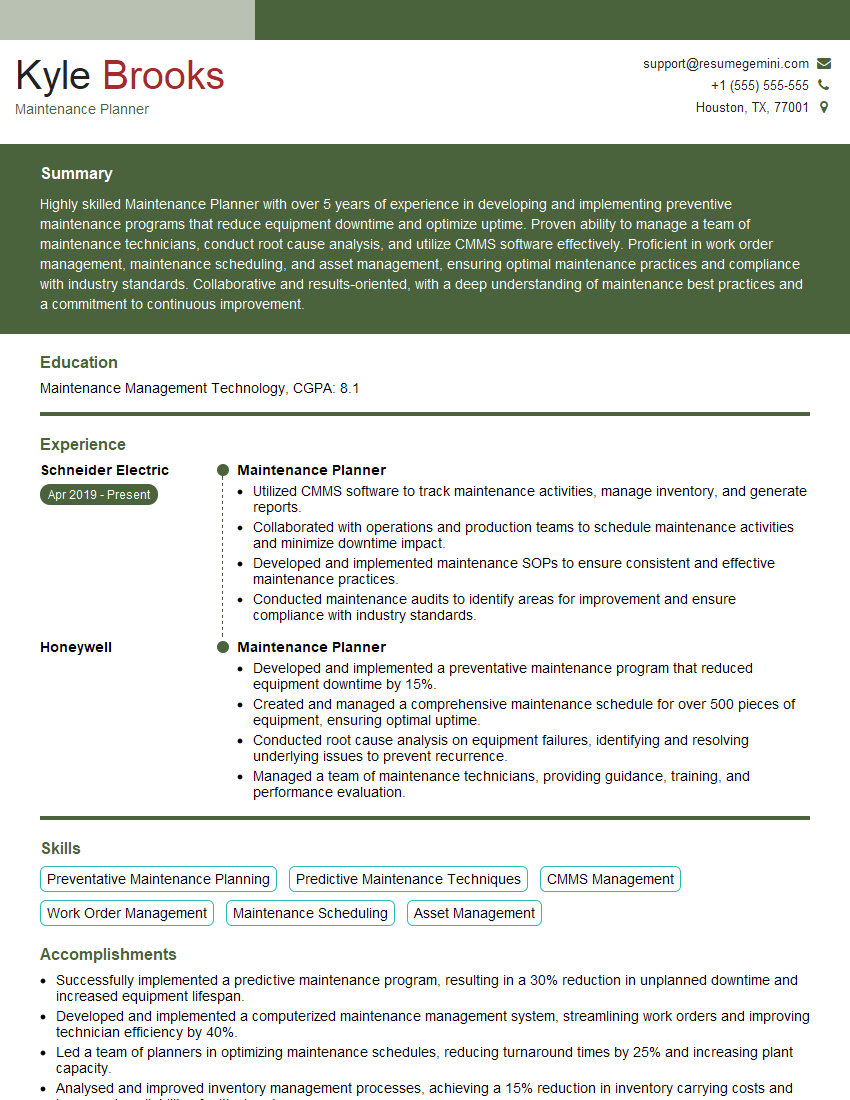
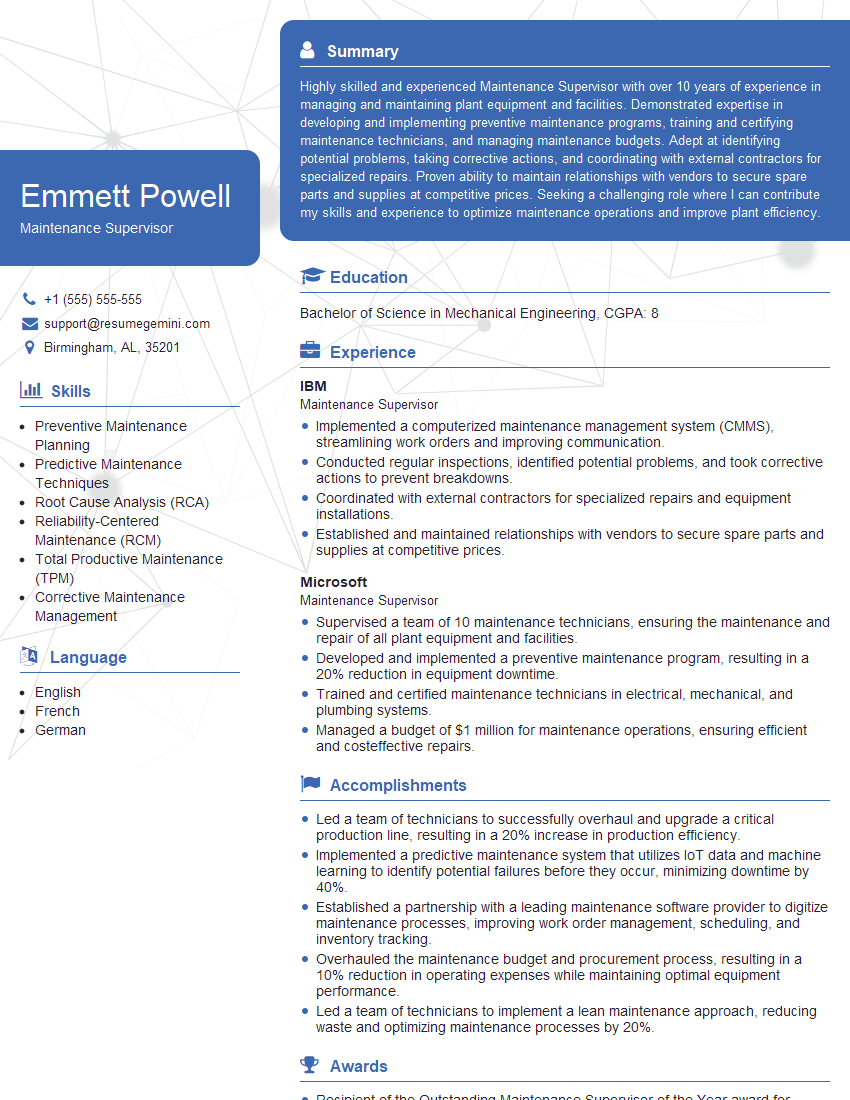
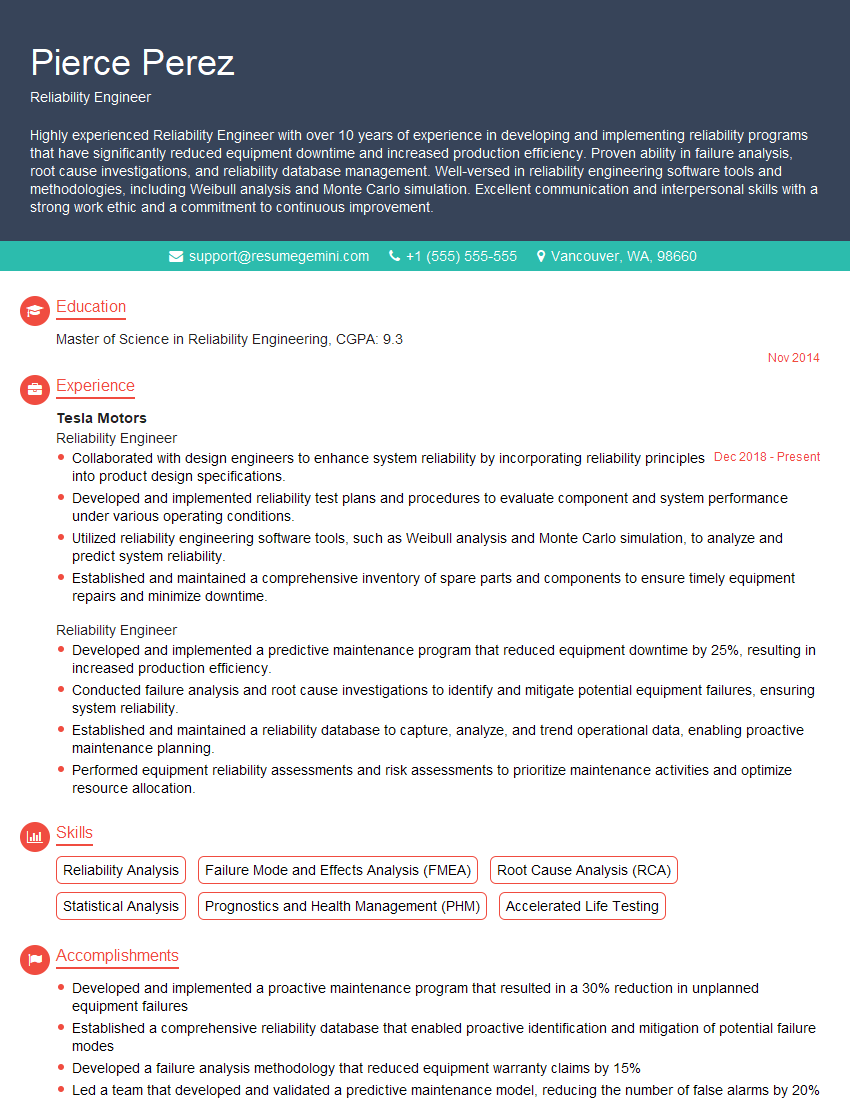
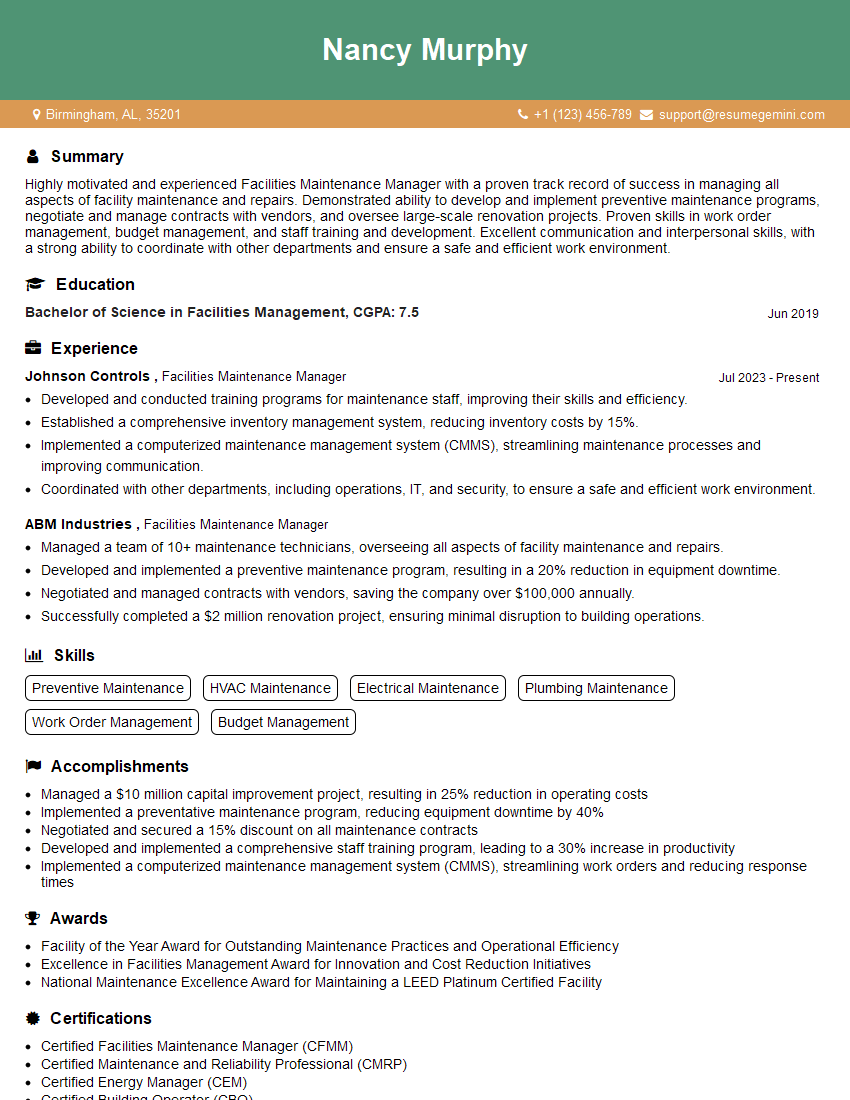
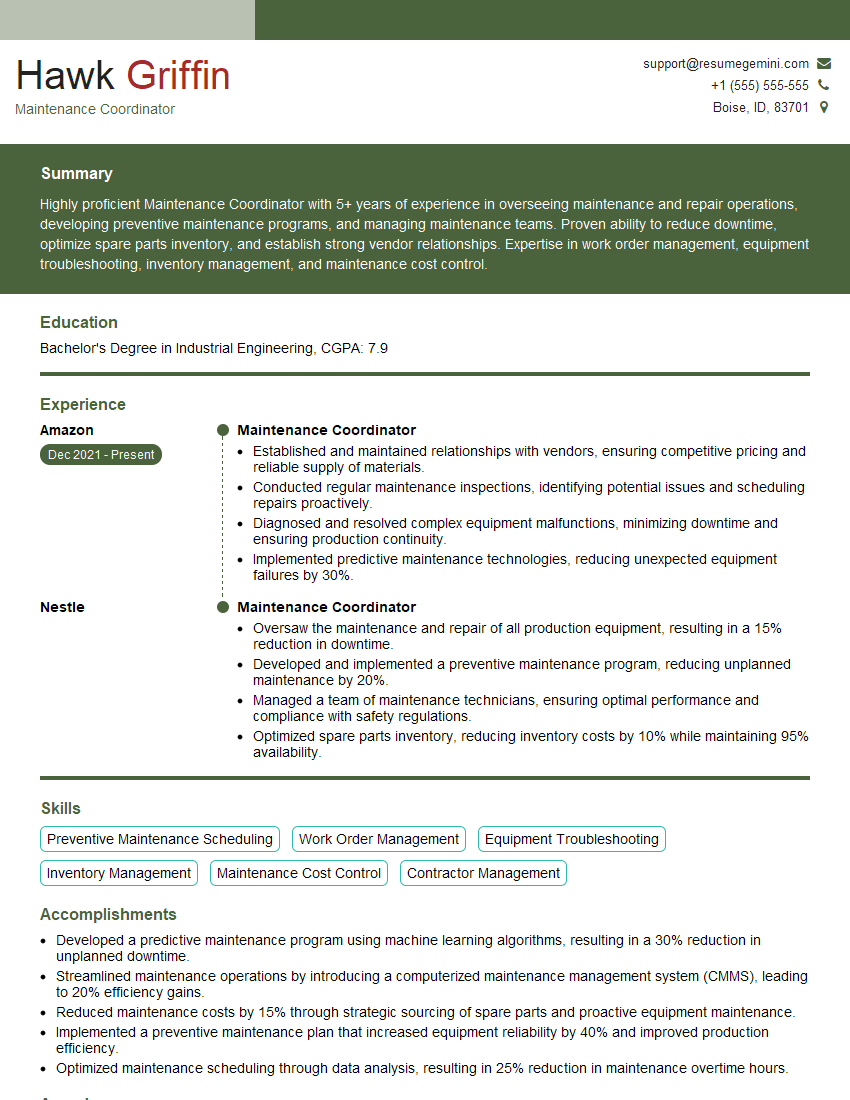
Mastering Proficient in Preventive Maintenance Scheduling significantly enhances your career prospects in various industries, showcasing your ability to optimize operations, reduce downtime, and improve overall efficiency. A strong resume is crucial for highlighting these skills to potential employers. Creating an ATS-friendly resume is vital for getting your application noticed. ResumeGemini is a trusted resource that can help you build a professional and impactful resume tailored to your skills and experience. Examples of resumes specifically designed for candidates proficient in Preventive Maintenance Scheduling are available to guide you.
Explore more articles
Users Rating of Our Blogs
Share Your Experience
We value your feedback! Please rate our content and share your thoughts (optional).
What Readers Say About Our Blog
Really detailed insights and content, thank you for writing this detailed article.
IT gave me an insight and words to use and be able to think of examples