Are you ready to stand out in your next interview? Understanding and preparing for Proficient in using educational software and resources for personalized instruction interview questions is a game-changer. In this blog, we’ve compiled key questions and expert advice to help you showcase your skills with confidence and precision. Let’s get started on your journey to acing the interview.
Questions Asked in Proficient in using educational software and resources for personalized instruction Interview
Q 1. What experience do you have with various Learning Management Systems (LMS) such as Moodle, Canvas, or Blackboard?
My experience with Learning Management Systems (LMS) is extensive, encompassing Moodle, Canvas, and Blackboard. I’ve used them not just as a user, but as a designer and administrator, configuring settings, customizing interfaces, and troubleshooting issues. For instance, in a previous role at a community college, I used Moodle to create a fully integrated online course, including assignment submission, grading rubrics, discussion forums, and integrated quizzes. This involved creating different roles and permissions for students and teaching assistants, managing course calendars, and using Moodle’s built-in reporting tools to track student progress. With Canvas, I’ve focused more on leveraging its features for personalized learning, such as creating different learning pathways based on student needs and using the analytics dashboards to monitor individual student performance. Blackboard, in my experience, has been more focused on larger institutional implementations, where I worked on migrating courses from a legacy system to a more modern version, ensuring a smooth transition for instructors and students.
Q 2. Describe your experience designing personalized learning pathways using educational software.
Designing personalized learning pathways involves understanding individual student needs and adapting the learning experience to cater to those needs. I use a variety of software tools to achieve this. For example, in a recent project, I used a combination of Canvas and H5P (an interactive content authoring tool) to create branching scenarios. Students started with a common assessment, and based on their performance, they were directed to different modules focusing on their areas of weakness. Students who excelled in a particular area could access enrichment materials, while those struggling received additional support and tailored resources. I’ve also used adaptive learning platforms like Khan Academy, which automatically adjusts the difficulty level based on student performance, providing immediate feedback and personalized practice. The key is to use the software not just to deliver content, but to create dynamic learning experiences that adapt and respond to individual student progress in real-time.
Q 3. How do you assess student progress in a personalized learning environment?
Assessing student progress in a personalized learning environment goes beyond simple grades. It requires a multifaceted approach. I use a combination of formative and summative assessments. Formative assessments, like quizzes within modules, and real-time feedback through interactive exercises within the LMS, provide ongoing data on student understanding. This allows for timely intervention and adjustments to the learning pathway. Summative assessments, such as projects or final exams, evaluate overall learning outcomes. However, I also look at qualitative data like student participation in discussions, engagement with learning materials (tracked through LMS analytics), and informal feedback through surveys. This holistic approach provides a complete picture of student progress and allows for targeted interventions.
For example, using Canvas’s analytics, I can track how much time a student spends on particular modules, their quiz scores, and their participation in discussions. Low engagement coupled with poor quiz scores might indicate a need for additional support or a different teaching strategy.
Q 4. What strategies do you employ to differentiate instruction based on individual student needs?
Differentiating instruction involves tailoring the learning experience to address diverse learning styles, needs, and abilities. I employ several strategies. First, I offer varied modes of learning; some students learn best through visual aids, others through auditory instruction or hands-on activities. I leverage educational software to provide these options. For instance, I might use video lectures alongside text-based materials and interactive simulations within the LMS. Second, I create flexible pacing. Some students might need more time to master a concept than others, so I provide opportunities for self-paced learning through modules with varying levels of difficulty and built-in support materials. Third, I use tiered assignments, offering different levels of challenge and complexity to cater to different skill levels. Lastly, I provide personalized feedback, not only focusing on correctness but also guiding students on how to improve their understanding.
Q 5. Explain your experience using data analytics to inform personalized learning strategies.
Data analytics play a crucial role in informing personalized learning strategies. LMS platforms such as Canvas and Moodle provide rich datasets on student performance. I use this data to identify struggling students, understand learning patterns, and adapt instruction accordingly. For example, I might analyze quiz results to identify common misconceptions among students. This data helps me revise teaching materials, provide targeted instruction during class, or create additional support materials focused on those specific areas. I also analyze student engagement metrics, such as time spent on assignments and participation in online discussions. Low engagement might indicate that the content is not engaging enough or that the student requires additional support. By regularly monitoring and analyzing this data, I can continuously refine my teaching strategies and personalize the learning experience for each student.
Q 6. How do you select and integrate appropriate educational software and resources for diverse learners?
Selecting and integrating appropriate educational software and resources for diverse learners requires careful consideration of accessibility, learning styles, and individual needs. I prioritize software and resources that offer features like text-to-speech, adjustable font sizes, and alternative input methods for students with disabilities. I also consider the learning styles of my students; some might prefer visual aids, while others might prefer hands-on activities or audio-based learning. I often use a combination of free and paid resources, choosing the best tools for the specific needs of my students and curriculum. For example, I might use Google Classroom for basic communication and assignment submission, while incorporating interactive simulations from a platform like PhET Interactive Simulations for science classes and using specialized software for students with specific learning needs like dyslexia. I always ensure that the chosen tools are aligned with curriculum goals and provide relevant feedback to students.
Q 7. Describe your experience creating and adapting digital learning materials for personalized learning.
Creating and adapting digital learning materials for personalized learning is an iterative process. I start by identifying the learning objectives and then design materials that cater to diverse learning styles and needs. I leverage various tools, including authoring tools like Articulate Storyline or H5P to create interactive modules, videos, simulations, and gamified activities. I ensure that the materials are accessible and engaging, using clear language, visual aids, and multimedia elements. I frequently assess the effectiveness of these materials by collecting student feedback and analyzing learning data. Based on this data, I continually adapt and improve the materials to enhance their effectiveness and better cater to individual student needs. For example, if students consistently struggle with a particular concept, I might create additional video explanations, interactive exercises, or supplementary readings to support their learning. This ongoing adaptation ensures that the learning materials remain relevant, engaging, and effective for all students.
Q 8. How familiar are you with Universal Design for Learning (UDL) principles?
Universal Design for Learning (UDL) is a framework for creating inclusive learning environments that cater to the diverse needs of all learners. It’s not about adapting to individual students after the fact; instead, it’s about designing instruction that is inherently flexible and accessible from the outset. The core of UDL rests on three principles: Multiple Means of Representation (providing information in various formats), Multiple Means of Action & Expression (allowing students to demonstrate learning in multiple ways), and Multiple Means of Engagement (tapping into learners’ interests and motivation).
My familiarity with UDL is extensive. I routinely apply its principles when designing and implementing personalized learning plans. For example, when teaching a history lesson, I might offer text, audio recordings, and video clips to cater to different learning preferences. For assessment, students might choose to write an essay, create a presentation, or build a timeline, allowing them to showcase their understanding using their strengths.
Q 9. How do you address the challenges of managing multiple learning styles in a personalized learning setting?
Managing multiple learning styles in a personalized learning setting requires a flexible and adaptable approach. Instead of forcing students into a single mold, I focus on providing choices. I believe in offering diverse instructional materials and assessment methods. Think of it like a buffet: students can select the options that best suit their learning style and preferences.
For instance, visual learners might benefit from diagrams and videos, while auditory learners might prefer lectures and discussions. Kinesthetic learners might thrive through hands-on activities and experiments. I create learning materials that incorporate these diverse modalities, and I offer students choices in how they demonstrate their understanding. This allows them to engage with the material in ways that resonate with their individual learning styles and maximizes their potential.
Q 10. Describe your process for evaluating the effectiveness of personalized learning interventions.
Evaluating the effectiveness of personalized learning interventions is an ongoing process that involves multiple data points. I use a mixed-methods approach, combining quantitative and qualitative data.
- Quantitative Data: This includes analyzing student performance on assessments (pre-tests, post-tests, formative assessments), tracking time on task, and monitoring engagement metrics within learning platforms. This gives objective measures of progress.
- Qualitative Data: This involves gathering feedback from students through surveys, interviews, and observations. These methods help me understand their learning experiences, identify areas of struggle, and adapt interventions accordingly. This provides a richer understanding of their learning journey.
By analyzing this data, I can identify effective strategies, refine less effective ones, and make informed decisions about future interventions. A key aspect is regular reflection on the data and continuous adjustment of the personalized learning plans.
Q 11. What are some common challenges in implementing personalized learning, and how have you overcome them?
One common challenge in implementing personalized learning is the time commitment required for planning and individualization. Another is the need for robust technology infrastructure and teacher training. Resource constraints can also be a significant hurdle.
To overcome these challenges, I use efficient planning tools, collaborate with colleagues to share resources and best practices, and leverage freely available educational resources. I also prioritize the use of technology that is user-friendly and integrates well with existing systems. Focusing on gradual implementation and continuous improvement helps to manage the workload and build capacity within the school.
Q 12. Explain your experience with adaptive learning platforms and their benefits.
Adaptive learning platforms are invaluable tools in personalized learning. These platforms use algorithms to adjust the difficulty and content of lessons based on a student’s performance. This dynamic adjustment ensures that students are constantly challenged but not overwhelmed.
My experience with platforms like Khan Academy and DreamBox Learning has shown significant improvements in student engagement and achievement. The immediate feedback and individualized pacing provided by these platforms help students to master concepts at their own speed. For example, a student struggling with fractions might receive additional practice exercises at a simpler level, while a student who grasps the concepts quickly can move on to more advanced material. The data provided by these platforms also provides invaluable insights into student learning patterns, enabling data-driven adjustments to instruction.
Q 13. How do you ensure equity and access for all students in a personalized learning environment?
Ensuring equity and access for all students in a personalized learning environment is paramount. It requires proactive measures to address potential biases and barriers. This means ensuring that all students have access to the necessary technology, support, and resources.
I strive to make personalized learning accessible to students from diverse backgrounds and with varying needs, including those with disabilities. This involves using assistive technologies, providing individualized support, and differentiating instruction based on students’ learning styles and needs. Regular communication with families and collaboration with support staff are essential to ensure that each student receives the support they need to succeed.
Q 14. What is your experience with creating personalized learning plans (PLPs)?
Creating Personalized Learning Plans (PLPs) is a crucial aspect of my work. It’s a collaborative process that begins with assessing the student’s strengths, weaknesses, learning style, interests, and goals. The PLP outlines specific learning objectives, activities, assessments, and support strategies tailored to the individual student.
I use a variety of assessment tools, including standardized tests, informal observations, and student self-assessments, to gather data. Based on this data, I develop a plan that includes differentiated instruction, targeted interventions, and regular monitoring of progress. The PLP is a living document that is regularly reviewed and updated to reflect the student’s progress and changing needs. I always involve the student (age-appropriately) and their family in the creation and review of the PLP to foster a sense of ownership and collaboration.
Q 15. How do you use formative assessment to inform instruction in a personalized learning context?
Formative assessment is crucial in personalized learning because it provides ongoing feedback, allowing for real-time adjustments to instruction. Instead of waiting for a summative assessment (like a final exam), formative assessments happen throughout the learning process. They help me understand what students are grasping and where they’re struggling, enabling me to tailor my teaching to meet their individual needs.
For example, I might use quick quizzes, exit tickets, or informal observations during class discussions. If I notice a significant portion of the class struggles with a particular concept, I can immediately re-teach it using different methods or provide additional resources. If a student excels, I can offer them more challenging activities to extend their learning. Think of it as a constant check-in, rather than a final judgment.
- Example: In a math class, a quick formative assessment using an online platform might reveal that students are struggling with solving quadratic equations. This informs my next lesson to focus on more examples and practice, possibly incorporating interactive simulations to make the concept more engaging.
- Example: During a writing workshop, observing students’ drafts and providing targeted feedback allows me to address individual writing weaknesses and celebrate their successes, guiding them towards stronger writing skills.
Career Expert Tips:
- Ace those interviews! Prepare effectively by reviewing the Top 50 Most Common Interview Questions on ResumeGemini.
- Navigate your job search with confidence! Explore a wide range of Career Tips on ResumeGemini. Learn about common challenges and recommendations to overcome them.
- Craft the perfect resume! Master the Art of Resume Writing with ResumeGemini’s guide. Showcase your unique qualifications and achievements effectively.
- Don’t miss out on holiday savings! Build your dream resume with ResumeGemini’s ATS optimized templates.
Q 16. Describe your experience with different types of educational technologies (e.g., simulations, gamification, AR/VR).
I have extensive experience with a variety of educational technologies. I’ve successfully integrated simulations, gamification, and augmented/virtual reality (AR/VR) tools into my teaching to cater to diverse learning styles and enhance student engagement.
- Simulations: I’ve used interactive simulations for science and history, allowing students to experiment virtually, without the constraints of physical limitations or safety concerns. For example, a virtual dissection of a frog provides a safe and effective alternative to a real dissection, while still allowing students to explore the frog’s anatomy.
- Gamification: I’ve incorporated game mechanics like points, badges, and leaderboards into my lessons to motivate students and make learning more fun. This can be integrated with various platforms, adding a layer of engagement to otherwise traditional learning exercises.
- AR/VR: I’ve utilized AR apps to overlay digital information onto the real world (imagine exploring historical sites with superimposed information about the past or practicing surgical procedures using a holographic overlay), and VR to create immersive experiences, like exploring the Amazon rainforest or traveling to ancient Rome. These tools provide unique learning opportunities that traditional methods simply can’t.
Q 17. How do you incorporate feedback from students to refine personalized learning strategies?
Student feedback is paramount in refining personalized learning strategies. I actively solicit feedback through various channels, including surveys, focus groups, individual conferences, and informal feedback during class. This information provides valuable insights into the effectiveness of my teaching and the learning environment.
For instance, if students consistently express frustration with a particular learning platform, I will investigate alternative tools. If feedback suggests a lack of clarity in a lesson, I’ll adjust my teaching approach, possibly incorporating different visual aids or explanations. Analyzing student performance data from educational software provides quantitative feedback that complements qualitative feedback from student surveys and conversations.
I maintain a continuous feedback loop, using student feedback to iterate and improve my teaching strategies, ensuring that the personalized learning experience remains effective and adaptable to each student’s unique needs.
Q 18. What is your experience with creating and managing learning communities within a personalized learning system?
Creating and managing learning communities within a personalized learning system is crucial for fostering collaboration and a sense of belonging. I utilize various technological tools to facilitate these communities. I often use online discussion forums, collaborative document editors, and project management tools to enable students to interact, share ideas, and support each other.
For example, I might use a platform like Google Classroom to assign collaborative projects, where students work together in virtual groups to complete assignments, share resources, and provide peer feedback. I also create opportunities for face-to-face interaction, even in a predominantly online environment, through virtual office hours, online study groups, and virtual field trips.
Furthermore, I establish clear guidelines for online etiquette and respectful communication, creating a safe and supportive learning community where students feel comfortable contributing and receiving support.
Q 19. How familiar are you with different learning theories (e.g., constructivism, cognitivism, behaviorism)?
My understanding of learning theories significantly influences my approach to personalized learning. I draw upon constructivism, cognitivism, and behaviorism to create a comprehensive and effective learning experience.
- Constructivism: This theory emphasizes the learner actively constructing their knowledge. In my teaching, I design activities that encourage active participation, problem-solving, and collaborative learning. I guide students to connect new information to their prior knowledge, making learning more meaningful and relevant.
- Cognitivism: This theory focuses on mental processes involved in learning. I leverage this understanding by using strategies that promote memory, attention, and information processing. For example, I use mnemonics, concept maps, and spaced repetition techniques.
- Behaviorism: This theory highlights the role of reinforcement and feedback in learning. I incorporate positive reinforcement, providing regular feedback and rewards to motivate students and strengthen desired behaviors. I utilize tools that provide immediate feedback on assignments and quizzes, encouraging ongoing learning and improvement.
Q 20. How do you balance independent learning with teacher-led instruction in a personalized learning approach?
Balancing independent learning with teacher-led instruction is essential in personalized learning. It’s not an either/or scenario but a dynamic interplay that caters to individual needs and learning styles. Teacher-led instruction provides foundational knowledge, clear explanations, and opportunities for direct interaction and clarification.
Independent learning, however, allows students to explore topics at their own pace, delve deeper into areas of interest, and develop self-directed learning skills. I achieve this balance by using a blended learning approach, combining direct instruction with opportunities for self-paced learning using online modules, interactive exercises, and individualized projects. Regular check-ins and formative assessments ensure I can provide timely support and guidance, while students take ownership of their learning journey.
Think of it as a scaffolding approach: I provide the initial structure and support, gradually removing scaffolding as students develop their independence and mastery of the subject matter.
Q 21. Explain your experience using technology to facilitate collaboration and communication among students.
Technology plays a pivotal role in facilitating collaboration and communication among students in my personalized learning environment. I utilize a range of tools, from synchronous communication platforms to asynchronous collaboration tools, to foster interaction and knowledge sharing.
- Synchronous Communication: I use video conferencing tools for real-time discussions, group work sessions, and virtual classroom activities. This allows for immediate feedback and interaction, mirroring the experience of a traditional classroom.
- Asynchronous Communication: For collaborative projects, I leverage online platforms that allow students to work together asynchronously, at their own pace and convenience. This includes collaborative document editors, project management tools, and online discussion forums.
- Example: Students might use a shared online document to co-author a research paper, using comments and editing features to provide feedback to each other. This fosters collaboration and communication across time zones and schedules.
In all cases, I emphasize responsible online communication, providing guidelines for respectful interaction and productive collaboration, creating a positive and supportive digital learning environment.
Q 22. What strategies do you use to motivate students in a personalized learning environment?
Motivating students in a personalized learning environment requires understanding individual learning styles and preferences. It’s not a one-size-fits-all approach; rather, it’s about creating a sense of ownership and agency in their learning journey.
- Goal Setting and Progress Tracking: I begin by collaboratively setting achievable learning goals with each student. We use progress-tracking tools within the educational software to visualize their accomplishments, fostering a sense of accomplishment and encouraging them to strive for further improvement. For example, using gamification features within the platform, awarding virtual badges, or creating personalized progress charts can be highly effective.
- Choice and Autonomy: Offering choices in learning activities and resources allows students to select materials that align with their interests and learning styles. This could involve choosing between different project formats, research topics, or even the order in which they tackle learning modules. This autonomy boosts engagement and motivation.
- Positive Reinforcement and Feedback: Regular, specific, and constructive feedback is crucial. I use the software’s reporting features to identify areas where students excel and where they need support. I focus on celebrating successes and providing tailored guidance to address challenges, emphasizing effort and improvement over just grades.
- Collaboration and Peer Learning: Many educational platforms facilitate collaboration. I encourage peer learning through group projects, online discussions, and collaborative assignments. This fosters a supportive learning community and allows students to learn from each other.
For instance, with a student struggling in math, I might use adaptive learning software to identify their specific weaknesses and provide targeted practice exercises. The software could then adjust the difficulty level based on their performance, ensuring they are constantly challenged but not overwhelmed. I would also incorporate real-world applications of mathematical concepts relevant to their interests, perhaps relating equations to sports statistics or video game design.
Q 23. How do you ensure data privacy and security when using educational software?
Data privacy and security are paramount when using educational software. My approach involves a multi-layered strategy to ensure compliance with relevant regulations (like FERPA and COPPA) and best practices.
- Selecting Reputable Software: I prioritize using educational software from established providers with strong privacy policies and security certifications. I carefully review their terms of service and ensure they employ robust encryption and data protection measures.
- Data Minimization: I only collect and store the data absolutely necessary for personalized instruction. This minimizes the potential risk of a data breach and respects student privacy.
- Access Control: I utilize the software’s access control features to restrict access to student data to authorized personnel only. I adhere to strict password management policies and ensure regular password updates.
- Data Encryption: I ensure the software utilizes strong encryption both in transit and at rest to protect student data from unauthorized access.
- Regular Security Audits and Updates: I stay informed about software updates and security patches, installing them promptly to address any vulnerabilities. I also advocate for regular security audits to ensure the ongoing protection of student data.
Furthermore, I educate students about responsible online behavior and data privacy. Transparency is key; I explain to students and parents what data is collected, why it’s necessary, and how it’s protected.
Q 24. Describe your experience troubleshooting technical issues related to educational software.
Troubleshooting technical issues is an inevitable part of working with educational software. My approach is systematic and involves a combination of problem-solving techniques and technical skills.
- Identifying the Problem: I begin by carefully documenting the error message, the steps leading to the issue, and the context (e.g., specific software, browser, operating system). This helps to narrow down the potential causes.
- Basic Troubleshooting: I often start with the simplest solutions, such as checking internet connectivity, restarting the computer or device, clearing browser cache and cookies, or checking for software updates.
- Using Help Resources: I leverage the software’s help documentation, online forums, and support channels to seek solutions to common problems. Many platforms have extensive FAQs and troubleshooting guides.
- Seeking Technical Support: If the issue persists, I contact the software’s technical support team, providing them with the detailed information I’ve collected. I clearly explain the problem and the steps I’ve already taken.
- Workarounds: In some cases, while awaiting technical support, I may employ workarounds to ensure the learning process isn’t completely disrupted. This might involve using alternative software features or providing offline assignments.
For example, if a student couldn’t access a specific online assignment due to a software glitch, I’d first check if they were logged in correctly, then check their internet connection, and then try a different browser. If that failed, I’d consult the software’s help resources. If the problem still persisted, I’d contact technical support and meanwhile provide an alternative offline assignment to keep them on track.
Q 25. How do you stay updated on the latest trends in educational technology and personalized learning?
Staying current in educational technology and personalized learning requires a proactive approach.
- Professional Development: I actively participate in workshops, conferences, and online courses focused on educational technology and personalized learning strategies. This provides opportunities to learn about new tools and techniques from experts in the field.
- Educational Journals and Publications: I regularly read educational journals and publications to stay abreast of research and best practices in the field. This helps me understand the theoretical underpinnings of new technologies and their impact on learning.
- Online Communities and Networks: I engage with online communities and professional networks dedicated to educational technology, such as forums and social media groups. This allows for knowledge sharing and discussions with other educators.
- Experimentation and Pilot Programs: I actively seek opportunities to experiment with new educational software and technologies in my classroom. Participating in pilot programs allows for firsthand experience and provides valuable insights.
- Collaboration with Colleagues: I collaborate with colleagues to share knowledge and best practices. This can involve discussing new technologies, sharing resources, and co-teaching with different approaches.
For example, I recently participated in a workshop on using AI-powered assessment tools for personalized feedback. This workshop allowed me to evaluate new AI assessment software and understand its potential to improve student learning and save time on grading.
Q 26. Describe a time you had to adapt a lesson plan to better meet the needs of a student.
I once had a student who was significantly behind in reading comprehension. The standard curriculum wasn’t engaging her, and she was becoming increasingly frustrated.
Initially, I tried using the assigned digital reading platform, but her progress remained stagnant. I analyzed her performance data within the software and noticed she struggled with vocabulary more than comprehension itself. This insight prompted me to adapt the lesson plan.
Instead of focusing solely on lengthy passages, I incorporated vocabulary-building activities using interactive games and digital flashcards integrated into the platform. I also adjusted the difficulty level of the reading materials, starting with shorter, more engaging texts relevant to her interests (e.g., articles about her favorite animals). I implemented a personalized reading schedule with shorter, more frequent sessions to avoid overwhelming her.
Furthermore, I utilized the software’s built-in text-to-speech feature to support her reading, allowing her to listen to the texts while following along visually. Gradually, we increased the text complexity as her vocabulary improved and confidence grew. This individualized approach led to a significant improvement in her reading comprehension. The data from the software visually demonstrated her progress, reinforcing her efforts and motivating her to continue learning.
Q 27. How would you explain the benefits of personalized learning to a skeptical administrator?
Personalized learning isn’t just a trendy educational buzzword; it’s a data-driven approach that significantly enhances student outcomes and addresses the diverse learning needs of today’s learners. To a skeptical administrator, I’d emphasize the following benefits:
- Improved Student Achievement: Personalized learning allows for targeted instruction, addressing individual learning gaps and strengths. Data from the educational software provides concrete evidence of increased student achievement and improved test scores. This leads to higher graduation rates and better college readiness.
- Increased Student Engagement: Personalized learning caters to individual student interests and learning styles. This increased engagement leads to improved motivation, reduced dropout rates, and a more positive learning environment. I can showcase student feedback and engagement metrics from the platform to substantiate this point.
- Efficient Resource Allocation: Personalized learning, while requiring an initial investment, offers long-term cost savings. Targeted interventions lead to fewer students requiring remediation, and data-driven insights help teachers focus resources where they’re most needed.
- Data-Driven Decision Making: The software generates valuable data on student progress and learning styles. This data allows for more informed decision-making at both the individual student and classroom levels, leading to more effective instructional strategies.
- Preparation for the Future: Personalized learning prepares students for the increasingly personalized and technology-driven world they will inhabit. It equips them with the skills and adaptability to thrive in dynamic learning environments.
Ultimately, personalized learning is an investment in improving educational outcomes and fostering a more equitable and effective learning experience for all students. The data generated by the educational software provides the necessary evidence to support this claim. We can pilot programs in select classrooms to gather concrete evidence within the school’s context, mitigating the administrator’s initial concerns.
Key Topics to Learn for Proficient in using educational software and resources for personalized instruction Interview
- Understanding Learning Management Systems (LMS): Familiarize yourself with popular LMS platforms (e.g., Canvas, Moodle, Blackboard). Understand their functionalities, including course creation, content management, assessment tools, and communication features. Be prepared to discuss your experience with different systems and their comparative strengths and weaknesses.
- Personalized Learning Strategies: Explore different pedagogical approaches to personalized learning, such as differentiated instruction, adaptive learning, and personalized learning platforms. Understand the theoretical underpinnings of these approaches and how they translate into practical classroom applications.
- Educational Technology Integration: Discuss your experience integrating various educational technologies into your teaching practice. This could include interactive simulations, virtual reality tools, educational games, or other digital resources. Be prepared to discuss the impact of these technologies on student learning outcomes.
- Data Analysis for Personalized Instruction: Understand how data from LMS platforms and other assessment tools can inform instructional decisions. Discuss your experience using data to identify student learning needs, adjust teaching strategies, and track student progress. Be prepared to discuss data privacy and ethical considerations.
- Assessment and Feedback Mechanisms: Explore different assessment methods suitable for personalized learning, including formative and summative assessments. Discuss effective strategies for providing timely and actionable feedback to students to support their learning.
- Troubleshooting and Technical Proficiency: Be prepared to discuss your ability to troubleshoot technical issues related to educational software and resources. Highlight your problem-solving skills and ability to quickly resolve technical challenges to minimize disruptions to learning.
- Accessibility and Inclusivity: Demonstrate an understanding of the importance of ensuring accessibility and inclusivity in the selection and use of educational software and resources. Discuss strategies for adapting materials and methods to meet the diverse learning needs of all students.
Next Steps
Mastering the use of educational software and resources for personalized instruction is crucial for career advancement in education. It demonstrates your commitment to innovative teaching practices and your ability to adapt to the evolving technological landscape. To increase your job prospects, crafting an ATS-friendly resume is essential. ResumeGemini is a trusted resource that can help you build a professional resume that highlights your skills and experience effectively. Examples of resumes tailored to showcasing proficiency in educational software and personalized instruction are available to guide you.
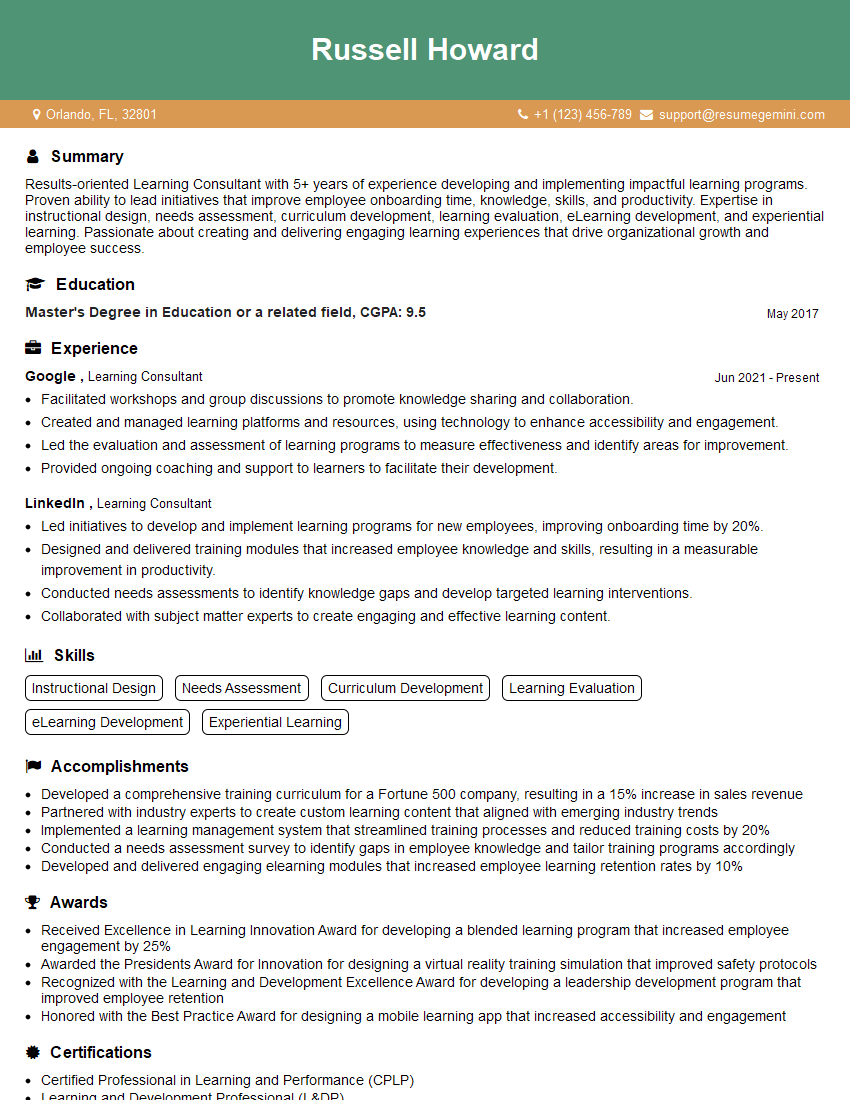
Learning Consultant Resume Sample
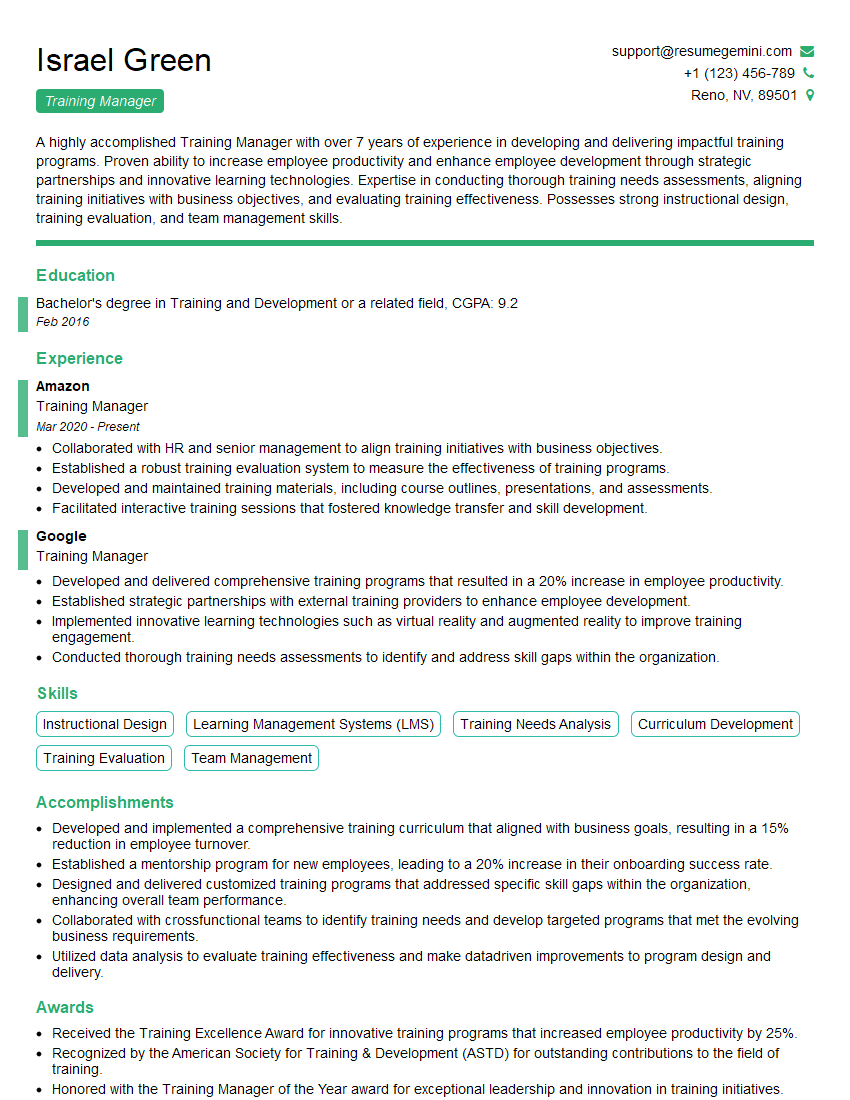
Training Manager Resume Sample
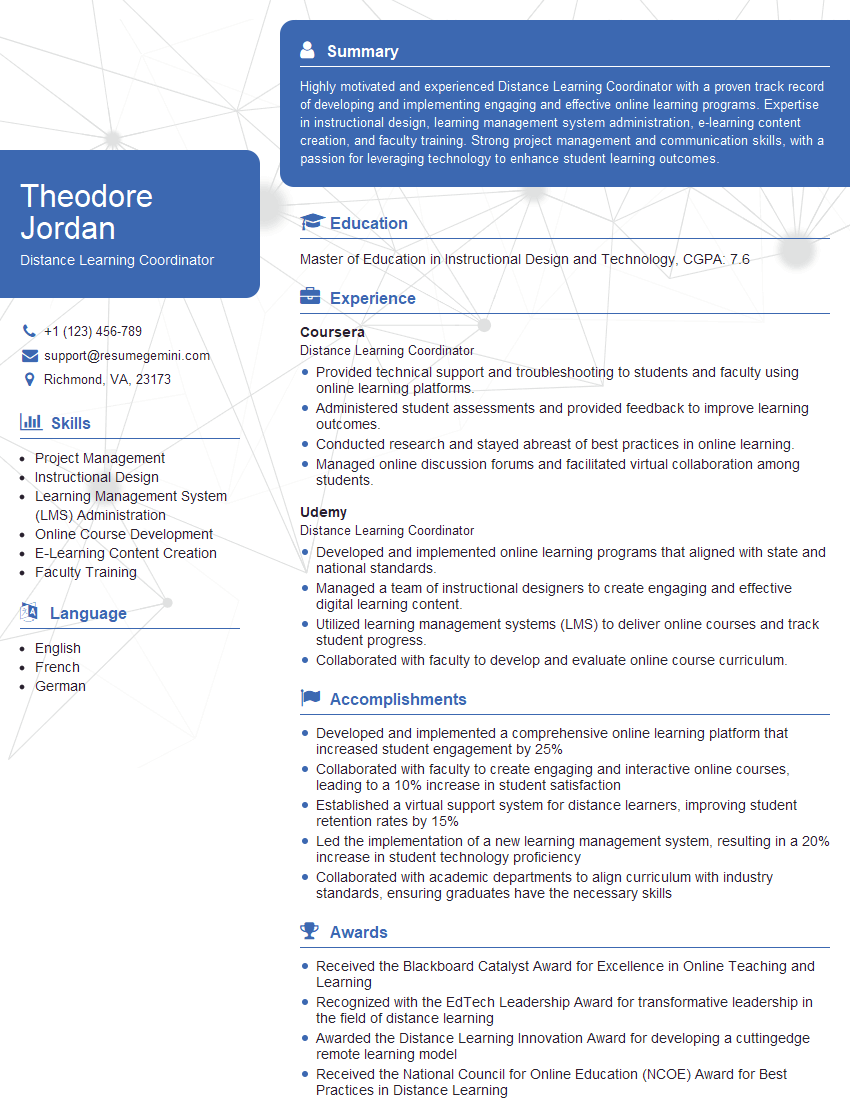
Distance Learning Coordinator Resume Sample

Curriculum Developer Resume Sample

Training Specialist Resume Sample
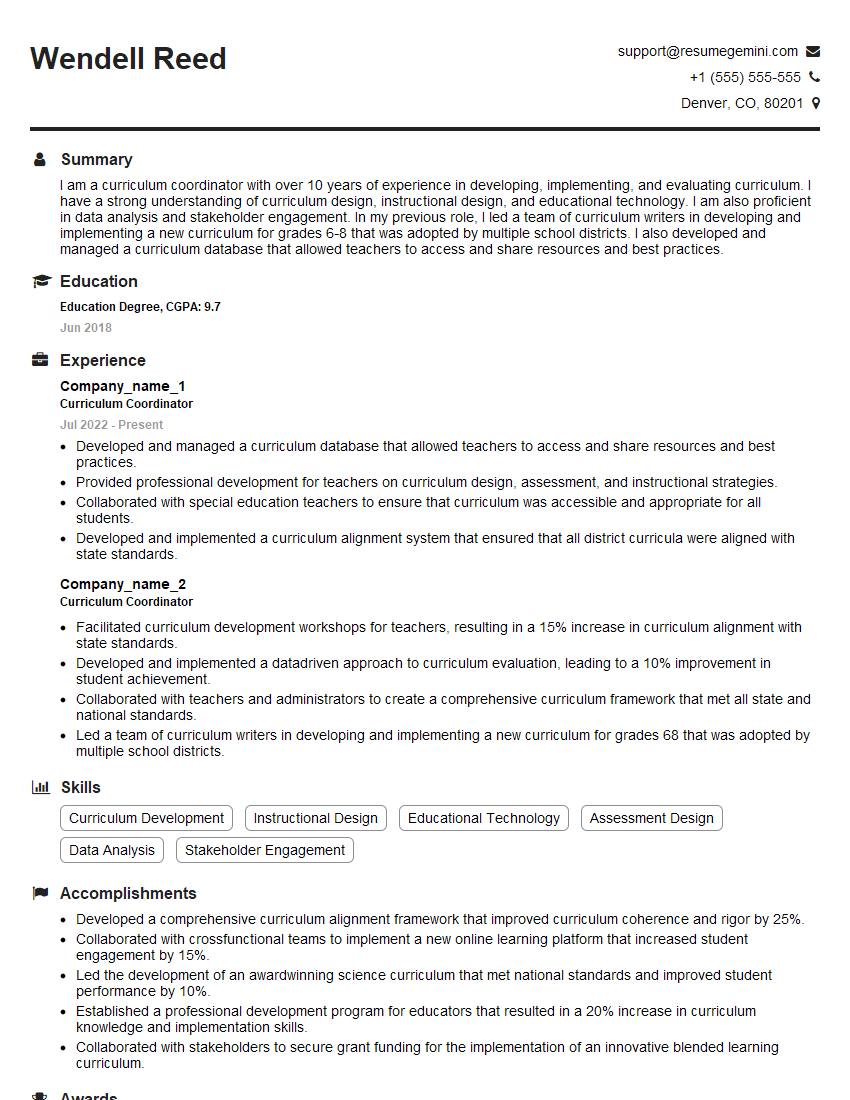
Curriculum Coordinator Resume Sample
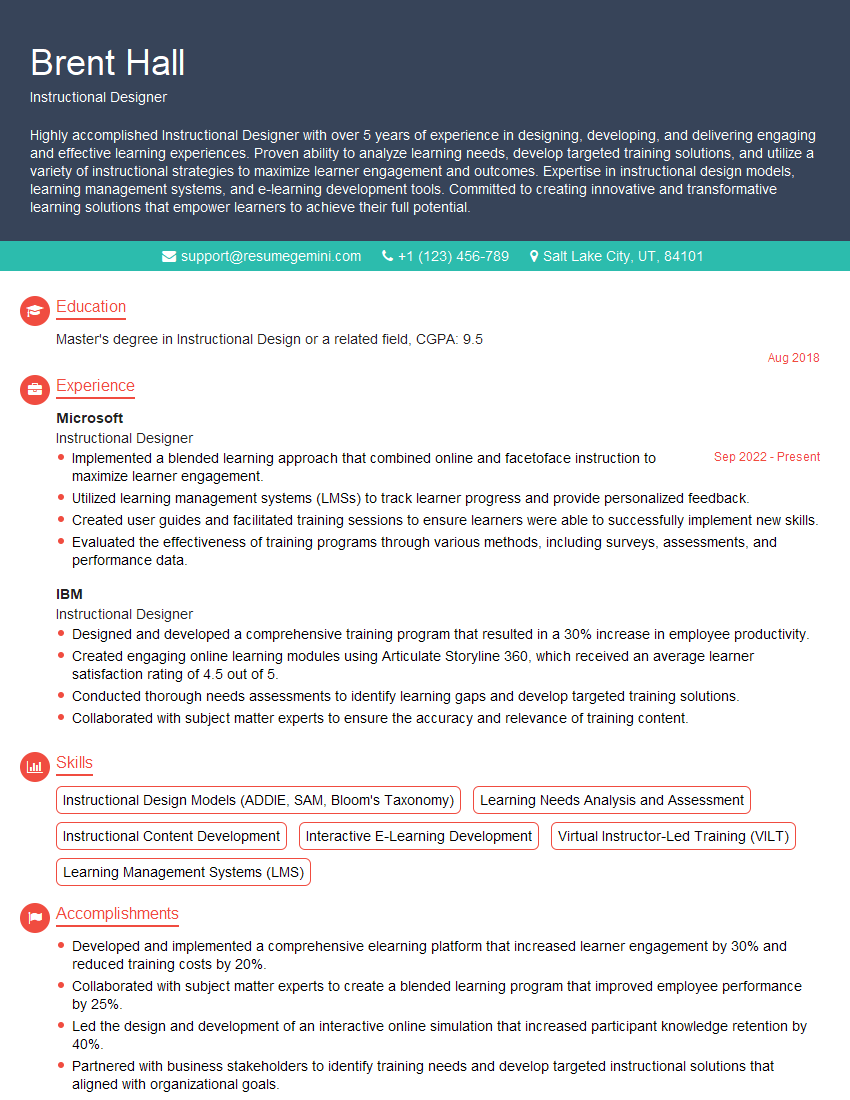
Instructional Designer Resume Sample

Educational Technologist Resume Sample
Explore more articles
Users Rating of Our Blogs
Share Your Experience
We value your feedback! Please rate our content and share your thoughts (optional).
What Readers Say About Our Blog
Really detailed insights and content, thank you for writing this detailed article.
IT gave me an insight and words to use and be able to think of examples