The thought of an interview can be nerve-wracking, but the right preparation can make all the difference. Explore this comprehensive guide to Program Knowledge interview questions and gain the confidence you need to showcase your abilities and secure the role.
Questions Asked in Program Knowledge Interview
Q 1. Explain the difference between project management and program management.
Project management focuses on delivering a single, well-defined project. Think of it like building a house – you have a clear scope, defined deliverables (the finished house), and a specific timeline. Program management, on the other hand, oversees a collection of related projects that collectively contribute to a larger strategic objective. It’s like managing the entire development of a new housing estate; multiple projects (building individual houses, landscaping, infrastructure) are orchestrated to achieve the overall goal of a completed estate.
Key differences lie in scale, complexity, and strategic alignment. Project managers focus on tasks, schedules, and budgets within their individual projects, while program managers focus on interdependencies between projects, resource allocation across the entire program, and ensuring the overall strategic goals are met. Project management is tactical, program management is strategic.
Q 2. Describe your experience with program governance structures.
Throughout my career, I’ve worked with various program governance structures, from formal, highly structured models to more agile, collaborative approaches. In one large-scale technology implementation program, we employed a steering committee comprising senior executives from various departments. This committee provided high-level direction, approved major decisions, and oversaw risk management. A program management office (PMO) handled day-to-day operations, tracking progress, managing resources, and escalating issues to the steering committee. This hierarchical structure ensured accountability and transparency.
In another program, focused on agile software development, governance was more decentralized. We utilized cross-functional teams with significant autonomy, relying on frequent communication, retrospectives, and iterative planning to ensure alignment with overall program objectives. Governance in this context focused more on fostering collaboration and removing impediments, rather than strict hierarchical control. The key is selecting a governance structure that aligns with the program’s complexity, culture, and risk profile.
Q 3. How do you prioritize competing program demands?
Prioritizing competing program demands requires a structured approach. I typically use a combination of techniques, including:
- Strategic Alignment: Aligning demands with overall program goals and strategic objectives. Those that directly contribute to the most critical success factors get higher priority.
- Dependency Analysis: Identifying interdependencies between demands. Addressing critical path dependencies first is essential.
- Risk Assessment: Prioritizing demands based on their associated risks and potential impacts. High-impact, high-probability risks warrant immediate attention.
- Value vs. Effort: Evaluating the value delivered against the effort required. This helps to focus on high-value, low-effort activities first.
- Stakeholder Analysis: Understanding the priorities and influence of key stakeholders. This ensures alignment and buy-in.
Often, a prioritization matrix (e.g., a MoSCoW method – Must have, Should have, Could have, Won’t have) is a valuable tool for visually representing and communicating priorities.
Q 4. What methodologies have you used for program management (e.g., Agile, Waterfall)?
My experience spans both Waterfall and Agile methodologies. In large-scale infrastructure projects, a Waterfall approach, with its emphasis on upfront planning and sequential phases, proved effective for its predictability. However, in dynamic software development environments, Agile methodologies like Scrum and Kanban have been invaluable. I’ve successfully led programs employing hybrid approaches, leveraging the strengths of both methodologies – for instance, using Waterfall for foundational elements and Agile for iterative development and feature implementation. The choice of methodology always depends on the program’s characteristics and constraints.
Q 5. Describe your experience managing program budgets and resources.
Managing program budgets and resources requires meticulous planning and ongoing monitoring. I utilize earned value management (EVM) techniques to track progress against planned costs and schedules. This involves regular budget reviews, forecasting, and variance analysis to identify potential overruns or underspends. Resource allocation is driven by the program’s critical path and prioritization matrix. I also actively engage in resource leveling to smooth out resource demands and avoid bottlenecks. In addition, I’ve successfully used tools such as project management software (like MS Project or Jira) for accurate budget tracking and resource allocation.
For example, in one project, early identification of a potential budget overrun allowed us to negotiate alternative vendor contracts, resulting in significant cost savings without impacting the project timeline.
Q 6. How do you identify and mitigate program risks?
Risk identification and mitigation are critical to program success. I employ a proactive approach, utilizing techniques such as:
- Risk Workshops: Engaging stakeholders in brainstorming sessions to identify potential risks.
- SWOT Analysis: Assessing Strengths, Weaknesses, Opportunities, and Threats to the program.
- Risk Register: Maintaining a centralized repository to document identified risks, their likelihood, impact, and mitigation strategies.
- Contingency Planning: Developing alternative plans to address potential risks and their consequences.
The key is not to eliminate all risks, but to prioritize mitigation efforts based on the likelihood and impact of each risk. Regular monitoring and reporting are crucial to detect emerging risks and adjust mitigation plans as needed.
Q 7. How do you measure program success?
Measuring program success involves defining clear, measurable objectives at the outset. This goes beyond just delivering projects on time and within budget; it encompasses the achievement of strategic goals. Key Performance Indicators (KPIs) are crucial for tracking progress and measuring success against those objectives. Examples include:
- On-time and within-budget delivery of projects: This is a fundamental measure of project management effectiveness.
- Achievement of strategic goals: Did the program achieve its intended business outcomes?
- Stakeholder satisfaction: Were key stakeholders satisfied with the program’s results?
- Return on Investment (ROI): Did the program generate a positive return on investment?
- Quality of deliverables: Did the program deliver high-quality results that met requirements?
Regular reporting and dashboards provide a clear picture of performance against these KPIs, enabling proactive intervention if necessary.
Q 8. Describe your experience with program reporting and communication.
Program reporting and communication are critical for transparency and success. My experience encompasses developing and delivering regular reports to various stakeholders, tailoring the information to their specific needs and understanding. This includes using various tools, from simple spreadsheets to sophisticated dashboards, to visualize key performance indicators (KPIs) and progress against targets. I focus on clear, concise language, avoiding technical jargon where possible. For example, in my previous role managing the implementation of a new CRM system, I created weekly status reports highlighting key milestones, risks, and issues. I also held regular meetings with the executive team, providing high-level overviews, and separate meetings with the project team for more granular updates.
Beyond formal reporting, I prioritize proactive communication. I believe in keeping stakeholders informed of potential roadblocks or changes proactively, rather than reacting to crises. This fosters trust and allows for timely mitigation strategies. For instance, when a critical vendor experienced delays, I immediately communicated this to all relevant parties, explaining the impact and outlining the contingency plan we had developed.
Q 9. How do you handle stakeholder management in a complex program?
Stakeholder management in complex programs requires a strategic approach. I begin by identifying all key stakeholders, understanding their interests, and their level of influence. I use a RACI matrix (Responsible, Accountable, Consulted, Informed) to clearly define roles and responsibilities, minimizing confusion and conflict. Regular communication is key; I establish communication channels tailored to each stakeholder group, ensuring they receive information relevant to their needs and in a format they prefer. For example, some stakeholders might prefer detailed weekly reports, while others might prefer a brief monthly summary.
Managing expectations is crucial. I set clear expectations upfront about timelines, deliverables, and potential risks. I actively seek feedback and incorporate it into the program plan, adapting as needed. For instance, in a recent program involving multiple departments, I held regular stakeholder workshops to solicit input and ensure alignment on priorities.
Building strong relationships is essential. Active listening, empathy, and a collaborative approach foster trust and enhance cooperation. I make myself accessible to stakeholders and address their concerns promptly and professionally.
Q 10. What is your approach to conflict resolution within a program team?
Conflict resolution is an inevitable part of program management. My approach is based on fostering open communication and collaboration. I encourage team members to openly express their concerns and perspectives in a respectful manner. I act as a neutral facilitator, focusing on understanding the root cause of the conflict rather than assigning blame. I use active listening techniques to understand each party’s point of view and encourage them to find common ground.
If a direct discussion doesn’t resolve the issue, I might employ mediation techniques, bringing in a neutral third party if necessary. Depending on the nature of the conflict, I might implement formal conflict resolution processes defined by the organization. My goal is always to reach a mutually acceptable solution that addresses the underlying concerns and strengthens team relationships. For example, in one instance, two team members had conflicting opinions on the best approach to a technical challenge. I facilitated a brainstorming session, encouraging them to share their ideas and explore alternative solutions. This collaborative approach led to a superior solution that incorporated the strengths of both their suggestions.
Q 11. Explain your experience with program planning and scheduling.
Program planning and scheduling are foundational to successful program execution. My approach starts with a clear definition of the program’s objectives and scope. I then break down the program into smaller, manageable tasks and activities. This involves using various project management techniques, such as Work Breakdown Structure (WBS) and Critical Path Method (CPM), to identify dependencies and critical paths. I leverage project management software, such as Microsoft Project or Jira, to create detailed schedules, track progress, and manage resources effectively.
Risk assessment and mitigation planning are integral parts of the scheduling process. I identify potential risks and develop contingency plans to minimize their impact on the timeline and budget. For instance, in a recent program, we identified the risk of vendor delays. We mitigated this by securing multiple vendors and building buffer time into the schedule.
The schedule is not static. It’s a living document that’s updated regularly to reflect changes in scope, resource availability, and risk factors. Regular review and adjustment are essential to maintain accuracy and effectiveness.
Q 12. How do you monitor and control program progress?
Monitoring and controlling program progress is an ongoing process. I use a combination of methods to track performance against the plan. This includes regular progress meetings, reviewing project reports, and analyzing key performance indicators (KPIs). I utilize project management software to track task completion, resource allocation, and budget expenditure. This data is essential for identifying variances and taking corrective actions.
Deviation from the plan triggers a proactive response. I investigate the cause of any variances, whether it’s schedule slippage, cost overruns, or quality issues. I then implement corrective actions, which may involve adjusting the schedule, reallocating resources, or implementing process improvements. For instance, if a task is falling behind schedule, I might re-allocate resources or adjust the scope to bring it back on track. Regular reporting ensures stakeholders are kept informed of progress and any necessary adjustments.
Q 13. Describe a time you had to make a difficult decision in a program.
In one program, we faced a significant challenge when a key technology partner unexpectedly withdrew from the project halfway through. This created a major disruption to our timeline and raised concerns about delivering the project successfully. The decision was whether to find a replacement partner quickly, risking potential compromises on quality and security, or to redesign parts of the system to eliminate the reliance on that specific technology, which would cause a significant delay.
After carefully analyzing the risks and trade-offs, I decided to opt for a partial redesign, prioritizing stability and quality. This resulted in a longer timeline than originally planned, but it ultimately ensured a higher quality, more secure solution. I communicated the change to stakeholders transparently, explaining the reasons for the decision and the revised timeline. This proactive communication helped manage expectations and maintain stakeholder trust, despite the unforeseen circumstances. The eventual success of the program, despite the initial setback, demonstrated the value of making difficult, but well-reasoned decisions.
Q 14. How do you ensure program alignment with organizational strategy?
Ensuring program alignment with organizational strategy requires a thorough understanding of the organization’s goals and objectives. I start by reviewing the organization’s strategic plan and identifying how the program contributes to achieving its overall goals. I then integrate the program objectives and deliverables into the organizational strategic framework, ensuring they are aligned with the broader organizational vision. This often involves working closely with senior management and other stakeholders to ensure buy-in and support.
Regular review and adjustments are necessary to maintain alignment. I monitor changes in the organizational strategy and make necessary modifications to the program plan to reflect these changes. For instance, if the organization shifts its strategic priorities, I would assess the impact on the program and make adjustments accordingly. This includes potentially adjusting the scope, timeline, or resource allocation to ensure the program continues to support the organization’s evolving needs.
Q 15. What are your strengths and weaknesses as a program manager?
My greatest strength as a program manager lies in my ability to foster strong collaboration and communication across diverse teams. I excel at building consensus, navigating complex stakeholder relationships, and translating technical complexities into easily understandable terms for non-technical audiences. This ensures everyone is aligned towards the program’s objectives. For example, in my previous role, I successfully mediated a conflict between the development and marketing teams regarding product launch timing, resulting in a mutually agreeable solution that minimized delays and enhanced product marketability.
A weakness I’m actively working on is delegating tasks effectively. I have a tendency to want to be involved in every detail, which can sometimes hinder team autonomy and efficiency. I am addressing this through actively practicing delegation, providing clear expectations, and establishing robust monitoring systems to ensure tasks are completed to a high standard without my constant oversight. I’ve found that regular check-ins focused on progress and support, rather than micromanagement, are key to this.
Career Expert Tips:
- Ace those interviews! Prepare effectively by reviewing the Top 50 Most Common Interview Questions on ResumeGemini.
- Navigate your job search with confidence! Explore a wide range of Career Tips on ResumeGemini. Learn about common challenges and recommendations to overcome them.
- Craft the perfect resume! Master the Art of Resume Writing with ResumeGemini’s guide. Showcase your unique qualifications and achievements effectively.
- Don’t miss out on holiday savings! Build your dream resume with ResumeGemini’s ATS optimized templates.
Q 16. Describe your experience with program closure and handover.
Program closure and handover is a critical phase that I approach systematically. It involves not just the completion of project deliverables, but also a thorough knowledge transfer and documentation process. My experience includes finalizing all project documentation, conducting comprehensive reviews of the project’s performance against its objectives, and ensuring all stakeholders are informed of the final results. I then focus on transitioning the program’s assets and responsibilities to the relevant teams or individuals, ensuring smooth continuity of operations. For instance, in a recent project, I created a detailed knowledge base containing all project information, including technical specifications, risk logs, and lessons learned. This allowed the team taking over to quickly get up to speed, avoiding disruptions and potential issues.
Q 17. How do you manage dependencies between different projects within a program?
Managing dependencies between projects within a program requires a proactive and organized approach. I utilize techniques such as dependency mapping, which visually represents the relationships between different projects and tasks. This allows for easy identification of critical paths and potential bottlenecks. I also implement robust communication channels and regular progress meetings to ensure teams are aware of each other’s dependencies and can anticipate potential conflicts. For example, using a Gantt chart to illustrate project timelines helps visualize task dependencies and allows for proactive scheduling adjustments if delays occur in one project that could impact another. Furthermore, implementing a central project management system allows for real-time tracking of progress and early detection of potential issues related to project dependencies.
Q 18. How do you utilize program management software tools?
I’m proficient in several program management software tools, including Microsoft Project, Jira, and Asana. My experience encompasses using these tools for tasks such as creating and managing project schedules, tracking progress against milestones, managing resources, and reporting on program performance. I understand the importance of choosing the right tool for the specific needs of a program, and I’m adept at customizing these tools to ensure they effectively support our workflows. For instance, in a large-scale program, I leveraged Jira’s robust issue tracking and workflow capabilities to manage hundreds of tasks across multiple teams, ensuring accountability and timely resolution of issues. This enhanced transparency and improved communication across the organization.
Q 19. How do you ensure the quality of deliverables within a program?
Ensuring quality is paramount in any program. My approach involves establishing clear quality standards and metrics at the outset, defining acceptance criteria for each deliverable. I incorporate rigorous quality control processes throughout the program lifecycle, including regular reviews, testing, and audits to identify and address potential quality issues early on. I also foster a culture of quality within the teams, empowering them to take ownership of quality assurance. A key strategy is to use a combination of formal QA processes and peer reviews, to catch errors and inconsistencies early in the process. For example, we might utilize a checklist-based approach to ensure consistency and completeness, in addition to using automated testing tools wherever applicable.
Q 20. Describe your experience with change management within a program.
Change management is an integral part of any successful program. My experience encompasses using a structured approach such as the ADKAR model (Awareness, Desire, Knowledge, Ability, Reinforcement) to manage changes effectively. This involves communicating changes clearly and concisely to all stakeholders, addressing their concerns, and providing the necessary training and support. I actively involve stakeholders in the change process, ensuring buy-in and minimizing resistance. For example, during a significant software upgrade, I held regular town hall meetings to keep teams informed and address their concerns. We created training materials and provided hands-on support during the transition, ultimately leading to a smoother implementation process.
Q 21. How do you handle program scope creep?
Scope creep is a major threat to program success, and I employ several strategies to mitigate it. This starts with meticulous scope definition at the outset of the program, creating a clear and detailed scope statement, and obtaining stakeholder agreement. This also includes rigorous change management processes to evaluate and approve any proposed changes to the scope. I use a formal change control board to review and approve all change requests, analyzing their impact on cost, time, and resources before granting approval. For example, any requests for changes were documented, assessed, and approved or rejected based on clearly defined criteria. This ensured that only justifiable changes were implemented, preventing uncontrolled expansion of the program scope and maintaining a focus on delivering the original objectives.
Q 22. What are the key performance indicators (KPIs) you typically track in a program?
Key Performance Indicators (KPIs) are crucial for monitoring the success of a program. They provide quantifiable metrics to track progress, identify areas needing improvement, and ultimately, determine whether the program is achieving its objectives. The specific KPIs will vary greatly depending on the program’s goals, but some common examples include:
- On-Time Delivery: Percentage of deliverables completed by their scheduled deadlines. This directly reflects project scheduling efficiency and adherence to timelines.
- On-Budget Performance: The variance between the planned budget and the actual spending. This KPI helps track cost management effectiveness.
- Scope Compliance: The extent to which the final deliverable aligns with the original scope defined in the program charter. This measures project focus and change management success.
- Stakeholder Satisfaction: Measured through surveys, feedback sessions, or other methods, this KPI assesses the overall happiness and alignment of key stakeholders with the program’s outcomes. This is crucial for long-term success and future collaborations.
- Quality Metrics: Depending on the nature of the program, this could include defect rates, customer satisfaction scores, or other measures of quality of the delivered product or service.
- Return on Investment (ROI): The net benefit of the program relative to its cost. This is a crucial high-level KPI, especially for large-scale programs. It measures the overall effectiveness of investment in the program.
For instance, in a software development program, KPIs might focus on lines of code delivered, bug fixes per sprint, and customer adoption rate. In a marketing campaign, KPIs might center around conversion rates, customer acquisition cost, and brand awareness metrics. The key is to select KPIs that are relevant, measurable, achievable, relevant, and time-bound (SMART).
Q 23. Explain your experience with developing a program charter.
Developing a program charter is a critical first step in program management, laying the foundation for success. My approach involves a collaborative and iterative process. I start by defining the program’s overall goals and objectives, ensuring they are clearly articulated and aligned with the organization’s strategic plan. Then, I identify key stakeholders and their roles and responsibilities, explicitly defining their involvement and expectations. This often involves facilitating workshops and interviews to gather input and build consensus.
Next, I outline the scope of the program, clearly defining what is included and, equally important, what is excluded. This helps prevent scope creep, a common cause of project failure. I then detail the timeline, identifying key milestones and deadlines. Resource allocation, including budget and personnel, is meticulously planned. Finally, I develop a risk management plan, identifying potential challenges and outlining mitigation strategies.
I ensure the charter is a living document, regularly reviewed and updated as the program progresses. This allows for flexibility and adaptability to changing circumstances. For example, in a recent project involving the implementation of a new CRM system, the initial charter outlined a phased rollout across departments. However, after stakeholder feedback during the initial phase, we revised the charter to incorporate a more intensive training program to ensure smoother adoption.
Q 24. How do you build and maintain strong relationships with stakeholders?
Building and maintaining strong relationships with stakeholders is paramount to successful program management. I achieve this through consistent, proactive communication and demonstrating empathy and understanding. I use a variety of methods:
- Regular Communication: I establish clear communication channels and maintain a consistent cadence of updates, using various methods like regular meetings, email updates, and project management software. I tailor the communication to the audience, ensuring the right information is shared with the right people in a timely manner.
- Active Listening: I actively listen to stakeholder concerns, feedback, and suggestions, making them feel heard and valued. This fosters trust and encourages open dialogue.
- Transparency and Honesty: I maintain transparency about the program’s progress, both successes and challenges. Open and honest communication builds credibility and trust.
- Collaboration and Engagement: I involve stakeholders in decision-making processes where appropriate, ensuring their input is considered. This sense of ownership enhances buy-in and commitment.
- Relationship Building: I make an effort to build personal relationships with stakeholders, understanding their individual needs and perspectives. This can involve informal conversations, team-building activities, and social interactions.
For instance, in a past program, I built strong rapport with a particularly skeptical stakeholder by regularly meeting with them one-on-one, actively listening to their concerns, and addressing them directly. This eventually led to their active support of the program.
Q 25. Describe a time you failed in a program management role and what you learned from it.
In a previous program, I underestimated the complexity of integrating a new third-party software solution. This resulted in significant delays and cost overruns. My initial risk assessment had been insufficient, failing to fully anticipate the integration challenges. The problem stemmed from a lack of thorough due diligence in evaluating the compatibility of the new software with our existing systems.
My learning from this experience was profound. I now place much greater emphasis on thorough risk assessment, including comprehensive testing and pilot programs before full-scale implementation. I also improved my communication regarding potential risks, being more upfront about uncertainties and potential delays with stakeholders. Furthermore, I established a more robust change management process to better handle unforeseen issues. This experience significantly improved my proactive risk management and communication skills.
Q 26. How do you adapt your management style to different program contexts?
Adaptability is crucial in program management. My management style is flexible and adapts to the specific context of each program. I consider several factors when determining my approach:
- Team Dynamics: For highly experienced teams, a more collaborative and delegative approach is often effective. For less experienced teams, a more directive style might be necessary for initial guidance.
- Program Complexity: Complex programs often require a more structured and detailed approach with meticulous planning and risk management. Simpler programs allow for a more flexible and agile methodology.
- Stakeholder Expectations: Understanding stakeholder expectations and preferences is key. Some stakeholders prefer frequent updates and involvement, while others prefer a more hands-off approach.
- Organizational Culture: I always consider the organization’s culture and norms, adapting my style to ensure alignment.
For instance, I’ve successfully managed both waterfall and agile projects, adjusting my approach to match the project’s requirements and the team’s expertise. In one project, the team was highly skilled and autonomous, so I adopted a coaching and mentoring style, empowering the team to self-manage. In another, I took on a more directive role to guide a less experienced team through a complex, tightly-defined project.
Q 27. What are your salary expectations for this role?
My salary expectations for this role are in the range of [Insert Salary Range] annually. This is based on my extensive experience in program management, my proven track record of success, and the demands of this specific role. I am confident that my skills and experience will bring significant value to your organization, and I am open to discussing this further.
Key Topics to Learn for Program Knowledge Interview
- Data Structures: Understanding arrays, linked lists, trees, graphs, and hash tables. Practical application: Analyzing algorithm efficiency and choosing the right data structure for specific tasks.
- Algorithms: Mastering fundamental algorithms like searching, sorting, and graph traversal. Practical application: Optimizing code for speed and efficiency, solving complex problems efficiently.
- Object-Oriented Programming (OOP): Deep understanding of concepts like encapsulation, inheritance, and polymorphism. Practical application: Designing modular and maintainable code, leveraging OOP principles for complex projects.
- Software Design Principles: Familiarity with SOLID principles, design patterns, and architectural patterns. Practical application: Creating robust and scalable software systems, collaborating effectively on large projects.
- Databases: Understanding relational and NoSQL databases, SQL queries, database design. Practical application: Efficient data management, querying and manipulating data for reporting and analysis.
- Testing and Debugging: Proficiency in various testing methodologies (unit, integration, system) and debugging techniques. Practical application: Ensuring software quality, identifying and resolving issues efficiently.
- Version Control (Git): Understanding branching, merging, and collaboration workflows using Git. Practical application: Efficient collaboration on software projects, managing code changes effectively.
Next Steps
Mastering Program Knowledge is crucial for career advancement in the tech industry. A strong understanding of these concepts will significantly improve your problem-solving abilities and open doors to more challenging and rewarding roles. To maximize your job prospects, it’s essential to create a compelling and ATS-friendly resume that showcases your skills and experience effectively. ResumeGemini is a trusted resource for building professional resumes, and we provide examples of resumes tailored to Program Knowledge to help you get started. Invest time in crafting a powerful resume – it’s your first impression with potential employers.
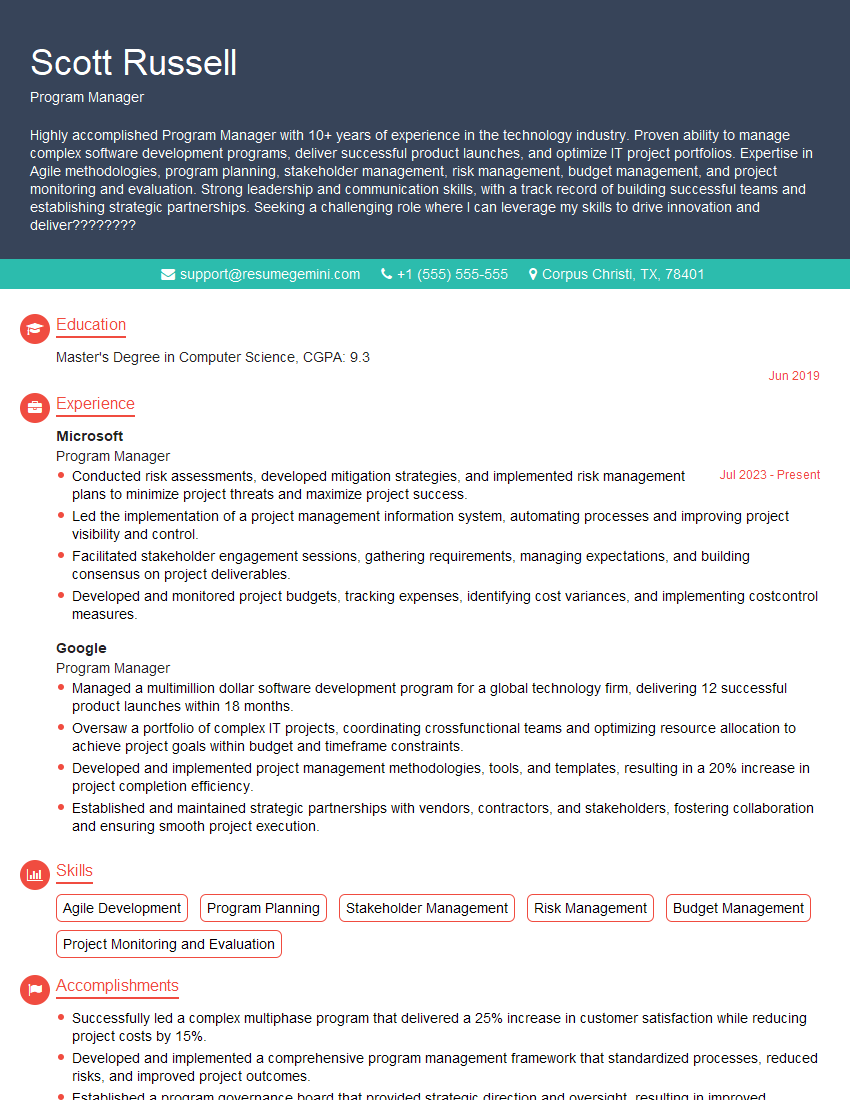
Program Manager Resume Sample
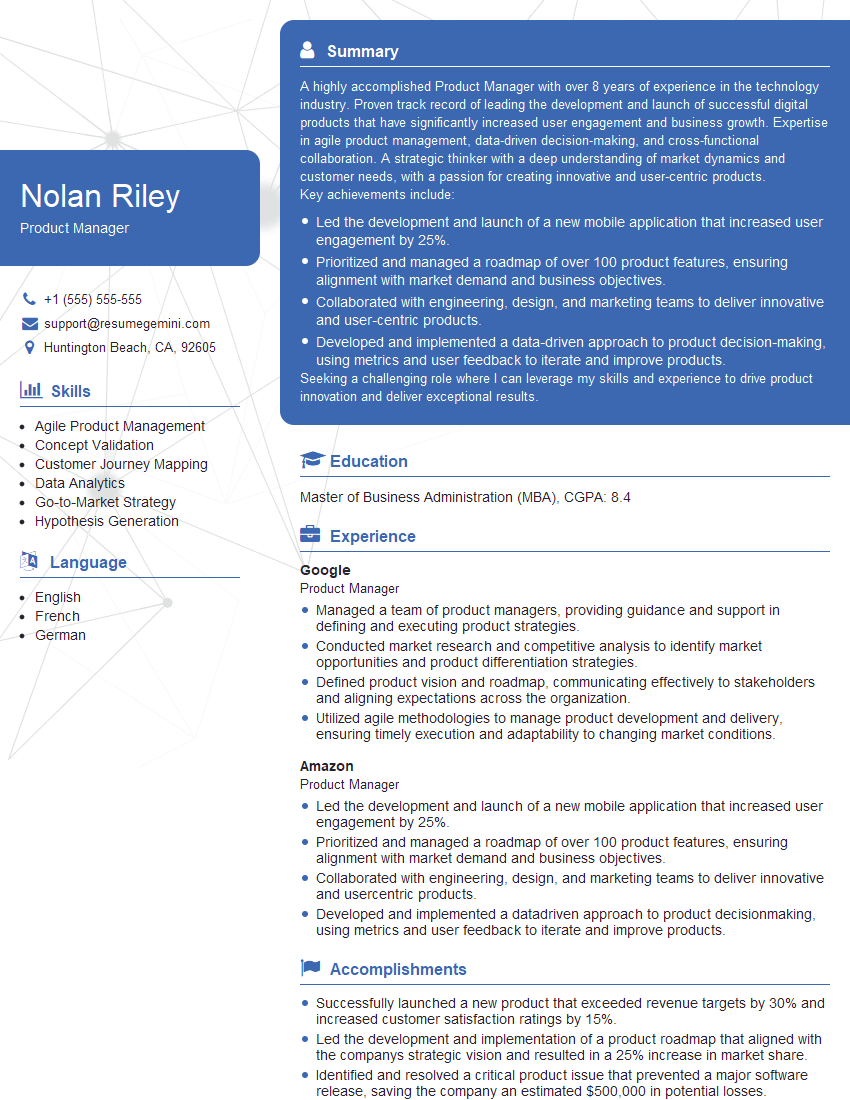
Product Manager Resume Sample
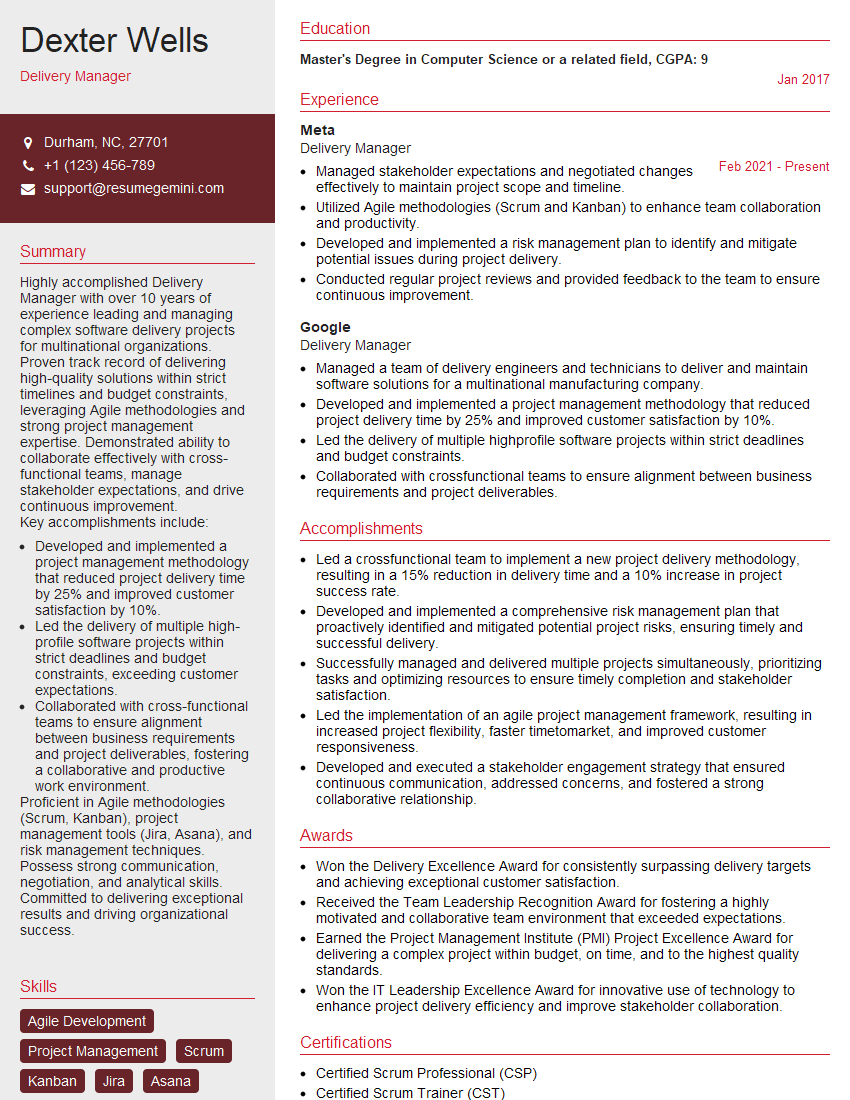
Delivery Manager Resume Sample
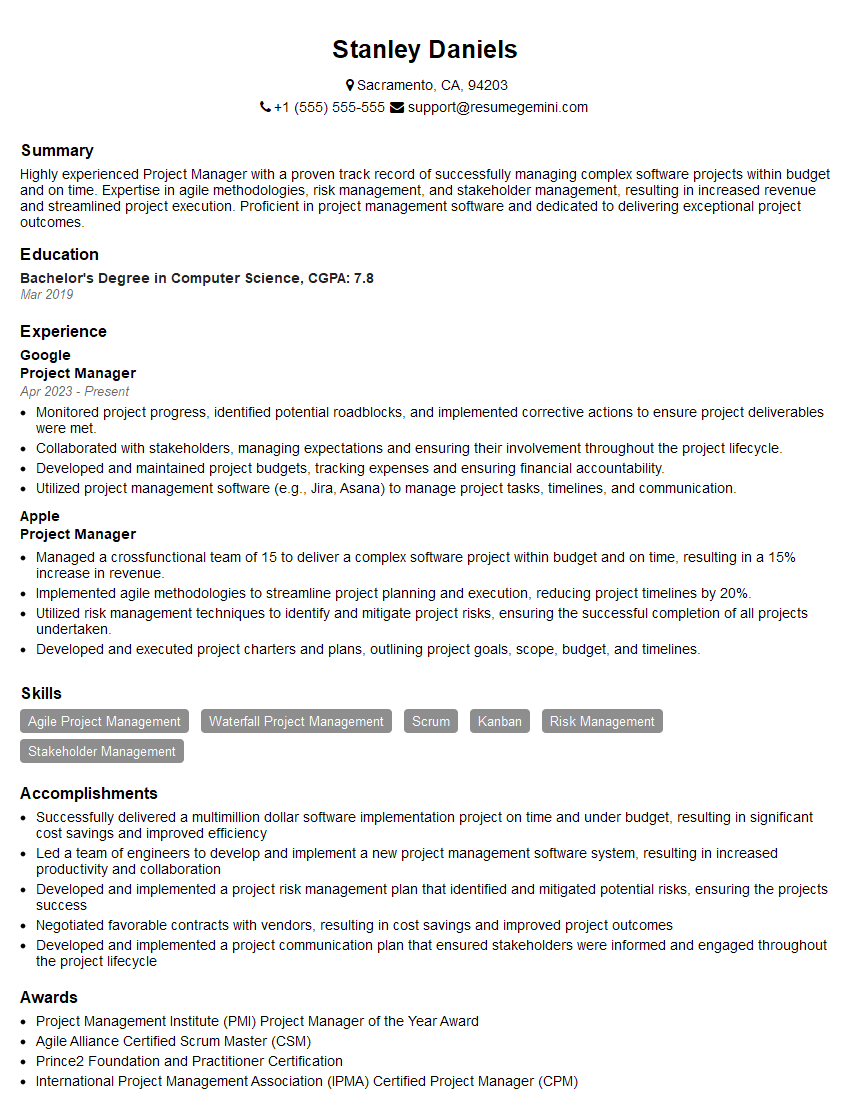
Project Manager Resume Sample
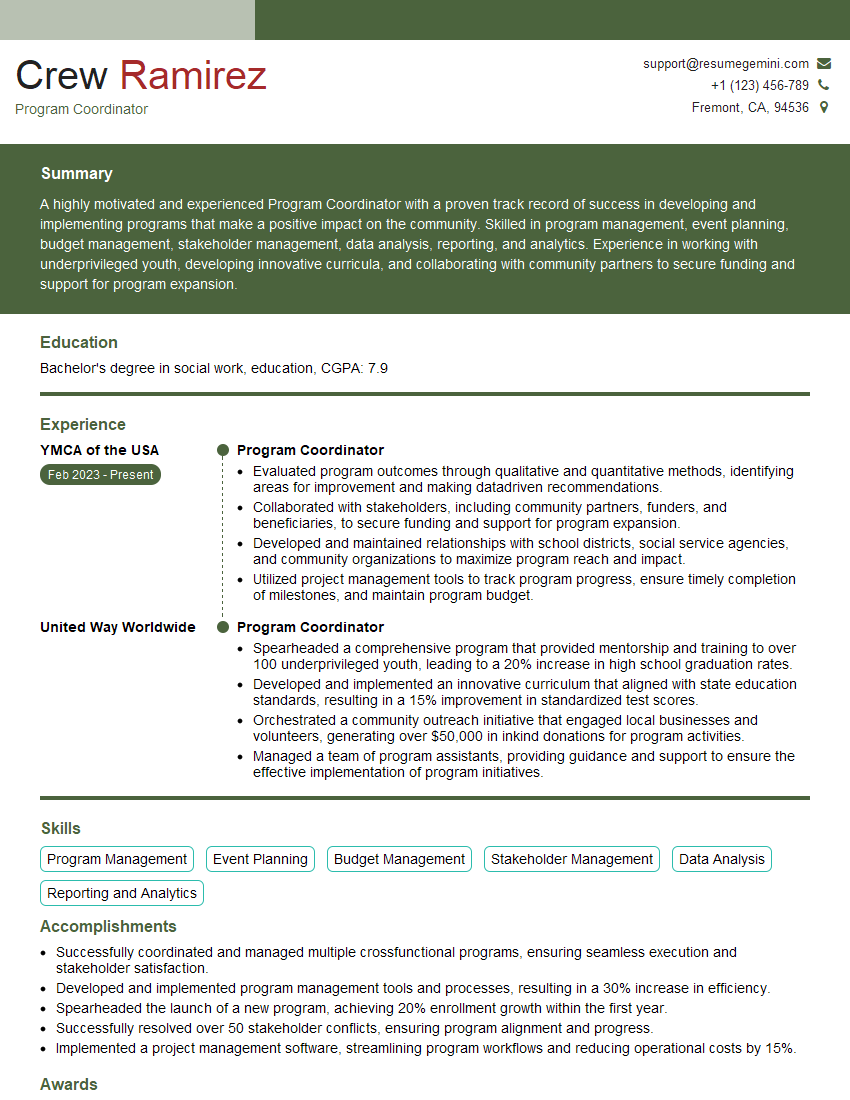
Program Coordinator Resume Sample
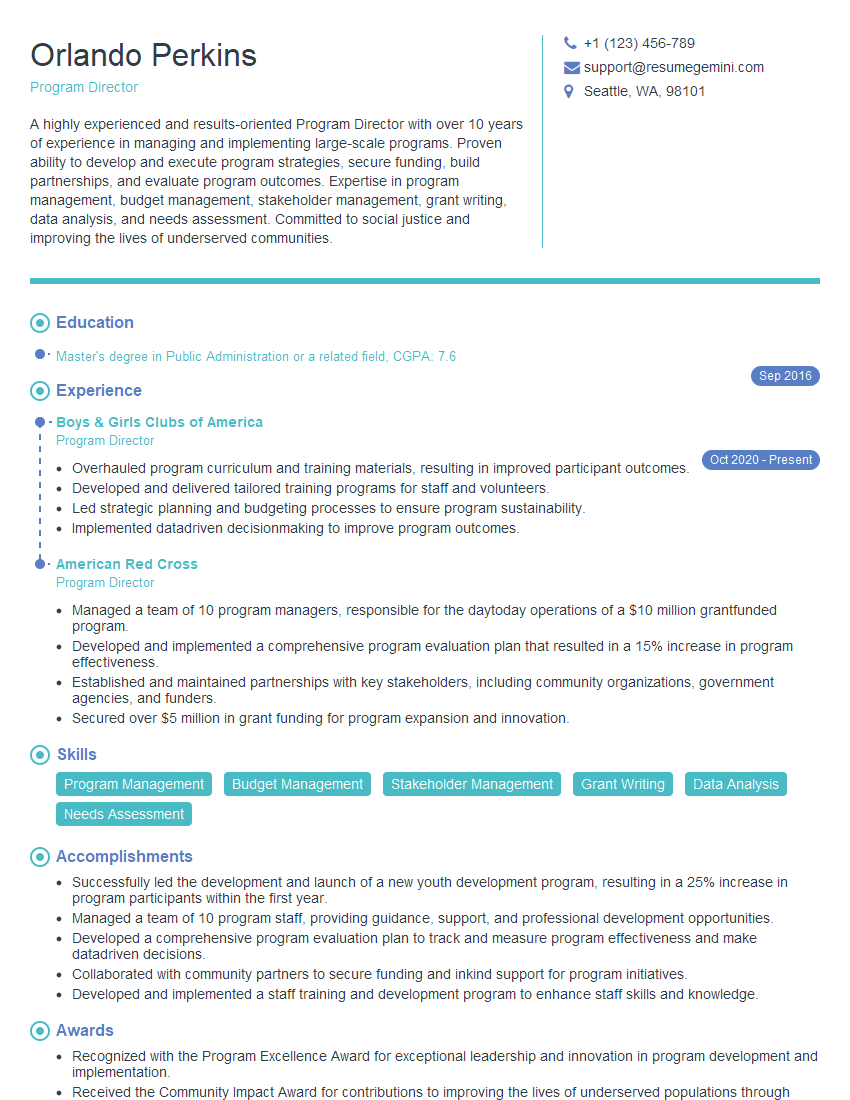
Program Director Resume Sample
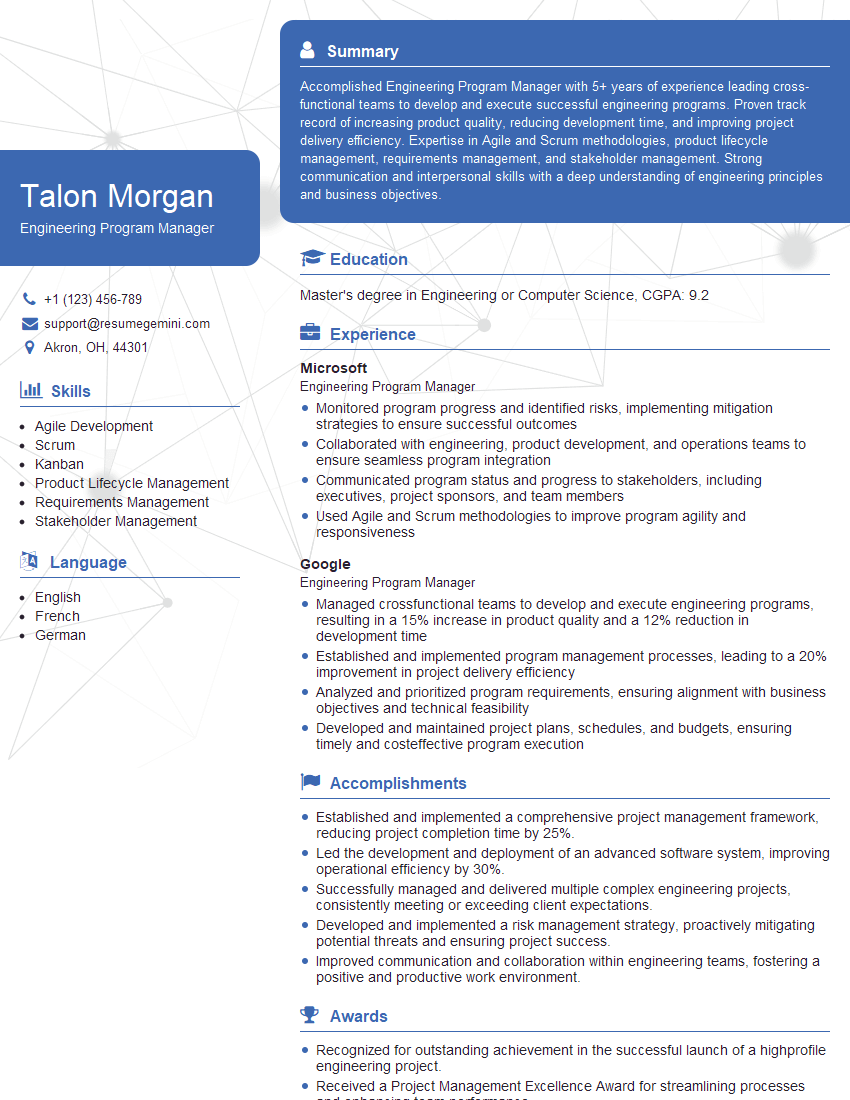
Engineering Program Manager Resume Sample
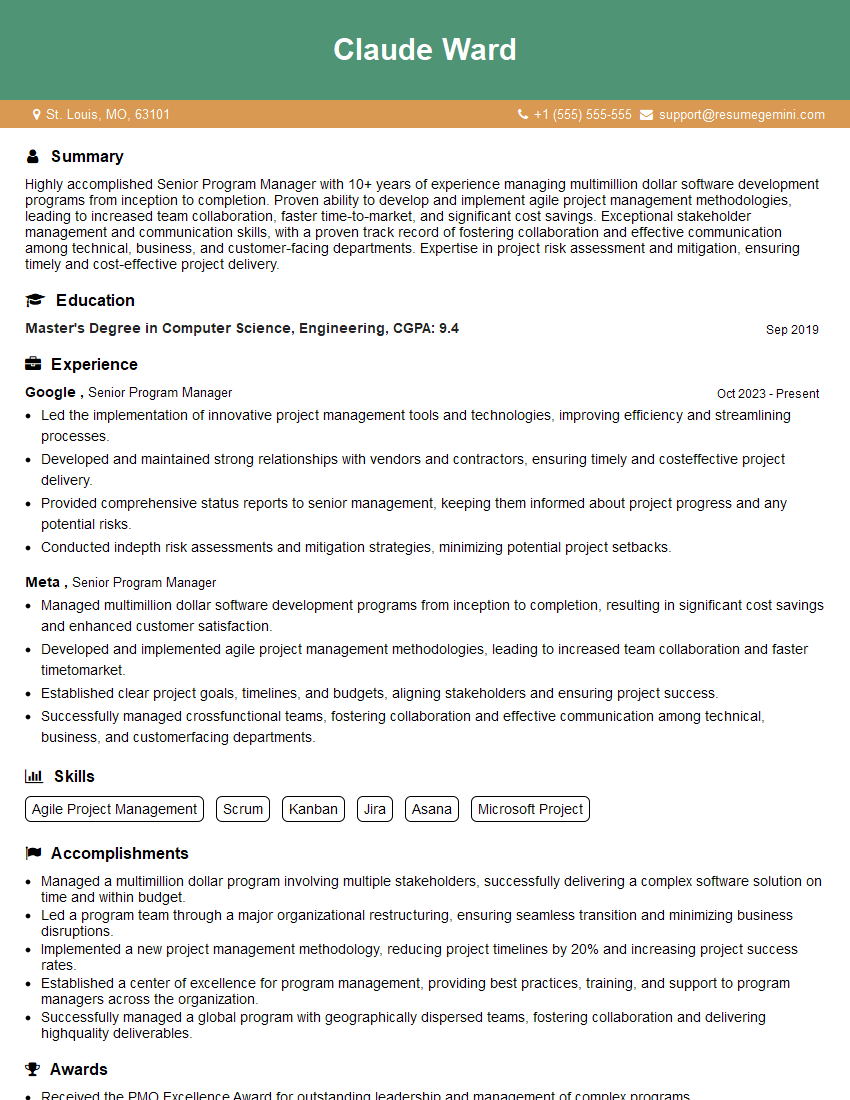
Senior Program Manager Resume Sample
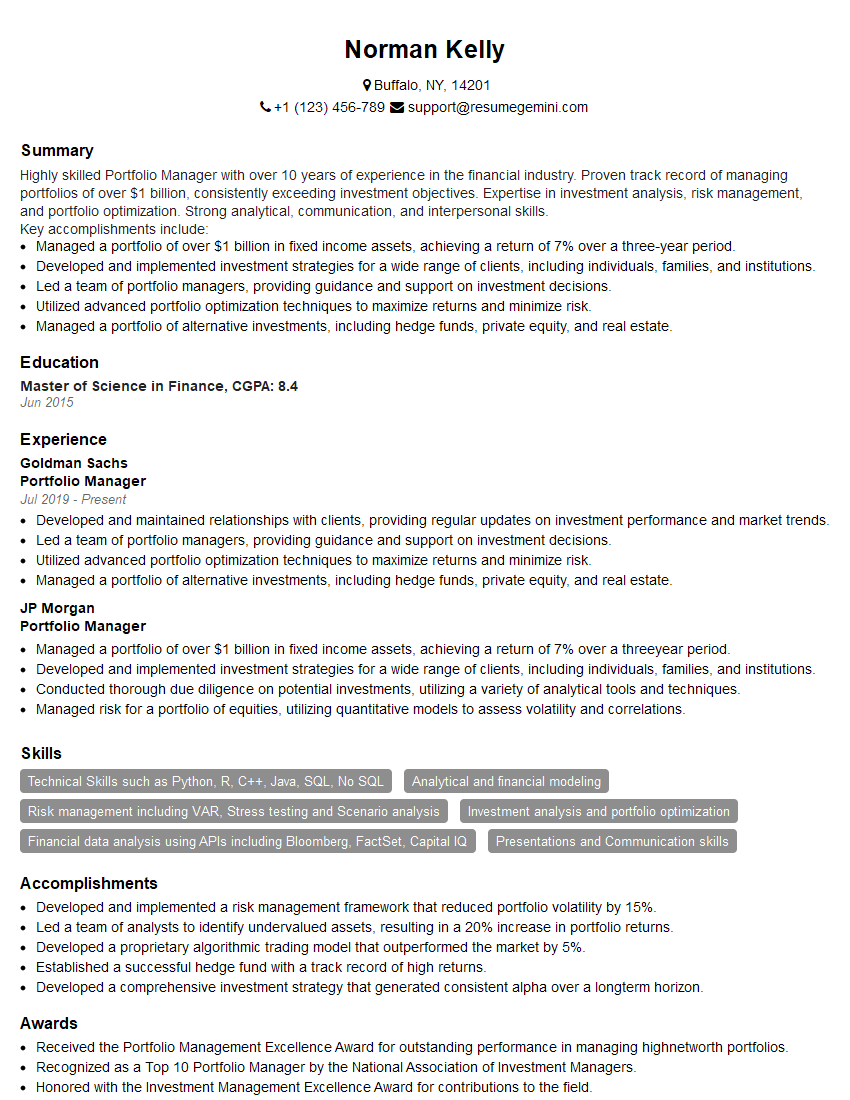
Portfolio Manager Resume Sample
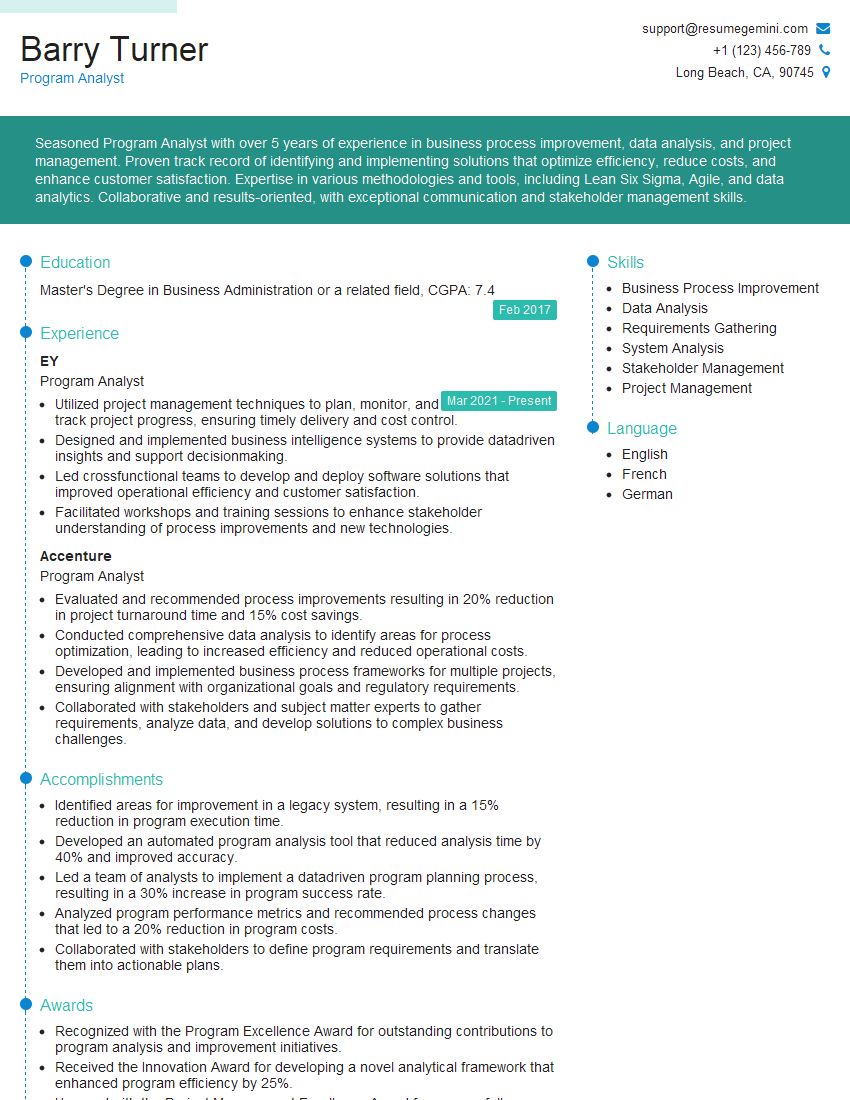
Program Analyst Resume Sample
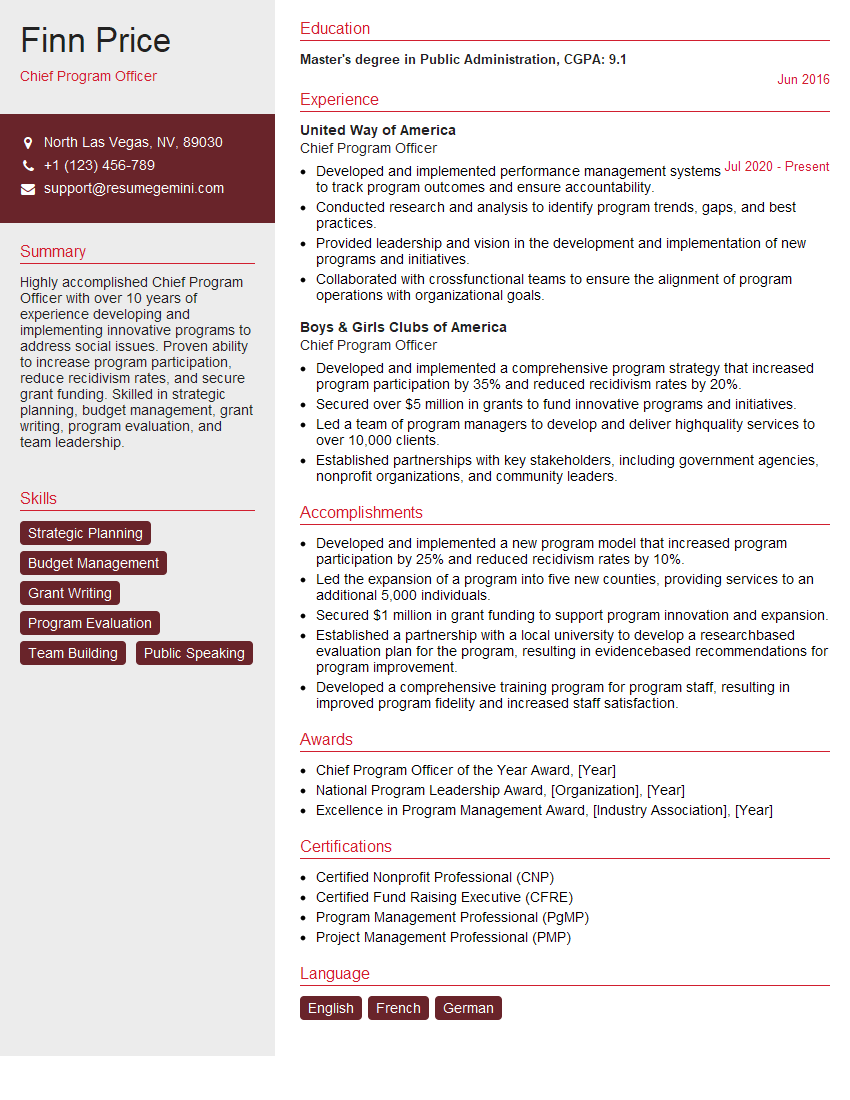
Chief Program Officer Resume Sample
Explore more articles
Users Rating of Our Blogs
Share Your Experience
We value your feedback! Please rate our content and share your thoughts (optional).
What Readers Say About Our Blog
Really detailed insights and content, thank you for writing this detailed article.
IT gave me an insight and words to use and be able to think of examples