Feeling uncertain about what to expect in your upcoming interview? We’ve got you covered! This blog highlights the most important Knowledge of electrical codes and regulations interview questions and provides actionable advice to help you stand out as the ideal candidate. Let’s pave the way for your success.
Questions Asked in Knowledge of electrical codes and regulations Interview
Q 1. Explain the National Electrical Code (NEC) and its purpose.
The National Electrical Code (NEC) is a widely adopted set of regulations for electrical installations in the United States. Think of it as the rule book for safe and efficient electrical wiring. Its primary purpose is to safeguard people and property from electrical hazards. It outlines standards for everything from wiring methods and overcurrent protection to grounding and special equipment installations. The NEC isn’t a law itself, but it’s often adopted by local and state authorities, making adherence mandatory in most jurisdictions. Regular updates ensure the code keeps pace with technological advancements and evolving safety concerns. For example, recent updates have incorporated regulations for renewable energy systems and updated requirements for arc-fault circuit interrupters (AFCIs).
Q 2. Describe the different types of grounding systems and their applications.
Grounding systems are crucial for electrical safety. They provide a low-resistance path for fault currents to flow back to the source, preventing dangerous voltage buildup on metal enclosures and equipment. There are several types:
- System Grounding: This involves connecting the neutral point of a power system to the earth, effectively establishing a reference point for voltage. It’s essential for preventing voltage imbalances and ensuring safe operation.
- Equipment Grounding: This connects the non-current-carrying metal parts of equipment (like appliance casings) to the earth. If a fault occurs, this path diverts current to the ground, preventing electric shock. Think of it as a safety net.
- Grounding Electrodes: These are conductors (like metal rods or plates) driven into the earth to provide a low-resistance connection to the ground. The type and number of electrodes depend on soil conditions and system requirements.
The application depends on the specific electrical system. For instance, a residential system might use a grounding electrode conductor connected to the service entrance and the metal water pipe (if permitted). Industrial systems often have more complex grounding schemes to accommodate higher voltages and larger equipment.
Q 3. What are the requirements for branch circuit protection?
Branch circuit protection is critical to prevent overcurrent conditions that can lead to overheating, fires, and equipment damage. The NEC specifies that every branch circuit must be protected by a suitable overcurrent protection device, such as a fuse or circuit breaker. The rating of this device must not exceed the ampacity of the conductors and must be appropriate for the load. For instance:
- 15-amp circuits: Typically protect lighting circuits and small appliances.
- 20-amp circuits: Commonly used for general-purpose receptacles and small appliances in kitchens and other areas.
- Larger amperage circuits: May be required for appliances with higher power demands, such as electric ranges or ovens.
The selection of the overcurrent protection device must also consider the type of wiring used and the environment. For example, circuits in wet locations may require special considerations.
Q 4. How do you calculate the voltage drop in a circuit?
Voltage drop is the reduction in voltage between the source and the load in an electrical circuit. It’s caused by the resistance of the conductors. Excessive voltage drop can lead to poor performance of equipment and even safety hazards. The calculation is straightforward:
Voltage Drop = 2 x I x L x R / 1000
Where:
Iis the current in amperes.Lis the one-way length of the conductor in feet.Ris the resistance of the conductor in ohms per 1000 feet (values are readily available in wire tables based on conductor size and material).
For example, if a circuit carries 10 amps, has a one-way length of 100 feet, and the conductor has a resistance of 1 ohm per 1000 feet, the voltage drop would be: 2 x 10 x 100 x 1 / 1000 = 2 volts. Acceptable voltage drop is typically less than 3% of the source voltage, according to the NEC.
Q 5. What are the safety precautions for working with high voltage?
Working with high voltage presents significant dangers. Always prioritize safety. Essential precautions include:
- Lockout/Tagout Procedures: Before working on any high-voltage equipment, ensure the power is completely de-energized and locked out. Tagging the equipment further prevents accidental energization.
- Personal Protective Equipment (PPE): Use appropriate PPE, including insulated gloves, safety glasses, and arc flash protective clothing as required. The level of PPE depends on the voltage level.
- Qualified Personnel: Only qualified and trained personnel should work with high-voltage systems. Regular training and competency assessment are critical.
- Proper Tools: Use insulated tools specifically designed for high-voltage applications. Never use ordinary tools.
- Emergency Procedures: Establish clear emergency procedures and ensure everyone on the team knows how to respond in case of an accident.
Remember, complacency is the biggest enemy when working with electricity. Always treat high voltage with the utmost respect.
Q 6. Explain the difference between a GFCI and an AFCI.
Both Ground Fault Circuit Interrupters (GFCIs) and Arc-Fault Circuit Interrupters (AFCIs) are safety devices designed to protect against electrical hazards, but they protect against different types of faults:
- GFCIs: Detect small imbalances in current flow between the hot and neutral conductors, indicating a ground fault. This protects against shocks and electrocution, especially in damp areas like bathrooms and kitchens. They are often found in receptacles.
- AFCIs: Detect and interrupt arcing faults, which are electrical arcs that can cause fires. These arcs may not trip a standard circuit breaker. AFCIs are commonly required for bedroom circuits in newer constructions.
In short, GFCIs protect against shock, while AFCIs protect against fire.
Q 7. What are the requirements for installing electrical wiring in wet locations?
Installing electrical wiring in wet locations requires special attention to prevent hazards. The NEC dictates specific requirements for these areas. Key considerations include:
- Waterproof Boxes and Fittings: Use boxes and fittings specifically listed for wet locations. These are designed to prevent water ingress.
- Weatherproof Wiring: Use wiring with appropriate weatherproofing, such as outdoor-rated cable or conduit systems.
- Grounding: Ensure proper grounding to provide a safe path for fault currents.
- GFCI Protection: GFCI protection is often mandatory for circuits in wet locations, providing additional safety against shocks.
- Proper Sealing: Seal all connections and cable entries to prevent moisture from entering the system.
Failing to adhere to these requirements can lead to electrical shocks, short circuits, and potentially dangerous electrical fires. Always refer to the latest NEC for specific requirements in your jurisdiction.
Q 8. What are the rules regarding the use of flexible cords and cables?
Flexible cords and cables, while convenient, are subject to strict regulations because they’re more susceptible to damage than fixed wiring. They are not intended for permanent wiring in walls or ceilings. Think of them as the ‘extension cords’ of the electrical world—great for temporary connections, but not for long-term, embedded installations.
- Limitations on Use: They’re primarily for connecting appliances, equipment, or fixtures to a fixed wiring system. The NEC (National Electrical Code) specifies permissible uses and limits their application to situations where flexibility is essential and permanent wiring isn’t practical.
- Type Selection: Different types of flexible cords are rated for different applications and environments (e.g., SJOOW for outdoor use, SJTW for indoor/outdoor use, etc.). Choosing the wrong type can lead to safety hazards. Always check the cord’s labeling for its voltage, amperage, and intended use.
- Protection from Damage: Flexible cords must be protected from abrasion, crushing, and excessive heat. They should never be run through walls, ceilings, or under carpeting unless specifically designed and installed within approved raceways or conduits.
- Ampacity Considerations: The cord’s ampacity (current-carrying capacity) must be sufficient for the connected load. Overloading a cord can cause overheating and potential fires. Never use a cord with a lower ampacity rating than the load requires.
- Splices and Connections: Any splices or connections in flexible cords must be made properly using approved methods and materials, ensuring a secure and weatherproof connection if needed.
Example: You can use a flexible cord to connect a lamp to a wall outlet, but you cannot use it to wire the permanent lighting fixture inside a wall.
Q 9. How do you determine the appropriate size of conduit for a given wiring installation?
Determining the correct conduit size is crucial for safety and code compliance. It’s not just about fitting the wires inside; you need to account for the number of wires, their size, and the fill percentage allowed by the NEC.
The process usually involves these steps:
- Determine the wire size(s): This will be based on the amperage and voltage of the circuit. Larger amperage usually means larger wire size.
- Count the number of conductors: Include not only the hot, neutral, and ground wires, but also any additional wires for control circuits or other functions.
- Consult NEC Table 314.16(A): This table provides the maximum number of conductors that can fit within a given conduit size, depending on their size and type. Keep in mind that the fill percentage needs to stay under the permitted maximum.
- Consider future expansion: It’s always good practice to choose a conduit size slightly larger than the immediate need, to accommodate potential future additions to the circuit. This will prevent having to pull new conduit later.
- Ensure proper bending radius: The conduit size also affects how easily it can be bent during installation. Using the smallest diameter conduit possible isn’t always ideal; you need to ensure you can bend it without damaging the wires inside.
Example: If you’re installing a 20-amp circuit with 12 AWG conductors (hot, neutral, and ground), you’ll need to consult Table 314.16(A) to find a suitable conduit size. You’d need to consider the number of conductors (3 in this instance), their size (12 AWG), and ensure your fill percentage doesn’t exceed the limit.
Q 10. What are the requirements for installing electrical equipment in hazardous locations?
Installing electrical equipment in hazardous locations (classified as Class I, II, or III by the NEC) requires specialized equipment and techniques to prevent explosions or fires. These locations often involve flammable gases, dusts, or fibers. Safety is paramount.
- Classification: First, you must correctly classify the hazardous location based on the type and concentration of flammable materials present. This determines the type of equipment allowed.
- Equipment Selection: Only equipment specifically listed and approved for the classified location (e.g., explosion-proof or intrinsically safe) can be used. The equipment’s label must clearly indicate its classification.
- Installation Practices: Strict installation procedures must be followed to prevent the ignition of flammable materials. This includes proper sealing, grounding, and wiring techniques to minimize the risk of sparks or arcs.
- Maintenance: Regular inspection and maintenance are critical to ensure the equipment continues to operate safely in the hazardous environment. Any damage or deterioration must be addressed immediately.
- Special Wiring Methods: In hazardous locations, special wiring methods, such as armored cable or rigid metal conduit, might be required to provide increased protection for the wiring.
Example: In a Class I, Division 1 location (where flammable gases are present), you must use explosion-proof fittings, conduit, and enclosures to prevent the ignition of gases from any sparking inside the electrical equipment.
Q 11. Describe the process of performing a lockout/tagout procedure.
Lockout/Tagout (LOTO) is a critical safety procedure designed to prevent the accidental energization of equipment during maintenance or repair. It’s all about ensuring that the power is completely and visibly isolated.
- Preparation: Identify all energy sources (electrical, hydraulic, pneumatic, etc.) connected to the equipment.
- Notification: Notify all personnel who may be affected by the lockout.
- Equipment Shutdown: Turn off the equipment’s power source(s).
- Lockout: Apply a lock to the energy isolating device (e.g., circuit breaker, valve). Each person working on the equipment should have their own lock.
- Tagout: Attach a tag clearly indicating the lockout, the employee’s name, the date, and the reason for the lockout.
- Verification: Verify that the equipment is de-energized by checking with appropriate testing equipment (e.g., voltage tester).
- Work Performance: Perform the required maintenance or repair work.
- Lockout Removal: The last person to work on the equipment removes their lock and tag after verifying that the work area is safe.
- Equipment Restart: Once all locks and tags are removed, the equipment can be restarted.
Example: Before working on a panel, an electrician would use a padlock on the main disconnect switch and tag the switch indicating that it is locked out for maintenance. This ensures that no one can accidentally switch on the panel while work is being performed.
Q 12. Explain the importance of arc flash hazard analysis.
Arc flash hazard analysis is critical for preventing serious injuries or fatalities from arc flash events. An arc flash is a sudden, high-energy release of electrical energy that can produce intense heat, light, and pressure.
The analysis determines the potential severity of an arc flash incident and helps define appropriate personal protective equipment (PPE) requirements. It involves:
- System Evaluation: Assessing the electrical system’s characteristics, including voltage levels, fault currents, and equipment configurations.
- Arc Flash Calculations: Using specialized software and engineering calculations to determine the incident energy and arc flash boundary.
- PPE Selection: Based on the incident energy levels, selecting appropriate PPE, such as arc flash suits, face shields, and gloves, to protect workers.
- Labeling: Clearly labeling electrical equipment with arc flash labels indicating the incident energy and required PPE.
- Training: Providing comprehensive training to employees about arc flash hazards, safe work practices, and the use of PPE.
Example: An arc flash analysis might reveal that a particular piece of equipment has an incident energy level requiring a category 4 arc flash suit—a much higher level of protection than a category 1 suit.
Q 13. What are the requirements for electrical markings and labeling?
Electrical markings and labeling are essential for safety and efficient system maintenance. They provide critical information to anyone working on or near electrical equipment.
- Panelboards and Switchboards: Clear markings indicating circuit identification, voltage, amperage, and equipment type are necessary.
- Wiring: Wires must be identified with labels or color codes that comply with the NEC.
- Equipment: Equipment labels should include manufacturer information, voltage ratings, and any special safety precautions.
- Hazardous Locations: Special markings are required in hazardous areas to indicate the classification of the location and the type of equipment used.
- Arc Flash Labels: As discussed earlier, arc flash labels are crucial to inform workers of the potential arc flash hazards and the necessary PPE.
Example: A circuit breaker in a panelboard should be clearly labeled indicating the circuit’s purpose (e.g., ‘Lighting – Office’), voltage (e.g., ‘120/240V’), and amperage (e.g., ’20A’).
Q 14. What are the regulations regarding electrical panel installation?
Electrical panel installation requires adherence to strict safety and code regulations. Proper installation is crucial for the safety of the building occupants and electrical workers.
- Location: Panels must be installed in easily accessible locations that allow for proper ventilation and maintenance. They should not be installed in damp or hazardous locations unless specifically designed for those environments.
- Clearance: Adequate clearance must be maintained around the panel for safety and to allow for easy access to circuit breakers and other components.
- Grounding: The panel must be properly grounded to protect against electrical shocks and faults.
- Overcurrent Protection: All circuits must be protected by overcurrent devices (circuit breakers or fuses) sized according to the load and wiring.
- Wiring Methods: Wiring must be installed according to the NEC using approved methods and materials. Proper wire terminations and connections are crucial.
- Bonding: Metallic parts of the panel and its enclosure must be bonded together to provide electrical continuity and reduce the risk of voltage differentials.
Example: A panel installed in a garage must meet stricter requirements regarding moisture and corrosion protection compared to one installed in a dry, interior location. The panel must be appropriately sealed against moisture and may require specialized components to withstand such an environment.
Q 15. How do you interpret electrical drawings and schematics?
Interpreting electrical drawings and schematics requires a systematic approach. Think of them as a roadmap for the electrical system. You start by understanding the legend, which defines symbols used for components like switches, outlets, circuit breakers, and wiring types. Then, you trace the flow of power, following wires from the power source (e.g., a service panel) to the various loads (e.g., lights, appliances). One-line diagrams provide a simplified overview of the entire system, while detailed schematics show individual circuits and their components. Pay close attention to wire sizes (indicated by numbers like 12 AWG or 10 AWG), which determine the amperage capacity, and note the circuit breaker ratings to ensure proper protection. For example, a circuit breaker rated at 15 amps should only protect circuits with wires sized to handle 15 amps or less. Missing information or inconsistencies are red flags, requiring further investigation or clarification with the designer or engineer.
Imagine you’re following a recipe: the legend is the glossary, the one-line diagram is the summary, and the detailed schematics are the step-by-step instructions. Careful and methodical reading is key to understanding the whole electrical system.
Career Expert Tips:
- Ace those interviews! Prepare effectively by reviewing the Top 50 Most Common Interview Questions on ResumeGemini.
- Navigate your job search with confidence! Explore a wide range of Career Tips on ResumeGemini. Learn about common challenges and recommendations to overcome them.
- Craft the perfect resume! Master the Art of Resume Writing with ResumeGemini’s guide. Showcase your unique qualifications and achievements effectively.
- Don’t miss out on holiday savings! Build your dream resume with ResumeGemini’s ATS optimized templates.
Q 16. What are the common causes of electrical fires?
Electrical fires are often caused by a combination of factors, but some of the most common include:
- Overloaded circuits: Too many appliances or devices drawing power from a single circuit can overheat wires, leading to a fire. Think of it like overloading a power strip – it can get hot and potentially start a fire.
- Faulty wiring: Damaged, frayed, or improperly installed wiring is a major culprit. This can be caused by age, rodents chewing on wires, or poor workmanship during installation.
- Overheated cords and appliances: Leaving appliances plugged in for extended periods, using damaged cords, or using appliances beyond their rated capacity can generate excessive heat, leading to a fire.
- Loose connections: Poorly connected wires or terminals can create arcing and sparking, generating heat and increasing fire risk.
- Appliance malfunctions: A faulty appliance motor, heater element, or other component can overheat and cause a fire.
Regular inspections, maintenance, and adhering to electrical codes are crucial in preventing these causes.
Q 17. Explain the requirements for emergency lighting systems.
Emergency lighting systems are designed to provide illumination during power outages. Codes typically require them in areas where safe egress is crucial, such as exits, hallways, and stairwells. Requirements vary depending on the occupancy type (residential, commercial, industrial) and local codes. Key elements include:
- Autonomy: The system must operate independently of the main power supply for a specified duration (typically 90 minutes to several hours), often using battery backup.
- Illuminance levels: Minimum illumination levels are specified to ensure adequate visibility. These levels are usually higher than normal lighting levels to compensate for the sudden loss of lighting.
- Testing and maintenance: Regular testing (often monthly) is required to ensure proper functionality of the battery backup and lighting fixtures. This usually involves a simulated power outage test.
- Accessibility: Emergency lights should be readily visible and accessible to occupants attempting to evacuate.
Imagine a building power outage – emergency lights guide people to safety. Meeting code ensures people can safely exit, which is why regular testing and maintenance are crucial.
Q 18. What is the role of an electrical inspector?
An electrical inspector plays a vital role in ensuring public safety and compliance with electrical codes. They examine electrical installations to verify that work is performed according to the relevant codes and standards. Their responsibilities include:
- Plan review: Inspecting submitted electrical drawings and specifications to identify potential code violations before construction begins.
- On-site inspections: Conducting inspections during and after the installation process to ensure that wiring, equipment, and protection devices are correctly installed and meet code requirements.
- Testing and verification: Observing or requiring electrical testing to verify that grounding, bonding, and insulation resistance are adequate.
- Issuing permits and certificates: Granting permits for electrical work and issuing certificates of occupancy or completion once the work is found to be compliant.
- Enforcement: Identifying and addressing code violations, potentially issuing stop-work orders or requiring corrections before final approval.
Think of them as the ‘safety police’ for electrical systems, ensuring everything is up to standard and safe for use.
Q 19. Describe the different types of electrical testing equipment and their applications.
Various electrical testing equipment is used to ensure safety and proper functionality. Some common examples include:
- Multimeter: A versatile instrument used to measure voltage, current, and resistance. It’s essential for troubleshooting circuits and verifying proper operation of components. For instance, you can use it to check if a circuit breaker is tripped or a wire is shorted.
- Clamp meter: Used for measuring current without disconnecting wires, making it safer and faster than using a multimeter in series.
- Megohmmeter (Insulation resistance tester): Measures the insulation resistance of electrical equipment and wiring, identifying potential insulation breakdown that could lead to shock or fire hazards.
- Ground resistance tester: Measures the resistance of the grounding system, ensuring adequate protection against electrical shock.
- Loop impedance tester: Measures the total impedance of a circuit, including wiring and protective devices, used for verifying the effectiveness of circuit protection devices (breakers and GFCIs).
Each piece of equipment provides a different perspective on the electrical system’s health and compliance with safety regulations.
Q 20. How do you handle a situation where an electrical code violation is discovered?
Discovering an electrical code violation requires a systematic and documented response. First, thoroughly document the violation, including photos and precise location. Then, depending on the severity, different actions may be needed. Minor violations might be addressed by simply recommending corrective actions to the responsible electrician. More serious violations (like ungrounded circuits or inadequate wiring) need immediate attention. I would issue a ‘stop-work’ order if necessary and communicate the issue to the appropriate authorities (permitting agency or building inspector). The corrective actions must be verified by an inspection before work can continue. Record keeping is paramount: maintain a detailed log of all findings, communication, and corrective actions taken. This documentation protects everyone involved and ensures the issue is fully resolved.
Imagine a building’s foundation showing cracks – you wouldn’t ignore it. Similarly, electrical code violations cannot be overlooked and need prompt and effective solutions.
Q 21. What are the requirements for installing solar photovoltaic systems?
Installing solar photovoltaic (PV) systems involves a number of requirements that vary depending on location and jurisdiction. Some key considerations are:
- Permits and inspections: Obtaining necessary permits before starting the installation is mandatory. Subsequent inspections by electrical inspectors are also required to verify adherence to codes.
- System design and engineering: A qualified engineer or designer usually prepares plans ensuring system sizing, array orientation, and grounding are appropriate. Load calculations must be performed to ensure the solar system meets the building’s energy demands.
- Equipment listing and certification: PV panels, inverters, and other components must be listed and certified to meet safety standards, reducing the risk of malfunction and ensuring they are suitable for the local environment.
- Wiring and grounding: All wiring must meet the relevant electrical code requirements for size, type, and protection methods to handle current levels and prevent overheating and shock hazards. Proper grounding is crucial for safety.
- Overcurrent protection: Circuit breakers or fuses are needed to protect the system from overloads and short circuits. This protects the solar panel array as well as the building’s wiring.
- Disconnection means: A readily accessible means of disconnecting the solar PV system from the grid during emergencies is also required for safety.
Think of it as building a highly sophisticated electrical system with many safety considerations. Strict adherence to all applicable codes and standards is crucial to ensure the safety and efficiency of the system.
Q 22. What are the different types of overcurrent protection devices?
Overcurrent protection devices are crucial for safeguarding electrical systems from damage caused by excessive current flow. They prevent fires, equipment failure, and electrical shock. Several types exist, each with its own operating principle and application:
- Fuses: These are simple, one-time use devices containing a wire that melts and breaks the circuit when current exceeds a specified rating. Think of them as sacrificial lambs protecting the rest of the system. They’re inexpensive and offer good protection for low-voltage circuits.
- Circuit Breakers: These are reusable devices that automatically interrupt the current flow when an overcurrent condition occurs. They come in various types, including thermal-magnetic circuit breakers (combining thermal and magnetic tripping mechanisms for different fault response speeds), and electronic circuit breakers (offering more sophisticated protection features, often used in industrial settings).
- Ground Fault Circuit Interrupters (GFCIs): These are specifically designed to protect against ground faults, which occur when current leaks to ground, posing a severe shock hazard. GFCIs are commonly found in bathrooms, kitchens, and outdoor outlets.
- Arc Fault Circuit Interrupters (AFCIs): These devices detect and interrupt potentially dangerous arcing faults that can lead to fires. They are often required in bedroom circuits.
The choice of overcurrent protection device depends on factors such as the circuit’s voltage, current rating, and the type of load being protected. For instance, a high-power industrial motor might require a high-capacity circuit breaker, while a low-power lighting circuit might only need a standard fuse.
Q 23. Explain the concept of fault current and its impact on electrical systems.
Fault current refers to the abnormally high current that flows through an electrical system during a fault, such as a short circuit. Imagine a sudden, unintended path for electricity – that’s a short circuit. This creates a massive surge of current.
The impact of fault current can be devastating. It can:
- Damage equipment: The excessive heat generated by fault current can melt wires, damage insulation, and destroy electrical components.
- Cause fires: High current flow creates significant heat, which can easily ignite flammable materials near the fault.
- Create electrical shock hazards: Fault currents can flow through unexpected paths, potentially causing severe or fatal shocks.
- Lead to system instability: Large fault currents can destabilize the entire electrical system, leading to widespread outages.
Protection against fault current is paramount. Overcurrent protection devices, proper grounding, and the use of appropriate protective equipment are crucial for minimizing the risks associated with fault currents. For example, a properly sized circuit breaker will quickly interrupt the flow of current, preventing damage to the system.
Q 24. What are the requirements for working at heights involving electrical equipment?
Working at heights involving electrical equipment presents significant risks. Strict adherence to safety regulations is non-negotiable. Key requirements include:
- Proper Training and Certification: Workers must receive comprehensive training on safe work practices at heights, including the specific hazards associated with electrical work. Certifications like OSHA’s 10-hour or 30-hour construction safety training are often required.
- Fall Protection: Robust fall protection systems, such as harnesses, lifelines, and anchor points, are essential to prevent falls from elevated positions. These must be inspected regularly and be compatible with the working environment.
- Electrical Safety Procedures: Workers must be proficient in lockout/tagout procedures to de-energize equipment before working on it. This prevents accidental energization and ensures safety. They must also understand and use appropriate personal protective equipment (PPE) like insulated gloves, safety glasses, and arc flash protective clothing.
- Risk Assessment and Permit-Required Confined Space Entry: A thorough risk assessment must be conducted before commencing any work at heights involving electrical equipment, identifying potential hazards and developing appropriate control measures. If working in confined spaces, appropriate permits and procedures must be followed.
- Emergency Response Plan: A clear emergency response plan must be in place, outlining procedures for dealing with potential incidents, including falls and electrical shocks.
Ignoring these requirements can result in serious injury or death. A thorough understanding and strict adherence to safety procedures are paramount for every worker involved.
Q 25. Describe your experience with electrical code updates and revisions.
I have been actively involved in staying current with electrical code updates and revisions throughout my career. My approach includes regularly reviewing publications from organizations like the National Fire Protection Association (NFPA) and the International Electrotechnical Commission (IEC). I also attend industry conferences and workshops to learn about the latest changes and best practices.
For example, I’ve witnessed the evolution of arc flash hazard mitigation strategies. Recent code updates have emphasized more rigorous calculations and stricter personal protective equipment (PPE) requirements to address the dangers of arc flashes. Understanding these changes and applying them in the field ensures that installations meet the latest safety standards.
Furthermore, I actively participate in professional organizations and online forums, engaging in discussions and staying informed about interpretations and clarifications of the codes. Keeping abreast of changes is vital to ensure safe and compliant designs and installations. Ignoring updates can lead to non-compliant installations, potentially resulting in safety hazards and legal issues.
Q 26. How do you ensure compliance with local and national electrical codes?
Ensuring compliance with local and national electrical codes is a multi-faceted process that demands meticulous attention to detail. My approach focuses on several key aspects:
- Thorough Code Research: I start by comprehensively researching both local and national electrical codes, identifying all relevant requirements for the project at hand. This includes understanding any specific regional variances or interpretations.
- Design Compliance: All designs and plans must adhere strictly to these codes, using appropriate calculations and selecting the right equipment. This includes proper sizing of conductors, protective devices, and grounding systems.
- Inspection and Testing: Regular inspections and testing throughout the installation process are essential to verify compliance. This might involve employing qualified inspectors and using specialized test equipment to ensure the system meets all requirements.
- Documentation: Detailed documentation is crucial for demonstrating compliance. This includes design calculations, test results, and equipment specifications. This documentation serves as proof of compliance in case of future audits or investigations.
- Staying Updated: Continuous professional development is key. Staying updated on code changes and best practices is vital for maintaining compliance throughout my career. This includes keeping an eye on code updates, new standards, and technological advancements.
Ultimately, compliance is not just about meeting the minimum requirements but about ensuring the safety and reliability of the electrical system. A proactive approach to compliance minimizes risks and protects lives and property.
Q 27. Describe a time you had to troubleshoot a complex electrical problem. What was your approach?
One challenging case involved troubleshooting intermittent power outages in a large commercial building. Initially, the issue seemed random, affecting different areas at different times. My approach was systematic:
- Gather Information: I began by collecting data, including outage logs, maintenance records, and witness accounts. This helped to identify patterns and potential causes.
- Visual Inspection: A thorough visual inspection of the electrical system, from the main panel to branch circuits, was conducted. This helped locate any obvious signs of damage, loose connections, or other problems.
- Testing and Measurement: I used various testing instruments, including multimeters and clamp meters, to measure voltage, current, and resistance at different points in the system. This helped pinpoint the location and nature of the problem.
- Hypothesis and Verification: Based on the data collected, I formulated hypotheses about the possible causes. I then designed tests to verify these hypotheses, systematically eliminating potential causes.
- Identify Root Cause: Through this process, I discovered a faulty connection within a poorly maintained junction box in the basement. The connection was loose and intermittently failed, causing the power outages.
- Remediation: The faulty connection was repaired, the junction box was cleaned and properly terminated, and additional support structures were added for better stability. After these repairs, the power outages ceased.
This case highlighted the importance of a methodical approach to troubleshooting. Rushing to conclusions can lead to wasted time and incomplete solutions. A systematic investigation, starting with data collection and progressing through testing and verification, is essential for effectively resolving complex electrical problems.
Key Topics to Learn for Knowledge of Electrical Codes and Regulations Interview
- National Electrical Code (NEC) Understanding: A thorough grasp of the NEC’s fundamental principles, including wiring methods, grounding, bonding, and overcurrent protection. Consider focusing on articles most relevant to your experience.
- Code Application in Practical Scenarios: Be prepared to discuss how you’ve applied NEC regulations in real-world projects. Examples might include residential, commercial, or industrial settings. Think through challenges encountered and how you resolved them within code compliance.
- Safety Regulations and Practices: Demonstrate a strong understanding of electrical safety regulations and how they relate to code compliance. This includes lockout/tagout procedures, arc flash mitigation, and personal protective equipment (PPE) usage.
- Specific Code Interpretations: Practice interpreting specific sections of the NEC and explaining your reasoning behind your interpretations. Be ready to discuss potential ambiguities and how to resolve them using best practices and established guidelines.
- Common Code Violations and their Consequences: Understanding typical violations and their potential repercussions (safety hazards, fines, legal liabilities) shows a commitment to responsible practices and a proactive approach to safety.
- Emerging Technologies and Code Updates: Demonstrate awareness of any recent changes or updates to electrical codes and how these impact design and installation procedures. Showing you stay current in the field is crucial.
- Problem-Solving and Troubleshooting: Be prepared to discuss how you would approach troubleshooting electrical issues while adhering to all relevant codes and regulations. Highlight your analytical skills and systematic approach.
Next Steps
Mastering electrical codes and regulations is paramount for career advancement in the electrical field. A strong understanding of these codes demonstrates your commitment to safety and professionalism, opening doors to more challenging and rewarding opportunities. To maximize your job prospects, create an ATS-friendly resume that clearly showcases your expertise. ResumeGemini is a trusted resource that can help you build a professional and effective resume, highlighting your skills and experience in a way that catches recruiters’ attention. Examples of resumes tailored to showcase expertise in Knowledge of electrical codes and regulations are available, guiding you toward creating a compelling application.

Electrical Superintendent Resume Sample

Electrical Contractor Resume Sample

Automation Engineer Resume Sample

Electrical Designer Resume Sample

Electrical Engineer Resume Sample

Power Systems Engineer Resume Sample

Control Systems Engineer Resume Sample

Electrical Drafter Resume Sample

Robotics Technician Resume Sample

Building Inspector Resume Sample

Construction Electrician Resume Sample
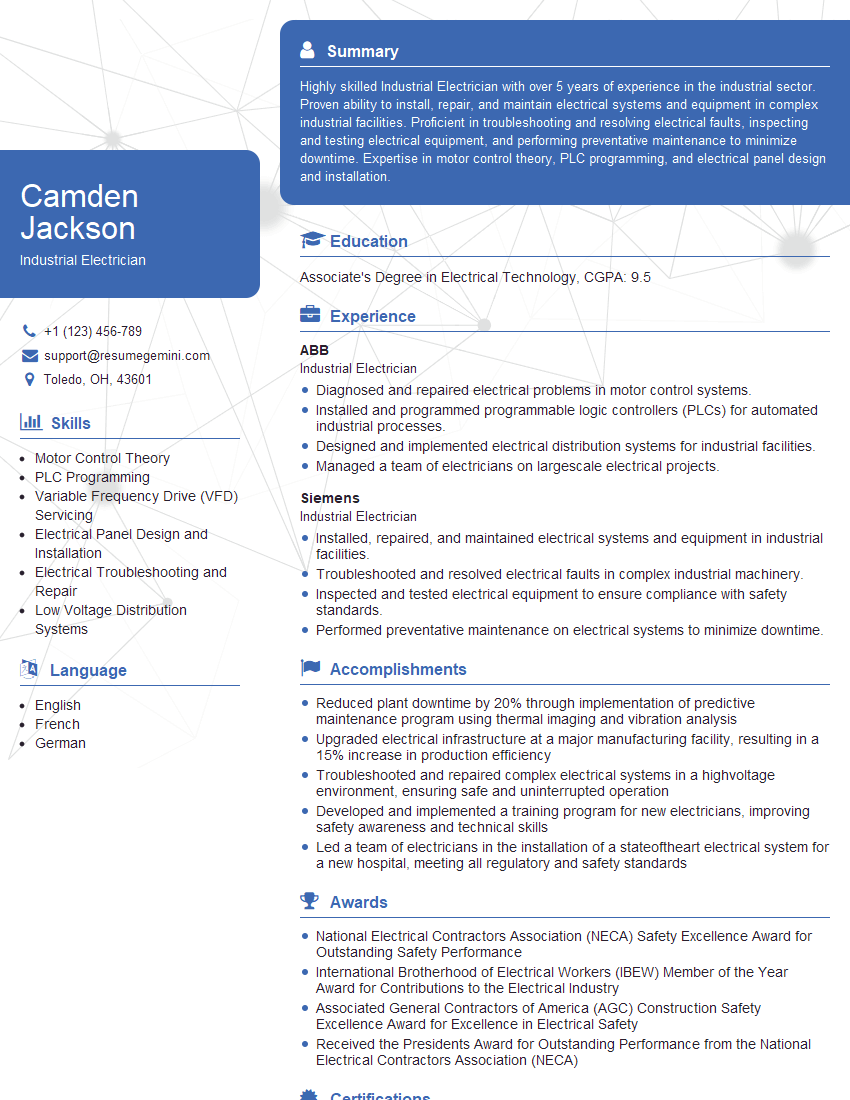
Industrial Electrician Resume Sample

Maintenance Electrician Resume Sample
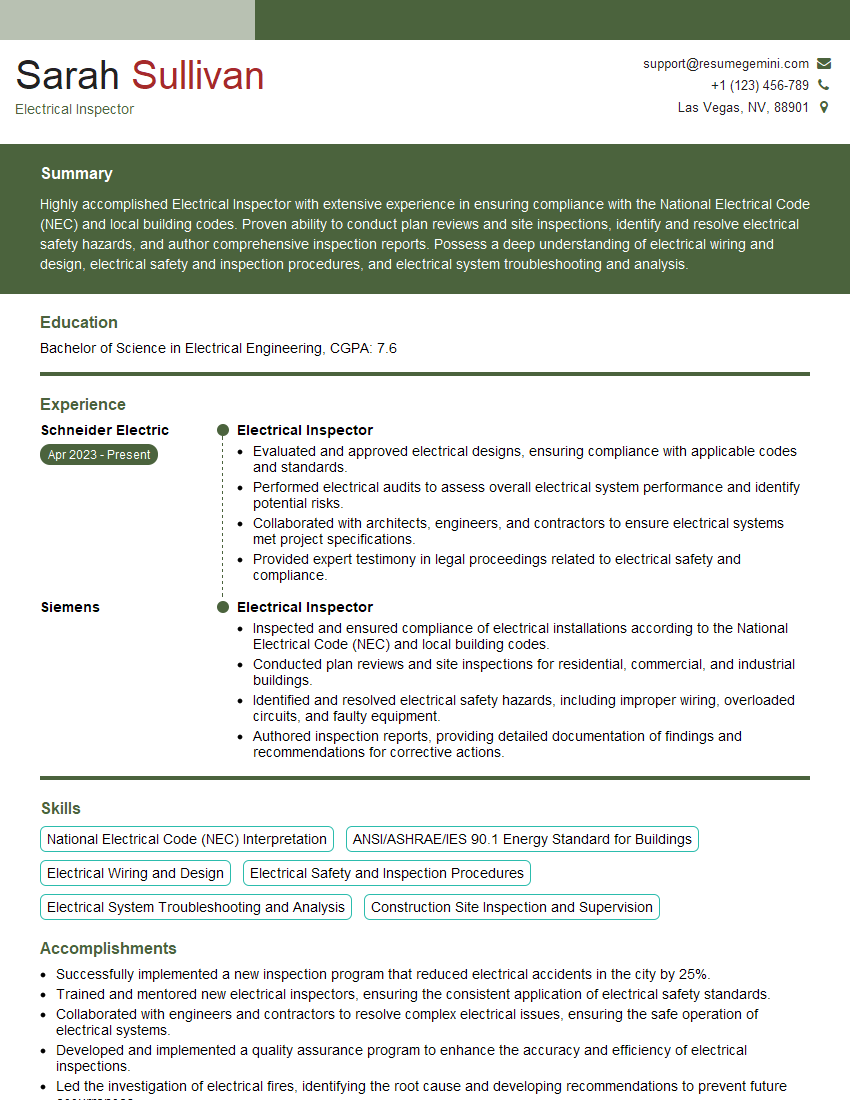
Electrical Inspector Resume Sample

Telecommunications Technician Resume Sample
- Electrical Superintendent
- Electrical Contractor
- Automation Engineer
- Electrical Designer
- Electrical Engineer
- Power Systems Engineer
- Control Systems Engineer
- Electrical Drafter
- Robotics Technician
- Building Inspector
- Construction Electrician
- Industrial Electrician
- Maintenance Electrician
- Electrical Inspector
- Telecommunications Technician
Explore more articles
Users Rating of Our Blogs
Share Your Experience
We value your feedback! Please rate our content and share your thoughts (optional).
What Readers Say About Our Blog
Really detailed insights and content, thank you for writing this detailed article.
IT gave me an insight and words to use and be able to think of examples