Interviews are more than just a Q&A session—they’re a chance to prove your worth. This blog dives into essential Prop Management interview questions and expert tips to help you align your answers with what hiring managers are looking for. Start preparing to shine!
Questions Asked in Prop Management Interview
Q 1. Describe your experience with rent collection and delinquency management.
Rent collection is the backbone of successful property management. My approach is proactive and systematic, combining automated systems with personalized communication. I utilize online payment portals to streamline the process, sending out friendly reminders a few days before the due date and following up promptly with late payers. Delinquency management requires a delicate balance of firmness and empathy. I start with a friendly phone call to understand the reason for the delay, offering payment plans or exploring hardship options where appropriate. However, if payment remains outstanding despite these efforts, I adhere to the lease agreement’s stipulations, progressing through written notices, and ultimately, if necessary, initiating legal action. For instance, in one instance, a tenant experienced a sudden job loss. Through open communication, we structured a payment plan that prevented eviction and kept the property occupied.
I meticulously track all payments and delinquencies using property management software, which allows for efficient reporting and analysis, helping to identify potential trends and implement preventative measures.
Q 2. How do you handle tenant complaints and disputes?
Handling tenant complaints and disputes requires strong communication and conflict resolution skills. My first step is always active listening – understanding the tenant’s perspective fully before responding. I then investigate the issue thoroughly, gathering all relevant information from the tenant, maintenance staff, and any other involved parties. Depending on the nature of the complaint (e.g., maintenance issue, neighbor dispute, policy violation), I take appropriate action. For maintenance issues, I ensure prompt repairs are scheduled and completed by qualified contractors. For neighbor disputes, I facilitate mediation, encouraging respectful communication between parties. If the complaint is a violation of the lease, I apply the lease’s terms consistently and fairly.
For example, a noise complaint between neighbors required careful mediation. I held separate meetings with each party to understand their concerns and expectations. Then, I drafted a mutually agreed-upon noise policy for the building that addressed their concerns. Documentation is crucial; I maintain detailed records of every complaint, action taken, and resolution to ensure accountability and avoid future conflicts.
Q 3. Explain your experience with property maintenance and repairs.
Property maintenance is a critical aspect of property management, directly impacting tenant satisfaction and property value. I manage maintenance proactively through regular inspections and preventative maintenance schedules. This helps identify and address minor issues before they escalate into costly repairs. For larger repairs, I have a network of reliable and vetted contractors specializing in various trades (plumbing, electrical, HVAC, etc.). I oversee the entire repair process, from obtaining bids to supervising the work and ensuring quality.
For example, preventative maintenance included regularly cleaning gutters to avoid water damage. When a major appliance breaks down, I manage getting multiple quotes, ensuring the best value and quality, while always keeping the tenant informed of progress. I use a work order system to track all maintenance requests, repairs, and costs, providing transparency and accountability.
Q 4. What is your experience with lease agreements and renewals?
My experience with lease agreements and renewals involves a thorough understanding of legal requirements and best practices. I ensure every lease agreement is comprehensive, covering all essential details including rent, terms, responsibilities, and clauses pertaining to repairs, lease breaches, and termination. Prior to renewal, I review market rates and analyze the tenant’s history to determine appropriate rent adjustments. I always communicate openly with tenants regarding renewal options and terms, offering flexibility where possible. I also ensure that all necessary paperwork is properly executed and filed. For example, I have successfully negotiated lease renewals that satisfied both the property owners and the tenants by finding a balance between market value and tenant retention. A well-drafted lease protects both the landlord and the tenant, minimizing future disputes.
Q 5. How do you manage tenant screening and selection?
Tenant screening is essential for minimizing risk and ensuring a positive living environment for all residents. My process involves a thorough review of prospective tenant applications, which typically includes credit checks, background checks, employment verification, and rental history. I use a combination of online screening services and manual verification to ensure accuracy and completeness. I maintain consistent screening criteria, applying them fairly to all applicants. This helps reduce the likelihood of selecting tenants who may not be responsible or respectful of the property or other residents. For example, in instances where a potential tenant has a past eviction, I would examine the circumstances to gain better understanding before rejecting the application.
Q 6. Describe your budgeting and financial reporting experience in property management.
Budgeting and financial reporting are crucial for the financial health of any property. My experience involves creating detailed annual budgets based on projected income and expenses, including rent, utilities, maintenance, taxes, and insurance. I track actual income and expenses meticulously, preparing regular financial reports that compare actual performance against the budget. I identify variances and investigate their causes, taking corrective actions to improve financial performance. My reporting includes detailed income statements, balance sheets, and cash flow statements, which are essential for decision-making and investment analysis. For example, by analyzing monthly rent collection data, I’ve identified trends in late payments and implemented proactive measures to reduce delinquency.
Q 7. What software or technology are you proficient in for property management?
I am proficient in several property management software platforms, including AppFolio, Buildium, and Yardi. These platforms allow me to manage all aspects of property management efficiently, from rent collection and tenant communication to maintenance tracking and financial reporting. I am also adept at using various productivity tools like Google Workspace and Microsoft Office Suite for efficient communication, document management, and data analysis. My familiarity with these tools streamlines operations and maximizes efficiency, allowing me to focus on providing high-quality service.
Q 8. How do you ensure compliance with all relevant laws and regulations?
Ensuring compliance is paramount in property management. It involves staying abreast of and adhering to all local, state, and federal laws and regulations, including fair housing laws, building codes, safety regulations, and tenant rights. This is not a passive process; it’s an ongoing commitment.
- Regular Training: My team and I participate in regular training sessions to stay updated on changes in legislation and best practices. We use resources like legal updates from professional organizations and attend relevant seminars.
- Documentation: We meticulously document all property transactions, inspections, maintenance requests, and tenant communications. This provides a clear audit trail and helps us demonstrate compliance should any issues arise.
- Risk Assessment: We conduct regular risk assessments to proactively identify potential compliance issues before they escalate. This might involve reviewing lease agreements, verifying insurance coverage, or inspecting properties for code violations.
- Legal Counsel: We have a strong relationship with legal counsel specializing in real estate law, consulting them when needed for guidance on complex issues or potential litigation.
- Example: For example, we recently updated our lease agreements to incorporate the latest changes to state fair housing laws. This ensured we avoided potential legal issues related to tenant selection and lease terms.
Q 9. Explain your experience with marketing and leasing vacant units.
Marketing and leasing vacant units is a crucial aspect of maximizing property profitability. My approach is multifaceted and data-driven. I leverage both online and offline strategies to attract high-quality tenants.
- Online Marketing: We utilize platforms like Zillow, Apartments.com, and Trulia to list our vacant units with high-quality photos and compelling descriptions. We track performance metrics like click-through rates and inquiries to optimize our listings.
- Offline Marketing: We use traditional methods like signage on the property and collaborations with local real estate agents. This is particularly important for properties that may not attract a lot of online traffic.
- Competitive Analysis: I regularly analyze rental rates and amenities offered by competing properties in the area to ensure our pricing and offerings remain competitive.
- Targeted Advertising: I utilize targeted advertising campaigns on social media platforms to reach specific demographic groups most likely to be interested in our properties.
- Example: For a recently vacated luxury apartment, we created a professional video tour highlighting its features and the surrounding neighborhood, which resulted in a significantly faster lease than expected.
Q 10. How do you prioritize maintenance requests and manage vendors?
Prioritizing maintenance requests and managing vendors requires a systematic approach. I utilize a combination of technology and efficient workflows to ensure timely and effective service.
- Prioritization System: We use a maintenance request system that prioritizes requests based on urgency and impact (e.g., emergency repairs take precedence over cosmetic issues). This system allows us to track the status of each request and maintain transparency with tenants.
- Vendor Management: We maintain a network of reliable and vetted vendors with expertise in various areas (plumbing, electrical, HVAC, etc.). We evaluate their performance based on response time, quality of work, and cost-effectiveness.
- Performance Tracking: We track vendor performance data to identify top performers and address any underperforming vendors. This includes metrics such as completion time, customer satisfaction ratings, and cost per job.
- Contracts & Agreements: We utilize detailed contracts with our vendors that clearly outline expectations, payment terms, and liability. This protects both the property owner and the tenant.
- Example: We recently implemented a new maintenance software that allows tenants to submit requests online, track their progress, and communicate directly with assigned technicians, greatly improving efficiency and communication.
Q 11. What is your experience with creating and managing operating budgets?
Creating and managing operating budgets is a crucial aspect of property management. It requires meticulous planning, accurate forecasting, and continuous monitoring.
- Budget Preparation: I start by analyzing historical data, including income and expenses from previous years. I then forecast future income based on occupancy rates and rental income projections. I also estimate expenses based on anticipated maintenance, repairs, and administrative costs.
- Expense Categorization: The budget is meticulously categorized (e.g., utilities, insurance, property taxes, maintenance, marketing, administrative) to allow for detailed tracking and analysis.
- Variance Analysis: I regularly monitor the budget throughout the year, comparing actual expenses against the budgeted amounts. Significant variances are investigated and corrective actions are implemented.
- Regular Reporting: I provide regular budget reports to the property owner, highlighting key performance indicators (KPIs) and any areas requiring attention.
- Example: During a period of economic uncertainty, we proactively adjusted our budget by forecasting lower occupancy rates and reducing non-essential expenses to protect the property’s profitability.
Q 12. How do you handle emergency situations or property damage?
Handling emergency situations and property damage requires a swift, decisive, and organized approach. My protocol emphasizes safety, damage control, and efficient communication.
- Emergency Contact List: We maintain an up-to-date list of emergency contacts, including vendors, insurance providers, and relevant authorities.
- Immediate Action: Upon discovering an emergency (fire, flood, break-in), I immediately take steps to ensure the safety of tenants and the property. This includes contacting emergency services if necessary and securing the premises.
- Damage Assessment: Once the immediate danger has passed, I conduct a thorough assessment of the damage to determine the extent of repairs required.
- Insurance Claims: I work with the property insurance provider to file a comprehensive claim, ensuring all documentation is provided accurately and promptly.
- Communication: Throughout the process, I maintain transparent and frequent communication with tenants, the property owner, and relevant stakeholders.
- Example: We recently handled a burst pipe that caused significant water damage in a unit. By acting swiftly, we minimized further damage, contacted emergency services, and ensured the tenant was relocated temporarily while repairs were completed.
Q 13. Describe your experience with property inspections and reporting.
Property inspections and reporting are essential for maintaining property value, ensuring tenant compliance, and identifying potential maintenance issues.
- Regular Inspections: We conduct regular inspections (e.g., move-in/move-out inspections, routine inspections) using a standardized checklist to ensure consistency and thoroughness. Photos and video documentation are crucial.
- Detailed Reports: Detailed inspection reports are compiled, noting any damage, violations of lease agreements, or necessary maintenance. These are shared with the tenant and the owner.
- Move-in/Move-out Documentation: Move-in/move-out inspections are meticulously documented with photos, comparing the condition of the property at the start and end of a tenancy. This protects the owner and the tenant from disputes.
- Technology Integration: We leverage technology such as inspection apps to streamline the process, making it more efficient and accessible.
- Example: Using a digital inspection tool and photographic evidence, we effectively documented pre-existing damage during a move-in inspection, preventing a dispute over damages during move-out.
Q 14. How do you manage tenant turnover and vacancy rates?
Managing tenant turnover and vacancy rates requires a proactive and strategic approach focused on minimizing downtime and maximizing occupancy.
- Marketing & Leasing Efficiency: Employing effective marketing strategies (as discussed earlier) is crucial to attracting quality tenants quickly.
- Lease Renewal Strategies: Proactive lease renewal efforts are made with existing tenants to offer incentives for renewing their leases and reduce vacancies.
- Competitive Rent Analysis: Continuous monitoring of market rent rates allows us to adjust pricing strategically to attract tenants without sacrificing profitability.
- Tenant Retention: Creating a positive tenant experience through responsive maintenance and clear communication leads to higher retention rates.
- Vacancy Cost Analysis: We analyze the costs associated with vacancy (lost rental income, marketing expenses) to identify areas for improvement and reduce downtime.
- Example: By implementing a tenant satisfaction survey, we identified areas for improvement in our maintenance response times, resulting in increased tenant retention and a decrease in vacancy rates.
Q 15. How do you track and manage key performance indicators (KPIs)?
Tracking and managing Key Performance Indicators (KPIs) in property management is crucial for evaluating performance, identifying areas for improvement, and maximizing profitability. I utilize a multi-faceted approach, combining both qualitative and quantitative data.
- Software and Data Analytics: I leverage property management software to automatically track key metrics such as occupancy rates, rent collection rates, operating expenses, tenant turnover rates, and maintenance costs. This data is then analyzed using dashboards and reports to identify trends and potential issues.
- Regular Reporting and Reviews: I generate regular reports (monthly, quarterly, annually) summarizing key KPIs for owners and stakeholders. These reports provide a clear picture of the property’s financial health and operational efficiency. These reports also include commentary on trends and proactive measures taken.
- Benchmarking: I regularly benchmark our performance against industry averages and comparable properties in the area. This allows us to identify areas where we are exceeding expectations and areas where we need to improve. For example, comparing our rent collection rate to the market average helps determine the effectiveness of our rent collection strategies.
- Goal Setting and Performance Targets: KPIs are not just for tracking – they’re also vital for goal setting. I work with owners to establish realistic, measurable goals for each property and regularly review progress towards those goals. We might set a target of increasing occupancy by 5% within a year, for instance.
By consistently monitoring and analyzing these KPIs, we can make data-driven decisions to improve efficiency, reduce costs, and enhance the overall value of the property.
Career Expert Tips:
- Ace those interviews! Prepare effectively by reviewing the Top 50 Most Common Interview Questions on ResumeGemini.
- Navigate your job search with confidence! Explore a wide range of Career Tips on ResumeGemini. Learn about common challenges and recommendations to overcome them.
- Craft the perfect resume! Master the Art of Resume Writing with ResumeGemini’s guide. Showcase your unique qualifications and achievements effectively.
- Don’t miss out on holiday savings! Build your dream resume with ResumeGemini’s ATS optimized templates.
Q 16. Explain your experience with risk management in property management.
Risk management is paramount in property management. It involves proactively identifying, assessing, and mitigating potential threats to the property, its occupants, and the business itself. My approach is comprehensive and includes:
- Regular Property Inspections: Thorough and frequent inspections help identify potential safety hazards (e.g., faulty wiring, structural damage) and maintenance needs before they escalate into costly repairs or liabilities. I document all inspections meticulously with photos and detailed reports.
- Insurance Management: Ensuring adequate and appropriate insurance coverage is critical. This involves reviewing policies regularly, ensuring sufficient limits, and understanding policy exclusions. I work closely with insurance brokers to secure the best coverage at the most competitive rates.
- Legal Compliance: Staying updated on all relevant legislation and regulations, including Fair Housing laws, safety codes, and tenant rights, is crucial for preventing legal issues. I regularly attend industry seminars and workshops to maintain my knowledge.
- Emergency Preparedness: Developing and regularly testing emergency plans (fire, flood, etc.) is essential for protecting lives and property. This includes establishing clear communication protocols and procedures for tenants and staff.
- Vendor Management: Vetting and managing vendors carefully (background checks, insurance verification) reduces the risk of negligence, theft, or damage caused by third parties.
For example, a recent incident involved a water leak. By promptly identifying the source, contacting a reliable plumber, and filing an insurance claim, we minimized the damage and prevented a much more extensive, and costly, problem.
Q 17. How do you communicate effectively with tenants, owners, and vendors?
Effective communication is the cornerstone of successful property management. I tailor my approach to each audience, ensuring clear, concise, and respectful communication.
- Tenants: I maintain open lines of communication, promptly addressing their concerns, requests, and maintenance issues. I use a combination of email, phone calls, and in-person interactions (where appropriate). I also utilize online portals for rent payments and communication, promoting transparency and efficiency. A friendly and approachable demeanor is crucial in building a positive relationship with tenants.
- Owners: I provide regular, detailed reports on the property’s financial performance and operational status. I proactively communicate any potential issues or opportunities, allowing them to make informed decisions. Open and honest communication builds trust and ensures their satisfaction.
- Vendors: Clear and detailed communication with vendors is essential to ensure timely completion of tasks. This includes providing specific instructions, timelines, and expectations, as well as clear payment terms. I maintain detailed records of all vendor interactions.
For instance, when dealing with a tenant complaint, I listen carefully, take notes, promptly investigate the issue, and follow up with a solution. This demonstrates responsiveness and builds trust. I believe in proactive communication, anticipating potential issues and addressing them before they escalate.
Q 18. What is your experience with property insurance and claims?
Experience with property insurance and claims is an integral part of my role. I have a thorough understanding of various insurance policies, including property damage, liability, and loss of rent.
- Policy Review and Procurement: I work with insurance brokers to secure comprehensive and cost-effective coverage for properties under my management. This involves reviewing policy details, understanding coverage limits, and identifying potential gaps in protection.
- Claims Management: When incidents occur, I promptly document all details, including photos and witness statements. I then work directly with the insurance adjusters to ensure a smooth and efficient claims process, advocating for the best possible settlement for the property owner.
- Risk Mitigation: I actively work to mitigate risks that could lead to insurance claims. This includes conducting regular inspections, addressing maintenance needs promptly, and implementing preventative measures.
For example, I recently handled a claim resulting from a burst pipe. My prompt documentation of the damage, efficient communication with the adjuster, and clear presentation of expenses resulted in a rapid and fair settlement.
Q 19. Describe a challenging situation you faced in property management and how you resolved it.
One challenging situation involved a significant water leak in a multi-unit building that resulted from a plumbing issue in a unit’s bathroom. The leak caused extensive damage to the affected unit and several units below it.
Resolution: I immediately took the following steps:
- Emergency Response: First, I contacted emergency services to contain the leak and prevent further damage.
- Damage Assessment: I then conducted a thorough assessment of the damage, documenting everything with photographs and detailed reports. I also spoke to the affected tenants, ensuring their safety and providing temporary housing if necessary.
- Insurance Claim: I promptly filed a comprehensive insurance claim, providing all necessary documentation.
- Vendor Coordination: I contracted reputable remediation specialists to begin the restoration process.
- Tenant Communication: I kept the tenants updated regularly, providing reassurance and addressing their concerns.
This situation tested my ability to handle crises, communicate effectively, and coordinate multiple parties effectively. By acting swiftly and decisively, we minimized the overall disruption and expense, ensuring the affected tenants were fairly compensated and the building was repaired to its original condition.
Q 20. How do you stay current with industry best practices and changes in legislation?
Staying current with industry best practices and legislative changes is crucial in property management. I employ several strategies to maintain my expertise:
- Professional Organizations: I am an active member of [mention relevant professional organizations, e.g., Institute of Real Estate Management (IREM), National Apartment Association (NAA)], attending conferences, webinars, and workshops. These provide invaluable networking opportunities and access to the latest industry trends and best practices.
- Industry Publications and Journals: I regularly read trade publications and journals, staying informed about legislative changes, technological advancements, and best practices in areas like sustainability, property technology (PropTech), and tenant relations.
- Continuing Education: I actively pursue continuing education courses to maintain and enhance my professional certifications and stay abreast of any legal changes relevant to property management.
- Networking: I regularly network with other professionals in the industry to exchange best practices, share insights, and stay up to date on recent developments.
This ongoing commitment to learning ensures I am always at the forefront of the profession, capable of adapting to new challenges and implementing effective strategies.
Q 21. What is your understanding of Fair Housing laws?
My understanding of Fair Housing laws is thorough and comprehensive. These laws prohibit discrimination in housing based on race, color, national origin, religion, sex, familial status, or disability.
Key aspects of my understanding include:
- Advertising and Marketing: All advertising and marketing materials must comply with Fair Housing laws. This means avoiding discriminatory language or imagery, and ensuring accessibility in advertising.
- Application Processes: All applicants must be treated fairly and equally, with no discriminatory practices during the application or screening process.
- Reasonable Accommodations and Modifications: Landlords are required to make reasonable accommodations for individuals with disabilities, and to allow reasonable modifications to properties for accessibility.
- Enforcement: I understand the penalties for violating Fair Housing laws and the procedures for filing complaints.
I ensure that all of our practices and policies strictly adhere to these laws, maintaining a fair and inclusive environment for all tenants. We provide training to our staff to ensure they understand and comply with these laws.
Q 22. How would you handle a situation where a tenant violates their lease agreement?
Handling lease violations requires a systematic approach emphasizing fairness and compliance. My first step is to thoroughly review the lease agreement and gather evidence documenting the violation. This might involve reviewing photos, emails, or witness statements.
Then, I initiate communication with the tenant, clearly explaining the violation and its consequences as outlined in the lease. I offer them an opportunity to address the issue, perhaps by correcting the violation or providing a reasonable explanation. For example, if the violation is a late rent payment, I’d check if there were extenuating circumstances. If it’s a noise complaint, I’d attempt mediation.
If the tenant is unresponsive or the violation is serious (e.g., drug activity, significant property damage), I escalate the situation. This might involve issuing a formal written warning, initiating the eviction process (following all legal procedures), or contacting law enforcement if necessary. Detailed documentation at every step is crucial, not only to protect the property owner but also to ensure I’m adhering to fair housing laws.
Crucially, I strive to maintain professionalism and respect throughout the process. While upholding the property owner’s interests, I am mindful of the tenant’s rights and aim for a resolution that balances both parties’ needs.
Q 23. Describe your experience with managing multi-family residential properties.
Throughout my career, I’ve managed a diverse portfolio of multi-family residential properties, ranging from small apartment complexes to larger communities with over 100 units. My responsibilities included all aspects of property management, from tenant screening and lease administration to maintenance oversight and financial reporting.
I have extensive experience in handling tenant relations, addressing maintenance requests efficiently, and implementing preventative maintenance programs to minimize costs and maximize property value. For example, in one property, I implemented a proactive system for identifying potential plumbing issues before they escalated into costly repairs, resulting in significant savings for the owners.
I’m proficient in using property management software to streamline operations, track expenses, and generate reports. I’m also well-versed in fair housing laws and regulations, ensuring compliance in all aspects of my management. This includes understanding the nuances of screening tenants to avoid discriminatory practices.
I’m adept at handling complex situations, such as resolving disputes among tenants or dealing with difficult lease violations, always prioritizing a fair and lawful approach.
Q 24. How do you balance the needs of tenants with the interests of property owners?
Balancing tenant needs and owner interests is a core aspect of successful property management. It’s not a zero-sum game; rather, it’s about finding mutually beneficial solutions. My approach is based on open communication, proactive maintenance, and a strong understanding of both perspectives.
For example, while keeping rental rates competitive to attract and retain desirable tenants, I also ensure that the owner receives a fair return on their investment. Similarly, while promptly addressing tenant maintenance requests, I implement cost-effective strategies to prevent unnecessary expenses. I explain these decisions transparently to both parties, fostering mutual understanding and trust.
I believe strong communication is key. I regularly communicate with tenants, responding to concerns promptly and addressing issues efficiently. Simultaneously, I maintain regular contact with property owners, providing transparent financial reports, addressing potential concerns, and proactively suggesting improvements to maximize property value and profitability. This proactive approach helps build strong, collaborative relationships with both parties.
Q 25. What is your approach to improving tenant satisfaction and retention?
Improving tenant satisfaction and retention is a strategic priority. I believe that happy tenants are more likely to renew their leases, reducing vacancy costs and maintaining a positive community environment. My strategies focus on several key areas:
- Proactive Maintenance: Regular preventative maintenance reduces disruptions and demonstrates a commitment to quality living.
- Responsive Communication: Prompt responses to maintenance requests and inquiries show that tenant concerns are valued.
- Creating Community: Organizing community events, encouraging neighborly interactions, enhances the sense of belonging.
- Transparent Processes: Clear and consistent communication about rent increases, lease renewals, and other important information ensures fairness and reduces misunderstandings.
- Online Portals and Tools: Streamlining rent payments and communication through tenant portals improves convenience.
For example, in my previous role, I introduced a tenant feedback system, enabling them to easily provide suggestions or report issues. This led to improvements in property services and a significant increase in tenant satisfaction and retention rates.
Q 26. What are your salary expectations?
My salary expectations are commensurate with my experience and skills, and are in line with the industry standard for similar roles. I am open to discussing a competitive compensation package that reflects the value I will bring to your organization. I would be happy to review specific salary ranges based on the details of this position and its associated responsibilities.
Q 27. What are your long-term career goals in property management?
My long-term career goals involve progressing into a leadership position within property management. I am keen to develop my expertise in property operations and financial management, potentially leading a larger portfolio of properties or overseeing a team. I’m also interested in exploring opportunities for professional development, including pursuing relevant certifications to enhance my skillset and remain at the forefront of industry best practices.
Q 28. Why are you interested in this specific property management position?
I am deeply interested in this specific property management position because of [Company Name]’s reputation for excellence, the opportunity to work with a diverse portfolio of properties, and the emphasis on [mention specific company values or aspects of the job description that appeal to you, e.g., sustainable practices, tenant relations, technological innovation]. I believe my skills and experience align perfectly with the requirements of this role and I am confident in my ability to make a significant contribution to your team’s success.
Key Topics to Learn for Your Prop Management Interview
- Financial Management in Property Management: Understanding budgeting, forecasting, rent collection, expense tracking, and profit/loss analysis. Practical application: Developing a realistic budget for a multi-unit property and explaining variance analysis.
- Tenant Relations and Leasing: Mastering effective communication, lease agreements, tenant screening processes, and conflict resolution. Practical application: Describing your approach to handling difficult tenant situations and maintaining positive relationships.
- Property Maintenance and Repairs: Knowledge of preventative maintenance, understanding of repair procedures, vendor management, and capital improvements. Practical application: Outlining a proactive maintenance plan to minimize costly repairs and extend property lifespan.
- Legal and Regulatory Compliance: Familiarity with relevant landlord-tenant laws, fair housing regulations, safety codes, and insurance requirements. Practical application: Explaining how you ensure compliance with all applicable laws and regulations.
- Property Operations and Technology: Understanding property management software, lease administration, rent collection systems, and utilizing technology for efficiency. Practical application: Describing experience with property management software and how technology improves operational efficiency.
- Marketing and Leasing Strategies: Developing effective marketing plans to attract and retain tenants, understanding market trends, and optimizing occupancy rates. Practical application: Outlining a strategy to fill vacant units quickly and efficiently.
Next Steps
Mastering Property Management opens doors to exciting career opportunities and significant growth within the real estate industry. To maximize your job prospects, creating a strong, ATS-friendly resume is crucial. ResumeGemini is a trusted resource to help you build a professional and impactful resume that highlights your skills and experience effectively. We provide examples of resumes tailored to Property Management to help guide you. Invest time in crafting a compelling resume – it’s your first impression with potential employers.
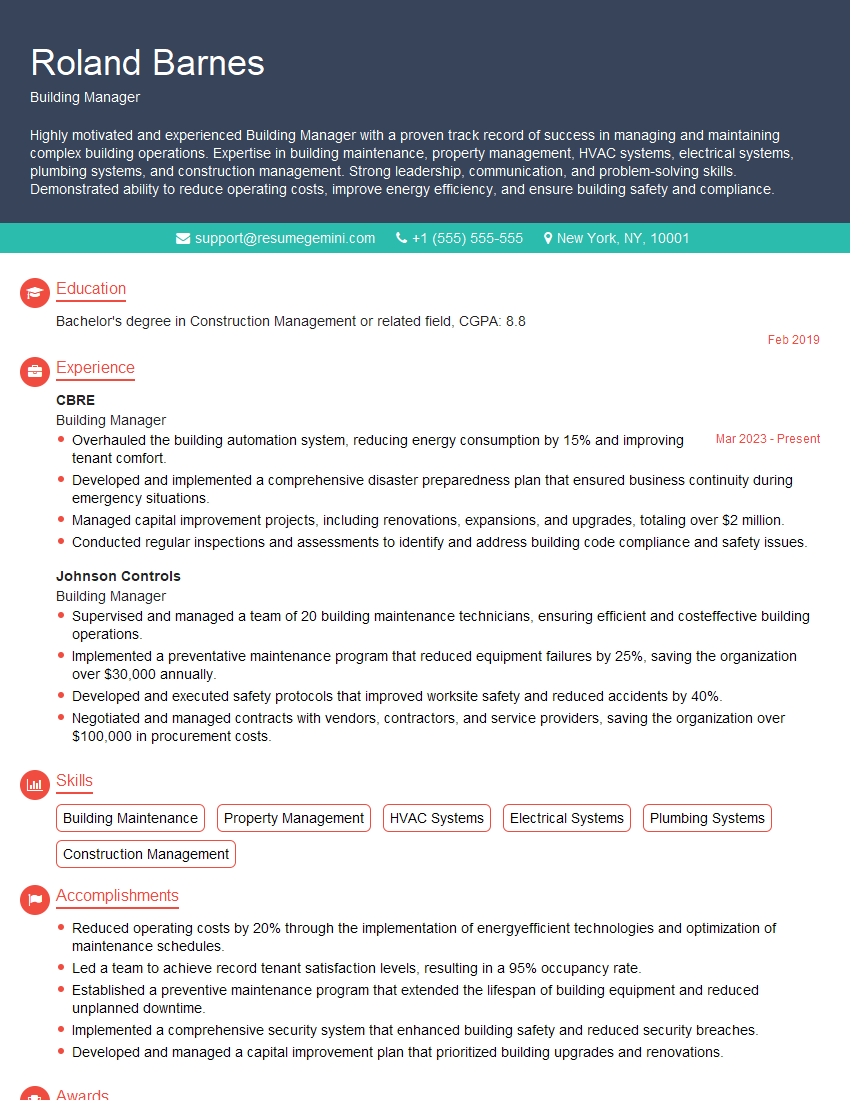
Building Manager Resume Sample
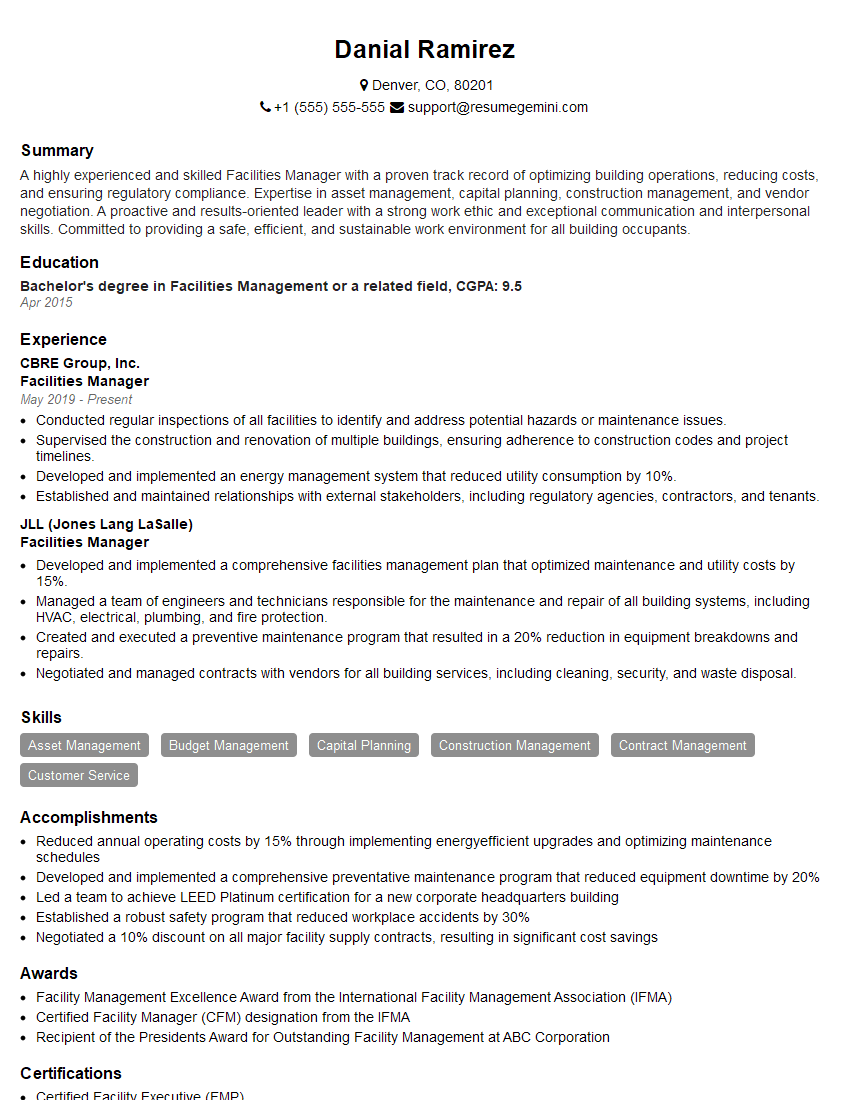
Facilities Manager Resume Sample
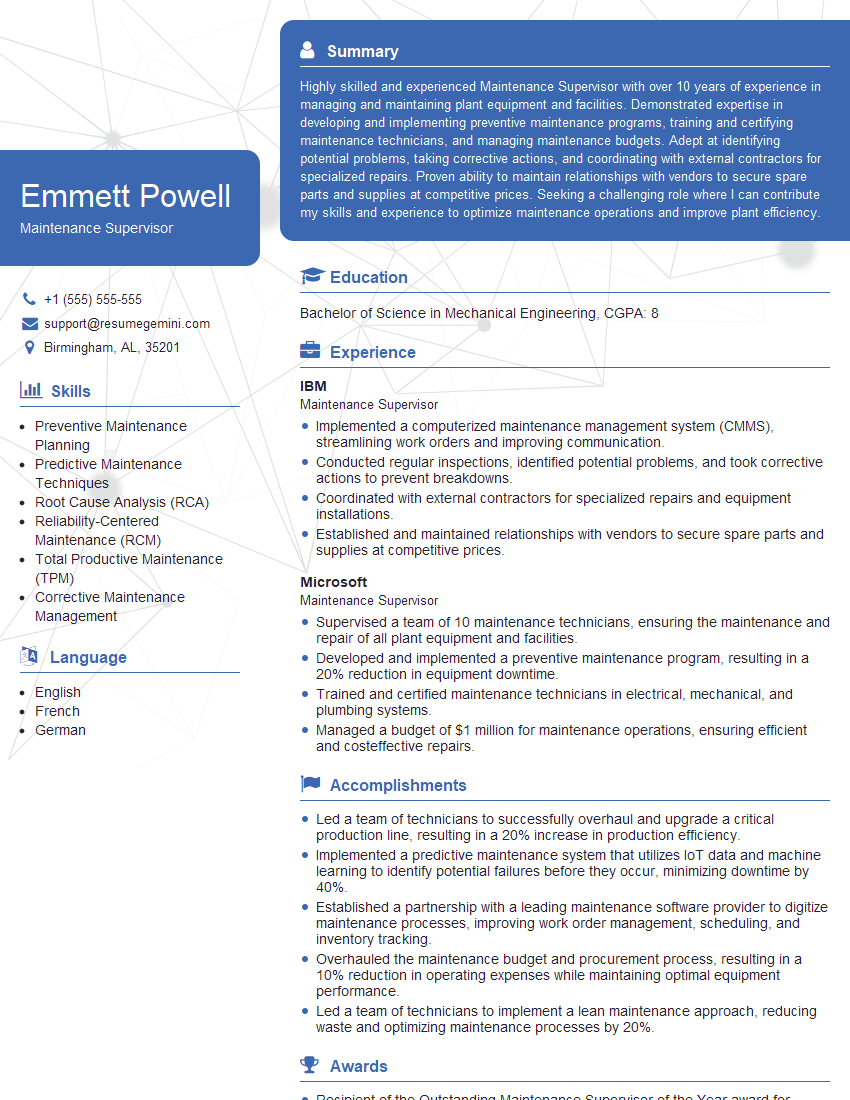
Maintenance Supervisor Resume Sample
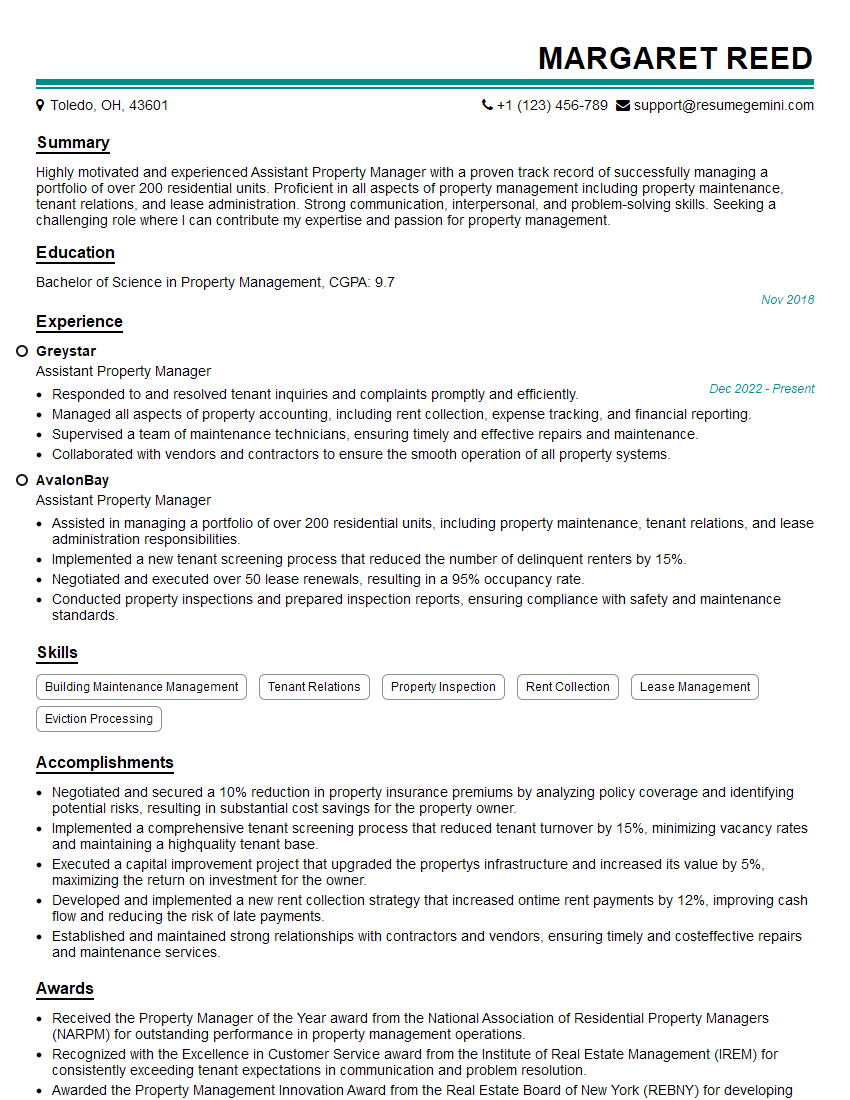
Assistant Property Manager Resume Sample
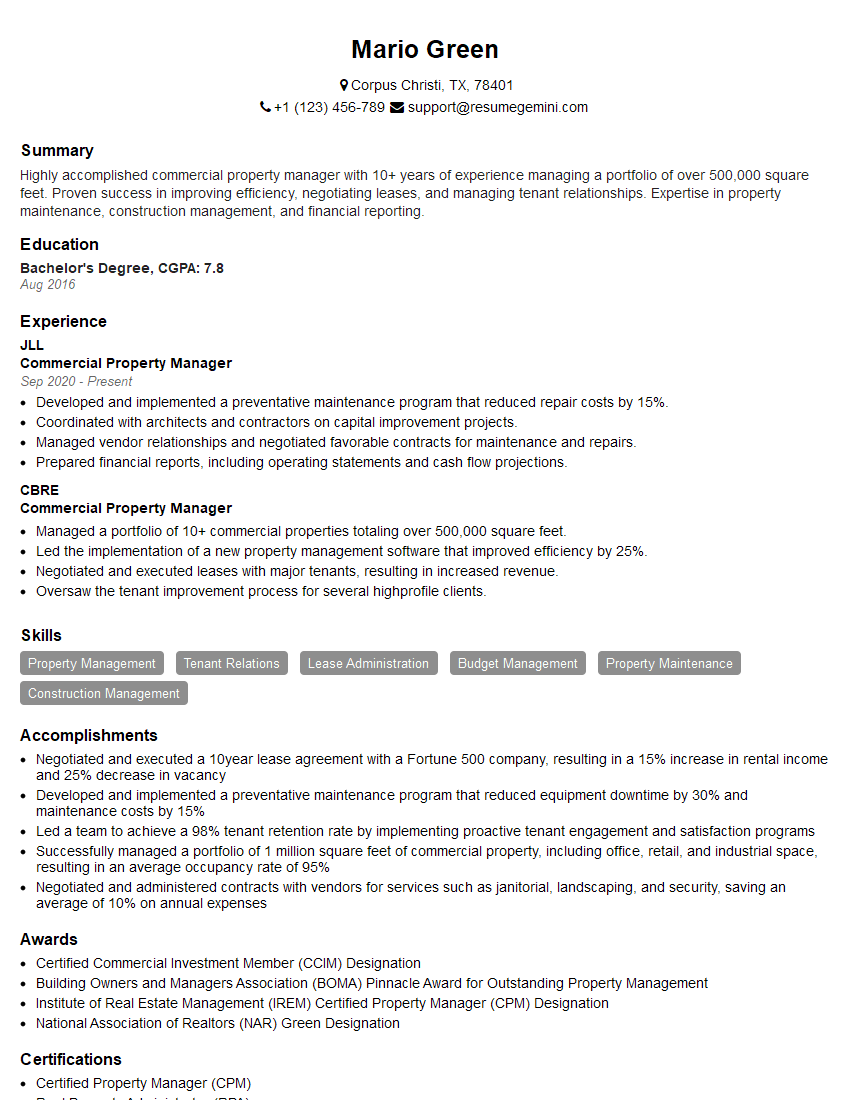
Commercial Property Manager Resume Sample
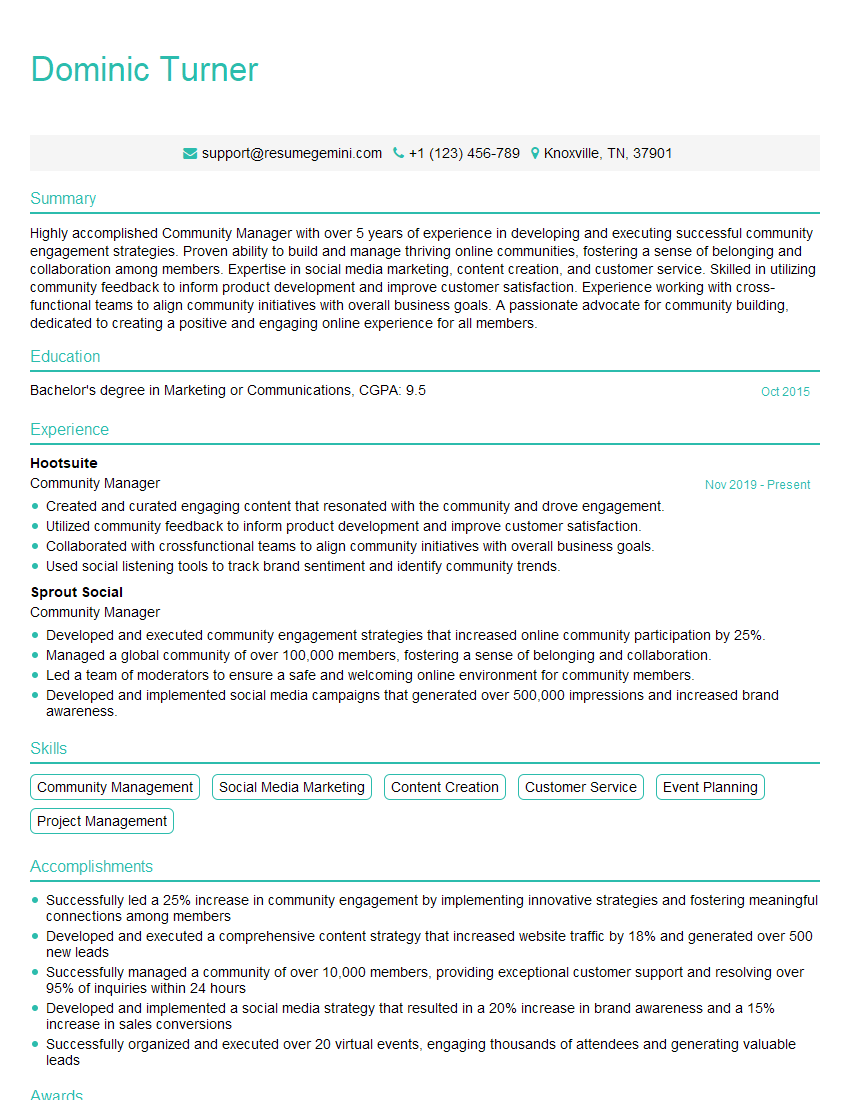
Community Manager Resume Sample
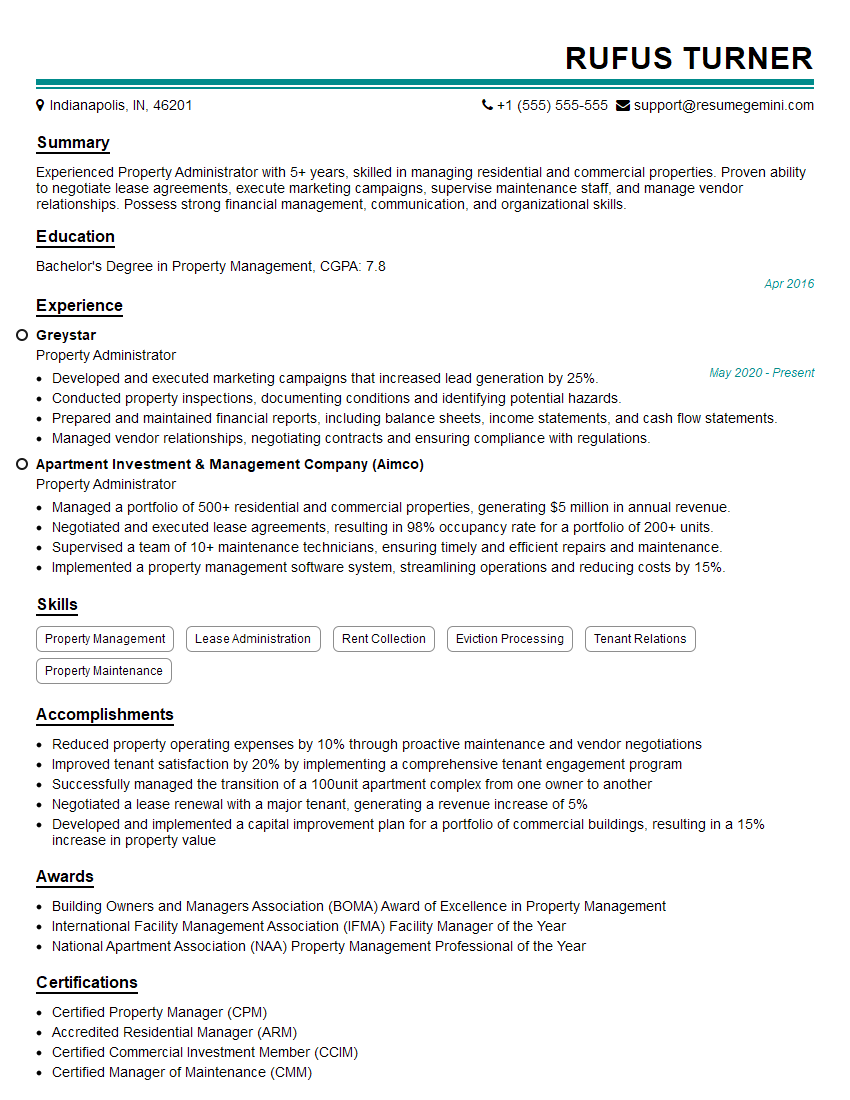
Property Administrator Resume Sample
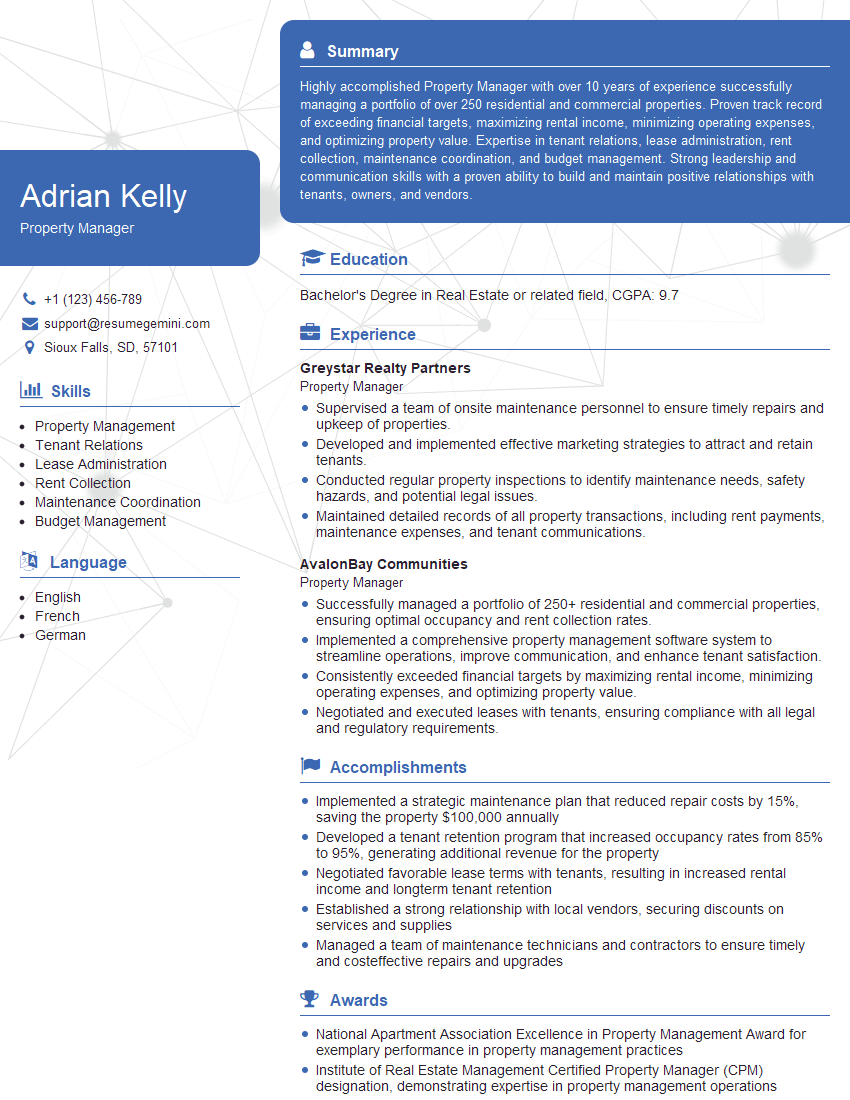
Property Manager Resume Sample
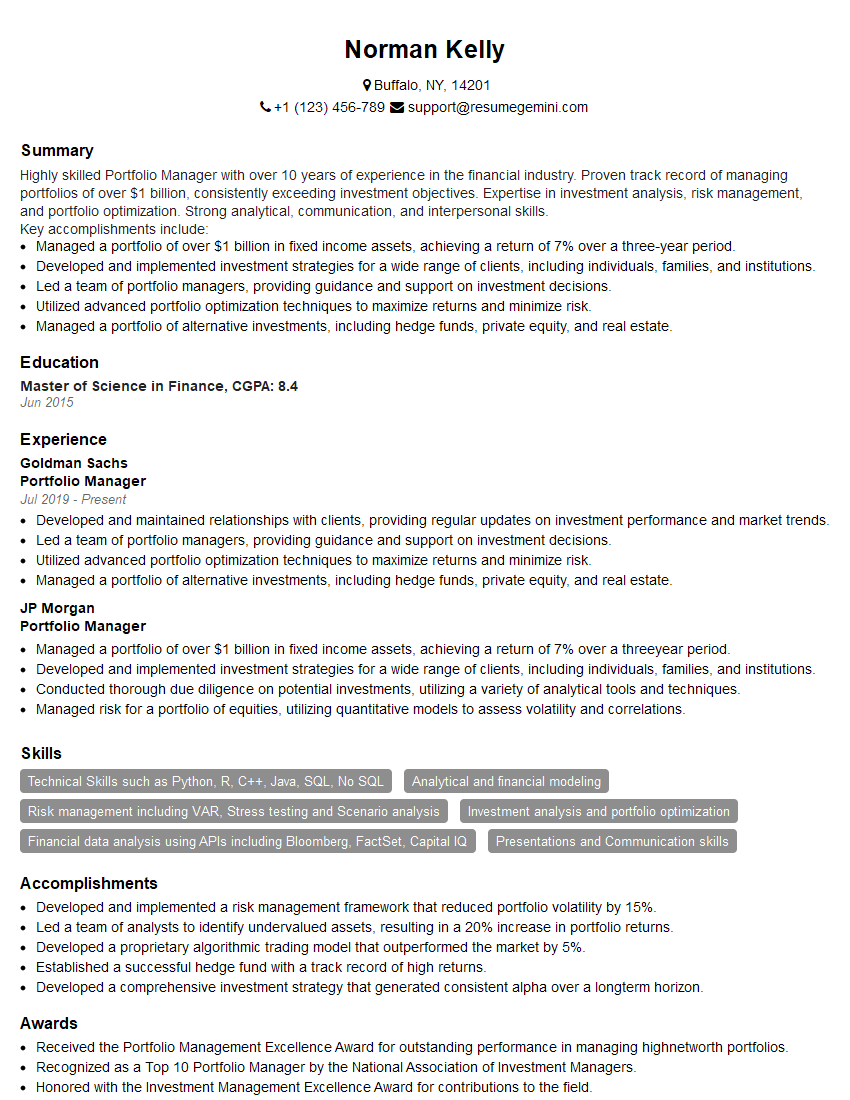
Portfolio Manager Resume Sample
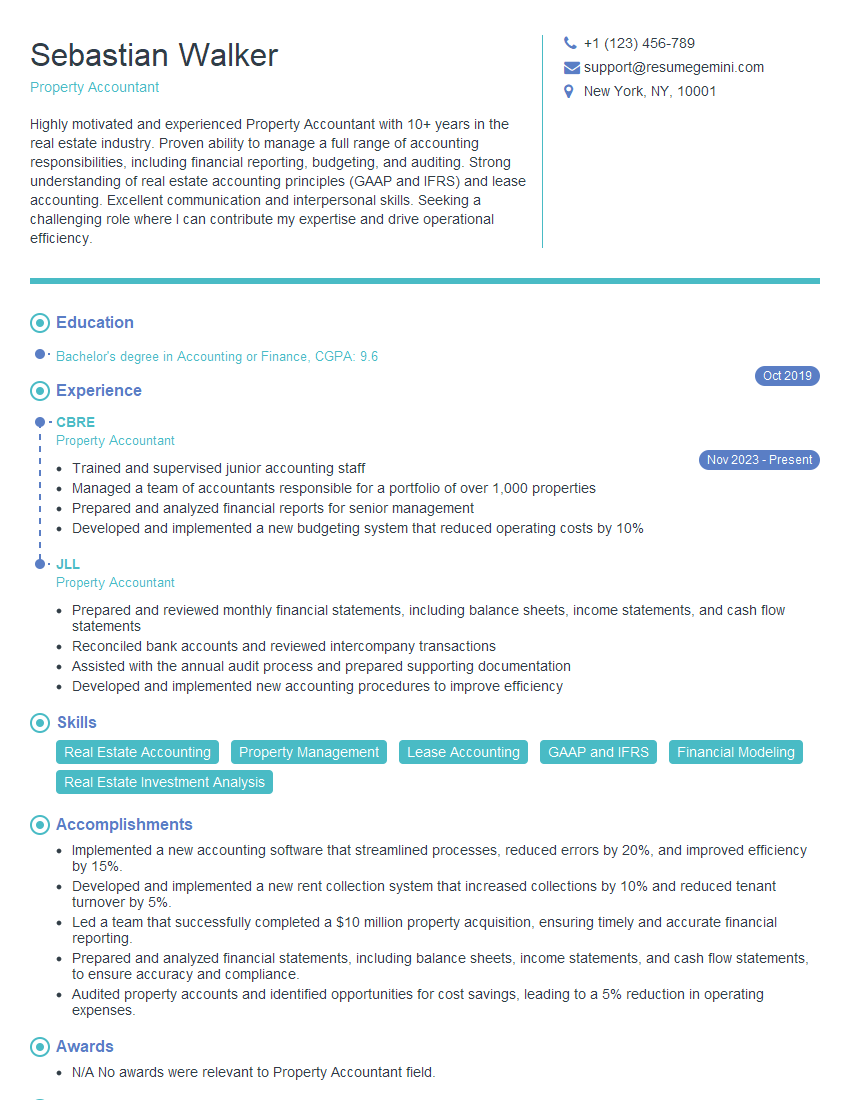
Property Accountant Resume Sample
Explore more articles
Users Rating of Our Blogs
Share Your Experience
We value your feedback! Please rate our content and share your thoughts (optional).
What Readers Say About Our Blog
Really detailed insights and content, thank you for writing this detailed article.
IT gave me an insight and words to use and be able to think of examples