Are you ready to stand out in your next interview? Understanding and preparing for Avionics Maintenance and Repair interview questions is a game-changer. In this blog, we’ve compiled key questions and expert advice to help you showcase your skills with confidence and precision. Let’s get started on your journey to acing the interview.
Questions Asked in Avionics Maintenance and Repair Interview
Q 1. Explain the difference between scheduled and unscheduled maintenance.
Scheduled maintenance is preventative maintenance performed at predetermined intervals based on the aircraft manufacturer’s recommendations and regulatory requirements. Think of it like a car’s regular oil change – it’s done proactively to prevent bigger problems. Unscheduled maintenance, on the other hand, is reactive. It’s performed when a system malfunctions or a component fails unexpectedly, requiring immediate attention. Imagine a flat tire – you didn’t plan for it; it requires immediate action.
- Scheduled Maintenance Examples: Regular inspections of wiring harnesses, periodic replacement of filters, scheduled component overhauls.
- Unscheduled Maintenance Examples: Repairing a faulty transponder, replacing a failed engine sensor, addressing a hydraulic leak.
The key difference lies in the predictability and planning involved. Scheduled maintenance is planned and integrated into the operational schedule, while unscheduled maintenance disrupts operations and requires immediate problem-solving.
Q 2. Describe your experience with troubleshooting avionics systems.
My experience with troubleshooting avionics systems spans over ten years, encompassing various aircraft types and avionics suites. I’ve tackled complex issues ranging from intermittent transponder malfunctions to complete navigation system failures. My approach is systematic, starting with a thorough review of the aircraft’s maintenance logs and system documentation. I then use built-in test equipment (BITE) to isolate the fault, often followed by more specialized testing equipment like oscilloscopes and signal generators. For example, I once resolved a recurring autopilot disengagement issue by tracing a faulty wire connection within the control unit using a combination of BITE and an oscilloscope. I meticulously document every step of the troubleshooting process, including the observed symptoms, test results, and corrective actions taken. This ensures traceability and facilitates future maintenance.
Q 3. What are the common causes of avionics malfunctions?
Avionics malfunctions stem from a variety of causes, broadly categorized as:
- Hardware Failures: Component wear and tear (e.g., capacitor failure, loose connections), manufacturing defects, damage from environmental factors (e.g., extreme temperatures, moisture).
- Software Glitches: Bugs in the software, corrupted data, incompatibility issues between different software versions.
- Environmental Factors: Lightning strikes, extreme temperatures, vibration, and corrosion can significantly impact avionics performance.
- Human Error: Incorrect installation or maintenance procedures, accidental damage during repairs, improper configuration.
Identifying the root cause often requires a combination of technical expertise and diagnostic skills. A seemingly simple issue might be symptomatic of a deeper underlying problem. For instance, a faulty display might indicate a problem with the display itself, but could also be caused by a faulty data bus or even a software error.
Q 4. How familiar are you with FAA regulations and maintenance documentation?
I possess a thorough understanding of FAA regulations, specifically those related to Part 43 (Maintenance, Preventive Maintenance, and Rebuilding), Part 91 (General Operating and Flight Rules), and Part 145 (Repair Stations). I’m proficient in interpreting and applying these regulations to various maintenance scenarios. I’m also well-versed in maintaining accurate and complete maintenance documentation, including logbooks, work orders, and discrepancy reports, ensuring compliance with FAA requirements. My experience includes working with various maintenance tracking software and databases to manage maintenance records efficiently. Understanding these regulations is paramount for ensuring the airworthiness and safety of aircraft.
Q 5. Describe your experience with different types of avionics testing equipment.
My experience encompasses a wide range of avionics testing equipment, including:
- Built-in Test Equipment (BITE): I am proficient in utilizing the self-diagnostic capabilities of various avionics systems.
- Multimeters: For measuring voltage, current, and resistance.
- Oscilloscopes: For analyzing waveforms and identifying signal anomalies.
- Signal Generators: For simulating various signals and testing system responses.
- Specialized Test Sets: Aircraft-specific test sets designed to check the functionality of particular avionics components.
The selection of appropriate equipment depends heavily on the nature of the suspected malfunction and the specific avionics system involved. Proficiency in using these tools is critical for accurate diagnosis and effective repair.
Q 6. Explain your experience with interpreting and following maintenance manuals.
Interpreting and following maintenance manuals is a fundamental aspect of my work. I’m adept at navigating complex technical documentation, including schematics, wiring diagrams, and troubleshooting guides. I understand the importance of adhering strictly to the manufacturer’s instructions to ensure the safety and airworthiness of the aircraft. For example, when performing a component replacement, I meticulously follow the step-by-step instructions in the manual, verifying each step before proceeding. Any deviation from the prescribed procedure is carefully documented and justified. Understanding the context and purpose behind each step in the manual is crucial for effective and safe maintenance.
Q 7. How do you prioritize maintenance tasks in a high-pressure environment?
Prioritizing maintenance tasks in a high-pressure environment requires a systematic approach. I utilize a risk-based prioritization framework, considering factors such as:
- Safety Criticality: Tasks impacting flight safety are prioritized first (e.g., critical system malfunctions).
- Urgency: Time-sensitive issues requiring immediate attention are prioritized.
- Operational Impact: Maintenance impacting flight scheduling or operational capabilities is considered.
- Regulatory Requirements: Compliance with mandatory maintenance requirements.
I often employ tools such as maintenance tracking software and checklists to manage the workflow efficiently and ensure nothing is overlooked. Clear communication with pilots and operations personnel is essential to align expectations and manage expectations effectively.
Q 8. What is your experience with avionics system upgrades and modifications?
Avionics system upgrades and modifications are a critical part of maintaining aircraft safety and enhancing operational capabilities. My experience encompasses a wide range of upgrades, from simple component replacements to complex system integrations. For instance, I’ve been involved in upgrading several aircraft from older analog systems to modern glass cockpits incorporating advanced GPS, weather radar, and flight management systems. This involved meticulous planning, ensuring compatibility with existing systems, managing the installation process, and rigorous testing to verify functionality and safety post-upgrade. Another project involved retrofitting a fleet of aircraft with Automatic Dependent Surveillance-Broadcast (ADS-B) systems to meet evolving air traffic management regulations. This required detailed knowledge of the aircraft’s electrical system, communication networks, and the ADS-B protocols to ensure seamless integration and compliance.
These projects required a deep understanding of airworthiness directives, technical documentation, and safety regulations. A successful upgrade demands meticulous attention to detail, thorough testing, and a commitment to maintaining the aircraft’s airworthiness throughout the entire process.
Q 9. Describe your experience working with different types of aircraft avionics systems (e.g., GPS, transponders, radios).
My experience spans a broad spectrum of avionics systems commonly found in various aircraft types. I’ve worked extensively with:
- GPS Systems: From basic navigation receivers to sophisticated WAAS/EGNOS enabled GPS units, I’m proficient in troubleshooting, calibration, and maintenance. I’ve even dealt with instances of GPS antenna failures requiring specialized replacement and alignment procedures.
- Transponders: I’m familiar with various transponder types, including Mode S and ADS-B transponders. Troubleshooting these involves a combination of signal analysis, internal circuit checks, and code verification. A recent case involved a malfunctioning Mode S transponder; identifying the root cause was crucial for flight safety, eventually pinpointing a faulty encoder.
- Radios: I have experience with VHF, UHF, and HF communication radios. This includes understanding different modulation techniques and troubleshooting issues related to signal strength, antenna performance, and internal circuitry. I remember a challenging repair where we had to replace a damaged HF radio receiver on a long-range aircraft, requiring careful consideration of the electromagnetic compatibility (EMC) aspects.
This experience allows me to effectively diagnose and resolve issues across different avionics platforms, leveraging my knowledge of system architecture and interoperability.
Q 10. Explain the process of troubleshooting a faulty instrument.
Troubleshooting a faulty instrument follows a systematic approach, prioritizing safety and accuracy. It begins with a thorough understanding of the instrument’s function, operational parameters, and associated systems. The process typically involves these steps:
- Safety First: Isolate the faulty instrument and power it down if possible to prevent further damage or hazards.
- Initial Assessment: Observe the instrument for any obvious signs of damage (physical damage, loose connections). Review any pilot reports or error messages recorded by the aircraft’s flight data recorder (FDR).
- System Checks: Verify that power, ground, and data signals are reaching the instrument correctly using multimeters and other test equipment. Check for any related faults in other systems which may affect the instrument’s function.
- Diagnostic Testing: Employ Built-In-Test-Equipment (BITE) or dedicated diagnostic software to pinpoint the specific malfunction. Some systems will provide error codes, guiding the troubleshooting process.
- Component-Level Testing: If the fault isn’t identified using system-level diagnostics, individual components within the instrument may need to be tested and replaced. This often requires specialized test equipment and technical expertise.
- Calibration: Once a repair is completed, the instrument must be calibrated according to the manufacturer’s instructions, restoring its accuracy and reliability.
- Documentation: Meticulous documentation of all troubleshooting steps, findings, repairs made, and calibration results is essential.
This methodical approach ensures accurate diagnosis and efficient repair while minimizing downtime and maximizing safety.
Q 11. How do you ensure compliance with safety regulations during maintenance procedures?
Compliance with safety regulations is paramount in avionics maintenance. This involves adhering to a strict set of procedures and guidelines, including:
- Following Approved Data: All maintenance procedures must strictly adhere to the aircraft’s maintenance manual, service bulletins, and airworthiness directives (ADs) issued by the regulatory authorities. Deviations from approved data require detailed justification and approval.
- Using Certified Parts: Only parts certified by the relevant aviation authorities can be used during repairs. Using uncertified components would severely compromise safety and compliance.
- Maintaining Accurate Records: Detailed records of all maintenance activities, including parts used, inspections performed, and test results, must be meticulously documented in the aircraft’s logbooks. These records are subject to audits by regulatory agencies.
- Proper Tool Usage: Using specialized tools and equipment is crucial for maintaining safety and preventing damage to aircraft systems. Incorrect tool usage can cause errors or further damage, therefore correct calibration and maintenance of said tools is also necessary.
- Continuous Training: Staying updated on the latest safety regulations, maintenance procedures, and technological advancements is critical. Regular training keeps technicians informed about the best practices and ensures consistent adherence to safety standards.
Compliance isn’t just a checklist; it’s a commitment to ensuring the safety of everyone on board the aircraft.
Q 12. What are your skills in using diagnostic software and tools?
Proficiency in using diagnostic software and tools is essential for efficient and accurate avionics maintenance. My skills encompass a range of software and hardware:
- Aircraft-Specific Diagnostic Software: I’m proficient in using manufacturer-specific diagnostic software for various aircraft types. This software allows for in-depth system analysis, fault isolation, and configuration management. For example, I’m adept at using the diagnostic software for Boeing and Airbus aircraft, and am familiar with their varying functionalities.
- General-Purpose Test Equipment: I’m experienced in utilizing multimeters, oscilloscopes, signal generators, and other test equipment to diagnose circuit-level problems and verify signal integrity. This involves selecting the appropriate test equipment and interpreting its readings accurately.
- Data Acquisition Systems: I can use data acquisition systems to record and analyze aircraft system parameters. This is crucial for investigating intermittent faults and identifying trends that may indicate impending problems.
- Specialized Avionics Test Sets: I possess experience using specialized test sets for specific avionics components, allowing for precise testing and calibration.
My skills in using this equipment enable me to quickly and effectively diagnose avionics problems, minimizing downtime and improving safety.
Q 13. Describe your experience with repairing and replacing avionics components.
Repairing and replacing avionics components requires a blend of technical skills, precision, and adherence to strict procedures. My experience includes:
- Component-Level Repairs: I’m capable of performing board-level repairs, using soldering techniques and other specialized skills to restore faulty components. This requires a thorough understanding of circuit diagrams and electronic principles.
- Module Replacement: I’m experienced in replacing faulty modules or line replaceable units (LRUs). This includes careful removal of the faulty unit, installation of the new unit, and verification of proper functionality.
- Wiring and Cabling: I have expertise in repairing and replacing wiring and cabling within the avionics system, ensuring proper connection and insulation to prevent short circuits or other electrical faults.
- Testing and Verification: After every repair or replacement, thorough testing is crucial to ensure the component is functioning as intended and the system is operating normally. This includes functional testing, signal verification, and compliance testing. For example, I had an experience where, following the replacement of a faulty flight control computer, extensive checks of its outputs and integration with other flight systems were needed prior to clearance for flight.
My approach prioritizes accuracy and safety, ensuring that all repairs meet the highest standards.
Q 14. How do you document maintenance procedures and findings accurately?
Accurate documentation is critical for maintaining the airworthiness of aircraft and for traceability of maintenance actions. My documentation process includes:
- Detailed Work Orders: Each maintenance task begins with a clear and detailed work order, specifying the problem, parts used, procedures followed, and expected outcomes. I utilize the maintenance tracking software to digitally record every single step of the process.
- Step-by-Step Records: During the maintenance process, I meticulously document each step, including any unexpected findings or challenges encountered. This ensures complete traceability of all actions undertaken.
- Test Results and Measurements: All test results, measurements, and calibration data are recorded accurately, ensuring that the work is verifiable and auditable.
- Photographs and Diagrams: When appropriate, I include photographs or diagrams to visually document the condition of components, wiring, and other relevant aspects. This is especially helpful in complex repairs or modifications.
- Signature and Approval: The completed work order is signed and approved by the appropriate personnel, formally certifying that the maintenance was performed correctly and in accordance with regulations.
My meticulous documentation ensures compliance, aids troubleshooting in the future, and contributes to a comprehensive history of the aircraft’s maintenance.
Q 15. Explain your understanding of different types of avionics wiring and connectors.
Avionics wiring and connectors are critical for the safe and reliable operation of aircraft systems. Different types are chosen based on factors like voltage, current carrying capacity, environmental conditions, and weight restrictions. Here are some key distinctions:
- Shielded vs. Unshielded Wire: Shielded wire, often using braided metal shielding, protects against electromagnetic interference (EMI) which can disrupt sensitive avionics. Unshielded wire is generally used for lower sensitivity circuits where EMI is less of a concern. Think of shielded wire as being like a well-insulated house protecting against outside noise, while unshielded wire is more like an open-air market – susceptible to interference.
- Wire Gauges: Different wire gauges (AWG) represent different current-carrying capacities. Larger gauge numbers indicate thinner wires, suitable for lower current applications; smaller gauge numbers indicate thicker wires for higher currents. Choosing the correct gauge is crucial to prevent overheating and potential fire hazards. It’s like choosing the right size water pipe; a thin pipe won’t handle high water flow, and similarly, a thin wire will overheat with high current.
- Connector Types: A variety of connectors exist, each designed for specific purposes. Common types include circular connectors (like MIL-C-5015, widely used for their durability and environmental sealing), rectangular connectors (offering higher pin counts for complex systems), and D-subminiature connectors (for data transmission). The choice depends on the number of wires, environmental factors (vibration, temperature, moisture), and the type of signal being carried.
- Material: Wire insulation and connector materials are chosen for their resistance to fire, abrasion, and extreme temperatures. Common materials include Teflon (PTFE) for its high temperature resistance, and various types of rubber or silicone for flexibility and insulation.
Proper selection and installation of wiring and connectors are crucial for maintaining the integrity of the entire avionics system. A single faulty connection could lead to system malfunction or even catastrophic failure.
Career Expert Tips:
- Ace those interviews! Prepare effectively by reviewing the Top 50 Most Common Interview Questions on ResumeGemini.
- Navigate your job search with confidence! Explore a wide range of Career Tips on ResumeGemini. Learn about common challenges and recommendations to overcome them.
- Craft the perfect resume! Master the Art of Resume Writing with ResumeGemini’s guide. Showcase your unique qualifications and achievements effectively.
- Don’t miss out on holiday savings! Build your dream resume with ResumeGemini’s ATS optimized templates.
Q 16. What is your experience with aircraft electrical systems and their interaction with avionics?
My experience with aircraft electrical systems is extensive, encompassing both AC and DC systems and their integration with avionics. I understand how the electrical power generation (generators or batteries), distribution (buses and wiring), and regulation (voltage regulators, circuit breakers) all interact to provide clean and reliable power to the avionics suite.
This interaction is critical, because avionics rely on this power for operation. I’ve dealt with troubleshooting issues such as voltage spikes, ground faults, and power interruptions, tracing problems back to their root cause within the electrical system, often using specialized test equipment like oscilloscopes and multi-meters.
For example, I once worked on an aircraft experiencing intermittent GPS failures. Through systematic testing, I determined the problem stemmed from a poorly grounded power bus affecting the GPS unit’s power supply. By identifying and resolving this electrical issue, we restored the aircraft’s GPS functionality.
My expertise also extends to understanding the impact of electrical system failures on avionics. I’m familiar with the various protective devices (circuit breakers, fuses) and their roles in preventing damage to sensitive equipment. The implications of a single point of failure in a critical system can be significant, so I meticulously follow established maintenance procedures.
Q 17. Describe your knowledge of avionics communication systems and protocols.
Avionics communication systems employ a variety of protocols and technologies to ensure seamless data exchange between different components. This includes both internal communication within the aircraft and external communication with ground stations or other aircraft.
- ARINC 429: This is a widely used digital data bus for transmitting data between avionic components. It uses a time-division multiplexing (TDM) scheme, where each device gets assigned a specific time slot to transmit its data. Think of it as a highway system with different lanes for each vehicle to transmit data in a dedicated time.
- AFDX (Avionics Full Duplex Switched Ethernet): AFDX is a high-speed, Ethernet-based network providing high bandwidth and deterministic communication capabilities essential for modern, integrated avionics systems. It offers a more robust and flexible solution than ARINC 429.
- Data Bus Protocols: I’m familiar with various data bus architectures, including centralized and distributed architectures. I understand the trade-offs and advantages of each approach, as well as the implications for troubleshooting and maintenance.
- Satellite Communication: Modern aircraft use satellite communication systems for air-to-ground data transfer, enabling real-time flight data monitoring, air traffic control communication, and inflight entertainment services.
- VHF/UHF Communication: I understand the principles and operation of very high frequency (VHF) and ultra-high frequency (UHF) communication systems used for air-to-ground voice communication with air traffic control and other aircraft.
Understanding these protocols is essential for troubleshooting communication problems and ensuring the efficient operation of the entire avionic system. Problems often stem from incorrect configurations, cabling issues, or even software glitches within the communication system itself. My approach to troubleshooting involves a systematic investigation of each component in the communication chain, using diagnostic tools and following established maintenance procedures.
Q 18. How do you handle difficult or unexpected maintenance challenges?
Handling unexpected maintenance challenges requires a methodical and systematic approach. My first step is always to ensure the safety of myself and the aircraft. Then, I follow a structured process:
- Assessment: Carefully assess the situation, gathering as much information as possible. This includes reviewing aircraft logs, speaking with pilots or maintenance personnel, and observing the affected system(s).
- Troubleshooting: Use diagnostic tools and techniques to isolate the problem. This might involve checking circuit breakers, inspecting wiring, running built-in test equipment (BITE), or even consulting technical manuals and databases.
- Root Cause Analysis: Once the problem is identified, I focus on determining the root cause. This isn’t just about fixing the immediate symptom but preventing future occurrences. This may involve investigating possible factors such as wear and tear, faulty components, or even design flaws.
- Repair/Replacement: Depending on the root cause, I either repair the affected component or recommend replacement, always using approved parts and following strict maintenance procedures. Thorough documentation is essential.
- Verification: After completing the repair, I verify the fix by retesting the system and ensuring it functions correctly.
- Reporting: I meticulously document the entire process, including the problem, the troubleshooting steps, the repair actions, and the final verification, in the aircraft logbook.
For example, I once encountered a situation where an avionics system unexpectedly failed mid-flight. Through careful diagnostics and leveraging the aircraft’s onboard systems, I was able to identify a faulty power supply. This required a quick and decisive fix during the downtime at the next airport. By following my structured process, I ensured a swift resolution and the safe return of the aircraft.
Q 19. Explain your understanding of avionics system redundancy and its importance.
Redundancy in avionics systems is crucial for safety and reliability. It refers to having multiple independent systems or components that perform the same function. If one system fails, the others can take over, ensuring continued operation and preventing complete system failure. This is a critical safety feature. Imagine a plane’s flight control system; having multiple independent systems that perform the same function ensures safe flight, even if one component fails.
Different levels of redundancy exist:
- Simple Redundancy: Having a backup system that is immediately activated when the primary system fails. This is often used in safety-critical systems.
- Dual Redundancy: Two independent systems working in parallel, with constant monitoring for discrepancies. This is a higher level of redundancy, providing better reliability.
- Triple Modular Redundancy (TMR): Three independent systems performing the same task, with a voting system to select the most likely correct output. This offers excellent resilience against errors.
The importance of redundancy cannot be overstated. In the context of flight safety, redundant systems provide a critical safety margin, helping to prevent accidents caused by system failures. My experience in understanding and maintaining redundant systems in aircraft is crucial for ensuring flight safety.
Q 20. Describe your experience with the use of schematics and wiring diagrams.
Schematics and wiring diagrams are essential tools for avionics maintenance. Schematics provide a simplified, symbolic representation of the system’s functional components and their interconnections. Wiring diagrams, on the other hand, show the physical layout of wires and connectors in the aircraft. They are crucial for tracing signals and locating faults.
My experience includes extensive use of both types of diagrams for troubleshooting and repair. I understand how to interpret the symbols used in schematics to identify the flow of signals and data within a system. Furthermore, I can use wiring diagrams to physically locate wires and connectors in the aircraft, which is essential when performing hands-on maintenance. For instance, identifying a broken wire within a large harness requires careful review of the wiring diagram to trace the wire path and pinpoint the exact location of the break.
I’m proficient in using electronic schematic capture software and digital wiring diagram viewers, which greatly assist in the process. My ability to confidently interpret these diagrams and use them to efficiently troubleshoot and repair avionic systems is a key part of my skill set. They are invaluable tools for any avionics technician.
Q 21. How familiar are you with different types of avionics sensors and their functions?
Avionics sensors are essential for collecting data about the aircraft and its environment. I’m familiar with a wide range of sensors, including:
- Air Data Sensors: These measure altitude, airspeed, and air temperature, providing crucial information for flight management.
- Inertial Measurement Units (IMUs): These measure the aircraft’s attitude, heading, and rate of turn, crucial for navigation and flight control.
- GPS Receivers: Provide precise positioning data for navigation.
- Angle of Attack (AOA) Sensors: Measure the angle between the aircraft’s wings and the oncoming airflow, providing crucial information for stall warning and flight control.
- Temperature Sensors: Monitor various temperatures throughout the aircraft for engine, hydraulic, and other systems.
- Pressure Sensors: Used to monitor various pressures within the aircraft’s systems.
Understanding the function and limitations of each sensor is vital for accurate diagnosis and repair. A faulty sensor can lead to incorrect readings, which may affect the aircraft’s operation and the safety of the flight. I have experience in testing and calibrating various avionics sensors, ensuring they provide accurate and reliable data.
For instance, I’ve worked on incidents where an inaccurate airspeed reading was traced back to a faulty Pitot tube (air speed sensor). This highlighted the importance of regularly scheduled inspections and calibration procedures. My experience encompasses the practical application of sensors in aircraft systems and the essential maintenance procedures needed to ensure their continued accuracy.
Q 22. What is your understanding of avionics flight data recorders and their maintenance?
Avionics Flight Data Recorders (FDRs), also known as black boxes, are crucial for accident investigation and flight safety. They continuously record various parameters of an aircraft’s operation, including flight controls, engine performance, and air data. Maintenance involves regular inspections to ensure data integrity and proper functionality. This includes checking the physical integrity of the unit – looking for damage, corrosion, or loose connections – verifying the recording mechanism is functioning correctly through built-in self-tests, and ensuring the memory module is capable of storing data for the required duration. Furthermore, the FDR’s interface with the aircraft’s systems must be tested to ensure accurate data acquisition. We also perform periodic calibration checks to maintain accuracy and perform data extraction tests to ensure we can successfully retrieve the data during an investigation. For instance, I once had to troubleshoot an FDR that was experiencing intermittent data loss. By systematically checking the power supply, signal connections, and the recorder itself, I isolated the problem to a faulty data bus interface, which was subsequently repaired, restoring full functionality.
Q 23. How do you ensure the quality and reliability of your maintenance work?
Quality and reliability are paramount in avionics maintenance. We adhere strictly to manufacturer’s maintenance manuals, relevant airworthiness directives (ADs), and industry best practices. Every step of the maintenance process is meticulously documented, with technicians signing off on completed tasks. This ensures traceability and accountability. We utilize a robust quality control system, incorporating inspections at various stages of the maintenance process, including pre-flight checks, post-maintenance testing, and periodic audits. Regular calibration of our test equipment is vital, ensuring accurate readings. We also maintain a rigorous training program for technicians, keeping them updated on the latest technologies and safety procedures. Think of it like building a house: each step, from laying the foundation to installing the roof, must be checked thoroughly to ensure the overall structure is stable and secure. Similarly, each step of the avionics maintenance process is critical for aircraft safety.
Q 24. Describe your experience with performing preventative maintenance tasks.
Preventative maintenance is crucial for extending the lifespan of avionics systems and preventing unexpected failures. My experience includes performing scheduled inspections and replacements of components, such as conducting visual inspections for signs of wear, corrosion, or damage on wiring harnesses. I’ve also performed preventative maintenance tasks on various avionics systems, including GPS receivers, transponders, and communication systems. This involves cleaning connectors, tightening screws, and replacing aging components proactively, before they fail. For example, I recently led a team in a preventative maintenance project on a fleet of aircraft’s communication systems. We systematically inspected each component, replaced faulty connectors, and updated firmware to enhance system reliability and performance. This proactive approach saved the airline significant downtime and potential safety risks.
Q 25. Explain your knowledge of different types of avionics test equipment and their usage.
I’m proficient in using a wide range of avionics test equipment, including:
- Multimeters for measuring voltage, current, and resistance.
- Oscilloscopes for analyzing waveforms and identifying signal anomalies.
- Signal generators for simulating various input signals for testing purposes.
- Specialized test sets designed specifically for particular avionics components, such as transponders or GPS receivers.
- Aircraft specific maintenance software for diagnostic purposes and interface testing.
Q 26. How do you stay up-to-date with changes in avionics technology and regulations?
Staying current in the ever-evolving field of avionics requires continuous effort. I actively participate in industry conferences and workshops, and I’m a member of professional organizations like the Society of Automotive Engineers (SAE). I regularly review technical publications, including manufacturer service bulletins and airworthiness directives. Furthermore, I complete online training modules offered by equipment manufacturers and regulatory bodies to stay updated on regulatory changes. Online resources and technical forums also provide valuable insights into the latest developments and troubleshooting techniques. This commitment to continuous learning ensures that my skills and knowledge remain relevant and aligned with the latest advancements in technology and regulations. Think of it as a pilot constantly updating their flight knowledge and procedures to remain safe and efficient.
Q 27. Describe your experience with working as part of a team in an aviation maintenance environment.
Teamwork is integral in aviation maintenance, particularly in complex tasks. I have extensive experience working collaboratively with engineers, other technicians, and supervisors. I value open communication, clear task delegation, and collaborative problem-solving. For instance, during a recent engine change, our team seamlessly coordinated our activities, from aircraft preparation to post-maintenance testing. Effective communication and teamwork ensured the successful completion of the task within the scheduled timeframe and to the highest safety standards. In a team setting, I strive to contribute my expertise effectively, assisting colleagues, and adhering to safety protocols to ensure the overall success of the project.
Q 28. How do you handle pressure and maintain focus during critical maintenance tasks?
Aviation maintenance often involves time-sensitive tasks under pressure. My approach is to remain calm and systematic. I prioritize tasks based on urgency and criticality, maintaining focus by breaking down complex problems into smaller, manageable steps. Thorough planning and preparation are key to mitigating pressure. Using checklists and adhering to established procedures helps prevent errors and ensures that no step is overlooked. Moreover, I understand that seeking support from colleagues or supervisors is not a sign of weakness, but a sign of good teamwork and risk management. In high-pressure situations, maintaining clear communication and a calm demeanor is essential for ensuring a safe and successful outcome.
Key Topics to Learn for Avionics Maintenance and Repair Interview
- Aircraft Systems Understanding: A thorough grasp of how various aircraft systems (navigation, communication, flight control) interact and depend on avionics is crucial. Consider the interconnectedness and potential cascading failures.
- Troubleshooting and Diagnostics: Practical experience with fault isolation using schematics, wiring diagrams, and built-in test equipment (BITE) is essential. Be prepared to discuss your methodology for identifying and resolving system malfunctions.
- Regulatory Compliance: Demonstrate your familiarity with FAA regulations (or equivalent international regulations) related to maintenance, repair, and overhaul of avionics equipment. Understanding airworthiness directives is vital.
- Maintenance Procedures and Documentation: Explain your experience following established maintenance procedures, completing accurate documentation, and adhering to strict quality control standards. This includes logbook entries and technical reports.
- Safety Procedures: Highlight your understanding and practical application of safety regulations and procedures within the avionics maintenance environment. This includes lockout/tagout procedures and handling of hazardous materials.
- Specific Avionics Equipment: While avoiding mentioning specific makes and models directly, prepare to discuss your experience with different types of avionics equipment (e.g., GPS, transponders, radar) and their functionalities at a high level.
- Problem-Solving and Critical Thinking: Be ready to explain your approach to complex problems. Describe how you systematically analyze issues, consider various solutions, and make informed decisions under pressure.
- Teamwork and Communication: Emphasize your ability to collaborate effectively with colleagues, engineers, and pilots, and clearly communicate technical information, both orally and in writing.
Next Steps
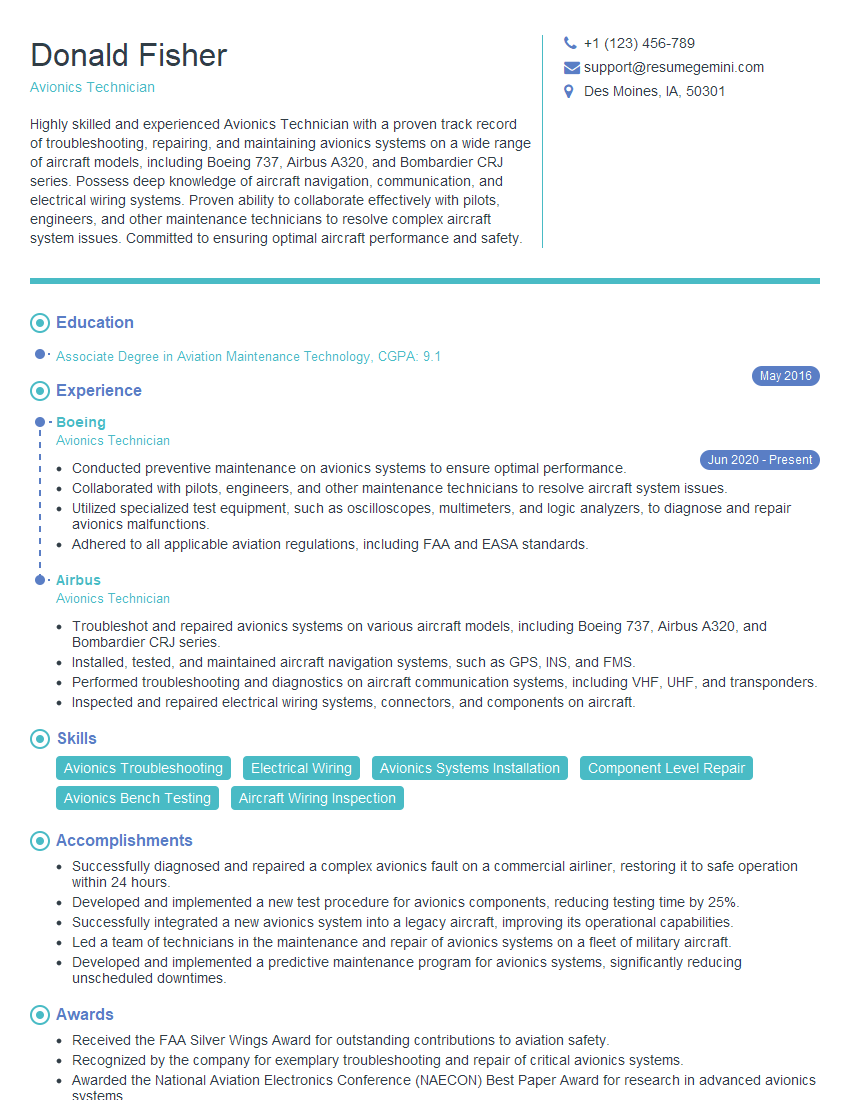
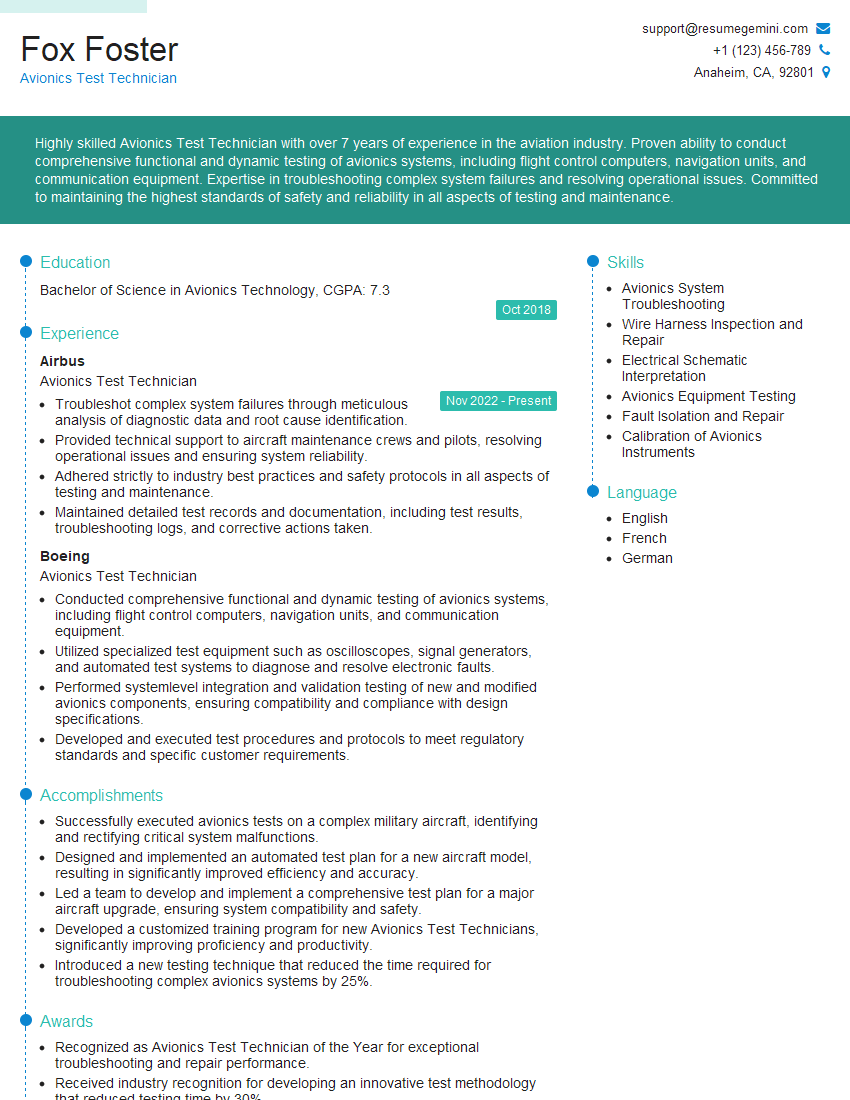
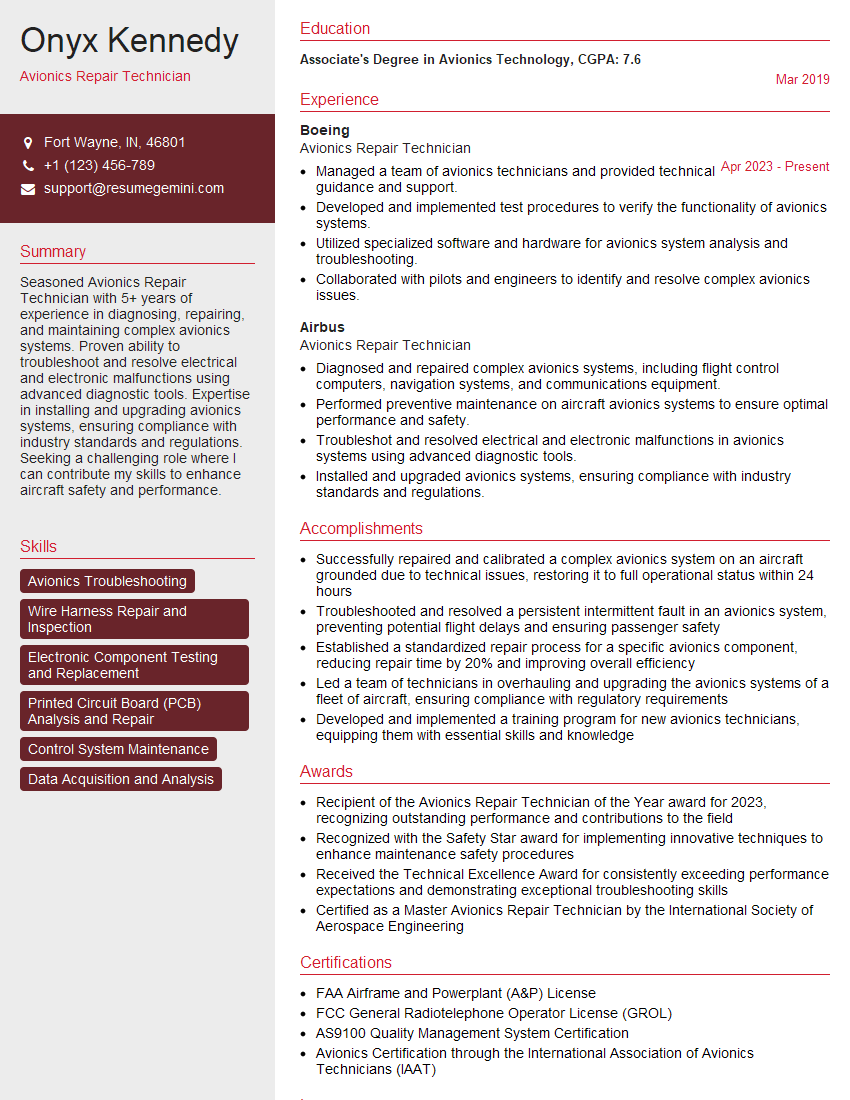
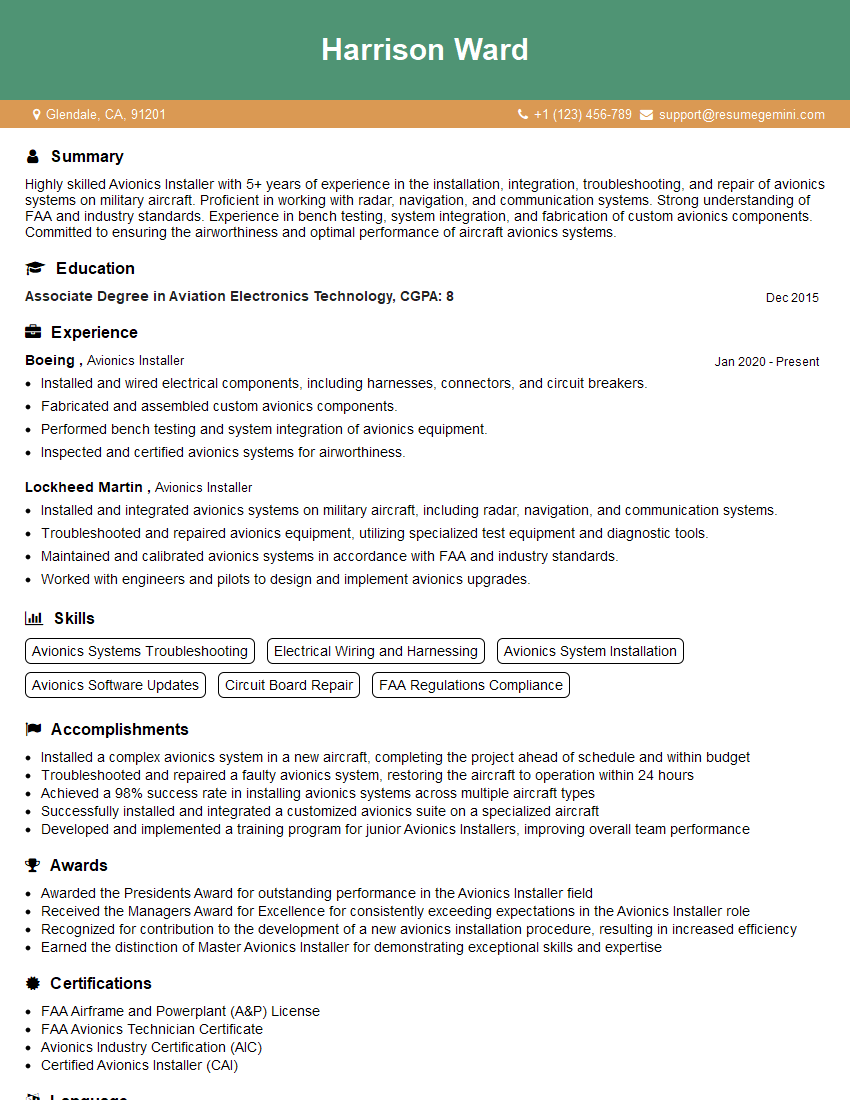
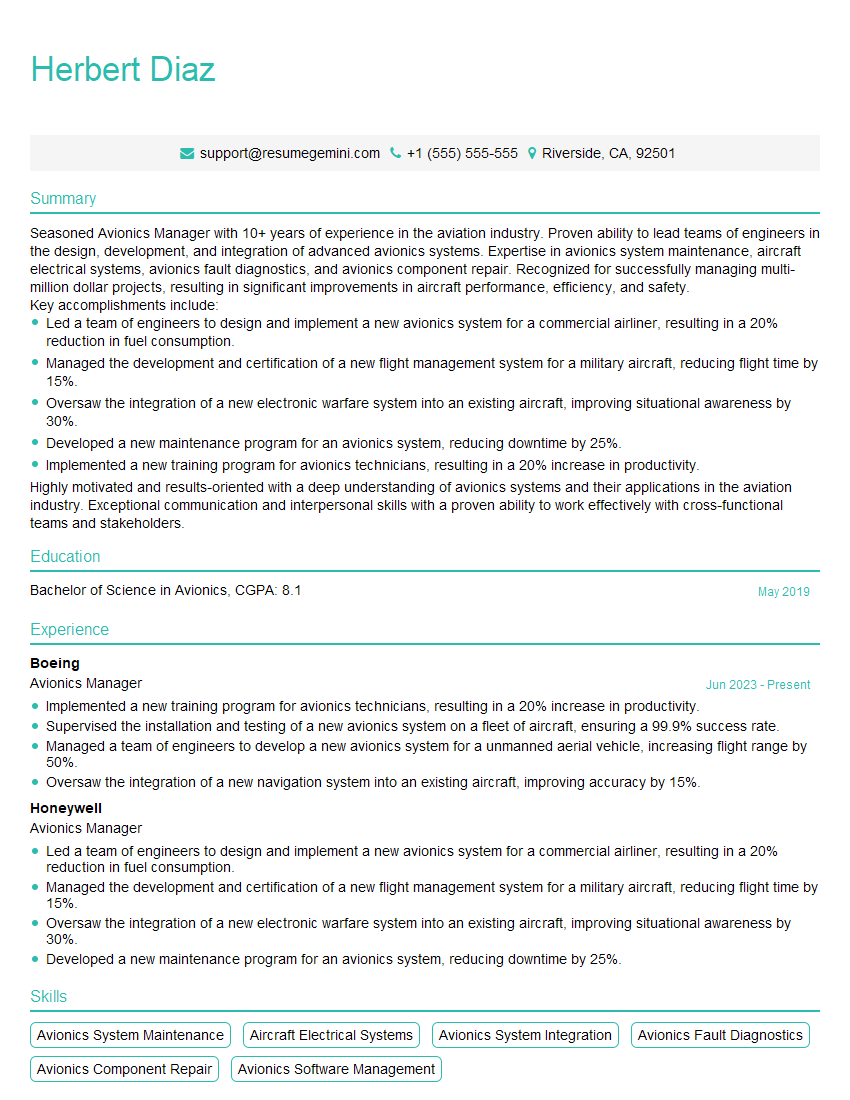
Mastering Avionics Maintenance and Repair opens doors to a rewarding and highly sought-after career with excellent growth potential. To maximize your job prospects, a strong and ATS-friendly resume is essential. ResumeGemini is a trusted resource that can help you craft a professional and compelling resume tailored to highlight your skills and experience. Examples of resumes specifically designed for Avionics Maintenance and Repair professionals are available to guide you. Take the next step in your career journey by creating a resume that showcases your expertise and lands you your dream job.
Explore more articles
Users Rating of Our Blogs
Share Your Experience
We value your feedback! Please rate our content and share your thoughts (optional).
What Readers Say About Our Blog
Really detailed insights and content, thank you for writing this detailed article.
IT gave me an insight and words to use and be able to think of examples