Unlock your full potential by mastering the most common Receiving and Distributing interview questions. This blog offers a deep dive into the critical topics, ensuring you’re not only prepared to answer but to excel. With these insights, you’ll approach your interview with clarity and confidence.
Questions Asked in Receiving and Distributing Interview
Q 1. Explain the process of receiving inbound shipments.
Receiving inbound shipments is a multi-step process crucial for maintaining efficient inventory control and ensuring product quality. It begins with the notification of an impending shipment – often via an advance shipping notice (ASN). Then, the receiving team prepares for the arrival, confirming space availability and allocating resources. Upon arrival, the shipment is inspected for any obvious damage to the packaging. Next, the quantity and condition of the goods are carefully checked against the accompanying documentation (ASN, packing slip, purchase order). Any discrepancies are immediately noted. Finally, the goods are properly signed for and moved to designated storage locations within the warehouse, with appropriate labeling and inventory updates made in the system.
Imagine receiving a pallet of electronics. We’d first confirm the shipment matches the ASN and check for exterior damage. Then, we would meticulously count each item against the packing slip, verifying models and serial numbers if needed, and documenting any shortages or damage.
Q 2. How do you verify the accuracy of received goods against purchase orders?
Verifying received goods against purchase orders (POs) is paramount for accuracy and financial control. We use a systematic approach, typically cross-referencing the PO number, item descriptions, quantities, and unit costs against the ASN and packing slip. We use barcode scanners and handheld devices to quickly and accurately scan each item. The data is then compared to the expected data in our inventory management system. Any discrepancies are flagged and investigated, potentially involving contacting the supplier for clarification or issuing a return authorization.
For example, if a PO specified 100 units of ‘Widget A’ at $10 each, but the shipment contained only 95 units, we document the shortage, potentially taking photos as evidence, and immediately notify the supplier and our purchasing department. This ensures we’re only paying for what we received and can take steps to rectify the missing items.
Q 3. Describe your experience with different inventory management systems.
Throughout my career, I’ve worked with various inventory management systems (IMS), from simple spreadsheet-based systems to sophisticated enterprise resource planning (ERP) software. Early in my career, I used basic inventory tracking software that relied on manual data entry and lacked real-time visibility. However, most recently I’ve worked extensively with SAP and Oracle NetSuite. These ERP systems offered sophisticated features such as automated purchase order generation, real-time inventory tracking, lot and serial number management, and robust reporting capabilities. The shift from manual to automated systems dramatically improved accuracy, efficiency, and our overall ability to manage inventory effectively.
The experience with these diverse systems allows me to adapt quickly to new software and leverage the strengths of each system to optimize the receiving and distribution processes.
Q 4. What are your methods for handling damaged or incorrect shipments?
Handling damaged or incorrect shipments requires a well-defined procedure to minimize losses and maintain good relationships with suppliers. First, we document the damage or discrepancy meticulously, including photos and detailed descriptions. We then immediately contact the supplier to initiate a return material authorization (RMA) process. Depending on the supplier’s policy, we might receive replacements, credits, or refunds. Internally, we update our inventory system to reflect the discrepancies. For damaged goods, we follow procedures for disposal or repair, depending on the nature of the damage and the item’s value. In some cases, we may need to coordinate with insurance providers.
For example, if a shipment of glassware arrives with several broken items, we would take photos of the damaged packaging and the broken goods, noting the quantity and extent of the damage on our receiving report. We’d then contact the supplier to initiate an RMA and arrange for a replacement shipment.
Q 5. How do you prioritize tasks in a fast-paced receiving environment?
Prioritization in a fast-paced receiving environment requires a combination of structured processes and flexibility. We use a combination of factors to prioritize tasks, including:
- Urgency: High-priority shipments, like those needed for immediate production, are handled first.
- Delivery deadlines: Shipments with tight deadlines take precedence.
- Perishability: Perishable goods require immediate attention.
- Size and complexity: Larger, more complex shipments may require more time and resources.
We use visual management tools like Kanban boards to track progress and identify bottlenecks. Team members are cross-trained to handle various tasks, allowing for flexibility in assigning work based on the needs of the moment. This ensures efficient flow and timely processing of all inbound shipments, even during peak periods.
Q 6. Explain your experience with cycle counting and inventory audits.
Cycle counting and inventory audits are essential for maintaining inventory accuracy and identifying discrepancies. Cycle counting involves regularly counting a small subset of inventory items, rather than performing a complete inventory count. This helps to continuously monitor inventory accuracy and catch errors early. Inventory audits, on the other hand, are more comprehensive and typically involve a full or partial count of inventory at regular intervals. My experience includes designing and implementing cycle counting procedures, training team members on best practices, and analyzing results to identify areas for improvement in our inventory management processes.
For example, we might schedule daily cycle counts of high-value items, weekly counts of slower-moving items, and full inventory audits annually to ensure comprehensive accuracy checks.
Q 7. How do you ensure the security and safety of received goods?
Ensuring the security and safety of received goods is critical. We utilize a range of measures, including secure receiving docks with access control, surveillance cameras to monitor activity, and proper storage conditions to prevent damage or theft. We also implement strict procedures for handling valuable or sensitive goods, potentially requiring additional security measures such as specialized storage or security personnel. All received goods are properly documented and tracked, minimizing opportunities for loss or misplacement. Regular security audits are performed to review security protocols and identify any vulnerabilities.
For instance, high-value electronics would be stored in a secure, climate-controlled area with restricted access, possibly requiring two-person verification for accessing the storage area.
Q 8. Describe your experience with using scanners and warehouse management systems (WMS).
Throughout my career, I’ve extensively utilized scanners and Warehouse Management Systems (WMS) to streamline receiving and distribution processes. Scanners are fundamental for accurate data capture, from receiving shipments and verifying quantities against purchase orders to tracking inventory movements within the warehouse. I’m proficient with various scanner types, including barcode, RFID, and handheld scanners, and adept at troubleshooting common issues. WMS integration is crucial for real-time visibility. I’ve worked with several WMS platforms, including [mention specific WMS platforms, e.g., Manhattan Associates, Blue Yonder], and am experienced in configuring settings, data entry, report generation, and utilizing the system’s features for inventory management, order fulfillment, and labor tracking. For example, in my previous role, we implemented a new WMS which reduced picking errors by 15% and improved order fulfillment speed by 10%. This involved detailed training for the team and ongoing system optimization.
- Barcode Scanning: Used for verifying product codes and quantities against purchase orders, ensuring accuracy during receiving.
- RFID Scanning: Employed for managing large volumes of inventory and tracking items’ movements through different warehouse zones, especially useful for fast-moving items.
- WMS Integration: Leveraged for tasks such as creating receiving tickets, updating inventory levels automatically, guiding pickers to the right location, and generating shipping labels.
Q 9. How do you manage discrepancies between received goods and purchase orders?
Discrepancies between received goods and purchase orders are a common challenge in receiving. My approach involves a systematic investigation to pinpoint the source of the error. First, I verify the received goods against the original purchase order meticulously, checking quantities, product codes, and condition. If discrepancies exist, I systematically document them using the WMS. This documentation is crucial for initiating returns, credit requests with the supplier, and internal investigation of potential receiving or inventory management errors. For instance, if a shipment arrives with 10 fewer units than ordered, I will check the packing slip and then contact the supplier. If the discrepancy is due to a supplier error, I initiate a return or credit. If it’s due to damage or loss in transit, I’ll file a claim with the carrier. Internal errors like incorrect counting are addressed through retraining and improved process checks. We often use a ‘cycle counting’ methodology to regularly verify inventory quantities and identify discrepancies early. This proactive approach minimizes the impact of errors on downstream processes.
- Verification: Double-check quantities, product codes, and condition against purchase orders and packing slips.
- Documentation: Meticulously record discrepancies with supporting evidence (photos of damaged goods, etc.).
- Root Cause Analysis: Investigate the source of the discrepancy (supplier error, shipping damage, internal error).
- Corrective Action: Initiate returns, claims, or internal process improvements.
Q 10. What is your experience with different shipping methods and carriers?
My experience encompasses various shipping methods and carriers, catering to diverse client needs and cost considerations. I’m familiar with LTL (Less-Than-Truckload), FTL (Full-Truckload), small parcel shipping (via UPS, FedEx, USPS), and specialized carriers for oversized or hazardous materials. Selection of the carrier depends on factors like delivery speed, cost, distance, and the nature of the goods. For example, I’ve utilized LTL for large, non-urgent shipments to reduce costs, while FTL is reserved for time-sensitive and large volume orders requiring faster delivery. Small parcel shipping is ideal for smaller packages, and specialized carriers are used for goods requiring special handling. I’m skilled in negotiating rates with different carriers and track shipments to ensure timely delivery. I also have experience working with international shipping and the associated documentation requirements. Understanding the nuances of each method and its associated costs is key to optimizing shipping expenses while meeting customer expectations.
- LTL: Cost-effective for large, non-urgent shipments.
- FTL: Ideal for time-sensitive large-volume shipments.
- Small Parcel: Suitable for smaller packages (UPS, FedEx, USPS).
- Specialized Carriers: For oversized or hazardous materials.
Q 11. How do you ensure timely and accurate distribution of goods?
Ensuring timely and accurate distribution requires a well-orchestrated process. This begins with accurate order processing and inventory management. I rely on the WMS to provide real-time inventory visibility, allowing us to efficiently pick, pack, and ship orders. We maintain a robust order fulfillment process, including accurate order picking, quality checks before packaging, and timely dispatch. Carrier selection and tracking are critical to meet delivery deadlines. We also utilize route optimization software to minimize delivery times and costs. Regular performance monitoring and communication with carriers are essential for identifying and resolving potential delays. A key component is proactive communication with customers, providing updates and proactively addressing any unforeseen issues. For instance, if a delay is anticipated, we’ll promptly notify the customer and offer alternative solutions. This proactive approach builds trust and maintains customer satisfaction.
- Accurate Order Processing: Using WMS for real-time inventory visibility and order tracking.
- Efficient Picking and Packing: Streamlined processes to minimize errors and improve speed.
- Carrier Selection and Tracking: Selecting the optimal carrier and actively monitoring shipments.
- Proactive Communication: Keeping customers informed and addressing any potential delays.
Q 12. Describe your experience with preparing shipping documents.
Preparing accurate and complete shipping documents is vital for smooth delivery and efficient handling by carriers. My experience includes generating various documents such as packing lists, commercial invoices, bills of lading, and certificates of origin (for international shipments). The accuracy of these documents is crucial for avoiding delays and penalties. I’m proficient in using both manual and automated methods for document generation. For instance, our WMS integrates with our shipping software to automatically generate labels and packing slips, reducing manual input errors and increasing efficiency. For complex international shipments, I meticulously review all documents to ensure compliance with regulations, including customs documentation and hazardous materials declarations. Double-checking for accuracy is a vital step in my process to minimize errors and ensure a smooth shipping process.
- Packing Lists: Detailing the contents of each package.
- Commercial Invoices: Providing details for customs clearance (for international shipments).
- Bills of Lading: Serving as a contract of carriage between the shipper and carrier.
- Certificates of Origin: Verifying the origin of goods for international trade.
Q 13. How do you handle urgent or expedited shipments?
Handling urgent or expedited shipments requires a rapid response and prioritization. The process begins with identifying the urgency and the required delivery time. Once identified, I coordinate with the relevant teams (picking, packing, shipping) to prioritize the order. This often involves expediting the picking process, utilizing faster shipping methods (e.g., air freight), and communicating directly with the carrier to ensure priority handling. I also ensure all necessary documentation is prepared quickly and accurately. For example, we’ve had to rush orders for critical medical supplies or time-sensitive parts for manufacturing. This involved working closely with the carrier to select the fastest possible shipping option and arranging for special handling to minimize transit time. Open and frequent communication with the customer is essential to keep them updated on the shipment’s progress and address any concerns.
- Prioritization: Immediately identifying and prioritizing urgent shipments.
- Expedited Shipping: Utilizing faster shipping methods (e.g., air freight).
- Direct Carrier Communication: Ensuring priority handling by the carrier.
- Transparent Communication: Keeping the customer informed throughout the process.
Q 14. What are your strategies for optimizing warehouse space and workflow?
Optimizing warehouse space and workflow is critical for efficiency and cost reduction. My strategies include implementing 5S methodology (Sort, Set in Order, Shine, Standardize, Sustain) to improve organization and reduce wasted space. We also utilize slotting optimization techniques to assign the most frequently accessed items to the most accessible locations, minimizing travel time for pickers. This is often done with the assistance of the WMS. Implementing cross-docking, where inbound shipments are directly transferred to outbound shipments without storage, reduces warehouse storage needs and speeds up processing. Lean principles are implemented to identify and eliminate waste in all processes, from receiving to shipping. Regular inventory audits and cycle counting are crucial for minimizing excess inventory and identifying obsolete items. Implementing automated systems, like automated guided vehicles (AGVs), can significantly improve efficiency and optimize space utilization. Finally, continuous monitoring of key metrics, like storage utilization, order fulfillment time, and labor efficiency, helps to identify areas for improvement and further optimize the warehouse operations.
- 5S Methodology: Organizing the warehouse for improved efficiency and safety.
- Slotting Optimization: Placing frequently accessed items in optimal locations.
- Cross-Docking: Reducing storage needs by directly transferring inbound to outbound shipments.
- Lean Principles: Identifying and eliminating waste in all processes.
- Automation: Utilizing automated systems (AGVs) to improve efficiency.
Q 15. Explain your experience with various labeling and packaging techniques.
My experience encompasses a wide range of labeling and packaging techniques, crucial for ensuring product integrity and efficient handling throughout the supply chain. I’m proficient in various labeling methods, from simple barcode labels to more complex RFID tagging for real-time tracking and inventory management. This includes understanding different label materials and adhesives to ensure durability and compatibility with various storage and shipping conditions. For packaging, I’ve worked with a variety of materials, including corrugated cardboard boxes, plastic containers, and specialized protective packaging like bubble wrap and foam inserts. I’m familiar with techniques to optimize packaging for both cost-effectiveness and protection against damage during transit. For example, I’ve developed customized packaging solutions that reduced our damage rate by 15% by implementing more robust cushioning and improved stacking techniques.
- Barcode/QR Code Labeling: Used for quick identification and inventory tracking.
- RFID Tagging: Provides real-time location tracking and improves inventory accuracy.
- Custom Packaging Design: Tailored solutions to minimize damage and optimize shipping costs.
- Pallet Optimization: Efficiently arranging products on pallets to maximize space and stability.
Career Expert Tips:
- Ace those interviews! Prepare effectively by reviewing the Top 50 Most Common Interview Questions on ResumeGemini.
- Navigate your job search with confidence! Explore a wide range of Career Tips on ResumeGemini. Learn about common challenges and recommendations to overcome them.
- Craft the perfect resume! Master the Art of Resume Writing with ResumeGemini’s guide. Showcase your unique qualifications and achievements effectively.
- Don’t miss out on holiday savings! Build your dream resume with ResumeGemini’s ATS optimized templates.
Q 16. How do you maintain a clean and organized warehouse environment?
Maintaining a clean and organized warehouse is paramount for efficiency, safety, and compliance. We employ a multi-pronged approach, including regular cleaning schedules, designated storage areas, and clear labeling systems. 5S methodology (Sort, Set in Order, Shine, Standardize, Sustain) is a core principle, ensuring that everything has its place, and that place is kept clean and tidy. This includes regular sweeping, mopping, and dusting, as well as more specialized cleaning tasks, like pallet and equipment maintenance. We also conduct regular audits to identify areas for improvement and ensure adherence to our cleanliness standards. For example, we implemented a color-coded system for storage locations, making it easier for staff to locate items and maintain order. This resulted in a significant reduction in search time and increased overall efficiency.
- 5S Methodology: A systematic approach to workplace organization and cleanliness.
- Designated Storage Areas: Clearly defined locations for different product types.
- Regular Cleaning Schedules: Scheduled cleaning tasks to maintain a clean environment.
- Inventory Audits: Regular checks to ensure accuracy and identify areas for improvement.
Q 17. How do you handle returns and damaged goods in the distribution process?
Handling returns and damaged goods requires a systematic process to ensure accurate tracking, minimize losses, and maintain customer satisfaction. Upon receiving returned goods, we inspect them thoroughly to assess the condition and determine the cause of return (e.g., damaged in transit, customer dissatisfaction). Damaged goods are documented, segregated from sellable stock, and processed according to established procedures. This may involve repair, salvage, or disposal. Returns are inspected, and if eligible for restocking, they’re re-integrated into inventory. We use a dedicated returns management system to track the entire process, from initiation to final disposition. For example, we implemented a process where we photograph all damaged goods and maintain detailed records to aid in root cause analysis and improve preventative measures.
- Thorough Inspection: Careful evaluation of the condition of returned goods.
- Segregation of Damaged Goods: Separation of damaged items from sellable stock.
- Documentation and Record Keeping: Detailed records of returned and damaged goods.
- Returns Management System: A system for tracking the entire returns process.
Q 18. What is your experience with tracking shipments and providing updates?
Tracking shipments and providing timely updates is crucial for maintaining transparency and customer satisfaction. We utilize a Transportation Management System (TMS) that integrates with our warehouse management system (WMS) to provide real-time visibility into the location and status of shipments. This allows us to track shipments from origin to destination and provide accurate ETAs (Estimated Time of Arrival) to our customers. We also use various communication channels, such as email and SMS, to provide timely updates about shipment status and potential delays. For example, during peak season, we proactively communicate potential delays to customers based on our TMS data, helping manage expectations and prevent misunderstandings.
- Transportation Management System (TMS): Software for tracking shipments.
- Warehouse Management System (WMS): Software for managing inventory and warehouse operations.
- Real-Time Tracking: Monitoring shipment location and status.
- Proactive Communication: Providing timely updates to customers.
Q 19. How do you ensure compliance with safety regulations in the warehouse?
Ensuring compliance with safety regulations is a top priority. We maintain a comprehensive safety program that includes regular safety training for all employees, clear signage indicating potential hazards, and the implementation of appropriate safety equipment and procedures. This includes training on safe lifting techniques, proper use of equipment like forklifts, and emergency procedures. Regular safety inspections are conducted to identify and rectify any potential hazards. We also maintain detailed records of all safety training and inspections to demonstrate compliance. For instance, we implemented a safety buddy system where employees work in pairs when handling heavy items, further reducing the risk of accidents.
- Safety Training: Regular training for all employees on safety procedures.
- Hazard Identification and Mitigation: Identifying and addressing potential safety risks.
- Safety Equipment and Procedures: Providing appropriate safety equipment and implementing safety protocols.
- Record Keeping: Maintaining detailed records of safety training and inspections.
Q 20. Describe a time you had to resolve a conflict with a supplier or carrier.
In one instance, a supplier failed to meet a critical delivery deadline, impacting our production schedule. The initial communication was tense, as the supplier blamed unforeseen circumstances. However, instead of escalating the situation, I initiated a calm and professional dialogue, focusing on finding a collaborative solution. I gathered data on the impact of the delay and presented it clearly to the supplier. We then worked together to create a revised delivery schedule, involving expedited shipping for the most critical components and a partial rescheduling of production. Through open communication and a mutual understanding of the impact of the delay, we managed to minimize disruption and maintain a positive working relationship. This experience reinforced the importance of clear communication and collaborative problem-solving in managing supplier relationships.
Q 21. How do you adapt to changes in receiving and distribution schedules?
Adapting to changes in receiving and distribution schedules requires flexibility, strong communication, and efficient planning. We use our WMS to effectively manage and adjust our workflows based on real-time changes. We utilize advanced forecasting and planning tools to predict potential disruptions and proactively adjust our schedules. This includes close communication with our suppliers and transportation partners to ensure transparency and coordination. In case of unexpected delays, we implement contingency plans to mitigate disruptions, such as re-routing shipments or adjusting our staffing levels. For example, during a recent surge in demand, we quickly adapted our receiving and distribution procedures by optimizing warehouse layout and implementing overtime scheduling to meet the increased volume while maintaining efficiency.
- Flexible Workflows: Adaptable processes to accommodate schedule changes.
- Advanced Forecasting and Planning: Predicting potential disruptions and proactively adjusting schedules.
- Communication and Collaboration: Close collaboration with suppliers and transportation partners.
- Contingency Planning: Plans to mitigate disruptions and maintain operations.
Q 22. What are your strategies for preventing inventory loss or damage?
Preventing inventory loss and damage is paramount in receiving and distribution. My strategy is multifaceted, focusing on proactive measures and reactive responses. It begins with meticulous receiving procedures. This includes verifying the quantity and condition of goods against the purchase order and shipping documentation. Any discrepancies are immediately documented and reported.
Secondly, proper storage is crucial. We utilize appropriate racking systems, ensuring items are stored according to their sensitivity to damage (e.g., fragile items on higher shelves, heavier items on lower shelves). Adequate aisle space is maintained to allow for safe forklift operation and minimizes the risk of accidental damage. Regular inventory checks, including cycle counts, help detect discrepancies early, allowing for prompt investigation and corrective action.
Finally, training plays a vital role. All staff are trained in proper handling techniques, including safe forklift operation and the importance of careful stacking and placement. Implementing a system for reporting near misses allows us to proactively address potential problems before they cause damage or loss. For example, a poorly stacked pallet that almost toppled, could lead to a review of pallet stacking techniques, improving safety and preventing a future incident.
Q 23. How do you use technology to improve efficiency in receiving and distribution?
Technology significantly enhances efficiency in receiving and distribution. Warehouse Management Systems (WMS) are central to this, automating many tasks. A WMS allows for real-time tracking of inventory, streamlining the receiving process. Barcodes and RFID tags help automatically identify and track goods, reducing manual data entry errors and speeding up the process. Put simply, the WMS directs every movement of inventory – from receiving to shipping.
Additionally, automated guided vehicles (AGVs) and conveyor systems can significantly reduce labor costs and improve throughput. They automate the movement of goods throughout the warehouse, optimizing workflow and minimizing the chance of human error. For instance, in a previous role, implementing a WMS with barcode scanning reduced our receiving time by 40%, directly impacting productivity and order fulfillment speed. Integrating the WMS with our transportation management system (TMS) optimized delivery routes, thus reducing transportation costs and improving delivery times.
Q 24. Describe your experience with different types of warehouse equipment.
My experience encompasses a wide range of warehouse equipment, from manual handling equipment to sophisticated automated systems. I’m proficient in operating forklifts (both sit-down and stand-up), pallet jacks, and order pickers. I understand the safety regulations and operational procedures associated with each type of equipment. In past roles, I’ve utilized conveyor systems, automated guided vehicles (AGVs), and various types of racking systems, from pallet racking to cantilever racking, each suited to different product types and storage needs.
Beyond operating this equipment, I possess a good understanding of their maintenance needs. Recognizing early signs of malfunction allows for preventative maintenance, minimizing downtime and ensuring optimal performance. For example, understanding the symptoms of a failing hydraulic pump in a forklift can prevent a costly breakdown. This understanding of equipment is crucial for maximizing efficiency and minimizing safety risks within the warehouse environment.
Q 25. How do you prioritize tasks when faced with multiple deadlines?
Prioritizing tasks with multiple deadlines requires a structured approach. I typically utilize a combination of techniques, starting with identifying the most critical tasks. This often involves considering factors like due dates, the impact of delays, and resource availability. I then use methods like Eisenhower Matrix (Urgent/Important) to categorize tasks. Urgent and important tasks are tackled first, while less urgent tasks may be delegated or scheduled for later.
Using project management tools like Kanban boards or Gantt charts helps visualize the workflow and track progress. This allows for easy adjustments and re-prioritization if unexpected issues arise. Open communication is key; I keep my team informed of priorities and potential conflicts, ensuring everyone is on the same page and works collaboratively to meet deadlines. For example, if a high-priority order faces a delay due to a supplier issue, I would immediately communicate this to the team and find alternative solutions, possibly by rescheduling less critical orders.
Q 26. What metrics do you use to measure the success of receiving and distribution operations?
Measuring the success of receiving and distribution operations requires a comprehensive set of metrics. Key Performance Indicators (KPIs) I frequently use include:
- Order fulfillment rate: Percentage of orders fulfilled accurately and on time.
- Receiving accuracy: Percentage of received goods matching the purchase order.
- Inventory accuracy: Percentage of inventory records that accurately reflect physical inventory.
- Order cycle time: Time taken from order placement to order delivery.
- Damage rate: Percentage of goods received or shipped that are damaged.
- On-time delivery rate: Percentage of shipments delivered on or before the scheduled delivery date.
- Inventory turnover rate: How quickly inventory is sold or used.
Analyzing these KPIs provides insights into areas for improvement and allows for data-driven decision-making to optimize operations. For example, a low order fulfillment rate might indicate issues with inventory management or order picking processes. By tracking these metrics regularly, we can identify bottlenecks and implement necessary improvements to enhance overall efficiency.
Q 27. How do you contribute to a positive team environment in a warehouse setting?
Contributing to a positive team environment in a warehouse setting is essential for productivity and morale. I believe in leading by example, demonstrating a strong work ethic and a positive attitude. Open communication is crucial; I ensure that everyone feels comfortable expressing their concerns and ideas. I actively listen to my team members and value their input. Collaboration is key; I foster a team-oriented approach where everyone works together towards common goals.
Recognizing and appreciating individual contributions is also vital. I regularly acknowledge and celebrate successes, both big and small. Finally, I promote a safe work environment by adhering to safety regulations and ensuring that all team members are aware of and follow safety protocols. This collaborative approach reduces work-related stress and builds a sense of unity among the warehouse team.
Q 28. Describe your experience with implementing new procedures or technologies in receiving and distribution.
I have extensive experience implementing new procedures and technologies in receiving and distribution. In one instance, I led the implementation of a new WMS, which involved several key steps: first, a thorough needs assessment was conducted to identify areas needing improvement. Second, we carefully selected a WMS that aligned with our business requirements and budget. This involved vendor selection, evaluation and negotiation.
Third, a detailed implementation plan was developed, including timelines, resource allocation, and training programs for all warehouse staff. Fourth, the system was tested thoroughly before going live. This involved parallel running the old system alongside the new one to ensure smooth transition and identify any unexpected issues. Finally, ongoing monitoring and adjustments were made post-implementation, based on feedback and performance metrics. This phased rollout minimized disruption and ensured a successful implementation. The new WMS resulted in significant improvements in inventory accuracy, order fulfillment speed and overall warehouse efficiency.
Key Topics to Learn for Receiving and Distributing Interview
- Inventory Management: Understanding inventory control systems, cycle counting, and stock rotation techniques. Practical application: Explain how you would handle a discrepancy between received goods and the purchase order.
- Receiving Procedures: Mastering the process of verifying deliveries, inspecting goods for damage, and accurately documenting receipts. Practical application: Describe your approach to handling a damaged shipment and the necessary documentation.
- Warehouse Management Systems (WMS): Familiarity with WMS software and its applications in tracking inventory, managing orders, and optimizing warehouse operations. Practical application: Explain how you would utilize a WMS to locate a specific item within a large warehouse.
- Shipping and Distribution: Understanding packaging, labeling, and shipping regulations; experience with different shipping carriers and methods. Practical application: Detail your experience in preparing shipments for various transportation modes (e.g., truck, air freight).
- Logistics and Supply Chain: A basic understanding of the broader supply chain and how receiving and distributing fit into the overall process. Practical application: Explain how delays in receiving could impact downstream processes.
- Safety and Compliance: Adherence to safety regulations, proper handling of materials, and understanding of relevant industry standards. Practical application: Describe your experience maintaining a safe and organized workspace.
- Problem-Solving and Efficiency: Demonstrate your ability to identify and resolve issues related to receiving and distributing, and to improve operational efficiency. Practical application: Describe a time you optimized a process in a previous role to improve speed and accuracy.
Next Steps
Mastering Receiving and Distributing skills opens doors to diverse and rewarding career paths within logistics, warehousing, and supply chain management. To maximize your job prospects, crafting a strong, ATS-friendly resume is crucial. ResumeGemini is a trusted resource that can help you build a professional resume that highlights your skills and experience effectively. Examples of resumes tailored specifically to Receiving and Distributing roles are available to help you create a compelling application. Take the next step towards your ideal career today!
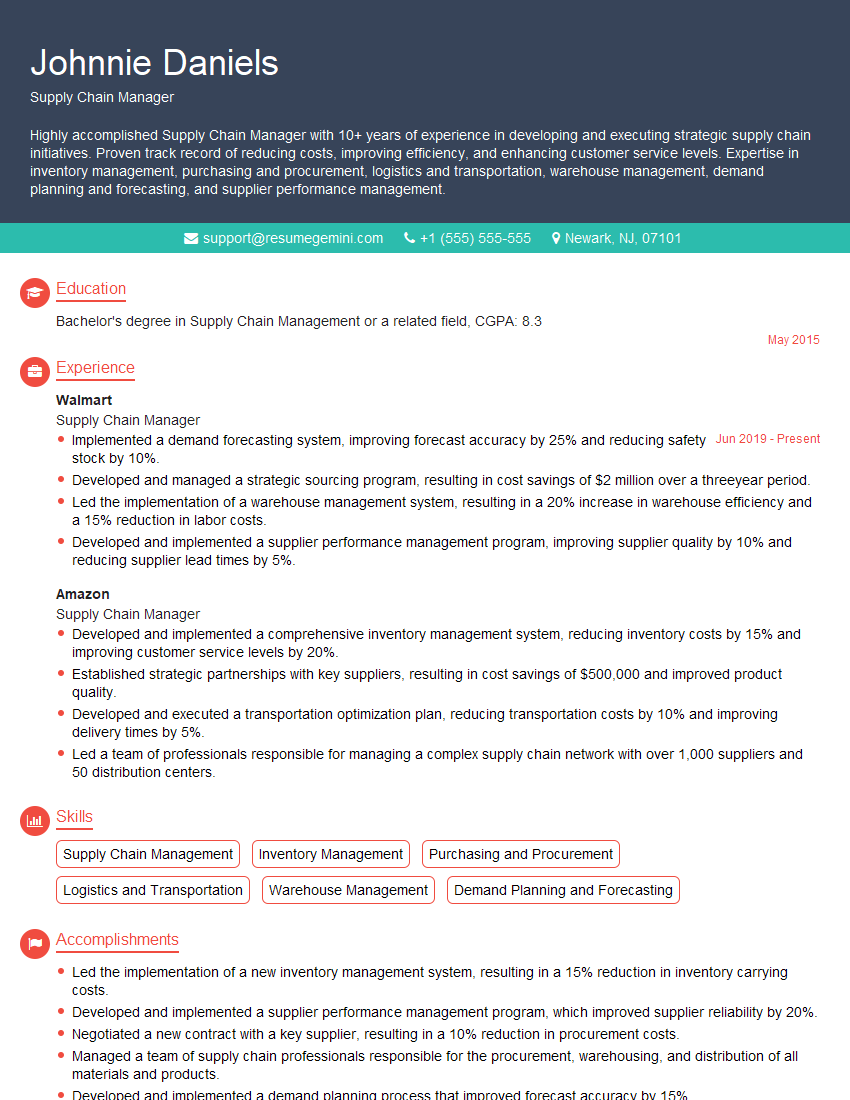
Supply Chain Manager Resume Sample
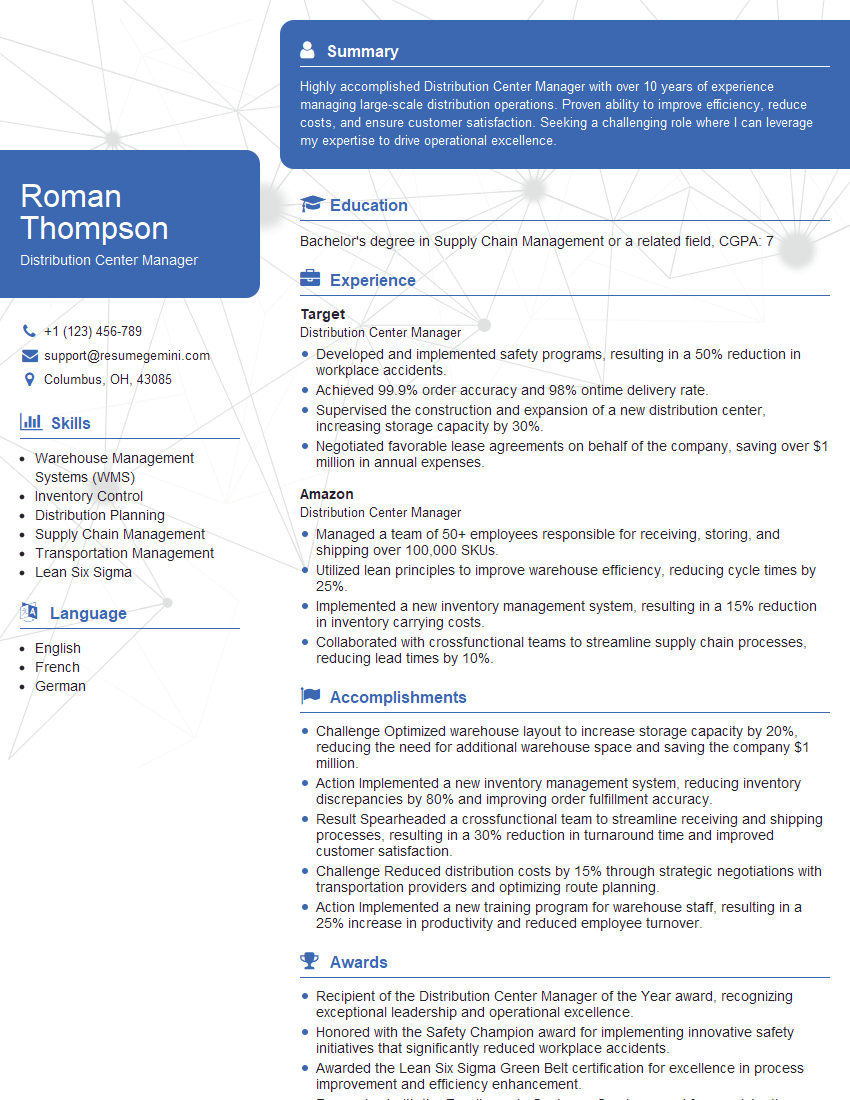
Distribution Center Manager Resume Sample
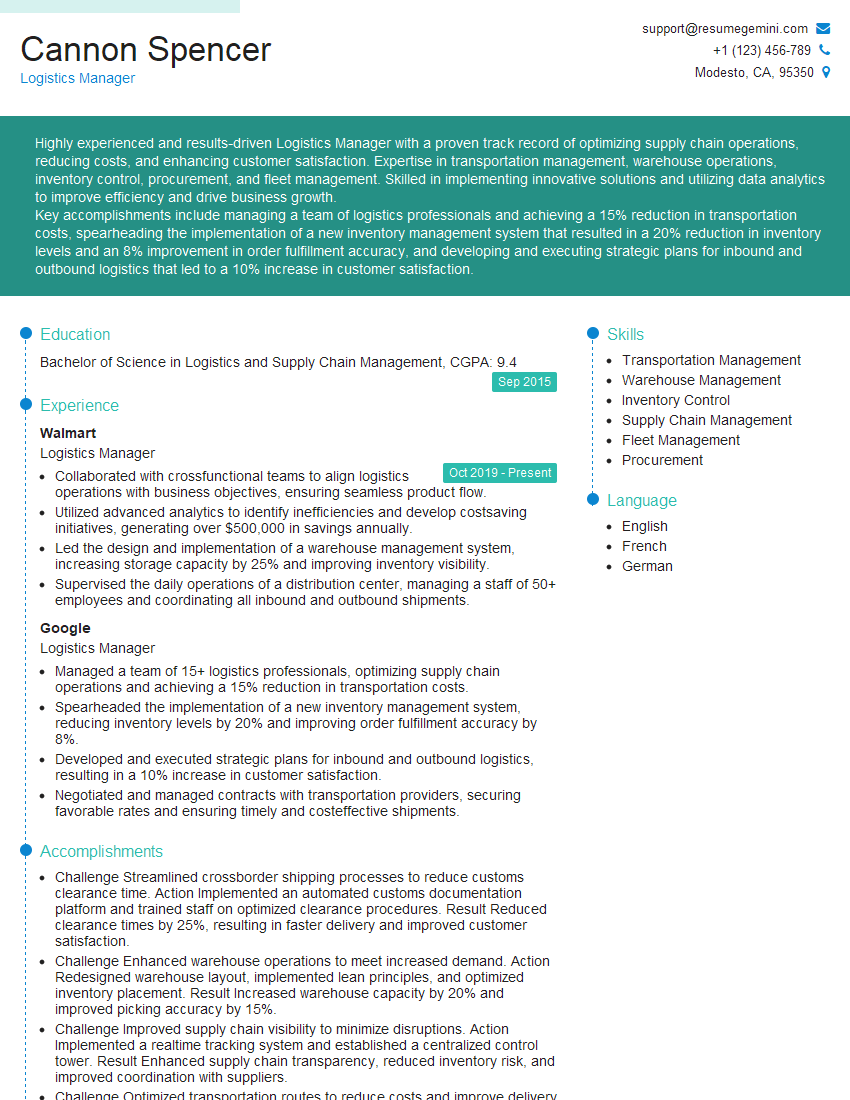
Logistics Manager Resume Sample
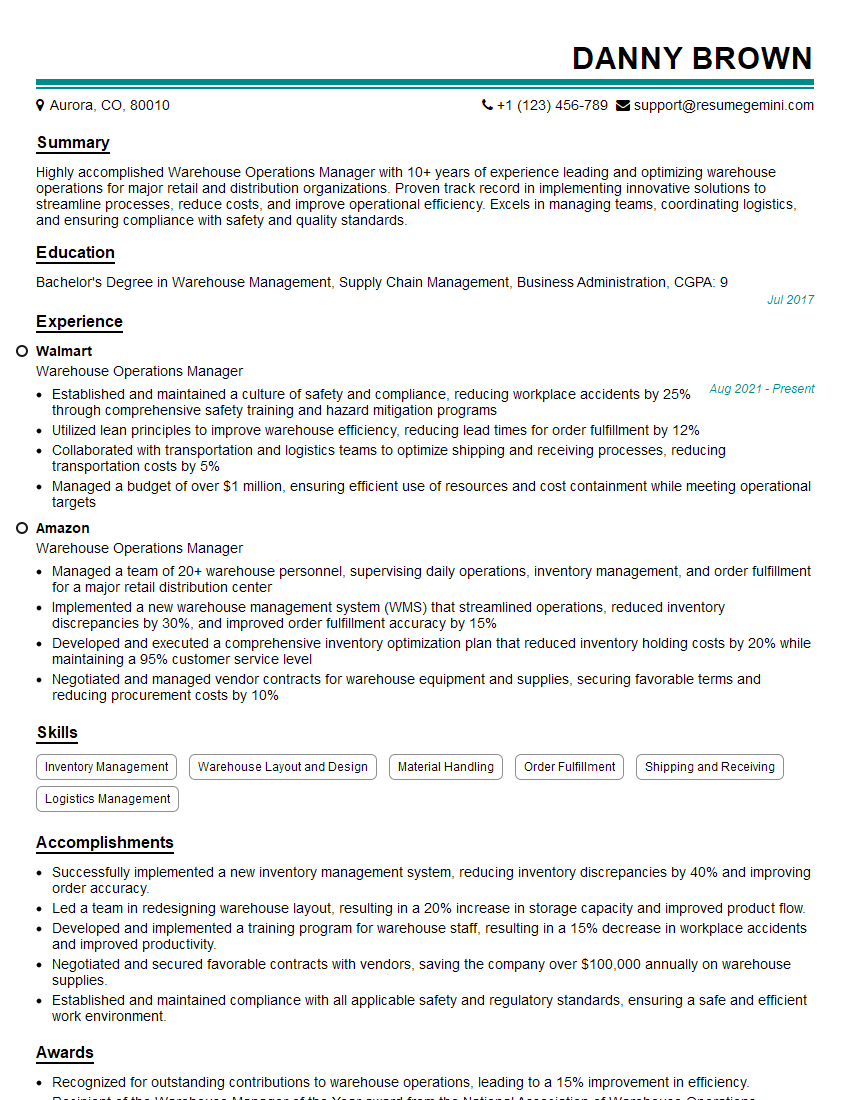
Warehouse Operations Manager Resume Sample
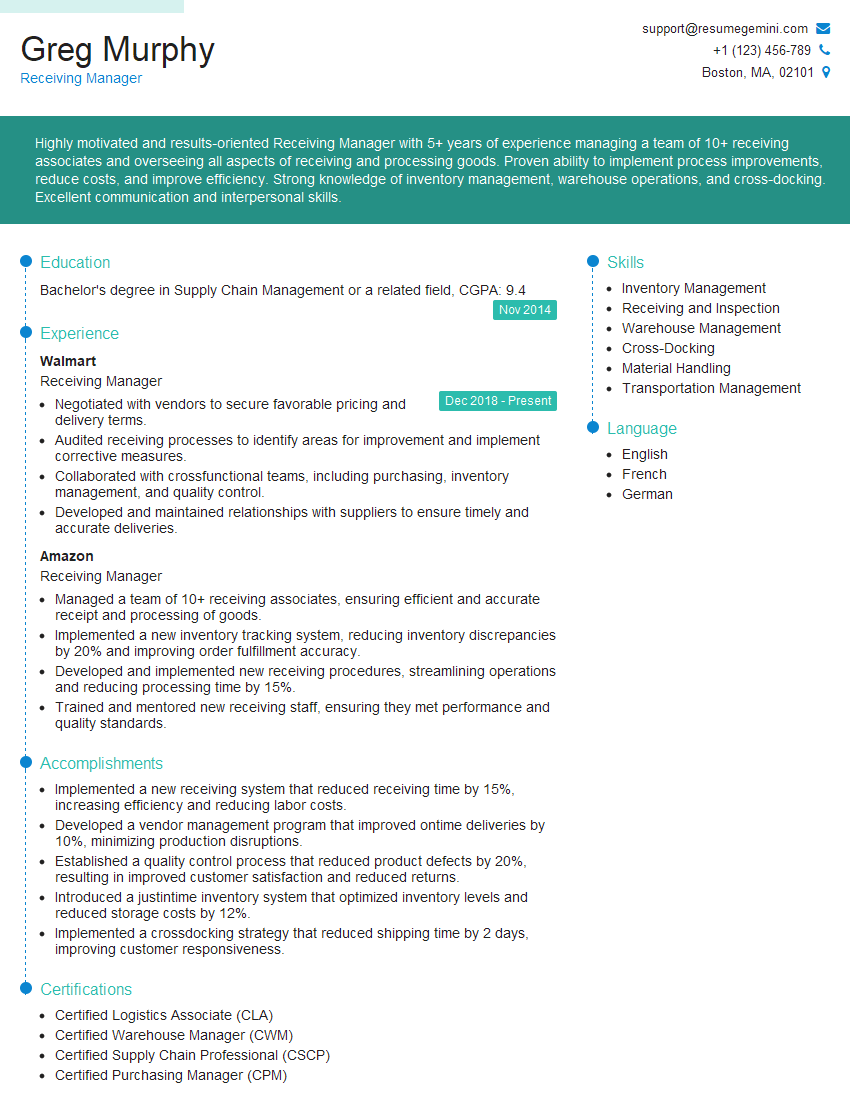
Receiving Manager Resume Sample
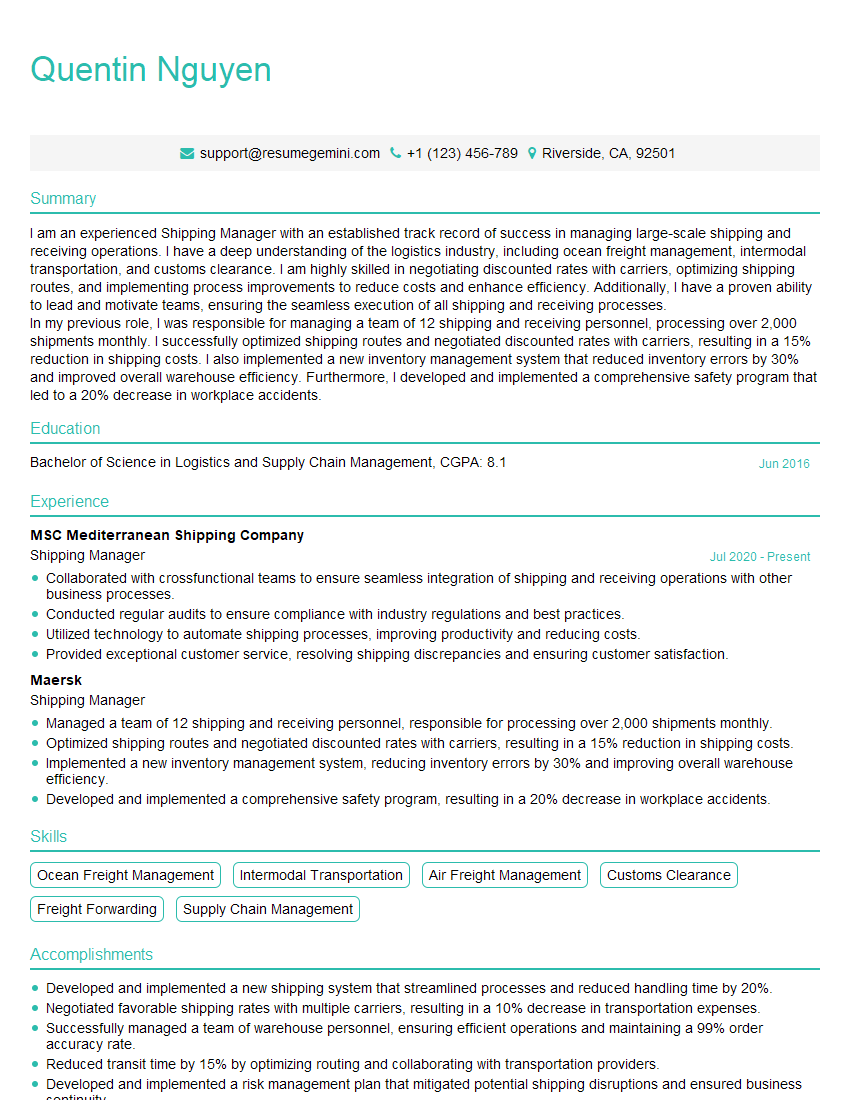
Shipping Manager Resume Sample
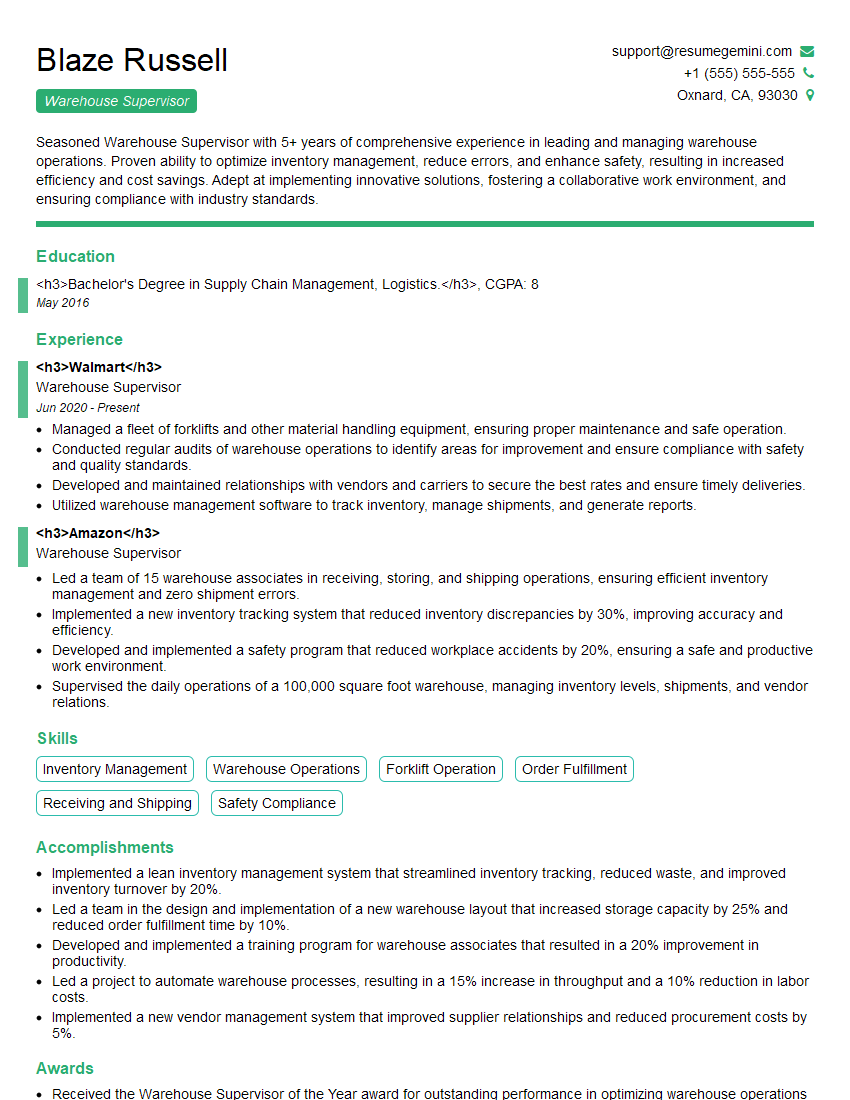
Warehouse Supervisor Resume Sample
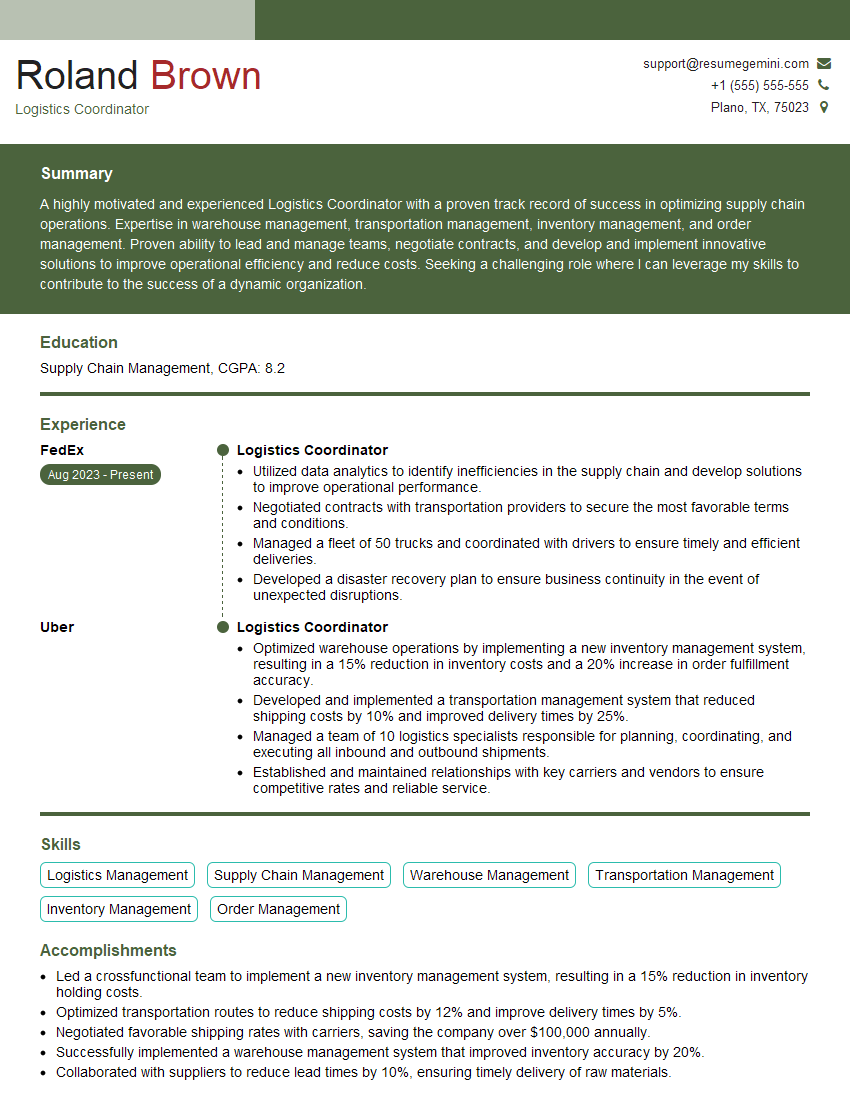
Logistics Coordinator Resume Sample
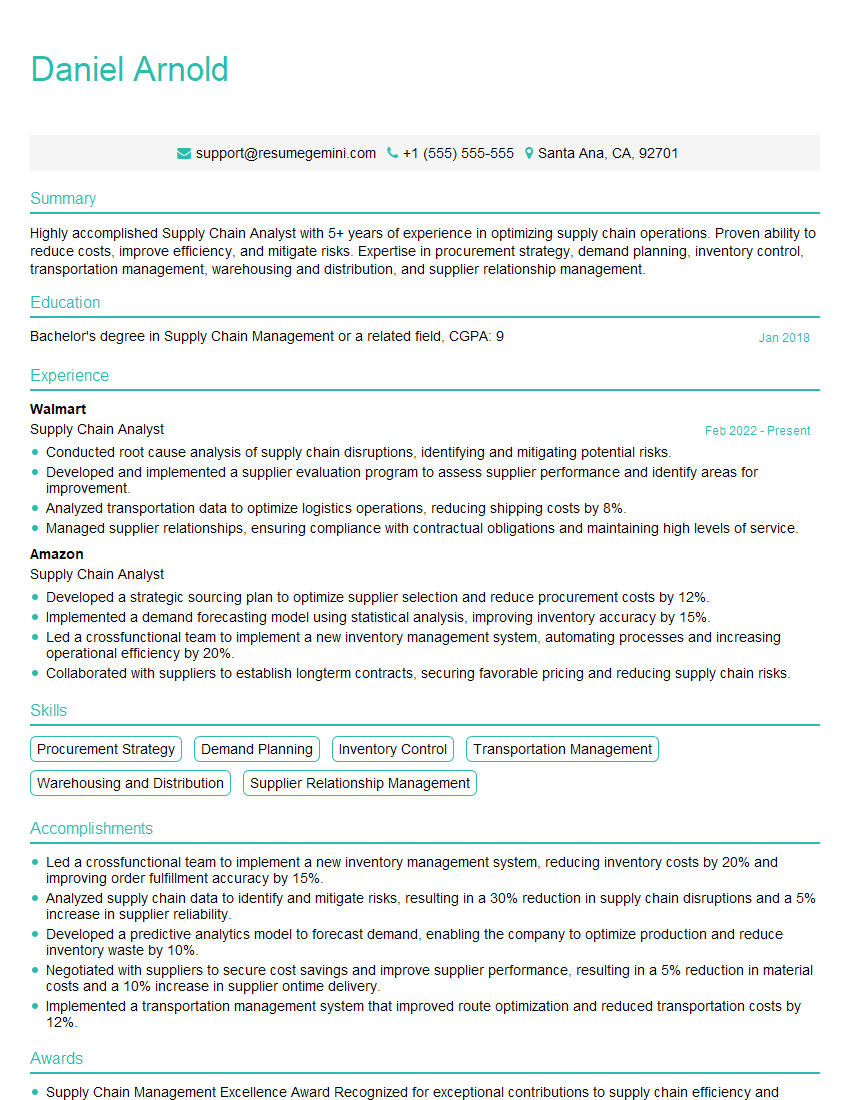
Supply Chain Analyst Resume Sample
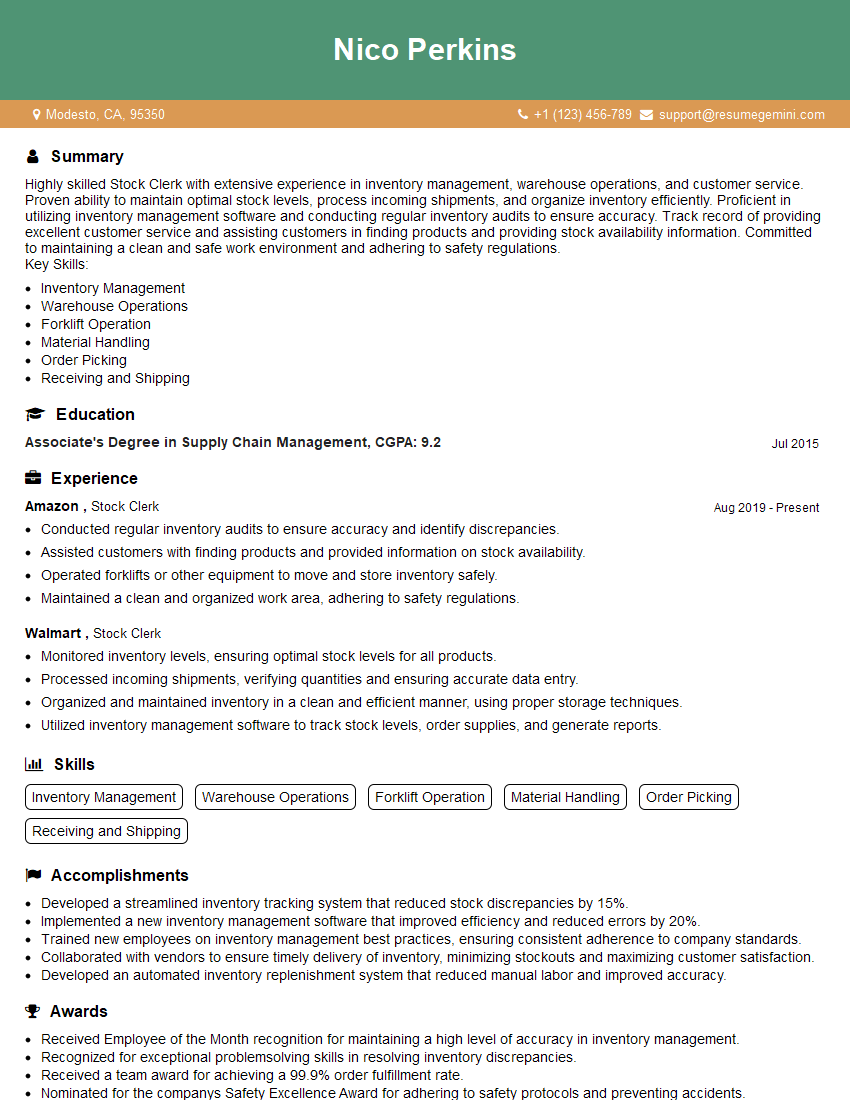
Stock Clerk Resume Sample
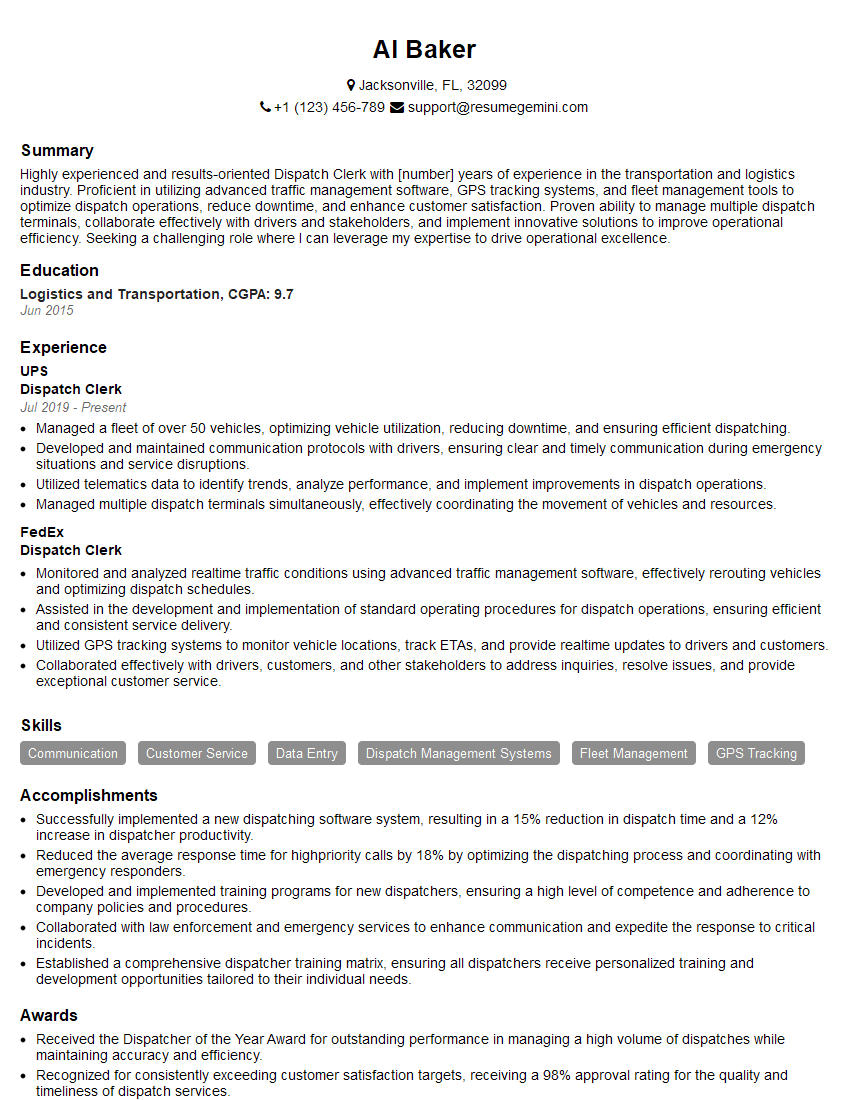
Dispatch Clerk Resume Sample
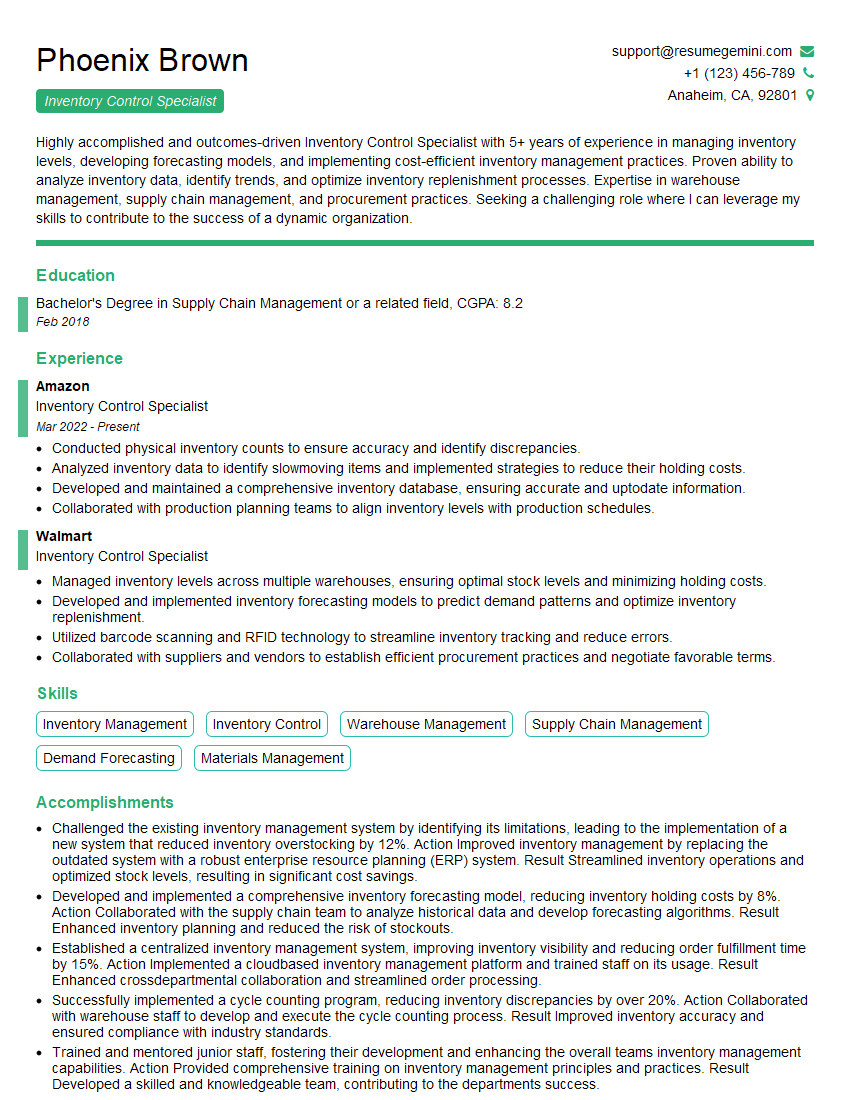
Inventory Control Specialist Resume Sample
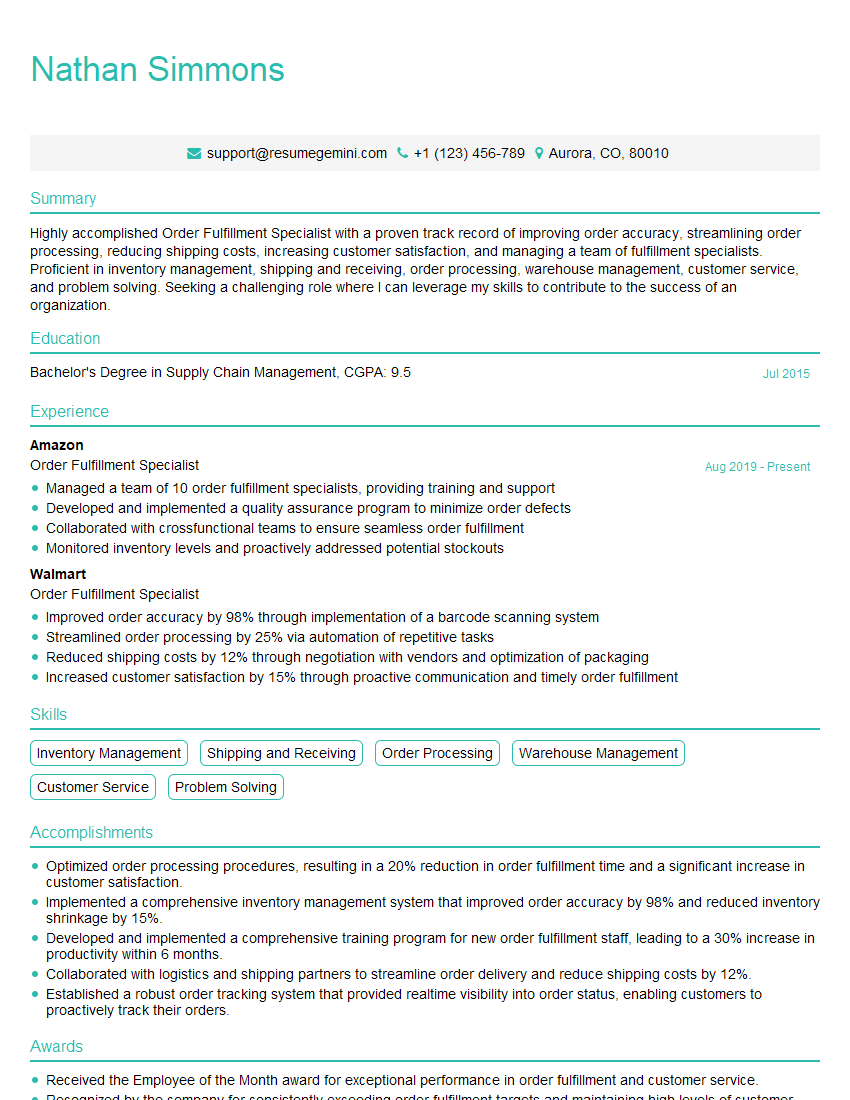
Order Fulfillment Specialist Resume Sample
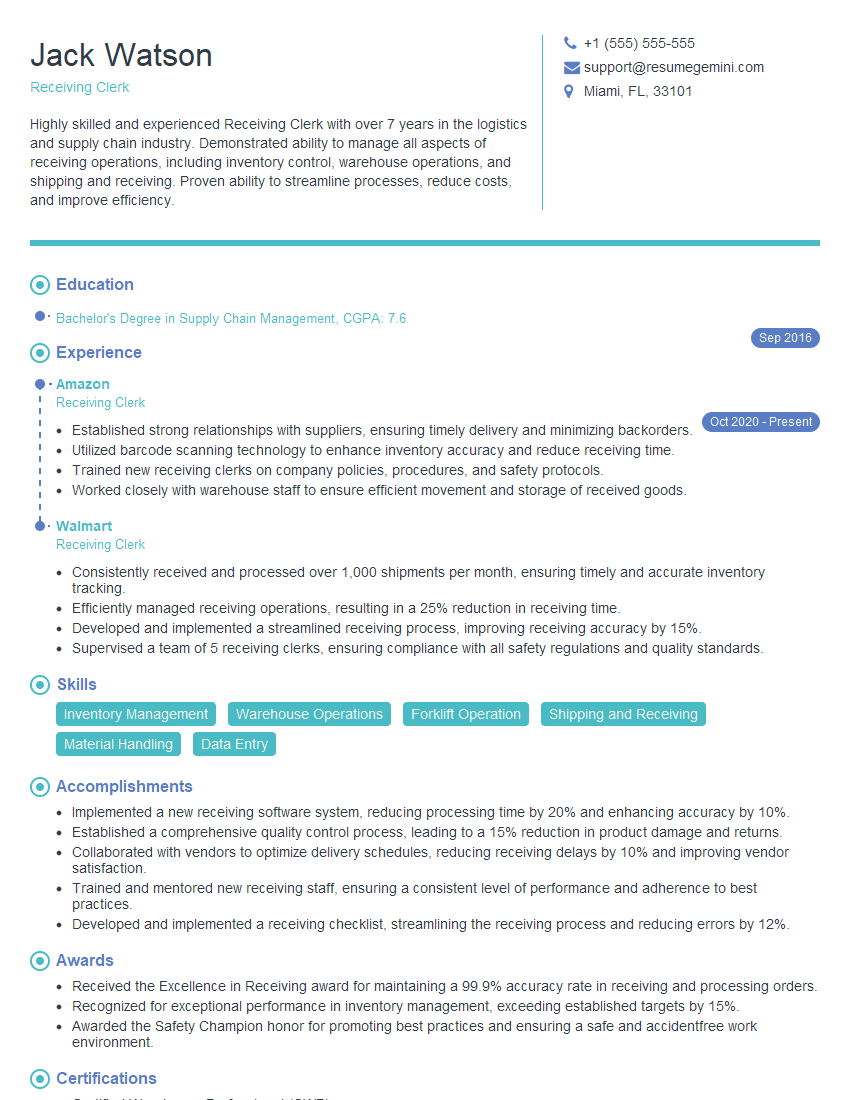
Receiving Clerk Resume Sample

Shipping and Receiving Clerk Resume Sample
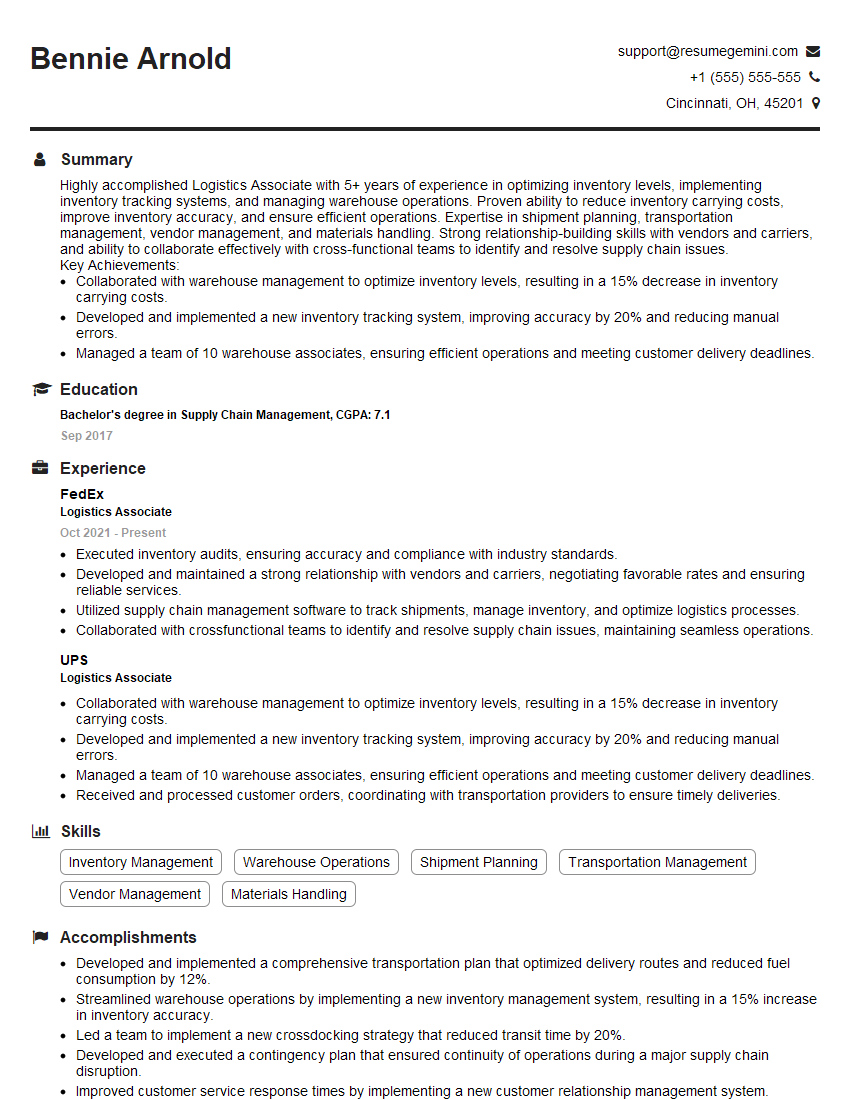
Logistics Associate Resume Sample
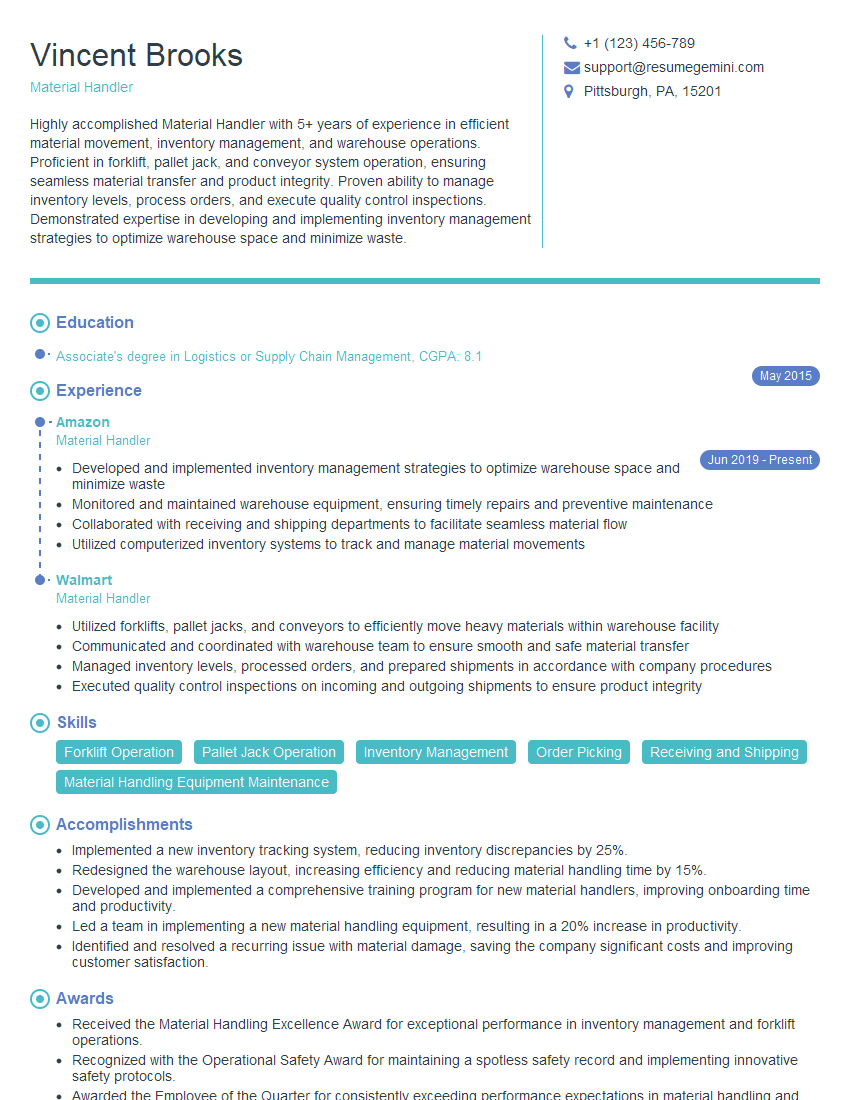
Material Handler Resume Sample
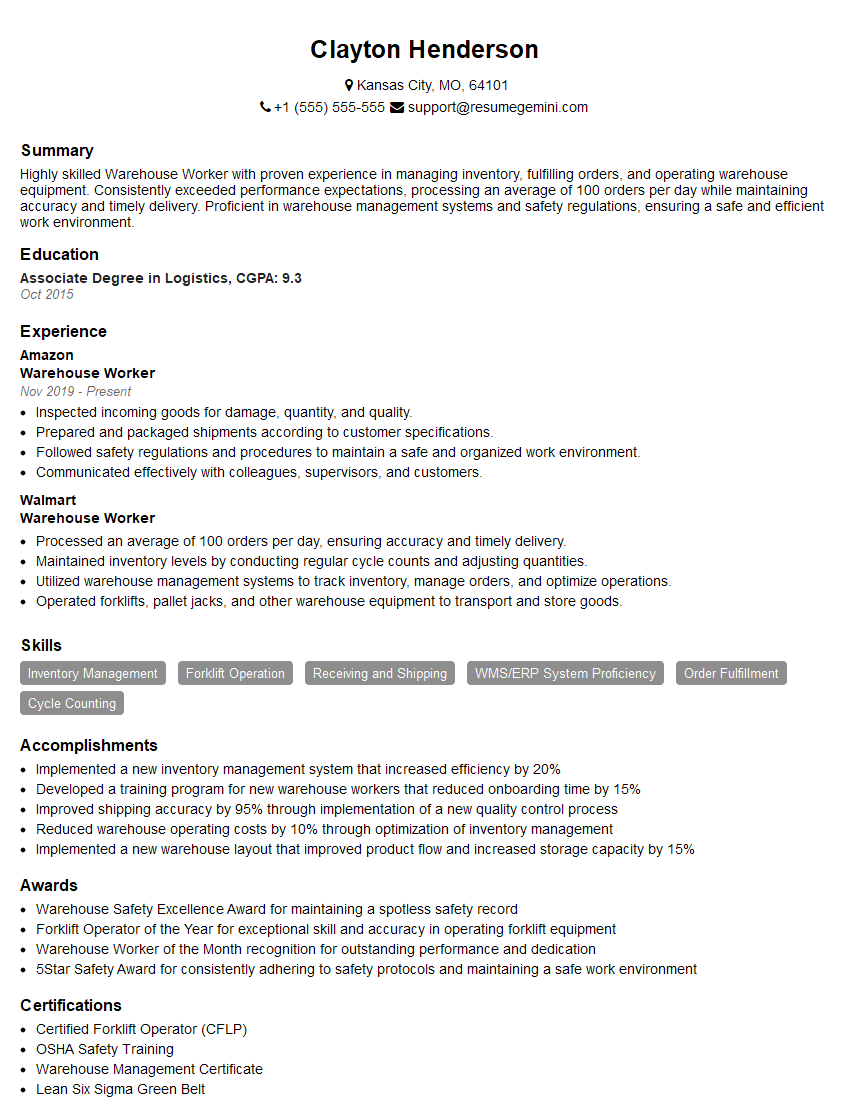
Warehouse Worker Resume Sample
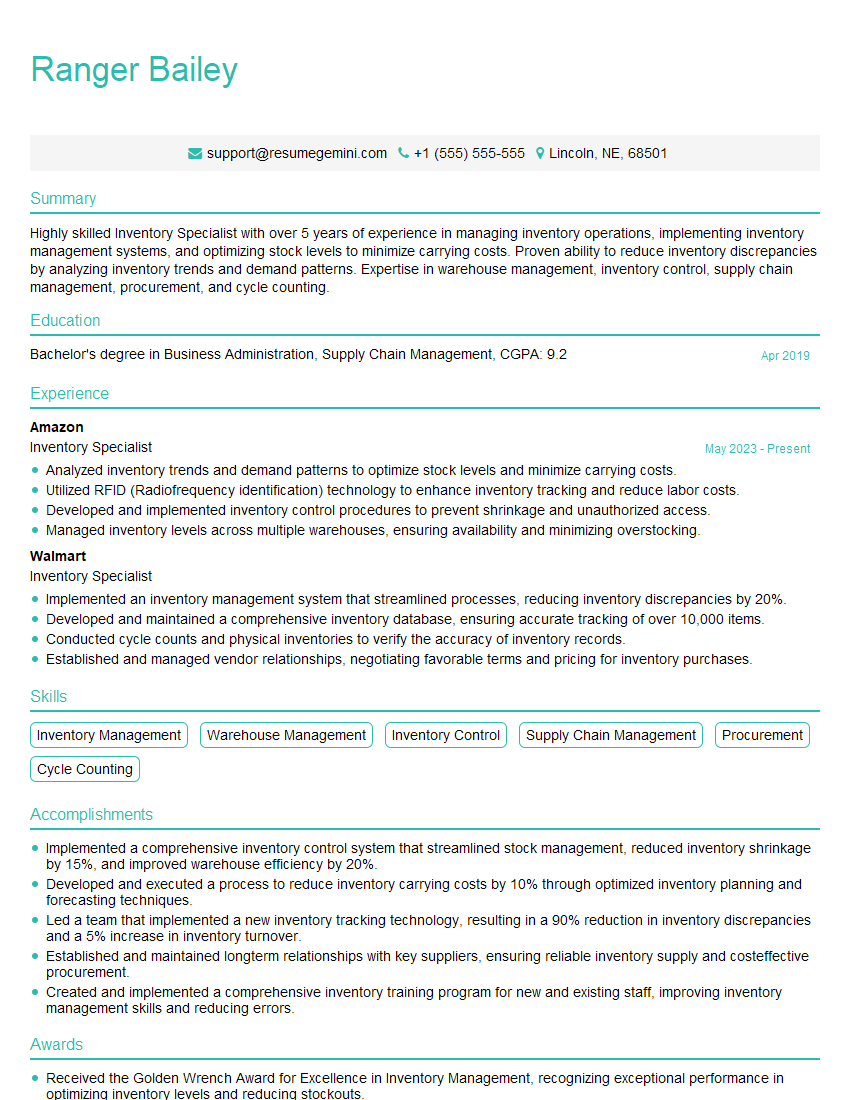
Inventory Specialist Resume Sample
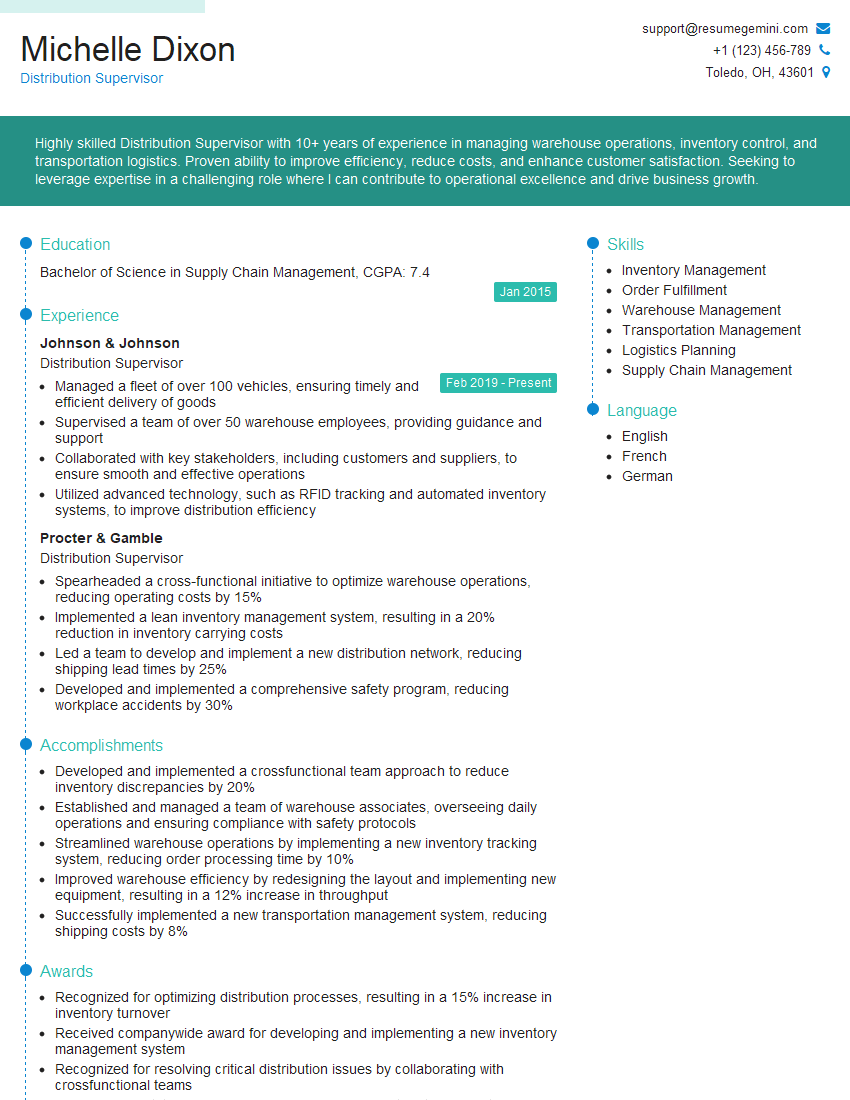
Distribution Supervisor Resume Sample
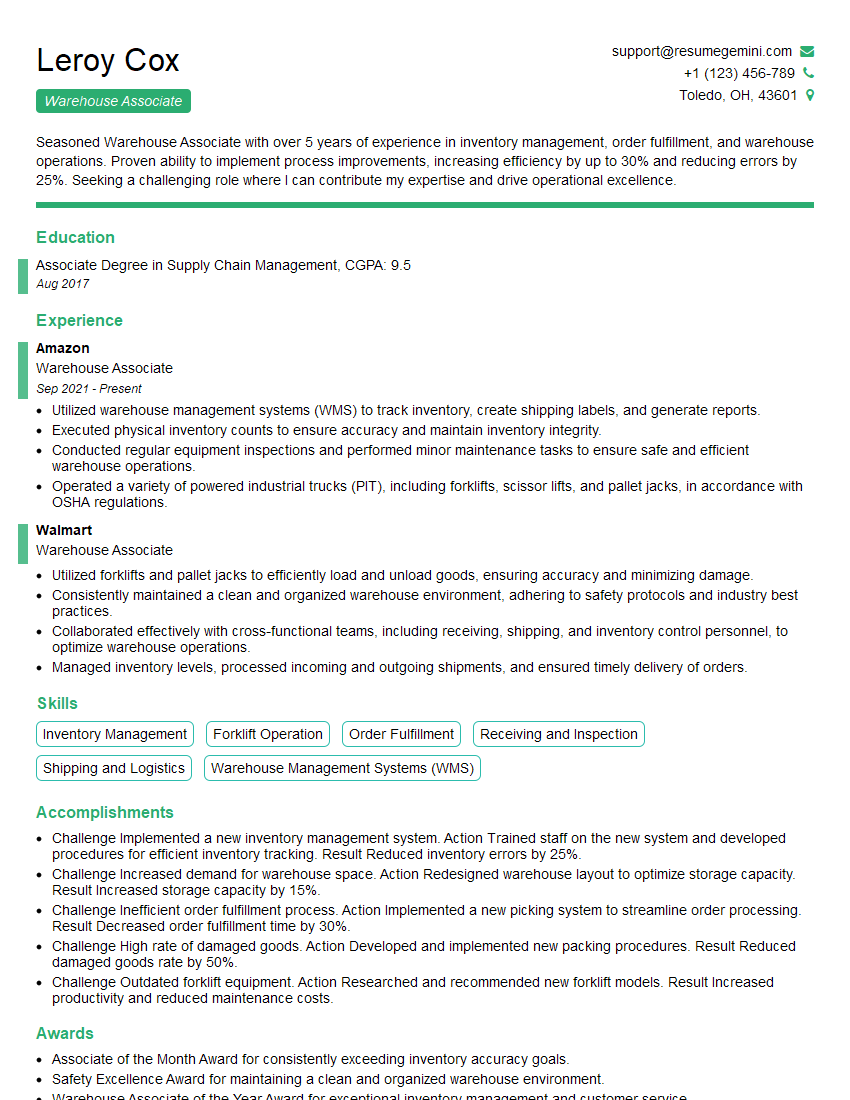
Warehouse Associate Resume Sample
- Supply Chain Manager
- Distribution Center Manager
- Logistics Manager
- Warehouse Operations Manager
- Receiving Manager
- Shipping Manager
- Warehouse Supervisor
- Logistics Coordinator
- Supply Chain Analyst
- Stock Clerk
- Dispatch Clerk
- Inventory Control Specialist
- Order Fulfillment Specialist
- Receiving Clerk
- Shipping and Receiving Clerk
- Logistics Associate
- Material Handler
- Warehouse Worker
- Inventory Specialist
- Distribution Supervisor
- Warehouse Associate
Explore more articles
Users Rating of Our Blogs
Share Your Experience
We value your feedback! Please rate our content and share your thoughts (optional).
What Readers Say About Our Blog
Really detailed insights and content, thank you for writing this detailed article.
IT gave me an insight and words to use and be able to think of examples