The thought of an interview can be nerve-wracking, but the right preparation can make all the difference. Explore this comprehensive guide to Regulatory Compliance and Certification interview questions and gain the confidence you need to showcase your abilities and secure the role.
Questions Asked in Regulatory Compliance and Certification Interview
Q 1. Explain the importance of a robust compliance program.
A robust compliance program is the cornerstone of any successful organization, acting as a shield against legal repercussions, reputational damage, and operational disruptions. It ensures an entity adheres to all applicable laws, regulations, and industry standards. Think of it as a comprehensive set of rules, procedures, and controls designed to minimize risk and maximize ethical conduct.
Its importance stems from several key factors:
- Legal and Regulatory Adherence: Avoiding hefty fines and penalties imposed for non-compliance.
- Reputational Protection: Maintaining public trust and investor confidence by demonstrating ethical behavior and responsible business practices.
- Operational Efficiency: Streamlining processes, reducing errors, and enhancing productivity through well-defined procedures.
- Risk Mitigation: Identifying and addressing potential compliance risks proactively, preventing costly incidents and disruptions.
- Stakeholder Confidence: Building trust with customers, employees, and other stakeholders by demonstrating a commitment to ethical conduct and legal compliance.
A strong compliance program isn’t just a checklist; it’s a dynamic, evolving system that requires continuous monitoring, adaptation, and improvement. Imagine a ship navigating a complex sea; the compliance program is the navigational system, guiding the ship safely through potential hazards.
Q 2. Describe your experience conducting risk assessments related to regulatory compliance.
My experience in conducting risk assessments for regulatory compliance involves a structured methodology. I typically begin by identifying all applicable regulations relevant to the organization’s operations and industry. This includes reviewing federal, state, and local laws, as well as industry-specific standards and best practices. For example, in the financial services sector, I’d focus on regulations like Dodd-Frank and BSA/AML, whereas in healthcare, HIPAA would be paramount.
Next, I use a combination of qualitative and quantitative methods to evaluate the likelihood and potential impact of compliance failures. This might involve interviewing key personnel, reviewing internal documentation, and analyzing historical data. For example, a quantitative assessment might involve calculating the potential financial penalties associated with a specific regulatory violation. Qualitative assessments involve subjective judgments, based on experience and expertise. I often employ frameworks like the NIST Cybersecurity Framework to categorize risks and prioritize mitigation efforts.
Finally, I present my findings in a clear and concise report, outlining identified risks, their potential impact, and recommended mitigation strategies. This report helps the organization prioritize its compliance efforts and allocate resources effectively. A key aspect is communicating risk and its mitigation to all relevant stakeholders in easily understandable terms.
Q 3. How do you stay updated on changes in relevant regulations?
Staying abreast of changes in regulations is crucial. My approach is multi-faceted:
- Subscription to Regulatory Updates: I subscribe to specialized newsletters, journals, and online resources that provide timely updates on regulatory changes in my relevant fields. These sources include government websites, industry associations, and legal databases.
- Professional Development: I actively participate in industry conferences, webinars, and training programs to stay informed about the latest developments and best practices.
- Networking: I maintain a professional network of contacts in the regulatory compliance field, exchanging information and insights.
- Monitoring Government Agencies: I regularly monitor the websites of relevant government agencies for announcements and updates on new or amended regulations. For example, I would routinely review updates from the SEC, FDA or EPA, depending on the industry.
- Legal Counsel: I work closely with legal counsel to interpret complex regulations and ensure compliance.
This comprehensive approach ensures that I am always aware of the latest changes and can adapt compliance programs accordingly. It’s like being a weather forecaster for regulatory compliance, always monitoring the horizon for potential storms and preparing accordingly.
Q 4. What is your experience with ISO 9001 or other relevant certification standards?
I have extensive experience with ISO 9001:2015, having led multiple organizations through the certification process. My responsibilities included gap analysis, documentation development, internal audits, and management review meetings. I understand the requirements for establishing, implementing, maintaining, and continually improving a quality management system (QMS).
Beyond ISO 9001, my experience encompasses other relevant standards such as ISO 27001 (Information Security Management), ISO 14001 (Environmental Management), and various industry-specific standards like SOC 2 (for service organizations). Each standard has its unique focus, but the core principles of risk management, continuous improvement, and documentation remain consistent.
My understanding of these standards goes beyond simply meeting the requirements; I emphasize the integration of these systems into the overall organizational culture to ensure long-term sustainability and continuous improvement. Achieving certification isn’t the end goal; it’s a milestone that demonstrates a commitment to quality, security, and environmental responsibility.
Q 5. Explain your understanding of internal controls and their role in compliance.
Internal controls are the processes, procedures, and policies designed to mitigate risks and ensure that an organization achieves its objectives. They are integral to a strong compliance program. Consider them the safeguards built into the system to prevent errors and fraud.
Internal controls play a crucial role in compliance by:
- Preventing Errors: Procedures and checks to minimize human error and ensure accuracy.
- Detecting Fraud: Implementing mechanisms to identify and deter fraudulent activities.
- Enhancing Reliability: Ensuring the accuracy and reliability of financial and operational data.
- Promoting Efficiency: Streamlining processes and reducing redundancies.
- Ensuring Compliance: Implementing measures to ensure adherence to laws, regulations, and internal policies.
Effective internal controls are usually categorized into preventive, detective, and corrective measures. For example, a preventive control might be a segregation of duties, while a detective control could be a regular audit. A corrective control might be a process to address identified discrepancies.
The design and implementation of robust internal controls require a thorough understanding of the organization’s risks, processes, and objectives. They must be regularly tested and updated to remain effective. It’s like a well-maintained security system—it requires regular checks and upgrades to protect against evolving threats.
Q 6. Describe a time you identified a compliance gap. How did you address it?
During a recent audit of a client’s data security practices, I identified a significant compliance gap related to the handling of sensitive customer data. Specifically, the organization lacked a formal process for securely disposing of outdated hard drives containing personal information, putting them at risk of unauthorized access and data breaches.
To address this gap, I followed these steps:
- Documentation and Assessment: I thoroughly documented the existing data disposal practices, identified the root causes of the gap, and assessed the potential risks.
- Risk Prioritization: I prioritized the risk based on the sensitivity of the data and the potential for regulatory penalties (e.g., GDPR, CCPA violations).
- Solution Development: I developed a comprehensive data disposal policy and procedure, including guidelines for secure deletion, physical destruction, and third-party vendor selection (for data wiping or destruction).
- Implementation: I assisted the organization in implementing the new policy and procedure, providing training to relevant personnel on proper data handling and disposal techniques.
- Monitoring and Review: I established a system for ongoing monitoring and review of the new procedures to ensure their effectiveness and compliance. This included regular audits and employee feedback mechanisms.
This systematic approach ensured a complete remediation of the identified gap. It demonstrated the importance of proactive risk identification and the value of a well-defined process for addressing compliance deficiencies.
Q 7. How do you handle conflicting regulations or requirements?
Conflicting regulations are a common challenge in regulatory compliance. My approach involves a systematic process:
- Identification and Documentation: Clearly identify the specific conflicting regulations, noting the jurisdictions and relevant authorities.
- Legal Interpretation: Consult with legal counsel to get a clear interpretation of the regulations and their applicability to the specific situation. This often involves reviewing legal precedents and related case law.
- Prioritization: Determine which regulation takes precedence. This might involve considering the potential consequences of non-compliance with each regulation. Often, the regulation with the strictest or most significant penalties takes priority.
- Development of a Compliance Strategy: Develop a strategy to comply with the most stringent regulation, while also mitigating the risks associated with the conflicting regulation. This might involve seeking clarification from regulatory authorities or exploring waivers or exemptions.
- Documentation and Communication: Document the analysis, decision-making process, and chosen compliance strategy. Communicate this to relevant stakeholders within the organization.
This structured approach ensures that we navigate conflicting regulations effectively, minimizing risk and ensuring compliance with the most appropriate legal requirements. It’s like choosing the safest route on a map with multiple, potentially conflicting routes indicated.
Q 8. How would you explain complex regulatory requirements to non-compliance personnel?
Explaining complex regulatory requirements to non-compliance personnel requires a shift from technical jargon to plain language and relatable examples. I approach this by first identifying the core principles – what the regulation aims to achieve – rather than getting bogged down in the specifics. For instance, instead of explaining the intricacies of HIPAA’s technical safeguards, I’d focus on the overarching goal: protecting patient health information. Then, I use analogies to illustrate the concepts. Think of data security like a house’s security system – you need locks (access controls), alarms (monitoring), and a security company (incident response) to protect it. Finally, I break down the complex requirements into manageable chunks, focusing on the practical implications for their roles. For example, if discussing HIPAA with a receptionist, I would highlight their role in protecting patient information by securing the physical space and handling patient data appropriately. I also actively encourage questions and tailor my explanation based on their level of understanding, using visual aids whenever possible to clarify complex concepts.
Q 9. Describe your experience with compliance audits and reporting.
Throughout my career, I’ve been extensively involved in compliance audits and reporting, spanning various industries and regulatory frameworks. My experience includes conducting internal audits, supporting external audits by regulatory bodies, and preparing comprehensive compliance reports. A recent example involved a SOC 2 Type II audit for a SaaS company. This entailed meticulously reviewing their systems and processes against the Trust Services Criteria, interviewing personnel, and documenting evidence. The process involved identifying gaps, formulating corrective action plans, and tracking their implementation. The final report, submitted to the auditor, detailed our findings, the remediation efforts, and the overall compliance posture of the company. This experience honed my skills in risk assessment, data analysis, and report writing, ensuring clarity and accuracy in communicating complex audit findings to both technical and non-technical audiences. I’m proficient in using various auditing methodologies and reporting tools to ensure efficient and effective audit processes.
Q 10. What are the key elements of an effective compliance training program?
An effective compliance training program needs to be comprehensive, engaging, and easily accessible. It should encompass several key elements: First, a needs assessment identifies training gaps by determining employees’ current knowledge and understanding of relevant regulations. Next, a well-structured curriculum, broken down into manageable modules, covers all necessary regulations in a clear and concise manner, using interactive materials such as videos and scenarios. Third, regular updates are crucial to address changes in legislation and best practices. This prevents outdated information from creating vulnerabilities. Fourth, assessment methods, including quizzes, tests, or scenario-based exercises, ensure knowledge retention and understanding. Finally, documentation and record-keeping are essential to demonstrate the program’s effectiveness and compliance with regulatory requirements. The ideal program also includes interactive elements like games and workshops to improve engagement and retention. For example, a role-playing exercise could simulate a data breach scenario, allowing employees to practice their response procedures. This approach makes training less tedious and enhances practical application of learned concepts.
Q 11. How do you prioritize compliance initiatives given limited resources?
Prioritizing compliance initiatives with limited resources necessitates a risk-based approach. First, I conduct a thorough risk assessment, identifying potential compliance risks and their associated likelihood and impact. This usually involves reviewing current processes, considering industry trends, and analyzing potential regulatory changes. This assessment helps create a prioritized list of compliance initiatives. Next, I categorize risks based on severity: high, medium, and low. High-risk areas, such as those with the potential for significant financial penalties or reputational damage, receive immediate attention. Then, I allocate resources accordingly, focusing on high-risk areas first. This might involve assigning personnel to address critical vulnerabilities or investing in software solutions to mitigate specific risks. Regular monitoring and review of the risk profile ensure that the approach remains effective and adapts to changing circumstances. For example, a company facing a new data privacy regulation might prioritize its investment in data security measures over a lower-risk area like outdated internal processes. This risk-based methodology ensures efficient allocation of limited resources, prioritizing what matters most.
Q 12. What metrics do you use to measure the effectiveness of a compliance program?
Measuring the effectiveness of a compliance program relies on a combination of quantitative and qualitative metrics. Quantitative metrics include the number of compliance incidents, the cost of non-compliance (fines, legal fees, etc.), and the number of employees completing training. These provide concrete evidence of performance. Qualitative metrics include employee understanding of compliance requirements (assessed via surveys or feedback), the strength of a company’s compliance culture, and the effectiveness of risk mitigation efforts. These offer insights into the program’s impact on the overall organizational culture. It’s also important to track the timeliness and accuracy of compliance reporting. The key is to use a variety of metrics to gain a holistic view of the program’s success. For instance, a low number of compliance incidents combined with high employee satisfaction with the training program indicates a well-functioning and effective initiative.
Q 13. Explain your understanding of data privacy regulations (e.g., GDPR, CCPA).
Data privacy regulations like GDPR (General Data Protection Regulation) and CCPA (California Consumer Privacy Act) aim to protect individuals’ personal data. GDPR, applicable in the European Union, is broader in scope and imposes stricter requirements on data processing. It focuses on consent, data minimization, and the right to be forgotten. CCPA, on the other hand, applies specifically to California residents and grants them rights to access, delete, and opt-out of the sale of their personal information. Both regulations mandate data breach notification procedures. Understanding these regulations requires familiarity with concepts such as data mapping, data protection impact assessments (DPIAs), and the appointment of data protection officers (DPOs). My understanding of these regulations includes practical experience in implementing data privacy measures, ensuring compliance through technical and operational safeguards, and managing data subject requests. For example, implementing robust consent mechanisms and ensuring data minimization practices are essential for GDPR compliance. Moreover, developing and implementing data breach response plans is a crucial element in meeting both GDPR and CCPA requirements.
Q 14. What is your experience with implementing and maintaining a compliance management system?
I possess significant experience in implementing and maintaining compliance management systems (CMS). This typically involves selecting an appropriate CMS platform (either a software solution or a combination of tools and processes), defining roles and responsibilities, establishing clear procedures for managing compliance activities, and regularly reviewing and updating the system to account for changes in regulations and best practices. A crucial aspect is integrating the CMS into existing business processes, ensuring that it seamlessly supports day-to-day operations. I’ve successfully implemented CMS solutions in different organizations using a phased approach, starting with risk assessment, process mapping, and policy development. Then, I implement the system, providing ongoing training to staff, monitoring its performance, and conducting regular audits to ensure effectiveness. The success of a CMS hinges on its adaptability. Regular audits and employee feedback allow for timely updates, preventing the system from becoming a static document. My experience ensures that the CMS remains a dynamic and effective tool, continuously adapting to evolving needs and regulatory requirements.
Q 15. How do you ensure compliance with anti-bribery and corruption laws?
Ensuring compliance with anti-bribery and corruption laws, such as the Foreign Corrupt Practices Act (FCPA) in the US or the UK Bribery Act, requires a multi-faceted approach. It’s not just about avoiding illegal acts; it’s about cultivating a strong ethical culture throughout the organization.
- Robust Code of Conduct: We need a clear and concise code of conduct that explicitly prohibits bribery and corruption, outlining acceptable and unacceptable behaviors with real-world examples. This should be regularly reviewed and updated.
- Whistleblowing Program: A confidential and secure reporting mechanism is crucial. Employees must feel comfortable reporting potential violations without fear of retaliation. This involves clear reporting procedures, independent investigation protocols, and protection for whistleblowers.
- Risk Assessment and Mitigation: Regular risk assessments identify areas of potential vulnerability to bribery and corruption. This might include high-risk jurisdictions, interactions with government officials, or third-party relationships. Mitigation strategies, such as enhanced due diligence on business partners and improved financial controls, are then implemented.
- Training and Awareness: Ongoing training programs for all employees, tailored to their roles and responsibilities, are vital. These programs should not only explain the relevant laws but also highlight ethical dilemmas and best practices. Interactive scenarios and case studies can make training more engaging and effective.
- Due Diligence on Third Parties: Thorough due diligence on all third-party vendors, agents, and distributors is essential to ensure they share the same commitment to ethical conduct. This includes background checks, financial reviews, and ongoing monitoring.
- Monitoring and Auditing: Regular internal audits and monitoring of transactions help to identify potential red flags and ensure the effectiveness of implemented controls.
For example, in a previous role, I implemented a new third-party due diligence program that significantly reduced our risk exposure by flagging potential problematic relationships early on, preventing potential FCPA violations.
Career Expert Tips:
- Ace those interviews! Prepare effectively by reviewing the Top 50 Most Common Interview Questions on ResumeGemini.
- Navigate your job search with confidence! Explore a wide range of Career Tips on ResumeGemini. Learn about common challenges and recommendations to overcome them.
- Craft the perfect resume! Master the Art of Resume Writing with ResumeGemini’s guide. Showcase your unique qualifications and achievements effectively.
- Don’t miss out on holiday savings! Build your dream resume with ResumeGemini’s ATS optimized templates.
Q 16. Describe your experience with remediation of compliance violations.
Remediation of compliance violations is a critical process that focuses on addressing the root cause of the issue, preventing recurrence, and mitigating any potential negative consequences. It’s not just about fixing a problem; it’s about learning from it.
- Internal Investigation: A thorough investigation is the first step, aimed at uncovering the facts, identifying responsible parties, and determining the extent of the violation. This often involves interviewing witnesses, reviewing documents, and potentially engaging external experts.
- Corrective Actions: Based on the investigation’s findings, appropriate corrective actions are implemented. These may include disciplinary actions, process improvements, enhanced controls, and retraining of employees.
- Reporting and Disclosure: Depending on the severity and nature of the violation, it might be necessary to report the incident to relevant regulatory authorities. This requires careful consideration of legal and ethical obligations.
- Prevention: The key to successful remediation is prevention. The root cause analysis helps identify weaknesses in the compliance program that allowed the violation to occur. Measures are then put in place to address these weaknesses and prevent future incidents.
In one instance, I led the remediation of a data privacy violation. This involved an internal investigation, implementing new data security protocols, providing training to employees on data handling practices, and reporting the incident to the relevant data protection authority. We also worked with a third-party forensic investigator to conduct a deep dive into the system’s security.
Q 17. How do you manage stakeholder expectations regarding compliance?
Managing stakeholder expectations regarding compliance involves clear, consistent, and transparent communication. It’s about building trust and ensuring everyone understands the importance of compliance and their role in it.
- Communication Strategy: A well-defined communication strategy ensures key messages are delivered effectively to all stakeholders – employees, management, board members, and external parties. This could involve regular updates, presentations, and training materials.
- Transparency: Open and honest communication about compliance performance, risks, and incidents builds trust and fosters collaboration. This includes reporting progress against compliance goals and promptly addressing any concerns.
- Stakeholder Engagement: Regular engagement with stakeholders allows for feedback, identifies potential concerns, and ensures that the compliance program remains relevant and effective. This could include surveys, focus groups, and regular meetings.
- Metrics and Reporting: Key performance indicators (KPIs) and regular reporting demonstrate the effectiveness of the compliance program and provide a clear picture of compliance performance to stakeholders.
For instance, I created a quarterly compliance report that summarized key metrics, highlighting areas of strength and areas needing attention. This report was shared with the executive team and board of directors, providing them with a clear understanding of our compliance status.
Q 18. How would you respond to a regulatory inquiry or investigation?
Responding to a regulatory inquiry or investigation requires a calm, organized, and professional approach. It’s about cooperating fully with authorities while protecting the organization’s interests.
- Internal Review: Immediately initiate an internal review to gather all relevant information, documents, and evidence. This helps to ensure that the organization is prepared to respond effectively to the inquiry.
- Legal Counsel: Engage legal counsel experienced in regulatory matters to advise on the best course of action. This ensures that the organization’s response is legally sound and protects its interests.
- Cooperation: Cooperate fully with the regulatory authorities by providing requested information in a timely and accurate manner. This demonstrates a commitment to transparency and good faith.
- Preservation of Evidence: Maintain a chain of custody and carefully preserve all relevant documents and evidence. This is crucial to ensure the integrity of any investigation and prevent tampering.
- Communication Strategy: Establish a clear communication strategy to ensure consistent messaging internally and externally. This helps maintain control of the narrative and prevent misinformation.
In a past experience, we faced an inquiry from a data protection authority concerning a potential data breach. By working closely with our legal team, promptly responding to all requests for information, and conducting a thorough internal review, we successfully resolved the inquiry without significant penalties.
Q 19. What is your experience with conducting due diligence related to regulatory compliance?
Due diligence related to regulatory compliance involves a thorough investigation into a company or individual to identify potential compliance risks. This is crucial before entering into any business relationship or transaction.
- Background Checks: Conduct comprehensive background checks to assess the reputation and history of the target entity. This involves researching public records, news articles, and regulatory databases.
- Financial Review: Analyze the financial statements and records of the target to identify any potential financial irregularities or red flags that could indicate compliance issues.
- Compliance Program Review: Evaluate the target’s existing compliance program, including policies, procedures, and controls, to assess the effectiveness of their risk management efforts.
- Regulatory History: Review the target’s history with regulatory agencies to identify any past violations or enforcement actions.
- Third-Party Due Diligence: If the target entity uses third-party vendors or agents, conduct due diligence on those parties as well to assess their compliance posture.
For instance, before acquiring a new company, I led a comprehensive due diligence process, reviewing its compliance programs, regulatory history, and financial records to identify and mitigate any potential compliance risks prior to the closing of the deal. This included a detailed review of their environmental compliance record.
Q 20. Describe your experience with contract review for compliance purposes.
Contract review for compliance purposes is a critical step in mitigating legal and regulatory risks. It ensures that contractual obligations align with all applicable laws and regulations.
- Identification of Relevant Laws and Regulations: The first step is to identify all relevant laws and regulations applicable to the contract, such as data privacy laws, antitrust laws, employment laws, or industry-specific regulations.
- Risk Assessment: Conduct a risk assessment to identify potential compliance risks within the contract. This might involve clauses relating to data protection, intellectual property, anti-bribery provisions, or termination clauses.
- Clause-by-Clause Review: Thoroughly review each clause of the contract to ensure it aligns with all applicable laws and regulations. This includes paying close attention to liability limitations, indemnification provisions, and dispute resolution mechanisms.
- Negotiation of Terms: Negotiate with the other party to modify any clauses that pose a compliance risk. This might involve clarifying ambiguous language, removing problematic clauses, or adding safeguards to protect the organization from liability.
- Documentation: Document all changes and agreements made during the negotiation process. This provides a clear record of the changes made and the rationale behind them.
In one case, I identified a potential conflict of interest clause in a contract that could have violated antitrust laws. By working with the legal team, we successfully negotiated a modification that mitigated the risk.
Q 21. How do you ensure compliance with environmental regulations?
Ensuring compliance with environmental regulations, which vary widely by jurisdiction, necessitates a comprehensive and proactive approach. It’s about minimizing environmental impact and avoiding legal penalties.
- Environmental Impact Assessment: Conducting regular environmental impact assessments identifies potential environmental risks associated with the organization’s operations. This may involve evaluating emissions, waste disposal, and resource consumption.
- Permitting and Licensing: Obtaining and maintaining all necessary environmental permits and licenses is crucial to ensuring legal operation. This might include air permits, water discharge permits, and waste management permits.
- Environmental Management System (EMS): Implementing an EMS, such as ISO 14001, provides a structured framework for managing environmental risks and improving environmental performance. This involves setting environmental goals, monitoring performance, and implementing corrective actions.
- Compliance Training: Providing ongoing training to employees on environmental regulations and best practices is crucial to raising awareness and fostering responsible environmental behavior.
- Monitoring and Reporting: Regular monitoring of environmental performance, including emissions, waste generation, and resource consumption, is necessary to identify potential non-compliance issues and report as required by law.
- Emergency Response Planning: Developing and implementing emergency response plans for potential environmental incidents, such as spills or releases, is essential to minimize environmental damage and comply with reporting requirements.
For example, in a previous role, we implemented an EMS that reduced our carbon footprint by 15% and enabled us to proactively manage our environmental compliance risks.
Q 22. How do you ensure compliance with health and safety regulations?
Ensuring compliance with health and safety regulations requires a multi-faceted approach, prioritizing risk assessment, preventative measures, and ongoing monitoring. It’s not just about ticking boxes; it’s about fostering a safety-conscious culture.
- Risk Assessment: We begin by identifying potential hazards within the workplace. This involves a thorough analysis of all processes, equipment, and materials to pinpoint risks, categorizing them by severity and likelihood. For example, in a manufacturing plant, we’d assess risks associated with machinery, chemical handling, and ergonomic factors.
- Preventative Measures: Once risks are identified, we implement control measures to mitigate them. This could involve installing safety guards on machinery, providing personal protective equipment (PPE), implementing safe work procedures, and providing comprehensive training to employees. Regular safety inspections are also crucial.
- Ongoing Monitoring and Reporting: We continuously monitor the effectiveness of implemented controls through regular inspections, incident reporting, and near-miss analysis. Data gathered is used to refine safety procedures and identify areas needing improvement. Regular reporting to relevant authorities ensures transparency and accountability.
- Employee Engagement: A strong safety culture is fostered through active employee participation. This includes providing opportunities for feedback, encouraging reporting of hazards, and promoting a sense of shared responsibility for safety.
Ultimately, a robust health and safety program is proactive, not reactive, consistently aiming to prevent incidents before they happen.
Q 23. Explain your understanding of the Sarbanes-Oxley Act (SOX).
The Sarbanes-Oxley Act of 2002 (SOX) is a landmark piece of legislation in the United States designed to protect investors by improving the accuracy and reliability of corporate disclosures. It was enacted in response to major corporate accounting scandals that eroded investor trust. SOX primarily focuses on enhancing corporate governance and financial reporting.
- Increased Accountability: SOX holds senior executives directly accountable for the accuracy of financial reporting. The CEO and CFO must personally certify the accuracy of financial statements.
- Internal Controls: The act mandates the establishment and maintenance of effective internal controls over financial reporting. This requires companies to document and test their internal controls to ensure they are functioning as designed to prevent and detect fraud.
- Auditor Independence: SOX strengthened the independence of external auditors, prohibiting certain non-audit services from being provided by the same firm auditing a company’s financial statements. This aims to prevent conflicts of interest.
- Whistleblower Protection: The act provides significant protection for whistleblowers who report suspected violations of SOX regulations.
Compliance with SOX is crucial for publicly traded companies. Failure to comply can result in significant penalties, including fines and even criminal charges.
Q 24. What experience do you have with specific industry regulations (mention relevant industry)?
In my previous role in the pharmaceutical industry, I had extensive experience with FDA regulations, specifically those related to Good Manufacturing Practices (GMP) and Good Clinical Practices (GCP).
- GMP (Good Manufacturing Practices): I was responsible for ensuring that manufacturing processes adhered to FDA regulations concerning the production of pharmaceutical products. This involved documentation control, validation of manufacturing processes, quality control testing, and complaint handling. For example, I worked directly on validating a new automated filling line, ensuring its consistent performance and compliance with GMP standards.
- GCP (Good Clinical Practices): I also oversaw the compliance of clinical trials conducted to support new drug applications. This required knowledge of regulations governing the design, conduct, recording, and reporting of clinical trials, including data integrity and ethical considerations. I played a key role in ensuring our clinical trial data met the highest standards for accuracy and integrity.
My expertise in navigating the complexities of these regulations allowed us to maintain consistent compliance and avoid potential regulatory actions.
Q 25. How familiar are you with the regulatory landscape for [mention specific technology or sector]?
Regarding the regulatory landscape for Artificial Intelligence (AI), I’m very familiar with the emerging concerns surrounding data privacy, algorithmic bias, and safety. The field is still evolving, and the regulatory framework is largely still in its nascent stage.
- GDPR and CCPA: Existing data privacy regulations, such as the General Data Protection Regulation (GDPR) in Europe and the California Consumer Privacy Act (CCPA) in the US, already play a significant role in how AI systems can handle personal data. Compliance with these regulations is paramount.
- Algorithmic Bias: There’s increasing focus on mitigating algorithmic bias to ensure fairness and equity in AI systems. Regulations are starting to emerge that require transparency and accountability in how algorithms are developed and deployed, to prevent discriminatory outcomes.
- Safety and Liability: As AI systems become more prevalent in critical areas like healthcare and autonomous vehicles, the need for safety standards and liability frameworks is growing. Regulations are beginning to address these concerns, though the specific standards are still developing.
Staying up-to-date on this rapidly changing landscape requires ongoing monitoring of legislative developments and participation in industry forums. It is an area of crucial importance, and I am committed to continuing to enhance my knowledge in this dynamic space.
Q 26. Describe a situation where you had to escalate a compliance issue. What was the outcome?
In a previous role, I discovered a significant discrepancy in our environmental reporting data. The initial reports underestimated our carbon footprint by approximately 15%. This was a serious compliance issue, as accurate reporting is crucial under the Clean Air Act.
I immediately escalated the issue to my supervisor, providing all the supporting documentation and a detailed analysis of the discrepancy. We then formed a cross-functional team to investigate the root cause, which turned out to be an error in our data aggregation process.
The outcome was a thorough review and revision of our reporting processes, including enhanced data validation procedures and improved staff training. We submitted a corrected report to the relevant authorities, fully transparent about the initial error and the corrective actions taken. The authorities accepted the corrected report and commended our proactive approach to addressing the issue. This experience highlighted the importance of a robust reporting system, internal controls, and the critical role of open communication when dealing with compliance breaches.
Q 27. How do you measure the effectiveness of a compliance training program?
Measuring the effectiveness of a compliance training program requires a multi-pronged approach that goes beyond simple attendance records. We need to assess knowledge retention, behavioral changes, and ultimately, a reduction in compliance violations.
- Pre- and Post-Training Assessments: Pre-training assessments identify existing knowledge levels, while post-training assessments measure knowledge gained. Comparing the results helps evaluate the effectiveness of training materials and delivery.
- Employee Feedback: Gathering feedback through surveys or focus groups provides insights into employee perception of the training’s relevance, engagement, and clarity.
- Behavioral Observations: Monitoring employee actions and adherence to new procedures and policies can demonstrate the practical application of learned material.
- Tracking Compliance Violations: A decrease in compliance violations indicates the positive impact of training on reducing risk.
- Data Analytics: Analyzing training completion rates, assessment scores, and feedback data allows us to identify areas needing improvement or areas where further training may be needed.
Combining these measures provides a comprehensive picture of the training’s effectiveness. Regular review and adaptation of training materials ensures their ongoing relevance and value.
Q 28. How do you ensure that your compliance program is adaptable to changing regulatory requirements?
Adapting a compliance program to changing regulatory requirements necessitates a proactive and dynamic approach. It’s not a one-time effort but an ongoing process.
- Regulatory Monitoring: Establish a system for consistently tracking changes in relevant regulations through subscription to regulatory updates, participation in industry events, and engagement with regulatory bodies.
- Gap Analysis: Regularly conduct gap analyses comparing existing compliance procedures against updated regulations. This helps identify areas where changes are needed.
- Documentation and Process Updates: Update policies, procedures, and training materials to reflect any necessary changes identified during the gap analysis.
- Training and Communication: Communicate new requirements and updated processes to all relevant personnel through targeted training sessions and clear documentation.
- Technology Integration: Utilize technology to automate compliance processes where possible, making updates and monitoring more efficient. This might involve using compliance management software.
- Regular Audits: Conduct regular compliance audits to validate the effectiveness of updated procedures and identify any emerging risks.
By establishing a culture of continuous improvement and proactively adapting to change, we can ensure that our compliance program remains effective and robust in the face of evolving regulatory landscapes.
Key Topics to Learn for Regulatory Compliance and Certification Interview
- Regulatory Frameworks: Understanding the intricacies of relevant regulations (e.g., HIPAA, GDPR, SOX) – their purpose, scope, and implications for organizations.
- Compliance Program Development & Implementation: Designing and executing effective compliance programs, including risk assessments, policy development, training, and monitoring activities. Practical application: Developing a compliance plan for a hypothetical scenario involving data breaches.
- Internal Controls & Audits: Establishing and maintaining robust internal controls to ensure compliance. Understanding different audit methodologies and their applications.
- Certification Processes: Familiarizing yourself with relevant certification standards (e.g., ISO 27001, SOC 2) and the steps involved in achieving certification.
- Data Privacy & Security: Deep understanding of data protection principles, security best practices, and incident response procedures. Practical application: Analyzing a data breach scenario and outlining appropriate responses.
- Risk Management & Mitigation: Identifying, assessing, and mitigating compliance risks through proactive measures and contingency planning.
- Reporting & Disclosure: Understanding the requirements for reporting compliance-related issues to relevant authorities and stakeholders.
- Legal & Ethical Considerations: Navigating the legal and ethical complexities of regulatory compliance, particularly in ambiguous situations.
- Emerging Trends & Technologies: Staying abreast of evolving regulatory landscapes and the impact of new technologies (e.g., AI, blockchain) on compliance.
Next Steps
Mastering Regulatory Compliance and Certification opens doors to exciting career opportunities with significant growth potential. Demonstrating your expertise effectively is crucial, and a well-crafted resume is your first impression. Building an ATS-friendly resume significantly increases your chances of getting noticed by recruiters. We strongly encourage you to leverage ResumeGemini, a trusted resource, to build a professional resume that showcases your skills and experience. Examples of resumes tailored to Regulatory Compliance and Certification are available to help guide your efforts. Invest the time to create a compelling narrative that highlights your unique value proposition and you’ll significantly improve your interview success rate.
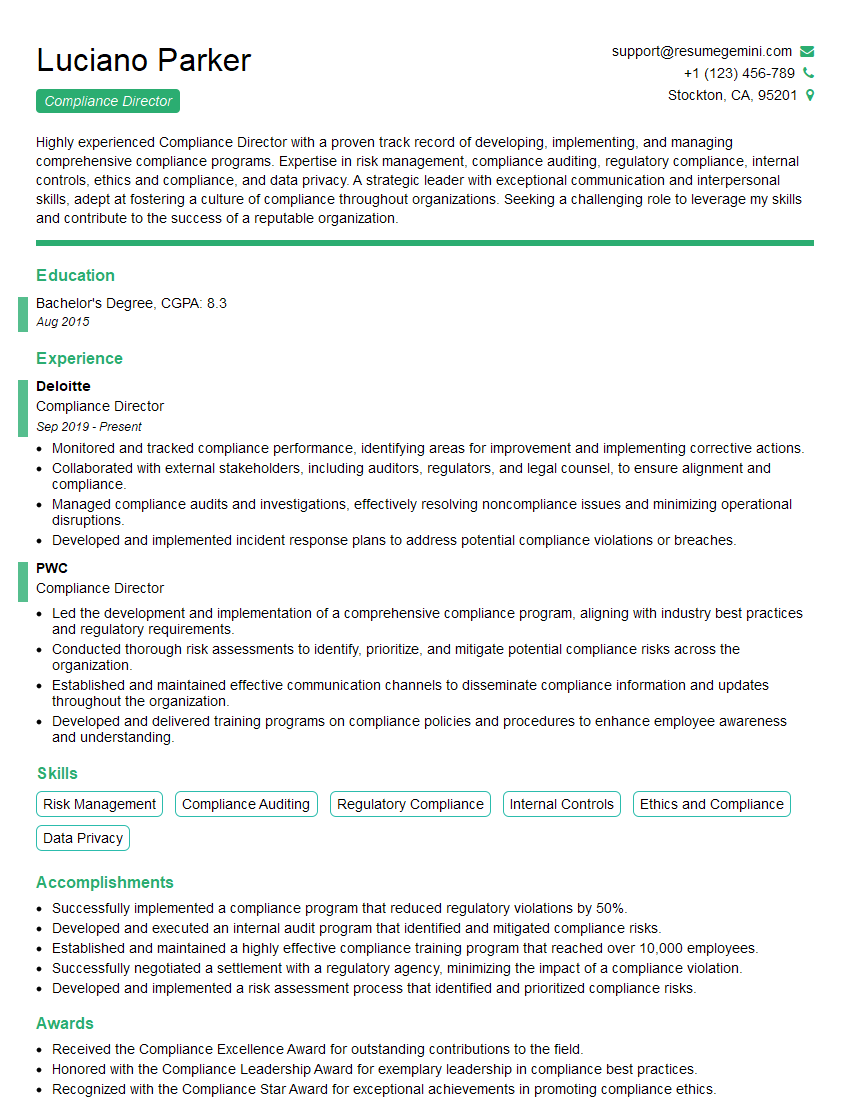
Compliance Director Resume Sample
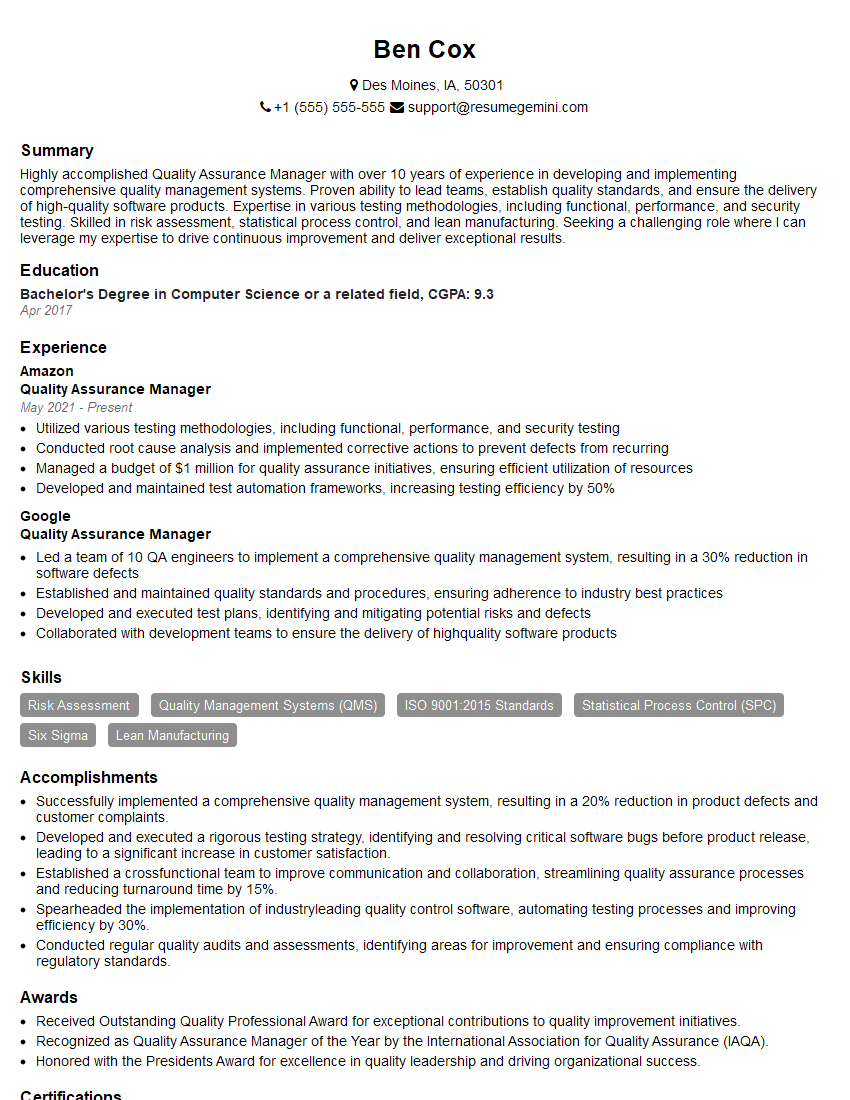
Quality Assurance Manager Resume Sample
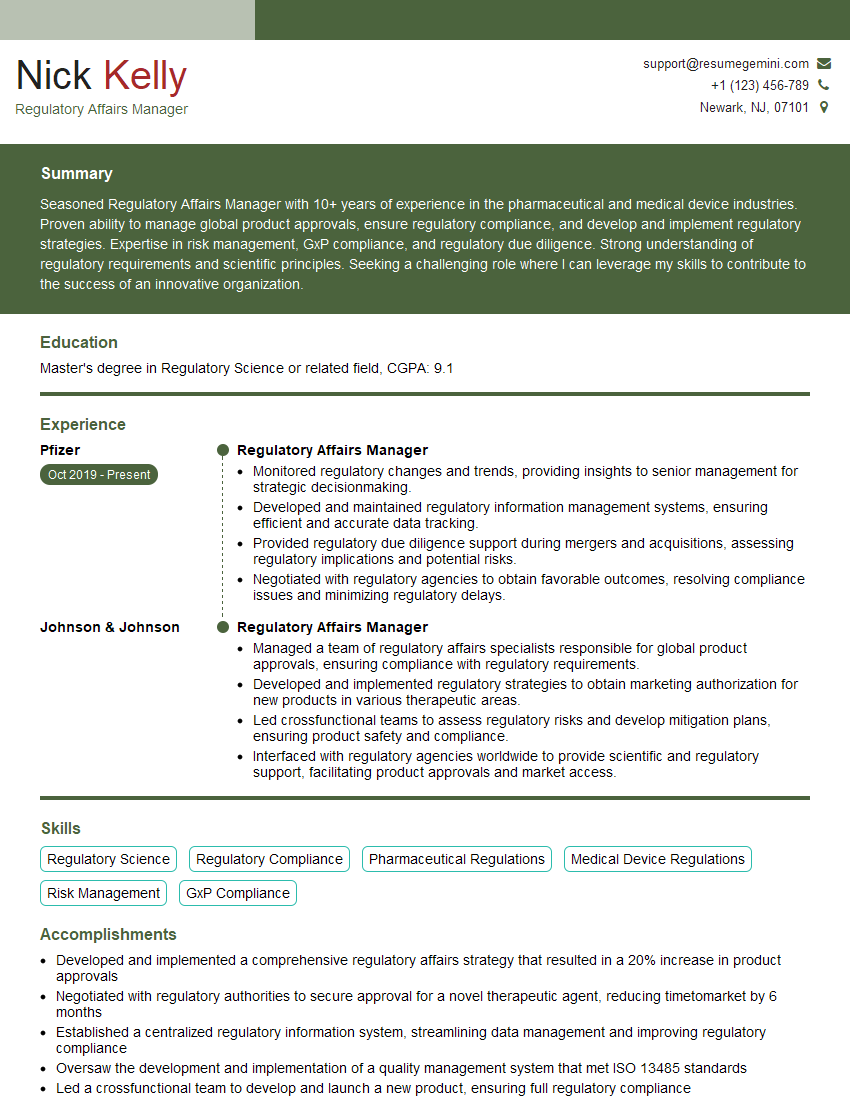
Regulatory Affairs Manager Resume Sample
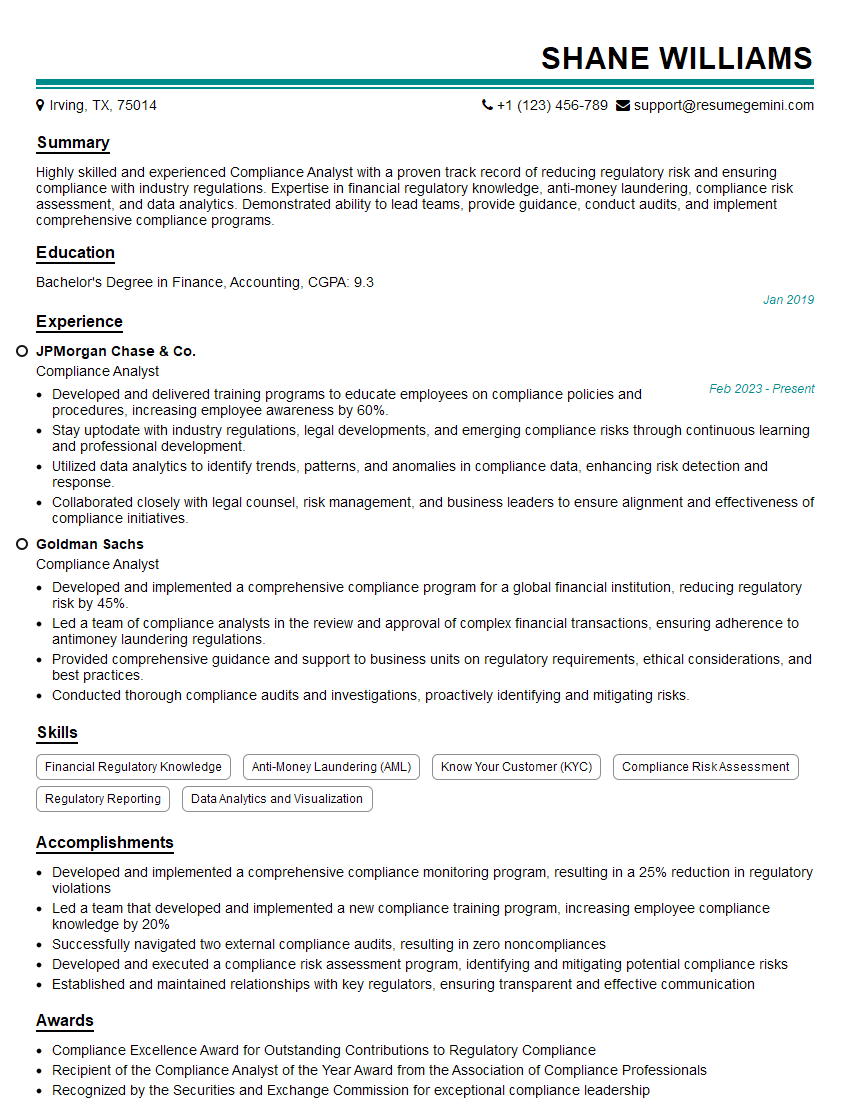
Compliance Analyst Resume Sample
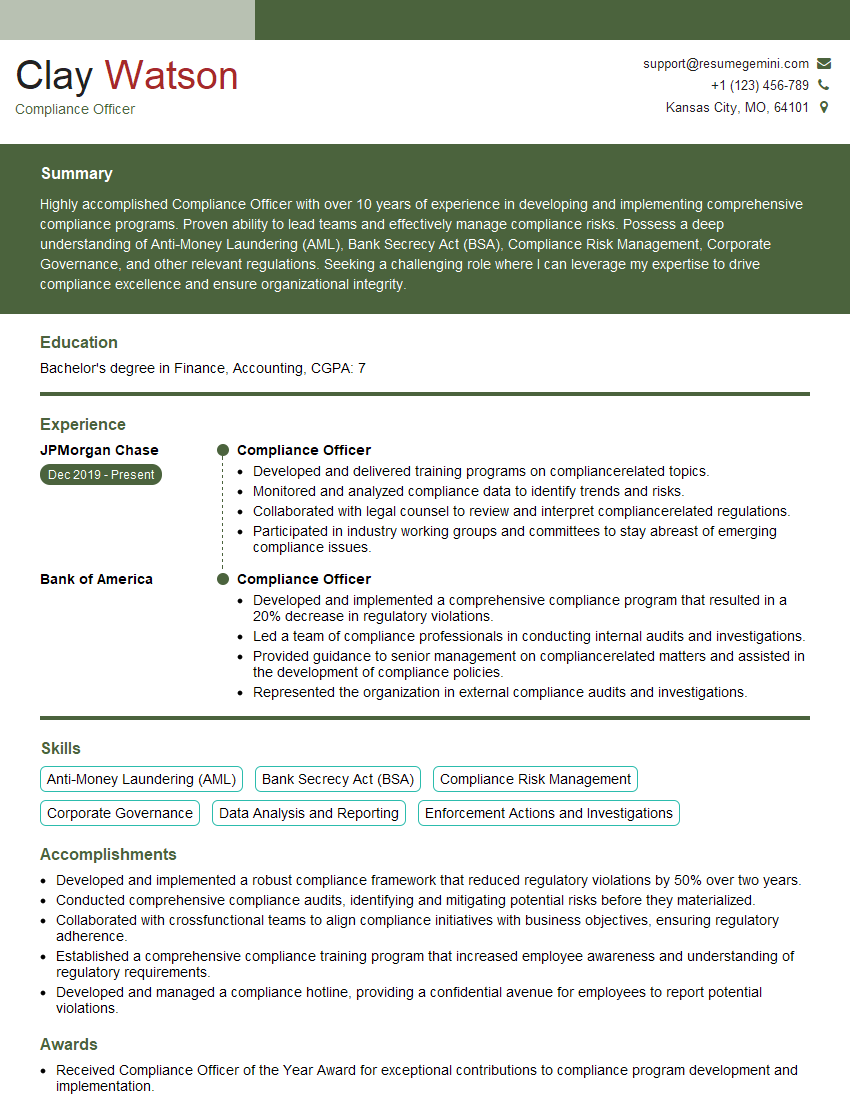
Compliance Officer Resume Sample
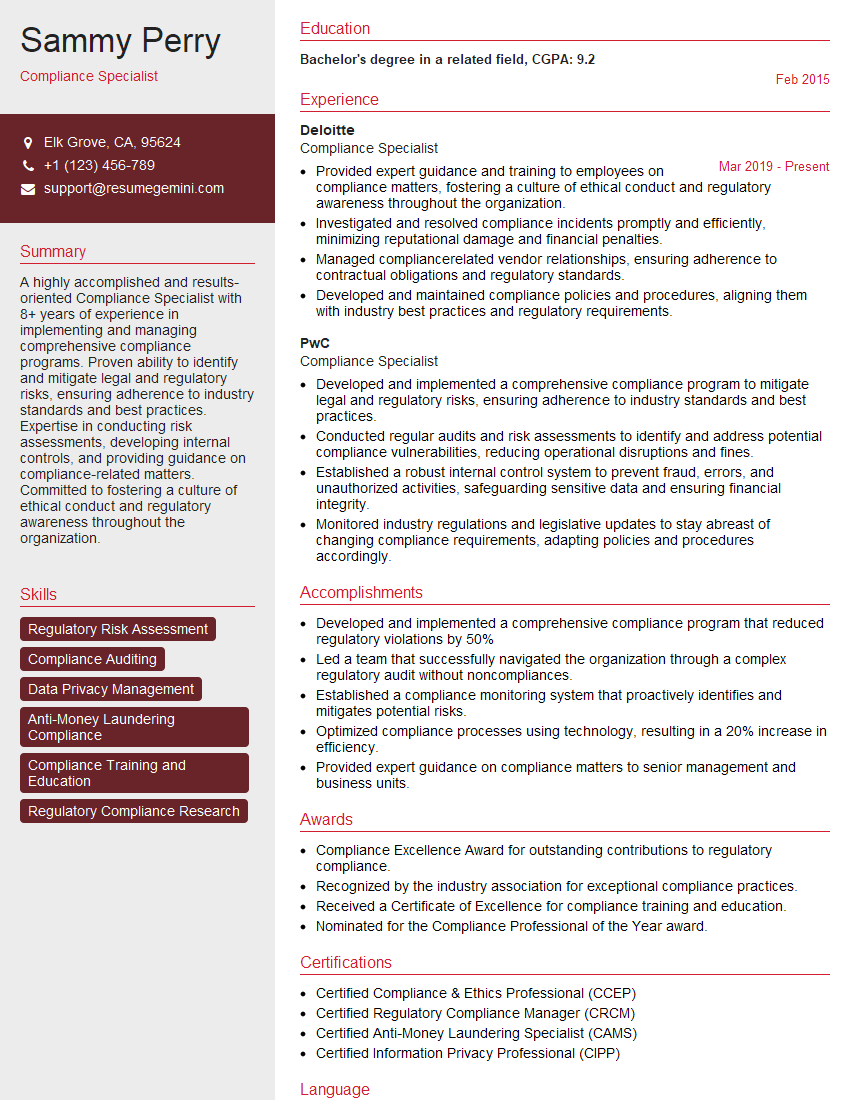
Compliance Specialist Resume Sample
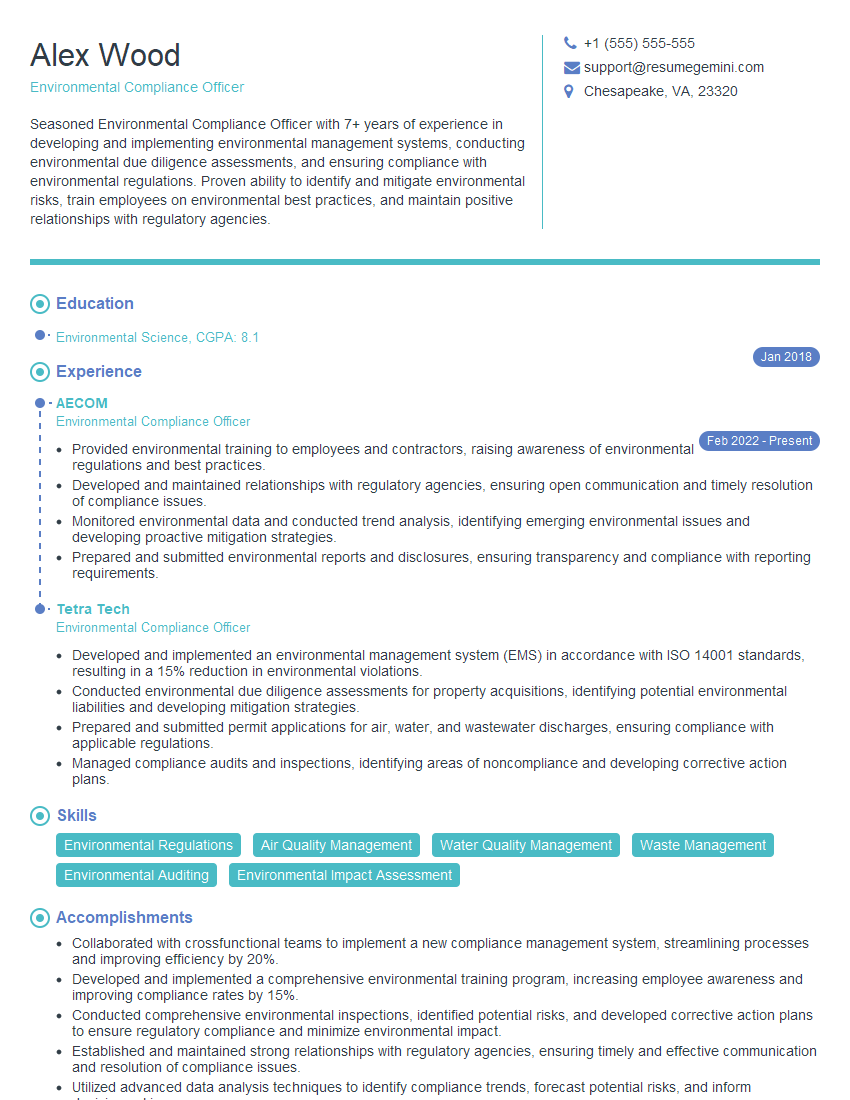
Environmental Compliance Officer Resume Sample
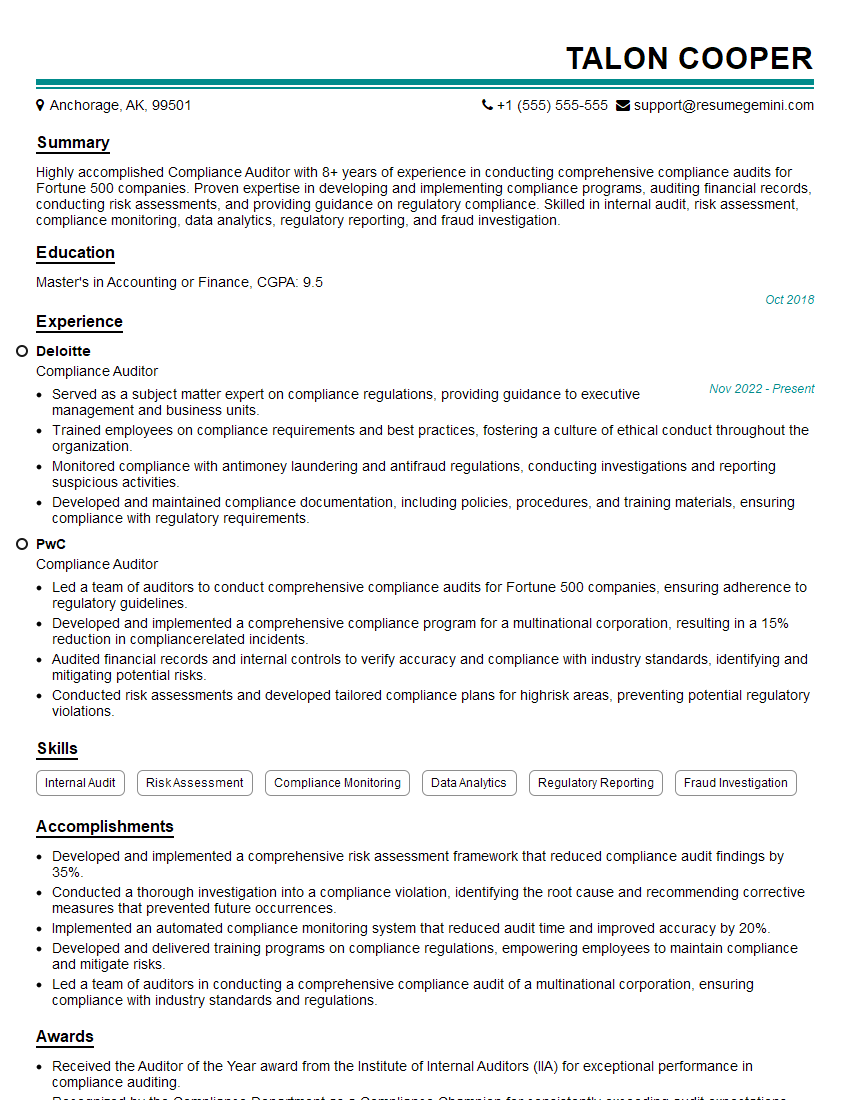
Compliance Auditor Resume Sample
Explore more articles
Users Rating of Our Blogs
Share Your Experience
We value your feedback! Please rate our content and share your thoughts (optional).
What Readers Say About Our Blog
Really detailed insights and content, thank you for writing this detailed article.
IT gave me an insight and words to use and be able to think of examples