Every successful interview starts with knowing what to expect. In this blog, we’ll take you through the top Restoration of Paper interview questions, breaking them down with expert tips to help you deliver impactful answers. Step into your next interview fully prepared and ready to succeed.
Questions Asked in Restoration of Paper Interview
Q 1. What are the different types of paper deterioration you’ve encountered?
Paper deterioration is a complex process, often a combination of factors. I’ve encountered a wide range, including:
- Acid hydrolysis: This is a common culprit, where the paper’s cellulose fibers break down due to acidic components. Think of it like a slow, internal decay. I’ve seen this manifested in brittle, weak papers, often yellowed and darkened.
- Oxidation: Exposure to air and light causes oxidation, leading to fading, discoloration, and weakening of fibers. A prime example is the fading of inks and watercolors in older documents.
- Biological degradation: Mold, insects, and other organisms can severely damage paper. I once worked on a collection where insect infestation had created significant holes and weakened areas.
- Physical damage: Tears, creases, stains, and water damage are all common physical issues. Handling and storage play a crucial role here.
- Light damage: Ultraviolet (UV) radiation, a component of sunlight, breaks down cellulose and weakens paper fibers. This leads to fading and embrittlement. I often see this in maps and photographs.
Understanding these types of deterioration is key to selecting the appropriate conservation strategies.
Q 2. Explain the process of assessing damage to a paper artifact.
Assessing damage requires a meticulous approach. I begin with a visual inspection, noting the type and extent of damage. This includes examining:
- Overall condition: Brittle edges? Tears? Staining? Foxing (small brown spots)?
- Fiber structure: Are the fibers strong and flexible, or weak and brittle?
- Ink and media: Are the inks or paints faded, cracked, or flaking? Are they soluble in water?
- Presence of mold or insects: Are there signs of biological infestation?
Then, I use tools like a microscope to assess microscopic damage and a pH meter to determine the paper’s acidity. Detailed documentation, including photography and written notes, forms the basis of my treatment plan. For valuable artifacts, I always consult with colleagues and specialists for a second opinion before beginning any work.
Q 3. Describe your experience with various paper cleaning techniques.
Paper cleaning methods are chosen based on the type of soiling and the paper’s condition. My experience spans a variety of techniques:
- Dry cleaning: This involves using soft brushes, erasers, or vacuum suction to remove loose surface dirt. It’s gentle and suitable for delicate papers.
- Wet cleaning: More aggressive, this involves using water (often deionized) or specialized solutions to gently remove stains. The choice of solution depends on the type of stain and the paper’s composition. This requires precise control to avoid further damage.
- Gel cleaning: A specialized gel is applied to the surface to absorb and lift dirt. This is particularly useful for removing stains from delicate areas.
For example, I successfully removed decades of accumulated grime from a nineteenth-century letter using a combination of dry brushing and a carefully applied aqueous cleaning solution. The key is to always test any cleaning solution on an inconspicuous area first.
Q 4. What are the different types of adhesives used in paper restoration?
The choice of adhesive is crucial, as it must be reversible and cause minimal damage. Common adhesives used in paper conservation include:
- Wheat starch paste: A traditional and widely used adhesive, it’s relatively weak and reversible.
- Methyl cellulose paste: This offers good strength and reversibility.
- Japanese tissue paper with wheat starch paste: Often used as a support for weak areas.
- Polyvinyl acetate (PVAc) emulsion: Used sparingly and only on non-archival documents.
The selection depends on the specific needs of the repair and the permanence required. Archival materials always demand reversible adhesives.
Q 5. How do you choose the appropriate adhesive for a particular repair?
Selecting the right adhesive is paramount. It’s a delicate balance between strength and reversibility. Factors I consider include:
- Type of paper: The fragility and age of the paper dictate the strength required.
- Type of damage: A small tear needs a less aggressive adhesive than a large loss.
- Ink and media: The adhesive mustn’t react with the inks or paints.
- Reversibility: The adhesive should ideally be removable without damaging the paper.
For instance, a small tear in a delicate watercolor painting would call for a very weak wheat starch paste. Conversely, a larger tear in a more robust document might require a methyl cellulose paste. The goal is always minimal intervention, prioritizing the long-term preservation of the artifact.
Q 6. What are the common methods for repairing tears in paper?
Repairing tears involves careful mending to preserve the integrity of the artifact. Common methods include:
- Patching with Japanese tissue: This involves adhering a thin, strong piece of Japanese tissue paper over the tear using a suitable adhesive. The tissue supports the damaged area without being overly intrusive.
- Mend with paper fibers: Similar to patching, but using very thin strips of paper matching the original to fill small gaps in the tear.
- Dry-mounting: This method is usually less preferable for archival materials and should only be employed in certain situations.
Each method demands precision and patience. The goal is a repair that is both effective and visually unobtrusive. Sometimes, simply supporting the tear from behind with a backing tissue offers sufficient stability, minimizing intervention.
Q 7. Explain the process of inpainting on paper.
Inpainting is the art of filling losses in artwork using pigments to match the surrounding areas. It’s a highly skilled technique used only when absolutely necessary and should always be reversible. I’ve found that:
- Careful color matching is paramount: The inpainting should blend seamlessly with the surrounding area, avoiding a noticeable patch.
- Watercolor is frequently used: Due to its reversibility and ease of blending.
- Documentation is crucial: Every inpainting should be carefully documented, including the pigments used and the areas treated.
The process involves mixing pigments to create a close approximation of the lost color. The paint is then applied in thin layers, allowing each layer to dry before the next. The goal is not to replicate the original perfectly but to create a sensitive visual bridge to restore the aesthetic balance of the work.
Q 8. How do you handle the deacidification of paper?
Deacidification is a crucial step in paper restoration, aiming to neutralize the acids that cause paper degradation over time. These acids, often formed from the paper-making process itself or environmental factors, lead to embrittlement and discoloration. The most common method is alkaline buffering, where a weak alkaline substance, such as calcium bicarbonate or magnesium oxide, is introduced into the paper. This neutralizes the acids without significantly altering the paper’s structure.
The process can be applied through various methods: vapour phase deacidification (using a gaseous alkaline agent in a sealed chamber), liquid immersion deacidification (submerging the paper in an alkaline bath), or surface application (brushing or spraying an alkaline solution). The choice depends on the paper’s condition, size, and fragility. For instance, fragile documents might benefit from vapor phase, while more robust items could tolerate liquid immersion. Each method requires precise control of parameters like temperature, humidity, and concentration to avoid damaging the paper. Careful monitoring and testing are essential to ensure the deacidification is effective without causing unintended consequences.
For example, I once worked on a collection of 18th-century maps that were severely brittle. Vapor phase deacidification was chosen due to their fragility. Post-treatment, the maps showed significantly improved flexibility and reduced brittleness, extending their lifespan considerably.
Q 9. What are the ethical considerations involved in paper restoration?
Ethical considerations in paper restoration are paramount. The core principle is minimal intervention – only undertaking treatments necessary to stabilize the document and preserve its integrity. We must prioritize the long-term preservation of the artifact over short-term cosmetic enhancements.
This includes:
- Transparency: Fully documenting the treatment process and materials used. This allows future conservators to understand the work done and make informed decisions.
- Reversibility: Preferring treatments that can be reversed or modified if necessary, without damaging the artifact further. This avoids locking future generations into irreversible decisions.
- Respect for originality: Minimizing alterations to the paper’s original appearance. Repair should focus on stabilizing the item rather than altering it cosmetically.
- Material selection: Using archival-quality materials that won’t themselves cause damage in the future. The materials used must be tested and verified to be inert and stable.
- Avoiding over-restoration: Resisting the temptation to ‘over-restore’ and return the item to a condition that never existed. Authenticity and the preservation of existing marks and history are paramount.
For example, I refused a request to ‘clean’ a water-stained letter completely because doing so would have erased valuable information about the water damage’s history. Instead, I focused on stabilizing the stains to prevent further deterioration.
Q 10. Describe your experience with Japanese tissue repair.
Japanese tissue repair is a delicate and highly skilled technique used to mend tears and losses in paper. It involves using very thin, strong, and translucent Japanese tissue (kozo paper) to repair damaged areas. The tissue is carefully adhered using a wheat starch paste or other suitable adhesive. The process requires great dexterity and patience, as the goal is to create an almost invisible repair, maintaining the paper’s original aesthetic as much as possible.
My experience includes extensive work using this technique. For example, I repaired a fragile 17th-century manuscript with numerous small tears. The Japanese tissue matched the original paper’s color and texture remarkably well. Once repaired and dried, the mended areas were virtually undetectable, ensuring that the historical value and aesthetic appearance of the document were preserved.
The key to success lies in proper preparation of the tissue and adhesive, careful application using specialized tools, and meticulous attention to detail during the drying phase. I routinely use specialized Japanese brushes and scalpels to achieve the most precise and invisible mend possible.
Q 11. What are the limitations of different paper repair methods?
Each paper repair method has limitations. For example, while Japanese tissue repair is excellent for small tears, it’s not suitable for large losses or heavily degraded areas. Similarly, deacidification doesn’t address physical damage like tears or holes; it primarily prevents further deterioration.
Here’s a breakdown:
- Japanese Tissue Repair: Limited by the size of the tear; inappropriate for large losses or significant losses of material.
- Deacidification: Doesn’t repair physical damage; can be challenging with certain paper types or inks.
- Lamination: While protecting fragile documents, it can obscure details and alter the aesthetic; not always reversible.
- Patching: Can be visually intrusive if not skillfully done; requires careful selection of patch material.
The choice of method always depends on the extent and nature of the damage, the paper’s type and condition, and the desired outcome. A holistic assessment is crucial for determining the most effective and appropriate approach for each unique situation. Sometimes, a combination of techniques is needed for optimal results.
Q 12. How do you document the restoration process?
Documentation is critical in paper restoration. It provides a permanent record of the treatment undertaken, allowing future conservators to understand the interventions, materials used, and the reasons behind the choices made. This is crucial for the long-term preservation of the artifact.
My documentation process includes:
- Initial assessment: A detailed report on the paper’s condition including photographs, measurements, and notes on the type of damage.
- Treatment plan: A step-by-step outline of the planned interventions, with justifications for each step.
- Treatment records: Meticulous notes documenting every step of the restoration process, including materials used, quantities, and any observations made during the treatment.
- Photography: Detailed before-and-after photography at each stage, showing the condition of the paper before and after treatment.
- Archival storage: The complete documentation is stored securely and accessibly.
I utilize a standardized system that ensures all necessary information is captured clearly and concisely. Digital imaging software plays a crucial role, allowing for high-resolution photography and easy sharing of the records.
Q 13. Explain your understanding of archival storage and handling practices.
Archival storage and handling practices are fundamental to the long-term preservation of paper artifacts. The goal is to minimize environmental factors that can cause further degradation.
Key elements include:
- Controlled environment: Maintaining a stable temperature and relative humidity (RH) to prevent fluctuations that cause expansion and contraction of the paper.
- Proper storage containers: Using acid-free boxes, folders, and enclosures to protect the paper from light, dust, and pollutants.
- Limited light exposure: Minimizing exposure to ultraviolet (UV) and visible light, which can cause fading and embrittlement. Using UV-filtering glazing on display cases is essential.
- Pest control: Implementing measures to prevent insect infestation, as insects can cause significant damage to paper.
- Careful handling: Training staff in proper handling techniques to minimize stress and damage to fragile materials. Using clean, cotton gloves is crucial.
For example, I’ve overseen the development of a climate-controlled storage facility for a historical archive, incorporating all the aspects mentioned above. This ensured the long-term safety and preservation of thousands of invaluable documents.
Q 14. What are the challenges of restoring water-damaged paper?
Restoring water-damaged paper presents unique challenges because water can cause various types of damage, depending on the duration and extent of exposure. Mold growth is a common concern, and the water itself can cause severe weakening, discoloration, and distortion of the paper’s fibers.
Key challenges include:
- Mold remediation: Safely removing mold without damaging the paper, which requires specialized techniques and often involves the use of fungicides. Proper ventilation and containment are essential.
- Drying: Slowly and carefully drying the paper to prevent further damage, often using freeze-drying or controlled air drying techniques. Rapid drying can cause irreversible damage.
- Warping and distortion: Correcting the warping and distortion that often occurs after water damage, which can involve complex techniques such as humidification and flattening.
- Ink run-off and discoloration: Addressing ink run-off and discoloration, which may require specialized cleaning techniques.
- Loss of material: Dealing with potential loss of material if the damage is extensive. This may require techniques such as filling losses or creating supportive structures.
I once worked on a collection of waterlogged photographs that had suffered severe mold growth. The restoration involved careful mold remediation, slow freeze-drying, and finally, painstaking consolidation of the now-fragile emulsion layers using special adhesives and supports. The process was lengthy and required a multi-step approach; however, the resulting preservation was well worth the effort.
Q 15. How do you address mold or mildew contamination on paper artifacts?
Mold and mildew contamination on paper artifacts is a serious threat, leading to irreversible damage if not addressed promptly and correctly. The first step is always isolation – removing the affected item from the collection to prevent further spread. This involves careful handling with gloves and respiratory protection, as mold spores can be harmful. Next, the type and extent of the contamination must be assessed. A gentle brushing with a soft brush can sometimes remove superficial mold. However, for significant infestation, professional intervention is crucial.
Depending on the severity, several approaches may be used. Freezing can kill mold spores, but it’s important to carefully monitor temperature fluctuations to prevent further damage to the paper itself. Vacuuming with a HEPA filter vacuum can also help remove spores, but it must be performed carefully to avoid damaging the artifact. For deeply embedded mold, fumigation with a suitable biocide might be necessary, which requires specialized knowledge and equipment to avoid damaging the paper. Post-treatment, careful monitoring and potential re-fumigation or additional cleaning might be required.
For example, I once treated a collection of 18th-century maps severely affected by mildew. Initial isolation, followed by careful HEPA vacuuming, and ultimately, a controlled ethyl alcohol fumigation, successfully preserved these historically valuable items. It was a multi-stage process that required careful monitoring and several weeks of post-treatment observation. Each step was meticulously documented.
Career Expert Tips:
- Ace those interviews! Prepare effectively by reviewing the Top 50 Most Common Interview Questions on ResumeGemini.
- Navigate your job search with confidence! Explore a wide range of Career Tips on ResumeGemini. Learn about common challenges and recommendations to overcome them.
- Craft the perfect resume! Master the Art of Resume Writing with ResumeGemini’s guide. Showcase your unique qualifications and achievements effectively.
- Don’t miss out on holiday savings! Build your dream resume with ResumeGemini’s ATS optimized templates.
Q 16. What is your experience with the conservation of photographs?
My experience with photograph conservation encompasses a wide range of processes and materials. I’ve worked with various photographic processes, including albumen prints, gelatin silver prints, cyanotypes, and daguerreotypes, each requiring unique approaches. The handling of photographs demands the utmost care due to their sensitivity to light, humidity, and physical stress. I’ve developed expertise in assessing the condition of photographs, identifying deterioration factors (e.g., fading, cracking, staining), and selecting appropriate interventions.
My work includes techniques like surface cleaning using soft brushes and specialized erasers to remove dust and grime; the careful repair of tears and losses using Japanese tissue and wheat starch paste; the flattening of curled or warped photographs; and the encapsulation of fragile images to protect them from environmental factors. I’ve also employed more advanced techniques such as the removal of adhesive residues using solvents and the treatment of mould and foxing using specialized chemicals. Documenting each step with detailed notes and photography is essential for maintaining a clear record of treatment.
For instance, I once restored a collection of fragile glass plate negatives, which required meticulous cleaning to remove accumulated debris without causing further damage to the glass. This was followed by careful support to prevent cracks and breakage.
Q 17. What are the best practices for handling fragile documents?
Handling fragile documents requires extreme caution and adherence to best practices. The golden rule is to always support the document fully at all times, never holding it by its edges. Instead, use archival-quality cotton gloves and support the item from underneath with a flat surface. Avoid unnecessary handling; every touch increases the risk of damage.
Storage is equally critical. Documents should be kept in acid-free enclosures (boxes or folders), within a climate-controlled environment with low humidity and temperature, and away from direct sunlight. Never use paper clips, staples, or adhesive tape, as these can cause damage. Instead, use archival-quality materials such as polyester film enclosures or photo corners for support.
- Always wash hands thoroughly before handling.
- Use archival-quality gloves.
- Avoid touching the document’s surface as much as possible.
- Support the document from beneath with archival materials.
- Store in acid-free boxes or folders in a climate-controlled environment.
Imagine handling a delicate piece of parchment – the slightest crease could create irreversible damage. Careful handling is the foundation of successful preservation.
Q 18. Describe your experience with the use of specialized tools in paper restoration.
My experience with specialized tools is extensive, ranging from basic tools for cleaning and repair to sophisticated equipment for environmental monitoring. Simple tools include soft brushes, archival-quality erasers, and scalpels for precise trimming. I regularly use various types of archival adhesives and repair tissues, selected according to the type of paper and the nature of the damage.
More advanced tools I’ve utilized include humidification chambers for relaxing brittle documents, specialized vacuum systems for cleaning delicate surfaces, and microscopes for detailed condition assessments. I am also proficient in using imaging software to document damage and track restoration progress. For instance, I frequently employ a digital microscope to assess the extent of foxing or other types of staining. Understanding how each tool works and its potential impact on the artifact is crucial for its proper and safe use. Incorrect usage can lead to irreversible harm.
For example, using a specific type of vacuum with a HEPA filter proved vital in carefully removing mold spores from a collection of water-damaged letters without compromising the ink. Choosing the right tool, in that context, was a key factor in successful preservation.
Q 19. How do you determine the appropriate level of intervention for a damaged document?
Determining the appropriate level of intervention for a damaged document requires a careful assessment of several factors, including the document’s age, material, condition, and historical significance. This involves a thorough examination of the physical damage, identifying the causes of deterioration, and predicting the potential risks and benefits of various treatments. A conservative approach is usually preferred, prioritizing the preservation of the original material over aggressive restoration techniques.
The assessment might involve visual inspection, using magnification tools to examine the fibers and ink, and often involves non-destructive tests to ascertain the composition and identify any hidden damage. Only after a comprehensive analysis can an appropriate treatment plan be developed. In some cases, minimal intervention, such as careful cleaning or encapsulation, may be sufficient. In other cases, more extensive repairs may be necessary.
For example, a severely brittle document might require only careful support and environmental control; whereas a document with minor tears might benefit from a simple repair using archival tissue and adhesive. The goal is always to ensure the longevity of the item while preserving its authenticity and historical integrity.
Q 20. How do you prioritize repair work for a large collection of papers?
Prioritizing repair work for a large collection involves a systematic approach, often beginning with a thorough survey of the entire collection to identify the most severely damaged items. This prioritization usually involves a combination of factors: the condition of the item, its historical significance, and the potential for loss or deterioration if left untreated. Items facing imminent damage, such as those suffering from active mold growth or severe water damage, naturally take precedence.
A triage system can be incredibly useful. I’ve developed and used several such systems, assigning levels of urgency and treatment based on a pre-defined scoring system that takes into account the factors mentioned above. Then, items are prioritized based on their score. The most critically damaged items (highest score) are addressed first. Regular re-evaluation of the collection during the restoration process may be necessary to adjust priorities, based on new findings.
This systematic approach ensures that the most vulnerable documents are saved first while keeping a balanced overview of the entire collection. It’s akin to a medical triage system in a hospital – those with the most critical needs are treated first.
Q 21. What are the different types of paper used historically?
Historically, a wide variety of materials have been used to create paper, leading to significant differences in paper properties and durability. The materials used have evolved over centuries, reflecting both technological advancements and the availability of resources.
Early papers, such as papyrus and parchment, were not technically paper in the modern sense. Papyrus was made from the papyrus plant, while parchment was made from animal skins. True paper, made from plant fibers, appeared in China centuries ago and spread to other parts of the world, employing different fibers based on regional availability.
- Rags: Linen and cotton rags were widely used in Europe, producing strong and durable papers. These were often preferred for important documents.
- Hemp: Hemp fibers were also used, providing a strong and relatively long-lasting paper.
- Esparto Grass and Straw: Cheaper materials like esparto grass and straw were utilized to produce lower quality paper for everyday use.
- Wood Pulp: The invention of wood pulp processing significantly changed paper production, making it more widely accessible but also introducing new challenges in terms of acidity and longevity. Early wood pulp papers tended to be acidic, leading to faster deterioration.
Understanding the different types of paper and their inherent properties is critical in paper conservation, as different materials will require different treatment techniques.
Q 22. How do you identify the age and origin of a paper artifact?
Identifying the age and origin of a paper artifact is a detective process, combining scientific analysis with historical research. We don’t just look at the paper itself, but consider the entire context.
Fiber analysis: Microscopic examination reveals the type of fibers used (e.g., linen, cotton, hemp, esparto). The type and processing of the fibers can provide clues about the time period and geographical region. For instance, the presence of specific wood pulp characteristics can help date a document to the late 19th or early 20th century.
Watermarks: Many historical papers bear watermarks – faint designs impressed into the paper during its manufacture. These are often unique to specific mills and time periods, serving as a crucial identifier. Extensive watermark catalogues exist, allowing for precise dating and origin tracing.
Ink analysis: The type of ink used can indicate the age of the document. For example, iron gall ink was commonly used in Europe until the 19th century, while aniline dyes emerged later. Chromatographic analysis can help identify the ink’s composition.
Papermaking techniques: Examining the paper’s formation, thickness, and surface texture can provide clues about its production method, which often evolved over time. Handmade paper, for instance, often exhibits irregularities not found in machine-made paper.
Archival research: Historical records, such as mill records or documents mentioning the paper’s use, can corroborate findings from scientific analysis. A careful study of the document’s script, language, and style can also provide important clues.
For example, I once identified a seemingly ordinary letter as being from the early 18th century based on the presence of a specific watermark, the type of linen fibers, and the characteristic feathering of the iron gall ink. This detailed analysis helped to establish its historical significance.
Q 23. Describe your experience with different types of mounting techniques.
Mounting techniques are crucial for providing support to fragile paper artifacts while minimizing damage. The choice of method depends on the paper’s condition, size, and the desired level of reversibility.
Hinge mounting: This involves attaching the paper to a support using small, acid-free Japanese tissue hinges. It’s a minimally invasive technique suitable for smaller, less fragile items. The hinges are applied only at the edges, allowing for future removal. I frequently use this for delicate maps or drawings.
Dry mounting: A heat-activated adhesive is used to bond the paper to a backing board. This provides a more stable support but is less reversible and carries a higher risk of damage if not done precisely. I generally avoid this technique unless absolutely necessary due to the potential for heat damage.
Lamination: A protective layer of thermoplastic film is applied to the surface to increase its structural stability. This offers excellent protection but reduces visibility and may compromise the aesthetics of the original. It is usually reserved for heavily damaged or particularly important items. I’ve used lamination successfully on particularly fragile maps.
Floating mounting: The artifact is secured within a protective enclosure (e.g., a frame with UV-filtering glass) without direct contact with the mount board, allowing for air circulation and preventing pressure damage. This is often the preferred approach for delicate, large-format items. Many maps and plans are best suited for this type of mounting.
Selecting the right technique often requires a careful assessment of the item’s condition, considering factors such as its fragility, size, and the level of support needed. Each project necessitates a different approach based on these factors.
Q 24. What safety precautions do you take when working with chemicals in paper restoration?
Safety is paramount when working with chemicals in paper restoration. The materials used can be harmful if not handled correctly. My safety protocols are rigorous and always prioritize the well-being of myself and the environment.
Personal Protective Equipment (PPE): I always wear appropriate PPE, including nitrile gloves, eye protection, and a respirator when handling potentially harmful substances. The type of PPE varies depending on the specific chemicals used.
Ventilation: Adequate ventilation is crucial to minimize exposure to fumes. I always work in a well-ventilated area or use a fume hood when dealing with volatile chemicals.
Chemical handling and disposal: I follow strict protocols for handling, storing, and disposing of chemicals, adhering to all relevant safety data sheets (SDS) and local regulations. Waste is carefully segregated and disposed of properly.
Emergency procedures: I have a well-defined emergency plan in place, including procedures for spills, chemical exposure, and other incidents. This includes readily available eyewash stations and spill kits.
Regular training and updates: I continually update my knowledge on chemical safety through training and staying abreast of best practices. This is crucial in a field where new materials and techniques are constantly emerging.
For example, when using deacidification solutions, I always work under a fume hood with proper ventilation and wear a respirator to avoid inhaling any potentially harmful vapors. This multi-layered approach to safety helps ensure a safe working environment.
Q 25. Explain your experience with the conservation of maps or plans.
Maps and plans present unique challenges due to their size, often delicate condition, and the importance of preserving their spatial integrity. My experience encompasses various aspects of their conservation, from repair to mounting.
Repair of tears and losses: I’ve repaired numerous tears and losses using techniques like tissue mending, infilling, and patching with compatible materials. The aim is always to be as minimally invasive as possible, preserving as much of the original as feasible.
Cleaning and stabilization: Cleaning fragile maps requires careful consideration, often employing dry cleaning techniques or very dilute solutions to remove surface dirt and grime. Stabilization may involve consolidating weak areas with appropriate adhesives to prevent further deterioration.
Flattening and mounting: Large-format maps often require specialized techniques to flatten and mount them without causing further damage. This may involve the use of weights, humidification, or specialized mounting techniques designed to minimize stress on the map’s fibers.
Preservation of color: The pigments used in maps can be unstable, so careful selection of storage and display conditions is crucial for color preservation, including UV filtering.
For instance, I recently worked on a 19th-century city plan that had suffered significant water damage and foxing (brown spots). The project involved careful cleaning, repair of tears, and finally, floating mounting to allow for air circulation and prevent further degradation, resulting in enhanced visibility and preservation.
Q 26. How do you manage a conservation project budget and timeline?
Managing a conservation project’s budget and timeline involves careful planning and meticulous tracking. It’s about balancing the need for quality preservation with the practical constraints of time and resources.
Detailed budget preparation: Before commencing any project, I create a detailed budget outlining all anticipated costs, including materials, labor, specialized equipment, and any necessary outsourcing.
Timeline development: A realistic timeline is crucial. It accounts for each stage of the process, incorporating potential delays and allowing for flexibility. This timeline is shared with the client and updated regularly.
Regular monitoring and reporting: Throughout the project, I monitor expenses and track progress against the budget and timeline, providing regular updates to the client. Any unexpected issues or cost overruns are addressed promptly and transparently.
Prioritization of tasks: If budgetary or time constraints necessitate prioritization, I focus on the treatments that offer the most effective preservation for the artifact’s long-term well-being. For instance, stabilization of deteriorated areas often precedes cleaning or other less critical interventions.
For a large-scale project involving multiple artifacts, I often employ project management software to facilitate tracking of costs, tasks, and progress, ensuring transparency and efficiency.
Q 27. Describe your experience with working collaboratively with other conservators or professionals.
Collaboration is essential in paper conservation. I regularly work with a range of professionals, including other conservators, historians, archivists, and scientists.
Shared expertise: Working with other conservators allows for the exchange of knowledge and experience, particularly when dealing with complex or unfamiliar materials or techniques. Different conservators may specialize in various aspects of conservation.
Interdisciplinary approach: Collaboration with historians and archivists is vital for understanding the context and significance of the artifact, informing the conservation treatment and ensuring that interventions align with the item’s historical importance.
Scientific analysis: Working with scientists, such as materials scientists or chemists, provides insights into the chemical composition of materials and potential deterioration mechanisms, informing treatment decisions.
Effective communication: Clear and open communication is crucial for effective collaboration. I actively listen to the input of others, share my expertise, and ensure that everyone is informed of the project’s progress and any significant decisions.
For example, in a recent project involving a collection of waterlogged documents, I collaborated with a chemist to develop a safe and effective deacidification procedure, and with an archivist to understand the historical context and significance of the documents.
Q 28. What are your strategies for professional development in the field of paper conservation?
Professional development is a continuous process in the ever-evolving field of paper conservation. My strategies are multifaceted and aim to keep my skills and knowledge current.
Continuing education courses: I regularly participate in workshops, conferences, and advanced courses offered by leading institutions in paper conservation. These provide opportunities to learn new techniques, materials, and best practices.
Mentorship and networking: I actively seek mentorship from experienced conservators, learning from their experience and insights. Networking with peers at conferences and workshops provides opportunities for collaboration and knowledge exchange.
Research and literature review: I keep abreast of the latest research findings and best practices through regular reading of professional journals and publications. This ensures that I’m using the most effective and up-to-date techniques.
Practical experience and case studies: Continuous hands-on experience is vital. I regularly seek opportunities to work on diverse projects, expanding my skills and knowledge base. Analyzing past case studies helps refine my approaches.
For instance, I recently completed a specialized course on the conservation of water-damaged paper, expanding my expertise in this area. Regularly attending conferences provides exposure to leading-edge research and fosters valuable connections within the field.
Key Topics to Learn for Your Restoration of Paper Interview
- Paper Chemistry and Degradation: Understanding the chemical processes that cause paper deterioration (acid hydrolysis, oxidation, etc.) and their impact on different paper types.
- Cleaning and Washing Techniques: Practical application of various cleaning methods, including surface cleaning, washing, and deacidification, considering the fragility of different artifacts.
- Repair and Consolidation Methods: Knowledge of techniques used to repair tears, losses, and weak areas, including patching, mending, and the use of various adhesives and consolidants.
- Deacidification Procedures: Understanding different deacidification methods (e.g., alkaline buffering, spray deacidification) and their effectiveness in preventing future degradation.
- Lamination and Encapsulation: Practical knowledge of lamination and encapsulation techniques for fragile documents and the selection of appropriate materials.
- Imaging and Documentation: Importance of accurate and detailed documentation before, during, and after treatment, including photography and digital imaging.
- Environmental Controls: Understanding the role of temperature, humidity, and light in preserving paper artifacts and how to maintain optimal storage conditions.
- Ethical Considerations and Best Practices: Understanding ethical guidelines and best practices in the field, including proper handling, storage, and treatment of archival materials.
- Material Identification and Testing: Knowledge of various testing methods to identify paper types, inks, and other materials, aiding in appropriate treatment selection.
- Troubleshooting and Problem Solving: Ability to identify and resolve common challenges encountered during the restoration process, adapting techniques to different situations.
Next Steps
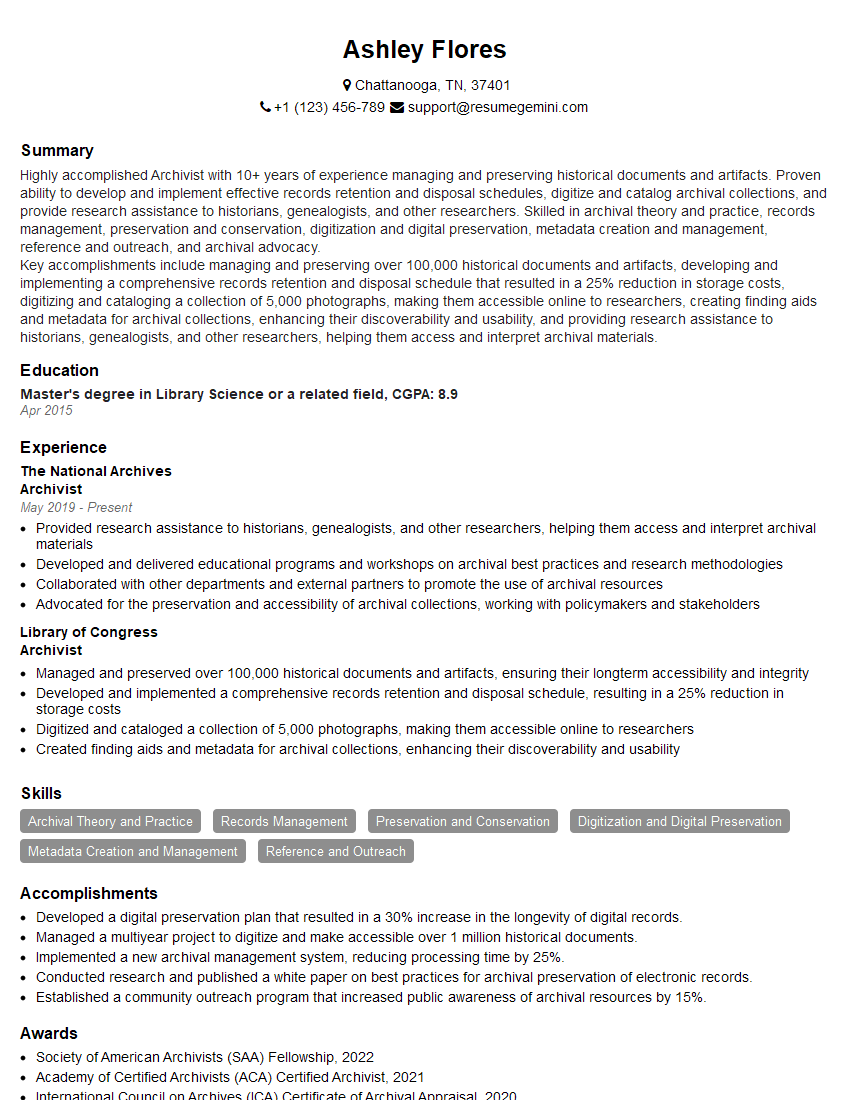
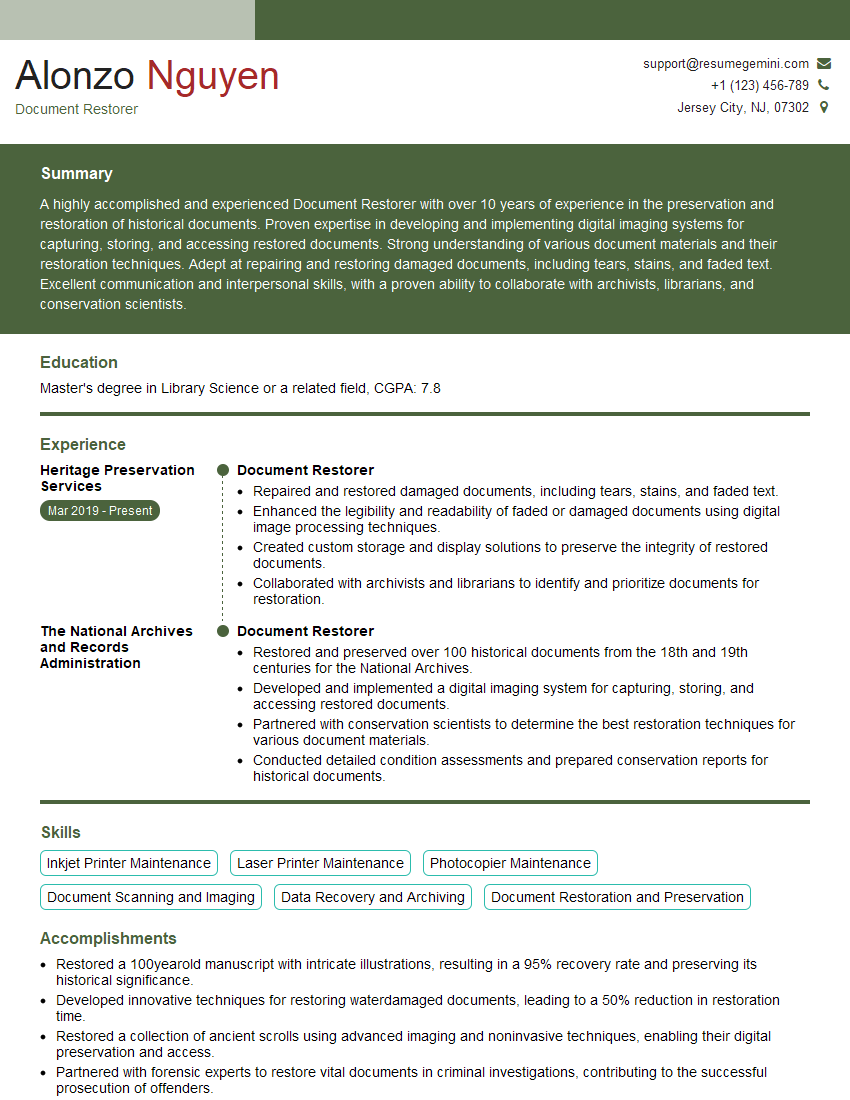
Mastering the art of paper restoration opens doors to a rewarding career in archives, museums, libraries, and private conservation practices. To significantly enhance your job prospects, crafting an ATS-friendly resume is crucial. This ensures your application gets noticed by hiring managers. We highly recommend using ResumeGemini, a trusted resource for building professional and impactful resumes. ResumeGemini provides examples of resumes tailored specifically to the field of paper restoration to help you create a winning application. Take this opportunity to build a resume that showcases your skills and experience effectively!
Explore more articles
Users Rating of Our Blogs
Share Your Experience
We value your feedback! Please rate our content and share your thoughts (optional).
What Readers Say About Our Blog
Really detailed insights and content, thank you for writing this detailed article.
IT gave me an insight and words to use and be able to think of examples