Interviews are opportunities to demonstrate your expertise, and this guide is here to help you shine. Explore the essential Knowledge of Refrigeration Systems interview questions that employers frequently ask, paired with strategies for crafting responses that set you apart from the competition.
Questions Asked in Knowledge of Refrigeration Systems Interview
Q 1. Explain the difference between a vapor-compression refrigeration cycle and an absorption refrigeration cycle.
The vapor-compression and absorption refrigeration cycles both achieve cooling, but they differ significantly in how they accomplish this. Think of it like this: vapor-compression is like a powerful pump, while absorption is more like a gentle sponge.
Vapor-Compression Refrigeration Cycle: This is the most common type, used in household refrigerators and air conditioners. It uses a compressor to increase the pressure and temperature of the refrigerant, forcing it through a cycle of evaporation and condensation. The key components are a compressor, condenser, expansion valve, and evaporator. The compressor is the heart of the system, doing the heavy lifting. The refrigerant changes phase (from liquid to vapor and back) to absorb and release heat.
Absorption Refrigeration Cycle: This cycle uses heat, rather than electricity, to drive the refrigeration process. Instead of a compressor, it uses an absorbent liquid (like lithium bromide) to absorb the refrigerant (like water). This solution is then heated, causing the refrigerant to evaporate and provide cooling. This is often used in applications where heat is readily available, such as solar-powered cooling systems or industrial processes.
- Vapor-Compression: Uses a compressor, more efficient for small-scale cooling.
- Absorption: Uses heat as the energy source, suitable for large-scale or waste heat recovery applications.
In essence, both cycles manipulate the refrigerant’s properties to move heat from a cold space to a warmer space, but they employ different mechanisms to do so.
Q 2. Describe the function of a compressor in a refrigeration system.
The compressor in a refrigeration system is the workhorse, responsible for raising the pressure and temperature of the refrigerant vapor. Imagine it as a pump, but instead of pumping water, it pumps refrigerant. This increased pressure is crucial because it allows the refrigerant to release its absorbed heat in the condenser. Without a functioning compressor, the refrigeration cycle wouldn’t work; the refrigerant wouldn’t change phases effectively, and cooling wouldn’t occur.
Specifically, the compressor does the following:
- Increases pressure: This compresses the low-pressure, low-temperature refrigerant vapor from the evaporator.
- Increases temperature: As a result of compression, the refrigerant’s temperature rises significantly.
- Facilitates condensation: The high-pressure, high-temperature refrigerant vapor is then ready to release its heat in the condenser.
Compressor failures are common problems in refrigeration systems leading to complete system failure. Regular maintenance and choosing the right compressor for the application are crucial.
Q 3. What are the different types of refrigerants and their environmental impact?
Refrigerants are the working fluids in refrigeration systems, responsible for absorbing and releasing heat. However, their environmental impact is a critical consideration. Different refrigerants have different global warming potentials (GWP) and ozone depletion potentials (ODP).
Types of Refrigerants:
- Chlorofluorocarbons (CFCs): These were widely used but are now phased out due to their high ODP, damaging the ozone layer (e.g., R-12). They are rarely used today.
- Hydrochlorofluorocarbons (HCFCs): These have lower ODP than CFCs but still contribute to global warming (e.g., R-22). They are being phased out.
- Hydrofluorocarbons (HFCs): These have zero ODP but high GWP, contributing significantly to climate change (e.g., R-134a). They’re being replaced by more environmentally friendly alternatives.
- Natural Refrigerants: These include ammonia (R-717), carbon dioxide (R-744), propane (R-290), and others. They offer low or zero ODP and GWP, making them more sustainable options.
- Hydrofluoroolefins (HFOs): These are a newer generation of refrigerants with very low GWP, designed to replace HFCs (e.g., R-1234yf).
Environmental Impact: The main environmental concerns are ozone depletion and global warming. CFCs caused significant ozone depletion, while HFCs contribute to global warming. Natural refrigerants and HFOs are generally preferred for their lower environmental impact.
Q 4. Explain the purpose of a condenser in a refrigeration system.
The condenser’s purpose is to reject heat from the high-pressure, high-temperature refrigerant vapor, converting it back into a liquid state. Think of it as a radiator for the refrigerant. The hot, high-pressure refrigerant from the compressor flows into the condenser, where it releases heat to the surrounding environment (usually air or water). This heat rejection causes the refrigerant to condense from a vapor into a high-pressure liquid, ready for the next stage of the cycle.
The efficiency of the condenser is critical for the overall performance of the refrigeration system. A poorly functioning condenser can lead to reduced cooling capacity and higher energy consumption. Regular cleaning and maintenance of the condenser are crucial for optimal performance.
Q 5. How does an expansion valve regulate refrigerant flow?
The expansion valve, also known as a metering device, controls the flow of refrigerant from the high-pressure liquid side to the low-pressure evaporator side of the refrigeration system. It’s like a carefully controlled faucet that regulates the refrigerant’s flow rate. The expansion valve causes a significant pressure drop, resulting in a decrease in the refrigerant’s temperature. This low-temperature, low-pressure liquid refrigerant is then ready to absorb heat from the space being cooled in the evaporator.
Different types of expansion valves exist, including:
- Thermostatic Expansion Valves (TXV): These are self-regulating valves that adjust the refrigerant flow based on the evaporator’s temperature and pressure. They maintain a consistent superheat in the evaporator.
- Capillary Tubes: These are simple, fixed-restriction devices that provide a consistent refrigerant flow rate but lack the adaptability of a TXV.
- Electronic Expansion Valves (EEV): These valves are electronically controlled and offer precise refrigerant flow control, improving efficiency.
The correct selection and proper functioning of the expansion valve are essential for efficient and effective refrigeration.
Q 6. What are the common causes of refrigerant leaks?
Refrigerant leaks can significantly impact the performance and efficiency of a refrigeration system, often leading to a complete system failure. Several factors can contribute to refrigerant leaks:
- Corrosion: Over time, components can corrode, creating small holes or cracks that allow refrigerant to escape.
- Mechanical Damage: Physical damage to lines, fittings, or components during installation, maintenance, or operation.
- Improper Installation: Faulty connections or improperly tightened fittings can lead to leaks.
- Wear and Tear: Components such as seals and gaskets wear out over time, potentially leading to leaks.
- Vibrations: Excessive vibrations can loosen fittings or damage components.
- Freezing: In some cases, freezing can cause cracks in components.
Regular inspection and leak detection are crucial for preventing refrigerant leaks and ensuring the longevity and efficiency of the refrigeration system. Using leak detection equipment and properly trained personnel are essential in identifying and fixing leaks.
Q 7. How do you troubleshoot a refrigeration system with low cooling capacity?
Troubleshooting a refrigeration system with low cooling capacity requires a systematic approach. It’s like diagnosing a patient – you need to check all vital signs. Here’s a step-by-step process:
- Check Refrigerant Charge: The most common cause of low cooling capacity is insufficient refrigerant. Use pressure gauges to check the refrigerant pressure at different points in the cycle. Low pressure indicates a leak or insufficient charge.
- Inspect the Condenser: A dirty or clogged condenser restricts heat transfer, reducing cooling capacity. Clean the condenser fins to improve heat dissipation.
- Examine the Evaporator: Ensure the evaporator is clean and free of obstructions. Ice buildup or frost can restrict airflow and reduce cooling.
- Verify Compressor Function: Check the compressor for proper operation. Listen for unusual noises, and check its amperage draw. A malfunctioning compressor can significantly impact cooling capacity.
- Check Expansion Valve Operation: A restricted or malfunctioning expansion valve can restrict refrigerant flow, reducing cooling capacity. Properly diagnose its operation.
- Inspect for Leaks: Check all components for leaks using a leak detector. Repair any leaks found.
- Examine Airflow: Ensure proper airflow over the condenser and evaporator. Restricted airflow can reduce efficiency.
If the problem persists after these checks, consult with a refrigeration technician for further diagnosis and repair. Troubleshooting involves systematically eliminating potential causes until the root problem is identified.
Q 8. Explain the importance of proper refrigerant charging procedures.
Proper refrigerant charging is crucial for optimal refrigeration system performance and efficiency. Incorrect charging can lead to reduced cooling capacity, increased energy consumption, compressor damage, and even safety hazards. Think of it like adding the right amount of fuel to a car – too little, and it won’t run properly; too much, and it can cause damage.
The process involves carefully measuring and adding the correct amount of refrigerant, ensuring it’s in the liquid phase (unless it’s a specific system designed for other charging methods), and eliminating air and moisture from the system. This often involves using specialized equipment like vacuum pumps and charging scales. Improper charging can lead to a refrigerant shortage, leading to poor cooling, or excessive refrigerant, causing high pressure which stresses the compressor.
- Subcooling: Achieving the correct subcooling (the temperature difference between the liquid refrigerant leaving the condenser and the condensing temperature) is vital for efficient system operation. Too little subcooling suggests insufficient refrigerant, and too much suggests overcharging.
- Superheat: Similarly, the correct superheat (the temperature difference between the suction gas leaving the evaporator and the evaporating temperature) needs to be checked. Low superheat indicates low refrigerant, while high superheat can be due to overcharging or other issues.
Using a pressure-temperature chart and other measuring tools during charging is essential for accuracy and safety.
Q 9. Describe the function of a receiver tank in a refrigeration system.
A receiver tank in a refrigeration system acts as a storage vessel for liquid refrigerant. Imagine it as a reservoir ensuring a constant supply of liquid refrigerant to the metering device (like a capillary tube or expansion valve). It’s typically located in the liquid line between the condenser and the expansion valve.
Its main functions include:
- Storing liquid refrigerant: Provides a buffer of liquid refrigerant to maintain consistent flow to the evaporator, preventing pressure fluctuations.
- Separating liquid and vapor: The receiver is designed to separate any vapor that might be present in the liquid line, ensuring that only liquid refrigerant reaches the expansion valve. This is crucial for proper system operation.
- Providing a space for expansion and contraction: The tank accommodates the changes in refrigerant volume due to temperature fluctuations.
- Facilitating service and maintenance: Access points allow for easy charging and recovery of refrigerant during maintenance.
The size of the receiver tank depends on the system’s capacity and refrigerant type. Without a receiver tank, consistent refrigerant flow to the evaporator is less certain, leading to performance problems.
Q 10. What are the different types of refrigeration system controls?
Refrigeration system controls regulate various aspects of the system to maintain the desired temperature and optimize efficiency. These controls can be broadly classified as:
- Thermostatic Controls: These are simple on/off controls based on temperature sensing. A common example is a simple thermostat in a domestic refrigerator, turning the compressor on and off based on the temperature inside the refrigerator.
- Electronic Controls: These offer more sophisticated control and monitoring capabilities. They use sensors to monitor temperature, pressure, and other parameters and adjust system operation accordingly. These controls are often programmable and include features like defrost cycles and variable speed compressor control.
- Pressure Controls: These monitor the pressure within the system. For instance, a high-pressure cut-out switch protects the compressor from dangerously high pressures.
- Capacity Controls: These allow the refrigeration system to modulate its cooling capacity based on the load. This improves efficiency by only producing the necessary cooling output.
Modern systems often incorporate a combination of these control types for optimal efficiency and reliability. For instance, an electronic controller might use temperature sensors, pressure sensors, and other data to optimize the capacity control and prevent compressor damage.
Q 11. How do you diagnose and repair a faulty compressor?
Diagnosing a faulty compressor involves a systematic approach. It’s important to remember safety precautions when working with refrigeration systems.
- Inspect for visual signs: Check for any external damage, such as dents, loose connections, or leaks. Look for any unusual noises or vibrations.
- Check pressure readings: Use pressure gauges to measure the high-side and low-side pressures. Abnormal readings can indicate problems like refrigerant leaks, restricted flow, or compressor malfunction.
- Verify motor current: Measure the compressor’s motor current using a clamp meter. High current can suggest problems within the compressor motor windings. Low current can indicate motor problems or low refrigerant.
- Listen for unusual sounds: Abnormal noises such as knocking, rattling, or excessive humming might indicate internal damage to the compressor.
- Check the thermal overload protection: If the thermal overload protector has tripped, it indicates an overheating issue. The underlying cause needs to be determined and fixed before restarting the compressor.
Repairing a compressor usually involves replacing the faulty unit with a new one that’s the same type and capacity, or it could be due to a simpler issue that is causing the problem like a blown capacitor, and those components can be changed out individually. Correct refrigerant charging and system diagnostics are essential after compressor replacement to ensure proper operation.
Q 12. Explain the principles of heat transfer in refrigeration systems.
Refrigeration systems rely on the principles of heat transfer to move heat from the refrigerated space to the environment. The process utilizes the refrigerant’s thermodynamic properties.
The key processes are:
- Evaporation: In the evaporator, the low-pressure refrigerant absorbs heat from the refrigerated space, causing it to evaporate from a liquid to a gas. This is endothermic – it absorbs heat.
- Compression: The compressor increases the pressure and temperature of the refrigerant vapor, raising its energy level.
- Condensation: In the condenser, the high-pressure, high-temperature refrigerant gas releases heat to the surrounding environment, condensing back into a liquid. This is exothermic – it releases heat.
- Expansion: Through an expansion valve, the high-pressure liquid refrigerant expands, significantly lowering its pressure and temperature, preparing it for the evaporation cycle. This process absorbs some energy from the liquid itself.
These four processes form a continuous cycle where heat is continuously extracted from the refrigerated space and rejected to the surrounding environment, maintaining the desired low temperature.
Q 13. What are the safety precautions when working with refrigerants?
Working with refrigerants requires strict adherence to safety procedures due to their potential hazards. Some refrigerants are toxic, flammable, or contribute to ozone depletion or global warming. These are crucial safety considerations that should not be taken lightly:
- Proper ventilation: Always work in well-ventilated areas to prevent the buildup of refrigerant vapors, which can cause respiratory problems or even asphyxiation.
- Personal Protective Equipment (PPE): Use appropriate PPE such as safety glasses, gloves, and respiratory protection.
- Refrigerant recovery and recycling: Never vent refrigerant into the atmosphere. Always recover and recycle the refrigerant using appropriate equipment.
- Fire safety: Be aware of the flammability of the refrigerant being used and take necessary precautions. Some refrigerants require special fire suppression systems.
- Leak detection: Use electronic leak detectors to identify and repair any refrigerant leaks promptly.
- Training and certification: Obtain proper training and certification before handling refrigerants.
- Emergency procedures: Understand and practice emergency procedures in case of accidents or leaks.
Compliance with relevant safety regulations and standards is paramount when handling refrigerants.
Q 14. How do you interpret a pressure-temperature chart for refrigerants?
A pressure-temperature (P-T) chart is a crucial tool for refrigeration technicians. It shows the relationship between the pressure and temperature of a specific refrigerant under saturated conditions (where liquid and vapor phases coexist). These charts are specific to each refrigerant. It’s like a map guiding you through the refrigerant’s behavior.
Interpreting the chart involves:
- Locating the refrigerant: Find the specific refrigerant’s chart to ensure you’re using the correct data.
- Finding the saturation curve: The curve separates the liquid and vapor regions. Points on the curve represent the saturation pressure and temperature of the refrigerant.
- Determining the refrigerant’s state: By knowing the pressure and temperature, you can determine whether the refrigerant is in a liquid, vapor, or mixed phase. Points above the curve are superheated vapor, points below are subcooled liquid.
- Checking for superheat and subcooling: Using the measured pressures and temperatures, you can calculate superheat and subcooling to ensure proper refrigerant charge. These values are crucial indicators of the system’s health and efficiency.
The P-T chart is indispensable for diagnosing problems and verifying refrigerant charges during system maintenance and repair.
Q 15. What are the common types of refrigeration system failures?
Refrigeration system failures can stem from various sources, broadly categorized into compressor issues, refrigerant leaks, component malfunctions, and control system problems.
- Compressor failures: These are common and can involve burnt-out motors, seized pistons, or internal valve damage, often indicated by unusual noises or complete system shutdown. Imagine your heart suddenly stopping – that’s the impact a compressor failure has on the cooling cycle.
- Refrigerant leaks: Leaks reduce cooling capacity and can lead to compressor damage due to insufficient lubrication or high operating pressures. Finding the leak is crucial, often requiring specialized leak detection equipment. Think of it like a punctured tire – you lose pressure and the system can’t function properly.
- Component malfunctions: This includes failures in the condenser, evaporator, expansion valve, or capillary tube. A clogged expansion valve, for instance, restricts refrigerant flow and reduces cooling, similar to a partially blocked artery restricting blood flow.
- Control system issues: Problems with the thermostat, pressure switches, or electronic controllers can lead to improper operation or complete system failure. This is like a faulty thermostat in your home – it might not turn the heating or cooling on when needed.
Regular inspection, proper maintenance, and prompt repairs are key to preventing these failures and ensuring the longevity of the refrigeration system. Early detection is critical in minimizing the damage and downtime.
Career Expert Tips:
- Ace those interviews! Prepare effectively by reviewing the Top 50 Most Common Interview Questions on ResumeGemini.
- Navigate your job search with confidence! Explore a wide range of Career Tips on ResumeGemini. Learn about common challenges and recommendations to overcome them.
- Craft the perfect resume! Master the Art of Resume Writing with ResumeGemini’s guide. Showcase your unique qualifications and achievements effectively.
- Don’t miss out on holiday savings! Build your dream resume with ResumeGemini’s ATS optimized templates.
Q 16. Explain the function of a thermal expansion valve (TXV).
The thermal expansion valve (TXV) is a crucial component in refrigeration systems, acting as a metering device to regulate the flow of refrigerant into the evaporator. It precisely controls the refrigerant’s superheat, ensuring optimal evaporator performance and preventing damage.
It operates by sensing the temperature of the refrigerant vapor leaving the evaporator. If the superheat (the temperature difference between the vapor and the evaporator temperature) is too low, the TXV opens further, allowing more refrigerant to flow. Conversely, if the superheat is too high, the TXV restricts the flow. This delicate balance ensures efficient heat absorption in the evaporator without causing liquid refrigerant to enter the compressor (which could lead to serious damage).
Think of a TXV as a smart faucet that automatically adjusts the water flow to maintain a consistent temperature. It prevents both wasteful over-flow and inefficient under-flow.
Q 17. Describe the process of evacuating a refrigeration system.
Evacuating a refrigeration system is a vital step before charging it with refrigerant. This process removes air, moisture, and non-condensables that can contaminate the refrigerant, reduce efficiency, and damage components. Imagine cleaning a delicate watch before using it – you need to remove any dust or debris.
The process typically involves connecting a vacuum pump to the system’s service ports. The pump then draws out the air and other contaminants. The level of vacuum achieved is crucial; a deep vacuum is necessary to remove most moisture. The system’s pressure is closely monitored during the process. A proper evacuation typically takes several hours to ensure thorough removal of contaminants. The system’s temperature, the length of the vacuum cycle, and the desired vacuum level influence the evacuation time.
Failure to properly evacuate the system can lead to decreased efficiency, compressor damage from acid formation (due to moisture), and premature system failure. It’s a critical step for ensuring reliable operation and a long lifespan of the refrigeration system.
Q 18. What are the different types of refrigeration compressors?
Refrigeration compressors are the heart of the system, pumping refrigerant through the cycle. Several types exist, each with its strengths and weaknesses:
- Reciprocating compressors: These are piston-driven compressors, like those found in many household refrigerators. They’re relatively simple and robust but can be noisy and less efficient at higher capacities.
- Rotary compressors: These use a rotating vane or scroll to compress the refrigerant, offering smoother operation and higher efficiency than reciprocating compressors. They’re frequently used in smaller commercial applications.
- Screw compressors: These use two intermeshing helical screws to compress the refrigerant, making them ideal for large-scale applications due to their high capacity and efficiency. You find these in large industrial chillers.
- Centrifugal compressors: These use centrifugal force to compress the refrigerant and are commonly employed in very large industrial refrigeration systems, offering extremely high capacity but requiring more complex controls.
The choice of compressor type depends on factors like capacity, efficiency requirements, noise levels, and cost. Each type has its own advantages and disadvantages making it suitable for particular applications.
Q 19. How do you identify and address a high-pressure condition in a refrigeration system?
A high-pressure condition in a refrigeration system is a serious problem that can lead to component failure. It’s often caused by several factors:
- Low refrigerant charge: This causes the compressor to work harder, leading to elevated pressures. This is like trying to inflate a tire with a small pump; it will take longer and might overheat.
- Restricted condenser airflow: Dirt, debris, or ice buildup on the condenser coil reduces its ability to dissipate heat, increasing pressure. Think of a clogged radiator in a car.
- Liquid refrigerant slugging: Liquid refrigerant entering the compressor can cause dangerously high pressures. This is like pushing water into a pump designed for air.
- Blocked refrigerant lines: Obstructions in the refrigerant lines restrict flow, increasing pressure. This is akin to a water pipe blockage reducing flow.
Addressing a high-pressure condition requires careful diagnosis. Check refrigerant charge, condenser cleanliness, and ensure proper airflow. Investigate for refrigerant flow restrictions. Addressing the root cause is essential; simply reducing pressure without fixing the underlying problem will only lead to recurrence. Never attempt to handle high pressures without proper training and safety equipment.
Q 20. Explain the importance of regular maintenance for refrigeration systems.
Regular maintenance is crucial for the efficient and reliable operation of refrigeration systems. It helps to prevent failures, extend the system’s lifespan, and improve energy efficiency. This is like regular servicing of your car – it helps to keep it running smoothly and prevents costly repairs.
Regular tasks include:
- Inspecting refrigerant levels: Checking for leaks and ensuring proper charge.
- Cleaning condenser coils: Removing dirt and debris to improve heat dissipation.
- Checking compressor operation: Listening for unusual noises and verifying proper oil levels.
- Inspecting other components: Evaluating the condition of expansion valves, filters, and other parts.
- Testing controls: Verifying thermostat settings, pressure switches, and other control elements.
Preventive maintenance avoids costly repairs, reduces downtime, and ensures the system operates at peak performance, saving money and energy in the long run.
Q 21. What are the different types of condensers used in refrigeration systems?
Refrigeration systems utilize various condenser types, each suited for different applications and cooling capacities:
- Air-cooled condensers: These are the most common type, using fans to blow air over the condenser coils to dissipate heat. They are simple, relatively inexpensive, but their efficiency can be affected by ambient temperature.
- Water-cooled condensers: These use water to cool the refrigerant, offering higher efficiency, especially in hot climates. They are commonly used in larger systems where water is readily available.
- Evaporative condensers: These combine air and water cooling to achieve higher efficiency than air-cooled condensers. They are particularly effective in hot and dry climates.
- Remote condensers: These condensers are located away from the refrigeration equipment, allowing for better heat dissipation and noise reduction. This is often employed in commercial or industrial systems to prevent noise pollution in occupied spaces.
The choice of condenser type depends on factors like cooling capacity, climate, available resources (water), and noise restrictions.
Q 22. How do you calculate the cooling capacity of a refrigeration system?
Calculating the cooling capacity of a refrigeration system involves determining the rate at which it can remove heat. This is typically expressed in tons of refrigeration (TR) or kilowatts (kW). A common method uses the refrigerant’s properties and the system’s operating parameters. The fundamental equation involves the refrigerant’s mass flow rate, its enthalpy change during the evaporation process, and conversion factors.
For example, consider a system using R-134a. We need data on refrigerant mass flow rate (m), enthalpy at the evaporator inlet (hin), and enthalpy at the evaporator outlet (hout). The cooling capacity (Q) can be calculated as:
Q = m * (hout - hin)Where:
- Q is the cooling capacity (kW)
- m is the refrigerant mass flow rate (kg/s)
- hout and hin are the enthalpies at the evaporator outlet and inlet (kJ/kg), respectively. These values are obtained from refrigerant property tables or software.
To get the capacity in tons of refrigeration, you divide the kW value by 3.517. Accurate measurement of refrigerant flow and precise enthalpy values are crucial for accurate calculation. Real-world scenarios often involve considering factors such as compressor efficiency, heat losses, and pressure drops within the system, leading to slightly lower actual cooling capacities.
Q 23. Explain the concept of superheat and subcooling in refrigeration systems.
Superheat and subcooling are crucial parameters in refrigeration systems that directly affect efficiency and system performance. They represent the temperature difference between the refrigerant’s actual temperature and its saturation temperature at a given pressure.
Superheat refers to the temperature difference between the refrigerant’s vapor temperature at the evaporator outlet and its saturation temperature at the same pressure. Sufficient superheat is vital because it ensures that only dry saturated vapor enters the compressor. Without sufficient superheat, liquid refrigerant could enter the compressor, leading to damage (slugging). A typical range is 5-10°C, although specific values depend on the system and refrigerant.
Subcooling, conversely, refers to the temperature difference between the refrigerant’s liquid temperature at the condenser outlet and its saturation temperature at the same pressure. Subcooling increases the system’s efficiency by maximizing the amount of heat rejected in the condenser and minimizing flash gas formation at the expansion valve.
Think of it this way: Superheat is like ensuring your car engine only receives vapor (fuel) and no liquid, preventing damage. Subcooling is like ensuring that your car’s cooling system is super-efficient at dissipating heat. Both are critical for optimal performance and longevity of the equipment.
Q 24. Describe your experience with different types of refrigeration systems (e.g., air-cooled, water-cooled).
I have extensive experience with both air-cooled and water-cooled refrigeration systems. Air-cooled systems are simpler and often less expensive, utilizing fans to dissipate heat to the surrounding air. I’ve worked on numerous projects involving small-scale air-cooled systems, such as those found in commercial refrigerators and smaller industrial applications. A key aspect of working with air-cooled systems is ensuring sufficient airflow to avoid overheating. I’ve addressed this by optimizing fan placement, cleaning condenser coils regularly, and implementing preventive maintenance schedules.
Water-cooled systems, on the other hand, offer higher efficiency, especially in high-capacity applications. These systems use water as a heat transfer medium, which is then cooled in a separate cooling tower. I’ve worked on large-scale industrial refrigeration systems, including those used in food processing and manufacturing plants, where water-cooled systems are preferred for their ability to handle significant heat loads efficiently. Maintaining water quality and addressing potential issues such as scaling and corrosion are critical aspects of managing water-cooled systems, a matter which requires careful monitoring and periodic treatment.
Q 25. What are your troubleshooting techniques for common refrigeration system problems?
Troubleshooting refrigeration systems involves a systematic approach. My technique begins with a careful observation of the system’s operating conditions, including pressures, temperatures, and airflow. I then follow a logical process of elimination.
For instance, if the system isn’t cooling properly, I might check the following:
- Compressor operation: Listen for unusual noises, check amperage draw, and verify proper pressure readings.
- Condenser performance: Inspect for dirt buildup, check water flow (if applicable), and verify the condenser fan’s operation.
- Evaporator operation: Verify sufficient airflow, check for frost buildup, and ensure proper refrigerant flow.
- Refrigerant charge: Use a pressure-temperature chart to check for proper refrigerant levels and identify leaks.
- Expansion valve/capillary tube: Check for restrictions or malfunctions.
I utilize specialized tools such as pressure gauges, temperature sensors, and refrigerant leak detectors to diagnose problems accurately. My experience allows me to quickly pinpoint the issue, even in complex systems, and efficiently implement the necessary repairs or adjustments.
Furthermore, documenting every step and measurement is critical. This meticulous record-keeping enables others to understand the issue and the solution, and helps prevent future problems.
Q 26. Describe your experience with different refrigeration control systems (e.g., electronic, pneumatic).
My experience encompasses both electronic and pneumatic refrigeration control systems. Electronic controls, which are increasingly prevalent, offer precise control and monitoring capabilities. I’ve worked with systems using programmable logic controllers (PLCs) to manage complex refrigeration processes, including temperature regulation, defrost cycles, and compressor operation. These systems provide data logging and alarm functionalities, allowing for proactive maintenance and troubleshooting. The ability to program and interface with these controllers is a key part of my skillset.
Pneumatic controls, while less common in new installations, are still found in older systems. I have experience maintaining and troubleshooting these systems, understanding the intricacies of pressure-based control mechanisms and their limitations. I am proficient in diagnosing issues related to air pressure, valve operation, and pressure switches. Though less precise than electronic counterparts, pneumatic controls offer robustness and reliability in certain harsh environments.
Q 27. What is your experience with environmental regulations related to refrigerants?
Environmental regulations regarding refrigerants are a critical consideration in my work. I am well-versed in regulations concerning ozone-depleting substances (ODS) and high global warming potential (GWP) refrigerants. My experience includes working with various refrigerants, such as R-134a, R-410A, and newer low-GWP alternatives like R-32 and R-1234yf. I understand the importance of proper refrigerant handling, recovery, and recycling to minimize environmental impact.
I stay updated on evolving regulations (such as those outlined by the EPA and other relevant bodies) and ensure all my work adheres to the latest standards. This includes proper documentation of refrigerant usage, regular leak checks, and safe disposal or recovery procedures. Selecting environmentally friendly refrigerants is a major consideration when designing or upgrading refrigeration systems. My knowledge ensures compliance and contributes to sustainable practices in the industry.
Key Topics to Learn for Your Refrigeration Systems Interview
Landing your dream job in refrigeration requires a solid understanding of the field. This section outlines key areas to focus on for interview success. Remember, practical application and problem-solving skills are just as important as theoretical knowledge.
- Thermodynamic Principles: Understand the fundamental cycles (e.g., vapor-compression, absorption), and be prepared to discuss concepts like enthalpy, entropy, and the impact of different refrigerants.
- Refrigerant Properties and Handling: Know the properties of various refrigerants (including environmental impact), safe handling procedures, and relevant regulations (e.g., EPA certifications).
- Compressor Types and Operation: Familiarize yourself with different compressor types (reciprocating, screw, centrifugal) and their operating principles, maintenance requirements, and troubleshooting techniques.
- Evaporators and Condensers: Understand the design, function, and performance characteristics of different evaporator and condenser types, and how they contribute to overall system efficiency.
- System Controls and Instrumentation: Be prepared to discuss various control systems (pressure, temperature, etc.), safety devices, and troubleshooting methods for common system malfunctions.
- Troubleshooting and Diagnostics: Develop your ability to identify and diagnose common refrigeration system problems, including leak detection, pressure imbalances, and performance issues. Practice explaining your diagnostic process clearly.
- Energy Efficiency and Sustainability: Understand the importance of energy-efficient refrigeration systems and the role of new technologies and refrigerants in reducing environmental impact.
- Practical Applications: Be ready to discuss real-world applications of refrigeration systems in various industries (e.g., food processing, HVAC, industrial processes).
Next Steps: Unlock Your Career Potential
Mastering refrigeration systems knowledge is crucial for career advancement in this vital field. A strong understanding of these concepts will set you apart from other candidates and open doors to exciting opportunities. To maximize your chances, focus on creating a compelling, ATS-friendly resume that showcases your skills and experience effectively.
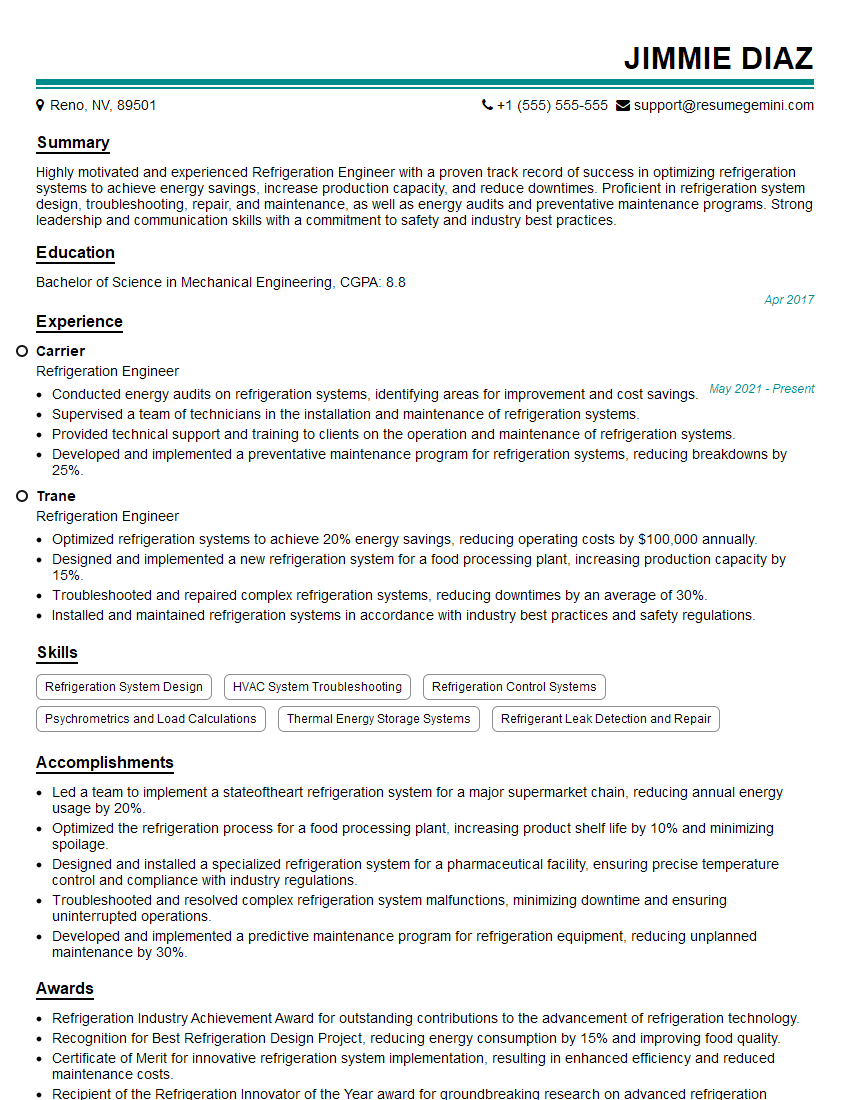
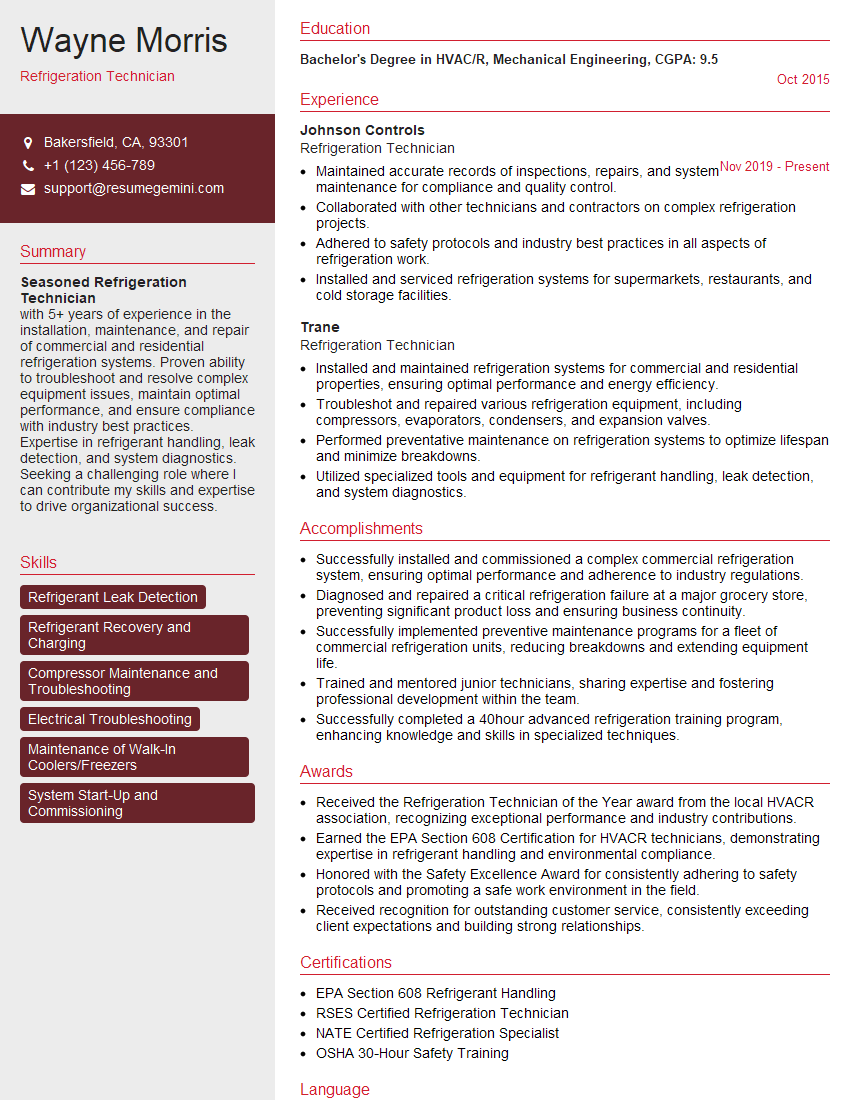
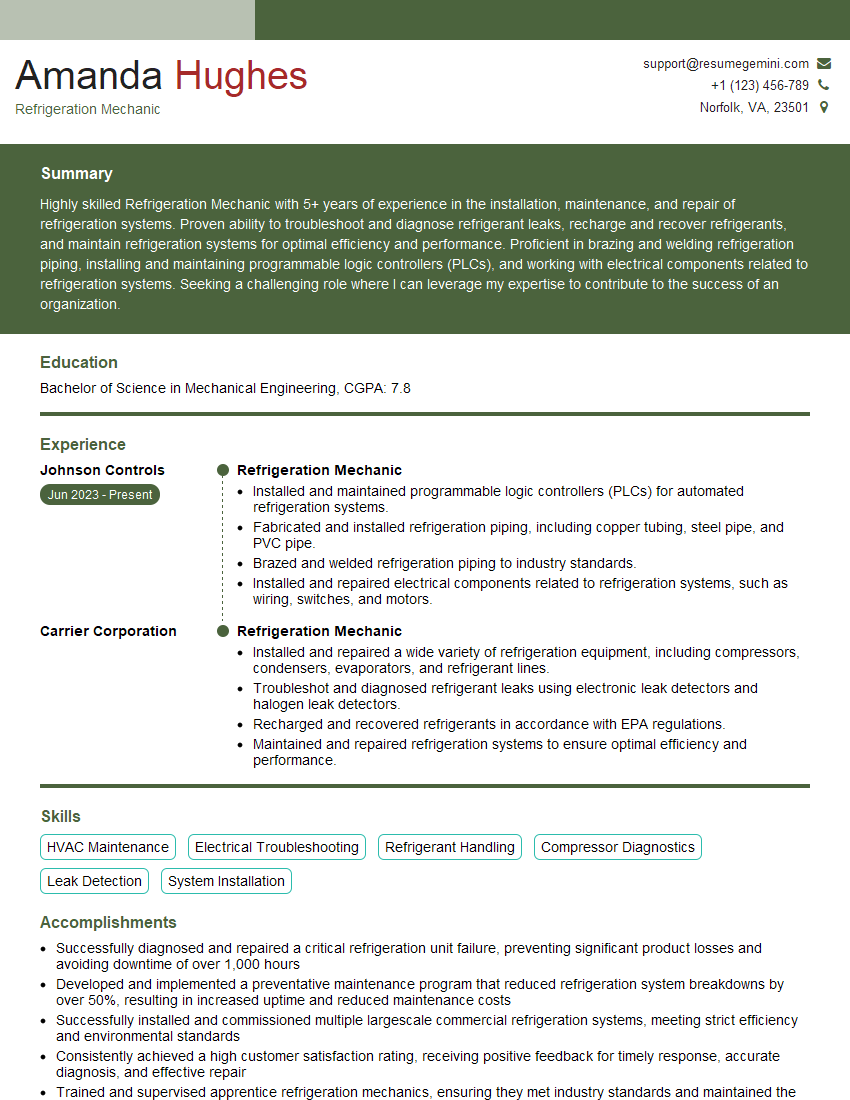
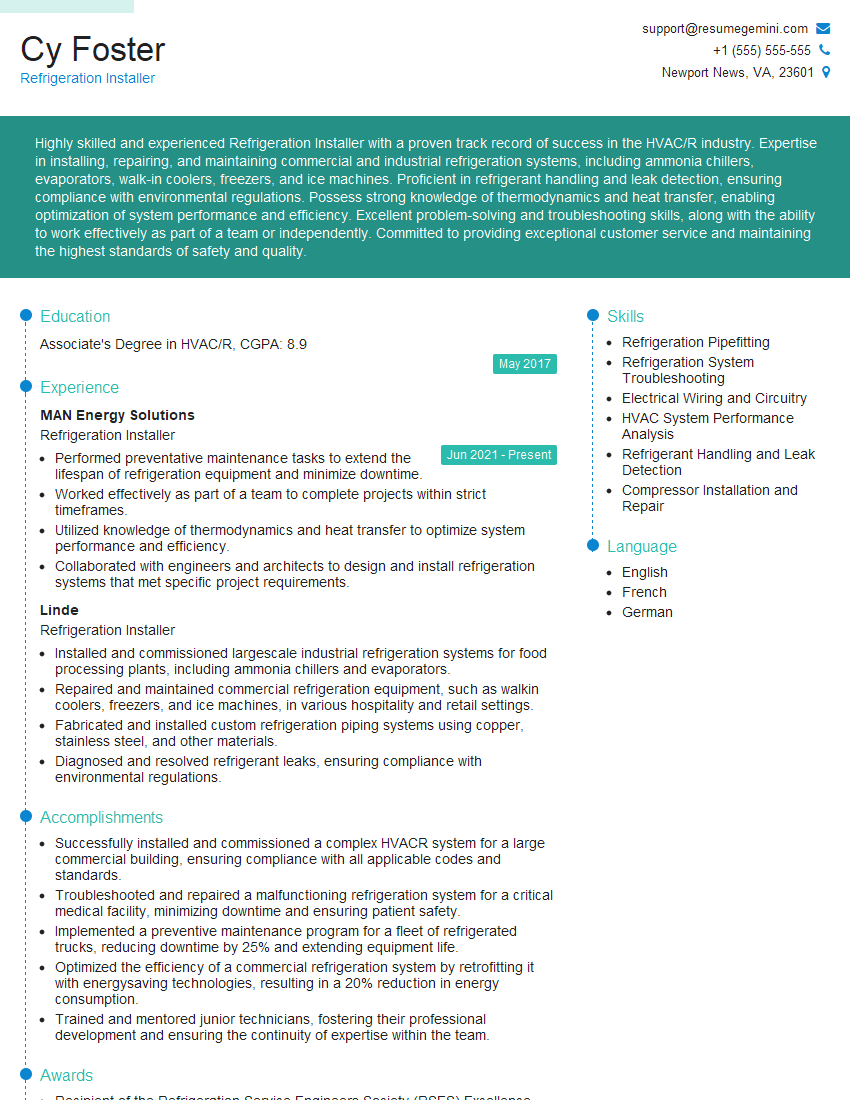
ResumeGemini is a trusted resource to help you build a professional and impactful resume. We provide examples of resumes tailored to the refrigeration systems field to help guide you. Use ResumeGemini to craft a document that highlights your expertise and gets you noticed by potential employers.
Explore more articles
Users Rating of Our Blogs
Share Your Experience
We value your feedback! Please rate our content and share your thoughts (optional).
What Readers Say About Our Blog
Really detailed insights and content, thank you for writing this detailed article.
IT gave me an insight and words to use and be able to think of examples