Every successful interview starts with knowing what to expect. In this blog, we’ll take you through the top Roller Maintenance interview questions, breaking them down with expert tips to help you deliver impactful answers. Step into your next interview fully prepared and ready to succeed.
Questions Asked in Roller Maintenance Interview
Q 1. Describe your experience with different types of roller bearings.
My experience encompasses a wide range of roller bearings, from simple cylindrical rollers to more complex tapered and spherical roller bearings. I’ve worked extensively with different materials, including steel, ceramic, and specialized alloys, each chosen for specific applications based on load capacity, speed requirements, and operating environment. For instance, I’ve used high-precision ceramic bearings in high-speed applications where friction reduction is paramount, while heavier-duty steel bearings were ideal for applications with substantial radial loads, like those found in conveyor systems. Understanding the nuances of each type – their strengths, weaknesses, and limitations – is crucial for selecting the right bearing for the job and ensuring optimal performance.
- Cylindrical Roller Bearings: Excellent for carrying heavy radial loads and moderate axial loads.
- Tapered Roller Bearings: Ideal for applications with combined radial and thrust loads, often found in automotive wheel hubs.
- Spherical Roller Bearings: Tolerate misalignment well, making them suitable for applications where shaft deflection might occur.
- Needle Roller Bearings: Compact design with high load capacity for limited space applications.
Q 2. Explain the process of aligning rollers for optimal performance.
Aligning rollers is critical for preventing premature wear and ensuring smooth operation. The process involves meticulous attention to detail and often utilizes specialized tools. It starts with a thorough inspection to ensure all components – shafts, housings, and the rollers themselves – are free from damage or deformation. Then, precise alignment is achieved using a combination of techniques. This can involve using shims to adjust the bearing’s position within the housing, ensuring proper parallelism between the shaft and the bearing raceways. Laser alignment tools provide highly accurate measurements for optimal setup. For example, in aligning a conveyor roller system, slight misalignments can cause excessive vibration and noise, potentially leading to component failure. Achieving precise alignment significantly extends the lifespan of the rollers and minimizes downtime.
Imagine trying to roll a marble down a slightly crooked track – it’ll bounce and wobble. Similarly, misaligned rollers experience uneven stress, leading to premature wear and failure. Laser alignment ensures the ‘track’ is perfectly straight, allowing for smooth, efficient operation.
Q 3. How do you troubleshoot common roller malfunctions?
Troubleshooting roller malfunctions involves systematic investigation. I typically start by listening for unusual sounds – grinding, squealing, or humming – which often indicate specific problems. Excessive vibration is another key indicator. Visual inspection for signs of wear, damage, or contamination (e.g., dirt, debris) is crucial. For example, if I hear a grinding noise, it may point to damaged rollers or raceways. Excessive vibration suggests misalignment or a lubrication issue. Once the problem is identified, solutions vary. This might involve replacing worn components, realigning the system, cleaning and relubricating the bearings, or adjusting the preload.
- Grinding Noise: Indicates wear or damage to rollers or raceways.
- Squealing: Often caused by lubrication issues or insufficient grease.
- Excessive Vibration: Points towards misalignment, imbalance, or loose components.
Q 4. What preventative maintenance steps do you take for rollers?
Preventative maintenance is crucial for extending roller lifespan. It involves regular inspections, lubrication, and cleaning. Frequency depends on the application’s severity and operating conditions. I typically recommend visual inspections at least monthly, checking for signs of wear, contamination, and unusual sounds. Lubrication schedules depend on the type of lubricant and operating conditions. In high-stress environments, more frequent lubrication may be necessary. Cleanliness is essential; regular cleaning removes debris that can accelerate wear. Proper documentation of maintenance activities is key to tracking roller performance and identifying potential issues before they become significant problems.
Q 5. How do you identify and address roller wear and tear?
Identifying roller wear involves careful observation and measurement. Visual inspection for pitting, flaking, or scoring on the roller surfaces is the first step. Measurement of roller diameter, using precision instruments, can reveal wear. Microscopic examination can reveal minute defects. Addressing wear and tear depends on the severity. Minor wear might only require relubrication, while significant wear demands component replacement. In some cases, precision grinding or other surface treatments can restore worn rollers, offering a cost-effective alternative to complete replacement. Regular monitoring prevents minor issues from escalating into major problems.
Q 6. Describe your experience with roller lubrication techniques.
Roller lubrication is a critical aspect of maintenance, ensuring smooth operation and minimizing wear. The choice of lubricant depends on factors like operating temperature, speed, and load. I’ve used various greases and oils, each designed for specific applications. Application methods vary; some bearings are lubricated using grease guns, others require oil bath lubrication systems. For example, high-speed applications might benefit from specialized low-viscosity oils to minimize friction, while heavier-duty applications might necessitate high-temperature greases to withstand intense loads and heat. Over-lubrication can be as detrimental as under-lubrication, leading to contamination and premature failure. Therefore, accurate and appropriate lubrication is essential.
Q 7. What are the safety precautions you take when working with rollers?
Safety is paramount when working with rollers. I always ensure the power is off and locked out before working on any rotating machinery. Proper personal protective equipment (PPE), including safety glasses, gloves, and hearing protection, is essential. When handling heavy rollers, I use appropriate lifting equipment to avoid injuries. Furthermore, I maintain a clean and organized workspace to minimize the risk of tripping hazards. A thorough understanding of the equipment and its operational characteristics is crucial to minimizing risks. Following established safety protocols and reporting any safety concerns are critical to creating a safe working environment.
Q 8. How do you interpret roller maintenance manuals and specifications?
Interpreting roller maintenance manuals and specifications requires a methodical approach. First, I thoroughly review the manufacturer’s instructions, paying close attention to safety precautions. This includes understanding the specific roller type, its material composition, load capacity, and operating parameters. Next, I carefully examine the lubrication recommendations, focusing on the type of grease or oil, application frequency, and quantity. I also scrutinize the inspection schedule, identifying key components to check and the frequency of inspections – for example, daily visual checks versus weekly more thorough inspections. Finally, I understand the replacement criteria, looking for indicators of wear, damage, or performance degradation that necessitate replacement. For example, a manual might specify a maximum allowable surface roughness or a tolerance limit for radial runout.
Think of it like following a recipe for a complex dish – you must follow the instructions carefully, understand the ingredients (roller materials and specifications), and follow the correct steps (inspection and maintenance procedures) to achieve the desired outcome (a smoothly running, reliable roller system).
Q 9. Explain your experience with roller replacement procedures.
My experience with roller replacement involves various types of rollers across numerous industrial applications. The process always starts with a thorough risk assessment, ensuring the area is safe and power to the system is isolated. Next, I follow a step-by-step procedure, often documented in a work order or maintenance manual. This involves removing the old roller, carefully noting its orientation for accurate reinstallation. Before installing the new roller, I inspect it for any visible defects. I then install the new roller, ensuring proper alignment and tightness of fasteners according to the manufacturer’s specifications. After installation, I perform a functional test, checking for smooth operation, proper alignment, and absence of vibration. For instance, in replacing rollers on a conveyor system, ensuring precise alignment is crucial to prevent material jams or damage. I’ve also replaced rollers in more complex machinery where precise measurements and adjustments are vital for optimal performance.
Q 10. How do you manage roller maintenance schedules and logs?
Managing roller maintenance schedules and logs is critical for preventative maintenance. I use a combination of methods, starting with a comprehensive understanding of the manufacturer’s recommended maintenance intervals. Then, I create a detailed schedule, incorporating factors like operational hours, environmental conditions (temperature, humidity, dust), and the specific application of the roller. I utilize a log book or a digital system to meticulously record each maintenance activity, including the date, time, type of maintenance performed, any parts replaced, and any observations noted during inspections. This systematic approach ensures that all critical maintenance tasks are completed on time and provides a history of the roller’s operational life. This historical data is also valuable for predictive maintenance, allowing us to anticipate potential issues and plan accordingly.
For example, if I notice a pattern of increased wear on a specific roller type in a particular environment, I might adjust the maintenance schedule or recommend a more durable roller material.
Q 11. What software or tools do you use to track roller maintenance?
To track roller maintenance, I use a combination of software and tools. Computerized Maintenance Management Systems (CMMS) are invaluable; these software packages allow for efficient scheduling, tracking of maintenance activities, and generation of reports. Popular CMMS platforms include [mention a few examples without hyperlinks, e.g., Fiix, UpKeep, and ManageEngine]. I also utilize spreadsheets to complement the CMMS, particularly for smaller projects or situations where detailed tracking is needed beyond the CMMS capabilities. Furthermore, barcode scanners or RFID tags can enhance the efficiency of tracking and logging maintenance activities on individual rollers, creating a digital audit trail. In some cases, I might use dedicated data loggers to monitor parameters like temperature or vibration, feeding this data into the CMMS for analysis and predictive maintenance.
Q 12. Describe your experience with different types of roller materials.
My experience encompasses a variety of roller materials, each suited to different applications and operating conditions. Steel rollers, for example, offer high strength and durability but can be susceptible to corrosion in harsh environments. Therefore, I often work with stainless steel rollers in applications that require corrosion resistance. Nylon rollers are excellent for applications requiring low friction and noise reduction, while polyurethane rollers provide good abrasion resistance. The choice of roller material also depends on factors like load capacity, speed, and operating temperature. For instance, high-temperature applications may necessitate rollers made from specialized materials like ceramic or high-temperature plastics. Selecting the right material is crucial for both cost-effectiveness and equipment longevity.
Q 13. How do you diagnose roller vibration issues?
Diagnosing roller vibration issues requires a systematic approach. I start by visually inspecting the roller and its surrounding components for signs of misalignment, damage, or wear. Then, I use vibration measurement tools, such as accelerometers, to quantify the vibration levels. Analyzing the frequency and amplitude of the vibration helps pinpoint the source of the problem. For example, high-frequency vibrations may indicate bearing failure, while low-frequency vibrations might suggest imbalance or misalignment. Additional diagnostic methods may involve checking the roller’s rotational speed, analyzing the motor’s performance, and examining the overall system’s structural integrity. Sometimes, a spectral analysis of the vibration data can reveal subtle problems that are not readily apparent through simple visual inspection.
Q 14. How do you inspect rollers for damage or defects?
Inspecting rollers for damage or defects involves a multi-faceted approach. I begin with a visual inspection, looking for obvious signs of damage such as cracks, dents, scratches, or excessive wear. I use measuring instruments such as calipers and micrometers to check the roller’s dimensions and ensure they are within the manufacturer’s tolerances. I also check for signs of surface degradation, such as pitting or corrosion, which can impact roller performance and lifespan. In some cases, I might utilize non-destructive testing methods such as magnetic particle inspection or ultrasonic testing to detect hidden flaws or internal defects. The level of detail in the inspection will depend on the criticality of the roller’s application and its operating history. A thorough inspection process is essential to prevent catastrophic failure and ensure the safe and efficient operation of the equipment.
Q 15. What are the common causes of roller failure?
Roller failure is a multifaceted issue stemming from various sources. It’s like a car – multiple parts working together, and a failure in one can cascade.
- Wear and Tear: Normal operation causes gradual wear on bearings, shafts, and the roller surface itself. Think of it like the tires on a car wearing down over time. Regular inspection and lubrication are crucial to mitigate this.
- Improper Lubrication: Insufficient or incorrect lubrication leads to increased friction and heat, accelerating wear and potentially causing seizure. Imagine trying to drive a car without oil – the engine would quickly seize.
- Misalignment: Misaligned rollers experience uneven stress distribution, leading to premature wear and potential failure. It’s like driving a car with misaligned wheels – the tires wear unevenly and the vehicle is unstable.
- Overloading: Exceeding the roller’s load capacity causes excessive stress on components, leading to deformation and eventual breakage. This is similar to overloading a truck beyond its weight limit – it risks structural damage.
- Material Defects: Manufacturing defects in the roller material, such as internal flaws or inconsistencies, can lead to unexpected failures. This is comparable to a car having a faulty engine block from the factory.
- Environmental Factors: Exposure to harsh environments, including extreme temperatures, moisture, or corrosive substances, can accelerate degradation. Think of a car constantly exposed to harsh weather – the paint fades and components rust.
Regular maintenance checks, including visual inspections, lubrication schedules, and vibration analysis, are vital in preventing roller failure.
Career Expert Tips:
- Ace those interviews! Prepare effectively by reviewing the Top 50 Most Common Interview Questions on ResumeGemini.
- Navigate your job search with confidence! Explore a wide range of Career Tips on ResumeGemini. Learn about common challenges and recommendations to overcome them.
- Craft the perfect resume! Master the Art of Resume Writing with ResumeGemini’s guide. Showcase your unique qualifications and achievements effectively.
- Don’t miss out on holiday savings! Build your dream resume with ResumeGemini’s ATS optimized templates.
Q 16. Explain your experience with roller balancing techniques.
Roller balancing is crucial for smooth operation and extended lifespan. I’ve extensive experience using both static and dynamic balancing techniques. Static balancing involves identifying and correcting an imbalance by adding or removing weight. Imagine a wheel with a weight unevenly distributed – it wobbles. Static balancing aims to even that weight distribution. Dynamic balancing, on the other hand, considers both static and dynamic imbalances, crucial for high-speed rollers where rotational forces are significant. It’s like balancing a spinning top – both the weight and the way it’s distributed affect its stability.
In my previous role, I oversaw the balancing of large industrial rollers using precision balancing machines. We’d use vibration analysis to identify imbalances, then carefully add or remove weight at specific points on the roller to achieve optimal balance. This reduced vibrations, noise levels, and wear, ultimately extending the roller’s operational life and improving efficiency. I’m proficient in interpreting balancing machine readings and applying corrective measures effectively.
Q 17. How do you ensure the safety of rollers during operation?
Safety is paramount in roller maintenance and operation. We implement a multi-layered approach.
- Lockout/Tagout Procedures: Before any maintenance, we strictly enforce lockout/tagout procedures to isolate power sources and prevent accidental startup. This ensures the safety of technicians working on the equipment.
- Personal Protective Equipment (PPE): Technicians always wear appropriate PPE, including safety glasses, gloves, and hearing protection, depending on the task. This prevents injuries from flying debris, chemical exposure, or noise.
- Regular Inspections: Regular inspections of the rollers, including structural integrity, lubrication levels, and safety guards, ensure early detection of potential hazards.
- Training and Awareness: All personnel involved in roller maintenance or operation receive comprehensive training on safe working practices, emergency procedures, and the use of safety equipment. We regularly conduct safety meetings to reinforce best practices.
- Emergency Shutdown Systems: Emergency stop buttons and interlocks are readily available and tested regularly to ensure quick responses in case of accidents.
We treat safety not as an afterthought, but as an integral part of every process and procedure. A culture of safety is fostered through continuous training and proactive risk assessment.
Q 18. How do you address roller noise problems?
Roller noise is often an indication of underlying problems. It’s like a car making strange noises – it signals something needs attention.
- Bearing Defects: Worn or damaged bearings are a common source of noise. The noise can range from a low hum to a high-pitched squeal.
- Misalignment: Misaligned rollers create uneven stress and can result in grinding or rumbling noises.
- Loose Fasteners: Loose bolts or other fasteners can cause rattling or knocking sounds.
- Mechanical Resonance: At certain speeds, rollers can vibrate at their natural frequency, causing excessive noise. This is similar to the resonant frequency of a glass that shatters when exposed to a specific sound.
- Material Degradation: Wear and tear on the roller surface can also contribute to noise.
Troubleshooting involves systematically checking each potential source, starting with the most likely causes. We use vibration analysis tools to pinpoint the location and severity of the problem. Corrective actions can include replacing bearings, realigning the rollers, tightening fasteners, or even surface repair of the rollers if wear is significant.
Q 19. Describe your experience with hydraulic roller systems.
I have significant experience working with hydraulic roller systems, which offer precise control and high load-bearing capacity. These systems use hydraulic cylinders to control the movement and positioning of the rollers. I’ve been involved in the maintenance, repair, and troubleshooting of various hydraulic roller systems in industrial settings. This includes diagnosing and resolving hydraulic leaks, replacing hydraulic seals and components, and calibrating the hydraulic control systems. Understanding hydraulic schematics, pressure testing, and leak detection are critical skills in maintaining this complex machinery. For example, I once resolved a significant production downtime issue caused by a faulty hydraulic valve in a large-scale conveyor system, saving the company considerable cost and time.
Hydraulic roller systems require a comprehensive understanding of hydraulic principles, including pressure, flow rate, and fluid properties. Regular maintenance includes checking fluid levels, ensuring proper filtration, and monitoring pressure gauges to detect potential problems. A key aspect is understanding the interplay between the hydraulics and the mechanical components of the system.
Q 20. What are the key performance indicators (KPIs) for roller maintenance?
Key Performance Indicators (KPIs) for roller maintenance focus on both efficiency and safety. We track:
- Roller Downtime: The amount of time rollers are out of service for maintenance or repairs. Minimizing downtime is crucial for productivity.
- Mean Time Between Failures (MTBF): The average time between failures of rollers. A higher MTBF indicates better reliability.
- Maintenance Costs: The total cost associated with roller maintenance, including labor, parts, and other expenses.
- Safety Incidents: The number of safety incidents related to roller maintenance or operation. This is crucial for evaluating the effectiveness of safety procedures.
- Roller Efficiency: Measures like throughput and processing speed can reflect the roller’s efficiency. Proper maintenance directly affects efficiency.
- Vibration Levels: Regular vibration monitoring helps to detect potential problems early and prevent major failures.
By monitoring these KPIs, we can identify areas for improvement, optimize maintenance schedules, and reduce both costs and risks.
Q 21. How do you contribute to a safe and efficient workplace environment regarding roller maintenance?
Contributing to a safe and efficient workplace involves a proactive approach. I believe in leading by example and fostering a strong safety culture.
- Adherence to Safety Protocols: I consistently and rigorously follow all safety procedures, including lockout/tagout procedures, use of PPE, and adherence to work permits. I ensure my team does the same.
- Proactive Hazard Identification: I actively participate in safety inspections and risk assessments, identifying potential hazards and suggesting preventative measures. We never wait for an accident to happen.
- Team Training and Mentorship: I provide training and mentorship to my colleagues, ensuring they possess the necessary skills and knowledge to perform their tasks safely and efficiently. Knowledge sharing is crucial.
- Efficient Workflow Optimization: I constantly seek ways to optimize maintenance workflows to minimize downtime and improve efficiency. A well-organized and efficient team is a safer team.
- Communication and Collaboration: Clear communication and collaboration with colleagues and supervisors are essential for ensuring a safe and productive environment. Effective communication prevents misunderstandings and potential accidents.
Safety is not a matter of compliance, but a commitment to ensuring everyone goes home safe at the end of the day. This is my top priority in every aspect of my work.
Q 22. Explain your experience working with different types of roller applications (e.g., conveyor, printing).
My experience spans a wide range of roller applications, from high-speed conveyor systems in manufacturing plants to precision rollers in printing presses. In conveyor systems, I’ve worked extensively with rollers of varying diameters and materials, including steel, polyurethane, and rubber, focusing on maintenance tasks specific to the material being conveyed – whether it’s delicate electronics or heavy industrial components. Each material requires a tailored maintenance approach to prevent damage and ensure smooth operation. For example, rollers carrying abrasive materials need more frequent cleaning and lubrication than those carrying softer goods. In printing, the precision required is paramount. I’ve worked with rollers used in offset lithography, flexography, and gravure printing, focusing on maintaining precise tolerances to ensure consistent print quality. This involved meticulous cleaning procedures to prevent ink buildup and careful monitoring of roller alignment to avoid image defects. The difference in approach is substantial; a slight misalignment in a printing roller could ruin a whole print run, whereas in a conveyor system, it might just cause minor inefficiencies.
Q 23. How do you prioritize maintenance tasks for multiple roller systems?
Prioritizing maintenance tasks for multiple roller systems involves a risk-based approach. I use a combination of factors, including criticality, frequency of use, condition, and potential impact of failure. I’d start by classifying rollers according to their criticality. For instance, rollers in a critical production line receive higher priority than those in a less critical area. I then incorporate a preventive maintenance schedule that involves regular inspections – checking for wear, tear, misalignment, and lubrication levels. A condition-based maintenance system helps to determine the urgency of repairs by monitoring key parameters like roller speed, vibration, and temperature using sensors and diagnostic tools (discussed further in the next answer). This allows for proactive repairs rather than reactive fixes. I maintain comprehensive records, including maintenance logs and inspection reports, which aids in identifying patterns and predicting potential problems.
Think of it like a doctor prioritizing patients: a patient with a life-threatening condition gets immediate attention, whereas someone with a minor ailment can wait. Similarly, I prioritize critical rollers over less critical ones.
Q 24. Describe your experience using diagnostic tools for roller maintenance.
My experience with diagnostic tools for roller maintenance includes using vibration analyzers to detect imbalances, misalignments, or bearing defects. These tools provide valuable data which helps pinpoint the source of problems before they escalate into major failures. I’ve also used laser alignment tools to ensure precise alignment between rollers, which is crucial for applications like printing and high-speed conveyor systems. Infrared thermometers are employed to monitor roller temperature and identify potential overheating issues, which might indicate insufficient lubrication or bearing problems. Data loggers help in recording relevant parameters over time, allowing for trend analysis and predictive maintenance. Finally, using ultrasonic testing can detect internal flaws in rollers, especially those made from composite materials. The data from these tools feed into my decision-making process regarding maintenance and repair priorities.
For example, a high vibration reading from a vibration analyzer might point to a bearing failure that needs immediate attention, preventing a costly shutdown.
Q 25. How do you handle emergency roller repairs?
Handling emergency roller repairs requires quick thinking and efficient execution. The first step involves assessing the severity of the situation and its impact on operations. In critical systems, immediate shutdown might be necessary to prevent further damage or safety hazards. The next step involves isolating the problem roller and if possible creating a temporary workaround. This could involve using a spare roller, if available, or a makeshift solution. Once the situation is stabilized, a thorough investigation is carried out to determine the root cause of the failure. Repairs are carried out using readily available parts and if this is impossible, quick procurement is done. Post-repair, a comprehensive test is conducted to ensure functionality and safety before resuming operation. Detailed documentation of the incident, including root cause analysis, corrective actions, and preventative measures are carefully recorded for future reference.
Imagine a broken roller on a production line producing perishable goods – time is of the essence to minimize waste and downtime. Swift action is needed.
Q 26. Describe your experience with roller cleaning procedures.
Roller cleaning procedures vary greatly depending on the type of roller and the nature of the contaminants. For many rollers, routine cleaning involves removing dust, debris, and build-up using compressed air, brushes, or cloths. For more stubborn contaminants like ink or adhesive residue, specialized cleaning solvents and detergents might be necessary. It’s important to select cleaners compatible with the roller material to avoid damage. After cleaning, rollers are thoroughly dried to prevent corrosion or mold growth. For instance, rollers in a food processing plant will require cleaning agents approved for food contact, whereas those in a printing press may use different solvents depending on the ink type.
The frequency of cleaning depends on the operational environment and the type of material being handled. Rollers in dusty environments may require daily cleaning, whereas those in cleanrooms might require less frequent cleaning.
Q 27. What are the environmental considerations in roller maintenance?
Environmental considerations in roller maintenance are crucial. The choice of cleaning agents should minimize the impact on the environment. Water-based or biodegradable cleaners are preferred to reduce pollution. Proper disposal of waste materials, including used cleaning solvents and worn-out rollers, is important to comply with environmental regulations. Some roller materials contain hazardous substances, requiring careful handling and disposal procedures. Energy efficiency is also a factor; energy-efficient lubrication systems reduce overall environmental footprint. Moreover, noise reduction strategies, like using quieter bearings or proper roller alignment, are important for workplace safety and environmental impact reduction.
For example, using recycled materials in the construction of new rollers reduces the demand on natural resources.
Q 28. How do you stay updated on the latest roller maintenance technologies?
Staying updated on the latest roller maintenance technologies involves continuous professional development. I actively participate in industry conferences and workshops, attend training sessions provided by equipment manufacturers, and subscribe to relevant trade publications and journals. I also maintain a professional network with other maintenance professionals to exchange best practices and knowledge. Online resources, including manufacturer websites and technical forums, provide valuable information on new technologies, products, and maintenance techniques. I regularly review and update our company’s maintenance procedures to reflect the latest advancements and industry best practices.
Keeping abreast of new developments in areas like predictive maintenance using IoT sensors and AI-driven diagnostic tools is crucial to optimize roller maintenance and extend roller lifespan.
Key Topics to Learn for Roller Maintenance Interview
- Roller Types and Applications: Understanding different roller types (e.g., steel, rubber, polyurethane) and their suitability for various industrial applications.
- Roller Inspection and Diagnostics: Mastering techniques for visually inspecting rollers for wear, damage, misalignment, and lubrication issues; utilizing diagnostic tools to assess roller health.
- Lubrication and Maintenance Schedules: Knowledge of appropriate lubricants, application methods, and the importance of adhering to preventative maintenance schedules to extend roller lifespan.
- Roller Replacement and Installation: Practical understanding of the process of removing, installing, and aligning rollers; familiarity with relevant safety procedures.
- Troubleshooting Common Roller Problems: Developing problem-solving skills to diagnose and resolve common issues such as excessive wear, noise, vibration, and seizing.
- Safety Procedures and Regulations: Understanding and adhering to all relevant safety regulations and best practices related to roller maintenance and operation.
- Preventive Maintenance Strategies: Implementing proactive maintenance strategies to minimize downtime and maximize roller lifespan. This includes understanding predictive maintenance techniques.
- Record Keeping and Documentation: Maintaining accurate and detailed records of maintenance activities, including inspection reports and repair logs.
- Material Science Basics (related to rollers): Understanding the properties of materials used in roller construction and how those properties influence performance and lifespan.
Next Steps
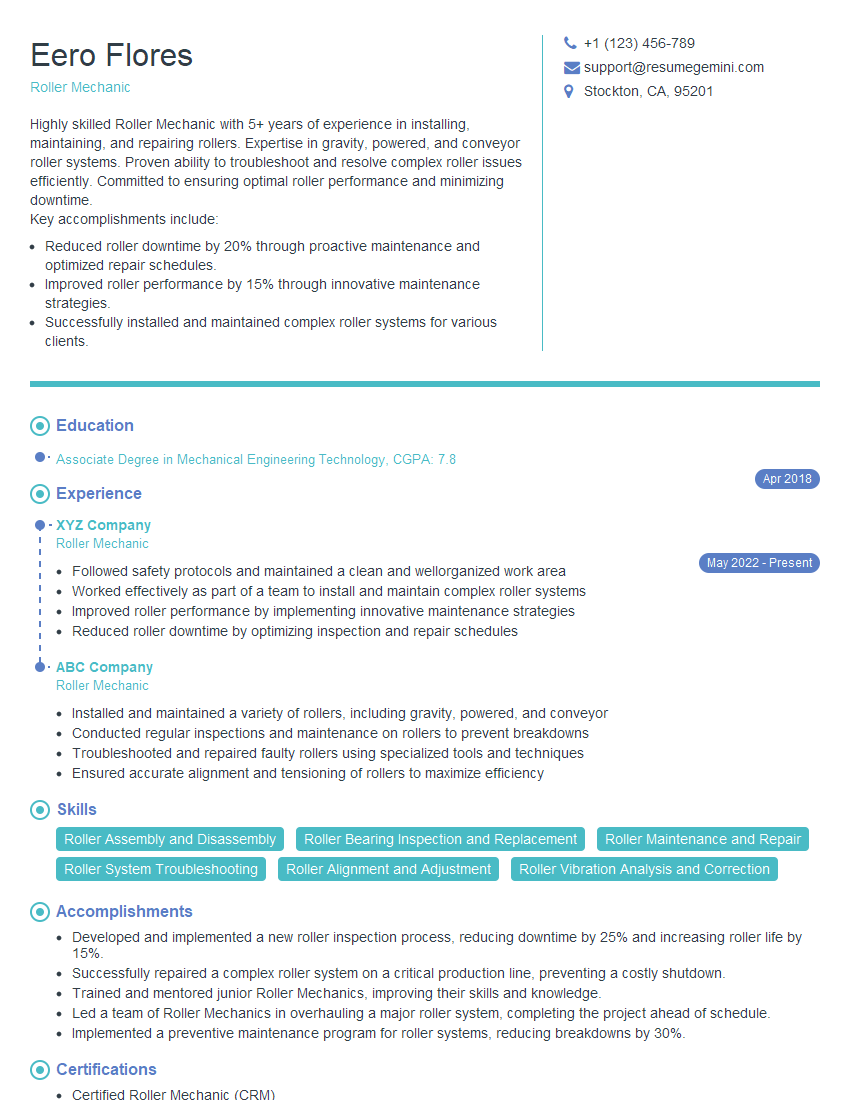
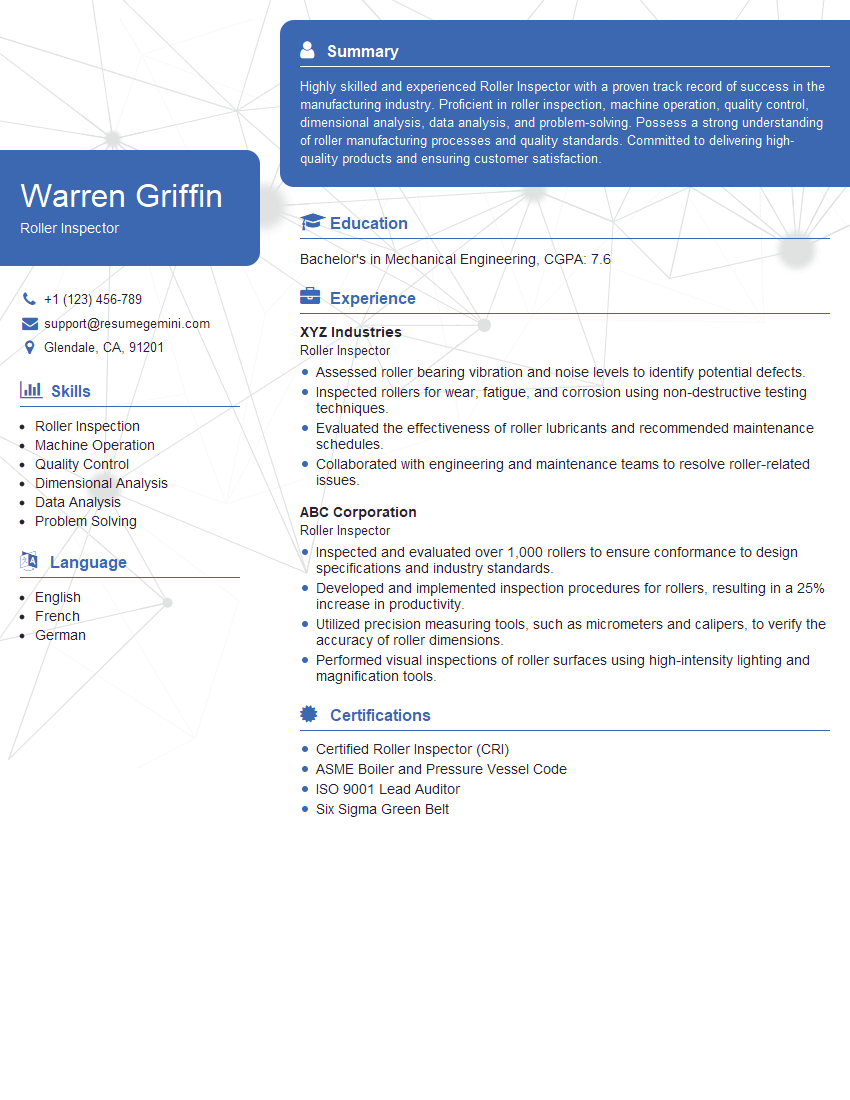
Mastering roller maintenance opens doors to a rewarding career with excellent growth potential in diverse industries. A strong foundation in these key areas will significantly boost your interview confidence and increase your chances of landing your dream role. To further enhance your job prospects, creating an ATS-friendly resume is crucial. ResumeGemini can help you build a compelling and effective resume that highlights your skills and experience. ResumeGemini provides examples of resumes tailored to Roller Maintenance, ensuring your application stands out from the competition.
Explore more articles
Users Rating of Our Blogs
Share Your Experience
We value your feedback! Please rate our content and share your thoughts (optional).
What Readers Say About Our Blog
Really detailed insights and content, thank you for writing this detailed article.
IT gave me an insight and words to use and be able to think of examples