Are you ready to stand out in your next interview? Understanding and preparing for Roller Troubleshooting interview questions is a game-changer. In this blog, we’ve compiled key questions and expert advice to help you showcase your skills with confidence and precision. Let’s get started on your journey to acing the interview.
Questions Asked in Roller Troubleshooting Interview
Q 1. Describe your experience troubleshooting roller bearing failures.
Troubleshooting roller bearing failures requires a systematic approach. My experience spans diverse industrial settings, from conveyor systems to heavy machinery. I begin by visually inspecting the bearings for obvious signs of damage like pitting, corrosion, or excessive wear. Then, I carefully listen for unusual noises – grinding, squealing, or rumbling – which often indicate specific problems. For instance, a high-pitched squeal often points to lubrication issues, while a grinding noise suggests severe damage requiring immediate replacement. Beyond auditory and visual checks, I use vibration analysis tools to quantify the severity of issues and pinpoint the faulty bearing. I’ve successfully diagnosed and resolved bearing failures caused by improper lubrication, contamination, overloading, and misalignment, resulting in significant cost savings and reduced downtime for my clients. One memorable case involved a conveyor system in a food processing plant where a seemingly minor vibration turned out to be a failing bearing, preventing potential contamination and costly production delays.
Q 2. How do you identify the root cause of roller misalignment?
Identifying roller misalignment starts with a thorough visual inspection. Look for uneven spacing between rollers and their supporting structures, or signs of excessive wear on one side of a roller compared to the other. Precise measurement tools, like dial indicators and laser alignment systems, are crucial for quantifying misalignment. These tools allow for accurate measurement of shaft parallelism, angular misalignment, and vertical misalignment. The type of misalignment dictates the solution; for instance, parallelism issues often require adjusting the supporting structure, while angular misalignment may need shimming or adjustments to the mounting hardware. I’ve found that improper installation is a frequent culprit for misalignment. Careful attention to manufacturer’s specifications and the use of proper alignment tools are essential to prevent this. A recent project involved a large industrial rolling mill where subtle misalignment was causing significant vibration and reducing operational efficiency. Using a laser alignment system, we quickly identified and corrected the problem, leading to smooth operation and enhanced lifespan of the rollers.
Q 3. Explain the different types of roller lubrication systems and their maintenance.
Roller lubrication systems vary widely depending on the application and roller type. Common systems include grease lubrication (using grease fittings and regular greasing), oil bath lubrication (where rollers are submerged in an oil reservoir), and circulating oil systems (using pumps to continuously circulate oil). Maintenance varies accordingly. Grease lubrication requires regular greasing schedules based on the operating conditions and manufacturer’s recommendations; over-greasing can be as damaging as under-greasing. Oil bath systems need periodic oil level checks and oil changes, while circulating oil systems require more extensive maintenance, including filter changes, oil analysis, and pump checks. Ignoring lubrication is a leading cause of premature roller failure. Regular maintenance, using the correct lubricant, and adhering to manufacturer’s recommendations are vital for extending the lifespan of the system. I once worked on a project where improper lubrication led to catastrophic failure of a large industrial roller, emphasizing the importance of a well-maintained lubrication regime.
Q 4. What are the common causes of roller wear and tear?
Roller wear and tear stem from several factors. Excessive load is a primary contributor; rollers operating beyond their design capacity will experience accelerated wear. Improper lubrication leads to increased friction and heat, accelerating wear and causing premature failure. Contamination, such as dirt, dust, or abrasive particles, can also cause significant damage. Corrosion, particularly in damp environments, is another common issue. Finally, misalignment generates uneven stress distribution, leading to localized wear and potential failure. Regular inspection, proper lubrication, and maintaining a clean operating environment are crucial for minimizing wear and tear. Think of it like a car’s tires: overloading, ignoring regular maintenance, or driving on rough terrain will drastically shorten their lifespan.
Q 5. How do you diagnose problems in roller drive systems?
Diagnosing problems in roller drive systems involves a multi-step process. Begin by inspecting the drive components for any visible damage or wear. Then, assess the system’s performance – is it operating at the correct speed and torque? Are there any unusual noises or vibrations? Tools such as torque wrenches, tachometers, and vibration analyzers are invaluable for this stage. If the problem is related to the drive motor, further investigations of motor current, voltage, and temperature might be necessary. For belt-driven systems, check for belt tension, wear, and slippage. Chain-driven systems require inspection of chain wear, lubrication, and sprocket alignment. Analyzing the complete system is key; a problem in one component can trigger cascading failures elsewhere. A case in point: A seemingly simple issue of belt slippage in a paper mill actually stemmed from a misaligned motor, highlighting the importance of a holistic diagnostic approach.
Q 6. What are the safety precautions you take when working with industrial rollers?
Safety is paramount when working with industrial rollers. Before starting any work, I always ensure the system is completely de-energized and locked out/tagged out. I wear appropriate personal protective equipment (PPE), including safety glasses, gloves, and sturdy footwear. I’m also very mindful of potential pinch points and moving parts. When dealing with heavy rollers, proper lifting techniques and equipment are essential to prevent injuries. Regular inspections of the roller system for any potential hazards, like loose components or frayed cables, are also part of my routine. Safety isn’t just about following rules; it’s about cultivating a mindset of constant vigilance and awareness of potential risks. I’ve always found that a proactive safety approach leads to a more efficient and productive work environment.
Q 7. Describe your experience with roller alignment tools and techniques.
My experience with roller alignment tools and techniques is extensive. I’m proficient in using both traditional and advanced alignment tools. Traditional methods involve dial indicators and straight edges, demanding precision and experience. Advanced tools include laser alignment systems, which offer greater accuracy and efficiency. These systems project laser beams to measure alignment parameters with precision. Choosing the appropriate tools depends on the size and complexity of the roller system and the required accuracy. Regardless of the tools used, proper setup and understanding of the measurement procedures are essential. Misinterpreting results can lead to incorrect adjustments and potentially damage the system. I’ve found that a combination of theoretical knowledge and practical experience is crucial for successful roller alignment. Mastering these techniques allows for optimal roller performance, extended lifespan, and reduced downtime. In a recent project involving a large printing press, the precise alignment we achieved using a laser system minimized vibrations and significantly improved print quality.
Q 8. How do you perform a preventative maintenance check on a roller system?
Preventative maintenance on a roller system is crucial for extending its lifespan and preventing costly downtime. Think of it like regularly servicing your car – you catch small issues before they become major problems. A thorough check involves several key steps:
- Visual Inspection: Carefully examine each roller for signs of wear, damage, or misalignment. Look for cracks, dents, corrosion, or excessive debris buildup.
- Bearing Check: Check for unusual noises (grinding, squealing, or clicking) emanating from the bearings, indicating potential wear or damage. Feel for excessive play or looseness in the bearings, which suggests wear.
- Lubrication: Inspect the lubrication points and ensure proper lubrication according to the manufacturer’s specifications. Insufficient or excessive lubrication can lead to premature wear.
- Alignment: Verify the alignment of the rollers with each other and with the driven components. Misalignment can cause premature wear and increased vibration.
- Cleaning: Remove any accumulated dust, dirt, or debris that can interfere with roller operation and potentially damage components.
- Documentation: Keep detailed records of your maintenance checks, including dates, findings, and actions taken. This helps track the system’s health and predict potential issues.
For example, in a conveyor belt system, a visual inspection might reveal a worn roller causing the belt to track incorrectly. Addressing this early prevents belt damage and potential production stoppages.
Q 9. Explain the importance of regular roller lubrication.
Regular roller lubrication is paramount for minimizing friction, reducing wear and tear, and extending the operational life of the roller system. Think of it as the lifeblood of the system. Without proper lubrication, metal-on-metal contact leads to increased friction, heat generation, and accelerated wear.
- Reduced Friction: Lubrication creates a thin film between moving parts, significantly reducing friction. This results in smoother operation, less energy consumption, and less wear on the roller and its bearings.
- Extended Lifespan: By reducing friction and wear, lubrication significantly extends the life of the rollers and bearings, postponing costly replacements.
- Improved Efficiency: Lower friction translates to improved efficiency, as less energy is wasted overcoming friction forces.
- Reduced Noise: Well-lubricated rollers operate more quietly, creating a more pleasant and efficient work environment.
For instance, in a high-speed printing press, inadequate lubrication could lead to premature bearing failure, causing significant downtime and repair costs.
Q 10. How do you troubleshoot issues with roller speed and control?
Troubleshooting roller speed and control issues requires a systematic approach. First, you need to identify the symptoms – is the roller too slow, too fast, or erratic?
- Check the Power Supply: Ensure the roller receives the correct voltage and amperage. Low voltage can lead to reduced speed, while high voltage can damage the motor.
- Inspect the Motor: Look for signs of damage to the motor or its wiring. A faulty motor can cause speed fluctuations or complete failure.
- Examine the Drive System: Check the belts, chains, or gears that transfer power to the roller for wear, slippage, or damage. A worn belt or loose chain can impact speed and control.
- Verify Control System: Inspect the sensors, controllers, and software responsible for regulating the roller’s speed. Calibration issues, software bugs, or faulty sensors can cause speed problems.
- Check for Obstructions: Look for any obstacles that might be impeding the roller’s movement.
For example, if a conveyor belt is moving too slowly, you might find that the motor is overheating due to a failing bearing, or perhaps a belt is slipping due to wear and needs replacement.
Q 11. What are the signs of an impending roller failure?
An impending roller failure often manifests through several warning signs. It’s vital to recognize these indicators to prevent catastrophic failure and downtime.
- Unusual Noises: Grinding, squealing, or clicking sounds from the roller or its bearings are strong indicators of wear and impending failure.
- Increased Vibration: Excessive vibration is a common sign of imbalance, bearing wear, or misalignment. This can be detected through vibration analysis or simply by touch.
- Excessive Heat: Increased temperature in the roller or its bearings indicates excessive friction, potentially due to lack of lubrication or damage.
- Visible Damage: Look for cracks, pitting, or scoring on the roller surface. These indicate significant wear and potential failure.
- Performance Degradation: A gradual decrease in the roller’s performance, such as reduced speed or increased power consumption, suggests potential issues.
Imagine a large industrial roller in a steel mill. Ignoring the warning signs of increased vibration and unusual noises could lead to a catastrophic failure, causing significant production delays and safety hazards.
Q 12. How do you interpret roller vibration data?
Interpreting roller vibration data involves analyzing the frequency, amplitude, and phase of the vibrations using specialized equipment like accelerometers and vibration analyzers. This data provides valuable insights into the health of the roller and its components.
- Frequency Analysis: Specific frequencies correspond to different sources of vibration, such as imbalances, bearing faults, or misalignment. High-frequency vibrations often indicate bearing issues, while lower frequencies might suggest imbalance.
- Amplitude Analysis: The amplitude (intensity) of the vibrations reflects the severity of the problem. Higher amplitude indicates a more serious issue that requires immediate attention.
- Phase Analysis: Phase information helps pinpoint the location of the vibration source within the roller system.
Vibration data analysis allows for preventative maintenance, allowing for repairs before major issues arise. For instance, detecting a specific frequency associated with a bearing fault allows for proactive replacement, avoiding unexpected downtime. The data is often visualized in spectrums and waveforms, which are interpreted using established standards and expert knowledge.
Q 13. What are the different types of rollers and their applications?
Rollers come in various types, each suited for specific applications:
- Plain Rollers: These are simple cylindrical rollers with no bearings. They are suitable for low-speed, light-duty applications.
- Ball Bearing Rollers: These rollers incorporate ball bearings, allowing for smoother operation and higher speeds. They are widely used in conveyors, printing presses, and other machinery.
- Roller Bearings: These use cylindrical or tapered rollers for superior load-carrying capacity and durability. They are ideal for heavy-duty applications, such as steel rolling mills or mining equipment.
- Tapered Rollers: Designed to handle both radial and thrust loads. Often found in applications needing precise alignment and high load capacity.
- Conveyor Rollers: Specifically designed for conveyor systems, these rollers come in different sizes and materials depending on the conveyed material.
The choice of roller type depends on factors like load capacity, speed requirements, operating environment, and cost considerations. For example, a high-speed printing press would benefit from ball bearing rollers for smooth operation, while a heavy-duty conveyor might use roller bearings to withstand significant weight.
Q 14. How do you handle emergency repairs on a critical roller system?
Emergency repairs on a critical roller system demand swift and decisive action. Safety is paramount. The first priority is to secure the system and prevent further damage or injury.
- Assess the Situation: Quickly determine the nature and extent of the failure, identifying potential hazards.
- Isolate the System: If possible, isolate the affected section of the roller system to prevent further damage or risk to personnel.
- Emergency Repair: Implement a temporary repair to restore partial or full functionality, depending on the severity of the issue. This might involve using temporary parts or workarounds.
- Contact Maintenance: Immediately notify the maintenance team and relevant personnel.
- Documentation: Document the emergency repair, including the cause of the failure, the actions taken, and the temporary solution implemented.
- Scheduled Repair: Schedule a permanent repair once the emergency is addressed.
Imagine a crucial roller in a food processing plant malfunctions. The immediate priority is to prevent product contamination. A temporary solution might involve manually diverting the product flow until a proper repair can be made, ensuring no food safety risks are compromised. Safety protocols and emergency procedures are critical in this situation.
Q 15. Describe your experience with different types of roller bearings.
My experience encompasses a wide range of roller bearings, from simple cylindrical roller bearings used in conveyor systems to complex tapered roller bearings found in heavy-duty machinery like wind turbines and industrial presses. I’ve worked extensively with ball bearings as well, understanding their strengths and weaknesses relative to roller bearings in various applications. I understand the differences in load capacity, speed capabilities, and maintenance requirements across different bearing types. For example, cylindrical roller bearings excel in handling radial loads, while tapered roller bearings are better suited for combined radial and thrust loads. I can also differentiate between different materials used in bearing construction (e.g., steel alloys, ceramics) and their impact on performance and lifespan. My experience extends to troubleshooting issues specific to each type, such as cage wear, roller fatigue, and lubrication problems.
Career Expert Tips:
- Ace those interviews! Prepare effectively by reviewing the Top 50 Most Common Interview Questions on ResumeGemini.
- Navigate your job search with confidence! Explore a wide range of Career Tips on ResumeGemini. Learn about common challenges and recommendations to overcome them.
- Craft the perfect resume! Master the Art of Resume Writing with ResumeGemini’s guide. Showcase your unique qualifications and achievements effectively.
- Don’t miss out on holiday savings! Build your dream resume with ResumeGemini’s ATS optimized templates.
Q 16. How do you assess the condition of roller seals?
Assessing roller seal condition involves a multi-step process. First, I visually inspect the seals for any obvious damage like cracks, tears, or excessive wear. Then, I check for leakage. A small amount of leakage might be acceptable depending on the application and the type of lubricant, but significant leakage indicates seal failure and needs addressing. I also check the seal’s installation; improper installation can lead to premature failure. For instance, a seal that’s misaligned or not seated correctly will leak. Sometimes, a simple tightening or readjustment resolves the problem. In addition to visual inspection, I might use specialized tools to check seal lip integrity or use a pressure test to detect any leakage more precisely, particularly on high-pressure systems.
Q 17. What is your experience with roller system diagnostics software?
I’m proficient in using several roller system diagnostic software packages. My expertise includes using software to analyze vibration data, temperature readings, and other sensor inputs to pinpoint the source of roller system problems. These tools can identify issues like imbalance, misalignment, bearing defects, and even lubrication problems before they cause significant damage. For example, I’ve used software that employs Fast Fourier Transforms (FFTs) to analyze vibration signatures and detect characteristic frequencies associated with specific bearing faults. This allows for preventative maintenance and avoids costly downtime. My experience includes both using pre-packaged software and interpreting custom data acquisition systems used in specific industrial settings.
Q 18. How do you document your troubleshooting process and findings?
Thorough documentation is essential for efficient troubleshooting. My approach involves creating a detailed report that includes the following: a clear description of the problem, including the affected roller system and any associated symptoms (e.g., noise, vibration, performance degradation); a step-by-step account of the troubleshooting process, including tests conducted and results obtained; images or videos of the affected components; any relevant data logs from diagnostic software; the final diagnosis and recommended solution (including part numbers if replacement is needed); and finally, preventative maintenance recommendations to avoid similar issues in the future. I utilize digital documentation methods to ensure easy sharing and archiving of information.
Q 19. Describe a time you had to troubleshoot a complex roller system failure.
I once encountered a complex failure in a large industrial roller conveyor system. The system was experiencing intermittent stoppages accompanied by significant noise and vibration. Initial visual inspections revealed nothing obvious. However, using vibration analysis software, I discovered a subtle, high-frequency vibration pattern consistent with a flaw in one of the rollers deep within the system. Accessing this roller proved challenging due to the system’s design. The solution involved carefully disassembling a significant portion of the conveyor system while ensuring proper safety measures. Once the faulty roller was replaced, the system operated smoothly, and the intermittent stoppages ceased. This case highlighted the importance of utilizing advanced diagnostic techniques and meticulous documentation.
Q 20. What are the common causes of roller noise and vibration?
Roller noise and vibration stem from several common causes. These include:
- Bearing defects: This is a very common cause, ranging from roller or raceway damage to cage wear. These defects create varying patterns of noise and vibration that can often be identified through vibration analysis.
- Misalignment: Improper shaft alignment or mounting of the rollers can induce significant vibration and noise. Think of it like a wobbly wheel on a car—it creates a vibration and a characteristic ‘rumble’.
- Lubrication problems: Insufficient or contaminated lubricant can cause friction, resulting in noise and increased wear. This can sound like a grinding or squeaking noise.
- Imbalance: An uneven distribution of mass within the roller system can lead to vibrations, especially at high speeds. This could be caused by damaged or improperly weighted components.
- Looseness: Loose mounting bolts or other fasteners can cause vibrations and rattling sounds.
Q 21. How do you determine the appropriate type of replacement roller?
Selecting the correct replacement roller requires careful consideration of several factors. First, I need to identify the exact specifications of the original roller, including size, type (cylindrical, tapered, spherical, etc.), material, and load rating. This information is usually found on the roller itself or in the system’s documentation. Second, I need to assess the operating conditions – speed, load, and environment – to ensure the replacement roller can withstand the stresses. Sometimes a direct replacement isn’t feasible due to improved designs or material advancements. In such cases, I research alternative rollers with equivalent or superior performance characteristics that meet or exceed the original specifications and operational demands. For example, a more wear-resistant material might be selected to extend the roller’s lifespan.
Q 22. How familiar are you with different types of roller materials?
Roller materials are chosen based on the application’s demands for durability, friction, and chemical resistance. Common materials include steel, polyurethane, rubber, and various plastics. Steel rollers are robust and ideal for high-load applications, but can be susceptible to corrosion. Polyurethane offers excellent abrasion resistance and shock absorption, making it suitable for conveyor systems handling rough materials. Rubber rollers provide good grip and are often used in printing or paper handling. Plastics like nylon or Delrin are lighter and more resistant to certain chemicals, finding use in food processing or cleanroom environments. The selection process considers factors like the material being conveyed, operating speed, temperature, and the presence of chemicals or solvents.
- Steel: High strength, durability, but prone to corrosion.
- Polyurethane: Abrasion-resistant, shock-absorbing, versatile.
- Rubber: Good grip, flexibility, but susceptible to wear and tear.
- Nylon/Delrin: Lightweight, chemically resistant, suitable for specific applications.
Q 23. How do you ensure proper roller tension and alignment?
Proper roller tension and alignment are crucial for efficient operation and preventing premature wear. Insufficient tension leads to slippage and material jams, while excessive tension increases stress and accelerates wear. Alignment issues cause uneven wear, vibrations, and potential damage to the system. Ensuring proper tension often involves adjusting tensioning screws or hydraulic/pneumatic systems to achieve the manufacturer’s recommended specifications. Alignment is verified using alignment tools like laser alignment systems or precision levels. Regular inspection and adjustment are key to maintaining optimal performance and preventing problems. Think of it like a bicycle chain – too loose and it slips; too tight and it breaks.
For example, in a conveyor belt system, a simple visual inspection can reveal misaligned rollers. A laser alignment tool can provide precise measurements to correct the misalignment. Similarly, tension is checked by measuring the deflection of the belt or roller under load. This ensures that the system runs smoothly and efficiently.
Q 24. Describe your experience with hydraulic or pneumatic roller systems.
I have extensive experience with both hydraulic and pneumatic roller systems. Hydraulic systems offer precise control of roller position and force, making them ideal for applications requiring heavy loads or precise movements. Pneumatic systems, while generally less precise, are simpler, faster, and often more cost-effective for applications where precise control isn’t paramount. In my experience, troubleshooting hydraulic systems involves checking for leaks, ensuring proper fluid levels, and verifying the functionality of valves and pumps. Pneumatic systems, on the other hand, require checking air pressure, inspecting for leaks in the air lines, and ensuring the proper operation of pneumatic cylinders and valves. One instance involved a hydraulic roller system on a large industrial press where a faulty pressure sensor caused inconsistent roller pressure. By replacing the sensor, the problem was swiftly resolved. In another case, a pneumatic system malfunctioned due to a leak in an air line. A simple repair of the leak restored functionality.
Q 25. What are the common causes of roller jamming or binding?
Roller jamming or binding is often caused by several factors, including material buildup, misalignment, lubrication issues, and mechanical damage. Material buildup occurs when sticky or abrasive materials accumulate on the roller surface, increasing friction and causing the roller to bind. Misalignment, as discussed earlier, leads to uneven pressure and binding. Insufficient lubrication increases friction, generating heat and potentially causing the roller to seize. Mechanical damage, such as bent shafts or damaged bearings, also contribute to jamming. Troubleshooting involves systematically investigating these possibilities. Cleaning the rollers, checking alignment, lubricating as needed, and inspecting for any mechanical damage are essential steps.
For instance, I once encountered a jamming issue on a paper-feeding roller. Initially, we suspected misalignment, but after checking and correcting the alignment, the problem persisted. Upon closer inspection, we discovered a significant buildup of paper dust and fibers on the roller, causing friction and jamming. A thorough cleaning resolved the issue.
Q 26. How do you troubleshoot problems with roller sensors and controls?
Troubleshooting roller sensors and controls requires a methodical approach. This often involves checking sensor wiring for continuity and proper connections. Sensor calibration and adjustment may also be necessary to ensure accurate readings. For programmable logic controllers (PLCs) or other control systems, it’s important to verify the control program for proper logic and settings. This may include checking for faulty inputs from the sensors or incorrect output signals to the roller actuators. Using diagnostic tools provided by the manufacturer, such as specialized software or handheld testers, is also an important element. One situation involved a faulty proximity sensor in a high-speed sorting machine. By tracing the wiring and replacing the sensor, the control system started working correctly.
Q 27. Explain the difference between preventative and predictive maintenance for rollers.
Preventative maintenance focuses on scheduled inspections and cleaning to prevent issues before they occur. This involves regularly inspecting rollers for wear, tear, alignment issues, and lubrication levels. Predictive maintenance, on the other hand, utilizes sensors and data analysis to predict potential failures before they happen. This might involve monitoring vibration levels, temperature readings, or other relevant parameters. The data is then analyzed to identify potential problems and schedule maintenance accordingly. Preventative maintenance is like regular car servicing to avoid major breakdowns, whereas predictive maintenance is like a sophisticated health monitoring system that anticipates potential health issues.
Q 28. How do you prioritize troubleshooting tasks in a high-pressure environment?
Prioritizing troubleshooting tasks in a high-pressure environment requires a structured approach. The first step is to assess the severity of the problem. Critical issues that halt production must be addressed immediately. Then, I use a risk-based approach, prioritizing tasks based on the potential impact of the failure. A systematic approach using a checklist ensures thoroughness and helps avoid overlooking critical steps. Clear communication with the team is vital to keep everyone informed and coordinated. Documenting all actions, including the steps taken and the results, helps streamline future troubleshooting efforts. In situations where multiple issues arise simultaneously, I often employ a root cause analysis to prevent similar problems in the future.
Key Topics to Learn for Roller Troubleshooting Interview
- Roller Types and Mechanisms: Understanding the different types of rollers (e.g., conveyor rollers, industrial rollers, printing rollers) and their internal mechanisms (bearings, shafts, seals). This includes knowledge of their construction and operational principles.
- Common Roller Failures: Identifying and diagnosing common roller malfunctions such as bearing failure, shaft misalignment, seal leaks, and wear and tear. Practical application involves describing how to visually inspect a roller for these issues.
- Troubleshooting Methodologies: Applying systematic troubleshooting techniques, including visual inspection, listening for unusual sounds, and using diagnostic tools to pinpoint the root cause of roller problems. This includes understanding preventative maintenance schedules.
- Repair and Maintenance Procedures: Knowing the proper procedures for repairing or replacing damaged roller components, including lubrication techniques and safety protocols. This extends to understanding when replacement versus repair is cost-effective.
- Roller System Integration: Understanding how individual rollers function within larger systems and the impact of roller failure on overall system performance. This includes knowledge of related equipment and their interaction.
- Safety Procedures and Regulations: Familiarity with relevant safety regulations and procedures for working with industrial rollers and machinery. This includes lockout/tagout procedures and personal protective equipment (PPE) requirements.
Next Steps
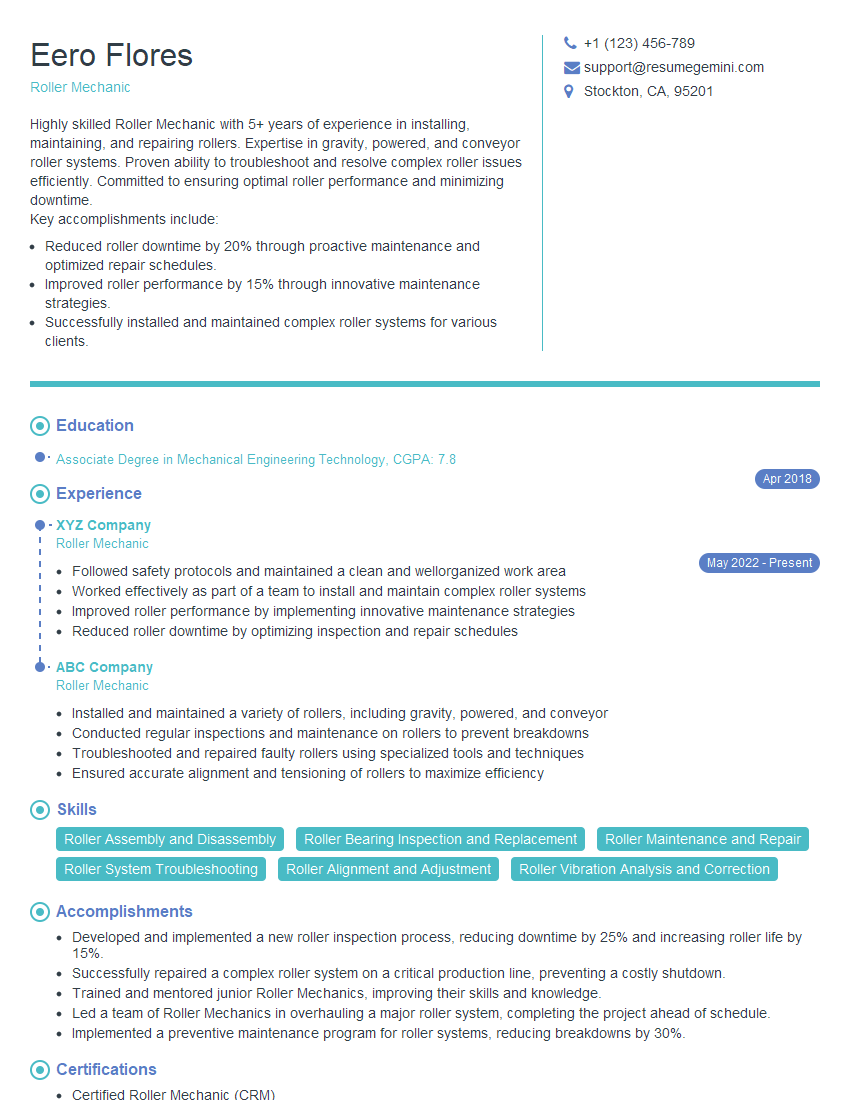
Mastering roller troubleshooting is crucial for a successful and rewarding career in many industries. Proficiency in this area demonstrates valuable problem-solving skills and a commitment to operational efficiency. To significantly boost your job prospects, create a resume that’s optimized for Applicant Tracking Systems (ATS). ResumeGemini is a trusted resource that can help you build a professional and impactful resume, ensuring your skills and experience shine. We provide examples of resumes tailored specifically to Roller Troubleshooting to help you get started.
Explore more articles
Users Rating of Our Blogs
Share Your Experience
We value your feedback! Please rate our content and share your thoughts (optional).
What Readers Say About Our Blog
Really detailed insights and content, thank you for writing this detailed article.
IT gave me an insight and words to use and be able to think of examples