Cracking a skill-specific interview, like one for Safety Compliance and Regulatory Knowledge, requires understanding the nuances of the role. In this blog, we present the questions you’re most likely to encounter, along with insights into how to answer them effectively. Let’s ensure you’re ready to make a strong impression.
Questions Asked in Safety Compliance and Regulatory Knowledge Interview
Q 1. Explain your understanding of OSHA’s General Duty Clause.
OSHA’s General Duty Clause, found in Section 5(a)(1) of the Occupational Safety and Health Act, is the cornerstone of workplace safety. It’s essentially a catch-all provision stating that employers must provide a workplace free from recognized hazards that are causing or are likely to cause death or serious physical harm. It’s not a specific standard listing every potential hazard, but rather a broad mandate requiring employers to proactively identify and control hazards. Think of it as a ‘common sense’ requirement. If a hazard is reasonably foreseeable and preventable, the employer has a duty to act, even if there isn’t a specific OSHA regulation addressing it directly.
For example, if an employer notices employees routinely walking on a slippery floor, and this creates a risk of falls, they are obligated to take corrective action even without a specific OSHA regulation about wet floors in that particular context. This could involve providing non-slip mats, implementing improved cleaning procedures, or providing appropriate footwear. The clause acts as a safety net, ensuring employers are responsible for identifying and mitigating any serious hazards within their workplace, regardless of specific OSHA standards.
Q 2. Describe your experience with conducting safety audits.
I’ve conducted numerous safety audits across various industries, from manufacturing to healthcare. My approach is systematic and comprehensive, involving a thorough review of written safety programs, physical inspections of the workplace, and interviews with employees at all levels. I use checklists tailored to the specific industry and regulatory requirements, but also rely on my observational skills to identify potential hazards that might not be immediately apparent.
For example, during a recent audit at a manufacturing facility, I noticed a lack of proper machine guarding on some equipment. While the facility had a documented safety program, the practical implementation was lacking. This highlighted a gap between policy and practice. I documented these findings, prioritized them based on their potential severity and likelihood, and provided recommendations for corrective actions. My reports always include photographic evidence and detailed descriptions of the findings to support my recommendations. I also focus on providing actionable insights and practical solutions to help organizations improve their safety performance, rather than just issuing a list of violations.
Q 3. How do you identify and assess workplace hazards?
Hazard identification and assessment is a crucial first step in any safety program. My approach is multi-faceted and involves a combination of techniques. I utilize a hierarchical approach, starting with a walk-through survey to visually inspect the work environment, followed by more detailed analysis using job hazard analysis (JHA), failure mode and effects analysis (FMEA), and checklists specific to the industry and the tasks being performed. I also leverage employee input through interviews, safety meetings, and near-miss reporting systems. This helps uncover hazards that may not be immediately obvious to an outsider.
For instance, in assessing a construction site, a simple walk-through might reveal inadequate scaffolding, while a JHA focusing on specific tasks like lifting heavy materials would identify additional hazards like improper lifting techniques or insufficient personal protective equipment (PPE). After identifying the hazards, I assess the risk using a risk matrix that considers the likelihood and severity of the hazard. This allows me to prioritize the control measures and allocate resources accordingly.
Q 4. What are your methods for developing and implementing safety programs?
Developing and implementing effective safety programs requires a holistic approach. It begins with a thorough hazard assessment, as discussed earlier. Once hazards are identified and assessed, I work collaboratively with the organization to develop a comprehensive safety program that includes clear policies, procedures, training, and emergency response plans. This program is documented and communicated effectively to all employees.
The program should be regularly reviewed and updated to reflect changes in the workplace, technology, or regulatory requirements. Regular safety training tailored to specific job roles is paramount, along with effective communication channels for reporting hazards and near misses. I emphasize the importance of a safety culture where employees feel empowered to report hazards without fear of reprisal. This is critical for creating a truly safe workplace. Following implementation, regular monitoring and auditing are essential to ensure the program’s effectiveness.
Q 5. Explain your knowledge of hazard communication standards (e.g., GHS).
The Globally Harmonized System of Classification and Labelling of Chemicals (GHS) is a globally accepted standard for classifying and communicating chemical hazards. My understanding encompasses the key elements: classification of chemicals based on their health, physical, and environmental hazards; the creation of safety data sheets (SDSs) which provide comprehensive information about the hazards and safe handling of chemicals; and the use of standardized labels on chemical containers to clearly communicate the hazards to workers.
Implementing GHS involves training employees to understand SDSs and labels, ensuring proper storage and handling of chemicals, and establishing emergency procedures in case of spills or exposure. I also ensure compliance with all relevant regulations, including OSHA’s Hazard Communication Standard (HCS), which aligns with GHS principles. A key aspect is ensuring that employees are provided with appropriate PPE and training on its proper use when handling hazardous chemicals. Non-compliance can lead to serious health consequences and significant penalties.
Q 6. How do you ensure compliance with relevant environmental regulations?
Ensuring environmental compliance involves understanding and adhering to a range of regulations, depending on the industry and location. This includes regulations concerning air emissions, water discharge, waste disposal, and the handling of hazardous materials. My approach involves a thorough review of the relevant regulations, conducting environmental audits to identify potential non-compliances, and developing and implementing environmental management systems (EMS).
This might include implementing pollution prevention programs, obtaining necessary permits, and maintaining detailed records of environmental activities. I work closely with environmental agencies to ensure compliance and to address any identified issues promptly. For instance, in a manufacturing setting, I would ensure compliance with Clean Air Act regulations regarding air emissions and Resource Conservation and Recovery Act (RCRA) regulations for the management of hazardous waste. Proactive environmental compliance not only avoids legal repercussions but also contributes to corporate social responsibility and environmental stewardship.
Q 7. Describe your experience with incident investigation and root cause analysis.
Incident investigation and root cause analysis are critical for preventing future incidents. My approach is systematic and data-driven, following a structured methodology. It starts with securing the scene, gathering evidence (witnesses, photos, videos, etc.), and creating a timeline of events. I then use various root cause analysis techniques, such as the ‘5 Whys’ method, fault tree analysis, and fishbone diagrams, to identify the underlying causes of the incident, moving beyond simply identifying immediate causes.
For example, if an employee was injured due to a fall from a ladder, simply stating the cause as ‘fell from a ladder’ is insufficient. The root cause analysis would delve deeper, exploring why the ladder was unstable (e.g., inadequate setup, damaged ladder, slippery surface), why the employee was using the ladder improperly (e.g., lack of training, time pressure), and ultimately identifying systemic issues within the organization. The findings are used to develop corrective and preventative actions to mitigate the risk of similar incidents occurring in the future. The entire investigation is thoroughly documented and shared with relevant stakeholders.
Q 8. How do you develop and deliver safety training programs?
Developing and delivering effective safety training programs requires a systematic approach. It begins with a thorough needs analysis to identify the specific safety hazards and training gaps within the organization. This involves reviewing incident reports, conducting job hazard analyses, and consulting with employees at all levels.
Once the needs are identified, I design a training program that addresses those specific needs. This includes choosing the appropriate training methods (e.g., classroom instruction, online modules, hands-on training, simulations), developing engaging learning materials, and selecting qualified instructors. For example, for a construction site, the training might cover topics like fall protection, hazard communication, and the proper use of power tools. For an office setting, it might focus on ergonomics, fire safety, and emergency procedures.
After delivering the training, I assess its effectiveness through methods like written tests, practical demonstrations, and observation of on-the-job performance. Continuous improvement is key; I regularly review and update training programs based on feedback, changes in regulations, and the evolution of workplace hazards. For instance, if a new piece of equipment is introduced, updated training on its safe operation would be crucial.
Q 9. What is your experience with safety management systems (e.g., ISO 45001)?
I have extensive experience with safety management systems, particularly ISO 45001. This international standard provides a framework for establishing, implementing, maintaining, and continually improving an occupational health and safety (OH&S) management system. My experience includes leading the implementation of ISO 45001 in several organizations, which involves conducting gap analyses, developing and documenting processes, conducting internal audits, and leading management reviews.
A key aspect of ISO 45001 is risk assessment. We utilize methods such as HAZOP (Hazard and Operability Study) and FMEA (Failure Mode and Effects Analysis) to identify potential hazards and evaluate the risks associated with them. Once identified, we implement control measures, ranging from engineering controls (e.g., guarding machinery) to administrative controls (e.g., work permits) and personal protective equipment (PPE). We then monitor the effectiveness of those controls through regular inspections and audits. For example, in one project, implementing ISO 45001 led to a 30% reduction in workplace accidents within a year.
Q 10. How do you manage safety risks and control measures?
Managing safety risks involves a proactive, multi-layered approach. It starts with a thorough risk assessment, using tools like HAZOP or bow-tie analysis to identify potential hazards and their consequences. The severity and likelihood of each hazard are assessed to determine the level of risk.
Based on the risk assessment, we implement control measures using the hierarchy of controls: elimination, substitution, engineering controls, administrative controls, and finally, PPE. For instance, if a machine poses a significant cutting hazard, we’d first try to eliminate it if possible. If not, we might substitute it with a safer machine. If neither is feasible, we’d implement engineering controls like machine guards, followed by administrative controls like safe operating procedures and, as a last resort, PPE like cut-resistant gloves.
Regular monitoring and review are vital. We conduct safety inspections, audits, and incident investigations to identify any gaps in controls or emerging risks. This iterative process allows for continuous improvement and ensures that safety risks remain effectively managed. For example, after an incident investigation, we might revise safety procedures or implement additional safeguards to prevent similar occurrences.
Q 11. Explain your understanding of emergency response planning and procedures.
Emergency response planning is crucial for mitigating the impact of unforeseen events. A comprehensive plan should include a detailed risk assessment identifying potential emergencies (e.g., fire, chemical spills, natural disasters), defining roles and responsibilities for emergency responders, establishing clear communication protocols, and outlining evacuation procedures.
The plan must be regularly reviewed and updated, with employees receiving training on their roles and responsibilities. Drills and simulations help familiarize employees with the plan and improve response effectiveness. For example, the plan should specify assembly points, emergency contact information, and the procedures for accounting for all personnel after an evacuation. It should also outline procedures for dealing with specific types of emergencies, such as providing first aid, containing spills, and contacting emergency services.
Post-incident analysis is vital to identify areas for improvement in the plan and response procedures. This learning process ensures continuous improvement and better preparedness for future emergencies.
Q 12. How do you conduct a Job Safety Analysis (JSA)?
A Job Safety Analysis (JSA) is a systematic process for identifying and controlling hazards associated with a specific job task. It involves a team analyzing each step of the job, identifying potential hazards at each step, and determining the appropriate control measures.
The process typically includes these steps: 1) Select the job task to be analyzed. 2) Break down the task into smaller, sequential steps. 3) Identify potential hazards associated with each step. 4) Determine the severity and likelihood of each hazard. 5) Develop and implement control measures to mitigate the hazards. 6) Document the findings and implement the JSA. For example, a JSA for operating a forklift might identify hazards such as collisions, falls from heights, and struck-by hazards, and suggest controls such as pre-shift inspections, proper training, and adherence to speed limits.
The completed JSA becomes a critical part of the job’s safety procedures, providing a reference guide for employees and supervisors. It should be updated whenever the job task changes or new hazards are identified.
Q 13. What are your methods for monitoring and evaluating safety performance?
Monitoring and evaluating safety performance is an ongoing process that uses various methods to assess the effectiveness of safety programs and identify areas for improvement. Key performance indicators (KPIs) such as the number of accidents, near misses, and lost-time injuries are tracked and analyzed.
Regular safety inspections, audits, and incident investigations provide valuable data to assess the effectiveness of control measures and identify potential hazards. Employee feedback is also crucial and is gathered through surveys, safety meetings, and suggestion boxes. Leading indicators, such as the number of safety training hours completed or the number of safety inspections conducted, predict future safety performance.
The data collected is analyzed to identify trends and patterns, and to inform decisions about how to improve safety performance. For example, a significant increase in near misses might indicate a need for additional training or improved safety procedures. This data-driven approach allows for a continuous improvement cycle, ultimately leading to a safer and more productive workplace.
Q 14. Describe your experience with personal protective equipment (PPE) selection and use.
Selecting and using personal protective equipment (PPE) is a critical aspect of workplace safety. The selection process begins with a hazard assessment to identify the specific hazards that require protection. For example, if employees are exposed to flying debris, then eye protection would be necessary; if working at heights, fall protection is required.
Once hazards are identified, appropriate PPE is selected based on factors such as the type of hazard, the level of protection required, and the comfort and fit of the equipment. Proper training on the correct selection, use, and maintenance of PPE is essential. Employees need to understand when to use PPE, how to properly don and doff it, and how to maintain it to ensure effectiveness.
Regular inspection and maintenance of PPE are crucial. Damaged or worn-out PPE should be replaced immediately. Enforcement of PPE usage policies and providing convenient access to PPE are equally important. A well-implemented PPE program significantly reduces the risk of workplace injuries.
Q 15. How do you handle safety violations and non-compliance issues?
Handling safety violations and non-compliance begins with prompt investigation. I follow a structured approach: first, I thoroughly investigate the incident to identify the root cause, not just the immediate symptoms. This involves gathering evidence, interviewing witnesses, and reviewing relevant documentation like training records and safety procedures. Then, I assess the severity of the violation using established criteria, considering factors like potential harm and regulatory implications. Corrective actions are implemented immediately to prevent recurrence. This might involve retraining employees, modifying equipment, or improving safety procedures. Finally, I document everything meticulously, including the investigation findings, corrective actions taken, and their effectiveness, ensuring compliance with reporting regulations.
For example, if a worker sustained a minor injury due to improper use of equipment, I’d investigate why the equipment was used incorrectly. Was there inadequate training? Was the equipment poorly designed? Was there a lack of adequate supervision? Once I determine the root cause (say, inadequate training), I’d implement corrective actions like providing refresher training and ensuring appropriate supervision. The entire process is then documented in incident reports, ensuring transparency and accountability.
Career Expert Tips:
- Ace those interviews! Prepare effectively by reviewing the Top 50 Most Common Interview Questions on ResumeGemini.
- Navigate your job search with confidence! Explore a wide range of Career Tips on ResumeGemini. Learn about common challenges and recommendations to overcome them.
- Craft the perfect resume! Master the Art of Resume Writing with ResumeGemini’s guide. Showcase your unique qualifications and achievements effectively.
- Don’t miss out on holiday savings! Build your dream resume with ResumeGemini’s ATS optimized templates.
Q 16. Explain your knowledge of different types of safety inspections.
Safety inspections are crucial for proactive risk management. There are several types, each serving a different purpose. Routine inspections are regularly scheduled checks to identify minor hazards before they escalate. Targeted inspections focus on specific areas or equipment identified as high-risk or following a near-miss incident. Compliance inspections ensure adherence to regulatory standards and internal policies, often conducted by external auditors or regulatory bodies. Incident investigations are conducted after an accident or near-miss to understand the root cause and prevent similar events. Each inspection type requires a different approach and level of detail, using checklists, observation, and documentation to ensure thoroughness.
For instance, a routine inspection of a workshop might include checking for proper use of personal protective equipment (PPE), the condition of machinery, and the organization of the workspace. A targeted inspection might be conducted after a near-miss involving a forklift, focusing on forklift operation procedures, maintenance records, and operator training. Compliance inspections often involve reviewing documentation and comparing it against established standards.
Q 17. How do you communicate safety information effectively to employees?
Effective safety communication is paramount. I employ a multi-faceted approach, utilizing various channels and methods tailored to different audiences and situations. This includes regular safety meetings, toolbox talks (brief safety discussions at the start of work), email updates, posters and visual aids, and online training modules. I prioritize clarity, conciseness, and visual appeal, ensuring the information is easily understood and memorable. I also encourage two-way communication, creating opportunities for employees to ask questions, express concerns, and provide feedback. For example, safety alerts about specific hazards are communicated immediately through multiple channels like emails and text messages. Training is offered using interactive modules followed by practical assessments to ensure understanding.
Furthermore, I use storytelling and real-life examples to make safety messages more relatable and engaging. Instead of just stating a rule, I’ll explain why the rule is important through the impact of potential accidents and their consequences. I also use positive reinforcement to encourage safe behavior, recognizing and rewarding employees for their commitment to safety.
Q 18. What is your experience with regulatory reporting and recordkeeping?
My experience with regulatory reporting and recordkeeping is extensive. I am proficient in maintaining accurate and complete records of all safety-related activities, including incident reports, training records, inspection reports, and safety audits. This ensures compliance with various regulatory agencies’ reporting requirements, such as OSHA (Occupational Safety and Health Administration) in the US or equivalent agencies in other regions. I am adept at using different recordkeeping systems, both paper-based and electronic, ensuring data integrity and easy retrieval. I understand the importance of confidentiality and data protection and follow all relevant privacy guidelines.
I’ve personally managed the creation and maintenance of safety databases and reporting systems, ensuring timely and accurate submission of all required reports to regulatory agencies. This includes generating reports on Key Risk Indicators (KRIs) and safety performance metrics to track progress and identify areas for improvement.
Q 19. How do you stay updated on changes in safety regulations and standards?
Staying updated on changes in safety regulations and standards is a continuous process. I subscribe to relevant professional organizations and publications, attend industry conferences and webinars, and actively participate in online forums. I regularly review updates from regulatory agencies’ websites and use online resources like legal databases to stay informed about new legislation and interpretative guidance. I also maintain a network of contacts within the safety field to share information and insights. For example, I follow OSHA’s website for updates on new regulations and guidance documents. I also subscribe to professional journals like ‘Professional Safety’ to stay informed of current industry trends and best practices.
Q 20. Describe your experience with developing safety policies and procedures.
I have significant experience in developing safety policies and procedures, ensuring they are legally compliant, practical, and readily understood by employees. My process typically involves conducting a thorough risk assessment, identifying potential hazards, and evaluating the associated risks. Then, I develop policies and procedures to mitigate those risks, incorporating best practices and industry standards. I ensure that these documents are reviewed and approved by relevant stakeholders and are regularly updated to reflect changes in legislation, technology, or best practice. I also incorporate employee feedback during the development process to ensure buy-in and effectiveness.
For example, I have developed comprehensive safety manuals for various organizations, covering aspects such as hazard identification, emergency procedures, PPE usage, and safe work practices. These manuals are accessible to all employees and regularly reviewed and updated to reflect changes in company operations or regulatory requirements. Each policy is created with a specific goal, like minimizing workplace injuries, and includes clear steps on how employees should respond to identified hazards.
Q 21. Explain your experience with working with regulatory agencies.
I have extensive experience collaborating with regulatory agencies, including participating in inspections, providing necessary documentation, and addressing any identified non-compliances. I understand the importance of maintaining open and professional communication with these agencies, ensuring timely responses to inquiries and providing clear and accurate information. I have successfully navigated complex regulatory processes, ensuring that my organization maintains compliance and minimizes potential penalties. For instance, I have worked with OSHA inspectors during workplace inspections, providing them with all necessary documentation and proactively addressing any concerns they may have raised. This open and collaborative approach resulted in a positive inspection outcome and strengthened our safety program.
Q 22. How do you measure the effectiveness of safety programs?
Measuring the effectiveness of a safety program isn’t a one-size-fits-all approach. It requires a multi-faceted strategy focusing on lagging and leading indicators. Lagging indicators are retrospective measures showing the results of safety efforts, like the number of accidents or injuries. Leading indicators, on the other hand, predict future performance by assessing proactive safety behaviors and practices.
- Lagging Indicators: These include the total recordable incident rate (TRIR), lost time incident rate (LTIR), days away from work (DAFW), and medical treatment rate. Analyzing trends in these metrics over time reveals the program’s impact. For instance, a consistent downward trend suggests program effectiveness.
- Leading Indicators: These are more proactive. Examples include the number of safety training hours completed, near-miss reports filed, safety audits conducted, and employee participation in safety committees. A high number of near-miss reports, while initially seeming negative, actually shows a strong safety culture where employees feel comfortable reporting potential hazards before accidents occur.
- Surveys and Observations: Employee surveys gauge safety awareness, perceptions of management commitment, and the overall safety climate. Direct observation of workplace practices can identify areas needing improvement.
By combining lagging and leading indicators, a comprehensive picture emerges, allowing for adjustments and improvements to the safety program. It’s crucial to set baseline metrics and regularly monitor progress to ensure the program stays effective and adapts to changing needs.
Q 23. Describe a time you had to deal with a difficult safety issue.
In a previous role, we faced a critical safety issue involving a malfunctioning piece of equipment on a production line. This equipment was crucial to maintaining production targets, but its continued operation posed a significant risk of serious injury to operators. The initial response was to shut down the line, causing immediate production loss. However, the pressure to quickly resolve the issue and resume production was intense.
My approach involved a methodical, multi-step process. First, I secured the malfunctioning equipment to prevent accidental operation. Next, I assembled a team of maintenance personnel, engineers, and safety specialists to diagnose the problem. We conducted a thorough risk assessment to understand the root cause of the malfunction and potential hazards. This assessment included reviewing maintenance logs, conducting visual inspections, and involving the operators who reported the issue.
Based on the risk assessment, we prioritized repairs, implementing interim safety measures (e.g., additional barriers, lockout/tagout procedures) while the equipment was being fixed. Open communication was key – we kept all stakeholders informed of the progress and timeline for repairs. We carefully documented every step taken, including all corrective actions and preventive measures implemented. The issue was resolved safely and efficiently, minimizing both production downtime and safety risks. Following the incident, we implemented new, more rigorous maintenance protocols to prevent similar future occurrences.
Q 24. How do you prioritize safety concerns in a fast-paced environment?
Prioritizing safety concerns in a fast-paced environment necessitates a structured approach. While speed is essential, compromising safety is unacceptable. I utilize a risk-based prioritization method that involves:
- Risk Assessment: Quickly assess each concern using a standardized matrix considering the likelihood and severity of potential harm. This could involve assigning scores (e.g., low, medium, high) for each factor. A higher total score indicates higher priority.
- Severity and Urgency: Categorize issues by severity (e.g., minor injury potential versus fatality potential) and urgency (immediate action required versus allowing for some planning time).
- Impact Analysis: Consider the potential impact of the hazard on production, personnel, and the environment. This helps to align safety concerns with overall business objectives.
- Resource Allocation: Based on the prioritization, allocate resources effectively to address the most critical concerns first. This ensures the most significant risks are mitigated swiftly.
This method enables me to make informed decisions about where to focus resources and efforts even under significant time constraints. Remember, prevention is always cheaper and more effective than remediation.
Q 25. How do you handle conflicting priorities related to safety and production?
Conflicting priorities between safety and production are common, but safety must always take precedence. Compromising safety for production gains is never acceptable. Addressing this conflict requires skillful negotiation and clear communication.
My strategy focuses on:
- Data-Driven Decision-Making: Use data to demonstrate the long-term costs of accidents and injuries, including lost production time, medical expenses, legal liabilities, and reputational damage. This often helps to counter short-term production pressures.
- Proactive Solutions: Instead of reacting to problems, focus on proactive measures to improve safety. This may involve implementing new technologies, processes, or training programs that enhance safety without significant disruptions to production.
- Collaboration: Involve all stakeholders – production managers, safety officers, and workers – in finding solutions that balance safety and efficiency. Collaborative problem-solving is crucial for finding creative and practical solutions.
- Leadership Support: Secure commitment from leadership to prioritize safety. Their support is vital in making difficult decisions and allocating resources effectively.
Ultimately, a well-managed safety program will improve efficiency and reduce production downtime in the long run. Investing in safety is investing in a productive and sustainable business.
Q 26. What are your strategies for promoting a positive safety culture?
Promoting a positive safety culture is an ongoing process requiring consistent effort. It’s not just about rules and regulations; it’s about creating an environment where safety is everyone’s responsibility.
My strategies include:
- Leadership Commitment: Leaders must visibly champion safety and demonstrate a genuine commitment to it through their actions and decisions. This sets the tone for the entire organization.
- Open Communication: Establish channels for open communication about safety concerns, near misses, and hazards. Encourage employees to report incidents without fear of reprisal.
- Training and Education: Provide regular, comprehensive safety training that is tailored to specific job roles and hazards. Effective training builds knowledge, improves skills, and fosters a culture of safety awareness.
- Employee Involvement: Establish safety committees and involve employees in developing and implementing safety programs. This fosters ownership and improves buy-in.
- Recognition and Rewards: Acknowledge and reward employees who demonstrate exemplary safety behaviors. This reinforces positive actions and motivates others to follow suit.
- Continuous Improvement: Regularly review and update safety procedures based on accident investigations, audits, and employee feedback. Continuous improvement shows employees their input matters.
Building a strong safety culture is a journey, not a destination. It requires consistent effort and ongoing adaptation to ensure safety remains a core value of the organization.
Q 27. How do you adapt safety procedures to changing work conditions?
Adapting safety procedures to changing work conditions requires a proactive and flexible approach. It’s essential to regularly assess the workplace for potential hazards, and modify safety procedures accordingly.
My approach involves:
- Regular Inspections: Conduct routine workplace inspections to identify potential hazards that may arise from changes in equipment, processes, materials, or personnel.
- Job Hazard Analysis (JHA): Perform JHAs for new tasks or modified processes to identify potential hazards and develop appropriate control measures. A JHA is a systematic process for identifying and controlling hazards associated with specific jobs.
- Risk Assessments: Conduct risk assessments to evaluate the likelihood and severity of hazards and prioritize control measures based on risk level.
- Communication and Training: Keep employees informed of changes in safety procedures through clear and concise communication. Provide appropriate training to ensure they understand and can follow the updated procedures.
- Documentation: Maintain updated records of all safety procedures, risk assessments, and training records. Thorough documentation provides a valuable record for future reference.
By consistently monitoring and adapting safety procedures, you ensure the workplace remains safe and compliant, even in the face of evolving conditions.
Q 28. Describe your experience with safety data sheets (SDS) and their proper use.
Safety Data Sheets (SDS), formerly known as Material Safety Data Sheets (MSDS), are crucial documents providing comprehensive information about the hazards of chemical products and how to work with them safely. My experience with SDS involves their proper handling, interpretation, and application in various workplace settings.
My knowledge encompasses:
- SDS Access and Review: Ensuring readily available and easily accessible SDS for all chemicals used in the workplace. I conduct regular reviews of SDS to ensure they are current and reflect the latest information provided by the manufacturer.
- Understanding SDS Content: I am proficient in interpreting the various sections of an SDS, including identification, hazards identification, composition/information on ingredients, first-aid measures, fire-fighting measures, accidental release measures, handling and storage, exposure controls/personal protection, physical and chemical properties, stability and reactivity, toxicological information, ecological information, disposal considerations, transport information, regulatory information, and other information. I understand the importance of each section and how it applies to workplace safety.
- Training and Communication: I ensure that all employees who handle chemicals receive adequate training on the interpretation and use of SDS. I also communicate the critical information from SDS to employees in a clear and concise manner, avoiding technical jargon where possible.
- SDS Implementation in Safety Programs: I integrate SDS information into various safety programs, such as chemical hygiene plans, emergency response plans, and employee training programs. This ensures the information is appropriately applied in practice.
- Compliance: I ensure compliance with all relevant regulations regarding SDS access, handling, and training.
Proper handling of SDS is not merely a matter of compliance; it is fundamental to protecting workers’ health and safety.
Key Topics to Learn for Your Safety Compliance and Regulatory Knowledge Interview
Ace your interview by mastering these key areas. Remember, practical application and problem-solving are just as important as theoretical understanding.
- Occupational Health and Safety (OHS) Legislation: Understand the core principles and relevant legislation in your region. This includes knowing how to interpret regulations and apply them to real-world scenarios.
- Hazard Identification and Risk Assessment: Learn various methodologies for identifying workplace hazards, assessing risks, and implementing effective control measures. Be prepared to discuss practical examples and different risk mitigation strategies.
- Emergency Preparedness and Response: Demonstrate your knowledge of emergency procedures, including evacuation plans, first aid, and incident reporting. Be ready to explain your role in a crisis situation.
- Incident Investigation and Reporting: Understand the process of investigating workplace incidents, including root cause analysis and the importance of accurate reporting. Practice explaining your approach to incident investigation.
- Safety Audits and Inspections: Familiarize yourself with different audit methodologies and be able to discuss how to conduct effective safety inspections, identify non-compliances, and recommend corrective actions.
- Safety Training and Communication: Show your understanding of effective safety training methods and the importance of clear communication to ensure compliance. Be ready to discuss how to tailor training to different audiences.
- Environmental Regulations (if applicable): Depending on the role, understanding relevant environmental regulations and their impact on safety procedures may be crucial.
Next Steps: Unlock Your Career Potential
Mastering Safety Compliance and Regulatory Knowledge is key to advancing your career. A strong understanding of these topics demonstrates your commitment to workplace safety and positions you as a valuable asset to any organization. To maximize your job prospects, it’s vital to present your skills effectively. An ATS-friendly resume is your first impression – make it count! Use ResumeGemini to build a professional resume that highlights your qualifications and gets noticed by recruiters. ResumeGemini provides examples of resumes tailored to Safety Compliance and Regulatory Knowledge to help you craft a winning application.
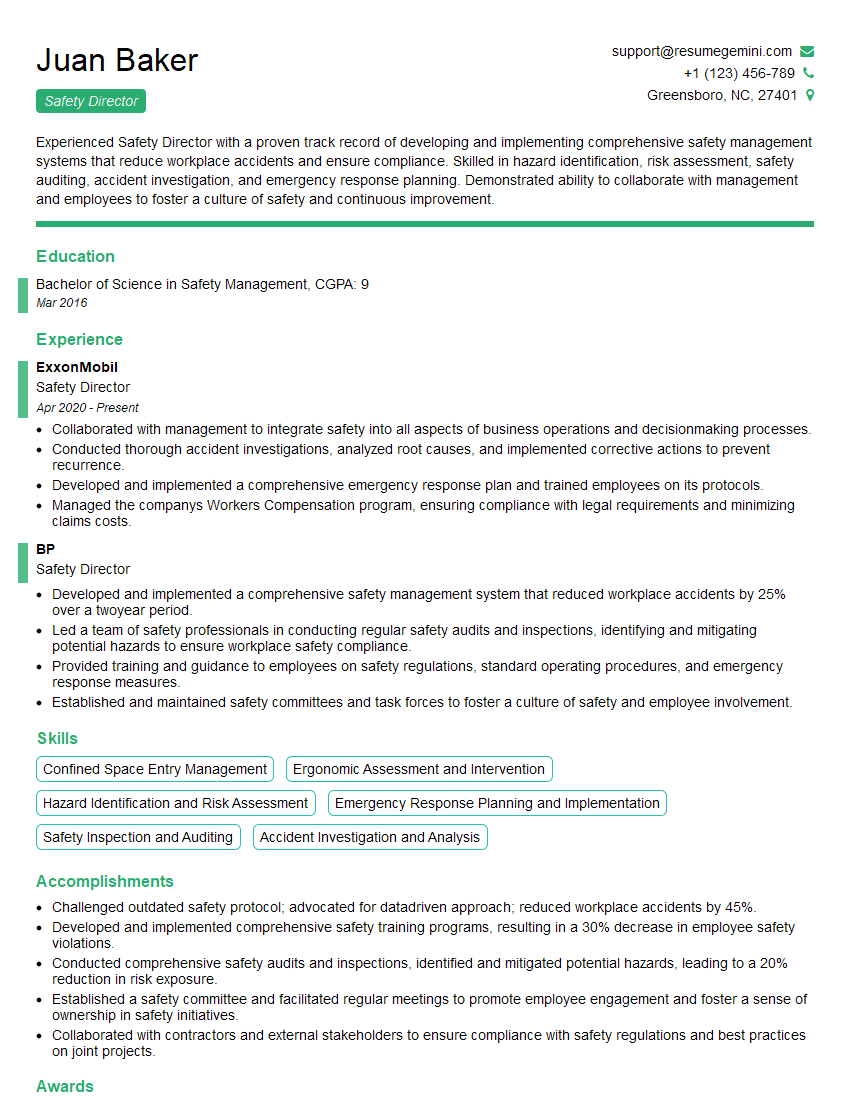
Safety Director Resume Sample
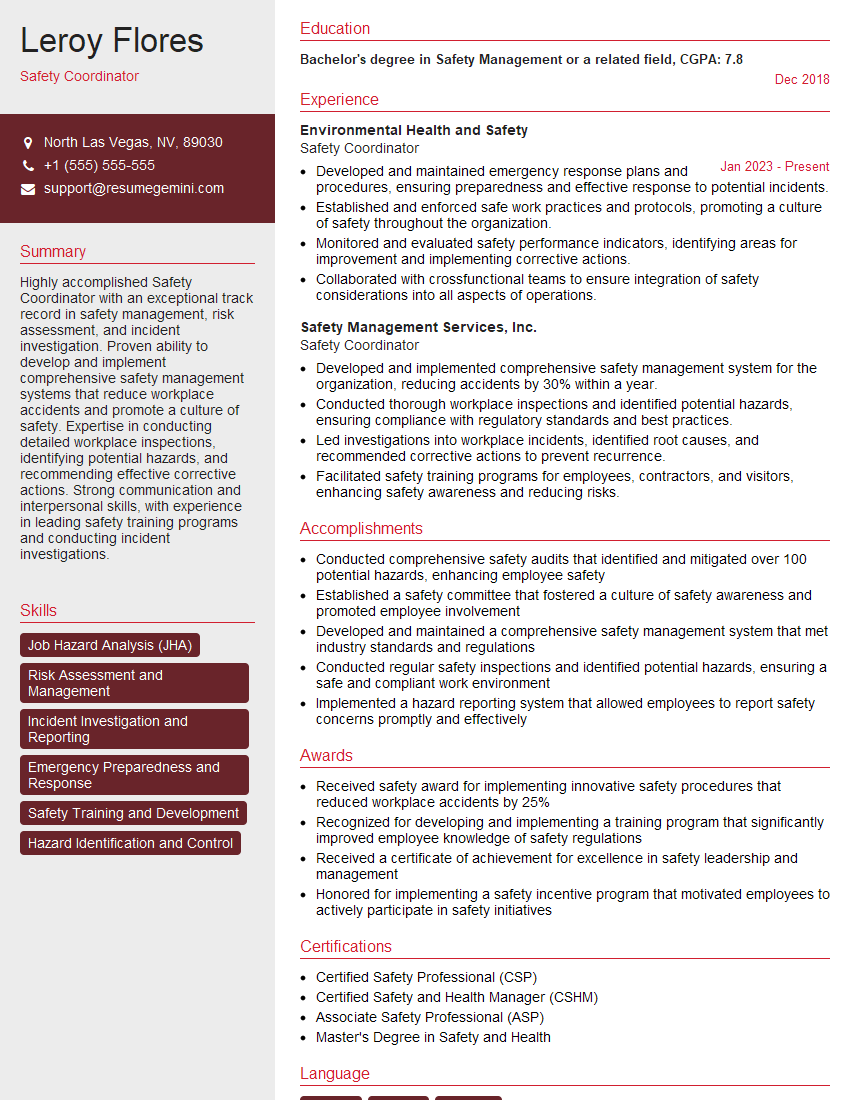
Safety Coordinator Resume Sample
Regulatory Affairs Manager Resume Sample
Compliance Officer Resume Sample
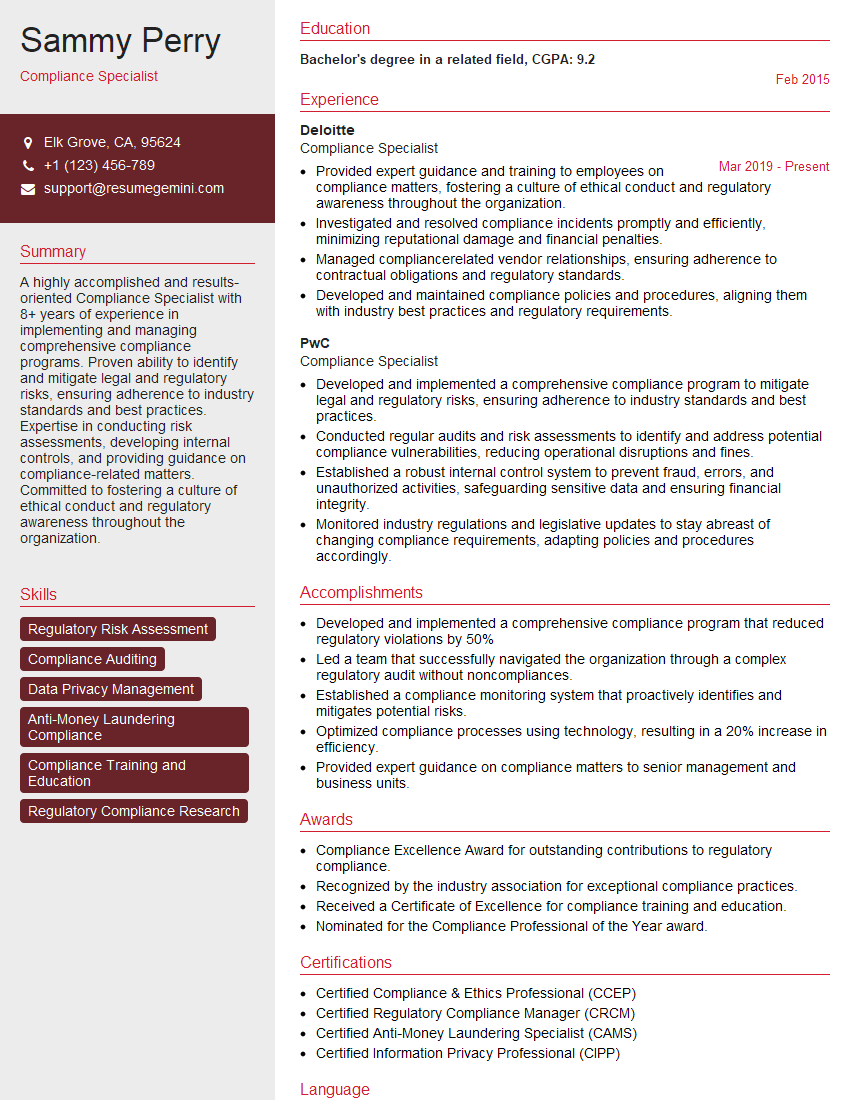
Compliance Specialist Resume Sample
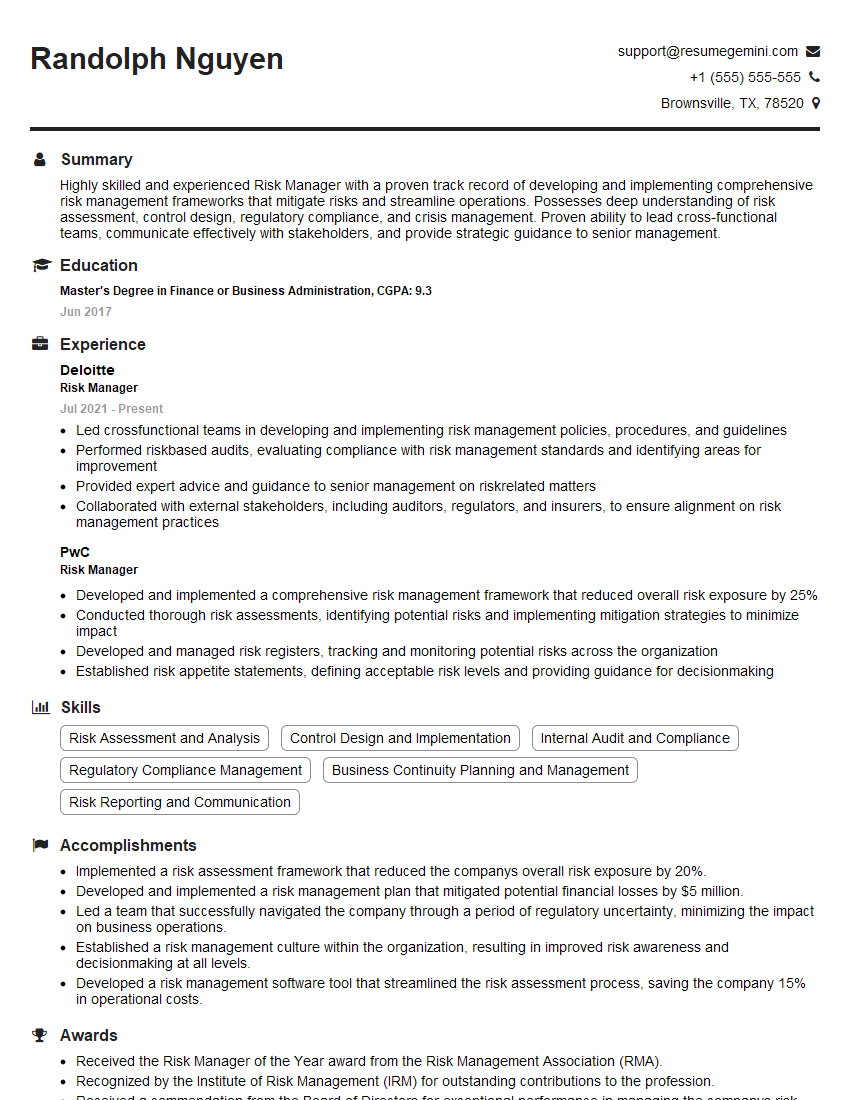
Risk Manager Resume Sample
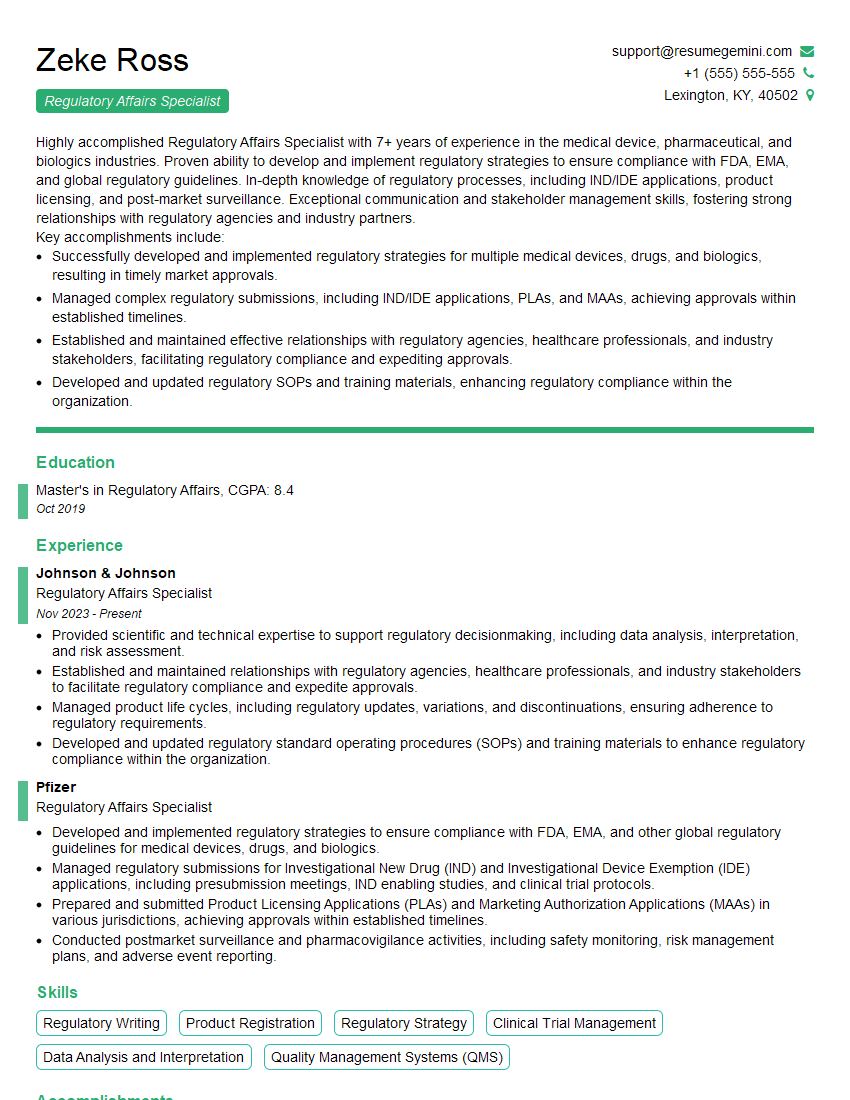
Regulatory Affairs Specialist Resume Sample
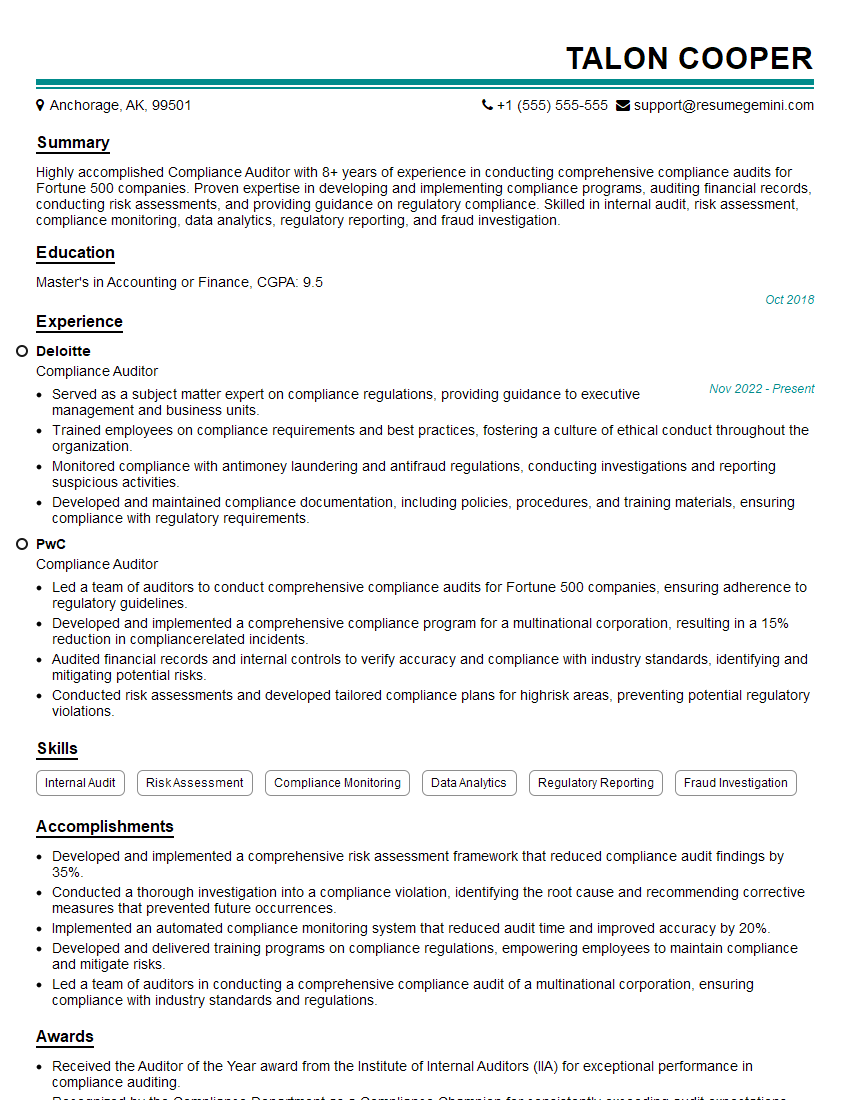
Compliance Auditor Resume Sample
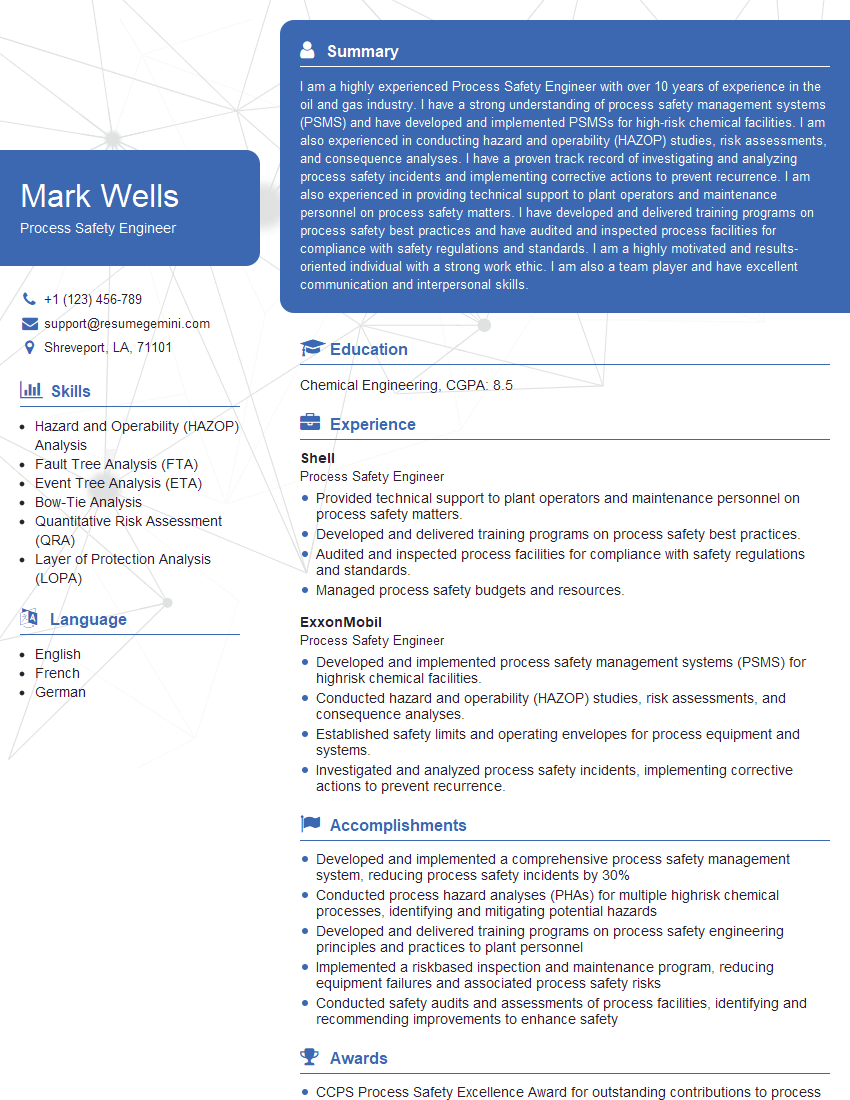
Process Safety Engineer Resume Sample
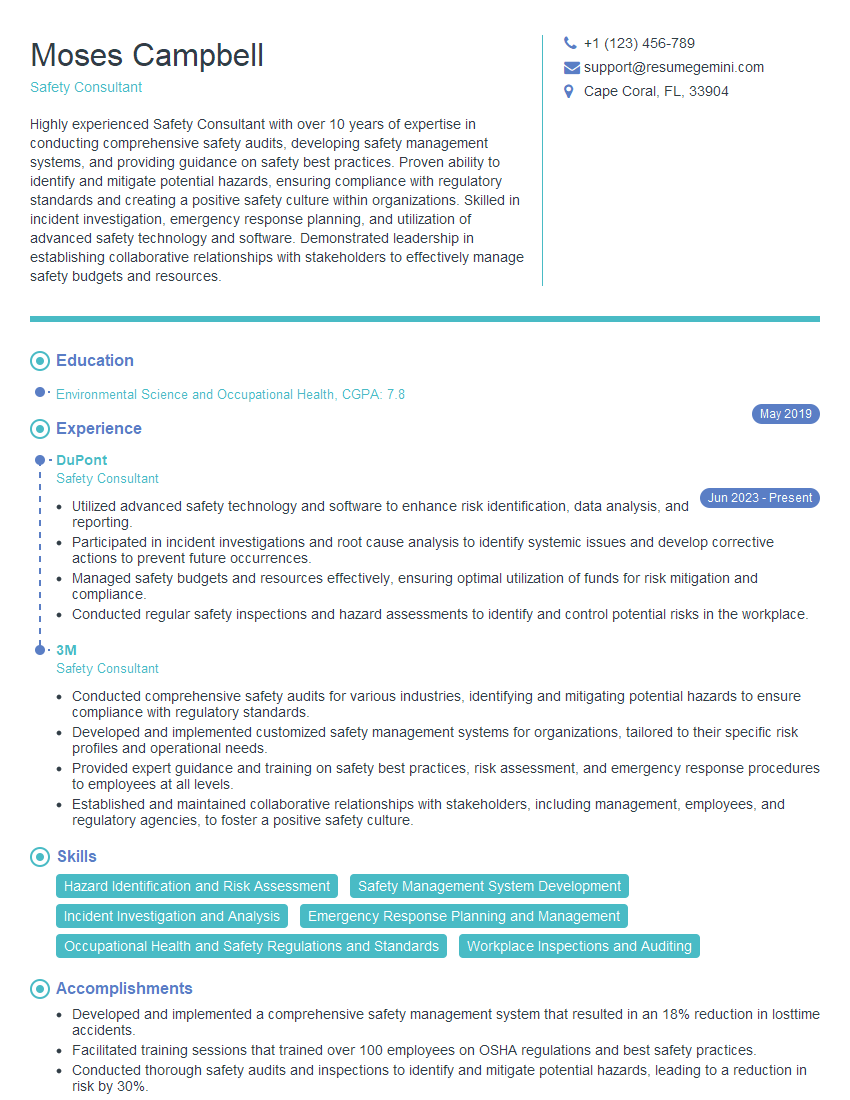
Safety Consultant Resume Sample
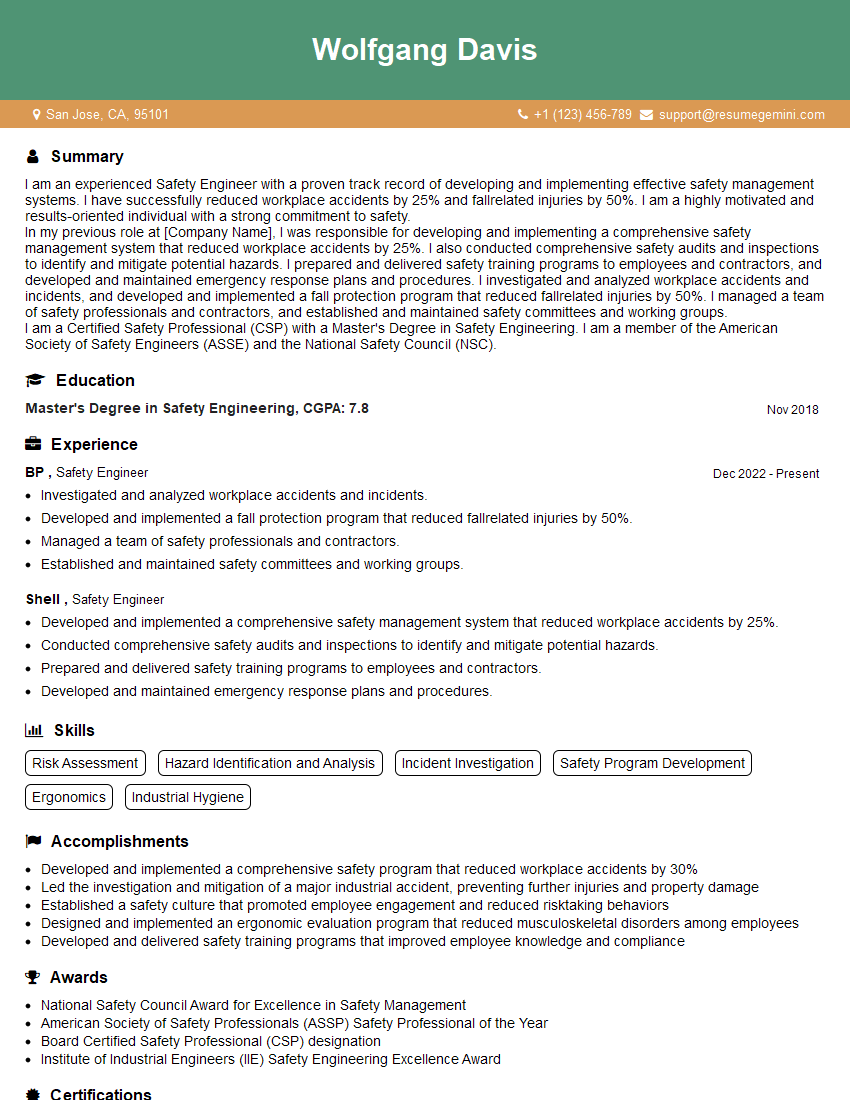
Safety Engineer Resume Sample
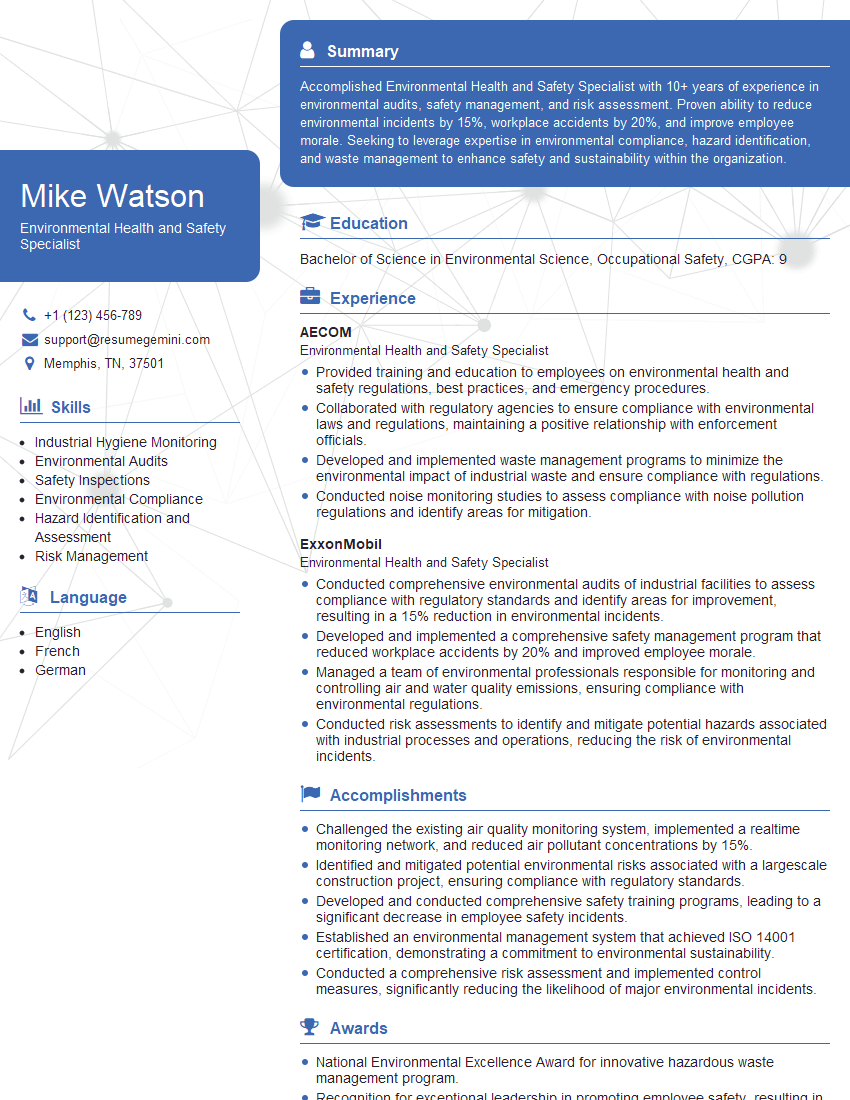
Environmental Health and Safety Specialist Resume Sample
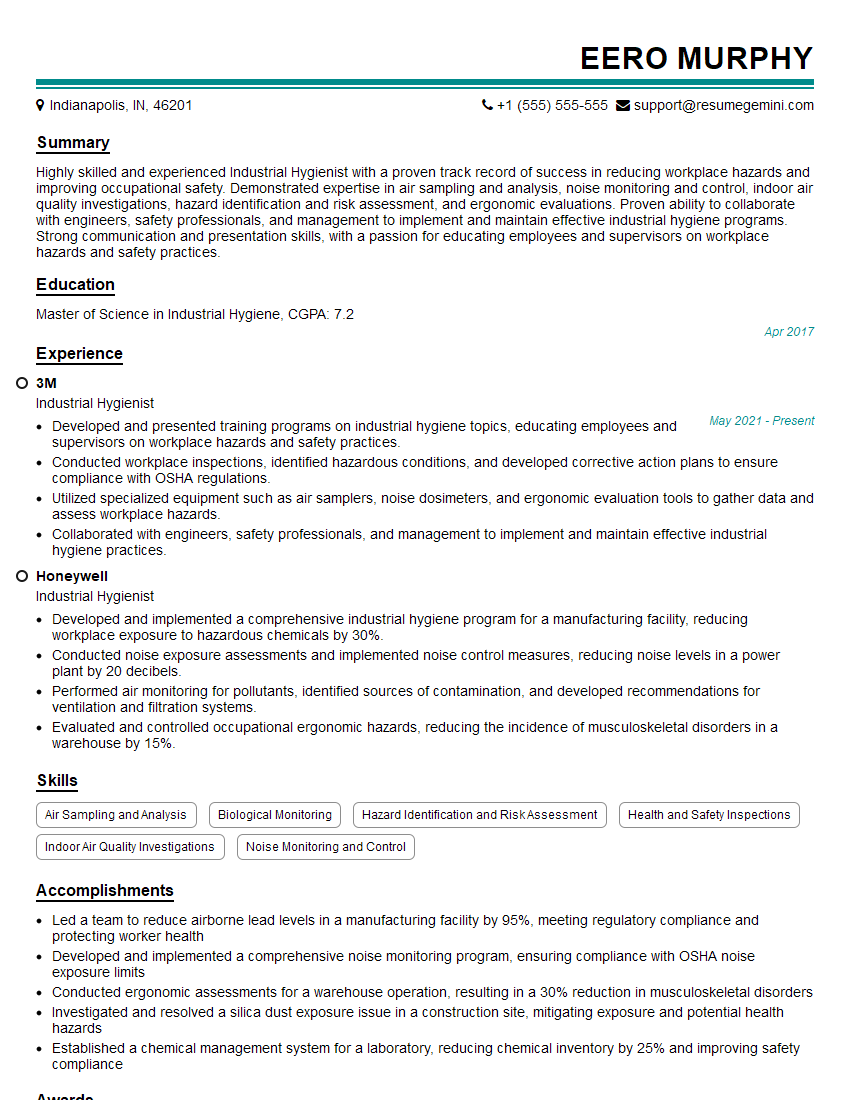
Industrial Hygienist Resume Sample
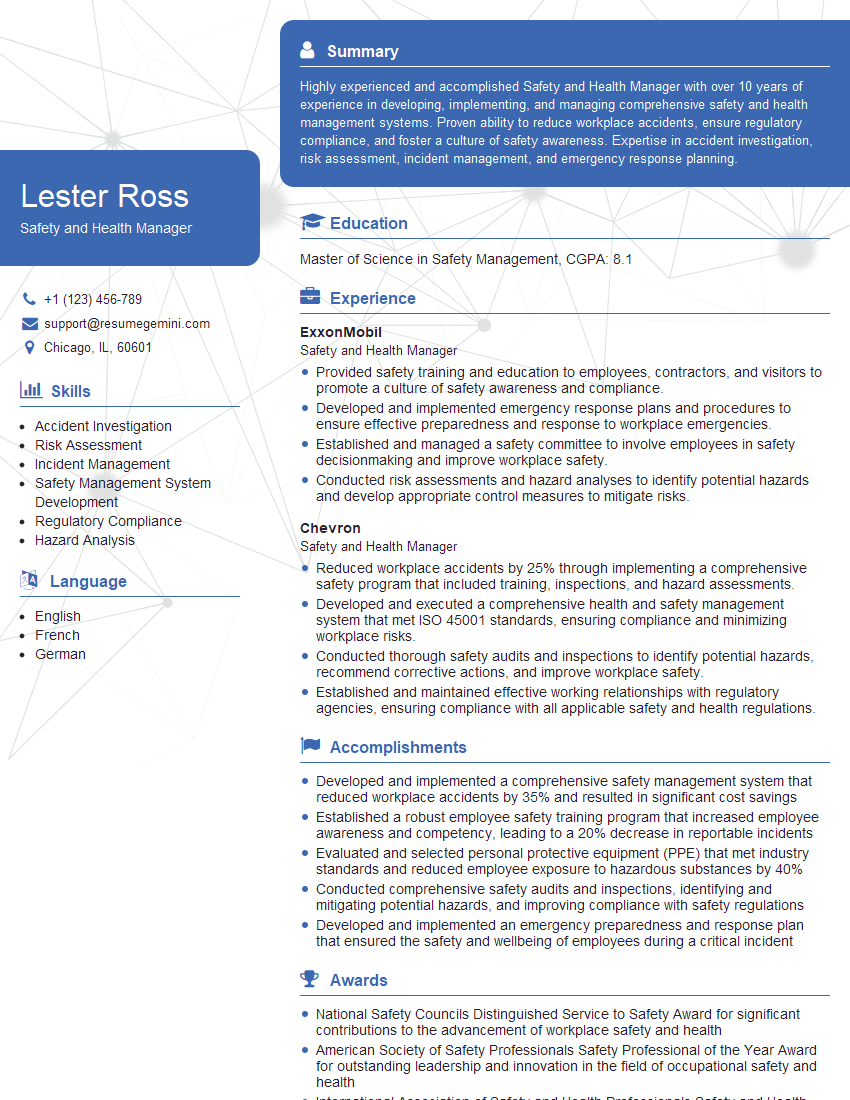
Safety and Health Manager Resume Sample
- Safety Director
- Safety Coordinator
- Regulatory Affairs Manager
- Compliance Officer
- Compliance Specialist
- Risk Manager
- Regulatory Affairs Specialist
- Compliance Auditor
- Process Safety Engineer
- Safety Consultant
- Safety Engineer
- Environmental Health and Safety Specialist
- Industrial Hygienist
- Safety and Health Manager
Explore more articles
Users Rating of Our Blogs
Share Your Experience
We value your feedback! Please rate our content and share your thoughts (optional).
What Readers Say About Our Blog
Really detailed insights and content, thank you for writing this detailed article.
IT gave me an insight and words to use and be able to think of examples