The right preparation can turn an interview into an opportunity to showcase your expertise. This guide to Sampling Theory interview questions is your ultimate resource, providing key insights and tips to help you ace your responses and stand out as a top candidate.
Questions Asked in Sampling Theory Interview
Q 1. Explain the Central Limit Theorem and its relevance to sampling.
The Central Limit Theorem (CLT) is a cornerstone of sampling theory. It states that the distribution of the sample means from a large number of independent, identically distributed (i.i.d.) random samples, regardless of the shape of the population distribution, will approximate a normal distribution. This approximation improves as the sample size increases.
Relevance to Sampling: The CLT is crucial because it allows us to make inferences about a population based on a sample, even if we don’t know the population’s distribution. We can use the properties of the normal distribution (like known percentiles) to calculate confidence intervals and test hypotheses about population parameters (like the mean or proportion) using sample statistics.
Example: Imagine you want to estimate the average height of all students in a university. Measuring everyone is impractical. The CLT ensures that if you take many random samples of students and calculate the average height for each sample, these averages will be normally distributed, centered around the true average height of the entire student population. This allows you to use the sample mean and standard deviation to infer the population mean with a specified level of confidence.
Q 2. What are the key differences between probability and non-probability sampling?
The core difference between probability and non-probability sampling lies in how samples are selected. In probability sampling, every member of the population has a known, non-zero chance of being selected. This allows for generalizations to the entire population. In non-probability sampling, the probability of selection is unknown, and the sample may not accurately represent the population. This limits the generalizability of findings.
Think of it like this: probability sampling is like drawing names from a hat where each name has an equal chance of being drawn. Non-probability sampling is like grabbing a handful of names from the hat without knowing which names you’re selecting.
Q 3. Describe different types of probability sampling methods (e.g., simple random, stratified, cluster).
Probability sampling methods ensure every population member has a known chance of selection, enhancing the representativeness of the sample. Here are some key types:
- Simple Random Sampling: Each member has an equal and independent chance of selection. Imagine randomly selecting names from a hat.
- Stratified Sampling: The population is divided into strata (subgroups) based on relevant characteristics (e.g., age, gender). A random sample is then drawn from each stratum. This ensures representation from all subgroups.
- Cluster Sampling: The population is divided into clusters (e.g., geographical areas, schools). A random sample of clusters is selected, and all members within the selected clusters are included in the sample. This is cost-effective for large, geographically dispersed populations.
- Systematic Sampling: Members are selected at regular intervals from a list. For example, selecting every 10th person from an alphabetized list. Note: this requires a randomly ordered list to avoid bias.
Q 4. Explain different types of non-probability sampling methods (e.g., convenience, quota, snowball).
Non-probability sampling methods don’t guarantee every population member a chance of selection. They are often used when probability sampling is difficult or impossible, but the results are less generalizable. Some common types are:
- Convenience Sampling: Selecting participants readily available (e.g., surveying students in a university cafeteria). This is easy but highly susceptible to bias.
- Quota Sampling: Selecting participants based on pre-defined quotas for subgroups (e.g., ensuring a certain number of males and females). It attempts to improve representation, but selection within quotas is non-random.
- Snowball Sampling: Participants are asked to refer other potential participants. This is useful for reaching hard-to-reach populations (e.g., individuals with rare diseases) but can lead to bias because the sample is not representative.
- Purposive Sampling: Researchers select participants based on their expertise or knowledge related to the study topic. This is common in qualitative research.
Q 5. What is sampling bias? Give examples of common sampling biases.
Sampling bias occurs when the sample is not representative of the population, leading to inaccurate conclusions. It systematically favors certain segments of the population over others. This can arise from various sources:
- Selection Bias: Certain groups are more likely to be selected than others (e.g., only surveying people who are easily accessible).
- Non-response Bias: A significant portion of selected participants don’t respond, potentially skewing the results. Those who respond might differ systematically from those who don’t.
- Undercoverage Bias: Parts of the population are excluded from the sampling frame (e.g., excluding landlines in a phone survey, missing a segment of the population).
Example: A survey conducted only online would exclude individuals without internet access, leading to undercoverage bias. A survey about job satisfaction conducted only during working hours would exclude unemployed individuals, resulting in selection bias.
Q 6. How do you determine the appropriate sample size for a given study?
Determining the appropriate sample size depends on several factors: the desired level of precision (margin of error), the desired confidence level, the population size (though less crucial for large populations), and the variability within the population (estimated through the standard deviation or pilot study).
Methods for Determining Sample Size: There are various formulas and software tools (like G*Power) to calculate sample size. These often involve specifying the desired margin of error, confidence level, and an estimate of population variability. For proportions, you might use a formula based on the standard error of a proportion. For means, you might use a formula based on the standard error of the mean.
Example: For a survey estimating the proportion of people who prefer a certain product, you might need a larger sample size if you want a smaller margin of error (higher precision) or a higher confidence level (e.g., 99% instead of 95%). The variability in product preferences will also influence the required sample size.
Q 7. Explain the concept of confidence intervals and margin of error.
Confidence intervals provide a range of values within which the true population parameter is likely to lie, with a specified level of confidence. The margin of error is half the width of the confidence interval.
Example: A 95% confidence interval for the average income of a city might be $50,000 to $60,000. This means we are 95% confident that the true average income of the city’s population falls within this range. The margin of error is ($60,000 – $50,000)/2 = $5,000.
Relationship: A higher confidence level (e.g., 99% instead of 95%) leads to a wider confidence interval and a larger margin of error. A smaller margin of error requires a larger sample size.
Q 8. How do you address non-response bias in a survey?
Non-response bias occurs when the individuals who respond to a survey differ systematically from those who don’t. This can skew the results and make them unrepresentative of the population. Addressing it requires a multi-pronged approach.
- Improve Response Rates: Incentives (gift cards, lottery entries), shorter surveys, personalized invitations, multiple contact attempts (email, phone, mail), and clear communication about the survey’s importance can significantly boost response rates, reducing the potential bias.
- Weighting: If you know something about the non-respondents (e.g., demographics from a larger dataset), you can adjust the weights given to respondents to better reflect the population. For instance, if a significant portion of non-respondents are from a particular age group, you might increase the weight given to responses from that age group in your analysis.
- Imputation: Statistical techniques can estimate missing data based on available data from similar respondents. This is a complex process requiring careful consideration and should be employed cautiously.
- Analyze Non-Response: Investigate why people didn’t respond. A follow-up survey of non-respondents, even a smaller-scale one, can provide valuable insight into whether there are systematic differences between respondents and non-respondents.
For example, if you’re surveying customer satisfaction and find that younger customers are less likely to respond, your weighting or imputation strategies should address this to avoid misrepresenting the overall satisfaction level.
Q 9. What is stratified sampling and when is it most appropriate?
Stratified sampling involves dividing the population into distinct subgroups (strata) based on relevant characteristics, and then randomly sampling from each stratum. This ensures representation from all subgroups. It’s most appropriate when:
- Subgroup differences are important: If you need to understand differences between subgroups (e.g., comparing customer satisfaction among different age groups).
- Subgroups have varying sizes: Ensures adequate representation from smaller subgroups that might be underrepresented in simple random sampling.
- Precise estimates are needed for subgroups: Allows for separate analysis of each stratum, providing more precise estimates for each subgroup.
Imagine you’re surveying voter preferences and know that different age groups have distinct voting patterns. Stratified sampling, by dividing your sample into age strata (e.g., 18-29, 30-44, 45-64, 65+), allows you to get accurate estimates of voter preference within each age group and overall.
Q 10. What is cluster sampling and when is it most appropriate?
Cluster sampling involves dividing the population into clusters (groups), randomly selecting some clusters, and then sampling all individuals within the selected clusters. It is efficient when:
- The population is geographically dispersed: It’s much cheaper to sample all individuals in a few geographically close clusters than to travel widely for a simple random sample.
- A complete list of the population is unavailable: Cluster sampling works well when you only have a list of clusters, not every individual.
- Cost is a major concern: It’s significantly cheaper than other methods for large, geographically dispersed populations.
For example, if you’re studying student performance across different schools, you could randomly select a few schools (clusters) and survey all students within those schools. This is far more cost-effective than surveying a random sample of students from all schools in a large district.
Q 11. Compare and contrast systematic sampling and simple random sampling.
Both systematic and simple random sampling aim to create representative samples, but they differ in their approach.
- Simple Random Sampling (SRS): Every individual in the population has an equal chance of being selected. It’s straightforward but can be inefficient for large populations, requiring a complete sampling frame (list of all individuals).
- Systematic Sampling: Individuals are selected at regular intervals from a numbered list. For example, selecting every 10th person from a list. It’s simpler to implement than SRS but can be biased if there’s a pattern in the list that coincides with the sampling interval.
Comparison: SRS is theoretically more robust against bias but requires a complete sampling frame and can be more time-consuming. Systematic sampling is easier to execute but risks bias if the list is ordered in a way that correlates with the characteristic of interest.
Example: Imagine surveying customer satisfaction at a store. SRS would randomly select customers from a complete customer list. Systematic sampling might involve surveying every 5th customer who enters the store (assuming entry is reasonably random).
Q 12. Explain the concept of sampling error.
Sampling error is the difference between a sample statistic (e.g., sample mean) and the true population parameter (e.g., population mean). It’s inherent in sampling because a sample never perfectly represents the entire population. It’s not a mistake; it’s a natural consequence of using a subset to estimate a whole.
The size of the sampling error depends on several factors:
- Sample size: Larger samples generally lead to smaller sampling errors.
- Population variability: More variable populations have larger sampling errors.
- Sampling method: Different sampling methods have different levels of sampling error (stratified sampling often has lower error than simple random sampling).
Sampling error can be estimated using statistical methods, allowing researchers to quantify the uncertainty associated with sample estimates.
Q 13. How do you handle outliers in a sample dataset?
Outliers are data points that significantly deviate from the rest of the data. Handling them depends on their cause and the research goals.
- Identify the cause: Are outliers due to measurement error, data entry mistakes, or genuinely unusual observations? Investigate before making decisions.
- Data cleaning: Correct obvious errors (e.g., typos). If the source of the outlier is known and understood to be an error, remove the point.
- Robust methods: Use statistical methods less sensitive to outliers, such as median instead of mean, or robust regression techniques.
- Transformation: Logarithmic or other transformations can sometimes reduce the influence of outliers.
- Winsorizing or trimming: Replace extreme values with less extreme ones (Winsorizing) or remove them altogether (trimming). Use cautiously, and justify the choice.
- Stratification: If outliers represent a distinct subgroup, consider using stratified sampling to analyze the subgroup separately.
Deciding how to handle outliers requires careful consideration. Simply removing them without justification can bias the results, but leaving them in might distort the findings. Always document your decisions and rationale.
Q 14. Discuss the trade-offs between accuracy and cost in sampling.
There’s an inherent trade-off between accuracy and cost in sampling. Increasing accuracy generally increases cost. Several factors influence this trade-off:
- Sample size: Larger samples are more accurate but more expensive. The relationship is often non-linear—doubling the sample size doesn’t double the accuracy.
- Sampling method: Stratified sampling might be more expensive than simple random sampling but often provides greater accuracy for the same sample size.
- Data collection methods: Face-to-face interviews are more accurate than online surveys but far more expensive.
- Data processing: Cleaning and analyzing a larger dataset is more time-consuming and expensive.
Optimal sampling strategies seek to balance accuracy requirements with budget constraints. Cost-benefit analysis is key—weighing the potential value of increased accuracy against the additional cost to determine the most efficient approach.
For instance, a small, inexpensive pilot study might be used to refine the sampling design and questionnaire before committing to a larger, more expensive main study. This allows for some initial cost to gain information that significantly increases efficiency later.
Q 15. What are the assumptions of simple linear regression and how might these be affected by sampling?
Simple linear regression assumes a linear relationship between the independent and dependent variables, independence of errors, constant variance of errors (homoscedasticity), normality of errors, and that the independent variable is not random. Sampling can significantly impact these assumptions.
For example, if we’re modeling the relationship between advertising spend and sales, a sample that only includes large companies might violate the assumption of constant variance, as larger companies may have more volatile sales figures. Similarly, a biased sampling technique, such as only surveying customers who have contacted customer service, might lead to non-representative errors and violate the independence assumption. A poorly designed sample may not reflect the true population distribution, thus violating the assumption of normally distributed errors. Careful sample design, including techniques like stratified sampling to ensure representation across different company sizes, is crucial to mitigate these sampling-related biases and ensure the validity of the regression model.
Career Expert Tips:
- Ace those interviews! Prepare effectively by reviewing the Top 50 Most Common Interview Questions on ResumeGemini.
- Navigate your job search with confidence! Explore a wide range of Career Tips on ResumeGemini. Learn about common challenges and recommendations to overcome them.
- Craft the perfect resume! Master the Art of Resume Writing with ResumeGemini’s guide. Showcase your unique qualifications and achievements effectively.
- Don’t miss out on holiday savings! Build your dream resume with ResumeGemini’s ATS optimized templates.
Q 16. How do you assess the representativeness of a sample?
Assessing sample representativeness involves comparing the sample characteristics to the known characteristics of the population. This requires having some prior knowledge of the population. For example, if you’re surveying voter preferences, you’d compare the age, gender, and geographic distribution of your sample to the known demographics of registered voters. Significant discrepancies indicate potential bias. Statistical tests, such as chi-square tests, can assess the significance of these differences. Furthermore, the sampling method employed plays a critical role. Probability sampling methods, like simple random sampling or stratified sampling, inherently aim for representativeness, as every member of the population has a known probability of being selected. Non-probability sampling methods are more prone to biases and are less reliable for generalizing to the population.
Q 17. Explain how to calculate the standard error of the mean.
The standard error of the mean (SEM) quantifies the variability of the sample mean across multiple samples drawn from the same population. It essentially measures how precisely the sample mean estimates the population mean. The formula is:
SEM = σ / √nwhere σ is the population standard deviation, and n is the sample size. If the population standard deviation is unknown (which is usually the case), it’s estimated using the sample standard deviation (s):
SEM ≈ s / √nImagine measuring the height of students in a class. Each time you take a different sample of students, you’ll get a slightly different average height. The SEM tells you how much these average heights are likely to vary from the true average height of the entire class. A smaller SEM indicates a more precise estimate of the population mean.
Q 18. What is the difference between a census and a sample?
A census involves collecting data from every member of the population, whereas a sample involves collecting data from a subset of the population. A census is ideal for obtaining the most accurate results, but it is often impractical due to cost, time, and logistical constraints, particularly for large populations. For example, conducting a census to determine the average income of every household in a country would be extremely challenging. A sample, on the other hand, is more efficient and cost-effective, though it introduces sampling error—the difference between the sample statistic and the population parameter. The accuracy of the sample is dependent on the sampling method used and the sample size. While a sample cannot eliminate error entirely, effective sampling techniques minimize bias and uncertainty.
Q 19. Describe a situation where a non-probability sampling method would be preferable to a probability sampling method.
Non-probability sampling methods, although not ideal for generalizing to the broader population, can be preferable in specific situations. Consider a focus group for user interface design testing. A probability sample wouldn’t be necessary or efficient. Instead, researchers might deliberately select participants with specific characteristics (e.g., specific age groups, tech-savviness) to obtain detailed qualitative feedback from target users. This targeted approach allows in-depth exploration of relevant issues more efficiently than a broader but less focused probability sample. Similarly, snowball sampling can be effective when trying to study hard-to-reach populations, where initial contacts lead to further referrals.
Q 20. How can you use sampling techniques to improve the efficiency of a machine learning model?
Sampling techniques can significantly improve the efficiency of machine learning models, especially when dealing with large datasets. Training a model on the entire dataset can be computationally expensive and time-consuming. Instead, we can use sampling to create a smaller, representative subset of the data to train the model. This reduces training time and resource requirements while still maintaining model accuracy. Techniques like stratified sampling ensure the subset is representative of the overall dataset, preventing bias. For example, if your dataset has class imbalance (one class has many more examples than another), you could oversample the minority class or undersample the majority class using techniques such as SMOTE (Synthetic Minority Over-sampling Technique) to create a balanced training sample.
Q 21. Explain the impact of sample size on statistical power.
Statistical power refers to the probability of correctly rejecting a null hypothesis when it is false. Sample size is directly related to statistical power: larger samples generally yield greater power. With a larger sample, the sampling distribution of the statistic is narrower, which makes it easier to detect a significant difference between groups or a significant effect. A small sample might fail to detect a true effect (Type II error), leading to a false negative conclusion. Conversely, a very large sample might detect a small but not meaningful effect, leading to an inflated significance. Hence, an appropriate sample size is crucial to balance power, avoiding both Type I and Type II errors, and ensuring the study is both impactful and reliable. Power analysis helps determine the appropriate sample size before conducting a study.
Q 22. What are some techniques for dealing with missing data in a sample?
Missing data is a common challenge in sampling. The best approach depends heavily on the nature of the missing data – is it missing completely at random (MCAR), missing at random (MAR), or missing not at random (MNAR)? MCAR means the missingness is unrelated to any other variables; MAR means the missingness is related to observed variables; MNAR implies the missingness is related to the unobserved values themselves. This distinction significantly impacts how we handle it.
Imputation: This involves filling in the missing values with estimated values. Simple methods include using the mean, median, or mode of the available data. More sophisticated techniques include multiple imputation, which generates multiple plausible imputed datasets and combines the results, providing a more robust estimate accounting for uncertainty in the imputed values.
Deletion: This involves removing observations with missing data. Listwise deletion removes entire rows with any missing values; pairwise deletion uses available data for each analysis, though this can lead to inconsistencies. This is generally less preferred unless the amount of missing data is minimal and the data is MCAR, as it reduces the sample size and might introduce bias.
Weighting Adjustments: If we understand the mechanism causing the missing data (e.g., non-response bias), we might adjust the weights assigned to the observed data to compensate for the missing data. This is complex and requires careful consideration.
Model-based approaches: Maximum likelihood estimation or multiple imputation can be applied within a specific statistical model, using the observed data to estimate parameters even in the presence of missing values. These methods offer sophisticated ways to incorporate the uncertainty related to missing data.
For example, in a survey about customer satisfaction, if a significant portion of respondents failed to answer a question about product quality, imputation or weighting adjustments might be needed to avoid biased conclusions.
Q 23. How do you evaluate the quality of a sample?
Evaluating sample quality hinges on several key aspects:
Representativeness: Does the sample accurately reflect the characteristics of the population? This involves comparing the sample demographics (age, gender, location, etc.) with the population’s known demographics. Significant discrepancies suggest poor representativeness.
Sample Size: A sufficiently large sample size is crucial for achieving statistically meaningful results. The required size depends on factors such as the desired precision, variability in the population, and the confidence level.
Sampling Error: This is the inherent difference between the sample statistics and the true population parameters. Smaller sampling error implies higher sample quality. It is quantified using standard error and confidence intervals.
Sampling Bias: This refers to systematic errors introduced during the sampling process, leading to a sample not representative of the population. Common biases include selection bias (non-random sampling) and non-response bias (certain segments of the population are less likely to participate).
Data Quality: The accuracy and reliability of the data collected are paramount. This includes checking for data entry errors, outliers, and inconsistencies.
For instance, a survey aimed at understanding voter preferences might be considered low quality if it heavily oversamples one political party, resulting in a biased representation of the overall electorate.
Q 24. Explain the concept of sampling distribution.
The sampling distribution is the probability distribution of a statistic (e.g., sample mean, sample proportion) obtained from a large number of samples drawn from the same population. Imagine repeatedly taking samples of a certain size from your population and calculating the mean of each sample; the distribution of these sample means is the sampling distribution of the mean. It’s a crucial concept because it allows us to make inferences about the population based on sample data.
The Central Limit Theorem is fundamental here: it states that, regardless of the shape of the population distribution, the sampling distribution of the mean will approach a normal distribution as the sample size increases (usually, a sample size of 30 or more is considered sufficient). This normality allows us to use statistical methods based on the normal distribution to test hypotheses and construct confidence intervals about population parameters.
For example, if we’re interested in the average height of adult women, we can take multiple random samples, calculate the mean height for each, and observe that the distribution of those means will be approximately normal, even if the population’s height distribution isn’t perfectly normal.
Q 25. What are some ethical considerations in sampling?
Ethical considerations in sampling are vital to ensure fairness, accuracy, and respect for participants. Key ethical issues include:
Informed Consent: Participants should be fully informed about the purpose of the study, their rights, and how their data will be used before they agree to participate. This is especially critical in sensitive research areas.
Confidentiality and Anonymity: Protecting the privacy of participants is crucial. Data should be securely stored and anonymized whenever possible to prevent identification of individuals.
Avoiding Bias and Misrepresentation: Researchers must strive to avoid introducing bias into the sampling process and to honestly represent their findings, even if they don’t support their initial hypotheses. Manipulating the sampling process to achieve desired results is unethical.
Transparency and Openness: The sampling methodology should be clearly described in any reports or publications, allowing others to scrutinize the process and assess the validity of the results.
For example, in medical research, ethical review boards must approve studies before they begin to ensure the safety and well-being of participants and the integrity of the research process.
Q 26. How do you determine if a sample is truly representative of the population?
Determining if a sample is truly representative involves a multi-faceted approach:
Probability Sampling: Employing probability sampling techniques (simple random sampling, stratified sampling, cluster sampling) significantly increases the chances of obtaining a representative sample as every member of the population has a known, non-zero probability of being selected.
Comparison with Population Data: Compare the sample’s characteristics (demographics, key variables) with known population characteristics. Large discrepancies indicate potential issues with representativeness.
Statistical Tests: Conduct statistical tests to assess whether differences between sample and population characteristics are statistically significant. Non-significant differences provide evidence of representativeness.
Multiple Samples: Taking multiple samples and comparing their results can offer additional insights into the consistency and representativeness of the sampling method.
Qualitative Assessment: Consider potential biases that might have influenced the sample’s composition. Qualitative analysis of the data collection process can reveal potential problems.
For example, if a study on consumer behavior uses only online surveys, it might not be representative of the entire population, as certain demographic groups may have less access to or engagement with the internet. A multi-method approach, combining online surveys with in-person interviews or phone surveys, can increase representativeness.
Q 27. Explain the difference between sampling with and without replacement.
The key difference lies in whether a selected unit is returned to the population after selection:
Sampling with Replacement: Once a unit is selected, it is returned to the population, making it eligible for selection again. This means the same unit can be chosen multiple times. The probability of selecting any given unit remains constant at each draw.
Sampling without Replacement: Once a unit is selected, it’s removed from the population and cannot be chosen again. The probability of selecting a unit changes with each draw. This is more common in practice.
Consider drawing marbles from a bag. With replacement, after drawing a red marble, you put it back; without replacement, you keep it out. Sampling without replacement leads to a slightly smaller variance in the sample statistics compared to sampling with replacement, especially when the sample size is a significant portion of the population size.
Q 28. Describe a time you had to make a decision about sampling methodology for a project.
In a project analyzing the effectiveness of a new online learning platform, we needed to select a sample of students to participate in a pilot program. The initial proposal suggested a convenience sample, selecting students who volunteered. However, I argued against this approach because a convenience sample could introduce significant selection bias, potentially over-representing students who were already tech-savvy or highly motivated. Instead, I proposed a stratified random sampling technique, stratifying the student population by factors such as age, prior online learning experience, and academic major. This ensured that the sample would more accurately reflect the characteristics of the entire student population, allowing us to obtain more reliable and generalizable results regarding the platform’s effectiveness. This decision resulted in a much more robust and representative sample, strengthening the conclusions of our study.
Key Topics to Learn for Sampling Theory Interview
- Fundamentals of Sampling: Understand different sampling methods (random, stratified, cluster, systematic), their advantages, disadvantages, and appropriate applications. Consider bias and its impact on results.
- Sampling Distributions: Grasp the concept of sampling distributions and their importance in statistical inference. Be prepared to discuss the Central Limit Theorem and its implications.
- Sample Size Determination: Learn how to calculate the appropriate sample size for different statistical analyses, considering factors like confidence level, margin of error, and population variability.
- Estimation and Hypothesis Testing: Understand how to use sample data to estimate population parameters and perform hypothesis tests related to means, proportions, and variances. Be familiar with confidence intervals.
- Practical Applications: Be ready to discuss real-world applications of sampling theory in fields like market research, quality control, opinion polling, and scientific experimentation. Prepare examples demonstrating your understanding.
- Advanced Sampling Techniques: Explore more advanced topics such as multi-stage sampling, non-probability sampling methods, and techniques for handling complex survey designs. This will demonstrate a deeper understanding.
- Error Analysis: Understand different types of sampling errors (sampling error, non-sampling error) and methods to minimize or account for them in your analysis. This shows attention to detail and practical application.
Next Steps
Mastering Sampling Theory is crucial for career advancement in many data-driven fields. A strong understanding of these concepts opens doors to exciting opportunities and positions you as a highly valuable asset. To maximize your job prospects, creating an ATS-friendly resume is essential. This ensures your application gets noticed by recruiters and hiring managers. We highly recommend using ResumeGemini to build a professional and effective resume that showcases your skills and experience in Sampling Theory. ResumeGemini offers examples of resumes tailored to this specific field, providing valuable templates and guidance.

Market Research Analyst Resume Sample

Quantitative Analyst Resume Sample

Research Scientist Resume Sample

Actuary Resume Sample

Operations Research Analyst Resume Sample
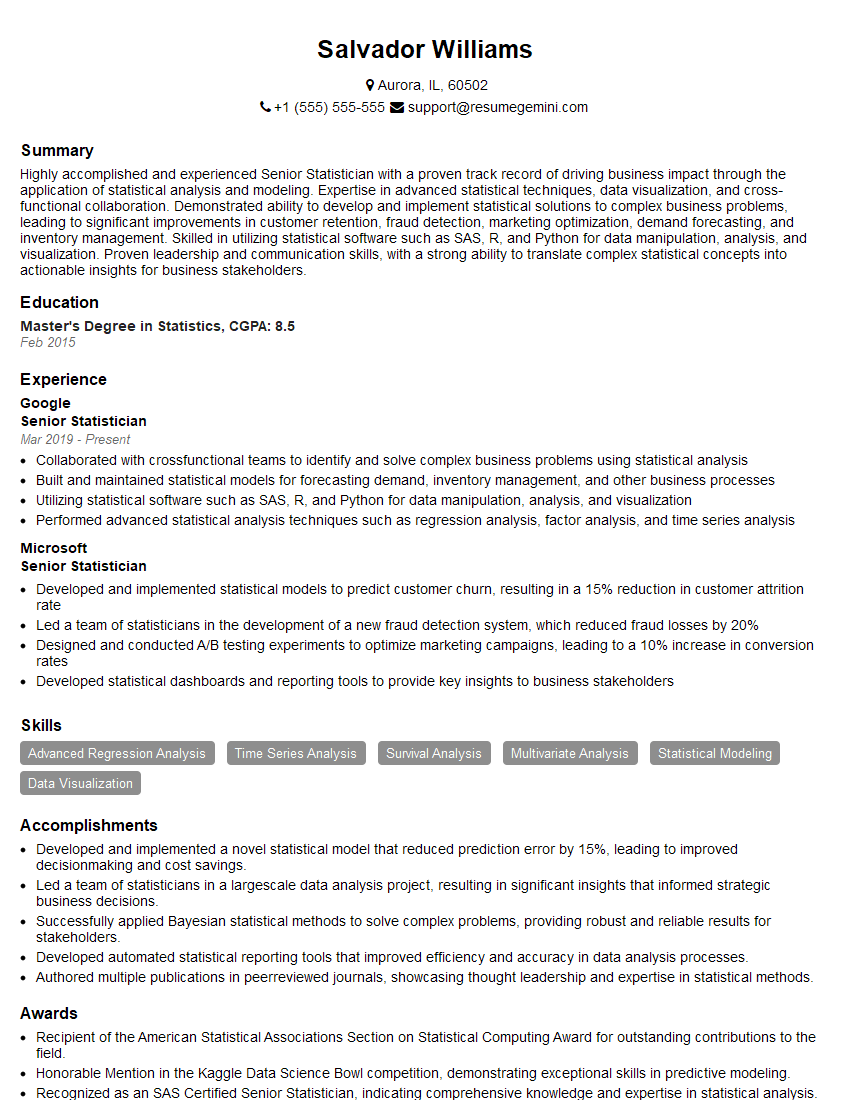
Senior Statistician Resume Sample

Statistical Analyst Resume Sample
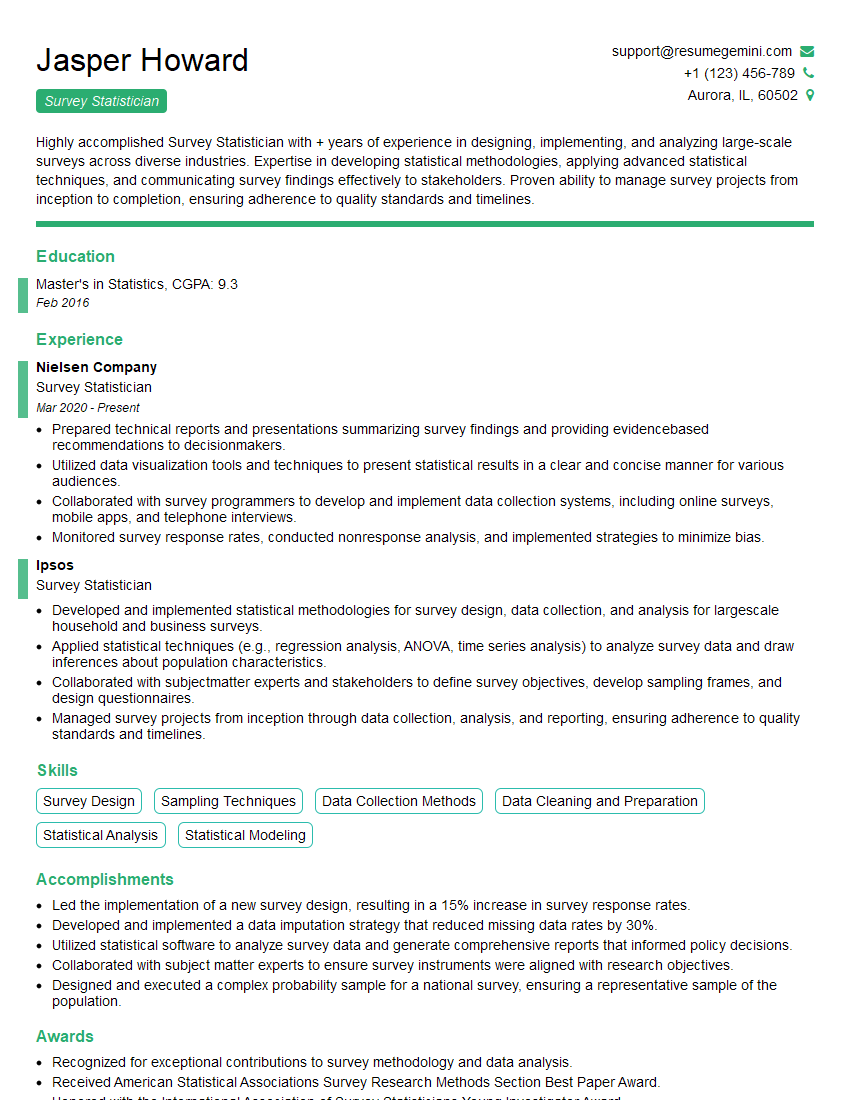
Survey Statistician Resume Sample
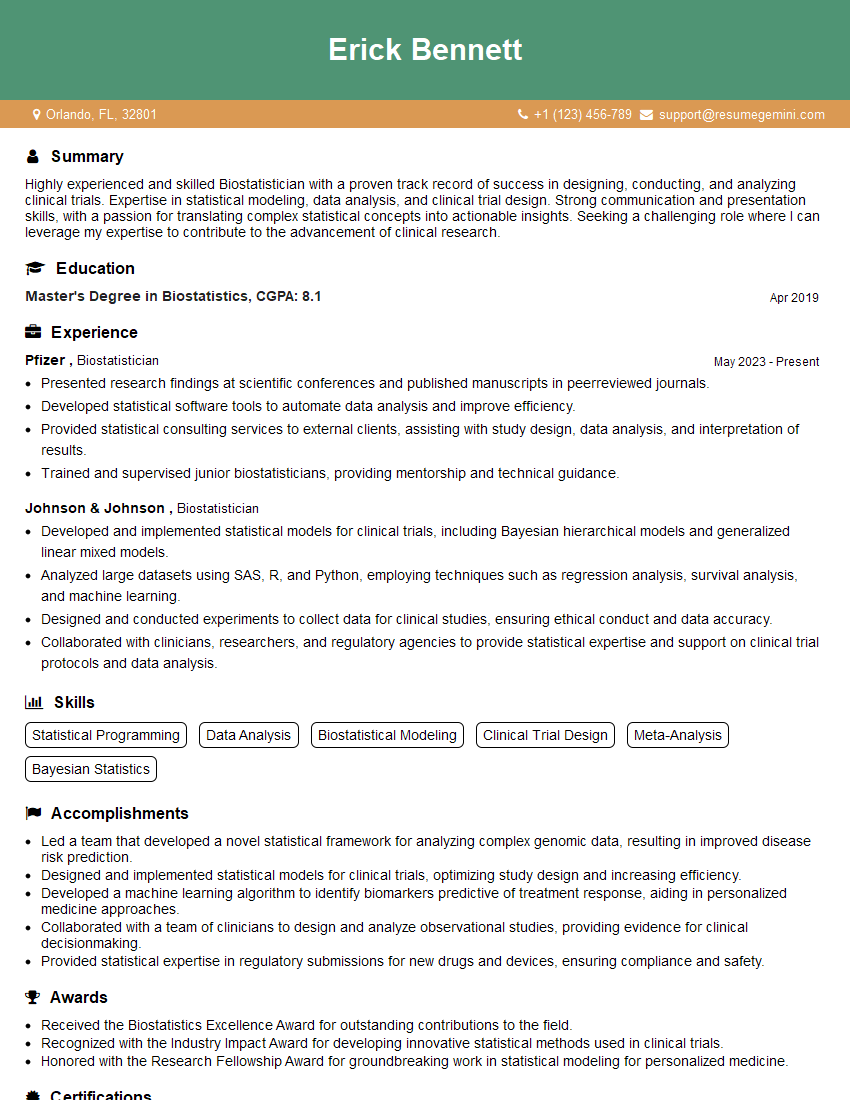
Biostatistician Resume Sample

Quality Control Engineer Resume Sample
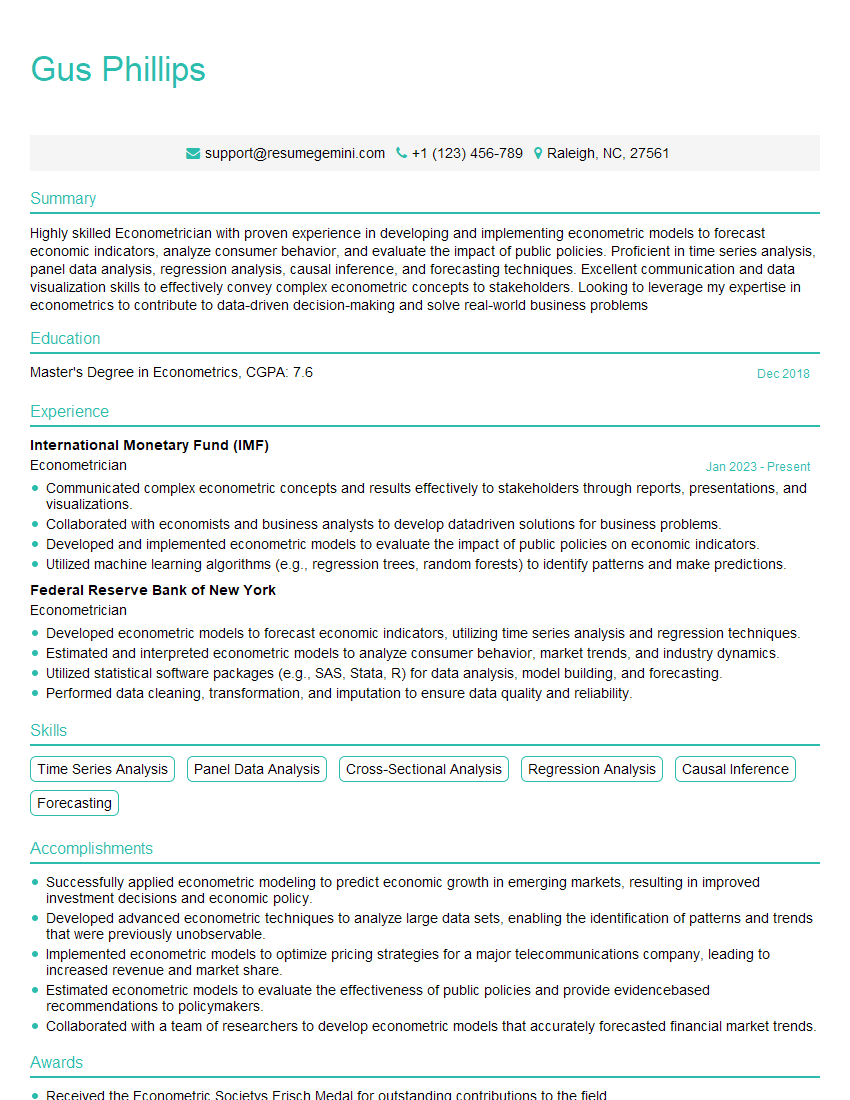
Econometrician Resume Sample

Survey Researcher Resume Sample
Explore more articles
Users Rating of Our Blogs
Share Your Experience
We value your feedback! Please rate our content and share your thoughts (optional).
What Readers Say About Our Blog
Really detailed insights and content, thank you for writing this detailed article.
IT gave me an insight and words to use and be able to think of examples