Unlock your full potential by mastering the most common Sanitation and Hygiene Management interview questions. This blog offers a deep dive into the critical topics, ensuring you’re not only prepared to answer but to excel. With these insights, you’ll approach your interview with clarity and confidence.
Questions Asked in Sanitation and Hygiene Management Interview
Q 1. Describe your experience implementing a sanitation program.
Implementing a sanitation program involves a multi-faceted approach focusing on planning, execution, and monitoring. In a previous role at a large-scale food processing facility, I spearheaded the implementation of a new sanitation program. This began with a comprehensive risk assessment, identifying high-risk areas like the production line and storage facilities. We then developed a detailed Standard Operating Procedure (SOP) manual outlining cleaning and disinfection protocols, including the type of cleaning agents, frequency of cleaning, and personal protective equipment (PPE) requirements. This SOP was crucial in ensuring consistency and adherence to best practices. Training was a major component; we conducted interactive workshops for all staff, including hands-on demonstrations and regular competency checks. Finally, we implemented a robust monitoring system using checklists, audits, and data analysis to track program effectiveness and identify areas for improvement. This resulted in a significant reduction in contamination incidents and improved overall food safety.
Q 2. Explain your knowledge of different sanitation techniques.
Sanitation techniques are diverse and depend on the specific context. Broadly, they fall under two categories: cleaning and disinfection. Cleaning removes visible soil and organic matter, typically using detergents and water. Disinfection targets microorganisms like bacteria and viruses, utilizing chemical disinfectants such as chlorine solutions, quaternary ammonium compounds, or peracetic acid. The choice of disinfectant depends on the specific microorganism of concern and the surface being treated. For example, chlorine is effective against a broad spectrum of bacteria, while peracetic acid is preferred in environments requiring rapid disinfection. Beyond these basics, advanced techniques include high-pressure water washing, thermal sanitation (using steam or hot water), and ultraviolet (UV) light disinfection, commonly used in water treatment and air purification.
- Mechanical Cleaning: Scrubbing, brushing, high-pressure washing.
- Chemical Cleaning: Using detergents and disinfectants.
- Thermal Cleaning: Utilizing heat to kill microorganisms.
- Combination Methods: Often the most effective, combining multiple techniques.
Q 3. How do you ensure compliance with sanitation regulations?
Ensuring compliance with sanitation regulations is paramount. This involves a multi-pronged approach. First, thorough knowledge of all applicable regulations—local, national, and international (like those from the FDA or WHO)—is essential. I regularly review and update myself on these regulations. Secondly, implementation of a robust sanitation program with clear SOPs, as described earlier, is crucial. Regular internal audits, employing standardized checklists, help identify non-compliance issues proactively. These audits are documented meticulously, allowing for corrective actions and continuous improvement. External audits by regulatory bodies are also a critical part of ensuring compliance. Finally, thorough record-keeping, including training records, cleaning logs, and audit reports, provides demonstrable evidence of compliance in the event of inspections.
For instance, in my experience, maintaining accurate cleaning logs and ensuring proper documentation of chemical concentrations used for disinfection were vital in demonstrating compliance during regulatory inspections.
Q 4. What are the key performance indicators (KPIs) for a successful sanitation program?
Key Performance Indicators (KPIs) for a successful sanitation program are crucial for assessing its effectiveness and identifying areas for improvement. They can be broadly categorized into:
- Microbiological Indicators: Reduction in microbial counts (e.g., total aerobic counts, coliforms) on surfaces and in products. This is often measured via environmental swabs.
- Process Indicators: Adherence to SOPs (measured through audits and checklists), chemical concentration levels, water temperature during cleaning.
- Outcome Indicators: Reduction in contamination incidents, customer complaints related to hygiene, and improved overall food safety.
- Employee Performance Indicators: Employee training completion rates, staff competency, and compliance with safety procedures.
Tracking these KPIs allows for data-driven decision-making and continuous program refinement. For example, a consistent increase in microbial counts on a particular piece of equipment might signal a need for improved cleaning procedures or a stronger disinfectant.
Q 5. How do you handle sanitation-related emergencies or incidents?
Handling sanitation-related emergencies or incidents requires a well-defined protocol. The first step is always to contain and control the situation to prevent further spread of contamination. This may involve immediately isolating the affected area, preventing access to potentially contaminated food or surfaces, and notifying relevant personnel. The next step is to thoroughly investigate the root cause of the incident. This may involve reviewing cleaning logs, staff training records, and equipment maintenance logs. Once the cause is identified, appropriate corrective actions are implemented to prevent recurrence. This may involve retraining staff, adjusting cleaning procedures, replacing faulty equipment, or even recalling potentially affected products. Thorough documentation of the entire process, from initial response to corrective actions, is essential for learning, improvement, and meeting regulatory requirements. For instance, if a sewage spill occurred, immediate isolation of the affected area and contacting environmental health officials would be crucial initial actions.
Q 6. Describe your experience with food safety regulations and best practices.
My experience encompasses a deep understanding of food safety regulations and best practices, encompassing various international and national standards. This includes understanding regulations concerning hazard analysis, critical control points, proper storage and handling of food items, personal hygiene practices, and pest control. I have extensive experience in designing and implementing food safety management systems, and ensuring that all food handling procedures are compliant with relevant regulations. For example, I’ve worked on developing and delivering training programs for food handlers, encompassing proper handwashing techniques, safe food temperatures, and preventing cross-contamination. This training includes both theoretical knowledge and practical demonstrations, ensuring the workforce comprehends and implements these practices effectively.
Q 7. Explain your understanding of Hazard Analysis and Critical Control Points (HACCP).
Hazard Analysis and Critical Control Points (HACCP) is a systematic, preventative approach to food safety. It focuses on identifying potential hazards throughout the food production process and establishing control measures to prevent or eliminate those hazards. The seven principles of HACCP include:
- Conduct a hazard analysis.
- Determine Critical Control Points (CCPs).
- Establish critical limits.
- Establish monitoring procedures.
- Establish corrective actions.
- Establish verification procedures.
- Establish record-keeping and documentation procedures.
A CCP is a step in the process where control can be applied and is essential to prevent or eliminate a food safety hazard. For example, in a canned food production facility, the sterilization step is a critical control point, as it directly affects the safety of the product. The HACCP system relies on proactive prevention, rather than reactive corrective measures, making it a highly effective tool for ensuring food safety.
Q 8. How do you develop and implement sanitation training programs?
Developing and implementing effective sanitation training programs requires a multifaceted approach. It begins with a thorough needs assessment to identify knowledge gaps and tailor the training to the specific audience. For example, training for food handlers will differ significantly from training for waste management personnel. The curriculum should be clear, concise, and engaging, utilizing a variety of teaching methods like presentations, hands-on activities, and role-playing to ensure retention.
Implementation involves scheduling training sessions at convenient times and locations, providing adequate resources (such as training materials, PPE, and demonstration equipment), and ensuring sufficient trainer-to-trainee ratio for effective interaction. Post-training assessments, both written and practical, are crucial for evaluating comprehension and skill acquisition. Finally, ongoing mentorship and refresher courses are important for maintaining compliance and improving skills over time. Think of it like learning to ride a bike – initial training gets you started, but continuous practice is key to mastering the skill.
- Needs Assessment: Identify specific training requirements for different roles.
- Curriculum Development: Create a clear, engaging, and relevant curriculum.
- Training Delivery: Employ diverse teaching methods for optimal learning.
- Assessment and Evaluation: Measure learning outcomes and skill development.
- Ongoing Support: Provide refresher courses and ongoing mentorship.
Q 9. What are the different types of sanitation chemicals and their applications?
Sanitation chemicals are crucial for effective hygiene management, but their selection and application must be done carefully considering safety and environmental impact. Different chemicals target different types of contaminants.
- Disinfectants: These kill or inactivate microorganisms like bacteria and viruses. Examples include chlorine bleach (sodium hypochlorite), quaternary ammonium compounds (quats), and hydrogen peroxide. The choice depends on the surface being disinfected and the target microorganisms. For example, chlorine bleach is effective on many surfaces but can damage some materials. Quats are gentler on surfaces but may not be as effective against all pathogens.
- Detergents: These remove dirt, grease, and organic matter, preparing surfaces for disinfection. They are often used in conjunction with disinfectants for optimal cleaning. Examples include various types of soaps and surfactants.
- Deodorizers: These mask or neutralize unpleasant odors. They aren’t disinfectants and shouldn’t be used as a substitute.
- Enzymes: These are biological catalysts that break down organic matter, making it easier to remove. They are often used in grease traps and sewage systems.
Application methods vary depending on the chemical and the situation. Always follow the manufacturer’s instructions carefully and ensure adequate ventilation to avoid inhaling harmful fumes. Proper Personal Protective Equipment (PPE), such as gloves and eye protection, is essential.
Q 10. How do you manage waste disposal in accordance with regulations?
Waste disposal management is critical for public health and environmental protection. It involves adhering to all relevant local, regional, and national regulations. This includes proper segregation of waste streams – such as recyclable, organic, hazardous, and general waste – and using appropriate containers for each. For example, sharps waste requires specialized containers to prevent injuries. Regular monitoring is essential for preventing overflow and ensuring smooth operation.
The chosen disposal method depends on the type of waste. Recyclable materials should be sent to recycling facilities, organic waste can be composted or sent to anaerobic digestion plants, and hazardous waste must be handled by licensed disposal contractors according to strict protocols. All disposal processes must be documented to ensure compliance and traceability. Failure to comply with regulations can result in significant penalties, environmental damage, and health risks.
Regular training for waste handlers on safe handling procedures, and the use of appropriate PPE, are also paramount. A well-defined waste management plan, with clearly designated roles and responsibilities, is crucial to the success of any waste disposal program.
Q 11. Describe your experience with sanitation audits and inspections.
Sanitation audits and inspections are essential for evaluating the effectiveness of sanitation programs and identifying areas for improvement. My experience encompasses conducting both internal audits – self-assessments of our own sanitation protocols – and external audits – assessments conducted by regulatory bodies or independent assessors.
During audits, I systematically review sanitation practices against established standards and best practices using checklists and scorecards. This includes assessing the effectiveness of cleaning procedures, waste disposal methods, pest control measures, hand hygiene practices, and the proper use and maintenance of equipment. I document findings, including areas of non-compliance, and recommend corrective actions. Following an external inspection, we review the feedback and develop an action plan to address any identified issues and improve our sanitation practices. The goal is to ensure continuous improvement and maintain high standards of sanitation and hygiene.
Examples of issues found during audits might include inadequate handwashing facilities, improper storage of chemicals, or a lack of documented training records. Addressing these promptly through corrective actions minimizes risks and ensures regulatory compliance.
Q 12. How do you monitor and control pest infestations?
Pest control is an integral part of sanitation management. Effective pest control relies on an integrated pest management (IPM) approach, prioritizing preventative measures over reactive ones. This involves eliminating food sources, water sources, and harborages that attract pests. This is a crucial step in minimizing pest infestations. For instance, sealing cracks and crevices, properly storing food, and keeping areas clean and clutter-free prevents pests from entering and settling.
Monitoring for pest activity is essential, using traps and regular inspections to detect early infestations. If pests are found, a targeted control strategy is implemented using appropriate methods, prioritizing non-chemical methods where possible. Chemical control should be a last resort, using only EPA-registered pesticides and following all safety guidelines. Documentation of all pest control activities, including treatment records, is essential for compliance and traceability. This provides crucial data for tracking pest activity and adjusting our strategy as needed.
Q 13. Explain your understanding of personal protective equipment (PPE) in sanitation.
Personal Protective Equipment (PPE) is crucial for safeguarding sanitation workers from potential hazards. The type of PPE needed depends on the specific task and the potential risks involved. This is not a matter to be taken lightly. For example, cleaning a spill of a hazardous chemical requires a different level of PPE than cleaning a restroom.
- Gloves: Protect hands from chemicals, biological hazards, and sharp objects.
- Eye protection: Shielding eyes from splashes of chemicals or debris.
- Respiratory protection: Masks or respirators to prevent inhalation of harmful dusts, fumes, or gases.
- Protective clothing: Aprons, coveralls, or other protective garments to prevent skin contact with harmful substances.
- Foot protection: Sturdy shoes to protect feet from punctures or slips.
Proper training on the selection, use, and disposal of PPE is vital. PPE should be inspected regularly for damage and replaced as needed. Workers should be empowered to report any deficiencies in PPE or safety concerns.
Q 14. How do you evaluate the effectiveness of your sanitation program?
Evaluating the effectiveness of a sanitation program requires a multi-pronged approach, combining quantitative and qualitative data. Quantitative data includes metrics such as the number of reported illnesses, the results of microbiological testing of surfaces, and the frequency of pest sightings. These measures provide objective evidence of the program’s impact.
Qualitative data, on the other hand, provides insights into the effectiveness of the program through feedback from staff, audits, and inspections. For instance, staff surveys can reveal areas where training or resources are lacking, and audits can identify gaps in compliance. Combining quantitative and qualitative data gives a complete picture of the program’s success. For example, a decrease in the number of reported illnesses, combined with positive staff feedback on training and resources, strongly suggests a highly effective sanitation program. Regular reviews and adjustments based on this data are essential for ongoing improvement.
Q 15. How do you budget and manage resources for sanitation projects?
Budgeting and resource management for sanitation projects requires a meticulous approach. It begins with a thorough needs assessment, identifying all necessary materials, equipment, personnel, and training. This informs the creation of a detailed budget, broken down into categories like personnel costs (salaries, benefits, training), materials (cleaning agents, PPE, repair parts), equipment (purchase, rental, maintenance), and project-specific expenses (waste disposal, transportation).
I utilize a phased budgeting system, allocating resources according to project milestones. This allows for flexibility and adjustments based on progress and unforeseen circumstances. For instance, if a particular cleaning agent proves unexpectedly expensive, I might explore more cost-effective alternatives without compromising quality. Regular monitoring of expenses against the budget is crucial, along with variance analysis to identify and address any overspending or underutilization of resources. This ensures projects stay on track and within allocated funds. I also actively seek grants and funding opportunities to supplement project budgets.
For example, in a recent school sanitation project, I initially budgeted for a specific type of handwashing station. However, after a thorough market survey, I found a more durable and cost-effective option, which I successfully incorporated into the budget, saving the school substantial funds while maintaining quality.
Career Expert Tips:
- Ace those interviews! Prepare effectively by reviewing the Top 50 Most Common Interview Questions on ResumeGemini.
- Navigate your job search with confidence! Explore a wide range of Career Tips on ResumeGemini. Learn about common challenges and recommendations to overcome them.
- Craft the perfect resume! Master the Art of Resume Writing with ResumeGemini’s guide. Showcase your unique qualifications and achievements effectively.
- Don’t miss out on holiday savings! Build your dream resume with ResumeGemini’s ATS optimized templates.
Q 16. Describe your experience with different types of cleaning equipment.
My experience encompasses a wide range of cleaning equipment, from basic tools like mops, brooms, and buckets to advanced machinery such as high-pressure washers, automated floor scrubbers, and industrial vacuum cleaners. I’m familiar with the pros and cons of each, and I select equipment based on the specific cleaning task and the environment. For instance, high-pressure washers are excellent for removing stubborn dirt from outdoor surfaces, but they are not suitable for delicate indoor materials. Similarly, using an automated scrubber in a small restroom would be inefficient.
I understand the importance of proper maintenance for all equipment to ensure optimal performance and longevity. This includes regular cleaning, lubrication, and timely repairs or replacements of worn-out parts. Proper maintenance also minimizes the risk of equipment malfunction and injury to staff. I also have experience with specialized equipment like UV disinfection systems and fogging machines, which are critical in certain sanitation protocols.
For example, in a hospital setting, I’ve worked extensively with autoclaves for sterilizing medical instruments and specifically trained staff on their safe and efficient operation and maintenance. I’m also well-versed in the safe handling and disposal of hazardous waste generated by the use of certain cleaning chemicals.
Q 17. How do you maintain sanitation records and documentation?
Maintaining accurate sanitation records and documentation is paramount for demonstrating compliance with regulations and identifying areas for improvement. I utilize a combination of digital and physical methods. Digital records are maintained using dedicated software or spreadsheets, capturing details like cleaning schedules, checklists, chemical inventory, equipment maintenance logs, and incident reports. Physical records, such as signed checklists and inspection reports, provide a secondary backup and are crucial for audit trails.
The documentation system follows a standardized format, ensuring consistency and ease of access. For example, cleaning checklists clearly outline the specific tasks, frequency, and required chemicals for each area. All records are securely stored and easily retrievable, adhering to data privacy regulations. Regular reviews of the data help identify trends, pinpoint areas needing improvement, and assess the effectiveness of sanitation protocols.
In a previous role managing sanitation in a large food processing facility, our meticulously maintained records proved invaluable when undergoing a stringent regulatory inspection. The detailed and well-organized documentation facilitated a seamless audit process, showcasing our commitment to best practices and highlighting our proactive approach to sanitation.
Q 18. How do you communicate sanitation policies and procedures to staff?
Effective communication of sanitation policies and procedures is crucial for ensuring compliance and maintaining a safe and hygienic environment. I employ a multi-pronged approach. This includes:
- Interactive Training Sessions: Hands-on training sessions provide practical demonstrations and opportunities for staff to ask questions. I tailor training materials to different skill levels, using clear, concise language and visual aids.
- Clear Written Guidelines: Easy-to-understand manuals and checklists are provided, outlining specific procedures for different tasks. These are updated regularly and made readily available.
- Regular Meetings and Feedback Sessions: Regular feedback sessions create a platform for staff to raise concerns and suggest improvements. This fosters a culture of open communication and continuous improvement.
- Visual Aids and Signage: Clear signage indicating cleaning schedules, handwashing protocols, and safety procedures helps reinforce key messages and promotes a visually engaging learning environment.
For example, in a recent project involving a large factory, we developed a comprehensive training program incorporating interactive modules, videos, and quizzes to ensure effective knowledge transfer about proper cleaning and disinfection protocols.
Q 19. Describe your experience with risk assessment related to sanitation.
Risk assessment in sanitation is a systematic process of identifying and evaluating potential hazards that could compromise hygiene and safety. This involves identifying potential sources of contamination, such as pests, spills, or inadequate cleaning practices, and assessing the likelihood and severity of associated risks. A structured risk assessment matrix, often using a color-coded system (e.g., green, amber, red), categorizes risks based on severity and probability.
Once risks are identified, I develop and implement control measures to mitigate them. These measures might include improved cleaning protocols, pest control strategies, staff training on safe handling of chemicals, or the implementation of new equipment. Regular monitoring and review of the risk assessment are crucial to ensure its effectiveness and adapt it to changing conditions. This is an iterative process. I follow a standardized risk assessment framework, documenting all findings and implemented control measures.
For example, in a hospital kitchen, a risk assessment identified a high risk of cross-contamination from improperly cleaned utensils. Implementing a color-coded utensil system and retraining staff on proper cleaning procedures significantly reduced this risk.
Q 20. How do you ensure the proper cleaning and sanitization of equipment?
Proper cleaning and sanitization of equipment is crucial for preventing contamination and ensuring hygiene. The process typically involves several steps: pre-cleaning (removing visible soil), washing (using detergents and appropriate temperature), rinsing (removing detergent residue), and sanitizing (reducing the number of microorganisms to safe levels). The specific cleaning and sanitization protocols vary depending on the type of equipment and its intended use.
For instance, food contact surfaces require more rigorous cleaning and sanitization than non-food contact surfaces. I utilize validated sanitizing agents and ensure proper contact time to achieve effective disinfection. I also maintain detailed records of cleaning and sanitization procedures, including the type of cleaning agents used, contact times, and equipment temperature. Proper equipment storage and handling practices are also critical in preventing recontamination.
I regularly audit cleaning and sanitization procedures and conduct microbiological testing to ensure their efficacy. If deficiencies are identified, corrective actions are implemented immediately. In a food processing plant, this might involve adjusting cleaning protocols, improving staff training, or replacing inefficient equipment.
Q 21. What are the common sanitation challenges in your field of experience?
Common sanitation challenges vary depending on the context, but some recurring issues include:
- Lack of Resources: Limited funding, inadequate equipment, and insufficient personnel can hinder effective sanitation efforts.
- Inadequate Training: Insufficient or inadequate training of staff on proper cleaning and sanitation techniques can lead to inconsistencies and compromise hygiene.
- Lack of Compliance: Failure to adhere to sanitation protocols, either due to negligence or lack of awareness, can result in contamination and health risks.
- Emerging Pathogens: The rise of new pathogens and antibiotic-resistant bacteria presents new challenges for maintaining hygiene and controlling infections.
- Waste Management: Effective waste management and disposal, particularly for hazardous waste, are significant ongoing challenges in many settings.
Addressing these challenges requires a multi-faceted approach that involves improved resource allocation, comprehensive staff training, enforcement of sanitation protocols, and continuous monitoring and adaptation to evolving best practices.
Q 22. How do you resolve conflicts or disagreements related to sanitation issues?
Resolving sanitation-related conflicts requires a structured approach emphasizing collaboration and clear communication. I begin by actively listening to all parties involved, ensuring everyone feels heard and understood. Then, I objectively assess the situation, identifying the root cause of the disagreement. This might involve reviewing sanitation protocols, inspecting the affected area, or analyzing data on cleaning efficacy. Once the root cause is identified, I work collaboratively with stakeholders to develop a mutually agreeable solution. This often involves compromising, finding common ground, and clearly defining responsibilities. For instance, if a disagreement arises between cleaning staff and facility management regarding the frequency of restroom cleaning, I’d facilitate a meeting to discuss workload, resource allocation, and the impact of different cleaning schedules on hygiene standards. We might agree on a trial period with adjusted cleaning schedules, measuring its impact through data collection and feedback loops to reach an optimal solution.
Q 23. Explain your knowledge of relevant health and safety regulations.
My understanding of health and safety regulations is comprehensive and encompasses various aspects, including OSHA (Occupational Safety and Health Administration) guidelines in the US, and equivalent regulations in other jurisdictions. This includes, but isn’t limited to, regulations concerning:
- Personal Protective Equipment (PPE): Proper use and provision of gloves, masks, eye protection, and other safety gear to prevent exposure to hazardous materials.
- Hazardous Waste Disposal: Safe handling and disposal of cleaning chemicals, medical waste (if applicable), and other potentially harmful materials according to specific regulations.
- Infection Control: Implementing procedures to prevent the spread of infectious diseases, including proper disinfection techniques and hygiene practices.
- Ergonomics and Safety Training: Implementing ergonomic practices to prevent musculoskeletal injuries and providing regular safety training for staff to ensure compliance and a safe work environment.
- Emergency Preparedness: Developing and practicing emergency response plans for spills, accidents, and other potential hazards, including procedures for reporting incidents and managing emergencies.
Staying updated on these regulations is crucial, and I regularly consult relevant publications and attend professional development courses to ensure best practices are implemented.
Q 24. How do you adapt sanitation procedures for different types of facilities?
Adapting sanitation procedures hinges on understanding the unique needs and challenges of each facility. For example, a hospital requires far stricter sterilization protocols than a retail store. My approach is to conduct a thorough needs assessment, considering factors like:
- Facility Type: Hospitals, schools, restaurants, and offices all have different sanitation requirements driven by the nature of their operations and the potential health risks involved.
- Occupancy Levels: Higher occupancy necessitates more frequent cleaning and disinfection.
- Waste Generation: Different facilities generate different types and quantities of waste, requiring tailored waste management procedures.
- Resource Availability: The budget and staffing available impact the feasibility of different cleaning methods and technologies.
Once I understand these factors, I develop a customized sanitation plan that aligns with relevant regulations and best practices. This includes specifying cleaning schedules, outlining the use of appropriate cleaning agents, and defining staff responsibilities. For example, a hospital would necessitate a detailed protocol for handling biohazardous waste, which would be unnecessary in a typical office setting. In each case, the goal is a clean and healthy environment that meets specific safety and regulatory standards.
Q 25. What are your strategies for continuous improvement in sanitation practices?
Continuous improvement in sanitation relies on a system of regular monitoring, evaluation, and adjustment. My strategies include:
- Data-Driven Decision Making: Regularly collecting data on key performance indicators (KPIs) such as cleaning frequency, infection rates (where applicable), and staff feedback. This provides objective evidence to evaluate the effectiveness of current practices.
- Regular Audits and Inspections: Conducting routine inspections to identify areas for improvement and ensure consistent compliance with sanitation protocols. This includes both visual inspections and potentially microbiological testing.
- Staff Training and Development: Providing ongoing training to staff on new technologies, cleaning techniques, and updated safety regulations. This keeps everyone informed and equipped to handle sanitation challenges effectively.
- Benchmarking and Best Practices: Researching and adopting industry best practices, evaluating the latest technologies, and identifying opportunities for optimization.
- Feedback Mechanisms: Establishing clear channels for feedback from staff, clients, and other stakeholders to identify problems and address concerns promptly.
These strategies ensure that sanitation practices remain efficient, effective, and aligned with the evolving needs of the facility and its occupants. For instance, implementing a new cleaning agent might require staff retraining and monitoring of its effectiveness via data on reduced infection rates.
Q 26. How do you address employee concerns regarding sanitation practices?
Addressing employee concerns regarding sanitation practices is crucial for ensuring a safe and productive work environment. I create an open and trusting atmosphere where employees feel comfortable voicing their concerns without fear of reprisal. My approach involves:
- Open Communication: Regularly holding meetings or informal discussions to address employee concerns and solicit feedback.
- Active Listening: Carefully listening to and acknowledging employees’ perspectives, ensuring they feel heard and understood.
- Problem-Solving Collaboration: Working collaboratively with employees to identify and resolve any issues they raise.
- Providing Training and Support: Ensuring employees have adequate training, resources, and support to perform their sanitation duties safely and effectively. Addressing any gaps in knowledge or skills.
- Addressing Safety Concerns Immediately: Promptly investigating and addressing any safety concerns raised by employees.
For example, if an employee expresses concern about the safety of a cleaning product, I would immediately investigate the product’s safety data sheet (SDS), and if necessary, provide alternative products or additional protective equipment.
Q 27. Describe a time you had to troubleshoot a sanitation-related problem.
In a previous role, we experienced a sudden increase in reported gastrointestinal illnesses among residents of a senior living facility. Initially, we suspected foodborne illness, but thorough investigation revealed that the issue was linked to the handwashing sinks in the common areas. The soap dispensers were malfunctioning, leading to insufficient soap availability. Additionally, the hand dryers were not functioning properly, forcing residents to use paper towels which were not always readily available. This created an environment conducive to the spread of pathogens.
My troubleshooting involved:
- Data Analysis: Reviewing illness reports to identify trends and potential links to specific areas of the facility.
- On-site Inspection: Carefully inspecting the handwashing facilities and observing resident hand hygiene practices.
- Root Cause Analysis: Identifying the malfunctioning soap dispensers and hand dryers as the primary contributors to inadequate hand hygiene.
- Immediate Action: Temporarily providing hand sanitizer and ensuring adequate supplies of paper towels to mitigate the issue immediately.
- Long-Term Solution: Repairing or replacing the malfunctioning equipment and implementing a regular maintenance schedule to prevent future occurrences.
- Staff Training: Reinforcing hand hygiene protocols with staff and residents.
By systematically addressing the root causes and implementing corrective actions, we were able to effectively resolve the sanitation-related problem and prevent further illnesses. The incident also highlighted the importance of proactive maintenance and routine checks of equipment to prevent similar situations.
Q 28. What are your salary expectations for this position?
My salary expectations for this position are commensurate with my experience, skills, and the responsibilities involved. Based on my research of similar roles in this industry and my extensive experience in sanitation and hygiene management, I’m targeting a salary range of [Insert Salary Range]. I am, however, flexible and open to discussing this further based on the specific details of the role and the overall compensation package.
Key Topics to Learn for Sanitation and Hygiene Management Interview
- Waste Management Systems: Understanding different waste collection, transportation, and disposal methods (e.g., landfills, composting, incineration). Consider the environmental impact and best practices for each.
- Hygiene Practices and Protocols: Developing and implementing effective hygiene protocols for various settings (e.g., food service, healthcare, industrial). This includes handwashing techniques, disinfection procedures, and personal protective equipment (PPE) usage.
- Water Sanitation and Treatment: Familiarize yourself with water purification methods, sewage treatment processes, and the importance of safe water access for public health.
- Infection Prevention and Control: Understand the principles of infection control, including the chain of infection and strategies to break it. Knowledge of relevant legislation and standards is crucial.
- Risk Assessment and Management: Learn how to identify and assess sanitation and hygiene risks, develop mitigation strategies, and implement effective control measures. This includes understanding relevant health and safety regulations.
- Occupational Health and Safety: Understand the hazards associated with sanitation work and the importance of safe working practices to protect both workers and the public. This includes understanding relevant safety regulations and personal protective equipment (PPE).
- Data Analysis and Reporting: Learn how to collect, analyze, and interpret data related to sanitation and hygiene performance. This includes understanding key performance indicators (KPIs) and reporting methods.
- Sustainability and Environmental Impact: Understand the environmental impact of sanitation and hygiene practices and explore sustainable solutions for waste management and water conservation.
- Community Engagement and Education: Learn about effective strategies for educating communities about sanitation and hygiene practices to promote behavioral change and improve public health outcomes.
- Legislation and Regulatory Compliance: Familiarize yourself with relevant local, national, and international regulations and standards related to sanitation and hygiene management.
Next Steps
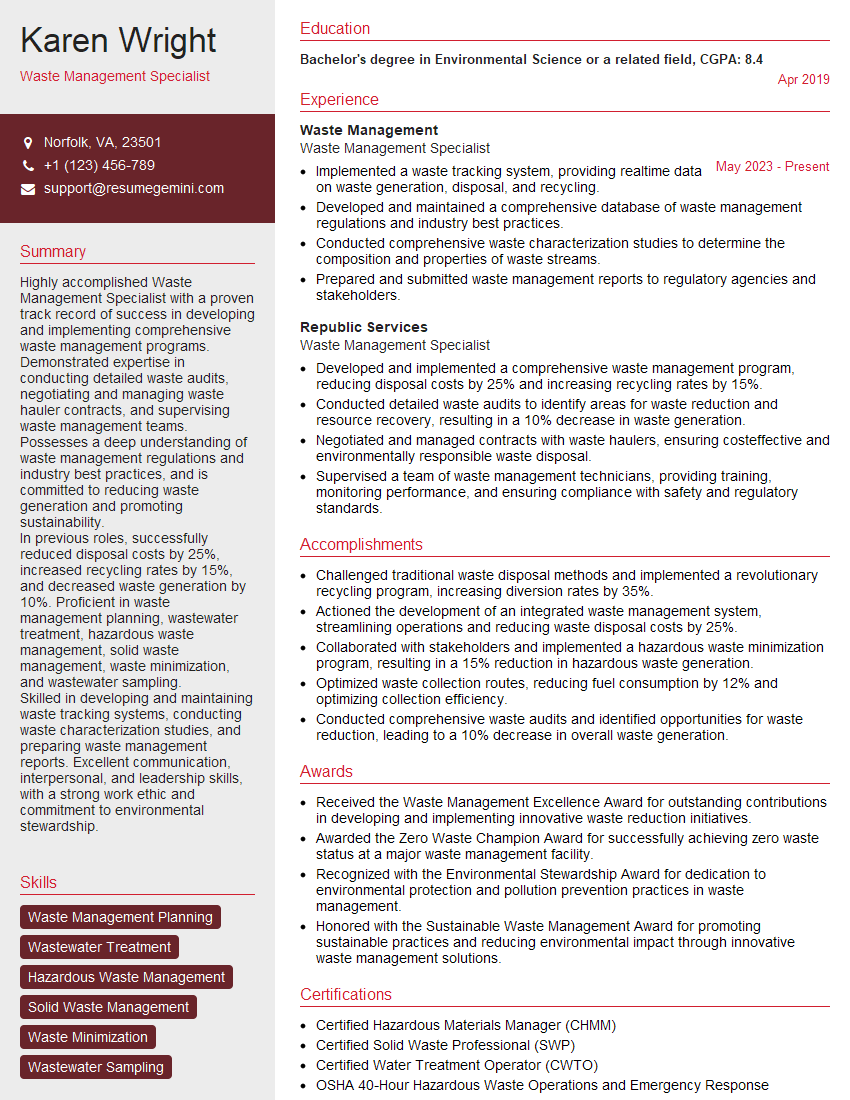
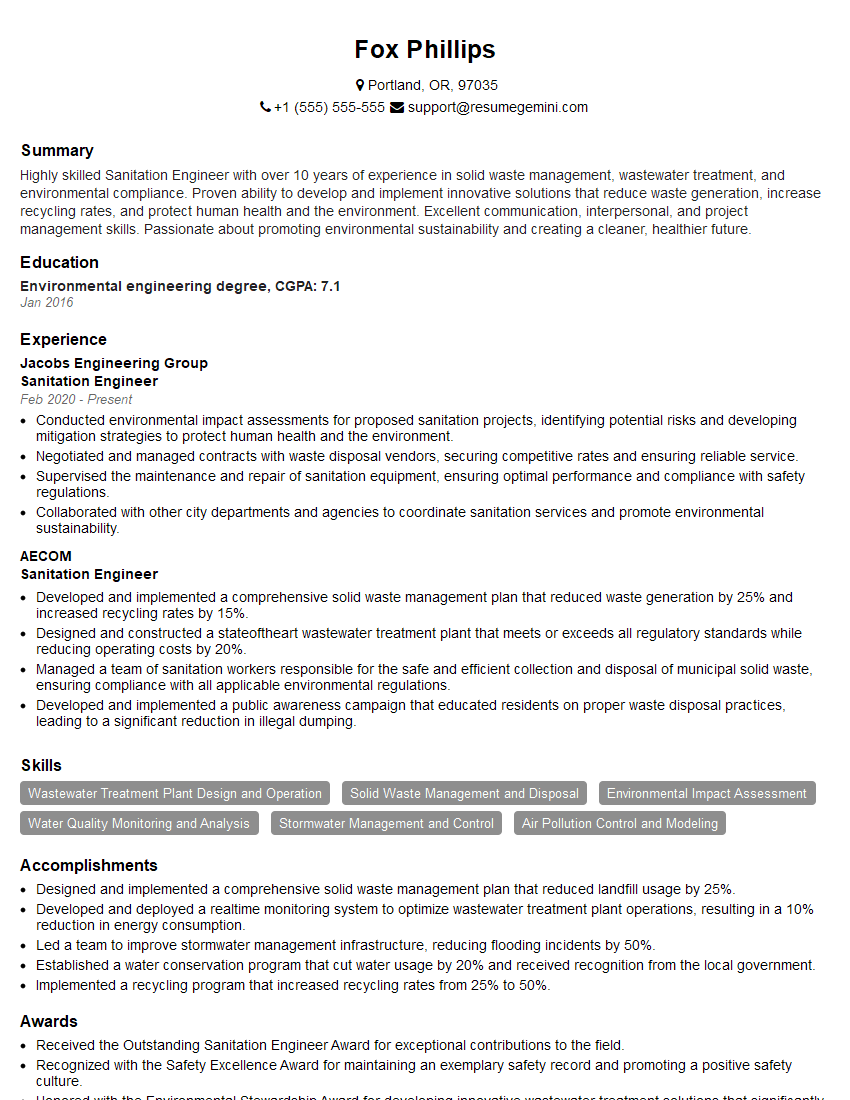
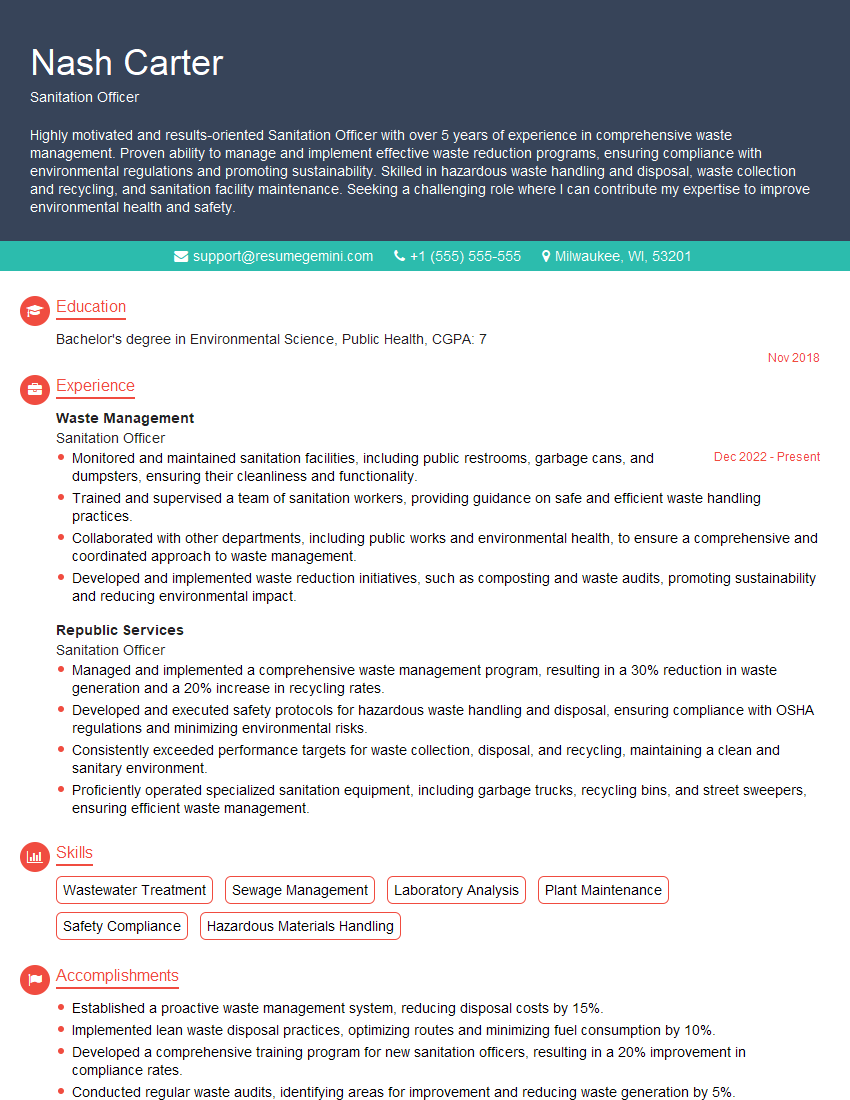
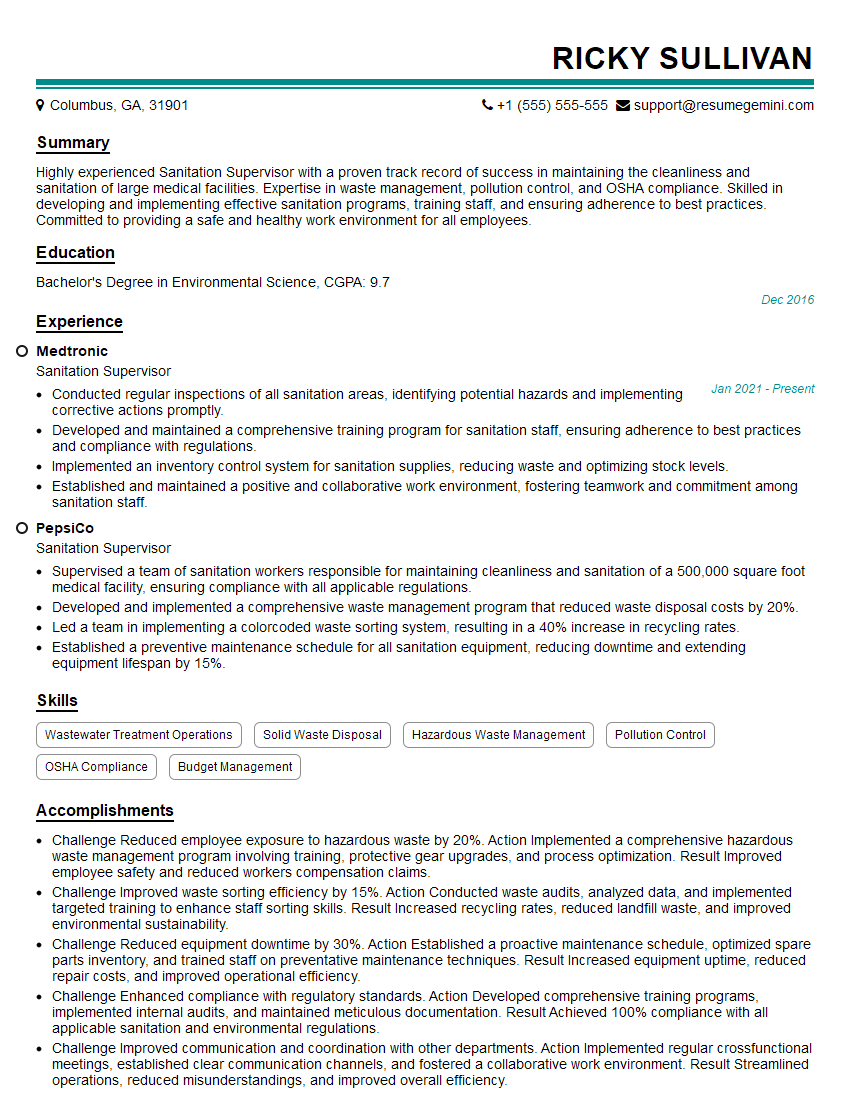
Mastering Sanitation and Hygiene Management opens doors to a rewarding career with significant impact on public health and the environment. To maximize your job prospects, a strong and ATS-friendly resume is essential. ResumeGemini is a trusted resource to help you craft a professional and impactful resume that highlights your skills and experience effectively. ResumeGemini provides examples of resumes tailored to Sanitation and Hygiene Management, giving you a head start in presenting yourself as the ideal candidate. Invest the time to create a compelling resume – it’s your first impression with potential employers.
Explore more articles
Users Rating of Our Blogs
Share Your Experience
We value your feedback! Please rate our content and share your thoughts (optional).
What Readers Say About Our Blog
Really detailed insights and content, thank you for writing this detailed article.
IT gave me an insight and words to use and be able to think of examples