Interviews are opportunities to demonstrate your expertise, and this guide is here to help you shine. Explore the essential Scheduling Best Practices interview questions that employers frequently ask, paired with strategies for crafting responses that set you apart from the competition.
Questions Asked in Scheduling Best Practices Interview
Q 1. Explain the difference between forward and backward scheduling.
Forward scheduling and backward scheduling are two fundamentally different approaches to project scheduling. They represent opposite ends of a spectrum in how you determine task start and finish dates.
Forward Scheduling: This method starts with the project’s beginning and works its way forward, scheduling each task as early as possible, based on its predecessors’ completion. Think of it like a domino effect – you start with the first domino, and each subsequent domino falls as soon as the previous one does. This approach is ideal when you have a clear project start date and need to determine the earliest possible completion date. For example, in launching a new product, you might start with market research, then move to design, then manufacturing, and finally, distribution. Each step starts as soon as the previous is finished.
Backward Scheduling: In contrast, backward scheduling begins with the project’s due date (or deadline) and works backward, scheduling each task to finish as late as possible without delaying the overall project. It’s like working your way back from the finish line of a race. This method is best when you have a fixed deadline and need to determine the latest possible start date for each task. Imagine a major software release – you’d work backward from the release date, setting deadlines for testing, development milestones, and so on, ensuring everything is completed on time.
The choice between forward and backward scheduling depends heavily on the project’s context and priorities. Often, a combination of both approaches is used for a more comprehensive view of the schedule.
Q 2. Describe your experience with different scheduling algorithms (e.g., critical path method, Gantt charts).
My experience encompasses a wide range of scheduling algorithms, with a strong focus on their practical application. I’ve extensively used the Critical Path Method (CPM), a powerful technique for identifying the longest sequence of tasks (the critical path) that determines the shortest possible project duration. Any delays on the critical path directly impact the overall project timeline. I’ve used CPM in large-scale construction projects, where identifying critical path activities allows for proactive resource allocation and risk mitigation.
Gantt charts are another mainstay in my scheduling toolkit. Their visual representation of tasks and their dependencies provides an excellent overview of the project’s schedule, making it easy to identify potential bottlenecks or overlaps. I find Gantt charts particularly useful for communicating the project’s progress to stakeholders, as they’re intuitively understandable. I’ve used Gantt charts in software development projects to effectively manage sprints and track feature delivery.
Beyond CPM and Gantt charts, I’m familiar with other algorithms like Program Evaluation and Review Technique (PERT), which accounts for uncertainty in task durations, and various heuristic scheduling techniques for resource-constrained environments. My proficiency includes adapting these algorithms to different project contexts, optimizing their use based on the project’s complexity and resource availability.
Q 3. How do you handle scheduling conflicts and resource constraints?
Handling scheduling conflicts and resource constraints requires a proactive and systematic approach. When conflicts arise, my first step is to clearly identify the nature of the conflict – is it a resource conflict (multiple tasks requiring the same resource at the same time) or a precedence conflict (a task needing to be completed before another can begin)?
For resource conflicts, I often employ resource leveling techniques. This involves adjusting task schedules to minimize resource peaks and valleys, ensuring that resources are utilized efficiently without overloading. This might involve slightly delaying non-critical tasks or reallocating resources if possible. I always prioritize tasks based on their criticality and importance using techniques like the critical path method.
For precedence conflicts, a thorough review of task dependencies is crucial. Sometimes, the dependencies themselves need to be reevaluated for feasibility. If the conflict is unavoidable, I’d work with the project team to explore solutions, such as re-sequencing tasks, splitting tasks into smaller units, or acquiring additional resources.
In both cases, transparent communication with the team and stakeholders is vital. Keeping everyone informed of the conflict and the proposed solutions ensures collaborative problem-solving and keeps the project on track.
Q 4. What metrics do you use to measure scheduling efficiency?
Measuring scheduling efficiency requires a multi-faceted approach, using metrics that reflect both the schedule’s adherence to plan and its overall effectiveness. Key metrics I utilize include:
- Schedule adherence: This measures the percentage of tasks completed on schedule or within the planned timeframe. It indicates the project’s overall adherence to the created schedule.
- Schedule variance: This is the difference between the planned schedule and the actual schedule. A positive variance indicates tasks are ahead of schedule, while a negative variance indicates a delay.
- Resource utilization: This assesses how effectively resources (personnel, equipment, etc.) are being used. High utilization without exceeding capacity indicates efficiency.
- Critical path duration: Monitoring the critical path’s duration helps identify potential delays and provides a clear indication of the project’s overall schedule.
- Project completion time: This is a straightforward metric that indicates how long the project actually took compared to the planned duration.
By analyzing these metrics together, I get a holistic view of the schedule’s performance and identify areas for improvement.
Q 5. How do you prioritize tasks in a complex scheduling environment?
Prioritizing tasks in a complex scheduling environment requires a structured approach. I typically use a combination of techniques to ensure that the most critical tasks are addressed first. These include:
- Critical Path Method (CPM): Tasks on the critical path always receive top priority because any delay on this path directly impacts the project’s overall completion date.
- Dependency analysis: Understanding task dependencies ensures that tasks with predecessors are prioritized appropriately. No task can be started before its prerequisites are completed.
- Risk assessment: High-risk tasks—those with a high probability of delay or failure—need prioritization to mitigate their potential impact on the schedule.
- Cost-benefit analysis: Balancing the cost and benefits of completing each task helps to prioritize those with high returns on investment (ROI).
- Stakeholder input: Involving stakeholders in the prioritization process can incorporate important qualitative factors and ensure alignment between the schedule and business goals.
The specific weighting of these criteria will vary depending on the project’s specific needs and context. Often, a prioritization matrix is used to visualize and systematically rank tasks.
Q 6. Explain your experience with various scheduling software (e.g., MS Project, Primavera P6).
I have extensive experience with various scheduling software packages, including Microsoft Project and Primavera P6. Microsoft Project is a versatile tool suitable for a wide range of projects, offering a user-friendly interface and robust features for task management, resource allocation, and progress tracking. I’ve used it extensively for smaller to medium-sized projects, leveraging its Gantt chart capabilities and reporting features to monitor progress and identify potential issues.
Primavera P6, on the other hand, is a more sophisticated tool typically used for large, complex projects requiring advanced scheduling capabilities, such as resource leveling and critical path analysis in intricate environments. I’ve used Primavera P6 in large-scale infrastructure projects, benefiting from its ability to handle numerous tasks, resources, and constraints. The software’s robust reporting and analysis features are crucial for tracking progress and making informed decisions in complex scenarios.
My proficiency extends beyond just using the software; I understand the underlying scheduling principles and can effectively leverage the software’s capabilities to optimize project schedules, even in challenging situations.
Q 7. Describe your approach to capacity planning and resource allocation.
Capacity planning and resource allocation are crucial aspects of effective project scheduling. My approach involves a three-step process:
- Demand forecasting: I begin by accurately estimating the resource requirements for each task in the project. This involves considering factors like task duration, resource skill levels, and potential resource constraints.
- Capacity assessment: Next, I evaluate the available resources (personnel, equipment, budget, etc.), considering their current commitments and future availability. This might involve analyzing historical data or conducting interviews with resource managers.
- Resource allocation: Finally, I allocate resources to tasks, optimizing the allocation based on several factors: the criticality of the tasks, resource availability, resource skills and costs. This often involves using resource leveling techniques to smooth out resource demands and minimize peaks and valleys. Simulation and what-if analysis are frequently employed to evaluate different allocation strategies and identify the most efficient solution.
This iterative process allows me to proactively identify potential resource bottlenecks and address them before they become critical issues. Regular monitoring and adjustments to the allocation plan are essential to accommodate unforeseen circumstances and ensure the project remains on schedule and within budget.
Q 8. How do you incorporate risk management into your scheduling process?
Risk management is woven into every stage of my scheduling process, starting from the initial planning phase. It’s not a separate activity; it’s an integral part of creating a realistic and robust schedule.
I begin by identifying potential risks through brainstorming sessions with the team, reviewing historical project data, and analyzing potential external factors like market fluctuations or regulatory changes. Each identified risk is then assessed based on its likelihood and potential impact. This is often documented using a risk register, a table listing each risk, its probability, impact, and mitigation strategies.
For example, if a key supplier might be delayed, we’d assess the probability and impact on the schedule. Mitigation strategies could include identifying backup suppliers, building buffer time into the schedule, or establishing clear communication protocols with the supplier. These strategies are then incorporated directly into the project schedule, creating contingency plans to address potential disruptions.
Regular monitoring of these risks is crucial. We track the likelihood and impact throughout the project, adjusting mitigation strategies as needed. This proactive approach ensures we can address problems before they significantly impact the project timeline.
Q 9. How do you handle changes to a schedule during project execution?
Handling schedule changes during execution requires a structured and transparent approach. The first step is always to understand the nature and impact of the change. We use a formal change management process, typically involving a Change Request form. This form details the proposed change, the rationale, the impact on the schedule and budget, and proposed solutions.
The change request is then reviewed by relevant stakeholders, including the project manager, team members, and potentially clients. We analyze the impact on the critical path – the sequence of tasks that determine the shortest possible project duration. If the change affects the critical path, we need to identify ways to mitigate the delay. This might involve re-allocating resources, prioritizing tasks, or negotiating timelines with stakeholders.
Once a decision is made, the schedule is updated to reflect the approved change. All stakeholders are notified of the change, and the revised schedule is communicated clearly. This transparency is key to maintaining trust and buy-in from the team and clients. It’s also important to document all changes meticulously so that any future analysis or auditing is straightforward.
For example, if a new feature is requested mid-project, we’d assess the impact on the critical path. We might use techniques like crashing the schedule (adding more resources to critical tasks) or fast-tracking (overlapping tasks that were previously sequential). The revised schedule, with updated timelines and resource allocation, would then be shared with all involved parties.
Q 10. What are the key elements of a successful scheduling process?
A successful scheduling process relies on several key elements working in harmony:
- Clear Objectives and Scope: A well-defined project scope, with clear deliverables and acceptance criteria, is fundamental. This provides a solid foundation for accurate scheduling.
- Realistic Task Breakdown: Breaking down the project into smaller, manageable tasks is crucial. This allows for better estimation of time and resources.
- Accurate Time Estimation: Realistic time estimates for each task are essential. This often involves using techniques like three-point estimation (optimistic, pessimistic, and most likely estimates) to account for uncertainty.
- Resource Allocation: Proper allocation of resources (people, equipment, materials) is vital. Over-allocation can lead to delays, while under-allocation can hamper progress.
- Dependency Identification: Identifying dependencies between tasks is crucial. This helps to determine the critical path and optimize the schedule.
- Regular Monitoring and Control: Continuous monitoring of progress against the schedule is essential for early identification and mitigation of potential problems.
- Communication and Collaboration: Effective communication between team members and stakeholders is critical for transparency and coordination.
Think of it like building a house: You wouldn’t start building the roof before the foundation is laid. Similarly, a successful schedule requires careful sequencing of tasks and a clear understanding of dependencies.
Q 11. Explain your experience with different scheduling methodologies (e.g., Agile, Kanban).
My experience encompasses both traditional and agile scheduling methodologies. In traditional project management, I’ve extensively used critical path method (CPM) and program evaluation and review technique (PERT) for large-scale projects with well-defined scopes. These methods are excellent for planning and tracking complex projects with many interdependencies.
However, for projects with evolving requirements or a need for flexibility, agile methodologies like Scrum and Kanban are invaluable. Scrum employs short iterations (sprints) to deliver incremental value, fostering adaptability. Kanban focuses on visualizing workflow and limiting work in progress, promoting efficiency and continuous improvement. I have successfully utilized Kanban in several projects where we needed to respond rapidly to changing priorities and client feedback. The visual nature of Kanban boards enabled easy monitoring of progress and quick identification of bottlenecks.
Choosing the right methodology depends heavily on the project’s nature. For instance, a large infrastructure project might benefit from CPM’s structured approach, whereas a software development project with frequent changes would be better suited to Scrum or Kanban.
Q 12. How do you communicate schedule updates to stakeholders?
Effective communication of schedule updates is vital for stakeholder buy-in and project success. My approach uses a multi-faceted strategy that adapts to the audience and the nature of the update.
For routine updates, I use concise email summaries with key highlights and links to detailed reports or dashboards. For more significant changes or issues, I prefer face-to-face meetings or video conferences to facilitate direct discussion and address any concerns. These meetings typically include visual aids such as Gantt charts or Kanban boards to illustrate the impact of the changes.
Regular project status reports, usually weekly or bi-weekly, are another crucial tool. These reports not only provide schedule updates but also cover other aspects of the project such as budget, risks, and issues. For clients who prefer visual dashboards, I can leverage project management software to provide real-time updates and progress tracking.
The key is to tailor the communication to the audience’s needs and preferences, ensuring transparency and clarity in all updates.
Q 13. How do you ensure schedule accuracy and adherence?
Ensuring schedule accuracy and adherence requires a combination of proactive planning and ongoing monitoring. Accuracy starts with realistic task estimations and a thorough understanding of dependencies. Using techniques like three-point estimation and involving experienced team members in the estimation process helps to minimize bias and improve accuracy.
Regular progress monitoring is crucial. I use project management software to track progress against the baseline schedule, identifying deviations early on. Regular status meetings with the team allow for early detection of potential issues, such as resource conflicts or task delays. This enables timely intervention and mitigation of risks before they significantly impact the schedule.
Earned Value Management (EVM) is a powerful technique for measuring schedule performance. EVM compares planned progress to actual progress, helping to identify schedule variances and potential cost overruns. Addressing these variances promptly is key to maintaining schedule adherence.
Finally, a culture of accountability is essential. The team needs to understand their responsibilities and be committed to meeting their deadlines. Regular feedback and recognition of achievements help to reinforce positive behavior and ensure consistent adherence to the schedule.
Q 14. Describe a time you had to drastically revise a schedule due to unforeseen circumstances. What was your approach?
In one project, a major supplier faced unexpected production delays, pushing back the delivery of a critical component by six weeks. This threatened to derail the entire project schedule, as this component was on the critical path.
My immediate response was to convene a meeting with the project team and key stakeholders to assess the impact of the delay. We used a what-if analysis to evaluate the consequences of different mitigation strategies. Simply extending the project deadline wasn’t feasible due to contractual obligations.
We explored several options: finding an alternative supplier (which proved difficult due to lead times), re-sequencing tasks to minimize the impact of the delay (which was partially successful), and leveraging additional resources to accelerate non-critical tasks to compensate for the delay. We also held discussions with the client to explain the situation and explore potential solutions collaboratively.
The solution involved a combination of approaches: we re-sequenced tasks, added some overtime for critical tasks, and negotiated a slightly adjusted delivery date with the client. This required meticulous re-planning and careful communication, but it ultimately minimized the project’s overall impact. This experience highlighted the importance of having a robust risk management plan in place, including contingency plans for unexpected delays. Regular communication and transparent collaboration with all stakeholders were also paramount in navigating this challenge.
Q 15. What are your strategies for improving team collaboration within scheduling projects?
Improving team collaboration in scheduling projects hinges on clear communication, shared understanding, and efficient tools. I employ a multi-pronged approach. Firstly, I ensure everyone uses the same scheduling software (like MS Project, Jira, or Asana), promoting transparency and minimizing confusion caused by disparate data sources. Secondly, I establish regular, short team meetings – daily stand-ups are ideal – where everyone updates their progress, identifies roadblocks, and coordinates efforts. This fosters a sense of shared responsibility and allows for proactive problem-solving. Thirdly, I advocate for clear role definitions and responsibilities to avoid overlap or gaps in task allocation. For instance, defining a ‘project manager’ responsible for the overall schedule and individual ‘task owners’ for specific deliverables. Finally, I encourage a collaborative work environment where team members feel comfortable raising concerns and offering solutions without fear of criticism. This creates a positive feedback loop, boosting both efficiency and morale. For example, in a recent web development project, using a shared task management board drastically reduced missed deadlines and increased communication transparency.
Career Expert Tips:
- Ace those interviews! Prepare effectively by reviewing the Top 50 Most Common Interview Questions on ResumeGemini.
- Navigate your job search with confidence! Explore a wide range of Career Tips on ResumeGemini. Learn about common challenges and recommendations to overcome them.
- Craft the perfect resume! Master the Art of Resume Writing with ResumeGemini’s guide. Showcase your unique qualifications and achievements effectively.
- Don’t miss out on holiday savings! Build your dream resume with ResumeGemini’s ATS optimized templates.
Q 16. How do you identify and address scheduling bottlenecks?
Identifying and addressing scheduling bottlenecks requires a systematic approach. I start by analyzing the project schedule, identifying tasks with long durations or multiple dependencies. This often involves using Gantt charts or critical path analysis (discussed further in a later answer). Then, I scrutinize the tasks for potential problems: Are there resource constraints? Are there dependencies that could be streamlined? Are there unrealistic estimations? Once the bottleneck(s) are pinpointed, I work with the team to find solutions. This might involve allocating additional resources, re-sequencing tasks, renegotiating deadlines with stakeholders, or improving efficiency in certain areas. For example, during a construction project, a delay in material delivery was identified as a major bottleneck. By working with the supplier and prioritizing the delivery, we were able to mitigate the delay’s impact on the critical path.
Q 17. Explain your proficiency in using data analysis to improve scheduling outcomes.
Data analysis plays a vital role in improving scheduling outcomes. I leverage data to understand historical project performance, predict future challenges, and optimize current processes. This involves collecting data from various sources – project management software, timesheets, and progress reports. I use this data to generate reports that highlight trends, such as consistently missed deadlines, resource over-allocation, or recurring issues. Using tools like Excel or specialized data analysis software, I can visualize this data – bar charts for task durations, scatter plots for resource utilization, etc. – revealing patterns that improve decision-making. For example, by analyzing past project data, I discovered that a particular task consistently took longer than estimated. By investigating the reasons, I developed a new process to cut down on that task’s time and improve future scheduling accuracy.
Q 18. Describe your understanding of critical path analysis and its application in scheduling.
Critical Path Analysis (CPA) is a crucial technique for identifying the longest sequence of dependent tasks in a project, determining the shortest possible project duration. The critical path represents the most time-sensitive portion of the project; any delay on this path directly impacts the overall project completion date. I apply CPA by first defining all tasks, their durations, and dependencies. Then, I use project management software or manually construct a network diagram (using nodes for tasks and arrows for dependencies). The longest path through this network represents the critical path. By closely monitoring tasks on the critical path and proactively addressing potential delays, I can mitigate the risk of project slippage. For instance, in a software development project, CPA helped identify a specific module’s coding as a critical path activity. By allocating extra resources to this module, we successfully prevented it from causing overall project delays.
Q 19. How do you manage dependencies between tasks within a schedule?
Managing task dependencies is crucial for accurate scheduling. Dependencies occur when one task cannot start until another is completed (finish-to-start), or must overlap with another (start-to-start, finish-to-finish). I use a combination of techniques to manage these dependencies. Firstly, I document all dependencies clearly using a Work Breakdown Structure (WBS) or network diagram. Secondly, I use project management software to define these dependencies explicitly. This allows the software to automatically update the schedule when dependencies change. Thirdly, I employ a proactive approach, regularly monitoring task progress to identify potential dependency-related delays. For example, in a construction project, the pouring of concrete is dependent on the completion of the foundation. This dependency is clearly defined and tracked to prevent delays.
Q 20. What is your approach to buffer management in project scheduling?
Buffer management is crucial to account for uncertainties inherent in project execution. I use two main types of buffers: project buffers and task buffers. Project buffers are added at the end of the project to absorb unexpected delays. Task buffers are added to individual tasks to account for their inherent variability. The size of the buffers is determined by factors like risk assessment, historical data, and the project’s criticality. It’s a balance; too few buffers increase the risk of slippage, while too many create unnecessary slack. I often use Monte Carlo simulation to analyze the impact of various buffer sizes on the project’s completion probability. For example, in a software project, adding a buffer to accommodate potential testing delays provided a safety net, preventing significant deadline slips.
Q 21. How do you evaluate the effectiveness of different scheduling strategies?
Evaluating scheduling strategies requires a multi-faceted approach. I use a combination of quantitative and qualitative metrics. Quantitative metrics include schedule adherence (percentage of tasks completed on time), project duration, and resource utilization. I also track cost overruns and changes. Qualitative metrics involve assessing team morale, stakeholder satisfaction, and overall project success. To compare different strategies, I analyze these metrics across past projects employing those strategies. Data visualization aids this comparison, allowing for a clear identification of which strategy delivers better results. For instance, comparing the performance of a traditional Gantt chart-based schedule versus an Agile scheduling approach allows for data-driven improvements for future projects.
Q 22. Describe your experience with forecasting and its role in scheduling.
Forecasting is the cornerstone of effective scheduling. It involves predicting future resource needs and task durations based on historical data, current trends, and expert judgment. Accurate forecasting allows us to create realistic schedules, allocate resources efficiently, and proactively identify potential bottlenecks. For example, in a software development project, we might forecast the time needed for coding, testing, and documentation based on past project velocity and the complexity of the current features. We might use techniques like moving averages or more sophisticated methods like exponential smoothing or machine learning algorithms to refine our forecasts. Regularly reviewing and updating the forecast is crucial, especially as the project progresses and new information becomes available.
In one project managing a large-scale construction project, we used a combination of historical data on similar projects and expert opinions from seasoned construction managers to forecast material delivery times and labor availability. This allowed us to proactively address potential delays related to supply chain issues and prevent scheduling conflicts, resulting in a successful project completion within budget and timeframe.
Q 23. What techniques do you use for identifying and mitigating schedule risks?
Identifying and mitigating schedule risks is a proactive process requiring a structured approach. I typically use a combination of techniques including:
- Risk Identification Workshops: Brainstorming sessions with stakeholders to identify potential risks like resource unavailability, technical challenges, or external dependencies.
- SWOT Analysis: Evaluating the project’s strengths, weaknesses, opportunities, and threats to highlight potential schedule impacts.
- Probability and Impact Matrix: Prioritizing risks based on their likelihood and potential effect on the schedule. Higher probability and impact risks receive more attention.
- Contingency Planning: Developing alternative plans or mitigation strategies for high-priority risks, including buffer times in the schedule for unforeseen delays.
- Regular Monitoring and Reporting: Continuously tracking progress, comparing it to the baseline schedule, and identifying deviations early. This allows for proactive mitigation.
For instance, in a recent project, we identified a potential risk of delays due to a new software integration. We mitigated this by creating a buffer in the schedule and establishing clear communication with the software vendor to ensure timely completion and addressing any issues promptly.
Q 24. How do you ensure alignment between scheduling and overall business objectives?
Alignment between scheduling and business objectives is paramount. It ensures that project execution supports the overall strategic goals of the organization. I achieve this by:
- Clearly Defined Objectives: Starting with a clear understanding of the overall business goals and translating them into specific, measurable, achievable, relevant, and time-bound (SMART) project objectives.
- Prioritization Based on Business Value: Prioritizing tasks and projects based on their contribution to achieving business objectives, ensuring that the most valuable tasks are completed first.
- Regular Communication and Collaboration: Maintaining constant communication with stakeholders across different departments to ensure everyone is aligned on the schedule and its impact on the overall business strategy.
- Progress Reporting and Tracking: Regularly reporting on project progress against the schedule and highlighting any deviations that could impact the achievement of business objectives.
For example, if the business objective is to increase market share by launching a new product, the project schedule must reflect this priority by allocating the necessary resources and setting realistic deadlines for key milestones. Failure to meet these deadlines would directly impact the overall business goal.
Q 25. How do you use technology to enhance scheduling efficiency and accuracy?
Technology plays a crucial role in enhancing scheduling efficiency and accuracy. I leverage several tools and techniques, including:
- Project Management Software: Tools like MS Project, Jira, or Asana provide features for task management, resource allocation, Gantt chart visualization, and progress tracking. They automate many manual processes and improve collaboration.
- Resource Management Software: Software specializing in resource allocation and leveling helps optimize resource utilization and prevent over-allocation. This avoids scheduling conflicts and delays.
- Data Analytics and Reporting: Using data analytics tools to analyze historical data, identify trends, and predict future performance. This helps in improving forecast accuracy and identifying potential risks.
- Automation: Automating repetitive tasks such as progress updates and report generation frees up time for more strategic scheduling activities.
For instance, using automated reporting features in project management software, I can automatically generate weekly status reports, highlighting any critical path deviations, which helps in proactive issue management.
Q 26. How do you handle schedule compression or acceleration techniques?
Schedule compression, or acceleration, involves reducing the project duration without sacrificing quality. This requires careful planning and consideration. Techniques include:
- Fast-Tracking: Overlapping tasks that were originally scheduled sequentially. This requires careful risk management to handle potential dependencies.
- Crashing: Adding resources to critical path tasks to shorten their duration. This usually involves additional costs. Cost-benefit analysis is essential.
- Resource Leveling: Optimizing resource allocation to reduce peaks and valleys in resource demand. This can indirectly shorten the schedule by reducing waiting times.
For example, in a construction project, we might fast-track the foundation work and framing to shorten the overall project duration. However, careful coordination is crucial to ensure that these activities do not conflict.
Q 27. Describe your experience with resource leveling techniques.
Resource leveling is a critical technique for optimizing resource utilization and preventing over-allocation. It aims to distribute resource demands evenly over the project duration, minimizing peaks and valleys. This improves schedule predictability and reduces the likelihood of delays. Techniques include:
- Manual Leveling: Manually adjusting task start and finish times to balance resource assignments. This is effective for smaller projects.
- Software-Assisted Leveling: Utilizing project management software with built-in resource leveling capabilities to automatically optimize resource allocation. This is more efficient for larger projects with numerous resources and tasks.
- Resource Smoothing: A less aggressive approach than resource leveling. It aims to reduce resource fluctuations while still meeting the project deadline. The schedule length remains unchanged.
For instance, in a software development project, we might use resource leveling to ensure that developers are not overloaded at any point in the project lifecycle, preventing burnout and maintaining consistent development velocity. This also helps prevent conflicts between developers who need access to the same resources.
Q 28. What are some common challenges in scheduling and how do you overcome them?
Common scheduling challenges include:
- Inaccurate Estimation: Underestimating task durations or resource requirements can lead to significant schedule slips. Addressing this requires thorough planning, historical data analysis, and expert judgment.
- Unforeseen Risks and Issues: Unexpected events can disrupt the schedule. Proactive risk management and contingency planning are essential.
- Poor Communication and Collaboration: Lack of clear communication among team members and stakeholders can lead to confusion, delays, and conflicts. Regular meetings, clear documentation, and effective communication channels are crucial.
- Scope Creep: Uncontrolled changes in the project scope can impact the schedule and budget. A robust change management process is needed.
- Resource Conflicts: Over-allocation of resources can lead to delays. Effective resource planning and leveling are essential.
I overcome these challenges using a combination of proactive planning, risk management, effective communication, and the use of appropriate project management tools and techniques. Regular monitoring, reporting, and adjustments are key to staying on track.
Key Topics to Learn for Scheduling Best Practices Interview
- Understanding Scheduling Needs: Analyzing various scheduling requirements across different teams and projects, considering factors like resource availability, deadlines, and dependencies.
- Choosing the Right Scheduling Tools: Evaluating the strengths and weaknesses of various scheduling software and methodologies (e.g., Gantt charts, Kanban boards) to select the optimal solution for specific projects.
- Optimizing Resource Allocation: Developing strategies for efficient resource allocation to minimize conflicts, maximize productivity, and meet project deadlines. This includes understanding concepts like critical path analysis and resource leveling.
- Conflict Resolution and Prioritization: Developing effective techniques for identifying and resolving scheduling conflicts, including prioritizing tasks based on urgency and importance using methods like MoSCoW analysis.
- Risk Management and Contingency Planning: Identifying potential scheduling risks (e.g., delays, resource unavailability) and creating contingency plans to mitigate their impact.
- Communication and Collaboration: Understanding the importance of clear communication and collaboration with stakeholders to ensure everyone is aligned on schedules and updates.
- Monitoring and Reporting: Implementing effective tracking and reporting mechanisms to monitor progress, identify potential issues early, and provide regular updates to stakeholders.
- Continuous Improvement: Analyzing past scheduling performance to identify areas for improvement and implement changes to optimize future scheduling processes. This includes understanding and applying Agile methodologies where relevant.
Next Steps
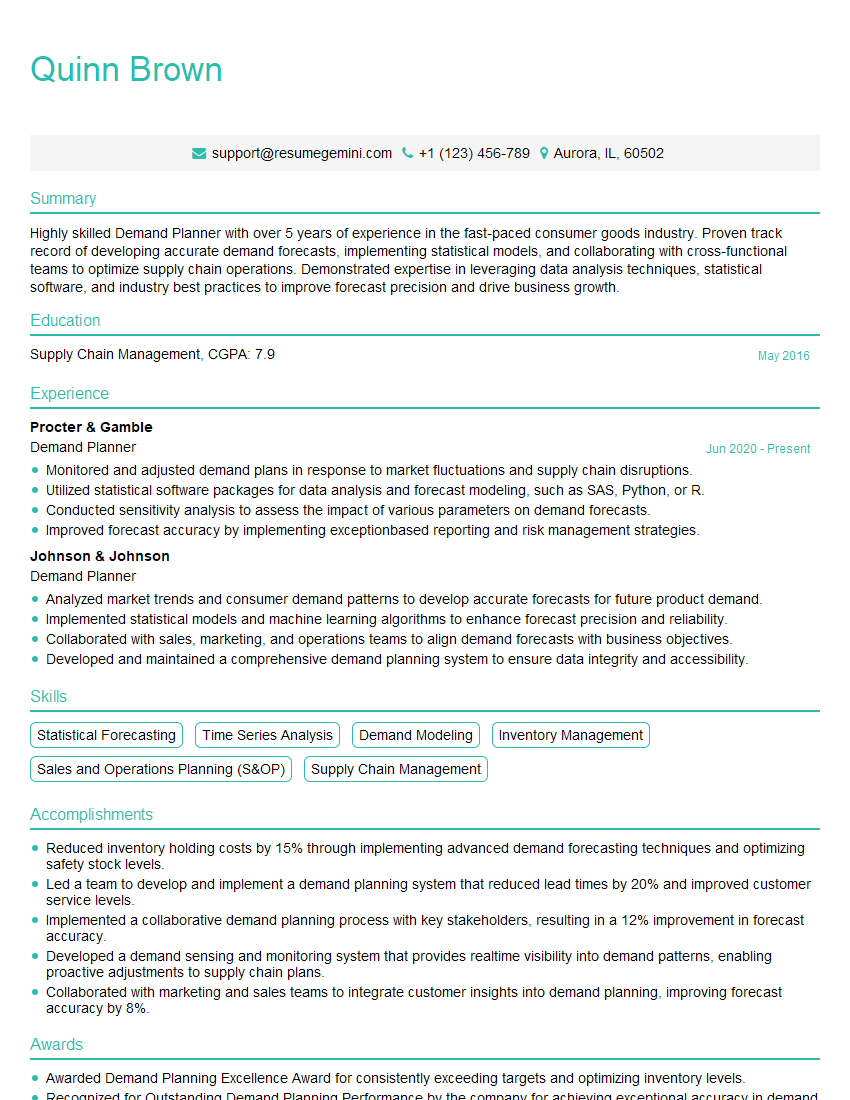
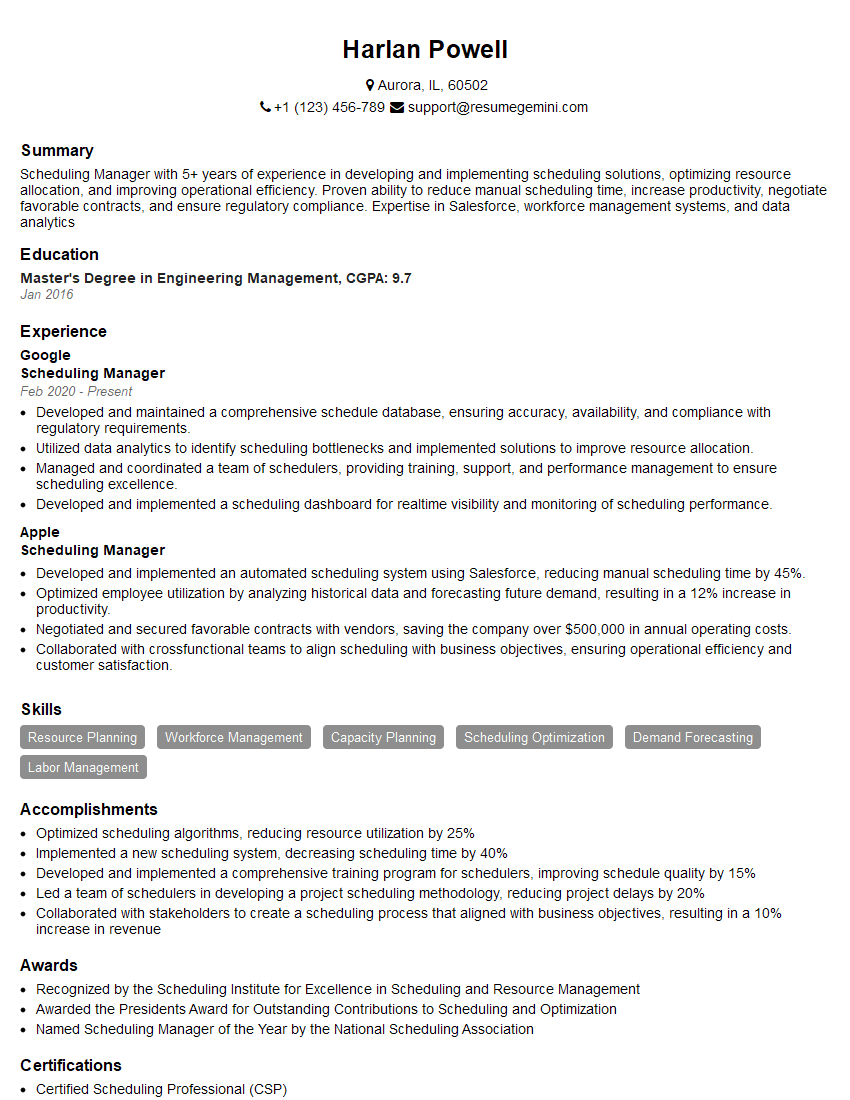
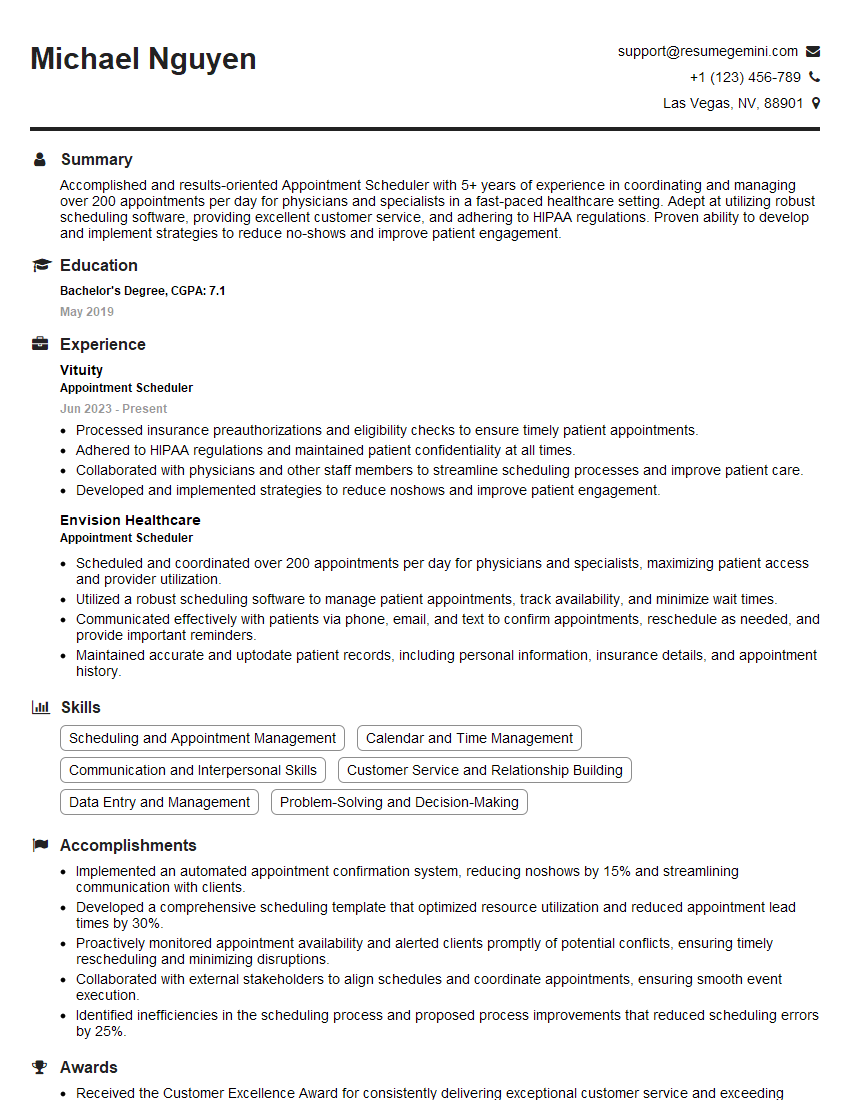
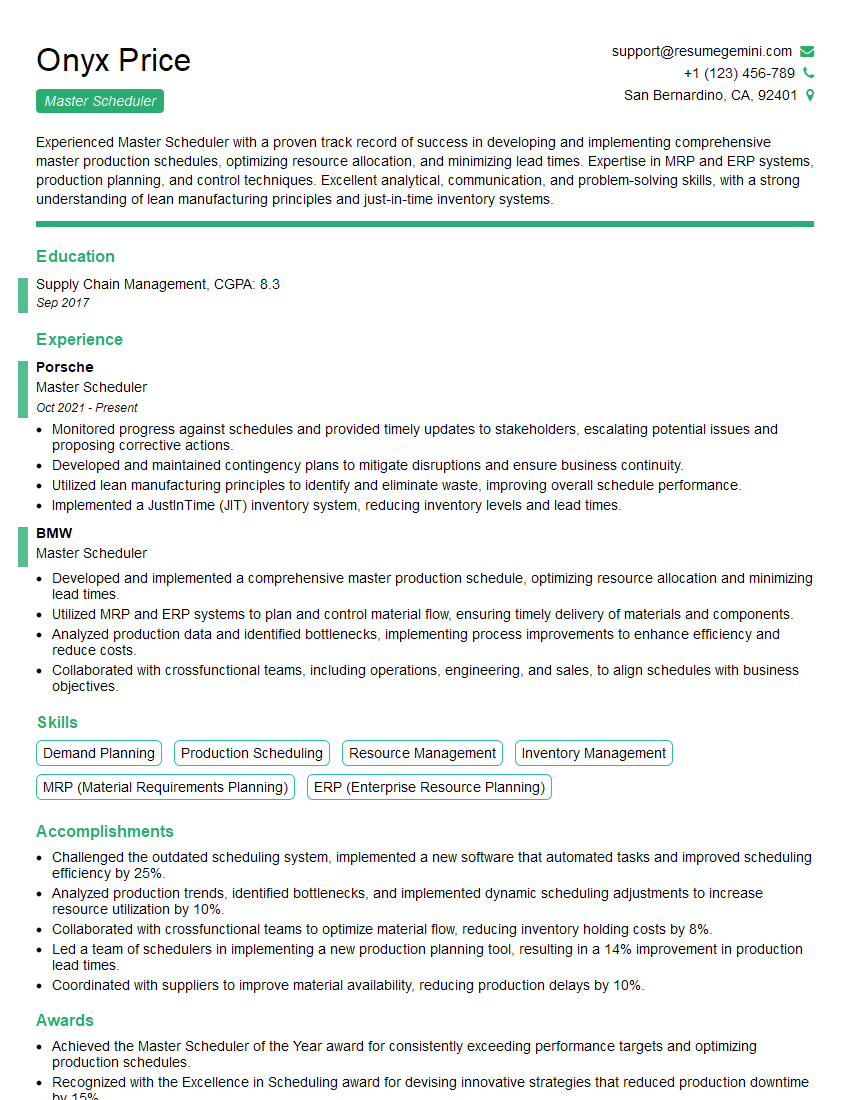
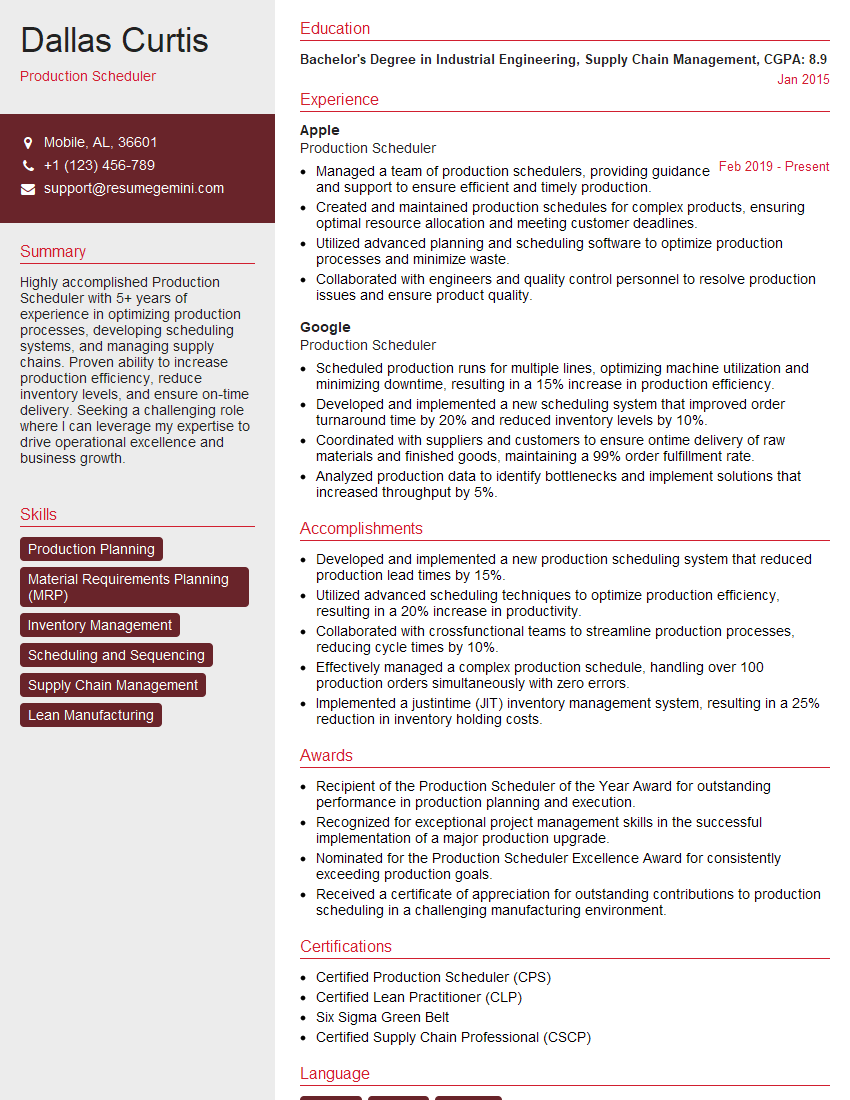
Mastering Scheduling Best Practices is crucial for career advancement in project management and related fields. A strong understanding of these principles demonstrates your ability to manage complex projects efficiently and effectively, leading to increased responsibility and higher earning potential. To significantly boost your job prospects, create an ATS-friendly resume that highlights your relevant skills and experience. ResumeGemini is a trusted resource to help you build a professional resume that stands out. Examples of resumes tailored to Scheduling Best Practices are available to help guide your process.

Explore more articles
Users Rating of Our Blogs
Share Your Experience
We value your feedback! Please rate our content and share your thoughts (optional).
What Readers Say About Our Blog
Really detailed insights and content, thank you for writing this detailed article.
IT gave me an insight and words to use and be able to think of examples