Interviews are opportunities to demonstrate your expertise, and this guide is here to help you shine. Explore the essential Sculptris interview questions that employers frequently ask, paired with strategies for crafting responses that set you apart from the competition.
Questions Asked in Sculptris Interview
Q 1. Explain the difference between dynamesh and standard sculpting modes in Sculptris.
Sculptris offers two primary sculpting modes: standard and Dynamesh. Standard mode works with a fixed polygon mesh, meaning the number of polygons is set, and sculpting modifies the existing topology. Think of it like working with clay on a pre-formed armature – you can shape it, but you’re limited by the armature’s structure. Dynamesh, conversely, is a revolutionary feature. It dynamically rebuilds the mesh as you sculpt, adjusting polygon density to adapt to your strokes. It’s like having infinitely malleable clay; you can add and remove detail without worrying about topology constraints. This makes it incredibly intuitive for organic modeling, but can be less efficient for highly detailed hard-surface work.
The key difference lies in the mesh’s flexibility. Standard mode is better suited for precise control over topology, beneficial for characters with specific anatomical needs or hard-surface models where you might want to retain edge loops for sharp definition. Dynamesh excels at quick, free-form sculpting, ideal for organic shapes, concept art, and rapid prototyping.
Q 2. Describe your workflow for creating a high-poly model in Sculptris.
My typical workflow for creating a high-poly model in Sculptris begins with a simple base mesh. This could be a sphere, cube, or even a custom primitive, depending on the subject. I then utilize Dynamesh extensively to block out the overall form, paying close attention to proportions and silhouette. This stage is all about getting the major shapes correct. Once the overall shape is satisfactory, I switch to more refined brushes to add details – creases, wrinkles, muscle definition, etc. I regularly adjust the Dynamesh resolution to balance detail and polygon count. A crucial step is frequently using the Flatten tool to smooth out overly complex areas and maintain a clean, efficient topology.
Throughout the process, I frequently rotate and zoom the model to check for inconsistencies and ensure even distribution of detail. Remember, Sculptris’s strengths are in organic forms; hard surfaces require careful planning and might need additional refinement in a different software after export.
Q 3. How do you optimize a Sculptris model for efficient retopology?
Optimizing a Sculptris model for retopology involves careful consideration of the mesh’s overall structure and polygon distribution. Before export, I try to reduce polygon density in areas with minimal detail – such as smooth surfaces – using the Flatten brush and the Smooth brush. This preserves detail in critical areas while making the model easier to manage in a retopology software. I might also utilize the Mask feature to selectively smooth specific sections. This targeted approach allows me to maintain sharp edges and crucial details while decreasing the overall polycount, improving the efficiency of the retopology process.
Exporting as an OBJ file is generally recommended, as it is widely compatible with most 3D modeling and retopology software. Remember, a clean, well-defined model from Sculptris makes retopology significantly faster and more straightforward.
Q 4. What are the limitations of Sculptris, and how do you work around them?
Sculptris, despite its intuitive nature, has certain limitations. Its lack of extensive UV unwrapping tools can be problematic for texturing. Complex hard-surface models can become cumbersome due to Dynamesh’s reliance on organic modeling, and very high polycounts can lead to performance issues. Sculptris also lacks advanced features found in more professional applications like ZBrush.
To overcome these limitations, I often use Sculptris for the initial sculpting phase, leveraging its speed and ease of use to quickly block out the form. Once the high-poly model is complete, I export it to a more robust 3D software like Blender or ZBrush to handle UV unwrapping, texturing, and further refinement. This workflow utilizes Sculptris’s strengths while compensating for its shortcomings.
Q 5. How do you manage polycount in Sculptris during complex sculpts?
Managing polycount in Sculptris during complex sculpts is crucial for performance. I use several strategies. Firstly, I frequently use the Dynamesh function to control polygon density. Increasing the resolution adds detail, but also increases the polycount exponentially, so I increment it strategically, focusing on areas requiring high detail. Secondly, I liberally use the Flatten and Smooth brushes to reduce polygon density in areas where high-frequency detail isn’t required. Masking lets me selectively apply these tools, refining details where needed while smoothing out larger areas.
The key is to maintain a balance between detail and efficiency. Regularly checking the polygon count (shown in the status bar) helps monitor this balance. By strategically managing Dynamesh resolution and sculpting techniques, you can create intricate models while avoiding excessive polycounts and ensuring good performance.
Q 6. Explain your approach to sculpting organic forms versus hard-surface models in Sculptris.
Sculpting organic forms versus hard-surface models in Sculptris necessitates different approaches. Organic forms, like characters or creatures, naturally lend themselves to Sculptris’ Dynamesh workflow. The dynamic mesh resolution adapts perfectly to the fluid nature of organic shapes. I typically start with a simple base mesh, and then gradually build up the form using a variety of brushes, focusing on creating smooth transitions and subtle details.
Hard-surface models, however, require more precise control over topology. While Dynamesh can be used, it’s less ideal. I might start with a more structured base mesh, using standard sculpting mode more often to maintain cleaner edges and well-defined loops. This approach requires more planning and precise brush strokes to achieve sharp, straight lines and defined geometry. The retopology process is significantly more crucial for hard-surface models.
Q 7. Describe your process for adding detail to a Sculptris model.
Adding detail to a Sculptris model is a multi-stage process. I begin with the larger forms, ensuring the overall silhouette and proportions are correct before adding finer details. Then, I progressively use smaller brushes, moving from low-frequency to high-frequency detail. For example, I might start with the Clay Buildup brush to add larger muscle masses or folds, then switch to the Pinch brush to define creases and wrinkles, and finally utilize the Standard brush at a smaller size to add fine surface details like pores or hair strands. Using masks can isolate areas where detailed sculpting is needed, maintaining performance while focusing on detail.
This layered approach is vital for creating realistic and believable models. I consistently zoom in and out to assess the overall coherence of details, ensuring they align with the overall form. Remember that less is often more; avoid over-sculpting and allow areas of smoother surfaces to balance intricate details.
Q 8. How do you use masking and layering effectively in Sculptris?
Masking and layering in Sculptris are crucial for non-destructive workflow and detailed sculpting. Think of masking like using painter’s tape – it protects areas you don’t want to affect. Layering allows you to build up details gradually, like adding paint layers.
Masking: You select a brush, adjust the size and strength, and then use the ‘Mask’ tool to paint a mask onto your model. The masked areas are protected from sculpting operations. You can invert masks, refine them with different brush sizes, and seamlessly blend masked and unmasked regions. This is particularly useful for adding intricate details to specific areas, such as sculpting scales on a dragon’s wing without affecting the surrounding body.
Layering (through saving and loading): Sculptris doesn’t have explicit layers like Photoshop. Instead, save your progress frequently under different names (e.g., ‘base_mesh’, ‘detailed_head’, ‘final_sculpt’). This allows you to revert to previous stages or experiment with different variations without losing your work. Imagine this as stacking clay models on top of each other – each save represents a new layer in your process.
Effective Use: Combine both. Mask a region, sculpt details, save your progress, unmask, mask a different region and repeat. This keeps your sculpting organized and allows for clean, incremental progress.
Q 9. How do you handle symmetry in Sculptris, and when might you break it?
Symmetry in Sculptris is managed via the Symmetry toggle. It mirrors your sculpting actions across a central axis. This is extremely helpful for creating even, balanced characters or objects. You activate this in the interface – simply check the box.
Breaking Symmetry: Deliberately breaking symmetry is vital for creating realistic and expressive forms. No living being is perfectly symmetrical! Asymmetry creates character and believability. For instance, you might break the symmetry of a face to subtly create a slight asymmetry in the eyes or jawline to add character. This can be done by using the masking tool on one side of the model and sculpting without the symmetry applied, or by using a brush with low falloff to target very specific points on one half of the model.
When to Break it: Break symmetry when you want to create imperfections or asymmetry, to add realism, personality, or a unique expression. Imagine a character’s smile – one side might be lifted higher than the other. Breaking symmetry is crucial in achieving that nuanced detail. It’s a crucial skill in adding life and uniqueness to your models.
Q 10. Explain your understanding of the different brush types and their applications in Sculptris.
Sculptris offers a range of brushes, each serving a unique purpose. Understanding their strengths is key to efficient sculpting.
- Standard Brush: This is your all-purpose tool for adding and removing material. Adjust the radius, strength, and intensity to control the effect. Think of it as your basic sculpting knife or clay tool.
- Clay Brush: Ideal for building up forms smoothly. It’s like smoothly applying wet clay to your model. It’s gentle and creates less sharp edges.
- Smooth Brush: This tool helps to average out surface details, making the model smoother. Think of it as your smoothing tool – helpful in refining the model.
- Grab Brush: Allows you to move and reshape sections of your model, useful for large adjustments to proportions and general form. It’s like grabbing and pushing sections of clay.
- Inflate/Deflate: These brushes adjust the volume of the model, adding or subtracting material in a proportional manner. Useful for quickly adjusting volumes or creating general shape.
Application: Start with the Grab brush to establish overall form, move to the Clay brush to build up details, refine with the Smooth brush, and then use the Standard brush for fine details and sculpting features.
Q 11. How do you use the GoZ feature in Sculptris and ZBrush?
GoZ (GoZBrush) is a powerful feature that allows seamless workflow between Sculptris and ZBrush. It’s essentially a bridge that lets you transfer your model between the two programs without losing any details or requiring exporting/importing.
How it Works: In Sculptris, you export your model using GoZ. This instantly imports the model into ZBrush, retaining the same topology and details. Similarly, you can send your model from ZBrush back to Sculptris using GoZ. This allows for leveraging the strengths of each program – using Sculptris for initial blocking and quick sculpting, then moving to ZBrush for more advanced details and texturing.
Practical Application: Imagine you’ve blocked out a character in Sculptris. Use GoZ to transfer it to ZBrush for detailed clothing, hair, and fine-tuning the face. You can then transfer it back to Sculptris for final adjustments before exporting.
Q 12. Describe your approach to creating realistic textures in Sculptris (or through external tools).
Sculptris itself has limited texturing capabilities. For realistic textures, you’ll usually rely on external tools like Substance Painter or Photoshop. However, even in Sculptris you can establish basic texture information through your sculpting. The way you carve out details and build up your model influences the final result dramatically.
Approach: In Sculptris, focus on sculpting strong underlying forms and details that create variation in surface. This variation is already the base for a texture. Imagine the wrinkles on a face or the scales of a reptile – these directly influence texture. After sculpting in Sculptris, export your model in a suitable format (e.g., OBJ) into Substance Painter or Photoshop. In these programs, you would then apply your texture maps (diffuse, normal, specular etc.)
External Tools: Substance Painter provides advanced tools for creating realistic materials and textures. Photoshop is useful for hand-painting textures or manipulating textures created in other software. You can create height maps, normal maps, diffuse maps and more, adding depth and detail far beyond Sculptris’ basic capabilities.
Q 13. How do you troubleshoot common issues like mesh deformation or unexpected behavior in Sculptris?
Sculptris is generally stable, but some issues can arise.
- Mesh Deformation: This often happens due to excessive sculpting, stretching the mesh too far. The solution is to remesh the model. Sculptris allows this using the Decimation Master. This rebuilds your mesh to a more stable topology. Always save your progress regularly to avoid losing extensive work.
- Unexpected Behavior: Sometimes, the brushes act unpredictably. The first step is to ensure your brush settings (strength, radius, intensity) are appropriate. If this does not solve the issue, check your system resources – insufficient memory can cause erratic behavior. Restarting Sculptris or your computer can often resolve such issues. It’s also helpful to maintain a well organized file system and not have Sculptris working with too many other apps open.
- Model Crashes: If your model becomes unresponsive or crashes, try saving your work before closing. If a save doesn’t work, you might have to work with an older version of your file, if you are using version control.
Prevention: Regularly remeshing your model throughout the sculpting process prevents major mesh deformation issues. Frequent saving avoids data loss.
Q 14. How do you approach sculpting a character from a concept sketch in Sculptris?
Sculpting a character from a concept sketch in Sculptris involves a systematic approach:
- Reference Gathering: Collect multiple references for your concept, including poses, anatomy, clothing etc. This helps refine your understanding of form and proportions.
- Base Mesh Creation: Start with a simple sphere or cube, then utilize the Grab Brush to roughly shape the character’s overall silhouette, mimicking the basic proportions from your concept sketch.
- Blocking: Utilize the clay brushes to sculpt the major muscle groups and overall form of the character’s body and face. Focus on the major planes of the form, paying close attention to anatomy and silhouette.
- Detailed Sculpting: Gradually refine the model, adding finer details using masking to refine specific areas such as eyes, mouth, hair and clothing folds.
- Refinement: Use the smooth and clay brushes to refine the model, paying attention to surface details, making sure the model is proportional and has consistent topology.
- Remeshing: Regularly remesh your model throughout the process to maintain mesh integrity. This is especially important after drastic changes to the model’s form.
Example: When sculpting a warrior character, I would first build a basic human-like structure, then using references, add muscle definition and armour pieces, paying attention to how the armor sits and drapes on the body.
Q 15. What is your preferred method for posing and positioning a sculpt within Sculptris?
Posing and positioning in Sculptris relies heavily on its intuitive transform tools. My preferred method involves a combination of the Transform and Move tools. I typically start by roughly blocking out the pose using the Move tool, manipulating the entire model or selected parts with the gizmo. This allows for quick adjustments to overall posture and proportions. Then, I refine the pose with the Transform tool. This offers more granular control, allowing me to rotate, scale, and shear specific parts of the model precisely. This is especially useful for fine-tuning limb positions, head angles, and other subtle details. I often alternate between these two tools, going from gross adjustments to fine-tuning, ensuring a natural and dynamic pose.
For instance, when sculpting a character in action, I might first use the Move tool to place the arms and legs in a broad running pose. Then, I’d use the Transform tool to adjust individual finger positions, slightly bend the knees, and ensure the body’s weight distribution is believable. Finally, I’d use the Symmetry feature to mirror adjustments across the model, maintaining consistency.
Career Expert Tips:
- Ace those interviews! Prepare effectively by reviewing the Top 50 Most Common Interview Questions on ResumeGemini.
- Navigate your job search with confidence! Explore a wide range of Career Tips on ResumeGemini. Learn about common challenges and recommendations to overcome them.
- Craft the perfect resume! Master the Art of Resume Writing with ResumeGemini’s guide. Showcase your unique qualifications and achievements effectively.
- Don’t miss out on holiday savings! Build your dream resume with ResumeGemini’s ATS optimized templates.
Q 16. How do you export your Sculptris models for use in other 3D software?
Exporting Sculptris models for use in other 3D software is straightforward. Sculptris primarily exports in two formats: OBJ and STL. Both are industry-standard formats compatible with most 3D packages. I typically prefer OBJ as it retains more detail and can handle higher polygon counts better than STL. Before exporting, I always make sure to decimate my model appropriately, reducing the polygon count to manage file size and improve performance in other applications. This is especially crucial if working with complex high-poly sculpts. For example, if I’m exporting a character for animation in Blender, I’ll decimate to around 5-10 million polygons, depending on the rig and level of detail needed. Remember to check your model for any detached parts or unwanted geometry before exporting. A quick inspection in Sculptris’s viewport is essential before saving.
Q 17. Explain your understanding of topology and its importance in Sculptris modeling.
Topology in 3D modeling refers to the arrangement of polygons or faces on a 3D mesh. In Sculptris, understanding topology is vital for creating clean, easily manipulatable, and render-friendly models. Poor topology can lead to distortion, artifacts during animation (like stretching or pinching), and difficulty in retopology (creating a lower polygon count mesh). Ideally, the polygon flow should be smooth, consistent, and follow the organic form of the model. Avoiding excessive stretching or pinching is essential.
For example, if sculpting a human arm, consistent polygon quads along its length provide a smooth, even distribution allowing for natural deformation. Conversely, uneven polygons with sharp angles can create unpredictable deformations when posed. In Sculptris, I actively try to maintain an even distribution of polygons through thoughtful sculpting and the use of tools that minimize topology issues. While Sculptris is not explicitly designed for meticulous topology control like some dedicated modeling software, careful planning during the sculpting process is paramount for a well-structured mesh.
Q 18. What are your preferred shortcuts and techniques for efficiency in Sculptris?
Efficiency in Sculptris is key. My preferred shortcuts involve using the scroll wheel to zoom and rotate, the Alt key to activate the selection tool and choose the area to work on, and the Shift key for additive sculpting with brushes like Inflate and Smooth. I also frequently use the [ and ] keys to adjust brush size quickly. More advanced techniques include using the Masking tool extensively to isolate areas for detailed work, preventing accidental modifications in other parts of the model. This prevents mistakes that would need to be undone. Additionally, I rely on the Undo/Redo feature liberally, which is a lifesaver when experimenting with different brush strokes.
A time-saving strategy is to work from the most important details to the least. I start with large-scale adjustments of the general shape, followed by progressively smaller details.
Q 19. How do you use reference images effectively during the sculpting process?
Reference images are invaluable. I use them by positioning them in a second monitor or a separate window alongside Sculptris. This lets me visually compare my sculpt with the reference, constantly checking proportions, anatomy, and details. I often zoom in on specific features (like a hand or eye) in both the reference image and my sculpt to ensure accuracy. I use various techniques for incorporating references; sometimes, I project the image onto the model as a guide, particularly for complicated textures or details. Other times, I simply keep it as a visual companion to guide my sculpting decisions. A key aspect is to avoid slavishly copying the image; the goal is to understand the forms and principles, translating them into my artistic interpretation.
Q 20. Describe a time you had to troubleshoot a complex problem in Sculptris.
Once, I was sculpting a highly detailed dragon, and after a significant amount of work, I accidentally hit a shortcut that deleted a large section of the model. My immediate reaction was to check the undo history. Fortunately, Sculptris had saved my progress at various stages of my work. I was able to recover most of my work, losing only about 15 minutes’ worth of sculpting. This incident reinforced the importance of regularly saving my work and becoming fully acquainted with the application’s undo/redo functionality, as well as the importance of version control—although Sculptris doesn’t have built-in version control, frequently saving separate versions of the file under different names is a great strategy.
Q 21. How do you balance artistic vision with technical feasibility in Sculptris?
Balancing artistic vision with technical feasibility in Sculptris is a continuous process. My artistic vision often involves complex details and forms. However, I need to consider whether Sculptris’s tools and its inherent limitations (like potential topology issues with complex forms) can support those visions. Often, I find that compromises are necessary, particularly regarding the level of detail. Sometimes, simplifying the details slightly can improve the overall flow and readability of the sculpt. Additionally, it helps to think about the intended final use of the model. A model intended for animation might require a different approach compared to a still render, as this impacts the kind of topology required. For example, I might reduce highly intricate details for a game character that is meant to be seen at low resolutions and still maintain a strong sense of visual appeal.
Q 22. Explain your experience using different brushes for creating different types of surfaces.
Sculptris’s brush system is incredibly versatile. Understanding how different brushes affect the surface is key to efficient sculpting. The Smooth Brush, for instance, is essential for refining shapes and eliminating harsh edges. Think of it like sanding a wooden sculpture – it progressively smooths out irregularities. Conversely, the Clay Buildup Brush adds volume, allowing you to build up forms organically. Imagine molding clay – this brush mimics that additive process. Then there’s the Inflate/Deflate Brush, perfect for adjusting volumes quickly and intuitively; it’s like using a pump to inflate or deflate a balloon. The Grab Brush is fantastic for pulling and moving sections of the mesh, offering a level of control similar to manipulating putty. For detailed work, the Clay Tubes Brush allows for precise additions of material. Mastering these brushes, along with experimenting with their strength and size settings, is crucial for creating varied surface qualities. For example, a smooth brush with low strength can create subtle, skin-like textures, while a high-strength smooth brush can drastically reduce detail. The choice of brush heavily depends on the desired effect: rough, smooth, sharp, or soft. I often start with larger brushes for initial blocking and progressively switch to smaller ones for detailing.
Q 23. How do you incorporate feedback into your sculpting workflow?
Incorporating feedback is a crucial part of my sculpting workflow. I usually solicit feedback at several stages: after initial blocking, after adding major details, and finally, after refinement. I find it beneficial to get feedback from both peers and mentors, as they can offer different perspectives. I share my work through screenshots or short videos and specifically ask for comments on specific areas – for instance, “Does the anatomy feel believable in this pose?” or “Is the texture convincing?” I then actively analyze the feedback, prioritizing constructive criticism. Sometimes, this requires me to revisit earlier stages of the process to make adjustments. For example, a critique might point out a flaw in the underlying structure that needs to be fixed before proceeding with details. This iterative process of feedback and refinement is essential to creating strong, compelling sculpts.
Q 24. What are some tips for maintaining a good sculpting workflow?
Maintaining a good sculpting workflow is vital for efficiency and creative flow. Here are some key tips:
- Plan Ahead: Before starting, create rough sketches or concept art. Knowing your target shape before diving into Sculptris prevents wasted time.
- Reference Images: Use multiple reference images for accurate anatomy, proportion, and detail. This is especially critical for character sculpting.
- Regular Saves: Sculptris auto-saves, but regularly saving your progress manually ensures peace of mind.
- Symmetry: Utilize Sculptris’s symmetry tools effectively, speeding up the process significantly and maintaining balanced forms. Symmetry is crucial for characters and many props.
- Regular Breaks: Stepping away from your work allows you to return with fresh eyes and notice areas for improvement you might have missed when tired.
- Layer Your Work: Although Sculptris doesn’t offer layers in the traditional sense, employing the same principle using subdivision levels creates a non-destructive workflow.
Q 25. How do you deal with memory limitations when working on very high-poly models in Sculptris?
Sculptris, by its nature, is limited by memory. High-poly models consume considerable RAM. To mitigate this, I use several strategies:
- Decimation Master: Regularly decimate your model, reducing polycount without significantly impacting detail. This is a trade-off – I decide how much I can reduce to maintain enough detail to continue work while keeping within my computer’s capabilities.
- Work in Sections: Instead of sculpting the entire model at once, I work on individual parts (e.g., head, torso, legs) and merge them later. This reduces the overall polycount at any given time.
- Optimize Sculpting Technique: Efficient sculpting avoids unnecessary polycount inflation. I focus on using the correct brushes for the stage of the process and avoid over-sculpting.
- Hardware Upgrade Considerations: Ultimately, an upgrade to a system with higher RAM and faster processing power is the most effective long-term solution.
Q 26. What are your thoughts on the advantages and disadvantages of using Sculptris?
Sculptris offers significant advantages, particularly its ease of use and intuitive interface. The dynamic tessellation is a game-changer, making it simple to add detail without worrying about polygon limitations. The intuitive brushes are another significant strength, allowing for organic, almost effortless sculpting. However, Sculptris also has limitations. The lack of traditional retopology tools can be a challenge, and exporting to other applications requires careful management of polycounts. Its lack of advanced features found in more professional software like ZBrush can also hinder complex projects. For beginners and rapid prototyping, Sculptris excels. For highly detailed, polished projects that require meticulous control and advanced features, professional software is generally preferable. The choice often depends on the project’s scope and your skill level.
Q 27. Discuss your experience with sculpting different types of assets (characters, environments, props).
My experience spans various asset types. For characters, I focus on anatomy, expression, and clothing details. Reference images are crucial here, especially for believable anatomy. Environments require a different approach, focusing on overall form and scale, using brushes to create rough textures and details for rocks, plants, and buildings. Props often require a mix of techniques: creating basic shapes, adding detail using appropriate brushes, and sometimes employing boolean operations (though not directly in Sculptris, you can import/export meshes to do this). In each case, the appropriate brushes and the overall approach are adapted to the specific needs of the asset type. Sculpting a character requires a different mindset than creating a rock formation. Understanding the unique challenges of each asset type is essential for success.
Q 28. Describe your process for creating a believable anatomy in a character sculpt.
Creating believable anatomy is paramount in character sculpting. I begin with a simple base mesh, focusing on accurate proportions. I use reference images extensively. Understanding human anatomy, including muscle groups and skeletal structure, is critical. I then gradually build upon the base mesh using the Clay Buildup and other brushes to add muscles, defining the forms and creating subtle curves. The Smooth Brush is employed to refine shapes, while the Inflate/Deflate tool is useful for adjusting volumes. The process involves constant refinement and checking for anatomical accuracy. The Grab Brush is indispensable for adjusting overall volumes and positioning. I frequently zoom in for detail work and regularly rotate the model to check for inconsistencies. The entire process demands both artistic skill and anatomical knowledge. A final check is to compare to references from multiple angles to ensure accuracy.
Key Topics to Learn for Sculptris Interview
- Sculpting Fundamentals: Understanding the basic tools and workflows, including brush types, strengths, and sculpting techniques. Practice creating basic shapes and forms.
- Topology and Mesh Editing: Mastering techniques for optimizing mesh topology for efficient sculpting and subsequent modeling in other 3D applications. This includes understanding and applying retopology techniques where necessary.
- High-Poly and Low-Poly Modeling: Understanding the difference between high-resolution sculpting for detail and low-resolution models optimized for game engines or animation. Practice workflows to translate your high-poly sculpts into game-ready low-poly models.
- Workflow Optimization: Developing efficient sculpting workflows to maximize productivity and achieve desired results within reasonable timeframes. This includes understanding when to use different tools and techniques.
- Material and Texture Application (Basic): While Sculptris may not be your primary texturing software, understanding how to export your model correctly and prepare it for texturing in other programs is crucial.
- Problem-Solving and Troubleshooting: Anticipate common challenges encountered during the sculpting process, such as mesh issues, performance bottlenecks, and workflow inefficiencies. Demonstrate your ability to creatively overcome these hurdles.
- Understanding Sculptris Limitations and Alternatives: Be prepared to discuss Sculptris’s strengths and weaknesses compared to other 3D sculpting software. Knowing when Sculptris is the right tool, and when to use other software, demonstrates a broader understanding of the 3D modeling pipeline.
Next Steps
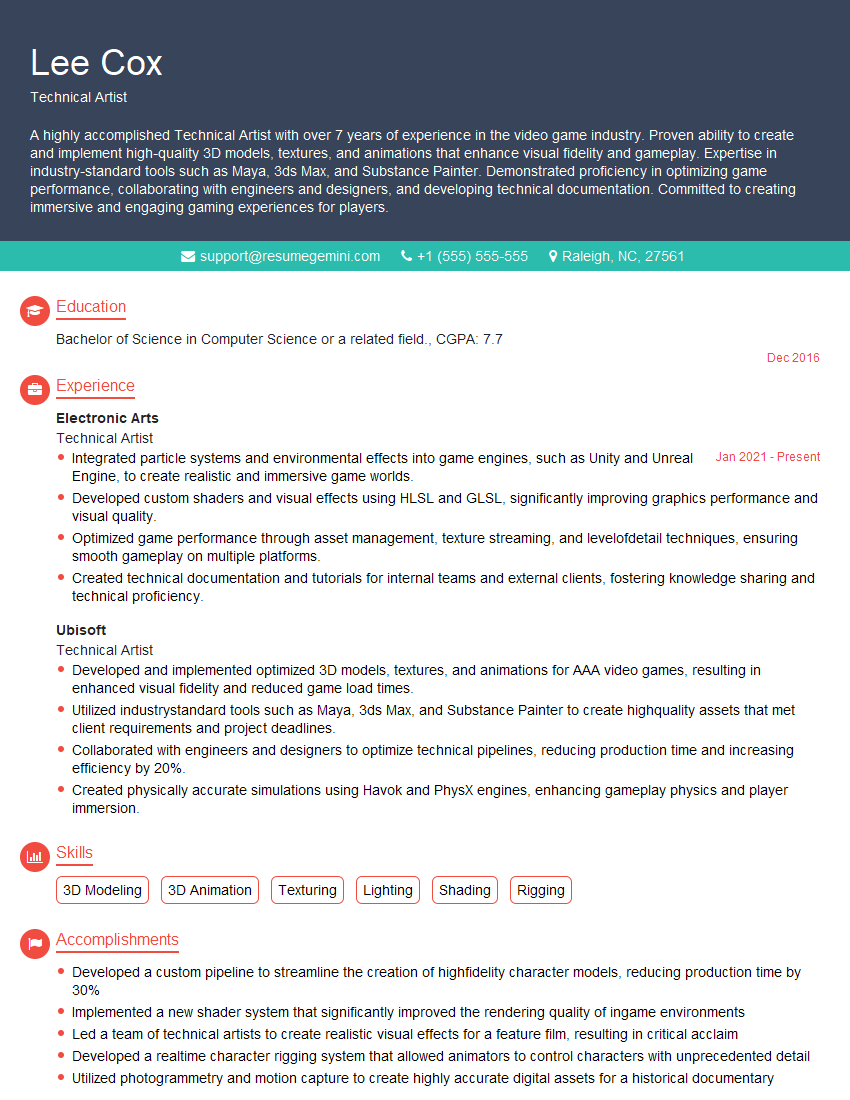
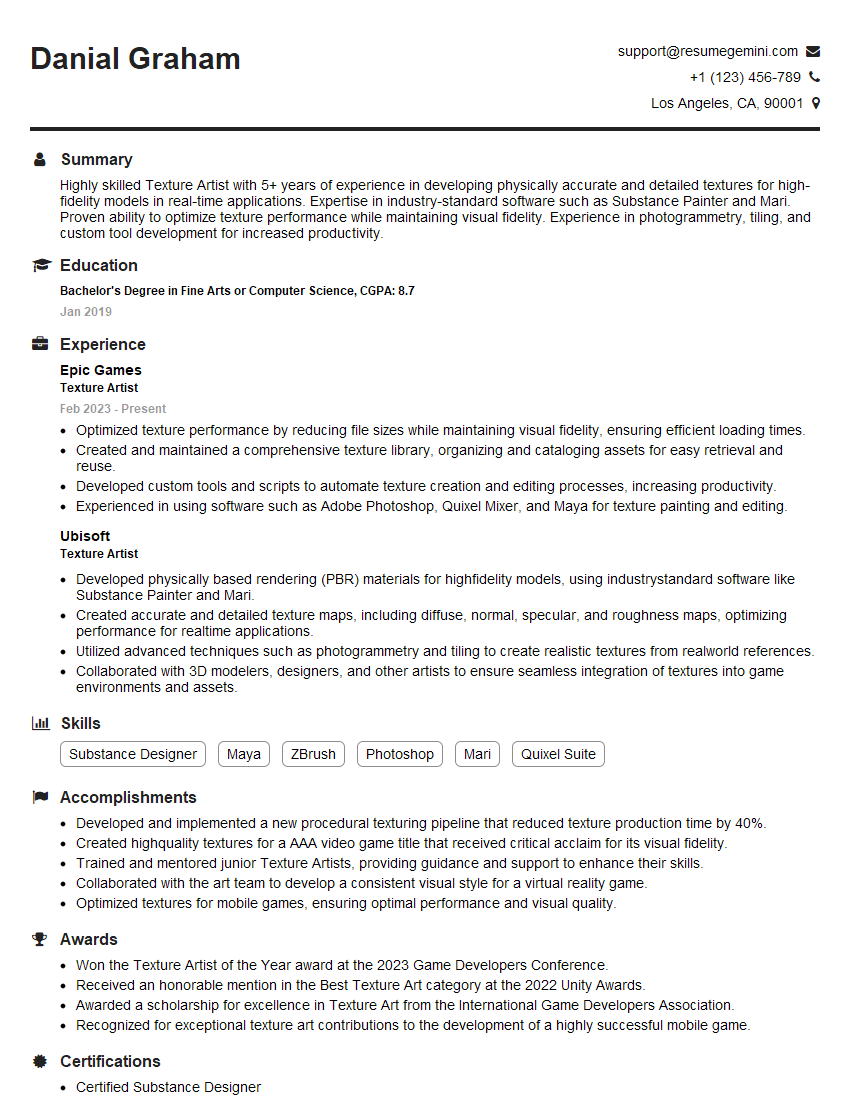
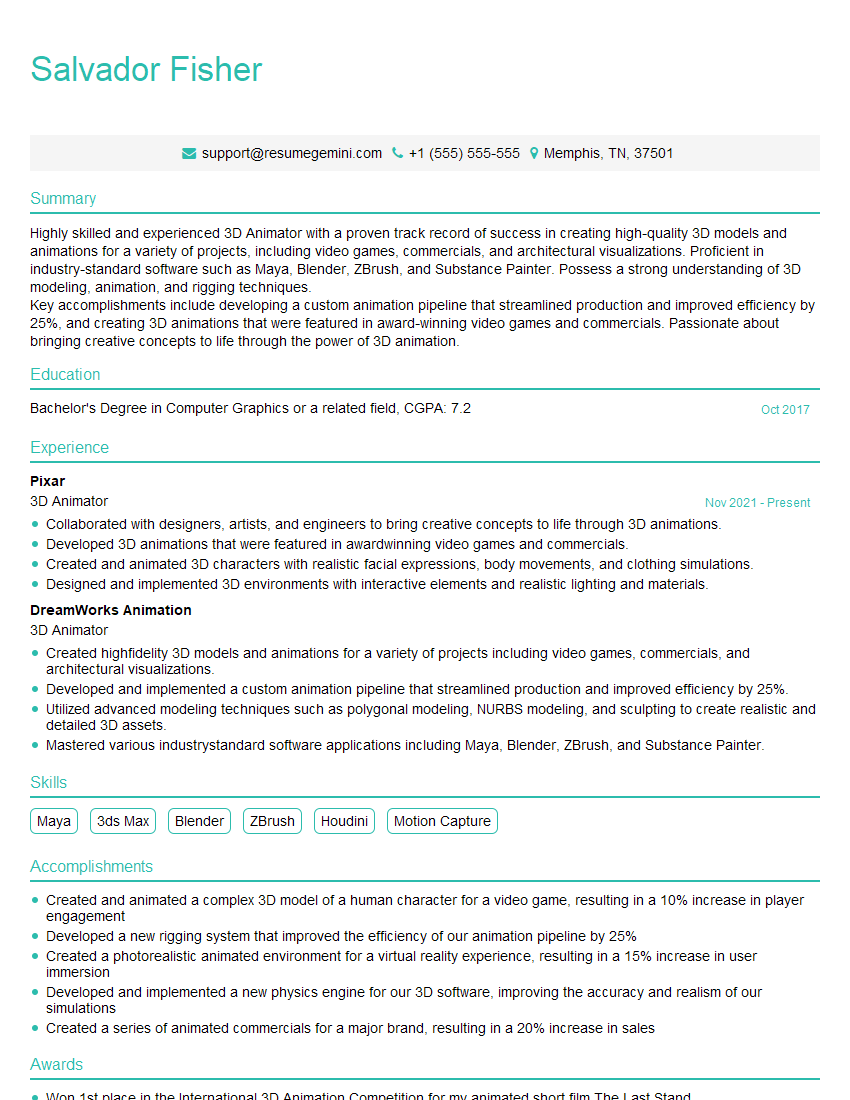
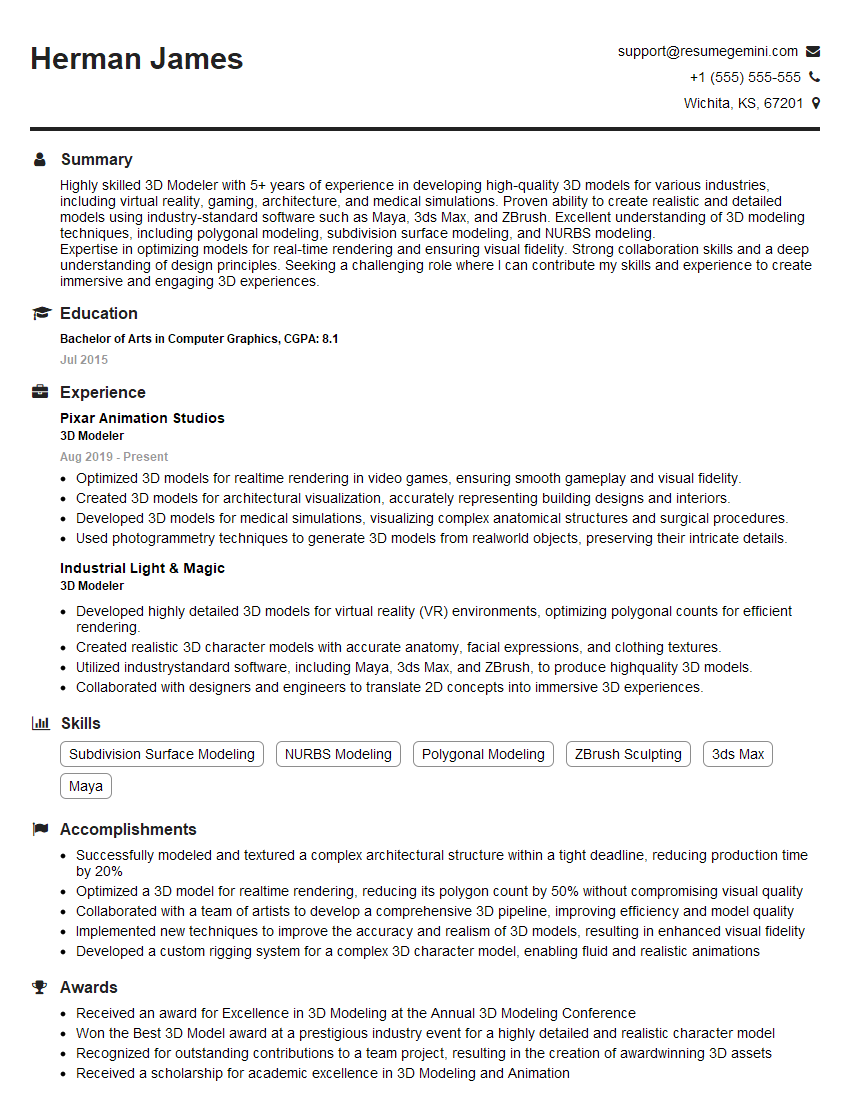
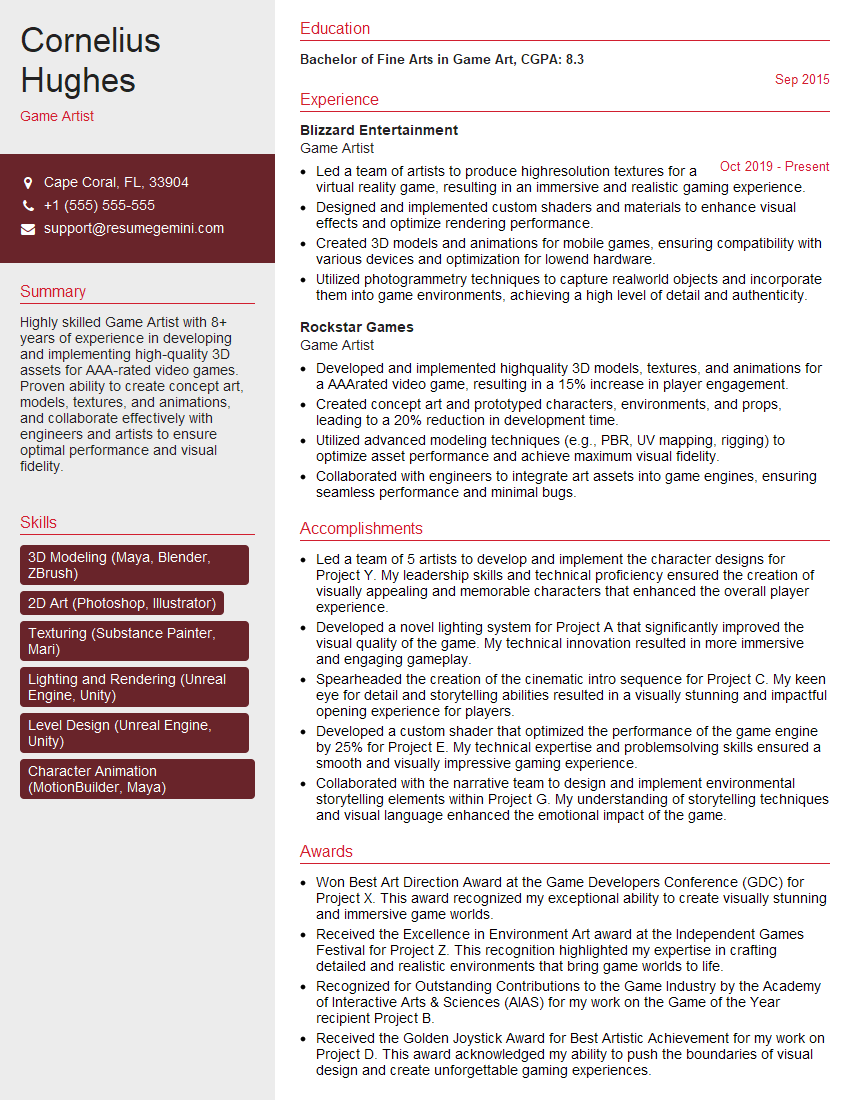
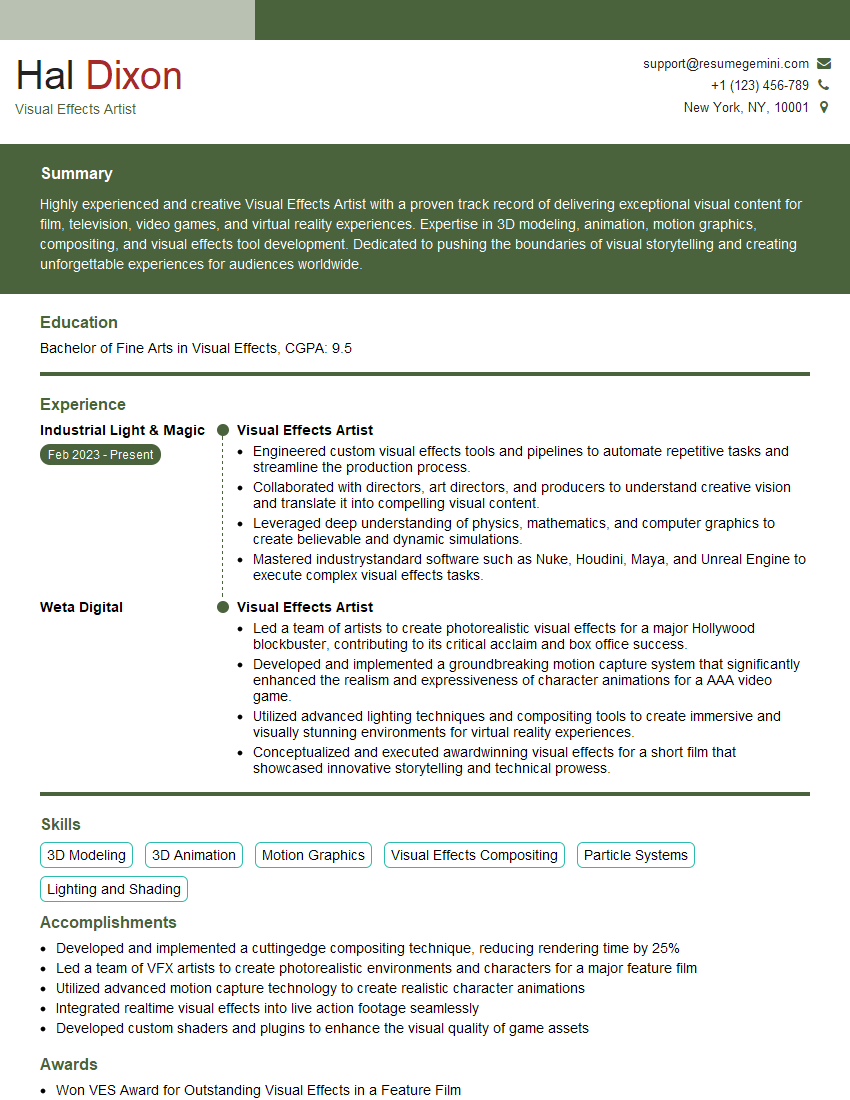
Mastering Sculptris significantly enhances your 3D modeling skillset, opening doors to exciting opportunities in game development, animation, visual effects, and product design. To increase your chances of landing your dream job, creating a strong, ATS-friendly resume is paramount. ResumeGemini is a trusted resource that can help you build a professional and impactful resume tailored to the specific requirements of your target roles. Examples of resumes optimized for Sculptris-related positions are available to guide you. Take the next step in your career journey today!
Explore more articles
Users Rating of Our Blogs
Share Your Experience
We value your feedback! Please rate our content and share your thoughts (optional).
What Readers Say About Our Blog
Really detailed insights and content, thank you for writing this detailed article.
IT gave me an insight and words to use and be able to think of examples