Unlock your full potential by mastering the most common Soldering Brass interview questions. This blog offers a deep dive into the critical topics, ensuring you’re not only prepared to answer but to excel. With these insights, you’ll approach your interview with clarity and confidence.
Questions Asked in Soldering Brass Interview
Q 1. What types of fluxes are best suited for soldering brass?
Choosing the right flux is crucial for successful brass soldering. Fluxes clean the metal surfaces, allowing the solder to flow properly and create a strong, reliable joint. For brass, you’ll generally want a flux designed for non-ferrous metals.
- Rosin-based fluxes: These are relatively mild and are a good choice for electronics and delicate work where residue is a concern. They leave behind a less corrosive residue than other types, but might not be strong enough for heavily oxidized brass.
- Organic acid fluxes: These are more aggressive and are better suited for cleaning heavily oxidized or tarnished brass. They’re effective but require thorough cleaning after soldering to remove the residue, preventing corrosion. Common examples include those containing zinc chloride or other organic acids.
- Activated fluxes: These are the most aggressive and contain stronger acids. They’re generally used only when absolutely necessary because of the strong corrosive potential of their residue. They are best suited for extremely dirty or heavily oxidized surfaces.
The best flux for your brass soldering project will depend on the condition of the brass and the type of soldering you’re doing. For most general applications, a good quality organic acid flux provides a balance of cleaning power and ease of use.
Q 2. Explain the difference between soldering and brazing brass.
While both soldering and brazing join metals using a filler metal, they differ significantly in the melting point of the filler metal and the resulting joint strength. Think of it like this: soldering is like using glue, while brazing is more like welding.
- Soldering: Uses a filler metal with a melting point below 450°C (842°F). The brass itself doesn’t melt. Soldering creates a relatively weaker joint, suitable for less-stress applications.
- Brazing: Uses a filler metal with a melting point above 450°C (842°F). The brass is heated to a much higher temperature and the filler metal flows into the gap by capillary action. Brazing results in a much stronger joint and is often used for high-strength applications.
In practice, choosing between soldering and brazing depends on the intended application. If you need a strong, robust joint, brazing is the better option. For less demanding applications where a simpler process is desired, soldering is suitable.
Q 3. Describe the process of preparing brass for soldering.
Proper preparation is key to successful brass soldering. Neglecting this step can lead to weak joints and even failure. The process involves several critical steps:
- Cleaning: Thoroughly clean the brass surfaces using a wire brush, sandpaper (fine grit), or even steel wool to remove any dirt, grease, oxides, or other contaminants. You need bare, clean metal for good solder adhesion.
- Fluxing: Apply the chosen flux evenly to both surfaces you plan to join. This helps to remove any remaining oxides and improves solder flow. Use a fluxing brush or a clean rag.
- Preheating (Optional): For larger pieces or those with significant mass, preheating can help ensure even heat distribution and prevent localized overheating or warping. This is usually done using a heat gun or a torch.
Imagine trying to glue two pieces of wood together if there’s dirt and dust on them – it wouldn’t work well! The same principle applies to soldering brass. A clean, well-fluxed surface is essential for a strong joint.
Q 4. What are the common challenges encountered when soldering brass?
Soldering brass presents several potential challenges, all stemming from the material’s properties and the soldering process itself:
- Oxidation: Brass readily oxidizes, forming a layer of oxide that prevents the solder from wetting the surface properly. Thorough cleaning and fluxing are crucial to combat this.
- Heat Sink Effect: Large or thick brass pieces can act as heat sinks, drawing heat away from the joint and making it difficult to achieve the proper soldering temperature. Preheating or using a higher-powered soldering iron can help.
- Cold Joints: A cold joint results from insufficient heat or improper cleaning, leaving a weak and unreliable bond. It appears dull and often has a porous or grainy texture.
- Solder Spatter: Improper technique or excessive heat can lead to solder spatter, which is messy and can create unwanted solder bridges.
Experience and careful attention to detail are key to overcoming these challenges. Practice is your best friend in the world of soldering.
Q 5. How do you prevent solder from flowing where it’s not wanted?
Preventing solder from flowing where it’s not wanted involves several techniques:
- Masking: Use heat-resistant tape or a suitable masking agent (like heat-resistant putty) to cover areas you don’t want solder to reach. This is like creating a protective barrier.
- Heat Shielding: Position a heat shield (like a piece of steel) to block heat from reaching unintended areas. It prevents the solder from melting in those spots.
- Careful Application of Heat: Focus the heat source directly on the joint you intend to solder and use a controlled, precise application. Think of it like a scalpel instead of a sledgehammer.
- Solder Stops: In some cases, mechanical solder stops (small metal barriers) can prevent solder from running where it’s not needed.
The best method will depend on the specific scenario. Often, a combination of techniques yields the best result.
Q 6. What safety precautions should be taken when soldering brass?
Safety is paramount when soldering brass. The process involves heat, fumes, and potentially hazardous materials. Here’s what to keep in mind:
- Ventilation: Always work in a well-ventilated area to minimize exposure to soldering fumes. Consider using a fume extractor if necessary.
- Eye Protection: Wear safety glasses or a face shield to protect your eyes from solder spatter and fumes.
- Gloves: Use heat-resistant gloves to protect your hands from burns. Also, ensure any gloves are appropriate for the flux used as some can cause irritation or reaction.
- Proper Handling of Materials: Handle fluxes and solder carefully, avoiding contact with your skin. Follow the manufacturer’s instructions and warnings.
- Fire Safety: Keep a fire extinguisher nearby, especially when working with a torch. Be mindful of flammable materials in your workspace.
Think of safety as the foundation of your soldering work. It’s not something you can afford to cut corners on.
Q 7. Explain the importance of proper heat control in soldering brass.
Proper heat control is essential for successful soldering. Too little heat leads to cold joints, while too much heat can damage the brass or cause the solder to overheat and spatter. It also increases the risk of burning yourself or damaging components.
The goal is to apply just enough heat to melt the solder and achieve a good flow without overheating the base metal.
- Start Low and Gradually Increase: Use a low initial heat setting to slowly warm up the components, preventing overheating and damage.
- Control Heat Application: Concentrate heat on the specific joint, avoiding excessive heat on surrounding areas.
- Use Appropriate Tools: Select a soldering iron or torch with appropriate wattage or flame size for the task.
- Observe the Solder: Watch carefully how the solder flows and adjusts the heat accordingly. The solder should flow smoothly and evenly, filling the joint completely.
Think of it as cooking: you wouldn’t cook a steak by blasting it with the hottest setting from the start! A gentle, controlled approach produces the best results in both cooking and soldering.
Q 8. What are the different types of solder used for brass?
The type of solder you use for brass depends heavily on the application and the desired properties of the joint. Generally, you’ll encounter tin-lead solders (though lead-free options are increasingly prevalent due to environmental concerns) and silver solders.
- Tin-lead solders: These are readily available and relatively inexpensive. Common alloys include 60/40 (60% tin, 40% lead) and 50/50. They have a lower melting point, making them easier to work with, but they’re weaker than silver solders and less resistant to corrosion. Think of them as the ‘everyday’ solder for simpler brass projects.
- Silver solders: These are stronger, more corrosion-resistant, and have higher melting points. They contain varying percentages of silver, along with copper and other metals. Different grades exist (e.g., easy-flow, medium, hard) depending on the required melting temperature and mechanical properties. Silver solders are preferred for more demanding applications where strength and durability are paramount, such as in musical instruments or high-stress engineering components.
Choosing the right solder often involves balancing ease of use with the required strength and corrosion resistance of the final joint. For instance, a simple decorative brass item might only need 60/40 tin-lead solder, while a critical structural component would require a high-strength silver solder.
Q 9. How do you choose the appropriate solder for a specific brass soldering application?
Selecting the appropriate solder hinges on several factors:
- Strength Requirements: For high-strength applications (e.g., plumbing fixtures, jewelry with moving parts), silver solder is necessary. For less demanding applications, tin-lead solders suffice.
- Corrosion Resistance: In environments with potential for corrosion (e.g., marine applications, outdoor installations), silver solders offer superior resistance.
- Melting Point: The melting point directly affects the ease of soldering. Low-melting-point solders are easier to work with but might not be strong enough. High-melting-point solders offer greater strength but require more precise temperature control.
- Joint Design: The complexity of the joint and the accessibility of the soldering area influence the solder choice. In tight spaces, easy-flow solders might be necessary.
- Cost: Silver solders are significantly more expensive than tin-lead solders.
Consider a scenario where you’re repairing a leaky brass pipe. A high-strength, corrosion-resistant silver solder would be ideal for ensuring a long-lasting, leak-proof repair. However, for soldering a simple brass decorative ornament, a tin-lead solder would be perfectly adequate and cost-effective.
Q 10. Describe the process of cleaning soldered brass joints.
Cleaning soldered brass joints is crucial for aesthetics and to prevent corrosion. The process typically involves these steps:
- Remove excess solder: Use a wire brush, file, or sandpaper to carefully remove any excess solder that might have flowed beyond the joint.
- Flux removal: Flux residue needs to be eliminated as it can attract moisture and lead to corrosion. You can use a suitable flux remover (often available from soldering supply stores), followed by thorough rinsing with water.
- Cleaning agents: For stubborn residue, use a mildly abrasive cleaner such as a brass cleaner and polish, followed by rinsing and drying.
- Final polishing: To achieve a polished finish, use a fine abrasive polishing cloth or compound to restore the brass’s shine.
Remember to wear appropriate safety glasses and gloves during the cleaning process. Improper cleaning can damage the joint or scratch the brass surface.
Q 11. How do you inspect a soldered brass joint for quality?
Inspecting a soldered brass joint involves visual and sometimes functional checks:
- Visual inspection: Look for a smooth, continuous solder fillet (the area where the solder has filled the joint). The fillet should be evenly distributed and free from voids or cracks. It should also have a consistent color and texture.
- Joint strength: Gently try to flex or stress the joint to ensure it’s strong and secure. It shouldn’t break or show any signs of weakness.
- Leak testing (if applicable): If the joint is intended to be leak-proof (like in plumbing), test for leaks under pressure.
- Microscopical examination (for critical applications): A microscope can be used to examine the joint at a higher magnification to detect microscopic cracks or imperfections.
Using a magnifying glass to carefully examine the joint’s surface can reveal minute imperfections that might be missed with the naked eye, ensuring that the joint meets the required quality standards.
Q 12. What are the signs of a poorly soldered brass joint?
A poorly soldered brass joint exhibits several tell-tale signs:
- Uneven or incomplete fillet: The solder doesn’t completely fill the joint, leaving gaps or voids.
- Cracks or fissures in the solder: Indicates weak bonding and potential failure.
- Rough or porous surface: Signifies improper cleaning, poor solder application, or the use of contaminated materials.
- Weak joint: The joint easily breaks or separates under minimal stress.
- Cold solder joint: The solder appears dull and grayish rather than shiny, indicating inadequate heat during the soldering process.
- Excess solder: Although some excess solder may be easily removed, excessive amounts are wasteful, aesthetically displeasing, and may increase the risk of corrosion.
A cold solder joint is a classic example; it’s a common failure mode because it doesn’t provide a strong metallurgical bond. This happens when the brass and solder do not reach the appropriate temperature during the soldering process to properly bond together.
Q 13. How do you troubleshoot common soldering problems with brass?
Troubleshooting soldering problems with brass often involves identifying the root cause:
- Insufficient heat: Use a higher-temperature soldering iron or torch, and ensure proper heat transfer to the brass components.
- Incorrect solder selection: Choose a solder with an appropriate melting point for the application and brass type.
- Improper cleaning: Ensure the brass surfaces are thoroughly cleaned and free from oxides or contaminants before soldering.
- Insufficient flux: Use an appropriate flux to remove oxides and ensure proper wetting of the solder.
- Contaminated materials: Use fresh solder and flux; old or contaminated materials can cause poor results.
- Poor joint design: The joint may not be designed appropriately to hold the solder.
For instance, if you get a cold solder joint, check that your iron is hot enough, and make sure the brass is also properly heated. Sometimes, adding extra flux will resolve the problem.
Q 14. What is the significance of flux in the soldering process?
Flux plays a vital role in soldering. It’s a chemical substance that cleans and prepares the metal surfaces for soldering, ensuring a strong bond. Think of it as a cleaning agent and bonding assistant.
- Cleaning: Flux removes oxides and other contaminants from the brass surfaces, allowing the solder to flow smoothly and create a strong metallurgical bond. Oxides prevent good wetting of the solder and cause a weak joint.
- Wetting: Flux promotes the wetting action of the solder, enabling it to spread evenly and completely fill the joint. Without proper wetting, the solder will bead up, leading to an imperfect joint.
- Protection: Some fluxes offer protection against oxidation during the soldering process, maintaining clean surfaces.
Choosing the right flux is essential. Different fluxes are designed for different metals and applications. Incorrect flux can lead to poor soldering results and corrosion. After soldering, it’s crucial to remove the flux residue completely, since it can negatively impact the joint over time.
Q 15. Explain the concept of capillary action in soldering.
Capillary action is the key to successful soldering. Think of it like this: Imagine a tiny straw placed in water. The water will naturally climb up the straw, defying gravity. This is capillary action. In soldering, the molten solder, drawn by surface tension and wetting properties, flows between closely fitted metal parts, filling the gap to create a strong, electrically conductive bond. The solder’s surface tension acts as that ‘water’ clinging to the ‘straw’ (the joint’s surfaces).
The tighter the fit of the brass parts, the better the capillary action works. This is why proper joint preparation is so crucial – any gap larger than the solder’s capillary capability will result in an incomplete or weak joint. A good flux helps by cleaning and improving the wetting properties of the brass, allowing for even better capillary flow.
Career Expert Tips:
- Ace those interviews! Prepare effectively by reviewing the Top 50 Most Common Interview Questions on ResumeGemini.
- Navigate your job search with confidence! Explore a wide range of Career Tips on ResumeGemini. Learn about common challenges and recommendations to overcome them.
- Craft the perfect resume! Master the Art of Resume Writing with ResumeGemini’s guide. Showcase your unique qualifications and achievements effectively.
- Don’t miss out on holiday savings! Build your dream resume with ResumeGemini’s ATS optimized templates.
Q 16. What is the ideal temperature range for soldering brass?
The ideal temperature range for soldering brass depends on the type of solder being used. For common lead-free solders used in electronics work, the temperature range is usually between 600°F (315°C) and 750°F (400°C). However, for higher-strength applications or with different solder alloys, it might vary. It’s crucial to consult the solder manufacturer’s specifications to determine the exact melting and working temperatures of your specific solder. Using a temperature-controlled soldering iron or station ensures precise temperature control, reducing the risk of overheating the brass or creating a brittle solder joint.
Q 17. How does the type of brass affect the soldering process?
The type of brass significantly impacts the soldering process. Brass alloys have varying compositions of copper and zinc, influencing its melting point and its reactivity with fluxes and solders. Some brasses contain other alloying elements that can affect solderability. For example, high-zinc brasses might oxidize more easily during heating, requiring more aggressive cleaning with flux. Low-zinc brasses can sometimes be more difficult to solder if not properly prepared.
Leaded brass, an older alloy, often solders more easily due to its inherent properties. However, lead is now largely avoided due to its toxicity. Consequently, understanding the specific alloy composition is crucial for selecting the right flux and solder, and adjusting the soldering technique to achieve a strong, reliable joint.
Q 18. What are the different soldering techniques used for brass?
Several soldering techniques are employed for brass, each suited for different applications:
- Torch Soldering: Uses a propane or butane torch to heat the workpiece directly. Useful for larger pieces or when high heat is needed. Requires careful temperature control to avoid overheating.
- Iron Soldering: Uses a soldering iron or station to apply localized heat. Ideal for smaller components or intricate work. Precision and control are easier to manage.
- Furnace Soldering: Used for high-volume production or complex assemblies where many parts need to be joined at once in a controlled environment. This technique requires specialized equipment.
The choice depends on the size and complexity of the brass work, the desired level of precision, and the available equipment.
Q 19. Describe the importance of joint design in successful brass soldering.
Joint design is paramount for successful brass soldering. A poorly designed joint will lead to weak connections and potential failures. Key aspects of joint design include:
- Proper Fit: Parts should be closely fitted to maximize capillary action. Ideally, the gap between surfaces should be minimal to ensure proper solder penetration.
- Surface Preparation: Brass surfaces must be clean and free of oxides or contaminants. This often involves mechanical cleaning (e.g., filing, sanding) and chemical cleaning using flux.
- Joint Geometry: The design should support the solder’s ability to flow freely and evenly. Avoid designs that trap solder or create stress points.
- Heat Transfer: The design must facilitate efficient heat transfer to the joint area to allow the solder to melt and flow smoothly.
Think of it as building with Lego: each brick (part) needs to connect securely and efficiently to create a stable structure. Poor design would result in a wobbly and unstable structure.
Q 20. What are the different types of brass soldering equipment?
The equipment needed for soldering brass varies depending on the scale and complexity of the project:
- Soldering Iron/Station: For smaller jobs, providing precise temperature control.
- Soldering Torch: For larger components or situations needing more heat.
- Flux: Essential to clean the brass and aid solder flow. Different fluxes are needed for different types of brass and applications.
- Solder: Chosen based on the specific requirements of the application, often lead-free nowadays for safety and environmental reasons.
- Safety Equipment: Safety glasses, gloves, and adequate ventilation are crucial to protect against burns, fumes, and potential hazards.
- Cleaning Supplies: For cleaning the workpiece before and after soldering. This includes things like steel wool, wire brushes, and cleaning solvents.
Investing in quality equipment is a critical factor in achieving professional results.
Q 21. How do you maintain soldering equipment to ensure optimal performance?
Proper maintenance is key to extending the lifespan of soldering equipment and ensuring optimal performance:
- Soldering Iron Tip Cleaning: Regularly clean the tip of your soldering iron using a damp sponge or brass wire brush to remove residue. A clean tip ensures efficient heat transfer.
- Iron Storage: Store the soldering iron properly to prevent damage. Most irons have stands or holders to prevent burns and tip damage.
- Torch Maintenance: For torches, ensure gas supply is properly connected and adjusted. Clean the nozzle to prevent clogging.
- Flux Storage: Store flux in a cool, dry place to maintain its effectiveness. Avoid contamination.
Regular maintenance prevents costly repairs or replacements and enhances overall productivity. Think of it like regularly servicing your car: it makes for a safer and smoother journey.
Q 22. Explain the importance of using the right type of torch tip for soldering.
Choosing the right torch tip is crucial for efficient and effective brass soldering. The tip size directly impacts the flame’s size and heat concentration. Too small a tip struggles to heat the workpiece adequately, leading to uneven heating and potentially weak solder joints. Too large a tip can overheat the brass, causing discoloration, warping, or even melting.
For instance, when soldering delicate brass jewelry components, a small, finely pointed tip is necessary for precise heat application. Conversely, larger-scale projects, like joining brass pipes, require a larger tip to deliver sufficient heat to the larger surface area. The ideal tip size is determined by the size and thickness of the brass components being joined, always prioritizing safety and controlled heat delivery.
Q 23. How do you determine the correct amount of solder needed for a specific joint?
Determining the correct solder amount is a matter of experience and careful observation. You don’t want too much, causing excess material that weakens the joint or obscures details. Nor do you want too little, leading to incomplete joints. A good rule of thumb is to use enough solder to completely fill the joint, creating a smooth, concave fillet. This is usually a small amount, just enough to flow freely between the parts.
I often visually assess the joint, considering the gap size and the overall dimensions of the parts. If I’m unsure, I start with a small amount and add more if needed, observing how the solder flows and fills the space. Over time you develop a sense for the proper amount, making the process intuitive.
Q 24. What are the effects of using too much or too little solder?
Using too much solder creates a weak, brittle joint prone to cracking under stress. The excess solder can also obscure the joint, preventing proper inspection. Too much heat can also cause the solder to become oxidized, weakening its structure and compromising its integrity. On the other hand, too little solder results in an incomplete joint, leaving gaps and creating points of potential failure. These weak points can easily break under stress or lead to leaks, especially in plumbing applications.
In practice, I’ve encountered both scenarios. Once, I used too much solder on a brass clock gear, masking a critical alignment issue. In another instance, insufficient solder on a brass pipe joint led to a leak. These experiences highlighted the importance of using the right amount of solder for reliable and durable joints.
Q 25. Describe your experience with different soldering techniques like capillary action soldering or butting soldering.
Capillary action soldering leverages the surface tension of molten solder to draw it into the joint. This technique is ideal for small joints where precise application is crucial. I frequently use capillary action for soldering fine jewelry, ensuring a strong, aesthetically pleasing result. Butting soldering, however, joins components with their surfaces butted against each other, requiring precise alignment before soldering. Here, careful heating and fluxing are vital to ensure complete fusion.
I’ve found that butting soldering is especially effective for creating strong, flush joints in applications like plumbing or fabrication where structural integrity is paramount. The choice between techniques depends heavily on the design and the desired aesthetic.
Q 26. How do you manage different types of brass alloys and their effect on the soldering process?
Different brass alloys possess varying melting points and soldering characteristics. Higher zinc content alloys typically have lower melting points and require careful control to avoid overheating. Conversely, alloys with lower zinc content may require higher temperatures for proper soldering. The selection of the correct solder is crucial, ensuring its melting point is lower than that of the brass alloy but high enough to maintain strength.
For example, when soldering a high-zinc brass, I might choose a lower-temperature solder to prevent damage. I’ll also use a slightly less aggressive heating profile, monitoring the temperature closely. Experience helps one adapt techniques to various alloys, ensuring consistent results.
Q 27. Explain how you address cold solder joints and what preventative measures you take.
A cold solder joint is a weak, poorly bonded connection caused by insufficient heat, improper fluxing, or contamination. These joints are easily identifiable by their dull, grayish appearance and lack of a smooth, concave fillet. To address them, I carefully reheat the joint with a controlled flame, ensuring the solder reflows properly. This sometimes requires applying fresh flux to improve solder flow. If the joint remains problematic, I’ll clean the surfaces thoroughly and repeat the process.
Preventative measures include ensuring clean surfaces before soldering, using appropriate flux, and applying sufficient heat. Using a clean, well-maintained soldering iron is also crucial for minimizing contaminants.
Q 28. What is your experience working with different soldering environments (e.g., high-volume production, small-scale repair)?
My experience spans both high-volume production and small-scale repair work. In high-volume settings, efficiency and consistency are key. This often involves using automated soldering equipment and optimizing techniques for maximum throughput. I have experience with various assembly line soldering techniques which prioritize repeatability and speed. Small-scale repair, on the other hand, emphasizes precision and attention to detail. This might involve intricate work on antique brass items or custom jewelry making, where preserving original aesthetics is crucial.
Adaptability is essential. In both settings, the underlying principles of proper soldering remain the same – careful heat application, clean surfaces, and the correct choice of solder and flux. However, the pace, tools, and scale of operation differ significantly.
Key Topics to Learn for Your Soldering Brass Interview
- Fundamentals of Soldering: Understanding the soldering process, including flux application, heat control, and joint formation. This forms the bedrock of your knowledge.
- Brass Properties and Selection: Knowing the different types of brass alloys and their suitability for various soldering applications. This demonstrates your material science understanding.
- Soldering Techniques for Brass: Mastering techniques like capillary action soldering, torch soldering, and various other methods specific to brass. This shows practical hands-on experience.
- Joint Design and Strength: Understanding how joint geometry impacts the strength and reliability of a soldered connection. This showcases problem-solving skills.
- Troubleshooting Common Soldering Issues: Identifying and resolving issues like cold solder joints, overheating, and improper flux application. This is crucial for demonstrating practical expertise.
- Safety Procedures and Regulations: Understanding and adhering to relevant safety protocols and regulations related to soldering and handling materials. This highlights your responsible work ethic.
- Quality Control and Inspection: Methods for inspecting soldered joints for quality and identifying potential defects. This shows attention to detail.
- Advanced Soldering Techniques (if applicable): Explore specialized techniques relevant to the specific job description, such as brazing or specialized soldering alloys.
Next Steps: Level Up Your Career
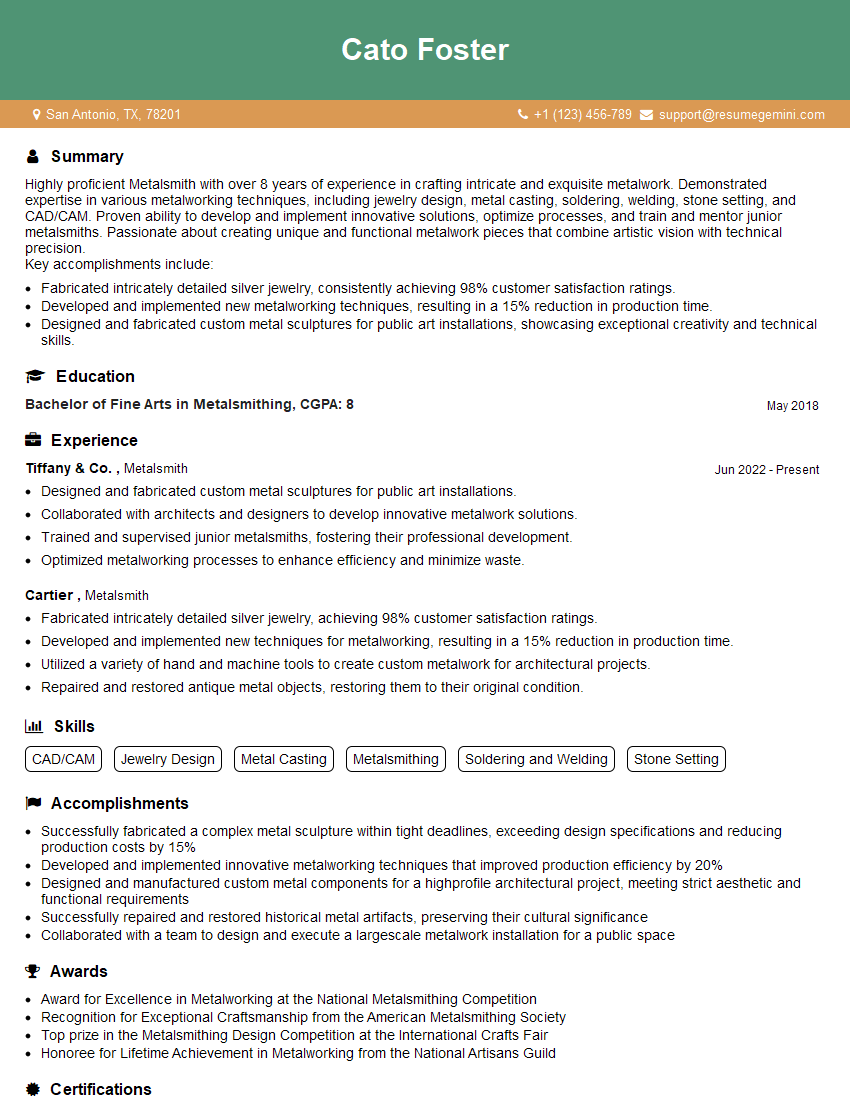
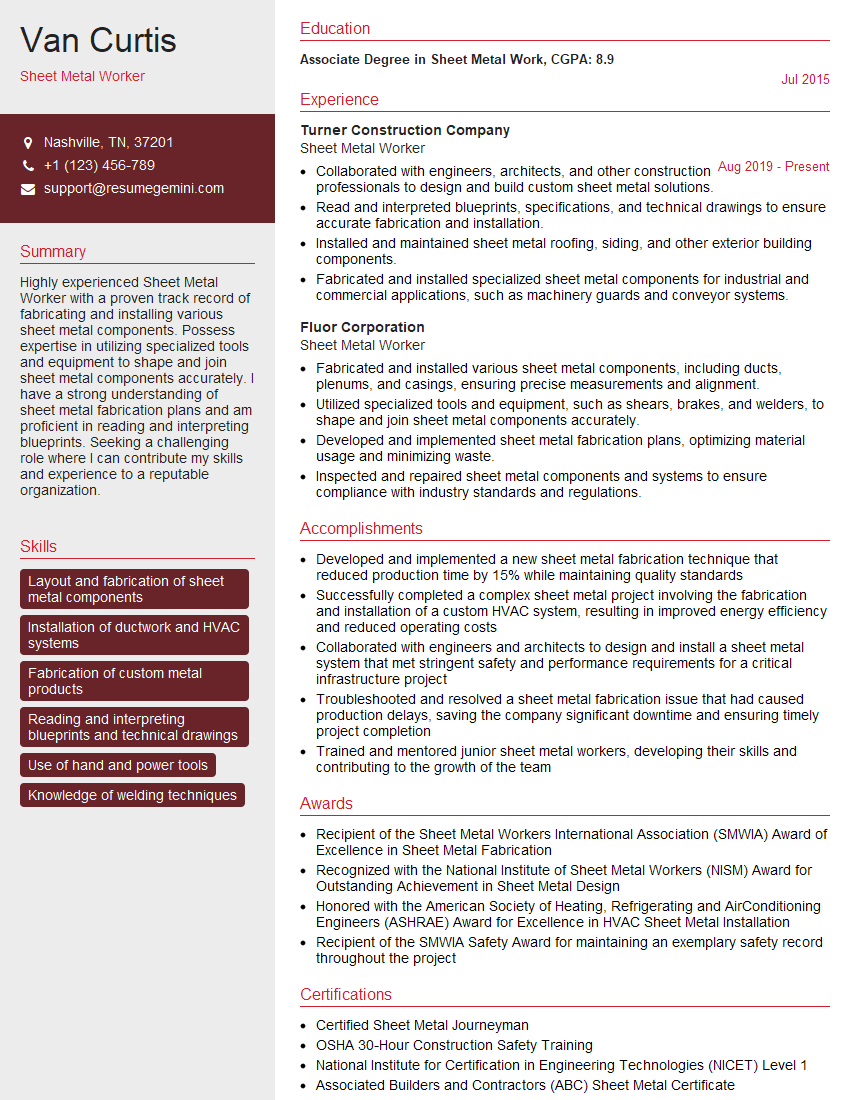
Mastering the art of soldering brass opens doors to exciting opportunities in various industries. To make the most of your skills and land your dream job, a strong resume is essential. Crafting an ATS-friendly resume is key to getting your application noticed by recruiters. ResumeGemini is a trusted resource to help you build a professional and impactful resume that highlights your soldering skills effectively. We offer examples of resumes tailored specifically to the soldering brass industry to help you get started. Take the next step towards your career success!




Explore more articles
Users Rating of Our Blogs
Share Your Experience
We value your feedback! Please rate our content and share your thoughts (optional).
What Readers Say About Our Blog
Really detailed insights and content, thank you for writing this detailed article.
IT gave me an insight and words to use and be able to think of examples