Are you ready to stand out in your next interview? Understanding and preparing for Strong ability to conceptualize and develop creative solutions interview questions is a game-changer. In this blog, we’ve compiled key questions and expert advice to help you showcase your skills with confidence and precision. Let’s get started on your journey to acing the interview.
Questions Asked in Strong ability to conceptualize and develop creative solutions Interview
Q 1. Describe your approach to brainstorming innovative solutions.
My approach to brainstorming innovative solutions is a multi-stage process that combines structured thinking with free-flowing creativity. I begin by deeply understanding the problem, gathering all relevant information and perspectives. Then, I employ a variety of techniques. One favorite is ‘SCAMPER,’ which prompts me to consider how to Substitute, Combine, Adapt, Modify, Put to other uses, Eliminate, and Reverse existing elements or approaches. I also utilize mind mapping to visually organize ideas and identify connections, and often engage in lateral thinking exercises to break free from conventional solutions. Finally, I prioritize collaborative brainstorming sessions, believing that diverse viewpoints significantly enhance the creative process. This allows for a synthesis of ideas, leading to more robust and innovative outcomes.
For instance, when tasked with improving customer engagement on a platform, I might start by identifying pain points through user data analysis. Then, using SCAMPER, I might explore substituting traditional text-based communication with interactive video tutorials, combining features from competing platforms to enhance user experience, or adapting a gamification strategy to increase user retention. Mind mapping would help organize these potential solutions, and a collaborative brainstorming session would allow for refinement and exploration of unforeseen possibilities.
Q 2. How do you translate abstract concepts into tangible solutions?
Translating abstract concepts into tangible solutions requires a structured approach focusing on breaking down the complexity. I start by clearly defining the abstract concept, articulating its key components and desired outcomes. Then, I identify relevant metrics or indicators to measure success. I then proceed to develop a prototype or Minimum Viable Product (MVP). This allows for iterative testing and refinement. This iterative approach allows me to make adjustments based on real-world feedback, ensuring the final solution directly addresses the initial abstract concept. Finally, I document the process and the resulting solution thoroughly for future reference and scalability.
For example, if the abstract concept is ‘improving team collaboration,’ I would first define what constitutes improved collaboration (e.g., faster project completion, reduced conflict, increased communication). Then, I might develop an MVP – a simple project management tool with collaborative features – and test it with the team. Based on feedback, I would iterate and improve the tool, eventually creating a tangible solution directly addressing the original abstract concept of enhancing team collaboration.
Q 3. Explain your process for identifying the root cause of a complex problem.
Identifying the root cause of a complex problem involves a systematic investigation using analytical techniques and a curious approach. I begin by clearly defining the problem, gathering data from multiple sources, and interviewing stakeholders to gain different perspectives. I then utilize tools such as the ‘5 Whys’ technique to drill down into the underlying causes, asking ‘why’ repeatedly until the fundamental issue is uncovered. Additionally, I employ fault tree analysis to visually represent potential causes and their relationships, helping to pinpoint the root cause. It’s crucial to avoid jumping to conclusions and carefully consider all possible contributing factors.
For example, if a product is consistently failing quality control, I wouldn’t simply address the immediate issue (e.g., faulty components). I would use the ‘5 Whys’ to investigate: Why are the components faulty? (Poor supplier quality). Why is the supplier quality poor? (Lack of proper quality control on their end). Why is there a lack of quality control? (Inadequate training and oversight). Why is there inadequate training and oversight? (Insufficient budget and resources). The root cause, therefore, is insufficient budget and resources, necessitating a broader solution than simply replacing faulty parts.
Q 4. Give an example of a time you had to develop a creative solution under pressure.
In a previous project, we faced a critical deadline for launching a new software feature. A major bug emerged just days before the launch. The pressure was immense, as a delay would have significant business consequences. Instead of panicking, I rallied the team and we employed a ‘divide and conquer’ strategy. We divided the problem into smaller, manageable tasks, assigning them to specialists within the team. We also implemented an agile workflow, allowing for rapid iterations and quick feedback. We worked extended hours, communicating constantly through online channels to ensure seamless collaboration. The result was a successful launch, just slightly behind schedule, with the bug fixed and minimal disruption. This experience highlighted the power of collaborative problem-solving and adaptable strategies when facing high-pressure situations.
Q 5. How do you evaluate the feasibility and effectiveness of your creative ideas?
Evaluating the feasibility and effectiveness of creative ideas involves a multifaceted assessment. Firstly, I evaluate the technical feasibility: Can the idea be implemented with existing resources and technology? I also assess the economic feasibility: Is the cost of implementation justified by the potential return on investment? Then, I consider the practicality of the idea – is it realistic to implement within the given constraints of time, budget and resources? Finally, I assess its effectiveness through prototyping, user testing, and data analysis. This iterative approach allows for continual refinement and adjustments based on real-world feedback. This ensures that the final solution is not only innovative but also practical and delivers the desired outcomes.
Q 6. How do you handle criticism of your creative concepts?
I view criticism as an opportunity for growth and improvement. I actively seek constructive feedback, viewing it as a valuable tool for refining my ideas. I approach criticism with an open mind, carefully considering the validity of the points raised. If the criticism is valid, I use it to improve the creative concept. If the criticism is not well-founded, I politely explain my reasoning and the rationale behind my choices. The goal is to engage in a collaborative discussion, focusing on strengthening the idea rather than becoming defensive.
Q 7. Describe a time you had to overcome a creative block.
Creative blocks are a common challenge, and I have several strategies to overcome them. When I experience a creative block, I often step away from the problem temporarily. This allows me to clear my mind and approach the challenge with fresh perspective. I also find engaging in unrelated activities beneficial; a walk in nature, listening to music, or engaging in a hobby can often spark new ideas. Collaborating with others is also helpful; a fresh perspective can break the mental barriers. Sometimes, I simply revisit my initial inspiration for the project to reconnect with my original goal and find renewed motivation. The key is to find strategies that work for you personally and to remember that overcoming creative blocks is a natural part of the creative process.
Q 8. How do you incorporate user feedback into your creative process?
User feedback is the lifeblood of any successful creative project. I don’t see it as an afterthought but as an integral part of the iterative design process. I actively solicit feedback at various stages, from initial concept brainstorming to final prototype testing. This isn’t just about asking ‘Do you like it?’ but rather delving into the why behind their responses.
For example, during a recent website redesign project, we conducted user testing sessions with representative target audiences. We observed their interactions, recorded their verbal feedback, and analyzed their digital footprints (clicks, scrolls, time spent on pages). This allowed us to identify areas where users struggled to navigate or find information, leading to crucial design adjustments. We also used surveys and A/B testing to gather quantitative data on specific design choices, such as button placement or color schemes. This mixed-methods approach ensures a holistic understanding of user needs and preferences.
Analyzing feedback is as critical as collecting it. I organize feedback using thematic analysis to identify recurring patterns and prioritize changes based on their impact and feasibility. This iterative feedback loop ensures the final product genuinely meets user needs and expectations.
Q 9. How do you stay current with the latest trends and technologies in your field?
Staying ahead of the curve in the creative field requires a multi-pronged approach. I actively engage in continuous learning through several channels. Firstly, I subscribe to industry-leading publications and newsletters, such as Communication Arts and AIGA Eye on Design, to stay informed about the latest trends and best practices. Secondly, I actively participate in online communities and forums where designers share knowledge, insights and critiques. This helps me to discover emerging trends and tools.
I also actively attend conferences and workshops to network with other professionals and learn directly from leading experts. These events offer invaluable opportunities to explore new technologies and discuss emerging design methodologies. Finally, I dedicate time to exploring new tools and technologies on my own. Experimentation is key; I actively try out new software, platforms and design techniques to stay current and broaden my skill set. For example, I recently spent time learning midjourney and Dall-E 2, enhancing my ability to create generative assets for projects.
Q 10. Describe your experience with design thinking methodologies.
Design thinking is a human-centered, problem-solving approach that I consistently utilize. It’s more than just a methodology; it’s a mindset. The five key stages – Empathize, Define, Ideate, Prototype, and Test – guide my creative process, ensuring solutions are both innovative and user-centric.
For instance, during a project aimed at improving user engagement on a mobile app, I started by Empathizing with users through user interviews and surveys, seeking to understand their needs, frustrations and motivations. This understanding informed the Define phase, where I clearly articulated the problem: low user retention. The Ideate phase involved brainstorming various solutions, sketching, and mind-mapping. Then, I quickly created low-fidelity Prototypes for testing, which allowed for iterative refinements based on user feedback. The final Test phase involved rigorous usability testing before the final version was implemented.
My proficiency in design thinking allows me to approach challenges systematically, fostering collaboration and yielding creative, effective solutions.
Q 11. How do you measure the success of a creative solution?
Measuring the success of a creative solution is multifaceted and depends on the project’s specific goals and context. However, some key metrics consistently inform my evaluation. For example, quantitative data such as website traffic, conversion rates, app downloads, or sales figures are important, especially when the goal is to directly increase business outcomes. Qualitative data such as user feedback through surveys, interviews, or A/B testing helps gauge user satisfaction and experience.
Furthermore, I also consider less tangible metrics. Did the design achieve its intended emotional response? Did it effectively communicate the brand’s message? Did it solve a real problem for the users? A successful creative solution often exceeds initial expectations, prompting positive word-of-mouth marketing or achieving significant media coverage. Regularly monitoring these key indicators allows me to assess the project’s overall impact and identify areas for future improvement.
Q 12. How do you present your creative ideas to stakeholders?
Presenting creative ideas effectively requires clear communication and a compelling narrative. I tailor my presentations to the audience, ensuring the information is accessible and relevant to their interests and expertise.
My presentations typically include a clear problem statement, a concise overview of the proposed solution, and compelling visuals. I use mockups, prototypes, and data visualizations to effectively communicate the design’s functionality and aesthetic qualities. I also incorporate storytelling techniques to engage the audience and create a memorable experience. Interactive elements, such as live demonstrations or Q&A sessions, are essential for fostering collaboration and understanding. Crucially, I always anticipate questions and prepare robust answers that address potential concerns and objections.
Q 13. How do you manage competing priorities when developing creative solutions?
Managing competing priorities requires a strategic approach. I utilize project management techniques such as prioritization matrices (like Eisenhower Matrix) to identify tasks based on urgency and importance. This allows me to focus on the most critical tasks first, ensuring that high-priority items are not delayed due to less pressing demands.
Effective communication is paramount. I regularly communicate with stakeholders, setting clear expectations and timelines. Transparent communication minimizes misunderstandings and prevents conflicts arising from unmet expectations. Timeboxing is another key strategy. I allocate specific time blocks for each task, ensuring that I dedicate adequate time to each priority without getting overwhelmed. This approach also aids in better time management and enables better task organization. Flexible planning is crucial in this process, as unexpected priorities may arise which necessitate recalibration of the project plan.
Q 14. Explain your understanding of the design process.
The design process is iterative and non-linear, but generally follows a series of overlapping phases. It starts with Understanding the problem: thorough research and analysis to define the user needs and project goals. This includes market research, user research (interviews, surveys, usability testing), competitor analysis and defining success metrics.
Next is Ideation and Concept Development: brainstorming, sketching, mood boarding, and concept refinement. This phase involves exploring various design solutions, evaluating their feasibility and aligning them with the project’s goals. Then comes Design and Development: creating detailed designs, developing prototypes, and iteratively refining the design based on feedback. Testing and Refinement involve user testing, A/B testing, and iteratively improving the design based on the feedback received.
Finally, Launch and Iteration: launching the finished product and continuously monitoring its performance, gathering user feedback, and making further improvements based on ongoing analysis. The whole process is cyclical; feedback from each stage informs the next, leading to a more refined and effective design.
Q 15. How do you ensure your creative solutions are aligned with business objectives?
Ensuring creative solutions align with business objectives requires a clear understanding of both. It’s not just about creating something beautiful; it’s about creating something beautiful and effective. I begin by deeply understanding the business goals – what are the key performance indicators (KPIs)? What problems are we trying to solve? What are the target audience’s needs and expectations? This understanding forms the foundation of my creative process. Then, I develop a creative brief that explicitly outlines these objectives, ensuring every creative decision is measured against these pre-defined success criteria. For example, if the goal is to increase website conversions, I wouldn’t focus solely on aesthetics; I’d prioritize user experience (UX) elements like clear calls-to-action and streamlined navigation. Regular check-ins throughout the project allow for course correction, ensuring alignment remains strong.
I often use frameworks like the SMART goals methodology (Specific, Measurable, Achievable, Relevant, Time-bound) to ensure all creative ideas are practical and measurable against tangible business outcomes.
Career Expert Tips:
- Ace those interviews! Prepare effectively by reviewing the Top 50 Most Common Interview Questions on ResumeGemini.
- Navigate your job search with confidence! Explore a wide range of Career Tips on ResumeGemini. Learn about common challenges and recommendations to overcome them.
- Craft the perfect resume! Master the Art of Resume Writing with ResumeGemini’s guide. Showcase your unique qualifications and achievements effectively.
- Don’t miss out on holiday savings! Build your dream resume with ResumeGemini’s ATS optimized templates.
Q 16. Describe a time you had to adapt your creative approach based on new information.
During a recent rebranding project for a tech startup, initial market research pointed toward a sleek, minimalist design. However, midway through, we received new data revealing the target audience preferred a more vibrant, playful aesthetic. This was a significant shift, requiring adaptability. Instead of stubbornly sticking to the initial plan, I immediately convened a team meeting. We discussed the new data, analyzed the discrepancies between our initial assumptions and the reality, and collaboratively brainstormed solutions. We incorporated elements of the initial design that resonated with the updated user preferences, resulting in a brand identity that was both visually appealing and aligned with the audience’s evolving tastes. The project’s success highlighted the importance of continuous learning and adapting to new information; rigidity can hinder creativity.
Q 17. How do you collaborate effectively with other creative professionals?
Effective collaboration with other creative professionals is crucial. My approach centers around open communication, active listening, and mutual respect. I believe in fostering a collaborative environment where everyone feels comfortable sharing ideas, even unconventional ones. I utilize various tools like shared online workspaces (e.g., Miro, Figma) to facilitate brainstorming and feedback sessions. Regular check-ins and transparent updates keep everyone informed and aligned. I also believe in valuing diverse perspectives and actively seeking feedback; often, a fresh perspective can uncover blind spots or spark new innovative ideas. I actively solicit feedback not only on the final product but also throughout the design process to ensure we stay on track and address potential issues early on. Constructive criticism is vital for growth and improvement. For example, in a recent team project, a colleague’s feedback on a color palette completely changed the overall direction of our project, ultimately making it more successful.
Q 18. How do you use data to inform your creative decisions?
Data plays a crucial role in informing my creative decisions. I use data analytics to understand user behavior, market trends, and campaign performance. For example, A/B testing allows me to compare different design iterations and determine which performs better in achieving specific objectives (e.g., higher click-through rates). Website analytics (e.g., Google Analytics) provide insights into user engagement, helping me identify areas for improvement in user experience. Social media analytics informs my content strategy, enabling me to tailor messaging and visuals to resonate with the target audience. This data-driven approach ensures my creative solutions are not only aesthetically pleasing but also effective in achieving the desired outcomes. The combination of intuition and data provides a robust foundation for making informed creative decisions.
Q 19. Describe your experience with prototyping and iterative design.
Prototyping and iterative design are fundamental to my workflow. I believe in building functional prototypes early on to test ideas and gather feedback. This allows for adjustments and improvements throughout the design process, reducing the risk of costly mistakes later on. I often use low-fidelity prototyping techniques (e.g., paper sketches, wireframes) initially to explore different concepts quickly. As the design matures, I transition to high-fidelity prototypes that are closer to the final product. This iterative approach, involving continuous testing and refinement, ensures the final product is user-friendly and achieves its intended purpose. For instance, during the development of a mobile application, we created several low-fidelity prototypes to test the user flow before committing to a high-fidelity prototype. This iterative process resulted in a user-friendly, intuitive interface.
Q 20. How do you balance creativity with practicality in your work?
Balancing creativity with practicality is a delicate but essential skill. While creative freedom is important, it’s crucial to remain grounded in reality. Practical considerations, such as budget constraints, technical feasibility, and time limitations, must always be factored in. I approach this balance by first brainstorming a wide range of creative ideas, regardless of their initial practicality. Then, I systematically evaluate these ideas against the practical constraints, prioritizing those that are both innovative and feasible. This process involves a constant dialogue between imagination and pragmatism, leading to solutions that are both creative and achievable. This might involve finding creative workarounds to technical limitations or simplifying a complex design to make it more cost-effective.
Q 21. Give an example of a time you had to think outside the box to solve a problem.
In a project involving the design of an interactive museum exhibit, we faced the challenge of creating a memorable experience within a limited physical space. The initial designs felt cramped and underwhelming. To overcome this, I proposed incorporating augmented reality (AR) technology. This allowed us to extend the exhibit beyond its physical boundaries, creating a richer, more immersive experience without requiring more space. By thinking outside the box and leveraging technology, we transformed a seemingly limiting constraint into a unique selling point, resulting in a highly engaging and memorable visitor experience. The success of this project demonstrated the importance of exploring unconventional solutions when faced with limitations.
Q 22. How do you handle unexpected challenges during the creative process?
Unexpected challenges are inevitable in the creative process. My approach is threefold: Embrace the unexpected, analyze the problem, and iterate towards a solution.
Embrace the unexpected: I view challenges not as roadblocks but as opportunities for innovation. A deviation from the initial plan can sometimes lead to a more creative and effective outcome. For example, during a recent project designing an interactive museum exhibit, a critical component malfunctioned unexpectedly. Instead of panicking, I collaborated with the engineering team to brainstorm alternative solutions, ultimately leading to a more engaging, user-friendly interface.
Analyze the problem: When a challenge arises, I methodically analyze the root cause. This involves gathering information, identifying constraints, and defining the desired outcome. I often employ brainstorming sessions, mind-mapping techniques, or even ‘five whys’ analysis to thoroughly understand the situation.
Iterate towards a solution: I approach problem-solving iteratively, testing and refining solutions until I achieve the desired result. This might involve prototyping, building minimum viable products (MVPs), and gathering user feedback. The initial failed component in the museum exhibit spurred an iterative design process, resulting in a superior user experience.
Q 23. How do you prioritize different ideas when multiple solutions are possible?
Prioritizing ideas involves a balanced approach that considers feasibility, impact, and alignment with project goals. I utilize a framework combining impact assessment, feasibility analysis, and prioritization matrices.
Impact Assessment: I evaluate the potential impact of each idea on the project’s overall objectives and target audience. This may involve qualitative assessments (e.g., user surveys) or quantitative analyses (e.g., market research data).
Feasibility Analysis: This step involves evaluating the resources, time, and skills required to implement each idea. Unrealistic ideas, however brilliant, are discarded or revised to increase their feasibility.
Prioritization Matrices: I use a matrix (e.g., a MoSCoW method – Must have, Should have, Could have, Won’t have) to visually represent the ranking of ideas based on the previous two assessments. This helps in making objective choices and facilitates communication with the team.
For instance, if I have three ideas for a marketing campaign – a viral video, a social media contest, and a print advertisement – I’d assess each based on its projected reach and cost, then prioritize them using a matrix. The viral video might have the highest impact but lower feasibility due to production costs, leading to it possibly being a ‘Should have’ after considering the more feasible alternatives.
Q 24. How do you ensure the scalability and sustainability of your creative solutions?
Ensuring scalability and sustainability of creative solutions requires careful planning and consideration from the outset. This includes modular design, adaptable systems, and resource efficiency.
Modular Design: I design solutions using modular components that can be easily adapted, expanded, or replaced. This makes it easier to scale the solution to meet growing demands or changing requirements. For example, a website built with reusable components can be easily updated and expanded without rewriting the entire codebase.
Adaptable Systems: I consider how the solution will adapt to future changes in technology, user needs, or market trends. Designing with flexibility in mind ensures longevity. This might involve using open-source technologies, API integrations, or cloud-based infrastructure.
Resource Efficiency: Sustainable solutions minimize resource consumption (time, energy, materials). This could mean optimizing code for performance, using eco-friendly materials, or minimizing energy usage in digital solutions. For example, using a lean design process in software development ensures only necessary features are developed, minimizing development time and resources.
Q 25. Describe your experience using specific creative tools or software.
My experience spans various creative tools and software. I’m proficient in Adobe Creative Suite (Photoshop, Illustrator, InDesign) for visual design and image editing. For web development, I utilize HTML, CSS, JavaScript, and various frameworks like React and Node.js. For 3D modeling and animation, I have experience with Blender and Cinema 4D. I also use project management tools like Jira and Asana to organize my workflow and collaborate effectively with teams.
For example, in a recent project designing a mobile application, I used Figma to create wireframes and mockups, Adobe XD for prototyping, and React Native for building the actual application. The ability to seamlessly transition between these tools ensured a streamlined and efficient workflow.
Q 26. How do you identify potential risks associated with your creative ideas?
Identifying potential risks is crucial. My approach involves risk assessment, brainstorming potential problems, and contingency planning.
Risk Assessment: I systematically identify potential risks associated with each aspect of the creative process. This includes technical risks (e.g., software compatibility issues), market risks (e.g., changing consumer preferences), and logistical risks (e.g., delays in production). I often use a risk matrix to categorize risks based on their likelihood and potential impact.
Brainstorming Potential Problems: I use brainstorming sessions or ‘pre-mortems’ – imagining the project has failed and analyzing the potential reasons for failure – to anticipate and address potential problems proactively.
Contingency Planning: Once potential risks are identified, I develop contingency plans to mitigate them. This involves devising alternative solutions or strategies to address these risks if they occur. For instance, in a large-scale art installation project, a contingency plan was put in place for unexpected weather conditions, involving easily assembled protective covers for the artwork.
Q 27. How do you communicate complex technical concepts in a creative and engaging way?
Communicating complex technical concepts creatively involves simplifying information, using visuals, and tailoring the message to the audience. I use analogies, storytelling, and visual aids.
Analogies: I relate complex ideas to everyday concepts or experiences that the audience can easily grasp. For example, explaining network topology using a road map analogy makes the concept more understandable for a non-technical audience.
Storytelling: I weave narratives around technical concepts to make them more engaging and memorable. This can involve case studies, real-world examples, or even fictional scenarios.
Visual Aids: I employ diagrams, charts, graphs, and other visual aids to illustrate complex information in a clear and concise manner. Visualizations can help audiences quickly grasp the essence of a complex concept, making it easier to comprehend.
For instance, explaining complex data analytics results to a board of directors involved creating clear visualizations and a narrative that highlighted key insights, avoiding overwhelming them with technical details.
Q 28. How do you ensure the inclusivity and accessibility of your creative solutions?
Inclusivity and accessibility are paramount. My approach involves designing for diversity, adhering to accessibility standards, and user testing with diverse groups.
Designing for Diversity: I consider the diverse needs and perspectives of the target audience from the outset. This might involve incorporating diverse imagery, language, and cultural considerations into the design. For example, using diverse models in marketing materials promotes inclusivity.
Adhering to Accessibility Standards: I follow accessibility guidelines (e.g., WCAG) to ensure solutions are usable by people with disabilities. This involves using appropriate color contrast, providing alternative text for images, and ensuring keyboard navigation for websites and applications.
User Testing with Diverse Groups: I conduct user testing sessions with participants from diverse backgrounds to gather feedback and identify potential accessibility barriers or areas for improvement. This iterative feedback loop helps ensure inclusivity and usability for a broad audience.
Key Topics to Learn for Strong Ability to Conceptualize and Develop Creative Solutions Interview
- Idea Generation & Brainstorming: Techniques for generating innovative ideas, including mind mapping, brainstorming sessions, and lateral thinking. Understand the importance of diverse perspectives and challenging assumptions.
- Problem Definition & Analysis: Mastering the art of clearly defining problems, identifying root causes, and conducting thorough needs assessments. Practice dissecting complex challenges into manageable components.
- Solution Design & Prototyping: Explore various design thinking methodologies. Develop skills in creating tangible prototypes – whether digital or physical – to test and iterate on solutions.
- Creative Problem-Solving Frameworks: Familiarize yourself with established frameworks like SCAMPER, TRIZ, or Design Thinking to structure your approach to problem-solving and demonstrate a structured methodology.
- Visual Communication & Storytelling: Learn to effectively communicate your ideas visually, using diagrams, sketches, mockups, or presentations. Practice concisely narrating your design process and rationale.
- Collaboration & Teamwork: Highlight your ability to work effectively in collaborative environments, contributing ideas, actively listening, and incorporating feedback from others.
- Adaptability & Iteration: Showcase your understanding that creative solutions often require adaptation and refinement. Demonstrate an ability to embrace feedback and iterate on designs based on testing and user input.
- Presenting & Justifying Solutions: Practice confidently presenting your creative solutions, explaining your design choices, and addressing potential challenges or limitations.
Next Steps
Mastering the ability to conceptualize and develop creative solutions is crucial for career advancement in many fields. It demonstrates valuable problem-solving skills and innovative thinking, highly sought after by employers. To maximize your job prospects, it’s essential to create an ATS-friendly resume that effectively showcases these skills. ResumeGemini can help you build a professional, impactful resume that highlights your creative problem-solving abilities. We provide examples of resumes tailored to emphasize “strong ability to conceptualize and develop creative solutions,” ensuring your application stands out.
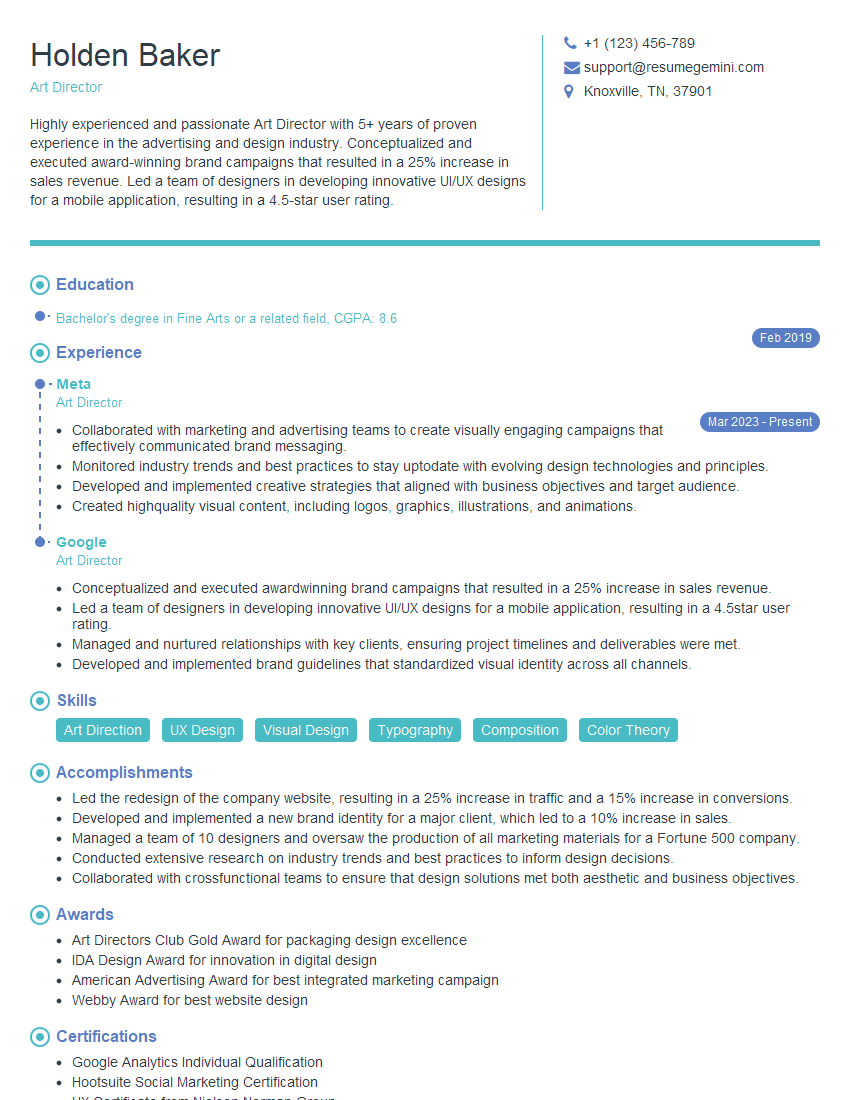
Art Director Resume Sample
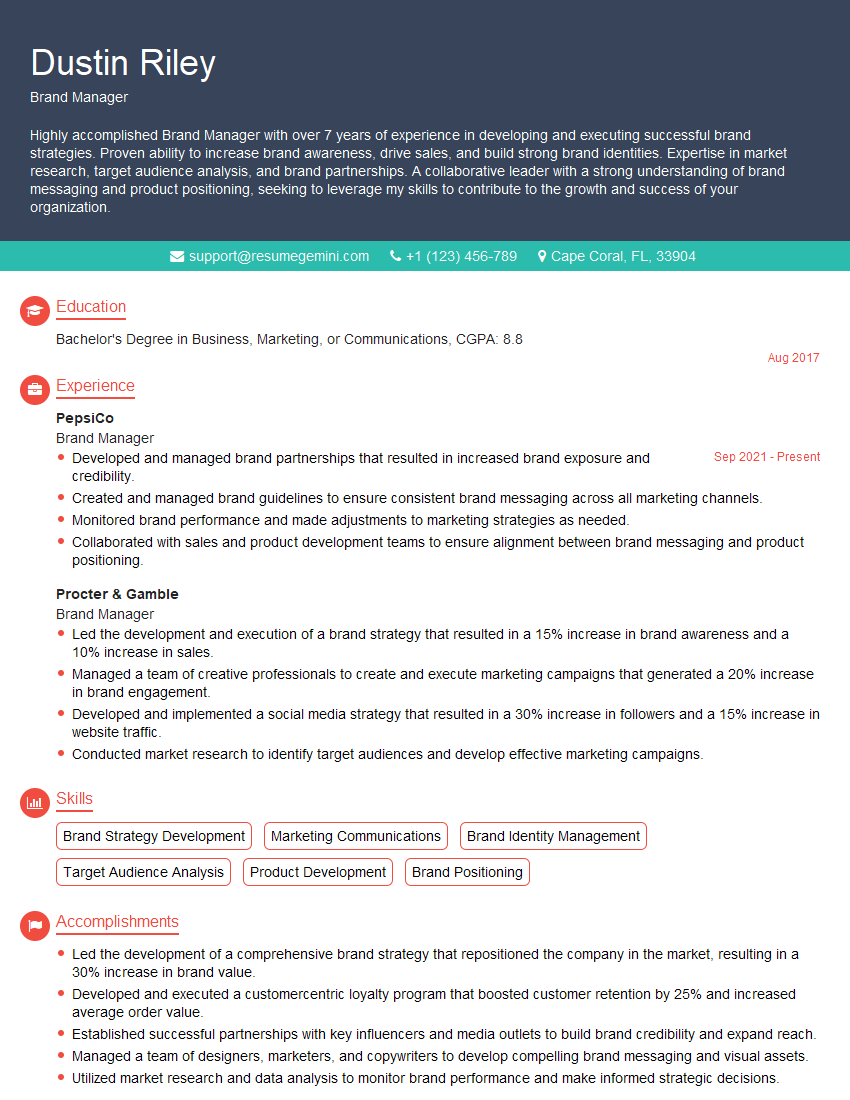
Brand Manager Resume Sample

Creative Director Resume Sample
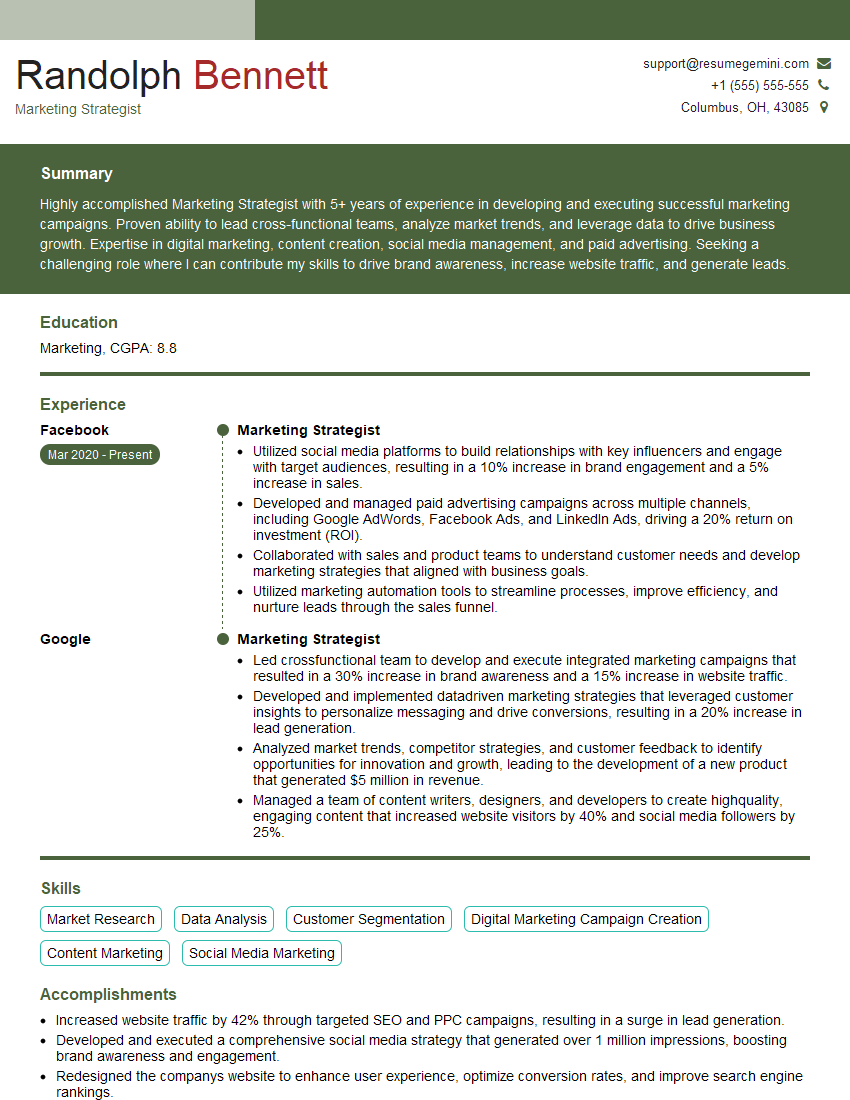
Marketing Strategist Resume Sample
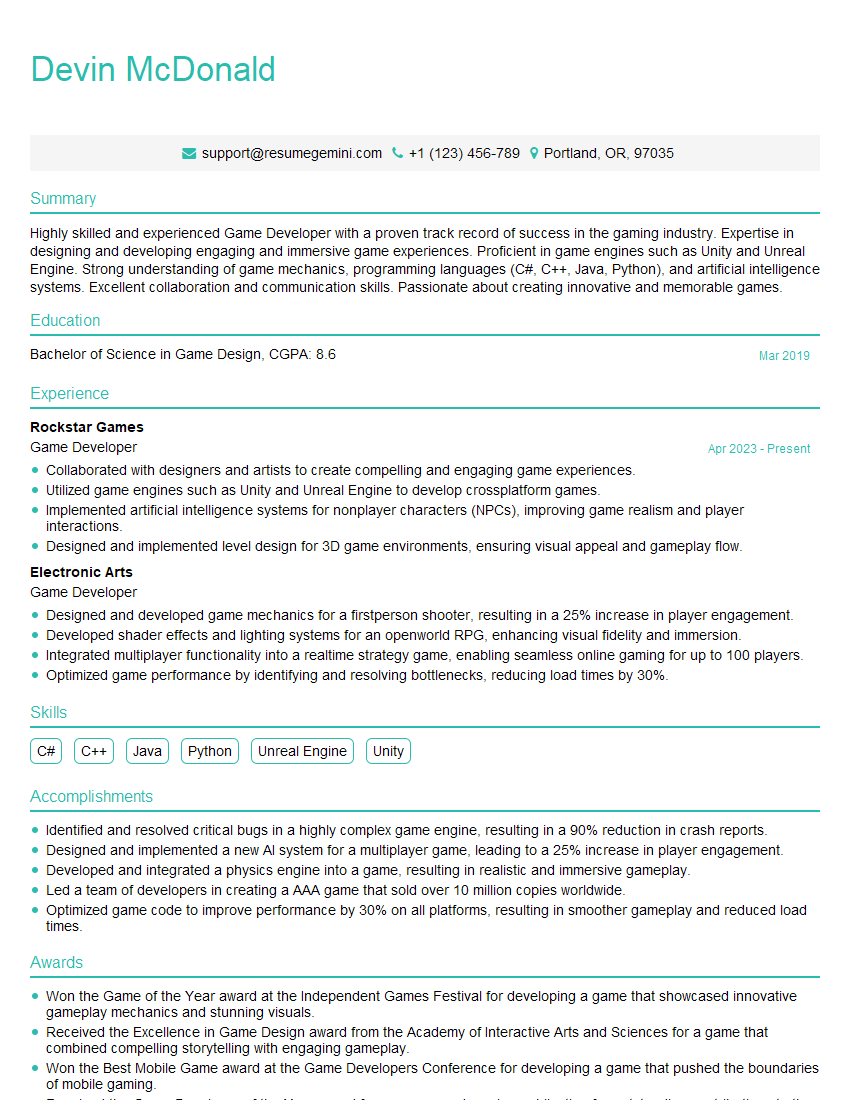
Game Developer Resume Sample
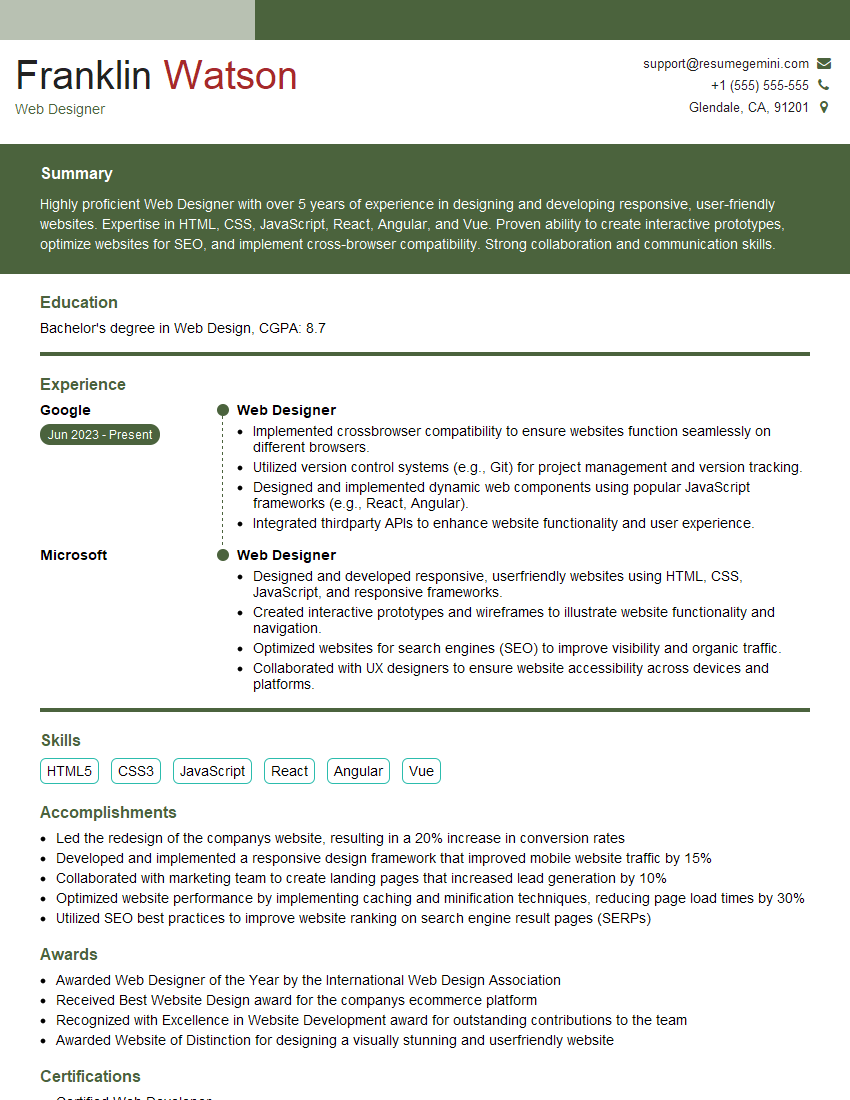
Web Designer Resume Sample
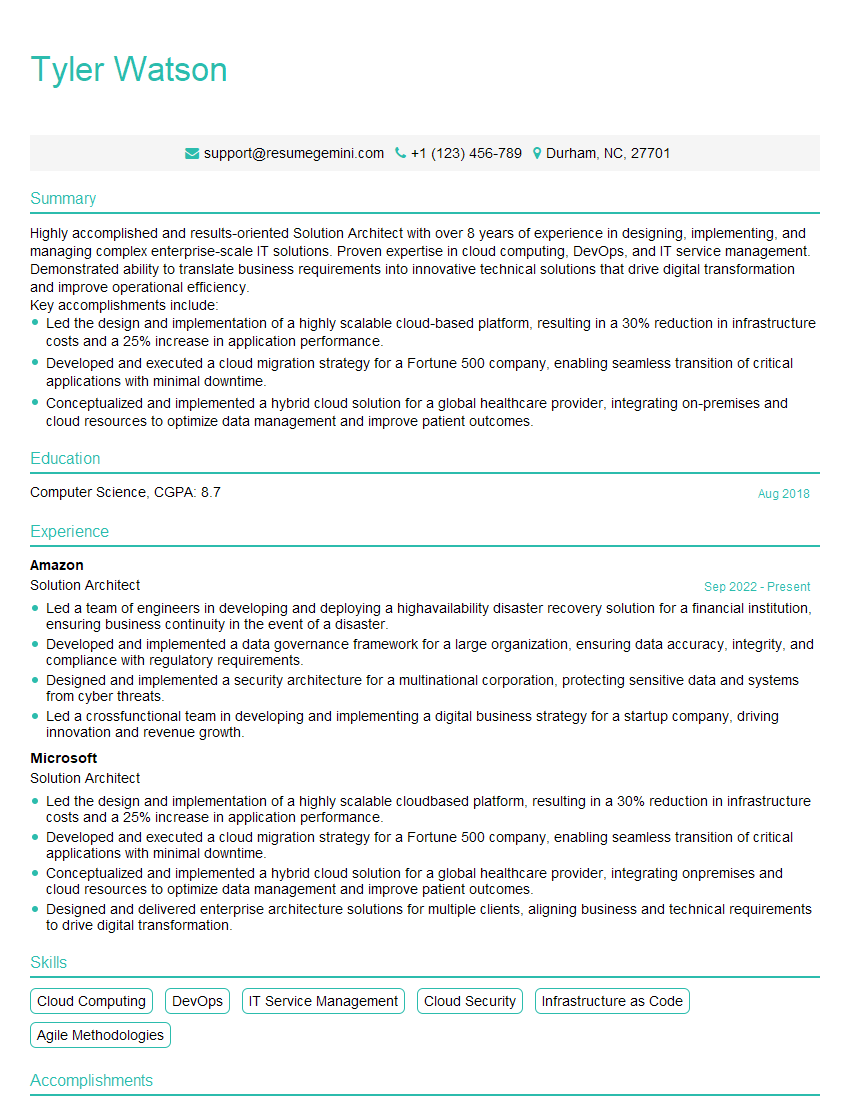
Solution Architect Resume Sample
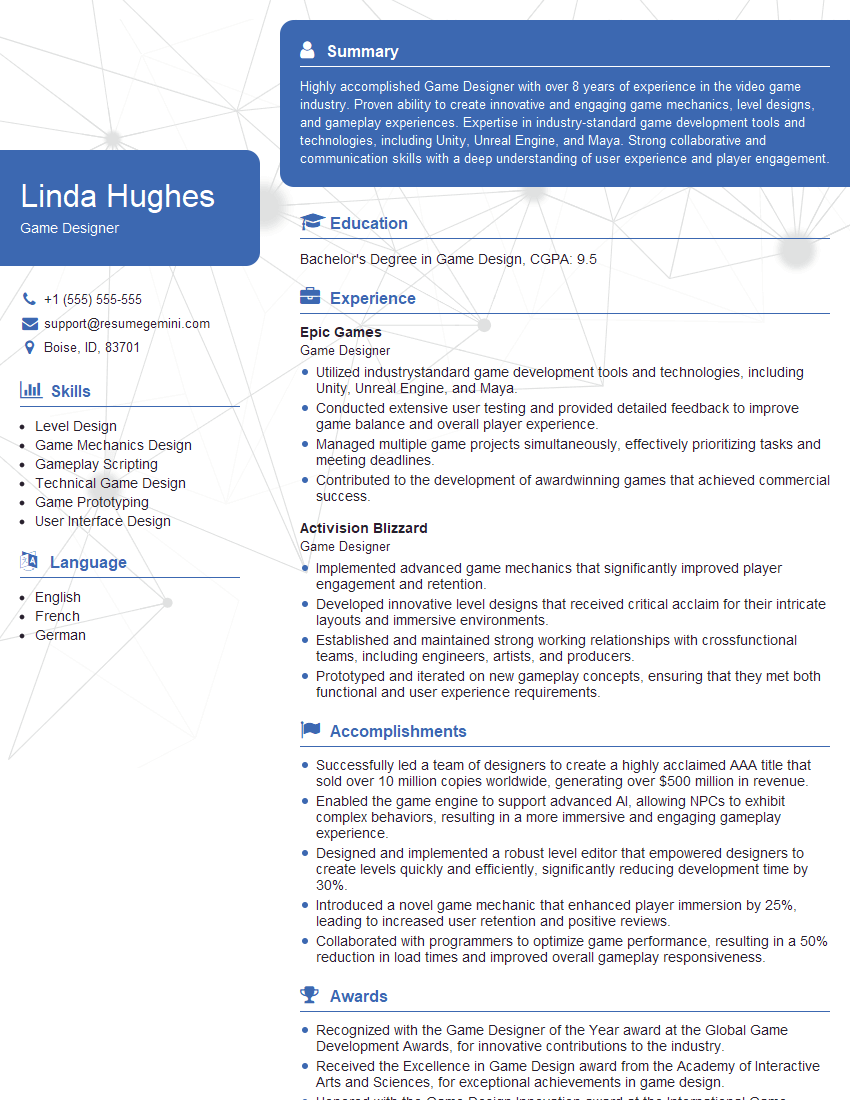
Game Designer Resume Sample

Content Strategist Resume Sample
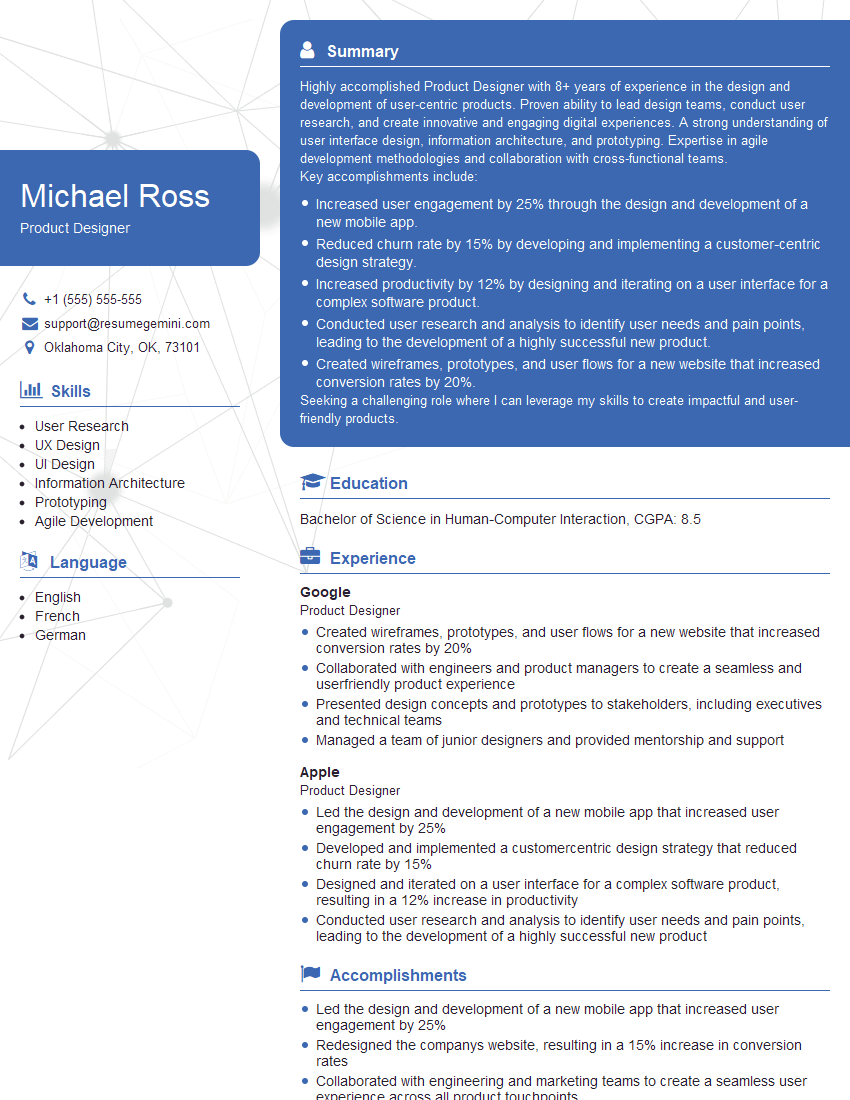
Product Designer Resume Sample
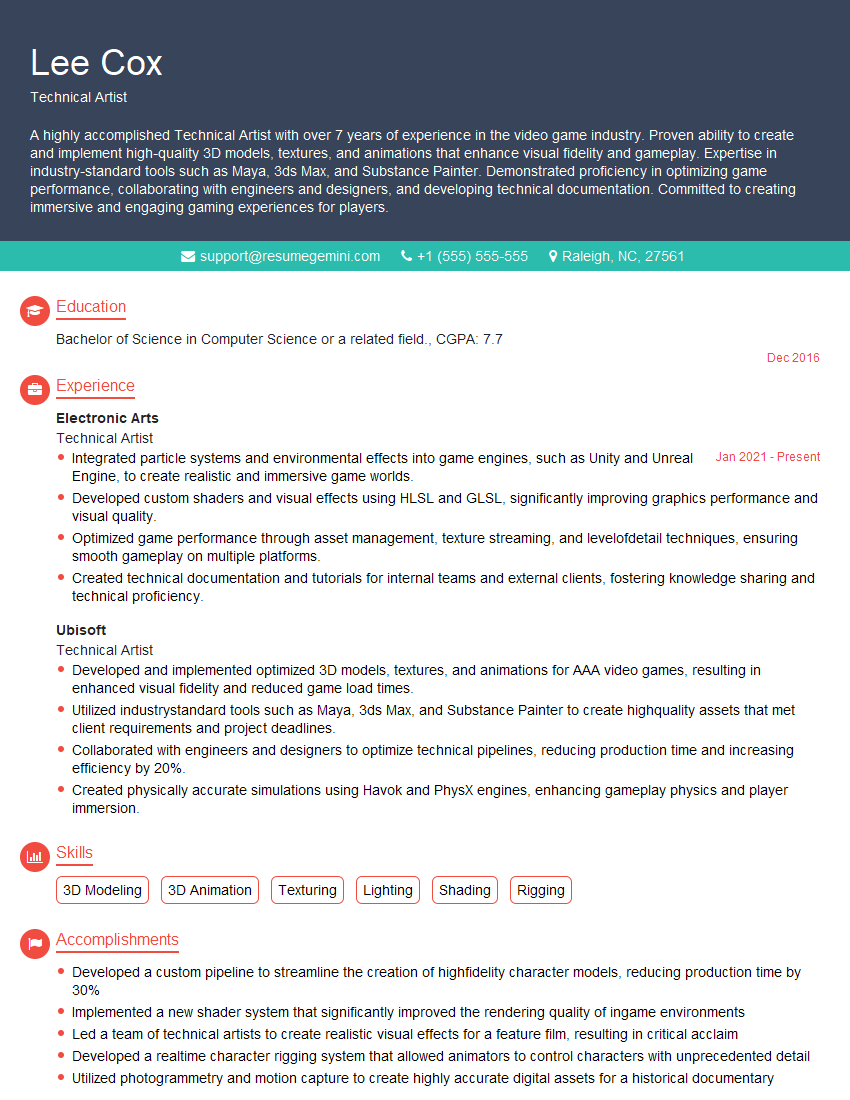
Technical Artist Resume Sample
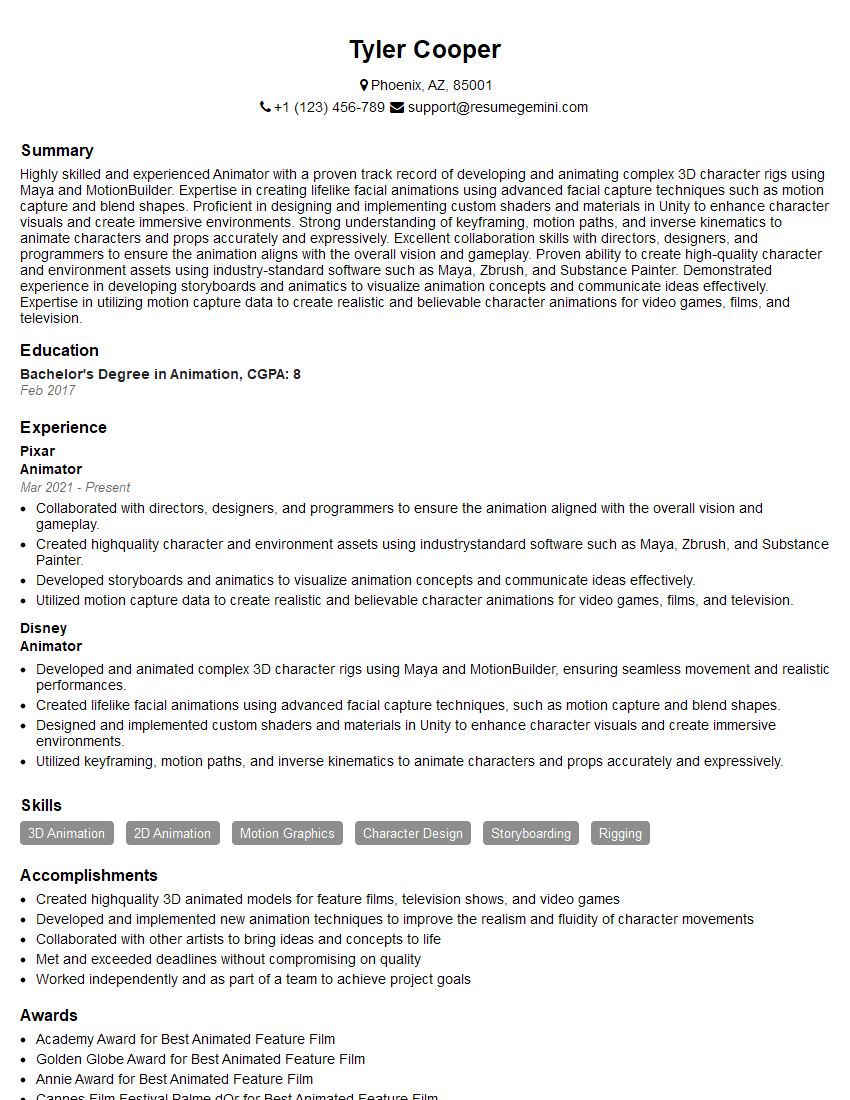
Animator Resume Sample
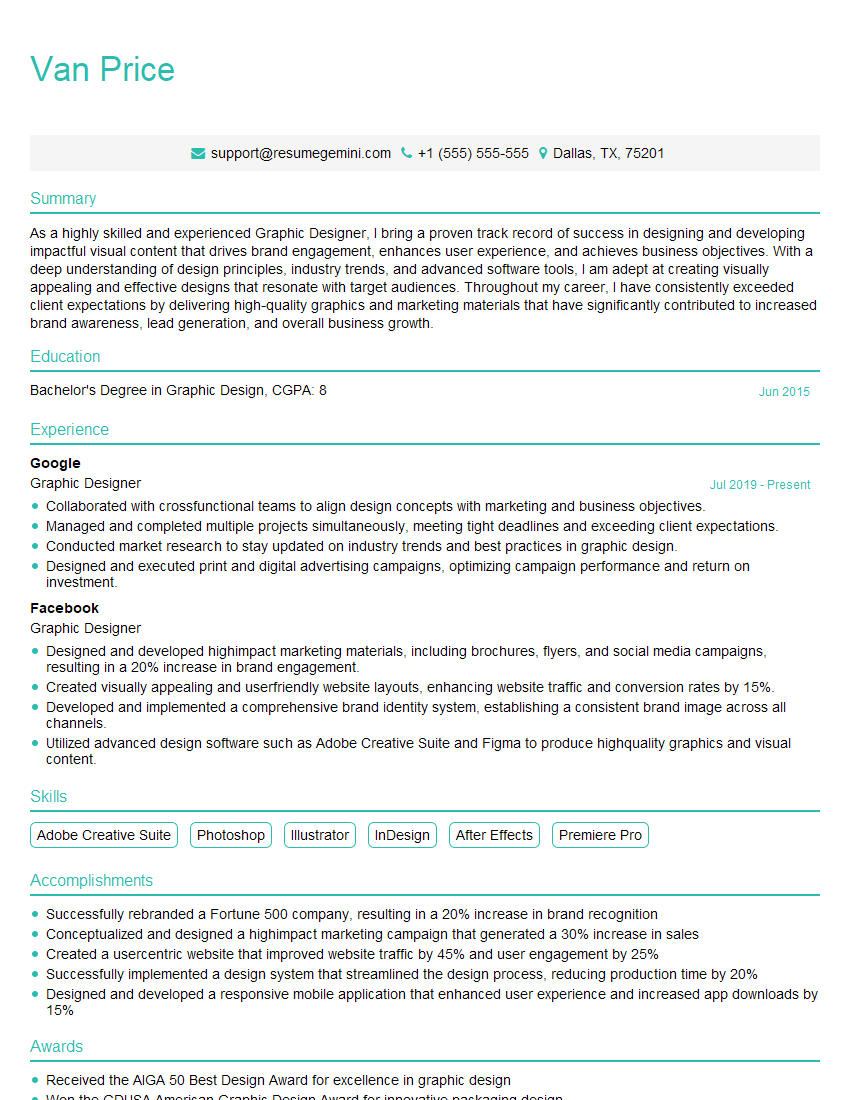
Graphic Designer Resume Sample
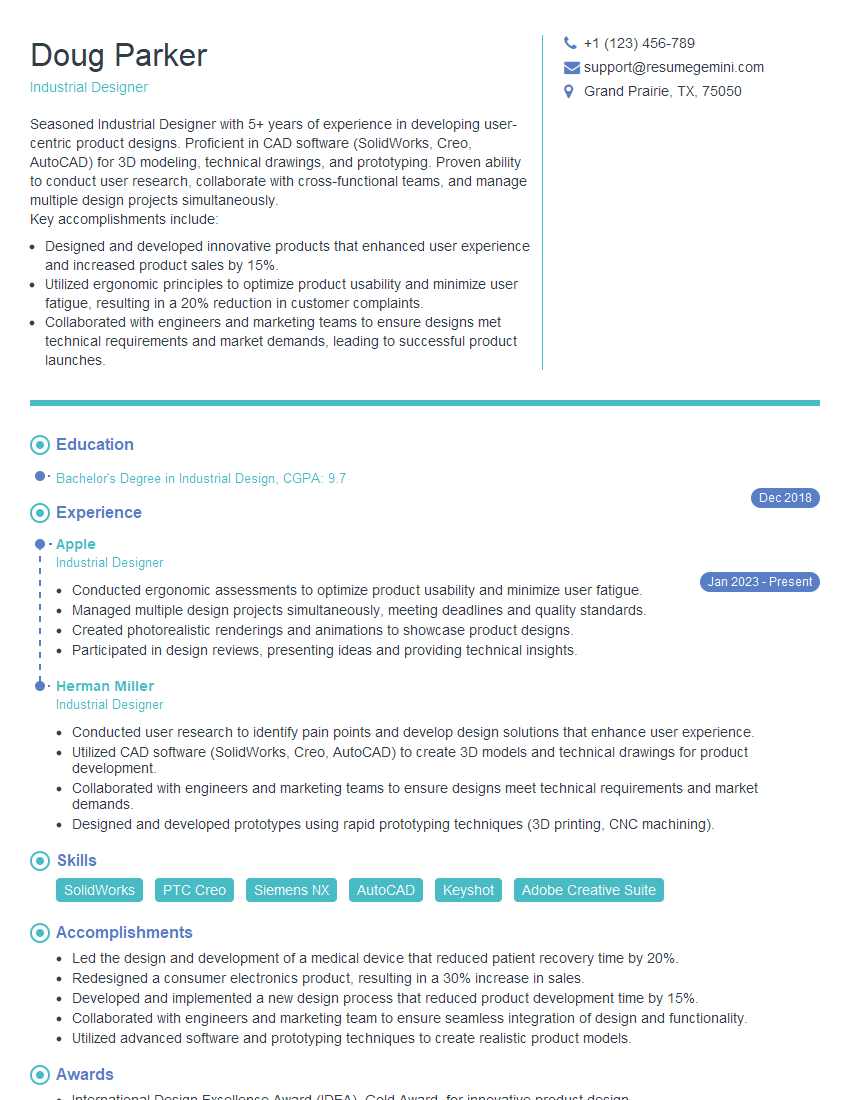
Industrial Designer Resume Sample

Copywriter Resume Sample
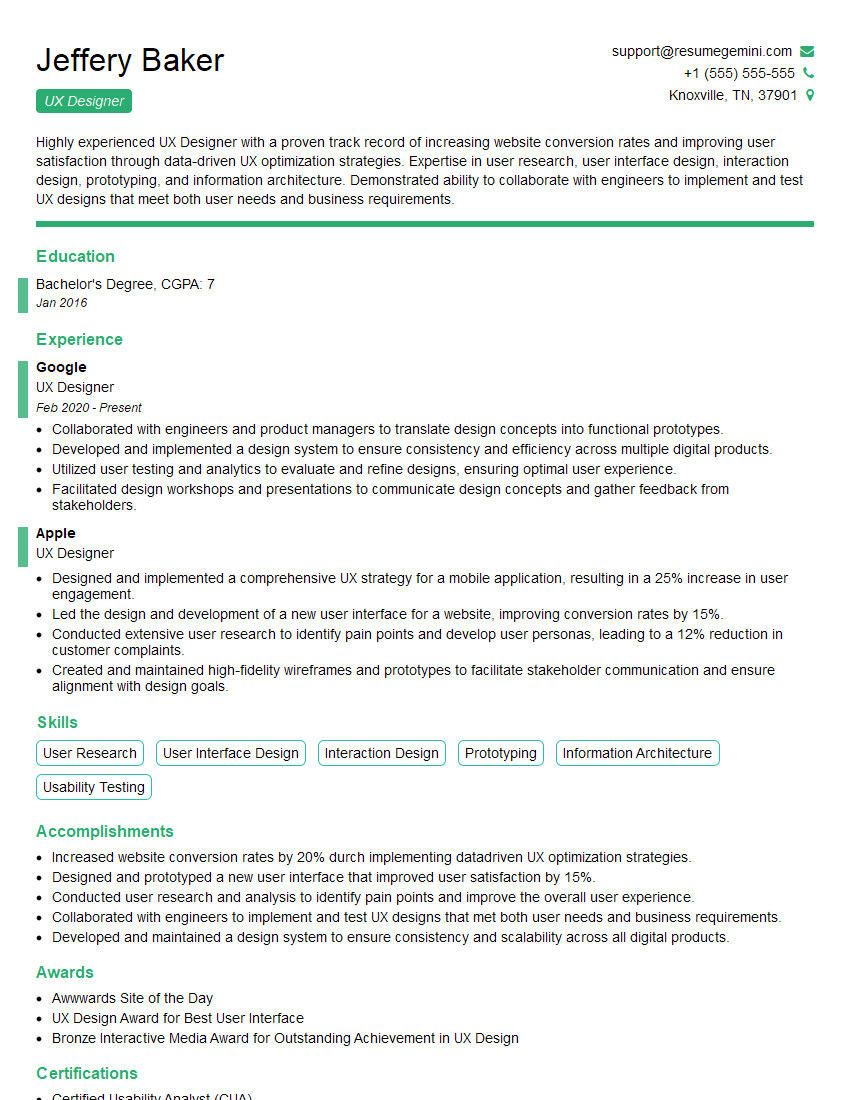
UX Designer Resume Sample
Explore more articles
Users Rating of Our Blogs
Share Your Experience
We value your feedback! Please rate our content and share your thoughts (optional).
What Readers Say About Our Blog
Really detailed insights and content, thank you for writing this detailed article.
IT gave me an insight and words to use and be able to think of examples