Preparation is the key to success in any interview. In this post, we’ll explore crucial Structural Mechanics interview questions and equip you with strategies to craft impactful answers. Whether you’re a beginner or a pro, these tips will elevate your preparation.
Questions Asked in Structural Mechanics Interview
Q 1. Explain the concept of stress and strain.
Stress and strain are fundamental concepts in structural mechanics that describe how a material responds to an applied force. Stress is the internal force per unit area within a material caused by an external force, often measured in Pascals (Pa) or pounds per square inch (psi). Think of it as the intensity of the internal forces resisting the deformation. Strain, on the other hand, is the measure of deformation – the change in shape or size – of a material in response to stress. It’s a dimensionless quantity, often expressed as a ratio of the change in length to the original length.
Imagine stretching a rubber band. The force you apply creates stress within the rubber band. The resulting elongation of the rubber band represents strain. The relationship between stress and strain is often represented by a stress-strain curve, which characterizes the material’s mechanical behavior.
- Tensile stress/strain: Occurs when a material is pulled apart (like a rope under tension).
- Compressive stress/strain: Occurs when a material is squeezed together (like a column supporting a load).
- Shear stress/strain: Occurs when a material is subjected to parallel forces in opposite directions (like a rivet in a joint).
Q 2. Describe different types of structural failures.
Structural failures can occur in several ways, each with distinct characteristics:
- Brittle Fracture: A sudden, catastrophic failure without significant prior deformation. Think of a glass shattering – it breaks instantly under stress. Brittle materials like ceramics and some types of concrete are prone to this type of failure.
- Ductile Failure: Failure occurs after significant plastic deformation, meaning the material undergoes permanent changes in shape before breaking. This is often seen in metals, where the material will yield and deform before fracturing. The deformation can be large before failure.
- Fatigue Failure: Progressive failure caused by repeated cyclic loading. Even stresses below the material’s yield strength can cause fatigue failure if applied repeatedly. This is common in components experiencing vibrations or fluctuating loads, like airplane wings or bridge components.
- Buckling: A sudden, unstable form of failure often seen in slender compression members (columns). The column will bend significantly and possibly collapse when its compressive strength is exceeded, even if the material itself hasn’t yielded.
- Creep: A time-dependent deformation under sustained load, often occurring at high temperatures. Think of a slowly sagging wire under its own weight over time.
The specific type of failure depends on the material properties, the loading conditions, and the design of the structure. Understanding these failure modes is critical for designing safe and reliable structures.
Q 3. What are the assumptions made in linear elastic analysis?
Linear elastic analysis relies on several key assumptions:
- Linearity: The stress is directly proportional to the strain (Hooke’s Law applies). This means the stress-strain curve is a straight line.
- Elasticity: The material returns to its original shape after the load is removed. No permanent deformation occurs.
- Homogeneity: The material has uniform properties throughout its volume.
- Isotropy: The material has the same properties in all directions.
- Small deformations: The deformations are small compared to the overall dimensions of the structure. This simplifies the analysis significantly.
- Superposition principle holds true.
These assumptions simplify the analysis considerably, making it mathematically tractable. However, it’s crucial to remember that these assumptions may not always hold true in real-world scenarios. For instance, many materials exhibit non-linear behavior beyond their yield strength. Non-linear analysis is needed to address such situations.
Q 4. Explain the principle of superposition in structural analysis.
The principle of superposition states that the response of a linear elastic structure to multiple loads is the sum of its responses to each load applied individually. In simpler terms, if you have multiple loads acting on a structure, you can analyze each load separately and then add up the results to find the total effect.
For example, if a beam is subjected to two separate loads, you can determine the deflection and stresses caused by each load individually. The total deflection and stress would then be the sum of the individual effects. This principle significantly simplifies the analysis of complex loading scenarios. It only applies to linear elastic systems.
Note: This principle does not apply to situations involving large deformations, non-linear material behavior, or geometric non-linearities.
Q 5. How do you determine the deflection of a beam under load?
Determining the deflection of a beam under load involves several methods depending on the complexity of the beam and loading conditions. Common approaches include:
- Integration Method: This involves integrating the bending moment equation to obtain the slope and deflection equations. This is suitable for simple beams with simple loading conditions.
- Superposition Method: This utilizes known deflection formulas for standard loading cases and the principle of superposition to determine the total deflection for complex load conditions.
- Moment-Area Method: A graphical method that relates the bending moment diagram to the deflected shape of the beam. It is particularly useful for beams with varying cross-sections.
- Conjugate Beam Method: A more advanced method that utilizes a ‘conjugate beam’ with an equivalent loading to determine beam deflections.
- Using Finite Element Analysis (FEA): This is a numerical method which is well-suited for complex geometries and load conditions. It can handle non-linear material behavior, which other techniques cannot.
For a simply supported beam with a central point load, for instance, a standard formula can directly give you the maximum deflection. For more complex scenarios, numerical methods like FEA become necessary.
Q 6. Describe different methods for analyzing statically indeterminate structures.
Statically indeterminate structures have more unknowns than equations of static equilibrium. Therefore, additional equations are needed to solve for the unknown reactions and internal forces. Common methods for analyzing these structures include:
- Force Method (Flexibility Method): This method involves selecting redundant reactions or internal forces. Compatibility equations are formulated to express the relationships between these redundants and the resulting displacements. This method leads to a set of simultaneous equations which can be solved to find the redundant forces.
- Displacement Method (Stiffness Method): This method involves establishing displacement compatibility equations, based on the displacement of the nodes of the structure. Equilibrium equations are also employed. A set of simultaneous equations is then solved to find the displacements at the nodes. From this, the internal forces and reactions are determined. This is the basis of the Finite Element Method.
- Matrix Methods: These are numerical methods used for complex structures. They often form the basis of computer-aided structural analysis programs using a matrix of stiffness elements.
The choice of method depends on the complexity of the structure and the available computational resources. For simple indeterminate structures, the force method might be easier. For larger, complex structures, the displacement method or matrix methods are preferred, usually employed through FEA software.
Q 7. What is the difference between a determinate and indeterminate structure?
The key difference lies in the number of unknowns and the number of available equilibrium equations. A determinate structure has exactly enough equations of static equilibrium (ΣFx = 0, ΣFy = 0, ΣM = 0) to solve for all the unknown reactions. These structures are relatively simple to analyze using basic statics principles.
A statically indeterminate structure has more unknowns (reactions or internal forces) than equilibrium equations. This requires additional equations based on compatibility (deformation) conditions to achieve a solution. These often require more advanced methods like the force method or displacement method to solve.
Example: A simply supported beam with a single concentrated load is determinate. However, a fixed-end beam with the same load is indeterminate, as it has three unknown support reactions (two vertical and one moment) but only three available equilibrium equations.
Q 8. Explain the concept of moment of inertia and its significance in structural analysis.
Moment of inertia, often denoted as I, represents a geometric property of a cross-sectional area that describes its resistance to bending. Imagine trying to bend a ruler: a wider, thicker ruler is harder to bend than a thin one. The moment of inertia quantifies this resistance. A larger moment of inertia means greater resistance to bending. In structural analysis, it’s crucial for calculating stresses and deflections in beams and columns subjected to bending moments. The formula for the moment of inertia depends on the shape of the cross-section; for example, for a rectangular section with width b and height h, the moment of inertia about the centroidal axis is I = (b*h³)/12.
Significance: Without understanding the moment of inertia, we couldn’t accurately predict how a beam will deflect under load or whether it will fail due to bending stress. It’s a fundamental parameter in designing safe and efficient structures. For instance, consider a bridge girder: Engineers use the moment of inertia to determine the required cross-sectional dimensions to withstand traffic loads without excessive bending.
Q 9. How do you account for live and dead loads in structural design?
Structural design accounts for both live and dead loads to ensure structural integrity and safety. Dead loads are permanent loads acting on the structure, like the weight of the building materials (beams, columns, walls, roofing). Live loads are temporary or variable loads, such as the weight of occupants, furniture, snow, or wind. We must consider various load combinations to determine the worst-case scenario and design accordingly.
Accounting for loads: Design codes (like ASCE 7 or Eurocode) provide load combinations that consider different loading scenarios (e.g., dead load plus live load, dead load plus wind load, etc.). Engineers use these load combinations along with the relevant material properties and structural analysis techniques (like finite element analysis) to calculate stresses, deflections, and other performance criteria. A safety factor is usually incorporated to account for uncertainties and potential unforeseen loads.
Example: A residential building needs to withstand the dead load of the floors, walls, and roof, along with the live load of people and furniture. We would calculate the maximum stresses in the beams and columns under these various load combinations and ensure they remain below permissible limits to avoid collapse or excessive deflection.
Q 10. Describe different types of structural elements (beams, columns, etc.) and their applications.
Structural elements are the basic building blocks of any structure. They each serve specific functions and are designed to handle particular types of forces:
- Beams: Primarily resist bending moments and shear forces. They are horizontal members supported at two or more points, like floor joists or roof beams. Different beam types exist (e.g., simply supported, cantilever, continuous).
- Columns: Primarily resist axial compressive loads. These are vertical members that transfer loads from the beams and roof to the foundations, like the supporting pillars in a building.
- Walls: Can act as both beams (resisting bending) and columns (resisting compression), depending on their orientation and the forces acting on them. They provide lateral stability to the structure.
- Foundations: Transfer the entire structural load to the underlying soil. Different foundation types (e.g., shallow foundations, deep foundations) are chosen based on soil characteristics and load requirements.
- Trusses: Composed of interconnected members forming a rigid framework that efficiently transfers loads through tension and compression members. Used in roofs, bridges and large-span structures.
Applications: Beams are commonly used in flooring systems, roof structures, and bridges; columns form the vertical supports of buildings and towers; walls provide enclosure and structural support; and foundations ensure stability of entire structures.
Q 11. Explain the concept of buckling in columns.
Buckling in columns refers to a sudden and often catastrophic lateral instability that occurs when a slender column is subjected to a critical axial compressive load. Imagine a perfectly straight straw; applying enough compressive force along its axis will cause it to buckle sideways unexpectedly, rather than simply compressing further. This is essentially buckling.
Concept: As the compressive load increases, the column starts to deflect slightly. If the column is slender enough, this initial deflection amplifies rapidly, leading to a large lateral displacement. The critical load at which this occurs is known as the Euler buckling load. The buckling load depends on the column’s length, cross-sectional properties (area and moment of inertia), and the material’s elastic modulus (Young’s Modulus).
Factors Affecting Buckling: The slenderness ratio (length/radius of gyration) is a key factor. Higher slenderness ratios imply greater susceptibility to buckling. Effective length of the column (accounting for end conditions: fixed, hinged, etc.) also plays a significant role.
Design Considerations: To prevent buckling, engineers select columns with appropriate cross-sections and materials to achieve a sufficient buckling load that significantly exceeds the expected compressive load. Bracing can also be used to enhance lateral stability.
Q 12. How do you design for seismic loads?
Designing for seismic loads involves ensuring that a structure can withstand the forces generated by earthquakes. This requires a thorough understanding of seismic design principles, local seismic activity, and the use of appropriate design codes.
Key Considerations:
- Site investigation: Determining the seismic hazard at the site is crucial. This involves analyzing historical seismic data and ground conditions to estimate the expected ground motion during an earthquake.
- Structural design: Seismic design focuses on enhancing the structure’s ability to absorb seismic energy and prevent collapse. Techniques include:
- Ductility: Designing structural elements to undergo significant deformation before failure, allowing energy dissipation.
- Strength: Ensuring the structure’s ability to withstand the inertial forces induced by ground shaking.
- Stiffness: Controlling the structure’s vibration characteristics to minimize resonance effects.
- Base isolation: Separating the structure from the ground using specialized bearings to reduce the transmission of seismic forces.
- Energy dissipation devices: Installing dampers or other devices to absorb seismic energy.
- Code compliance: Adhering to relevant building codes and standards (e.g., ASCE 7) that prescribe design requirements for seismic regions.
Example: A building in a high seismic zone might employ ductile detailing of its reinforced concrete frame, shear walls to provide lateral resistance, and energy dissipation devices to effectively mitigate earthquake damage.
Q 13. What are the different failure modes of concrete structures?
Concrete structures can fail in several ways, primarily due to excessive stresses or inadequate confinement:
- Flexural failure: Failure due to bending moments. This typically involves the formation of cracks and eventual crushing of the concrete in compression and yielding of the reinforcement in tension.
- Shear failure: Failure due to shear stresses. Shear failures can be sudden and catastrophic, often involving diagonal cracking and crushing of the concrete.
- Compression failure: Crushing of the concrete under excessive compressive loads. This is common in columns and other compression members.
- Bond failure: Loss of adhesion between the concrete and the reinforcing steel. This can weaken the structure and lead to premature cracking.
- Torsional failure: Failure due to twisting moments. Often observed in elements subjected to combined bending and torsion.
Factors Influencing Failure: Material properties (concrete strength, steel yield strength), geometry of the element, loading conditions, and quality of construction all contribute to the type and likelihood of failure.
Q 14. Explain the concept of reinforced concrete design.
Reinforced concrete design combines the compressive strength of concrete with the tensile strength of steel reinforcement to create a composite material capable of withstanding a wide range of loads. Concrete is excellent in compression but weak in tension; steel reinforcement compensates for this weakness.
Design Process: The design process typically involves:
- Load determination: Defining the expected loads acting on the structure (dead loads, live loads, etc.).
- Analysis: Determining the stresses and strains in the concrete and steel under different loading conditions. This may involve simplified hand calculations or more advanced finite element analysis.
- Section design: Selecting appropriate concrete strength, steel reinforcement area, and geometry to meet the required strength and serviceability criteria. This includes determining the amount and placement of reinforcement bars to withstand tensile forces and ensure adequate confinement of the concrete.
- Detailing: Preparing detailed drawings showing the layout of the reinforcement bars, dimensions, and other construction details. Proper detailing is crucial for the structural integrity and constructability.
Design Codes: Design codes provide guidelines and requirements for reinforced concrete design, ensuring safety and quality. ACI 318 (American Concrete Institute) and Eurocode 2 are widely used.
Example: A reinforced concrete beam is designed with steel bars at the bottom to resist tensile stresses due to bending. The concrete resists the compressive stresses. Stirrups (small diameter steel bars) are added to improve shear resistance.
Q 15. How do you select appropriate materials for structural design?
Selecting appropriate materials for structural design is a critical process involving a careful consideration of several factors. It’s not just about strength; it’s about finding the optimal balance between strength, stiffness, durability, cost, and environmental impact.
The process typically involves:
- Defining the required properties: What are the anticipated loads (dead load, live load, wind load, seismic load)? What is the desired lifespan of the structure? What environmental conditions will it face (temperature, humidity, chemical exposure)?
- Material selection chart: Based on these requirements, you can refer to material selection charts that outline the mechanical properties (yield strength, ultimate tensile strength, Young’s modulus, Poisson’s ratio) of different materials, such as steel, concrete, timber, aluminum alloys, and composites. This allows for a quick comparison of various options.
- Cost-benefit analysis: The cost of the material itself is a significant factor. However, consider the overall cost, including fabrication, transportation, and maintenance. A slightly more expensive, higher-performance material may lead to cost savings in the long run by reducing the overall weight of the structure or extending its lifespan.
- Sustainability: Embodied carbon, recyclability, and the overall environmental impact are becoming increasingly important considerations. Materials with lower embodied carbon footprints are favored.
- Code compliance: The selected material must comply with relevant building codes and standards.
Example: Designing a high-rise building might involve using high-strength steel for its superior strength-to-weight ratio, enabling the construction of a taller, more slender structure. For a bridge deck, prestressed concrete might be preferred for its durability and resistance to fatigue cracking.
Career Expert Tips:
- Ace those interviews! Prepare effectively by reviewing the Top 50 Most Common Interview Questions on ResumeGemini.
- Navigate your job search with confidence! Explore a wide range of Career Tips on ResumeGemini. Learn about common challenges and recommendations to overcome them.
- Craft the perfect resume! Master the Art of Resume Writing with ResumeGemini’s guide. Showcase your unique qualifications and achievements effectively.
- Don’t miss out on holiday savings! Build your dream resume with ResumeGemini’s ATS optimized templates.
Q 16. Explain the importance of factor of safety in structural design.
The factor of safety (FOS) is a crucial concept in structural design, representing a ratio of the structure’s ultimate capacity to the anticipated maximum load. It acts as a buffer, ensuring that the structure can withstand unexpected loads or unforeseen uncertainties. A higher FOS implies a greater margin of safety.
The importance of FOS stems from several factors:
- Uncertainty in loads: It’s challenging to precisely predict the loads a structure will encounter throughout its lifespan. Live loads (people, furniture, vehicles) and environmental loads (wind, snow, earthquakes) can be highly variable.
- Material variability: Materials are not perfectly uniform. Their strength and other properties can vary due to manufacturing processes or inherent imperfections.
- Model limitations: Analytical models, even sophisticated FEA simulations, are simplifications of reality. There are inherent assumptions and limitations.
- Construction tolerances: Minor deviations from the design during construction can affect the structure’s actual strength.
- Deterioration over time: Structures degrade over time due to corrosion, fatigue, or other environmental factors.
The FOS accounts for all these uncertainties. A typical FOS ranges from 1.5 to 3, depending on the application, material, and relevant codes. A higher FOS is usually employed for critical structures, such as bridges or nuclear power plants, whereas a lower FOS may be acceptable for less critical applications.
Q 17. What are the basic principles of finite element analysis (FEA)?
Finite Element Analysis (FEA) is a numerical method for solving engineering problems. It works by dividing a complex structure into smaller, simpler elements (hence the name ‘finite element’). The behavior of each element is analyzed, and the results are assembled to predict the overall structural response.
The basic principles are:
- Discretization: The structure is divided into a mesh of elements, each with nodes at its corners. The finer the mesh, the more accurate the results, but also the more computationally expensive.
- Element formulation: Each element has a mathematical model that describes its behavior under load. This involves defining the element’s stiffness matrix, which relates the forces acting on the element to the resulting displacements.
- Assembly: The individual element stiffness matrices are combined to form a global stiffness matrix for the entire structure.
- Solution: The global stiffness matrix is solved using numerical methods (e.g., Gaussian elimination) to determine the displacements at each node.
- Post-processing: Once the nodal displacements are known, other quantities, such as stresses, strains, and reactions, can be calculated. This is often presented graphically.
Analogy: Imagine a complex jigsaw puzzle. FEA breaks the puzzle into individual pieces (elements), analyzes each piece, and then reassembles the pieces to solve the puzzle (predict the structural behavior).
Q 18. Describe your experience using FEA software (e.g., ANSYS, ABAQUS).
I have extensive experience using both ANSYS and ABAQUS, two leading FEA software packages. My experience spans various applications, including static and dynamic analysis, linear and non-linear analyses, and modal analysis.
ANSYS: I’ve used ANSYS for modeling complex structures such as pressure vessels, piping systems, and automotive components. Its user-friendly interface and extensive element library have been particularly helpful in modeling complex geometries and material behaviors. For instance, I used ANSYS to analyze the stress distribution in a turbine blade subjected to high-frequency vibrations.
ABAQUS: I’ve leveraged ABAQUS’s capabilities for non-linear analysis, particularly for problems involving large deformations, contact interactions, and material non-linearities. A recent project involved using ABAQUS to simulate the crashworthiness of a vehicle structure, where the non-linear material behavior of the steel was crucial.
In both software packages, I’m proficient in meshing techniques, boundary condition definition, and result interpretation. My experience extends to using scripting capabilities (e.g., APDL in ANSYS, Python in ABAQUS) to automate repetitive tasks and enhance efficiency.
Q 19. How do you interpret FEA results?
Interpreting FEA results requires a thorough understanding of the underlying physics and engineering principles. The process involves several steps:
- Verification: First, you need to verify the accuracy of your FEA model. This involves checking the mesh quality, boundary conditions, and material properties. Are the results physically plausible? Are they consistent with analytical solutions or experimental data?
- Visual Inspection: Use visualization tools within the FEA software to examine the results graphically. Contour plots of stress and displacement fields provide valuable insights into the areas of high stress concentration or deformation.
- Data Extraction: Extract numerical data such as nodal displacements, stresses, and strains at critical points in the structure. This may involve using tools within the FEA software to create tables or export data to spreadsheets.
- Comparison with Design Criteria: Compare the results with the design criteria, such as allowable stresses or displacement limits. Does the structure meet the required safety factors and performance requirements?
- Sensitivity Analysis: Perform a sensitivity analysis to understand how changes in design parameters affect the structural response. This helps optimize the design and identify critical design parameters.
Example: If the FEA results show a stress concentration exceeding the material’s yield strength in a particular area, it indicates a potential design weakness. This could lead to design modifications, such as adding reinforcement or changing the geometry in that region.
Q 20. What are the limitations of FEA?
FEA, while powerful, has limitations that need to be acknowledged:
- Mesh Dependence: The accuracy of the results depends on the mesh quality. A coarse mesh might lead to inaccurate results, while a very fine mesh increases computational cost and time.
- Model Simplifications: FEA models inevitably involve simplifications and assumptions, such as idealized material properties, boundary conditions, and contact interactions. These simplifications can affect the accuracy of the results.
- Computational Cost: For large and complex models, the computational cost can be significant, requiring powerful computers and specialized software.
- Interpretation Challenges: Interpreting the results requires a good understanding of structural mechanics and engineering judgment. FEA is a tool, not a substitute for engineering expertise.
It’s important to be aware of these limitations and to use FEA as part of a broader engineering design process, often complemented by experimental validation where feasible.
Q 21. Explain the concept of shear center in structural members.
The shear center is a crucial point in a structural member’s cross-section. When a shear load is applied to the member, it causes twisting unless the load is applied directly through the shear center. Think of it as the point through which a transverse shear force must act to avoid torsion.
For symmetric sections (like a rectangle or circle), the shear center coincides with the centroid. However, for unsymmetrical sections (like an I-beam, channel section, or angle section), the shear center is usually located *off* the centroid. This offset is essential because applying a shear load away from the shear center induces twisting moments in addition to shear stresses.
Significance:
- Preventing torsion: Accurate determination of the shear center is vital to prevent unwanted twisting in structural elements. Twisting can lead to increased stresses and potentially structural failure.
- Accurate stress calculations: If the shear load isn’t applied through the shear center, shear stresses will be accompanied by torsion, influencing the overall stress state and requiring more complex calculations.
- Design considerations: The location of the shear center influences the overall stiffness and strength of the member and must be factored into design decisions.
Example: In an I-beam, the shear center is typically located slightly above the centroid, within the web. Applying a shear load off-center will cause twisting that will affect the beam’s performance. An accurate determination of the shear center is critical when analyzing and designing thin-walled structures like aircraft wings.
Q 22. Explain different methods of analyzing trusses.
Analyzing trusses involves determining the internal forces (tension or compression) in each member. This is crucial for ensuring the structure’s stability and safety. There are two primary methods:
- Method of Joints: This method analyzes each joint individually, applying equilibrium equations (ΣFx = 0 and ΣFy = 0) to solve for the unknown forces. It’s best suited for simpler trusses with fewer members. Imagine it like solving a puzzle, one piece at a time. You start at a joint with only two unknown forces, solve for those, and then move to another joint, using the previously calculated forces. This continues until all forces are determined.
- Method of Sections: This approach involves strategically cutting through the truss to isolate a section. By applying equilibrium equations (ΣFx = 0, ΣFy = 0, and ΣM = 0) to the section, we can solve for the forces in the members intersected by the cut. This is more efficient for larger, complex trusses where solving joint by joint would be tedious. Think of it like dissecting a complex machine – you isolate a part to understand its function within the larger system.
Both methods rely on the fundamental principles of statics. Choosing the appropriate method depends on the truss’s complexity and the specific forces we need to determine. For example, if we only need the forces in a few specific members, the method of sections might be faster. If we need all internal forces, the method of joints might be preferred for smaller trusses.
Q 23. Describe your experience with structural detailing and drawings.
My experience encompasses the entire structural detailing process, from initial conceptual sketches to final construction drawings. I’m proficient in using CAD software like AutoCAD and Revit to create detailed drawings including member sizes, connections, and reinforcement details. I have worked on various projects, ranging from small residential structures to large industrial buildings. For example, on a recent warehouse project, I was responsible for detailing the steel frame, including the design of column bases, beam-to-column connections, and bracing systems. I also collaborated with fabricators to ensure the drawings were clear and constructible. I ensure all drawings adhere to relevant building codes and standards, including clear dimensioning, material specifications, and notes.
Q 24. How do you ensure the accuracy and quality of your structural designs?
Accuracy and quality are paramount in structural design. I employ several strategies to ensure both:
- Independent Checks: I always perform independent checks of my calculations using different methods or software. This helps catch errors and verifies the results. It’s like proofreading your work – a second pair of eyes always helps.
- Peer Reviews: I actively participate in peer reviews with colleagues to identify potential design flaws or areas for improvement. A fresh perspective can often reveal overlooked issues.
- Software Verification: I use validated and well-established structural analysis software, regularly updating to the latest versions to ensure accuracy and utilize the latest features. Additionally, I validate software results with hand calculations where feasible.
- Adherence to Codes: I meticulously follow all relevant building codes and standards, ensuring that my designs meet or exceed the minimum requirements.
Documentation is also key. Maintaining a thorough record of calculations, assumptions, and design decisions allows for easy review and modification later.
Q 25. Describe your experience working with building codes and standards.
I have extensive experience working with various building codes and standards, including IBC (International Building Code), ASCE 7 (Minimum Design Loads and Associated Criteria for Buildings and Other Structures), AISC (American Institute of Steel Construction) specifications, and ACI (American Concrete Institute) codes. My understanding extends beyond simply referencing the codes; I comprehend the underlying principles and engineering judgment required for their proper application. For instance, I know when specific code exceptions are appropriate and how to justify them in design documentation. On a recent high-rise project, I had to navigate complex wind load requirements specified in ASCE 7, carefully considering the building’s height, location, and exposure to determine the appropriate design loads.
Q 26. Explain your approach to solving a complex structural problem.
My approach to solving complex structural problems is systematic and iterative:
- Problem Definition: First, I clearly define the problem, identifying all constraints and objectives. This includes understanding the loading conditions, material properties, and any geometric limitations.
- Conceptual Design: I develop several preliminary design concepts, evaluating their feasibility and potential strengths and weaknesses.
- Analysis and Modeling: I use appropriate software and analytical techniques to analyze the chosen design, validating its structural integrity and performance under different loading scenarios.
- Optimization: Based on the analysis, I optimize the design to improve efficiency, reduce cost, and meet all performance requirements.
- Verification: I perform thorough checks and validations to ensure the final design meets all codes and standards.
- Documentation: I meticulously document the entire process, including calculations, assumptions, and design decisions.
I find it helps to break down complex problems into smaller, manageable parts. Using this systematic approach, I’ve successfully addressed challenges involving complex geometries, unusual loading conditions, and seismic design.
Q 27. How do you handle conflicting design requirements?
Conflicting design requirements are common in structural engineering. My approach involves:
- Identifying the Conflict: Clearly define the conflicting requirements and their source (e.g., architectural vs. structural, budget vs. performance).
- Prioritization: Based on a thorough understanding of the project goals and safety implications, I prioritize the requirements. Often, safety takes precedence.
- Negotiation and Compromise: I work collaboratively with architects, clients, and other stakeholders to find a balanced solution. This may involve trade-offs or adjustments to the initial requirements.
- Documentation: All decisions and compromises are clearly documented to maintain transparency and avoid future misunderstandings.
For example, in a renovation project, I once faced a conflict between maintaining the existing architectural features and meeting current seismic requirements. Through careful analysis and collaboration, we developed a retrofit solution that addressed both concerns without significantly altering the building’s aesthetic.
Q 28. Describe a situation where you had to make a difficult decision regarding structural design.
During the design of a multi-story residential building, I encountered a significant challenge regarding the foundation design. Initial geotechnical investigations revealed unexpectedly weak soil conditions. The initial design, based on preliminary soil data, was no longer feasible. I had to make a difficult decision to recommend a more costly but significantly safer deep foundation system instead of the originally proposed shallow foundation. This meant increased costs and potential schedule delays. However, the safety of the occupants was paramount, and I justified the change with comprehensive analysis and documentation to the client. While the decision was difficult from a cost perspective, it ultimately ensured the long-term stability and safety of the building.
Key Topics to Learn for Your Structural Mechanics Interview
- Statics and Equilibrium: Understanding forces, moments, and reactions in statically determinate and indeterminate structures. Practical application: Analyzing the stability of a bridge design.
- Stress and Strain: Mastering the concepts of stress, strain, and their relationship through constitutive laws (e.g., Hooke’s Law). Practical application: Predicting material failure under load.
- Stress Transformation and Mohr’s Circle: Analyzing stress states in different coordinate systems and predicting maximum shear stresses. Practical application: Designing components to withstand complex loading conditions.
- Beams and Columns: Analyzing bending, shear, and axial stresses in beams and columns under various loading scenarios. Practical application: Designing safe and efficient building columns.
- Deflection and Stiffness: Calculating deflections using methods like superposition, moment-area, and energy methods. Practical application: Ensuring structural components meet deflection limitations.
- Finite Element Analysis (FEA): Understanding the basics of FEA and its application in structural analysis. Practical application: Simulating complex structural behavior and optimizing designs.
- Buckling and Instability: Understanding the critical loads that cause buckling in columns and other structural elements. Practical application: Designing slender structures to prevent collapse.
- Material Behavior: Understanding the mechanical properties of various materials (e.g., steel, concrete, composites) and their influence on structural design. Practical application: Selecting appropriate materials for specific applications.
- Failure Theories: Applying different failure theories (e.g., maximum shear stress, von Mises) to predict component failure. Practical application: Ensuring structural safety and reliability.
Next Steps
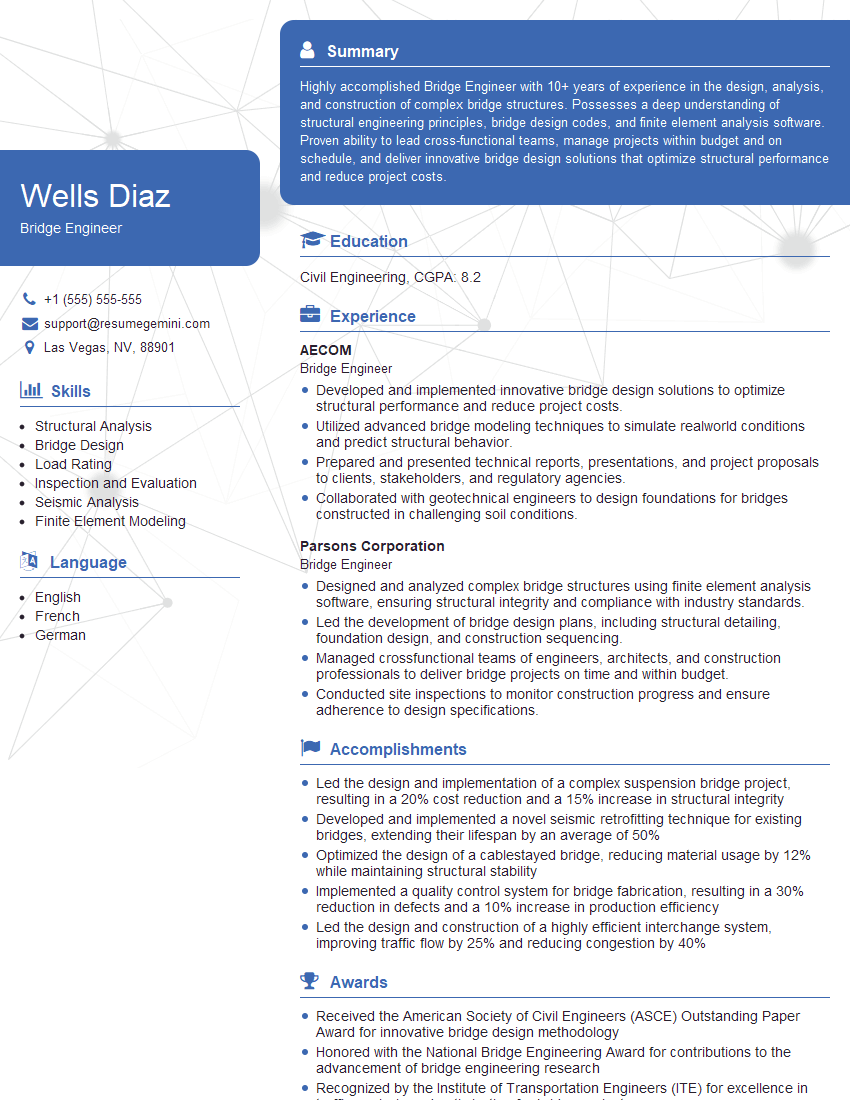
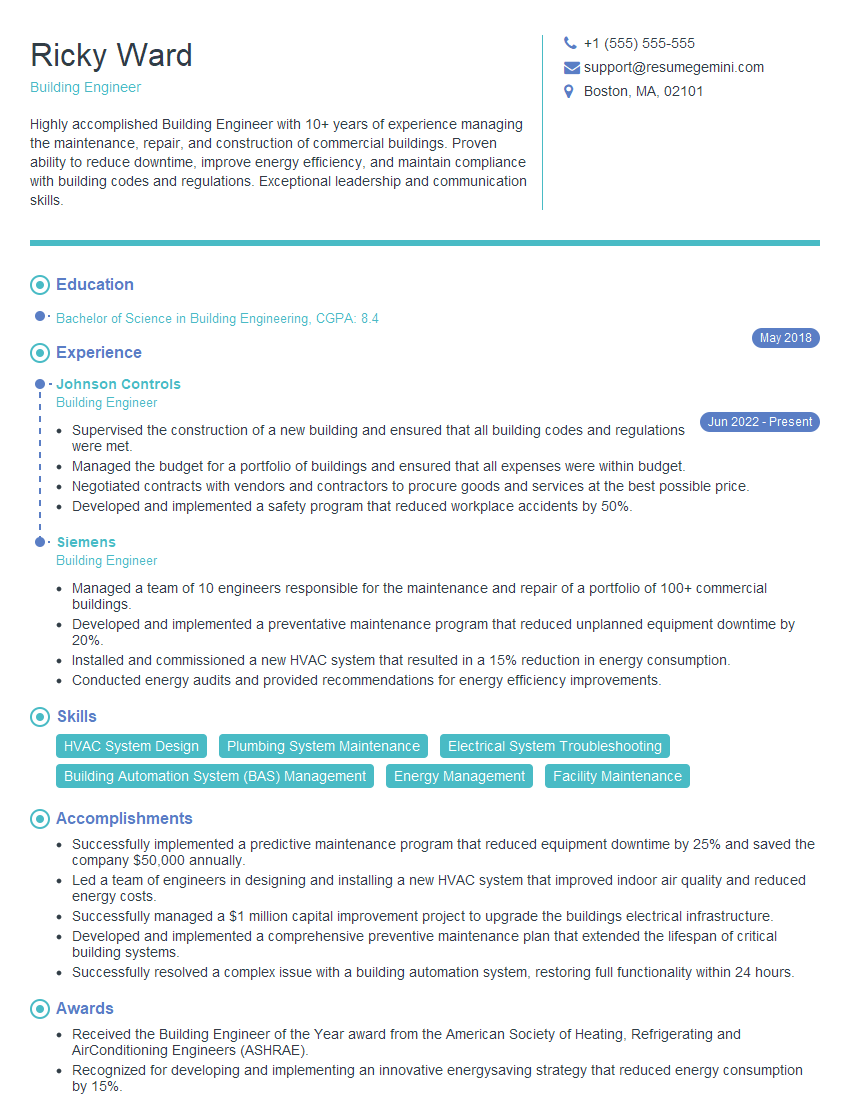
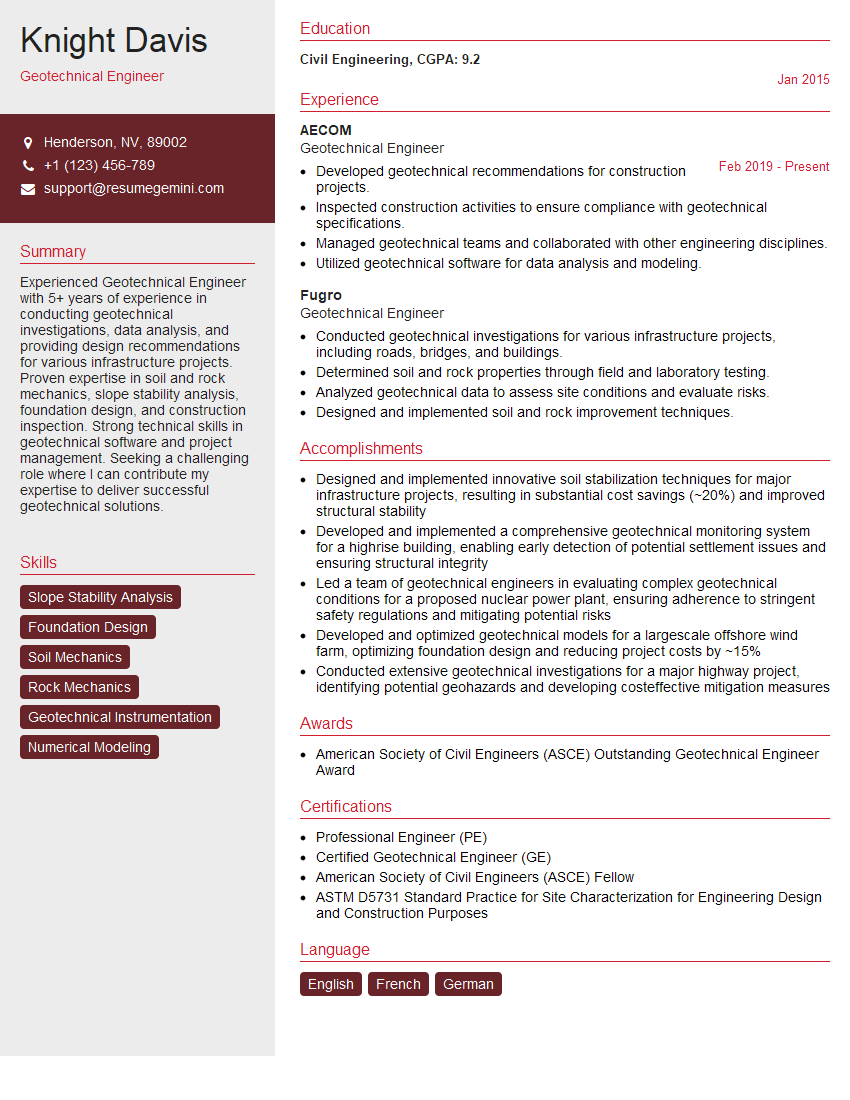
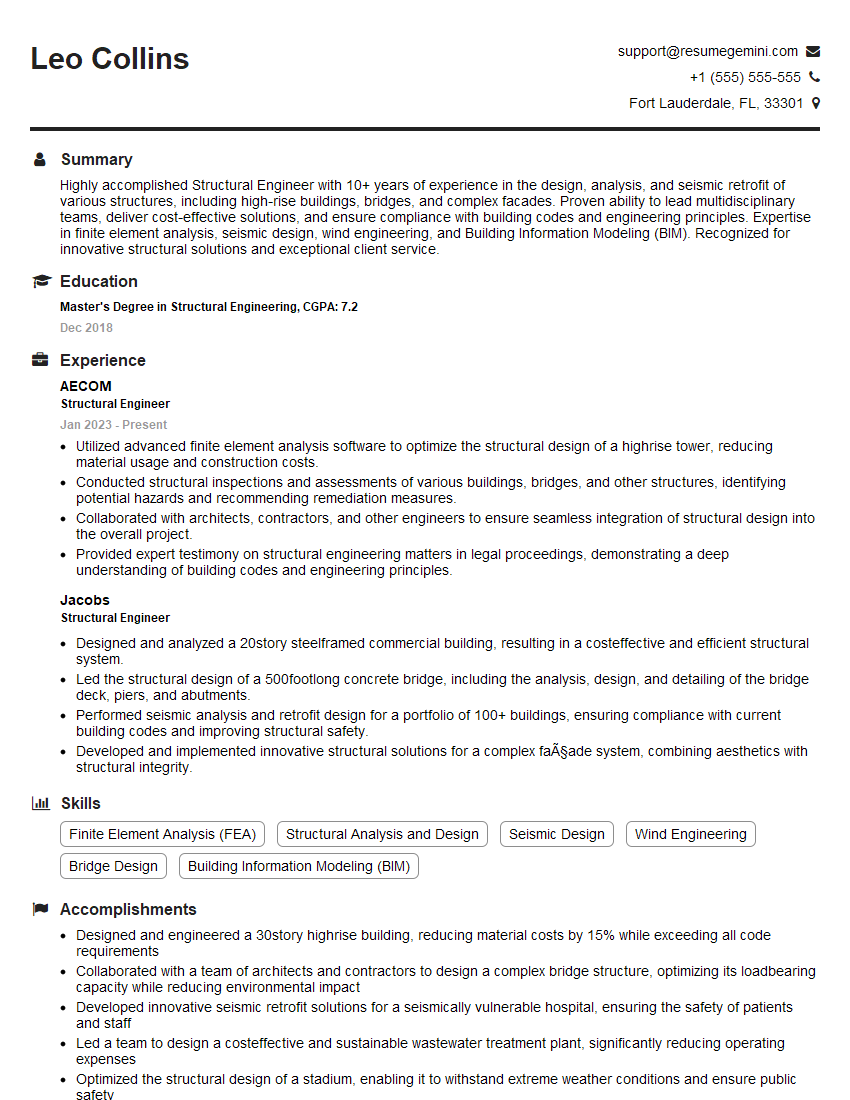
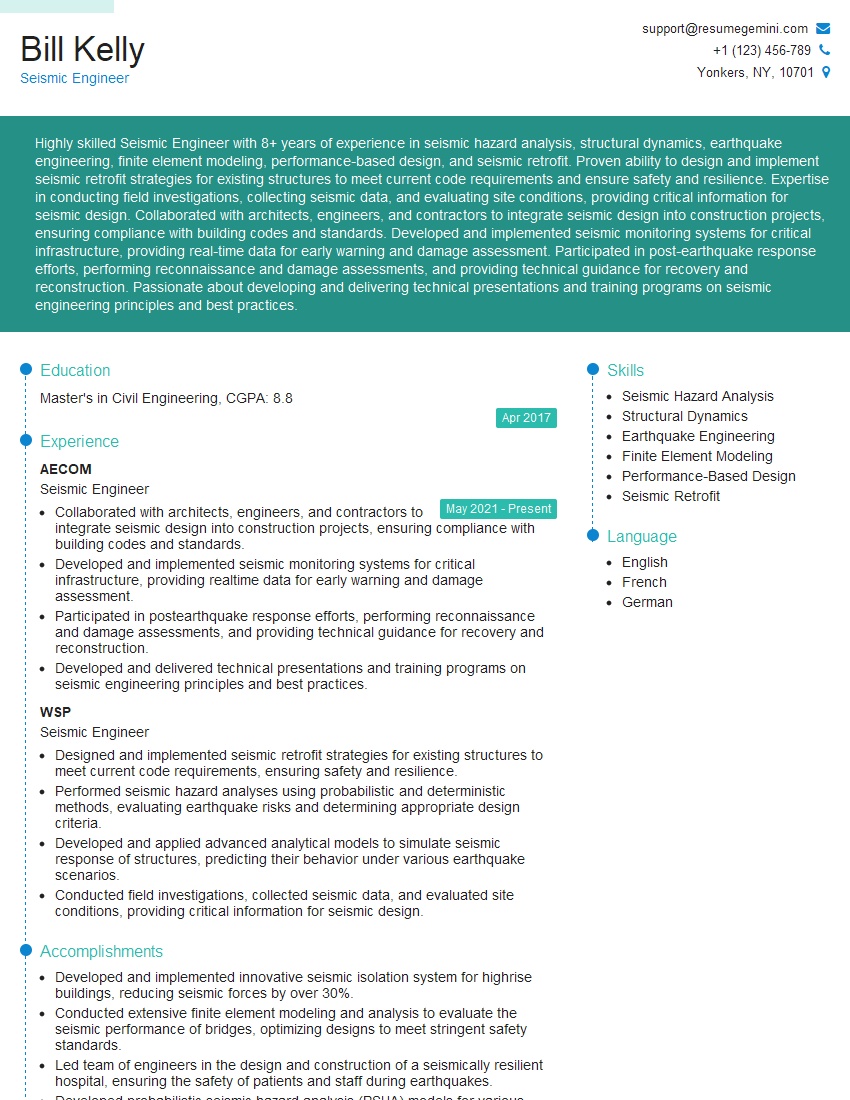
Mastering Structural Mechanics is crucial for a successful and rewarding career in engineering. A strong understanding of these principles will open doors to exciting opportunities and contribute to your professional growth. To maximize your job prospects, create an ATS-friendly resume that effectively showcases your skills and experience. ResumeGemini is a trusted resource that can help you build a professional and impactful resume. Examples of resumes tailored to Structural Mechanics professionals are available to help you get started.


Explore more articles
Users Rating of Our Blogs
Share Your Experience
We value your feedback! Please rate our content and share your thoughts (optional).
What Readers Say About Our Blog
Really detailed insights and content, thank you for writing this detailed article.
IT gave me an insight and words to use and be able to think of examples