Cracking a skill-specific interview, like one for Superhero Comics, requires understanding the nuances of the role. In this blog, we present the questions you’re most likely to encounter, along with insights into how to answer them effectively. Let’s ensure you’re ready to make a strong impression.
Questions Asked in Superhero Comics Interview
Q 1. Name three significant trends in the current superhero comics market.
Three significant trends shaping the current superhero comics market are the rise of diverse representation, the exploration of mature themes and complex narratives, and the increasing integration of digital platforms.
Diverse Representation: Readers are demanding, and publishers are increasingly delivering, more characters and storylines that reflect the multifaceted nature of our world. This includes a wider range of ethnicities, sexual orientations, genders, and abilities. We’re seeing a move away from the predominantly white, male, cisgender casts of the past.
Mature Themes and Complex Narratives: The superhero genre is evolving beyond simple good versus evil tropes. Modern comics tackle intricate psychological issues, explore morally grey areas, and delve into the consequences of actions in a far more nuanced way. Think of the exploration of trauma in titles like Hawkeye or the political complexities in Superman.
Digital Platforms: The digital landscape is transforming how comics are created, distributed, and consumed. Digital-first comics, webcomics, and subscription services are becoming increasingly important, offering readers more convenient and accessible ways to engage with the medium. This opens the door for independent creators and allows for more experimental storytelling formats.
Q 2. Compare and contrast the storytelling styles of two prominent superhero comic book writers.
Let’s compare Alan Moore and Grant Morrison, two titans of superhero comics writing. While both are known for their innovative and boundary-pushing work, their approaches differ significantly.
Alan Moore: Moore is renowned for his deconstructionist approach, often subverting superhero tropes to explore deeper societal and psychological themes. He utilizes intricate plotting, often involving multiple layers of narrative and metafictional elements. Watchmen is a prime example, dismantling the superhero mythos and presenting a bleak, morally ambiguous world. His style is characterized by dark themes, complex characters, and a focus on the human condition within the extraordinary.
Grant Morrison: Morrison, in contrast, embraces a more maximalist, psychedelic, and metafictional approach. His storytelling is often highly experimental, incorporating elements of surrealism, cosmic horror, and meta-narrative. He’s known for weaving together intricate timelines, complex mythologies, and exploring ideas of reality, consciousness, and the nature of storytelling itself. All-Star Superman showcases his ability to create a powerful, emotionally resonant story while utilizing a highly imaginative and often unconventional narrative structure.
In essence, Moore focuses on deconstructing the genre, while Morrison reconstructs and expands it in bold, inventive ways. Both, however, are masters of their craft and have profoundly impacted the superhero landscape.
Q 3. Explain the importance of visual storytelling in superhero comics.
Visual storytelling is paramount in superhero comics; it’s not just about pretty pictures. The art is inextricably linked to the narrative, conveying emotion, action, and information far beyond what words alone can achieve. It’s a symbiotic relationship.
Panel Composition and Sequencing: The way panels are arranged on a page dictates the pacing and rhythm of the story. A series of small panels can create a sense of frantic action, while larger panels can emphasize a moment of reflection or dramatic revelation.
Character Design and Body Language: A character’s design, their posture, and their expressions speak volumes. The artist subtly communicates their personality, emotions, and even their internal conflicts through visual cues.
Visual Metaphor and Symbolism: Artists frequently use visual metaphors and symbolism to enhance the narrative’s themes and subtext. A recurring image or symbol can represent a character’s internal struggle or a key element of the plot.
Without strong visuals, the narrative would be incomplete, significantly less engaging, and far less impactful. The visual storytelling enhances the reader’s experience, deepening their understanding and emotional connection to the story.
Q 4. Describe the role of color in enhancing the mood and narrative of a superhero comic.
Color in superhero comics is more than just aesthetic; it’s a powerful tool for shaping the mood and narrative. It directly impacts the reader’s emotional response.
Setting the Tone: Cool colors like blues and greens often evoke feelings of calmness, melancholy, or mystery, while warm colors like reds and oranges can suggest excitement, anger, or danger. The overall color palette significantly contributes to the atmosphere of the scene.
Highlighting Emotional States: Color can also be used to emphasize a character’s emotional state. For example, using saturated reds around an angry character intensifies their rage. Similarly, desaturated colors might represent feelings of sadness or depression.
Character Association: Specific colors can become associated with particular characters or groups. Think of the iconic red and blue of Superman or the dark, brooding tones often associated with Batman. These color choices instantly communicate character traits and visual identity.
A skilled colorist understands how to manipulate color to subtly guide the reader’s eye, emphasize important details, and enhance the overall impact of the story. It’s a delicate dance between aesthetics and narrative function.
Q 5. How would you handle a disagreement with a writer or artist regarding a character’s design or storyline?
Disagreements are inevitable in collaborative projects. My approach is to prioritize open communication and collaborative problem-solving.
Active Listening: First, I would listen carefully to understand the writer or artist’s perspective, their reasoning behind their choices, and their concerns.
Finding Common Ground: Next, I’d try to identify common goals. We’re all working towards the same objective: creating the best possible comic. Highlighting shared vision helps build a bridge.
Compromise and Collaboration: I would suggest alternative solutions, exploring different design options or narrative approaches that address everyone’s concerns. A compromise might involve incorporating elements from both sides to reach a mutually satisfying outcome.
Respectful Dialogue: Maintaining a respectful and professional tone is essential. The goal is to find a solution, not to win an argument. Open and honest communication, even when disagreements arise, is crucial.
Escalation (if necessary): If a consensus cannot be reached, I’d involve a higher-level editor or creative director to mediate and help facilitate a resolution. The priority remains maintaining a functional and creative collaborative environment.
Q 6. Discuss the challenges of adapting a superhero comic to other media (film, animation).
Adapting a superhero comic to other media, like film or animation, presents a unique set of challenges.
Condensing Complex Narratives: Comics often have intricate storylines spanning numerous issues. Translating these into a film or animated series requires careful selection and streamlining of plot points to maintain coherence and pacing within a shorter format.
Visual Translation: The visual language of comics doesn’t directly translate to film or animation. The panel structure, visual metaphors, and subtle cues require creative adaptation to create similar impacts through cinematography, animation, and visual effects.
Character Adaptation: Characters need to be re-imagined for a new medium. What works visually in a static panel might not translate effectively to a moving image. This might necessitate adjustments to costumes, powers, and overall personality portrayal.
Tone and Genre: Maintaining the tone and genre of the comic is critical. A dark, gritty comic might not translate well into a lighthearted animated film, and vice-versa. Finding the right balance and maintaining thematic consistency is key.
Budget and Time Constraints: Film and animation projects often operate under tight budgets and deadlines. This necessitates making difficult choices regarding scope, scale, and the fidelity of the adaptation to the source material.
Q 7. What are some common pitfalls to avoid when creating compelling superhero characters?
Creating compelling superhero characters requires avoiding several common pitfalls.
One-Dimensional Personalities: Avoid creating characters that are purely good or purely evil. Complex characters with flaws, internal conflicts, and relatable motivations make for a more engaging story.
Overpowered Abilities: While superpowers are essential, overly powerful characters can make for a less interesting narrative. If a character is too strong, it limits conflict and dramatic tension. Consider the limitations and vulnerabilities of their powers.
Lack of Origin Story or Backstory: Understanding a character’s origin, their motivations, and their past experiences is key to making them relatable and believable. A strong backstory lends depth and complexity to their personality and actions.
Poorly Defined Motivations: Characters need clear and consistent motivations that drive their actions. These motivations should be understandable, even if the actions themselves are questionable. A villain’s motivations need to be just as compelling as a hero’s.
Ignoring Character Arc: Compelling characters evolve and change throughout a story. They face challenges, make mistakes, and learn from their experiences. Without a character arc, the character remains static and uninteresting.
Q 8. How would you design a marketing campaign for a new superhero comic book series?
A successful marketing campaign for a new superhero comic book series hinges on understanding the target audience and crafting a compelling narrative around the hero and their world. It needs to be multi-pronged, leveraging both traditional and digital media.
Pre-Launch Buzz Generation: This involves creating a mystique around the hero. Teaser trailers, cryptic social media posts, and exclusive previews in related publications (even non-comics) are key. Think of how Marvel teased Avengers: Endgame – the anticipation was palpable.
Targeted Advertising: Identify your core audience (e.g., young adults, fans of specific genres) and tailor your advertising accordingly. This might include ads on comic book websites, social media platforms, and potentially even streaming services frequented by your target demographic.
Collaborations and Cross-Promotions: Partnering with related brands, such as clothing companies or gaming studios, can significantly expand your reach and build brand awareness. A limited edition t-shirt featuring the hero’s logo, for instance, can be a powerful marketing tool.
Content Marketing: Create high-quality content like behind-the-scenes videos, character interviews, and comic panels on social media to engage fans and build a loyal following. This keeps the conversation going and fuels excitement.
Comic Conventions and Events: Presence at conventions is crucial for direct engagement with fans. Exclusive variant covers, meet-and-greets with creators, and giveaways can make a big difference.
The overall strategy needs to be consistent, delivering a cohesive message that showcases the unique aspects of the new series and its potential to capture the imagination of readers. Think about the unique selling proposition – what makes this comic different and worth reading?
Q 9. Analyze the success of a specific superhero comic book franchise, identifying key factors contributing to its popularity.
The success of the Marvel Cinematic Universe (MCU) is a prime example of a thriving superhero franchise. Several key factors contributed to its phenomenal popularity:
Interconnected Storytelling: The MCU cleverly linked individual movies and series, building a larger, shared narrative that kept audiences engaged and eager to see how stories unfolded across different projects. This created a sense of investment and anticipation.
High-Quality Production: From acting and directing to special effects and cinematography, the MCU consistently delivers a high level of cinematic quality, exceeding expectations and captivating viewers.
Strong Character Development: The MCU doesn’t just create superheroes; it develops complex, relatable characters with flaws and vulnerabilities. This makes them more human and emotionally engaging.
Effective Marketing and Branding: Marvel’s marketing team masterfully generates hype and excitement through trailers, social media campaigns, and strategic partnerships. Their branding is instantly recognizable and trustworthy.
Adaptability and Innovation: The MCU has adapted to changing audience preferences and industry trends, constantly innovating with new characters, storylines, and formats, while staying true to its core identity.
Ultimately, the MCU’s success is a testament to the power of a well-crafted narrative, exceptional production values, and savvy marketing strategies all working in harmony. It showcases how a strategic long-term vision can cultivate a devoted fanbase and generate massive commercial success.
Q 10. Explain the different types of panels used in comic book layouts and their effect on storytelling.
Comic book panels are the building blocks of visual storytelling. Different panel shapes and sizes significantly impact the pacing and emotional impact of a scene. Let’s explore some common types:
Standard Rectangular Panels: These are the most common type, offering a neutral pace and allowing for a variety of layouts. They can easily create a sense of continuity or introduce a new scene.
Small Panels: These create a sense of speed and urgency, often used for action sequences or heightened emotional moments. They can compress time and convey a fast-paced feeling.
Large Panels: These tend to slow down the pace, allowing readers to linger on details and savor the moment. They create a more contemplative mood and often highlight significant events.
Irregular Panels: Panels shaped like circles, triangles, or other irregular shapes disrupt the flow, mirroring the emotional chaos or unusual nature of the scene within. They can be used to show disorientation or surreal situations.
Splash Pages: These are large, often full-page panels, usually used to showcase a dramatic event or a stunning visual. They provide a sense of spectacle and are employed to emphasize a major turning point.
Panel Transitions: The arrangement of panels also matters significantly. A linear arrangement creates a straightforward narrative, while varied layouts can emphasize transitions or create visual interest and emotional impact.
Skilled comic artists use these elements in conjunction to control the reader’s experience and emphasize key moments, demonstrating how visual storytelling can be powerful in conveying emotion, mood and narrative progression.
Q 11. Describe your preferred methods for researching superhero comic book history and trends.
Researching superhero comic book history and trends requires a multi-faceted approach:
Archival Research: Accessing comic book archives (both physical and digital) like the Grand Comics Database is crucial. This allows examination of original comics, providing a direct connection to the source material and historical context.
Scholarly Articles and Books: Academic papers and books focusing on comic book history, theory, and culture offer in-depth analyses of themes, trends, and artistic styles. These provide valuable critical perspectives.
Interviews and Oral Histories: Gathering information from artists, writers, and editors involved in creating superhero comics provides invaluable first-hand accounts and insights into the creative process.
Online Resources and Databases: Websites, blogs, and databases dedicated to comics offer news, reviews, and analysis of current trends in the industry. These keep one abreast of the present landscape.
Comic Book Conventions and Events: Attending conventions allows direct interaction with creators, fans, and publishers, providing valuable networking opportunities and exposure to the latest trends.
A combination of these methods ensures a comprehensive understanding of the subject matter, creating a holistic picture of superhero comic book history and its evolution. It also facilitates the ability to assess trends and influences, which is vital for informed commentary.
Q 12. Discuss the importance of understanding target audience demographics in the superhero comic book market.
Understanding target audience demographics is paramount in the superhero comic book market. Different age groups, genders, and cultural backgrounds have varying preferences and expectations. Ignoring this will lead to ineffective marketing and poor sales.
Age Groups: Young adults might prefer action-packed, fast-paced stories with visually stunning artwork, whereas older readers may gravitate toward more complex plots and mature themes. Content must adapt.
Gender: Traditionally male-dominated, the market is now increasingly diverse. Understanding what resonates with female readers (strong female characters, diverse stories) and tailoring content accordingly is crucial for market expansion.
Cultural Backgrounds: Representing a wide range of cultures and backgrounds in characters, storylines, and creative teams fosters inclusivity and appeals to a broader audience, ensuring better representation and avoiding cultural insensitivity.
Interests and Preferences: Fans may be drawn to specific genres within the superhero genre (e.g., horror, sci-fi, fantasy) or certain art styles. Catering to these specific interests can result in better engagement.
By meticulously analyzing target audience demographics through market research, publishers can make informed decisions about content, marketing, and distribution, ultimately leading to better sales and long-term success. This also aids the creation of diverse and engaging stories that genuinely connect with the intended readership.
Q 13. What are some ethical considerations surrounding the portrayal of violence and other mature themes in superhero comics?
The portrayal of violence and mature themes in superhero comics presents significant ethical considerations. While creative freedom is essential, responsibility must be assumed to avoid harmful depictions.
Contextualization of Violence: Violence shouldn’t be gratuitous; it needs to serve a narrative purpose and be presented with sensitivity. The consequences of violence should be shown, not glorified.
Age Appropriateness: Comics dealing with mature themes (violence, sexuality, drug use) should be clearly labeled and targeted to adult audiences. Protecting younger readers from potentially harmful content is critical.
Responsible Representation of Marginalized Groups: Stereotyping or portraying marginalized groups in harmful or offensive ways is unacceptable. Accurate and respectful representations matter, fostering diversity and inclusion.
Avoiding the Normalization of Violence: Superhero comics must avoid inadvertently normalizing violence or presenting it as a solution to problems. The focus should be on exploring themes of justice, morality, and redemption.
Trigger Warnings: Consider including trigger warnings for potentially sensitive content like depictions of trauma, abuse, or suicide. This demonstrates sensitivity and allows readers to make informed choices.
Balancing creative freedom with ethical responsibility requires constant reflection and awareness of the potential impact on readers. It’s about telling compelling stories while remaining mindful of the social responsibility associated with publishing content that reaches a wide audience.
Q 14. How do you balance creative freedom with meeting deadlines and editorial requirements?
Balancing creative freedom with deadlines and editorial requirements is a constant juggling act for any comic book creator. It requires effective time management, clear communication, and a willingness to compromise.
Detailed Planning and Outlines: Thorough planning before starting the creative process ensures that the story stays on track, minimizing unforeseen delays. This involves detailed outlines, character sketches, and potential plot points.
Regular Communication with Editors: Maintaining open lines of communication with editors helps address potential issues early on, preventing major conflicts or unexpected revisions later in the process.
Prioritization and Time Management: Effective time management and prioritization of tasks ensure that deadlines are met. This might involve breaking down large tasks into smaller, more manageable chunks.
Flexibility and Adaptability: Unexpected issues may arise during the creative process. Being flexible and adaptable allows creators to adjust plans, re-prioritize tasks, and incorporate feedback without compromising quality.
Seeking Feedback and Collaboration: Actively seeking feedback from colleagues, editors, or beta readers can improve the final product and ensure alignment with editorial expectations.
Striking the right balance between creative vision and practical constraints is crucial for successful comic book creation. It’s about finding creative solutions that respect the story’s integrity while meeting the demands of production and editorial processes. A collaborative and communicative approach is essential for navigating this dynamic environment.
Q 15. Explain your understanding of intellectual property rights in the context of superhero comics.
Intellectual property (IP) rights in superhero comics are crucial, encompassing copyright, trademark, and potentially patent protection. Copyright protects the creative expression in the comic – the story, artwork, and characters’ unique designs. This means only the copyright holder can reproduce, distribute, or create derivative works (like sequels or movies) without permission. Trademark protects the names and logos of characters, titles, and publishers, preventing others from using them in a way that could cause confusion. Less frequently, patents might apply to specific inventions or technologies featured in the comics, although this is rarer. For example, Marvel holds the copyright to the Spider-Man character and story, and its trademark protects the Spider-Man logo and character name. Without these protections, creators would face significant challenges safeguarding their work from unauthorized use and potential financial losses.
Understanding IP is vital for creators, publishers, and licensees. Collaborations often involve complex agreements detailing ownership and usage rights. Infringement can lead to costly legal battles. It’s important to carefully document ownership and usage rights to avoid conflicts later.
Career Expert Tips:
- Ace those interviews! Prepare effectively by reviewing the Top 50 Most Common Interview Questions on ResumeGemini.
- Navigate your job search with confidence! Explore a wide range of Career Tips on ResumeGemini. Learn about common challenges and recommendations to overcome them.
- Craft the perfect resume! Master the Art of Resume Writing with ResumeGemini’s guide. Showcase your unique qualifications and achievements effectively.
- Don’t miss out on holiday savings! Build your dream resume with ResumeGemini’s ATS optimized templates.
Q 16. Describe your experience with various comic book creation software and tools.
My experience spans several comic book creation software and tools. I’m proficient in industry-standard programs like Adobe Photoshop and Illustrator for digital art. For inking and coloring, I’ve used Clip Studio Paint extensively, appreciating its intuitive brush engines and layer management capabilities. I’ve also worked with smaller tools like Affinity Photo and Designer for specific tasks, finding them cost-effective alternatives depending on the project. I’m also familiar with using specialized software for 3D modeling and digital painting, depending on the level of detail and realism required for a particular project. For page layout and lettering, I use Adobe InDesign, ensuring the final product is publication ready. The choice of tools depends on the style, budget, and technical requirements of each project.
Q 17. What is your preferred workflow for producing high-quality comic book art?
My workflow for producing high-quality comic book art begins with a detailed script breakdown and thumbnail sketches to plan panel layouts and pacing. Then, I move to pencils, focusing on character poses, expressions, and background elements. After that, I ink the artwork, refining lines and adding details. I then scan my work into a digital environment to use software like Photoshop or Clip Studio Paint to further clean up lines and color the pages. Lettering is the final stage; I usually work with a dedicated letterer to ensure readability and visual appeal. Each phase involves multiple revisions and quality checks to maintain consistency and avoid errors. For instance, I’ll often revisit pencil sketches multiple times to ensure the storytelling flow is effective before inking.
Q 18. How do you incorporate feedback from editors and other collaborators into your work?
Incorporating feedback is vital. I actively solicit feedback from editors and collaborators throughout the entire creative process – from initial script discussions to final color corrections. I use a collaborative platform where we can share feedback and revisions. I’m open to suggestions, considering all perspectives, but maintain creative control, ensuring my artistic vision remains intact. I believe in viewing criticism not as personal attacks but as opportunities for improvement and enhancing the overall quality of the comic. For example, if an editor points out pacing issues, I’ll adjust the panel layouts accordingly, ensuring a smoother narrative. Open communication and a respectful exchange are key.
Q 19. Discuss the importance of character development in a long-running superhero comic series.
Character development is paramount in long-running superhero series. It’s not enough to have powerful abilities; readers connect with characters’ flaws, motivations, and emotional arcs. Consistent and believable character growth keeps audiences engaged over time. For example, a superhero might start with a vengeful mindset but evolve into a compassionate leader, or perhaps their moral compass is challenged by difficult decisions. The challenge lies in balancing maintaining core character traits with demonstrating growth and change. Failure to develop characters meaningfully can lead to staleness and a loss of reader interest. Think of how Spider-Man’s character has evolved over decades, facing personal struggles and maturing alongside the readers.
Q 20. How do you handle criticism of your work constructively?
I handle criticism constructively by actively listening and seeking to understand the perspective behind the feedback. I separate the personal from the professional, focusing on the artistic merit of the criticism rather than taking it personally. I consider whether the criticism is valid and applies to my work. Then, I assess its impact on the overall quality of the project and determine whether changes are necessary. If warranted, I modify the artwork or approach, always documenting my process and rationale for the adjustments. Even negative feedback provides valuable insights that can shape future projects. The goal is to constantly refine my skills and improve my storytelling.
Q 21. Describe your understanding of different narrative structures used in superhero comics.
Superhero comics utilize various narrative structures. The most common is a linear, episodic structure where each issue tells a self-contained story, while contributing to a larger overarching narrative. Another common structure is the serialized narrative, where the story unfolds over many issues, creating suspense and cliffhangers. Some comics use a non-linear structure, playing with flashbacks, flashforwards, and multiple perspectives to create a complex and intriguing plot. Finally, some comics use a more experimental structure, such as the use of metafiction or unreliable narrators to explore different themes and narrative approaches. The chosen structure heavily influences the reader’s experience, pacing, and overall engagement with the story.
Q 22. What makes a successful superhero comic villain?
A successful superhero comic villain isn’t just a brute force antagonist; they’re a compelling character with depth and motivation. Their success hinges on a combination of factors, primarily a strong, relatable backstory and compelling goals. Think of the Joker – his chaotic nature stems from a perceived injustice, making him more than just a madman. He’s a reflection of societal flaws.
- Relatable Motivation: Even if their methods are horrific, a villain’s motivations need to resonate with readers on some level. This allows for exploration of complex themes like revenge, societal inequality, or even a twisted sense of justice. Lex Luthor, for example, is driven by his intellectual superiority and a belief that Superman’s existence undermines humanity’s potential.
- Memorable Design: Visuals matter. A striking design – be it physical appearance or symbolic imagery – immediately grabs the reader’s attention and makes the character iconic. Think of Magneto’s helmet and iconic purple garb.
- Effective Power Set: A villain’s powers should pose a genuine threat to the hero, creating compelling conflict and high stakes. This doesn’t necessarily mean overwhelming power; a cleverly used weakness can also be effective.
- Dynamic Relationship with the Hero: The relationship between the hero and villain is crucial. A great villain serves as a mirror, reflecting the hero’s strengths and weaknesses, forcing them to confront their own morality. The dynamic between Spider-Man and Green Goblin exemplifies this perfectly.
Ultimately, a successful villain challenges the hero and pushes them to their limits, enriching the narrative and creating a memorable reading experience.
Q 23. How do you stay up-to-date with current trends and developments in the superhero comics industry?
Staying current in the ever-evolving superhero comics industry requires a multi-pronged approach. I actively engage with various platforms and resources to stay informed about industry trends and new releases.
- Industry Publications and Websites: I regularly read publications like The Hollywood Reporter, Variety, and dedicated comic book news sites, focusing on articles analyzing sales figures, creative directions, and market shifts.
- Social Media Engagement: Platforms like Twitter and Instagram allow me to follow creators, publishers, and industry insiders, gaining firsthand insights into upcoming projects and discussions on current trends. I also participate in relevant online communities and forums.
- Comic Conventions and Industry Events: Attending events such as Comic-Con International provides an invaluable opportunity to network with professionals and learn about upcoming projects directly from publishers and creators. It’s a fantastic way to gauge audience reactions and get a feel for emerging themes.
- Independent Comic Scene Monitoring: I pay close attention to the independent comic scene, as it often functions as a testing ground for innovative story-telling and artistic styles that can later influence mainstream comics.
By combining these strategies, I ensure I maintain a comprehensive understanding of the current landscape and anticipate future developments.
Q 24. Discuss the impact of social media on the superhero comics market.
Social media has profoundly impacted the superhero comics market, acting as both a powerful marketing tool and a direct line of communication with readers. It allows for real-time engagement, feedback, and the creation of communities around specific titles and characters.
- Marketing and Promotion: Publishers leverage platforms like Twitter and Instagram to promote new releases, share artwork, and engage in conversations with fans. This direct access can significantly impact sales and build anticipation for upcoming titles.
- Direct Fan Interaction: Creators can directly interact with their audience through social media, gathering feedback, addressing concerns, and fostering loyalty. This fosters a sense of community and personalization that traditional marketing approaches often lack.
- Viral Trends and Fan Art: Social media accelerates the spread of fan-created content, including art, theories, and memes. These organic contributions amplify engagement and broaden the reach of the comic book brand. For example, a trending hashtag can rapidly increase visibility for a specific character or comic.
- Challenges and Risks: While social media offers numerous advantages, there are also potential downsides. Negative feedback can quickly spread, damaging a comic’s reputation. It also necessitates continuous engagement, demanding time and resources from publishers and creators.
In essence, social media represents a double-edged sword – a powerful tool with significant potential benefits, but one that requires careful management to maximize positive outcomes and mitigate potential risks.
Q 25. How would you promote diversity and inclusion in your work on superhero comics?
Promoting diversity and inclusion in superhero comics isn’t simply about ticking boxes; it’s about creating authentic representations that reflect the rich tapestry of our world. My approach involves conscious and multifaceted actions throughout the creative process.
- Diverse Character Creation: I actively strive to develop characters with diverse ethnicities, sexual orientations, genders, abilities, and backgrounds, avoiding stereotypical portrayals. This ensures a broad representation of human experience within the narrative.
- Inclusive Storylines: Storylines should reflect the lived realities and challenges faced by diverse communities. This means avoiding tokenism and instead creating characters and situations that are both meaningful and impactful.
- Collaboration with Diverse Creators: I prioritize working with writers, artists, and editors from diverse backgrounds. Their unique perspectives contribute significantly to the authenticity and richness of the narratives.
- Community Engagement: I actively seek feedback from diverse communities to ensure storylines and characters are relatable and avoid harmful stereotypes. Regular engagement ensures a sensitive and inclusive approach.
- Challenging Existing Tropes: I critically examine traditional superhero narratives, identifying and challenging harmful tropes and stereotypes that often marginalize certain groups. This conscious effort contributes to a more equitable and representative representation.
This integrated approach goes beyond surface-level representation; it necessitates a deep commitment to creating inclusive and authentic stories that resonate with a broad audience and promote positive representation.
Q 26. Explain your knowledge of different comic book printing techniques and their impact on quality.
My understanding of comic book printing techniques is extensive, as the chosen method directly impacts the final product’s quality, cost, and aesthetic appeal. Different techniques cater to various needs and budgets.
- Offset Printing: This is the industry standard for mass-produced comics, offering high-quality color reproduction and cost-effectiveness for large print runs. However, it’s less suitable for smaller runs due to setup costs.
- Digital Printing: Digital printing offers flexibility for smaller print runs and allows for on-demand printing. While the initial cost per unit may be higher, it eliminates the need for large upfront investments, making it ideal for independent creators or limited editions.
- Letterpress Printing: This traditional technique uses raised type to create an embossed effect, adding a unique tactile and aesthetic quality to the comic. It’s more expensive and less suitable for mass production but offers a high-end, collectible feel.
- Paper Stock: The choice of paper stock is crucial for print quality. Higher-quality papers provide better color reproduction, durability, and a more luxurious feel, while lower-quality papers may lead to bleed-through or discoloration.
- Color Separation and Screening: Understanding color separation and screening techniques is critical for achieving the desired color accuracy and sharpness in the final print. This involves converting color images into separate plates for each primary color (CMYK).
By understanding the nuances of each technique, I can make informed decisions that optimize the quality and aesthetic appeal of a comic while balancing cost-effectiveness.
Q 27. What is your approach to designing and maintaining a consistent visual style for a superhero comic?
Maintaining a consistent visual style is paramount in a superhero comic; it establishes a visual identity, enhancing reader immersion and recognition. My approach involves a structured process.
- Style Guide Creation: I begin by creating a comprehensive style guide. This document outlines the key visual elements, including character designs, panel layouts, color palettes, font choices, and lettering styles. It serves as a reference point for the entire creative team.
- Character Design Consistency: Character designs are crucial. Details like costumes, body proportions, and facial features need to be meticulously consistent across all issues. A digital style guide with high-resolution references greatly facilitates this.
- Panel Layout and Composition: Consistent panel layouts and composition techniques create a visually cohesive flow throughout the comic. A consistent approach to pacing and visual storytelling is essential.
- Color Palette and Tone: Utilizing a consistent color palette and tone ensures visual unity. This helps establish the mood and atmosphere of the story.
- Regular Reviews and Feedback: Regular reviews of the artwork throughout the production process help identify and correct any inconsistencies early on. This prevents major discrepancies and maintains consistency.
This structured approach ensures a visually unified and compelling reading experience, strengthening the comic’s visual identity and memorability.
Q 28. Describe your experience with collaborating with diverse teams on superhero comic projects.
Collaboration is the lifeblood of any successful superhero comic project. My experience working with diverse teams has consistently yielded richer, more nuanced stories. I value the diverse perspectives each team member brings.
- Open Communication: I prioritize clear and open communication, creating a safe and inclusive environment where all team members feel comfortable sharing their ideas and concerns. Regular team meetings and feedback sessions are crucial.
- Respect for Different Creative Processes: I understand that different creators have unique working styles. I adapt my approach to accommodate these differences, fostering a collaborative rather than a confrontational environment.
- Constructive Criticism: I provide constructive criticism, focusing on the work itself rather than personal attacks. This helps refine the creative vision while maintaining positive team dynamics.
- Value of Diverse Perspectives: I actively solicit feedback from diverse team members, recognizing that varying backgrounds lead to richer and more inclusive storytelling. Different perspectives often identify flaws or areas for improvement that might be missed otherwise.
- Conflict Resolution: In the event of disagreements, I mediate conflicts constructively, aiming for a collaborative solution that reflects the best interests of the project.
My experience demonstrates that collaborating with diverse teams leads to innovation, deeper storytelling, and ultimately, a more compelling and universally appealing product.
Key Topics to Learn for Superhero Comics Interview
- Narrative Structure & Storytelling: Understanding the classic hero’s journey, character arcs, and effective pacing in comic book narratives. Practical application: Analyzing successful superhero storylines to identify key elements and applying those principles to your own work.
- Character Development & Worldbuilding: Crafting compelling characters with believable motivations and creating immersive, consistent worlds. Practical application: Developing character profiles, outlining plot points, and creating detailed world maps to demonstrate your understanding of world-building.
- Visual Storytelling & Panel Composition: Mastering the art of visual storytelling through panel layout, camera angles, and character positioning. Practical application: Analyzing the visual storytelling techniques used in successful comics and applying them to your own projects.
- Genre Conventions & Trends: Familiarity with different subgenres within superhero comics (e.g., superhero team dynamics, cosmic horror, dystopian futures) and current trends in the industry. Practical application: Demonstrating your understanding by discussing the evolution of certain superhero tropes and how they contribute to the overall narrative.
- Industry Knowledge & Market Analysis: Understanding the current landscape of the superhero comic industry, including major publishers, successful titles, and emerging trends. Practical application: Discussing your favorite titles and explaining what makes them successful from a creative and business perspective.
- Collaboration & Teamwork: Understanding the collaborative nature of comic book creation and how to effectively work with writers, artists, and editors. Practical application: Presenting examples of successful collaborative projects or demonstrating your ability to work effectively in teams.
Next Steps
Mastering the art of superhero comics storytelling opens doors to exciting and rewarding careers. To maximize your chances, a strong, ATS-friendly resume is crucial. ResumeGemini is a trusted resource to help you build a compelling resume that showcases your skills and experience effectively. We provide examples of resumes tailored specifically to the Superhero Comics industry to help guide you. Invest the time to create a professional resume that reflects your passion and expertise—it’s your first impression, and it counts!
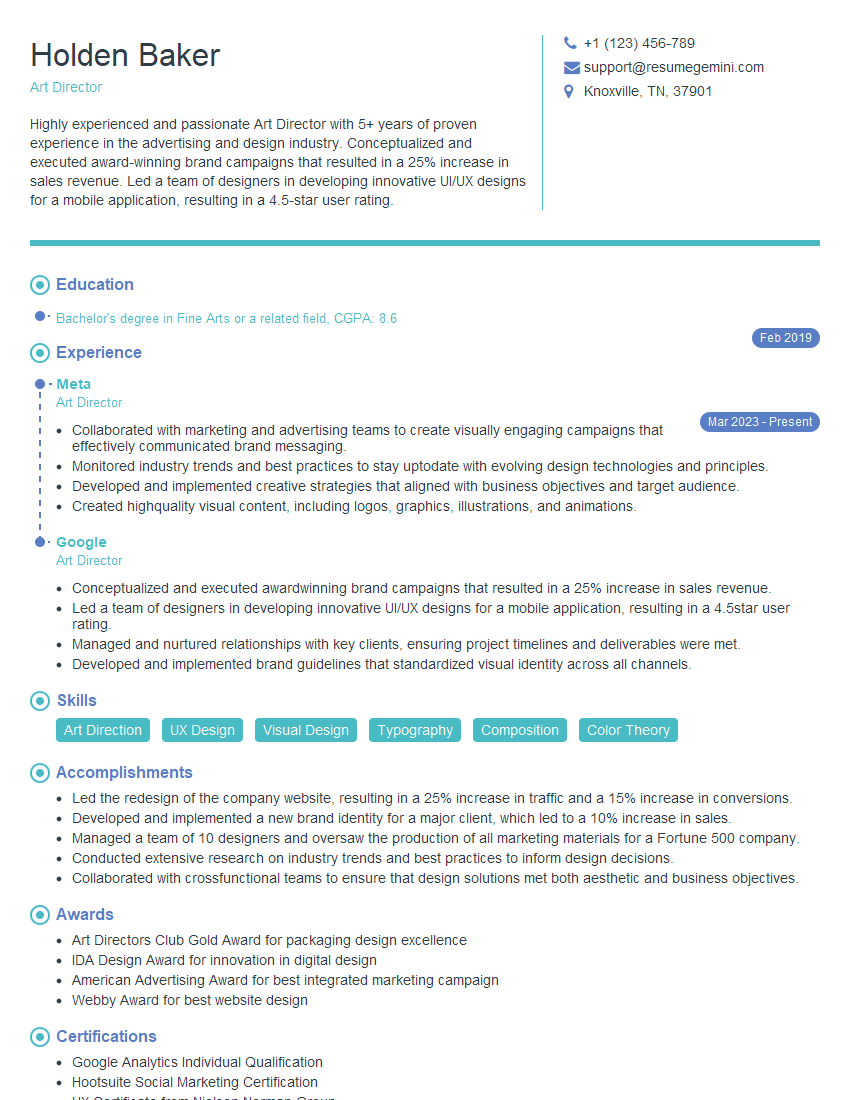
Art Director Resume Sample
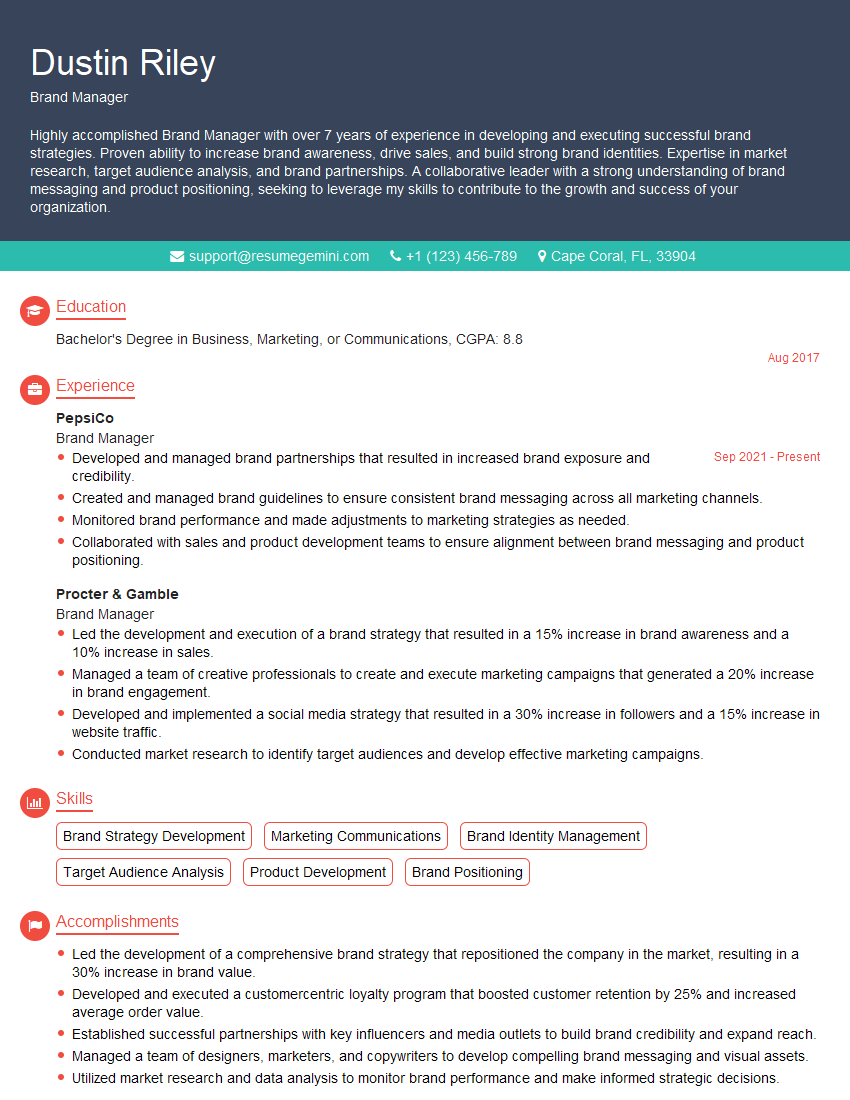
Brand Manager Resume Sample

Creative Director Resume Sample
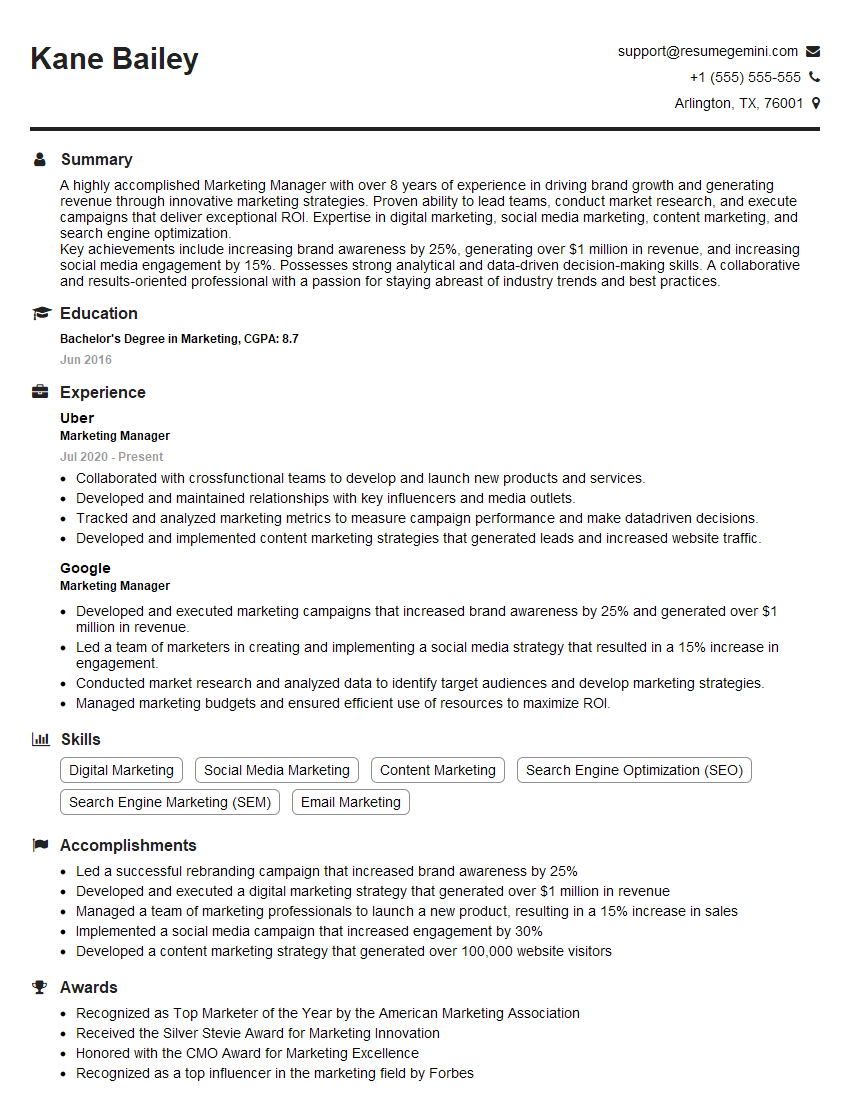
Marketing Manager Resume Sample
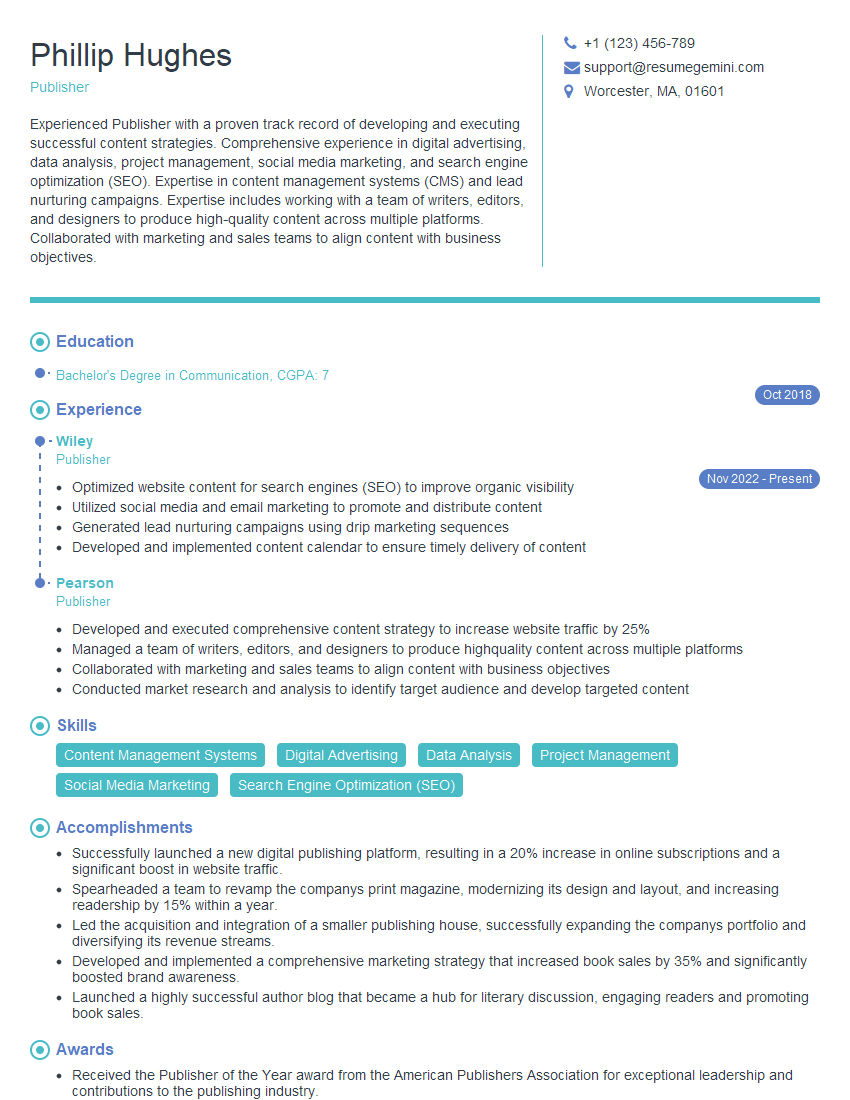
Publisher Resume Sample

Social Media Manager Resume Sample
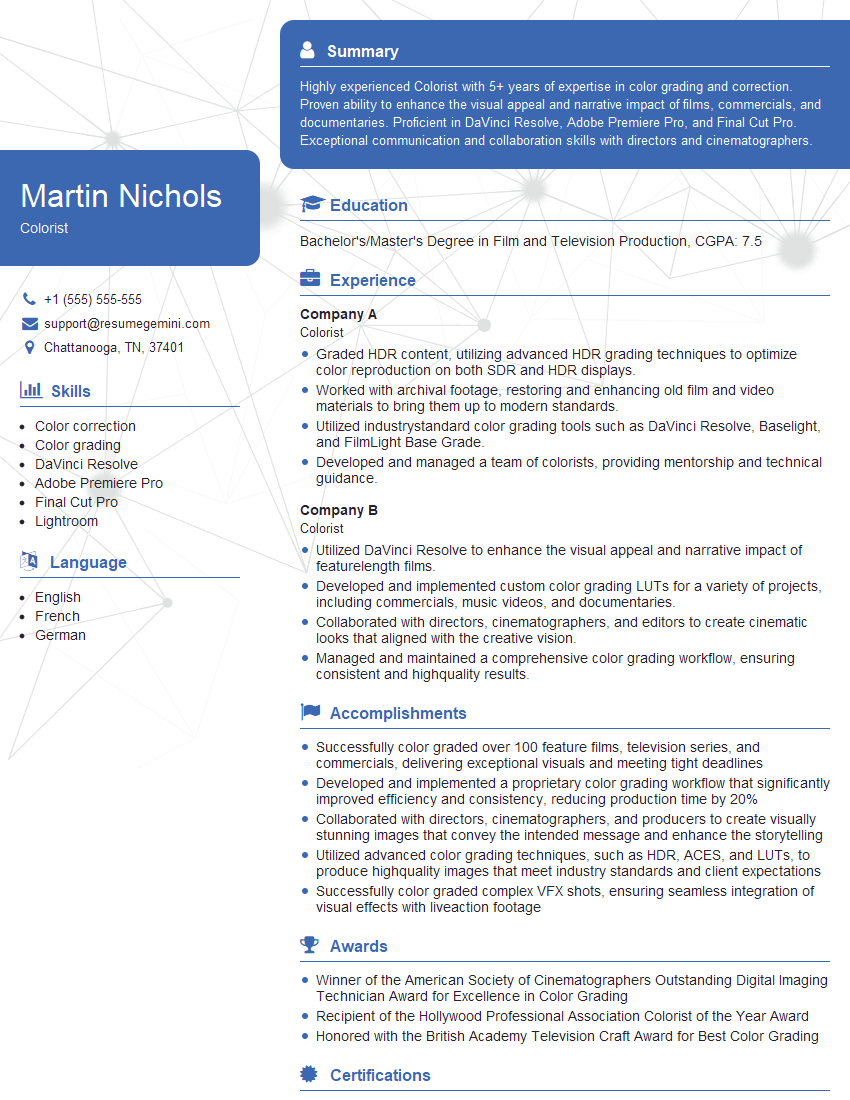
Colorist Resume Sample
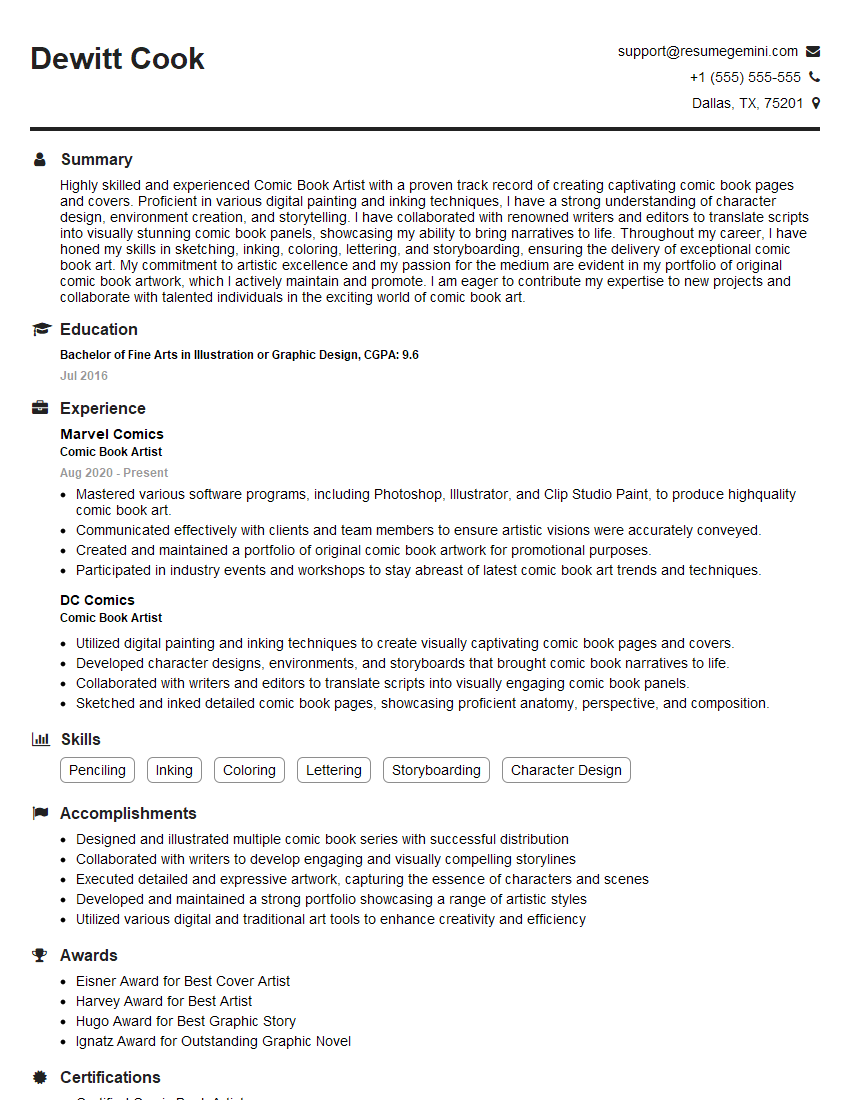
Comic Book Artist Resume Sample
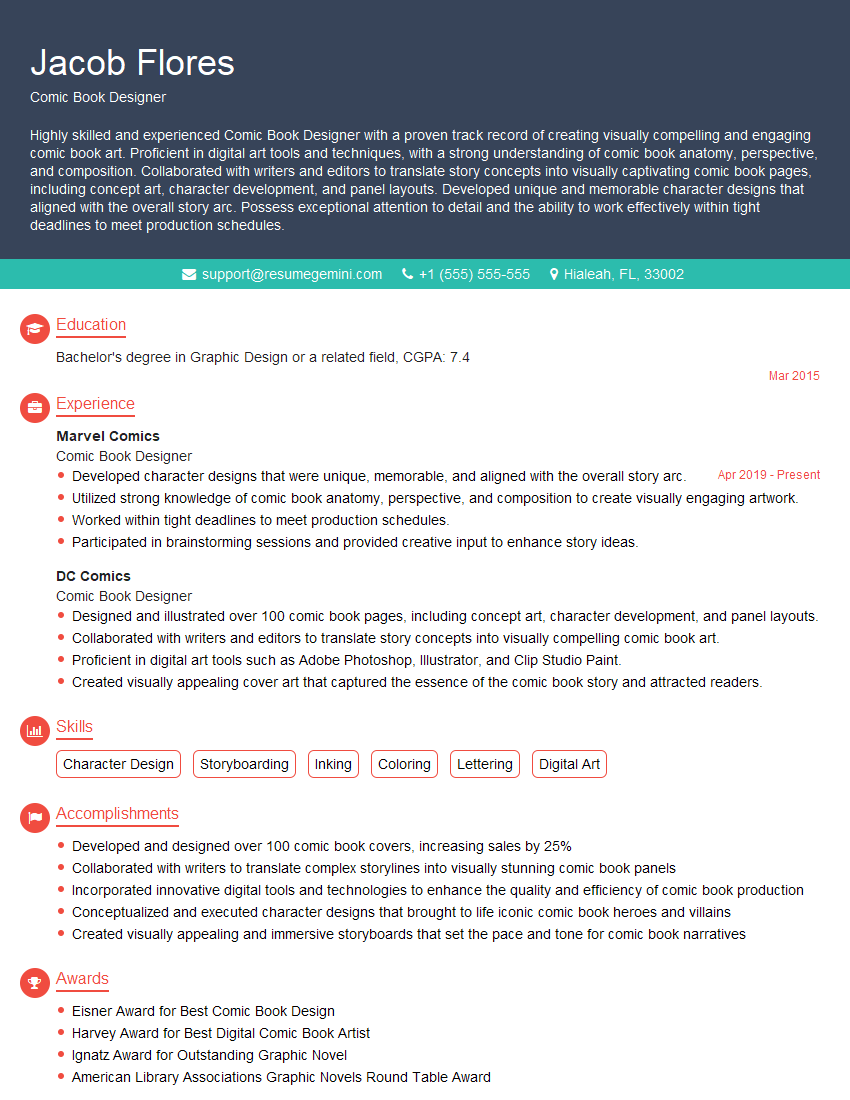
Comic Book Designer Resume Sample
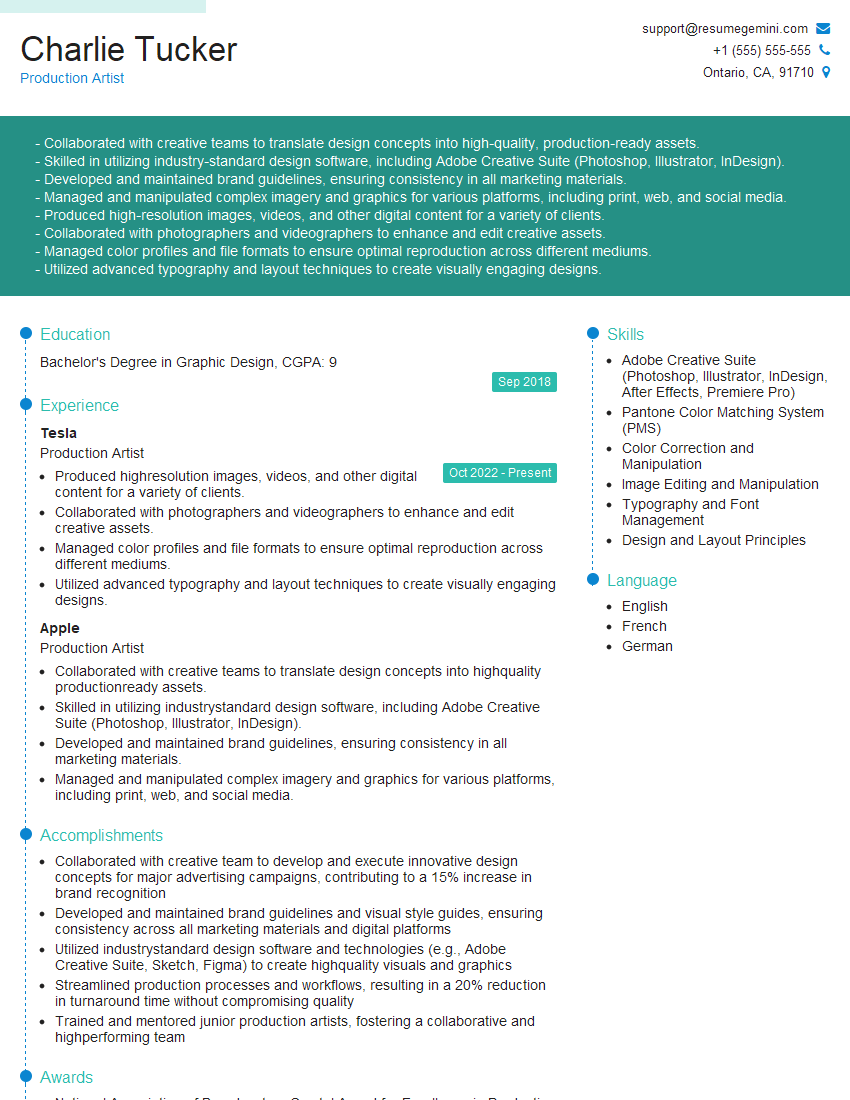
Production Artist Resume Sample
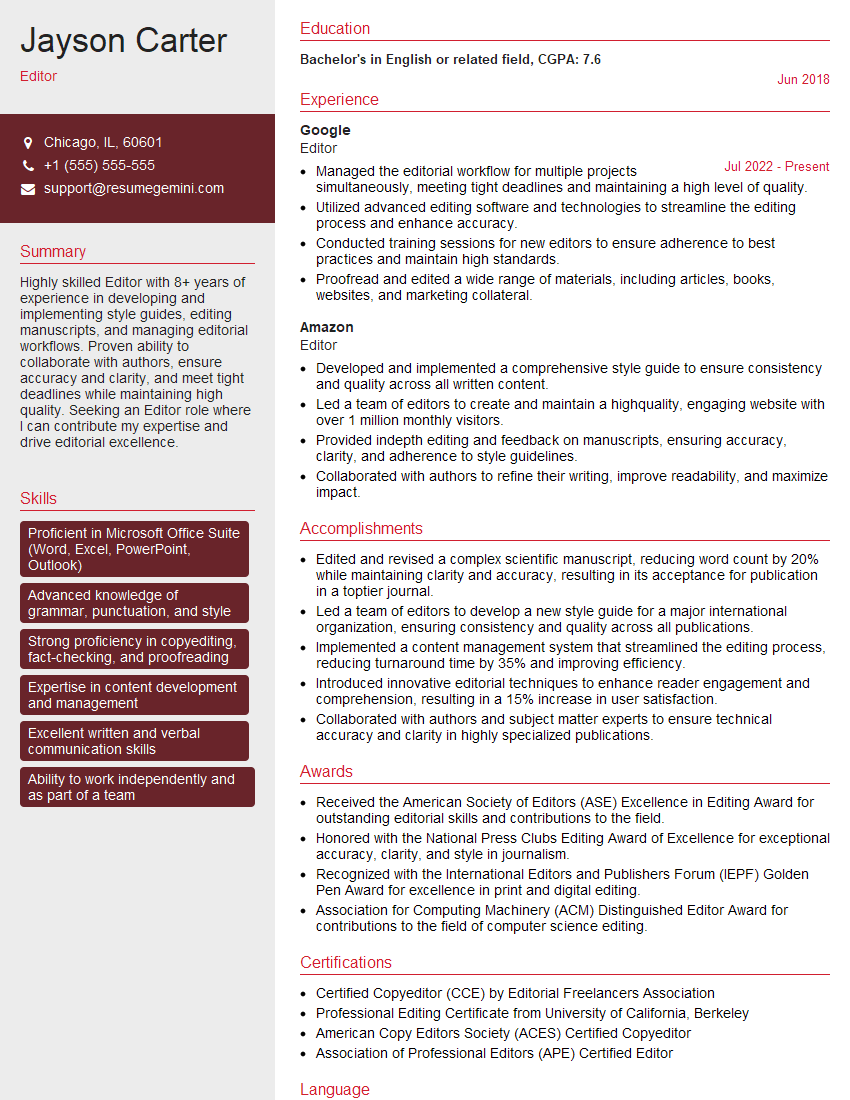
Editor Resume Sample
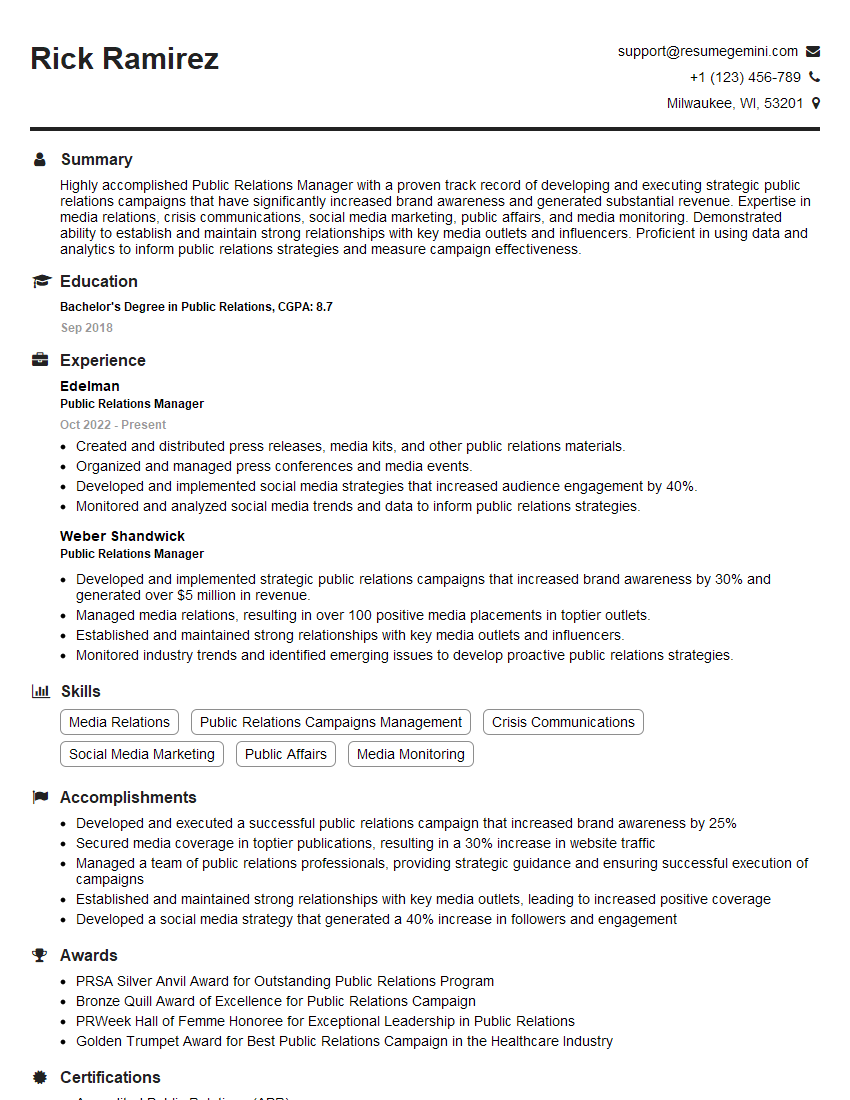
Public Relations Manager Resume Sample
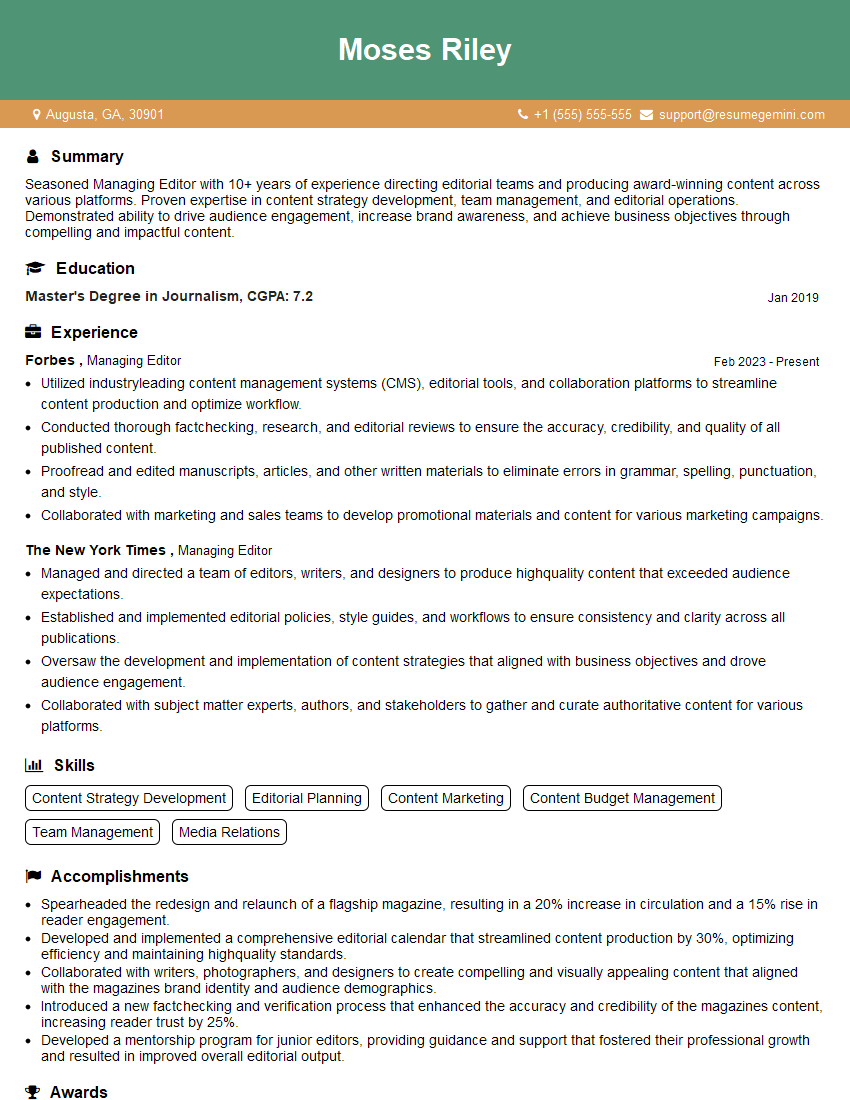
Managing Editor Resume Sample
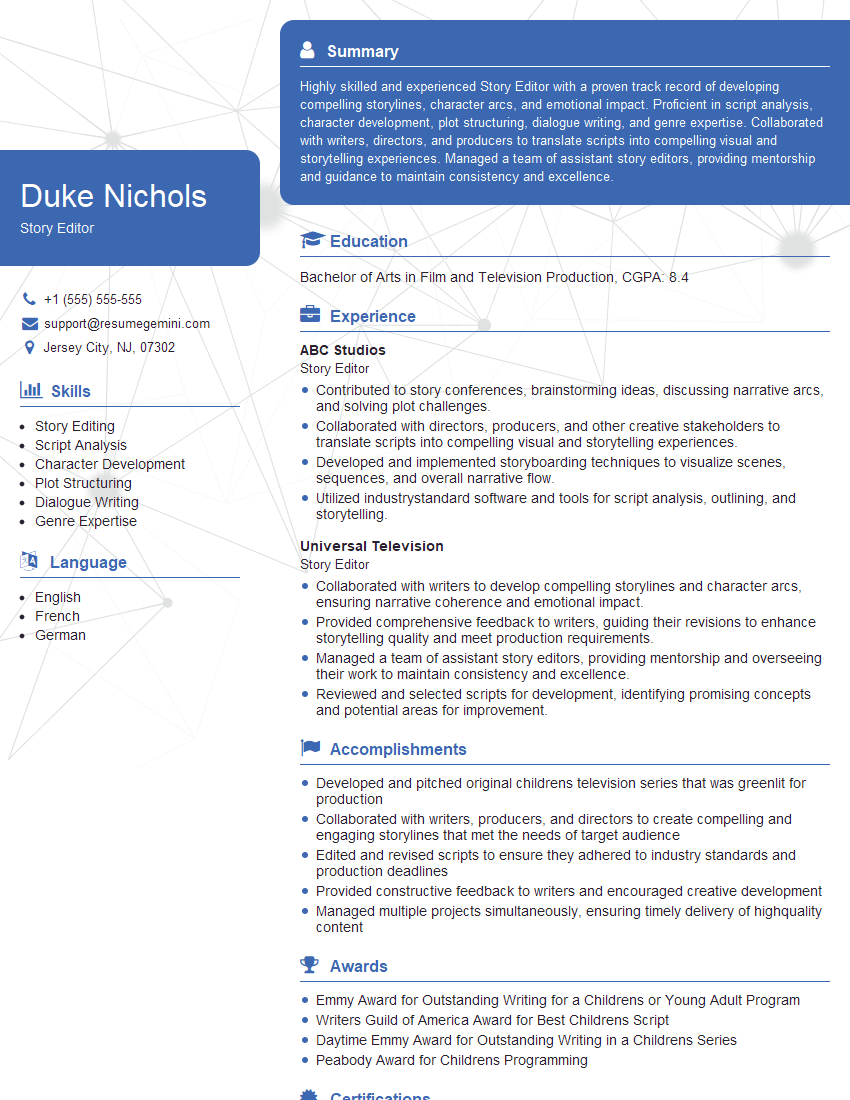
Story Editor Resume Sample
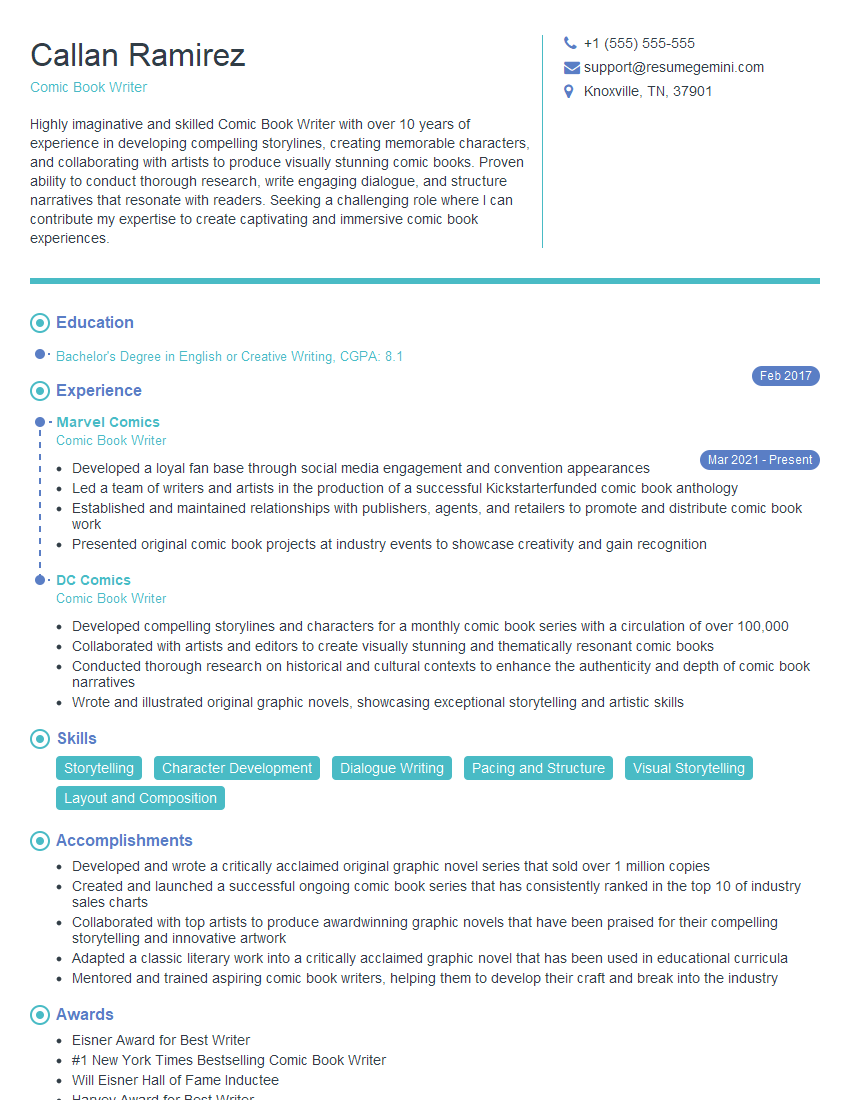
Comic Book Writer Resume Sample

Assistant Editor Resume Sample
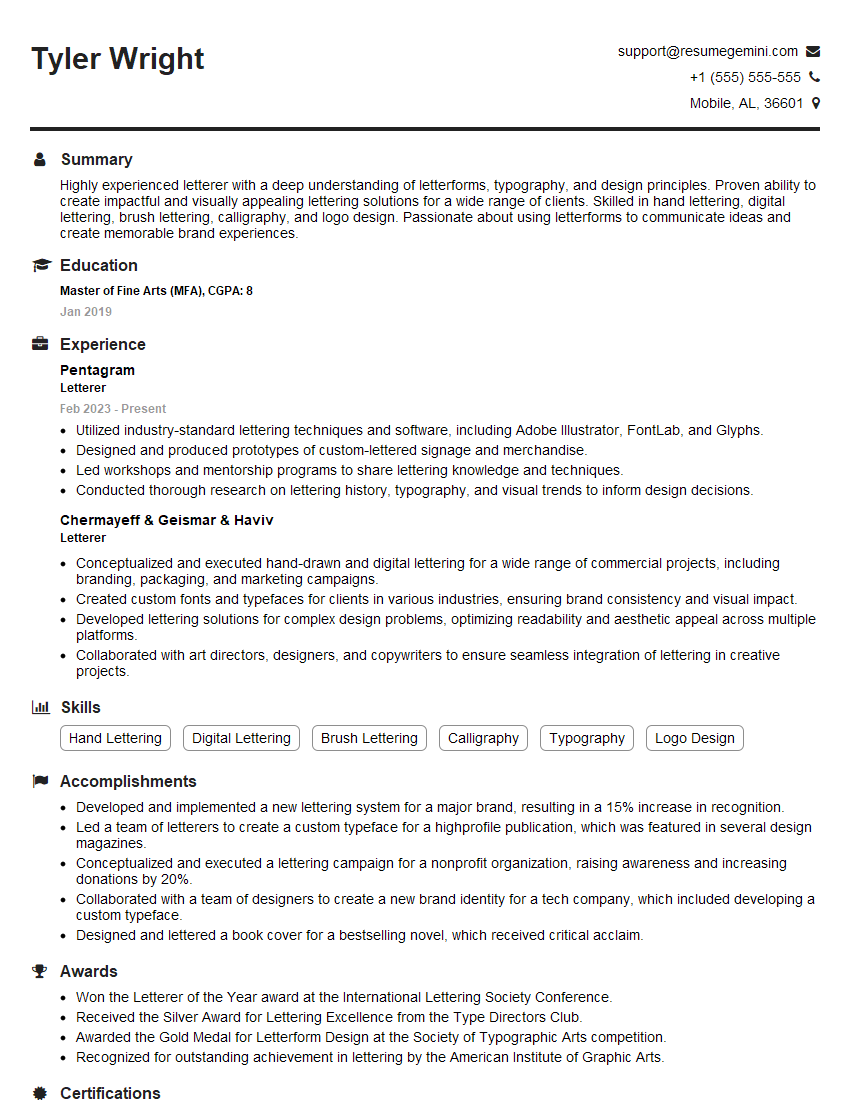
Letterer Resume Sample
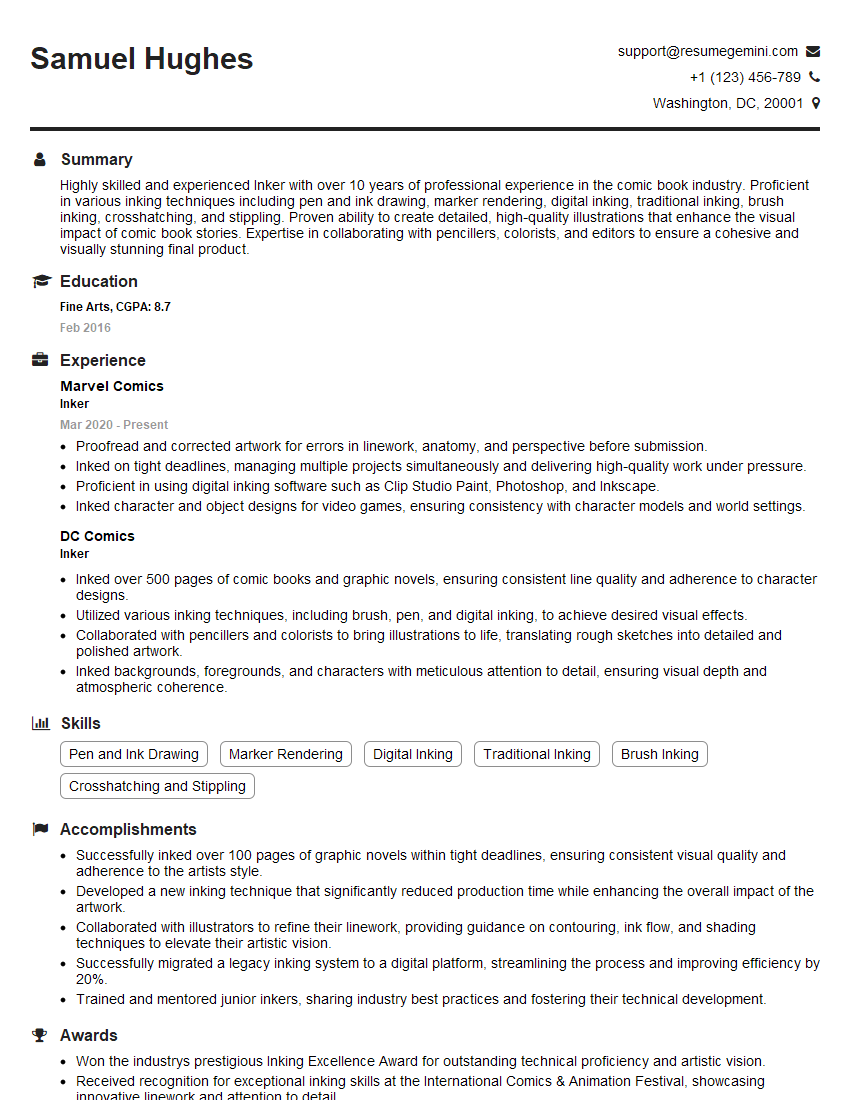
Inker Resume Sample
Explore more articles
Users Rating of Our Blogs
Share Your Experience
We value your feedback! Please rate our content and share your thoughts (optional).
What Readers Say About Our Blog
Really detailed insights and content, thank you for writing this detailed article.
IT gave me an insight and words to use and be able to think of examples