Feeling uncertain about what to expect in your upcoming interview? We’ve got you covered! This blog highlights the most important Tobacco Industry Regulations interview questions and provides actionable advice to help you stand out as the ideal candidate. Let’s pave the way for your success.
Questions Asked in Tobacco Industry Regulations Interview
Q 1. Explain the differences between FDA regulations and international tobacco regulations.
FDA regulations, primarily governed by the Family Smoking Prevention and Tobacco Control Act (FSPTCA), focus specifically on tobacco products within the United States. International tobacco regulations, on the other hand, vary widely across countries and are often coordinated through international organizations like the World Health Organization (WHO). The key difference lies in jurisdiction and enforcement. FDA regulations are legally binding within the US and enforced by the FDA, whereas international regulations are often framed as recommendations or guidelines, with individual nations setting their own specific laws and penalties.
For example, the FDA’s authority over e-cigarettes and their flavors is significantly more extensive than what you might find in many other countries. Some nations may have outright bans on certain flavors, while others may have minimal restrictions. Similarly, minimum age restrictions for tobacco sales vary significantly globally.
The FDA’s approach emphasizes a premarket review process (like the PMTA) to assess the risks of new products. Many international frameworks focus on public health messaging, taxation, and sales restrictions, with a less structured approach to product-specific approvals.
Q 2. Describe your experience with the PMTA (Premarket Tobacco Product Application) process.
My experience with the PMTA process has been extensive, involving both the submission and review of applications for several novel tobacco products. It’s a complex, multi-step process requiring significant scientific data and detailed manufacturing information. I’ve been involved in all stages, from initial product concept and data collection, through the preparation and submission of the application itself, to navigating the FDA’s review process and addressing any deficiency letters.
One particularly challenging aspect I’ve dealt with is the sheer volume of data required for a complete application. This includes toxicology reports, chemistry data, manufacturing specifications, and extensive clinical trials. This demands a collaborative approach involving scientists, regulatory affairs specialists, and legal counsel. Successfully navigating the PMTA process requires meticulous planning, careful data management, and proactive communication with the FDA.
Furthermore, I have experience in responding to FDA’s requests for additional information, often a lengthy process requiring further research and analysis. This highlights the importance of anticipating potential queries and having a robust and easily accessible data repository.
Q 3. What are the key components of a successful tobacco compliance program?
A successful tobacco compliance program is built on several key pillars. First and foremost is a thorough understanding of applicable regulations – both federal and state (in the US context) – and keeping abreast of any changes. This requires dedicated resources focused on regulatory monitoring.
- Comprehensive Policy and Procedures: Clearly defined policies and procedures detailing compliance requirements are essential. These must cover all aspects of the tobacco supply chain, from procurement to marketing.
- Employee Training: Regular training for all employees involved in handling tobacco products is critical. This ensures everyone understands the regulations and their responsibilities.
- Robust Record-Keeping: Maintaining accurate and complete records regarding all aspects of tobacco product handling, sales, and distribution is crucial for demonstrating compliance. This often involves meticulous documentation and efficient record-keeping systems.
- Internal Audits: Regular internal audits help identify potential compliance gaps and areas for improvement before they become major issues. These audits should assess compliance with both internal policies and external regulations.
- Third-Party Audits: External audits provide an independent assessment of compliance, offering an extra layer of assurance and potentially strengthening the credibility of the company’s compliance posture.
- Continuous Improvement: A successful compliance program is not static; it evolves alongside regulatory changes. Continuous improvement involves regular review and update of policies, procedures, and employee training.
A strong compliance culture fostered from the top down is essential to ensure these elements work together effectively.
Q 4. How familiar are you with the Family Smoking Prevention and Tobacco Control Act?
I am extremely familiar with the Family Smoking Prevention and Tobacco Control Act (FSPTCA). This landmark legislation, enacted in 2009, significantly expanded the FDA’s authority over tobacco products. My understanding encompasses its various provisions, including the FDA’s authority to regulate the manufacturing, distribution, marketing, and sale of tobacco products, including cigarettes, smokeless tobacco, and, more recently, e-cigarettes and other novel products.
I am well-versed in the specific provisions related to health warnings, marketing restrictions, and the introduction of premarket review processes like the PMTA. The FSPTCA’s impact on the tobacco industry has been profound, fundamentally changing the landscape of tobacco product regulation in the United States. This act forms the bedrock of my regulatory expertise.
Q 5. Explain the different categories of tobacco products under FDA regulation.
The FDA regulates a broad range of tobacco products, which can be broadly categorized as follows:
- Cigarettes: This includes traditional combustible cigarettes.
- Smokeless Tobacco: This encompasses various forms of chewing tobacco, snuff, and dip.
- E-cigarettes and Electronic Nicotine Delivery Systems (ENDS): This category encompasses a wide range of products, including vaping devices and e-liquids.
- Pipe Tobacco and Cigars: These are considered separate categories but fall under FDA regulation.
- Other Novel Tobacco Products: This is a catch-all category that covers newly emerging tobacco products that don’t neatly fit into the other established categories. The FDA constantly evaluates and classifies these emerging products.
The classification of a product influences the specific regulatory requirements it is subjected to, including labeling, marketing restrictions, and the requirement for PMTA submission.
Q 6. Discuss the health warnings and labeling requirements for tobacco products.
Health warnings and labeling requirements for tobacco products are essential components of tobacco control efforts. The FDA mandates specific health warnings on cigarette packaging and advertisements, emphasizing the health risks associated with smoking. These warnings are regularly updated to reflect current scientific understanding and public health concerns.
For example, graphic warning labels depicting the harmful effects of smoking are now commonly used in many jurisdictions. In addition to warnings, labeling requirements extend to the disclosure of ingredients, nicotine content, and other relevant information. The specific requirements vary depending on the type of tobacco product.
The aim is to provide consumers with clear and accessible information about the health risks associated with tobacco use to help inform their decisions and promote harm reduction. These requirements continue to evolve to reflect the latest scientific findings and public health strategies.
Q 7. How do you stay updated on changes and developments in tobacco regulations?
Staying updated in the dynamic field of tobacco regulations requires a multifaceted approach. I regularly monitor publications from the FDA, including their website and the Federal Register. I also subscribe to specialized regulatory newsletters and journals that provide in-depth analysis of current trends and emerging legislation.
I actively participate in professional organizations and attend industry conferences to network with other experts and stay abreast of the latest developments. Furthermore, engaging in continuous professional development, such as attending webinars and pursuing relevant certifications, plays a crucial role in maintaining my expertise. Utilizing advanced search strategies and legal databases to track relevant case law and regulatory decisions is also an integral part of my knowledge maintenance strategy.
Q 8. What is your understanding of the concept of ‘modified risk tobacco products (MRTPs)’?
Modified Risk Tobacco Products (MRTPs) are tobacco products that have undergone modifications to potentially reduce their harm compared to conventional cigarettes. This is a crucial concept within the evolving tobacco regulatory landscape. The key is that ‘reduced harm’ is relative and requires rigorous scientific evidence. Examples of MRTPs include heated tobacco products, e-cigarettes, and certain types of snus. However, it’s important to remember that even MRTPs can pose health risks, and their categorization as ‘modified risk’ is contingent on robust scientific data demonstrating a reduction in harm compared to traditional cigarettes, not an absence of risk.
The regulatory landscape surrounding MRTPs is complex and varies significantly across jurisdictions. Some countries have specific pathways for MRTP applications, demanding substantial data on product composition, emission profiles, and toxicological effects. Others remain more cautious and haven’t established such clear-cut regulatory pathways, opting for a more generalized approach based on existing tobacco control regulations. Determining whether a product qualifies as an MRTP requires careful consideration of the relevant regulatory definitions and the available scientific evidence supporting any claims of reduced risk.
Q 9. Describe your experience in conducting regulatory risk assessments for tobacco products.
My experience in regulatory risk assessments for tobacco products spans over [Number] years, encompassing a wide range of activities. This includes leading teams in conducting comprehensive reviews of product designs, testing protocols, and toxicological data. I’ve worked with various methodologies, including dose-response analysis, exposure assessment, and risk characterization. For example, in one project, we evaluated the potential risks of a novel heated tobacco product by analyzing its aerosol composition, particulate matter, and the levels of various toxins compared to conventional cigarettes. We then used this data to inform regulatory submissions and to contribute to risk management strategies.
A crucial aspect of these assessments is a deep understanding of both the scientific literature and regulatory frameworks. It often involves working closely with scientists, toxicologists, and regulatory authorities to ensure the assessments are both scientifically sound and comply with all legal requirements. We use statistical modelling and quantitative approaches to determine the level of risk associated with various tobacco products and different exposure scenarios.
Q 10. How would you handle a situation where a product fails to meet regulatory standards?
If a product fails to meet regulatory standards, the first step involves a thorough investigation to understand the root cause of the non-compliance. This might involve retesting, review of manufacturing processes, and an examination of the product’s design and composition. The focus would be on identifying areas for improvement and developing a corrective action plan. This would be documented meticulously.
Depending on the severity of the non-compliance, this could involve a range of responses: from issuing a warning letter to requesting a product recall, or even initiating legal action. Open communication with regulatory authorities is essential throughout this process. Transparency and collaboration are key to resolving such situations effectively. We’d work to develop a remediation plan with clear timelines and specific actions to address the deficiencies, and present this to the authorities for approval. The ultimate goal is to ensure compliance with all regulatory requirements and mitigate any potential health risks.
Q 11. What are the potential legal and regulatory implications of non-compliance?
Non-compliance with tobacco regulations can have serious legal and regulatory implications. These can include hefty fines, product seizures, manufacturing license suspension or revocation, and even criminal prosecution in some cases. The penalties vary greatly depending on the jurisdiction, the nature of the violation, and the extent of the non-compliance. For instance, a minor labeling error may result in a warning letter, while a significant violation, such as the unauthorized sale of a product containing banned substances, could lead to severe penalties.
Beyond the immediate financial and operational consequences, non-compliance can severely damage a company’s reputation and erode consumer trust. It can also lead to negative media attention, further exacerbating the reputational damage. In the increasingly stringent global tobacco regulatory environment, proactive compliance is not just a legal obligation but a critical business necessity.
Q 12. Explain your understanding of Good Manufacturing Practices (GMP) in the tobacco industry.
Good Manufacturing Practices (GMP) in the tobacco industry are a set of standards designed to ensure the consistent production of high-quality, safe, and compliant tobacco products. These standards encompass all aspects of the manufacturing process, from the sourcing of raw materials to the final packaging and distribution of the finished product. They cover areas like facility hygiene, equipment calibration, quality control procedures, personnel training, and documentation. Think of it as a strict recipe book that ensures the product is consistently made to the same high standard of quality and safety, every time.
Adherence to GMP is not just a matter of best practice; it is frequently a legal requirement imposed by various regulatory bodies worldwide. Regular audits and inspections by these authorities ensure manufacturers consistently meet the GMP standards. Non-compliance with GMP can lead to product recalls, regulatory sanctions, and significant reputational damage.
Q 13. How would you develop a strategy for navigating a complex regulatory landscape?
Navigating a complex regulatory landscape requires a multi-pronged approach. First, a thorough understanding of the specific regulations in each relevant jurisdiction is crucial. This might involve staying updated on changes to existing laws, interpreting new regulations, and proactively seeking clarifications from regulatory agencies. Next, it’s critical to build strong relationships with regulatory agencies – open communication and collaboration are key.
Secondly, a robust compliance program is essential. This includes developing and implementing standard operating procedures (SOPs) that align with all relevant regulations, conducting regular internal audits, and establishing processes for managing regulatory changes. Finally, engaging with expert legal and regulatory consultants can provide valuable support and guidance, especially when dealing with complex or ambiguous regulations. A proactive and flexible approach is essential to adapting to evolving regulatory requirements.
Q 14. Describe your experience with international regulatory submissions.
My experience with international regulatory submissions includes preparing and submitting dossiers for various tobacco products to regulatory authorities across multiple countries. This process involves compiling extensive data on product composition, manufacturing processes, toxicological assessments, and clinical studies, all in accordance with the specific requirements of each jurisdiction. For instance, preparing a submission for the European Union would involve a significantly different process compared to submitting to a regulatory agency in Southeast Asia due to differing regulatory frameworks and standards.
This often involves managing large and diverse teams, ensuring all data are accurate, complete, and presented in a format that complies with specific regulatory requirements. Success in this area demands an in-depth knowledge of international regulations, a deep understanding of scientific data, and a keen attention to detail to manage the complexity of submissions across vastly different regulatory environments.
Q 15. What are the key challenges in securing approval for new tobacco products?
Securing approval for new tobacco products is a complex and multifaceted process, fraught with challenges. The primary hurdle is navigating stringent regulatory requirements, which vary significantly across jurisdictions but generally focus on product composition, manufacturing processes, and health impact. For example, demonstrating a product’s reduced risk compared to existing combustible cigarettes requires robust scientific evidence, often involving extensive pre-clinical and clinical trials. This can be incredibly time-consuming and expensive.
Another key challenge is the intense scrutiny from public health organizations and advocacy groups. These stakeholders often actively oppose the introduction of new tobacco products, regardless of their purported risk reduction characteristics, citing concerns about the potential for increased tobacco use initiation and addiction. Successfully addressing these concerns requires transparent communication, robust scientific data, and a commitment to responsible product stewardship.
- Regulatory hurdles: Meeting diverse and evolving regulatory standards across different countries.
- Scientific evidence: Providing compelling data demonstrating reduced harm or risk.
- Public perception: Addressing public health concerns and negative perceptions surrounding new tobacco products.
- Cost and time: The high financial and temporal investment needed for research, testing, and approval.
Career Expert Tips:
- Ace those interviews! Prepare effectively by reviewing the Top 50 Most Common Interview Questions on ResumeGemini.
- Navigate your job search with confidence! Explore a wide range of Career Tips on ResumeGemini. Learn about common challenges and recommendations to overcome them.
- Craft the perfect resume! Master the Art of Resume Writing with ResumeGemini’s guide. Showcase your unique qualifications and achievements effectively.
- Don’t miss out on holiday savings! Build your dream resume with ResumeGemini’s ATS optimized templates.
Q 16. How familiar are you with the various testing methods used for tobacco product analysis?
My familiarity with tobacco product testing methods is extensive. I have hands-on experience with a wide array of analytical techniques, encompassing chemical analysis, toxicological assessment, and sensory evaluation. Chemical analysis, for instance, includes Gas Chromatography-Mass Spectrometry (GC-MS) to identify and quantify volatile organic compounds (VOCs) and High-Performance Liquid Chromatography (HPLC) to analyze non-volatile components like nicotine and its metabolites. Toxicological assessment involves in-vitro and in-vivo studies to evaluate the potential toxicity of various components. Sensory evaluation assesses the product’s sensory attributes, such as taste and aroma, which are critical for consumer preference and can influence usage patterns.
I understand the importance of adhering to standard operating procedures (SOPs) and Good Laboratory Practices (GLP) during testing. Deviation from these guidelines could compromise the validity and reliability of the results, potentially leading to regulatory setbacks. Furthermore, I’m proficient in interpreting and reporting the findings of these tests, ensuring they are clear, accurate, and meet regulatory reporting requirements.
Q 17. How would you address stakeholder concerns regarding tobacco regulations?
Addressing stakeholder concerns regarding tobacco regulations requires a multi-pronged approach rooted in transparency, open communication, and a commitment to evidence-based decision-making. It’s crucial to proactively engage with diverse stakeholders, including public health officials, consumer advocacy groups, and community representatives. This can involve participating in public forums, providing educational materials, and actively seeking input from various stakeholders during the regulatory process. A key element is demonstrating a deep understanding of their concerns, acknowledging valid points, and providing clear, concise, and scientifically accurate information to counter misinformation. Ultimately, building trust and fostering a collaborative environment is essential for effective regulatory implementation.
For example, in addressing concerns about youth access, collaborative initiatives with retailers and law enforcement can be implemented to improve compliance with age verification laws. Addressing concerns about environmental impact can involve initiatives aimed at reducing waste from manufacturing and distribution.
Q 18. What is your experience with regulatory inspections and audits?
I have extensive experience with regulatory inspections and audits, having been involved in numerous audits conducted by various regulatory bodies. This experience encompasses all stages, from preparation and documentation review to on-site inspections and follow-up corrective actions. My understanding extends beyond simple compliance; I recognize that inspections are also an opportunity to identify areas for improvement in our processes and systems. This proactive approach allows for continuous enhancement of compliance and risk mitigation.
Preparation is key. This includes maintaining meticulous records of all manufacturing and testing processes, ensuring all documentation is compliant with applicable regulations, and ensuring all staff are adequately trained in the standards and protocols.
I understand the importance of open communication and collaboration during audits. This involves working closely with inspectors, providing timely access to information, and proactively addressing any identified issues.
Q 19. Describe your experience in developing and implementing regulatory compliance training programs.
I have significant experience developing and implementing comprehensive regulatory compliance training programs. My approach involves a needs assessment to identify specific training requirements, followed by designing targeted training materials tailored to the specific roles and responsibilities of different employees. The materials use a variety of formats including interactive modules, presentations, case studies, and role-playing exercises to maximize engagement and knowledge retention. These training programs are regularly reviewed and updated to reflect changes in regulations or best practices. The effectiveness of the training is assessed through regular evaluations, ensuring continuous improvement and reinforcement of key compliance principles.
For example, for a new product launch, specific training on that product’s unique compliance requirements is delivered. Similarly, new regulations might necessitate additional training modules focusing on the changes and their impact on existing processes.
Q 20. How do you manage regulatory changes and updates affecting your company?
Managing regulatory changes and updates requires a robust system for monitoring and responding to changes. We utilize a combination of methods including subscribing to regulatory updates from relevant government agencies and industry associations, participating in industry conferences and workshops to stay abreast of emerging trends, and utilizing specialized regulatory intelligence databases. This information is systematically collated and analyzed to identify potential impacts on our operations. Any necessary adjustments to our processes, procedures, and documentation are then implemented promptly, ensuring continued compliance.
We maintain a dedicated team responsible for tracking and communicating regulatory updates, which ensures that changes are not missed and allows us to quickly assess and respond to them, minimizing disruption to our operations.
Q 21. What are your strategies for preventing tobacco-related violations?
Preventing tobacco-related violations necessitates a multi-layered approach encompassing robust internal controls, a culture of compliance, and proactive risk management. This includes implementing comprehensive standard operating procedures (SOPs), regularly auditing these procedures to ensure effectiveness and compliance, and investing in robust quality control systems to monitor product quality and prevent any deviations from specifications. Employee training plays a crucial role. All employees must receive thorough training on relevant regulations, internal policies, and ethical considerations. Furthermore, establishing clear reporting channels encourages employees to report potential compliance issues, allowing for timely corrective action.
Proactive monitoring of the regulatory landscape, coupled with risk assessments, allows for the identification and mitigation of potential risks before they escalate into violations. This proactive stance is crucial for ensuring long-term compliance and minimizing potential liabilities.
Q 22. How do you interpret and apply complex regulatory guidance documents?
Interpreting complex regulatory guidance documents in the tobacco industry requires a methodical approach. It’s not simply reading the text; it’s understanding the intent and implications. I begin by carefully reviewing the document’s structure, paying close attention to definitions, scope, and any accompanying explanatory materials. I then break down the complex sections into smaller, manageable components, using tools like mind-mapping or creating flowcharts to visualize the relationships between different regulations.
For instance, understanding the FDA’s regulations on Modified Risk Tobacco Products (MRTPs) requires deciphering their specific criteria for premarket review. This isn’t just about the text; it involves understanding the scientific evidence required and the potential pathways to approval. I cross-reference different sections to ensure consistent interpretation and identify any potential ambiguities or conflicts. Finally, I document my interpretation, including any assumptions made and areas needing clarification. This thorough process minimizes misinterpretations and ensures compliance.
Q 23. What is your experience with the reporting requirements related to tobacco product sales?
My experience encompasses all aspects of tobacco product sales reporting, from understanding the specific requirements of various jurisdictions to implementing and managing reporting systems. This includes familiarity with reporting frequencies, data elements (e.g., product type, quantity sold, sales location), and the use of standardized reporting formats. I’ve worked with both manual and automated reporting systems, ensuring data accuracy and timely submission to regulatory bodies.
For example, I’ve overseen the implementation of a new sales reporting system that integrated with our existing inventory management system, significantly reducing manual data entry and improving the accuracy of our reports. This system automatically generated reports in the required formats, streamlining the reporting process and minimizing the risk of errors. I’ve also handled audits and investigations related to sales reporting, collaborating with regulatory agencies to address any discrepancies or questions.
Q 24. How do you ensure compliance with advertising and marketing restrictions on tobacco products?
Ensuring compliance with advertising and marketing restrictions requires a multi-faceted approach. This starts with a thorough understanding of all applicable regulations, including those concerning advertising content, placement, and targeting. It involves regular reviews of marketing materials to ensure they adhere to these regulations. For example, I’ve worked on campaigns requiring pre-clearance with regulatory bodies, ensuring all claims are substantiated and compliant.
Beyond pre-clearance, we employ robust internal review processes, using checklists and compliance software to identify potential violations. We also provide ongoing training to our marketing teams on the evolving landscape of tobacco advertising regulations. Finally, we utilize tools to monitor competitor activity, ensuring we maintain compliance while remaining competitive. This proactive approach minimizes the risk of non-compliance and safeguards the company’s reputation.
Q 25. What are the ethical considerations in working with tobacco regulations?
Ethical considerations in working with tobacco regulations are paramount. Given the inherent health risks associated with tobacco products, ethical conduct requires a commitment to transparency, accuracy, and responsibility. This includes ensuring that all reporting and communications are accurate and complete, avoiding any misleading or deceptive practices.
For example, I believe in prioritizing public health. While adhering to all legal requirements, I strive to support initiatives that promote harm reduction and discourage tobacco use, especially amongst vulnerable populations. This ethical approach involves a commitment to continuous learning and staying abreast of the latest scientific evidence on tobacco-related health risks, which informs my decision-making and risk assessment processes.
Q 26. How would you address a potential conflict between regulatory requirements and business objectives?
Addressing conflicts between regulatory requirements and business objectives requires a collaborative and strategic approach. It’s about finding solutions that balance compliance with business goals. My strategy involves first clearly defining the conflict, identifying all stakeholders involved, and gathering all relevant information. Then, I explore potential solutions, evaluating the implications of each. This may involve seeking legal advice or engaging in discussions with regulatory agencies to find pathways to compliance without significantly hindering business operations.
For instance, I’ve worked on scenarios where a proposed marketing campaign was initially deemed non-compliant due to certain claims. By engaging with the regulatory agency and revising the campaign to address their concerns, we found a solution that maintained the campaign’s effectiveness while ensuring compliance. This often involves prioritizing transparency and open communication with regulatory agencies to foster positive working relationships.
Q 27. Describe your experience with dealing with regulatory agencies (e.g., FDA).
I’ve had extensive experience interacting with regulatory agencies, most notably the FDA. This involves submitting required reports, responding to inquiries, and participating in audits. I’ve developed strong relationships with agency personnel based on open communication, providing timely and accurate information. I understand the importance of proactively addressing any issues or concerns raised by the agency.
For example, during a recent audit, I successfully addressed discrepancies in our reporting by providing comprehensive documentation and clarification. This collaborative approach resulted in a positive outcome and reinforced a strong relationship with the agency. The key here is to anticipate potential issues, maintain thorough record-keeping, and foster a professional and respectful dialogue with regulatory authorities.
Q 28. What are your strengths and weaknesses in working within a regulatory environment?
My strengths lie in my analytical skills, my ability to synthesize complex information, and my proactive approach to compliance. I’m highly organized and detail-oriented, ensuring accurate reporting and adherence to regulations. I’m also adept at building relationships with regulatory agencies and navigating the complexities of the regulatory landscape.
My potential area for development is enhancing my understanding of emerging technologies and their impact on tobacco regulation. The industry is rapidly evolving, and staying ahead of these changes requires continuous learning and adapting to new tools and techniques for compliance. I am actively working to improve in this area through continuing education and professional development.
Key Topics to Learn for Tobacco Industry Regulations Interview
- International & National Regulatory Frameworks: Understanding the complexities of global and regional regulations, including the WHO Framework Convention on Tobacco Control (FCTC) and specific national legislation.
- Product Regulation & Labeling: Analyzing regulations surrounding product composition, manufacturing processes, packaging requirements, and health warning labels. Practical application involves assessing compliance with these regulations for various tobacco products.
- Advertising, Promotion & Sponsorship Restrictions: Examining the legal limitations on marketing and advertising tobacco products, including digital marketing and social media strategies. Problem-solving involves identifying potential loopholes and assessing the ethical implications of marketing practices.
- Taxation & Excise Duties: Exploring the role of tobacco taxation in public health and revenue generation. Practical application could involve analyzing the impact of different tax policies on consumption and illicit trade.
- Enforcement & Compliance: Understanding the mechanisms for monitoring compliance with tobacco regulations and the penalties for non-compliance. This includes analyzing enforcement strategies and their effectiveness.
- Emerging Regulatory Challenges: Staying informed on the evolving landscape of tobacco control, including issues related to e-cigarettes, heated tobacco products, and novel nicotine delivery systems. This requires critical thinking and the ability to analyze emerging scientific evidence and its implications for regulation.
- Public Health Impact Assessment: Understanding how to assess the impact of tobacco control policies on public health outcomes, including disease prevalence and mortality rates. This requires an understanding of epidemiological methods and data analysis.
Next Steps
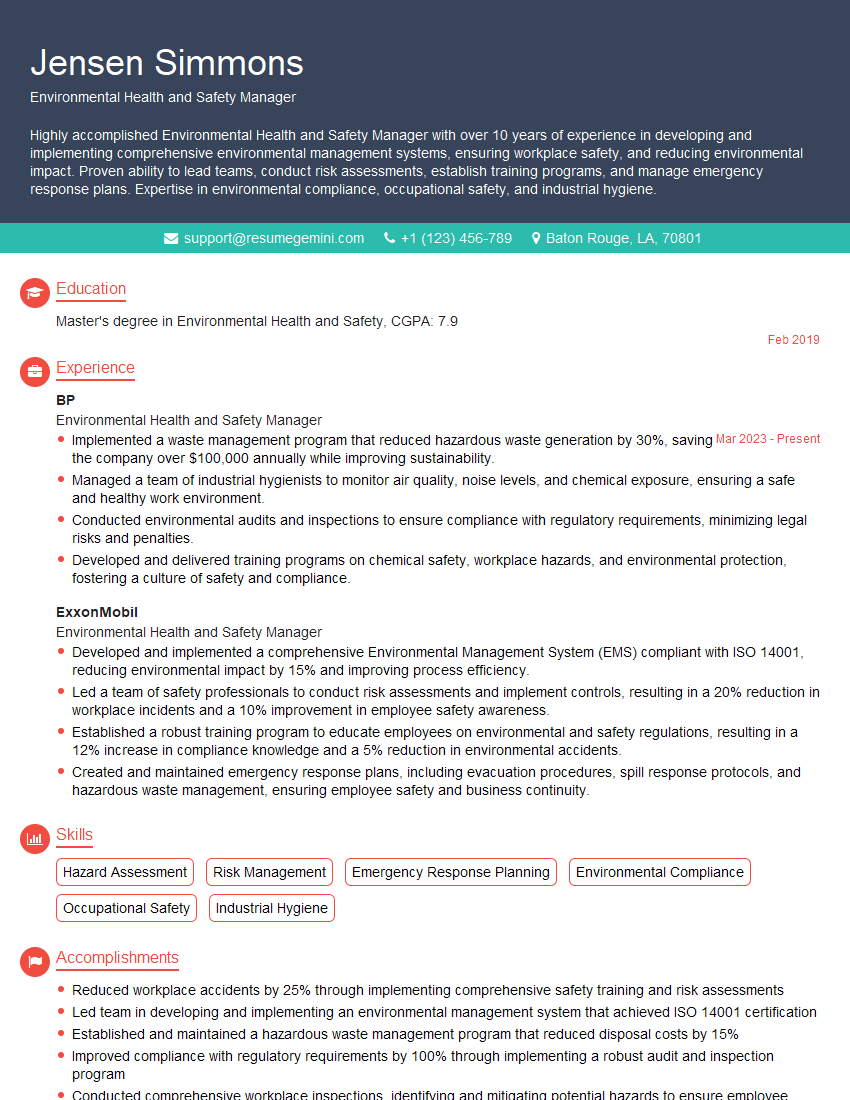
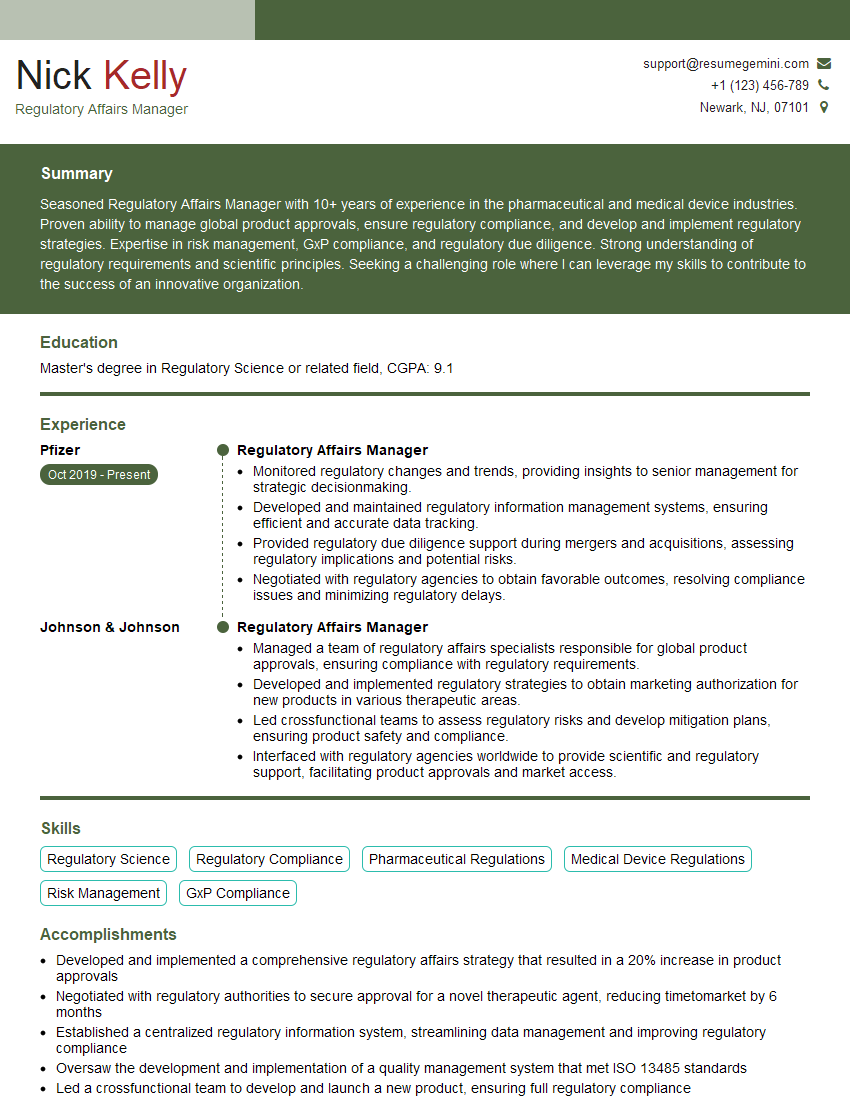
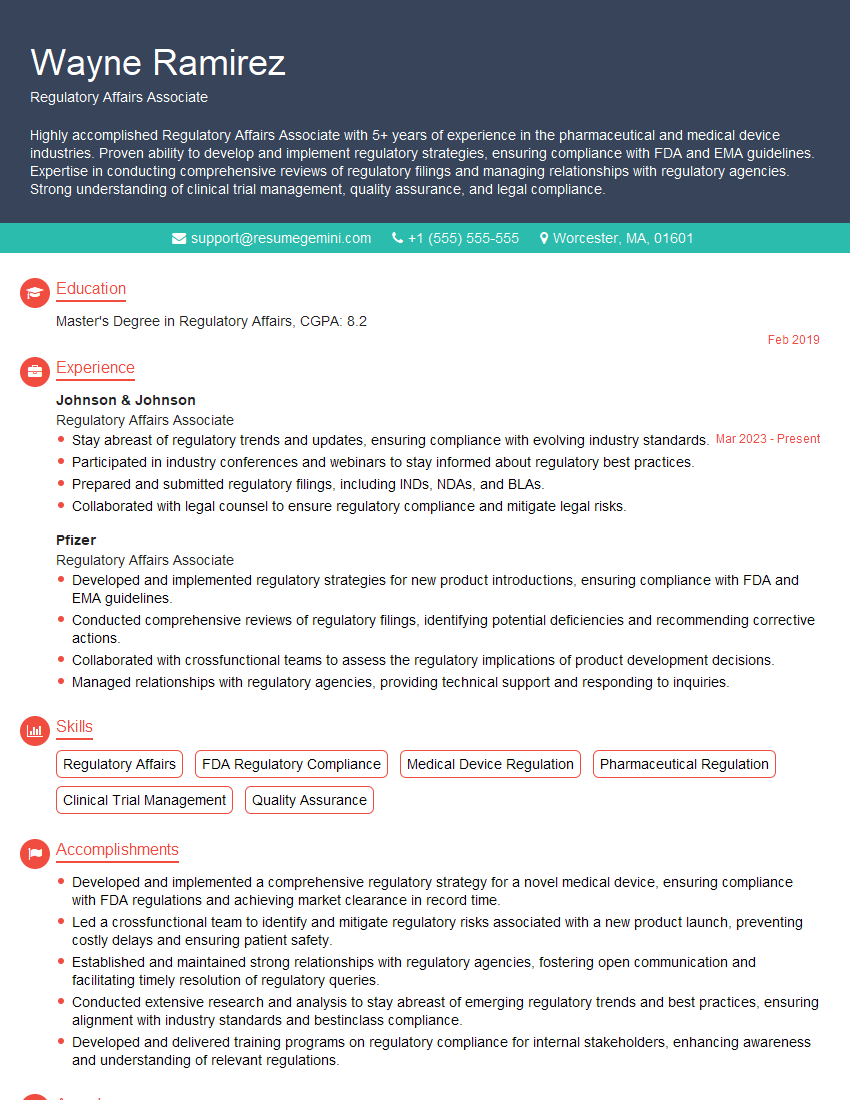
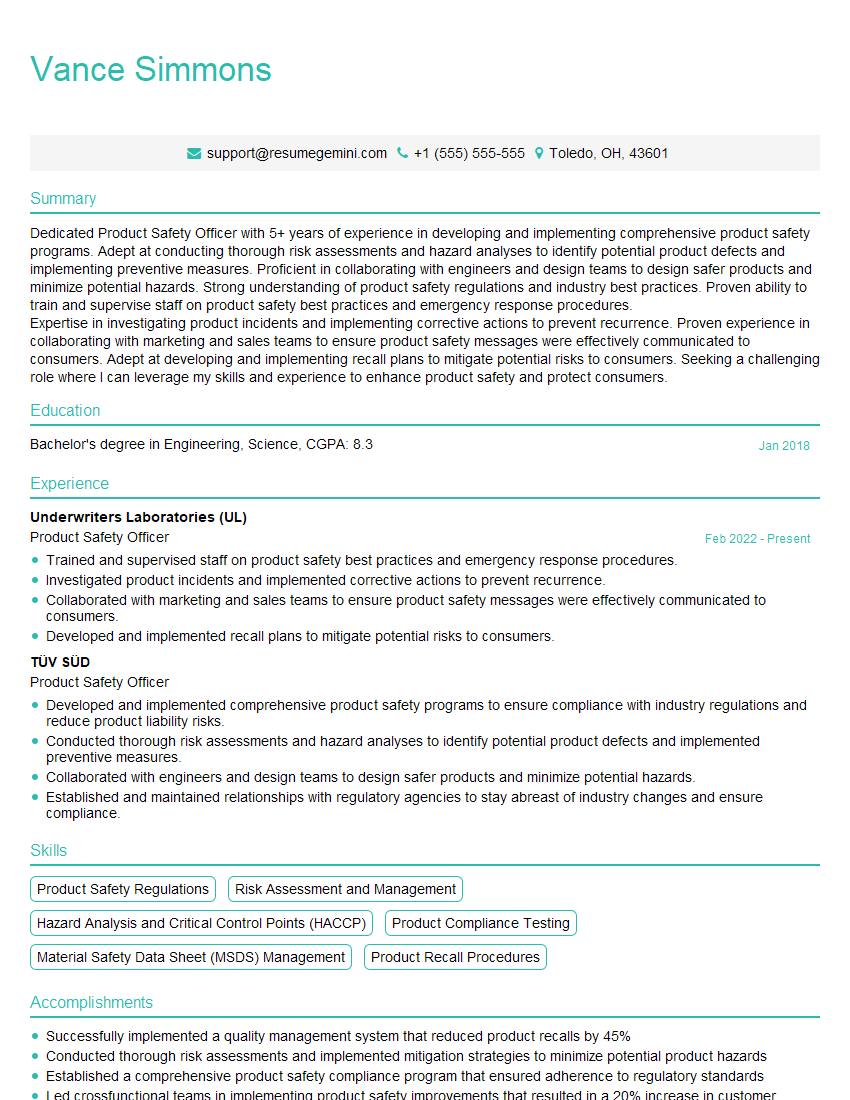
Mastering Tobacco Industry Regulations is crucial for career advancement in this dynamic field. A strong understanding of these regulations positions you as a valuable asset to any organization navigating the complex legal and ethical landscape. To maximize your job prospects, creating an ATS-friendly resume is essential. A well-structured resume highlights your skills and experience effectively, ensuring your application gets noticed. We recommend using ResumeGemini, a trusted resource, to build a professional and impactful resume. ResumeGemini provides examples of resumes tailored to the Tobacco Industry Regulations field, ensuring your resume stands out from the competition. Take the next step towards your dream career – build your winning resume with ResumeGemini today!


Explore more articles
Users Rating of Our Blogs
Share Your Experience
We value your feedback! Please rate our content and share your thoughts (optional).
What Readers Say About Our Blog
Really detailed insights and content, thank you for writing this detailed article.
IT gave me an insight and words to use and be able to think of examples