Every successful interview starts with knowing what to expect. In this blog, we’ll take you through the top surface plate interview questions, breaking them down with expert tips to help you deliver impactful answers. Step into your next interview fully prepared and ready to succeed.
Questions Asked in surface plate Interview
Q 1. What are the different grades of surface plates and their tolerances?
Surface plates are graded according to their flatness tolerance, essentially how much deviation from perfect flatness is acceptable. The tighter the tolerance, the higher the grade and the more precise the measurements you can achieve. Grades are typically defined by standards like ANSI B46.1 or ISO standards. While specific tolerances can vary slightly based on the standard and manufacturer, here’s a general idea:
- Grade AA: The highest grade, offering the most precise flatness. Used for highly accurate inspections and measurements requiring minimal deviation from a perfect plane. Tolerances are extremely tight, often measured in millionths of an inch or micrometers per unit length.
- Grade A: A high-precision grade suitable for most precision measurement applications where a very high degree of flatness is needed. Tolerances are stricter than Grade B.
- Grade B: A general-purpose grade offering good flatness for many common inspection and layout tasks. Tolerances are less stringent than Grade A.
- Grade C: Often considered a lower grade for less demanding applications. Tolerances are more relaxed compared to higher grades.
Think of it like this: Imagine trying to level a perfectly flat countertop. Grade AA is like having a countertop so perfectly flat that even a sheet of paper wouldn’t rock on it. Grade B might allow a tiny bit of wobble, while Grade C would have more noticeable inconsistencies.
Q 2. Explain the process of cleaning and maintaining a surface plate.
Cleaning and maintaining a surface plate is crucial for preserving its accuracy and extending its lifespan. It’s a meticulous process requiring attention to detail. Here’s a step-by-step guide:
- Initial Cleaning: Remove any large debris with a soft brush. Avoid harsh scrubbing which could scratch the surface.
- Washing: Clean the plate using a neutral pH cleaner and distilled or deionized water. Avoid using harsh chemicals or abrasive cleaners that could damage the surface. Use a soft sponge or cloth and gentle strokes.
- Rinsing: Thoroughly rinse the plate with clean, distilled or deionized water to remove any soap residue.
- Drying: Gently dry the plate with a lint-free cloth, working in a consistent direction to minimize streaking. Avoid rubbing vigorously.
- Inspection: After drying, carefully inspect the surface for any signs of damage or imperfections.
- Storage: Store the surface plate in a clean, dry, and stable environment, away from direct sunlight and temperature fluctuations to prevent warping.
- Regular Maintenance: Perform routine cleaning after each use to prevent dirt and debris buildup.
Remember, prevention is key. Covering the plate when not in use and using soft materials to protect the surface from scratches or dents prevents time-consuming repairs down the road.
Q 3. How do you identify and address surface plate damage or imperfections?
Identifying and addressing surface plate damage is vital for maintaining measurement accuracy. Damage can range from minor scratches to significant dents or gouges. Here’s how to approach this:
- Visual Inspection: Regularly inspect the surface for scratches, dents, pits, or other imperfections. Even small scratches can affect accuracy over time.
- Flatness Check: If you suspect damage, verify the flatness using an appropriate method (discussed in Question 4). This will confirm the extent of the impact.
- Minor Scratches: For minor surface scratches, careful polishing with a fine abrasive might suffice. However, this should be done with extreme caution and by someone with experience to avoid causing more damage.
- Significant Damage: For significant damage like dents or gouges, professional repair is often necessary. Improper repair attempts can worsen the situation and compromise the plate’s accuracy beyond repair.
Think of it like this: a minor scratch on a car’s paint is easily fixed, but a significant dent requires professional bodywork. The same applies to a surface plate.
Q 4. Describe the various methods for checking the flatness of a surface plate.
Several methods exist for checking the flatness of a surface plate. The choice depends on the required accuracy and available equipment:
- Autocollimation Method: Uses an autocollimator to measure angular deviations from a reference plane. It’s a precise method for detecting even small deviations in flatness. This method requires specialized equipment.
- Straight Edge and Gauge Blocks Method: A straight edge is placed across the plate, and gauge blocks are used under the straight edge to measure the gap between the straight edge and the plate at various points. This method is less precise than autocollimation, but more accessible.
- Leveling Method: A precision level is used to check the levelness of the plate across different points. While not directly measuring flatness, significant deviations indicate potential problems with flatness.
- Three-Point Leveling: The three-point method employs a spirit level to determine if the surface is truly level and flat. It provides a quick assessment.
- Optical Flat and Monochromatic Light Source: By placing an optical flat on the surface plate and illuminating it with monochromatic light, interference fringes will appear. The spacing and pattern of these fringes reveal the variations in the surface plate’s flatness.
The accuracy of these methods varies, with autocollimation being the most precise and the straight edge method being more accessible but less precise. The choice depends on the required precision and available resources.
Q 5. What are the common types of surface plate materials and their properties?
Surface plates are typically made from materials chosen for their dimensional stability, hardness, and resistance to wear and corrosion. Common materials include:
- Granite: A popular choice due to its excellent dimensional stability, hardness, and resistance to wear. Granite plates are relatively resistant to thermal expansion and contraction and offer good abrasion resistance. However, they can be relatively heavy.
- Cast Iron: A traditional material known for its good damping capacity (reducing vibrations) and ability to maintain flatness. However, cast iron can be susceptible to rust and thermal expansion.
- Steel: Offers high hardness and wear resistance but is more susceptible to thermal expansion than granite. Steel plates require careful maintenance to prevent rust and corrosion.
- Black Granite: Offers a higher level of dimensional stability than regular granite, is less porous, and is more resistant to staining. However, it tends to be more expensive.
The choice of material often depends on budget, required precision, and the operating environment.
Q 6. Explain the significance of surface plate leveling and its impact on measurements.
Leveling a surface plate is crucial for accurate measurements. A properly leveled plate ensures that any deviations in flatness are minimal and consistent across the entire surface. Failure to level the plate can lead to significant errors in measurements, especially when working with precision instruments.
Imagine trying to measure the height of an object on an uneven surface. The measurement will be inaccurate due to the slope. Similarly, an unlevel surface plate introduces inconsistencies, affecting the accuracy of the measurements taken on it. Leveling ensures a consistent reference plane for measurements, minimizing errors and maximizing precision.
Q 7. How do you select the appropriate surface plate for a specific measurement task?
Selecting the appropriate surface plate involves considering several factors:
- Size: The plate must be large enough to accommodate the workpieces and measuring instruments.
- Grade: The required accuracy of the measurement dictates the grade of the surface plate. High-precision work demands a higher grade (AA or A), while less demanding tasks can use a lower grade (B or C).
- Material: The choice of material depends on the operating environment, required dimensional stability, and budget. Granite is popular for its stability, while cast iron offers good damping.
- Application: The specific measurement task will influence the choice of surface plate. Some tasks might require specialized features or accessories.
For instance, a machinist working on highly precise parts would need a Grade AA granite surface plate, while a carpentry shop might use a Grade B cast iron plate. Always prioritize selecting a plate that exceeds the accuracy requirements of the task to ensure the reliability of the results.
Q 8. What are the limitations of using a surface plate for measurements?
Surface plates, while incredibly useful for precise measurements, do have limitations. Their accuracy is dependent on several factors, and neglecting these can lead to significant errors. One key limitation is their size. While large surface plates offer a large working area, they might not accommodate very large or unusually shaped parts. Another limitation stems from the material itself. Even high-grade granite plates can suffer from slight imperfections or warping over time due to temperature fluctuations or accidental impacts. This can lead to deviations from perfect planarity. Finally, the very act of measuring introduces potential errors. The pressure applied by the measuring instrument, the temperature of the instrument itself, and even the skill of the operator can affect readings. Think of it like trying to measure a perfectly flat pancake with a slightly warped ruler – the result won’t be completely accurate.
Q 9. Describe the different types of measuring instruments used with surface plates.
A wide array of measuring instruments complements the surface plate. The choice depends on the application and required accuracy. Common instruments include:
- Dial indicators: These are frequently used for measuring height differences, straightness, and flatness. They provide a quick and relatively easy-to-read measurement.
- Height gauges: These are precision instruments that combine a vertical measuring scale with a base to measure vertical distances accurately.
- Vernier calipers and micrometers: Used for highly precise linear measurements of workpiece dimensions.
- Level: Checking for leveling and ensuring the surface plate itself is properly aligned before any measurements are taken.
- Surface plate accessories: This includes things like magnetic bases for holding indicators, scribers for marking, and various types of clamps and fixtures to secure parts for measurement.
The key is to select instruments with the appropriate resolution and accuracy for the task at hand. For example, while a dial indicator with a 0.01mm resolution might suffice for many applications, a micrometer with a 0.001mm resolution would be needed for significantly more precise work.
Q 10. How do you ensure accurate measurements when using a surface plate?
Ensuring accurate measurements requires a methodical approach. First, ensure the surface plate itself is clean and free from debris. Even a small speck of dust can significantly affect precision. Then, check the plate’s level using a precision level and make any necessary adjustments (leveling screws are usually present on larger surface plates). Next, consider environmental factors – temperature and humidity changes can affect the plate’s dimensions. Ideal conditions should be maintained as much as possible. Finally, always use appropriately calibrated measuring instruments and employ proper measuring techniques. This includes avoiding excessive pressure on the workpiece and instrument, ensuring consistent measurement orientation, and repeating measurements to confirm consistency.
For example, when measuring a workpiece’s height, always use the same point on the workpiece as a reference and ensure the dial indicator’s contact point is always perpendicular to the surface. By establishing a consistent process, you minimize the influence of personal variations and improve accuracy.
Q 11. What are the safety precautions associated with handling surface plates?
Surface plates, especially larger granite plates, are heavy and can cause injuries if not handled properly. Always use appropriate lifting techniques; ask for help when needed to avoid back injuries. Protective gear such as safety glasses is advised to prevent eye injuries from flying debris. Protect the surface from damage by using soft materials underneath any workpieces to prevent scratches. Never drop or impact the surface plate; this could lead to damage and subsequent inaccuracies. Always store the plate in a clean, dry environment away from extreme temperatures to avoid warping.
Q 12. How do you interpret surface plate specifications and tolerances?
Surface plate specifications typically include details like dimensions, material (granite, cast iron, steel), grade (e.g., AA, A, B denoting increasing tolerance), and flatness tolerance. The flatness tolerance specifies the maximum allowable deviation from a perfect plane across the entire surface. For example, a surface plate with a flatness tolerance of 25 µm (micrometers) means that no point on the surface should deviate more than 25 µm from a perfect plane across the entire plate’s surface. This deviation is typically expressed in terms of a ‘straightness’ or ‘flatness’ value across the plate and may be shown on a certificate of conformance.
Understanding these specifications is critical for selecting the appropriate plate for a given application. A highly precise application, such as checking the flatness of a precision optical component, would demand a surface plate with a much tighter flatness tolerance than a general-purpose workshop plate.
Q 13. What are the common sources of error when using a surface plate?
Several factors contribute to errors in surface plate measurements. These include:
- Improper surface plate preparation: A dirty or unlevel plate introduces immediate errors.
- Instrument calibration errors: Using an uncalibrated or poorly calibrated measuring instrument leads to inaccurate readings.
- Environmental conditions: Temperature and humidity fluctuations can cause the plate to expand or contract, changing its flatness.
- Operator error: This includes incorrect measuring techniques, inconsistent pressure on the measuring instrument, and parallax errors when reading instruments.
- Workpiece defects: The workpiece itself might not be perfectly flat or clean, introducing errors in measurements.
- Thermal drift: Heat from the hands and instruments during measurement can impact readings.
Addressing these potential sources of error through careful preparation and proper technique is essential for accurate measurements.
Q 14. Explain the importance of environmental conditions on surface plate measurements.
Environmental conditions significantly impact surface plate measurements. Temperature changes cause the surface plate material to expand or contract, affecting its flatness and therefore the accuracy of measurements. Similarly, humidity can affect the material’s dimensions and can lead to corrosion or rust formation, which degrade its accuracy over time. For example, a granite surface plate might experience dimensional changes of several micrometers with even a few degrees Celsius change in temperature. This can be substantial for precision measurements.
Therefore, it’s crucial to maintain stable environmental conditions, such as temperature and humidity, during measurements to minimize errors. Ideally, measurements should be conducted in a temperature-controlled environment that is specifically designed for precision work. Proper temperature acclimatization before any measurements is also essential.
Q 15. How do you perform a surface plate calibration?
Surface plate calibration ensures accuracy and reliability for precision measurements. It involves verifying the flatness of the surface plate’s working area against established tolerances. This is typically done using a highly accurate level and precision measuring instruments like dial indicators or autocollimators. The process starts by cleaning the surface plate thoroughly and leveling it. Then, a series of measurements are taken across the surface, often in a grid pattern, comparing the actual height at various points to the theoretical plane. Deviations from flatness are recorded and compared to the plate’s specified tolerance (often expressed in microns or millionths of an inch). If deviations exceed the tolerance, the surface plate may require reconditioning or even replacement. This calibration is typically performed by a qualified metrologist and documented, often including a calibration certificate.
For example, a common method uses three points of contact, establishing a reference plane, from which deviations are measured. Sophisticated laser-based systems can automate this process and offer highly precise measurements. The frequency of calibration depends on usage, but it’s typically done annually or more frequently for high-precision applications.
Career Expert Tips:
- Ace those interviews! Prepare effectively by reviewing the Top 50 Most Common Interview Questions on ResumeGemini.
- Navigate your job search with confidence! Explore a wide range of Career Tips on ResumeGemini. Learn about common challenges and recommendations to overcome them.
- Craft the perfect resume! Master the Art of Resume Writing with ResumeGemini’s guide. Showcase your unique qualifications and achievements effectively.
- Don’t miss out on holiday savings! Build your dream resume with ResumeGemini’s ATS optimized templates.
Q 16. Describe the procedure for setting up and using a surface plate for inspection.
Setting up a surface plate for inspection is crucial for obtaining accurate results. First, choose a stable and level location, free from vibrations and temperature fluctuations. The plate should be placed on a sturdy support, appropriate for its size and weight. Thoroughly clean the surface plate to remove any dust, debris, or contaminants. This is best done with a soft cloth and isopropyl alcohol. Then, inspect for any damage such as chips or scratches. Once set up, ensure the work piece is properly aligned and secured. You’ll use appropriate measuring tools – dial indicators, height gauges, etc. – to take accurate readings. Remember to maintain a consistent approach and minimize any external influences during the inspection process. This methodical approach ensures the inspection is accurate and reliable.
For example, when inspecting a machined part for flatness, you’d place it on the surface plate and use a dial indicator to measure the variation in height across its surface. Using a surface plate ensures consistent measurements and reduces error introduced by uneven surfaces.
Q 17. What are the different types of surface plate supports?
Surface plate supports are essential to maintain the plate’s integrity and stability. The type of support depends on the plate’s size and weight. Common types include:
- Three-point supports: These provide stable support for larger plates by distributing weight evenly and minimizing warping. Think of it like a tripod—it offers excellent stability.
- Multiple-point supports: Used for extremely large plates, they utilize a grid of supports to further distribute the weight and prevent sagging. These are often adjustable to fine-tune leveling.
- Cast iron or steel stands: These purpose-built stands often incorporate leveling feet for adjusting the height and level of the plate.
- Cabinet supports: These are built-in supports within a cabinet designed to house the surface plate and protect it from damage and environmental factors.
The choice of support is crucial for maintaining the plate’s accuracy; an inadequate support can lead to errors in measurement due to warping or uneven settling.
Q 18. How do you handle and prevent contamination of the surface plate?
Contamination is the enemy of a surface plate’s accuracy. Preventing contamination requires careful handling and a dedicated cleaning routine. Always handle the plate carefully, avoiding jarring impacts or dragging heavy objects across its surface. Use only soft, lint-free cloths for cleaning. Isopropyl alcohol is typically used for cleaning, avoiding harsh chemicals or abrasive materials. It’s crucial to cover the surface plate when not in use to protect it from dust, debris, and moisture. Regularly inspect the surface for any signs of damage or contamination. Remember, prevention is key. A small scratch or chip can significantly impact the plate’s accuracy over time. It’s also wise to establish a designated workspace for the plate to minimize the chances of contamination.
For instance, in a machine shop, it’s best practice to have a specific area for using the surface plate and not allow any unnecessary movement of the plate itself.
Q 19. What are the common standards and specifications for surface plates?
Surface plates adhere to various standards and specifications, depending on their intended application and grade. These standards define tolerances for flatness, parallelism, and straightness. Common standards include those from organizations such as ANSI (American National Standards Institute), ASME (American Society of Mechanical Engineers), and ISO (International Organization for Standardization). These standards specify grades of accuracy, usually represented by letters or numbers, indicating the acceptable level of deviation from a perfectly flat plane. The grade chosen depends on the required level of precision for the application. A higher grade indicates tighter tolerances and greater accuracy. These standards also cover the materials used in the plate’s construction and their dimensional stability.
For example, an ANSI B46.1 standard might specify acceptable deviations for a given plate size and grade. This is critically important for ensuring traceability and confidence in measurements made using the plate.
Q 20. Explain the difference between a granite and cast iron surface plate.
Granite and cast iron are the two most common materials for surface plates, each with its strengths and weaknesses. Granite plates are known for their excellent dimensional stability, resistance to corrosion, and natural damping capabilities. They are less susceptible to temperature changes compared to cast iron, making them ideal for applications requiring high precision in varying environments. However, granite plates are more expensive and susceptible to chipping. Cast iron plates, while less expensive, offer good rigidity and wear resistance, but they are more susceptible to rust and temperature-related variations, requiring more frequent maintenance.
Think of it like this: Granite plates are the high-precision, low-maintenance option (more like a luxury car), while cast iron plates are a workhorse option requiring more care (more like a reliable truck).
Q 21. How do you determine the appropriate size of surface plate for a given application?
Determining the appropriate size of a surface plate hinges on the dimensions of the parts being inspected or the work being performed on the surface plate. You need sufficient space to accommodate the workpiece, allowing for comfortable handling and manipulation of measuring instruments. Consider the largest workpiece to be inspected or the overall layout of the inspection process. The plate should be large enough to avoid parts overhanging the edge, which can lead to inaccuracies. Choosing a surface plate that’s too small might necessitate awkward positioning and increase the risk of measurement errors. A slightly larger surface plate offers better flexibility, ensuring sufficient space for all workpieces and tools.
For example, if you’re inspecting large engine blocks, you would naturally need a considerably larger surface plate compared to the one used for inspecting small electronic components. Always consider the potential for future needs when making your selection – selecting a marginally oversized plate may save you the expense and hassle of replacing it later.
Q 22. Describe the process of verifying the accuracy of a surface plate.
Verifying a surface plate’s accuracy involves a meticulous process that ensures its flatness remains within acceptable tolerances. This is typically done using an autocollimator or a precision level, along with reference standards like gauge blocks or master squares. Think of it like checking a perfectly flat countertop – you’d want to make sure there aren’t any bumps or dips that would throw off your measurements.
The process generally involves several steps:
- Cleaning: Thoroughly clean the surface plate to remove any debris that might interfere with measurements.
- Leveling (Optional but recommended): For larger plates, ensure the plate is level using a spirit level or precision level. This minimizes the impact of gravity on readings.
- Establishing Reference Points: Select several points across the plate’s surface. These points should be strategically distributed, including the center, edges, and corners.
- Measurement: Use an autocollimator to measure the deviation from perfect flatness at each point. Autocollimators use reflected light to detect minute changes in angles, providing highly accurate readings. Alternatively, you can use a precision level and gauge blocks to measure deviations.
- Analysis: Compare the measured deviations against the specified tolerance for the surface plate. This tolerance is usually indicated on the plate’s certification document and dictates the acceptable range of variation in flatness.
- Documentation: Record all measurements and create a detailed report indicating whether the surface plate is within tolerance. This report is crucial for traceability and quality control.
If deviations exceed the tolerance, the plate requires correction or repair (discussed in the next question).
Q 23. How do you deal with a surface plate that is out of tolerance?
Dealing with a surface plate that’s out of tolerance requires careful consideration. The approach depends on the severity of the deviation and the type of damage. Small deviations might be corrected through lapping or scraping, while larger ones may necessitate more extensive repairs or even replacement.
Here’s a breakdown:
- Assessment: First, precisely determine the nature and extent of the deviation. Is it localized damage (a dent or scratch), or a widespread flatness issue? A detailed inspection report (as mentioned above) is critical here.
- Minor Corrections (Lapping/Scraping): For minor deviations, specialized lapping and scraping techniques can be employed to remove high spots and even out the surface. This requires skilled technicians and specialized equipment. Think of it like carefully sanding down a slightly uneven piece of wood to achieve perfect flatness.
- Major Repairs: Extensive damage or significant deviations may necessitate more substantial repairs, such as regrinding. This is usually performed by the manufacturer or specialized surface plate repair companies and is generally more costly.
- Replacement: If the damage is irreparable or the cost of repair is prohibitive, replacing the surface plate is the most practical solution.
In all cases, after any corrective action, the surface plate must be re-inspected and re-certified to ensure it meets the required accuracy standards before it can be used in precision measurements.
Q 24. What are some common applications of surface plates in manufacturing?
Surface plates are indispensable tools in various manufacturing processes, providing a stable, accurate reference surface for precise measurements and alignment. They are the foundation for a wide range of applications, from simple part inspection to complex assembly operations.
- Precision Measurement: Using measuring tools like dial indicators, height gauges, and CMMs (Coordinate Measuring Machines), surface plates allow accurate determination of dimensions and form of components. Think of it as the ultimate ‘perfectly flat’ canvas for making very accurate measurements.
- Part Inspection: Surface plates help in visually inspecting the flatness, parallelism, and squareness of components. Any deviations from the desired geometry are easily identified.
- Jig and Fixture Alignment: Surface plates ensure the accurate setup and alignment of jigs and fixtures, which are used for holding and guiding parts during manufacturing processes. Accurate alignment is crucial for creating precise parts.
- Machining and Assembly: Surface plates provide a reference for positioning and assembling machine components, ensuring accurate positioning and alignment of different parts in an assembly.
- Tooling and Gauge Calibration: Surface plates are often used to check and calibrate various measuring tools and gauges ensuring that the tools used for production are also accurate.
In short, surface plates are the cornerstone of accurate manufacturing, ensuring that parts are made to the correct specifications and that tooling is functioning correctly.
Q 25. Explain the concept of surface plate flatness and its measurement.
Surface plate flatness refers to how closely the surface conforms to a perfect plane. It’s the most crucial characteristic determining the accuracy of measurements performed on the plate. Even tiny deviations from flatness can significantly impact the precision of measurements.
Flatness is measured in terms of deviations from a perfect plane, typically expressed in microns (µm) or millionths of an inch. This measurement indicates the maximum height difference between any two points on the surface plate’s surface. Imagine trying to stack perfectly flat tiles; even a small imperfection in one tile will make stacking impossible.
Measurement Techniques:
- Autocollimators: These optical instruments measure minute angular deviations, allowing for precise determination of flatness across the plate’s surface. By measuring the angle at multiple points, the flatness can be mapped.
- Precision Levels: Combined with gauge blocks, precision levels can measure height differences at various points on the plate’s surface. This method is less precise than autocollimators for extremely flat plates but is more accessible.
- Three-Point Method: This method uses a straight edge and feeler gauges to determine the maximum deviation from a reference plane. It’s a simpler method often used for quick checks.
The obtained measurements are then compared against the specified tolerance for the surface plate. A detailed flatness map is often generated showing the deviations across the plate’s surface.
Q 26. How do you interpret a surface plate inspection report?
A surface plate inspection report provides a comprehensive assessment of the plate’s condition and its conformity to specified accuracy standards. Interpreting the report involves understanding the various parameters and their implications for the plate’s usability.
A typical report includes:
- Identification Information: Serial number, manufacturer, dimensions of the plate.
- Flatness Report: This section details the measurements of flatness across the surface plate and may include a flatness map. It will clearly state whether the plate is within the specified tolerance.
- Straightness Report: For larger plates, this indicates deviations from straightness along the edges of the plate.
- Squareness Report: This indicates how square the plate’s edges are to each other.
- Surface Finish Report: Details on the smoothness and quality of the surface finish.
- Inspection Date and Method: Details on when and how the inspection was conducted.
- Certification: A statement indicating whether the surface plate meets the specified standards and is suitable for use.
A crucial aspect of interpretation is comparing the reported measurements against the plate’s acceptance criteria or tolerance. If any values exceed the acceptable limits, the plate should not be used for precision work until the issue is rectified.
Q 27. What are the advantages and disadvantages of different surface plate materials?
Surface plates are typically made from various materials, each possessing unique advantages and disadvantages. The choice of material depends on the specific application requirements, primarily concerning accuracy, cost, and resistance to wear and tear.
- Granite: Known for exceptional dimensional stability, resistance to wear, and inherent flatness. Granite plates offer high accuracy and longevity but are more expensive than other materials. They are also relatively resistant to corrosion and thermal changes.
- Cast Iron: A traditional choice, cast iron plates are relatively inexpensive and offer good damping properties, reducing vibrations during measurement. However, they are prone to rust and are less resistant to wear and tear than granite. They can also be susceptible to thermal changes, affecting their accuracy.
- Steel: Steel plates offer superior hardness and resistance to wear compared to cast iron, making them suitable for harsh environments. However, they are more susceptible to thermal expansion and require more rigorous maintenance to prevent corrosion.
- Ceramics: These are newer materials that offer excellent flatness, hardness, and stability. They are lighter than granite but can be more expensive.
The selection process involves considering the required accuracy, budget constraints, and the environmental conditions under which the surface plate will be used. For instance, a high-precision laboratory might opt for granite, whereas a workshop might favor cast iron for its durability and affordability.
Q 28. How do you troubleshoot issues encountered during surface plate usage?
Troubleshooting surface plate issues often involves systematically checking several key areas. The approach depends on the type of problem encountered.
- Accuracy Issues: If measurements taken on the surface plate seem inaccurate, the first step is to verify the plate’s accuracy using the methods discussed earlier (autocollimator or precision level). Check the inspection report to ensure the plate is still within tolerance. If not, the plate may need repair or replacement.
- Surface Damage: Scratches, dents, or other surface damage can affect accuracy. Inspect the surface carefully, and if damage is present, the plate may require repair or replacement, depending on the extent of damage.
- Cleaning Issues: A dirty surface plate can lead to inaccurate measurements. Clean the plate thoroughly using appropriate cleaning agents and techniques. Any debris can introduce significant errors.
- Environmental Factors: Temperature and humidity fluctuations can impact the plate’s dimensions. Maintain a stable environment to minimize these effects. Extreme temperature changes can cause warping.
- Vibrations: Excessive vibrations can affect the precision of measurements. Ensure the surface plate is placed on a stable, vibration-dampened base.
Remember that proper maintenance, including regular cleaning and inspections, is key to preventing issues and ensuring the long-term performance and accuracy of the surface plate. If a problem persists despite these troubleshooting steps, it is advisable to consult with a metrology expert.
Key Topics to Learn for Surface Plate Interview
- Surface Plate Material Properties: Understanding the materials used in surface plate construction (e.g., granite, cast iron, steel), their advantages, disadvantages, and suitability for different applications.
- Surface Plate Calibration and Accuracy: Grasping the concepts of flatness, parallelism, and straightness; familiarity with calibration methods and the interpretation of calibration certificates.
- Surface Plate Inspection Techniques: Knowing various methods for inspecting surface plates for defects, including visual inspection, use of straight edges, levels, and dial indicators.
- Practical Applications and Use Cases: Understanding how surface plates are used in various manufacturing and inspection processes, such as machining, assembly, and quality control. Consider examples in different industries.
- Cleaning and Maintenance: Proper techniques for cleaning and maintaining surface plates to ensure accuracy and longevity. Understanding the impact of environmental factors.
- Troubleshooting and Problem Solving: Developing the ability to identify and address common issues related to surface plate usage and maintenance, such as scratches, damage, and inaccurate readings.
- Standards and Specifications: Familiarity with relevant industry standards and specifications related to surface plate accuracy and performance.
- Advanced Concepts (if applicable): Depending on the seniority of the role, research advanced topics such as interferometry, autocollimation, or other precision measurement techniques related to surface plate applications.
Next Steps
Mastering surface plate knowledge opens doors to exciting opportunities in precision engineering and quality control. A strong understanding of surface plates demonstrates meticulous attention to detail and a commitment to accuracy—highly valued skills in many industries. To maximize your job prospects, crafting an ATS-friendly resume is crucial. ResumeGemini is a trusted resource that can help you build a professional and effective resume tailored to highlight your skills and experience in surface plate applications. Examples of resumes tailored specifically to surface plate roles are available within ResumeGemini to guide you. Invest the time to build a compelling resume; it’s your first impression with potential employers.

Quality Control Manager Resume Sample

Production Supervisor Resume Sample

Test Engineer Resume Sample

Manufacturing Engineer Resume Sample

Quality Assurance Engineer Resume Sample

Calibration Technician Resume Sample

Machinist Resume Sample

Metrology Technician Resume Sample

Inspection Supervisor Resume Sample

Manufacturing Supervisor Resume Sample

Precision Machinist Resume Sample
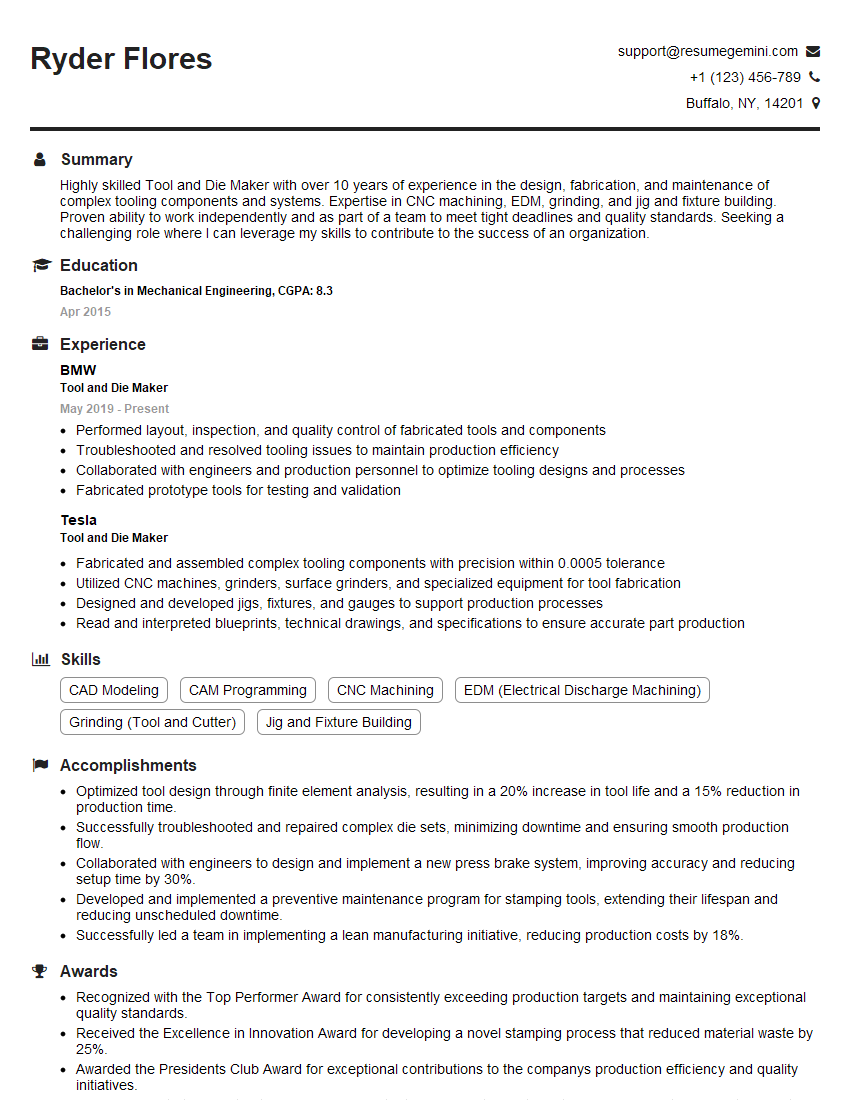
Tool and Die Maker Resume Sample

Dimensional Inspector Resume Sample

Quality Control Inspector Resume Sample
Explore more articles
Users Rating of Our Blogs
Share Your Experience
We value your feedback! Please rate our content and share your thoughts (optional).
What Readers Say About Our Blog
Really detailed insights and content, thank you for writing this detailed article.
IT gave me an insight and words to use and be able to think of examples