Feeling uncertain about what to expect in your upcoming interview? We’ve got you covered! This blog highlights the most important Survey Design and Development interview questions and provides actionable advice to help you stand out as the ideal candidate. Let’s pave the way for your success.
Questions Asked in Survey Design and Development Interview
Q 1. Explain the difference between probability and non-probability sampling.
The core difference between probability and non-probability sampling lies in the method of selecting participants and the ability to generalize findings to a larger population.
Probability sampling ensures every member of the population has a known, non-zero chance of being selected. This allows for statistically sound generalizations about the population. Common probability sampling methods include:
- Simple Random Sampling: Each member has an equal chance of selection (e.g., drawing names from a hat).
- Stratified Sampling: The population is divided into subgroups (strata), and random samples are drawn from each stratum (e.g., surveying equal numbers of men and women).
- Cluster Sampling: The population is divided into clusters (e.g., geographic areas), and some clusters are randomly selected for sampling (e.g., surveying schools in randomly selected districts).
Non-probability sampling, on the other hand, doesn’t give every member a known chance of selection. Generalizability is limited, making it more suitable for exploratory research or qualitative studies. Examples include:
- Convenience Sampling: Selecting participants based on ease of access (e.g., surveying students in a single classroom).
- Snowball Sampling: Participants refer other participants (e.g., surveying members of a rare disease support group).
- Quota Sampling: Selecting participants until pre-defined quotas are met (e.g., ensuring a specific number of respondents from different age groups).
Imagine you’re researching customer satisfaction with a new product. Probability sampling (e.g., randomly selecting customers from a customer database) would allow you to generalize your findings to the entire customer base. Non-probability sampling (e.g., surveying only customers who visit a specific store) would provide insights but might not be representative of all customers.
Q 2. What are some common biases in survey design and how can they be mitigated?
Several biases can creep into survey design, potentially skewing results. Addressing these biases is crucial for obtaining reliable data.
- Question Bias: Leading questions, double-barreled questions (asking two things at once), and loaded questions (containing emotionally charged words) can influence responses. For example, asking ‘Don’t you agree that our product is superior?’ is leading. A better approach would be ‘What are your thoughts on our product?’
- Response Bias: This encompasses various biases related to how respondents answer. Social desirability bias leads people to answer in ways they perceive as socially acceptable, even if untrue. Acquiescence bias is the tendency to agree with statements regardless of content. Recall bias involves difficulty accurately remembering past events. Mitigation involves using neutral wording, assuring anonymity, and employing techniques like randomized response to encourage truthful answers.
- Sampling Bias: This occurs when the sample doesn’t accurately represent the population. Using only readily available participants (convenience sampling) can lead to skewed results. Careful consideration of sampling methods and ensuring a representative sample are crucial mitigations.
- Non-response Bias: This happens when certain groups are less likely to respond than others. For instance, individuals with negative experiences might be more likely to respond than satisfied individuals. Using incentives, multiple contact attempts, and careful sample design can help mitigate this.
To minimize these biases, use rigorous testing, pilot studies, and clear, unbiased question wording. Always critically evaluate the methodology and potential limitations.
Q 3. Describe different question types (e.g., Likert scale, multiple choice, open-ended) and their suitability.
Different question types serve various purposes. Choosing the right type depends on the research objective and the type of information you need.
- Likert Scale: Measures attitudes or opinions using a scale with clearly defined anchors (e.g., Strongly Agree to Strongly Disagree). Example: ‘How satisfied are you with our service? (Strongly Disagree, Disagree, Neutral, Agree, Strongly Agree)’. Suitable for measuring attitudes, perceptions, and satisfaction.
- Multiple Choice: Offers pre-defined response options. Example: ‘What is your preferred mode of transportation? (Car, Bus, Train, Bicycle)’. Suitable for factual information or when a limited set of responses is expected.
- Open-Ended Questions: Allows for free-form text responses. Example: ‘What are your suggestions for improving our service?’. Suitable for exploring opinions in detail, gathering qualitative data, and understanding respondent perspectives. They require more time for analysis, however.
- Dichotomous Questions: Offer only two response options (e.g., Yes/No, True/False). Example: ‘Have you ever purchased our product before? (Yes/No)’. Efficient for quick data collection but may lack nuance.
- Rank-Order Questions: Ask respondents to rank items in order of preference or importance. Example: ‘Rank the following features in order of importance: (Price, Quality, Speed)’. Useful for understanding relative preferences.
Consider the trade-offs. Likert scales offer quantifiable data, while open-ended questions provide rich qualitative insights. A balanced approach, combining different question types, often yields the most comprehensive results.
Q 4. How do you ensure the validity and reliability of a survey instrument?
Ensuring validity and reliability is paramount in survey design. Validity refers to whether the survey measures what it intends to measure, while reliability refers to the consistency of the measurements.
Validity can be assessed through various methods:
- Content Validity: Ensuring the questions comprehensively cover all aspects of the construct being measured. Expert review and pilot testing are essential.
- Criterion Validity: Comparing survey results with an external criterion (e.g., correlating survey scores with actual performance).
- Construct Validity: Determining if the survey measures the underlying theoretical construct it’s designed to measure. This often involves factor analysis.
Reliability can be established through:
- Test-Retest Reliability: Administering the survey twice to the same group and comparing the results. High correlation indicates good reliability.
- Internal Consistency Reliability: Assessing the consistency of responses within the survey using measures like Cronbach’s alpha. High alpha values (generally above 0.7) suggest good internal consistency.
- Inter-Rater Reliability: When multiple raters score responses, this assesses agreement between them. This is particularly relevant for open-ended questions.
By employing these techniques and meticulously evaluating the results, researchers can establish confidence in the survey’s ability to yield meaningful and consistent data.
Q 5. What is the importance of pre-testing a survey?
Pre-testing a survey is crucial for identifying and addressing potential problems before the main data collection begins. It’s akin to a dress rehearsal for a play—it helps catch issues before the main performance.
Pre-testing involves administering the survey to a small, representative sample of the target population. This allows you to:
- Identify ambiguous or confusing questions: Respondents might highlight questions that are unclear or difficult to understand.
- Assess the length and flow of the survey: Pre-testing reveals whether the survey is too long or if the order of questions needs adjustments.
- Detect any formatting or technical issues: It helps identify problems with the online survey platform or printed materials.
- Gauge the time it takes to complete the survey: This helps set realistic timeframes for the main study.
- Evaluate the clarity and effectiveness of response options: Pre-testing helps refine response options for multiple-choice questions.
The feedback from pre-testing informs necessary revisions, ensuring a smoother and more effective data collection process.
Q 6. How do you handle missing data in survey responses?
Missing data is a common challenge in survey research. The best approach depends on the extent and pattern of missing data. Ignoring it could bias your analysis, so strategic handling is crucial.
Several techniques exist:
- Listwise Deletion: Removing any respondent with any missing data. Simple but can significantly reduce your sample size, especially with many questions.
- Pairwise Deletion: Using all available data for each analysis. Works better than listwise deletion but can lead to inconsistencies across analyses if missing data patterns differ across variables.
- Imputation: Replacing missing values with estimated values. Methods include mean/median imputation (replacing with the average), regression imputation (predicting values based on other variables), and multiple imputation (creating multiple plausible datasets to account for uncertainty in imputed values). Multiple imputation is generally preferred for its greater accuracy.
The choice depends on the amount of missing data, its pattern (random or non-random), and the analysis you’re performing. Always document your missing data handling strategy and justify your choice. In some cases, the missing data pattern itself might offer valuable insights.
Q 7. What are some best practices for writing clear and concise survey questions?
Clear and concise survey questions are vital for obtaining accurate and reliable data. They reduce respondent burden and minimize ambiguity.
Here are some best practices:
- Use simple language: Avoid jargon, technical terms, and complex sentence structures. Use words that your target audience understands.
- Keep questions short and focused: Avoid double-barreled questions that ask two things at once. Each question should address a single concept.
- Avoid leading or biased questions: Phrasing questions neutrally ensures respondents aren’t influenced towards a particular answer.
- Use clear and concise response options: Make sure the response options are mutually exclusive and exhaustive (covering all possibilities).
- Provide clear instructions: Explain how to answer each question, especially for more complex question types.
- Pretest your questions: Conduct a pilot test to identify any ambiguities or problems with question wording.
- Consider question order: Start with engaging questions and group similar questions together to maintain flow.
Think of it like writing a good story—clear, concise, and engaging questions keep respondents interested and provide high-quality responses.
Q 8. Explain different methods of data analysis for survey data (e.g., descriptive statistics, regression).
Analyzing survey data involves a range of techniques, from simple summaries to complex statistical models. The choice depends on the research question and the type of data collected.
- Descriptive Statistics: These provide a summary of the data’s main features. Think of them as painting a picture of your respondents. For example, calculating the mean (average) age of respondents, the mode (most frequent response) to a question about preferred brands, or the median (middle value) income. These give a clear overview of the data distribution. We might also use frequencies and percentages to understand how many people chose each option in a multiple-choice question.
- Inferential Statistics: These methods go beyond simple summaries to make inferences about a larger population based on your sample. For instance, we might use a t-test to compare the average satisfaction scores between two groups (e.g., users of product A versus product B). A Chi-square test is useful for examining relationships between categorical variables (e.g., is there a relationship between gender and purchase intent?).
- Regression Analysis: This is a powerful technique for examining relationships between variables. For example, we might use linear regression to predict customer satisfaction based on factors like product quality and customer service ratings. This allows us to understand which factors are most influential. More complex regression models (e.g., logistic regression) can also be used to predict categorical outcomes (e.g., whether a customer will churn or not).
Choosing the right method is crucial for accurate interpretation. For example, using a t-test on non-normally distributed data would lead to inaccurate results. Understanding the assumptions of each test is therefore critical.
Q 9. Describe your experience with survey software (e.g., Qualtrics, SurveyMonkey).
I have extensive experience using several leading survey platforms, including Qualtrics and SurveyMonkey. My proficiency spans the entire survey lifecycle, from design and deployment to data analysis and reporting.
With Qualtrics, I’ve leveraged its advanced features for creating complex branching logic, A/B testing different survey versions, and implementing sophisticated data collection methods like embedded surveys within websites or apps. I’m particularly adept at using its robust analytics tools for in-depth data exploration and reporting, including creating custom dashboards and visualizations.
My experience with SurveyMonkey includes creating and distributing large-scale surveys, managing respondent feedback efficiently, and generating user-friendly reports. While simpler than Qualtrics in some aspects, SurveyMonkey’s ease of use makes it excellent for rapid prototyping and simpler surveys.
In both platforms, I’m proficient in leveraging features like skip logic (directing respondents to different questions based on their answers), response validation (ensuring data quality), and creating customized reports tailored to specific stakeholders’ needs.
Q 10. How do you determine the appropriate sample size for a survey?
Determining the appropriate sample size is crucial for ensuring the reliability and validity of survey results. It’s not a one-size-fits-all answer; it depends on several factors.
- Margin of Error: How much error are you willing to tolerate in your results? A smaller margin of error requires a larger sample size.
- Confidence Level: How confident do you want to be that your results accurately reflect the population? A higher confidence level (e.g., 99%) requires a larger sample size than a lower one (e.g., 95%).
- Population Size: While it might seem counterintuitive, the population size itself plays less of a role than the margin of error and confidence level once the population is reasonably large. For very small populations, sample size calculations need to be adjusted.
- Expected Variability: If you expect a lot of variation in responses (e.g., highly divided opinions), you’ll need a larger sample size to detect those differences reliably.
Various online calculators and statistical software packages can help determine sample size. These usually require inputting the desired margin of error, confidence level, and an estimate of the population proportion (the percentage of the population you expect to answer in a particular way). It’s often better to err on the side of a slightly larger sample size to increase the precision and reliability of your findings.
Q 11. What are some ethical considerations in conducting surveys?
Ethical considerations are paramount in survey research. Failing to adhere to ethical guidelines can compromise the integrity of the research and harm participants. Key ethical principles include:
- Informed Consent: Participants must be fully informed about the purpose of the study, what their participation involves, how their data will be used, and their right to withdraw at any time.
- Anonymity and Confidentiality: Participants’ responses must be protected and kept confidential. Data should be anonymized whenever possible and stored securely.
- Avoidance of Harm: The survey should not cause any emotional or psychological distress to participants. Sensitive questions should be handled carefully, and appropriate support should be provided if needed.
- Transparency: The research methods and findings should be reported openly and honestly, without any manipulation or misrepresentation of data.
- Fairness: The survey should not discriminate against any group or individual.
Institutional Review Boards (IRBs) often review research proposals to ensure they meet ethical guidelines before the study commences. It’s vital to carefully consider these principles at each stage of the survey design and implementation process.
Q 12. How do you ensure respondent anonymity and confidentiality?
Ensuring respondent anonymity and confidentiality is critical for maintaining ethical standards and encouraging honest responses. Here’s how to achieve this:
- Avoid identifying information: Do not collect any personally identifying information unless absolutely necessary for the research (and justified by ethical review). If you do collect identifying information, ensure this is kept separate from survey responses during analysis.
- Use anonymous survey platforms: Platforms like Qualtrics and SurveyMonkey offer anonymous survey options which don’t collect IP addresses or other personally identifying information.
- Data encryption and secure storage: Ensure all survey data is encrypted during transmission and storage to prevent unauthorized access.
- Data aggregation and anonymization: Aggregate the data at an appropriate level to prevent individual responses from being identified. For example, instead of reporting individual responses, present data as percentages or means.
- De-identification: Remove any identifying information from the data set before analysis and storage.
It’s important to clearly communicate to participants how their data will be protected in the informed consent process. Transparency and explicit statements about data handling are essential for building trust.
Q 13. Describe your experience with different data visualization techniques for survey results.
Effective data visualization is crucial for presenting survey results clearly and engagingly. Different visualization techniques suit different types of data and research questions.
- Bar charts: Excellent for showing frequencies or percentages of categorical data (e.g., the proportion of respondents who prefer each product).
- Pie charts: Also good for showing proportions of categorical data, but can become difficult to interpret with many categories.
- Line graphs: Useful for displaying trends over time or across different groups (e.g., customer satisfaction scores over the course of a year).
- Histograms: Show the distribution of continuous data (e.g., age, income).
- Scatter plots: Useful for exploring the relationship between two continuous variables (e.g., correlation between age and income).
- Heatmaps: Show the magnitude of a variable across two dimensions (e.g., showing customer satisfaction across different product features and customer segments).
Choosing the right visualization depends on the data and the message you want to convey. Avoid overly complex charts or those that misrepresent the data. Clear labeling, titles, and legends are essential for easy interpretation.
Q 14. How do you interpret and present survey findings to stakeholders?
Interpreting and presenting survey findings to stakeholders requires careful consideration of the audience and the research objectives. The presentation should be clear, concise, and focused on the key findings.
- Executive Summary: Begin with a concise summary of the key findings, highlighting the most important results.
- Visualizations: Use clear and effective visualizations to illustrate the key findings (as discussed in the previous question).
- Data Tables: Include detailed data tables in an appendix for those who want more in-depth information.
- Limitations: Acknowledge any limitations of the study, such as sampling bias or response rates.
- Recommendations: Based on the findings, provide clear and actionable recommendations for stakeholders.
- Interactive Dashboards: For ongoing monitoring and tracking, consider creating interactive dashboards that allow stakeholders to explore the data themselves.
The presentation format should be tailored to the audience. For example, a presentation to senior management might focus on high-level summaries and key recommendations, while a presentation to a research team might delve deeper into the methodology and statistical analyses. The goal is always to communicate the findings clearly and accurately, enabling stakeholders to make informed decisions.
Q 15. What are the key differences between online, phone, and in-person surveys?
The choice between online, phone, and in-person surveys hinges on several factors, primarily your target audience, budget, and the complexity of your questionnaire. Each method has distinct advantages and disadvantages.
- Online Surveys: These are cost-effective, convenient for both respondents and researchers, and allow for easy data collection and analysis. They can incorporate multimedia elements and branching logic. However, response rates can be lower, and there’s a potential for respondent bias due to self-selection and lack of interviewer control. For example, an online survey might be ideal for reaching a geographically dispersed group of tech-savvy individuals interested in a new software product.
- Phone Surveys: These offer higher response rates than online surveys and allow for clarification of questions, reducing ambiguity. They’re suitable for populations with limited internet access. However, they are more expensive and time-consuming, and can be impacted by interviewer bias. Imagine using phone surveys to gather detailed opinions from an older demographic about healthcare services.
- In-Person Surveys: These provide the highest control over the survey process, allowing for observation of respondent behavior and immediate clarification of any confusion. They yield high-quality data and are best for complex surveys or when sensitive topics are involved. However, they are the most expensive and logistically challenging option, limiting the sample size geographically. For instance, conducting an in-person survey might be necessary to interview participants in a focus group about sensitive personal matters.
In summary, the best method depends on your specific needs. Often, a mixed-methods approach utilizing a combination of these techniques can maximize reach and data quality.
Career Expert Tips:
- Ace those interviews! Prepare effectively by reviewing the Top 50 Most Common Interview Questions on ResumeGemini.
- Navigate your job search with confidence! Explore a wide range of Career Tips on ResumeGemini. Learn about common challenges and recommendations to overcome them.
- Craft the perfect resume! Master the Art of Resume Writing with ResumeGemini’s guide. Showcase your unique qualifications and achievements effectively.
- Don’t miss out on holiday savings! Build your dream resume with ResumeGemini’s ATS optimized templates.
Q 16. How do you deal with low response rates in surveys?
Low response rates are a common challenge in survey research, often leading to biased results and reduced statistical power. Addressing this requires a multi-pronged approach:
- Pre-survey Communication: Send clear, concise announcements and reminders, emphasizing the survey’s importance and the value of the respondent’s participation. Personalizing the communication significantly increases response rates. A short video introduction can also greatly improve response.
- Incentives: Offering a small gift card, entry into a raffle, or other incentives can encourage participation, especially for lengthy surveys. The incentive needs to be proportionate to the survey length and respondent effort.
- Survey Design: A well-designed survey is crucial. Keeping the survey brief, clear, visually appealing, and easy to navigate is essential. Avoid jargon and overly complex questions. Pilot testing before full deployment can identify flaws and opportunities for improvement.
- Follow-up Efforts: Sending reminders (email, phone, SMS) at strategic intervals significantly boosts response rates. Personalized emails are more effective than generic ones. Multiple follow-ups should be considered with increasing urgency.
- Targeted Recruitment: Ensuring your target audience is appropriately sampled is vital. Using techniques that focus on reaching the right individuals increases the likelihood of engagement and a higher response rate.
By implementing these strategies systematically, you can significantly mitigate the problem of low response rates and enhance the credibility of your research.
Q 17. Explain your experience with survey programming or scripting.
My experience with survey programming encompasses a range of tools and platforms. I’m proficient in using Qualtrics, SurveyMonkey, and have experience with custom scripting in languages like JavaScript to create dynamic and complex surveys. My skillset extends to:
- Branching Logic: Implementing conditional logic to guide respondents through different sections of the survey based on their answers. For example, only displaying certain questions if the respondent answers ‘yes’ to a previous question.
if (response == 'yes') {showQuestion(10);} - Piping and Variables: Using variables to personalize the survey experience and dynamically insert responses from previous questions into subsequent sections. This greatly improves the survey flow and prevents repetitive questions.
- Randomization and Quotas: Creating survey designs that randomly assign respondents to different question orders or ensure representation across different demographic groups (quotas). This helps to control biases and increase the reliability of results.
- Integration with other systems: I have experience integrating surveys with data management systems for seamless data transfer and analysis.
I’m comfortable adapting my programming skills to suit various survey software and client needs. I always prioritize the development of user-friendly, intuitive, and efficient surveys.
Q 18. Describe your experience with data cleaning and preparation for survey analysis.
Data cleaning and preparation is a critical step in survey analysis, ensuring the accuracy and reliability of the findings. My approach involves:
- Identifying and handling missing data: This involves assessing the extent of missing data, and utilizing appropriate imputation techniques (mean/median imputation, multiple imputation) depending on the nature of the missing data (random or non-random) and the size of the missing data set.
- Identifying and correcting outliers: Outliers can skew results. I employ visual inspection (box plots, scatter plots) and statistical methods (z-scores) to identify and decide on handling outliers (removing them or transforming the data). The method chosen will depend on the underlying data and research question.
- Checking for inconsistencies and errors: Data validation is performed to find and rectify inconsistencies in responses, such as illogical combinations of answers. This often involves manual review and potentially contacting respondents for clarification.
- Data transformation: This may involve recoding variables, creating new variables (derived variables), and transforming variables (e.g., standardizing scores). For example, converting categorical data into numerical data for statistical analysis.
- Data formatting and organization: I ensure the data is in the correct format for analysis, usually using statistical software like R or SPSS. This involves ensuring appropriate data types and variable labels.
My experience ensures that the cleaned and prepared data is reliable, ready for analysis, and provides accurate insights.
Q 19. How do you manage and track progress on a survey project?
Managing and tracking progress on a survey project requires a structured and organized approach. I typically use project management methodologies, like Agile, incorporating these key steps:
- Project Planning: Defining project scope, objectives, timeline, budget, and resources. This involves setting clear deliverables and milestones.
- Task Assignment and Delegation: Clearly assigning roles and responsibilities to team members, ensuring efficient work distribution.
- Communication and Collaboration: Establishing effective communication channels (regular meetings, email updates) to keep the team informed and facilitate collaboration.
- Monitoring and Tracking Progress: Regularly monitoring progress against the timeline and budget, identifying potential delays or issues early on. I use project management tools (Trello, Asana, Jira) to track tasks and deadlines.
- Documentation and Reporting: Maintaining detailed records of project activities, decisions, and outcomes. Regular progress reports are essential for stakeholders.
My approach guarantees that the survey project stays on track, on budget, and delivers high-quality results. I always prioritize proactive problem-solving and transparent communication to ensure smooth project execution.
Q 20. What is your experience with A/B testing in survey design?
A/B testing (also known as split testing) is a powerful technique in survey design to optimize survey elements and improve response rates and data quality. My experience involves:
- Identifying Key Variables: Pinpointing elements to test (e.g., question wording, response options, survey length, visual design) which are hypothesized to affect key outcome measures. For example, testing different question phrasings to see which one yields more reliable responses.
- Designing Test Variations: Creating two or more versions of the survey, differing only in the element being tested. For example, comparing a survey with a shorter question versus a longer question.
- Random Assignment: Randomly assigning respondents to different versions of the survey to ensure unbiased comparisons. Statistical power calculations are performed to ensure enough participants are included in each group to avoid inconclusive results.
- Data Collection and Analysis: Collecting data from both groups and performing statistical tests (e.g., t-tests, chi-square tests) to determine which version performs better.
- Iterative Improvement: Using the test results to iterate on the survey design, continuously improving it based on data-driven insights.
A/B testing allows for a data-driven approach to survey design, resulting in more effective and efficient surveys.
Q 21. Explain your familiarity with different types of survey scales (e.g., interval, ratio).
Survey scales are crucial for measuring variables and ensuring the reliability and validity of your data. Understanding the differences between different scales is vital for appropriate data analysis.
- Nominal Scales: These scales categorize data into distinct groups without any inherent order. For example, gender (male, female), or favorite color (red, blue, green).
- Ordinal Scales: These scales rank data in order, but the differences between ranks aren’t necessarily equal. For example, satisfaction levels (very satisfied, satisfied, neutral, dissatisfied, very dissatisfied).
- Interval Scales: These scales rank data with equal intervals between values, but there’s no true zero point. The classic example is temperature in Celsius or Fahrenheit; a difference of 10 degrees doesn’t mean twice as hot.
- Ratio Scales: These scales have equal intervals and a true zero point, allowing for meaningful ratios. For example, age, height, weight, or income. Someone who is 20 years old is twice as old as someone who is 10 years old.
Choosing the right scale depends on the nature of the variable being measured. Using an incorrect scale can lead to inaccurate conclusions. For example, analyzing ordinal data as interval data could lead to incorrect interpretations of the relationships between different groups.
Q 22. How do you select appropriate statistical tests for analyzing survey data?
Selecting the right statistical test for survey data hinges on understanding your research question and the type of data you’ve collected. It’s like choosing the right tool for a job – a hammer won’t work for screwing in a screw!
First, identify your variables: Are they categorical (e.g., gender, opinion on a scale) or continuous (e.g., age, income)? Then, consider your research question: Are you comparing groups (e.g., Do men and women differ in their satisfaction scores?), exploring relationships between variables (e.g., Is there a correlation between age and income?), or predicting an outcome (e.g., Can we predict customer churn based on satisfaction)?
- For comparing group means of continuous data: Use a t-test (for two groups) or ANOVA (for three or more groups). For example, comparing average customer satisfaction scores between two different product versions.
- For comparing proportions of categorical data: Use a chi-square test. For instance, analyzing if there’s a significant difference in the proportion of men and women who prefer a particular brand.
- For exploring relationships between variables: Use correlation analysis (for continuous variables) or cross-tabulation with chi-square (for categorical variables). For example, exploring the correlation between customer age and spending habits.
- For prediction: Use regression analysis (linear regression for continuous outcomes, logistic regression for categorical outcomes). For example, predicting customer churn based on their satisfaction score and frequency of purchase.
It’s crucial to check assumptions of each test (e.g., normality, independence) before applying it to ensure valid results. Software packages like SPSS, R, or SAS can help with this process.
Q 23. Describe your experience with qualitative data analysis from open-ended survey questions.
Analyzing qualitative data from open-ended survey questions involves a systematic approach to uncover themes, patterns, and insights hidden within textual responses. I typically use a combination of techniques, starting with thorough transcription of audio or written responses. Think of it as carefully excavating a rich archaeological site, uncovering layer upon layer of meaning.
Next, I engage in thematic analysis: This involves coding the data – assigning labels or tags to sections of text that represent recurring ideas or concepts. Software like NVivo or Atlas.ti can assist in this process, but manual coding can also be very effective for smaller datasets. I constantly refine my coding scheme as I analyze more data, ensuring that the themes accurately reflect the respondents’ experiences.
Once the coding is complete, I identify patterns and relationships between themes. This might involve creating matrices or diagrams to visualize these relationships. Finally, I summarize my findings and interpret them within the broader context of the survey’s objectives, supporting my interpretations with direct quotes from the respondents to enhance credibility and richness.
For example, in a customer satisfaction survey, open-ended comments about a new product might reveal recurring themes around ease of use, design aesthetics, and price point. This qualitative data helps me gain a deeper understanding of customer perceptions beyond the quantitative data obtained from rating scales.
Q 24. What is your experience with using survey data for making business decisions?
I’ve extensively used survey data to inform critical business decisions across various sectors. My experience ranges from identifying market trends to optimizing product development and improving customer service. In essence, survey data serves as a compass, guiding strategic decisions based on real-world feedback.
For example, in one project for a retail company, we conducted a customer satisfaction survey to assess their new loyalty program. The quantitative data showed generally positive satisfaction, but the qualitative feedback revealed specific pain points, such as difficulty redeeming points and a lack of transparency in the reward system. Based on this, the company adjusted the program, resulting in a significant improvement in customer loyalty and retention rates.
In another project, survey data was crucial in identifying target demographics and preferences for a new product launch. By segmenting the respondent data based on demographics and lifestyle factors, we could tailor marketing campaigns and product features, maximizing market penetration and return on investment. It is often the synthesis of quantitative and qualitative data that provides a powerful and actionable business insight.
Q 25. How do you optimize survey length for maximum respondent participation?
Optimizing survey length is a delicate balancing act between gathering sufficient data and minimizing respondent fatigue. A lengthy survey risks high attrition rates and less reliable responses due to rushed or incomplete answers – a bit like asking someone to write a novel when they only have a few minutes to spare.
My approach involves prioritizing essential questions, ruthlessly eliminating redundant or unnecessary items. I use a ‘pyramid’ structure, beginning with engaging and easy-to-answer questions before progressing to more complex or time-consuming ones. The most important questions are strategically placed early in the survey to secure respondent engagement.
Furthermore, I incorporate visual elements, such as progress bars, to maintain respondent motivation. I also pilot test different versions of the survey with smaller groups to assess completion rates and identify areas where the survey can be streamlined. Ultimately, the goal is to create a concise yet comprehensive survey that provides the necessary data without overwhelming the respondent. Keep in mind that a shorter, more focused survey usually leads to higher completion rates and more reliable data.
Q 26. What are some challenges you’ve faced in designing and conducting surveys and how did you overcome them?
Survey design and implementation inevitably present challenges. One common issue is low response rates. In one instance, I addressed this by implementing multiple reminders and offering incentives to participants. This significantly improved the response rate and ensured we had a more representative sample of the population we were studying. Another challenge is dealing with biased sampling.
Addressing biased sampling requires careful consideration of the sampling method and recruitment strategy. I’ve employed stratified sampling to ensure that subgroups of interest are properly represented in the sample. This helps reduce sampling bias and improve the generalizability of the findings. Further, dealing with missing data can be a problem. I typically use imputation techniques to fill in missing values appropriately, while clearly documenting the methods used.
Another critical challenge is ensuring the validity and reliability of the survey instrument. This involves rigorous testing and validation before deployment. Pilot testing is a crucial step in identifying and addressing potential issues before the main survey goes live.
Q 27. How do you adapt survey design to different target audiences?
Adapting survey design to different target audiences is vital for maximizing response rates and obtaining relevant data. Think of it as tailoring a message to resonate with various groups – a message that works for one audience might fall flat with another.
My approach involves considering the audience’s demographics, cultural background, technological proficiency, and literacy levels. This informs decisions about language, question format, and survey mode (online, phone, in-person). For example, surveys for elderly populations might require larger fonts and simpler language, while surveys for tech-savvy audiences can incorporate interactive elements.
I also tailor the content of the survey questions to be relevant and engaging for the specific target audience. This might involve using different terminology or framing questions in a way that resonates with their values and interests. Pre-testing the survey with members of the target audience is crucial to ensure the survey is well-understood and appropriate.
Q 28. Describe your experience with implementing survey logic and branching.
Implementing survey logic and branching allows for creating dynamic and personalized questionnaires, ensuring each respondent receives only the relevant questions. This improves the respondent experience and reduces survey fatigue. It is like navigating a decision tree, with each answer leading to a specific path.
I have extensive experience using survey platforms that support conditional logic, like Qualtrics or SurveyMonkey. These platforms allow creating branching scenarios using ‘if-then’ statements. For example, if a respondent answers ‘yes’ to a question about owning a pet, they might be directed to a series of follow-up questions about their pet’s breed and healthcare. If they answer ‘no’, they are skipped to a different section of the survey.
Example (pseudo-code): If (Q1 == 'Yes') {show Q2, Q3}; else {show Q4}.
Properly implemented branching ensures efficiency, reduces response burden, and gathers the most relevant data while also enhancing the respondent experience. This is crucial for collecting specific information from different sub-groups within your target population.
Key Topics to Learn for Survey Design and Development Interview
- Survey Methodology: Understand different sampling techniques (probability vs. non-probability), questionnaire design principles, and the impact of sampling bias on results.
- Questionnaire Design: Master the art of crafting clear, concise, and unbiased questions. Practice designing question types (e.g., multiple choice, Likert scale, open-ended) appropriate for different research objectives.
- Data Collection Methods: Familiarize yourself with various data collection methods (online surveys, paper surveys, mobile surveys) and their respective advantages and disadvantages. Consider the implications of each method on response rates and data quality.
- Data Analysis and Interpretation: Learn how to analyze survey data using statistical software (e.g., SPSS, R). Practice interpreting key findings and drawing meaningful conclusions. Focus on visualizing data effectively to communicate insights clearly.
- Survey Software & Tools: Gain practical experience using popular survey platforms (Qualtrics, SurveyMonkey, etc.). Understand the capabilities and limitations of each platform.
- Reliability and Validity: Grasp the crucial concepts of reliability and validity in survey research. Understand how to assess and improve the reliability and validity of your surveys.
- Ethical Considerations: Familiarize yourself with ethical guidelines related to survey research, including informed consent, data privacy, and anonymity.
- Problem-Solving & Troubleshooting: Practice diagnosing and resolving common survey design issues such as low response rates, biased questions, and data entry errors.
Next Steps
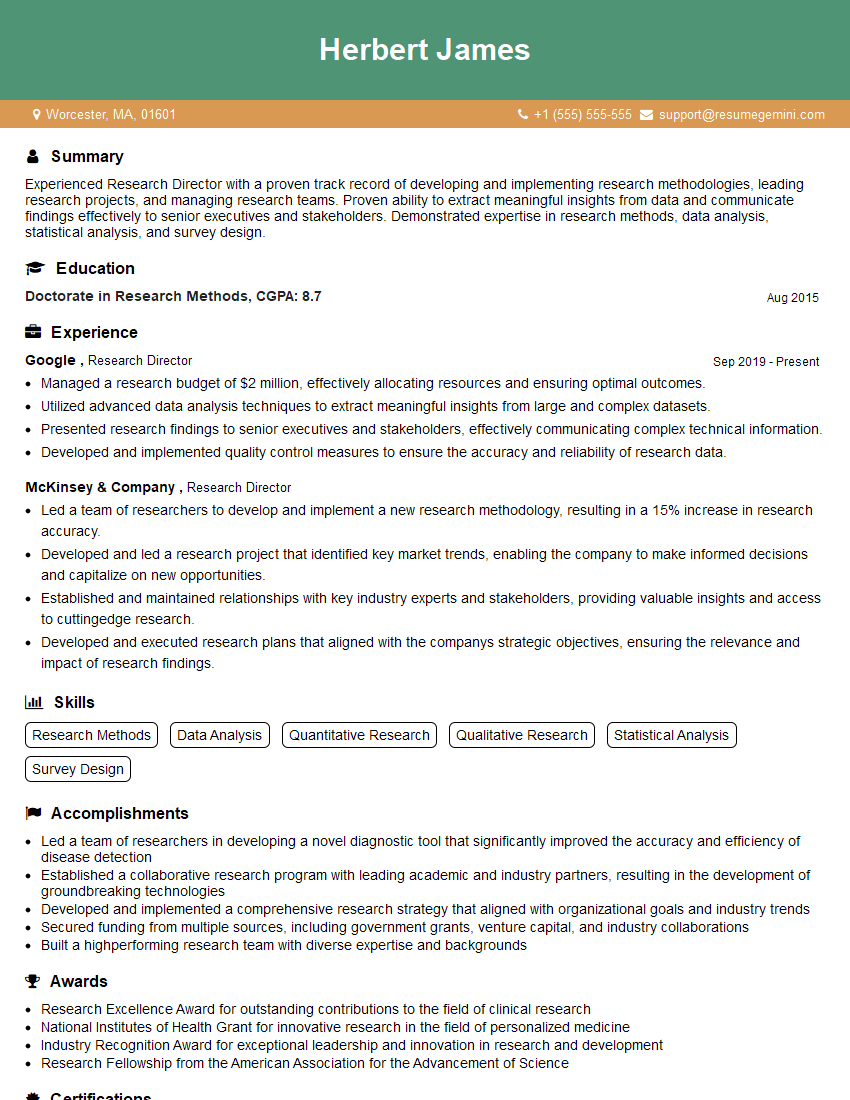
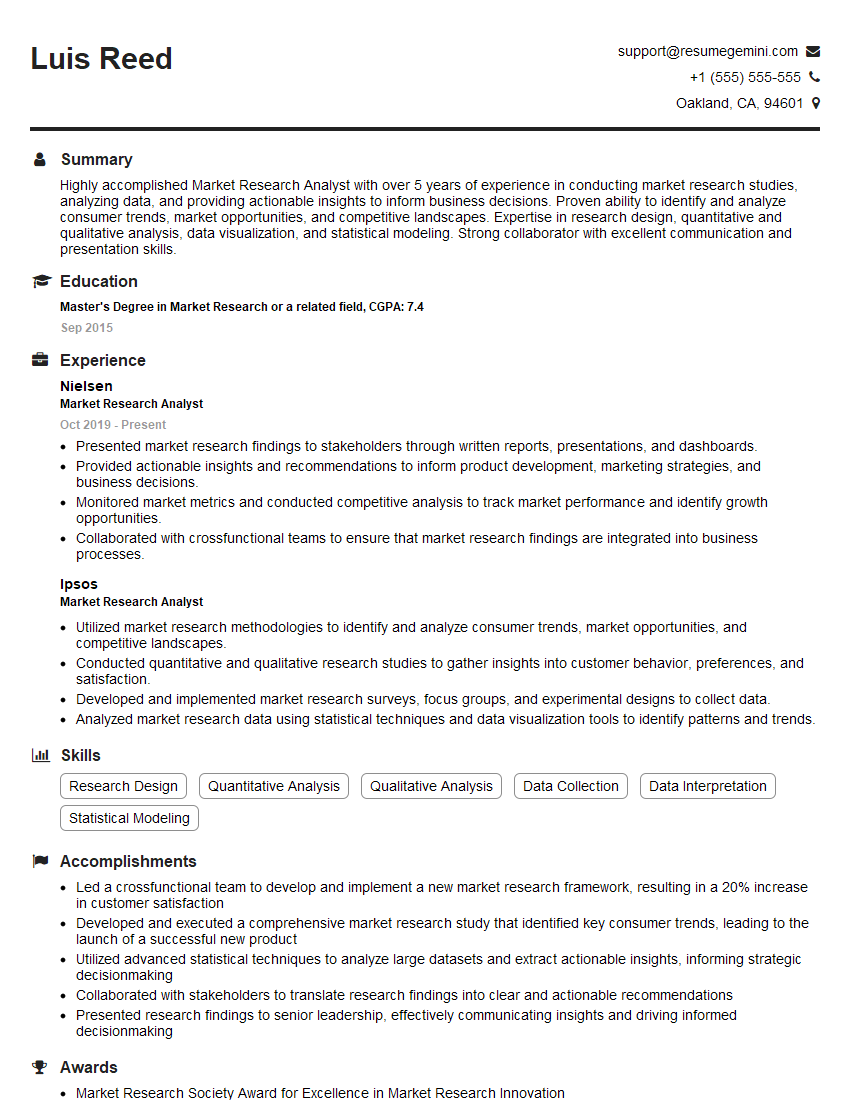
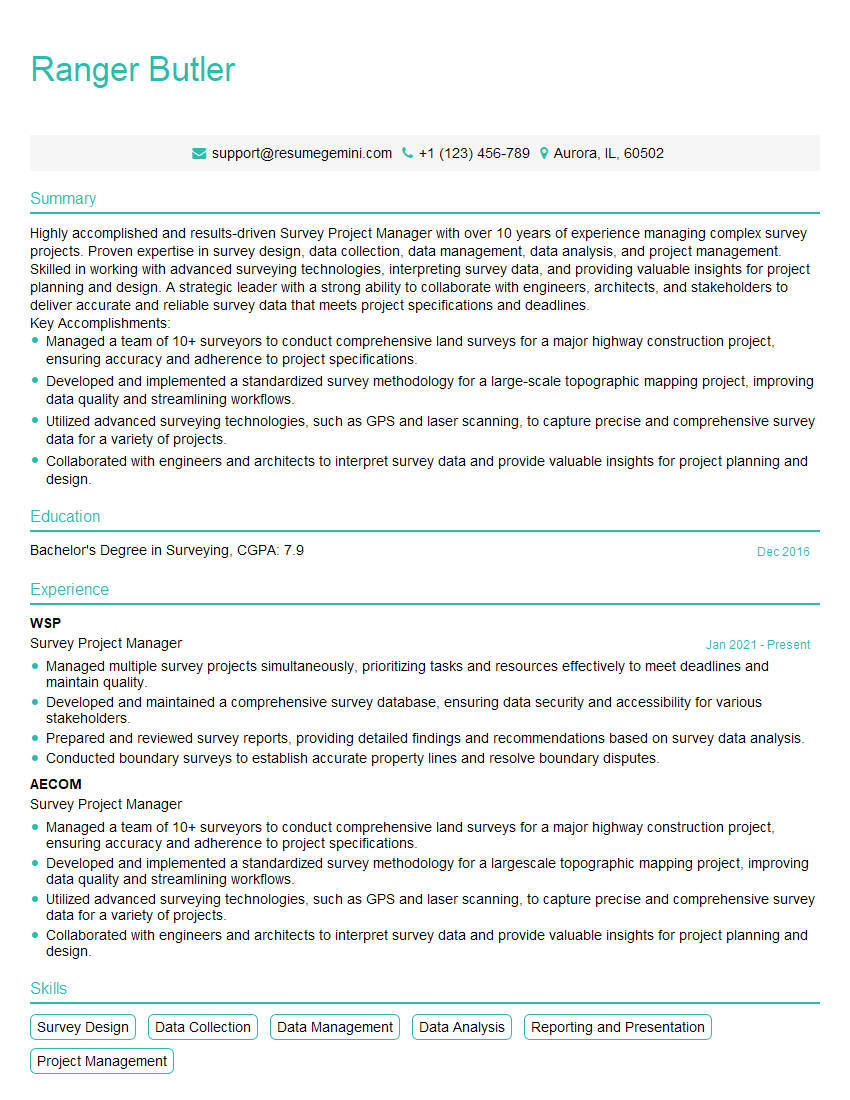
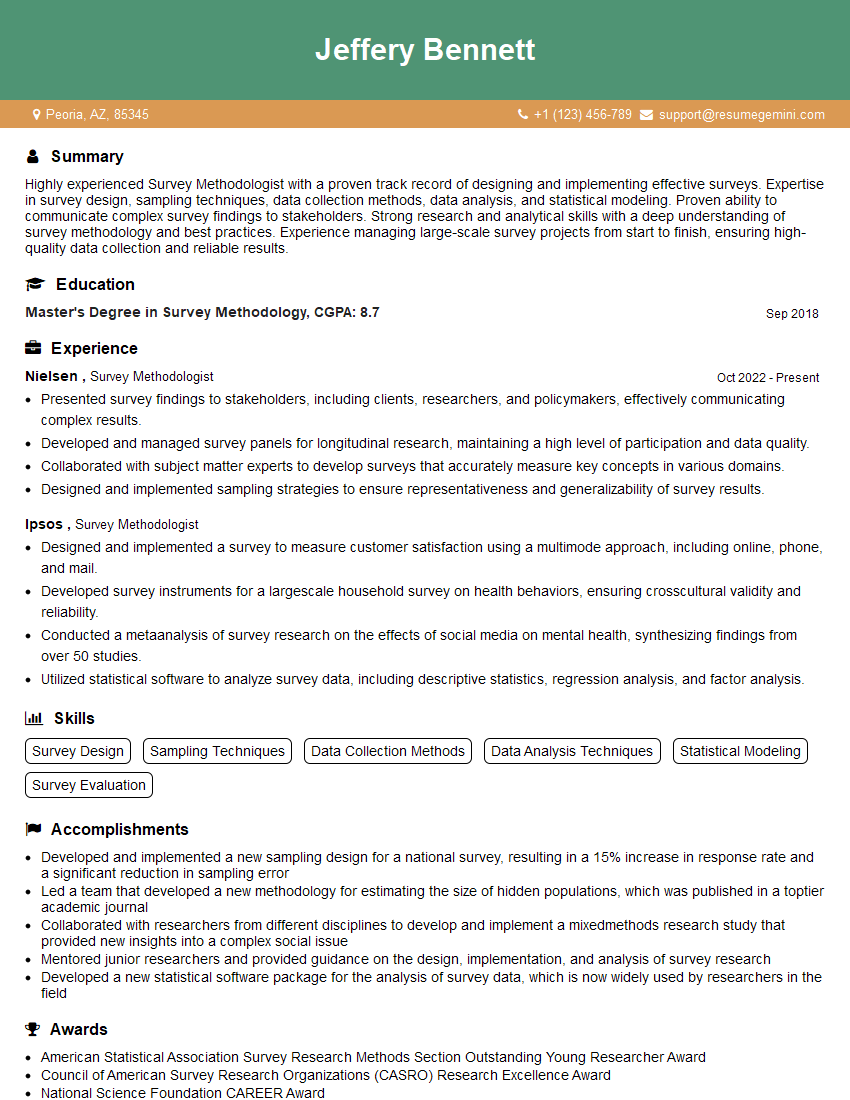
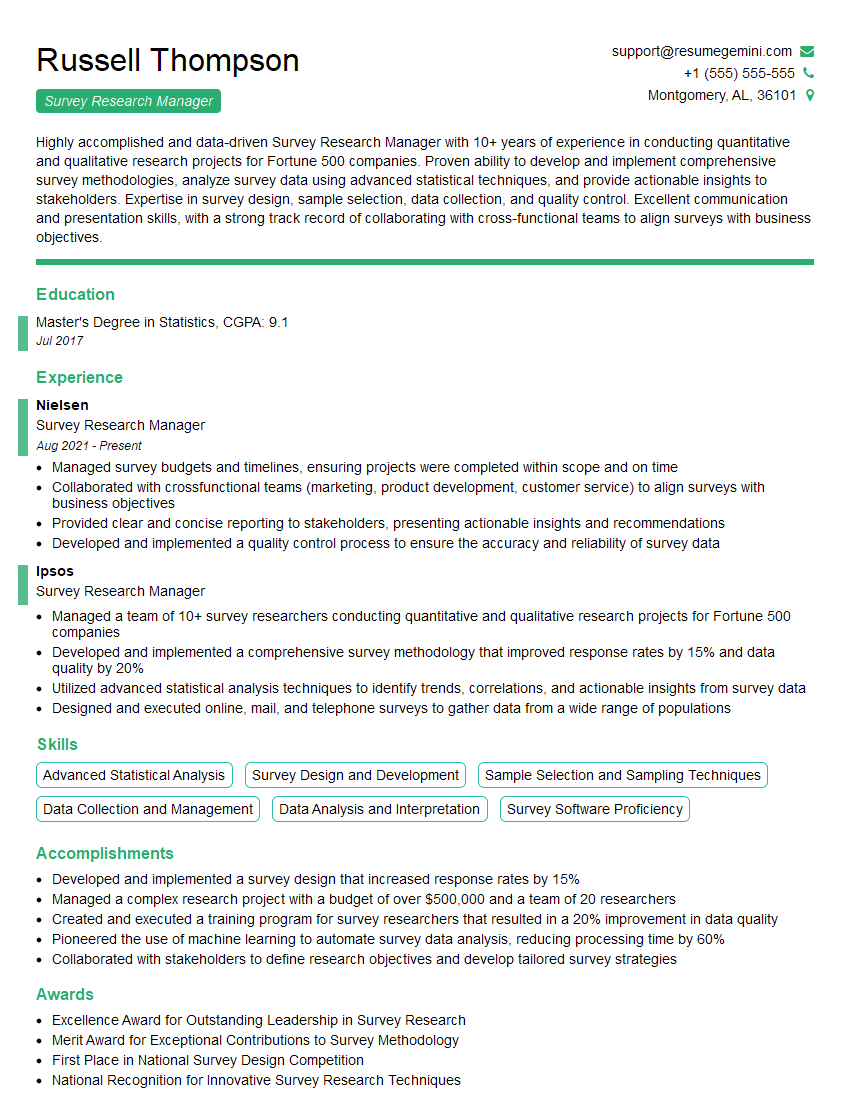
Mastering survey design and development is crucial for a successful career in market research, user experience, program evaluation, and many other fields. It demonstrates valuable analytical and communication skills highly sought after by employers. To maximize your job prospects, create an ATS-friendly resume that highlights your skills and experience effectively. ResumeGemini is a trusted resource for building professional and impactful resumes. We provide examples of resumes tailored to Survey Design and Development to help you showcase your qualifications compellingly.
Explore more articles
Users Rating of Our Blogs
Share Your Experience
We value your feedback! Please rate our content and share your thoughts (optional).
What Readers Say About Our Blog
Really detailed insights and content, thank you for writing this detailed article.
IT gave me an insight and words to use and be able to think of examples