Are you ready to stand out in your next interview? Understanding and preparing for Survey Methodology and Best Practices interview questions is a game-changer. In this blog, we’ve compiled key questions and expert advice to help you showcase your skills with confidence and precision. Let’s get started on your journey to acing the interview.
Questions Asked in Survey Methodology and Best Practices Interview
Q 1. Explain the difference between probability and non-probability sampling.
The core difference between probability and non-probability sampling lies in how participants are selected. In probability sampling, every member of the population has a known, non-zero chance of being selected. This allows for generalizations to the larger population because the sample is representative. Think of it like a fair lottery – everyone has a ticket, and the winner is chosen randomly. Examples include simple random sampling, stratified sampling, and cluster sampling.
In contrast, non-probability sampling doesn’t give every member of the population a known chance of selection. This means we can’t confidently generalize findings to the entire population, as the sample might not accurately reflect it. It’s like choosing lottery winners from only those who show up to a specific event – clearly biased. Examples include convenience sampling, purposive sampling, and snowball sampling. While non-probability sampling is often less expensive and easier to implement, it carries a higher risk of bias.
Choosing between the two depends on your research goals. If generalizability is crucial, probability sampling is essential. If exploring a specific phenomenon or conducting exploratory research is the priority, non-probability sampling might suffice.
Q 2. What are the key considerations in designing a survey questionnaire?
Designing a survey questionnaire requires careful planning and consideration of several key factors. First, define your research objectives clearly. What do you want to learn? This guides your question selection and structure. Second, identify your target population. Who are you trying to reach? Understanding their demographics and characteristics helps ensure your questions are relevant and appropriate.
Next, develop clear and concise questions. Avoid jargon, double-barreled questions (asking two things at once), and leading questions. Use simple language, keeping your audience in mind. Consider the question order – start with easy, engaging questions to build rapport. Pilot testing your questionnaire with a small group before full deployment is crucial for identifying and fixing any issues.
Finally, determine your data collection method (online, phone, in-person) and consider ethical implications, obtaining informed consent, ensuring anonymity, and protecting respondent data. Careful consideration of these aspects will lead to a robust and meaningful survey.
Q 3. Describe different types of survey question formats and their strengths/weaknesses.
Survey questions come in various formats, each with its strengths and weaknesses:
- Multiple-choice questions: Easy to analyze, but might lack nuance and miss important information not included in the choices.
Example: What is your age range? a) 18-24 b) 25-34 c) 35-44... - Dichotomous questions: Simple yes/no answers, easy to analyze, but offer limited information.
Example: Do you support this policy? Yes/No - Rank-order questions: Allow respondents to rank options according to preference, providing more detailed data than multiple choice but can be more taxing for respondents.
Example: Rank these features in order of importance: Price, Quality, Service - Rating scales (e.g., Likert scales): Measure attitudes or opinions on a scale (e.g., Strongly Agree to Strongly Disagree), providing more granular data than dichotomous questions.
Example: On a scale of 1 to 5 (1=Strongly Disagree, 5=Strongly Agree), how satisfied are you? - Open-ended questions: Allow for rich qualitative data, but are more challenging and time-consuming to analyze.
Example: What are your thoughts on this product?
The best format depends on the specific research question and the level of detail required.
Q 4. How do you ensure the validity and reliability of survey data?
Ensuring the validity and reliability of survey data is critical. Validity refers to whether the survey measures what it intends to measure. Reliability refers to the consistency of the measurements. Several strategies can help:
- Content validity: Expert review of the questionnaire to ensure it covers all relevant aspects.
- Criterion validity: Comparing survey results with other established measures of the same concept.
- Construct validity: Assessing whether the survey measures the theoretical construct it is intended to measure.
- Test-retest reliability: Administering the survey twice to the same group and assessing the consistency of responses.
- Internal consistency reliability: Checking the consistency of responses to different items within the survey using measures like Cronbach’s alpha.
- Pilot testing: Testing the survey with a small sample to identify and address any problems before full deployment.
By meticulously addressing these aspects, researchers can greatly improve the trustworthiness of their findings.
Q 5. What are some common sources of bias in survey research and how can they be mitigated?
Many sources of bias can affect survey research. Sampling bias occurs when the sample doesn’t accurately represent the population. Response bias arises from how respondents answer, such as social desirability bias (responding in a way they think is socially acceptable) or acquiescence bias (agreeing with statements regardless of content). Interviewer bias can occur when the interviewer influences responses through their demeanor or wording. Question wording bias can subtly lead respondents to answer in a certain way.
Mitigation strategies include using probability sampling methods, carefully wording questions to be neutral and unbiased, training interviewers properly, using blind or double-blind procedures where feasible, pre-testing the questionnaire to detect potential bias, and employing statistical techniques to adjust for identified bias during data analysis.
Q 6. Explain the concept of sampling error and its implications.
Sampling error is the difference between the results obtained from a sample and the true values in the population. It’s unavoidable when using a sample instead of the entire population. The larger the sample size, the smaller the sampling error, generally. The error is a function of randomness, it’s not a systematic bias.
Implications of sampling error include the uncertainty surrounding estimates derived from the sample. Confidence intervals provide a range of values within which the true population parameter is likely to lie, acknowledging the sampling error. Ignoring sampling error can lead to inaccurate conclusions and misinterpretations of the results.
Q 7. Describe different methods for weighting survey data.
Weighting survey data adjusts the sample to better reflect the population. Several methods exist:
- Post-stratification weighting: Adjusting weights based on known population proportions for demographic variables like age, gender, or race. For example, if the sample has too few women, the responses from women can be given a higher weight.
- Raking: An iterative process that adjusts weights based on multiple variables until the weighted sample matches known population margins. This ensures alignment across various demographic aspects.
- Calibration weighting: Similar to raking, but uses a more sophisticated statistical model to adjust weights, ensuring better accuracy.
The choice of weighting method depends on the specific characteristics of the sample and the population, and the available data. Proper weighting helps improve the representativeness of the sample and increases the generalizability of the findings.
Q 8. How do you handle missing data in a survey dataset?
Missing data is an unavoidable reality in survey research. How we handle it significantly impacts the validity of our conclusions. The best approach depends on the type of missing data (missing completely at random, missing at random, or missing not at random) and the extent of the missingness.
- Ignoring Missing Data: This is only acceptable if the missing data is minimal and completely random. Otherwise, it can introduce bias.
- Imputation: This involves replacing missing values with plausible estimates. Simple methods like mean/median imputation are easy but can distort the data’s variance. More sophisticated techniques like multiple imputation generate multiple plausible datasets to account for uncertainty in the imputed values. For instance, if we’re missing income data, we might impute based on related variables like education level and occupation.
- Listwise Deletion: This removes entire cases with any missing data. It’s simple but can lead to a substantial loss of data, especially with many variables.
- Pairwise Deletion: This uses all available data for each analysis, but it can lead to different sample sizes for different analyses, which may affect the validity of the comparisons.
Choosing the right method requires careful consideration and often involves a combination of techniques. For example, I might initially explore the pattern of missing data to determine the mechanism and then choose an appropriate imputation method. Assessing the impact of different methods on the results is crucial to ensure robustness.
Q 9. What statistical methods are commonly used to analyze survey data?
Survey data analysis uses a wide range of statistical methods depending on the research questions and the type of data collected.
- Descriptive Statistics: These summarize the data using measures like means, medians, modes, standard deviations, and frequencies. This gives us an initial understanding of the sample characteristics. For example, calculating the average age of respondents or the percentage who agree with a particular statement.
- Inferential Statistics: These methods draw inferences about a population based on the sample data. Common techniques include:
- t-tests: Comparing the means of two groups (e.g., comparing satisfaction levels between male and female respondents).
- ANOVA: Comparing the means of three or more groups (e.g., comparing satisfaction levels across different age groups).
- Regression analysis: Examining the relationships between variables (e.g., predicting job satisfaction based on salary and work-life balance).
- Chi-square test: Analyzing the association between categorical variables (e.g., determining if there’s a relationship between gender and preferred political party).
- Correlation analysis: Measuring the strength and direction of the linear relationship between two continuous variables.
The choice of method depends on the nature of the variables and the hypothesis being tested. For example, analyzing the relationship between age (continuous) and satisfaction (ordinal) might require correlation and regression analysis, while comparing satisfaction across different product types (categorical) would use ANOVA.
Q 10. Explain the difference between descriptive and inferential statistics in survey analysis.
Descriptive and inferential statistics serve different purposes in survey analysis. Think of it like this: descriptive statistics describe what is in your data, while inferential statistics help you make inferences about what might be in the larger population.
- Descriptive Statistics: These summarize the characteristics of your sample. For example, if you surveyed 100 people about their favorite ice cream flavor, descriptive statistics would tell you how many chose each flavor, the most popular flavor, and the average number of ice cream cones consumed per week. These are summaries of your actual data.
- Inferential Statistics: These go beyond describing the sample to make inferences about the larger population from which the sample was drawn. Using the ice cream example, inferential statistics would help you estimate the proportion of the entire population that prefers each flavor, along with confidence intervals to express the uncertainty of your estimate. These are based on probabilistic statements about an unknown population.
Both are crucial. Descriptive statistics provide a foundational understanding of the data, while inferential statistics allow you to generalize your findings to the broader population, which is typically the ultimate goal of most surveys.
Q 11. How do you interpret confidence intervals and p-values in survey results?
Confidence intervals and p-values are key concepts in interpreting the results of inferential statistical tests.
- Confidence Intervals: A confidence interval provides a range of values within which we are confident that the true population parameter lies. For example, a 95% confidence interval for the average age of respondents might be (35, 45). This means that we are 95% confident that the true average age of the population falls between 35 and 45 years old. The wider the interval, the greater the uncertainty.
- P-values: The p-value represents the probability of observing the obtained results (or more extreme results) if there were no real effect in the population. A small p-value (typically less than 0.05) suggests that the observed effect is unlikely to be due to chance alone and provides evidence against the null hypothesis (the hypothesis that there is no effect). However, a p-value alone shouldn’t be the sole basis for a conclusion; the effect size and the context are also important considerations.
In practice, I always interpret both together. A statistically significant result (small p-value) with a narrow confidence interval indicates a strong and precise estimate of the effect. A statistically significant result with a wide confidence interval suggests that while the effect is likely real, there’s greater uncertainty about its precise magnitude. A non-significant result (large p-value) with a wide confidence interval suggests insufficient power to detect a potential effect.
Q 12. What are some ethical considerations in conducting survey research?
Ethical considerations are paramount in survey research. Maintaining the integrity of the research and protecting the rights of participants are essential.
- Informed Consent: Participants must be fully informed about the purpose of the survey, how their data will be used, and their right to withdraw at any time. This should be clearly stated in a consent form.
- Confidentiality and Anonymity: Protecting participant identities and their responses is critical. Data should be securely stored and anonymized whenever possible. Data security protocols should be in place throughout the study.
- Avoidance of Bias: Question wording and survey design should be carefully crafted to avoid introducing bias. For example, leading questions should be avoided.
- Transparency: The survey methodology, data analysis procedures, and findings should be reported transparently and honestly. Any limitations of the study should be acknowledged.
- Vulnerable Populations: Special care should be taken when working with vulnerable populations (e.g., children, elderly, individuals with disabilities). Appropriate ethical review board approvals are necessary.
I always prioritize ethical conduct in my research by adhering to these principles, ensuring that my research is conducted in a responsible and respectful manner. This may include obtaining IRB approvals, using secure platforms for data storage and analysis and being extremely mindful of the language used in the survey instruments.
Q 13. Describe your experience with different survey data collection methods (e.g., online, phone, in-person).
My experience encompasses various survey data collection methods, each with its strengths and weaknesses.
- Online Surveys: These are cost-effective and convenient for both researchers and respondents, allowing for broad geographical reach. However, they may suffer from sampling bias, as not everyone has equal access to the internet. I’ve used platforms like Qualtrics and SurveyMonkey for online data collection, incorporating features to encourage high-quality responses, for example using branching logic, validation, and progress indicators.
- Phone Surveys: These provide higher response rates than online surveys, and allow for clarification if respondents have difficulties understanding questions. However, they are more expensive and time-consuming. They also suffer from possible interviewer bias.
- In-person Surveys: These can achieve high response rates and provide opportunities for richer interactions with respondents. However, they are very expensive, geographically restricted and potentially labor-intensive. In person surveys are excellent for complex questionnaires or studies that require observing respondent behavior. I’ve conducted in-person surveys in various settings ranging from shopping malls to community centers.
My selection of the data collection method depends on factors such as the research budget, target population, complexity of the questionnaire, and the desired response rate. Often, a mixed-methods approach might be utilized to combine the advantages of different methods.
Q 14. What software or tools are you familiar with for survey design, data collection, and analysis (e.g., Qualtrics, SPSS, R)?
I’m proficient in several software packages for survey design, data collection, and analysis.
- Qualtrics: This is a comprehensive platform for creating, distributing, and analyzing surveys. I’ve utilized its advanced features like branching logic, skip patterns, and real-time data analysis for complex studies.
- SPSS: I use SPSS extensively for statistical analysis of survey data. Its user-friendly interface and comprehensive statistical capabilities allow me to perform various analyses, from descriptive statistics to complex multivariate models. For example I use SPSS to conduct regression analyses, factor analysis and cluster analysis on survey data frequently.
- R: R is a powerful and flexible open-source statistical environment. I use R for more advanced data manipulation and visualization, particularly when dealing with large or complex datasets. I leverage R packages like
dplyrfor data cleaning,ggplot2for data visualization and various packages for more specialized statistical modeling.
My choice of software depends on the specific research needs and the level of statistical sophistication required. For instance, I might use Qualtrics for the design and deployment and then R or SPSS for the data analysis based on the nature of the analysis and my own preferences for a specific analysis.
Q 15. How do you ensure the security and privacy of survey data?
Ensuring the security and privacy of survey data is paramount. It’s not just about complying with regulations like GDPR or HIPAA; it’s about building trust with respondents and maintaining the integrity of your research. My approach involves a multi-layered strategy:
Anonymization and De-identification: I avoid collecting personally identifiable information (PII) whenever possible. If it’s absolutely necessary, I employ robust de-identification techniques, such as replacing names with unique identifiers. For example, instead of storing “Jane Doe,” the respondent might be identified as “Respondent ID 1234.”
Data Encryption: Both data in transit (using HTTPS) and data at rest (using encryption at the database level) are encrypted to protect against unauthorized access. Think of this like using a strong lock and key to secure a valuable safe containing the data.
Secure Data Storage: I use secure servers and cloud platforms that adhere to strict security protocols. Access is limited to authorized personnel only through role-based access control. Imagine this as a heavily guarded vault where only select individuals with the right credentials can enter.
Informed Consent: Respondents are always fully informed about how their data will be used and protected. Transparency is crucial for building trust and fostering ethical research practices.
Regular Security Audits: Regular vulnerability assessments and penetration testing are conducted to identify and address any security weaknesses proactively.
By combining these measures, I create a robust security framework that protects respondent privacy and safeguards the integrity of the collected data.
Career Expert Tips:
- Ace those interviews! Prepare effectively by reviewing the Top 50 Most Common Interview Questions on ResumeGemini.
- Navigate your job search with confidence! Explore a wide range of Career Tips on ResumeGemini. Learn about common challenges and recommendations to overcome them.
- Craft the perfect resume! Master the Art of Resume Writing with ResumeGemini’s guide. Showcase your unique qualifications and achievements effectively.
- Don’t miss out on holiday savings! Build your dream resume with ResumeGemini’s ATS optimized templates.
Q 16. Describe your experience with data cleaning and validation processes.
Data cleaning and validation are critical steps in ensuring the reliability and validity of survey results. It’s like meticulously editing a manuscript before publication – any errors can distort the final message. My process involves:
Consistency Checks: I check for inconsistencies in responses, such as a respondent indicating they are both male and female. These are usually flagged and dealt with by examining the surrounding responses for further context or simply removing such inconsistent data points.
Range Checks: I ensure that numerical responses fall within acceptable ranges. For instance, if age is being collected, I check for values outside a reasonable age range. Values outside the range would be flagged for review.
Completeness Checks: I identify and handle missing data. Techniques like imputation (replacing missing values with reasonable estimates) might be used, but only after carefully considering the implications and potentially using several methods depending on the nature of the missing data.
Logical Checks: I ensure that responses are logically consistent. For example, if a question asks about owning a car, and the respondent answered “yes,” I’d then check the subsequent question asking about the car’s make and model to ensure the response isn’t left blank. This kind of logical checking helps to identify errors and inconsistencies.
Outlier Detection: I identify and review outliers (extreme values) to determine if they represent genuine responses or errors. This might involve using statistical methods to identify values that significantly deviate from the norm.
For example, in a customer satisfaction survey, detecting a large number of negative responses that are clustered in one specific region might require further investigation to uncover potential underlying issues.
Q 17. How do you assess the quality of a survey instrument?
Assessing the quality of a survey instrument is crucial for ensuring the reliability and validity of the results. It’s like testing a measuring instrument – you want to be certain it’s accurate and precise. My assessment involves:
Content Validity: Does the survey comprehensively cover all aspects of the research question? This often involves expert review to ensure the questions accurately capture the construct of interest.
Construct Validity: Does the survey accurately measure the theoretical concepts it intends to measure? This can be assessed through factor analysis or other statistical techniques. It’s like verifying whether the scale accurately measures what it claims to measure.
Criterion Validity: How well do the survey results correlate with other established measures of the same construct? This comparison helps to assess predictive validity and concurrent validity.
Reliability: Does the survey produce consistent results over time and across different respondents? This can be assessed using measures such as Cronbach’s alpha (for internal consistency) or test-retest reliability.
Pilot Testing: Conducting a pilot study on a small sample allows for identifying any ambiguities, confusing questions, or issues with the flow of the survey before large-scale deployment. This ensures the questions are clear and understandable.
A poorly designed survey instrument can lead to inaccurate and misleading results, highlighting the importance of rigorous quality assessment.
Q 18. Explain the concept of response rate and its importance.
The response rate in survey research represents the percentage of individuals who completed the survey out of the total number of individuals who were invited to participate. It’s a crucial indicator of the generalizability of the findings. A high response rate suggests that the results are more likely to be representative of the target population. Think of it like this: if you only survey 10% of a class, can you truly claim to represent the entire class’s viewpoint?
For example, a response rate of 70% would generally be considered good, indicating that a significant portion of the invited participants completed the survey and participated in the study. Lower response rates, however, introduce the risk of selection bias—results may not accurately reflect the whole population. A low response rate might necessitate further analyses to understand potential biases.
Q 19. How do you manage and resolve issues with low response rates?
Low response rates are a common challenge in survey research and can significantly impact the validity of the findings. Addressing this requires a multi-pronged approach:
Incentives: Offering small incentives, such as gift cards or entry into a raffle, can encourage participation.
Multiple Contact Attempts: Following up with non-respondents through email, phone calls, or text messages can increase participation.
Shorter Surveys: Minimizing survey length can improve completion rates. Shorter surveys tend to garner higher response rates.
Improved Survey Design: Ensuring that the survey is clear, concise, and easy to navigate can improve response rates.
Personalization: Tailoring the survey introduction or some of the questions to the target audience can also help improve the response rate.
Sampling Strategy Review: Ensuring the right sampling frame and method were used and exploring potential biases in the sample is crucial.
For instance, if the initial response rate is low, I might analyze the characteristics of respondents versus non-respondents to see if there are any significant differences. This might indicate problems with my sample design or the method used to contact respondents.
Q 20. How do you develop a sampling plan for a particular research question?
Developing a sampling plan involves carefully selecting a subset of the population that accurately represents the larger group. The choice of sampling method depends heavily on the research question, available resources, and the desired level of precision.
Define the Target Population: Clearly specify the group of individuals you want to study. For example, if researching customer satisfaction, the population might be all customers who purchased a product within the last year.
Choose a Sampling Frame: Identify the list or source from which you’ll select your sample. This could be a customer database, a voter registration list, or a national census database.
Select a Sampling Method: There are many methods, including:
Simple Random Sampling: Every member of the population has an equal chance of being selected. It’s like drawing names out of a hat.
Stratified Random Sampling: The population is divided into subgroups (strata), and a random sample is selected from each stratum. This ensures representation from all subgroups.
Cluster Sampling: The population is divided into clusters (e.g., geographic areas), and a random sample of clusters is selected. Then, all members within the selected clusters are surveyed.
Determine Sample Size: The size of the sample depends on factors such as the desired level of precision, the variability within the population, and the confidence level. A power analysis helps determine the appropriate sample size.
Collect Data: Once the sample is selected, the data is collected using the chosen survey method.
For example, in a study on the effectiveness of a new teaching method, stratified random sampling would be beneficial to ensure that students from different grade levels and backgrounds are appropriately represented.
Q 21. Explain the concept of power analysis in survey research.
Power analysis in survey research is a crucial step in determining the appropriate sample size needed to detect a statistically significant effect. It helps to prevent conducting a study that is either too small (underpowered) or too large (overpowered).
Underpowered studies might fail to detect a real effect, while overpowered studies waste resources and may raise ethical concerns. Power analysis helps you estimate the probability of finding a statistically significant result, given a specific effect size, sample size, and significance level. It’s like deciding how much magnification you need on a microscope to see something clearly—too little magnification and you miss it; too much and you might be overwhelmed with unnecessary detail.
Factors considered in a power analysis include:
Effect size: The magnitude of the difference or relationship you expect to find.
Significance level (alpha): The probability of rejecting the null hypothesis when it is actually true (typically set at 0.05).
Power (1-beta): The probability of correctly rejecting the null hypothesis when it is false (typically set at 0.80).
Software packages and online calculators can assist in conducting power analyses, making it a relatively straightforward but crucial step in planning a rigorous and efficient survey study.
Q 22. What are some common challenges in conducting survey research, and how have you overcome them?
Survey research, while powerful, presents numerous challenges. One significant hurdle is non-response bias – where those who respond differ systematically from those who don’t, skewing results. For example, a survey on healthcare satisfaction might see higher response rates from those with negative experiences. To mitigate this, I employ multi-modal approaches, combining online surveys with phone calls or even in-person interviews for hard-to-reach populations. I also meticulously design the survey to be concise and engaging to maximize response rates. Another common challenge is sampling bias. Ensuring a truly representative sample requires careful consideration of the target population and the sampling method used. For instance, relying solely on online panels can exclude individuals without internet access. To address this, I utilize stratified sampling or other techniques to ensure proportional representation across relevant demographics. Finally, questionnaire design itself poses challenges. Ambiguous questions or leading questions can introduce systematic error. To combat this, I rigorously pilot test questionnaires, seeking feedback from diverse groups to refine question wording and ensure clarity. This iterative process of testing and revision is crucial for improving survey quality.
Q 23. Describe your experience with creating visualizations of survey data.
I have extensive experience creating visualizations of survey data, using a range of tools including Tableau, R, and Python. My approach is always tailored to the audience and the specific insights to be communicated. For instance, if presenting to executives, I’ll focus on high-level summaries using charts like bar graphs or pie charts showcasing key trends. For more detailed analysis, I might utilize interactive dashboards allowing exploration of the data at various levels. For example, in a customer satisfaction study, I might use a heatmap to visualize the relationship between different demographic segments and their satisfaction scores. Alternatively, I could create a series of interconnected charts showing the customer journey and satisfaction at each stage. Beyond static visuals, I also leverage interactive dashboards and data storytelling techniques to bring the data to life and enhance comprehension. In R, for example, I might use the ggplot2 package to generate publication-quality graphics. The choice of visualization tool and method always depends on the data type, the desired level of detail, and the audience’s technical expertise.
Q 24. How do you communicate survey results to both technical and non-technical audiences?
Communicating survey results effectively to diverse audiences requires a nuanced approach. For technical audiences, I use precise language, highlighting statistical significance, confidence intervals, and detailed methodologies. I might include technical reports with detailed tables and statistical analyses. For non-technical audiences, I focus on storytelling and impactful visuals. I translate complex statistical findings into plain language, using charts and graphs to illustrate key findings. Think of it like this: for a technical audience, I might present a regression analysis showing a statistically significant correlation between two variables. For a non-technical audience, I’d summarize this as ‘our data shows a strong relationship between X and Y’. Key to both approaches is to clearly articulate the implications of the findings, focusing on the ‘so what?’ – the practical meaning and actionable insights derived from the data. A consistent approach across all communications ensures clarity and avoids misinterpretations, regardless of the audience’s technical background.
Q 25. What are some emerging trends in survey methodology?
Several emerging trends are shaping survey methodology. One is the rise of big data and advanced analytics, enabling more sophisticated analyses of survey data and integration with other data sources. This allows for a richer understanding of respondent behavior and more accurate predictive modeling. Another key trend is the increased use of mobile-first surveys, reflecting the ubiquity of smartphones. This requires adapting survey designs and question formats for smaller screens and different user interactions. We’re also seeing a growing emphasis on real-time data collection and analysis, allowing for dynamic adjustments to survey design and immediate feedback. Finally, the use of artificial intelligence (AI) in survey design and analysis is rapidly expanding, from AI-powered chatbot surveys to automated data analysis and reporting. This enhances efficiency and accuracy while providing deeper insights from the collected data.
Q 26. How do you stay up-to-date with the latest developments in survey research?
Staying current in survey research requires a multi-faceted approach. I regularly attend conferences and workshops focused on survey methodology, such as those organized by professional organizations like the American Association for Public Opinion Research (AAPOR). I subscribe to relevant journals, such as the Public Opinion Quarterly, and follow influential researchers and organizations in the field on social media platforms like Twitter and LinkedIn. I also actively participate in online communities and forums dedicated to survey research, engaging in discussions and learning from others’ experiences. Finally, I regularly review methodological literature and best-practice guidelines to ensure my approaches are aligned with the latest advancements and ethical standards in the field.
Q 27. Describe a situation where you had to adapt your survey methodology due to unforeseen circumstances.
During a large-scale customer satisfaction survey, we experienced an unexpected server outage midway through the data collection period. This posed a significant challenge, as it disrupted data collection and risked introducing bias. To address this, we immediately implemented a contingency plan involving manual data entry for the affected respondents. We also extended the survey deadline to ensure a sufficient sample size. To mitigate potential bias, we carefully analyzed the data collected before and after the outage to identify any significant differences in respondent characteristics or responses. Through rigorous data cleaning and statistical adjustments, we minimized the impact of the unforeseen outage. This experience highlighted the critical importance of having robust contingency plans in place for unexpected technical issues and the necessity of rigorous data quality control throughout the survey process.
Key Topics to Learn for Survey Methodology and Best Practices Interview
- Survey Design & Development: Understanding different survey types (e.g., cross-sectional, longitudinal), questionnaire design principles (e.g., question wording, response scales), and the importance of pilot testing.
- Sampling Techniques: Mastering probability and non-probability sampling methods, understanding sampling bias and its mitigation, and calculating sample size requirements for various research objectives.
- Data Collection Methods: Familiarizing yourself with various data collection modes (e.g., online, telephone, in-person), their strengths and weaknesses, and the impact on response rates and data quality.
- Data Cleaning & Processing: Understanding techniques for handling missing data, identifying and correcting outliers, and ensuring data integrity for accurate analysis.
- Statistical Analysis & Interpretation: Grasping fundamental statistical concepts relevant to survey data analysis, including descriptive statistics, inferential statistics, and the interpretation of key findings.
- Ethical Considerations: Understanding principles of informed consent, confidentiality, and data privacy in survey research, and best practices for responsible data handling.
- Reporting & Communication: Knowing how to effectively communicate survey results through clear and concise reports, visualizations, and presentations, tailoring your communication to your audience.
- Bias Detection & Mitigation: Proactively identifying potential sources of bias (e.g., response bias, sampling bias) and applying strategies to minimize their impact on the research results.
- Advanced Techniques: Exploring more advanced methodologies like weighting, imputation, and advanced statistical modeling (depending on the seniority of the role).
Next Steps
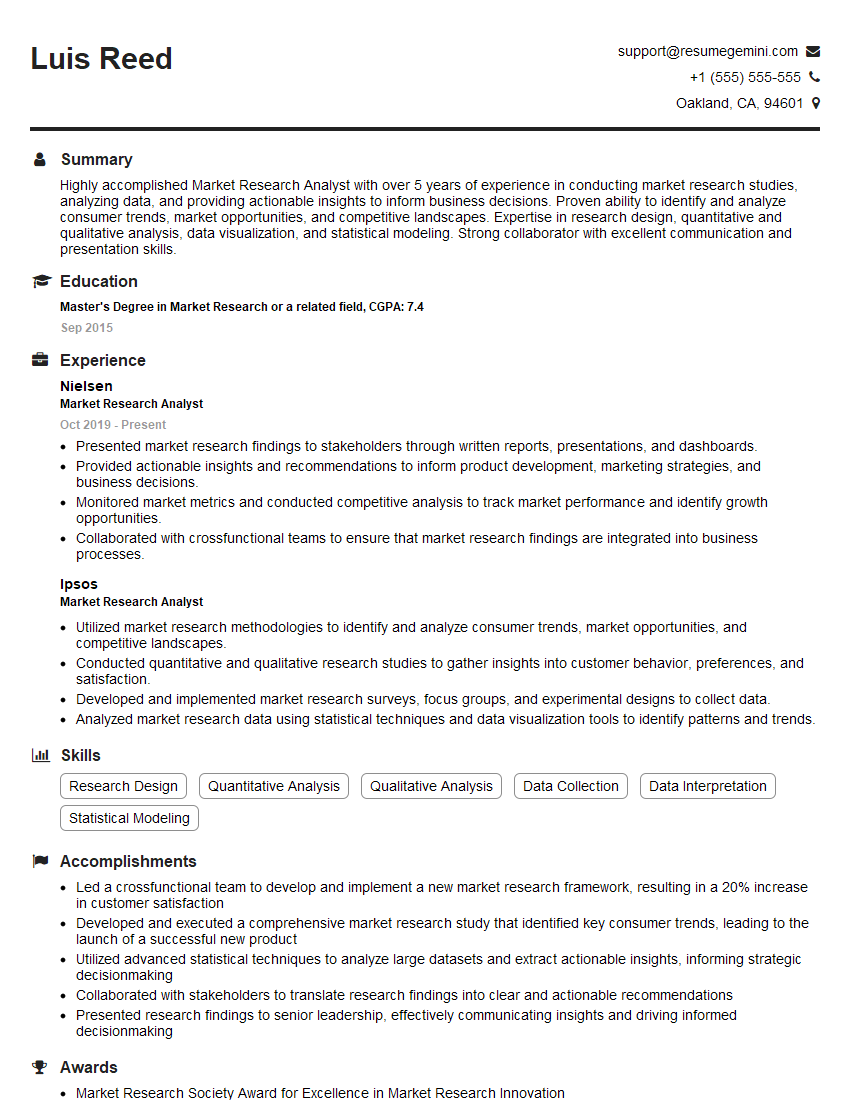
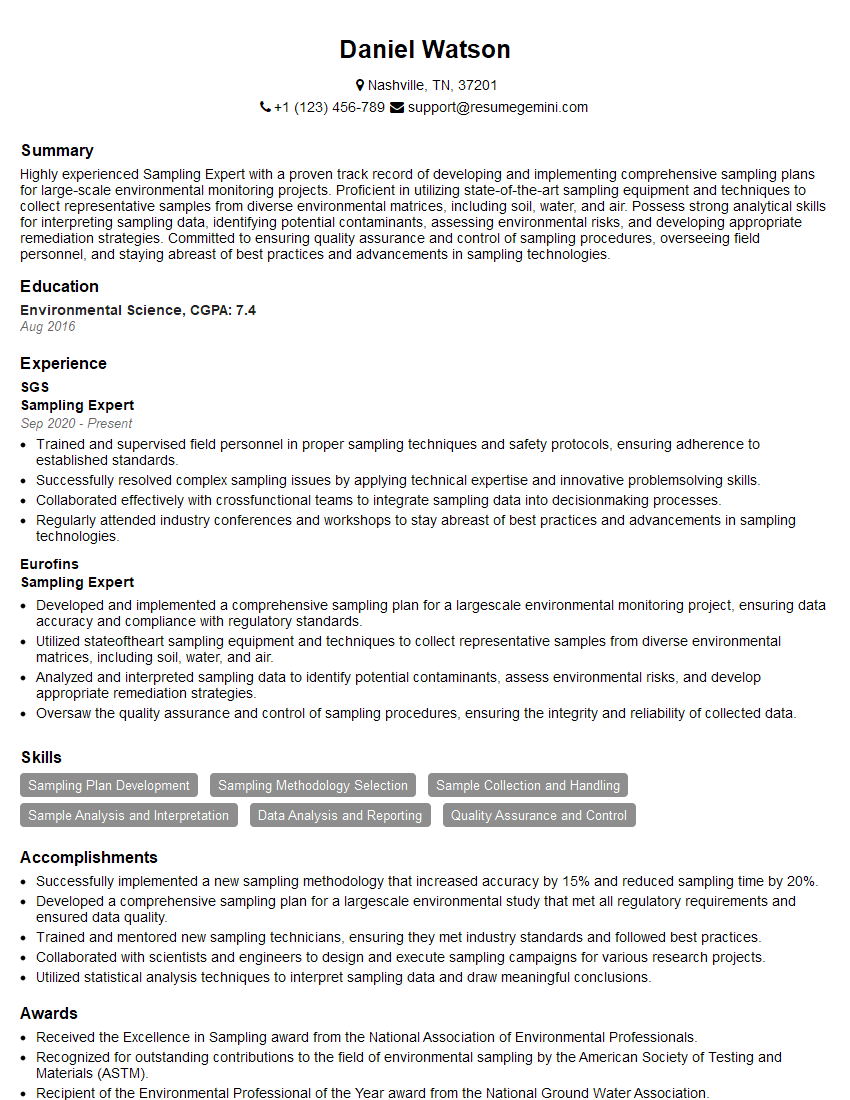
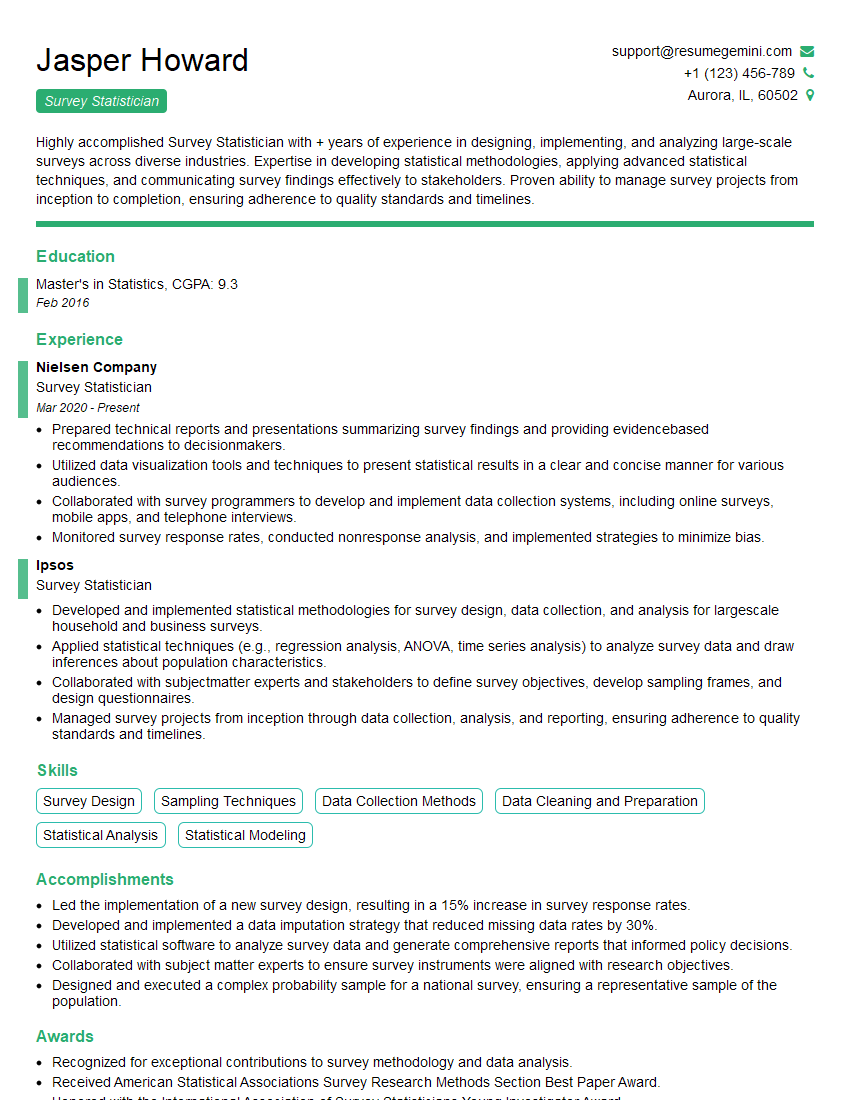
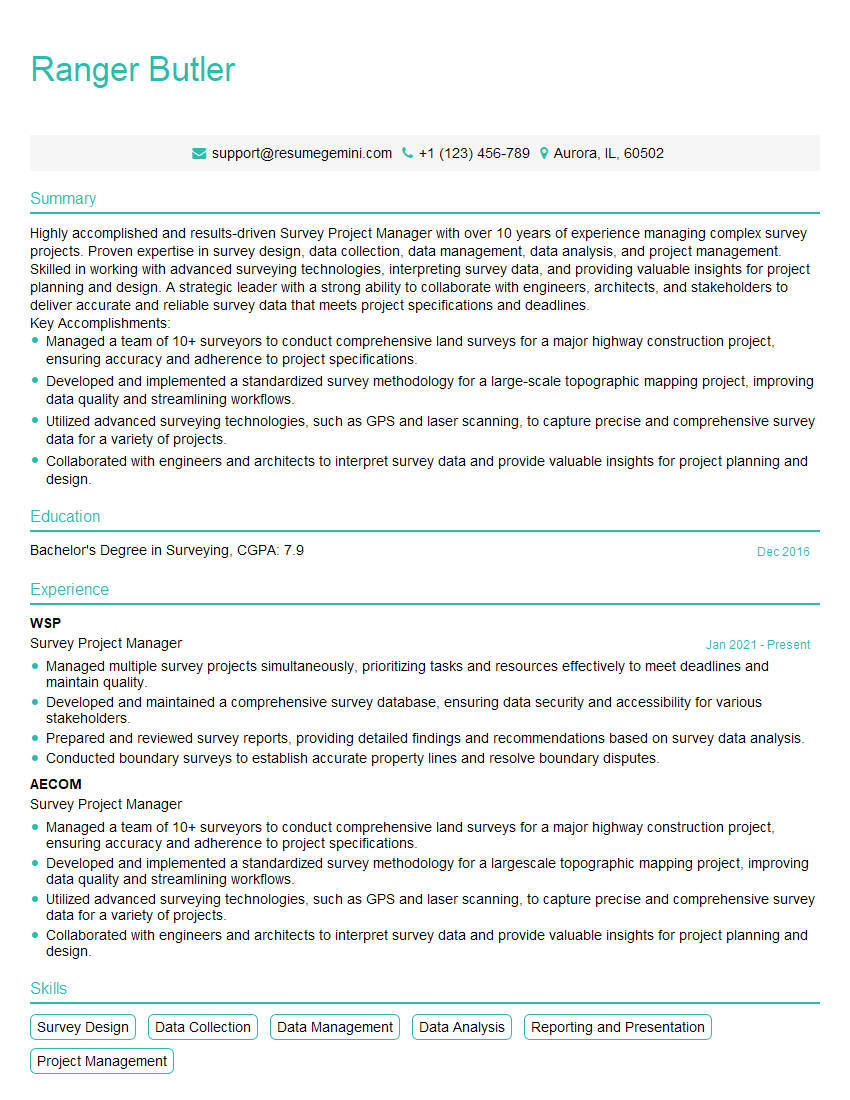
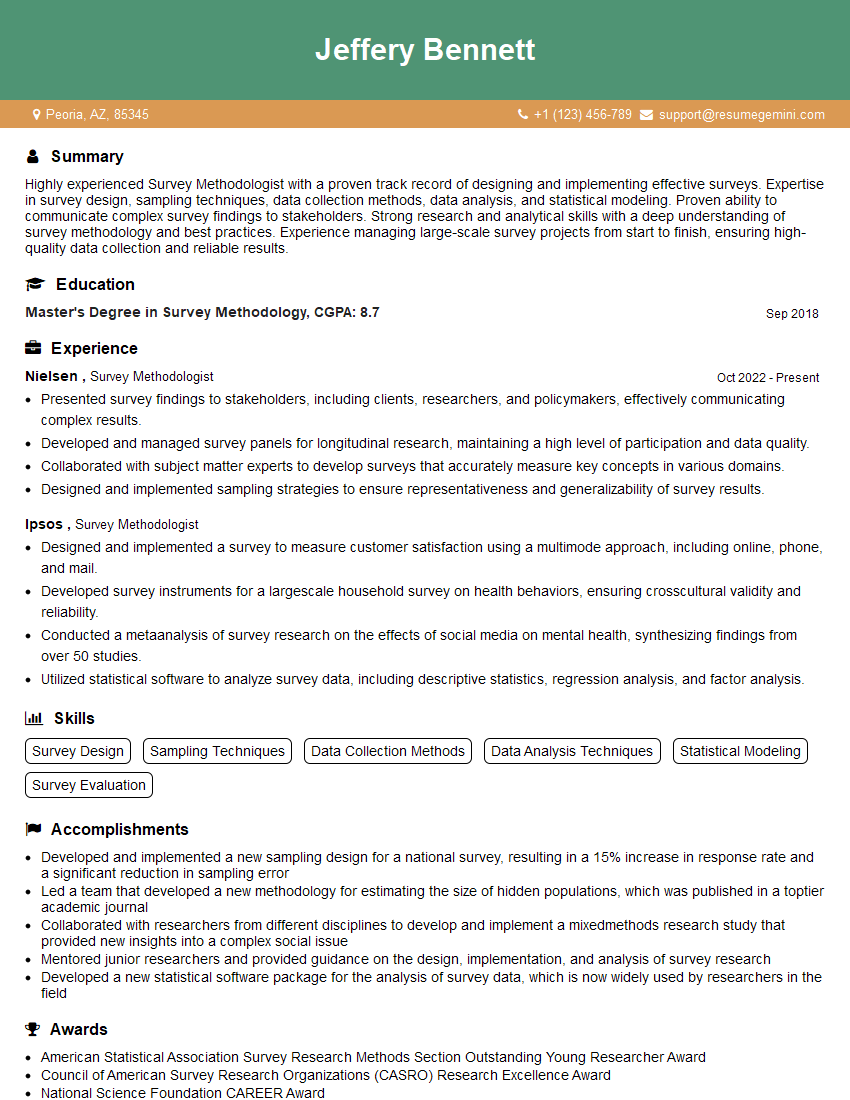
Mastering Survey Methodology and Best Practices is crucial for career advancement in market research, data analysis, and related fields. A strong understanding of these principles demonstrates your ability to conduct rigorous, reliable, and ethical research. To maximize your job prospects, creating an ATS-friendly resume is essential. We encourage you to utilize ResumeGemini, a trusted resource, to build a compelling and effective resume that highlights your skills and experience. Examples of resumes tailored to Survey Methodology and Best Practices are available to help you get started.
Explore more articles
Users Rating of Our Blogs
Share Your Experience
We value your feedback! Please rate our content and share your thoughts (optional).
What Readers Say About Our Blog
Really detailed insights and content, thank you for writing this detailed article.
IT gave me an insight and words to use and be able to think of examples