Are you ready to stand out in your next interview? Understanding and preparing for Sustainable Forest Management Planning interview questions is a game-changer. In this blog, we’ve compiled key questions and expert advice to help you showcase your skills with confidence and precision. Let’s get started on your journey to acing the interview.
Questions Asked in Sustainable Forest Management Planning Interview
Q 1. Explain the principles of sustainable forest management.
Sustainable Forest Management (SFM) is about meeting the present needs for forest products and services without compromising the ability of future generations to meet their own needs. It’s a holistic approach that considers ecological, economic, and social factors. Think of it like managing a bank account: you can withdraw some funds (harvest timber), but you need to ensure you’re also making deposits (reforestation, protecting biodiversity) to maintain a healthy balance for the long term.
- Maintaining biodiversity: Protecting a variety of tree species, plants, and animals, ensuring a resilient ecosystem.
- Conserving soil and water resources: Implementing practices that prevent erosion and maintain water quality.
- Ensuring economic viability: Balancing the economic benefits of forest products with ecological and social considerations.
- Meeting social needs: Recognizing the importance of forests for communities, including recreation, cultural values, and employment.
- Adapting to climate change: Implementing strategies to enhance forest resilience to changing climatic conditions.
For example, SFM might involve selective logging, where only mature trees are harvested, leaving younger trees to grow and ensuring the forest remains healthy and diverse.
Q 2. Describe different forest harvesting methods and their environmental impacts.
Various forest harvesting methods exist, each with its own environmental impacts:
- Clearcutting: Removing all trees in a designated area. This method is efficient but can lead to soil erosion, habitat loss, and reduced biodiversity. Think of it like clearing a field – it’s quick, but the land is bare and vulnerable until it regenerates.
- Shelterwood cutting: Removing trees in stages, leaving some mature trees to provide shade and shelter for regeneration. This method minimizes soil disturbance and helps maintain habitat.
- Seed-tree cutting: Removing most trees, but leaving a few seed trees to regenerate the stand. This method is useful for species that require sunlight for seed germination. It carries a risk of losing the seed trees to disturbances.
- Selection cutting: Harvesting individual trees or small groups of trees, leaving the majority of the forest intact. This method is ideal for maintaining forest structure and biodiversity. It mimics natural forest dynamics.
The environmental impact depends not only on the method but also on factors such as site conditions, species composition, and post-harvest management practices. For instance, clearcutting in a steep slope area is riskier than in a flat area due to increased erosion potential.
Q 3. What are the key indicators used to assess forest health and sustainability?
Assessing forest health and sustainability involves monitoring several key indicators:
- Tree species diversity: The number and abundance of different tree species. High diversity indicates a healthy and resilient ecosystem.
- Tree size and age distribution: A balanced distribution of trees of different ages and sizes ensures continued forest growth and productivity.
- Soil health: Assessing soil fertility, organic matter content, and erosion levels. Healthy soil is crucial for forest growth and water retention.
- Water quality: Monitoring water flow, clarity, and nutrient levels in streams and rivers. Forests play a critical role in regulating water quality.
- Carbon stock: Measuring the amount of carbon stored in the forest biomass and soil. This is essential for assessing the forest’s contribution to carbon sequestration.
- Biodiversity indicators: Monitoring the abundance and distribution of various plant and animal species. This provides a holistic picture of the forest ecosystem.
These indicators are often collected using a combination of field measurements, remote sensing, and modeling techniques. For example, drones can be used for high-resolution imagery to assess canopy cover and tree density.
Q 4. How do you incorporate biodiversity considerations into forest management plans?
Incorporating biodiversity considerations into forest management plans is crucial for long-term sustainability. This involves:
- Protecting old-growth forests: These forests are biodiversity hotspots, harboring unique species and ecological processes.
- Maintaining a variety of habitats: Creating a mosaic of forest types, including different ages, structures, and compositions, to support a wider range of species.
- Establishing wildlife corridors: Connecting fragmented forest patches to facilitate animal movement and gene flow.
- Controlling invasive species: Preventing and managing invasive species that can outcompete native plants and animals.
- Implementing adaptive management strategies: Regularly monitoring biodiversity indicators and adjusting management practices based on the results.
Imagine a forest managed for only one type of tree. This would be far less resilient than a diverse forest, prone to disease and pests. A diverse forest, on the other hand, offers many species and hence a more resilient system.
Q 5. Discuss the role of forest certification schemes (e.g., FSC, PEFC).
Forest certification schemes, such as the Forest Stewardship Council (FSC) and the Programme for the Endorsement of Forest Certification (PEFC), provide independent verification that forests are being managed sustainably. They act as a quality control mechanism, ensuring that forest products come from responsibly managed sources.
These schemes have specific standards and criteria that forest managers must meet. Certification involves an independent audit of forest management practices, ensuring that the operation adheres to principles of SFM. Consumers can then use the certification logo to make informed purchasing decisions, supporting sustainably produced timber and paper.
For example, FSC-certified wood products are widely recognized as coming from forests managed according to high environmental and social standards.
Q 6. Explain the concept of carbon sequestration in forests and its management.
Carbon sequestration is the process by which forests remove carbon dioxide (CO2) from the atmosphere and store it in trees, soil, and other biomass. Forests are significant carbon sinks, playing a vital role in mitigating climate change. Managing forests for carbon sequestration involves practices that enhance carbon storage.
- Protecting existing forests: Preventing deforestation and forest degradation is crucial, as these activities release stored carbon back into the atmosphere.
- Reforestation and afforestation: Planting trees on previously deforested or non-forested land can significantly enhance carbon sequestration.
- Improving forest management practices: Sustainable forest management practices, such as selective logging and reduced-impact logging, can maximize carbon storage and minimize carbon emissions.
- Monitoring carbon stocks: Regular monitoring of carbon stocks using remote sensing and ground measurements is necessary to assess the effectiveness of carbon sequestration efforts.
Proper management for carbon sequestration can also include using techniques like agroforestry and maintaining understory vegetation which all increase carbon storage.
Q 7. How do you manage risks associated with forest fires and pests?
Managing risks associated with forest fires and pests requires a proactive and integrated approach:
- Fire prevention: Implementing measures to reduce the risk of wildfires, such as controlled burns, creating firebreaks, and educating the public about fire safety.
- Early detection and suppression: Establishing effective monitoring systems and rapid response capabilities to detect and suppress wildfires quickly.
- Pest management: Implementing integrated pest management strategies that combine biological, chemical, and cultural controls to minimize the impact of pests.
- Monitoring forest health: Regularly monitoring forest health indicators, such as tree mortality rates and pest populations, to detect early signs of problems.
- Developing contingency plans: Developing comprehensive contingency plans to address major fire and pest outbreaks.
For example, creating firebreaks acts like a controlled wall that prevents the spread of a wildfire, and using biological control methods such as introducing natural predators can help manage pest populations.
Q 8. Describe your experience with forest inventory techniques and data analysis.
Forest inventory is the foundation of sustainable forest management. It involves systematically collecting data on forest resources to assess their quantity, quality, and distribution. My experience encompasses a wide range of techniques, from traditional field measurements using calipers and hypsometers to advanced remote sensing methods using LiDAR and satellite imagery. Data analysis involves employing statistical software like R or ArcGIS to process the gathered data, creating maps, growth and yield models, and ultimately providing insights for decision-making.
For example, in a recent project, we used a combination of stratified random sampling in the field and aerial photography to assess the volume of merchantable timber in a large, mixed-species forest. We then used R to model the growth and yield of different species based on site characteristics and past inventory data. This allowed us to predict future timber availability and inform harvest scheduling.
Another project involved using LiDAR data to create detailed 3D models of the forest canopy, providing valuable information on tree height, density, and biomass, which was crucial for carbon stock assessment and biodiversity analysis. This analysis helped us identify areas of high conservation value that should be protected from logging.
Q 9. What are the economic considerations in sustainable forest management?
Economic considerations are paramount in sustainable forest management. The goal isn’t simply to maximize short-term profits but to balance economic viability with ecological and social objectives. This involves analyzing the costs and benefits of different management practices over the long term.
- Revenue Generation: This includes timber sales, non-timber forest products (NTFPs) like mushrooms or berries, and ecosystem services like carbon sequestration (selling carbon credits).
- Cost Analysis: This encompasses planting, thinning, harvesting, road construction and maintenance, fire protection, and administrative costs.
- Valuation of Ecosystem Services: This is a more challenging aspect. It involves assigning monetary value to benefits like clean water provision, biodiversity, recreation, and climate change mitigation. Methods like contingent valuation and travel cost methods are used to estimate these values.
- Investment Planning: Sustainable forest management requires long-term investment planning, considering the time lag between planting and harvesting. This involves analyzing different investment options and their potential returns.
For instance, a cost-benefit analysis might compare the profit from clear-cutting a stand versus a more sustainable selective harvesting approach, considering the long-term impacts on biodiversity, soil health, and future timber yield. This ensures economic sustainability without compromising ecological integrity.
Q 10. How do you incorporate stakeholder engagement into forest planning?
Stakeholder engagement is crucial for successful forest management. It ensures that the plan reflects the needs and concerns of all those affected by forest management decisions. This is a participatory process involving various groups – including local communities, indigenous peoples, industry representatives, environmental organizations, and government agencies.
My approach involves:
- Early and Ongoing Consultation: Initiating discussions early in the planning process and maintaining open communication throughout.
- Participatory Mapping and Modeling: Involving stakeholders in identifying important areas, assessing values, and exploring alternative management scenarios.
- Transparent Communication: Clearly communicating the goals, methods, and outcomes of the planning process using accessible language and formats.
- Conflict Resolution: Facilitating discussions and mediation to address disagreements and reach consensus.
- Adaptive Management: Incorporating stakeholder feedback into the ongoing monitoring and adjustment of the management plan.
For example, in one project, we used participatory GIS to map areas of cultural and ecological significance identified by local communities. This ensured that these areas were incorporated into the management plan, preventing conflicts and promoting community acceptance of the plan.
Q 11. Explain the importance of adaptive management in forestry.
Adaptive management is a crucial framework for sustainable forestry. It recognizes that our understanding of forest ecosystems is incomplete and that uncertainty is inherent in predicting the effects of management actions. It’s a cyclical process of planning, implementing, monitoring, evaluating, and adjusting management strategies based on new information.
Think of it like navigating a ship in foggy waters. You have a general idea of your destination (management goals), but you constantly adjust your course (management actions) based on new observations (monitoring data). The process is iterative, allowing for flexibility and learning as you proceed.
The key elements include:
- Clearly Defined Objectives: Establishing measurable goals for the forest management plan.
- Hypothesis Testing: Formulating testable hypotheses about the effects of management actions.
- Monitoring and Evaluation: Regularly collecting data to assess the progress towards objectives and the outcomes of management actions.
- Feedback Loops: Using monitoring data to inform adjustments to the management plan.
By embracing adaptive management, forest managers can improve their ability to respond to unforeseen circumstances, learn from mistakes, and continuously improve the effectiveness and sustainability of their practices.
Q 12. How do you use GIS and remote sensing technologies in forest management?
GIS (Geographic Information Systems) and remote sensing are indispensable tools for modern forest management. They provide efficient and accurate methods for collecting, analyzing, and visualizing spatial data.
Remote sensing technologies, such as satellite imagery and LiDAR (Light Detection and Ranging), allow for large-scale monitoring of forest conditions, including forest cover, tree species composition, biomass, and damage assessment after events like wildfires or pest outbreaks. GIS then plays a vital role in integrating this remotely sensed data with ground-based data to create detailed forest maps and models.
Here are some examples:
- Forest inventory: Remote sensing data can estimate forest volume, biomass, and other key parameters, reducing the need for extensive field measurements.
- Forest planning: GIS helps in creating maps of suitable areas for logging, reforestation, or conservation, considering factors such as terrain, soil type, and proximity to roads.
- Road network planning: GIS is used to design efficient road networks that minimize environmental impacts while providing access for harvesting and other forest management activities.
- Wildfire management: Remote sensing data can monitor the spread of wildfires, providing real-time information for firefighting efforts.
For instance, I used LiDAR data to create a high-resolution digital elevation model of a forest area, which was then used in GIS to identify suitable locations for new forest roads, minimizing soil erosion and habitat fragmentation.
Q 13. Describe your experience with forest road planning and construction.
Forest road planning and construction are critical for accessing and managing forested areas. My experience includes all phases, from initial planning and design to construction oversight and maintenance.
The key considerations in forest road planning include:
- Environmental Impact Assessment: Minimizing the impact on water quality, soil stability, and wildlife habitats.
- Road Design: Selecting appropriate road alignments, grades, and drainage systems to ensure safety and minimize environmental damage.
- Construction Techniques: Utilizing sustainable construction practices, such as minimizing earthworks and using locally sourced materials whenever possible.
- Maintenance: Developing a plan for regular road maintenance to ensure long-term accessibility and safety.
In a previous project, we used GIS to model different road network designs, evaluating their cost, environmental impact, and accessibility to various harvesting areas. We selected the design that optimized timber access while minimizing habitat disruption. During construction, we implemented erosion control measures to protect water quality and used native vegetation for revegetation to minimize visual impact.
Q 14. What are the legal and regulatory frameworks governing forestry in your region?
(Note: The legal and regulatory frameworks governing forestry vary significantly by region. The following is a general overview, and specific details would depend on the location.)
Forestry is typically governed by a complex set of laws and regulations designed to ensure sustainable management and protect forest resources. These frameworks commonly include:
- Forestry Acts and Regulations: These provide the overarching legal framework for forest management, defining permissible activities, setting standards for sustainable practices, and establishing licensing requirements.
- Environmental Protection Laws: These address issues like water quality, air quality, and endangered species protection.
- Land Use Planning Laws: These govern the allocation of land for different purposes, including forestry.
- Indigenous Rights and Land Claims: Many jurisdictions have laws recognizing and protecting the rights of indigenous peoples to their traditional lands and resources.
- International Agreements: Countries often participate in international agreements, such as those related to climate change mitigation and biodiversity conservation.
Understanding these frameworks is crucial for developing forest management plans that comply with all applicable laws and regulations. In my work, I ensure that all proposed activities are compliant with these regulations and that relevant permits and approvals are obtained.
Q 15. How do you balance conservation and economic objectives in forest management?
Balancing conservation and economic objectives in forest management is a crucial aspect of sustainable forestry. It’s essentially about finding the ‘sweet spot’ where we protect the ecological integrity of the forest while also allowing for responsible resource extraction and economic benefits for local communities and the wider society. This requires a holistic approach, not a zero-sum game.
For example, consider a forest with valuable timber. A purely economic approach might advocate for clear-cutting large areas for maximum short-term profit. However, this ignores long-term consequences such as soil erosion, loss of biodiversity, and decreased carbon sequestration. A sustainable approach would involve selective logging, focusing on mature trees and leaving younger trees and diverse species intact. This ensures continued timber production while maintaining the forest’s ecological health. We would also implement reforestation efforts to replace harvested trees. Economic benefits are sustained through responsible, long-term harvesting, coupled with the development of non-timber forest products (NTFPs) such as mushrooms or medicinal plants, generating alternative income streams and further mitigating reliance on timber alone. This often involves community engagement and participatory forest management, ensuring that economic benefits are fairly distributed.
- Certification schemes like the Forest Stewardship Council (FSC) provide a framework for demonstrating sustainable practices and accessing environmentally conscious markets.
- Economic valuation techniques help quantify the ecosystem services provided by forests (e.g., carbon sequestration, water purification) and integrate these non-market values into decision-making processes.
Career Expert Tips:
- Ace those interviews! Prepare effectively by reviewing the Top 50 Most Common Interview Questions on ResumeGemini.
- Navigate your job search with confidence! Explore a wide range of Career Tips on ResumeGemini. Learn about common challenges and recommendations to overcome them.
- Craft the perfect resume! Master the Art of Resume Writing with ResumeGemini’s guide. Showcase your unique qualifications and achievements effectively.
- Don’t miss out on holiday savings! Build your dream resume with ResumeGemini’s ATS optimized templates.
Q 16. Describe your experience with forest soil management and erosion control.
Forest soil management and erosion control are critical for maintaining forest health and productivity. Healthy soil is the foundation of a thriving forest ecosystem. My experience involves implementing various techniques to protect soil from erosion, primarily focusing on preventing the loss of topsoil and nutrients.
In one project, we implemented contour planting to reduce the speed of water runoff and prevent soil erosion on steep slopes. We also used vegetative buffers along streams and rivers to filter pollutants and stabilize the banks. In another project, we focused on reducing soil compaction by using reduced-impact logging techniques. These techniques minimize the damage to the forest floor during logging operations, reducing the risk of erosion and improving water infiltration. We also used cover crops and mulch in areas that had experienced significant disturbance. Monitoring soil health through regular sampling and analysis allows us to adapt our strategies and measure their effectiveness. The data we gather helps us to refine our methods to achieve better soil preservation and to mitigate the impact of future climate change-induced events like increased rainfall intensity.
Q 17. Explain your understanding of forest hydrology and water resource management.
Forest hydrology is the study of how water moves through forest ecosystems, encompassing everything from rainfall interception and infiltration to groundwater recharge and streamflow. Effective water resource management in forests is vital for maintaining ecological balance and supporting downstream water users.
My understanding of forest hydrology involves assessing the impact of forest management practices on water cycles. For instance, clear-cutting can significantly increase runoff, leading to soil erosion and reduced water quality. Conversely, well-managed forests can enhance water infiltration, groundwater recharge, and regulate streamflow, providing consistent water supplies throughout the year. We use hydrological modeling to predict the effects of various forest management scenarios on water resources. This involves incorporating factors like rainfall patterns, soil characteristics, and vegetation types. Data from stream gauges and groundwater monitoring wells provide valuable insights into the effectiveness of our management strategies. In addition, maintaining riparian buffers (vegetated areas alongside water bodies) is crucial for protecting water quality and providing habitat for aquatic species. We often work with local communities and stakeholders to ensure sustainable water management practices are implemented and respected.
Q 18. How do you monitor and evaluate the effectiveness of forest management plans?
Monitoring and evaluating forest management plans are crucial for ensuring their effectiveness and making necessary adjustments. This involves a multi-faceted approach, combining quantitative data with qualitative assessments.
We use various methods, including:
- Remote sensing (satellite imagery and aerial photography) to monitor forest cover, biomass, and changes over time.
- Field surveys to assess tree growth, mortality, regeneration, and the abundance of different plant and animal species.
- Data analysis using statistical methods to interpret the collected data and evaluate the progress towards management objectives.
- Stakeholder engagement through community meetings, surveys, and feedback mechanisms to capture qualitative information and ensure local perspectives are considered.
We establish clear indicators at the beginning of a project – for example, measuring changes in tree density, carbon sequestration rates, or biodiversity metrics. Regular monitoring allows for timely adjustments if the forest is deviating from the expected trajectory, potentially highlighting unforeseen challenges or the need for improvements to the plan. Regular reports and presentations to stakeholders ensure transparency and accountability.
Q 19. What are the challenges of managing forests in a changing climate?
Managing forests in a changing climate presents significant challenges. Climate change impacts forests directly, through altered precipitation patterns, increased temperatures, more frequent extreme weather events (droughts, floods, wildfires), and shifting species distributions. These changes threaten forest health, productivity, and resilience.
Adapting to these challenges requires proactive management strategies. This includes promoting tree species that are more tolerant to drought or heat stress, implementing measures to reduce wildfire risk, restoring degraded forests to enhance their resilience, and establishing buffer zones to protect forests from external disturbances. We also consider creating diverse forest structures to increase resilience to disturbances. Forecasting future climate scenarios and integrating these predictions into forest management plans allows for more informed decision-making. It is important to remember that climate change impacts will vary geographically, therefore, plans must be location specific.
Q 20. Describe your experience with reforestation and afforestation projects.
Reforestation (replanting trees in areas where forests once existed) and afforestation (establishing forests in areas that have not been forested for a considerable period) are crucial for restoring degraded lands, enhancing biodiversity, and mitigating climate change.
My experience spans various projects involving both. One notable example involved restoring a logged area using a mix of native tree species to create a more diverse and resilient forest. We used appropriate planting techniques, considering factors like soil conditions and microclimate. We also implemented weed control measures to improve seedling survival rates. Another project focused on afforesting a degraded pastureland. This involved preparing the site, planting seedlings, and implementing protection measures to prevent grazing and browsing by animals. Successful reforestation and afforestation projects require careful planning, species selection, site preparation, and ongoing monitoring to ensure the success of planted trees. Community participation is often vital, as it fosters a sense of ownership and ensures the long-term sustainability of these projects.
Q 21. How do you integrate wildlife habitat management into forest planning?
Integrating wildlife habitat management into forest planning is essential for maintaining biodiversity and ensuring the long-term health of forest ecosystems. It requires considering the habitat needs of various species and designing management strategies that meet these needs.
This might involve creating corridors to connect fragmented habitats, establishing protected areas for sensitive species, maintaining a diversity of forest structures (e.g., snags, deadwood, and different age classes of trees) to provide different habitat niches, and managing hunting and harvesting sustainably to prevent overexploitation. Involving wildlife biologists and ecologists in the planning process is crucial for identifying key habitat features and designing effective management strategies. Using GIS and spatial modeling to map wildlife distribution and habitat suitability aids in prioritizing conservation efforts. For example, we can use habitat suitability modeling to predict the best locations to establish wildlife corridors or protected areas.
Q 22. What is your experience with forest ecosystem restoration?
Forest ecosystem restoration is the process of assisting the recovery of degraded, damaged, or destroyed forest ecosystems to their natural state. My experience spans over 15 years, encompassing projects ranging from reforestation initiatives in deforested areas to the rehabilitation of riparian zones affected by mining activities. I’ve worked extensively on projects that incorporated native species selection, soil improvement techniques, and the monitoring of biodiversity recovery. For instance, in one project in the Amazon rainforest, we successfully restored a 500-hectare area by using a combination of assisted natural regeneration and planting of native tree species, resulting in a significant increase in both biodiversity and carbon sequestration.
My approach emphasizes a holistic perspective, considering not only the biological aspects but also the socio-economic context. This involves engaging local communities in the restoration process, ensuring their long-term participation and benefiting from the economic opportunities it provides. For example, in a community-based restoration project in Indonesia, we trained local residents in nursery management and tree planting, leading to sustainable employment and a sense of ownership over the restored area.
Q 23. Describe your proficiency in forest-related software and tools.
My proficiency in forest-related software and tools is extensive. I’m highly skilled in using Geographic Information Systems (GIS) software such as ArcGIS and QGIS for spatial data analysis, forest inventory mapping, and the creation of forest management plans. I’m also proficient in remote sensing techniques, using satellite imagery and aerial photography to assess forest cover, deforestation rates, and other key parameters. Furthermore, I’m experienced with forest modeling software like ForestSim, which allows for the prediction of forest growth and yield under different management scenarios. I’m also adept at using data analysis software, such as R, to process and interpret large datasets related to forest health, productivity, and biodiversity.
In one project, we used LiDAR data in ArcGIS to create a highly accurate 3D model of the forest, allowing us to efficiently plan selective logging operations while minimizing environmental impact. We were able to accurately assess the volume of timber and the location of key trees, improving both yield and sustainability. My expertise extends to the use of various other software for data management, reporting, and communication.
Q 24. Explain your understanding of forest fragmentation and its impacts.
Forest fragmentation refers to the breaking up of large, continuous forest areas into smaller, isolated patches. This is primarily caused by human activities such as deforestation, road construction, and urbanization. The impacts of forest fragmentation are far-reaching and detrimental to forest ecosystems. Reduced habitat size leads to lower biodiversity due to decreased carrying capacity for many species. Edge effects, such as increased sunlight penetration and wind exposure, alter microclimates and can negatively affect the species within the fragmented areas.
Fragmentation also disrupts ecological processes, including gene flow and dispersal, leading to inbreeding and reduced genetic diversity. It can increase the vulnerability of species to disease, predation, and climate change. Furthermore, it can impact crucial ecosystem services, such as carbon sequestration and water regulation. Imagine a river running through a continuous forest; it’s naturally buffered and clean. Now imagine that forest is fragmented; the river becomes exposed, prone to pollution, and loses its natural capacity for water filtration.
In my work, I utilize landscape ecology principles to assess fragmentation patterns and develop mitigation strategies, including creating wildlife corridors to connect isolated forest patches and implementing buffer zones to reduce edge effects.
Q 25. How do you address conflicts between different forest users (e.g., timber harvesting, recreation)?
Addressing conflicts between different forest users requires a multi-faceted approach based on participatory decision-making and collaborative resource management. It begins with open communication and the identification of all stakeholders’ interests and concerns. This often involves holding workshops and meetings with timber companies, recreation groups, local communities, and conservation organizations.
Once the needs and concerns are understood, I employ a structured process of negotiation and compromise. This involves creating a platform for stakeholders to engage in dialogue, share information, and explore potential solutions that balance competing interests. For example, I might help create a zoning plan that designates specific areas for timber harvesting, recreation, and conservation, minimizing conflict while maximizing the sustainable use of forest resources. This could include establishing clear guidelines for recreational activities and specifying allowable logging practices in designated areas. Conflict resolution also involves establishing monitoring mechanisms and developing transparent enforcement strategies to ensure that agreements are respected.
Crucially, building trust among stakeholders is paramount. This is achieved through clear communication, consistent engagement, and a demonstration of impartiality in decision-making.
Q 26. Describe your experience with developing and implementing forest management plans.
My experience in developing and implementing forest management plans encompasses various scales and contexts. I’ve led the creation of plans for both small community forests and vast, commercially managed timberlands. The process always begins with a comprehensive assessment of the forest’s ecological, social, and economic characteristics. This involves field surveys, data collection, and stakeholder consultations.
Using GIS and remote sensing, I map forest resources, identify areas with high conservation value, and assess the potential for sustainable timber harvesting or other forest products. Based on this assessment, I develop a plan that outlines specific management objectives, strategies, and activities. These plans incorporate various principles of sustainable forest management, including biodiversity conservation, soil protection, and water resource management. They also include monitoring and evaluation components to track progress and adapt management practices as needed.
For example, in one project I developed a plan for a community forest that incorporated silvicultural practices promoting both timber production and biodiversity. The plan included strategies for non-timber forest product harvesting, creating income diversification for the community while maintaining forest health. Successful implementation requires ongoing collaboration with local communities and monitoring of ecological and socio-economic indicators.
Q 27. What are your strengths and weaknesses regarding sustainable forest management?
My strengths lie in my ability to integrate ecological principles with socio-economic considerations in developing sustainable forest management plans. I’m highly proficient in using GIS and other software to analyze complex data and make informed decisions. I have excellent communication and collaboration skills, enabling me to work effectively with diverse stakeholders. I’m also a strong problem-solver, adept at finding creative solutions to complex forest management challenges.
One area for improvement is my proficiency in advanced statistical modeling techniques. While I can use statistical software effectively, enhancing my skills in advanced modeling would allow me to perform even more robust analyses and predictions. Another area I am continuously working on is staying up-to-date with rapidly evolving policy changes and regulations related to forest management at both national and international levels. This ensures my plans are always legally sound and aligned with best practices.
Q 28. How do you stay updated on the latest developments in sustainable forestry?
Staying updated on the latest developments in sustainable forestry is crucial. I achieve this through a variety of methods. I actively participate in professional organizations, such as the Society of American Foresters, attending conferences and workshops to learn about new research, technologies, and best practices. I regularly read peer-reviewed scientific journals and industry publications. I also actively follow influential researchers and organizations in the field through online platforms and social media.
Furthermore, I engage in continuous professional development, taking online courses and attending training sessions to enhance my expertise in specific areas, such as climate change adaptation or forest carbon accounting. Maintaining a strong network of colleagues and collaborating on research projects allows me to learn from others and stay informed about the latest advances in the field. This holistic approach ensures that my knowledge and skills remain current and relevant to the ever-evolving landscape of sustainable forestry.
Key Topics to Learn for Sustainable Forest Management Planning Interview
- Forest Inventory and Monitoring: Understanding techniques for assessing forest resources, including remote sensing, GIS applications, and ground-based measurements. Practical application: Analyzing inventory data to inform sustainable harvesting plans.
- Silviculture and Forest Regeneration: Knowledge of various silvicultural systems and their impact on forest health, biodiversity, and productivity. Practical application: Designing reforestation strategies for clear-cut areas, promoting natural regeneration.
- Forest Protection and Conservation: Strategies for mitigating risks such as fire, pests, and diseases. Understanding protected area management and biodiversity conservation principles. Practical application: Developing a forest fire prevention and suppression plan.
- Sustainable Harvesting and Logging: Best practices for timber harvesting, minimizing environmental impacts, and promoting forest regeneration. Practical application: Designing a sustainable logging plan that incorporates considerations for soil erosion, water quality, and wildlife habitat.
- Forest Economics and Policy: Understanding the economic principles of forest management, including cost-benefit analysis and market dynamics. Familiarity with relevant forest management policies and regulations. Practical application: Evaluating the economic viability of different forest management options.
- Climate Change Adaptation and Mitigation: Incorporating climate change considerations into forest management plans, including strategies for carbon sequestration and adaptation to changing environmental conditions. Practical application: Developing a plan to increase carbon sequestration in a forest while maintaining biodiversity.
- Stakeholder Engagement and Communication: Effective communication and collaboration with diverse stakeholders, including landowners, communities, and government agencies. Practical application: Facilitating a community meeting to discuss a proposed forest management plan.
- Data Analysis and Modeling: Proficiency in using data analysis software and modeling techniques to support decision-making in forest management. Practical application: Using GIS to analyze forest health trends and inform management actions.
Next Steps
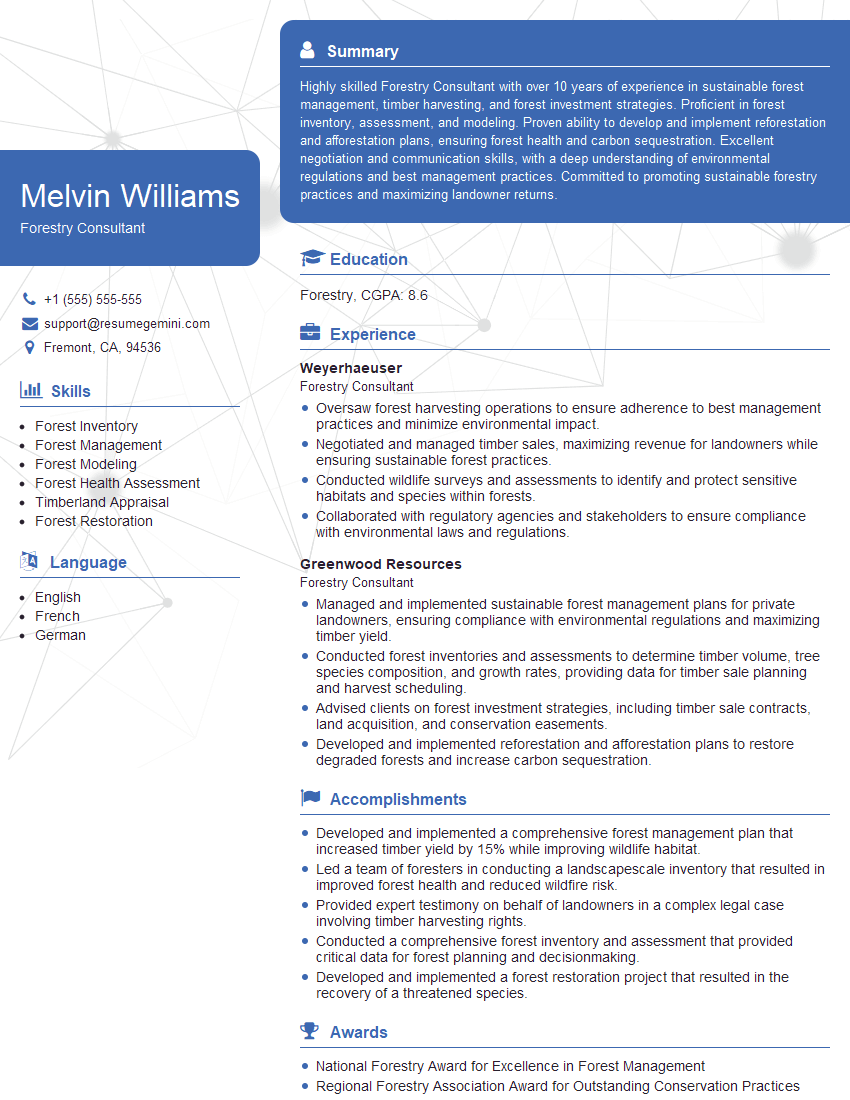
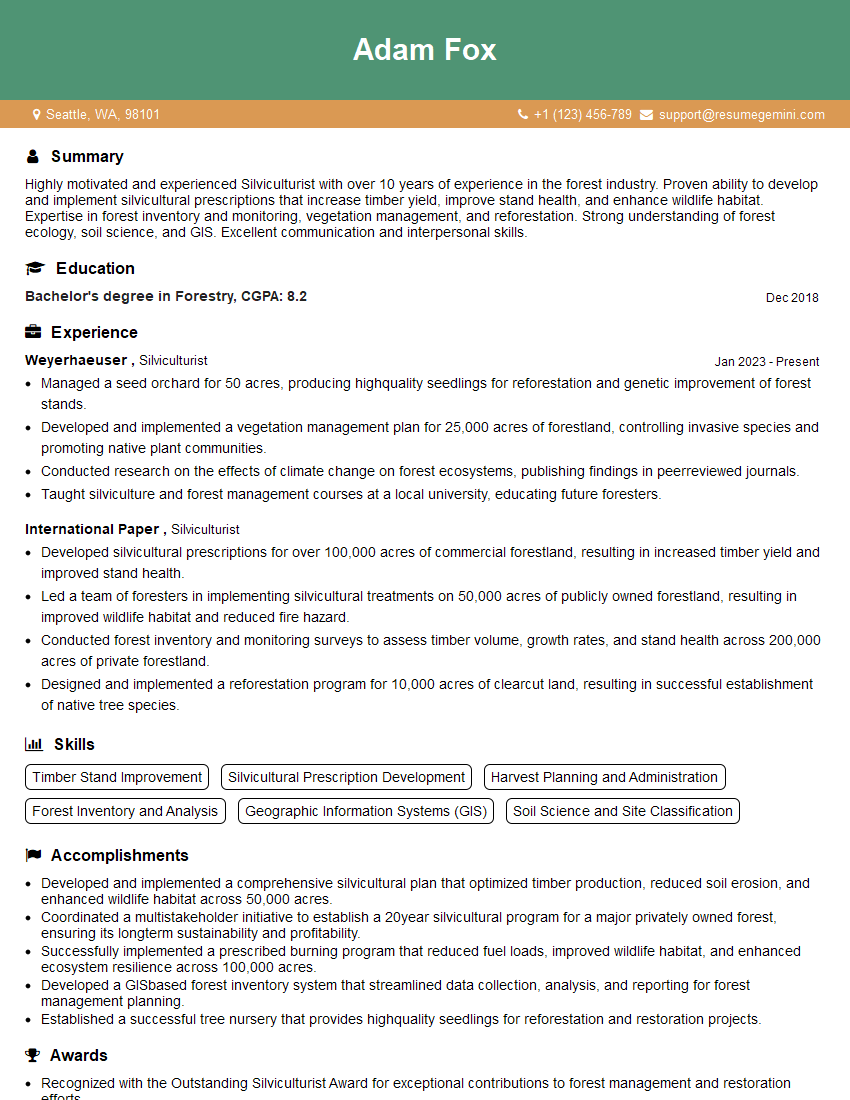
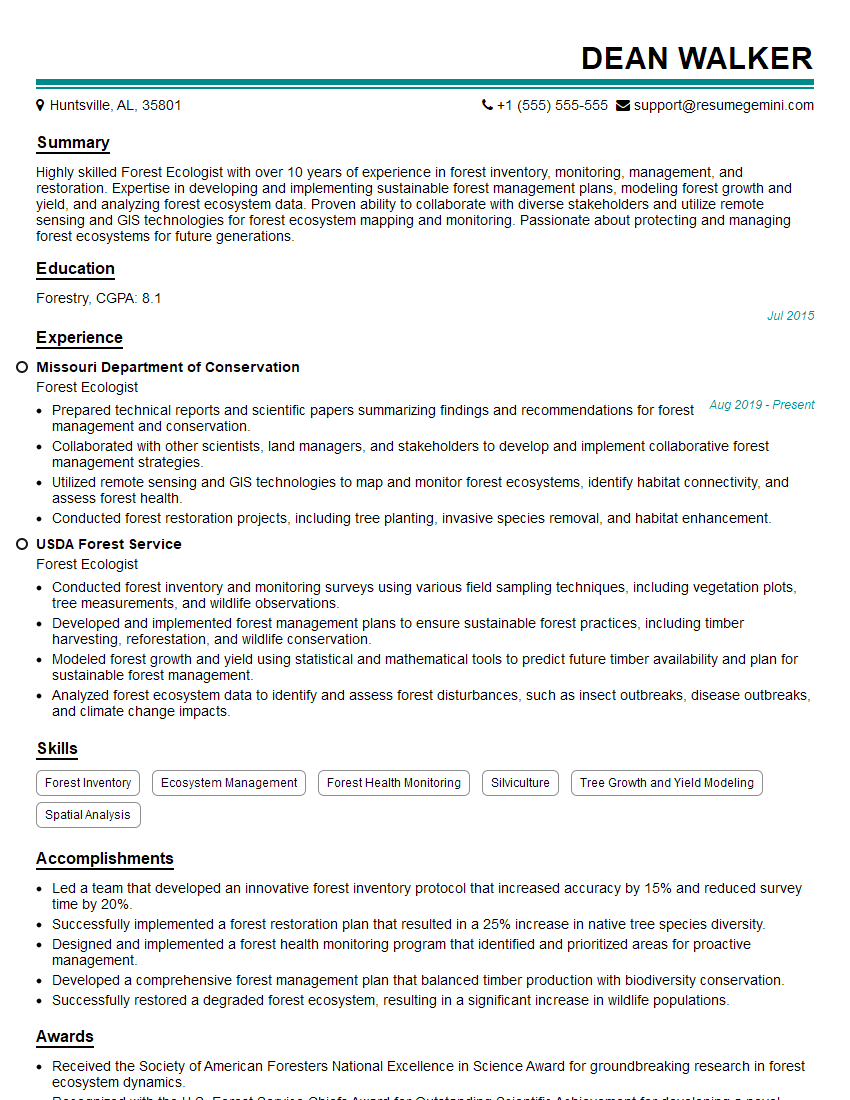
Mastering Sustainable Forest Management Planning is crucial for advancing your career in this growing field. It demonstrates your commitment to environmental stewardship and your ability to apply scientific principles to real-world challenges. To significantly improve your job prospects, crafting an ATS-friendly resume is essential. ResumeGemini can be a trusted partner in this process, helping you build a powerful resume that highlights your skills and experience effectively. ResumeGemini provides examples of resumes tailored to Sustainable Forest Management Planning to guide you. Invest the time to create a compelling resume – it’s your first impression to potential employers.
Explore more articles
Users Rating of Our Blogs
Share Your Experience
We value your feedback! Please rate our content and share your thoughts (optional).
What Readers Say About Our Blog
Really detailed insights and content, thank you for writing this detailed article.
IT gave me an insight and words to use and be able to think of examples