Every successful interview starts with knowing what to expect. In this blog, we’ll take you through the top Test and Measurement Equipment (T&M) interview questions, breaking them down with expert tips to help you deliver impactful answers. Step into your next interview fully prepared and ready to succeed.
Questions Asked in Test and Measurement Equipment (T&M) Interview
Q 1. Explain the difference between accuracy and precision in measurement.
Accuracy and precision are crucial concepts in measurement, often confused but distinct. Accuracy refers to how close a measured value is to the true value. Precision, on the other hand, refers to how close repeated measurements are to each other. Think of it like archery: a highly accurate archer consistently hits the bullseye (true value), while a highly precise archer’s arrows are all clustered together, regardless of whether they hit the bullseye. A measurement can be precise but inaccurate (arrows clustered far from the bullseye), accurate but imprecise (arrows scattered around the bullseye), both accurate and precise (arrows clustered on the bullseye), or neither.
Example: Imagine you’re measuring a 10cm long rod. An accurate measurement might be 10.02cm, while a precise measurement might be 9.98cm, 9.99cm, and 10.00cm (average 9.99cm). The latter is more precise but slightly less accurate.
Q 2. Describe various types of measurement errors and how to mitigate them.
Measurement errors can be broadly classified into systematic and random errors. Systematic errors are consistent and repeatable, stemming from faulty equipment, incorrect calibration, or environmental factors. Random errors are unpredictable and vary from measurement to measurement, often due to limitations in the equipment or the observer’s skill.
- Systematic Errors: Examples include offset errors (a consistently high or low reading), scale errors (non-linearity in the measurement scale), and environmental errors (temperature fluctuations affecting the measurement). Mitigation involves careful calibration, using high-quality equipment, and controlling environmental conditions.
- Random Errors: These result from unpredictable fluctuations. Mitigation involves averaging multiple readings, improving measurement techniques, and using more sensitive equipment.
Example: A poorly calibrated thermometer consistently reads 2 degrees Celsius higher than the actual temperature (systematic error). Variations in reading a dial gauge due to parallax (random error) can be minimized by using optical aids and multiple readings.
Q 3. What are the key characteristics of a good calibration standard?
A good calibration standard needs several key characteristics: high accuracy (traceable to a national or international standard), stability (maintaining its calibrated value over time), and traceability (a documented chain of comparisons to ensure accuracy). It should also possess appropriate resolution, range and uncertainty to meet the specific needs of calibration. Furthermore, it must be durable enough to withstand the rigors of regular use and have low uncertainty.
Example: A precision resistor used to calibrate a multimeter needs to have an extremely stable resistance value, accurately known to a high degree of certainty, and its calibration certificate should trace back to a national standards laboratory.
Q 4. How do you determine the appropriate test equipment for a specific application?
Selecting appropriate test equipment involves considering several factors. First, define the measurement parameter (voltage, current, frequency, etc.) and the required accuracy, precision, and range. Next, consider the signal characteristics (frequency, amplitude, impedance). Finally, account for the environment (temperature, humidity) and safety requirements. A detailed specification outlining these factors helps narrow down the options.
Example: Testing a high-frequency signal requires an oscilloscope with high bandwidth; measuring low currents necessitates a sensitive multimeter with appropriate input impedance. Similarly, working with high voltages requires equipment with adequate insulation and safety features.
Q 5. Explain the concept of traceability in calibration.
Traceability in calibration is a crucial concept ensuring the reliability of measurements. It establishes an unbroken chain of comparisons that links a specific measurement instrument to a national or international standard. This chain documents how the accuracy of the instrument is verified, confirming its measurements are valid and consistent with known standards. A calibration certificate typically provides this traceability information.
Example: A calibrated multimeter’s accuracy is verified by comparing its readings against a known standard (e.g., a calibrated voltage source). The calibration standard itself has its accuracy verified by a higher-level standard, ultimately leading back to national standards bodies like NIST (National Institute of Standards and Technology).
Q 6. Describe different types of signal generators and their applications.
Signal generators produce various electronic signals used in testing and development. Common types include:
- Function Generators: Produce common waveforms like sine, square, triangle, and sawtooth waves, typically used for circuit testing and education.
- Arbitrary Waveform Generators (AWGs): Generate complex and user-defined waveforms, valuable for advanced testing and signal simulation.
- Pulse Generators: Create precise pulses with adjustable parameters like width, amplitude, and repetition rate, often used in timing and digital circuit testing.
- Sweep Generators: Produce signals whose frequency or amplitude changes over time, vital in characterizing components’ frequency response.
Applications: Function generators are widely used in basic circuit testing. AWGs are crucial in simulating complex signals for communication systems or biomedical devices. Pulse generators are essential for testing digital circuits and timing systems. Sweep generators are used in filter and amplifier characterization.
Q 7. What are the key performance parameters of an oscilloscope?
Key performance parameters of an oscilloscope include:
- Bandwidth: Determines the highest frequency the oscilloscope can accurately measure.
- Rise Time: The time it takes for the signal to transition between 10% and 90% of its amplitude. A faster rise time allows for more accurate measurement of fast signals.
- Vertical Resolution: The number of bits used to represent the signal’s amplitude, impacting the accuracy of measurements.
- Sampling Rate: The number of samples taken per second, crucial for accurately capturing fast-changing signals.
- Input Impedance: Affects the oscilloscope’s impact on the circuit under test; high impedance minimizes loading effects.
- Vertical and Horizontal Sensitivity: Determine the voltage and time scales used for the display.
Example: A high-bandwidth oscilloscope with a fast sampling rate is needed for accurately observing high-frequency signals in a digital communication system. Low vertical sensitivity helps visualize small signals, while high vertical sensitivity is necessary for observing large signals.
Q 8. How do you troubleshoot a malfunctioning data acquisition system?
Troubleshooting a malfunctioning data acquisition (DAQ) system requires a systematic approach. Think of it like diagnosing a car problem – you wouldn’t start by replacing the engine; you’d check the basics first. We start with the simplest checks and progressively move to more complex issues.
- Verify Connections: Begin by checking all cables and connectors. Loose or faulty connections are the most common cause of DAQ problems. Ensure all ground connections are secure. This is like making sure your car’s fuel line is properly attached before suspecting engine failure.
- Power Supply: Confirm the DAQ system is receiving the correct voltage and current. A simple power supply issue can manifest as complete system failure or erratic readings.
- Software Configuration: Check the DAQ software settings. Incorrect sampling rates, trigger settings, or gain adjustments can lead to inaccurate or missing data. Imagine setting your car’s cruise control to the wrong speed – the result won’t be as expected.
- Sensor Calibration: Verify sensor calibrations and check for sensor faults. A faulty sensor will invariably lead to incorrect measurements. It’s like using a faulty speedometer; your speed readings will be unreliable.
- Signal Integrity: Examine the input signals for noise or interference. This often involves using an oscilloscope to visualize the signal and identify noise sources. Shielding cables and using proper grounding techniques can resolve these issues. Think of this as eliminating static interference in your radio for clearer reception.
- Hardware Diagnostics: If the problem persists, more in-depth hardware diagnostics may be needed. Consult the DAQ system’s documentation for self-diagnostic routines or error codes. This is analogous to using your car’s onboard diagnostic system.
- System Components: If the issue is not resolved after checking the previous points, we will check the various components of the system such as A/D converters, amplifiers and other integrated circuitry. We might employ specialized tools like logic analyzers or digital multimeters.
Remember, documenting each step of the troubleshooting process is crucial for efficient problem-solving and future reference. A detailed log can save considerable time and effort.
Q 9. Explain the principles of digital signal processing in T&M.
Digital Signal Processing (DSP) in Test and Measurement is the use of digital computers to analyze and manipulate signals. It’s like having a highly sophisticated audio editor for your measurements. Instead of relying solely on analog circuits, we use algorithms to process the signals, enabling capabilities that would be impossible or extremely complex in the analog domain.
Key principles include:
- Sampling: Converting a continuous analog signal into a discrete digital representation. The sampling rate is crucial and should follow the Nyquist-Shannon sampling theorem to avoid aliasing (distortion).
- Quantization: Representing the sampled values using a finite number of bits, introducing a degree of error.
- Filtering: Removing unwanted frequencies or noise from the signal using digital filters (e.g., low-pass, high-pass, band-pass). This can enhance the signal’s clarity.
- Signal Transformations: Applying mathematical transformations like Fourier transforms to analyze the frequency content of signals or Wavelet transforms for time-frequency analysis. This helps identify hidden patterns or periodicities.
- Signal Enhancement: Techniques like averaging and noise cancellation are used to improve the signal-to-noise ratio (SNR) and enhance the signal’s quality.
DSP allows us to perform sophisticated signal analysis, such as spectrum analysis, noise reduction, signal averaging, and more, all with high precision and repeatability.
Q 10. Describe different types of sensors and their measurement principles.
Sensors are the foundation of any measurement system, converting physical quantities into measurable signals. They’re like our senses, providing information about the world around us. The type of sensor you choose depends on the quantity you’re measuring.
- Temperature Sensors: Thermocouples (measure temperature difference via voltage), RTDs (Resistance Temperature Detectors – measure resistance change), thermistors (measure resistance change), and infrared thermometers are common examples. Their principles rely on the physical property changes (voltage, resistance) with temperature.
- Pressure Sensors: Piezoresistive sensors (measure resistance change due to pressure), capacitive sensors (measure capacitance change due to pressure), and strain gauge-based sensors measure pressure changes by detecting deformation.
- Displacement Sensors: Linear Variable Differential Transformers (LVDTs) use magnetic coupling, potentiometers measure position through resistance change, and optical sensors use light to measure distance.
- Strain Sensors: Strain gauges measure strain (deformation) by detecting changes in resistance. They are essential in stress and structural health monitoring.
- Force Sensors: Load cells are commonly used; they utilize strain gauges to measure force based on the deformation they experience.
- Accelerometers: These sensors measure acceleration using various principles, including piezoelectric effect (charge generation due to stress), capacitive sensing, or MEMS technology (Microelectromechanical Systems).
The choice of sensor depends critically on the specific measurement requirement (accuracy, range, sensitivity, environmental conditions), much like selecting the right tool for a specific job.
Q 11. How do you interpret a Bode plot?
A Bode plot is a graphical representation of a system’s frequency response, showing magnitude and phase as functions of frequency. It’s like a system’s fingerprint, revealing how it responds to different frequencies.
The plot typically consists of two graphs:
- Magnitude Plot: Shows the gain (or attenuation) of the system at different frequencies, usually plotted in decibels (dB). A higher magnitude indicates greater amplification at that frequency.
- Phase Plot: Shows the phase shift (in degrees) introduced by the system at different frequencies. The phase shift represents the time delay between the input and output signals.
By analyzing the Bode plot, you can determine:
- System Gain: The overall amplification or attenuation of the system.
- Bandwidth: The range of frequencies over which the system provides a usable gain.
- Resonant Frequencies: Frequencies at which the system exhibits a peak response.
- Stability: The system’s tendency to oscillate or remain stable.
For example, a sharp cutoff in the magnitude plot at a particular frequency indicates a good low-pass filter action. Similarly, a significant phase shift near the cutoff frequency indicates a potential instability problem.
Q 12. Explain the concept of signal-to-noise ratio (SNR).
The signal-to-noise ratio (SNR) quantifies the strength of a signal relative to the background noise. It’s like comparing the volume of your voice to the ambient noise in a crowded room. A high SNR means the signal is much stronger than the noise, ensuring accurate measurements.
SNR is typically expressed in decibels (dB) and calculated as:
SNR (dB) = 10 * log10(Signal Power / Noise Power)
A higher SNR indicates a better quality measurement. For example, an SNR of 40 dB indicates that the signal power is 10,000 times greater than the noise power, suggesting very good signal clarity. A low SNR, on the other hand, indicates a weak signal obscured by noise, leading to inaccurate or unreliable measurements.
Q 13. Describe different methods for noise reduction in measurements.
Noise reduction is crucial in T&M to improve measurement accuracy. It’s like cleaning a smudged photograph to reveal the true image. Several techniques can be employed:
- Averaging: Repeated measurements are averaged to reduce random noise. The random noise components tend to cancel each other out, leaving the true signal.
- Filtering: Digital or analog filters remove unwanted frequency components (noise) from the signal. A low-pass filter might be used to attenuate high-frequency noise.
- Shielding: Protecting sensitive circuitry and cables from electromagnetic interference (EMI) using metallic shields or specialized cables reduces noise picked up from the environment.
- Grounding: Proper grounding techniques minimize ground loops and common-mode noise, which can significantly degrade measurements.
- Differential Measurement: Measuring the difference between two signals can reduce common-mode noise, the noise present in both signals.
- Signal Conditioning: Techniques like amplification, impedance matching, and offset cancellation improve signal quality and minimize noise.
The choice of noise reduction technique depends on the type and source of the noise. It may also involve a combination of techniques.
Q 14. How do you perform a linearity test?
A linearity test assesses how well a system’s output is proportional to its input across its operating range. Think of it like checking the accuracy of a scale – you want the weight displayed to be directly proportional to the mass placed on it. Deviations from linearity introduce errors in measurements.
The test typically involves:
- Input Generation: Apply a series of known input values across the system’s input range.
- Output Measurement: Measure the corresponding output values for each input.
- Linearity Analysis: Compare the measured output values to the expected values based on a linear model (ideal behavior). Various methods can be used, such as least squares regression to find the best-fit line or analyzing deviations from a calibration curve.
- Linearity Error Calculation: Quantify the deviations from linearity; this is often expressed as a percentage of the full-scale range. This gives a measure of the system’s accuracy.
For example, a pressure sensor’s linearity might be specified as ±0.1% of full scale. This means the output will not deviate from the ideal linear response by more than 0.1% of the maximum measurable pressure.
Q 15. What are the different types of network analyzers and their applications?
Network analyzers are sophisticated instruments used to characterize the performance of networks, primarily in radio frequency (RF) and microwave applications. They measure various parameters like transmission and reflection coefficients (S-parameters), impedance, and gain across a wide frequency range. Different types exist, each suited for specific needs:
- Vector Network Analyzers (VNAs): VNAs measure both the magnitude and phase of S-parameters, providing a complete picture of the network’s behavior. They are crucial for designing and testing high-frequency circuits like antennas, filters, and amplifiers. Imagine designing a cell phone antenna – a VNA ensures it efficiently transmits and receives signals across various frequencies.
- Scalar Network Analyzers: These analyzers only measure the magnitude of S-parameters, simplifying measurements and reducing cost. They are suitable for applications where phase information isn’t critical, such as basic cable testing or component characterization.
- Modulation Domain Analyzers: These specialize in analyzing signals carrying information, like those in wireless communications. They dissect the signal to pinpoint modulation type, bandwidth, and signal quality, aiding in troubleshooting and optimizing wireless systems. Think about analyzing the signal strength and quality of a Wi-Fi router; this type of analyzer would be helpful.
The choice of analyzer depends on the application’s complexity and the required level of detail in the measurements. VNAs are the workhorses for high-precision applications, while scalar network analyzers and modulation domain analyzers address specific, more streamlined tasks.
Career Expert Tips:
- Ace those interviews! Prepare effectively by reviewing the Top 50 Most Common Interview Questions on ResumeGemini.
- Navigate your job search with confidence! Explore a wide range of Career Tips on ResumeGemini. Learn about common challenges and recommendations to overcome them.
- Craft the perfect resume! Master the Art of Resume Writing with ResumeGemini’s guide. Showcase your unique qualifications and achievements effectively.
- Don’t miss out on holiday savings! Build your dream resume with ResumeGemini’s ATS optimized templates.
Q 16. Explain the concept of impedance matching and its importance in measurements.
Impedance matching refers to aligning the impedance of a source (like a signal generator) with the impedance of a load (like an antenna or circuit). Think of it like trying to fill a bucket with water – if the hose (source) and bucket opening (load) are mismatched, water will spill or the filling will be slow and inefficient. In electronics, impedance mismatch leads to signal reflections, power loss, and distortion.
Imagine sending a signal down a transmission line. If there’s an impedance mismatch at the end, part of the signal will reflect back, potentially interfering with the original signal. This is similar to an echo. Efficient power transfer demands impedance matching. To quantify this mismatch, the return loss is commonly used – a higher return loss indicates better matching (less reflection).
Techniques to achieve impedance matching include using matching networks (circuits designed to transform impedance) or choosing components with appropriate impedances. In applications requiring high-power transmission, like radar systems or satellite communications, impedance matching is absolutely critical for optimal performance and to avoid damaging equipment from reflected power.
Q 17. How do you use a multimeter to measure voltage, current, and resistance?
A multimeter is a versatile instrument used to measure voltage, current, and resistance, among other things. It’s a staple in every electronics lab and technician’s toolkit.
- Measuring Voltage: Set the multimeter to the appropriate voltage range (DC or AC), ensuring the range is higher than the expected voltage. Connect the red lead (positive) to the higher potential point and the black lead (negative) to the lower potential point. The display shows the voltage.
- Measuring Current: Set the multimeter to the appropriate current range (DC or AC). The multimeter needs to be placed *in series* with the circuit to measure the current flowing through it. Carefully connect the leads; incorrect connections can damage the meter. Note that you often need to break the circuit to insert the meter.
- Measuring Resistance: Set the multimeter to the resistance range (ohms). Ensure the circuit is completely de-energized before measuring resistance. Connect the leads across the component; the display shows the resistance value.
Always select the appropriate range to avoid damaging the multimeter or obtaining inaccurate readings. Think of it like using the right measuring cup for cooking – trying to measure a cup of flour with a teaspoon will be inaccurate and tedious!
Q 18. Describe the different types of power supplies and their applications.
Power supplies provide the electrical energy needed for electronic circuits and systems. They come in various types, each optimized for different applications:
- Linear Power Supplies: These regulate voltage by dissipating excess power as heat. They offer good voltage regulation but can be less efficient than switching supplies, particularly at higher power levels. They’re commonly used in low-power applications.
- Switching Power Supplies (SMPS): These use high-frequency switching circuits for regulation. They’re significantly more efficient than linear supplies, making them ideal for higher-power applications where heat dissipation is a concern. Computers and servers often use SMPS.
- DC Power Supplies: These supplies output a stable DC voltage and are essential for testing and powering electronic circuits and systems. They often offer adjustable voltage and current levels.
- AC Power Supplies: These provide an AC voltage output and are commonly used for testing AC-powered devices.
Choosing the right power supply involves considering factors like the required voltage, current, efficiency, regulation, and the nature of the load (e.g., capacitive, inductive). A wrong choice can lead to circuit malfunction or even damage.
Q 19. Explain the principles of time-domain reflectometry (TDR).
Time-Domain Reflectometry (TDR) is a technique used to locate faults or discontinuities in transmission lines (cables, traces on printed circuit boards). It works by sending a short electrical pulse down the line and analyzing the reflections that come back. The time it takes for a reflection to return correlates to the distance of the fault.
Imagine throwing a ball against a wall; the time it takes for the ball to return depends on the distance to the wall. Similarly, in TDR, the time elapsed between sending a pulse and receiving a reflection is directly related to the location of the fault. The amplitude of the reflected pulse indicates the severity of the fault – a large reflection suggests a significant discontinuity.
TDR finds applications in various fields including telecommunications, networking, and high-speed digital circuit board design. It’s instrumental in identifying cable breaks, shorts, or mismatches in impedance, which can lead to signal degradation.
Q 20. What are the different types of spectrum analyzers and their applications?
Spectrum analyzers are instruments that display the power level of a signal as a function of frequency. They’re essential for analyzing the frequency content of signals, identifying spurious emissions, and characterizing the bandwidth of various communication systems.
- Real-Time Spectrum Analyzers (RTSAs): These capture the entire signal spectrum instantaneously, making them ideal for analyzing fast-changing signals. Imagine analyzing a rapidly changing radar signal; an RT-SA can handle this quickly.
- Sweep Spectrum Analyzers: These sweep through the frequency range, measuring the power at each frequency sequentially. They are more common and generally less expensive than RTSAs, but slower at capturing fast changes.
Applications range from analyzing radio signals to testing audio equipment. For instance, in wireless communications, spectrum analyzers help ensure a device complies with regulations and operates without interfering with other signals. In audio, they can pinpoint unwanted noise or distortion in the signal.
Q 21. Explain the concept of harmonic distortion and how to measure it.
Harmonic distortion refers to the presence of unwanted frequencies in a signal that are integer multiples (harmonics) of the fundamental frequency. For example, if a signal has a fundamental frequency of 1 kHz, its harmonics would be 2 kHz, 3 kHz, 4 kHz, and so on. These harmonics are created by non-linearity in the system processing the signal.
Imagine a clean musical note played on an instrument – that’s the fundamental. Harmonic distortion introduces other, less pleasant notes, altering the original sound. It is usually expressed as a percentage of the fundamental frequency.
Measuring harmonic distortion involves using a distortion analyzer or a spectrum analyzer. The analyzer displays the power spectral density of the signal, showing the amplitude of the fundamental and its harmonics. The total harmonic distortion (THD) is calculated as the ratio of the root-mean-square (RMS) sum of the harmonic components to the RMS amplitude of the fundamental.
High harmonic distortion is undesirable in many applications, as it introduces unwanted noise and can affect the performance and quality of the signal. In audio systems, this leads to a distorted sound quality, while in communication systems, it can lead to interference and reduced data transmission.
Q 22. Describe different methods for calibrating temperature sensors.
Calibrating temperature sensors involves comparing their readings to a known accurate standard. Several methods exist, each with its own strengths and weaknesses. The choice depends on the required accuracy, the type of sensor (thermocouple, RTD, thermistor), and the temperature range.
Dry-block Calibrators: These devices provide a stable and uniform temperature environment. You place the sensor in the block, and the calibrator displays the actual temperature. This method is excellent for calibrating many types of sensors across a range of temperatures, offering good accuracy and ease of use. For example, I’ve used this method extensively to calibrate thermocouples in our production line, ensuring consistent readings for quality control.
Liquid Baths: Similar to dry-block calibrators but use a liquid (usually oil or water) as the heat transfer medium. These are often preferred for high-precision calibrations or for calibrating sensors at very low temperatures, as they achieve greater uniformity. I remember once using a liquid bath for calibrating a platinum resistance thermometer (PRT) for a cryogenic application; the precise temperature control was vital.
Fixed-Point Calibration: This technique leverages the known melting or boiling points of substances (e.g., the triple point of water, the melting point of gallium). The sensor is immersed in the substance while it transitions phase, providing a highly accurate reference point. This method is frequently used for high-accuracy calibrations and establishing traceability to national standards. In my past experience, we’ve utilized this method in our lab for creating a highly accurate temperature reference during research projects.
Comparison Calibration: This involves comparing the readings of the sensor under test to a known reference sensor. Both sensors are subjected to the same temperature conditions, and any discrepancies indicate the error in the sensor being calibrated. The reference sensor needs to be previously calibrated using one of the methods above. This method is cost-effective and convenient for on-site calibrations.
Q 23. How do you perform a frequency response analysis?
Frequency response analysis determines how a system or component responds to different input frequencies. In T&M, this is crucial for characterizing amplifiers, filters, and other frequency-dependent devices. It’s essentially about understanding the gain and phase shift at various frequencies.
The process usually involves applying a sinusoidal input signal across a range of frequencies to the system under test (SUT) and measuring the output signal at each frequency. The ratio of the output amplitude to the input amplitude represents the gain at that frequency, while the phase difference between the input and output signals indicates the phase shift.
Methods:
Sweep Sine Method: A sinusoidal signal of varying frequency is applied, and the gain and phase are measured at each frequency point. This provides a detailed characterization of the response.
Network Analyzer: This specialized T&M instrument automatically sweeps the frequency range and measures both amplitude and phase. It’s a highly efficient and accurate method.
Impulse Response Method: An impulse signal (a very short pulse) is applied, and the output is measured. The Fourier transform of the impulse response gives the frequency response. This method is less common for straightforward frequency response but particularly useful when dealing with non-linear systems.
Data Presentation: The results are typically displayed as Bode plots – two graphs showing the gain (in dB) and phase shift (in degrees) as functions of frequency.
Example: Imagine testing an audio amplifier. A frequency response analysis will show if the amplifier amplifies all frequencies equally or if there are certain frequencies it boosts or attenuates, potentially leading to sound distortion. This information is vital for optimizing the amplifier’s design.
Q 24. What are the safety precautions when working with high-voltage equipment?
Working with high-voltage equipment demands meticulous safety protocols to prevent electrical shocks, burns, and other serious injuries. The primary concern is minimizing the risk of contact with energized circuits.
Lockout/Tagout Procedures: Before working on any high-voltage equipment, always implement a lockout/tagout procedure to ensure the power is completely disconnected and cannot be accidentally re-energized. This involves physically locking and tagging the circuit breaker or disconnect switch to prevent unauthorized access.
Personal Protective Equipment (PPE): This includes insulated gloves, safety glasses, and arc-flash protective clothing (depending on the voltage level). Regular inspection and testing of PPE is essential.
Grounding and Bonding: Ensure proper grounding to dissipate any stray voltage and bonding to prevent voltage differences between connected equipment. This minimizes the risk of electrical shock.
High-Voltage Probes and Instruments: Use appropriately rated probes and instruments designed for high-voltage applications. Incorrectly rated equipment can lead to failure and potentially dangerous consequences.
Awareness of Hazards: A comprehensive understanding of the hazards associated with high-voltage equipment is paramount. Training is essential to ensure the safe operation and maintenance of high-voltage systems.
Emergency Procedures: Establish clear emergency procedures and ensure all personnel are aware of them. This includes the location of emergency shut-off switches, first-aid stations, and emergency contact numbers.
Example: In one instance, I was involved in testing a high-voltage power supply. We meticulously followed lockout/tagout procedures, used appropriate PPE, and confirmed the absence of voltage before commencing the test. Such rigorous adherence to safety protocols ensures a safe working environment.
Q 25. Explain the difference between analog and digital signal processing in the context of T&M.
Both analog and digital signal processing are used in T&M, but they differ significantly in their approaches.
Analog Signal Processing: This involves manipulating signals directly in their analog form using electronic circuits like operational amplifiers (op-amps), filters, and comparators. Think of older oscilloscopes or spectrum analyzers that used analog circuits to process signals. The advantage is speed and simplicity for certain applications, but it’s typically limited in terms of accuracy, flexibility, and programmability.
Digital Signal Processing (DSP): This involves converting analog signals into digital form (using Analog-to-Digital Converters or ADCs), manipulating them using algorithms implemented in software or dedicated hardware (Digital Signal Processors or DSPs), and converting the result back into analog form (using Digital-to-Analog Converters or DACs). Modern digital oscilloscopes, data acquisition systems, and many other instruments heavily rely on DSP. The advantage here lies in the flexibility, programmability, accuracy, and ability to perform complex signal processing operations (like Fourier transforms, filtering, etc.).
Example: Consider measuring a noisy signal. Analog processing might employ a simple RC filter to reduce noise. DSP, however, allows for sophisticated filtering techniques like Kalman filtering, providing much better noise reduction with minimal signal distortion. In my experience, digital signal processing’s ability to customize algorithms and enhance signal quality is invaluable.
Q 26. Describe your experience with LabVIEW or similar test automation software.
I have extensive experience with LabVIEW, using it for several years to develop automated test systems and data acquisition systems. I’ve used it in various projects to automate repetitive testing tasks, create custom user interfaces for test equipment control and data visualization, and integrate with different hardware instruments such as power supplies, oscilloscopes, and multimeters.
For example, I developed a LabVIEW application that automated the testing of a high-speed communication circuit. The application controlled the signal generator, controlled the signal generator, acquired data from an oscilloscope using GPIB, analyzed the data, and produced a comprehensive test report, greatly improving efficiency and reducing manual errors. I’m proficient in using LabVIEW’s data acquisition tools, signal processing functions, and data analysis capabilities. Furthermore, I have experience integrating LabVIEW with databases for storing and managing test data.
Beyond LabVIEW, I also have familiarity with TestStand, another National Instruments software package focused on test management and sequence control, which complements my LabVIEW skills.
Q 27. How do you manage large datasets obtained from automated test systems?
Managing large datasets from automated test systems requires a structured approach. The key is efficient storage, retrieval, and analysis. Simply storing everything in a spreadsheet isn’t feasible or efficient.
Database Management Systems (DBMS): Storing data in a relational database (like MySQL, PostgreSQL, or SQL Server) allows for organized data storage, retrieval, and querying. This is essential for large volumes of data. I’ve successfully implemented SQL database solutions for various test applications.
Data Compression: Employing compression techniques (like lossless compression methods such as zip or gzip) reduces storage space requirements without compromising data integrity. This is crucial when dealing with terabytes of data.
Data Reduction Techniques: Applying appropriate data reduction techniques to filter out unnecessary or redundant data can significantly improve efficiency and focus analysis on relevant information. This might involve downsampling, averaging, or other techniques depending on the data and application. This is something I’ve focused on throughout my career.
Data Visualization Tools: Using data visualization tools (like MATLAB, Python with libraries like Matplotlib or Seaborn, or specialized data analysis software) enables efficient exploration and interpretation of the vast datasets. Creating insightful visualizations such as histograms, scatter plots, and trend lines can greatly aid in understanding the data.
Example: In a recent project involving the testing of thousands of electronic components, we implemented a SQL database to store the test results. This allowed us to quickly query the database for specific data points, generate reports, and perform statistical analysis to identify trends and potential failures. The structured approach ensured efficient data management and analysis.
Q 28. Explain your experience with different types of data analysis techniques used in T&M.
My experience encompasses a wide range of data analysis techniques relevant to T&M. The selection of appropriate techniques depends on the nature of the data and the objectives of the analysis.
Statistical Analysis: This is fundamental in T&M. I regularly use techniques like hypothesis testing, regression analysis, ANOVA (Analysis of Variance), and control charts for evaluating measurement uncertainty, identifying outliers, and assessing process capability. This includes calculating means, standard deviations, and other statistical parameters.
Signal Processing Techniques: Methods like Fast Fourier Transforms (FFTs) for spectral analysis, wavelet transforms for time-frequency analysis, and various filtering techniques are commonly employed to extract meaningful information from signals. I frequently use these to characterize signals and analyze noise.
Machine Learning (ML) and Artificial Intelligence (AI): In recent years, I’ve been incorporating ML techniques, such as classification and regression algorithms (Support Vector Machines, Neural Networks, etc.), for tasks like fault detection, predictive maintenance, and anomaly detection in automated test systems. This is a growing field in T&M.
Time Series Analysis: Often employed when analyzing data collected over time, including techniques such as ARIMA (Autoregressive Integrated Moving Average) modeling for forecasting and trend analysis, particularly useful in process monitoring and stability assessment.
Example: In one project, I used FFTs to analyze the frequency spectrum of a motor’s vibration signal to identify potential bearing failures. In another, I employed a Support Vector Machine to classify different types of faults in electronic components based on their test data.
Key Topics to Learn for Test and Measurement Equipment (T&M) Interview
- Signal Analysis: Understanding different signal types (analog, digital, RF), frequency domain analysis (FFT, spectrum analyzers), and time domain analysis (oscilloscopes).
- Measurement Principles: Grasping the fundamental principles behind various measurements like voltage, current, resistance, capacitance, inductance, and power. Understand sources of error and uncertainty in measurements.
- Calibration and Standards: Knowledge of calibration procedures, traceability to national standards, and the importance of maintaining accurate equipment.
- Specific T&M Instruments: Become familiar with the operation and applications of key instruments like oscilloscopes, multimeters, signal generators, spectrum analyzers, power meters, and network analyzers. Focus on their practical applications in different testing scenarios.
- Data Acquisition and Analysis: Understanding how to acquire data from T&M instruments, process it using software tools, and interpret the results. Proficiency in data analysis techniques is crucial.
- Troubleshooting and Problem Solving: Develop your ability to diagnose issues with T&M equipment, interpret error messages, and implement effective troubleshooting strategies. Be prepared to discuss your approach to problem-solving in a technical context.
- Test Planning and Design: Understanding the process of planning and designing tests, selecting appropriate instruments, and documenting the results.
- Relevant Standards and Regulations: Familiarity with industry standards and regulations related to testing and measurement in your specific field (e.g., automotive, aerospace, telecommunications).
Next Steps
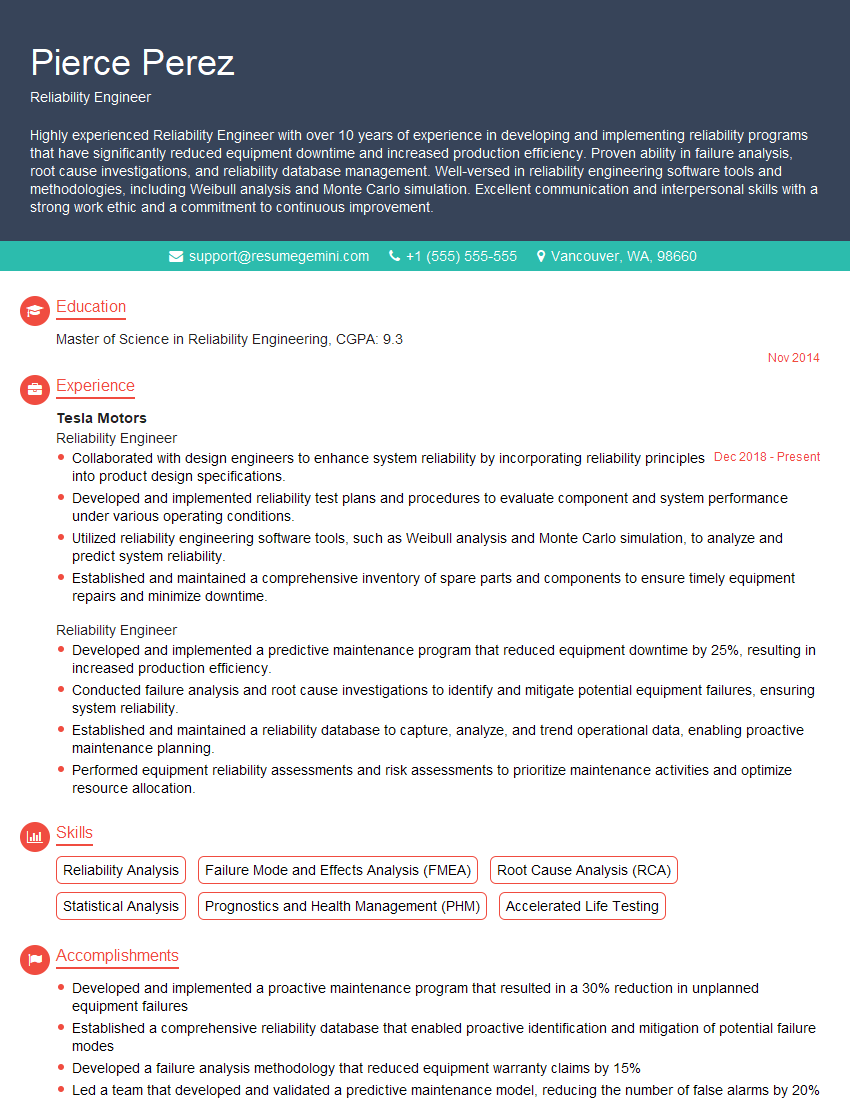
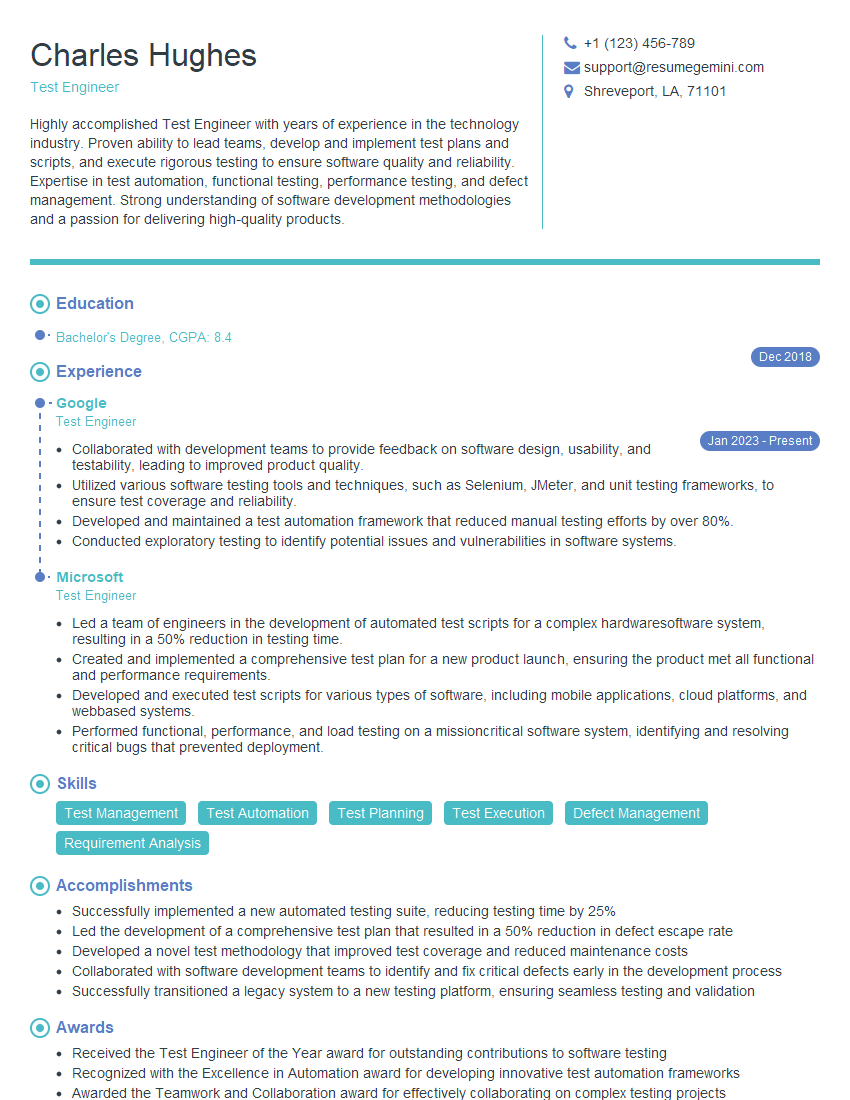
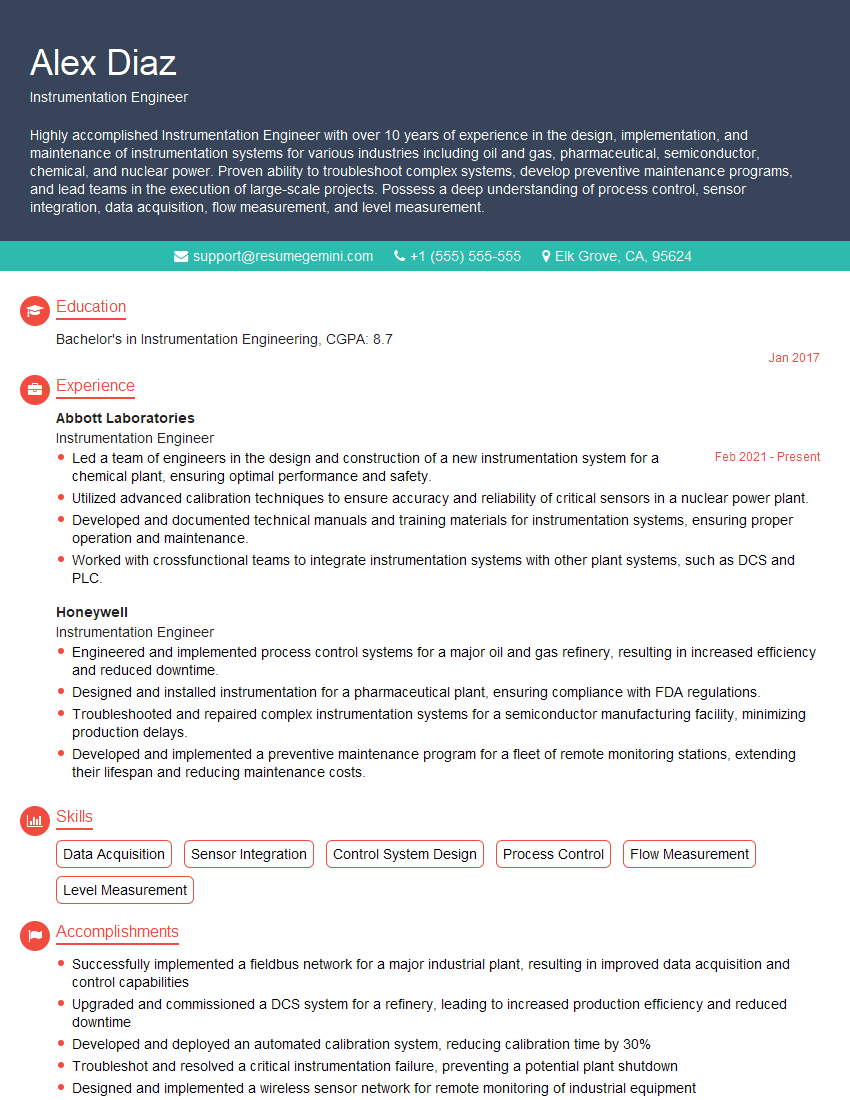
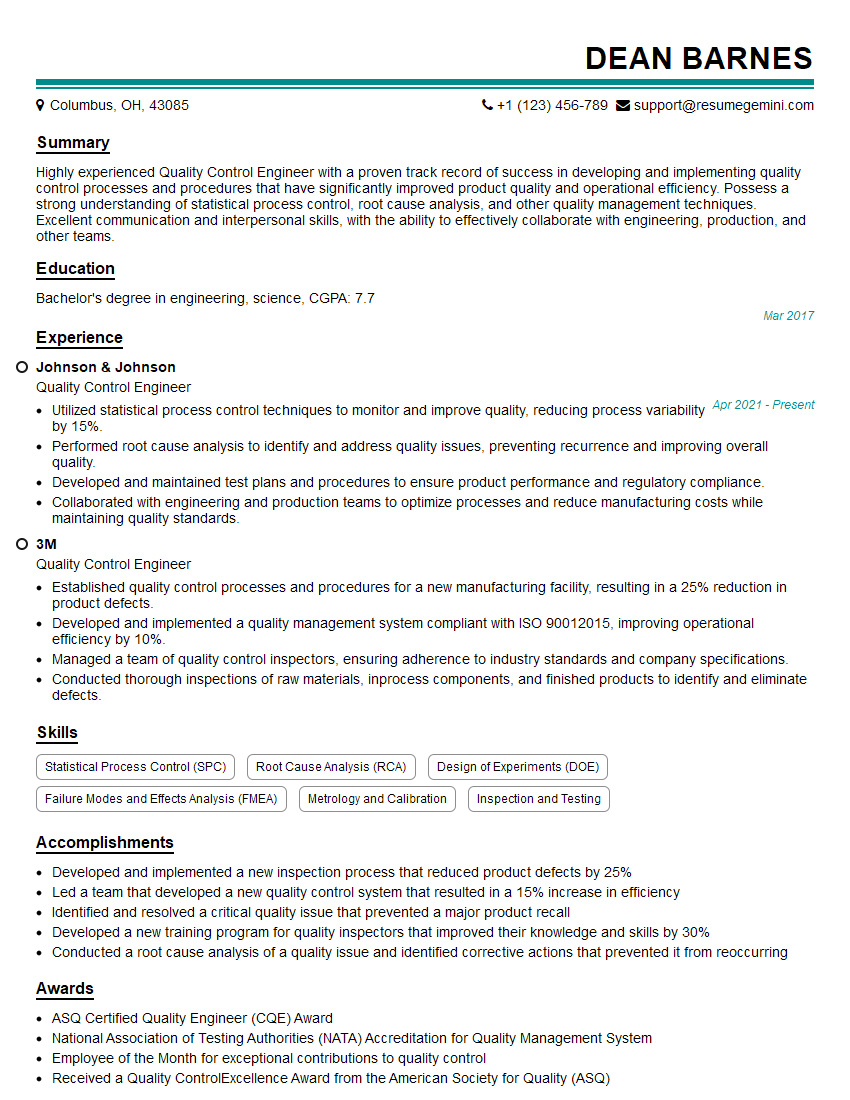
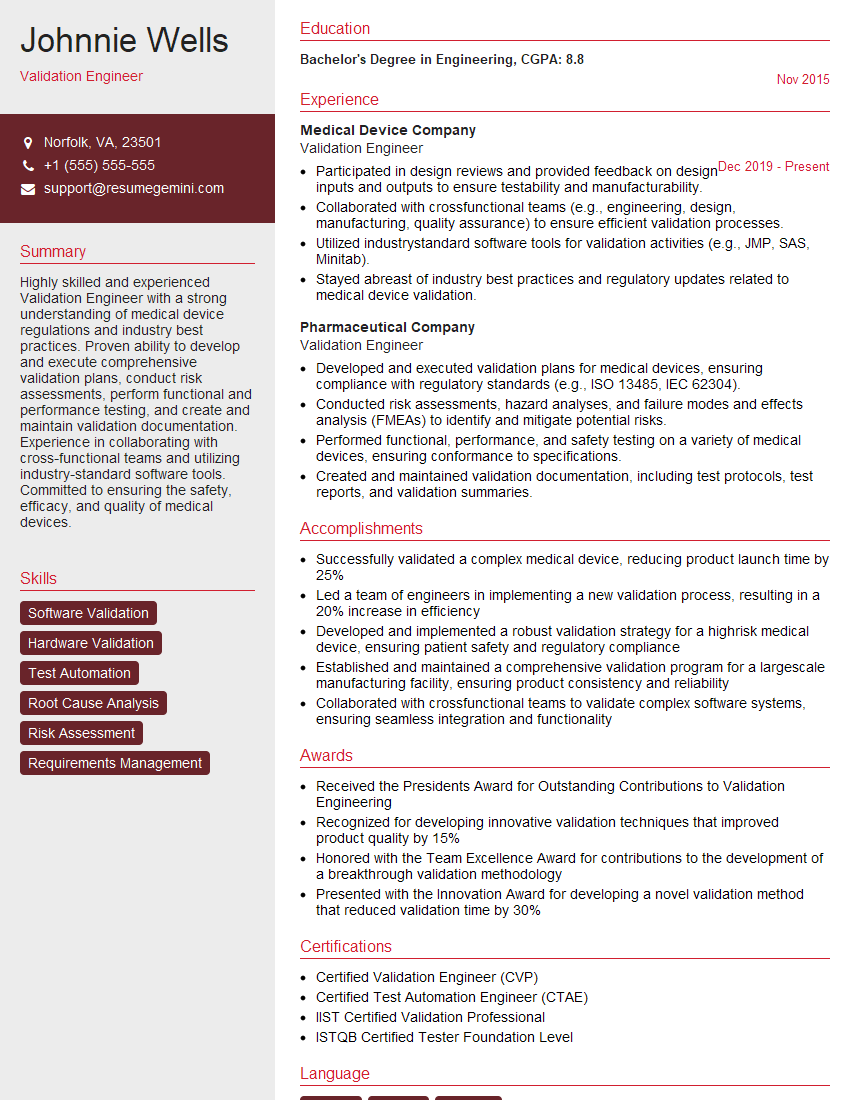
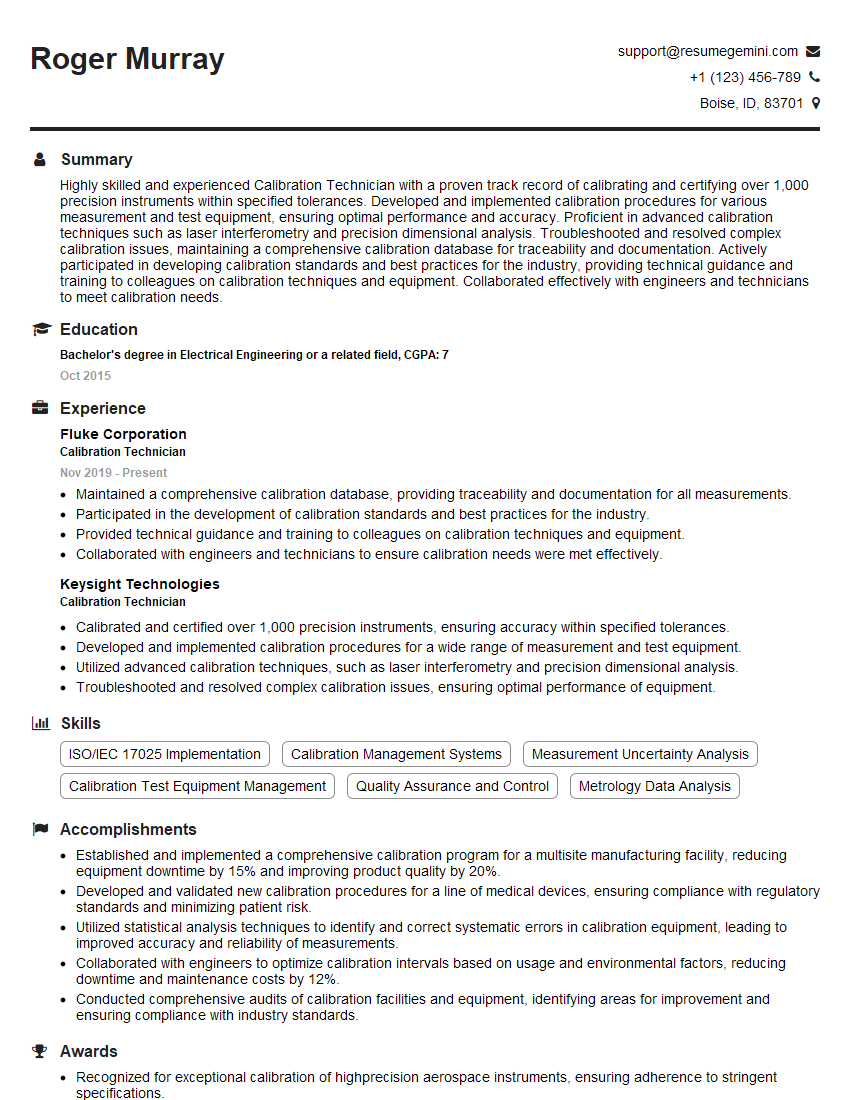
Mastering Test and Measurement Equipment (T&M) is crucial for a successful and rewarding career in engineering and related fields. A strong foundation in T&M principles and practical applications opens doors to diverse opportunities and allows for continuous professional growth. To maximize your job prospects, creating a compelling and ATS-friendly resume is vital. ResumeGemini is a trusted resource that can help you build a professional resume that showcases your skills and experience effectively. Examples of resumes tailored to Test and Measurement Equipment (T&M) roles are available to guide you.
Explore more articles
Users Rating of Our Blogs
Share Your Experience
We value your feedback! Please rate our content and share your thoughts (optional).
What Readers Say About Our Blog
Really detailed insights and content, thank you for writing this detailed article.
IT gave me an insight and words to use and be able to think of examples