The right preparation can turn an interview into an opportunity to showcase your expertise. This guide to Regulatory and Legal Compliance interview questions is your ultimate resource, providing key insights and tips to help you ace your responses and stand out as a top candidate.
Questions Asked in Regulatory and Legal Compliance Interview
Q 1. Explain your understanding of the Sarbanes-Oxley Act (SOX).
The Sarbanes-Oxley Act of 2002 (SOX) is a landmark piece of US legislation designed to protect investors by improving the accuracy and reliability of corporate disclosures. It was enacted in response to major corporate accounting scandals like Enron and WorldCom. At its core, SOX aims to enhance corporate responsibility and financial transparency.
Key aspects of SOX include:
- Section 302: Corporate Responsibility for Financial Reports: This section mandates that CEOs and CFOs personally certify the accuracy of financial statements. This creates a direct line of accountability for the top leadership.
- Section 404: Management Assessment of Internal Controls: This is arguably the most impactful section. It requires companies to establish and maintain a robust system of internal controls over financial reporting (ICFR) and to have an independent auditor attest to the effectiveness of those controls. This involves a thorough documentation and testing process.
- Increased Auditor Independence: SOX restricts the non-audit services that auditors can provide to their audit clients, thereby improving auditor independence and objectivity.
- Whistleblower Protection: The act provides protection for whistleblowers who report potential violations of securities laws.
In practice, SOX compliance requires a significant investment in resources, including the development of detailed internal control documentation, regular testing of controls, and ongoing monitoring. Failure to comply can lead to severe penalties, including fines and imprisonment.
For example, in a recent engagement, I assisted a company in implementing SOX compliance by designing and documenting their ICFR processes. This involved working closely with the finance team to map out their financial reporting workflows, identifying key controls, and developing testing procedures to assess their effectiveness.
Q 2. Describe your experience with HIPAA compliance.
The Health Insurance Portability and Accountability Act of 1996 (HIPAA) is a US law designed to protect the privacy and security of Protected Health Information (PHI). PHI includes any individually identifiable health information held or transmitted electronically, in paper form, or orally. HIPAA compliance is critical for organizations that handle PHI, including healthcare providers, health insurance plans, and healthcare clearinghouses.
My experience with HIPAA compliance includes:
- Developing and implementing HIPAA compliant policies and procedures: This involves creating documentation outlining how PHI is handled, stored, and transmitted, ensuring adherence to the Privacy Rule, Security Rule, and Breach Notification Rule.
- Conducting risk assessments: Identifying potential vulnerabilities to PHI, such as unauthorized access, data breaches, or improper disposal.
- Training employees on HIPAA regulations: Ensuring that staff understand their responsibilities related to the protection of PHI.
- Responding to HIPAA breaches: Developing procedures to promptly identify, investigate, and report HIPAA breaches to relevant authorities and affected individuals.
For instance, I worked with a healthcare provider to implement a new electronic health record (EHR) system, ensuring it met all HIPAA security standards. This involved configuring the system to meet access control requirements, enabling audit trails, and implementing appropriate encryption measures.
Q 3. How familiar are you with GDPR regulations?
The General Data Protection Regulation (GDPR) is a comprehensive data privacy regulation in the European Union (EU) and the European Economic Area (EEA). It aims to give individuals more control over their personal data and holds organizations accountable for how they process that data. GDPR applies to any organization that processes the personal data of EU/EEA residents, regardless of the organization’s location.
My familiarity with GDPR includes understanding its key principles, including:
- Lawfulness, fairness, and transparency: Data processing must have a lawful basis, be fair, and be transparent to the data subject.
- Purpose limitation: Data must be collected for specified, explicit, and legitimate purposes.
- Data minimization: Only necessary data should be collected.
- Accuracy: Data should be accurate and kept up to date.
- Storage limitation: Data should not be kept longer than necessary.
- Integrity and confidentiality: Data should be processed securely.
I am experienced in conducting GDPR gap analyses, identifying areas where an organization’s data processing practices may not comply with GDPR requirements. This often involves assessing data mapping exercises, reviewing consent mechanisms, and developing data breach response plans. I understand the concepts of Data Protection Officers (DPOs), data subject access requests (DSARs), and the implications of international data transfers.
Q 4. What is your approach to identifying and mitigating compliance risks?
My approach to identifying and mitigating compliance risks is proactive and systematic. It involves a risk-based approach, focusing on the most significant threats first. This includes:
- Identifying potential risks: This involves reviewing relevant regulations, industry best practices, and internal processes to pinpoint areas of potential vulnerability.
- Assessing the likelihood and impact of risks: This involves quantifying the potential damage that could result from a compliance failure.
- Developing and implementing mitigation strategies: This includes putting controls in place to reduce the likelihood or impact of identified risks. These might include policy changes, technological solutions, or employee training.
- Monitoring and reporting: Continuously monitoring the effectiveness of implemented controls and reporting on the overall compliance posture of the organization.
I utilize a variety of tools and techniques, such as risk registers, control matrices, and key risk indicators (KRIs) to manage the compliance risk profile. A real-world example involved a project where we used a risk assessment framework to analyze the potential implications of a data breach, enabling the prioritization of security controls based on the likelihood and severity of such an event.
Q 5. Explain your experience with conducting internal audits.
I have extensive experience conducting internal audits, both financial and operational, focusing on compliance requirements. My approach is methodical and objective, following a structured methodology. This involves:
- Planning and scoping: Defining the scope of the audit, identifying key controls, and establishing audit objectives.
- Fieldwork: Gathering evidence through document review, interviews, and observation.
- Testing of controls: Evaluating the design and operating effectiveness of controls.
- Reporting: Documenting findings, identifying deficiencies, and recommending corrective actions.
- Follow-up: Monitoring the implementation of corrective actions.
For example, during an internal audit of a financial institution, I identified a weakness in their anti-money laundering (AML) compliance program. This resulted in a recommendation to implement enhanced customer due diligence procedures and employee training to mitigate the risk of non-compliance.
Q 6. How would you handle a situation where a company policy conflicts with a regulatory requirement?
When a company policy conflicts with a regulatory requirement, the regulatory requirement always takes precedence. Company policy must be amended to align with the legal and regulatory framework. Ignoring a regulatory requirement can lead to significant penalties and reputational damage.
My approach involves:
- Identifying the conflict: Carefully review both the company policy and the relevant regulatory requirement to fully understand the discrepancy.
- Determining the root cause: Understand why the conflict exists—was the policy outdated, poorly understood, or created without considering the regulatory landscape?
- Developing a solution: Work with legal counsel and relevant stakeholders to develop a revised policy that is both compliant with the regulation and meets the company’s operational needs. This may involve seeking clarification from regulatory bodies.
- Implementing the solution: Communicate the revised policy to all affected personnel and ensure its effective implementation. Training may be necessary.
- Monitoring and reporting: Monitor compliance with the revised policy to ensure the conflict has been effectively resolved and ongoing compliance is maintained.
A practical example involved a situation where a company’s data retention policy conflicted with GDPR’s data minimization principles. We revised the policy to adhere to GDPR, focusing on only retaining data necessary for specified, explicit, and legitimate purposes.
Q 7. Describe your experience with implementing a compliance program.
Implementing a successful compliance program requires a structured and comprehensive approach. It’s not a one-time project but an ongoing process of continuous improvement.
My experience in implementing compliance programs includes:
- Risk assessment: Identifying potential compliance risks across all relevant areas.
- Policy development: Creating clear and concise policies and procedures that reflect regulatory requirements and best practices.
- Training and awareness: Providing effective training programs for employees at all levels to ensure they understand their responsibilities and how to comply with the established policies.
- Monitoring and auditing: Implementing systems to monitor compliance and conduct regular audits to identify any weaknesses or gaps.
- Reporting and remediation: Reporting on compliance performance and developing and implementing corrective actions to address any identified deficiencies.
- Continuous improvement: Regularly reviewing and updating the compliance program to adapt to changing regulations and business needs.
In one case, I assisted an organization in implementing a comprehensive anti-bribery and corruption program, including the development of a robust code of conduct, ethics training, and a whistleblower hotline. This ensured alignment with the Foreign Corrupt Practices Act (FCPA) and similar international standards.
Q 8. How do you stay updated on changes in regulatory requirements?
Staying current with regulatory changes is paramount in my field. I utilize a multi-pronged approach. Firstly, I subscribe to reputable legal and compliance news sources like LexisNexis, Westlaw, and Bloomberg Law, which provide up-to-the-minute updates on legislation and case law. Secondly, I actively participate in professional organizations such as the Association of Corporate Counsel (ACC) and the Society of Corporate Compliance and Ethics (SCCE). These memberships offer access to webinars, conferences, and networking opportunities that expose me to leading experts and the latest trends. Thirdly, I maintain a robust network of contacts within regulatory bodies and other compliance professionals, fostering continuous learning through information exchange. Finally, I utilize specialized compliance software and databases to track regulatory updates relevant to the industries I serve. This proactive approach ensures I am always informed and able to anticipate potential changes impacting my clients.
Q 9. What is your experience with developing and delivering compliance training?
I have extensive experience in developing and delivering compliance training programs, tailoring them to specific audience needs and regulatory requirements. My approach involves a blended learning methodology, combining online modules, interactive workshops, and role-playing exercises. For example, I developed a comprehensive anti-bribery and corruption training program for a multinational corporation, incorporating real-life case studies and interactive scenarios to make the training engaging and impactful. The training program included pre- and post-tests to measure knowledge retention and incorporate ongoing feedback to ensure effectiveness. I also designed and implemented a data privacy training program based on GDPR and CCPA regulations, focusing on practical application of the rules in daily work scenarios. This approach ensured employees understood not just the theoretical aspects but also how to apply these regulations in their day-to-day tasks. Success is measured through improved employee understanding and reduced compliance incidents.
Q 10. How would you respond to a regulatory inquiry or audit?
Responding to a regulatory inquiry or audit requires a calm, organized, and proactive approach. My first step is to assemble a dedicated team with relevant expertise. We then meticulously gather all requested documentation and information, ensuring its accuracy and completeness. We meticulously document all communication and actions taken. Throughout the process, we maintain open and transparent communication with the regulatory body, promptly addressing all questions and concerns. For example, when facing a data breach investigation, we followed a detailed incident response plan, promptly notifying relevant authorities and cooperating fully with their investigation. This involved providing comprehensive documentation, conducting thorough internal investigations, and implementing corrective actions to mitigate future risks. Our transparent and cooperative approach led to a successful resolution. The key is proactive preparation, meticulous record-keeping, and transparent communication.
Q 11. Explain your understanding of FCPA regulations.
The Foreign Corrupt Practices Act (FCPA) prohibits bribery of foreign officials to obtain or retain business. It applies to US-listed companies and their subsidiaries, regardless of where the bribery occurs. The FCPA has two main components: the anti-bribery provisions and the accounting provisions. The anti-bribery provisions prohibit the corrupt payment of anything of value to foreign officials to influence a business decision. The accounting provisions require companies to maintain accurate books and records and implement an effective internal accounting controls system. For instance, I’ve helped companies implement robust internal controls around gifts and entertainment, ensuring that all transactions are properly documented and reviewed to avoid any potential FCPA violations. This includes establishing clear policies and procedures, conducting regular training, and implementing effective monitoring mechanisms. Non-compliance can result in severe penalties, including hefty fines and imprisonment, emphasizing the critical importance of robust FCPA compliance programs.
Q 12. Describe your experience with conducting risk assessments.
Conducting risk assessments is a cornerstone of any effective compliance program. I utilize a systematic approach, incorporating both qualitative and quantitative methods. This begins with identifying potential compliance risks through a thorough analysis of the organization’s operations, regulatory landscape, and internal controls. Then, I assess the likelihood and potential impact of each risk. For example, for a financial institution, I might assess risks related to anti-money laundering (AML) compliance, sanctions compliance, and data privacy regulations. I then prioritize risks based on their severity and develop mitigation strategies, incorporating them into a comprehensive compliance plan. The risk assessment is not a one-time event; it’s a dynamic process requiring periodic review and updates as the business environment and regulatory landscape evolve. The ultimate aim is to proactively identify and manage potential risks before they materialize into compliance issues.
Q 13. How do you ensure compliance with data privacy regulations?
Ensuring compliance with data privacy regulations, like GDPR and CCPA, requires a multi-faceted approach. This starts with a comprehensive understanding of the applicable regulations and their requirements. Next, I conduct a thorough data mapping exercise to identify all personal data collected, processed, and stored by the organization. We implement appropriate technical and organizational safeguards to protect this data, including encryption, access controls, and data loss prevention measures. Then, I ensure that all data processing activities are lawful, fair, and transparent, complying with the principles of necessity and proportionality. Employee training on data privacy is also crucial. Further, we establish data breach response procedures to ensure that any incidents are handled promptly and effectively. Regular audits and monitoring are essential to ensure ongoing compliance. For instance, I recently assisted a company in implementing a GDPR compliance program, covering everything from data subject rights requests to cross-border data transfers, demonstrating a holistic approach to privacy protection.
Q 14. What is your experience with contract review from a compliance perspective?
From a compliance perspective, contract review goes beyond simply ensuring the deal is commercially sound. I examine contracts for potential compliance risks, including issues related to anti-bribery and corruption, data privacy, antitrust, and intellectual property. For example, I would scrutinize clauses concerning payment terms to identify any potential red flags indicative of bribery or corruption. Similarly, data processing clauses are carefully reviewed to ensure they meet the requirements of data privacy regulations such as GDPR and CCPA. I would also look for potential conflicts of interest or antitrust issues. This thorough review process ensures that contracts align with all relevant laws and regulations, mitigating the risk of future compliance issues and protecting the organization from potential liabilities. It is a crucial step in managing enterprise-wide compliance.
Q 15. Describe a time you had to deal with a compliance violation.
In a previous role, we discovered a potential violation of data privacy regulations. A team member inadvertently shared sensitive customer data via an unsecured email platform. This was a breach of our internal policies and potentially the GDPR.
My immediate response was to initiate an internal investigation. This involved:
- Securing the leaked data to prevent further dissemination.
- Identifying the root cause of the violation – in this case, a lack of awareness regarding secure communication protocols.
- Implementing corrective actions, including mandatory retraining on data privacy regulations and secure communication practices.
- Notifying affected customers in accordance with relevant regulations, and taking steps to mitigate any potential harm.
- Documenting the entire process meticulously, including the timeline, actions taken, and lessons learned.
This incident highlighted the importance of proactive compliance training and the need for robust internal controls. We subsequently implemented a more stringent email security policy and reinforced data privacy training across all departments.
Career Expert Tips:
- Ace those interviews! Prepare effectively by reviewing the Top 50 Most Common Interview Questions on ResumeGemini.
- Navigate your job search with confidence! Explore a wide range of Career Tips on ResumeGemini. Learn about common challenges and recommendations to overcome them.
- Craft the perfect resume! Master the Art of Resume Writing with ResumeGemini’s guide. Showcase your unique qualifications and achievements effectively.
- Don’t miss out on holiday savings! Build your dream resume with ResumeGemini’s ATS optimized templates.
Q 16. How familiar are you with the Foreign Corrupt Practices Act (FCPA)?
I’m very familiar with the Foreign Corrupt Practices Act (FCPA). It’s a crucial piece of legislation that prohibits U.S. companies and individuals from bribing foreign officials to obtain or retain business. My understanding encompasses both the anti-bribery provisions and the accounting provisions.
The anti-bribery provisions target corrupt payments, while the accounting provisions aim to ensure accurate and transparent accounting practices to prevent the concealment of bribes. Understanding both aspects is crucial for effective compliance. For example, a seemingly innocuous gift to a foreign official could be interpreted as a bribe depending on the context, and meticulous record-keeping is key to defending against such accusations. I have extensive experience designing and implementing FCPA compliance programs, including risk assessments, training, and internal controls.
Think of it this way: the FCPA is like a high-stakes game of chess, requiring foresight and careful consideration of every move. A single misstep can have devastating consequences for a company’s reputation and bottom line.
Q 17. How would you manage a team of compliance professionals?
Managing a team of compliance professionals requires a blend of leadership, mentorship, and practical expertise. I adopt a collaborative and empowering approach, fostering a culture of continuous learning and improvement. My management style focuses on:
- Clear Communication: Establishing clear goals, expectations, and responsibilities.
- Delegation and Empowerment: Trusting my team members to manage their tasks independently, while providing support and guidance when needed.
- Continuous Training and Development: Staying abreast of the ever-evolving regulatory landscape and ensuring my team has the knowledge and skills to keep pace. This involves both formal training and mentoring opportunities.
- Performance Management: Regular performance reviews and constructive feedback to help team members grow professionally.
- Open Communication and Feedback: Creating a safe space for open discussion and feedback, encouraging proactive problem-solving.
I also believe in leading by example, demonstrating a strong commitment to compliance and ethical conduct. Ultimately, my goal is to build a high-performing team that is both effective and engaged.
Q 18. What metrics do you use to measure the effectiveness of a compliance program?
Measuring the effectiveness of a compliance program requires a multi-faceted approach. I typically use a combination of quantitative and qualitative metrics. Quantitative metrics include:
- Number of reported violations: A decrease suggests improved awareness and compliance.
- Cost of compliance: Tracking program costs helps to optimize resource allocation.
- Number of training hours completed: Demonstrates employee engagement in compliance initiatives.
- Number of audits conducted and findings: Regular audits identify weaknesses and areas for improvement.
Qualitative metrics focus on the effectiveness of the program:
- Employee satisfaction with compliance training and resources: Feedback provides insight into areas needing improvement.
- Assessment of the effectiveness of control procedures: Are the controls designed, implemented and working effectively?
- Results of risk assessments and internal audits: Identify systemic weaknesses in the compliance program.
By combining both types of metrics, we gain a holistic view of the program’s success and identify areas for enhancement.
Q 19. Describe your experience with using compliance management software.
I have extensive experience using various compliance management software solutions, including [mention specific software if comfortable – e.g., Archer, ServiceNow, MetricStream]. My experience covers the entire lifecycle – from implementation and configuration to data management and reporting.
I’m proficient in using these tools to manage risk assessments, track compliance activities, conduct internal audits, and generate reports for regulatory compliance. For example, I’ve used these platforms to automate regulatory updates and ensure that our policies are current. The software allows for a centralized repository for all compliance-related documents and helps streamline the entire compliance process, enhancing efficiency and reducing the risk of human error.
Beyond the technical aspects, I also understand the importance of data integrity and security within these systems. I’ve been involved in ensuring that data is accurately recorded, secured, and regularly backed up to ensure business continuity.
Q 20. How do you balance compliance with business objectives?
Balancing compliance with business objectives is not a zero-sum game; rather, it’s a crucial element for sustainable growth. I approach this by integrating compliance into the business strategy from the outset. This involves:
- Early identification and assessment of compliance risks: Risks should be considered at the planning stage of every project.
- Developing practical solutions: Compliance shouldn’t impede business but should be seamlessly integrated into processes.
- Effective communication and collaboration: Keeping all stakeholders informed, including business units, legal, and compliance departments, is key.
- Prioritizing risks based on potential impact: Focusing on the highest priority risks allows for resource optimization.
- Regular monitoring and evaluation: Continuously monitoring the effectiveness of controls and making adjustments as needed.
Essentially, I see compliance not as a constraint but as a valuable asset that enhances operational efficiency, mitigates risks, and strengthens the company’s reputation.
Q 21. Explain your understanding of internal controls.
Internal controls are the processes, policies, and procedures designed to ensure the accuracy, reliability, and integrity of financial and operational information. They also safeguard assets, comply with laws and regulations, and promote operational efficiency.
Think of internal controls as the backbone of a healthy organization. They provide a framework for managing risks and preventing fraud. These controls can be categorized into different types including:
- Preventive controls: These aim to prevent errors or irregularities from occurring in the first place – for instance, segregation of duties, authorization limits, and data validation checks.
- Detective controls: These are designed to detect errors or irregularities that have already occurred – for example, reconciliations, audits, and exception reports.
- Corrective controls: These are put in place to rectify any identified errors or irregularities – such as error correction procedures, investigations, and disciplinary actions.
The effectiveness of internal controls depends on the design, implementation, and ongoing monitoring of these processes. Regular audits and assessments are crucial to ensure that these controls are functioning as intended and to identify areas for improvement. A robust system of internal controls is essential for maintaining organizational integrity and building stakeholder trust.
Q 22. Describe your experience with regulatory reporting requirements.
Regulatory reporting is the process of compiling and submitting information to government agencies as required by law. My experience spans various sectors, including finance, healthcare, and manufacturing. I’ve been involved in everything from preparing and filing annual reports to handling complex data aggregation and reconciliation for compliance with regulations like SOX (Sarbanes-Oxley Act), HIPAA (Health Insurance Portability and Accountability Act), and GDPR (General Data Protection Regulation). For example, in the financial sector, I’ve worked extensively with regulatory reporting frameworks like Dodd-Frank and Basel III, ensuring accurate and timely submission of financial data. In healthcare, I’ve ensured HIPAA compliance through secure data handling practices and appropriate reporting of breaches. My approach emphasizes accuracy, meticulous record-keeping, and a deep understanding of the specific requirements of each regulation.
- Data aggregation and analysis: Pulling data from diverse sources, validating its accuracy, and presenting it in the required format.
- Report generation and submission: Using specialized software and platforms to generate reports and electronically file them with relevant authorities.
- Ongoing monitoring and compliance: Regularly reviewing regulatory updates and ensuring the organization remains compliant.
Q 23. How would you identify and address potential conflicts of interest?
Identifying and addressing conflicts of interest is crucial for maintaining ethical conduct and regulatory compliance. My approach is proactive and multi-layered. First, I establish a clear definition of what constitutes a conflict of interest within the organization, often drawing from established industry best practices and relevant legal frameworks. This is typically documented in a clear company policy. Second, I implement a robust disclosure process, encouraging employees to report any potential conflicts, however minor. Third, I develop and implement conflict-of-interest management strategies, ranging from recusal from specific decisions to establishing independent oversight. For instance, if a board member has a financial stake in a company the organization is considering partnering with, they would be required to recuse themselves from any related discussions or decisions. Finally, regular audits and reviews ensure the effectiveness of the established procedures are continually assessed and improved.
Consider a situation where a project manager’s spouse owns a company that’s bidding on a project. The manager would be required to disclose this, and steps would be taken to mitigate the conflict, potentially by removing the manager from the project selection process.
Q 24. What are the key elements of an effective compliance culture?
An effective compliance culture is the backbone of any organization’s ethical and legal standing. It’s more than just a set of rules; it’s a mindset, a value system deeply ingrained in the organization’s DNA. Key elements include:
- Leadership commitment: Visible support from top management is paramount. Leaders must champion compliance initiatives and actively participate in fostering a culture of integrity.
- Clear policies and procedures: Comprehensive and easily accessible policies and procedures must be developed, covering all areas of compliance, and regularly reviewed and updated.
- Effective training and education: Regular, targeted training for employees at all levels ensures everyone understands their responsibilities and the potential consequences of non-compliance.
- Open communication and reporting mechanisms: Employees need to feel comfortable raising concerns without fear of retribution. Whistleblower protection programs and confidential reporting channels are essential.
- Accountability and enforcement: Consequences for violations must be clearly defined and consistently applied, demonstrating that compliance is not optional.
- Regular audits and assessments: Periodic audits and risk assessments help identify vulnerabilities and measure the effectiveness of compliance programs. This is a cycle of continuous improvement.
Think of it like building a house: a strong foundation (leadership commitment), sturdy walls (policies and procedures), a secure roof (reporting mechanisms), and regular inspections (audits) ensure the house (compliance culture) stands strong against the elements (risks).
Q 25. Describe your experience with due diligence in mergers and acquisitions.
Due diligence in mergers and acquisitions (M&A) is a critical process to assess the legal, financial, and operational risks of the target company. My experience includes conducting thorough reviews of the target company’s regulatory compliance history, including reviewing financial statements for accuracy and regulatory compliance; conducting background checks on key personnel; identifying and assessing potential environmental, health, and safety risks; and analyzing intellectual property portfolios. For example, I’ve reviewed environmental permits to ensure compliance with environmental regulations and examined contracts to identify potential liabilities. In one recent M&A transaction, our due diligence uncovered several instances of non-compliance with data privacy regulations within the target company’s operations, leading to a successful negotiation to mitigate these risks before the acquisition was completed. This prevented significant financial and reputational damage post-merger. The process involves a multi-disciplinary team, including legal, financial, and operational experts, working together to ensure a comprehensive assessment.
Q 26. How would you handle whistleblower complaints?
Handling whistleblower complaints requires a structured, confidential, and thorough process. First, I ensure the complaint is received through a secure and confidential channel. Then, a neutral, impartial investigation is launched, adhering to all legal and ethical considerations. This includes interviewing witnesses, collecting evidence, and reviewing relevant documentation. The investigation must be timely and thorough to preserve evidence and maintain the integrity of the process. Throughout, maintaining confidentiality is paramount. The findings of the investigation are documented and reviewed by appropriate management. Appropriate disciplinary action is taken if the complaint is substantiated. Crucially, the whistleblower’s identity must be protected to the fullest extent possible throughout the entire process. In my experience, a well-defined process builds trust and ensures that complaints are handled fairly and efficiently. If necessary, external legal counsel can also be brought in for independent investigation.
Q 27. What is your understanding of anti-money laundering (AML) regulations?
Anti-money laundering (AML) regulations are designed to prevent criminals from disguising illegally obtained funds as legitimate income. My understanding encompasses various aspects, including customer due diligence (CDD), transaction monitoring, suspicious activity reporting (SAR), and ongoing monitoring. I’m familiar with international standards like the Financial Action Task Force (FATF) recommendations and specific national regulations. For example, I understand the requirements for identifying beneficial owners of companies and the importance of implementing robust transaction monitoring systems to detect unusual activity. AML compliance requires a layered approach, combining technology-driven solutions with human oversight to identify potentially suspicious activities effectively. Failure to comply can result in hefty fines and legal repercussions.
Q 28. How familiar are you with the concept of ‘Know Your Customer’ (KYC)?
Know Your Customer (KYC) is a critical component of AML compliance. It involves verifying the identity of customers and understanding their business activities to assess their risk profile. This includes collecting identifying information, verifying the information against independent sources, and conducting ongoing monitoring. I’m intimately familiar with the various methods used for KYC, including electronic verification systems, document checks, and enhanced due diligence for higher-risk customers. For instance, for high-value transactions or customers from high-risk jurisdictions, more stringent KYC checks are required. A robust KYC program not only helps prevent money laundering but also reduces the risk of fraud and other financial crimes. Implementing a comprehensive KYC program can often streamline onboarding processes and also reduce the need for costly retrospective investigations.
Key Topics to Learn for Regulatory and Legal Compliance Interview
- Data Privacy and Security: Understand regulations like GDPR, CCPA, and HIPAA. Consider practical applications such as data breach response planning and implementing data minimization strategies.
- Risk Management and Compliance Frameworks: Explore frameworks like COSO and ISO 31000. Focus on practical application in identifying, assessing, and mitigating compliance risks within an organization.
- Regulatory Reporting and Auditing: Learn about the practical aspects of preparing and submitting regulatory reports, conducting internal audits, and responding to regulatory inquiries.
- Contract Law and Compliance: Understand key legal principles related to contract formation, interpretation, and enforcement, and their application to compliance within different industries.
- Ethical Considerations and Conduct: Explore the ethical dimensions of compliance and how to navigate potential conflicts of interest. Consider real-world scenarios and ethical decision-making processes.
- International Compliance: Examine the complexities of navigating varying regulatory landscapes across different jurisdictions and the implications for multinational corporations.
- Enforcement and Penalties: Understand the potential consequences of non-compliance, including fines, legal action, and reputational damage. Consider how to develop proactive compliance strategies to minimize risk.
- Emerging Technologies and Compliance: Explore the regulatory challenges posed by new technologies like AI and blockchain, and how to adapt compliance programs to address these innovations.
Next Steps
Mastering Regulatory and Legal Compliance is crucial for career advancement in today’s increasingly regulated environment. A strong understanding of these principles opens doors to leadership roles and positions demanding high levels of responsibility and expertise. To significantly boost your job prospects, creating an ATS-friendly resume is essential. This ensures your qualifications are effectively communicated to hiring managers and Applicant Tracking Systems. We highly recommend using ResumeGemini to craft a professional and impactful resume. ResumeGemini provides a streamlined process and offers examples of resumes tailored to Regulatory and Legal Compliance, helping you present your skills and experience in the best possible light.
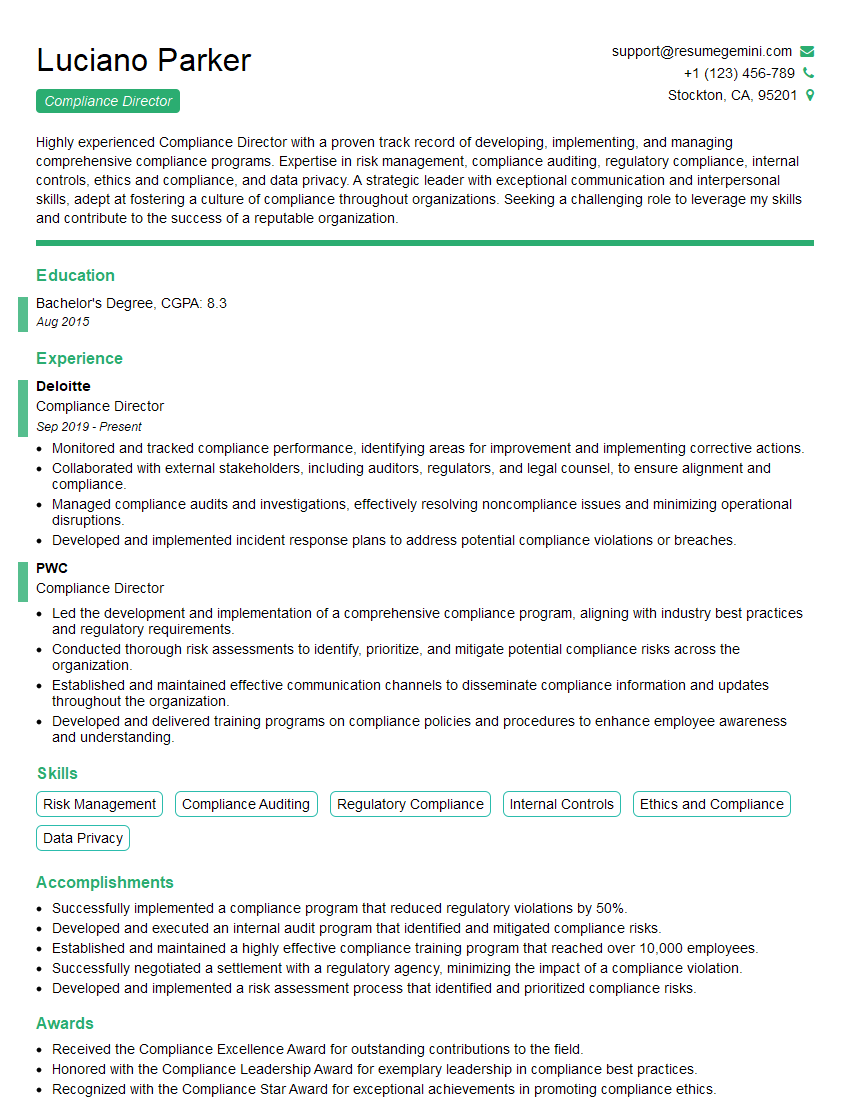
Compliance Director Resume Sample
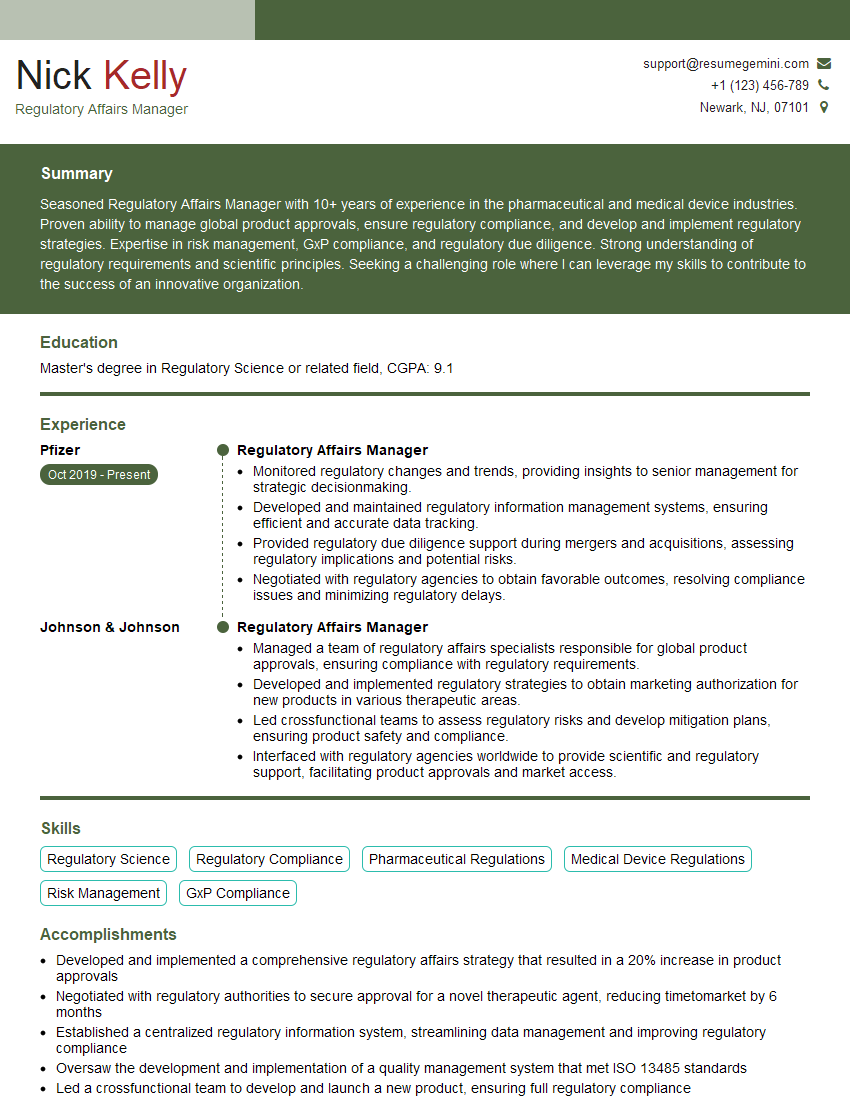
Regulatory Affairs Manager Resume Sample
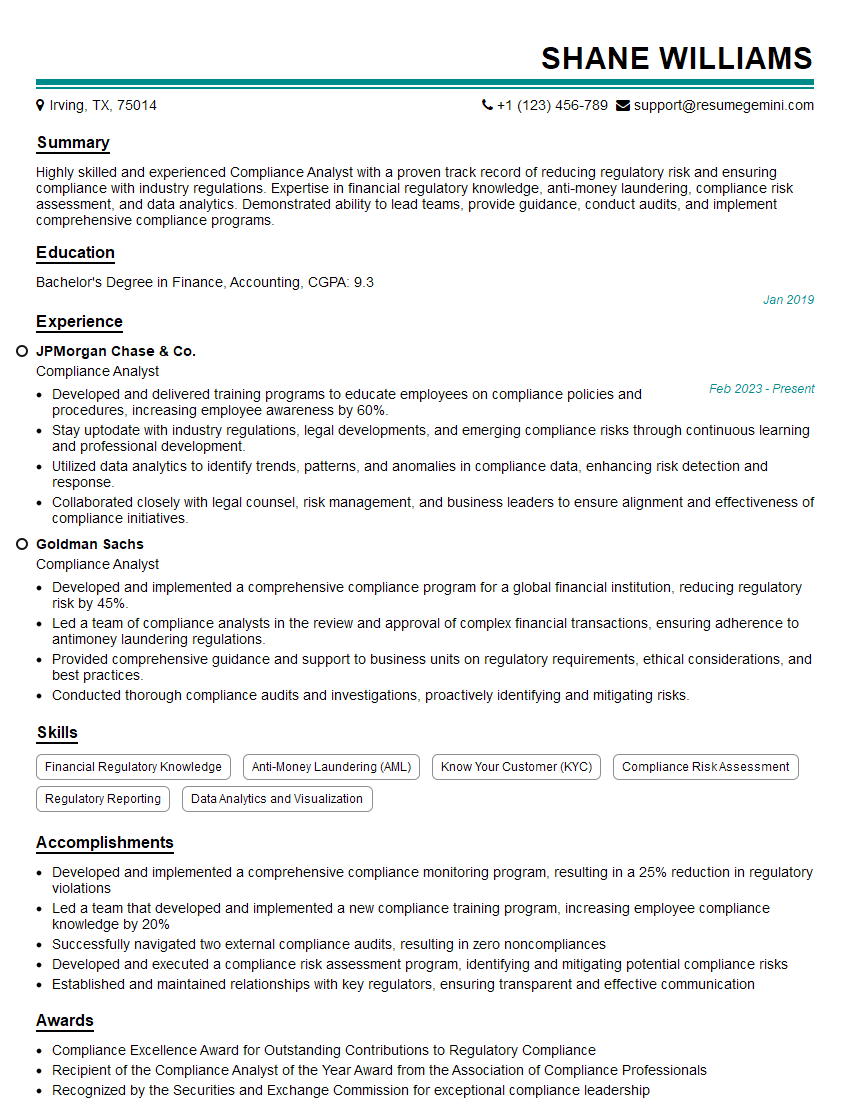
Compliance Analyst Resume Sample

Compliance Officer Resume Sample
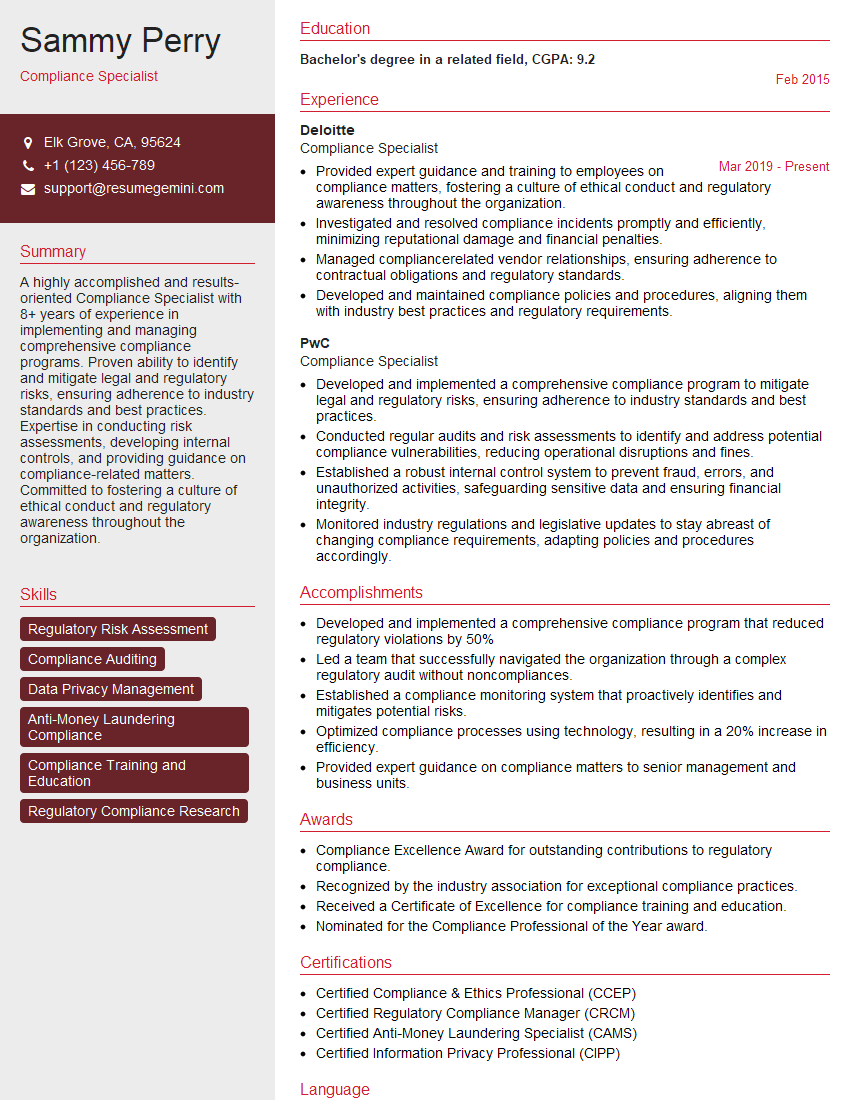
Compliance Specialist Resume Sample
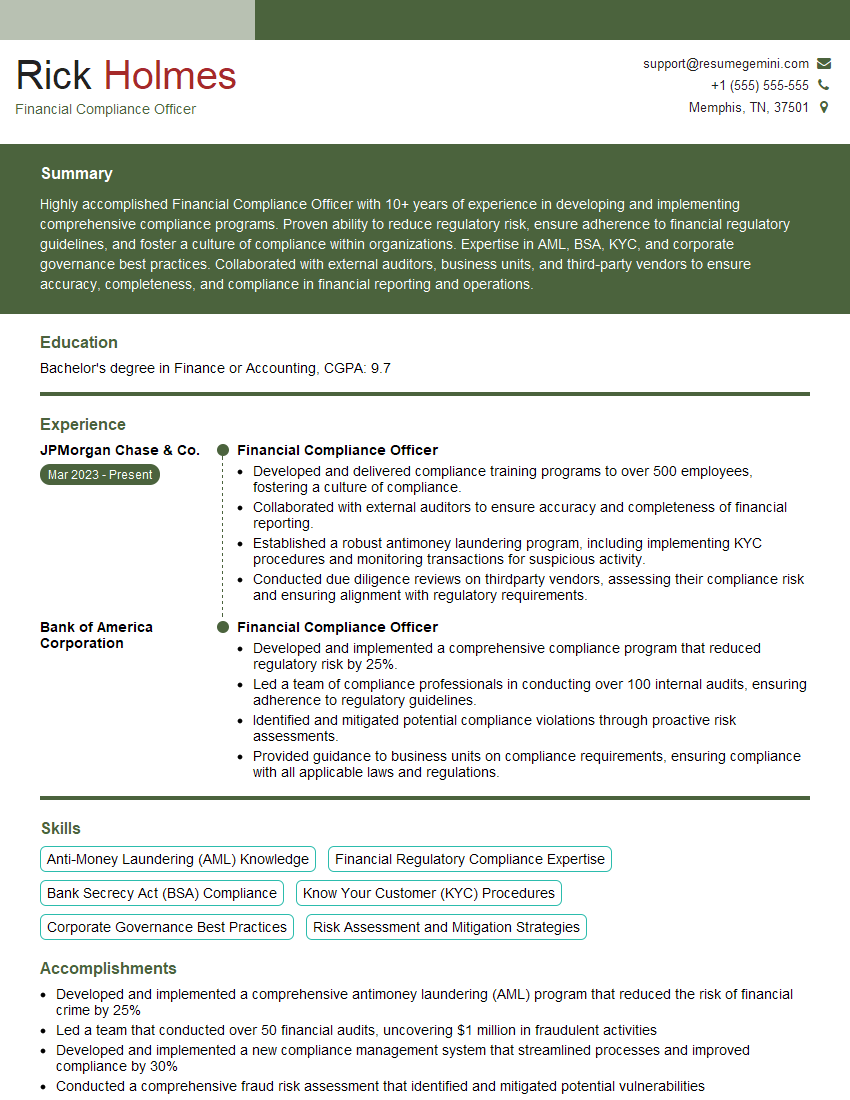
Financial Compliance Officer Resume Sample
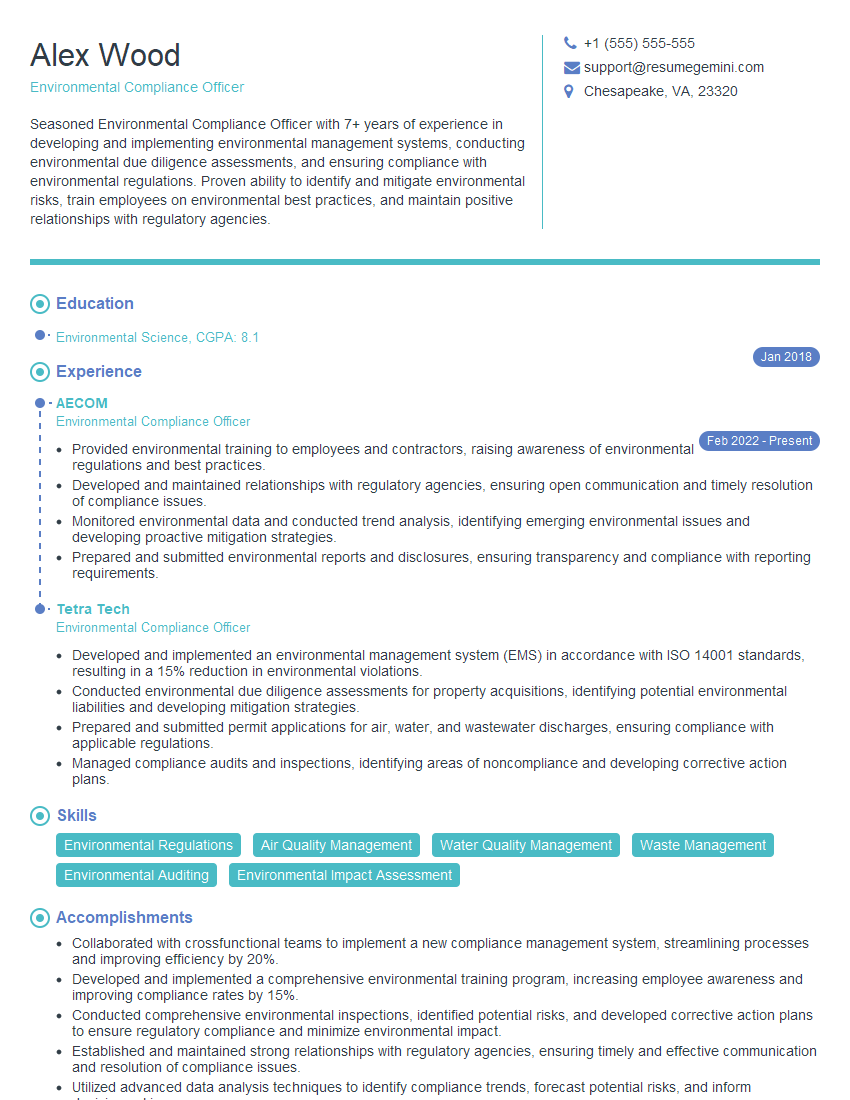
Environmental Compliance Officer Resume Sample
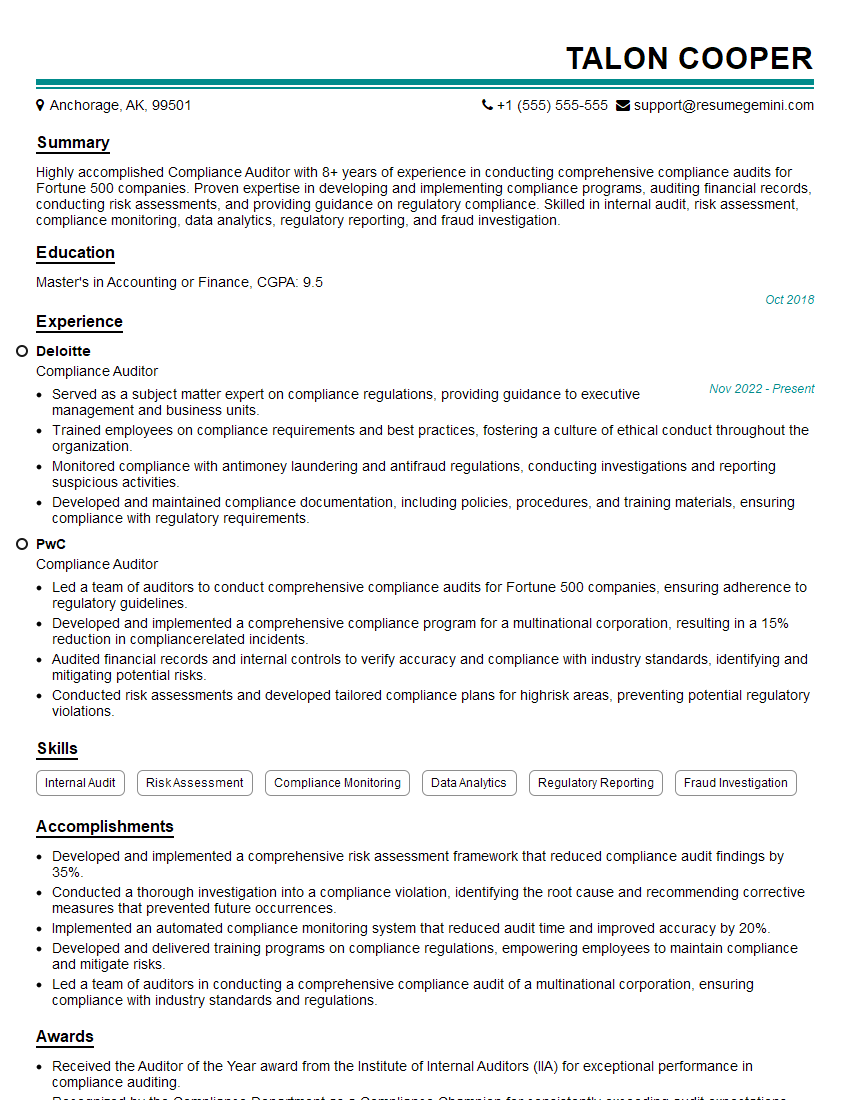
Compliance Auditor Resume Sample
Explore more articles
Users Rating of Our Blogs
Share Your Experience
We value your feedback! Please rate our content and share your thoughts (optional).
What Readers Say About Our Blog
Really detailed insights and content, thank you for writing this detailed article.
IT gave me an insight and words to use and be able to think of examples