Cracking a skill-specific interview, like one for TIG and MIG Welding, requires understanding the nuances of the role. In this blog, we present the questions you’re most likely to encounter, along with insights into how to answer them effectively. Let’s ensure you’re ready to make a strong impression.
Questions Asked in TIG and MIG Welding Interview
Q 1. Explain the differences between TIG and MIG welding processes.
TIG (Gas Tungsten Arc Welding) and MIG (Metal Inert Gas Welding) are both arc welding processes, but they differ significantly in their techniques and applications. Think of it like this: TIG is like using a precise paintbrush, while MIG is more like using a spray gun.
- TIG: Uses a non-consumable tungsten electrode to create an arc. Filler metal is added separately by the welder. This offers exceptional control and produces very high-quality welds, particularly on thinner materials or those requiring a clean, precise finish. It’s slower but allows for greater precision.
- MIG: Uses a consumable electrode (wire) that acts as both the electrode and the filler metal. The wire is fed continuously into the weld pool, making it much faster than TIG. MIG is ideal for thicker materials and larger projects where speed and efficiency are paramount. However, it might not achieve the same level of aesthetic quality as TIG for all applications.
In short, TIG prioritizes precision and quality, while MIG emphasizes speed and efficiency. The choice depends on the project’s specific needs.
Q 2. Describe the types of filler metals used in TIG and MIG welding.
The filler metals used in TIG and MIG welding vary depending on the base metal being welded. The selection needs to ensure compatibility for proper fusion and mechanical properties.
- TIG: Uses rods of various materials, often in smaller diameters than MIG wire. Common filler metals include aluminum, stainless steel, and various types of steel, each with varying compositions to match the base material. The filler metal selection is crucial because of the direct control a welder has over its application.
- MIG: Employs spools of solid or flux-cored wire. Solid wire requires shielding gas, while flux-cored wire contains fluxing agents within the wire itself, reducing or eliminating the need for external shielding gas. Similar to TIG, the wire material matches the base metal – aluminum wire for aluminum, stainless steel wire for stainless steel, and so on.
Improper filler metal selection can lead to porosity, cracking, or reduced weld strength. A well-trained welder understands material compatibility and selects the appropriate filler to ensure optimal weld quality.
Q 3. What are the safety precautions for TIG and MIG welding?
Safety is paramount in any welding operation. Both TIG and MIG welding pose several potential hazards:
- Eye Protection: Always wear appropriate safety glasses or a welding helmet with a shade appropriate for the welding process and amperage used. The intense UV and IR radiation from the arc can cause severe eye damage.
- Respiratory Protection: Welding fumes contain hazardous particles and gases. A respirator is crucial, especially when working in confined spaces or with specific metals. Proper ventilation is also vital.
- Skin Protection: Wear protective clothing, including gloves, long sleeves, and fire-resistant materials to protect against burns and sparks.
- Fire Hazards: Be aware of flammable materials nearby and take appropriate precautions. Always have a fire extinguisher readily available.
- Electrical Hazards: Ensure proper grounding and use insulated tools to avoid electric shock.
- Ultraviolet Radiation: UV rays from the welding arc can harm the skin. Always wear appropriate protective clothing and sunscreen.
Regular safety training and adherence to safety protocols are essential to mitigate these risks and ensure a safe working environment.
Q 4. How do you select the appropriate welding parameters (voltage, amperage, etc.) for different materials?
Selecting appropriate welding parameters is critical for achieving high-quality welds. The choice depends heavily on the base material’s thickness and type, as well as the desired weld characteristics.
- Voltage: Controls the arc length and penetration depth. Higher voltage generally results in deeper penetration. It’s important to note that too high voltage can lead to excessive spatter and burn-through.
- Amperage: Governs the heat input and the weld bead size. Higher amperage provides more heat, allowing for faster welding speeds, but also increases the risk of burn-through, particularly on thinner materials.
- Travel Speed: The speed at which the welder moves along the joint greatly affects weld bead geometry and penetration.
- Shielding Gas Flow Rate (MIG): Ensures adequate shielding to prevent oxidation and porosity in the weld. The correct flow rate depends on the shielding gas used and the welding parameters.
For example, welding thin aluminum requires lower voltage and amperage to prevent burn-through, whereas thicker steel may require higher settings for adequate penetration. Extensive experience and familiarity with welding data sheets is crucial to determine optimal parameters for specific materials and thicknesses.
Q 5. Explain the importance of proper joint preparation in welding.
Proper joint preparation is fundamental to achieving strong, reliable welds. It ensures good fusion and minimizes defects. Think of it like preparing a strong foundation for a building. A poorly prepared joint will inevitably lead to a weak weld.
- Cleanliness: The surfaces to be welded must be clean and free from contaminants such as rust, paint, oil, or grease. This ensures proper fusion between the base materials and filler metal.
- Edge Preparation (for butt joints): This might involve beveling, or creating an angle on the edges of the parts to be joined. This facilitates penetration and minimizes the risk of porosity or incomplete fusion.
- Fit-up: Proper alignment and spacing of the parts being welded are crucial for a sound weld. Gaps or misalignment create stress concentrations in the weld and weaken the joint.
Failing to adequately prepare the joint will likely result in incomplete fusion, lack of penetration, porosity, and overall reduction in weld strength. Time spent on proper preparation is time well spent.
Q 6. How do you identify and correct common welding defects?
Identifying and correcting welding defects is a crucial skill for any welder. Visual inspection is the first step, followed by potentially more sophisticated methods such as radiographic testing for internal flaws.
- Porosity: Small holes or voids in the weld metal caused by gas entrapment. This can be due to poor shielding gas coverage (MIG), moisture contamination, or improper filler metal selection. Correction may require rewelding after addressing the root cause.
- Incomplete Penetration: The weld doesn’t fully penetrate the joint. This is often due to insufficient amperage, too fast travel speed, or improper joint preparation. Rewelding with adjusted parameters is necessary.
- Undercut: A groove or depression along the edge of the weld. This is typically caused by excessive current, too fast travel speed, or improper electrode angle. Grinding and rewelding are often required.
- Cracking: A fracture in the weld metal. This indicates a metallurgical issue (poor material compatibility or high stress) and needs careful investigation to determine the cause before rewelding.
Understanding the causes of welding defects allows for effective corrective measures and helps prevent future occurrences. A good welder learns from every weld, regardless of whether the outcome is successful or not.
Q 7. Describe your experience with different types of welding joints (butt, fillet, lap, etc.).
Throughout my career, I have extensive experience working with various welding joints. Each requires a specific technique and parameter adjustment to achieve optimal results.
- Butt Joints: These involve joining two pieces of metal end-to-end. Edge preparation is crucial, particularly for thicker materials, to ensure complete penetration. I’ve worked extensively on butt joints in pipeline construction and structural steel fabrication.
- Fillet Joints: These are used to join two intersecting parts. The weld bead forms a triangular shape in the corner. The amount of reinforcement is important, and I have used fillet welds in numerous applications including sheet metal fabrication and automotive repair.
- Lap Joints: Two pieces of metal overlap each other, and the weld joins the overlapping portions. I’ve utilized lap joints extensively in sheet metal work, requiring consistent weld bead placement for even strength.
- T-Joints: One member is perpendicular to another. These are commonly used in structural applications and require careful attention to penetration and proper fusion at the junction.
My experience with these joint types spans diverse materials, from aluminum and stainless steel to mild steel, demonstrating adaptability and proficiency across various welding applications.
Q 8. What are the advantages and disadvantages of TIG and MIG welding?
TIG (Gas Tungsten Arc Welding) and MIG (Metal Inert Gas Welding) are both widely used arc welding processes, but they differ significantly in their application and characteristics. Let’s break down their advantages and disadvantages:
TIG Welding:
- Advantages: High-quality welds with excellent penetration and control, allowing for precise work on thin materials and intricate designs. It’s ideal for applications requiring a clean, aesthetically pleasing weld with minimal spatter. TIG welding offers great versatility in materials – stainless steel, aluminum, magnesium, and titanium are all readily welded using this method.
- Disadvantages: Slower welding speed compared to MIG, requiring more skilled operators and longer project timelines. It’s a more complex process to learn, demanding a greater level of precision and control.
MIG Welding:
- Advantages: High deposition rates leading to faster welding speeds, making it ideal for high-volume production. It’s relatively easier to learn compared to TIG, requiring less specialized skill. MIG is highly versatile in terms of material thickness and is well-suited for joining thicker materials.
- Disadvantages: Generally produces a less aesthetically pleasing weld compared to TIG, with potential for higher spatter. The heat input is higher, potentially leading to distortion in thin materials. Control of weld penetration can be more challenging than with TIG.
Choosing between TIG and MIG depends entirely on the specific application. For example, a high-precision aerospace component would call for TIG, while constructing a large steel framework might benefit from the speed and efficiency of MIG.
Q 9. What types of shielding gases are used in TIG and MIG welding, and why?
The choice of shielding gas is crucial for preventing atmospheric contamination of the weld pool, ensuring weld integrity and quality. Different gases offer varying properties and are suited for specific applications and materials.
TIG Welding:
Common shielding gases include:
- Argon (Ar): The most common gas, it provides excellent arc stability and shielding for most metals.
- Helium (He): Offers higher penetration and faster weld speeds, but it’s more expensive than argon. Often used for thicker materials or aluminum.
- Argon/Helium Mixtures: Combining argon and helium allows for tailoring the gas properties to optimize penetration and arc stability for a specific application.
MIG Welding:
The selection is broader and more application-specific:
- Carbon Dioxide (CO2): A cost-effective gas, but it produces more spatter and can lead to porous welds. Typically used for mild steel in applications where aesthetics are less critical.
- Argon (Ar): Provides better arc stability and less spatter compared to CO2, suitable for higher-quality welds in aluminum, stainless steel, and other materials.
- Argon/CO2 Mixtures: These mixtures offer a balance between cost and weld quality, often used for mild steel.
- Argon/Oxygen Mixtures: Specifically used in certain aluminum welding applications.
In summary, the choice of shielding gas depends on the type of metal being welded, the desired weld quality, cost considerations, and the desired weld speed. A welder needs to understand these factors to select the optimal shielding gas for the job.
Q 10. How do you maintain and troubleshoot welding equipment?
Regular maintenance and prompt troubleshooting are essential for ensuring the safety and efficiency of welding equipment. This includes both preventative maintenance and addressing issues as they arise.
Preventative Maintenance:
- Regular Cleaning: Keeping the equipment clean of spatter and debris prevents malfunctions and ensures optimal performance. This includes cleaning the contact tips, gas nozzles, and the welding gun itself.
- Gas Flow Check: Regularly checking the gas flow rate prevents insufficient shielding, leading to weld defects. A flow meter is essential for this task.
- Wire Feed Inspection: For MIG welders, ensuring the wire feed is smooth and consistent is crucial. Lubrication and cleaning of the wire feeder mechanism are important.
- Electrode/Wire Inspection: Damaged or contaminated electrodes or wire feed will lead to inconsistent welds and should be replaced promptly.
- Cable Inspection: Check for cracks, wear, and proper insulation of cables. Damaged cables pose a significant safety risk.
Troubleshooting:
Problems can manifest in several ways. For instance:
- No Arc: Check power supply, connections, gas flow, and electrode/wire condition.
- Inconsistent Arc: Inspect the contact tip, gas nozzle, and shielding gas flow. A dirty contact tip is a common culprit.
- Excessive Spatter: Check the shielding gas, wire speed (MIG), current settings, and electrode condition.
- Poor Weld Penetration: Adjust the current settings, welding speed, and gas flow. Ensure proper electrode/wire selection for the material.
Always refer to the manufacturer’s manual for detailed troubleshooting guidelines. Safety precautions should always be observed when working with welding equipment. A proactive approach to maintenance and troubleshooting ensures consistent weld quality, equipment longevity, and importantly, worker safety.
Q 11. Explain the concept of weld penetration and its importance.
Weld penetration refers to the depth to which the weld fuses with the base metal. It’s a crucial aspect of weld quality, impacting the weld’s strength, integrity, and overall performance.
Think of it like this: you’re joining two pieces of metal; proper penetration ensures they’re completely fused, not just superficially joined. Insufficient penetration leads to a weak joint that’s prone to failure. Excessive penetration, on the other hand, can cause distortion and weakening of the base metal.
The importance of proper weld penetration is paramount:
- Structural Integrity: Sufficient penetration ensures the joint is strong enough to withstand the designed loads.
- Leak Prevention: In pressure vessels or pipelines, insufficient penetration can lead to leaks.
- Fatigue Resistance: A well-penetrated weld is less susceptible to fatigue failure under cyclical loading.
- Corrosion Resistance: Proper fusion minimizes the chances of corrosion attacking the weld zone.
Achieving the right weld penetration depends on factors like current settings, welding speed, shielding gas, and electrode/wire selection. Experienced welders adjust these parameters based on the material thickness and desired weld strength.
Q 12. How do you perform a visual inspection of a weld?
Visual inspection is the first and often most crucial step in weld quality assessment. It involves a careful examination of the weld using the naked eye or a magnifying glass to identify any defects.
A thorough visual inspection includes:
- Weld Bead Appearance: Checking for consistent width, height, and shape of the weld bead. Variations can indicate problems with welding parameters or technique.
- Surface Cracks: Careful examination for any surface cracks, which can be indicative of poor fusion or internal defects.
- Undercuts: Identifying undercuts, which are grooves along the edges of the weld, indicating insufficient fusion or excessive heat input.
- Porosity: Checking for small holes or pores on the weld surface, usually caused by gas entrapment.
- Spatter: Assessing the amount of spatter and its distribution. Excessive spatter can affect the weld’s aesthetics and potentially its strength.
- Burn-Through: Looking for holes or excessive thinning of the base metal due to excessive heat input.
- Lack of Fusion: Checking for areas where the weld metal didn’t properly fuse with the base metal, creating a weak point.
Visual inspection is often complemented by other non-destructive testing methods (NDT) such as radiographic testing or ultrasonic testing for more in-depth assessment of internal defects. However, a good visual inspection can quickly identify many common weld defects, preventing further issues and ensuring project safety.
Q 13. Describe your experience with different types of welding electrodes.
My experience with welding electrodes encompasses various types used in both SMAW (Shielded Metal Arc Welding) and TIG welding. The choice of electrode depends heavily on the base metal, the desired weld properties, and the welding environment.
- E6010/E6011 (SMAW): These electrodes are known for their deep penetration and ability to weld in all positions, making them suitable for outdoor applications and even slightly rusty materials. They are cellulose-based and produce a relatively rough weld appearance.
- E7018 (SMAW): This low-hydrogen electrode produces high-quality welds with excellent mechanical properties, making it suitable for critical applications demanding high strength and toughness. They require careful control of preheating and post-heating.
- Stainless Steel Electrodes (SMAW/TIG): These electrodes are designed for joining stainless steel and often require specialized techniques to prevent cracking and maintain corrosion resistance. Various grades exist, each with specific chemical compositions tailored to the application.
- Aluminum Electrodes (TIG): TIG welding aluminum requires special filler wires, often using alloys like 4043 or 5356, providing appropriate mechanical properties and corrosion resistance.
- Tungsten Electrodes (TIG): In TIG welding, the non-consumable tungsten electrode comes in various compositions (pure tungsten, thoriated, ceriated) depending on the required arc characteristics and material being welded. The choice of tungsten electrode impacts arc stability and weld penetration.
Understanding the properties of each electrode type allows me to select the most appropriate one for the task, ensuring the weld meets the required quality standards and specifications.
Q 14. What is the importance of pre-heating and post-heating in welding?
Preheating and post-heating are crucial steps in welding, especially for materials that are prone to cracking or distortion during the welding process.
Preheating:
This involves raising the temperature of the base metal before welding. It helps to:
- Reduce Residual Stresses: Welding introduces residual stresses in the metal. Preheating helps to relieve these stresses, reducing the risk of cracking, especially in high-strength or hardenable steels.
- Increase Weldability: Preheating improves the weldability of certain materials by reducing the cooling rate, which can prevent the formation of brittle microstructures.
- Improve Heat Distribution: By preheating, the heat from the welding arc distributes more evenly, preventing rapid cooling and associated stress concentration.
Post-Heating:
This involves heating the welded joint after welding, and its benefits include:
- Stress Relief: Similar to preheating, post-heating helps to relieve residual stresses caused by the welding process.
- Improved Microstructure: Post-heating can promote a more uniform and desirable microstructure, improving the mechanical properties of the weld.
- Prevent Hydrogen Cracking: In some materials, hydrogen can accumulate during welding and cause cracking. Post-heating can help diffuse the hydrogen, mitigating this risk.
The specific temperatures and durations for preheating and post-heating depend on the material being welded, its thickness, and the welding process used. These parameters are crucial for achieving high-quality, crack-free welds in critical applications.
Q 15. Explain the concept of weld heat input.
Weld heat input is a crucial parameter in welding that represents the amount of heat energy supplied to the weld joint per unit length. It’s essentially a measure of how much heat is being put into the material as you weld. This is expressed in Joules per millimeter (J/mm) or Kilojoules per inch (kJ/in).
Think of it like cooking: a low heat input is like simmering – slow and controlled, ideal for thin materials or situations requiring minimal distortion. A high heat input is like blasting with high heat – fast, but risks overheating and warping, better suited for thicker materials where deep penetration is needed.
Calculating heat input involves considering factors like welding current, welding voltage, welding speed, and efficiency of the welding process. A simple formula often used is: Heat Input = (Voltage x Current x Efficiency) / Welding Speed The efficiency factor accounts for losses in the welding process, and varies based on the welding method and materials.
Proper heat input control is essential for achieving high-quality welds with minimal distortion and achieving the desired mechanical properties. Too much heat input can lead to excessive penetration, porosity, and cracking, while too little can result in insufficient fusion and a weak joint.
Career Expert Tips:
- Ace those interviews! Prepare effectively by reviewing the Top 50 Most Common Interview Questions on ResumeGemini.
- Navigate your job search with confidence! Explore a wide range of Career Tips on ResumeGemini. Learn about common challenges and recommendations to overcome them.
- Craft the perfect resume! Master the Art of Resume Writing with ResumeGemini’s guide. Showcase your unique qualifications and achievements effectively.
- Don’t miss out on holiday savings! Build your dream resume with ResumeGemini’s ATS optimized templates.
Q 16. How do you ensure the quality of your welds?
Ensuring weld quality is paramount and involves a multi-pronged approach starting even before the welding torch is ignited. It begins with careful preparation: proper material selection, cleaning the surfaces to remove contaminants like oil, grease, and rust, and establishing the correct fit-up of the parts to be welded.
- Pre-weld Inspection: Thorough visual inspection of the base materials for defects like cracks, pits, or inclusions.
- Parameter Control: Precisely setting welding parameters – current, voltage, wire feed speed, and travel speed – according to the welding procedure specification (WPS) tailored to the specific material and joint design. This is crucial for consistent weld quality.
- Monitoring the Welding Process: Maintaining constant vigilance during welding, watching for irregularities like spatter, undercutting, or excessive penetration.
- Post-weld Inspection: After welding, a visual inspection is followed by non-destructive testing (NDT) methods (discussed further in a later question). This could include radiographic testing (RT), ultrasonic testing (UT), or dye penetrant testing (PT).
- Documentation: Meticulous record-keeping of all welding parameters, NDT results, and any observed issues is crucial for traceability and quality control.
Essentially, it’s about a systematic approach – from careful preparation to rigorous testing and documentation – to ensure the weld meets the required standards.
Q 17. Describe your experience with different types of welding materials (steel, aluminum, stainless steel, etc.).
My experience encompasses a wide range of welding materials, each presenting its unique challenges and requiring specific techniques. Steel, being the most common, necessitates understanding its various grades and their impact on welding parameters. Thicker steels require higher heat input and might need pre-heating to prevent cracking.
Aluminum, with its high thermal conductivity, demands specialized techniques to avoid burn-through. Flux-cored welding or MIG welding with specific aluminum wire and shielding gas mixtures are typically employed. Cleaning the aluminum surfaces is extremely important as oxide layers hinder proper fusion.
Stainless steel welds are prone to sensitization if not welded correctly, leading to intergranular corrosion. Using appropriate filler metals and controlling the heat input are critical for preventing this issue. The use of pulse welding helps minimize heat input and allows for better control.
Beyond these, I have also worked with various other materials such as cast iron, nickel alloys, and copper, each necessitating specific knowledge of the material’s properties and tailored welding procedures.
Q 18. What are your experiences with non-destructive testing (NDT) methods for welds?
I have extensive experience with various Non-Destructive Testing (NDT) methods for welds, primarily focusing on ensuring structural integrity and detecting potential flaws before they become critical issues.
- Visual Inspection (VI): This is the first and most fundamental NDT method. It involves a careful visual examination of the weld for surface imperfections like cracks, porosity, undercuts, or lack of fusion.
- Radiographic Testing (RT): X-rays or gamma rays are used to create an image of the weld’s internal structure. This is invaluable for detecting internal flaws like porosity, cracks, and inclusions that are not visible on the surface.
- Ultrasonic Testing (UT): High-frequency sound waves are used to detect internal flaws. UT is particularly useful for detecting cracks and other discontinuities in thicker welds. It’s more portable and efficient than RT in many cases.
- Dye Penetrant Testing (PT): A liquid dye is applied to the weld surface to detect surface-breaking defects like cracks. The dye penetrates any cracks and is then revealed using a developer, providing a visual indication of their presence.
The choice of NDT method depends on factors like weld geometry, material type, and the required level of inspection. I am proficient in interpreting the results from these tests and understand the implications for weld acceptance or rejection based on relevant codes and standards.
Q 19. How do you manage welding projects and deadlines?
Managing welding projects and deadlines efficiently involves careful planning, effective communication, and meticulous execution. It all starts with a thorough review of the project specifications and blueprints, followed by a detailed breakdown of tasks and resources.
This includes: creating a detailed project schedule, identifying potential bottlenecks, procuring necessary materials, and assigning tasks to the welding team. Regular progress meetings are held to address any issues or delays. I utilize project management tools and techniques to track progress, manage resources, and keep the project on schedule. Clear and open communication with clients is key to managing expectations and ensuring project success, which includes keeping them informed of any potential challenges and promptly addressing any concerns.
A real-world example: On a recent pipeline project, we identified potential delays due to inclement weather. By proactively adjusting the schedule and engaging extra personnel when conditions improved, we successfully completed the project within the deadline.
Q 20. Describe your experience with different types of welding machines.
My experience spans various types of welding machines, each with its strengths and weaknesses:
- MIG (Gas Metal Arc Welding): I am highly proficient in using various MIG welders, from basic models to advanced systems with pulse capabilities. I understand the intricacies of gas shielding, wire feed speed adjustment, and current control for different materials.
- TIG (Gas Tungsten Arc Welding): I have extensive experience in TIG welding, mastering both AC and DC processes. I am adept at manipulating the tungsten electrode and controlling the weld puddle for precise, high-quality welds, particularly on thin materials or critical applications.
- Flux-cored Arc Welding (FCAW): I have worked with FCAW welders, particularly useful for outdoor applications where shielding gas is less readily available or convenient. This process is well-suited for welding thicker materials.
Beyond the specific welding processes, I am familiar with the operation and maintenance of various power sources, including constant current and constant voltage machines. Understanding the nuances of each machine allows for optimal weld quality and efficiency.
Q 21. What are some common challenges you’ve encountered in welding and how did you overcome them?
Welding inevitably presents challenges, and overcoming them requires a combination of technical skill, problem-solving aptitude, and a willingness to learn. Some common challenges include:
- Porosity: This is the presence of small holes within the weld, often caused by trapped gases. I’ve overcome this by ensuring proper cleaning of the base material, optimizing shielding gas flow and using appropriate filler material.
- Undercutting: This occurs when the weld puddle is too hot or the travel speed is too fast, leading to erosion of the base material. Addressing this requires adjusting the welding parameters (reducing heat input and increasing travel speed).
- Lack of Fusion: This is a serious defect where the weld metal does not properly fuse with the base material. This often stems from inadequate cleaning or incorrect welding parameters and requires a re-weld using the proper techniques.
- Distortion: This happens when the weld metal shrinks upon cooling, causing the workpiece to warp. This can be mitigated by using appropriate jigs and fixtures, preheating the materials or employing techniques like tack welding.
Problem-solving in welding is an iterative process. I utilize a systematic approach: diagnosing the root cause, implementing corrective measures, and carefully documenting the outcome for future reference to avoid repeating errors. Continuous learning and adapting to new challenges are crucial to success in this field.
Q 22. Explain the importance of proper personal protective equipment (PPE) in welding.
Proper Personal Protective Equipment (PPE) is paramount in welding, acting as the first line of defense against a range of hazards. Welding produces intense heat, bright light, and potentially harmful fumes and spatter. Without adequate PPE, welders risk severe burns, eye damage (including blindness), respiratory illnesses, and even electrocution.
- Eye and Face Protection: Auto-darkening welding helmets are essential. They automatically adjust to the intensity of the arc, protecting eyes from intense UV and IR radiation. Regular safety glasses should also be worn underneath for added protection.
- Respiratory Protection: Depending on the materials being welded and the ventilation in the workspace, respirators may be necessary to filter out harmful fumes and particulate matter. This is especially critical when working with stainless steel or other alloys that produce toxic fumes.
- Protective Clothing: Durable, flame-resistant clothing is crucial. This includes jackets, pants, and gloves made from materials like leather or specialized fire-resistant fabrics. Clothing should be snug-fitting to prevent snagging on equipment and to minimize the risk of burns.
- Foot Protection: Safety footwear with steel toes is mandatory to protect against dropped objects and potential electric shock. The soles should also offer good insulation and slip resistance.
- Hearing Protection: In environments with multiple welders or loud equipment, hearing protection, such as earplugs or earmuffs, is also crucial.
For example, during a recent project involving stainless steel welding, I ensured all team members utilized respirators rated for metal fume fever prevention. This proactive measure ensured the safety and well-being of the team and avoided potential health issues.
Q 23. How do you calculate the amount of filler metal needed for a given weld?
Calculating the precise amount of filler metal needed for a weld isn’t an exact science; it involves estimation and experience. However, a reasonable approximation can be made using several methods. The most common method involves estimating the weld volume and converting it to weight.
Step 1: Determine the weld dimensions: Measure the length, width, and depth (or penetration) of the weld. This is often done using blueprints or direct measurement on the workpiece.
Step 2: Calculate the weld volume: The volume of a weld is typically approximated as a rectangular prism or triangular prism, depending on the weld profile. The formula would be:
- Rectangular weld: Length x width x depth
- Triangular weld (fillet weld): (1/2) x length x width x depth
Step 3: Convert volume to weight: The density of the filler metal needs to be known. This information is typically provided by the filler metal manufacturer. Weight = Volume x Density. You can often find the density listed in grams per cubic centimeter or pounds per cubic inch.
Step 4: Add a safety factor: It’s crucial to add a safety factor (typically 10-20%) to account for variations in weld penetration, spatter loss, and potential errors in measurements. This ensures there’s enough filler metal for the job.
Example: Let’s say we have a rectangular weld with dimensions: Length = 10 cm, Width = 0.5 cm, Depth = 0.3 cm. The filler metal has a density of 7.85 g/cm³ (Steel). Volume = 10 x 0.5 x 0.3 = 1.5 cm³. Weight = 1.5 cm³ x 7.85 g/cm³ = 11.775 g. Adding a 15% safety factor: 11.775 g x 1.15 = 13.5 g. Therefore, approximately 13.5g of filler metal would be needed.
This calculation provides an estimate. Experienced welders often refine this based on their knowledge of the welding process, material, and joint design.
Q 24. Describe your experience with different welding positions.
I’m proficient in all common welding positions, including:
- Flat (1G): This is the easiest position, where the weld is made on a horizontal surface. This is my most frequently used position due to its simplicity and ease of control.
- Horizontal (2G): The weld is made on a vertical surface with the weld bead horizontal. Requires more control of the puddle to prevent sagging.
- Vertical (3G): Welding is done vertically, either upward (3G-up) or downward (3G-down). Upward welding is more challenging due to the tendency of the molten metal to run down the weld.
- Overhead (4G): The most difficult position, requiring significant skill to control the weld puddle while working above your head. Maintaining a steady hand and proper technique is essential to prevent droplet fall.
I’ve had extensive experience in each of these positions. For instance, during a recent project constructing a large steel structure, I was responsible for both the flat and overhead welding, which required me to manage and allocate my time efficiently while ensuring the welds met the required quality standards.
Q 25. How familiar are you with AWS welding codes and standards?
I am very familiar with AWS (American Welding Society) welding codes and standards. These codes provide essential guidelines for welding procedures, welder qualifications, and inspection criteria to ensure consistent weld quality and safety. My understanding encompasses various sections of the AWS D1.1 (Structural Welding Code – Steel), including the requirements for welder qualification, procedure qualification records (PQRs), and weld symbol interpretation. I am also familiar with other relevant AWS standards that deal with material specifications, testing methods, and safety protocols.
I’ve actively used AWS codes during various projects to ensure compliance, including the preparation of WPS (Welding Procedure Specifications) and PQRs. This involvement has reinforced my understanding of code requirements and their practical application in real-world welding operations.
Q 26. Explain your understanding of different weld symbols.
Weld symbols are a crucial form of communication in welding drawings, conveying essential information about weld type, size, location, and other critical parameters. They follow a standardized format prescribed by AWS. The symbol itself is comprised of several parts which include:
- Reference Line: A horizontal line which indicates where the weld should be located.
- Arrow Side: The side the weld symbol is drawn on. It refers to the weld being placed on the component the arrow points to.
- Other Side: The side opposite the arrow, often represented by a tail that points away from the arrow side. Used to indicate the design of welds on the opposite side of the weld.
- Basic Weld Symbols: These are symbols that represent the type of weld (e.g., fillet weld, groove weld, plug weld).
- Dimensions: These details specify the weld size (leg length, throat thickness, etc.)
- Finishing Symbols: These indicate the required surface finish of the weld (e.g., grinding, chipping).
For example, a symbol showing a single arrow with a triangular fillet weld symbol underneath and a dimension of 6mm indicates a 6mm fillet weld on the component the arrow points toward. The absence of a symbol on the other side implies that no weld is required on that side.
Understanding weld symbols is fundamental to accurately interpreting welding blueprints and executing welding work according to the design specifications. Misinterpretation can result in costly rework or structural failure.
Q 27. Describe your experience working in a team environment on welding projects.
I have extensive experience working in team environments on various welding projects. Effective teamwork is crucial in welding, especially in large-scale projects where different welders specialize in different aspects of the process. My role often involves coordinating efforts, ensuring the proper use of equipment, and maintaining consistent weld quality across the entire team.
One of my recent experiences involved a major construction project requiring the expertise of several welders with varying skills. My responsibilities included ensuring everyone followed safety protocols, assisting less-experienced welders, and checking the quality of welds before they became part of the final assembly. This collaborative approach guaranteed project completion on schedule and within the budget, producing a high-quality final product.
Open communication, mutual respect, and a shared commitment to quality are key ingredients to a successful welding team. I actively participate in pre-project planning and problem-solving, ensuring everyone is on the same page and working towards a common objective. This has consistently led to efficient teamwork and high-quality welding outcomes.
Key Topics to Learn for TIG and MIG Welding Interview
- TIG Welding Fundamentals: Understanding the process (GTAW), electrode types, gas shielding, and arc control. Practical application: Describing your experience with different joint types and material thicknesses.
- MIG Welding Fundamentals: Understanding the process (GMAW), wire feed speeds, shielding gas selection, and transfer modes (short-circuiting, globular, spray). Practical application: Explaining your troubleshooting experience with common MIG welding problems like porosity or spatter.
- Welding Metallurgy: Knowledge of base metals (steel, aluminum, stainless steel), filler metals, heat-affected zones (HAZ), and common weld defects. Practical application: Discussing how different welding parameters affect the metallurgical properties of the weld.
- Safety Procedures: Comprehensive understanding of safety regulations, PPE (Personal Protective Equipment), and hazard identification in welding environments. Practical application: Describing your experience implementing and adhering to safety protocols on the job.
- Joint Design and Preparation: Understanding different joint configurations (butt, lap, fillet), edge preparation techniques, and the importance of proper fit-up for strong welds. Practical application: Explaining your experience preparing joints for both TIG and MIG welding.
- Weld Inspection and Testing: Familiarization with visual inspection techniques, destructive and non-destructive testing methods (e.g., bend testing, radiographic testing). Practical application: Describing your experience inspecting welds for defects and ensuring quality control.
- Troubleshooting and Problem Solving: Ability to diagnose and resolve common welding problems, such as lack of fusion, undercut, or excessive penetration. Practical application: Providing examples of how you’ve successfully resolved welding issues in the past.
Next Steps
Mastering TIG and MIG welding opens doors to diverse and rewarding career opportunities in manufacturing, construction, and various other industries. A strong skillset in these techniques makes you a highly valuable asset. To maximize your job prospects, crafting an ATS-friendly resume is crucial. ResumeGemini is a trusted resource that can help you build a professional and effective resume that highlights your skills and experience. We provide examples of resumes tailored to TIG and MIG welding professionals to guide you in creating a document that showcases your qualifications effectively.

Welding Engineer Resume Sample
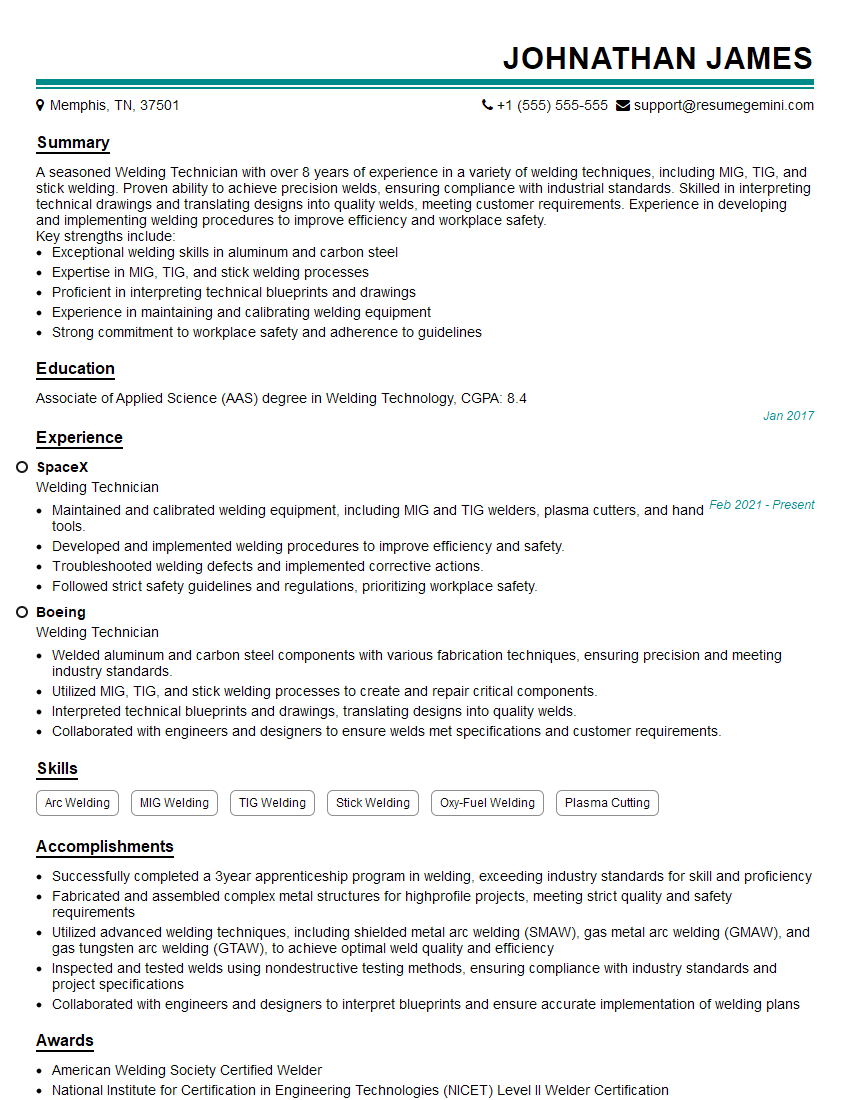
Welding Technician Resume Sample

Welding Instructor Resume Sample
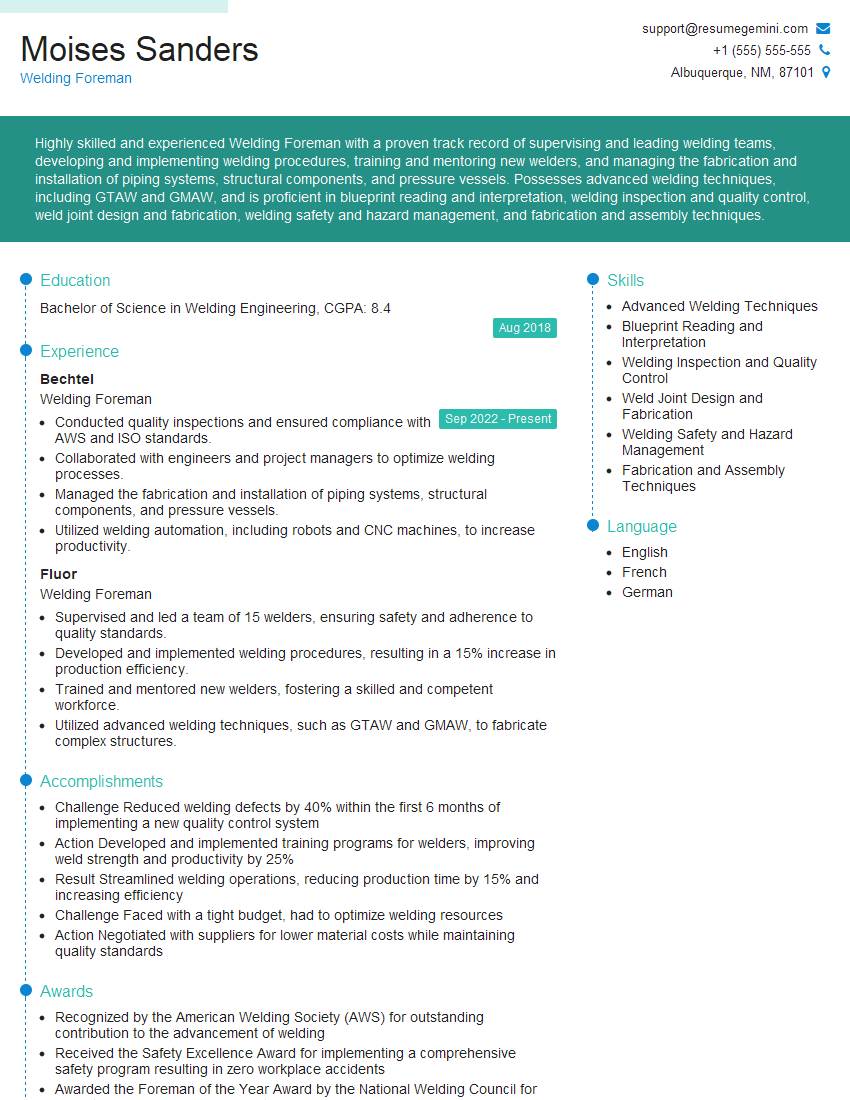
Welding Foreman Resume Sample
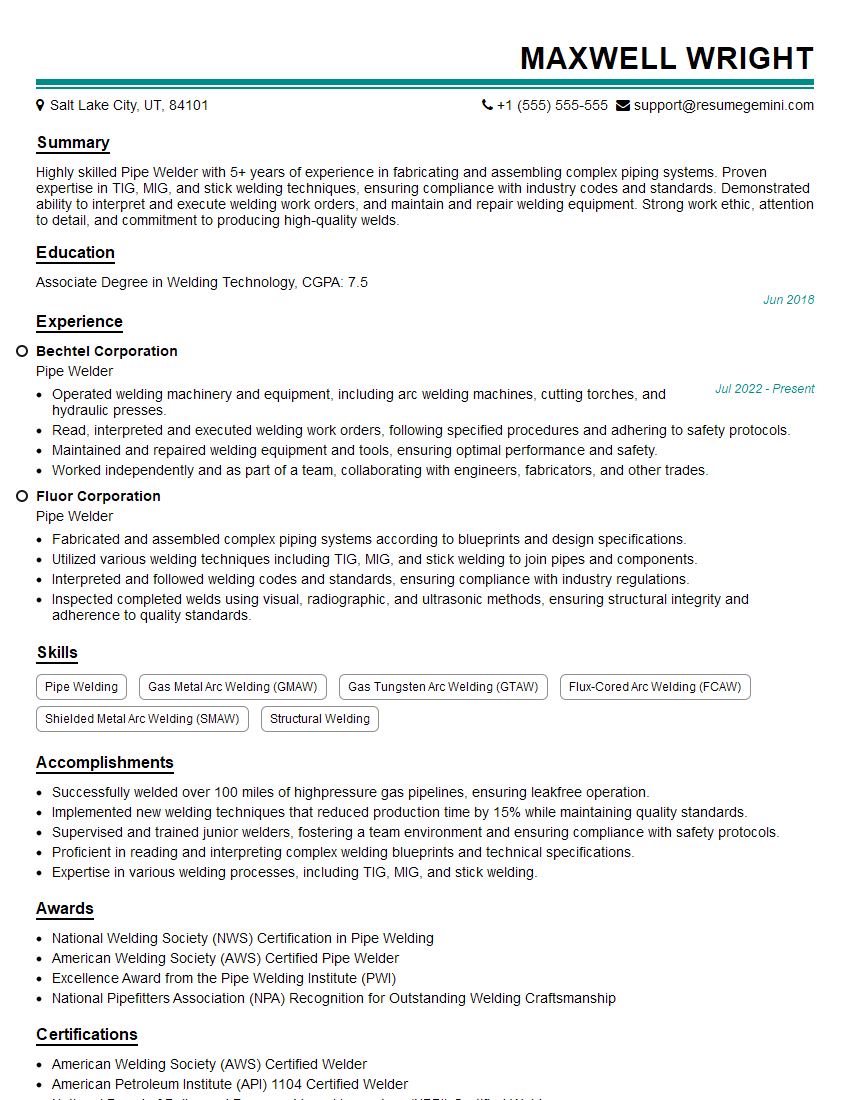
Pipe Welder Resume Sample
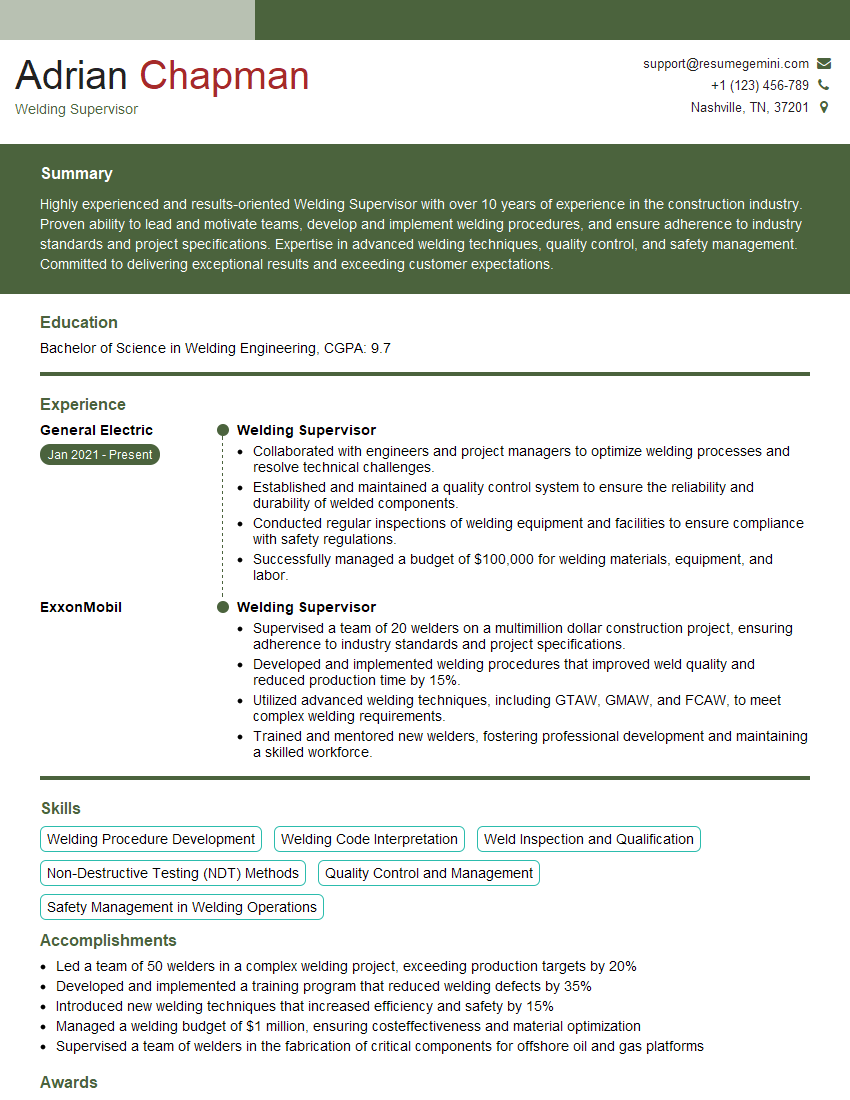
Welding Supervisor Resume Sample

Aluminum Welder Resume Sample
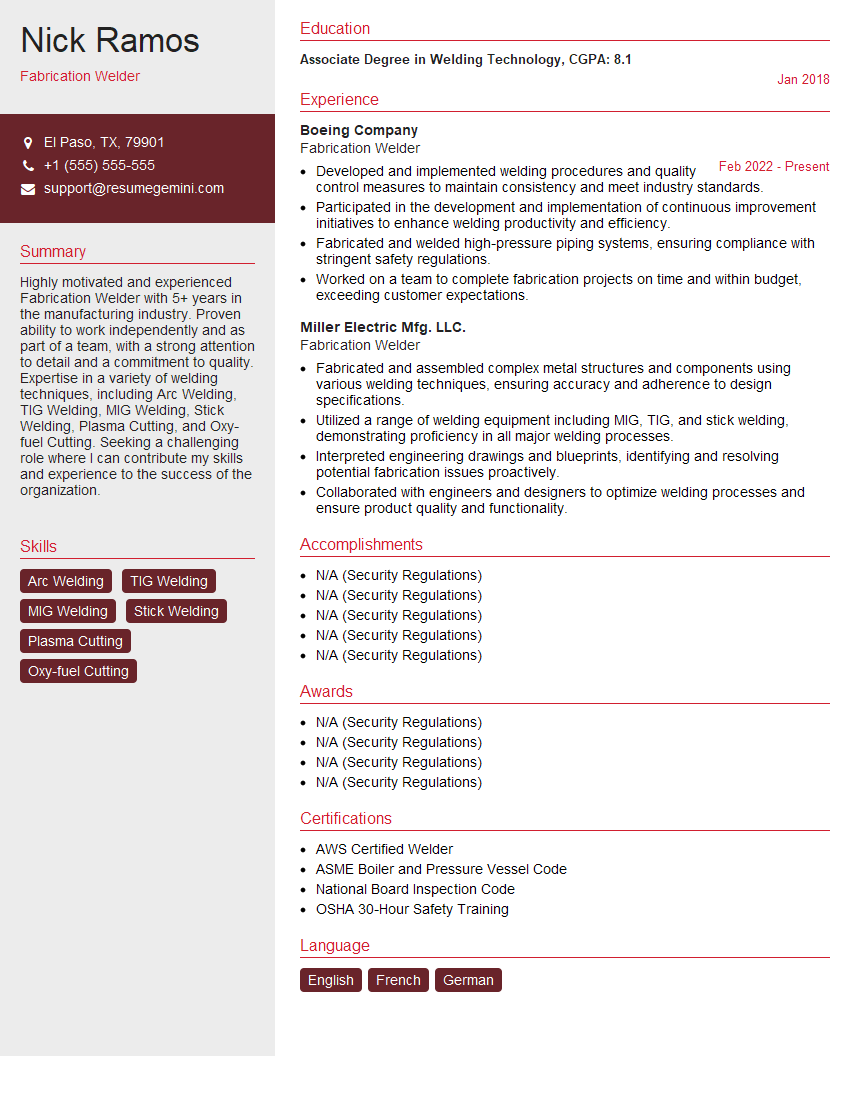
Fabrication Welder Resume Sample
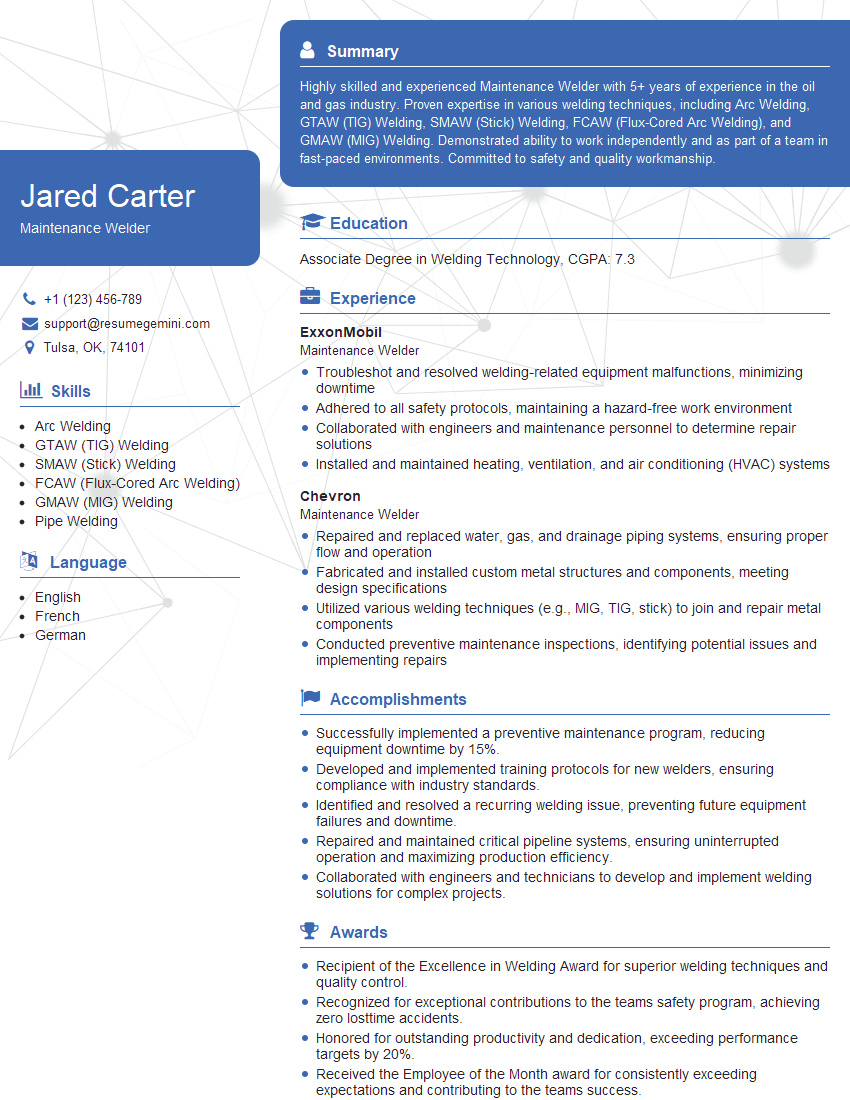
Maintenance Welder Resume Sample
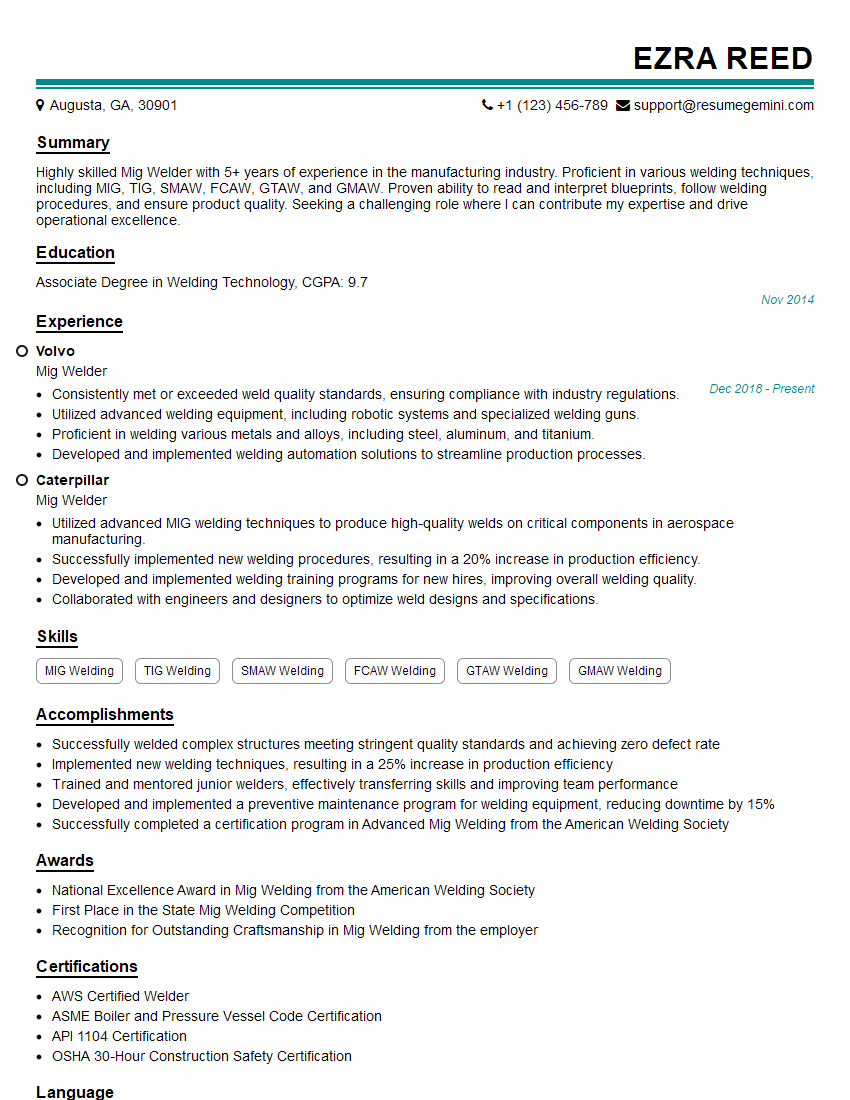
Mig Welder Resume Sample
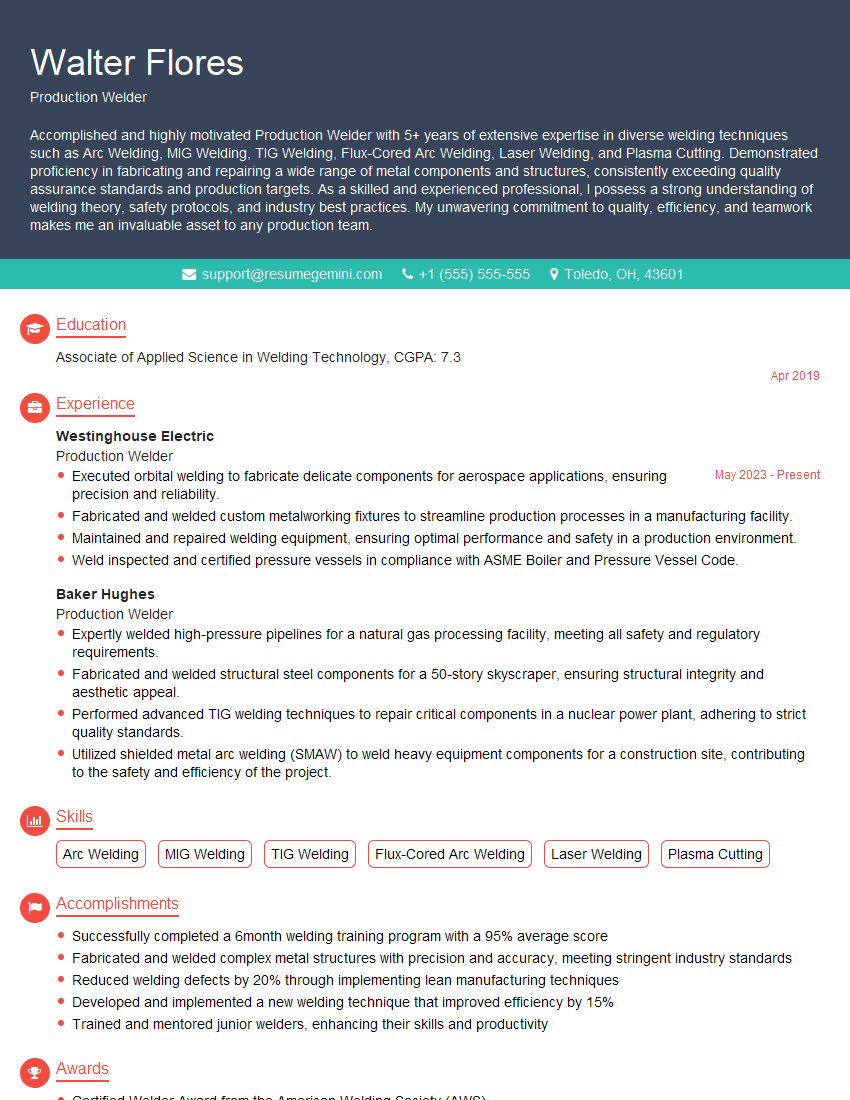
Production Welder Resume Sample
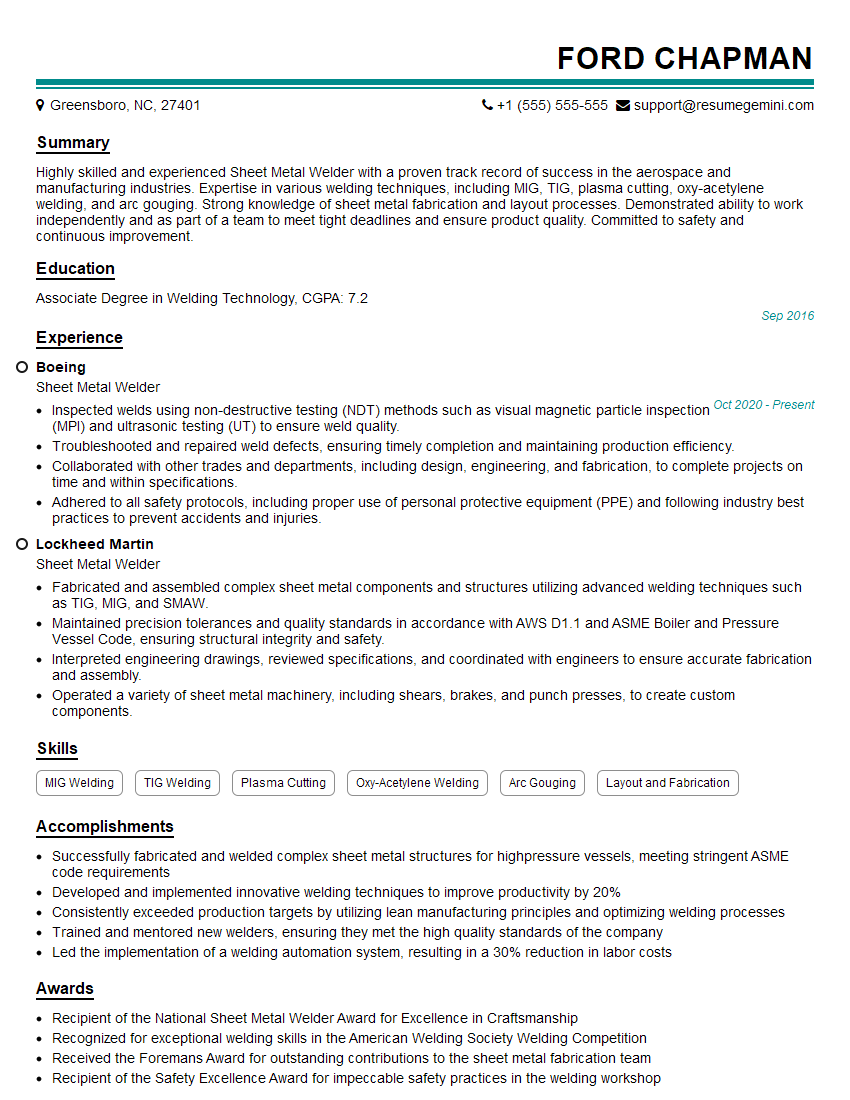
Sheet Metal Welder Resume Sample

Structural Welder Resume Sample
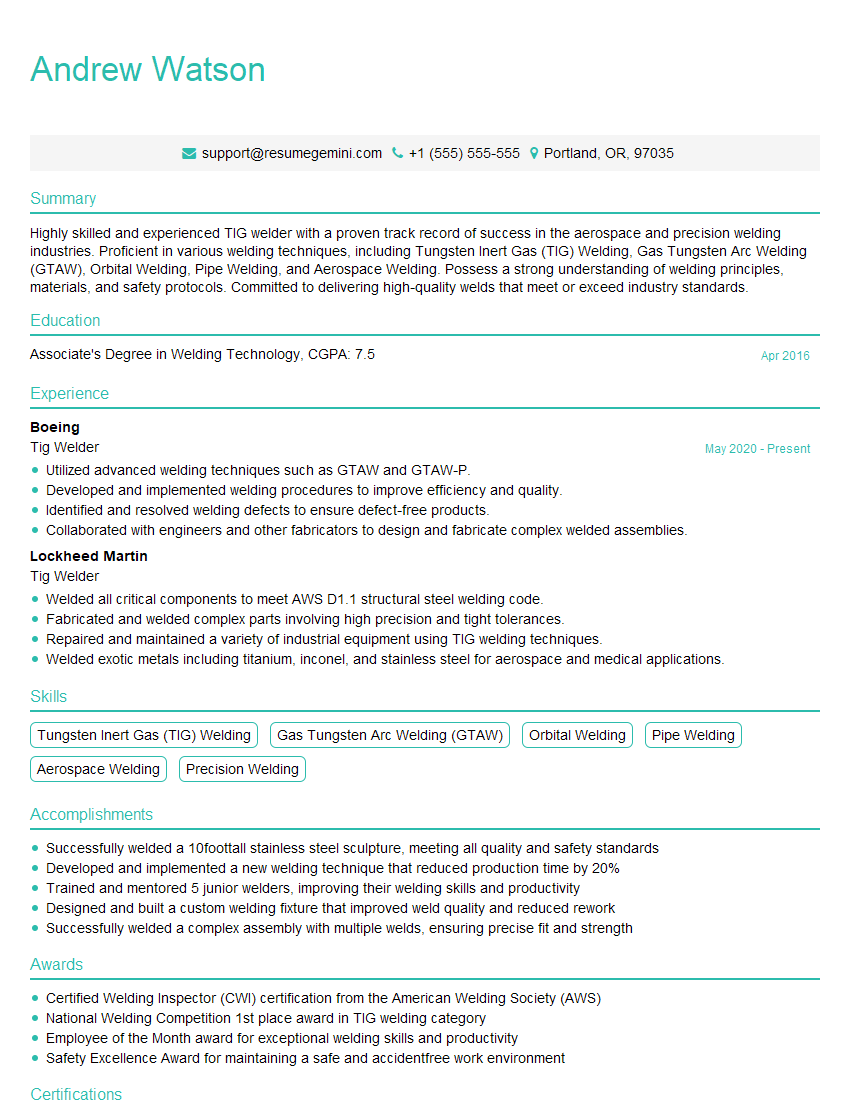
Tig Welder Resume Sample
Explore more articles
Users Rating of Our Blogs
Share Your Experience
We value your feedback! Please rate our content and share your thoughts (optional).
What Readers Say About Our Blog
Really detailed insights and content, thank you for writing this detailed article.
IT gave me an insight and words to use and be able to think of examples