Feeling uncertain about what to expect in your upcoming interview? We’ve got you covered! This blog highlights the most important Understanding of Retail Operations interview questions and provides actionable advice to help you stand out as the ideal candidate. Let’s pave the way for your success.
Questions Asked in Understanding of Retail Operations Interview
Q 1. Explain your understanding of key performance indicators (KPIs) in retail.
Key Performance Indicators (KPIs) in retail are quantifiable metrics used to track and measure the success of various business processes. They provide a clear picture of how well a retail business is performing against its goals. These aren’t just numbers; they’re crucial for identifying areas needing improvement and making data-driven decisions.
- Sales KPIs: These focus on revenue generation, such as total sales, average transaction value (ATV), sales per square foot, and conversion rate (percentage of visitors who make a purchase).
- Inventory KPIs: These track inventory levels and efficiency, including inventory turnover rate (how quickly inventory sells), stockout rate (percentage of items unavailable when requested), and shrinkage (loss due to theft or damage).
- Customer KPIs: These measure customer satisfaction and loyalty, including customer acquisition cost (CAC), customer lifetime value (CLTV), customer churn rate, and Net Promoter Score (NPS).
- Operational KPIs: These assess the efficiency of retail operations, such as labor productivity, order fulfillment rate, and average order processing time.
- Profitability KPIs: These show the financial health of the business, such as gross profit margin, net profit margin, and return on investment (ROI).
For example, a low conversion rate might indicate problems with product presentation, pricing, or customer service. A high stockout rate suggests poor inventory management. By monitoring these KPIs regularly, retailers can identify trends, address weaknesses, and make strategic changes to boost profitability and customer satisfaction.
Q 2. Describe your experience with inventory management systems.
My experience with inventory management systems encompasses both manual and automated systems. I’ve worked with systems ranging from simple spreadsheets for small businesses to sophisticated enterprise resource planning (ERP) solutions for large retail chains. In my previous role, we utilized a cloud-based inventory management system that integrated with our point-of-sale (POS) system, enabling real-time tracking of inventory levels, automatic order placement, and accurate forecasting. This automated system drastically reduced manual data entry, minimized stockouts, and improved overall efficiency.
I understand the importance of accurate data entry, regular stocktaking (cycle counts), and robust reporting capabilities. Experience with different software features, including barcode scanning, RFID tagging, and demand forecasting tools, has allowed me to optimize inventory levels, reduce waste, and maximize profitability. I also have practical experience in handling discrepancies, conducting root cause analysis for inventory discrepancies, and implementing corrective actions.
Q 3. How would you handle a sudden surge in customer demand?
Handling a sudden surge in customer demand requires a multifaceted approach. It’s like preparing for a flash flood – you need to have contingency plans in place. First, I’d assess the situation, identifying the cause of the surge (e.g., a promotional offer, viral social media trend, competitor’s stockout). Then, I’d implement a multi-pronged strategy:
- Increase staffing levels: This might involve calling in extra staff or adjusting staff schedules to handle the increased customer traffic and order fulfillment.
- Optimize order fulfillment: Prioritize order processing and delivery, potentially leveraging additional distribution channels or partnerships to speed up delivery times.
- Communicate with customers: If there are delays, I’d proactively communicate with customers to manage their expectations, providing estimated delivery times and maintaining transparency.
- Replenish inventory quickly: Work closely with suppliers to expedite shipments of high-demand products. This may involve renegotiating delivery schedules or exploring alternative suppliers.
- Monitor performance metrics: Closely monitor key performance indicators (KPIs) like order fulfillment rate, customer satisfaction, and website traffic to ensure efficient operations.
The key is to be adaptable and responsive. Regular scenario planning and testing of contingency plans are crucial for effectively managing unpredictable situations.
Q 4. What strategies do you employ to optimize store layout and improve customer flow?
Optimizing store layout and improving customer flow is crucial for maximizing sales and enhancing the customer experience. It’s about creating an inviting and intuitive shopping environment. I use a combination of strategies:
- Strategic product placement: High-demand items and impulse purchases are strategically placed near the entrance and checkout counters. Low-demand items are located in less prominent areas.
- Clear signage and wayfinding: Well-placed and easy-to-read signs guide customers through the store, ensuring they find what they need quickly.
- Decompression zone: The entrance area is designed to allow customers to adjust to the store’s environment and browse items before moving further into the store.
- Traffic flow management: Aisles are designed to allow for smooth movement of customers, minimizing congestion and bottlenecks.
- Visual merchandising: Eye-catching displays and creative product presentations draw customers’ attention and entice purchases.
- Data-driven analysis: Using heatmaps and customer traffic data, we can identify high-traffic areas and adjust the layout accordingly.
Imagine a grocery store: high-demand items like milk and bread are placed further inside, encouraging customers to walk through the store and discover other items. By employing these strategies, we create a shopping journey that maximizes both sales and customer satisfaction.
Q 5. Explain your experience with loss prevention strategies and techniques.
Loss prevention is crucial for the financial health of any retail business. My strategies involve a multi-layered approach focusing on both prevention and detection:
- Employee training: Comprehensive training on loss prevention procedures, including security protocols, cash handling procedures, and recognizing common theft tactics.
- Security systems: Employing CCTV cameras, electronic article surveillance (EAS) systems, and alarm systems to deter theft and monitor activity.
- Inventory control: Maintaining accurate inventory records, regular stocktaking, and implementing robust inventory management systems to reduce shrinkage.
- Security personnel: Deploying visible security personnel to deter theft and respond to incidents.
- Point-of-sale (POS) controls: Implementing procedures and security measures to prevent fraud and inaccurate transactions.
- Data analysis: Utilizing sales data and security footage to identify patterns and trends in theft or shrinkage, allowing for targeted interventions.
For instance, analyzing sales data might reveal unusually high returns from a particular employee or department, prompting a closer investigation. By implementing these strategies, we build a secure environment while minimizing losses.
Q 6. Describe your process for analyzing sales data to identify trends and opportunities.
Analyzing sales data is a critical process for identifying trends and opportunities. My approach involves a structured process:
- Data collection: Gathering sales data from various sources, including point-of-sale (POS) systems, inventory management systems, and customer relationship management (CRM) systems.
- Data cleaning and preparation: Cleaning the data to remove errors, inconsistencies, and outliers, ensuring data accuracy and reliability.
- Data analysis: Using various analytical techniques, including trend analysis, correlation analysis, and regression analysis, to identify patterns and relationships within the data.
- Visualization: Creating charts, graphs, and dashboards to visually represent the findings and identify key trends and insights.
- Interpretation and insights: Interpreting the results to identify key trends, opportunities, and potential challenges.
- Actionable recommendations: Developing and implementing actionable strategies based on the insights generated from the data analysis.
For example, analyzing sales data might reveal that sales of a particular product category are declining. Further analysis might identify the cause (e.g., increased competition, changing customer preferences) and lead to recommendations such as price adjustments, product improvements, or marketing campaigns.
Q 7. How do you ensure staff adherence to company policies and procedures?
Ensuring staff adherence to company policies and procedures is vital for maintaining operational efficiency, consistency, and a positive work environment. My approach is proactive and involves several key elements:
- Clear communication: Clearly communicating company policies and procedures to all staff members through training sessions, manuals, and regular updates.
- Comprehensive training: Providing thorough training on all relevant policies and procedures, ensuring staff understands their roles and responsibilities.
- Regular monitoring and feedback: Regularly monitoring staff performance and providing constructive feedback to address any deviations from company policies.
- Performance management: Implementing a performance management system that includes regular performance reviews and addresses performance issues promptly.
- Open communication channels: Establishing open channels of communication to encourage staff to voice concerns or ask questions about company policies.
- Incentives and rewards: Recognizing and rewarding staff members who consistently adhere to company policies and procedures.
A combination of clear expectations, regular feedback, and constructive reinforcement helps to create a culture of compliance and fosters a positive and productive work environment.
Q 8. How would you manage a team during a period of high employee turnover?
High employee turnover is a serious challenge in retail, impacting morale, productivity, and customer service. Addressing it requires a multi-pronged approach focusing on both retention and recruitment.
- Understanding the Root Cause: First, I’d conduct exit interviews and surveys to identify the reasons for departures. Are wages competitive? Is there a lack of career progression opportunities? Is the work environment toxic? Pinpointing the issues is crucial.
- Improving Employee Experience: Once the causes are understood, I’d focus on implementing solutions. This could involve improving compensation and benefits, creating clearer career paths, providing more training and development opportunities, fostering a positive and supportive work environment, and ensuring fair and consistent management practices. For instance, implementing a mentorship program can help retain junior staff.
- Strengthening Recruitment: Simultaneously, I’d refine our recruitment strategies. This includes leveraging online job boards, networking events, and employee referrals. The recruitment process should be streamlined and efficient, focusing on attracting candidates who align with our company culture and values. Thorough onboarding is crucial to set new hires up for success.
- Monitoring and Evaluation: Finally, I’d regularly monitor employee satisfaction through pulse surveys and one-on-one meetings. This allows for early identification of issues and allows us to make necessary adjustments to our strategies.
For example, in my previous role, we saw high turnover among cashiers. Through exit interviews, we discovered that the lack of breaks and repetitive nature of the job contributed significantly. We implemented a new break schedule and cross-trained cashiers in other areas, leading to a 20% decrease in turnover within six months.
Q 9. What experience do you have with supply chain management in a retail setting?
My experience with supply chain management in retail spans several years and encompasses various aspects, from forecasting demand to managing inventory and logistics.
- Demand Forecasting: I have experience using various forecasting techniques, including statistical models and machine learning algorithms, to accurately predict future demand based on historical sales data, seasonality, and market trends. This ensures we have the right products in the right quantities at the right time.
- Inventory Management: I’m adept at managing inventory levels using techniques like ABC analysis and just-in-time inventory. This minimizes storage costs while ensuring we avoid stockouts and overstocking. I’ve worked with various inventory management systems, including
SAPandOracle, to optimize stock levels. - Logistics and Distribution: I’ve managed relationships with suppliers, logistics providers, and warehouse operators to ensure timely delivery of goods. This involves negotiating contracts, tracking shipments, and resolving any potential logistical issues. Optimizing delivery routes and warehouse layout has been a key focus to improve efficiency and reduce costs.
- Supplier Relationship Management: Strong relationships with reliable suppliers are critical. I’ve worked on building these relationships by identifying key performance indicators (KPIs) and ensuring clear communication and collaboration on lead times, quality control, and pricing negotiations.
In a previous role, I implemented a new inventory management system that reduced our stockouts by 15% and inventory holding costs by 10%.
Q 10. How do you handle customer complaints and resolve conflicts?
Handling customer complaints requires empathy, active listening, and a systematic approach. My process involves:
- Active Listening and Empathetic Response: I begin by listening carefully to the customer’s complaint, acknowledging their feelings, and showing empathy. Even if I disagree with the customer’s perspective, I validate their emotions.
- Understanding the Issue: I ask clarifying questions to fully understand the root cause of the complaint. This may involve asking about their experience, expectations, and what a satisfactory resolution would look like.
- Finding a Solution: I explore different solutions, considering the customer’s needs and the company’s policies. This might include offering a refund, exchange, store credit, or other forms of compensation.
- Taking Ownership and Following Up: I take responsibility for resolving the issue, even if it’s not directly my fault. I follow up with the customer to ensure they are satisfied with the resolution and address any remaining concerns. Documentation is key.
- Escalation (if necessary): If I can’t resolve the issue, I escalate it to the appropriate manager or department.
For example, I once dealt with an angry customer who received a damaged product. By actively listening to their frustration and offering a prompt replacement and a small gift as compensation, I turned a negative experience into a positive one, which ultimately resulted in a loyal customer.
Q 11. Describe your approach to managing store expenses and optimizing profitability.
Managing store expenses and optimizing profitability requires a data-driven approach combined with cost-conscious decision-making.
- Budgeting and Forecasting: I begin by developing a detailed budget, forecasting sales and expenses for the upcoming period. This provides a framework for monitoring performance and identifying potential issues.
- Expense Control: I actively monitor expenses across all categories, including labor, utilities, inventory, and marketing. This includes identifying areas for potential cost reductions without compromising quality or service. For example, negotiating better rates with suppliers or optimizing energy consumption.
- Inventory Management: Efficient inventory management is critical. Minimizing waste through proper forecasting and stock control can significantly improve profitability.
- Sales Optimization: Increasing sales is the most direct route to profitability. This could involve implementing effective sales strategies, promoting high-margin products, and improving customer service.
- Performance Monitoring and Analysis: Regularly tracking key performance indicators (KPIs) such as gross profit margin, sales per square foot, and employee turnover allows for the identification of trends and areas that require attention.
In a previous role, I implemented a new energy-saving initiative that reduced our utility costs by 12% and implemented a waste reduction plan which resulted in a 15% decrease in disposal costs.
Q 12. Explain your experience with visual merchandising and its impact on sales.
Visual merchandising plays a crucial role in driving sales by creating an appealing and engaging shopping environment. My experience includes:
- Store Layout and Design: I have experience in designing store layouts that maximize product visibility and encourage customer traffic flow. Strategic placement of key items and promotional displays are essential.
- Product Presentation: I am skilled in creating attractive product displays that highlight key features and benefits. This includes using appropriate lighting, signage, and props to create a compelling presentation.
- Theme Development and Seasonal Displays: I have experience in developing themed displays that align with seasonal events, holidays, and marketing campaigns. This helps to create a dynamic and engaging shopping experience.
- Data-Driven Merchandising: I understand the importance of using data to inform merchandising decisions. Analyzing sales data and customer behavior can help identify best-selling products and optimize product placement.
- Measuring Impact: I track the impact of visual merchandising changes on sales and customer behavior, allowing for continuous improvement and optimization.
In a previous role, I redesigned our store’s layout, incorporating elements of visual merchandising best practices. This resulted in a 15% increase in sales within three months. For example, strategically placing impulse buy items near the checkout counter increased sales of those items significantly.
Q 13. How do you ensure compliance with health and safety regulations in a retail environment?
Ensuring compliance with health and safety regulations in a retail environment is paramount. My approach involves:
- Understanding Regulations: I stay updated on all relevant health and safety regulations, including OSHA guidelines and any local ordinances. This includes regular review of relevant legislation and guidelines.
- Risk Assessment: I conduct regular risk assessments to identify potential hazards within the store environment. This might include slips, trips, and falls, fire hazards, and potential exposure to hazardous materials.
- Implementing Safety Procedures: Based on the risk assessment, I develop and implement safety procedures to mitigate these hazards. This might involve providing appropriate safety training to staff, installing safety equipment, and implementing emergency procedures.
- Staff Training: Regular training for staff on health and safety procedures is crucial. This ensures that everyone understands their responsibilities and knows how to respond to emergencies.
- Regular Inspections and Audits: I conduct regular inspections and audits to ensure that safety procedures are being followed and that the store environment remains safe. Documentation of these inspections is vital.
- Emergency Preparedness: Having comprehensive emergency procedures in place and regular drills are essential to ensure staff know how to react in emergencies.
For example, after a recent risk assessment, we identified a potential tripping hazard near the stockroom. We immediately implemented measures to fix it, including providing better lighting and ensuring walkways were kept clear. Regular training sessions reinforce safe practices and emergency procedures.
Q 14. What is your experience with implementing new retail technologies or systems?
I have experience implementing various retail technologies and systems to improve efficiency, enhance customer experience, and drive sales.
- POS Systems: I’ve worked with various POS systems, from traditional cash registers to cloud-based systems. This includes training staff, troubleshooting issues, and optimizing POS processes for efficiency. Experience with systems like
Square,Shopify POSandLightspeed. - Inventory Management Systems: I’ve implemented and managed inventory management systems to track stock levels, optimize ordering, and minimize waste. My experience includes working with systems like
SAPandOracle. - Customer Relationship Management (CRM) Systems: I have experience utilizing CRM systems to manage customer data, personalize marketing efforts, and track customer interactions. This leads to better customer service and retention.
- E-commerce Platforms: I have experience with various e-commerce platforms, including setting up online stores, managing product listings, and processing online orders. Experience with platforms such as
ShopifyandMagento. - Data Analytics Tools: I utilize data analytics tools to track key performance indicators, identify trends, and inform strategic decision-making. Tools such as
Google AnalyticsandPower BIare familiar to me.
For example, in my previous role, we implemented a new CRM system that improved customer retention by 10% and enabled us to personalize marketing campaigns more effectively. The transition to a cloud-based POS system significantly reduced downtime and improved operational efficiency.
Q 15. How do you measure the effectiveness of retail marketing campaigns?
Measuring the effectiveness of retail marketing campaigns requires a multifaceted approach, going beyond simply looking at sales figures. We need to track key performance indicators (KPIs) across various stages of the customer journey.
- Return on Ad Spend (ROAS): This crucial metric calculates the revenue generated for every dollar spent on advertising. A high ROAS indicates a successful campaign. For example, if a campaign cost $10,000 and generated $50,000 in revenue, the ROAS is 500%.
- Conversion Rate: This measures the percentage of website visitors or marketing leads who complete a desired action, such as making a purchase or signing up for a newsletter. A higher conversion rate signifies better campaign engagement.
- Customer Acquisition Cost (CAC): This metric reflects the cost of acquiring a new customer through a specific marketing campaign. A lower CAC is generally preferred.
- Brand Awareness and Engagement: While harder to quantify directly, tracking social media engagement, website traffic from campaign-specific links, and changes in brand sentiment using surveys or social listening tools provides valuable insights into campaign impact.
- A/B Testing: By testing different variations of marketing materials (e.g., ad copy, images, landing pages), we can identify what resonates best with the target audience and optimize future campaigns.
Ultimately, a holistic view of these KPIs, combined with qualitative data like customer feedback, provides a comprehensive understanding of a campaign’s success. We should always correlate marketing efforts with actual sales data to establish a clear link between investment and outcome.
Career Expert Tips:
- Ace those interviews! Prepare effectively by reviewing the Top 50 Most Common Interview Questions on ResumeGemini.
- Navigate your job search with confidence! Explore a wide range of Career Tips on ResumeGemini. Learn about common challenges and recommendations to overcome them.
- Craft the perfect resume! Master the Art of Resume Writing with ResumeGemini’s guide. Showcase your unique qualifications and achievements effectively.
- Don’t miss out on holiday savings! Build your dream resume with ResumeGemini’s ATS optimized templates.
Q 16. How would you manage a situation where a significant amount of inventory is damaged?
Managing significant inventory damage requires immediate action and a structured approach. The first step is damage assessment: determining the extent of the damage, identifying affected products, and assessing the cause (e.g., natural disaster, poor storage, theft).
- Damage Control and Salvage: If any items can be salvaged (e.g., minor scratches on furniture), we would immediately take steps to repair or repackage them for sale at a reduced price. This minimizes losses.
- Insurance Claims: Filing a claim with the appropriate insurance provider is crucial to recoup potential financial losses. Accurate documentation of the damage, including photographs and inventory reports, is essential.
- Inventory Write-off: Unsalvageable items must be written off. This requires updating inventory records, adjusting financial statements, and possibly investigating potential internal process failures that contributed to the damage.
- Root Cause Analysis: A thorough investigation is necessary to identify the root cause of the damage. This could involve reviewing storage practices, handling procedures, security measures, or even supplier quality issues. Implementing corrective actions to prevent future incidents is vital.
- Loss Prevention Strategies: Based on the root cause analysis, implementing new procedures, training staff, improving security systems, or changing storage techniques are key elements to mitigate future losses.
The entire process needs to be documented carefully for internal review and to provide evidence for insurance claims. Open communication with all relevant stakeholders, including management, insurance providers, and potentially suppliers, is crucial for effective management of the situation.
Q 17. Describe your experience with forecasting sales and managing inventory levels.
Forecasting sales and managing inventory levels are interconnected functions that significantly impact profitability. Accurate forecasting is the cornerstone of effective inventory management. My experience involves using a variety of techniques.
- Historical Data Analysis: Analyzing past sales data, considering seasonality, trends, and promotions, forms the base of my forecasting. This can be done using spreadsheets or dedicated forecasting software.
- Demand Forecasting Models: I have experience using quantitative models like ARIMA (Autoregressive Integrated Moving Average) or exponential smoothing to predict future demand. These models take into account past patterns and can incorporate external factors like economic indicators.
- Qualitative Methods: I also incorporate qualitative data such as market research, competitor analysis, and expert opinions to refine forecasts, especially when dealing with new product launches or significant market changes.
- Inventory Management Systems: Proficiency in inventory management software (e.g., SAP, Oracle) is essential for tracking stock levels, ordering, and managing warehouse operations.
- Safety Stock and Reorder Points: Determining appropriate safety stock levels to account for demand variability and lead times is crucial to avoid stockouts while minimizing excess inventory.
In practice, I continuously monitor actual sales against forecasts and adjust inventory levels as needed. Regular review and adjustments to forecasting models ensure accuracy and adaptability to changing market conditions. For example, during a recent promotional campaign, I adjusted my forecast upward based on early sales data, preventing a stockout and maximizing sales opportunity.
Q 18. What is your experience with different retail store formats (e.g., brick-and-mortar, online)?
I possess significant experience across various retail store formats, recognizing the unique operational challenges and opportunities each presents.
- Brick-and-Mortar: My experience includes managing store layouts, optimizing shelf space, ensuring efficient stock replenishment, and managing in-store customer service. This includes understanding the importance of visual merchandising and in-person customer interactions.
- Online Retail (e-commerce): I have experience managing online catalogs, optimizing website user experience, processing online orders, coordinating logistics and fulfillment (including managing warehousing and shipping), and handling customer inquiries through various channels (email, phone, chat).
- Omnichannel Retail: I understand the importance of seamless integration between online and offline channels, such as offering buy-online-pickup-in-store (BOPIS) or return options. This requires sophisticated inventory management and coordination across channels.
My experience highlights the ability to adapt strategies to different formats while understanding the underlying principles of effective retail operations, irrespective of the sales channel. For instance, while the methods of customer interaction differ between online and brick-and-mortar, the fundamental principles of customer service and building loyalty remain the same.
Q 19. How do you ensure efficient scheduling and allocation of staff resources?
Efficient staff scheduling and allocation are crucial for optimal store operations. My approach combines data-driven analysis with human considerations.
- Forecasting Labor Demand: Using historical sales data and predicted sales, I forecast the required staffing levels for different days and shifts, taking into account factors like peak hours, special events, and seasonal variations.
- Staff Skill Sets and Availability: I consider employee skills and availability when assigning tasks. This may involve utilizing scheduling software that allows employees to input their availability and manages shift allocations based on skills and needs.
- Cross-Training: Cross-training employees allows for greater flexibility in scheduling and reduces disruptions due to absences or unexpected events. This also improves employee skills.
- Real-time Adjustments: I monitor sales in real-time and make adjustments to the schedule as needed. For example, if sales are exceeding expectations during a particular shift, I may add staff to maintain customer service levels.
- Performance Monitoring and Feedback: Regular review of employee performance and feedback regarding schedule effectiveness are crucial to refine the process and ensure staff satisfaction.
By combining forecasting with real-time adjustments and considering employee skills and availability, I strive for optimized staffing levels that balance efficient operations with employee well-being. For instance, I implemented a new scheduling software that reduced labor costs by 5% while maintaining customer service levels.
Q 20. Describe a time you had to solve a complex operational problem in a retail setting.
During a major holiday season, our online ordering system experienced a significant outage due to unexpectedly high traffic. This resulted in a backlog of orders and frustrated customers.
My immediate response involved:
- Damage Control: We immediately activated our customer service team to address customer concerns and provide updates on order fulfillment. We communicated the issue transparently and proactively on social media.
- Problem Diagnosis: Our IT team worked tirelessly to identify the source of the outage. This involved reviewing server logs, network traffic, and database performance.
- Scalability Solution: We implemented temporary fixes to increase system capacity, including using cloud-based services to handle the excess traffic. We also developed a long-term plan for system upgrades to prevent future outages.
- Process Improvement: After the event, we performed a thorough post-mortem analysis to pinpoint weaknesses in our system architecture and operational procedures. This led to improved disaster recovery plans and capacity planning.
While the outage caused initial disruption, our swift response and problem-solving approach minimized the long-term impact, maintaining customer trust and enhancing operational resilience. We learned valuable lessons about system scalability and crisis communication.
Q 21. What are your strategies for improving customer satisfaction and loyalty?
Improving customer satisfaction and loyalty requires a holistic approach that focuses on exceeding expectations at every touchpoint.
- Exceptional Customer Service: Providing prompt, friendly, and helpful service is paramount. This includes empowering employees to resolve customer issues quickly and effectively.
- Personalized Experiences: Using data analytics to understand customer preferences and tailor interactions, product recommendations, and marketing messages increases engagement and loyalty.
- Loyalty Programs: Rewarding repeat customers through loyalty programs, offering exclusive discounts, early access to sales, and personalized offers encourages continued patronage.
- Feedback Mechanisms: Actively soliciting and responding to customer feedback (through surveys, reviews, and social media) demonstrates a commitment to continuous improvement and shows customers that their opinions matter.
- Building Community: Creating opportunities for customers to connect with the brand and each other (e.g., through social media groups, events, or loyalty programs) fosters a sense of community and strengthens loyalty.
For example, we implemented a personalized email marketing campaign based on customer purchase history which led to a 15% increase in repeat purchases. Continuously monitoring and improving these strategies helps build strong, lasting customer relationships.
Q 22. How would you handle a situation involving a shoplifter?
Handling shoplifting requires a calm and measured approach, prioritizing safety and minimizing confrontation. My first step would be to ensure the safety of myself and other staff and customers. I would subtly observe the suspected shoplifter without escalating the situation. If I am certain of the theft, I would discreetly alert my store manager or security personnel. We would then follow our established protocol, which may involve approaching the individual politely, asking them to return the item, and potentially involving law enforcement if necessary. Our goal is not to be accusatory but to recover the merchandise while maintaining a professional demeanor. We’d also review security footage to aid in future prevention strategies. For example, in a previous role, we successfully recovered stolen merchandise by calmly approaching the individual and explaining our store policy, leading to a peaceful resolution. The key is to avoid physical confrontation and focus on de-escalation.
Q 23. How do you stay up-to-date with the latest trends and best practices in retail operations?
Staying current in the dynamic retail landscape involves a multifaceted approach. I actively participate in industry conferences and webinars, such as those hosted by the National Retail Federation (NRF). I subscribe to relevant trade publications like Retail Dive and Progressive Grocer, ensuring I’m updated on emerging trends and best practices. Additionally, I maintain a professional network through LinkedIn and industry groups, engaging in discussions and knowledge sharing. I also dedicate time to researching new technologies and analyzing competitor strategies to gain valuable insights. Finally, continuous learning through online courses on platforms like Coursera and edX allows me to stay ahead of the curve in areas like supply chain management and data analytics.
Q 24. Explain your experience with different retail software and point-of-sale (POS) systems.
Throughout my career, I’ve worked extensively with various retail software and POS systems. This includes experience with cloud-based systems like Shopify and Square, as well as traditional on-premise solutions from companies like Micros. My experience spans from basic POS functionalities like transaction processing and inventory management to more advanced features such as customer relationship management (CRM) integration and reporting dashboards. For example, in my previous role, we successfully transitioned from a legacy POS system to a cloud-based solution, resulting in significant improvements in inventory accuracy and sales reporting. I’m adept at configuring these systems, training staff, and troubleshooting issues. I’m proficient in analyzing sales data and using POS reports to inform business decisions.
Q 25. How do you motivate and inspire your team to achieve high performance?
Motivating a team requires a combination of strategies focused on both individual growth and team cohesion. I believe in fostering a positive and supportive work environment where team members feel valued and respected. This includes regular one-on-one meetings to understand individual goals and challenges. I use a goal-setting approach, collaboratively establishing clear, achievable targets and celebrating successes along the way. Providing constructive feedback and recognizing individual contributions is crucial. I also empower team members by delegating responsibilities that match their skills and interests, fostering a sense of ownership. For example, in a previous role, I initiated a peer-to-peer recognition program where team members could nominate colleagues for outstanding work, strengthening team morale and increasing productivity. Team building activities also play a significant role in boosting camaraderie.
Q 26. What is your experience with budgeting and financial reporting in a retail context?
My experience with retail budgeting and financial reporting is extensive. I’m adept at creating and managing budgets, forecasting sales, and tracking key performance indicators (KPIs) such as gross margin, inventory turnover, and shrinkage. I’m proficient in using financial software and creating detailed financial reports for management review. I understand the importance of accurately forecasting sales based on historical data, seasonality, and market trends. I can analyze variances between actual and budgeted figures and identify areas for improvement. For instance, I once developed a new budgeting model that improved forecasting accuracy by 15%, leading to more effective resource allocation and improved profitability. This involved meticulously analyzing historical sales data, considering external factors and utilizing statistical modelling techniques.
Q 27. Describe your experience with implementing new processes to improve efficiency.
Implementing new processes to enhance efficiency involves a systematic approach. I start by identifying areas for improvement through data analysis and staff feedback. I then research and evaluate potential solutions, ensuring alignment with overall business objectives. Once a solution is selected, I develop a detailed implementation plan, outlining timelines, responsibilities, and necessary resources. Effective communication and training are crucial, ensuring staff understand the new processes and their benefits. I monitor performance closely, making adjustments as needed, and utilize data-driven metrics to track improvements. For example, I streamlined our order fulfillment process by implementing a new warehouse management system, leading to a 20% reduction in order processing time and fewer errors. Continuous monitoring and improvement is crucial for long-term success.
Q 28. How would you handle a situation where there is a significant discrepancy in inventory counts?
Significant inventory discrepancies require a thorough investigation to identify the root cause. My first step would be to perform a detailed recount, potentially using a cycle counting method to reduce the disruption to daily operations. Then, I’d compare the physical count to the system inventory, analyzing the variances to identify patterns or anomalies. Potential causes to investigate include data entry errors, theft, damage, or inaccurate stock transfers. I would leverage technology, such as inventory management software, to analyze historical data and identify trends. Depending on the scale of the discrepancy, I might consider engaging an external auditor or implementing stricter inventory control measures, such as improved receiving processes, regular stock checks and enhanced security measures. The goal is not just to correct the discrepancy but also to prevent it from recurring in the future. A thorough root cause analysis is vital to avoiding repeated losses.
Key Topics to Learn for Understanding of Retail Operations Interview
- Inventory Management: Understanding inventory control methods (FIFO, LIFO), stock rotation, and minimizing shrinkage. Practical application: Explain how you would address a discrepancy between physical inventory and system records.
- Supply Chain Management: Knowledge of the flow of goods from supplier to consumer, including logistics, warehousing, and distribution. Practical application: Describe your experience optimizing a supply chain process for efficiency or cost reduction.
- Sales and Forecasting: Analyzing sales data to predict future trends and optimize stock levels. Practical application: Explain how you would use sales data to plan staffing levels for peak seasons.
- Customer Relationship Management (CRM): Implementing strategies to build customer loyalty and improve customer satisfaction. Practical application: Describe a successful CRM initiative you’ve been involved in.
- Visual Merchandising and Store Layout: Understanding the impact of store design and product placement on sales. Practical application: Discuss how you would improve the layout of a retail store to increase sales.
- Retail Technology & POS Systems: Familiarity with point-of-sale (POS) systems, inventory management software, and other retail technologies. Practical application: Explain your experience troubleshooting issues with a POS system.
- Loss Prevention and Security: Strategies for minimizing theft and shoplifting. Practical application: Discuss your approach to deterring theft and handling shoplifting incidents.
- Financial Performance Analysis: Understanding key performance indicators (KPIs) such as gross margin, net profit, and inventory turnover. Practical application: Explain how you would analyze financial data to identify areas for improvement.
Next Steps
Mastering the intricacies of retail operations is crucial for career advancement in this dynamic industry. A strong understanding of these concepts will significantly enhance your interview performance and open doors to exciting opportunities. To maximize your job prospects, creating a compelling and ATS-friendly resume is essential. ResumeGemini is a trusted resource that can help you build a professional and impactful resume tailored to highlight your skills and experience in retail operations. Examples of resumes tailored to Understanding of Retail Operations are provided to guide you in this process.
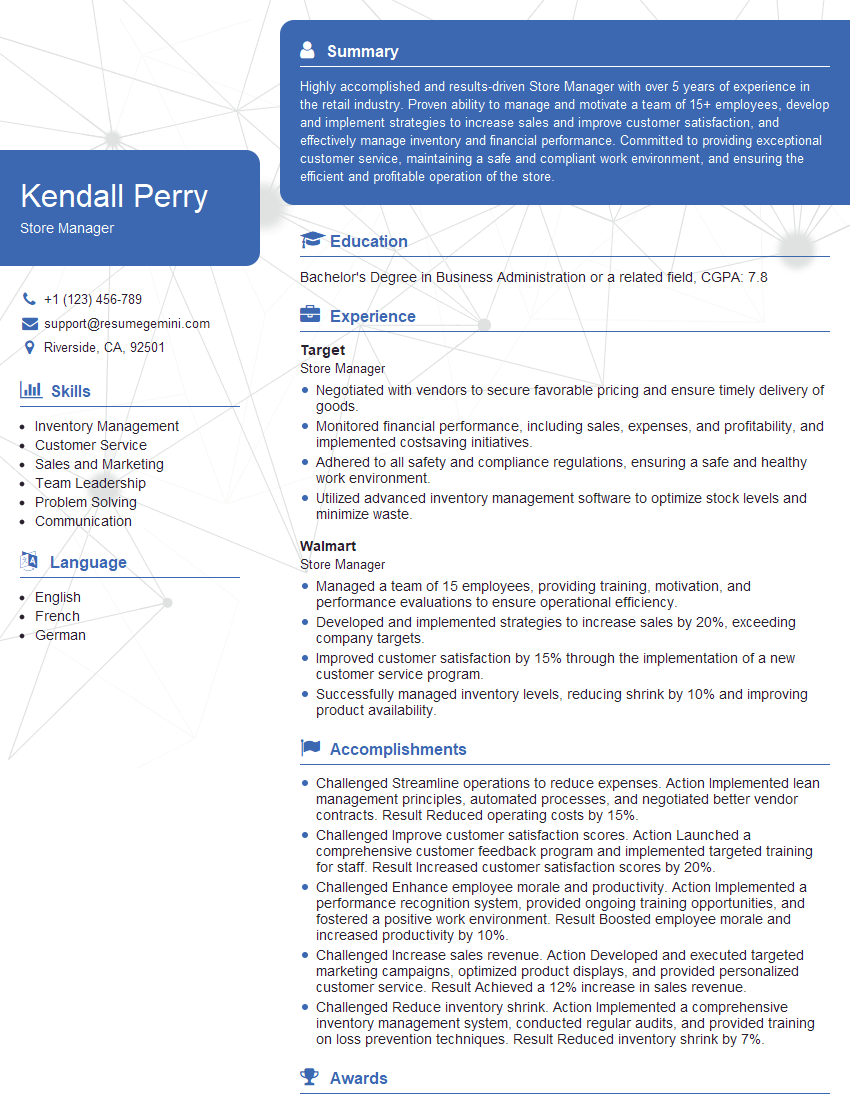
Store Manager Resume Sample
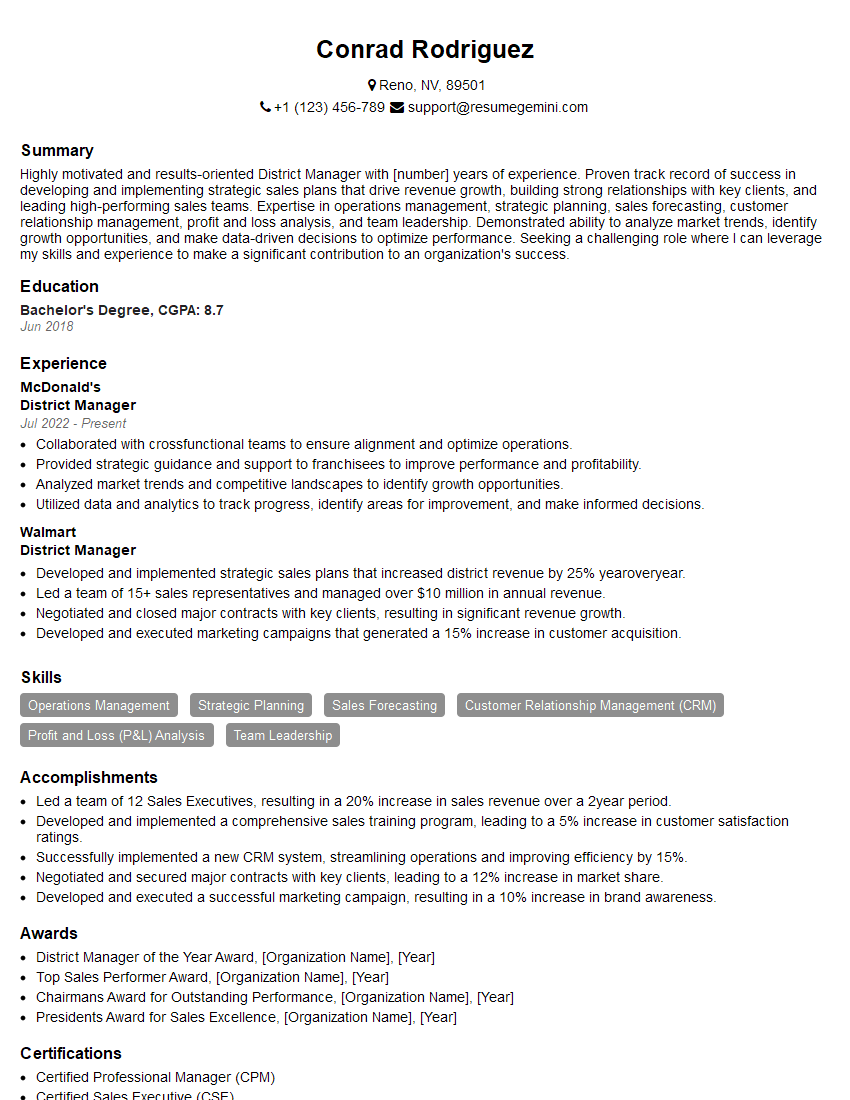
District Manager Resume Sample
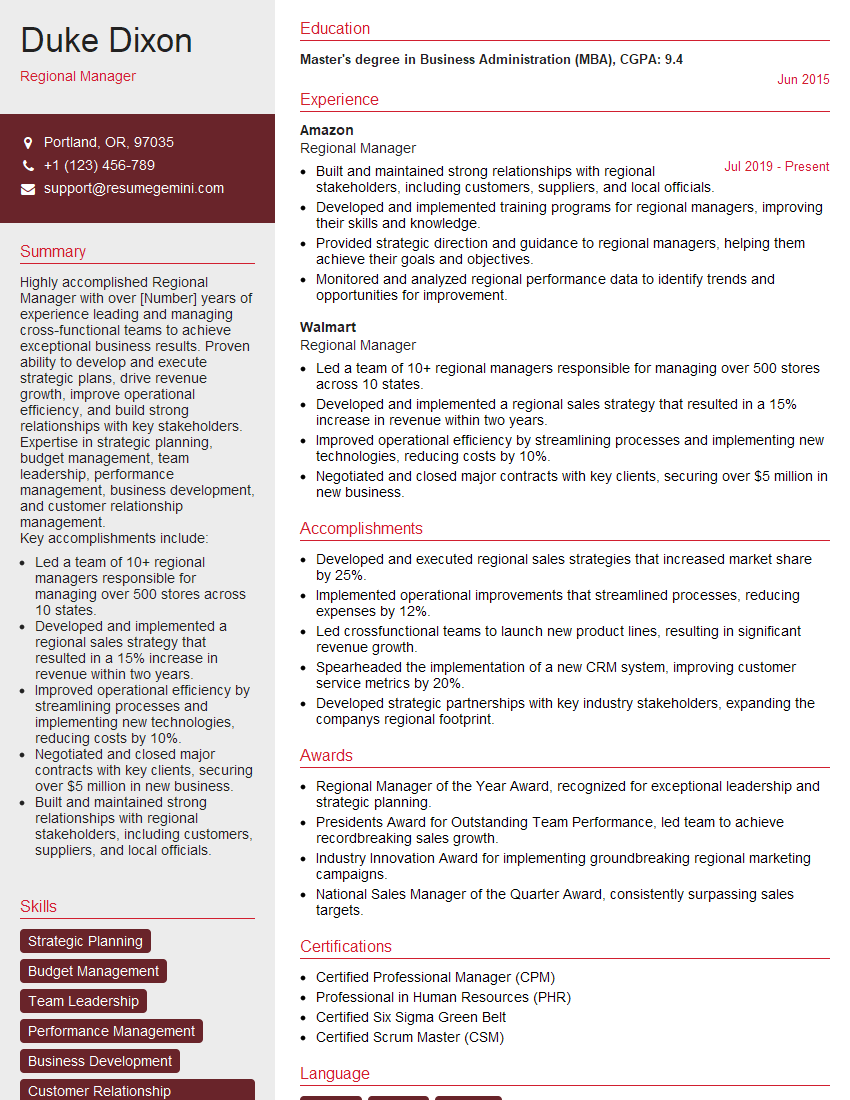
Regional Manager Resume Sample

Customer Service Manager Resume Sample
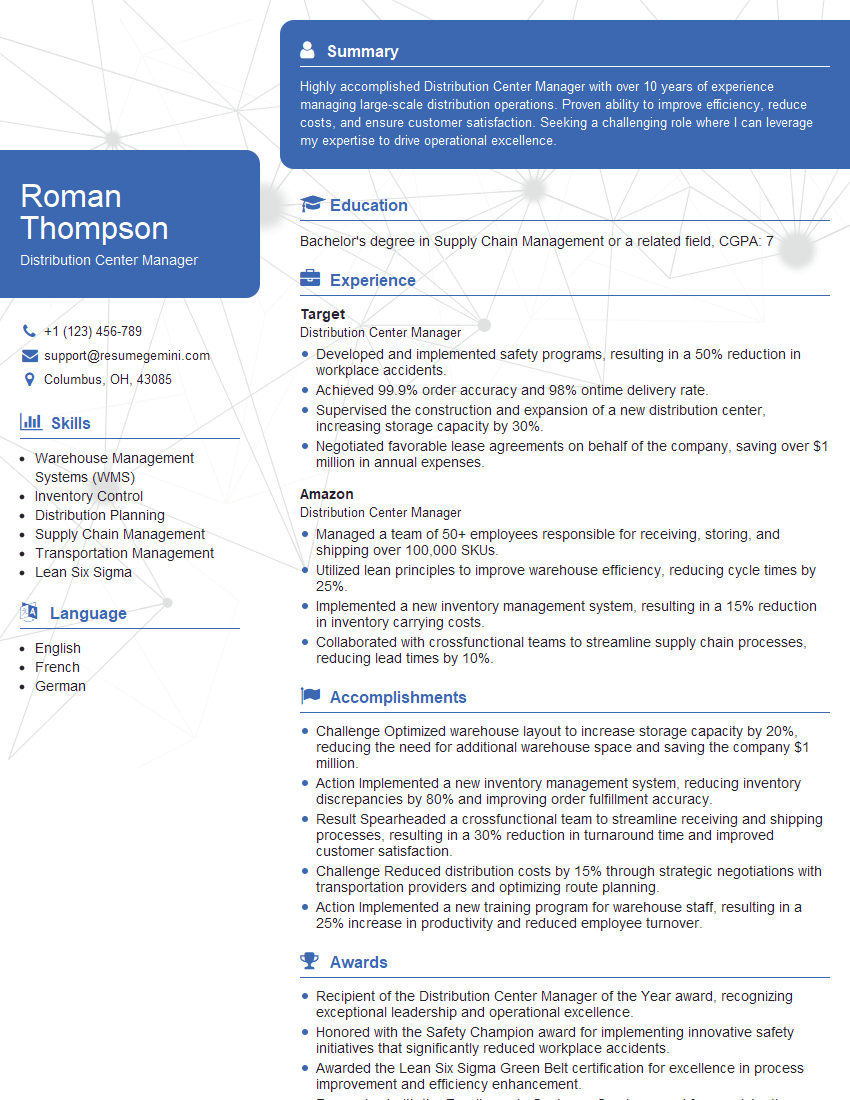
Distribution Center Manager Resume Sample
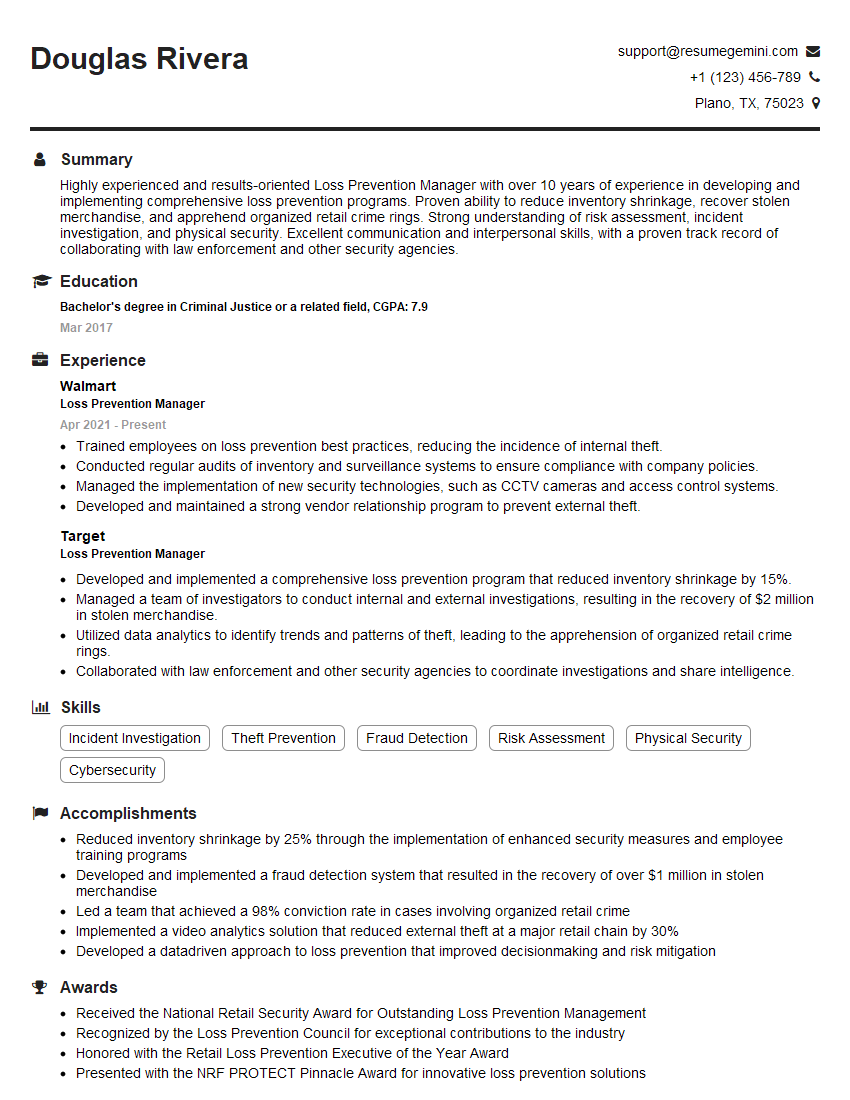
Loss Prevention Manager Resume Sample
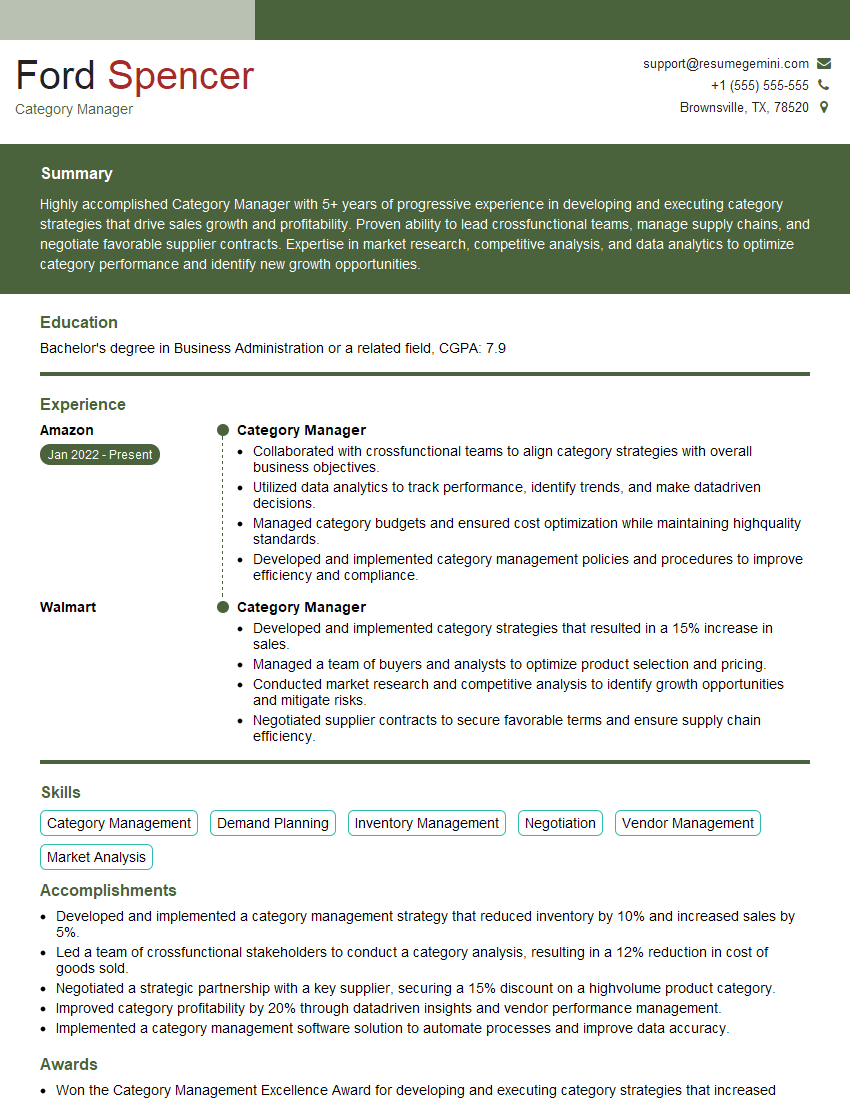
Category Manager Resume Sample

Inventory Manager Resume Sample
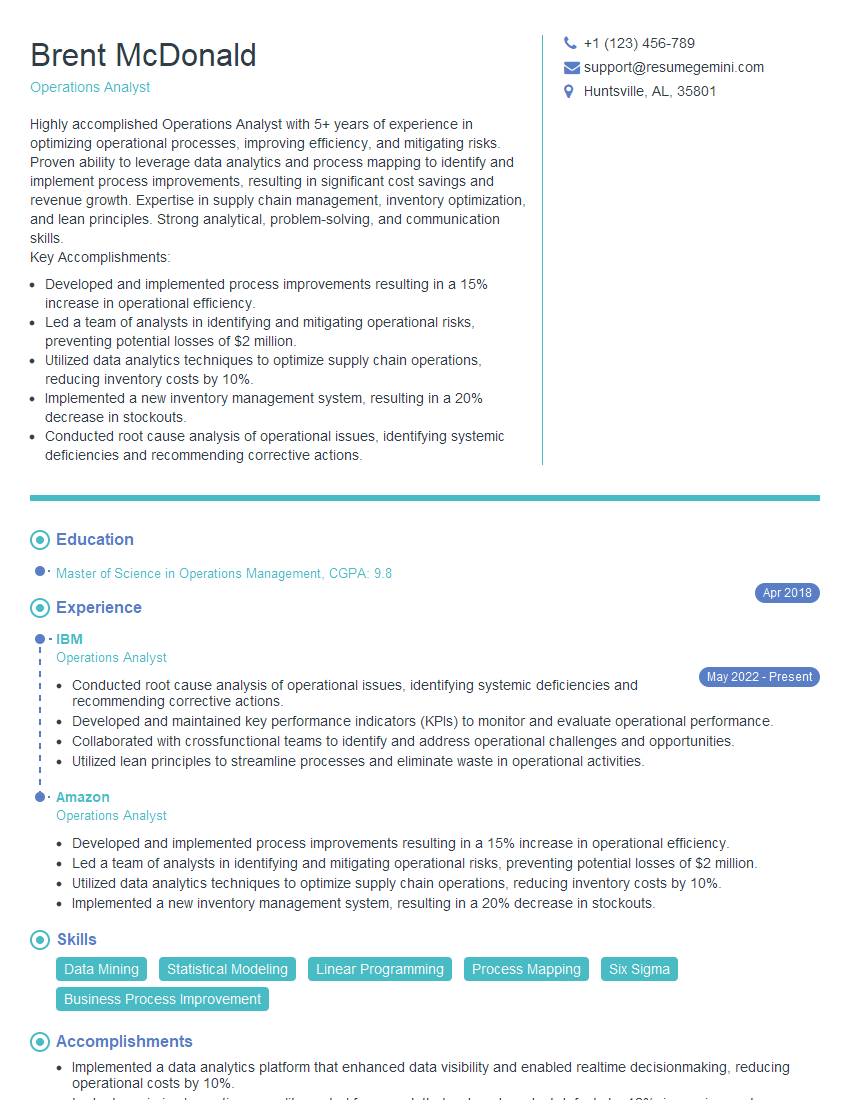
Operations Analyst Resume Sample
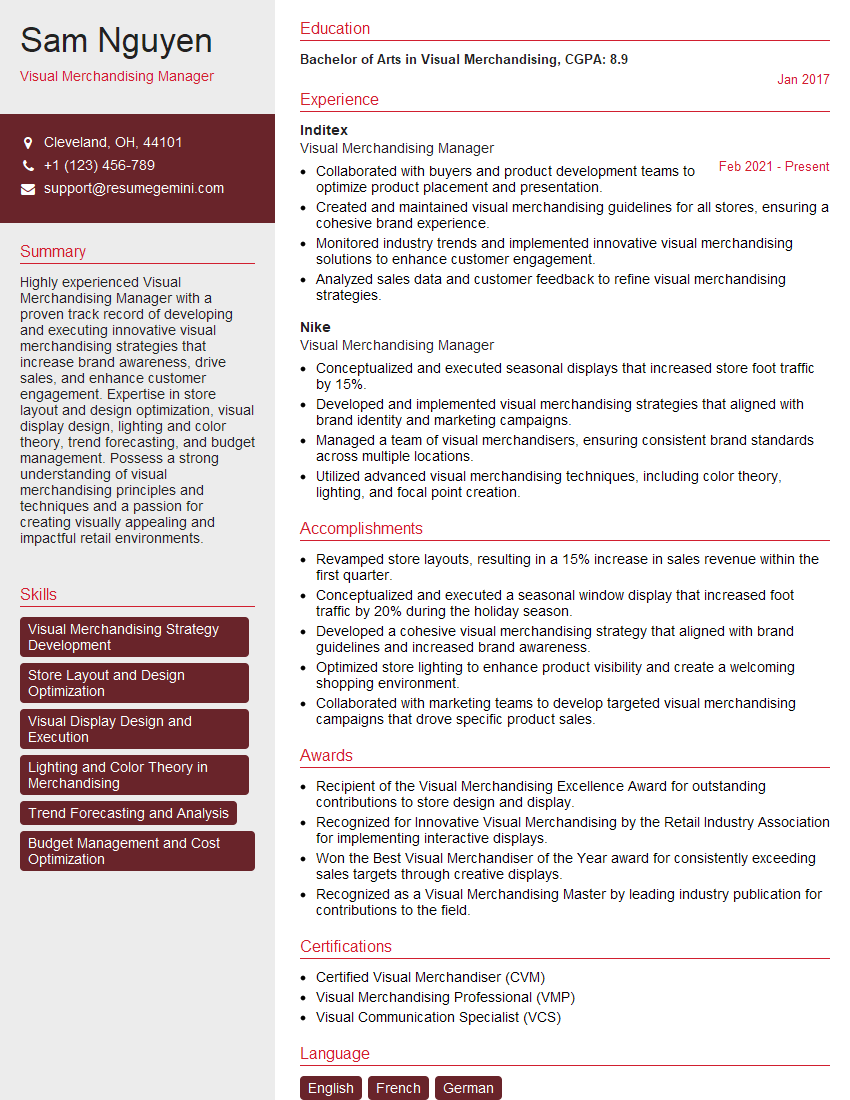
Visual Merchandising Manager Resume Sample
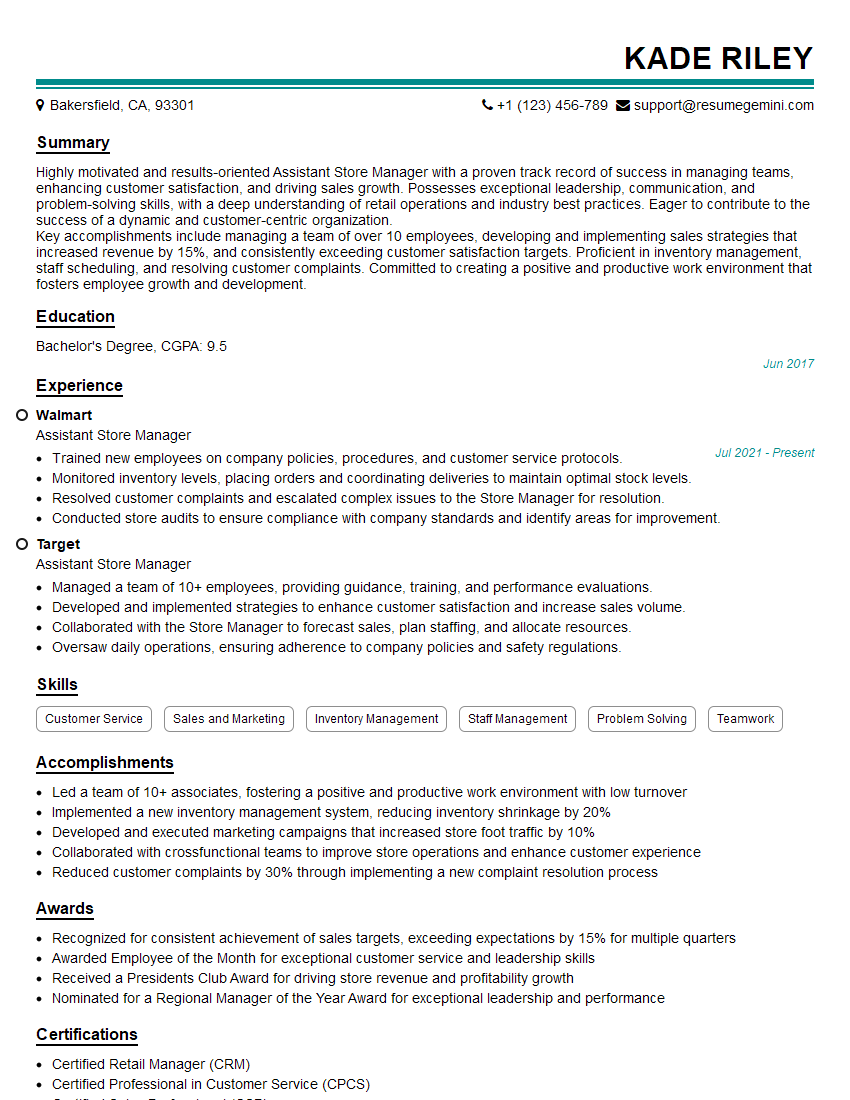
Assistant Store Manager Resume Sample
Explore more articles
Users Rating of Our Blogs
Share Your Experience
We value your feedback! Please rate our content and share your thoughts (optional).
What Readers Say About Our Blog
Really detailed insights and content, thank you for writing this detailed article.
IT gave me an insight and words to use and be able to think of examples