The thought of an interview can be nerve-wracking, but the right preparation can make all the difference. Explore this comprehensive guide to Use of power tools and hand tools interview questions and gain the confidence you need to showcase your abilities and secure the role.
Questions Asked in Use of power tools and hand tools Interview
Q 1. What safety precautions do you take when using power tools?
Safety is paramount when using power tools. My approach is multifaceted and begins before I even turn the tool on. It involves a thorough risk assessment of the task, selecting the right tool for the job, and ensuring I have the appropriate personal protective equipment (PPE).
- PPE: This always includes safety glasses, hearing protection (earplugs or muffs), and work gloves. Depending on the task, I might also add a dust mask, a hard hat, and appropriate clothing (long sleeves and pants to protect skin).
- Tool Inspection: Before each use, I carefully inspect the power tool for any damage, loose parts, or frayed cords. A damaged tool is a dangerous tool and should be immediately taken out of service.
- Work Area: I ensure my work area is well-lit, clean, and free of clutter. A cluttered space increases the risk of accidents. I also make sure I have adequate space around me to move freely and safely.
- Secure Workpiece: The workpiece needs to be firmly secured – using clamps, vises, or other appropriate holding devices – to prevent it from moving unexpectedly during operation.
- Proper Technique: I always maintain a firm grip on the tool, using both hands whenever possible. I avoid forcing the tool and let it do the work. I never reach over a running blade.
- Disconnecting Power: When changing blades, making adjustments, or if the tool malfunctions, I always unplug it from the power source before touching any part of the tool.
For example, when using a router, I always use a router table with a featherboard to prevent kickback and keep my hands safely away from the spinning bit. I also use a push stick to feed the wood into the router, keeping my fingers clear.
Q 2. Explain the difference between a circular saw and a miter saw.
Circular saws and miter saws are both used for cutting wood, but they differ significantly in their design and applications. A circular saw is a portable hand-held saw with a circular blade that rotates at high speed, allowing for various cuts, including rip cuts (cutting with the grain) and crosscuts (cutting against the grain). It’s versatile but requires more control and skill to achieve precise cuts.
A miter saw, on the other hand, is typically a stationary tool with a blade that pivots on a fixed base. It is primarily designed for making accurate angled cuts (miters) and crosscuts, ideal for creating frames, trim work, and mitered joints. The saw’s ability to make precisely controlled angles makes it a preferred tool for accurate, repetitive cuts.
In short, use a circular saw for rough cuts or portability needs, and a miter saw for precise angled cuts.
Q 3. Describe your experience with various types of hand saws.
My experience with hand saws encompasses a variety of types, each suited for different applications. I’ve worked extensively with:
- Rip saws: These have large, widely spaced teeth designed for cutting with the grain. Ideal for cutting large boards.
- Crosscut saws: With smaller, more closely spaced teeth, these are excellent for cutting across the grain. They make cleaner, more precise cuts in crosscuts.
- Back saws: These have a rigid back that ensures straight cuts. I frequently use these for fine work, such as miter cuts or tenons.
- Coping saws: Essential for intricate curves, these saws have a thin blade that can navigate tight turns. I find these indispensable for ornamental woodworking.
- Hand saws with various tooth profiles: I’m familiar with different tooth configurations – such as those optimized for cutting hardwoods versus softwoods – selecting the right one based on the material and the type of cut required.
Proper sharpening and maintenance of hand saws are critical for efficient and safe cutting. A dull saw requires more force, leading to inaccuracy and fatigue. I regularly sharpen my saws, using a saw file and sharpening guide, and maintain them to ensure they remain clean and well-oiled.
Q 4. How do you maintain and care for your power tools?
Maintaining power tools is crucial for their longevity and safe operation. My routine involves several key steps:
- Cleaning: After each use, I thoroughly clean the tool, removing sawdust, debris, and any sticky residues. Compressed air is helpful for removing dust from hard-to-reach areas.
- Lubrication: Many power tools require lubrication of moving parts. I use appropriate lubricants as recommended by the manufacturer’s instructions.
- Blade/Bit Maintenance: Regularly sharpening and replacing worn blades or bits is vital for safe and efficient cutting. Dull blades cause more strain on the tool and can lead to inaccurate cuts or kickback.
- Storage: I store my tools in a clean, dry place, away from moisture and extreme temperatures. This helps prevent rust and corrosion.
- Regular Inspections: I periodically inspect cords, plugs, and switches for any signs of damage or wear and tear, replacing them if necessary.
For example, I regularly clean and lubricate the chain of my chainsaw and sharpen the chain using a sharpening file and gauge. For my circular saw, I check the blade for damage before each use and sharpen or replace it as needed.
Q 5. What are the common causes of power tool malfunctions?
Power tool malfunctions can stem from various causes. Some of the most common include:
- Dull or damaged blades/bits: This leads to inefficient cutting, increased strain on the motor, and potential kickback.
- Overloading the tool: Forcing the tool to work beyond its capacity can damage the motor or other internal components.
- Clogged ventilation: Dust and debris can accumulate in the tool’s ventilation system, causing overheating and motor failure.
- Worn or damaged internal components: Wear and tear can lead to malfunctioning gears, switches, or other parts.
- Electrical problems: Damaged cords, faulty switches, or issues with the power supply can cause malfunctions.
For example, a circular saw might stall if a dull blade is used to cut through a very hard piece of wood or if the motor overheats due to clogged ventilation.
Q 6. How do you troubleshoot a malfunctioning power tool?
Troubleshooting a malfunctioning power tool involves a systematic approach. My process usually follows these steps:
- Safety First: Always disconnect the power tool from the power source before attempting any repairs or troubleshooting.
- Visual Inspection: Carefully examine the tool for visible damage, loose parts, or obvious problems like a frayed cord.
- Check the Obvious: Verify that the power supply is working correctly and the tool is properly plugged in. Check for any tripped circuit breakers or blown fuses.
- Test Basic Functions: If the problem seems electrical, try a different power outlet. If it’s a cutting issue, check the blade or bit for sharpness and damage.
- Consult the Manual: The owner’s manual provides troubleshooting tips specific to the tool’s model.
- Seek Professional Help: If the problem persists after attempting basic troubleshooting, it’s best to seek assistance from a qualified repair technician or contact the manufacturer.
For example, if my drill won’t turn on, I’ll first check the power cord, then the outlet, and finally, the switch. If the problem persists, I might check the brushes if I have the expertise to diagnose internal components, or I might take it to a repair shop.
Q 7. What are the different types of wood and how do you choose the right one for a project?
Wood comes in a wide variety of types, each with unique properties such as hardness, grain, workability, and durability. The choice of wood depends heavily on the project’s requirements.
- Hardwoods: These are denser and more durable than softwoods, making them ideal for furniture, flooring, and other high-stress applications. Examples include oak, maple, cherry, and walnut.
- Softwoods: Generally easier to work with than hardwoods, softwoods are commonly used for construction, framing, and less-demanding projects. Examples include pine, fir, and spruce.
- Plywood: Made from layers of wood veneer glued together, plywood is strong, stable, and relatively inexpensive. It’s commonly used for sheathing, furniture construction, and cabinetry.
- MDF (Medium-Density Fiberboard): A manufactured wood product made from wood fibers, MDF is smooth and easy to finish, but less strong than plywood or solid wood. Used in furniture and cabinetry.
When choosing wood, I consider factors like:
- Project requirements: Will it be exposed to weather? Does it need to be very strong and durable?
- Aesthetics: What kind of grain pattern and color am I looking for?
- Budget: Some woods are considerably more expensive than others.
- Workability: How easily does the wood cut, shape, and finish? Some woods are more challenging to work with than others.
For example, I would choose oak for a high-quality dining table due to its strength and beauty, while I might use pine for a less demanding project like a simple birdhouse, because of its affordability and ease of workability.
Q 8. Explain the process of measuring and cutting wood accurately.
Accurately measuring and cutting wood is fundamental to any woodworking project. It begins with understanding your measurements and choosing the right tools. For precise measurements, always use a measuring tape, ensuring you read it correctly from the end, not the hook. For instance, if you need a 24-inch piece, start at the ‘0’ mark on the tape and measure to 24 inches.
Marking your cut line is just as critical. A sharp pencil or marking knife is crucial for creating a clear, visible line that won’t easily get smudged. Always mark on the waste side of the wood – this means if you make a mistake, you’re cutting away excess material, not your final piece.
Then, select the appropriate saw for the cut. A hand saw is suitable for smaller, detailed cuts or curved cuts, whereas a circular saw or miter saw offers precision and speed for straight cuts. Always ensure your saw blade is sharp; a dull blade is likely to result in inaccurate, jagged cuts. Before cutting, clamp the wood securely to your workbench to prevent movement during the sawing process. Then, make a smooth, even cut using steady pressure, keeping the saw blade aligned with your marked line.
Finally, always double-check your cut. Using a square, confirm the cut is precisely at 90 degrees if that’s what you require. For angled cuts, use a protractor or miter saw’s angle adjustments to guarantee accuracy.
Q 9. Describe your experience with various types of fasteners (nails, screws, bolts).
My experience with fasteners spans a wide range, from simple nails to complex bolted assemblies. Nails are great for quick fastening, particularly in framing or other rough carpentry where holding power is sufficient. I’ve extensively used various nail types: common nails for general carpentry, finishing nails for a more refined look, and brads for delicate work. The key with nails is selecting the right size and type for the material and application, and ensuring they are driven straight and fully seated to prevent splitting or pull-out.
Screws, on the other hand, offer superior strength and holding power, especially in softer woods. I’m proficient with various screw types, including wood screws, machine screws, and drywall screws. Choosing the right screw depends on the material – wood screws have coarse threads for better grip in wood, whereas machine screws are typically paired with nuts and washers for added strength and precision.
Bolts are the heavy hitters of the fastening world, used for the most robust connections. I routinely work with carriage bolts, machine bolts, and eye bolts depending on the project’s demands. Proper torque is paramount when using bolts, using a torque wrench to prevent over-tightening and damaging the materials. Using washers is also critical for distributing the load and protecting the surface from damage.
Q 10. How do you use a level to ensure accuracy in construction?
A level is an indispensable tool for ensuring accuracy in construction. It’s used to ensure surfaces are perfectly horizontal or vertical, crucial for things like hanging shelves, installing doors, laying floor tiles, or building walls. I always use a level before starting any project that requires alignment – it prevents costly mistakes down the line.
The process is simple but vital: Place the level on the surface to be checked. The level uses a vial containing liquid with a bubble; this bubble should rest within the marked lines on the vial for horizontal or vertical alignment. If it doesn’t, you’ll need to adjust the surface until the bubble is centered.
For instance, when hanging a picture frame, using a level ensures it sits straight on the wall. When installing a countertop, a level ensures the surface is properly level and prevents water from pooling, for example. It saves time and effort by ensuring the job is done accurately the first time.
Q 11. What are the different types of drills and their applications?
Drills are categorized primarily by their power source and their function. There are hand drills, electric drills, and cordless drills. Hand drills are manually operated and suitable for small jobs or situations where power isn’t available. They require more physical effort.
Electric drills are generally corded and provide more power than hand drills. They’re ideal for various tasks, from drilling holes in wood and metal to driving screws. Cordless drills offer the same power as electric drills with the added convenience of mobility – no cords to get in the way! They come in various voltage levels, indicating their power and torque. Higher voltage generally means more power.
Beyond this, there are specialized drills, like hammer drills (used for drilling into masonry), impact drills (for driving screws into tough materials), and rotary hammers (for demolition work). Selecting the correct drill depends on the job and the material being worked with.
Q 12. Explain the process of drilling pilot holes.
Drilling pilot holes is a crucial step, especially when working with hardwoods or when using screws. A pilot hole is a smaller hole drilled before the main hole, to prevent the wood from splitting or cracking when the larger screw is driven in. Pilot holes also make the job easier and more accurate by guiding the screw and ensuring it starts straight.
The process involves choosing a drill bit slightly smaller than the screw’s shank diameter. This pilot hole should be deep enough to accommodate the screw’s threads but not so deep that it compromises the screw’s grip. Once the pilot hole is drilled, the screw can be driven in without the risk of splitting the wood. For example, when working with a hard wood like oak, a pilot hole is crucial to prevent the wood from cracking when driving in a relatively thick screw.
Q 13. How do you use a hammer effectively and safely?
Effective and safe hammer use is all about technique and proper tool selection. Begin by selecting a hammer with a head weight appropriate for the task. A heavier hammer is suitable for driving large nails, while a lighter one is best for smaller nails and delicate work. Always inspect the hammer before use – ensure the head is securely attached to the handle and there are no cracks or splits.
When using a hammer, maintain a firm grip on the handle, slightly closer to the head than the end. Swing the hammer in a smooth, controlled arc using your whole arm and shoulder, not just your wrist. Aim carefully to avoid bending the nail, and strike the nail head squarely. Avoid striking your fingers or hand while swinging the hammer. To maintain control, use short, controlled swings, rather than long powerful ones.
Safety glasses are paramount. Flying splinters or pieces of the nail can cause serious eye injuries.
Q 14. Describe your experience with using chisels and other hand tools.
Chisels are versatile hand tools used for shaping, carving, and removing material. I’ve used various types, including firmer chisels (for general woodworking), mortise chisels (for creating precise holes), and paring chisels (for detailed work). Effective use starts with selecting the right chisel for the job and sharpening it properly. A sharp chisel is crucial for clean cuts and reduces the risk of damage to the material.
The technique involves using a mallet to strike the chisel’s head, controlling the force and angle for accurate cuts. Always work with the grain of the wood for cleaner cuts and less splitting. Safety is crucial, so always wear safety glasses to protect eyes from flying chips. Proper technique minimizes the risk of injury – keep fingers clear of the cutting edge.
Beyond chisels, I’m also experienced with other hand tools like planes, saws, and scrapers, each suited for specific tasks in the woodworking process. I select the appropriate tool depending on the project, material, and desired finish.
Q 15. How do you read and interpret blueprints or schematics?
Reading blueprints and schematics is fundamental to any construction or fabrication project. It’s like reading a map for a building or object. You need to understand the symbols, dimensions, and notations to accurately translate the design into reality. I approach this by systematically breaking down the drawing into manageable parts.
- Scale: First, I identify the scale of the drawing (e.g., 1:10, 1:20), which indicates the relationship between the drawing dimensions and real-world dimensions. This allows me to accurately measure distances and sizes.
- Views: Next, I examine different views – front, side, top – to understand the object’s three-dimensional form. Understanding orthographic projections is crucial here.
- Dimensions and Tolerances: Precise dimensions are crucial. I meticulously check all dimensions, noting any tolerances (allowable variations in dimensions).
- Sections and Details: Blueprints often include cross-sections or detailed views of specific components. These provide insights into internal structures or complex features. I carefully study these to ensure I understand every aspect of the design.
- Material Specifications: The blueprint usually specifies the materials needed (e.g., type of wood, metal alloy). This informs my material selection and tool choice.
- Annotations and Notes: Finally, I pay close attention to any notes or annotations provided by the designer, as these often contain crucial information or clarifications.
For instance, I once worked on a project where the blueprint depicted a complex curved wooden frame. By carefully examining the detailed sections and dimensions, I was able to accurately cut and assemble the pieces, resulting in a perfectly fitting structure.
Career Expert Tips:
- Ace those interviews! Prepare effectively by reviewing the Top 50 Most Common Interview Questions on ResumeGemini.
- Navigate your job search with confidence! Explore a wide range of Career Tips on ResumeGemini. Learn about common challenges and recommendations to overcome them.
- Craft the perfect resume! Master the Art of Resume Writing with ResumeGemini’s guide. Showcase your unique qualifications and achievements effectively.
- Don’t miss out on holiday savings! Build your dream resume with ResumeGemini’s ATS optimized templates.
Q 16. What are the different types of sandpaper and their uses?
Sandpaper is categorized by its grit, which refers to the coarseness of the abrasive particles. Lower grit numbers (e.g., 40 grit) indicate coarser sandpaper, better for aggressive material removal. Higher grit numbers (e.g., 2000 grit) indicate finer sandpaper, ideal for smoothing and polishing. The choice of sandpaper depends entirely on the material and the desired finish.
- Coarse Grit (24-80): Used for heavy stock removal, shaping, and initial smoothing of rough surfaces on wood and metal.
- Medium Grit (100-220): Removes scratches left by coarser grits, creates a smoother surface, and prepares surfaces for painting or finishing.
- Fine Grit (240-400): Provides a very smooth surface, often used before applying a fine finish or polish.
- Ultra-Fine Grit (600-2000+): Ideal for polishing, producing a high-gloss finish, or preparing surfaces for specialized coatings.
For example, when building a wooden box, I’d start with 80-grit sandpaper to remove rough edges and then gradually move up to 220-grit and finer for a smooth surface before applying stain or paint. With metal, I might use progressively finer grits to polish a surface to a mirror finish.
Q 17. How do you properly use a measuring tape?
Properly using a measuring tape is critical for accuracy in any project. Here’s a step-by-step guide:
- Extend the Tape: Extend the tape measure carefully to the desired length, ensuring it’s taut but not overly stretched. A loose tape will yield inaccurate measurements.
- Read the Measurement: Align the hook (the metal piece at the end) with the starting point. Read the measurement precisely at the end point, making sure your eye is directly aligned with the mark to avoid parallax error.
- Note the Units: Pay close attention to the units (inches or centimeters) marked on the tape.
- Lock the Tape: Use the locking mechanism to hold the tape measure in place at the desired length, freeing your hands to mark or note the measurement.
- Measure Twice, Cut Once: Always double-check your measurements to minimize errors, especially on critical dimensions. A small error in measurement can lead to significant problems in the final product.
I always take multiple measurements from different points and angles, particularly when dealing with irregular shapes or curved surfaces. This helps to ensure consistent results.
Q 18. What is the importance of using personal protective equipment (PPE)?
Personal Protective Equipment (PPE) is paramount in any workshop environment to minimize the risk of injury. Neglecting PPE can lead to serious consequences, ranging from minor cuts to severe eye damage or hearing loss. The specific PPE needed depends on the task at hand, but generally includes:
- Safety Glasses or Goggles: Protect eyes from flying debris, sparks, or dust.
- Hearing Protection: Earplugs or earmuffs are essential when using loud power tools.
- Dust Mask or Respirator: Protect the lungs from inhaling harmful dust or fumes.
- Gloves: Protect hands from cuts, abrasions, and chemical exposure. Different types of gloves are appropriate for different materials (e.g., leather for metalworking, nitrile for handling chemicals).
- Work Boots: Steel-toe boots protect feet from falling objects or crushing injuries.
For example, when using a circular saw, I always wear safety glasses to prevent wood chips from entering my eyes, and hearing protection to mitigate the high noise level. I can’t stress enough the importance of making PPE a habit; it’s not just about following rules, it’s about ensuring your safety and well-being.
Q 19. Describe your experience working with various types of metal.
I have extensive experience working with various metals, including steel, aluminum, brass, and copper. My experience encompasses different metalworking techniques such as:
- Cutting: Using tools like shears, saws (hacksaws, band saws, chop saws), and power tools (plasma cutters, angle grinders) to cut various metals to precise dimensions and shapes.
- Forming: Shaping metals using techniques like bending, rolling, and hammering to create curved or contoured components. This often involves using specialized tools like bending brakes and punches.
- Welding: Joining metal parts together using various welding processes, such as MIG (Metal Inert Gas) welding, TIG (Tungsten Inert Gas) welding, and stick welding. I am proficient in selecting appropriate welding techniques and filler metals based on the metals being joined.
- Machining: Using lathes, milling machines, and drill presses to create precisely dimensioned and shaped metal components.
For instance, I once had to fabricate a custom metal bracket for a piece of machinery. This involved carefully selecting the appropriate steel alloy, cutting it using a band saw, forming it using a bending brake, and finally welding the parts together. The project required careful attention to detail and a deep understanding of metal properties.
Q 20. How do you handle different types of materials (wood, metal, plastic)?
Handling different materials requires understanding their unique properties and selecting appropriate tools and techniques. Each material requires a different approach.
- Wood: I choose tools based on the wood’s hardness and grain. For example, I’d use chisels and hand saws for intricate work on softer woods, while using power tools like planers and routers for larger projects involving harder woods. Proper clamping is essential to avoid tear-out and ensure clean cuts.
- Metal: Metalworking requires careful consideration of the metal’s hardness, ductility, and tendency to warp. I use appropriate cutting and forming tools based on these properties, remembering to always wear protective equipment. Welding or soldering may be needed to join metal components.
- Plastic: Plastics can be more challenging, as some melt easily while others are extremely brittle. I adjust the cutting and shaping methods accordingly, often opting for lower speeds and sharper tools to avoid melting or shattering.
Safety is a consistent concern. For instance, when working with wood, I always use push sticks to keep my hands away from rotating blades, and when working with metal, I ensure proper ventilation to avoid inhaling harmful fumes.
Q 21. What is your experience with using clamps and vises?
Clamps and vises are essential for securing workpieces during cutting, shaping, or assembling. My experience with these tools is extensive, and I understand their importance in ensuring accuracy, safety, and efficiency.
- Clamps: I use a variety of clamps, including C-clamps, bar clamps, and spring clamps, depending on the workpiece size, shape, and the operation being performed. Proper clamping technique is crucial for achieving consistent results and preventing the workpiece from shifting during operation.
- Vises: Vises provide a secure and stable platform for holding workpieces while performing various operations, such as sawing, drilling, or filing. Different types of vises, such as bench vises, woodworking vises, and pipe vises, are selected based on the type of material and operation being performed.
In one project, I used a combination of bar clamps and a woodworking vise to hold several pieces of wood in place while assembling a complex joint. This ensured accuracy and prevented movement during gluing and clamping, resulting in a strong and precise assembly. Selecting and using clamps and vises correctly are pivotal for successful projects.
Q 22. How do you ensure the safety of yourself and others while working with power tools?
Safety is paramount when working with power tools. It’s not just about protecting yourself; it’s about protecting everyone in the vicinity. My safety protocol begins before I even switch a tool on. I always inspect the work area for hazards – tripping points, obstructions, and ensuring adequate lighting. Proper Personal Protective Equipment (PPE) is non-negotiable: safety glasses, hearing protection, dust masks (depending on the material being worked), and appropriate gloves are always worn.
When using a power tool, I maintain a firm grip, ensuring I have a stable stance and the tool is securely fastened. I never force a tool beyond its capabilities; if it binds or stalls, I immediately stop, investigate the cause, and make necessary adjustments. I always disconnect the power before making any adjustments, changing bits, or cleaning the tool. Finally, I keep my work area clean and organized to prevent accidents caused by clutter. A common mistake is rushing; taking your time and focusing on the task at hand significantly reduces the risk of accidents.
- Example: Before using a circular saw, I always check the blade for damage, ensure the guard is in place and functioning correctly, and clear the area of any debris that could cause kickback.
Q 23. What is your experience with different types of joinery techniques?
I’m proficient in a wide range of joinery techniques, both traditional and modern. This includes:
- Butt Joints: Simple but effective for basic applications, often reinforced with glue and screws or dowels.
- Lap Joints: Stronger than butt joints, offering increased surface area for glue and mechanical fastening. Various types exist, including half-lap, miter lap, and dovetail lap.
- Mortise and Tenon Joints: A classic technique featuring a projecting tenon that fits into a mortise, providing excellent strength and stability. Variations like through tenons, blind tenons, and wedged tenons exist to suit specific needs.
- Dovetail Joints: Known for their strength and aesthetic appeal, these interlocking joints are ideal for drawers and fine furniture making.
- Dado Joints: Used to create shelves or join boards at right angles. A dado is a rectangular groove cut into one piece of wood to receive the edge of another.
- Box Joints: Similar to finger joints, offering strong and visually pleasing interlocks, typically used for boxes and drawers.
My experience extends to both hand-cut and machine-cut joinery, allowing me to adapt my approach depending on the project’s requirements and the available tools. I understand the importance of selecting the appropriate joint for the intended purpose, considering factors like strength, aesthetics, and time constraints.
Q 24. Describe your problem-solving skills in a situation involving a broken tool.
Problem-solving is a critical skill in this profession. For example, I once encountered a broken router bit during a project. My problem-solving approach is systematic:
- Assessment: I first determined the nature of the damage. Was the bit chipped, broken, or simply dull?
- Safety: I immediately unplugged the router and carefully removed the broken bit, ensuring no sharp edges posed a risk.
- Options: I then evaluated my options. Replacing the bit was the obvious solution, but if I didn’t have a replacement immediately available, I considered alternative techniques to achieve the same result, perhaps using a chisel and sandpaper if the damage was minor.
- Implementation: Once I had a solution, I proceeded carefully and methodically, ensuring safety remained the top priority.
- Review: After successfully completing the task, I reflected on the incident to identify potential preventive measures for the future. Perhaps I needed a better system for storing and maintaining my router bits.
This methodical approach ensures I address the immediate problem while simultaneously preventing similar issues in the future.
Q 25. How do you stay updated on new tools and techniques in your field?
Staying current in this field requires continuous learning. I utilize several methods to stay updated:
- Trade Magazines and Journals: I regularly read publications like Fine Woodworking and Popular Mechanics to learn about new tools and techniques.
- Online Resources: Websites and online forums dedicated to woodworking and tool use provide valuable information and discussions.
- Workshops and Seminars: Attending workshops and seminars allows me to learn from experienced professionals and hands-on practice new methods.
- Manufacturer Websites: I frequently check the websites of leading tool manufacturers for updates on new products and technologies.
Continuous learning is essential; the industry is constantly evolving with new materials and technologies, and staying abreast of these advancements ensures I can maintain a high level of skill and efficiency.
Q 26. What is your experience with using specialized tools for specific tasks?
My experience includes using specialized tools for various tasks. For instance:
- Router with specialized bits: For creating intricate profiles, rabbets, dadoes, and decorative elements.
- Table saw with various blades: For cutting precise angles, ripping boards, and crosscutting lumber.
- Planer: For creating perfectly smooth and even surfaces on boards.
- Shaper: For shaping intricate curves and profiles in wood.
- Specialized hand tools: Including chisels, gouges, spokeshaves, and specialized saws for specific joinery and shaping techniques.
Understanding the nuances and limitations of each tool, as well as choosing the correct tool for the job, is critical to achieving quality results. Misusing a tool not only produces poor results but can also be unsafe.
Q 27. Describe a time you had to adapt your approach due to a tool malfunction.
During a recent project involving intricate dovetail joinery, my hand saw’s blade snapped. Instead of abandoning the approach, I adapted. I had already cut most of the tails. Rather than starting over, I switched to a coping saw to carefully finish cutting the remaining tails, ensuring precision. For the pins, I used a chisel and mallet to carefully shape them to fit the already cut tails. It took longer than using the hand saw, but the quality of the work wasn’t compromised. It demonstrated my ability to problem-solve in the field, finding alternative methods to maintain quality despite unforeseen challenges.
Q 28. What are your preferred brands of power and hand tools and why?
My preferred brands are largely determined by experience and performance. For power tools, I favor Festool and Makita for their durability, precision, and ergonomic design. Festool, especially, excels in its dust collection systems, promoting a cleaner and healthier work environment. Makita’s tools are robust, reliable, and widely available. For hand tools, I prefer Lie-Nielsen and Veritas, known for their high-quality materials, precision manufacturing, and lasting performance. These are investments, but the quality and longevity justify the cost. Ultimately, the best brand for any individual will depend on their budget, project demands, and personal preference. However, investing in quality tools significantly impacts the overall experience and quality of the work produced.
Key Topics to Learn for Use of Power Tools and Hand Tools Interview
- Safety Procedures: Understanding and applying safety regulations for both power and hand tools, including proper PPE (Personal Protective Equipment) usage and emergency procedures.
- Power Tool Operation: Safe and effective operation of common power tools such as drills, saws (circular, reciprocating, miter), sanders, and routers. This includes understanding different types of bits, blades, and abrasives, and their appropriate applications.
- Hand Tool Proficiency: Demonstrating expertise in using a variety of hand tools, including measuring tools (tape measures, squares), marking tools (pencils, chalk lines), cutting tools (knives, chisels), and fastening tools (hammers, screwdrivers).
- Material Selection and Application: Knowledge of different materials (wood, metal, plastic) and selecting the appropriate tools and techniques for each. This includes understanding grain direction in wood and metal properties.
- Project Planning and Execution: Ability to read and interpret blueprints or sketches, plan the steps of a project, and execute it efficiently and accurately.
- Troubleshooting and Maintenance: Identifying and resolving common tool malfunctions, performing basic maintenance (e.g., blade changes, cleaning), and understanding when professional repair is necessary.
- Precision and Accuracy: Demonstrating the ability to achieve precise cuts, measurements, and finishes using both power and hand tools.
Next Steps
Mastering the use of power and hand tools is crucial for career advancement in numerous skilled trades. A strong foundation in these skills opens doors to higher-paying positions and greater career stability. To showcase your expertise effectively, it’s vital to create an ATS-friendly resume that highlights your abilities. ResumeGemini is a trusted resource that can help you build a professional resume that gets noticed by recruiters. ResumeGemini provides examples of resumes tailored to the Use of power and hand tools field, helping you present your skills and experience in the most compelling way possible.
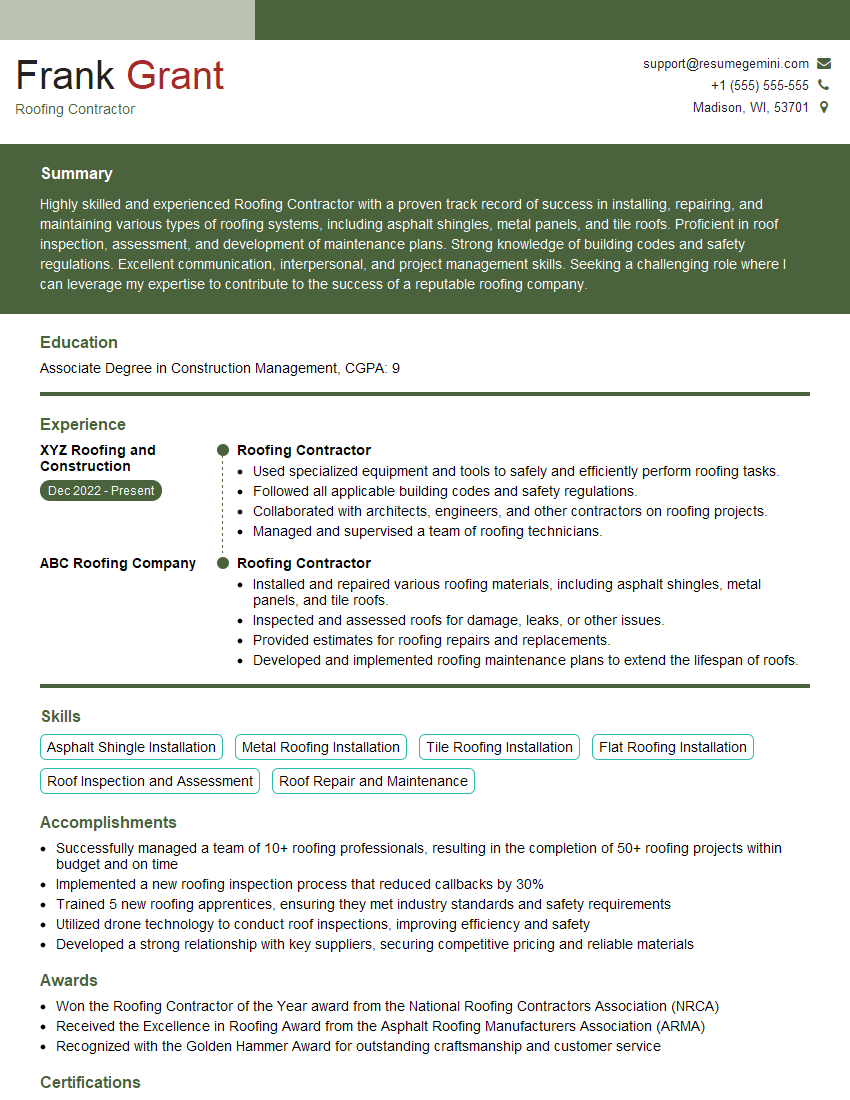
Roofing Contractor Resume Sample

Maintenance Technician Resume Sample

Machinist Resume Sample
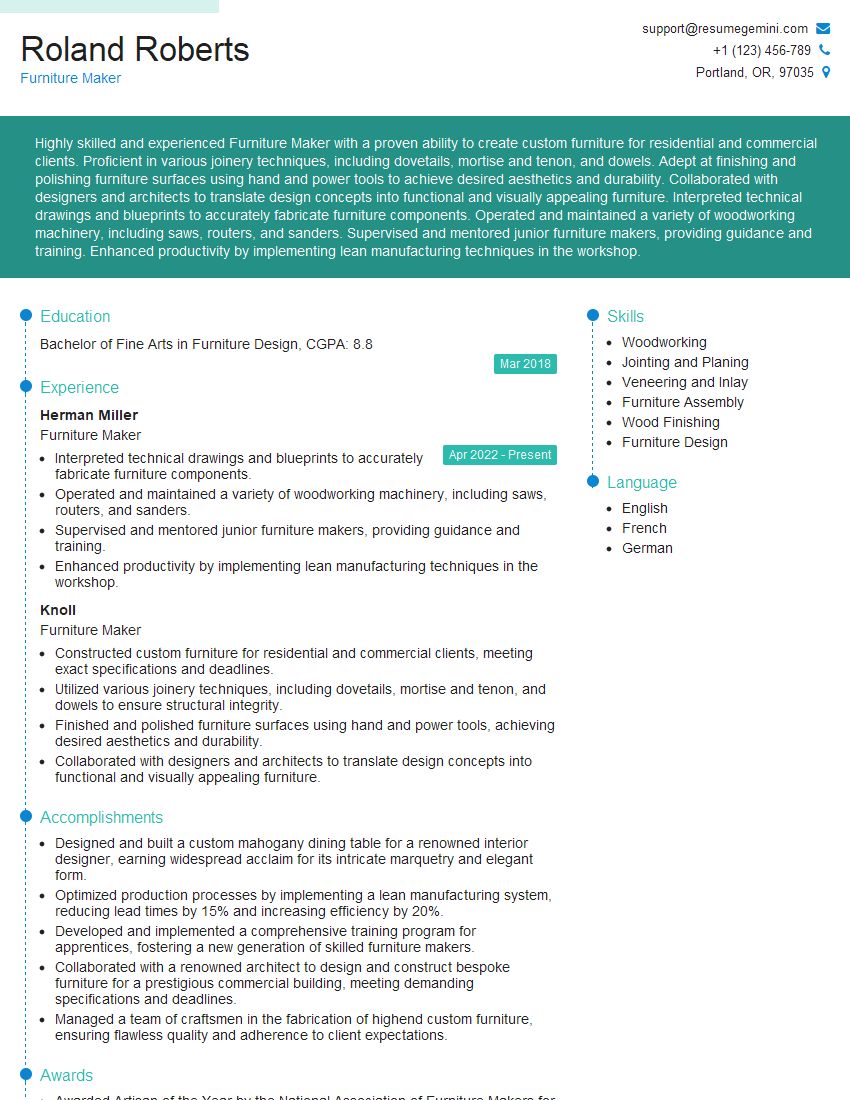
Furniture Maker Resume Sample
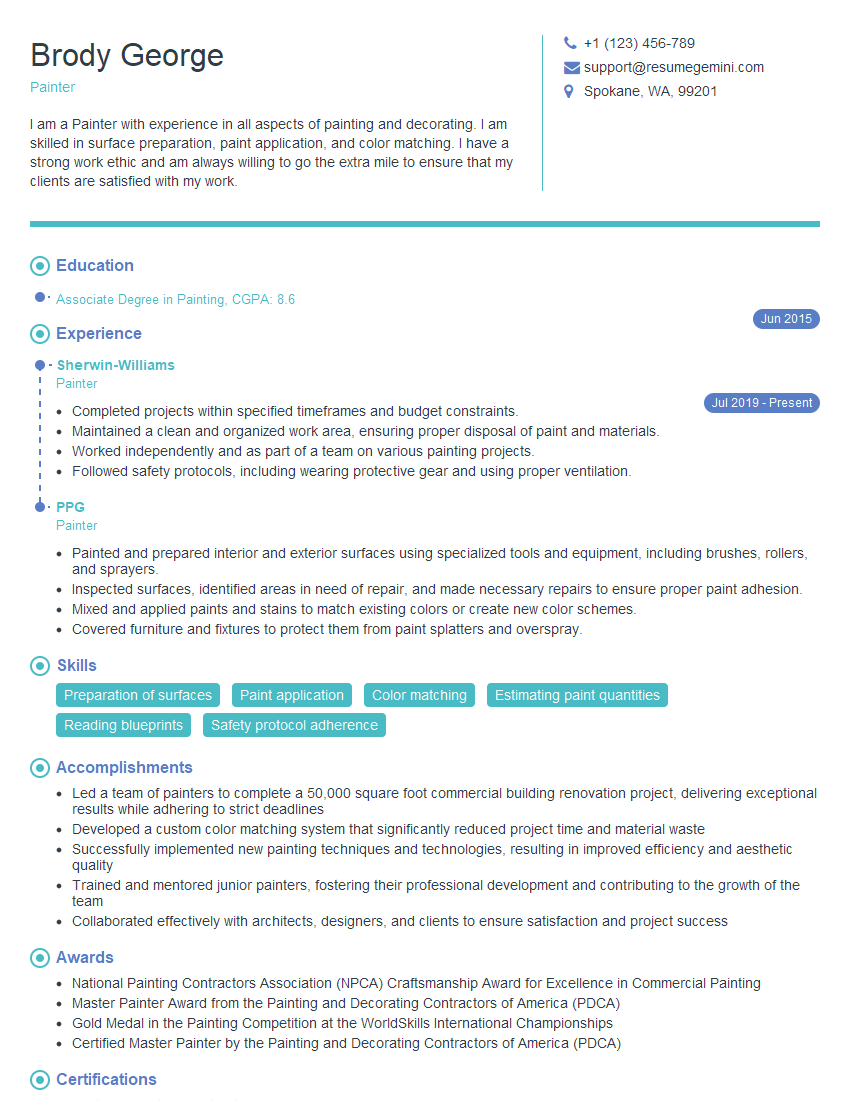
Painter Resume Sample
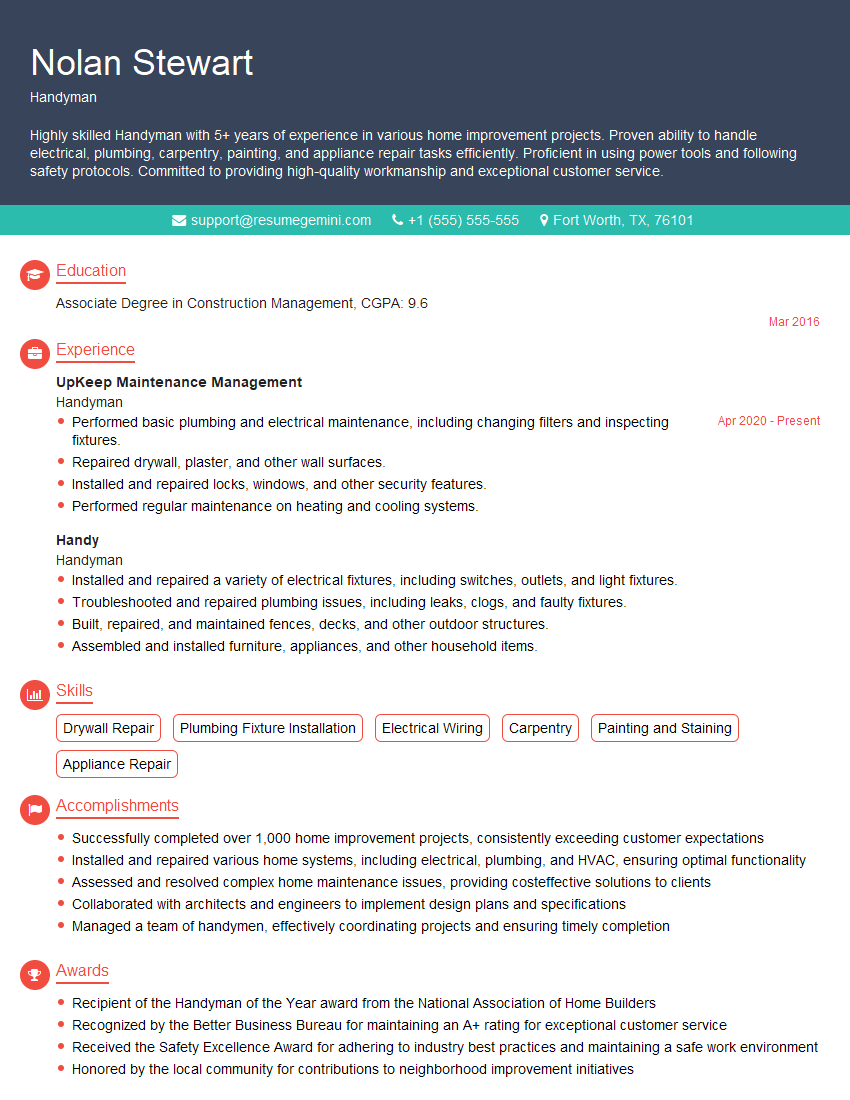
Handyman Resume Sample
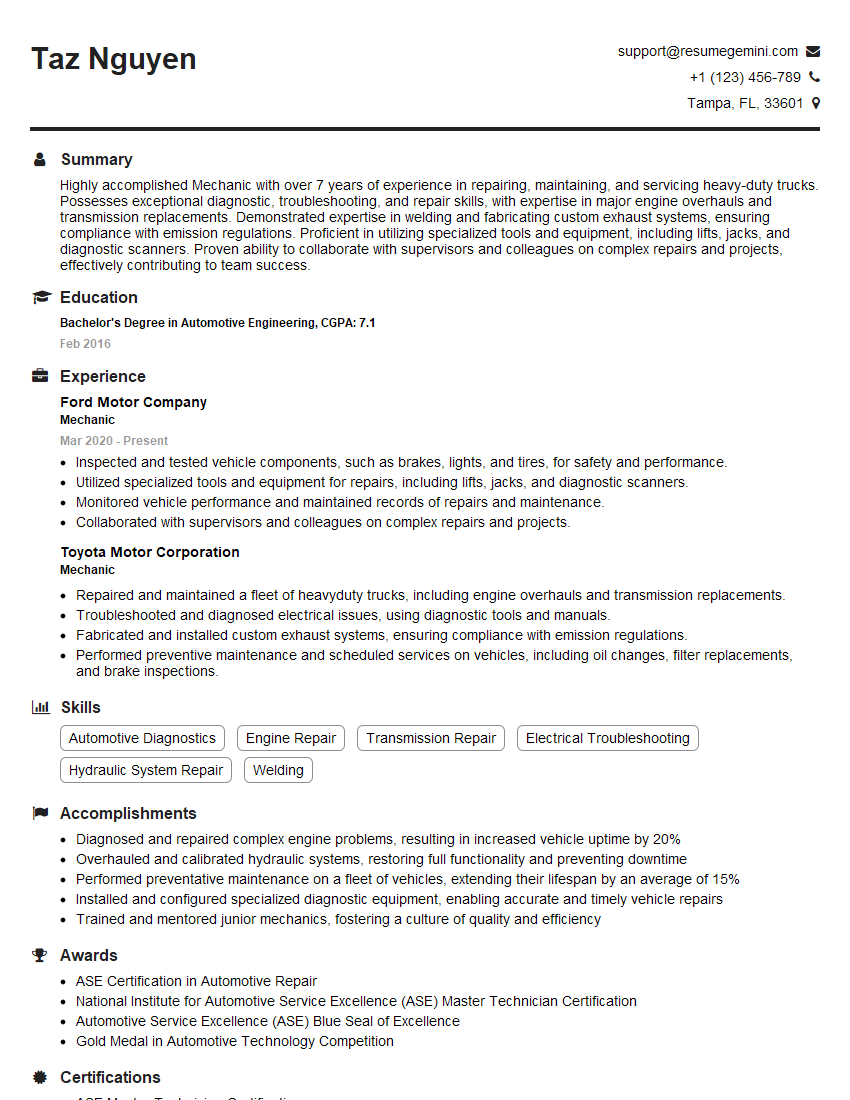
Mechanic Resume Sample
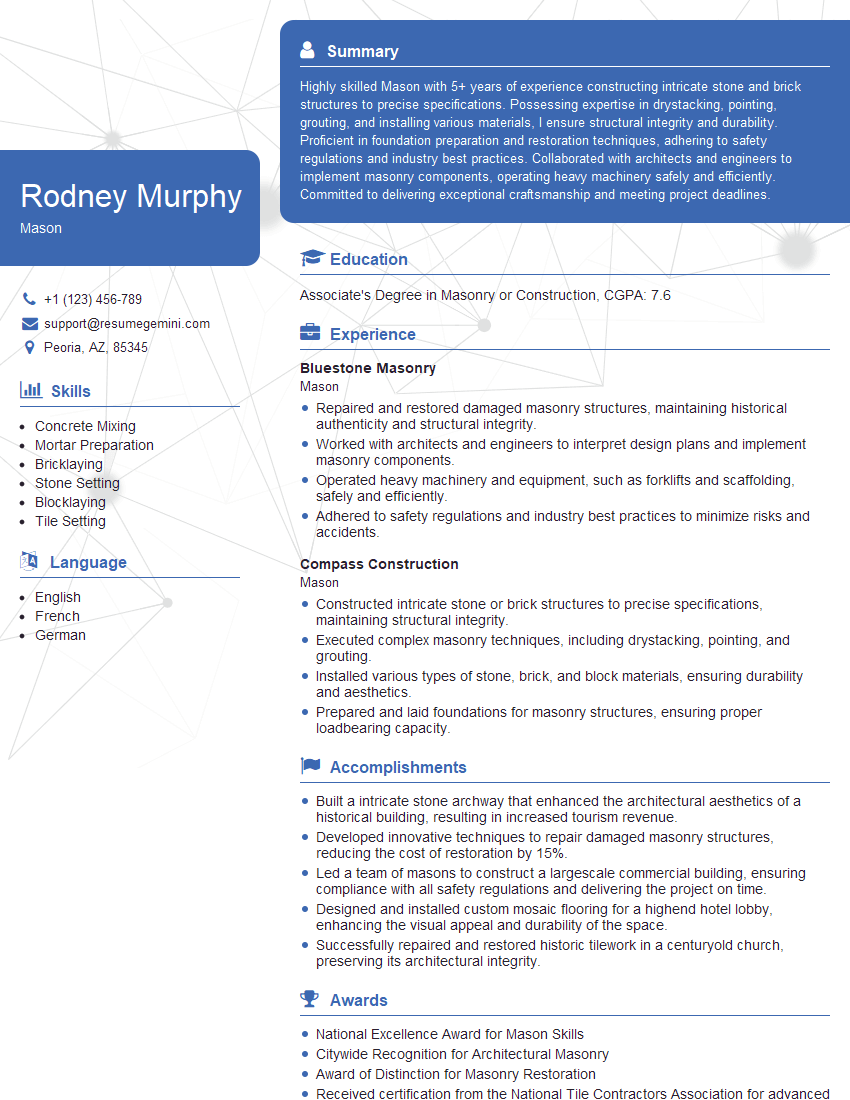
Mason Resume Sample

Finish Carpenter Resume Sample
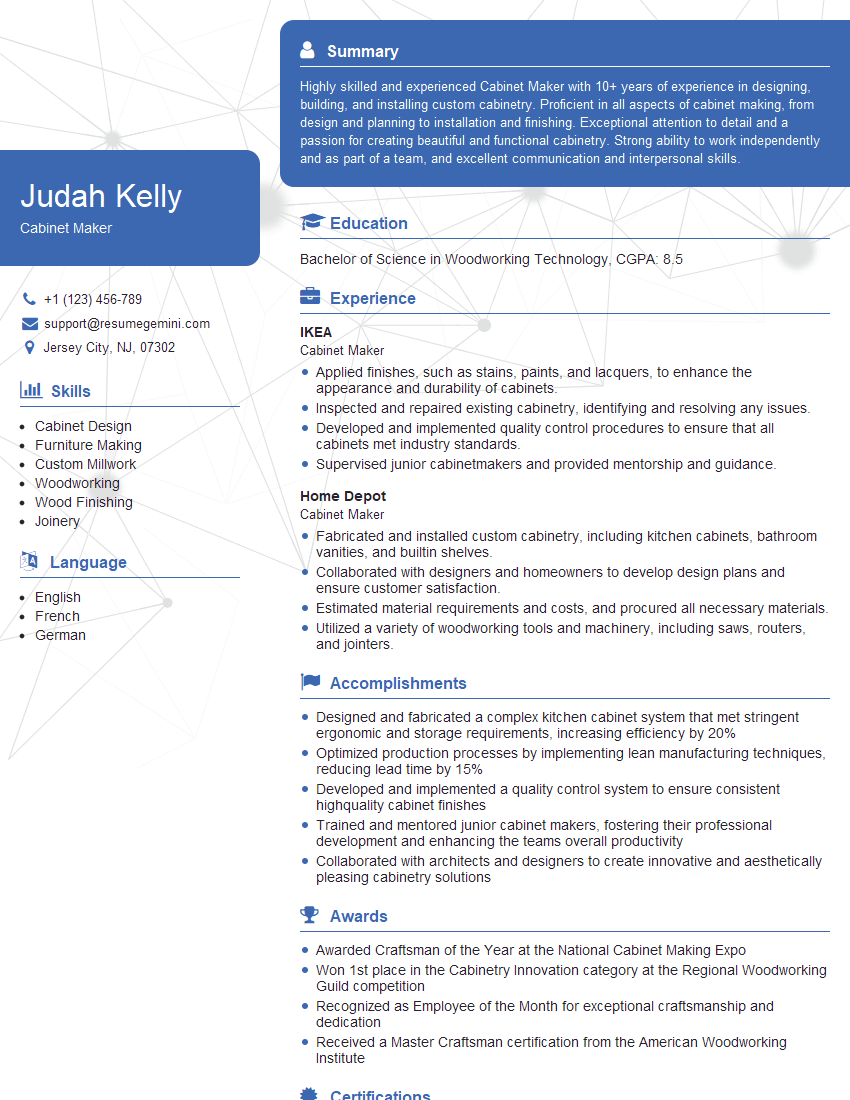
Cabinet Maker Resume Sample
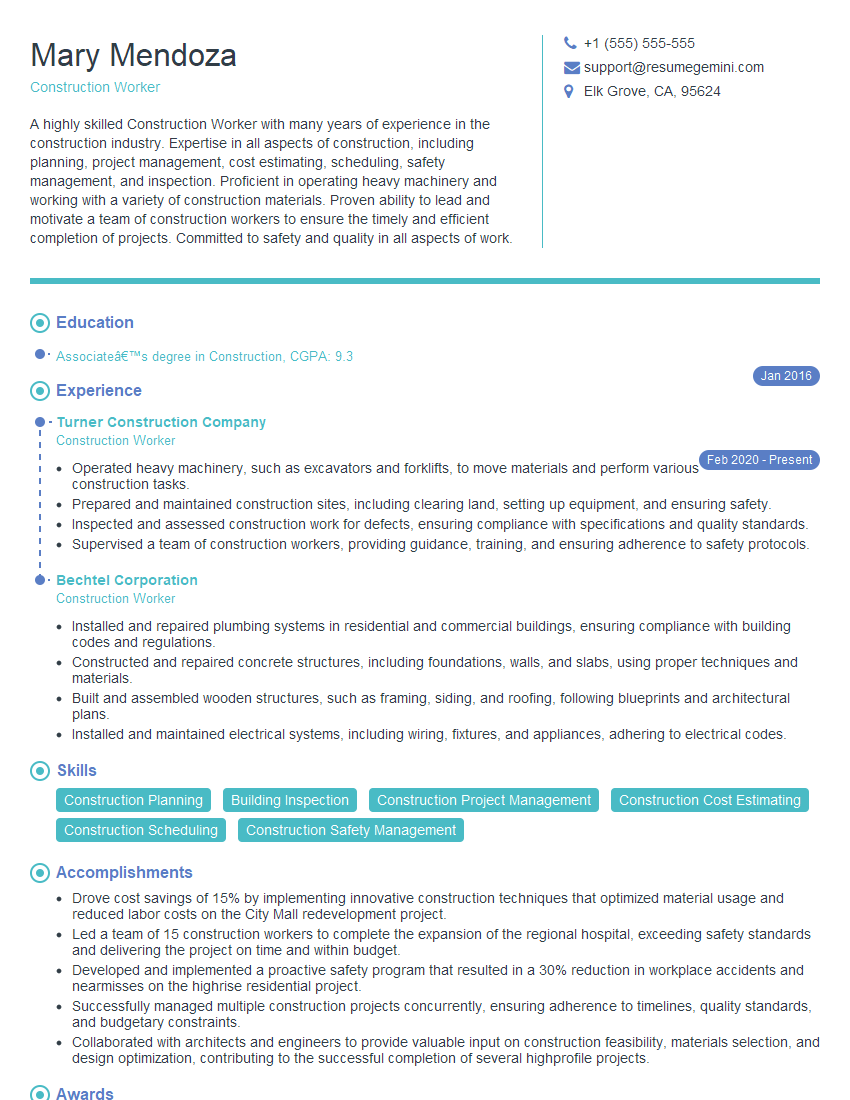
Construction Worker Resume Sample
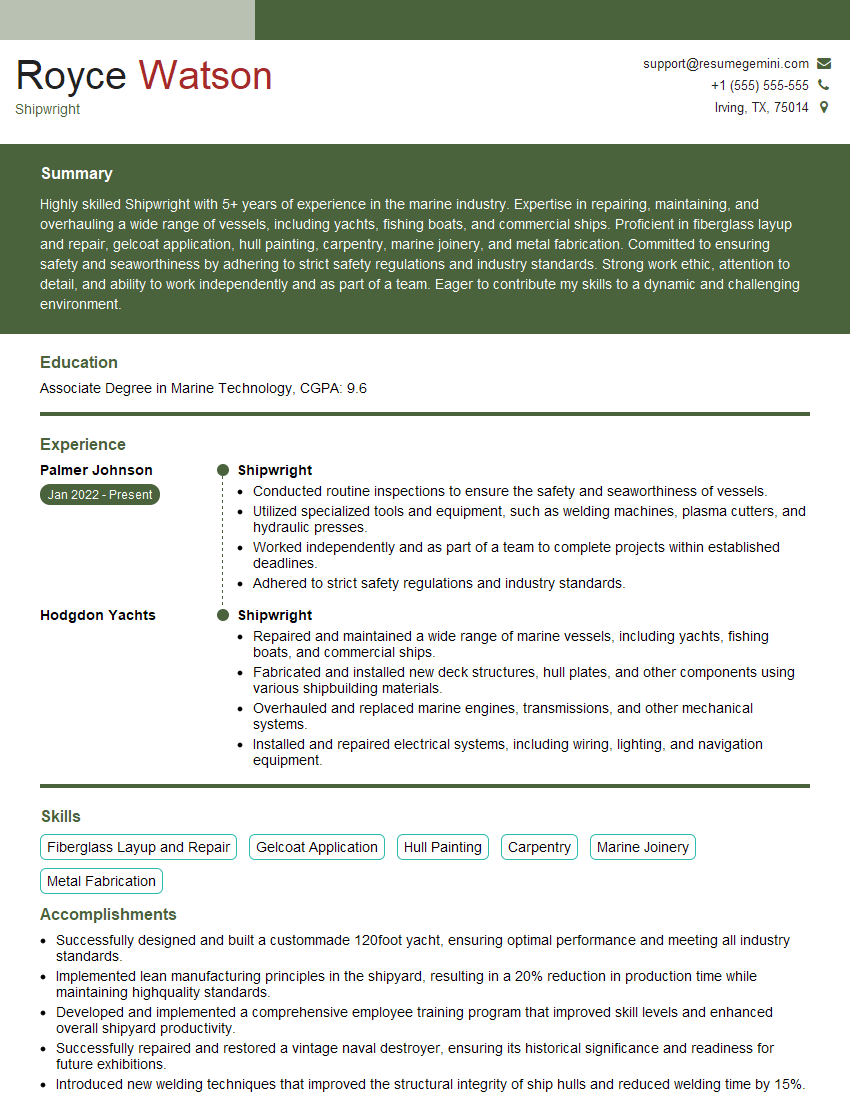
Shipwright Resume Sample
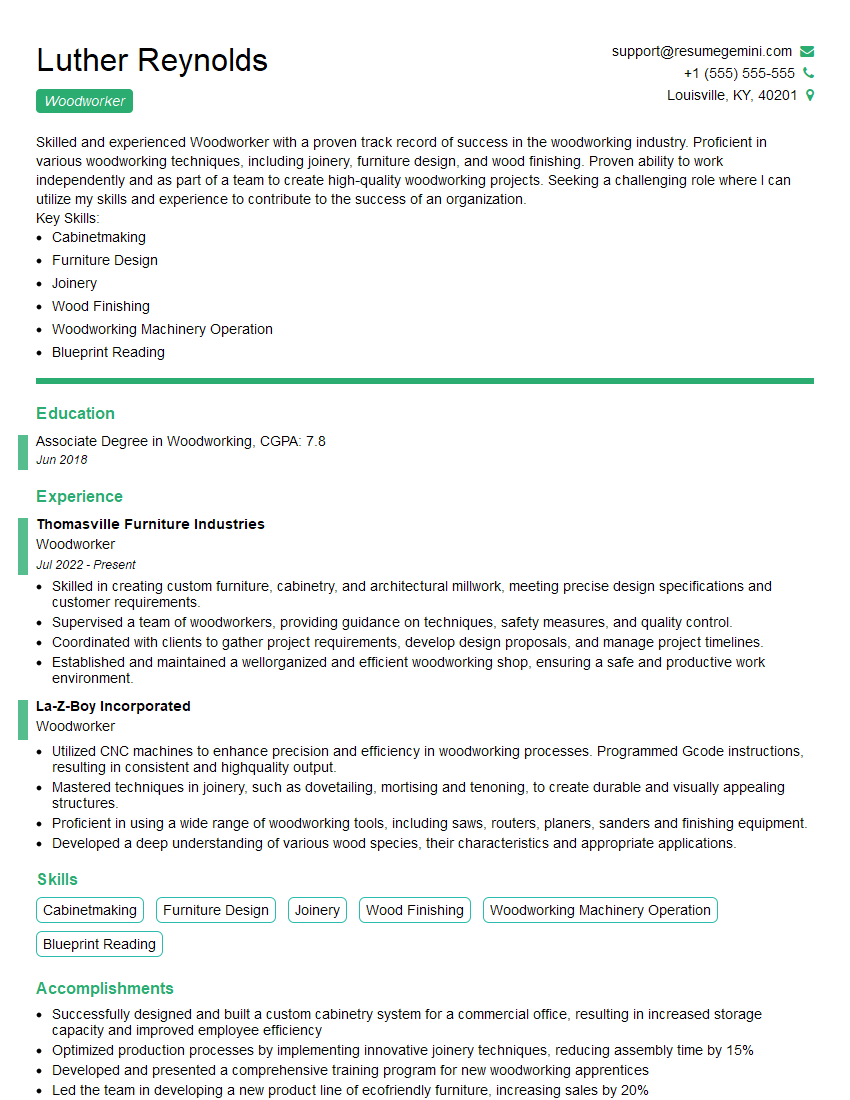
Woodworker Resume Sample
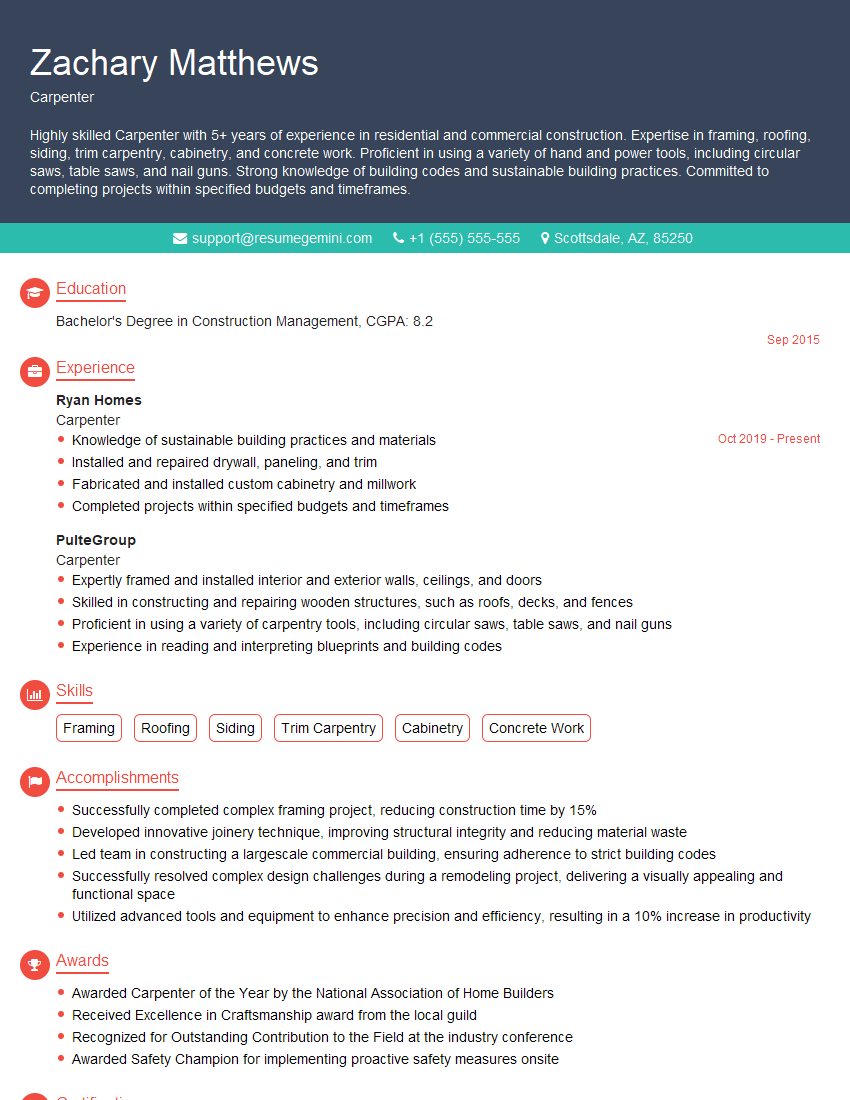
Carpenter Resume Sample

Installer Resume Sample
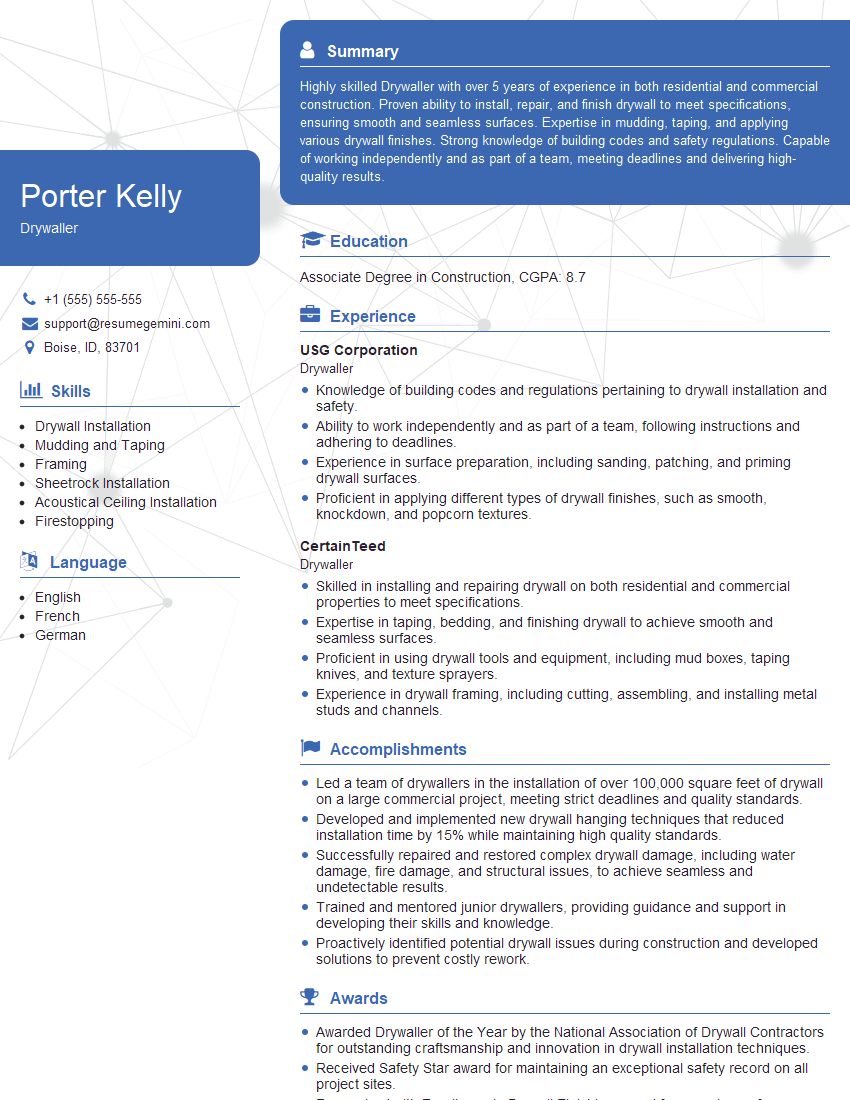
Drywaller Resume Sample
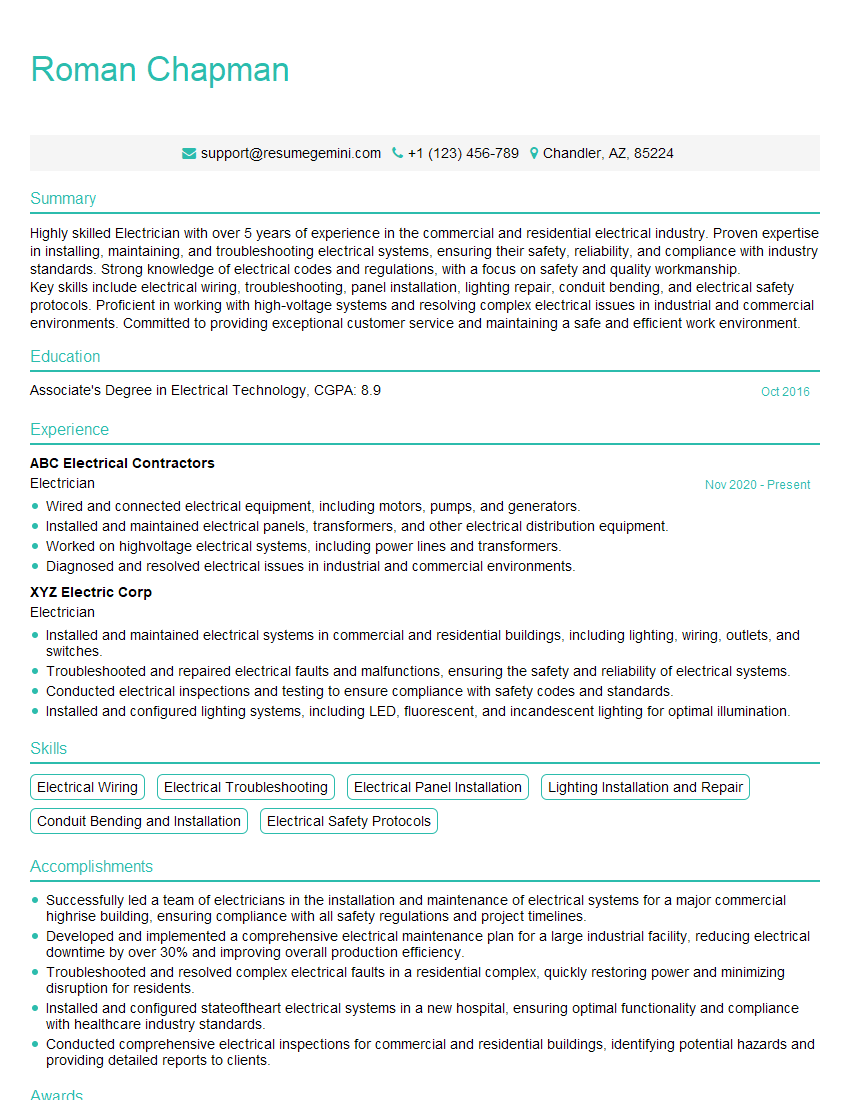
Electrician Resume Sample

Plumber Resume Sample

Welder Resume Sample

Millwright Resume Sample

Joiner Resume Sample
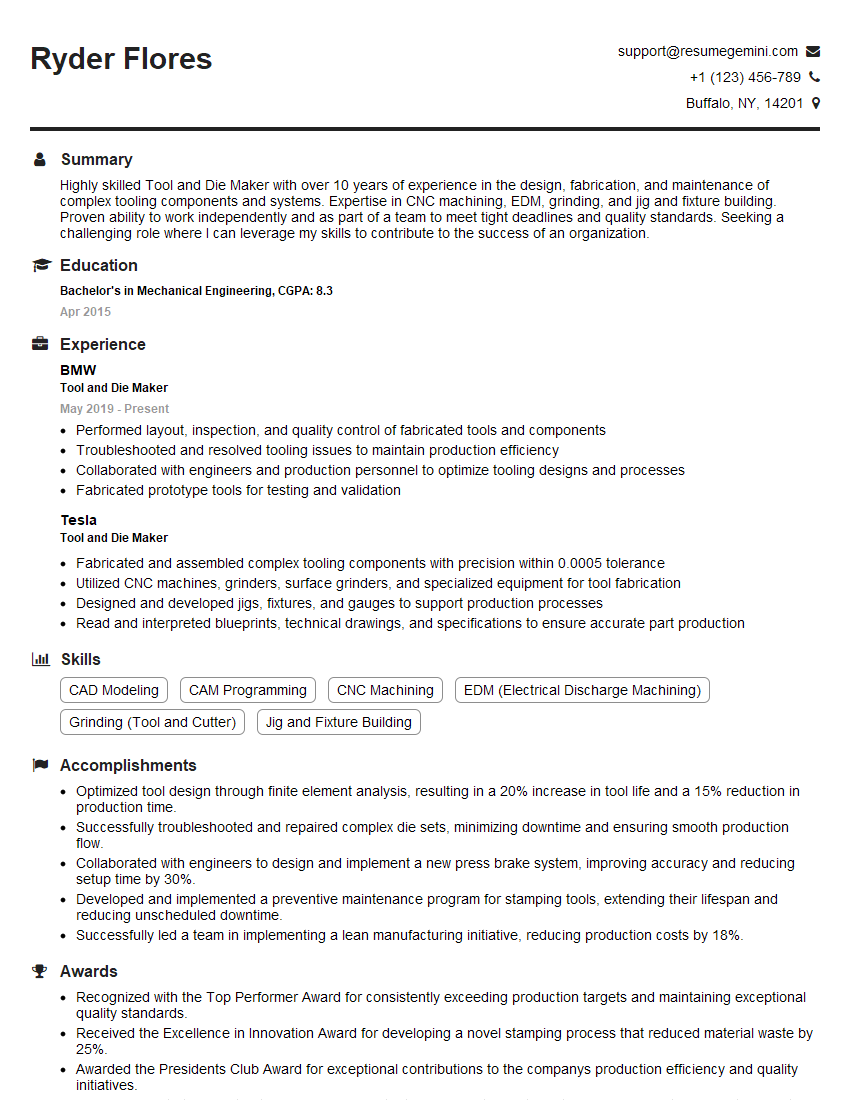
Tool and Die Maker Resume Sample

HVAC Technician Resume Sample
Explore more articles
Users Rating of Our Blogs
Share Your Experience
We value your feedback! Please rate our content and share your thoughts (optional).
What Readers Say About Our Blog
Really detailed insights and content, thank you for writing this detailed article.
IT gave me an insight and words to use and be able to think of examples