Interviews are more than just a Q&A session—they’re a chance to prove your worth. This blog dives into essential Veterinary Assistant Skills interview questions and expert tips to help you align your answers with what hiring managers are looking for. Start preparing to shine!
Questions Asked in Veterinary Assistant Skills Interview
Q 1. Describe your experience with animal restraint techniques.
Animal restraint is crucial for safe and efficient veterinary care. It involves safely controlling an animal to perform examinations, administer treatments, or conduct procedures. The method used depends heavily on the animal’s species, size, temperament, and the procedure being performed.
- Physical Restraint: This involves using your body to safely control the animal. For example, I’ve used a ‘saddle’ technique for cats, gently controlling their hindquarters while keeping them calm. For dogs, I’m proficient in various techniques including scruffing (gentle grip on the loose skin of the neck) while supporting their rear.
- Chemical Restraint: Involves using medications, such as sedatives or tranquilizers, to calm the animal. This is often used for aggressive or anxious animals, or for procedures requiring complete stillness. I’ve assisted in administering these medications under the direct supervision of a veterinarian, meticulously recording dosages and observations.
- Equipment Restraint: This can include muzzles, catch poles, or specialized restraint devices, each tailored to different animal types and situations. I’m experienced in selecting and using the appropriate equipment for each restraint scenario, ensuring both animal safety and staff safety. For instance, using a muzzle on an anxious dog reduces the risk of biting during an examination.
Safety is paramount. I always prioritize the animal’s well-being and use the gentlest restraint possible, avoiding techniques that could cause pain or injury. My training includes recognizing signs of stress and adapting restraint techniques accordingly.
Q 2. Explain the proper methods for cleaning and sterilizing veterinary instruments.
Cleaning and sterilizing veterinary instruments is essential for preventing infection and maintaining a sterile surgical field. It’s a multi-step process:
- Pre-cleaning: Immediately after use, instruments are rinsed with cold water to remove gross debris. This prevents drying of organic material which can make cleaning more difficult and can interfere with sterilization.
- Ultrasonic Cleaning: Instruments are then placed in an ultrasonic cleaner with enzymatic detergent. The ultrasonic waves dislodge residual debris from hard-to-reach areas ensuring a thorough cleaning.
- Manual Cleaning/Scrubbing: A manual scrub with detergent and a brush is often necessary to reach all crevices. I pay special attention to hinges and joints.
- Rinsing: Thorough rinsing with deionized water is crucial to remove all traces of detergent and debris.
- Sterilization: This is the most important step and involves eliminating all forms of microbial life. Common methods include autoclaving (steam sterilization) which uses high pressure steam to sterilize, and gas sterilization. I am familiar with both and follow the clinic’s strict protocols for each. I always check the autoclave’s print-out to confirm proper sterilization parameters.
- Storage: Sterile instruments are stored in a sterile environment to maintain their sterility until use. For example, they should be placed in sterile pouches or containers.
Proper sterilization techniques are crucial and I’m vigilant in adhering to all safety protocols to ensure the instruments are free from pathogens before any surgical or invasive procedure.
Q 3. How do you maintain accurate patient records?
Maintaining accurate patient records is crucial for effective veterinary care and legal compliance. I ensure accuracy through meticulous data entry and organization. Each record contains:
- Patient Identification: Species, breed, age, sex, and unique identifiers (microchip number, etc.).
- Medical History: Complete history including previous illnesses, allergies, vaccinations, and medications.
- Physical Exam Findings: Detailed notes of the physical examination, including vital signs, weight, and any abnormalities.
- Diagnostic Test Results: All lab results (bloodwork, urinalysis, radiology, etc.), clearly labeled and dated.
- Treatment and Medications: Detailed records of all treatments administered, including medications, dosages, routes of administration, and response to treatment.
- Progress Notes: Daily updates on the patient’s condition, response to treatment, and any significant changes.
I utilize the clinic’s electronic health record (EHR) system effectively, consistently following the clinic’s record-keeping protocols to ensure data integrity and accessibility. Accurate record keeping is paramount for continuity of care and allows for effective communication with the veterinarian and other veterinary professionals. For example, documenting a patient’s adverse reaction to a particular medication is crucial for future treatment decisions.
Q 4. What is your experience with administering medications (oral, injectable)?
Administering medications requires precision and attention to detail. I have experience with both oral and injectable medications, always under the direct supervision of a veterinarian.
- Oral Medications: I’m skilled in administering oral medications, ensuring the correct dosage is given using the appropriate method (pills, liquids). For example, I’m experienced in pilule administration to various sized animals and hiding medication in palatable food for picky eaters. I always monitor for potential adverse reactions after administration.
- Injectable Medications: I’ve assisted in administering subcutaneous (SQ), intramuscular (IM), and intravenous (IV) injections. This involves preparing the medication, selecting the appropriate needle and syringe, and ensuring the correct injection site is chosen. I meticulously follow the veterinarian’s instructions, carefully checking the medication label and dosage several times to avoid any errors. Accurate needle placement and injection techniques are crucial to minimize discomfort to the animal and ensure effective drug delivery.
Maintaining aseptic techniques is critical to minimize infection risk. I always follow strict hygiene protocols before and after administering any medications.
Q 5. Describe your experience with taking vital signs (temperature, heart rate, respiration).
Accurately taking vital signs is essential for assessing a patient’s health status. I’m proficient in measuring:
- Temperature: Using a rectal thermometer for accurate readings, I know to be gentle and quick. I record the temperature in degrees Celsius or Fahrenheit, noting any deviations from the normal range for the species.
- Heart Rate: I’m capable of palpating the pulse (for example, in the femoral artery of a dog or cat) and auscultating (using a stethoscope) to listen to the heartbeat and measure the beats per minute (bpm). I document any irregularities in rhythm or rate.
- Respiratory Rate: This involves counting the number of breaths per minute by observing chest movements. I note the respiratory pattern, and any unusual sounds like coughing or wheezing.
I always document vital signs accurately and compare them to previous readings to detect trends. Changes in vital signs can provide early warning signs of developing health issues, guiding the veterinarian in timely interventions.
Q 6. How do you handle aggressive or fearful animals?
Handling aggressive or fearful animals requires patience, understanding, and appropriate safety measures. My approach focuses on:
- Assessing the situation: First, I assess the animal’s body language to understand its level of fear or aggression and identify triggers. I’ll observe for signs of anxiety, like panting, yawning, lip-licking, or flattened ears.
- Using appropriate restraint techniques: I employ gentle, low-stress handling techniques appropriate for the situation and the animal’s species. This might involve using towels, muzzles, or other calming tools and techniques.
- Maintaining a calm demeanor: I maintain a calm, reassuring demeanor to avoid escalating the animal’s anxiety or aggression. A calm voice and slow movements can help to de-escalate tension.
- Seeking assistance: If an animal is severely aggressive or I’m feeling unsafe, I immediately seek assistance from a veterinarian or a more experienced colleague. The safety of both the animal and the staff is of paramount importance.
Every animal is an individual. I tailor my approach to the specific animal’s needs, prioritizing its safety and well-being throughout the interaction. If a fearful cat is needed to be examined, I may start by simply allowing the cat to approach me at its own pace and offering treats to build trust before beginning the examination.
Q 7. Explain your understanding of basic veterinary terminology.
A strong understanding of basic veterinary terminology is essential for effective communication and accurate record-keeping. Some examples include:
- Auscultation: Listening to the internal sounds of the body using a stethoscope.
- Palpation: Examination by feeling with the hands.
- Subcutaneous (SQ): Injection given under the skin.
- Intramuscular (IM): Injection given into the muscle.
- Intravenous (IV): Injection given directly into a vein.
- Lateral Recumbency: Lying on the side.
- BCS (Body Condition Score): A numerical score that indicates the level of body fat.
- CBC (Complete Blood Count): A blood test that measures the different types of blood cells.
I’m continually expanding my veterinary medical terminology and actively seek clarification when encountering unfamiliar terms to ensure complete understanding and the ability to communicate effectively with veterinarians and other veterinary professionals.
Q 8. How do you assist with surgical procedures?
Assisting in surgical procedures requires a meticulous and sterile approach. My role involves prepping the surgical site, which includes clipping and cleaning the area to ensure a contamination-free environment. I meticulously prepare the surgical instruments and supplies, ensuring everything is readily available for the surgeon. This involves checking the sterility of instruments, organizing them according to the surgical plan, and managing drapes. During the surgery, I assist the veterinarian by passing instruments, retracting tissues (under supervision), and maintaining the surgical field. Post-surgery, I help clean and sterilize instruments, assist in monitoring the patient’s vital signs, and help prepare the animal for recovery. For example, in a recent feline spay procedure, I meticulously prepared the surgical area, ensuring the antiseptic solution was applied correctly and the surgical instruments were laid out according to the surgeon’s preference. This precise preparation contributed to a smooth and efficient operation.
Q 9. What is your experience with laboratory procedures (e.g., blood collection)?
I have extensive experience with various laboratory procedures, particularly blood collection. I’m proficient in selecting the appropriate vein depending on the animal’s size and species, using the correct gauge needle and tubes to prevent hemolysis and maintain sample integrity. I know the importance of accurate labeling and proper handling to avoid contamination and ensure reliable results. I’m also experienced with running basic blood tests like PCV and TS, along with processing samples for external laboratory analysis. For instance, I once had a challenging case involving a small, nervous kitten. By using a gentle and patient approach, I successfully collected a blood sample without causing undue stress to the animal. Understanding animal behavior and employing appropriate restraint techniques is key to successful and safe blood collection.
Q 10. Describe your experience with radiography and/or ultrasound.
I am experienced in both radiography and ultrasound. In radiography, I’m skilled in positioning animals correctly for optimal image quality, ensuring proper exposure settings to avoid over or under exposure, and processing and labeling the radiographs according to clinic protocols. I understand radiation safety protocols and adhere strictly to them to minimize exposure to myself and others. With ultrasound, I can assist with scanning, image optimization and interpretation under veterinary supervision. I’ve had experience with both abdominal and cardiac ultrasounds. For example, I recently assisted in a radiographic examination of a dog with a suspected fracture. By accurately positioning the dog and selecting the correct settings, we obtained clear images allowing the veterinarian to diagnose and treat the fracture efficiently.
Q 11. How do you handle emergency situations in a veterinary clinic?
Handling emergencies requires quick thinking, calm demeanor, and efficient execution. My training has equipped me to recognize and respond to life-threatening situations such as respiratory distress, cardiac arrest, or severe trauma. I know how to prioritize tasks based on the urgency, assist in administering emergency medications as directed, and maintain accurate record-keeping. I can efficiently prepare the patient for immediate care, ensuring the necessary equipment and supplies are readily available. My focus is always on stabilizing the patient until the veterinarian arrives. For example, during a case of a dog experiencing respiratory distress, I immediately prepared the oxygen cage, assisted in placing the oxygen mask, and monitored the animal’s vital signs, keeping the veterinarian updated on the patient’s condition to ensure a timely and effective response.
Q 12. How do you maintain a clean and organized work environment?
Maintaining a clean and organized work environment is paramount in a veterinary clinic, essential for hygiene, safety, and efficiency. My approach involves implementing a consistent cleaning and disinfection schedule throughout the day, utilizing appropriate disinfectants to prevent the spread of infection. I practice proper waste disposal according to biohazard regulations, ensuring the safety of both staff and clients. I keep the examination rooms and surgical areas meticulously organized, restocking supplies promptly, and storing them appropriately. Think of it like a well-oiled machine – a clean and organized workspace promotes smooth workflow and avoids delays. I regularly declutter and organize instruments and equipment, and ensure proper storage of medications and supplies following strict inventory protocols.
Q 13. Describe your experience with client communication and education.
Client communication is a crucial part of my role. I greet clients warmly, answer their questions patiently, and provide clear, concise explanations regarding their pet’s treatment and care. I understand the emotional attachment clients have to their pets, so I strive to build trust and rapport through empathy and clear communication. I often explain procedures, medications and post-operative care in simple, understandable terms, ensuring clients are confident in the care their pet receives. I’ve also learned to handle challenging situations with tact and professionalism, addressing concerns sensitively. For example, I recently helped a client understand the aftercare instructions for their newly-spayed cat, answering their questions with patience and providing written instructions to ensure they felt comfortable caring for their pet at home.
Q 14. How do you prioritize tasks in a busy veterinary clinic?
Prioritizing tasks in a busy veterinary clinic requires a systematic approach. I utilize a combination of urgency and importance to prioritize. Urgent tasks, such as emergencies or critical cases, take precedence. However, I also consider the importance of preventative care and routine tasks. I often use a combination of written and mental checklists to keep track of my responsibilities. I collaborate with other team members to ensure workflow remains smooth, and I’m flexible to adjust my schedule based on the changing needs of the clinic. Time management is key; I focus on completing tasks efficiently and effectively to minimize delays and maximize productivity. For instance, I might prioritize drawing blood for critical cases before completing less urgent lab work, ensuring the most important tasks are addressed promptly.
Q 15. Explain your experience with animal handling and husbandry.
Animal handling and husbandry are fundamental to veterinary care. My experience encompasses a wide range of species, from small rodents and birds to larger dogs and cats, even assisting with exotic animals on occasion. I’ve developed techniques for safely restraining animals, understanding their body language to minimize stress, and ensuring their comfort throughout procedures. For instance, I’ve learned to differentiate between fearful and aggressive behaviors in dogs, using calming techniques like slow movements and gentle voice to reduce anxiety during examinations. With cats, I’m adept at using towel wraps and minimal physical contact when necessary. My experience also includes assisting with daily husbandry tasks such as feeding, watering, cleaning enclosures, and monitoring for any signs of illness or distress. This proactive approach allows for early intervention and improved patient outcomes.
- Safe Restraint Techniques: I’m proficient in various restraint methods, adapting my approach to the specific animal and situation.
- Behavioral Understanding: Recognizing subtle signs of stress or discomfort allows me to adjust my handling accordingly.
- Environmental Enrichment: I understand the importance of providing species-appropriate enrichment to improve animal welfare in the clinic setting.
Career Expert Tips:
- Ace those interviews! Prepare effectively by reviewing the Top 50 Most Common Interview Questions on ResumeGemini.
- Navigate your job search with confidence! Explore a wide range of Career Tips on ResumeGemini. Learn about common challenges and recommendations to overcome them.
- Craft the perfect resume! Master the Art of Resume Writing with ResumeGemini’s guide. Showcase your unique qualifications and achievements effectively.
- Don’t miss out on holiday savings! Build your dream resume with ResumeGemini’s ATS optimized templates.
Q 16. How do you ensure patient safety and comfort?
Ensuring patient safety and comfort is paramount. This involves a multi-faceted approach starting with proper handling techniques as discussed earlier. Beyond that, I meticulously monitor vital signs during procedures, making sure to immediately report any abnormalities to the veterinarian. For example, during anesthesia, I meticulously monitor heart rate, respiratory rate, and oxygen saturation, making adjustments to the anesthetic delivery as needed. Post-operatively, I focus on providing a comfortable and quiet recovery environment, carefully administering pain medication as prescribed and monitoring for signs of complications like vomiting, restlessness, or excessive bleeding. We always prioritize a calm and reassuring environment, minimizing noise and potential stressors. This includes using appropriate bedding, maintaining a comfortable temperature, and providing access to fresh water. Patient communication with the owner is crucial too – we thoroughly discuss post-operative care instructions to ensure the animal’s successful recovery at home.
Q 17. What is your experience with record keeping and inventory management?
Accurate record-keeping and inventory management are critical for efficient and effective veterinary practice. I have experience maintaining detailed patient medical records, including history, treatments, medications, and lab results. I utilize electronic health record (EHR) systems, which has helped me to become very comfortable with these types of systems. I’m also trained in inventory management, tracking supplies, medications, and equipment levels, ensuring we have adequate stock on hand while minimizing waste. I’m comfortable ordering supplies, managing the inventory database, and conducting regular stock checks, maintaining accurate records to prevent shortages and ensure efficient workflow.
- EHR Proficiency: I’m proficient in using various veterinary EHR systems to input data accurately and efficiently.
- Inventory Tracking: My experience includes managing inventory levels, ordering supplies, and performing regular stock checks.
- Data Accuracy: I maintain precise and up-to-date records, following all clinic protocols for data entry and storage.
Q 18. How familiar are you with different anesthetic agents and monitoring techniques?
I’m familiar with various anesthetic agents, their uses, and potential side effects. My knowledge includes injectable agents like propofol and ketamine, as well as inhalant agents like isoflurane and sevoflurane. I understand the importance of selecting the appropriate agent based on the animal’s species, age, health status, and the procedure being performed. Moreover, I’m skilled in monitoring patients during anesthesia, paying close attention to vital signs, including heart rate, respiratory rate, blood pressure, and oxygen saturation. For instance, I know to watch for signs of anesthetic overdose, such as dangerously low heart rate or respiratory depression. I also understand the importance of proper ventilation and maintaining a patent airway. I’m trained to recognize and respond to potential complications such as hypothermia, hypotension, or respiratory distress, acting quickly to inform the veterinarian and assist in corrective measures.
Q 19. Describe your experience with post-operative care of animals.
Post-operative care is crucial for a successful recovery. My experience includes providing comfortable bedding, administering pain medication and fluids as directed by the veterinarian, monitoring vital signs frequently, and observing for any signs of complications like excessive bleeding, swelling, or infection at the incision site. I’m trained to identify and report any abnormalities promptly. I also assist in the administration of post-operative medication, monitoring for any adverse reactions. For example, after a spay procedure, I carefully monitor the patient for signs of pain or discomfort, providing appropriate analgesia, and ensuring adequate hydration. I also teach owners how to care for their pets during recovery, including providing clear instructions on medication administration, wound care, and activity restrictions.
Q 20. How do you identify and report abnormalities in animals?
Identifying and reporting abnormalities is a vital role. This involves careful observation of animals throughout their visit, paying close attention to their behavior, physical appearance, and vital signs. I’m trained to recognize subtle changes, such as changes in appetite, lethargy, unusual discharge, respiratory distress, changes in urine or feces, or lameness. For instance, noticing a sudden decrease in appetite, coupled with lethargy and vomiting in a cat, would immediately alert me to report this to the veterinarian. Similarly, an increase in respiratory rate or unusual sounds during auscultation are all important observations. Thorough and timely reporting of any abnormalities is key to prompt diagnosis and treatment.
Q 21. What software or systems are you familiar with in a veterinary setting?
In a veterinary setting, I’m proficient in using various software and systems. My experience includes working with various Electronic Health Record (EHR) systems for managing patient data, scheduling appointments, generating invoices, and tracking inventory. I’m familiar with practice management software that helps streamline administrative tasks. Furthermore, I understand the importance of data privacy and confidentiality, adhering strictly to clinic protocols for data handling and security.
Q 22. How do you work effectively as part of a veterinary team?
Effective teamwork in a veterinary setting hinges on communication, collaboration, and a shared commitment to patient care. I thrive in team environments because I understand the importance of each role and how they interconnect. For instance, during a busy morning, I might assist the veterinarian with a surgery while simultaneously monitoring vital signs for another patient under the care of a veterinary technician. This requires constant communication – a quick update on a patient’s response to medication, a heads-up about an incoming emergency – to ensure smooth workflow and optimal patient outcomes. I’m also proactive, anticipating needs before they are explicitly stated. If I notice the technician is short-staffed, I might volunteer to assist with restraint or cleaning without being asked. My focus is always on contributing to the team’s overall success and providing the best possible care for our patients.
Q 23. Describe a time you had to deal with a difficult client. How did you handle it?
I once dealt with a client who was extremely upset about the cost of their pet’s treatment. They felt the bills were unreasonable and were quite aggressive in expressing their dissatisfaction. Instead of becoming defensive, I listened empathetically to their concerns, validating their feelings without agreeing with the accusation of unreasonable charges. I explained the treatment plan step by step, clarifying why each procedure and medication were necessary and what the cost breakdown entailed. I also explored potential payment options, such as payment plans or referring them to pet insurance providers. By demonstrating genuine understanding and actively seeking solutions, I managed to de-escalate the situation and reach a mutually acceptable agreement. The key was active listening, empathy, and a proactive approach to finding solutions.
Q 24. How do you stay up-to-date on the latest veterinary practices and techniques?
Staying current in the veterinary field is crucial. I achieve this through a multi-pronged approach. I regularly subscribe to veterinary journals like the Journal of the American Veterinary Medical Association and online resources such as veterinary websites and professional organizations. I also actively participate in continuing education opportunities, including webinars and workshops offered by veterinary associations. I find conferences and seminars particularly valuable for networking and learning about new techniques from leading experts. Furthermore, I maintain a professional network by exchanging information and experiences with colleagues in the field. This continuous learning helps me refine my skills and keep abreast of advancements in animal care.
Q 25. What are your strengths and weaknesses as a Veterinary Assistant?
My strengths lie in my meticulous attention to detail, my proficiency in various veterinary procedures (such as venipuncture and administering medications), and my excellent communication skills with both animals and clients. I’m adept at quickly learning new procedures and technologies. However, a weakness I’m working on is delegation. Sometimes, I take on too much responsibility, fearing tasks won’t be completed to my standards. I am actively addressing this by practicing trusting my colleagues and learning to efficiently prioritize tasks, focusing on the most urgent needs first.
Q 26. Why are you interested in this specific Veterinary Assistant position?
I’m particularly interested in this Veterinary Assistant position due to [Clinic Name]’s reputation for exceptional animal care and its commitment to [mention a specific value or program that resonates with you, e.g., advanced surgical techniques, community outreach, specific animal breed focus]. The opportunity to contribute to a team known for its high standards and dedication truly excites me. The description of this role emphasizes [mention specific aspects from the job description that appeal to you, e.g., collaboration, patient handling skills, a specific type of animal care], all of which align perfectly with my skills and experience. I also believe my proactive and detail-oriented nature would be a valuable asset to your team.
Q 27. What are your salary expectations?
Based on my experience and research of similar positions in this region, my salary expectations are in the range of $[Lower Bound] to $[Upper Bound] annually. However, I am flexible and open to discussing this further based on the full benefits package and the specifics of the role.
Q 28. Do you have any questions for me?
Yes, I do. I’d like to learn more about the clinic’s professional development opportunities for veterinary assistants. I’m also curious about the typical caseload and the types of animals the clinic most frequently treats. Finally, could you tell me more about the team dynamics and the mentorship opportunities available?
Key Topics to Learn for Veterinary Assistant Skills Interview
- Animal Handling & Restraint: Understanding various restraint techniques for different animal species and sizes, prioritizing animal safety and well-being. Practical application includes demonstrating safe handling procedures and explaining the rationale behind different methods.
- Veterinary Procedures & Equipment: Knowledge of common veterinary procedures (e.g., injections, blood draws, wound cleaning) and the proper use and maintenance of related equipment. This includes troubleshooting minor equipment malfunctions and understanding sterilization protocols.
- Patient Care & Monitoring: Observing and documenting vital signs (temperature, heart rate, respiration), administering medications as directed, recognizing signs of illness or distress, and providing basic nursing care. Problem-solving involves recognizing and reporting unusual patient behaviors or changes in condition.
- Laboratory Procedures: Performing basic laboratory tests (e.g., urinalysis, fecal exams), understanding sample collection techniques, maintaining laboratory cleanliness and safety, and accurately recording results. This also covers understanding the importance of precise measurements and sterile techniques.
- Client Communication & Record Keeping: Effectively communicating with clients, answering their questions, maintaining accurate patient records, scheduling appointments, and handling billing procedures. This includes demonstrating empathy and professionalism in communication, and mastering effective record-keeping practices.
- Medical Terminology & Anatomy: Understanding common veterinary medical terminology and basic animal anatomy. This is crucial for clear communication with veterinarians and for accurately interpreting medical records.
- Hygiene and Sanitation: Deep understanding of veterinary clinic sanitation procedures, including sterilization techniques, infection control, and waste disposal. Practical application involves demonstrating safe and effective cleaning and sterilization procedures.
Next Steps
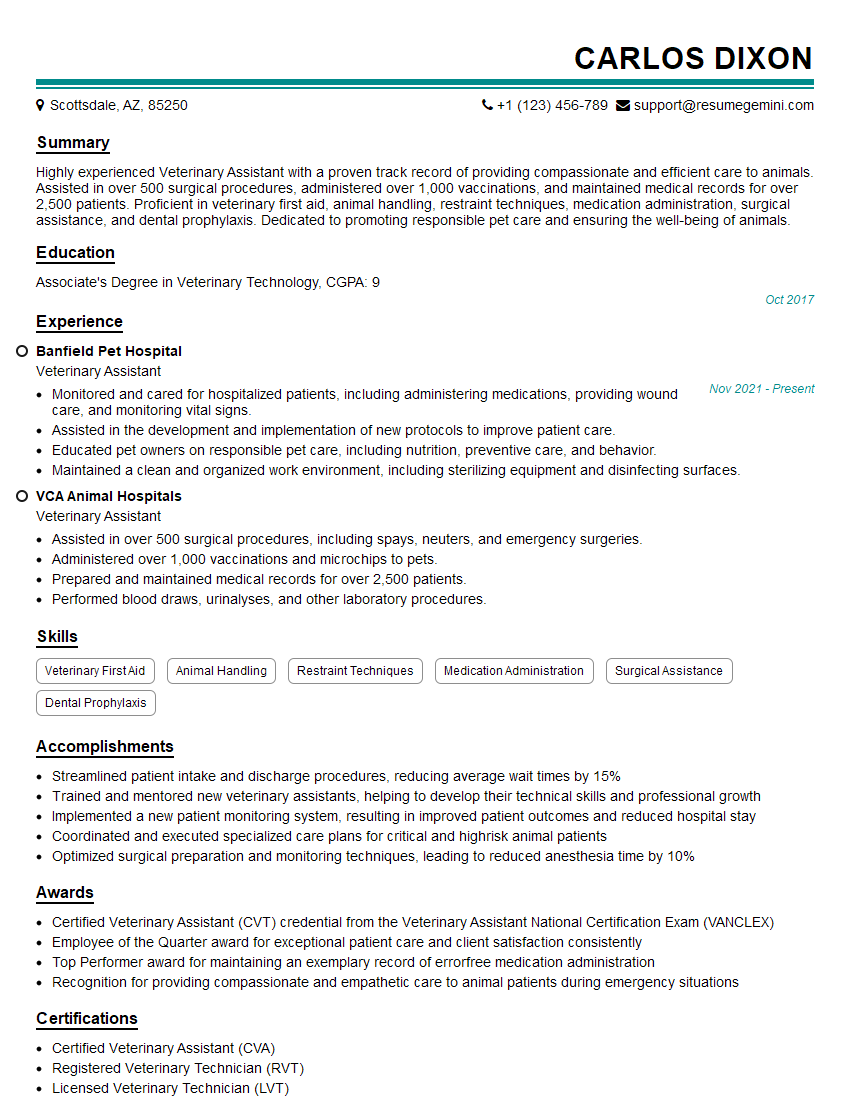
Mastering Veterinary Assistant Skills is crucial for career advancement, opening doors to specialized roles and increased earning potential. A strong, ATS-friendly resume is your key to unlocking these opportunities. To create a professional and impactful resume that highlights your skills and experience, we highly recommend using ResumeGemini. ResumeGemini provides an intuitive platform and offers examples of resumes tailored to Veterinary Assistant Skills, ensuring your application stands out from the competition. Invest in crafting a resume that truly reflects your capabilities and sets you up for success.
Explore more articles
Users Rating of Our Blogs
Share Your Experience
We value your feedback! Please rate our content and share your thoughts (optional).
What Readers Say About Our Blog
Really detailed insights and content, thank you for writing this detailed article.
IT gave me an insight and words to use and be able to think of examples