Feeling uncertain about what to expect in your upcoming interview? We’ve got you covered! This blog highlights the most important Blowpipe Cutting interview questions and provides actionable advice to help you stand out as the ideal candidate. Let’s pave the way for your success.
Questions Asked in Blowpipe Cutting Interview
Q 1. Explain the different types of blowpipes used in glass cutting.
Blowpipes used in glass cutting are specifically designed to deliver a precisely controlled flame for scoring and cutting glass. The choice of blowpipe depends largely on the type and thickness of the glass being worked with. While there isn’t a vast array of drastically different types, subtle variations exist in nozzle size and design.
Standard Handheld Blowpipes: These are the most common type, featuring a small, precisely-shaped nozzle for delivering a concentrated flame. They are versatile and suitable for most glass cutting tasks. Variations might include slightly different nozzle diameters for fine control or heavier glass.
Larger Capacity Blowpipes: For working with extremely thick glass or larger projects, blowpipes with a larger fuel reservoir may be preferred for longer, uninterrupted operation. The nozzle design remains similar in principle, prioritizing a focused flame.
Specialized Blowpipes (Less Common): In some specialized glassblowing applications, you might encounter blowpipes with modified nozzles to create specific flame shapes or for working with unusual glass compositions, but these are highly niche.
Choosing the right blowpipe is crucial. A blowpipe with too small a nozzle might struggle with thicker glass, while one with too large a nozzle could lead to an uncontrolled, diffuse flame resulting in uneven cuts.
Q 2. Describe the safety precautions necessary when using a blowpipe.
Safety is paramount when working with glass and a blowpipe. The high temperatures and sharp edges demand constant vigilance. Here’s a breakdown of essential precautions:
Eye Protection: Always wear safety glasses or a face shield to protect your eyes from flying glass fragments or intense heat. It’s easy to overlook, yet the most crucial aspect of safety.
Heat-Resistant Gloves: Protect your hands from burns. Thick, heat-resistant gloves are essential to handle hot glass safely.
Proper Ventilation: Ensure adequate ventilation to disperse combustion gases. Working in a well-ventilated area or using an exhaust system is critical to avoid inhaling harmful fumes.
Stable Workspace: Work on a stable, heat-resistant surface to prevent accidental spills or burns. Ensure there are no flammable materials nearby.
Fire Safety: Have a fire extinguisher readily available. It’s a responsible measure in case of unforeseen incidents.
Safe Handling of Gas Cylinders: Always handle gas cylinders with care, following the manufacturer’s instructions. Never use a damaged cylinder.
Remember, glass remains hot for a considerable time after cutting. Handle it carefully to avoid burns.
Q 3. What are the ideal gas pressures for different types of glass?
Optimal gas pressures are crucial for clean and precise cuts. These pressures depend heavily on the type of glass, its thickness, and the blowpipe’s nozzle size. There’s no single ‘correct’ pressure, but rather a range that needs to be adjusted according to the task. Precise pressure adjustments are usually found through experimentation and experience.
Generally:
Thin Glass (e.g., window glass): Lower pressures are typically used to avoid cracking the glass.
Thick Glass (e.g., automotive glass): Higher pressures may be needed for effective scoring and cutting. However, excessively high pressures can lead to an overly aggressive cut, again causing cracks.
Specialty Glasses (e.g., tempered glass): These glasses often require specialized techniques and potentially modified gas mixtures; consultation with a glass expert might be recommended.
Experimentation and observation are key. Start with a low pressure and gradually increase it until you achieve a clean, consistent cut. Always note the pressure setting that provides the best results for a particular type of glass and thickness.
Q 4. How do you adjust the flame for optimal cutting performance?
Proper flame adjustment is critical to glass cutting. The ideal flame is a neutral flame – a balanced mixture of fuel and oxygen, exhibiting a distinct inner cone and an outer, less intensely luminous cone. An improperly adjusted flame can lead to inefficient cutting, uneven scores, or damage to the glass.
Achieving an Optimal Flame:
Observe the Flame: Look for a sharp, well-defined inner cone with a clear, bluish color. A yellow or orange flame indicates incomplete combustion and insufficient oxygen.
Adjust Oxygen and Fuel: Most blowpipes have separate controls for fuel (propane or other gas) and oxygen. Experiment subtly to achieve the neutral flame. It is more common to adjust the oxygen flow until it matches the fuel flow for best results.
Test the Flame: Before cutting, test the flame on a scrap piece of the same type of glass. This allows you to fine-tune the pressure and observe the cutting quality.
Practice makes perfect. It takes time and patience to develop the skill of adjusting the flame for optimal performance, resulting in clean and precise cuts.
Q 5. How do you identify and handle different types of glass imperfections?
Glass imperfections can significantly impact the cutting process and the final product. Identifying and handling these imperfections requires careful attention and skillful adjustment of techniques.
Bubbles: Air bubbles within the glass can weaken the material, making it prone to cracking during scoring or snapping. Avoid scoring directly over bubbles. If cutting near a bubble is unavoidable, exert minimal pressure during the snapping process.
Stress Marks: These appear as faint lines or cracks in the glass. They indicate points of weakness and are prime candidates for cracking. Plan cuts to avoid these areas if possible.
Surface Scratches: Deep surface scratches can interfere with the scoring process. Try to score along the scratches to avoid uneven cuts or cracking. If this is not possible, it is often best to choose an alternate cutting path that does not include the imperfections.
Inclusions: Small particles embedded in the glass might cause uneven cutting or breakage. It’s important to acknowledge this by slowing down the cutting process and proceeding cautiously.
When encountering imperfections, a slower, more deliberate cutting approach is recommended. It’s always better to take your time and avoid making quick moves.
Q 6. Explain the process of scoring glass before cutting.
Scoring glass before cutting creates a controlled breaking point, ensuring a clean and precise cut. It involves making a shallow, controlled scratch on the glass surface using the heated blowpipe. The heated tip of the blowpipe slightly melts the glass, allowing a precise scratch.
Scoring Process:
Apply the Flame: Heat the glass gently with the blowpipe, allowing it to soften slightly, but not excessively. The goal is not to melt the glass but to make the glass easier to score.
Controlled Score: Apply light, steady pressure with the score tool (a carbide wheel or sharp piece of metal). Do not press too hard to prevent cracking.
Consistent Depth: Maintain a consistent depth and pressure along the entire score line. An inconsistent score will lead to an uneven break.
Straight Line: Use a straight edge as a guide to maintain a straight score line for accurate cutting.
Practice makes perfect! Initially, scores might be uneven, but with practice, you will develop the steady hand needed for precise scoring.
Q 7. Describe the proper techniques for snapping glass after scoring.
Snapping glass after scoring requires a controlled application of force to break the glass along the score line. Incorrect technique can lead to jagged edges or unwanted breakage.
Proper Snapping Technique:
Support the Glass: Ensure the glass is securely supported to avoid unintended breakage. Hold the glass firmly but avoid applying undue stress in areas other than the score line.
Controlled Pressure: Apply even, downward pressure on both sides of the score line, using your thumbs as leverage. Avoid sudden jerks.
Consistent Pressure: Maintain consistent pressure until the glass snaps cleanly along the score line. If the glass doesn’t snap easily, re-score and try again.
Slow and Steady: Avoid rapid movements and jerky applications of force. A slow, controlled approach is key to a clean snap.
Practice with scrap glass until you consistently achieve clean breaks along the score line. Remember, patience and precision are crucial to avoid cracked or shattered pieces.
Q 8. What are the common causes of blowpipe cutting errors?
Blowpipe cutting errors often stem from improper technique or equipment issues. Think of it like trying to bake a cake without the right ingredients or oven temperature – the result won’t be ideal.
- Incorrect Flame Adjustment: A flame that’s too hot, too cool, or has an improper mix of fuel and oxygen can lead to uneven cuts, cracks, or incomplete cuts. Imagine trying to cut glass with a flame that’s either a weak spark or an intense inferno – both will cause problems.
- Insufficient Heat: If the glass isn’t heated sufficiently to its softening point before the cut, it will crack or shatter instead of cleanly separating. This is like trying to cut cold butter – it’s much harder than warm butter.
- Uneven Pressure: Applying inconsistent pressure on the blowpipe during the cut can cause jagged edges or incomplete cuts. It’s like trying to cut a straight line with a shaky hand.
- Contaminated Glass: Impurities or coatings on the glass surface can interfere with the cutting process, leading to uneven melting or chipping. Think of trying to cut through a layer of paint before getting to the underlying surface.
- Improper Glass Handling: Dropping or jarring the glass during the cutting process can cause unforeseen cracks or breaks. This is like trying to work with a fragile material without careful attention.
Q 9. How do you maintain and clean a blowpipe?
Maintaining and cleaning your blowpipe is crucial for consistent results and the longevity of your equipment. Just like a finely tuned instrument, regular maintenance ensures optimal performance.
- After Each Use: Always allow the blowpipe to cool completely before cleaning. Then, carefully wipe the tip and nozzle with a clean, damp cloth to remove any residual glass or soot. Think of this as wiping down your cooking equipment after each use.
- Regular Cleaning: Periodically, use a soft brush or a dedicated cleaning tool to remove any stubborn deposits from the internal passages of the blowpipe. This prevents blockages and ensures optimal airflow.
- Tip Inspection: Regularly inspect the blowpipe tip for any signs of wear or damage. A damaged tip can affect the flame’s quality and lead to inconsistent cuts. This is like checking your knife’s blade for sharpness.
- Storage: Store the blowpipe in a safe, dry place, away from dust and extreme temperatures. A dedicated case or storage container will help protect your investment.
Q 10. What are the different types of fuels used in blowpipe cutting?
The choice of fuel significantly impacts the flame temperature and characteristics in blowpipe cutting. Each fuel type has its own properties and requires specific adjustments.
- Propane: A common and readily available fuel, propane provides a relatively clean and easily controllable flame, suitable for most glass types.
- Natural Gas (Methane): Often used in studio settings with readily available gas lines, natural gas offers a powerful flame but requires precise regulation for consistent results.
- Butane: Butane produces a hotter flame than propane, making it suitable for working with thicker or more resistant glasses. However, it requires more careful control.
- Acetylene: While less commonly used in glass cutting than other options, Acetylene is known for producing an extremely hot flame but can be more complex to manage safely.
The choice of fuel often depends on personal preference, availability, and the type of glass being cut. It’s like choosing the right tool for the job – a hammer for nails and a screwdriver for screws.
Q 11. Explain the relationship between flame temperature and glass type.
The relationship between flame temperature and glass type is critical for successful blowpipe cutting. Different glasses have varying softening points, requiring adjustments to the flame temperature to avoid cracking or uneven melting.
For example, soft glass (like soda-lime glass) requires a lower temperature flame than borosilicate glass (like Pyrex). Using too high a temperature on soft glass will cause it to melt excessively, while using too low a temperature on borosilicate glass will result in an incomplete cut. Think of it as cooking different meats – each needs a different temperature and cooking time for optimal results. A delicate fish requires a lower temperature than a tough steak.
Q 12. How do you determine the appropriate flame size for a specific cut?
Determining the appropriate flame size depends on several factors, including the thickness and type of glass, and the desired cut type. It’s like choosing the right brush size for a painting – a fine brush for details and a larger brush for broad strokes.
For thinner glass, a smaller flame is usually sufficient to achieve a clean cut, while thicker glass requires a larger flame to deliver enough heat for melting. Experimentation and observation are key. Start with a smaller flame and gradually increase its size until you find the sweet spot where the glass melts smoothly without excessive melting or cracking. This is crucial for avoiding errors such as over-heating or incomplete cuts.
Q 13. Describe the process of creating a bevel cut using a blowpipe.
Creating a bevel cut involves angling the blowpipe to melt the edge of the glass at an angle, rather than straight across. This is achieved by carefully tilting the blowpipe while maintaining a steady flame and pressure.
The process involves maintaining a constant distance and controlled movement. The angle of the bevel is controlled by the angle of the blowpipe in relation to the glass surface. It requires practice and a steady hand to create consistent bevels. Think of it as skillfully carving wood – a gradual, controlled approach is necessary for a precise outcome.
Q 14. How do you handle curved cuts using a blowpipe?
Handling curved cuts with a blowpipe requires precision and control. It’s like navigating a winding road – you need to adapt your approach to follow the curve accurately.
The key is to maintain a slow, steady movement, following the curve’s path with the blowpipe’s tip. Adjust the flame size and pressure as needed to maintain a consistent melt without overheating or underheating the glass. Practice is essential for mastering the technique and creating clean, smooth curved cuts. Start with simple curves and gradually progress to more complex shapes to build your skill and confidence.
Q 15. What are the limitations of blowpipe cutting?
Blowpipe cutting, while versatile, has limitations. One major constraint is the material thickness; it’s most effective on relatively thin glass. Trying to cut thick pieces can lead to inconsistent cuts and increased risk of cracking. Another limitation is the precision required; achieving extremely fine detail can be challenging, especially for complex shapes. Finally, the process is relatively slow compared to automated methods like laser cutting, making it less suitable for mass production. For example, cutting intricate designs on thick, heavy glass for stained glass windows would likely be impractical with only a blowpipe.
- Thickness limitations: Optimal for thinner glass sheets.
- Precision limitations: Achieving extremely fine details can be difficult.
- Speed limitations: Slower than automated methods for mass production.
Career Expert Tips:
- Ace those interviews! Prepare effectively by reviewing the Top 50 Most Common Interview Questions on ResumeGemini.
- Navigate your job search with confidence! Explore a wide range of Career Tips on ResumeGemini. Learn about common challenges and recommendations to overcome them.
- Craft the perfect resume! Master the Art of Resume Writing with ResumeGemini’s guide. Showcase your unique qualifications and achievements effectively.
- Don’t miss out on holiday savings! Build your dream resume with ResumeGemini’s ATS optimized templates.
Q 16. What are the advantages of blowpipe cutting compared to other methods?
Blowpipe cutting offers several advantages over other glass-cutting methods. Its primary benefit is its portability and simplicity. It requires minimal setup and is ideal for on-site work or small workshops where larger, more complex equipment isn’t feasible. The process also allows for a high degree of creative control, making it perfect for artistic applications and unique designs. It’s relatively inexpensive compared to laser or waterjet cutting, making it accessible to hobbyists and smaller businesses. Finally, it generates minimal waste, making it a more environmentally friendly option for smaller projects.
- Portability and Simplicity: Easy to set up and use in various locations.
- Creative Control: Allows for artistic expression and unique designs.
- Cost-Effectiveness: Relatively inexpensive compared to other methods.
- Minimal Waste: Environmentally friendly for small-scale projects.
Q 17. Describe your experience with different types of glass (e.g., borosilicate, soda-lime).
My experience encompasses various glass types. Soda-lime glass, common in everyday items like bottles and windows, is relatively easy to cut with a blowpipe due to its softer nature. However, its lower thermal resistance requires careful annealing after cutting to prevent cracking. Borosilicate glass, known for its higher heat resistance (like Pyrex), presents a different challenge. Its higher melting point requires a hotter flame and more precise control to achieve a clean cut, but once mastered, it is very rewarding to work with. I’ve found that adjusting the flame intensity and the speed of the cutting process is key for each type of glass to achieve optimal results. Working with borosilicate glass has improved my precision and control significantly.
Q 18. How do you ensure consistent quality in your cuts?
Consistent cut quality relies on several factors. Firstly, maintaining a consistent flame temperature is paramount; this involves regulating the gas and oxygen flow precisely. Secondly, keeping a steady hand and consistent cutting speed is crucial. Thirdly, the type of glass and its thickness dictates the necessary flame size and cutting technique. For example, I always pre-heat the glass before starting to make the initial score, then I will cool the glass down evenly. Finally, proper annealing after cutting is crucial to release internal stresses and prevent spontaneous cracking. I always ensure that I have the correct PPE and a clean and safe workspace to mitigate error and potential injury.
Q 19. What troubleshooting steps do you take when encountering cutting difficulties?
Troubleshooting cutting difficulties often involves a systematic approach. If the cut is uneven, I check for inconsistencies in flame temperature or cutting speed. Cracking can indicate either too much heat, too rapid cooling, or internal stress in the glass. If the glass doesn’t score easily, it may be too thick or require a hotter flame. I always start by reviewing my technique and checking my equipment for any malfunctions. For example, if the flame is unstable, I’ll check the gas supply and the regulators. A methodical approach often pinpoints the cause, leading to an adjustment in technique or equipment.
Q 20. Describe your experience with various blowpipe cutting equipment.
My experience extends to various blowpipe setups. I’ve worked with both simple hand-held torches and more sophisticated bench-mounted units with adjustable gas and oxygen controls. The bench-mounted systems allow for greater precision and consistency but require more setup time. I’ve also used different types of blowpipes, each with a slightly different tip design that impacts the flame characteristics. Choosing the correct tool is important; for example a smaller blowpipe for intricate work, whereas a larger blowpipe is needed for thicker glass. Experience helps in adapting to different equipment and understanding how each tool’s characteristics affect the cutting process.
Q 21. Explain your understanding of glass annealing.
Glass annealing is a crucial post-cutting process. It involves slowly heating the glass to a specific temperature, holding it there for a time, and then slowly cooling it. This process reduces internal stresses created during the cutting process, which might otherwise lead to cracking or spontaneous shattering. The temperature and cooling rate depend on the type of glass. I always ensure slow and even heating and cooling to ensure there are no thermal shocks in the glass. Improper annealing can negate the efforts of a precise cut, so it is a vital part of the process.
Q 22. How do you measure the accuracy of your cuts?
Measuring the accuracy of blowpipe cuts is crucial for ensuring quality and minimizing waste. We primarily use two methods: visual inspection and dimensional measurement. Visual inspection checks for straightness, squareness, and the overall conformity of the cut to the planned design. This is often done with a simple straight edge or a square. For more precise work, we use calibrated measuring tools such as vernier calipers or micrometers to measure the dimensions of the cut pieces. For instance, if we’re cutting a steel plate to specific dimensions for a component, we’ll measure the width and length at multiple points to verify it falls within the acceptable tolerance range, typically specified in the engineering drawings (e.g., ±0.5mm). If the cut isn’t within tolerance, we analyze the cause – whether it’s operator error, gas pressure issues, or nozzle wear – and take corrective action.
We also use templates or jigs during the cutting process for complex shapes to guide the torch and maintain accuracy. Consistent calibration of the gas pressure and the torch itself is paramount to precise cuts. The quality of the oxygen and fuel gases themselves also plays a part, so we regularly check that these are at the correct specifications.
Q 23. How do you manage waste materials generated during blowpipe cutting?
Waste management in blowpipe cutting is a significant concern, both environmentally and economically. We follow a multi-pronged approach. First, careful planning and precise cutting techniques minimize material waste. This includes optimizing nesting patterns for multiple pieces on a single sheet to reduce scrap. Second, we segregate the waste materials. Steel scrap is collected separately for recycling, usually baled and sold to scrap metal yards. This contributes to a circular economy and reduces our environmental footprint. Other materials, like any used consumables (e.g., cutting nozzles), are also disposed of according to safety and environmental regulations. We maintain detailed records of waste generated, aiding in tracking our efficiency and identifying areas for improvement. For example, tracking the scrap metal weight against the total input material helps us measure our cutting efficiency and identify opportunities to improve our planning and execution.
Q 24. Describe your experience working in a team environment.
Teamwork is essential in our field, particularly on large-scale projects. I’ve been part of several teams, collaborating with engineers, designers, and other skilled tradespeople. In one project involving the fabrication of intricate steel structures, I worked closely with a team of welders and fitters. My accurate cuts were crucial for ensuring the structural integrity of the final product. We held regular team meetings to discuss progress, identify potential challenges, and coordinate our tasks. Effective communication was vital; we utilized visual aids and detailed plans to minimize errors and ensure everyone understood their roles. Open communication and mutual respect helped us overcome challenges efficiently and successfully complete the project on time and within budget.
Q 25. Explain how you prioritize tasks and manage your time effectively.
Prioritizing tasks and managing time effectively is crucial for maximizing productivity. I use a combination of techniques. I start by breaking down large projects into smaller, manageable tasks, creating a prioritized list based on deadlines and dependencies. I often use a Kanban-style board to visually track the progress of each task, and I assign each task an estimated completion time. This allows me to monitor my workflow and adjust priorities if necessary. For example, if an urgent request comes in, I’ll reassess my tasks and re-prioritize them to accommodate the urgency. Throughout the day, I set realistic goals and focus on completing one task before moving on to the next, minimizing interruptions whenever possible. Regular self-assessment and feedback loops ensure continual improvement of my time management skills.
Q 26. How do you adapt to changes in work processes or priorities?
Adaptability is key in this dynamic field. I’ve encountered many instances where work processes or priorities changed suddenly. For example, an urgent order might require me to switch from a planned project to a more immediate task. My approach involves remaining flexible, receptive to new information, and willing to learn new techniques or adjust my workflow. In one project, new safety protocols were implemented mid-way. I immediately familiarized myself with the changes and adjusted my work accordingly, prioritizing safety without compromising productivity. Open communication with supervisors and colleagues is critical in these situations to ensure smooth transitions and avoid delays.
Q 27. Describe your experience working with safety regulations and protocols.
Safety is paramount in blowpipe cutting. I have extensive experience adhering to relevant safety regulations and protocols, including the proper use of personal protective equipment (PPE) such as safety glasses, gloves, and flame-resistant clothing. I’m well-versed in handling compressed gases safely, understanding the risks associated with oxygen and fuel gas leaks and fires. Regular equipment inspections are crucial, and I am trained to identify and report any potential hazards. For instance, I regularly check gas lines for leaks using soapy water and ensure the proper functioning of the gas regulators. I also understand the importance of fire prevention and have training on the use of fire extinguishers. My commitment to safety extends to maintaining a clean and organized workspace to minimize tripping hazards and other accidents. I believe a proactive and cautious approach is essential for maintaining a safe working environment for myself and my colleagues.
Key Topics to Learn for Blowpipe Cutting Interview
- Gas Mixture and Pressure Regulation: Understanding the properties of different fuel gases (acetylene, propane, etc.) and oxygen, and how pressure affects the flame characteristics and cutting efficiency.
- Flame Adjustment and Control: Mastering the techniques for achieving the correct neutral, oxidizing, and carburizing flames, and adjusting them for various materials and thicknesses.
- Cutting Techniques for Different Materials: Practical application of blowpipe cutting on various metals (steel, stainless steel, aluminum, etc.), understanding material-specific challenges and adjustments needed.
- Safety Procedures and Precautions: Thorough knowledge of safety protocols, including handling of compressed gases, fire prevention, PPE usage, and emergency procedures.
- Equipment Maintenance and Troubleshooting: Familiarity with routine maintenance tasks, recognizing common equipment malfunctions, and implementing effective troubleshooting strategies.
- Cutting Path Planning and Precision: Understanding how to plan efficient cutting paths to minimize waste and maximize precision, considering material properties and desired outcome.
- Edge Preparation and Finishing: Knowledge of post-cutting processes like edge cleaning, beveling, and surface finishing techniques to achieve desired quality.
- Understanding of Material Properties and their Impact on Cutting: Knowing how factors like material thickness, composition, and surface treatment affect the cutting process and results.
Next Steps
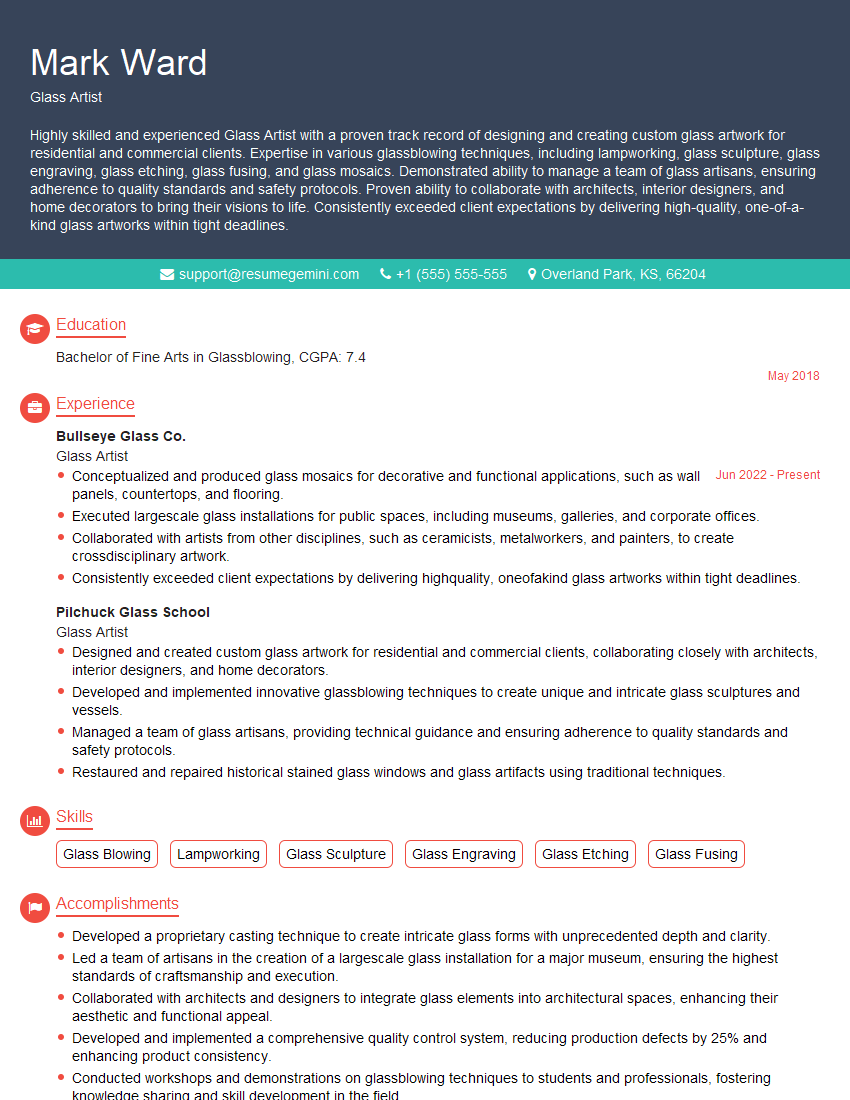
Mastering blowpipe cutting opens doors to diverse and rewarding opportunities in manufacturing, fabrication, and metalworking industries. A strong understanding of these techniques positions you for success and career advancement. To significantly improve your job prospects, crafting an ATS-friendly resume is crucial. This ensures your application gets noticed by recruiters and hiring managers. We highly recommend using ResumeGemini, a trusted resource for building professional resumes that stand out. ResumeGemini offers examples of resumes tailored specifically to the Blowpipe Cutting field, helping you showcase your skills and experience effectively.
Explore more articles
Users Rating of Our Blogs
Share Your Experience
We value your feedback! Please rate our content and share your thoughts (optional).
What Readers Say About Our Blog
Really detailed insights and content, thank you for writing this detailed article.
IT gave me an insight and words to use and be able to think of examples