Preparation is the key to success in any interview. In this post, we’ll explore crucial Watch Keeping interview questions and equip you with strategies to craft impactful answers. Whether you’re a beginner or a pro, these tips will elevate your preparation.
Questions Asked in Watch Keeping Interview
Q 1. Describe your experience with GMDSS procedures.
GMDSS, or the Global Maritime Distress and Safety System, is a comprehensive, internationally standardized system for maritime safety communications. My experience encompasses all aspects, from initiating distress alerts using the EPIRB (Emergency Position Indicating Radio Beacon) and Inmarsat-C system to receiving and responding to distress calls and safety-related broadcasts. I’m proficient in using the various GMDSS equipment, including VHF radio, MF/HF radio, and NAVTEX receivers. I understand the different distress alert procedures, the hierarchy of distress calls, and the importance of accurate and concise information transmission. For example, during a recent training exercise, I simulated a man overboard scenario, successfully activating the EPIRB and transmitting the distress message with all relevant coordinates and information, ensuring a timely rescue response.
I also have experience in maintaining GMDSS equipment logs, performing routine checks to ensure functionality, and participating in regular drills to maintain proficiency. Understanding the limitations of each communication system and knowing when to use which one is crucial. For instance, while VHF radio is ideal for short-range communication, Inmarsat-C is used for long-range, satellite-based communication, allowing for distress calls even in remote ocean areas. Proper documentation and adherence to the established procedures are non-negotiable aspects of my GMDSS experience.
Q 2. Explain the COLREGs rules and their practical application.
COLREGs, or the International Regulations for Preventing Collisions at Sea, are a set of rules designed to prevent collisions and promote safe navigation. My understanding goes beyond simply knowing the rules; it encompasses their practical application in various scenarios, including restricted visibility and crossing situations. I understand the concept of ‘give-way’ and ‘stand-on’ vessels and how to determine which vessel holds which responsibility. This isn’t just rote memorization, it’s about judging speed, distance, and the actions of other vessels to anticipate potential conflicts. I regularly use the rules in conjunction with radar and AIS information to predict other ships’ courses and take appropriate action.
For instance, I remember a situation where two vessels were on a crossing course in dense fog. By carefully applying Rule 17 (crossing situations), considering the range and bearing of the other vessel, and utilizing radar data, I was able to maneuver my vessel in a safe and timely manner, avoiding a potential collision. Furthermore, I’m well-versed in the use of sound signals and navigation lights, understanding their importance in maintaining situational awareness, especially in reduced visibility. Regularly practicing these rules in simulation exercises and real-world scenarios ensures I can confidently and safely navigate in all conditions.
Q 3. How do you handle a man overboard situation?
A man overboard (MOB) situation demands immediate and coordinated action. My training emphasizes a rapid and efficient response, starting with a loud shout of ‘Man Overboard!’ to alert the crew. Simultaneously, I would immediately activate the MOB button on the chart plotter and GPS which will automatically mark the position of the incident. This position will be crucial for the rescue operation. I would then immediately note the time of the event and the position obtained from the aforementioned devices. Using the equipment at hand, we would ensure the person is kept visually marked. We would then assess the sea state, weather and any other factors. The aim is to deploy the life raft and recover the person as quickly as possible.
Beyond the immediate actions, I’m trained in using the ship’s equipment, such as the searchlight and rescue boat, to aid in the recovery. Understanding the use of different recovery techniques, depending on the sea state and the availability of resources is vital. Post-recovery, the priority shifts to providing first aid and stabilizing the casualty before contacting emergency services if necessary. Regular drills and simulations keep my responses sharp and our team effectively coordinated. One particular training exercise involved various scenarios, such as a night-time MOB during rough seas which reinforced the importance of effective communication and swift action to ensure a successful outcome.
Q 4. What are your responsibilities during a fire emergency?
My responsibilities during a fire emergency are multifaceted and prioritize the safety of the crew and vessel. The first step is to raise the alarm, alerting all hands and contacting the bridge. I would then immediately initiate the relevant fire-fighting procedures, as outlined in the ship’s safety manual. This includes understanding the location of fire-fighting equipment and knowing how to use it safely and effectively, such as fire extinguishers, fire hoses, and the fire-fighting system. I would be responsible for assisting in controlling the spread of the fire and evacuating crew and passengers as required.
Crucially, I understand the importance of teamwork and communication in a fire emergency. Effective communication with the bridge and other crew members ensures a coordinated and efficient response. This includes accurately reporting the fire’s location, severity, and any other relevant information. Post-fire, my responsibilities include assisting in damage control, ensuring the vessel’s seaworthiness, and cooperating with any subsequent investigations. Through extensive training and participation in fire drills, I’m confident in handling such an emergency effectively. A recent fire drill vividly showed us the potential speed at which a small fire can get out of hand. It highlighted the importance of acting quickly, precisely following protocols, and working as a team.
Q 5. Describe your experience with navigation using electronic charts.
My experience with electronic charts (ECDIS) is extensive. I’m proficient in using ECDIS for route planning, monitoring position, and executing passage plans. I understand the system’s capabilities and limitations, including the importance of regular updates and proper configuration. I’m able to interpret various chart information, such as depth contours, navigational warnings, and other relevant data displayed on the ECDIS. This ability allows for better situational awareness and more accurate navigation. I’m also familiar with various ECDIS functions, including route planning, calculating ETA, and managing various settings that are imperative to safe and efficient navigation.
For example, during a recent voyage, I successfully used ECDIS to plan a route avoiding a reported area of restricted visibility. The system’s real-time information enabled efficient planning and safe navigation, allowing us to maintain our schedule without compromising safety. I also understand the need for backup systems and the importance of maintaining both paper charts and ECDIS data, ensuring redundancy. This ensures that I can always fallback on a reliable method of navigation.
Q 6. How do you maintain situational awareness on watch?
Maintaining situational awareness on watch requires a proactive and multi-sensory approach. It involves constant monitoring of the ship’s instruments, including radar, AIS, GPS, and compass, along with visual observation of the surroundings. I actively scan the horizon, noting other vessels, navigational hazards, and weather conditions. I also monitor the vessel’s performance and status, keeping track of speed, course, and engine parameters. This constant vigilance enables early detection of potential problems and allows for timely corrective action.
Beyond the technical aspects, effective communication with the bridge team is crucial. Regular updates and discussions maintain awareness of the vessel’s overall status and potential risks. For example, during night watch, my focus sharpens on identifying potential lights on the horizon, using radar to track their movement and making certain to correctly identify them. I also understand the importance of regular checks on the vessel’s systems and the environment around us, including weather reports and any changes that might affect the safety of the vessel. This holistic approach assures a high level of safety during my watch.
Q 7. Explain your understanding of bridge resource management.
Bridge Resource Management (BRM) is a crucial aspect of safe and efficient navigation. It emphasizes teamwork, communication, and leadership in managing resources, both human and technical, on the bridge. My understanding of BRM includes the importance of clear communication, effective task delegation, and a non-punitive error management system. I believe in fostering a collaborative environment where all team members feel comfortable voicing concerns and contributing ideas.
BRM promotes a culture of safety and helps prevent errors through effective teamwork and structured processes. For example, I regularly participate in BRM exercises that involve simulated emergencies or challenging navigational scenarios. These exercises help strengthen our team’s ability to communicate effectively, make informed decisions, and perform under pressure. This has proven invaluable in situations requiring critical thought and rapid response, ensuring that any incident is managed in the most safe and effective manner.
Q 8. How do you handle conflict with other crew members on watch?
Conflict onboard is inevitable, but effective resolution is crucial for safety and efficiency. My approach prioritizes professional communication and a focus on the task at hand. I begin by actively listening to understand the other person’s perspective, even if I don’t initially agree. I’ll clearly state my viewpoint, focusing on facts and avoiding emotional language. If the disagreement persists, I’ll calmly suggest we take a break to discuss the issue later when emotions are calmer, or, if necessary, escalate it to the Officer of the Watch or the Master for mediation. The goal is always a respectful resolution that doesn’t compromise safety.
For example, if a disagreement arises about the proper handling of a particular piece of equipment, I’d calmly explain my understanding of the procedure based on the ship’s operational guidelines, and then respectfully hear the other watchstander’s view. We could then compare notes with the relevant manuals or operational instructions to come to a shared understanding. If there is still a dispute, involving a senior officer would ensure a safe and standardized approach.
Q 9. Describe your experience with maintaining a ship’s logbook.
Maintaining a ship’s logbook is a critical responsibility, requiring meticulous accuracy and adherence to established protocols. Every entry must be clear, concise, and factual, reflecting the significant events and operational data of the voyage. This includes details about the vessel’s position, speed, course changes, weather conditions, any significant events (e.g., engine room issues, medical emergencies), and details on all navigational activities.
My experience includes logging entries in both paper and electronic logbooks, following SOLAS (Safety of Life at Sea) conventions. This involves ensuring all entries are time-stamped accurately, properly signed and initialed by both the recording officer and the relieving officer when shifts change. I’m very familiar with the importance of proper logbook maintenance for safety investigations and regulatory compliance. If an incident occurs, the logbook becomes a vital piece of evidence in any investigation.
Q 10. What are the different types of fog signals and when are they used?
Fog signals are crucial for safe navigation in reduced visibility. Different signals indicate different situations and vessel types. These signals are standardized internationally via the COLREGs (International Regulations for Preventing Collisions at Sea).
- One prolonged blast (at least 4 seconds): Indicates a vessel underway.
- Two prolonged blasts: Indicates a vessel not under command.
- Three prolonged blasts: Indicates a vessel constrained by her draught.
- One short, one prolonged, and one short blast: Indicates a vessel engaged in fishing.
- Bell: Used by vessels at anchor.
- Whistle: Typically used by vessels underway.
The choice of signal depends entirely on the circumstances. For example, a vessel at anchor in fog would sound its bell regularly, while a vessel underway would use a prolonged blast to signal its presence. The frequency and duration are also crucial for proper identification and understanding.
Q 11. How do you perform a dead reckoning calculation?
Dead Reckoning (DR) is a method of estimating a vessel’s position by using its known or assumed speed, course, and time elapsed since the last known position. It’s a fundamental navigational technique, particularly valuable when electronic navigation systems are unavailable or unreliable. A simple DR calculation involves applying the formula: Distance = Speed x Time.
Steps for a DR calculation:
- Determine the vessel’s course and speed.
- Calculate the distance traveled since the last known fix. For example, if the speed is 10 knots and the time elapsed is 2 hours, the distance traveled is 20 nautical miles (10 knots * 2 hours).
- Using a chart or plotting sheet, plot the course and distance from the last known position.
- The resulting point represents the estimated position (EP) based on the DR calculation.
Important note: DR is an estimation, and errors accumulate over time. It’s essential to regularly update the DR position using other navigational information like GPS, celestial navigation, or visual fixes whenever possible.
Q 12. Explain your understanding of tidal currents and their impact on navigation.
Tidal currents are the horizontal movement of water caused by the gravitational forces of the sun and moon. They significantly impact navigation, affecting a vessel’s speed and course. Understanding tidal currents is crucial for accurate position prediction and safe passage planning.
Impact on Navigation:
- Set and Drift: Tidal currents have ‘set’ (direction) and ‘drift’ (speed). A vessel will experience a change in its course (set) and speed (drift) due to the current. Ignoring tidal currents can lead to significant errors in position estimations.
- Navigation Planning: Accurate tide predictions are essential for calculating arrival times and optimal routes. Navigators use tidal atlases and current charts to anticipate the influence of currents on their voyage.
- Navigation Safety: Strong tidal currents, especially in narrow channels or restricted waters, can create hazardous situations. Navigators must carefully consider the current’s strength and direction when navigating these areas to avoid grounding or collisions.
For example, a vessel attempting to navigate a narrow channel against a strong tidal current will require more power and maneuverability than if the current was assisting its passage. Misjudging the current can lead to delays, potential grounding, or even accidents.
Q 13. Describe your experience with using radar and ARPA.
Radar and ARPA (Automatic Radar Plotting Aid) are essential navigational tools used to detect and track vessels and other objects in the vicinity. My experience includes operating various radar systems and utilizing ARPA functions for collision avoidance and navigation.
Radar: Provides a visual representation of objects within its range, allowing detection of other ships, landmasses, and navigational hazards, even in reduced visibility. It’s a fundamental tool for safe navigation.
ARPA: An advanced feature that enhances the information displayed by radar by automatically tracking selected targets, calculating their course and speed, and predicting future positions. This aids in collision avoidance by providing the navigator with critical information needed to take evasive maneuvers.
In practice, I’ve used radar and ARPA to:
- Detect and track other vessels to assess the risk of collision.
- Identify potential navigational hazards, like floating debris or shallow waters.
- Navigate safely in restricted visibility by monitoring the relative movement of other ships.
- Monitor the vessel’s position and course during maneuvering.
The ability to interpret radar information and utilize ARPA effectively is paramount for ensuring safe navigation.
Q 14. How do you handle a medical emergency onboard?
Handling a medical emergency onboard requires swift action, clear communication, and adherence to established medical protocols. My experience involves both immediate response and communication with shore-based medical support.
My approach to a medical emergency would include:
- Assess the situation: Quickly determine the nature and severity of the emergency.
- Alert the Master and other relevant personnel: This is crucial for coordinating responses and mobilizing resources.
- Provide immediate first aid: Using established medical procedures and available equipment. This could include CPR, wound management, or stabilization techniques as appropriate.
- Contact shore-based medical professionals: Obtain advice and instructions from medical experts, providing them with detailed information about the patient’s condition and the vessel’s location and situation. This may involve using satellite communication or HF radio.
- Follow medical advice: Implement the instructions provided by medical professionals. This could include medication administration or other specific treatments.
- Maintain thorough records: Document all events and actions taken related to the medical emergency. Detailed records are necessary for the ship’s logbook and any future investigations or reports.
Effective communication with shore-based medical personnel is critical, often involving the use of standardized medical terminology and providing clear descriptions of the patient’s symptoms. The goal is always to provide the best possible care while adhering to safety protocols and relevant regulations.
Q 15. What are the limitations of GPS and how do you mitigate them?
GPS, while incredibly useful, has limitations. Signal blockage from obstructions like buildings, dense foliage, or even severe weather can disrupt or completely prevent reception. Atmospheric conditions can also introduce errors, leading to inaccuracies in position readings. Finally, GPS relies on a network of satellites; intentional jamming or spoofing of these signals can compromise the system’s integrity.
Mitigation strategies involve using multiple navigational systems for redundancy. This commonly includes using a combination of GPS, gyrocompass, and even traditional celestial navigation methods. Furthermore, careful attention to signal strength and error indicators on the GPS unit itself is crucial. If a signal is weak or shows high error margins, alternative positioning methods should be used, and appropriate caution should be exercised. For instance, in a harbor with tall buildings, I would rely more on radar and chart plotting to ensure accurate positioning, and even double check with visual landmarks.
Career Expert Tips:
- Ace those interviews! Prepare effectively by reviewing the Top 50 Most Common Interview Questions on ResumeGemini.
- Navigate your job search with confidence! Explore a wide range of Career Tips on ResumeGemini. Learn about common challenges and recommendations to overcome them.
- Craft the perfect resume! Master the Art of Resume Writing with ResumeGemini’s guide. Showcase your unique qualifications and achievements effectively.
- Don’t miss out on holiday savings! Build your dream resume with ResumeGemini’s ATS optimized templates.
Q 16. Explain your understanding of the International Code of Signals.
The International Code of Signals (ICS) is a standardized system for communication between vessels, and between vessels and shore stations. It utilizes flags, shapes, lights, and radiotelephony to convey a wide array of messages. This system is vital for safety at sea, allowing vessels to exchange important information rapidly, especially in situations where other communication methods are unavailable or unreliable.
My understanding extends to its various sections, encompassing messages relating to navigational safety, such as distress signals, requests for assistance, and reporting of hazards. I’m also familiar with the procedures for using the ICS, and I know how to interpret different flag combinations and light signals. I recall a situation where I used the ICS to report a nearby vessel experiencing engine failure to coastal authorities, facilitating a timely rescue operation.
Q 17. How do you ensure effective communication with other vessels?
Effective communication with other vessels relies on a multi-faceted approach. Firstly, using the correct channels and procedures on the VHF radio is paramount. This includes announcing maneuvers, intentions, and any potential hazards. Secondly, maintaining a proper lookout using visual and auditory means is essential to observe the actions of other vessels and potential hazards. Thirdly, understanding and using the International Regulations for Preventing Collisions at Sea (COLREGs) ensures predictable and safe navigation practices. Finally, clear and concise communication, using standardized phrases and avoiding ambiguity, minimizes the risk of misunderstanding.
I always prioritize clear, concise communication. For example, instead of a vague transmission like ‘I’m heading north,’ I’d say something like, ‘Vessel XYZ, heading 000 degrees, speed 10 knots, passing one mile north of buoy Alpha.’ This level of detail ensures everyone understands my intentions.
Q 18. Describe your experience with maintaining navigational equipment.
Maintaining navigational equipment is a crucial aspect of watchkeeping, requiring both technical competence and diligent preventative maintenance. My experience encompasses regular checks of GPS, radar, gyrocompass, echo sounder, and AIS systems. This includes verifying accuracy, functionality, and calibration. I am familiar with the process of fault-finding and troubleshooting common problems, and I know when to seek professional assistance for more complex issues. In the past, I successfully resolved a problem with a faulty GPS antenna, resulting in a timely restoration of navigational capabilities.
I’ve kept meticulous logbooks, documenting all equipment checks, maintenance, and repairs. This comprehensive record-keeping ensures compliance with safety regulations and provides a valuable historical record of the equipment’s performance.
Q 19. How do you handle unexpected changes in weather conditions?
Unexpected weather changes necessitate immediate and decisive action. The first step is to assess the situation, evaluating wind speed and direction, wave height, visibility, and the overall threat. This assessment informs a course of action: reducing speed, altering course to seek shelter, or preparing the vessel for increased wave action are common responses. Communication with other vessels and harbor authorities is vital to share information and coordinate actions.
I remember a situation where an unexpected squall developed quickly. By closely monitoring weather forecasts and radar, and by reducing speed and altering course promptly, we avoided significant risks. Regular weather checks and the ability to quickly respond to changing weather are essential for safe navigation.
Q 20. Explain your understanding of different types of anchors and anchoring techniques.
Anchors are classified by their design and holding power. Common types include the Danforth, Bruce, and Plow anchors. Each has its strengths and weaknesses depending on the seabed composition. Anchoring techniques vary depending on factors like depth, seabed conditions, wind, and current. The process typically involves selecting an appropriate location, deploying the anchor, paying out sufficient chain or rope, checking the set, and maintaining a vigilant watch on the vessel’s position.
Selecting the right anchor for the seabed type is crucial. For example, a Danforth anchor performs best in sandy or muddy bottoms, while a Plow anchor is more suited for rocky bottoms. The art lies in getting a good ‘set’ – firmly embedding the anchor to ensure the vessel’s secure position.
Q 21. Describe your experience with cargo operations and their safety aspects.
My experience with cargo operations emphasizes safety as the top priority. I understand the importance of adhering to safety regulations, including proper loading, securing, and stowage practices. I’m familiar with the various hazards associated with cargo handling, such as weight distribution, stability issues, and the potential for shifting cargo. I’ve also been involved in securing cargo during rough weather, always using the appropriate techniques to minimize risks.
Detailed pre-loading checks and ongoing monitoring of the vessel’s stability are essential. Communication with the cargo team is critical to ensure everyone understands their responsibilities and that all safety protocols are followed. This combined approach minimizes risks and maintains a safe and efficient operational environment.
Q 22. How do you manage fatigue during long watch periods?
Fatigue management during long watch periods is crucial for safety and efficiency at sea. It’s not just about staying awake; it’s about maintaining optimal cognitive function and reaction time. My approach is multifaceted and prioritizes proactive strategies.
Prioritize Sleep Hygiene: I ensure I get adequate sleep before my watch, aiming for 7-8 hours of quality rest. This includes maintaining a regular sleep schedule, creating a dark and quiet sleep environment, and avoiding caffeine or alcohol close to bedtime.
Regular Breaks and Short Naps: During longer watches, I schedule short, planned breaks – even 10-15 minutes can make a significant difference. If permitted and appropriate, I might take a short power nap (20-30 minutes maximum) to combat drowsiness, always ensuring I can be readily alerted.
Hydration and Nutrition: Dehydration and poor nutrition exacerbate fatigue. I maintain adequate fluid intake throughout my watch and consume light, healthy snacks to keep my energy levels stable.
Regular Exercise: Physical activity helps regulate sleep cycles and improve overall well-being. I incorporate regular exercise into my routine, even if it’s just a short workout.
Mindfulness and Stress Management: Stress significantly contributes to fatigue. I practice relaxation techniques like deep breathing or mindfulness exercises to manage stress levels.
Teamwork and Communication: I maintain open communication with my fellow watchkeepers. If I feel overly fatigued, I will not hesitate to inform the officer of the watch or seek assistance to ensure safety.
I understand that fatigue is a serious risk and actively implement these strategies to mitigate its impact on my performance.
Q 23. Explain your understanding of the ship’s stability and its limitations.
A ship’s stability refers to its ability to remain upright and resist capsizing. It’s determined by factors like the distribution of weight (cargo, fuel, ballast), the shape of the hull, and the water density. Understanding a ship’s stability limitations is paramount to safe operation.
Center of Gravity (COG): A lower COG improves stability. Improper cargo loading can raise the COG, making the vessel more prone to capsizing. I am trained to understand and interpret stability data provided by the ship’s stability booklet.
Freeboard: The distance between the waterline and the deck. Sufficient freeboard is essential to prevent water from entering the ship during rough seas. I ensure compliance with the regulations concerning freeboard.
Metacentric Height (GM): GM represents the ship’s initial static stability. A higher GM indicates greater initial stability. However, excessively high GM can lead to harsh rolling motions. I understand the importance of maintaining optimal GM within the limits specified by the stability booklet.
Limitations include exceeding the maximum permissible COG, encountering extreme weather conditions (high winds, large waves), or experiencing damage to the hull, impacting buoyancy and stability. Regular checks of cargo securing, tank levels, and any potential list are critical in preventing incidents related to ship instability.
Q 24. What are your responsibilities concerning security onboard?
My responsibilities concerning onboard security are multifaceted and encompass various aspects of maintaining a safe and secure environment.
Access Control: I strictly enforce access control procedures, ensuring that only authorized personnel have access to restricted areas, like the engine room or bridge. I check IDs and verify credentials as needed.
Surveillance: I maintain a vigilant watch, constantly monitoring the ship’s surroundings, both visually and using electronic aids. This includes looking for suspicious activity, unusual vessels, or potential threats.
Emergency Procedures: I am thoroughly familiar with the ship’s emergency procedures, including those related to piracy, man overboard, fire, or other security threats. I know how to react effectively in such situations and how to assist in the execution of the appropriate protocols.
Reporting: Any suspicious activity or security breaches are immediately reported to the officer of the watch, the master, and the relevant authorities as per the company’s security procedures.
Security Drills: I actively participate in security drills to maintain proficiency and to ensure that the crew is prepared to handle various security situations effectively.
My role is crucial in maintaining a high level of security awareness and preparedness aboard the vessel.
Q 25. How do you conduct a safety briefing for new crew members?
Conducting a safety briefing for new crew members is a critical responsibility. My approach involves a structured and engaging session.
Introduction and Icebreaker: Begin with introductions and create a relaxed atmosphere. This sets a positive tone for the session.
Ship Layout and Emergency Exits: I familiarize new crew with the ship’s layout, indicating the locations of lifeboats, fire stations, assembly points, and emergency exits, using diagrams and actual locations if possible.
Personal Protective Equipment (PPE): I explain the importance of using appropriate PPE for different tasks and show the crew where to locate and how to use it.
Fire Prevention and Firefighting: This involves outlining fire prevention measures, explaining the ship’s fire-fighting equipment, and conducting a practical demonstration of using fire extinguishers and other fire-fighting tools, if applicable and safe to do so.
Man Overboard Procedures: I demonstrate the use of life rings, life jackets, and explain the ship’s procedures in recovering someone who has fallen overboard.
Abandon Ship Drill: I walk them through the step-by-step procedure for abandoning ship, emphasizing the importance of following instructions and maintaining order.
Safety Regulations and Procedures: I review the company’s safety regulations and the ship’s safety management system (SMS).
Question and Answer Session: I dedicate time for a question and answer session, encouraging participation and addressing any concerns.
The briefing is interactive, using visual aids and practical demonstrations to ensure maximum understanding and retention.
Q 26. Explain your understanding of the ISM Code and its application.
The International Safety Management (ISM) Code is a mandatory international standard for the safe management and operation of ships and for pollution prevention. It aims to provide a framework for a company’s safety and environmental management system.
Safety Management System (SMS): The ISM Code requires companies to establish, document, implement, maintain, and regularly review an SMS. This includes defining responsibilities, procedures, and resources for safety and environmental protection.
Company Responsibility: The company is responsible for developing and implementing the SMS, ensuring adequate resources and training. They must also conduct regular internal audits and management reviews.
Shipboard Operations: Onboard, the SMS guides day-to-day operations, covering aspects like risk assessment, emergency preparedness, maintenance, and crew training. I am responsible for understanding and adhering to the company’s SMS procedures that pertain to my duties.
Documentation: The ISM Code necessitates maintaining comprehensive documentation, including manuals, procedures, records of training, and audits. This documentation is crucial for demonstrating compliance and for continuous improvement.
Continuous Improvement: A key element is the continuous improvement of the SMS, incorporating lessons learned from incidents, audits, and management reviews.
The application of the ISM Code is fundamental to ensuring a safe working environment, preventing accidents, and protecting the marine environment. I am familiar with our company’s specific implementation of the ISM Code and actively contribute to its effectiveness during my watch.
Q 27. Describe a time you had to make a critical decision under pressure during a watch.
During a night watch in heavy seas, a sudden and significant list developed. Initial assessment suggested a potential flooding issue. The situation was urgent as the vessel was rolling heavily, and the crew was experiencing some level of panic. My immediate actions were crucial.
Rapid Assessment: I quickly checked the bilge alarms and pumps. While some water was detected, the amount didn’t fully explain the list.
Damage Control: I immediately activated the emergency procedures, summoning additional crew members to assist. Simultaneously, I contacted the bridge to report the situation.
Systematic Search: We systematically searched for the source of the list, checking all tanks and compartments to identify any breaches. We discovered a shifted cargo container that had created the unusual weight distribution, causing the list.
Corrective Actions: Working with the bridge and other crew members, we quickly developed a plan to rectify the situation. This involved securing the shifted container and redistributing some ballast.
Under immense pressure, a quick and decisive response to the developing situation was vital to prevent a far more serious incident. The prompt identification of the issue and the coordinated actions of the crew successfully stabilized the vessel. This incident reinforced the importance of thorough training, quick thinking, and effective teamwork under stressful circumstances.
Key Topics to Learn for Watch Keeping Interview
- Navigation: Understanding chart work, GPS systems, electronic charting, and traditional piloting techniques. Practical application: Explain how you would navigate in low visibility conditions using various tools.
- Collision Avoidance: Applying COLREGs (International Regulations for Preventing Collisions at Sea) and risk assessment in various scenarios. Practical application: Describe your approach to avoiding a collision with a fishing vessel at night.
- Communication: Proficient use of VHF radio, GMDSS (Global Maritime Distress and Safety System), and effective communication protocols. Practical application: Detail your experience handling a mayday call or communicating with port authorities.
- Emergency Procedures: Knowledge of fire-fighting, man overboard procedures, and other emergency response protocols. Practical application: Explain your role and responsibilities during a simulated engine room fire.
- Cargo Operations (if applicable): Understanding cargo handling procedures, safety regulations, and documentation. Practical application: Describe your experience with cargo securing and related safety measures.
- Watch Keeping Procedures: Detailed knowledge of maintaining a safe and efficient watch, including logbook entries, reporting procedures, and adherence to company policies. Practical application: Describe your approach to maintaining situational awareness during a long solo watch.
- Meteorology & Oceanography: Basic understanding of weather patterns, tides, currents, and their impact on navigation. Practical application: Explain how you would interpret weather forecasts and adjust your course accordingly.
- Ship Handling (if applicable): Understanding basic ship maneuvers, anchoring procedures, and mooring techniques. Practical application: Describe your experience with mooring a vessel in challenging conditions.
Next Steps
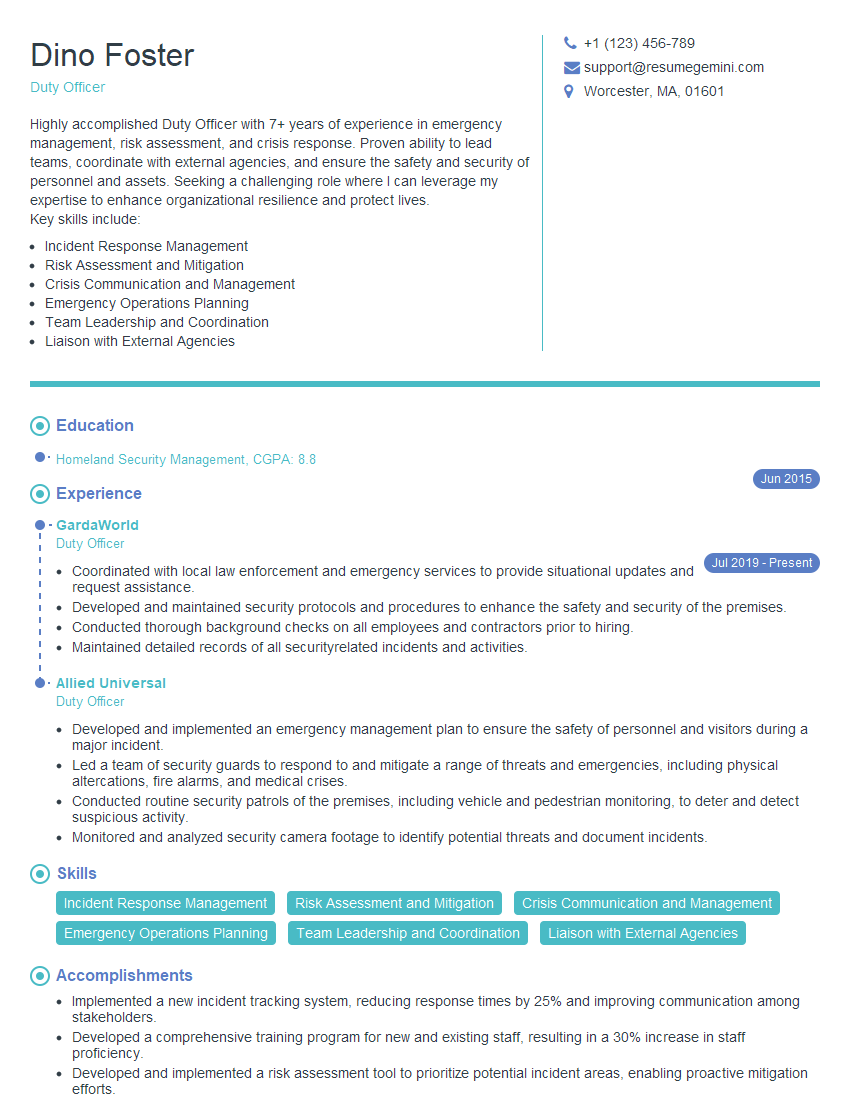
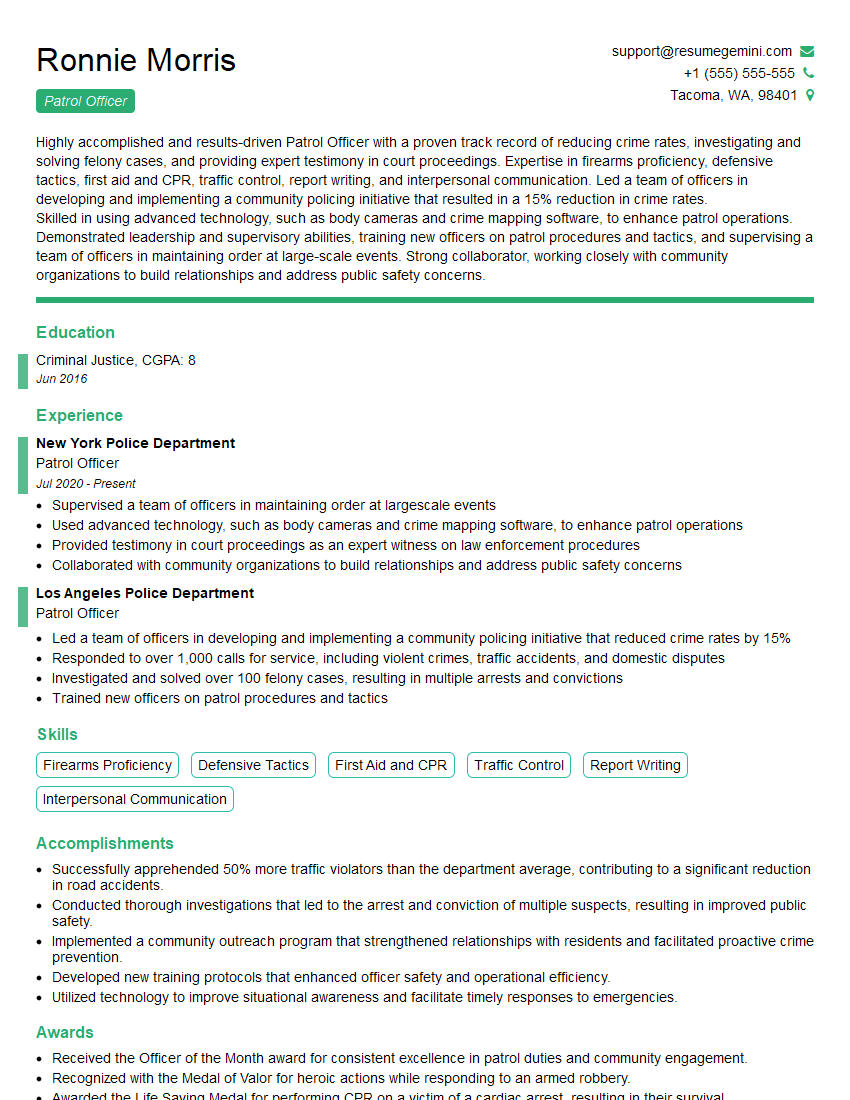
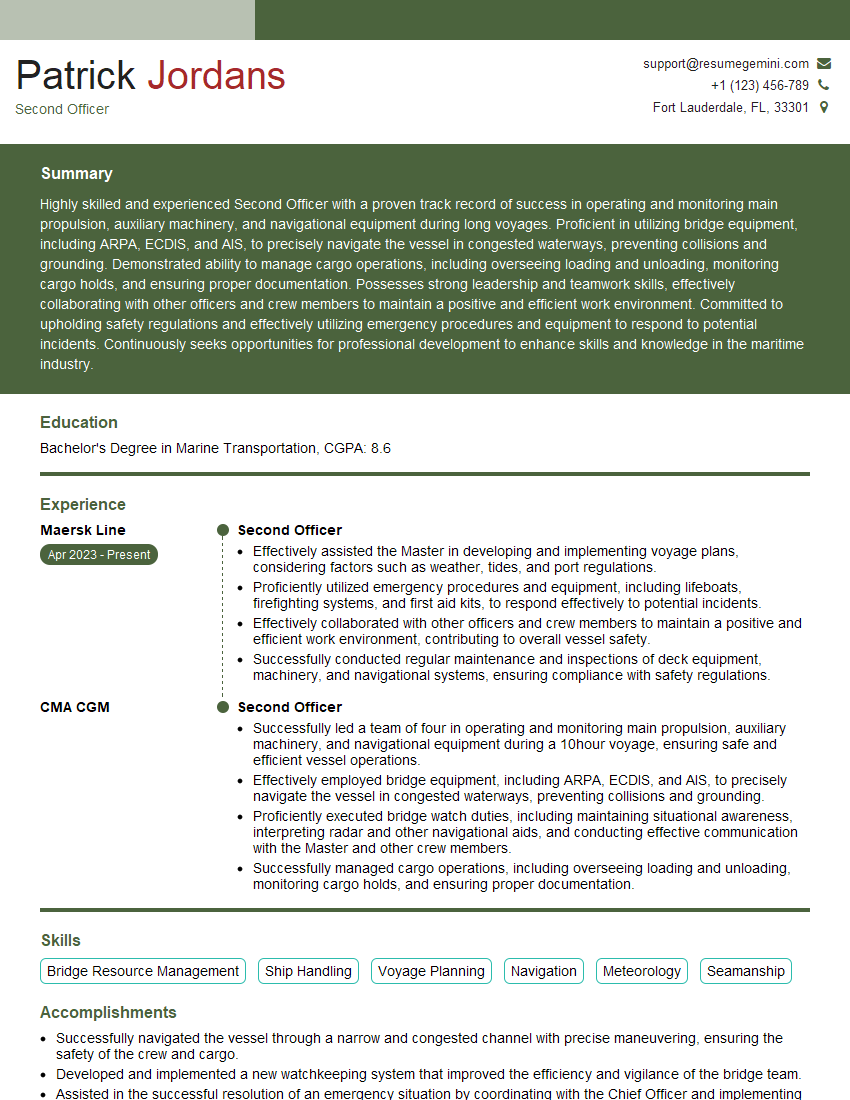
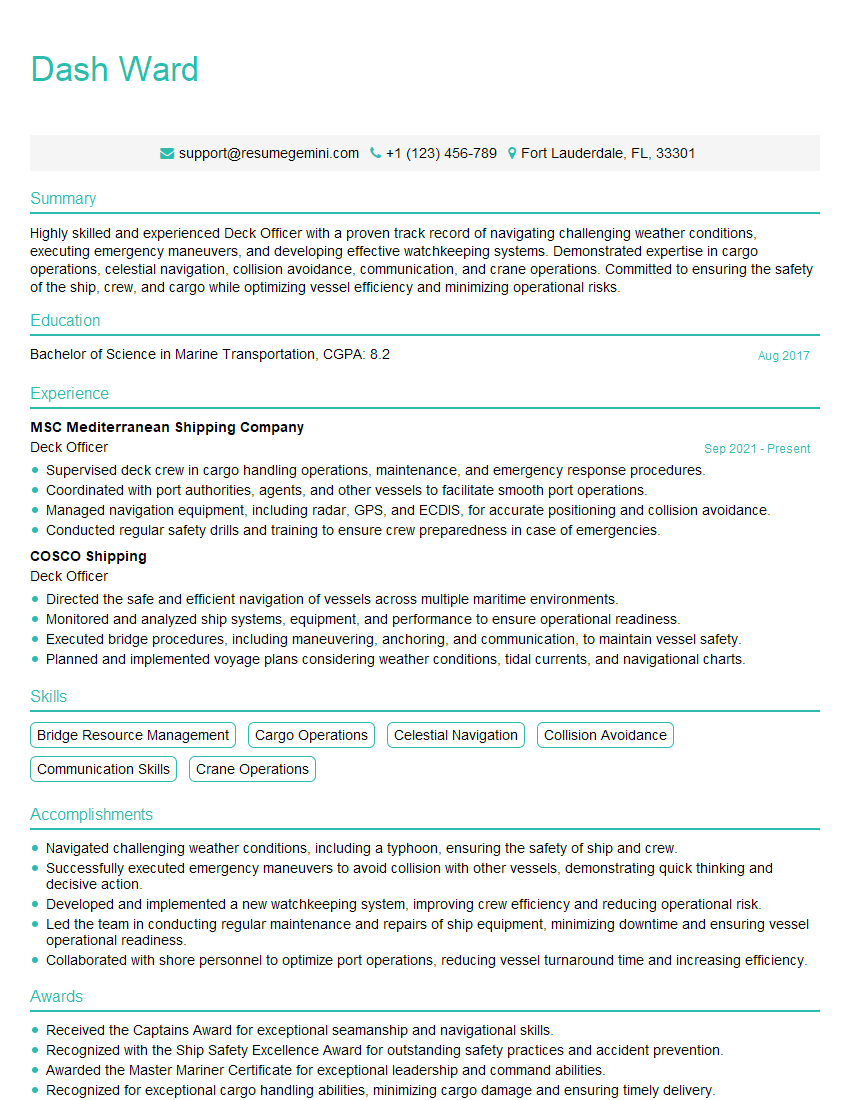
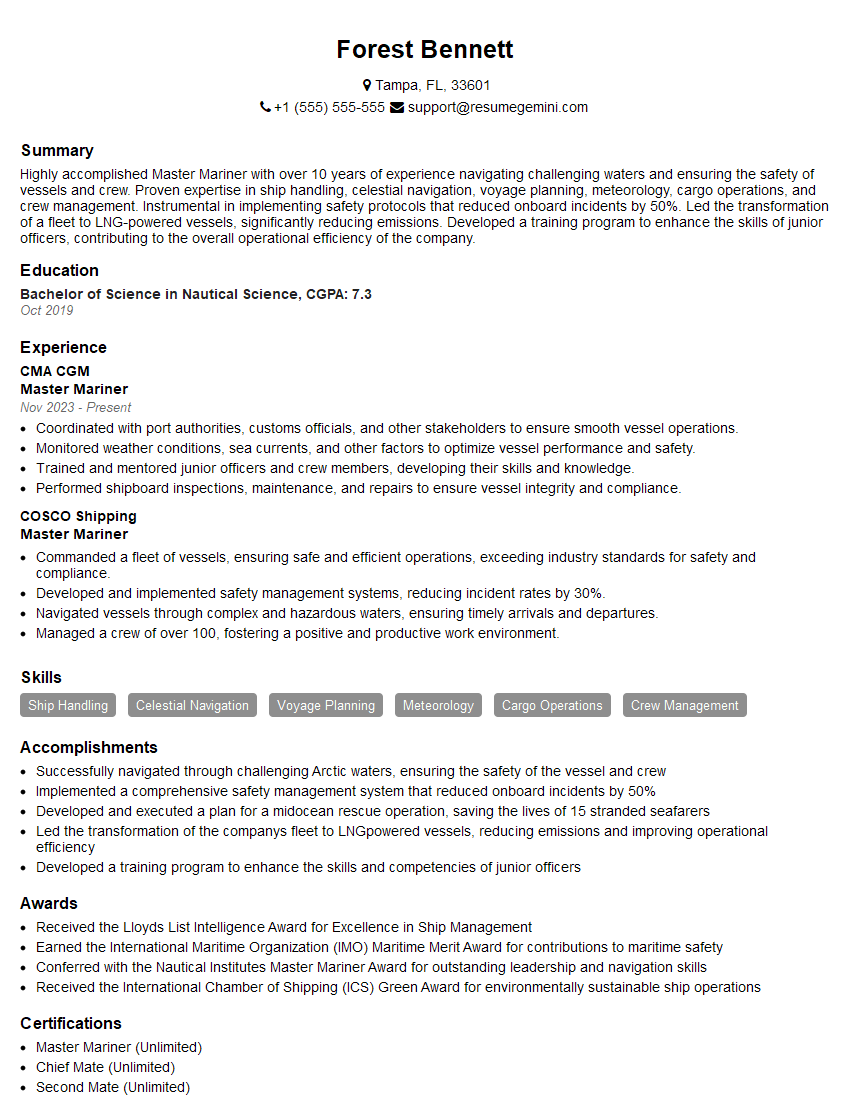
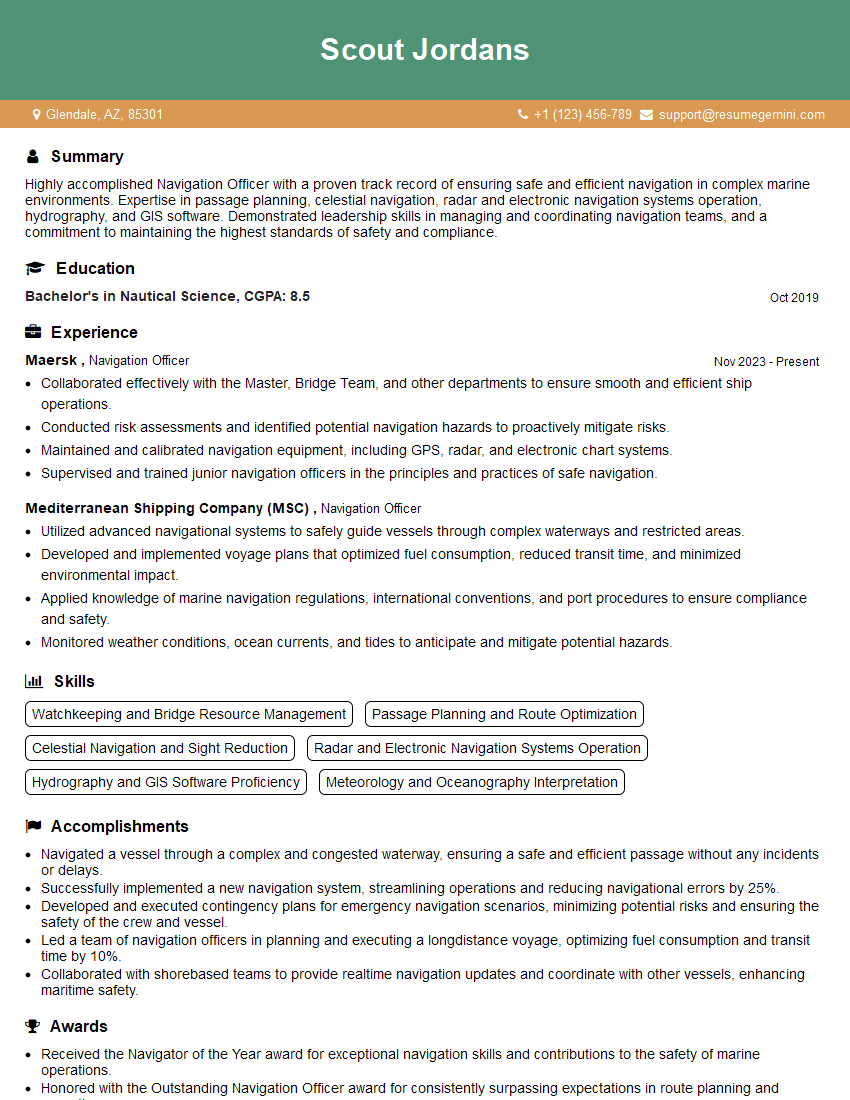
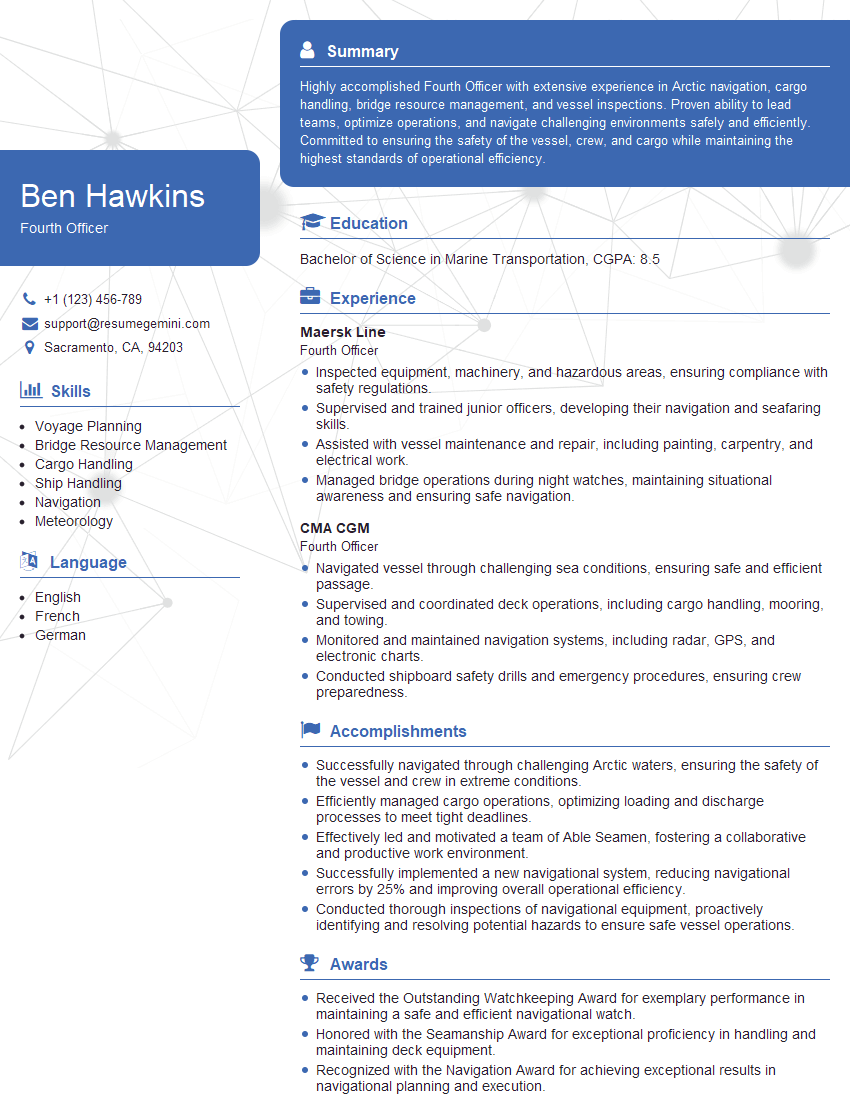
Mastering Watch Keeping is crucial for career advancement in the maritime industry, opening doors to higher-ranking positions and increased responsibilities. To enhance your job prospects, creating a compelling and ATS-friendly resume is essential. ResumeGemini is a trusted resource that can help you build a professional resume tailored to highlight your skills and experience. Examples of resumes specifically designed for Watch Keeping positions are available to help you get started. Take the next step towards your maritime career success today!
Explore more articles
Users Rating of Our Blogs
Share Your Experience
We value your feedback! Please rate our content and share your thoughts (optional).
What Readers Say About Our Blog
Really detailed insights and content, thank you for writing this detailed article.
IT gave me an insight and words to use and be able to think of examples