Every successful interview starts with knowing what to expect. In this blog, we’ll take you through the top Water Treatment Chemical Handling interview questions, breaking them down with expert tips to help you deliver impactful answers. Step into your next interview fully prepared and ready to succeed.
Questions Asked in Water Treatment Chemical Handling Interview
Q 1. Explain the different types of water treatment chemicals and their applications.
Water treatment relies on a variety of chemicals to ensure safe and potable water. These chemicals target specific impurities and can be broadly categorized.
- Disinfectants: These eliminate harmful microorganisms. Chlorine (gas or hypochlorite solutions), chloramines, and ozone are commonly used. Chlorine, for example, is a powerful oxidant that kills bacteria and viruses. Hypochlorite, a less hazardous form of chlorine, is often preferred for smaller systems.
- Coagulants and Flocculants: These chemicals clump together suspended particles, making them easier to remove. Aluminum sulfate (alum) and ferric chloride are common coagulants. Polyelectrolytes act as flocculants, binding the coagulated particles into larger masses.
- pH Adjusters: Maintaining the correct pH is crucial. Acids (like sulfuric acid or hydrochloric acid) lower pH, while bases (like sodium hydroxide or lime) raise it. Proper pH is essential for efficient coagulation and disinfection.
- Corrosion Inhibitors: These prevent corrosion in pipes and equipment. Polyphosphates and silicates are examples. Corrosion control safeguards the water’s quality and extends the infrastructure’s lifespan.
- Scale Inhibitors: These prevent the buildup of mineral deposits (scale) on pipes and equipment. Phosphonates and polycarboxylates are commonly used. Scale can significantly reduce water flow and equipment efficiency.
- Fluorides: Added to enhance dental health in many municipalities, usually as sodium fluoride or fluorosilicic acid. Careful monitoring is critical to prevent over-fluoridation.
The choice of chemical and dosage depends on factors like the source water quality, desired water quality standards, and regulatory requirements. For instance, a water source with high turbidity would require higher doses of coagulants and flocculants compared to a relatively clear source.
Q 2. Describe the safety procedures for handling chlorine and other hazardous chemicals.
Handling chlorine and other hazardous water treatment chemicals requires strict adherence to safety protocols. This includes personal protective equipment (PPE), proper storage, and emergency response planning.
- PPE: This is paramount. When handling chlorine gas, for example, a self-contained breathing apparatus (SCBA) is essential, along with chemical-resistant gloves, boots, and eye protection. For liquid chemicals, appropriate gloves and eye protection are necessary.
- Storage: Chemicals must be stored in designated areas, away from incompatible substances and sources of ignition. Proper labeling and Material Safety Data Sheets (MSDS) are crucial for identifying hazards and handling procedures.
- Spill Response: Having a detailed spill response plan is vital. This should include procedures for containing the spill, neutralizing the chemical (if necessary), and disposing of it safely. Emergency contacts and procedures for notifying relevant authorities should also be clearly defined. For chlorine gas leaks, immediate evacuation of the area is essential.
- Training: Regular training is crucial to ensure that all personnel understand the hazards associated with each chemical and the correct procedures for handling them safely. This includes emergency response training and safe handling practices.
Remember, safety isn’t a secondary concern; it’s the foundation upon which all water treatment operations are built. A single lapse in safety can have devastating consequences.
Q 3. How do you ensure accurate chemical dosing in a water treatment plant?
Accurate chemical dosing is critical for effective water treatment and preventing over- or under-treatment. Several methods help achieve this.
- Automated Feed Systems: These systems utilize sensors to monitor water quality parameters (e.g., pH, turbidity) and automatically adjust chemical feed rates to maintain the desired levels. This ensures consistent treatment and minimizes human error.
- Calibration and Maintenance: Regular calibration of the dosing equipment is vital. This includes checking flow meters, pumps, and any sensors to ensure their accuracy. Routine maintenance, including cleaning and inspection, minimizes equipment malfunction and ensures consistent dosing.
- Analytical Monitoring: Continuous or regular water quality testing provides real-time feedback on the effectiveness of the treatment. Discrepancies between target and actual levels help adjust the dosing rates and identify potential issues in the system.
- Control Systems: Sophisticated control systems integrate data from multiple sensors and adjust chemical feed rates accordingly. These systems provide real-time monitoring and alarming, allowing operators to react quickly to any deviations from set points. This might involve a Programmable Logic Controller (PLC) or Supervisory Control and Data Acquisition (SCADA) system.
For example, using a calibrated dry feeder for lime ensures the correct amount of lime is added for pH adjustment. Regular calibration and maintenance ensure consistent dosing, preventing fluctuations in pH that could impact treatment effectiveness.
Q 4. What are the common water quality parameters monitored and how do chemical treatments affect them?
Several water quality parameters are continuously monitored to ensure the treated water meets safety standards. Chemical treatment directly impacts these parameters.
- pH: Indicates acidity or alkalinity. Chemical treatment often aims to adjust pH to an optimal range for coagulation, disinfection, and corrosion control.
- Turbidity: Measures the cloudiness of water. Coagulants and flocculants reduce turbidity by removing suspended solids.
- Residual Disinfectant: Measures the concentration of disinfectant (e.g., chlorine) remaining after treatment. This ensures sufficient disinfection while avoiding excessive levels.
- Total Dissolved Solids (TDS): Measures the total amount of dissolved minerals and salts. While not directly impacted by disinfection, some treatment processes might increase or decrease TDS levels.
- Microbiological parameters: These include the presence of bacteria, viruses, and other microorganisms. Disinfectants significantly reduce these levels.
- Hardness: Measures the concentration of calcium and magnesium ions. While not always targeted by chemical treatment, understanding hardness helps manage scaling issues.
For example, adding alum as a coagulant reduces turbidity by binding suspended particles, resulting in clearer water. Chlorine disinfection reduces bacterial counts, making the water safer for consumption. These parameters are interconnected, with changes in one affecting others. For instance, changes in pH can affect coagulation efficiency.
Q 5. Explain the process of chemical feed system maintenance and troubleshooting.
Maintaining and troubleshooting chemical feed systems ensures reliable and accurate chemical dosing. This involves regular inspections, calibrations, and repairs.
- Preventative Maintenance: This includes regular inspections of pumps, valves, pipes, and sensors. This can involve visual inspections, pressure checks, and flow rate measurements. Cleaning and lubrication of moving parts is essential to prevent wear and tear.
- Calibration: Regular calibration of flow meters and dosing pumps is critical to ensure accurate chemical delivery. This often involves using standardized solutions and comparing measurements to known values.
- Troubleshooting: Problems can arise with feed systems, such as clogged pipes, malfunctioning pumps, or inaccurate sensor readings. Troubleshooting involves identifying the problem, isolating the faulty component, and making repairs or replacements. Flow charts or diagnostic tools can help systematically troubleshoot issues.
- Spare Parts: Maintaining a stock of spare parts for critical components minimizes downtime in case of equipment failure. This is especially important for emergency situations.
For instance, a clogged dry feeder might require cleaning and adjustments to the feed mechanism. A malfunctioning pump may need replacement or repair. Proactive maintenance significantly minimizes these issues.
Q 6. What are the potential hazards associated with chemical spills and how do you respond?
Chemical spills pose significant hazards, ranging from health risks to environmental damage. Effective response is crucial.
- Health Risks: Depending on the chemical, spills can cause burns, respiratory problems, or other health issues. Exposure can be acute (immediate) or chronic (long-term). The MSDS provides crucial information on health effects.
- Environmental Impacts: Spills can contaminate soil and water, harming aquatic life and potentially affecting drinking water sources. The nature and extent of damage depend on the chemical spilled and the environment affected.
- Response Procedures: A well-defined spill response plan is crucial. This includes isolating the spill area, using appropriate PPE, employing containment measures, and neutralizing the chemical (if possible and safe). Emergency services should be contacted immediately. Proper documentation of the spill and cleanup is also necessary for compliance.
- Post-Spill Monitoring: After cleanup, monitoring of the affected area is necessary to ensure that no long-term contamination persists. This could involve soil and water testing.
For example, a chlorine gas leak requires immediate evacuation, while a spill of a less volatile liquid might involve containment and neutralization using a suitable chemical. The response depends on the specific hazard presented.
Q 7. Describe your experience with different chemical feeding systems (e.g., dry feeders, liquid feeders).
I have extensive experience with various chemical feeding systems, each with its own advantages and disadvantages.
- Dry Feeders: These are used for powdered or granular chemicals like lime, alum, and activated carbon. They typically utilize a screw conveyor or a rotary valve to dispense the chemical at a controlled rate. Advantages include simple design and lower initial cost; however, they may be prone to clogging and require more maintenance than liquid feeders. I have used several types, including gravimetric feeders, which provide precise dosing based on weight.
- Liquid Feeders: These handle liquid chemicals such as chlorine solutions, acids, and polymers. They typically employ pumps to deliver the chemical at a controlled rate. Advantages include accurate dosing and easier integration into automated systems; however, they may be more complex and require more specialized maintenance. My experience encompasses both positive displacement pumps and proportioning pumps for accurate chemical delivery.
- Other Systems: I’m also familiar with gas feed systems for chlorine gas and specialized systems for handling polymers and other chemicals with unique properties. This includes handling and maintenance of the associated safety systems, instrumentation, and control logic.
The selection of a chemical feeding system depends on the specific chemical being used, the required dosage accuracy, and the overall plant design. Understanding the strengths and weaknesses of each type ensures optimal performance and reliability.
Q 8. How do you interpret and utilize water quality test results to adjust chemical treatments?
Interpreting water quality test results is crucial for adjusting chemical treatments in water treatment. We analyze parameters like pH, turbidity, alkalinity, and the presence of specific contaminants (like iron, manganese, or chlorine) to determine the necessary chemical adjustments. For example, low pH might indicate a need for alkalinity adjustment using lime or soda ash. High turbidity suggests insufficient coagulant dosage. The process is iterative; we adjust chemical dosages based on the results, monitor the effects, and fine-tune accordingly. Think of it like baking a cake – you need to adjust ingredients based on the outcome to achieve the desired result. I routinely use data logging software and spreadsheets to track trends and predict future chemical demands, optimizing treatment efficiency and minimizing chemical waste.
For instance, if we see consistently high levels of iron in our water quality reports, we may increase the dosage of ferric chloride, a common coagulant, to help precipitate the iron out of the water. We then monitor the downstream turbidity levels to see if the iron removal is effective and adjust the coagulant accordingly. This continuous monitoring and iterative adjustment are vital to achieving consistent water quality.
Q 9. Explain the importance of proper chemical storage and inventory management.
Proper chemical storage and inventory management are paramount for safety, regulatory compliance, and operational efficiency. Improper storage can lead to chemical degradation, spills, and safety hazards. We use a dedicated chemical storage area, following strict guidelines for chemical compatibility (segregating incompatible chemicals to prevent dangerous reactions). Each chemical is clearly labeled with its name, concentration, hazard warnings, and date of receipt. We maintain a detailed inventory system, tracking chemical usage, ordering patterns, and expiration dates. This ensures we have sufficient quantities of chemicals on hand while preventing unnecessary stockpiling of outdated materials. This system includes FIFO (First-In, First-Out) inventory management, guaranteeing we use older chemicals before newer ones, reducing the risk of expiration.
For example, we store oxidizers like chlorine separately from reducers, ensuring their storage areas are properly ventilated to prevent the build-up of dangerous gases. Regular inspections and audits are conducted to maintain this system and ensure our storage area meets all safety and regulatory requirements.
Q 10. Describe your experience with regulatory compliance related to chemical handling in water treatment.
My experience with regulatory compliance involves adhering to both federal and state regulations related to chemical handling, storage, and disposal. This includes maintaining detailed records of chemical purchases, usage, and disposal. We comply with the Clean Water Act, Safe Drinking Water Act, and OSHA regulations regarding personal protective equipment (PPE) and worker safety. I’m familiar with the requirements for spill response plans, emergency procedures, and employee training related to hazardous materials. We conduct regular audits to ensure our practices are up-to-date and comply with the latest regulations. We also ensure our staff is adequately trained in handling and managing chemicals in accordance with all relevant standards and regulations.
For instance, we maintain meticulous records of all chemical handling operations, ensuring complete documentation for any regulatory inspection. This includes safety data sheets (SDS) for every chemical used, training records for all personnel, and comprehensive spill response logs.
Q 11. How do you ensure the safety of personnel during chemical handling operations?
Ensuring personnel safety is a top priority. We achieve this through a multi-layered approach. Firstly, we provide comprehensive training on the hazards of each chemical used, emphasizing proper handling techniques, PPE usage, and emergency procedures. This includes practical demonstrations and hands-on training exercises. We enforce strict adherence to safety protocols, which include the use of appropriate PPE (respirators, gloves, eye protection, etc.) depending on the chemical being handled. Regularly scheduled safety meetings reinforce best practices and address any potential hazards. Furthermore, we implement engineering controls such as enclosed chemical feed systems, minimizing direct contact with chemicals.
We also have clear emergency response procedures, including dedicated spill kits and trained personnel ready to respond to any incident. Our procedures follow a structured approach, involving immediate containment, notification, and cleanup according to established protocols. Regular safety drills and inspections help maintain preparedness.
Q 12. What are the common methods for neutralizing chemical spills?
Neutralizing chemical spills depends entirely on the specific chemical involved. There’s no one-size-fits-all solution. For acid spills, we use alkaline neutralizing agents like sodium bicarbonate (baking soda). For alkaline spills, we use acid neutralizers like dilute sulfuric acid or citric acid. The neutralization process involves carefully adding the neutralizing agent while monitoring the pH to reach a neutral level (around 7). This needs to be done slowly and cautiously, as uncontrolled neutralization can lead to heat generation and dangerous reactions. It is crucial to consult the SDS for the specific chemical for appropriate neutralization procedures. This must be done carefully, with appropriate PPE, and following specific protocols.
After neutralization, the spill area must be thoroughly cleaned, and contaminated materials disposed of properly according to environmental regulations. We use absorbent materials like sand or vermiculite to soak up the spilled chemical before neutralization, then properly dispose of the contaminated material as hazardous waste. Throughout the entire process, safety is paramount, requiring the use of appropriate protective gear and trained personnel.
Q 13. Explain the difference between coagulation, flocculation, and sedimentation in water treatment.
Coagulation, flocculation, and sedimentation are three crucial steps in water treatment aimed at removing suspended solids. Coagulation uses chemicals (coagulants) like alum or ferric chloride to destabilize the suspended particles, causing them to clump together. Think of it like adding glue to tiny pieces of paper, making them stick together. Flocculation is the gentle mixing of the coagulated water, allowing the small clumps (flocs) to grow larger and heavier, making them easier to remove. This is like gently stirring the glued paper to form larger clumps. Finally, sedimentation involves letting the water sit in a settling basin, allowing the larger flocs to settle out by gravity. This is like letting the clumps of paper settle at the bottom of a container.
These three processes work together to remove suspended solids, significantly improving water clarity. The efficiency of these processes depends on factors like coagulant dosage, mixing intensity, and settling time. Poor performance in any of these steps can lead to inadequate solid removal and poor water quality.
Q 14. Describe your experience with different types of water treatment processes (e.g., filtration, disinfection).
My experience encompasses various water treatment processes, including filtration and disinfection. I’ve worked with different types of filters including granular media filters (sand, gravel, anthracite), which remove suspended solids and some dissolved substances. I’m also familiar with membrane filtration technologies like microfiltration, ultrafiltration, and reverse osmosis, providing more advanced removal of contaminants. Disinfection methods I’ve utilized include chlorination (using chlorine gas or hypochlorite), UV disinfection, and ozonation, each with its own advantages and disadvantages depending on the water quality and regulatory requirements.
For instance, I’ve been involved in optimizing the backwashing process for granular media filters to maximize their efficiency and longevity. I’ve also assisted in selecting the most appropriate disinfection method for a given situation, considering factors like cost-effectiveness, residual disinfectant levels, and potential by-product formation. The selection depends on many factors, including the source water quality, treatment objectives, and regulatory compliance requirements.
Q 15. How do you calculate the required dosage of a specific chemical for a given water treatment application?
Calculating the required dosage of a water treatment chemical depends heavily on the specific application and the water’s characteristics. It’s not a one-size-fits-all calculation. We typically use a process involving several steps:
- Identify the target parameter: What are we trying to adjust? Is it pH, chlorine residual, hardness, or something else?
- Determine the desired level: What’s the ideal concentration we want to achieve? Regulations, water quality goals, and process requirements dictate this.
- Analyze the water’s initial condition: We need to know the starting concentration of the target parameter. This usually involves laboratory testing.
- Calculate the dosage: This is where the math comes in. A simple formula is:
Dosage (mg/L) = (Desired concentration - Initial concentration) * Volume. However, this is a simplified version. More complex calculations may be necessary, especially for reactions that aren’t 1:1. For example, if we’re adjusting pH, we might need to consider the chemical’s neutralizing capacity. We often use specialized software or online calculators to account for factors such as chemical strength, water flow rate, and reaction kinetics. - Conduct a jar test: Before implementing the calculated dosage on a large scale, we perform a jar test. This is a small-scale laboratory experiment that simulates the treatment process using different dosages to fine-tune the optimal level.
For example, let’s say we need to raise the pH of 1000 gallons of water from 6.5 to 7.5 using sodium hydroxide (NaOH). After considering the NaOH’s neutralizing capacity, the calculation will give us a specific mass of NaOH needed. However, a jar test would confirm this calculation and ensure optimal pH adjustment without overdosing. The jar test might show that a slightly lower dose is sufficient, preventing unnecessary chemical consumption.
Career Expert Tips:
- Ace those interviews! Prepare effectively by reviewing the Top 50 Most Common Interview Questions on ResumeGemini.
- Navigate your job search with confidence! Explore a wide range of Career Tips on ResumeGemini. Learn about common challenges and recommendations to overcome them.
- Craft the perfect resume! Master the Art of Resume Writing with ResumeGemini’s guide. Showcase your unique qualifications and achievements effectively.
- Don’t miss out on holiday savings! Build your dream resume with ResumeGemini’s ATS optimized templates.
Q 16. Explain the concept of chemical compatibility and its importance in water treatment.
Chemical compatibility is crucial in water treatment, referring to the ability of chemicals to coexist without undergoing undesirable reactions. Incompatible chemicals can lead to hazardous situations. For example, mixing strong acids and bases can cause violent reactions, releasing heat and potentially dangerous gases.
In water treatment, we frequently use several chemicals simultaneously. For instance, we may use coagulants, flocculants, disinfectants, and pH adjusters. It is essential to ensure that these chemicals don’t react negatively with each other, reducing their effectiveness or creating harmful byproducts. For example, mixing chlorine with certain organic compounds can produce disinfection byproducts (DBPs) like trihalomethanes (THMs), which are potentially carcinogenic. Thorough understanding of chemical properties and careful planning are essential to prevent such scenarios. Compatibility charts and data sheets provided by chemical manufacturers are invaluable resources in this regard.
We must carefully consider the order of chemical addition and the mixing conditions to ensure optimal compatibility. A good design accounts for this through separate feed systems and controlled mixing zones, so reactions only occur after the chemicals have achieved their intended purpose.
Q 17. What is your experience with using Personal Protective Equipment (PPE) while handling chemicals?
Safety is paramount when handling water treatment chemicals. My experience with PPE is extensive and strictly adheres to all relevant regulations and company policies. This includes the consistent use of appropriate protective gear based on the specific chemical being handled. This PPE can include:
- Eye protection: Safety glasses or face shields, depending on the risk.
- Respiratory protection: Respirators or self-contained breathing apparatus (SCBA) for chemicals that emit hazardous fumes or dust.
- Gloves: Chemical-resistant gloves of appropriate material (e.g., nitrile, neoprene) based on the chemical’s properties.
- Protective clothing: Aprons, coveralls, or Tyvek suits to protect skin from splashes or spills.
- Foot protection: Chemical-resistant boots to prevent spills from coming into contact with feet.
Training is also vital. I’ve undergone extensive training on proper PPE selection, usage, and disposal. Regular inspections and maintenance of PPE are also key to ensuring it’s functioning correctly and provides the necessary protection. I always follow the hierarchy of controls, prioritizing engineering controls and administrative controls before relying solely on PPE. This could be an enclosed feed system or automatic handling for reducing the exposure potential.
Q 18. How do you manage and dispose of chemical waste according to regulations?
Managing and disposing of chemical waste is a critical aspect of responsible water treatment. We strictly adhere to all local, state, and federal regulations. This involves several key steps:
- Proper labeling and storage: All chemical containers are clearly labeled with the chemical name, concentration, hazard warnings, and date of receipt. They are stored in designated areas, often in secondary containment, to prevent leaks or spills.
- Waste segregation: Different types of chemical waste are segregated to prevent incompatible materials from mixing. This often involves separate containers for acids, bases, and other hazardous materials.
- Waste minimization: We actively strive to reduce waste generation through optimized chemical dosage calculations, proper system maintenance, and efficient treatment processes.
- Contract with a licensed hazardous waste hauler: We partner with a licensed and insured hazardous waste hauler to ensure safe and compliant disposal of the waste according to the regulatory requirements. All disposal processes have manifests and paperwork to ensure traceability and legality.
- Record-keeping: Detailed records are maintained of all chemical usage, waste generation, and disposal activities. These records are essential for compliance audits and reporting.
For instance, spent activated carbon filters need special handling and disposal. They require proper packaging and transport to a designated facility for regeneration or incineration. The entire process must adhere to all relevant environmental regulations.
Q 19. Describe a time you had to troubleshoot a problem with a chemical feed system.
I once encountered a situation where a chemical feed pump malfunctioned, leading to inconsistent chemical dosage. This impacted the treatment process, causing fluctuations in the chlorine residual in the treated water.
My troubleshooting process involved:
- Initial assessment: I observed the problem, noted the inconsistencies in the chlorine residual, and examined the chemical feed system for any visible signs of malfunction. The pump was making unusual noises and displaying error codes.
- Systematic investigation: I checked the pump’s power supply, tubing for blockages, and the chemical solution tank for low levels. I confirmed the pump’s calibration settings.
- Data analysis: I reviewed the historical data from the plant’s SCADA system (Supervisory Control and Data Acquisition) to identify the timeline of the malfunction and the extent of the impact.
- Problem identification: After a series of tests, I identified that the problem was a faulty pump motor. This was confirmed after replacing the pump motor and running further tests, showing that the problem was fully resolved.
- Corrective action: The faulty motor was replaced, and I conducted a thorough system check before returning the system to full operation. The cause of the pump failure was documented, and preventative maintenance procedures were adjusted.
This incident underscored the importance of regular system maintenance, accurate data monitoring, and a systematic troubleshooting approach to prevent disruptions in water treatment operations.
Q 20. Explain the importance of maintaining accurate records of chemical usage and inventory.
Maintaining accurate records of chemical usage and inventory is crucial for several reasons:
- Compliance: Regulatory agencies often require detailed records of chemical usage and disposal for audits and inspections. This ensures that we’re adhering to environmental regulations and safety standards.
- Process optimization: Accurate records enable us to track chemical consumption and identify areas where optimization is possible. We can identify potential losses or inefficiencies.
- Cost control: By monitoring chemical usage, we can effectively manage costs, identify potential overspending, and optimize procurement strategies. This prevents wastage.
- Safety: Detailed records can help in case of accidents or emergencies. Knowing which chemicals are present and where they are stored allows for more effective emergency response.
- Inventory management: Tracking inventory levels prevents shortages that could disrupt treatment processes and helps optimize purchasing and storage practices.
We typically use a computerized system to track chemical usage, often integrated with our SCADA system. This allows for real-time monitoring and efficient data management. This system also helps in generating reports for regulatory compliance and internal analysis.
Q 21. What is your understanding of corrosion control in water treatment systems?
Corrosion control is vital in water treatment systems because corrosion can compromise the structural integrity of pipes, tanks, and equipment, leading to leaks, reduced efficiency, and costly repairs. It also affects water quality by introducing contaminants like heavy metals.
Methods for corrosion control include:
- Material selection: Choosing corrosion-resistant materials for pipes, tanks, and other components is fundamental. Stainless steel, ductile iron, and certain plastics are commonly used.
- Water treatment: Adjusting water chemistry to reduce corrosivity is a key strategy. This may involve pH adjustment, the addition of corrosion inhibitors, or the removal of aggressive ions like chloride or sulfate.
- Cathodic protection: This electrochemical technique involves applying an electric current to the metal surface, making it the cathode and preventing corrosion. This is frequently used in pipelines.
- Coating and lining: Applying protective coatings or linings to internal surfaces of pipes and tanks forms a barrier against corrosive agents. This could be epoxy, cement or specialized coatings.
- Monitoring and maintenance: Regular monitoring of water chemistry and the condition of equipment is crucial to detect and address corrosion problems early. This includes visual inspections and water quality testing.
The specific approach to corrosion control depends on the characteristics of the water, the materials used in the system, and the overall design of the water treatment plant. A holistic strategy combines several of these techniques to optimize protection and extend the lifespan of the infrastructure.
Q 22. How do you identify and address potential risks associated with chemical handling?
Identifying and addressing risks in chemical handling starts with a thorough hazard analysis. This involves understanding the properties of each chemical – its toxicity, flammability, reactivity, and potential for environmental damage. We use techniques like Failure Mode and Effects Analysis (FMEA) to systematically identify potential failure points in the handling process, from storage to disposal. For example, a leak in a chlorine storage tank could be catastrophic. FMEA would help identify vulnerabilities in the tank’s structure, the monitoring system, or emergency response protocols.
Addressing these risks involves implementing robust safety protocols. This includes proper personal protective equipment (PPE) like respirators, gloves, and safety goggles; engineering controls like containment systems and ventilation; administrative controls such as strict operating procedures and regular training; and emergency response plans with designated personnel and equipment. Regular inspections and audits are crucial to ensure these protocols are followed effectively. Think of it like building a layered defense – multiple safeguards to minimize the impact of any single failure.
Q 23. Describe your experience with different types of water treatment chemicals (e.g., coagulants, disinfectants, corrosion inhibitors).
My experience encompasses a wide range of water treatment chemicals. Coagulants, such as alum and ferric chloride, are essential for removing suspended solids. I’ve worked extensively with different types, optimizing dosage based on water characteristics. For instance, adjusting alum dosage depending on turbidity and pH is crucial for effective coagulation. Disinfectants, like chlorine, chloramines, and UV light, are vital for killing harmful microorganisms. I have experience with maintaining appropriate disinfectant residuals to meet regulatory standards and ensuring safe handling procedures for chlorine gas, a particularly hazardous chemical. Corrosion inhibitors, like polyphosphates, protect pipes and equipment from corrosion. I’ve been involved in selecting appropriate inhibitors based on water chemistry and piping material, minimizing maintenance and ensuring system longevity. The selection of the appropriate chemical is always driven by the water quality parameters, treatment objectives, and cost-effectiveness.
Q 24. What are the common methods for monitoring chemical concentrations in water treatment systems?
Monitoring chemical concentrations is crucial for maintaining water quality and preventing overdosing or underdosing. Common methods include:
- Online analyzers: These instruments provide continuous, real-time measurements of parameters like chlorine residual, pH, and turbidity. They often use electrochemical or optical sensors for accurate and timely data. For instance, a chlorine analyzer uses amperometric titration to measure free chlorine.
- Laboratory testing: Regular laboratory analysis using titrations, spectrophotometry, and other techniques verify the accuracy of online analyzers and provide more detailed water quality information. This is often done on grab samples collected throughout the treatment process.
- Automated sampling systems: These systems collect samples at predetermined intervals for off-site analysis, enabling trend analysis and long-term monitoring of chemical concentrations.
The choice of method depends on the specific chemical, the required accuracy, and budget constraints. A combination of online and laboratory methods is often the most effective approach.
Q 25. How do you ensure the quality and purity of chemicals used in water treatment?
Ensuring chemical quality and purity involves a multi-faceted approach. First, we select reputable suppliers with robust quality control programs. We verify their certifications and audit their facilities if needed. Second, we specify strict quality standards in our purchase orders, clearly defining acceptable purity levels and testing procedures. This may involve requesting certificates of analysis (CoA) for each shipment. Third, we perform incoming inspections on all chemicals, verifying the CoA against our own laboratory testing results. We look for any impurities or deviations from the specified standards. Finally, proper storage conditions are maintained to prevent degradation or contamination. Chemicals are stored in designated areas, appropriately labeled and segregated to prevent incompatible reactions. This is particularly important for chemicals like chlorine, which require specific storage conditions to prevent leaks or reactions.
Q 26. Describe your familiarity with safety data sheets (SDS) for water treatment chemicals.
Safety Data Sheets (SDSs) are my bible when handling water treatment chemicals. I’m intimately familiar with interpreting them, understanding the hazards associated with each chemical and the required precautions. An SDS provides comprehensive information on the chemical’s physical and chemical properties, health hazards, flammability, reactivity, and first aid measures. It’s the cornerstone of our safety program. Before using any chemical, I always consult the SDS to identify potential hazards and implement the appropriate safety measures. This could include selecting appropriate PPE, ensuring adequate ventilation, and understanding emergency response procedures in case of a spill or exposure. Thorough understanding of SDS information is key to preventing accidents and protecting personnel.
Q 27. What is your experience with the use of automated control systems for chemical dosing?
I have extensive experience with automated control systems for chemical dosing. These systems utilize sensors and programmable logic controllers (PLCs) to automatically adjust chemical feed rates based on real-time water quality parameters. For example, a PLC might control the feed rate of chlorine based on the measured chlorine residual in the treated water. This ensures optimal treatment and prevents over- or underdosing. Automated systems often provide data logging and remote monitoring capabilities, enabling proactive maintenance and troubleshooting. I’ve worked with various types of dosing equipment, including pumps, injectors, and dry feeders, and I am proficient in calibrating, maintaining and troubleshooting these systems. This automation significantly improves efficiency, reduces labor costs, and enhances the consistency and reliability of the treatment process.
Q 28. Explain your experience with conducting water quality analysis and interpreting results.
Conducting water quality analysis and interpreting results is fundamental to my work. I’m proficient in various analytical techniques, including titrations (like for chlorine residual and alkalinity), spectrophotometry (for measuring turbidity and other parameters), and instrumental analysis (for more complex analyses). I can interpret results to assess the effectiveness of the treatment process, identify potential problems, and adjust treatment parameters accordingly. For instance, if the turbidity after coagulation is high, this indicates a problem with the coagulation process, and I would investigate the dosage, mixing, or water quality variations. My ability to interpret the analytical data allows for proactive adjustments to maintain optimal water quality and ensure compliance with regulatory standards. Accurate analysis and interpretation are key to ensuring safe, high-quality drinking water.
Key Topics to Learn for Water Treatment Chemical Handling Interview
- Chemical Properties & Reactivity: Understanding the physical and chemical properties of common water treatment chemicals (e.g., chlorine, ferric chloride, polymers) and their reactions within water systems. This includes understanding pH, oxidation-reduction potential, and solubility.
- Dosage & Application Methods: Mastering the principles of accurate chemical dosing, including different application techniques (e.g., dry feed, liquid feed, hypo-chlorination) and their suitability for various water treatment processes.
- Safety & Handling Procedures: Demonstrating comprehensive knowledge of safety protocols, including Personal Protective Equipment (PPE) requirements, emergency response procedures, and the safe storage and handling of hazardous chemicals. Understanding relevant safety regulations (e.g., OSHA) is crucial.
- Water Quality Monitoring & Control: Understanding the importance of regular water quality monitoring, interpreting analytical results (e.g., chlorine residual, turbidity), and adjusting chemical dosages to maintain optimal water quality parameters.
- Equipment Operation & Maintenance: Familiarity with the operation and maintenance of chemical feed systems, including pumps, meters, and storage tanks. Troubleshooting common equipment malfunctions and performing preventative maintenance are key skills.
- Environmental Regulations & Compliance: Understanding environmental regulations related to water treatment chemical handling and disposal, ensuring compliance with permit requirements, and minimizing environmental impact.
- Troubleshooting & Problem-Solving: Demonstrating the ability to diagnose and resolve problems related to chemical handling, such as inaccurate dosing, equipment malfunctions, or unexpected water quality issues. This includes applying critical thinking and analytical skills.
Next Steps
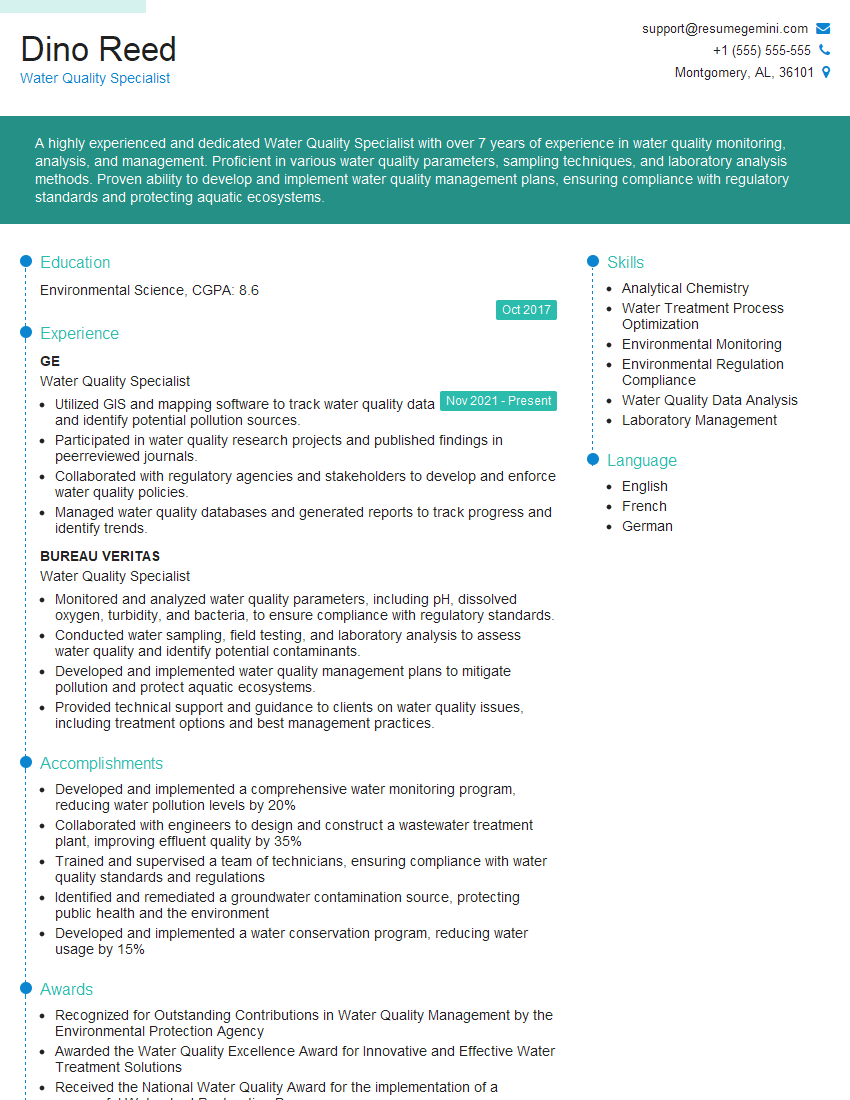
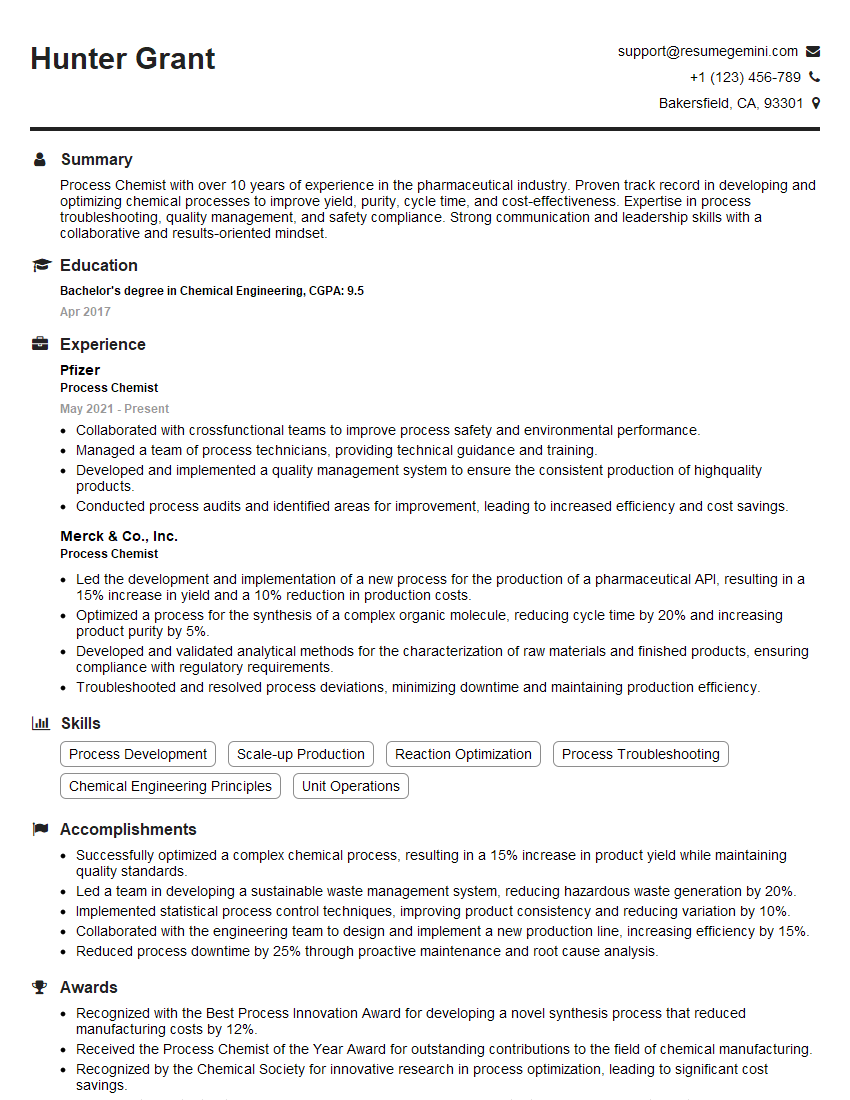
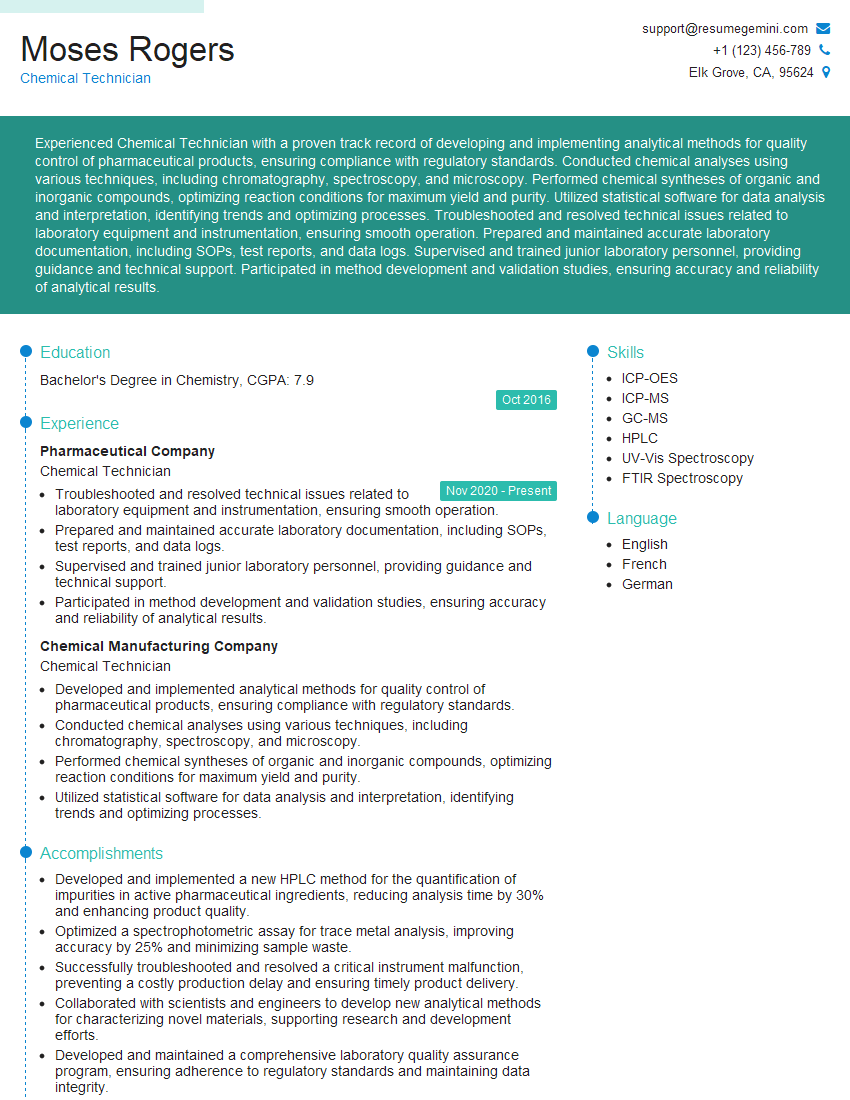
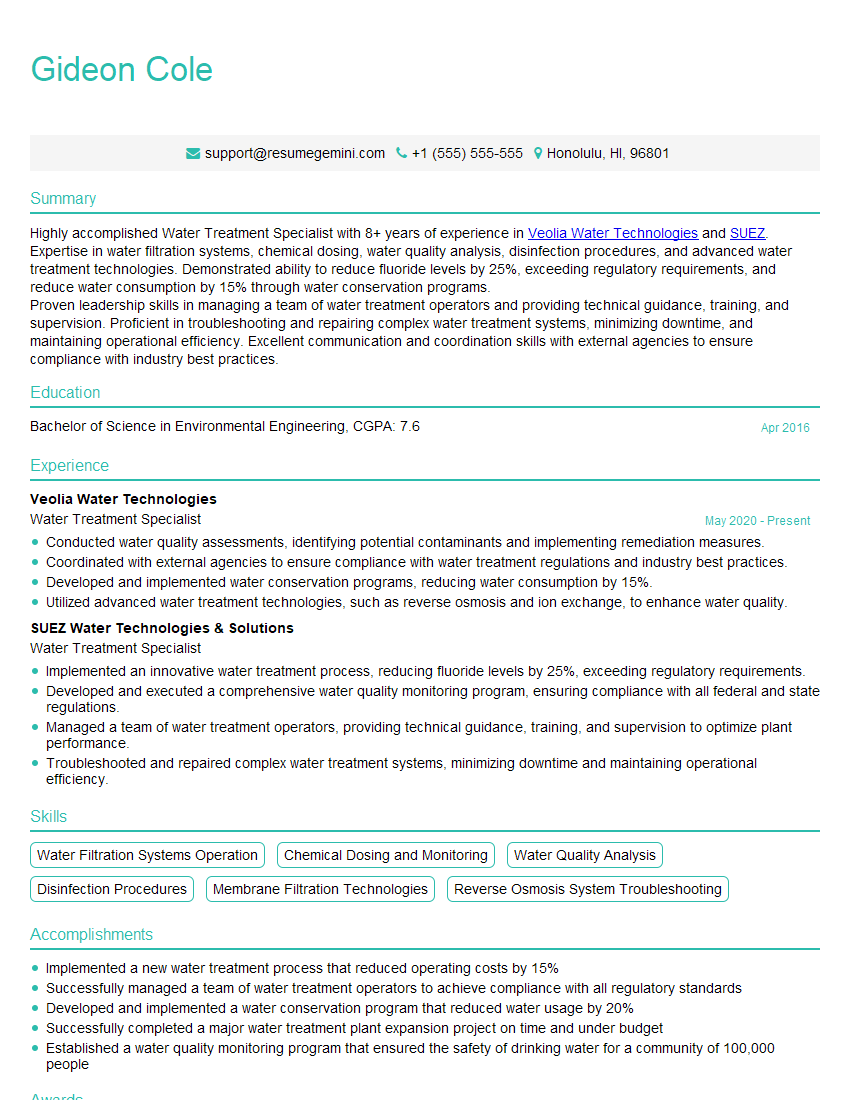
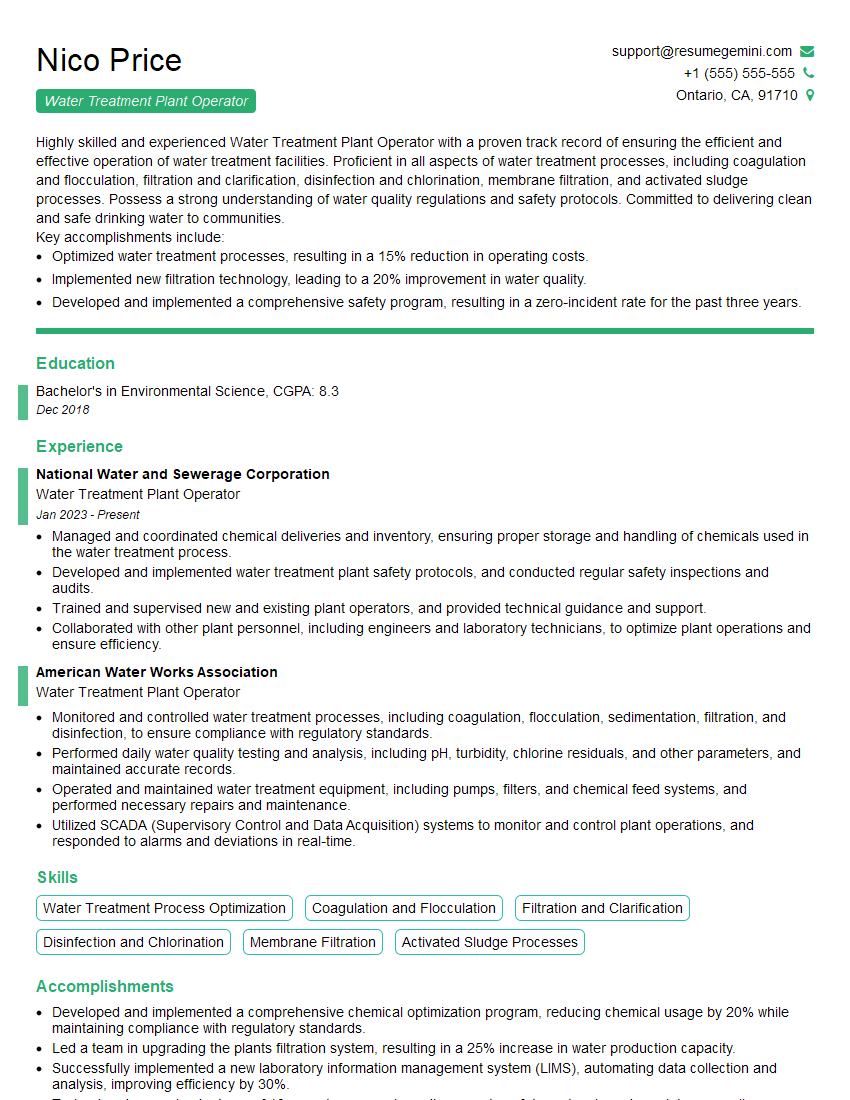
Mastering Water Treatment Chemical Handling is crucial for career advancement in this vital field. It demonstrates a commitment to safety, efficiency, and environmental responsibility – highly sought-after qualities by employers. To significantly boost your job prospects, create an ATS-friendly resume that highlights your skills and experience effectively. ResumeGemini is a trusted resource that can help you build a professional and impactful resume. Examples of resumes tailored to Water Treatment Chemical Handling are available, showcasing how to present your qualifications in the best possible light. Invest in your future – invest in a well-crafted resume with ResumeGemini.
Explore more articles
Users Rating of Our Blogs
Share Your Experience
We value your feedback! Please rate our content and share your thoughts (optional).
What Readers Say About Our Blog
Really detailed insights and content, thank you for writing this detailed article.
IT gave me an insight and words to use and be able to think of examples