Preparation is the key to success in any interview. In this post, we’ll explore crucial Welding Code and Standard Interpretation interview questions and equip you with strategies to craft impactful answers. Whether you’re a beginner or a pro, these tips will elevate your preparation.
Questions Asked in Welding Code and Standard Interpretation Interview
Q 1. Explain the difference between ASME Section IX and AWS D1.1.
ASME Section IX and AWS D1.1 are both crucial welding codes, but they serve different purposes. Think of it like this: ASME Section IX is the ‘qualification’ manual, focusing on welder and welding procedure qualification, ensuring consistent and reliable welds for pressure vessels, boilers, and other critical applications. AWS D1.1, on the other hand, is the ‘structural’ guide, providing detailed requirements for the welding of structural steel in buildings, bridges, and similar projects.
ASME Section IX is very specific about qualification testing and documentation. It dictates the types of tests required, the acceptance criteria, and the rigorous record-keeping process. It’s all about demonstrating that a welder and welding process can consistently produce welds that meet the stringent demands of high-pressure applications.
AWS D1.1 is broader in scope. While it does touch on qualification, it’s more concerned with the overall design, fabrication, and inspection of welded structural components. It covers details like joint design, weld geometry, and quality control measures applicable to structural steel applications. In essence, ASME Section IX ensures the welder’s capability, while AWS D1.1 ensures the quality of the structural weldment itself.
Q 2. Describe the process of creating a Welding Procedure Specification (WPS).
Creating a Welding Procedure Specification (WPS) is a systematic process that ensures consistent weld quality. It’s like baking a cake – you need the right recipe to get the desired outcome every time. First, you must identify the base materials involved – the specific type of steel, its thickness, and its properties. Next, you determine the welding process to be used (e.g., SMAW, GMAW, GTAW), the filler metal (the electrode or wire), and the joint design (e.g., butt weld, fillet weld). Then you define crucial parameters like preheat temperature, interpass temperature, welding current, voltage, travel speed, and shielding gas type and flow rate (where applicable).
Once these parameters are chosen, a test weld is performed under precisely controlled conditions, following the proposed WPS. The test weld is then inspected to ensure it meets the acceptance criteria outlined in the relevant welding code. If successful, the WPS becomes the ‘recipe’ for producing consistently acceptable welds. If the test weld fails, the parameters need adjustment and the testing is repeated until success is achieved. Finally, the WPS is fully documented including all the welding process parameters used and the results of the qualification testing.
Q 3. What are the essential elements of a Welding Procedure Qualification Record (WPQR)?
A Welding Procedure Qualification Record (WPQR) is the documented proof that a WPS produces acceptable welds. Think of it as the certificate of approval for your ‘recipe’. It contains essential elements that provide complete traceability and assurance of weld quality. These key elements include:
- Base materials identification: Precise identification of the metals being welded (chemical composition, mechanical properties).
- Welding process details: Specific welding process used (e.g., SMAW, GMAW), including all parameters as detailed in the WPS.
- Filler metal details: Complete information on the filler metal(s) employed.
- Test weld details: Description of the test weld configuration and dimensions (including joint type, thickness, and number of welds).
- Test results: Results of all required mechanical tests (tensile strength, bend tests), macro-examination, and visual examination of the test welds.
- Acceptance criteria: Reference to the relevant welding code standards and the acceptance criteria used in the assessment of the test weld.
- Date and signature of qualified personnel: Verification that the test was conducted and assessed appropriately.
Q 4. How do you interpret a welding symbol?
Interpreting a welding symbol is like understanding a blueprint for a weld. It provides all the necessary information about the weld geometry and requirements. The symbol is typically placed on a reference line, which is broken by a tail arrow indicating the location of the weld. Key components include:
- Reference Line: The horizontal line to which the symbol is attached.
- Arrow: Indicates the side of the joint to which the symbol applies.
- Basic Weld Symbols: Indicate the type of weld (e.g., fillet, groove, etc.).
- Dimensions: Specifications of the weld size (leg length for fillets, thickness for grooves).
- Process: Identifies the welding process to be used (e.g., SMAW, GMAW, GTAW, etc.). This is often placed in the tail or immediately below the reference line.
- Other specifications: May include symbols indicating special requirements such as finish or backing.
For example, a symbol with a basic weld symbol for a fillet weld, a leg length, and a designation for GMAW would clearly communicate the required weld type, size, and process.
Q 5. Explain the significance of preheating and post-weld heat treatment (PWHT).
Preheating and Post-Weld Heat Treatment (PWHT) are crucial for mitigating potential issues in welding, especially with thicker materials or materials prone to cracking. Preheating, performed before welding, reduces the cooling rate, preventing rapid temperature gradients that can cause cracking. This is especially vital with higher-strength steels and some alloyed materials where thermal stresses can lead to brittle fractures. Think of it like gradually warming up your engine – a gentler start prevents damage.
PWHT, conducted after welding, aims to relieve residual stresses introduced during the welding process. These stresses can lead to delayed cracking or distortion. PWHT involves heating the weldment to a specific temperature, holding it for a predetermined time, and then slowly cooling it. The controlled heating and cooling cycle helps to reduce these stresses and improve the overall weld quality and durability. It is a vital step in many critical applications to ensure long-term structural integrity.
Q 6. What are the common welding defects and their causes?
Common welding defects are like errors in a recipe, and understanding their causes is crucial for improving weld quality. Here are some common ones:
- Porosity: Small, gas-filled cavities in the weld. Caused by trapped gas during welding (poor shielding, moisture contamination, etc.).
- Undercut: A groove melted into the base material at the edge of the weld. Caused by excessive current, incorrect travel speed, or inappropriate welding angle.
- Incomplete Fusion/Lack of Fusion: The weld metal doesn’t fully fuse with the base material. Caused by insufficient heat input, contamination of the base metal, or poor joint preparation.
- Cracking: Breaks or fissures in the weld. Caused by hydrogen embrittlement, excessive restraint, or improper heat input.
- Slag Inclusion: Trapped slag within the weld. Caused by improper cleaning of the weld before subsequent passes.
- Spatter: Small droplets of metal ejected from the weld pool. Caused by excessive current, poor electrode/wire, or improper shielding.
Q 7. How do you identify and address undercut and porosity in welds?
Identifying and addressing undercut and porosity requires careful visual inspection and often more advanced methods. Undercut, characterized by a groove along the weld toe, can be detected visually. Its depth should be measured, and if it exceeds acceptable limits defined in the relevant welding code, the weld may require repair or rejection. Repair may involve grinding the undercut area before re-welding with careful control of the welding parameters to prevent recurrence.
Porosity, the presence of small gas holes, can be identified visually or with radiographic testing. Severity is determined by the size, frequency, and distribution of pores. If unacceptable, the weld may need to be repaired or replaced. In severe cases, the root cause such as moisture in the shielding gas or the base metal should be addressed before attempting any repair to ensure it is a successful one. Often, the best solution is prevention – addressing poor shielding, moisture content, and other factors causing the defect in the first place.
Q 8. What are the different types of weld joints and their applications?
Weld joints are the connections formed when two or more pieces of metal are joined together using a welding process. The type of joint chosen depends heavily on the application’s specific needs, including strength requirements, accessibility, and aesthetic considerations.
- Butt Joint: The most common, where the edges of two pieces are butted together. Think of joining two pipes end-to-end. Variations include square butt, bevel butt, and double bevel butt, each affecting weld penetration and ease of welding.
- Lap Joint: One piece overlaps another. Simpler to weld than a butt joint, but generally weaker. Often used when full penetration isn’t critical.
- T-Joint: One piece joins another at a right angle, like the intersection of a vertical beam and a horizontal beam. The strength and weld design (e.g., fillet weld or full penetration weld) vary greatly.
- Corner Joint: Two pieces are joined at a corner, often using a fillet weld. Think of welding the corner of a square metal frame.
- Edge Joint: The edges of two pieces are welded together, typically using a fillet weld. Useful when the thickness of the materials is relatively low.
- J, U, or V-Joints: These are prepared butt joints where the edges are beveled to allow for better penetration and create a stronger weld. The shape of the preparation (J, U, or V) affects the welding process and final weld strength. These are common in thicker materials.
Choosing the right joint type is a critical step in ensuring the structural integrity of a weldment. For example, a butt joint would be unsuitable for high-stress applications if not properly prepared and welded; a lap joint, though easier to weld, might not meet the required strength in a critical structural component. The selection process involves careful consideration of the factors mentioned earlier.
Q 9. Explain the principles of destructive and non-destructive testing (NDT) for welds.
Destructive and non-destructive testing (NDT) are crucial for ensuring the quality and safety of welds. Destructive testing involves sacrificing the sample to assess its properties, while NDT methods evaluate the weld without damaging it.
Destructive Testing (DT): DT provides precise data on the weld’s mechanical properties like tensile strength, yield strength, and ductility. Common DT methods include tensile testing, bend testing, hardness testing, and impact testing. A tensile test, for instance, involves pulling the weld sample until it breaks, measuring its strength up to failure. The results help verify if the weld meets specified requirements. However, DT is expensive and only performed on a small subset of welds since it destroys the sample.
Non-Destructive Testing (NDT): NDT allows for inspection of welds without causing damage. It aims to detect internal flaws like cracks, porosity, or lack of fusion that DT might miss. This is significantly more cost-effective as it allows for examination of the entire structure.
Q 10. Describe different NDT methods used in welding inspection (e.g., visual, UT, RT, MT, PT).
Several NDT methods are used in welding inspection, each with its strengths and limitations:
- Visual Inspection (VT): The simplest method, visually checking for surface defects like cracks, porosity, undercuts, or lack of fusion. It’s a crucial first step and often identifies problems that require further investigation.
- Ultrasonic Testing (UT): Uses high-frequency sound waves to detect internal flaws. A transducer transmits sound waves into the material, and reflections from discontinuities are analyzed to determine their size, location, and orientation. UT is excellent for detecting internal flaws, even in thick sections.
- Radiographic Testing (RT): Uses X-rays or gamma rays to penetrate the weld and create an image on a film or digital detector. RT is excellent for detecting internal flaws like porosity, cracks, and inclusions. The resultant radiograph shows the internal structure of the weld, allowing for detailed analysis.
- Magnetic Particle Testing (MT): Detects surface and near-surface flaws in ferromagnetic materials. A magnetic field is induced in the material, and magnetic particles are applied to the surface. Flaws disrupt the magnetic field, causing the particles to accumulate, making the flaws visible.
- Liquid Penetrant Testing (PT): Detects surface-breaking flaws in any material. A penetrant is applied to the surface, drawn into the flaws by capillary action, and then a developer is used to draw the penetrant out of the flaw, making it visible.
The selection of NDT method depends on factors like material type, weld geometry, accessibility, and the type of defects expected.
Q 11. What are the safety precautions for welding?
Welding poses several significant safety hazards, requiring strict adherence to safety protocols. These include, but aren’t limited to:
- Eye Protection: Welding produces intense ultraviolet (UV) and infrared (IR) radiation that can severely damage eyesight. Always use appropriate eye protection like shaded welding helmets or goggles.
- Respiratory Protection: Welding fumes contain harmful particles and gases. Using respirators or working in well-ventilated areas is crucial to prevent respiratory problems. The type of respirator depends on the type of welding and the materials used.
- Fire Prevention: Welding can easily ignite flammable materials. Remove all flammable materials from the welding area, and have fire extinguishers readily available.
- Skin Protection: Sparks and hot metal can cause burns. Wear appropriate protective clothing, including flame-resistant jackets, gloves, and footwear.
- Electrical Hazards: Welding equipment uses high currents that can cause electrical shocks. Ensure proper grounding and insulation to prevent accidents.
- Compressed Gas Safety: If using compressed gases, handle them carefully and ensure proper ventilation to prevent asphyxiation or explosions.
A thorough risk assessment before any welding operation is vital to identify and mitigate potential hazards.
Q 12. Explain the importance of proper personal protective equipment (PPE) in welding.
Proper Personal Protective Equipment (PPE) is non-negotiable in welding. It’s the first line of defense against the numerous hazards involved.
Without appropriate PPE, welders risk severe injury, including:
- Eye damage (UV/IR burns): Welding arc flash can cause blindness if not shielded.
- Respiratory illnesses (Welders’ Lung): Inhaling welding fumes without proper respiratory protection can cause serious lung diseases.
- Burns (Flash burns, thermal burns): Direct contact with molten metal or intense radiation results in severe burns.
- Skin damage (UV/IR burns, chemical burns): The intense heat and chemicals can cause severe skin damage.
Using appropriate PPE not only protects individual welders but also improves the overall safety of the welding environment. It demonstrates commitment to a safe working culture and minimizes the risks associated with a potentially dangerous process.
Q 13. How do you determine the correct filler metal for a specific application?
Selecting the correct filler metal is crucial for achieving strong, sound welds. The choice depends on several factors:
- Base Metal: The filler metal’s chemical composition must be compatible with the base metal being welded to ensure proper metallurgical bonding. Welding dissimilar metals requires special consideration.
- Welding Process: Different welding processes require filler metals with different properties. For example, shielded metal arc welding (SMAW) uses coated electrodes, while gas metal arc welding (GMAW) uses solid wires.
- Application: The intended use of the weld dictates the required mechanical properties (strength, toughness, ductility). High-stress applications might require a filler metal with higher tensile strength.
- Position: Welding position affects the filler metal’s flow characteristics. Vertical or overhead welding may require a filler metal with good wetting and fluidity.
- Environmental Conditions: The service environment can influence filler metal selection. Welding outdoors in corrosive environments may require a filler metal with corrosion resistance.
Consulting the appropriate welding codes and standards (like AWS D1.1 for structural steel) is essential for identifying the correct filler metal for specific applications. The wrong filler metal can lead to weak welds, cracking, or other issues that compromise structural integrity.
Q 14. What are the implications of incorrect weld parameters?
Incorrect weld parameters have serious consequences, ranging from minor cosmetic defects to catastrophic failures. These parameters, including amperage, voltage, travel speed, and shielding gas flow rate, need to be precisely controlled for optimal weld quality.
Implications of Incorrect Weld Parameters:
- Insufficient Penetration: If the amperage is too low or the travel speed is too high, the weld may not fully penetrate the base metal, resulting in a weak joint.
- Excessive Penetration (Burn-through): Conversely, excessive amperage or too slow a travel speed may cause excessive penetration or burn-through, weakening the joint.
- Porosity: Improper shielding gas flow or contaminated filler metal can lead to porosity (gas bubbles) within the weld, weakening the weld.
- Undercutting: Poor control of the arc can cause undercutting, a groove along the weld’s edge, which reduces the effective weld area and strength.
- Spatter: Excessive spatter indicates poor parameter control and can leave imperfections on the weld.
- Lack of Fusion: Insufficient heat or poor electrode manipulation can prevent the weld from fully fusing with the base metal, resulting in a weak joint prone to failure.
- Cracking: Incorrect parameters can create stresses within the weld, leading to cracks, especially in high-strength materials or low-temperature environments.
Monitoring and fine-tuning the weld parameters are crucial for ensuring consistent weld quality and meeting the required specifications for any given application. Understanding the effect of each parameter is paramount to producing strong, reliable, and safe welds.
Q 15. How do you interpret a weld map?
A weld map is a crucial document in any welding project. It’s essentially a blueprint that shows the location, type, and dimensions of all welds on a structure or component. Think of it as a detailed roadmap for the welders and inspectors. Interpreting a weld map involves understanding its symbology, which varies slightly depending on the standard used (like AWS D1.1 or ASME Section IX). Common elements include weld symbols indicating the weld type (e.g., fillet, groove, plug), size, length, and any special requirements like preheating or post-weld heat treatment. The map also references the relevant drawings for further detail on the part’s geometry. For example, a simple arrow pointing to a joint with a specific symbol might indicate a 6mm fillet weld on the arrow side. Another symbol near that same joint might indicate a specific backing material to be used for that weld. To accurately interpret a weld map, you must be familiar with the relevant welding codes and standards, the specific symbology used, and have a good understanding of the design of the structure itself. The map is essentially a key to understanding the complete welding procedure. Without it, the welder would lack proper instructions and inspection wouldn’t know what welds are meant to be there.
Career Expert Tips:
- Ace those interviews! Prepare effectively by reviewing the Top 50 Most Common Interview Questions on ResumeGemini.
- Navigate your job search with confidence! Explore a wide range of Career Tips on ResumeGemini. Learn about common challenges and recommendations to overcome them.
- Craft the perfect resume! Master the Art of Resume Writing with ResumeGemini’s guide. Showcase your unique qualifications and achievements effectively.
- Don’t miss out on holiday savings! Build your dream resume with ResumeGemini’s ATS optimized templates.
Q 16. What are the common causes of weld cracking?
Weld cracking, a serious defect, stems from several sources. Hydrogen cracking, a common culprit, arises from hydrogen trapped within the weld metal during welding. This hydrogen, originating from sources such as moisture in the electrode coating or the base metal, embrittles the weld, making it susceptible to cracking, especially under stress. Another significant cause is solidification cracking, occurring during the cooling phase of welding when the weld metal contracts. This contraction can be impeded, creating stress that can lead to cracking if the metal is not ductile enough. Similarly, residual stresses, left over after welding, can cause cracking if they exceed the yield strength of the material. These stresses can be exacerbated by factors like restraint, which restricts the metal’s ability to contract freely. Furthermore, improper welding techniques such as excessive heat input or improper preheat can contribute to cracking, as can material imperfections such as inclusions. Imagine a tightly wound spring – once the tension is released, it may snap. This is a simplified analogy of how residual stresses in a weld can cause cracking once the cooling process completes and the part is unloaded. Identifying the root cause requires careful investigation, examining the weld metal, base metal, and the welding procedure employed.
Q 17. Explain the concept of weld metal fatigue.
Weld metal fatigue is a progressive and localized structural damage that occurs when a weld is subjected to repeated cyclic loading. Think of bending a paperclip back and forth repeatedly; eventually, it will break. The same principle applies to a weld. Initially, microscopic cracks may form at points of stress concentration. With each loading cycle, these cracks propagate, slowly growing until they reach a critical size, resulting in failure. Factors influencing fatigue life include the amplitude and frequency of the loading, the weld geometry (stress concentrators such as undercuts or porosity), the material properties, and the presence of defects within the weld. For example, a weld with a sharp notch might fail much faster under cyclic loading than a smooth weld. Weld fatigue is a major concern in applications like bridges, aircraft, and pressure vessels, where components are subjected to repeated loads. Proper weld design, including minimizing stress concentrations and using fatigue-resistant materials, along with thorough nondestructive testing to identify initial defects, is crucial for extending fatigue life.
Q 18. How do you address discrepancies found during a welding inspection?
Addressing discrepancies during a welding inspection requires a systematic approach. The first step is to clearly document the discrepancy—its location, type, and severity—using photographs and detailed descriptions. Then, the root cause of the discrepancy should be investigated. This may involve reviewing the welding procedure, inspecting the welder’s qualifications, examining the equipment used, or analyzing the base materials. Once the cause is identified, a corrective action plan needs to be developed, addressing the issue and preventing similar occurrences in the future. This might include retraining welders, adjusting welding parameters, or implementing stricter quality control procedures. Depending on the severity of the discrepancy, repair or rework might be necessary. All corrective actions should be documented thoroughly and inspected to ensure effectiveness. Finally, if the discrepancy is significant, it is essential to inform the relevant stakeholders, potentially including the client or regulatory body. A well-documented process is vital—a methodical approach ensures traceability and compliance, minimizing risks and maintaining integrity.
Q 19. Describe your experience with different welding processes (e.g., MIG, TIG, SMAW).
My experience encompasses a wide range of welding processes. I’ve extensively used Shielded Metal Arc Welding (SMAW), commonly known as stick welding, for its versatility in various applications and its suitability for outdoor work, but it does have limitations in precision and speed. Gas Metal Arc Welding (MIG) has been a mainstay for its speed and efficiency, particularly in high-volume production environments, however, it’s less versatile than SMAW and less precise than TIG. I’ve also had considerable experience with Gas Tungsten Arc Welding (TIG), which excels in precision and produces high-quality welds; its use is often favored in applications demanding clean and aesthetic welds. Each process has its strengths and weaknesses, making it imperative to select the appropriate process based on the specific project requirements. For example, if I was working with a thin sheet metal, TIG would be my preferred option for precision, while for a heavy structural steel, SMAW or MIG might be more suitable for speed and simplicity.
Q 20. How do you ensure compliance with relevant welding codes and standards?
Ensuring compliance with welding codes and standards is paramount. It starts with selecting the appropriate code—like ASME Section IX for pressure vessels or AWS D1.1 for structural welding—based on the project’s requirements. Next, a comprehensive welding procedure specification (WPS) must be developed and qualified, detailing parameters like electrode type, preheat temperature, welding current, and travel speed. Welder qualification testing is crucial to ensure competence. Welders must demonstrate their ability to produce sound welds according to the WPS through practical tests and examination. Throughout the welding process, meticulous documentation and record-keeping are essential, including welder IDs, WPS used, inspection reports, and any deviations from the procedure. Regular audits and inspections ensure that all aspects of the welding operation are in compliance with the chosen code. It’s more than just following rules; it’s about building trust and ensuring structural safety, so attention to detail is crucial. For instance, I would always ensure that the WPS is correctly referenced and followed on any project, and I would always complete necessary documentation for traceability.
Q 21. What are the limitations of each NDT method?
Non-destructive testing (NDT) methods each have limitations. Radiographic Testing (RT) excels at detecting internal flaws but struggles with detecting surface cracks or flaws perpendicular to the X-ray beam. It’s also sensitive to the thickness of the material. Ultrasonic Testing (UT) is great for detecting both surface and subsurface flaws, providing information about flaw size and location, but operator skill and material homogeneity significantly influence its accuracy. Magnetic Particle Testing (MT) is ideal for surface and near-surface cracks in ferromagnetic materials, but it cannot detect internal flaws and requires a magnetizing force. Liquid Penetrant Testing (PT) is efficient for detecting surface-breaking cracks in any material, but it can’t find internal defects and requires careful cleaning. Each method is suited for particular applications, and understanding their limitations is crucial for selecting the right NDT strategy and interpreting the results accurately. For instance, if you need a quick method to check for surface cracks on a ferromagnetic component, MT is great, but if you need to inspect a complex internal weld in an aluminum part, then RT or UT would be more appropriate.
Q 22. How do you handle non-conformances during a welding project?
Handling non-conformances in welding is crucial for maintaining project integrity and safety. My approach follows a structured process. First, I identify the non-conformance, documenting it thoroughly with photographs and detailed descriptions. This includes the location, type of defect (e.g., porosity, undercut, crack), and the extent of the issue. Next, I determine the root cause using various tools like visual inspection, metallurgical analysis, and review of welding procedures. This step is crucial to prevent recurrence. Then, I assess the severity of the non-conformance, referencing the relevant welding code (e.g., AWS D1.1, ASME Section IX) to determine whether repair, rework, or rejection is necessary. A formal Non-Conformance Report (NCR) is issued, detailing the findings, proposed corrective actions, and the responsible parties. Finally, I implement the corrective action and verify its effectiveness through inspection and testing. For example, if a weld shows excessive porosity, we may need to investigate the welding parameters (voltage, amperage, travel speed), the cleanliness of the joint, and the shielding gas purity. Corrective actions might include adjustments to welding procedures, improved joint preparation, or operator retraining. All actions are documented and tracked until closure. Throughout the entire process, maintaining clear communication with stakeholders is vital.
Q 23. Explain the difference between a qualified and unqualified WPS.
A Welding Procedure Specification (WPS) is a document that outlines the parameters for a specific welding process. A qualified WPS has undergone rigorous testing and validation to demonstrate that it consistently produces welds meeting the required strength and quality standards, as per the relevant code. Think of it as a recipe that’s been proven to work. The qualification involves performing multiple test welds, subject to destructive and non-destructive testing (NDT) like tensile testing, bend testing, and radiography. The results are then compared against the code’s acceptance criteria. An unqualified WPS, on the other hand, hasn’t been formally qualified through testing. It might be based on experience or similar qualified WPSs, but lacks the documented proof of consistent performance. Using an unqualified WPS carries significant risk, as there’s no guarantee that the welds will meet the required standards. While an unqualified WPS might be used for non-critical applications with full understanding and acceptance of the risks, it’s generally best practice to qualify all WPSs, particularly in projects where safety and reliability are paramount.
Q 24. What are the key factors influencing weld strength and integrity?
Weld strength and integrity are influenced by a complex interplay of factors. These can be broadly categorized into material properties, welding process parameters, and joint design. Material properties include the base metal’s chemical composition, tensile strength, yield strength, and ductility. The welding process parameters significantly impact the weld’s microstructure and, consequently, its properties. These parameters include the type of welding process (e.g., GMAW, SMAW), current, voltage, travel speed, preheat temperature, and post-weld heat treatment (PWHT). Improper control of these parameters can lead to defects like porosity, cracking, or incomplete fusion, compromising weld integrity. Joint design also plays a critical role. Factors like joint type (butt, fillet, lap), joint fit-up, and the presence of any gaps or imperfections can influence the weld’s strength and its susceptibility to cracking. Finally, proper cleaning of the base metal prior to welding and the use of appropriate filler materials are also crucial for achieving satisfactory weld quality. For instance, using an unsuitable filler material can lead to dilution and reduction in the weld metal’s tensile strength. A thorough understanding of all these factors is crucial to achieve high-quality, reliable welds.
Q 25. How do you interpret the results of a mechanical test on a weldment?
Interpreting mechanical test results on a weldment requires careful attention to detail and a good understanding of the relevant welding codes. The results typically include tensile strength, yield strength, elongation, and reduction in area. These values are compared against the acceptance criteria specified in the welding code or project specifications. For example, if the tensile strength of a weld is significantly lower than the base metal’s strength or the code’s minimum requirement, it indicates a problem with the welding process or material. Similarly, low elongation values suggest brittleness, while low reduction in area indicates a lack of ductility. The results of bend tests, which assess the weld’s ductility and ability to withstand bending forces, are also crucial in evaluating weld integrity. Visual examination of the fracture surfaces after tensile testing can provide further insights into the failure mechanism, identifying potential issues such as cracking or lack of fusion. Documentation and analysis of all results are crucial to assess the weldment’s overall quality and conformance to the requirements.
Q 26. Describe your experience with different types of weld metal analysis.
My experience encompasses various weld metal analysis techniques. These include chemical analysis using methods like Optical Emission Spectroscopy (OES) or X-ray Fluorescence (XRF) to determine the chemical composition of the weld metal, ensuring it meets the specified requirements. I am also familiar with mechanical testing such as tensile testing, impact testing, and hardness testing to evaluate the weld’s mechanical properties. Metallurgical analysis, including microscopic examination (optical and electron microscopy) helps in identifying the microstructure, which is directly correlated with the weld’s properties and potential defects. Furthermore, I have experience with non-destructive testing (NDT) methods such as radiographic testing (RT), ultrasonic testing (UT), and liquid penetrant testing (PT) to detect internal and surface defects without damaging the weld. In a recent project involving high-strength steel welds, we used OES to verify the chemical composition of the weld metal to ensure the correct alloying elements were present in the required quantities. This was followed by tensile testing to confirm that the weld met the minimum strength requirements specified by the code. This multi-faceted approach ensures a thorough understanding of the weld’s quality and performance.
Q 27. What are your strategies for continuous improvement in welding quality control?
Continuous improvement in welding quality control is vital. My strategies focus on several key areas. Firstly, data-driven decision making is key. We meticulously track welding parameters, NDT results, and any non-conformances to identify trends and potential areas for improvement. This information is then used to refine welding procedures, operator training programs, and even the selection of materials. Secondly, regular internal audits help evaluate the effectiveness of our current quality control system. These audits identify weaknesses and allow us to proactively address potential problems before they escalate into major issues. Regularly updating our knowledge of the latest welding codes and standards, and incorporating new technologies like automated welding systems and advanced NDT techniques further strengthens our quality control processes. Finally, fostering a culture of continuous learning and improvement within the welding team is paramount. This includes providing ongoing training for welders, encouraging open communication about potential challenges, and implementing regular feedback mechanisms to facilitate continuous improvement. For instance, we recently implemented a new training program that incorporated virtual reality simulations to help welders practice their skills in a safe and controlled environment. This resulted in a significant reduction in welding defects and improved overall weld quality.
Key Topics to Learn for Welding Code and Standard Interpretation Interview
- Code Familiarization: Understanding the structure and organization of relevant welding codes (e.g., AWS D1.1, ASME Section IX). This includes navigating sections, identifying relevant clauses, and interpreting the terminology used.
- Welding Processes & Procedures: Deep understanding of various welding processes (e.g., GMAW, SMAW, GTAW) and the ability to explain how they relate to code requirements. This includes defining and explaining PQRs (Procedure Qualification Records) and WPSs (Welding Procedure Specifications).
- Material Specifications: Knowledge of different base materials and filler metals used in welding and how their properties influence code compliance. This includes understanding the impact of material selection on weld quality and strength.
- Weld Joint Design & Details: Ability to interpret weld symbols, understand different types of weld joints, and explain the importance of proper joint design for code compliance. This includes identifying potential weaknesses and proposing solutions.
- Non-Destructive Examination (NDE): Knowledge of common NDE methods (e.g., visual inspection, radiographic testing, ultrasonic testing) used to verify weld quality and adherence to code requirements. This should include understanding the limitations and applications of each method.
- Defect Identification & Correction: Ability to identify common welding defects, understand their causes, and explain acceptable repair procedures according to the relevant codes. This includes understanding the severity classifications of defects.
- Code Interpretation & Application: Practical experience applying code requirements to real-world welding scenarios. This involves problem-solving, critical thinking, and the ability to justify decisions based on code interpretation.
- Safety & Regulations: Understanding relevant safety regulations and best practices for welding operations. This includes understanding hazard identification and control, and personal protective equipment (PPE) requirements.
Next Steps
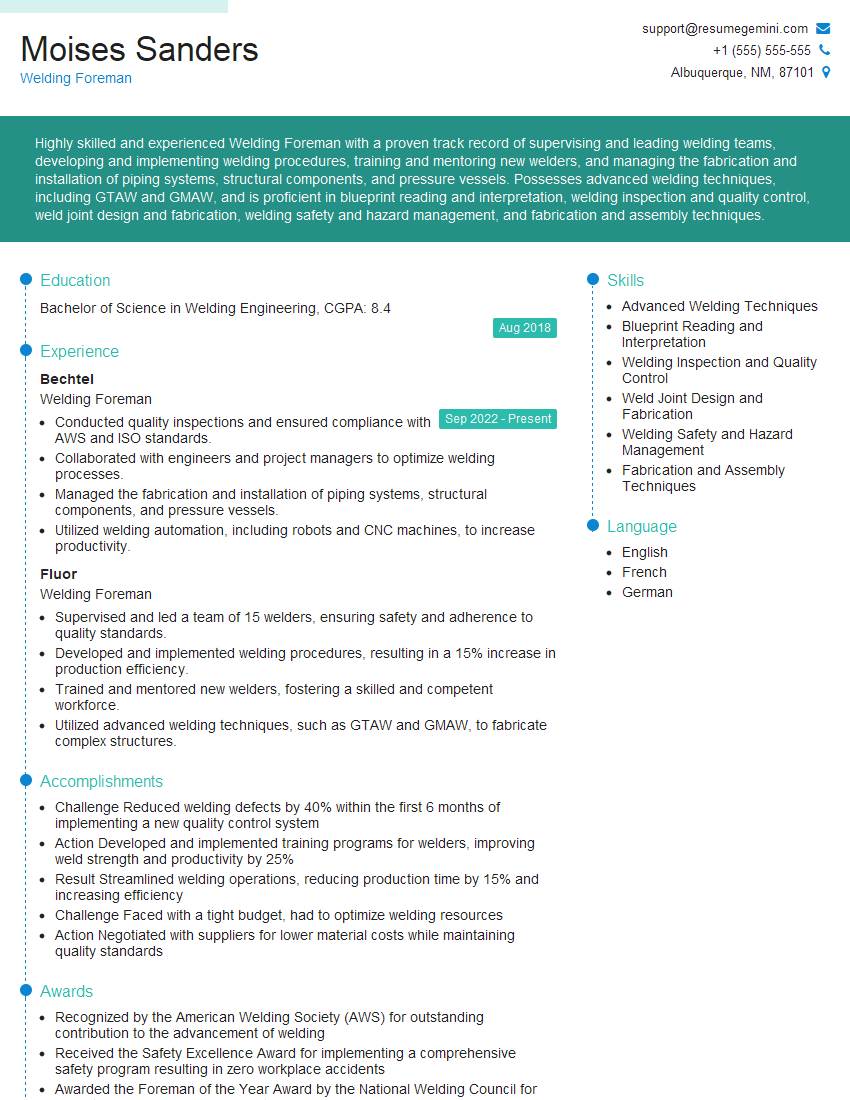
Mastering Welding Code and Standard Interpretation is crucial for career advancement in the welding industry, opening doors to higher-paying roles, specialized projects, and leadership opportunities. A strong understanding of these codes demonstrates your expertise and commitment to safety and quality. To maximize your job prospects, invest time in creating an ATS-friendly resume that highlights your skills and experience effectively. ResumeGemini is a trusted resource to help you build a professional and impactful resume. They provide examples of resumes tailored to Welding Code and Standard Interpretation, ensuring your application stands out.

Explore more articles
Users Rating of Our Blogs
Share Your Experience
We value your feedback! Please rate our content and share your thoughts (optional).
What Readers Say About Our Blog
Really detailed insights and content, thank you for writing this detailed article.
IT gave me an insight and words to use and be able to think of examples