The right preparation can turn an interview into an opportunity to showcase your expertise. This guide to Welding Planning interview questions is your ultimate resource, providing key insights and tips to help you ace your responses and stand out as a top candidate.
Questions Asked in Welding Planning Interview
Q 1. Explain the different types of welding processes and their applications.
Welding processes are diverse, each suited to specific materials and applications. Think of them like different tools in a toolbox, each with its own strengths. Here are some key examples:
- Shielded Metal Arc Welding (SMAW): Also known as stick welding, this is a versatile process using a consumable electrode coated with flux. It’s simple, portable, and ideal for outdoor work or where electricity is limited. For example, it’s frequently used in construction for joining structural steel.
- Gas Metal Arc Welding (GMAW): Often called MIG welding, this uses a continuous wire electrode fed into the weld pool with a shielding gas (usually Argon or CO2). It’s fast, efficient, and produces high-quality welds. Automotive manufacturing extensively uses GMAW for its speed and consistency.
- Gas Tungsten Arc Welding (GTAW): Also known as TIG welding, this process uses a non-consumable tungsten electrode and an inert shielding gas (usually Argon). It’s known for its precision and ability to weld thin materials cleanly. This technique is perfect for applications needing high aesthetic quality, such as welding stainless steel in food processing equipment.
- Flux-Cored Arc Welding (FCAW): This process utilizes a tubular electrode filled with flux. It’s self-shielding, meaning it doesn’t require a separate shielding gas, which is advantageous in windy or outdoor conditions. This is commonly used for pipelines or other large-scale construction projects.
The choice of process depends on factors like material thickness, joint design, accessibility, and required weld quality. Each process has its own set of advantages and limitations, requiring careful consideration for optimal results.
Q 2. Describe your experience with welding procedure specifications (WPS).
Welding Procedure Specifications (WPS) are the backbone of consistent weld quality. I have extensive experience in developing, qualifying, and implementing WPSs for various projects. Think of a WPS as a detailed recipe for a perfect weld. It outlines every parameter needed to ensure a repeatable, high-quality outcome.
My experience includes:
- Developing WPSs: I’ve created numerous WPSs, accounting for material types, thicknesses, joint designs, welding processes, and other variables. This often involves performing test welds, carefully analyzing results, and adjusting parameters until optimal settings are achieved.
- WPS Qualification: I’ve personally overseen and documented the qualification testing required to validate a WPS. This involves creating test coupons, performing welds according to the specified parameters, and then conducting detailed mechanical testing and visual inspection to ensure the welds meet the required standards.
- WPS Implementation: After qualification, I’ve trained welders and ensured consistent adherence to the WPS during project execution. This involves regular monitoring, quality checks, and record-keeping to maintain quality control throughout the project.
I’m familiar with various international welding codes and standards, including AWS D1.1 (Structural Welding Code) and ISO 9606 (Qualification test of welders). My thorough understanding of WPS ensures consistent, safe, and reliable welding procedures across all my projects.
Q 3. How do you determine the required welding consumables for a project?
Selecting the right welding consumables is crucial for achieving optimal weld quality. It’s not just about picking the first electrode you see; it’s about careful consideration. My process involves several steps:
- Material Selection: The base material dictates the type of filler metal (electrode or wire) needed. For instance, welding stainless steel requires a stainless steel filler metal to maintain corrosion resistance.
- Welding Process: The chosen welding process (SMAW, GMAW, etc.) directly influences the type of consumable required. A MIG welder needs a wire feed suitable for the process and material.
- Joint Design: Different joint designs may require specific consumables or techniques to achieve complete penetration and proper fusion.
- Weld Strength Requirements: The application’s strength requirements often define the necessary filler metal properties, such as tensile strength and toughness.
- Manufacturer Specifications: Always refer to the manufacturer’s specifications and recommendations for the correct consumables for your chosen base material, process, and application.
For instance, on a recent project involving the joining of high-strength low-alloy steel plates, we selected a filler metal with matching properties to ensure adequate weld strength and durability. I always emphasize careful selection to avoid costly mistakes or compromises in quality.
Q 4. What are the key factors to consider when planning welding sequences?
Welding sequence planning is like strategically orchestrating a complex dance. Incorrect sequencing can lead to warping, cracking, or other defects. Key factors to consider include:
- Heat Input: Avoid concentrating heat in one area, which can cause excessive distortion. Distribute the heat evenly by planning weld passes strategically.
- Joint Design: The sequence should accommodate the specific geometry of the joints, starting with critical welds and progressing to less critical areas. For example, in a T-joint, the vertical weld usually precedes the horizontal.
- Material Properties: Different materials react differently to heat. Preheating or interpass temperatures might be necessary for certain materials to avoid cracking.
- Distortion Control: Weld sequences can be designed to minimize distortion by balancing heat input and strategically placing welds to counteract warping forces. This might involve a specific order to allow cooling and stress relief before proceeding.
- Access and Constraints: The sequence must consider accessibility to weld locations. Sometimes, a particular order is dictated by the physical limitations of the welding position.
For example, in constructing a large pressure vessel, we carefully planned the welding sequence to minimize distortion by alternating between different sections, allowing for controlled cooling and reducing overall stress.
Q 5. How do you ensure the quality and safety of welding operations?
Ensuring quality and safety in welding is paramount. My approach integrates several measures throughout the entire process:
- Pre-weld Inspection: Thorough inspection of base materials for defects, proper cleaning, and preparation to avoid contamination.
- Qualified Welders: Employing only certified welders who have demonstrated proficiency in the specific welding processes and materials involved. Regular competency testing is crucial.
- Adherence to WPS: Strict adherence to approved WPSs, consistently maintaining the welding parameters throughout the process.
- In-process Inspection: Regular monitoring of welds during fabrication, including visual inspection, dimensional checks, and non-destructive testing (NDT) such as radiography or ultrasonic testing when required.
- Post-weld Inspection: Comprehensive inspection of completed welds, including dimensional checks, visual inspection, and NDT methods as per project requirements. This often includes mechanical testing to ensure strength requirements are met.
- Safety Procedures: Implementing and strictly enforcing safety protocols, including appropriate personal protective equipment (PPE), ventilation, fire prevention measures, and handling of hazardous materials.
For example, we recently implemented a real-time monitoring system on a major pipeline project to track weld parameters, enabling immediate action in case of any deviations from the WPS. This proactive approach prevented potential flaws and ensured the highest quality and safety standards.
Q 6. Explain your experience with different welding joint designs.
Welding joint design is critical for structural integrity and weldability. My experience encompasses a wide range of joint types:
- Butt Joint: Joining two pieces of material end-to-end. Different variations include square butt, bevel butt, and double bevel butt, chosen depending on thickness and accessibility.
- Lap Joint: Overlapping two pieces. Simple to weld but often less strong than other options.
- T-Joint: Joining two pieces at a right angle. The configuration affects accessibility and the possibility of weld defects.
- Corner Joint: Joining two pieces at a corner, often used in box structures.
- Edge Joint: Joining the edges of two overlapping pieces.
The choice of joint depends on several factors, including the material type, thickness, load requirements, accessibility, and the desired weld appearance. For instance, a double bevel butt joint would be preferred for thicker materials to ensure proper penetration and weld quality compared to a simple square butt joint.
My experience also extends to optimizing joint designs to improve weldability, reduce distortion, and achieve optimal structural performance. I frequently utilize FEA (Finite Element Analysis) to simulate weld stress distribution and optimize joint designs for complex structures.
Q 7. How do you manage welding project timelines and budgets?
Managing welding project timelines and budgets requires a systematic approach. It’s a balancing act of efficiency and quality.
My approach includes:
- Detailed Project Planning: Thorough planning, including accurate estimations of welding time per joint, considering factors like joint complexity and welder proficiency.
- Resource Allocation: Efficient allocation of welders, equipment, and consumables to ensure timely completion without compromising quality.
- Critical Path Analysis: Identifying critical tasks in the project schedule and focusing resources to avoid delays. This often includes buffer times for unexpected issues.
- Budget Control: Precise budgeting of consumables, labor costs, and equipment rentals. Regular monitoring of expenses to prevent overruns.
- Progress Tracking: Using project management software and regular progress reviews to identify potential problems and implement corrective actions early.
- Risk Management: Identifying and mitigating potential risks that could affect timelines or budgets, such as material delays or equipment malfunctions.
For example, on a recent project with a tight deadline, I utilized a Kanban system to manage welder workloads and ensure efficient resource allocation. This resulted in project completion ahead of schedule and within budget.
Q 8. Describe your experience with different welding codes and standards (e.g., AWS, ASME).
My experience encompasses a wide range of welding codes and standards, primarily AWS (American Welding Society) and ASME (American Society of Mechanical Engineers). I’m proficient in interpreting and applying codes like AWS D1.1 (Structural Welding Code – Steel) and ASME Section IX (Welding and Brazing Qualifications). Understanding these codes isn’t just about reading the text; it’s about comprehending the underlying principles of weld integrity and safety. For instance, AWS D1.1 dictates specific requirements for weld joint design, welder qualification, and inspection procedures for steel structures. ASME Section IX, on the other hand, focuses heavily on the qualification of welding procedures and welders for pressure vessels and piping systems. My work has involved projects adhering to both these standards, requiring a nuanced understanding of their specific requirements and how they might overlap or differ depending on the application. I have also worked with other relevant standards depending on the project, including those related to specific materials such as stainless steel or aluminum.
For example, in one project involving offshore platform construction, we strictly adhered to AWS D1.1 and its supplementary standards for the weld quality assurance. In another project involving the fabrication of pressure vessels, ASME Section IX was the governing standard, dictating not just welding procedures but also the non-destructive examination (NDE) methods to be employed. My ability to adapt and correctly interpret the relevant code for each project has been crucial to ensuring successful project completion and compliance.
Q 9. How do you handle welding defects and non-conformances?
Handling welding defects and non-conformances requires a systematic approach. It begins with thorough inspection during and after welding. We use various Non-Destructive Examination (NDE) methods, like visual inspection, radiographic testing (RT), ultrasonic testing (UT), and magnetic particle testing (MT), to detect defects. Upon finding a defect, I follow a documented procedure, starting with identifying the severity and type of defect. This is critical because some minor imperfections might be acceptable while others require repair or rejection of the weld. We then refer back to the relevant welding code to ascertain the acceptability criteria. For example, a small porosity might be acceptable according to the code, whereas a significant crack would necessitate immediate corrective action.
The next step involves documenting the defect, including its location, size, type, and associated weld number. Then, I determine the most appropriate corrective action. This could range from grinding out the defect and re-welding (repair) to completely replacing the defective section. Post-repair, we conduct further NDE to verify the effectiveness of the repair. The entire process is meticulously documented, including all decisions made and actions taken. This documentation serves as an audit trail to ensure traceability and to aid in future improvements to welding procedures to minimize future defects.
Q 10. Explain your experience with welding inspection and testing methods.
My experience with welding inspection and testing methods is extensive. I’m proficient in various NDE techniques, including visual inspection (VT), radiographic testing (RT), ultrasonic testing (UT), magnetic particle testing (MT), and liquid penetrant testing (PT). Each method serves a different purpose and is selected based on the type of weld, material, and the potential types of defects expected. For instance, RT is excellent for detecting internal flaws like porosity or cracks in thicker materials, while UT is more effective for detecting flaws in thinner materials or components with complex geometries.
Beyond the actual testing, I understand the importance of interpreting the results accurately. A radiographic image, for example, requires careful analysis to determine the severity and nature of any detected defects. This interpretation needs to be done in accordance with the relevant acceptance criteria defined in the applicable welding code or specification. I’m also experienced in preparing inspection reports and documenting the results in a clear and concise manner.
Furthermore, my expertise extends to destructive testing methods, such as tensile testing and bend testing, to validate the mechanical properties of the welds. This allows us to verify that the weld has achieved the desired strength and ductility.
Q 11. How do you plan for and manage welding personnel and resources?
Planning and managing welding personnel and resources is a critical aspect of successful welding projects. It involves several key steps: First, I assess the project requirements, including the scope of work, welding processes required, and the estimated welding time. Based on this assessment, I determine the number and skill level of welders needed. This often includes considering welder certifications and qualifications to ensure compliance with the relevant welding codes and standards.
Next, I plan the resource allocation, which includes selecting the appropriate welding equipment, consumables (electrodes, filler wires, gases), and safety equipment. This also involves scheduling welder work assignments, considering factors like welder availability, skill sets, and the complexity of the welding tasks. I also ensure that all welders receive appropriate safety training and understand the project-specific safety procedures.
Throughout the project, I monitor welder productivity and track material usage to maintain efficiency and manage costs. Regular meetings with the welding team are conducted to address any challenges, communicate changes, and ensure everyone is aligned with the project goals. Efficient resource allocation and effective communication are crucial for completing projects on time and within budget.
Q 12. What are the common safety hazards associated with welding, and how do you mitigate them?
Welding presents numerous safety hazards, including: arc flash, burns, ultraviolet radiation exposure, fire hazards from hot sparks, and inhalation of harmful fumes. Mitigating these hazards requires a multi-pronged approach. Firstly, all welders must be properly trained and equipped with the necessary Personal Protective Equipment (PPE), including welding helmets with appropriate shade numbers, gloves, protective clothing, and respiratory protection. Secondly, the welding area must be properly prepared and secured. This includes ensuring adequate ventilation to remove harmful fumes, the use of fire blankets to prevent fire spread, and clearly marked safety zones to prevent unauthorized access.
Furthermore, I ensure compliance with all relevant safety regulations and implement safe work practices. This includes implementing lockout/tagout procedures when working on energized equipment, conducting regular safety inspections of the work area and equipment, and enforcing the proper use of PPE. A robust safety program also includes a comprehensive emergency response plan, training employees on how to react to fire and electrical hazards and providing access to emergency equipment such as fire extinguishers and eye wash stations.
Regular safety meetings and training sessions reinforce safe work practices and keep the hazards top-of-mind. A proactive and thorough safety approach is crucial for creating a safe work environment and preventing accidents.
Q 13. Describe your experience with welding automation and robotics.
My experience with welding automation and robotics includes the implementation and management of robotic welding systems in several projects. This involves programming robots to perform complex welding tasks with high precision and repeatability, reducing human error and improving overall quality. I’m familiar with various robotic welding systems and their associated programming languages, and I’m able to integrate them into existing production processes. This has significantly increased productivity and improved weld consistency in many applications.
Specifically, I’ve worked with robotic systems for both arc welding and resistance spot welding. In one instance, we implemented a robotic system for welding car chassis components which resulted in a significant reduction in production time and a substantial improvement in weld quality. The programming of these robots requires a detailed understanding of both the welding process and the robot’s kinematics and dynamics. This involves careful planning of robot movements, weld parameters, and sensor integration to ensure a smooth and efficient welding process.
Moreover, I’m involved in the selection and maintenance of robotic welding systems, ensuring optimal performance and minimal downtime. This includes regular maintenance schedules, troubleshooting any issues that might arise and ongoing evaluation of the system’s efficiency and performance.
Q 14. How do you optimize welding processes for efficiency and cost-effectiveness?
Optimizing welding processes for efficiency and cost-effectiveness requires a holistic approach. It starts with selecting the most appropriate welding process for the specific application. This decision considers factors such as material type, joint design, required weld quality, and production volume. For example, for high-volume production of identical parts, robotic welding may be the most cost-effective solution, whereas for low-volume, complex fabrications, manual welding might be more suitable.
Next, careful consideration is given to the selection of welding parameters, such as current, voltage, and travel speed. These parameters are optimized to achieve the desired weld quality while minimizing weld time and material usage. This often involves using data-driven approaches, such as Design of Experiments (DOE), to systematically investigate the effect of different parameters on the weld quality. Process monitoring tools, such as real-time voltage and current monitoring, help maintain consistent weld quality.
Furthermore, efficient material handling and waste reduction are essential for cost optimization. This includes minimizing filler material waste, implementing proper pre and post-weld cleaning procedures, and optimizing the layout of the welding area to reduce material movement. Careful selection of consumables and the effective management of inventories also play a crucial role. Regular analysis of the welding process and implementation of continuous improvement initiatives are key to achieving long-term efficiency and cost savings.
Q 15. Explain your experience with welding simulation and modeling software.
My experience with welding simulation and modeling software is extensive. I’ve worked extensively with software like ANSYS, Autodesk Simulation Mechanical, and specialized welding simulation packages. These tools allow us to predict weld pool behavior, residual stresses, and distortion before actual welding takes place. This is crucial for optimizing weld parameters and preventing defects. For example, in a recent project involving a large pressure vessel, we used ANSYS to model the thermal cycles during welding. This helped us identify potential areas of high stress concentration and adjust the welding sequence to minimize distortion and ensure the vessel met its stringent pressure requirements. We were able to prevent costly rework by predicting and mitigating potential problems upfront.
Beyond predicting defects, these simulations also help in optimizing the welding process itself. By experimenting with different parameters within the simulation, we can determine the optimal settings for weld penetration, bead geometry, and heat input, leading to improved weld quality and reduced material waste. The software allows us to virtually ‘test’ different scenarios before implementing them in the real world, significantly reducing the risk of failure and increasing overall efficiency.
Career Expert Tips:
- Ace those interviews! Prepare effectively by reviewing the Top 50 Most Common Interview Questions on ResumeGemini.
- Navigate your job search with confidence! Explore a wide range of Career Tips on ResumeGemini. Learn about common challenges and recommendations to overcome them.
- Craft the perfect resume! Master the Art of Resume Writing with ResumeGemini’s guide. Showcase your unique qualifications and achievements effectively.
- Don’t miss out on holiday savings! Build your dream resume with ResumeGemini’s ATS optimized templates.
Q 16. How do you ensure compliance with regulatory requirements for welding?
Ensuring compliance with regulatory requirements is paramount in welding. This involves meticulous adherence to codes and standards such as ASME Section IX, AWS D1.1, and relevant local regulations. My approach involves several key steps:
- Identifying Applicable Codes: The first step is always determining which codes and standards apply to the specific project, considering the type of weld, material, and intended application.
- Procedure Qualification: We develop and qualify Welding Procedure Specifications (WPS) according to the relevant codes. This involves rigorous testing to ensure the welding process consistently produces welds meeting the required standards. These WPS documents are then used as guidelines by welders.
- Welder Qualification: Welders must be qualified to perform the specific welds according to the WPS. This involves practical testing to demonstrate their proficiency and adherence to the qualified procedures.
- Inspection and Documentation: Thorough inspection of welds during and after completion is crucial. This includes visual inspection, non-destructive testing (NDT) such as radiography or ultrasonic testing, and maintaining detailed records of all procedures, inspections, and test results.
- Continuous Monitoring: Regular audits and reviews of welding procedures and welder performance help maintain compliance and identify any areas needing improvement.
Failing to adhere to these regulations can lead to serious consequences, including structural failure, safety hazards, and legal repercussions. My commitment is to prioritize safety and compliance throughout the entire process.
Q 17. How do you develop and implement welding quality control plans?
Developing and implementing welding quality control plans is a systematic process designed to ensure the quality of welds meets project specifications and regulatory requirements. It’s not just about detecting defects; it’s about preventing them in the first place. My approach is proactive and involves several phases:
- Planning Phase: This begins with a thorough review of project specifications, material selection, welding process requirements, and applicable codes. Based on this, we develop a detailed quality control plan, outlining inspection and testing procedures.
- Implementation Phase: During welding, we implement the pre-defined procedures. This includes regular monitoring of welder performance, process parameters, and environmental conditions. Visual inspections are performed at every stage.
- Inspection and Testing Phase: A comprehensive inspection program is essential. This often involves non-destructive testing (NDT) methods like radiography, ultrasonic testing, or magnetic particle inspection to detect internal and surface flaws. The frequency and types of NDT are dictated by the criticality of the weld.
- Documentation and Reporting Phase: Meticulous record-keeping is critical. This includes maintaining welder qualification records, WPSs, inspection reports, and NDT results. These records serve as proof of compliance and are essential for traceability.
- Corrective Action Phase: If defects are found, a thorough investigation is launched to determine their root cause. Corrective actions are then implemented to prevent similar issues from recurring, and these actions are carefully documented.
For example, in a recent pipeline project, our detailed quality control plan led to the early detection of a minor porosity issue. By immediately addressing the root cause (a slight variation in shielding gas flow), we prevented a potentially catastrophic failure.
Q 18. How do you manage welding project documentation and record-keeping?
Effective management of welding project documentation and record-keeping is crucial for ensuring traceability, compliance, and project success. I utilize a combination of digital and physical methods for optimal organization and accessibility. Our system involves:
- Centralized Database: A digital database is used to store all relevant documents, including WPSs, welder qualifications, material certifications, inspection reports, NDT results, and any corrective action reports. This ensures easy access and retrieval of information.
- Version Control: A version control system is implemented to track revisions and updates to documents, ensuring everyone works with the most current version.
- Secure Storage: Both digital and physical documents are securely stored and backed up regularly to protect against data loss.
- Clear Filing System: A well-defined filing system allows for quick and efficient retrieval of information. Documents are categorized and indexed using a consistent naming convention.
- Regular Audits: Periodic audits ensure the completeness and accuracy of the documentation.
This systematic approach to documentation minimizes the risk of errors, facilitates smooth project execution, and ensures compliance with all relevant regulations. It also proves invaluable during audits or potential legal proceedings.
Q 19. How do you handle changes and modifications to welding plans?
Handling changes and modifications to welding plans requires a systematic and controlled approach to avoid compromising the integrity of the welds. The process usually involves:
- Formal Change Request: All changes are initiated through a formal change request, clearly documenting the reason for the change, the proposed modifications, and their potential impact.
- Impact Assessment: A thorough impact assessment is carried out to evaluate the potential consequences of the change on the weld quality, safety, and compliance with relevant codes and standards.
- Engineering Review: The proposed changes are reviewed by qualified engineers to ensure they are technically sound and feasible. This often involves updating the WPS and requalifying the welding procedure if necessary.
- Documentation Update: All relevant documents, including the WPS, drawings, and inspection plans, are updated to reflect the approved changes.
- Communication: All relevant parties, including welders, inspectors, and project management, are informed of the changes and their implications.
Failing to properly manage changes can lead to inconsistencies, defects, and ultimately, project failure. A robust change management system ensures that all modifications are thoroughly vetted, implemented correctly, and properly documented.
Q 20. Describe your experience with different types of welding materials.
My experience encompasses a wide range of welding materials, including various steels (carbon steel, low alloy steel, stainless steel, high-strength low-alloy steel), aluminum alloys, and nickel alloys. Understanding the properties of each material is crucial for selecting the appropriate welding process, filler metal, and parameters to achieve high-quality welds. For instance:
- Carbon Steel: Often welded using Shielded Metal Arc Welding (SMAW) or Gas Metal Arc Welding (GMAW) with appropriate filler metals. The focus is on achieving good penetration and minimizing the risk of cracking.
- Stainless Steel: Requires specialized welding processes and filler metals to prevent sensitization and intergranular corrosion. Gas Tungsten Arc Welding (GTAW) is frequently used for its superior control and cleaner welds.
- Aluminum Alloys: Known for their high thermal conductivity, requiring specialized techniques and filler metals to achieve proper fusion and minimize porosity. GTAW is commonly employed.
- High-Strength Low-Alloy Steels: Often used in critical applications and require careful control of the welding parameters to minimize the risk of hydrogen cracking. Preheating and post-weld heat treatment may be necessary.
Knowledge of material properties, including their chemical composition, mechanical strength, and susceptibility to various types of defects, is essential for selecting the appropriate welding process and ensuring the final weld meets the required performance criteria.
Q 21. How do you select the appropriate welding equipment for a given project?
Selecting the appropriate welding equipment is critical for achieving high-quality welds efficiently and safely. The choice depends on several factors:
- Material Type: Different materials require different welding processes and equipment. For example, aluminum welding often necessitates GTAW equipment due to its high thermal conductivity.
- Weld Joint Design: The geometry of the weld joint dictates the accessibility and the required welding process. For complex geometries, robotic welding may be more suitable.
- Thickness of Material: Thicker materials require higher power and penetration capabilities, leading to the choice of specific GMAW or submerged arc welding (SAW) equipment.
- Project Scale: Large-scale projects might necessitate automated or robotic welding systems for increased efficiency and consistency.
- Environmental Conditions: Welding outdoors may require equipment with better protection against environmental factors like wind and rain.
- Safety Requirements: Equipment must meet all safety standards and regulations to ensure the safety of welders and others involved in the project.
For instance, a project involving thin stainless steel sheets might call for GTAW equipment with precise control over the arc, while a large steel structure might benefit from the higher deposition rates of GMAW or SAW. A thorough understanding of the project requirements and the capabilities of various equipment is crucial for making the right selection.
Q 22. Explain your experience with pre-qualification of welding procedures.
Pre-qualifying welding procedures is crucial for ensuring consistent, high-quality welds. It involves a documented process to demonstrate that a specific welding procedure, using particular materials, equipment, and welder qualifications, will consistently produce welds meeting the required standards. This isn’t just about ticking boxes; it’s about guaranteeing the structural integrity and safety of the final product.
My experience encompasses developing and implementing WPSs (Welding Procedure Specifications) according to relevant codes like ASME Section IX or AWS D1.1. This involves defining parameters like the base material, filler metal, welding process (e.g., GMAW, SMAW, GTAW), preheat temperature, interpass temperature, and post-weld heat treatment. We then perform test welds, which are meticulously examined through visual inspection, radiography (if needed), and mechanical testing (e.g., tensile, bend tests) to verify the procedure’s effectiveness. These results are documented and submitted for approval, often to a third-party inspection agency. For example, in a recent project involving the fabrication of pressure vessels, we developed a WPS for GMAW of stainless steel, which was subsequently approved after successful testing, ensuring the safety and reliability of the finished vessels.
A successful WPS translates into significant benefits: reduced rework, enhanced productivity, improved quality, and increased confidence in the integrity of the welds, reducing the potential for costly failures down the line.
Q 23. How do you assess and manage welding-related risks?
Assessing and managing welding-related risks is paramount for safety and project success. My approach involves a systematic hazard identification and risk assessment process. This typically begins with a thorough review of the project specifications, including the materials involved, the welding processes to be used, and the environment where welding will take place.
- Hazard Identification: This involves identifying potential hazards such as electric shock, burns, fire, fume inhalation, and potential for structural failure. We utilize tools like HAZOP (Hazard and Operability Study) and Job Safety Analysis (JSA) to systematically explore potential problems.
- Risk Assessment: Once hazards are identified, we assess their likelihood and severity. This helps prioritize risks and allocate resources effectively. For example, the risk of electric shock from faulty equipment is rated high because the likelihood and potential severity are both significant.
- Risk Control: This is the crucial step involving implementing control measures to mitigate the identified risks. Examples include implementing proper lockout/tagout procedures for electrical equipment, providing appropriate personal protective equipment (PPE) such as welding helmets, gloves, and protective clothing, ensuring adequate ventilation to control fumes, and implementing fire safety measures.
- Monitoring and Review: Regular monitoring and review of the risk control measures are essential to ensure their effectiveness. This includes regular inspections of equipment, PPE, and work areas, as well as conducting safety training and toolbox talks.
Think of it like building a house – you wouldn’t start without a blueprint and safety precautions. Similarly, proactive risk management in welding is fundamental to ensure a safe and efficient operation.
Q 24. Describe your experience with different types of welding fixtures and jigs.
Welding fixtures and jigs are critical for achieving consistent weld quality and improving productivity. They act as templates, guiding the welder and ensuring accurate positioning of the parts being joined. My experience includes working with a variety of fixtures and jigs, each tailored to specific applications.
- Simple Clamps and Vise: Used for smaller, simpler welds, these provide basic clamping force to hold workpieces in position.
- Magnetic Fixtures: Ideal for quick setup and adjustment, these are particularly useful when dealing with ferrous materials.
- Custom-Designed Jigs: For complex assemblies requiring precise alignment and repeatability, custom jigs are designed and fabricated. These often involve intricate designs, incorporating features like locating pins, clamps, and alignment surfaces. CAD modeling is used to optimize designs and ensure dimensional accuracy.
- Welding Positioners: These mechanical devices rotate and tilt workpieces to optimize welder access and improve weld quality, especially useful for large or heavy components.
For instance, in a recent project assembling a large steel structure, we utilized a combination of custom-designed jigs and a welding positioner. The jigs ensured consistent part alignment, while the positioner facilitated welding in optimal positions, leading to improved weld quality and significant time savings.
Q 25. How do you ensure the proper training and certification of welding personnel?
Ensuring proper training and certification of welding personnel is non-negotiable. It’s about safety, quality, and the legal compliance. I’ve been involved in various aspects of welder qualification and training programs.
This involves several key steps:
- Initial Training: New welders undergo basic training covering safety procedures, welding techniques for different processes, and equipment operation. This training is tailored to specific welding processes and codes.
- Practical Training and Testing: Following theory, welders participate in extensive practical training. They produce test welds under supervision, which are assessed against specific criteria to ensure they meet the required standards.
- Certification: Upon successful completion of training and testing, welders receive certification. This certification often includes specifics like the process (e.g., GMAW, SMAW), the materials they’re qualified to weld, and the code used (e.g., ASME Section IX). Certification typically needs periodic renewal and requalification.
- Continuing Education: To keep welders’ skills sharp and up to date with advancements in welding technology and safety, ongoing professional development is encouraged. This may involve attending training courses, workshops, or staying informed about industry best practices.
Regular assessments and performance reviews ensure consistent quality and identify areas for further training or improvement. Think of it as pilot training; you wouldn’t want someone flying a plane without the proper licenses and ongoing flight hours. It’s the same principle in welding—proficient, certified welders are essential for safety and quality.
Q 26. How do you develop and implement a welding preventative maintenance program?
A robust welding preventative maintenance (PM) program is vital for ensuring the reliability of welding equipment, minimizing downtime, and enhancing safety. Such a program should be proactive rather than reactive.
My approach to developing and implementing a welding PM program includes these elements:
- Equipment Inventory: Create a comprehensive inventory of all welding equipment, including the make, model, serial number, and date of purchase.
- PM Schedule: Develop a schedule specifying the frequency and type of maintenance for each piece of equipment. This might include daily checks, weekly inspections, monthly servicing, and annual overhauls. The frequency depends on the equipment usage and manufacturer recommendations.
- Maintenance Procedures: Establish detailed maintenance procedures for each equipment type, specifying what checks need to be done and what parts may need replacement. These procedures should include safety precautions.
- Record Keeping: Maintain meticulous records of all maintenance activities, including dates, work performed, and any issues identified. This information is useful for identifying trends, predicting potential problems, and optimizing the PM program.
- Training: Ensure that maintenance personnel are adequately trained to perform the necessary checks and repairs safely and effectively.
A well-structured PM program prevents costly equipment failures and enhances the overall efficiency of the welding operation. Imagine your car needing constant repairs due to neglecting regular maintenance; the same principle applies to welding equipment.
Q 27. Describe your experience with lean manufacturing principles as applied to welding.
Lean manufacturing principles, focusing on eliminating waste and maximizing efficiency, are highly applicable to welding operations. My experience incorporates these principles to optimize welding processes.
- Value Stream Mapping: This technique helps visualize the entire welding process, identifying areas of waste such as excessive material handling, unnecessary delays, and defects. This mapping helps determine areas for improvement.
- 5S Methodology: Implementing 5S (Sort, Set in Order, Shine, Standardize, Sustain) in the welding area ensures a clean, organized workspace, which improves safety, efficiency, and reduces errors.
- Kaizen Events: Holding regular Kaizen events—focused improvement workshops—involve the welding team in identifying and implementing improvements to the welding process. These events empower the team to contribute to process optimization.
- Just-in-Time (JIT) Inventory: Implementing JIT inventory systems reduces storage space and minimizes the risk of material obsolescence. This minimizes waste and improves efficiency.
- Standardization: Establishing standard operating procedures (SOPs) for welding processes ensures consistency and reduces variation.
For example, in one project, we used value stream mapping to identify bottlenecks in the welding process. By streamlining material handling and implementing a standardized welding procedure, we reduced production time by 15% and improved weld quality.
Q 28. How do you troubleshoot welding problems and implement corrective actions?
Troubleshooting welding problems and implementing corrective actions requires a systematic and methodical approach. It’s about identifying the root cause of the issue, not just treating the symptoms.
My troubleshooting process generally involves these steps:
- Identify the Problem: Clearly define the welding defect or issue. Is it porosity, cracking, incomplete penetration, or something else? Gather data such as visual inspection results, radiographic images, or mechanical test data.
- Analyze the Problem: Investigate potential causes based on the type of defect. Consider factors like improper welding parameters (voltage, amperage, travel speed), incorrect electrode selection, inadequate joint preparation, or poor cleanliness of the base material.
- Develop and Implement Corrective Actions: Based on the root cause analysis, implement corrective actions. This might involve adjusting welding parameters, using different filler materials, improving joint preparation techniques, or upgrading equipment.
- Verify Effectiveness: After implementing corrective actions, verify their effectiveness by producing test welds and inspecting them. Document the results.
- Prevent Recurrence: Once a solution is found, implement measures to prevent the problem from recurring. This might involve revising the WPS, improving operator training, or changing equipment maintenance procedures.
For example, if we encounter excessive porosity in a weld, we investigate parameters such as shielding gas flow rate, electrode condition, and base material cleanliness. Correcting these factors would typically resolve the issue. The key is a data-driven approach, combining systematic problem-solving with practical knowledge.
Key Topics to Learn for Your Welding Planning Interview
- Welding Process Selection: Understanding the various welding processes (e.g., MIG, TIG, SMAW) and their suitability for different materials and applications. Consider factors like weld strength, speed, and cost-effectiveness.
- Joint Design & Preparation: Mastering the principles of proper joint design for optimal weld strength and minimizing defects. This includes understanding different joint types and their preparation techniques.
- Material Selection & Properties: Knowing the properties of different metals and how they affect weldability. This includes understanding material specifications and potential challenges.
- Weld Procedure Specifications (WPS): Developing and interpreting WPS documents, understanding the importance of qualification and adherence to safety standards.
- Production Planning & Scheduling: Optimizing welding sequences to maximize efficiency and minimize downtime. This includes understanding workflow, resource allocation, and project timelines.
- Quality Control & Inspection: Familiarize yourself with common welding defects and inspection techniques to ensure adherence to quality standards. This includes understanding visual inspection, non-destructive testing (NDT) methods, and corrective actions.
- Safety Regulations & Procedures: Demonstrating a thorough understanding of relevant safety regulations and procedures for welding operations is crucial. This covers PPE, hazard identification, and risk mitigation.
- Cost Estimation & Budgeting: Accurately estimating the costs associated with welding projects, including materials, labor, and equipment. This includes understanding cost drivers and potential cost-saving measures.
- Problem-Solving & Troubleshooting: Being able to identify and troubleshoot common welding problems, such as porosity, cracking, or incomplete fusion. This requires a practical understanding of the welding process and material properties.
Next Steps
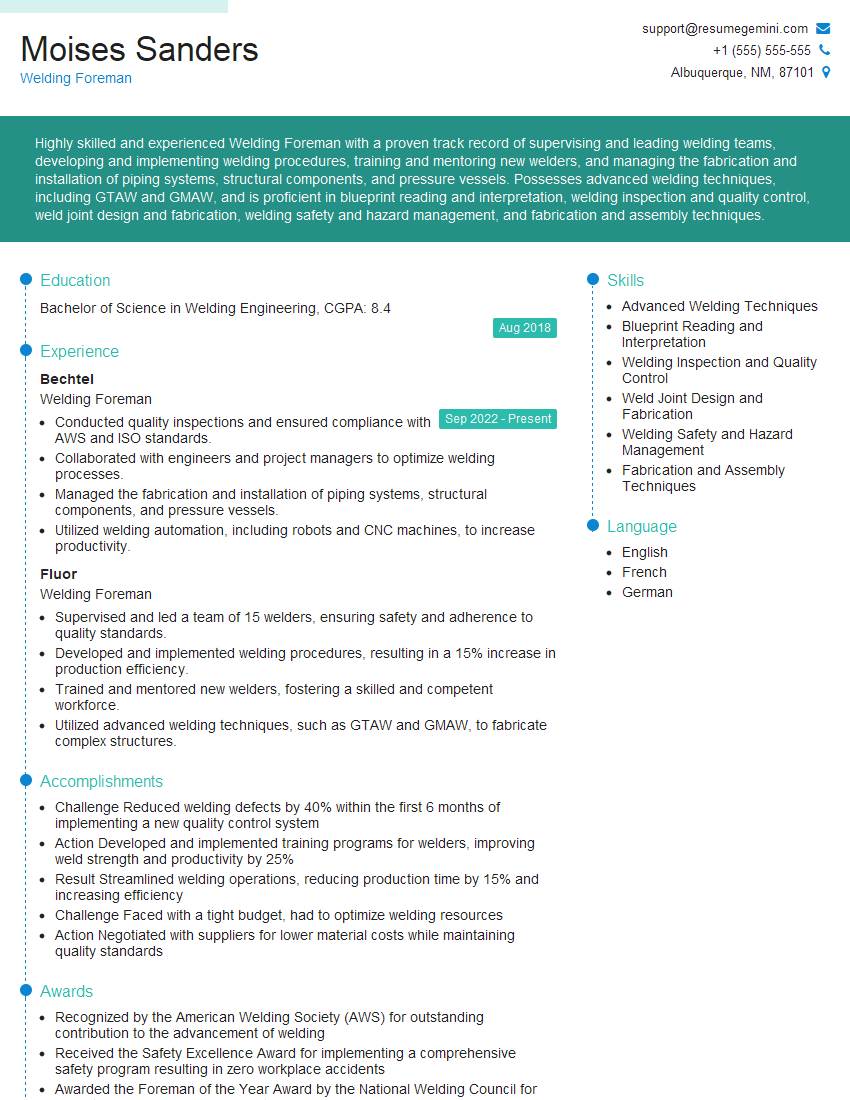
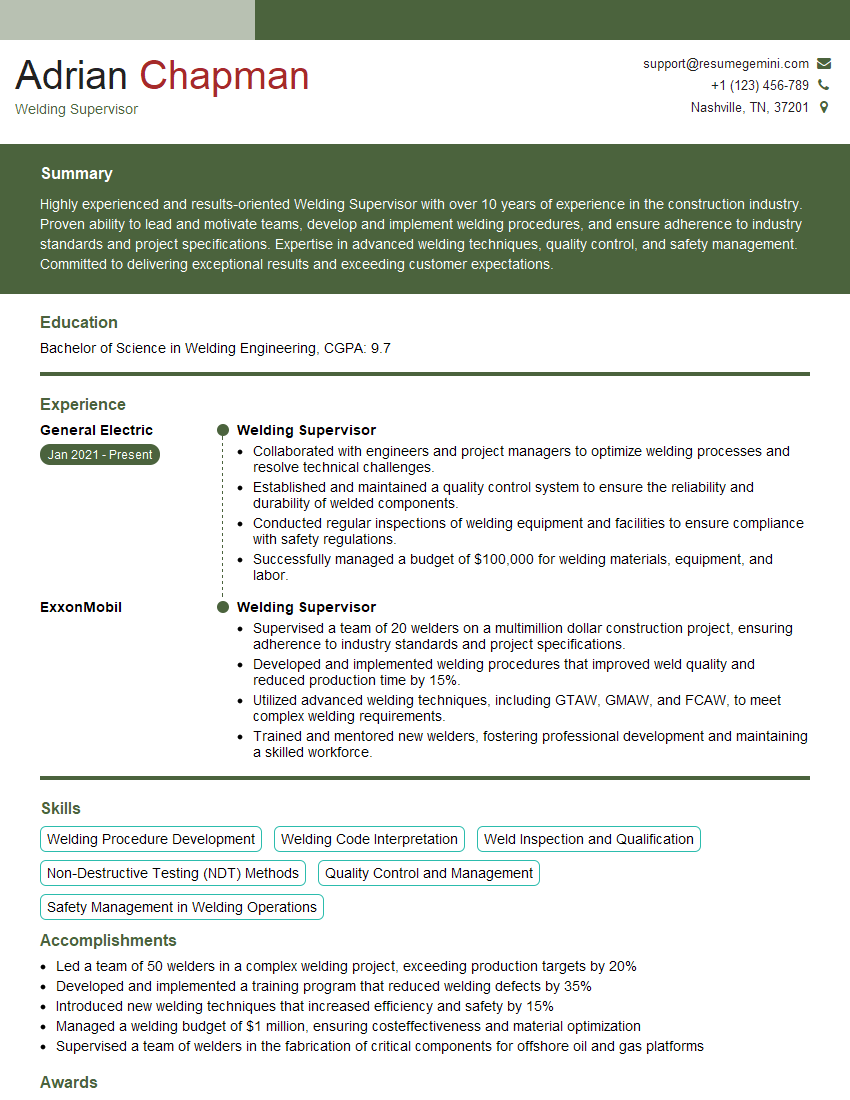
Mastering Welding Planning opens doors to exciting career advancements, leading to increased responsibility, higher earning potential, and greater job satisfaction. To maximize your job prospects, it’s crucial to present your skills effectively. Creating a well-structured, ATS-friendly resume is paramount in today’s competitive job market. ResumeGemini is a trusted resource to help you build a professional resume that highlights your unique qualifications and experience. Examples of resumes tailored specifically to Welding Planning are available to help guide you through the process. Take the next step and craft a resume that showcases your expertise and secures your dream role.
Explore more articles
Users Rating of Our Blogs
Share Your Experience
We value your feedback! Please rate our content and share your thoughts (optional).
What Readers Say About Our Blog
Really detailed insights and content, thank you for writing this detailed article.
IT gave me an insight and words to use and be able to think of examples