The thought of an interview can be nerve-wracking, but the right preparation can make all the difference. Explore this comprehensive guide to Welding Safety and Health interview questions and gain the confidence you need to showcase your abilities and secure the role.
Questions Asked in Welding Safety and Health Interview
Q 1. What are the common hazards associated with welding?
Welding, while a crucial process in many industries, presents a variety of hazards. These hazards can be broadly categorized into:
- Eye and Face Injuries: Intense ultraviolet (UV) and infrared (IR) radiation from the welding arc can cause flash burns (arc eye) and long-term eye damage. Metal spatter, which are molten metal droplets, can also cause serious eye injuries and burns to the face.
- Respiratory Hazards: Welding fumes contain various toxic substances, depending on the base metal and filler material. These include metallic oxides, ozone, nitrogen oxides, and potentially carcinogenic substances like chromium and nickel. Inhaling these fumes can lead to respiratory illnesses, including metal fume fever and chronic lung diseases.
- Burns: Contact with hot metal, sparks, and flames can cause severe burns. Clothing can easily ignite, leading to significant injuries. Electric shock is also a significant burn hazard.
- Electrical Hazards: Welding machines operate at high voltages and currents, posing a significant risk of electric shock, which can be fatal. Improper grounding or damaged cables exacerbate this risk.
- Fire Hazards: The extreme heat generated during welding can easily ignite flammable materials nearby. This includes clothing, wood, paper, and even combustible gases.
- Noise Hazards: Some welding processes generate high levels of noise, which can lead to hearing loss if proper hearing protection is not used.
Understanding these hazards is the first step towards implementing effective safety measures.
Q 2. Describe the different types of welding PPE and their purpose.
Personal Protective Equipment (PPE) is crucial for mitigating welding hazards. Different types of PPE are used depending on the specific welding process and the potential hazards involved:
- Welding Helmet/Shield: Provides protection from UV and IR radiation, as well as metal spatter. The helmet should have a shade number appropriate for the welding process being used. For example, a darker shade is required for higher amperage welding.
- Welding Gloves: Made from heat-resistant materials like leather, they protect the hands from burns, sparks, and hot metal. Different glove types are available for various welding processes, providing different levels of protection.
- Welding Jacket/Apron: Made from heavy-duty, flame-resistant material, these protect the body from sparks, spatter, and burns. Leather, denim, or specialized flame-resistant fabrics are often used.
- Respiratory Protection: Depending on the welding process and the fumes generated, respiratory protection might include respirators with appropriate filters (e.g., those filtering out metallic fumes). Proper respirator selection is vital and should follow OSHA guidelines.
- Hearing Protection: Earplugs or earmuffs are necessary when noise levels exceed safe limits, protecting against hearing loss from the welding process and associated machinery.
- Safety Footwear: Steel-toe boots offer protection from dropped objects and potential crushing injuries. The boots should also provide good insulation against heat.
It’s critical that all PPE is properly maintained and inspected before each use.
Q 3. Explain the importance of ventilation in a welding environment.
Ventilation plays a vital role in removing welding fumes and gases from the work area, preventing exposure to hazardous substances. Poor ventilation can lead to the accumulation of toxic fumes, causing respiratory problems and other health issues. The importance of adequate ventilation can’t be overstated.
Proper ventilation systems can be local exhaust ventilation (LEV), which removes fumes at their source, or general ventilation, which dilutes and removes fumes from a larger area. The choice of ventilation method depends on the welding process, the amount of fumes generated, and the size of the work area. Think of it like a kitchen exhaust hood – it removes cooking fumes locally, preventing them from spreading throughout the house.
Regular maintenance and inspection of ventilation systems are crucial to ensure their effectiveness. A poorly maintained system is as bad as no system at all. Furthermore, the effectiveness of ventilation needs to be regularly assessed, possibly using air monitoring to measure fume concentrations.
Q 4. What are the fire safety precautions to be taken during welding?
Fire safety is paramount during welding operations due to the intense heat generated. Several precautions must be taken:
- Clear the area: Remove all flammable materials (wood, paper, cloth, etc.) within a 35-foot radius of the welding area. This includes checking for potential hidden combustibles.
- Fire Watch: A trained fire watch person should be present during and for a period after welding operations to monitor for any signs of fire. They must have access to fire extinguishers and know how to use them.
- Fire Extinguishers: Appropriate fire extinguishers (typically ABC type) should be readily available and easily accessible within the welding area.
- Sparks arrestors: Use sparks arrestors on grinders and other tools that generate sparks to prevent stray sparks from igniting nearby materials.
- Welding blanket: Use a welding blanket to protect non-combustible surfaces from the intense heat produced during welding.
- Proper grounding: Ensure that all metal surfaces are properly grounded to prevent electrical arcing and sparks.
Regular fire safety training for welders and fire watch personnel is essential to prevent fires and ensure a safe work environment. A fire drill is a good practice to ensure everyone is ready in case of an emergency.
Q 5. How do you identify and mitigate the risk of electrical shock during welding?
Electrical shock is a serious hazard in welding due to the high voltages and currents involved. Several steps are taken to mitigate this risk:
- Inspect equipment: Regularly inspect welding cables, connectors, and the welding machine itself for any signs of damage, such as frayed wires or loose connections. Damaged equipment should be immediately taken out of service.
- Insulated tools: Use insulated tools to handle electrical components. This includes using insulated wrenches and screwdrivers when working on the welding machine.
- Grounding: Ensure the welding machine is properly grounded to earth, using a suitable grounding clamp. This helps to prevent electrical surges and potential shocks.
- Dry work area: Avoid welding in wet or damp conditions, as this increases the risk of electrical shock. Always make sure the welding area is dry before starting work.
- Insulated mats: Use insulated mats where necessary to prevent contact with damp ground.
- Lockout/Tagout procedures: Utilize lockout/tagout procedures before performing maintenance or repairs on welding equipment to prevent accidental energization.
Proper training on electrical safety is essential for all welders. Regular inspections and maintenance will greatly minimize the likelihood of an electrical accident.
Q 6. What are the regulations surrounding confined space welding?
Confined space welding presents unique and significant challenges, requiring strict adherence to regulations and safety procedures. Regulations vary by location (e.g., OSHA in the USA, HSE in the UK), but generally include:
- Permit-required confined space entry: Before any welding can occur, a permit must be issued, outlining the hazards, safety precautions, and emergency procedures. A competent person must review and sign off on the permit.
- Atmospheric monitoring: Before entry, the atmosphere within the confined space must be tested for oxygen levels, flammable gases, and toxic substances. Continuous monitoring during welding operations might also be required.
- Ventilation: Adequate ventilation is critical to remove welding fumes and gases, ensuring the air remains breathable within the confined space. This often requires specialized ventilation equipment.
- Emergency rescue plan: A detailed rescue plan must be in place, outlining procedures for rescuing workers in case of an emergency. This often involves standby personnel and appropriate rescue equipment.
- Hot work permit: A specific hot work permit is usually required for welding in confined spaces, detailing the fire safety precautions.
- PPE: Appropriate PPE is essential, including self-contained breathing apparatus (SCBA) in many cases, alongside all the other PPE described above.
Failure to adhere to these regulations can result in severe injuries or fatalities. A thorough risk assessment, detailed in the permit, is essential before commencing any confined space welding operation.
Q 7. Explain the process of risk assessment for welding operations.
A risk assessment for welding operations is a systematic process to identify hazards, assess their risks, and implement control measures to mitigate those risks. It’s a crucial step in ensuring welder safety.
The process generally involves:
- Identify hazards: This involves identifying all potential hazards associated with the welding operation, including those listed in the first question. Consider the specific welding process, materials used, the work environment, and the experience level of the welders.
- Assess risks: For each identified hazard, assess the likelihood and severity of the potential harm. Consider factors like the frequency of exposure, the duration of exposure, and the potential consequences of an incident.
- Implement control measures: Based on the risk assessment, implement appropriate control measures to eliminate or reduce the risks. These measures can include engineering controls (e.g., ventilation systems), administrative controls (e.g., safe work procedures), and the use of PPE. Prioritize measures that eliminate hazards first, then reduce them.
- Review and update: The risk assessment should be reviewed and updated regularly to reflect any changes in the welding operation, materials used, or regulatory requirements. The assessment is not a one-time action.
By following this process, organizations can proactively manage risks, prevent accidents, and create a safer working environment for welders. Regularly reviewing the risk assessment ensures continuous improvement and adaptation to evolving circumstances.
Q 8. What are the emergency procedures to follow in case of a welding accident?
Welding accidents can range from minor burns to severe injuries. Immediate action is crucial. The first step is always to ensure your own safety before attempting to help others.
Assess the situation: Quickly determine the nature and extent of the injury. Is there a fire? Are there electrical hazards? Is the injured person conscious and breathing?
Secure the area: Turn off the power source to the welding machine immediately. If there’s a fire, try to contain it using a suitable fire extinguisher (more on this later). If you are not trained to handle a specific emergency, do not put yourself at risk.
Call for emergency services: Dial emergency medical services immediately. Clearly describe the situation, the location, the nature of the injuries, and the number of people involved.
First aid (if trained): If you are appropriately trained in first aid, provide assistance as needed, following established protocols. For burns, immediately cool the burned area with cool (not cold) running water for at least 10-20 minutes. Do not apply ice or ointments.
Prevent further injury: Remove any sources of ignition or hazards that could cause further harm.
Post-accident procedures: Cooperate fully with any investigation into the accident, providing accurate details to help prevent future incidents. This may involve completing incident reports and participating in safety meetings.
Remember, prevention is key. Proper training, adherence to safety procedures, and regular equipment maintenance significantly reduce the risk of welding accidents.
Q 9. How do you ensure compliance with OSHA or other relevant safety standards?
Compliance with OSHA (Occupational Safety and Health Administration) or other relevant safety standards is paramount in welding. It’s not just about avoiding fines; it’s about protecting the lives and well-being of workers. Our approach is multifaceted:
Regular training: All welders receive comprehensive training on safe welding practices, including hazard identification, personal protective equipment (PPE) use, emergency procedures, and specific hazards related to the types of welding they perform. This training includes refresher courses to ensure knowledge remains up-to-date.
Enforcement of safety rules: We have a strict policy of enforcing all safety regulations. This includes regular inspections of the workplace to ensure compliance, disciplinary measures for violations, and a reporting system for near-miss incidents. These near misses help us identify potential problems before they result in an accident.
Proper PPE: Welder’s helmets with appropriate shades, gloves, fire-resistant clothing, and safety footwear are mandatory. We ensure these are readily available, inspected regularly, and in good working order.
Documentation: We maintain thorough records of training, inspections, incident reports, and equipment maintenance. This documentation helps to demonstrate our commitment to safety and facilitates continuous improvement.
We regularly review the latest OSHA standards and other relevant guidelines to ensure our practices remain current and effective. Think of it like this: safety isn’t a checklist, it’s a culture. Every worker has a responsibility to maintain a safe work environment.
Q 10. Describe the proper handling and storage of welding gases.
Welding gases, such as acetylene, oxygen, and argon, are highly flammable and potentially hazardous if mishandled. Safe handling and storage are non-negotiable.
Storage: Cylinders must be stored upright and secured to prevent tipping. They should be stored in a well-ventilated area, away from heat sources, ignition sources (like sparks or open flames), and incompatible materials. Oxygen and fuel gas cylinders should be stored separately, ideally at a safe distance.
Handling: Always use a cylinder hand truck or trolley to move cylinders. Never drop, roll, or drag them. Open and close valves slowly and carefully. Use the correct regulators and hoses for each gas type. Never use oil or grease near oxygen cylinders, as this creates a fire hazard.
Inspection: Regularly inspect cylinders for damage, leaks, or corrosion. Damaged cylinders must be replaced immediately. Leaks can be detected using a soapy water solution – bubbles indicate a leak.
Ventilation: Ensure adequate ventilation in the welding area to prevent the buildup of gases. This is especially important in enclosed spaces.
Imagine a scenario where an acetylene cylinder is damaged and falls, releasing its contents near an ignition source – the potential for a catastrophic explosion is very real. Following proper storage and handling procedures prevents such incidents.
Q 11. What are the health risks associated with welding fumes?
Welding fumes contain a complex mixture of potentially harmful substances, depending on the materials being welded and the welding process. Exposure to these fumes can lead to a variety of serious health problems.
Respiratory problems: Welding fumes can irritate the lungs, leading to conditions like bronchitis, asthma, and even silicosis (from welding on materials containing silica). Long-term exposure may increase the risk of lung cancer.
Metal fume fever: This flu-like illness is caused by inhaling fumes containing metal oxides, especially zinc. Symptoms include chills, fever, muscle aches, and weakness.
Carbon monoxide poisoning: Incomplete combustion during welding can produce carbon monoxide, a highly toxic gas that can cause headaches, dizziness, nausea, and even death.
Eye irritation: Welding fumes can irritate the eyes, leading to dryness, itching, and burning.
Other potential hazards: Depending on the materials being welded, exposure can also lead to neurological problems, reproductive issues, and various other health complications.
It’s crucial to understand that the specific health risks depend on the materials being welded and the welder’s exposure level. Proper ventilation and respiratory protection are essential.
Q 12. How do you monitor and control welding fumes?
Controlling welding fumes is critical to protecting welder’s health. We utilize a multi-pronged approach:
Local exhaust ventilation (LEV): This is the most effective method. LEV systems use hoods and ducts to capture fumes at their source and exhaust them outside the building. Regular maintenance and proper placement are crucial.
General ventilation: This involves using fans and other systems to increase airflow in the welding area, diluting the concentration of fumes. This is a supplementary method and not a replacement for LEV.
Respiratory protection: Welders must use appropriate respirators, such as air-purifying respirators (APRs) or supplied-air respirators (SARs), depending on the type and concentration of fumes present. Proper respirator fit testing and training are essential.
Work practices: Implementing techniques to minimize fume generation, such as using lower-fume-producing welding processes, or reducing the amount of welding needed through proper planning.
Air monitoring: Regularly monitor the air quality in the welding area to ensure that fume levels remain below permissible exposure limits. This data helps us evaluate the effectiveness of our control measures and make necessary adjustments.
Imagine a scenario where a welder is working in a confined space without LEV. Fumes would quickly build up, posing a serious health risk. By implementing effective control measures, we ensure the welder’s safety and health.
Q 13. What are the different types of welding fire extinguishers and their applications?
Different fire extinguishers are suitable for different types of fires. In welding, we primarily encounter Class A (ordinary combustibles), Class B (flammable liquids), and Class C (electrical) fires.
Class A fire extinguishers (Water, Dry Chemical): These are effective against ordinary combustibles like wood, paper, and cloth. Water extinguishers are suitable for initial stages of Class A fires but should not be used on electrical fires. Dry chemical extinguishers work by interrupting the chemical chain reaction of the fire and are more versatile, suitable for A and B classes.
Class B fire extinguishers (Carbon Dioxide (CO2), Dry Chemical): These extinguishers are designed for flammable liquids, such as oil and grease fires. Carbon dioxide extinguishers are effective but should not be used in confined spaces due to oxygen depletion. Dry chemical extinguishers are suitable for both B and A classes of fire.
Class C fire extinguishers (Carbon Dioxide (CO2), Dry Chemical): These extinguishers are specifically designed for electrical fires. CO2 extinguishers are suitable and will not conduct electricity. Dry chemical extinguishers are also suitable for this class of fire.
ABC extinguishers combine the capabilities of A, B, and C classes. Having a variety of extinguishers readily available is crucial. Knowing how to use them properly is just as important. Regular extinguisher inspections and training are essential.
Q 14. Explain the importance of pre-weld inspections.
Pre-weld inspections are a crucial step in ensuring the safety and quality of the welding process. They are not just a formality; they help prevent accidents and defects.
Material inspection: Check the base materials for cracks, defects, or contamination. Ensure the materials are compatible and correctly identified. Incorrect material use can lead to welds that fail under stress.
Joint preparation: Verify that the joint is properly prepared according to the welding procedure specification (WPS). Improper joint preparation can result in poor weld penetration and strength.
Equipment check: Inspect the welding equipment, including the welding machine, electrodes, and safety devices, to ensure they are in good working order. Malfunctioning equipment can pose serious safety risks.
Work area inspection: Check the work area for hazards, such as flammable materials, obstructions, or electrical hazards. A cluttered or hazardous workspace increases the risk of accidents.
PPE check: Ensure that the welder has the correct and appropriate PPE for the specific welding task, including a welding helmet with appropriate shade, gloves, protective clothing, and safety shoes.
Consider a scenario where a welder starts welding without checking for cracks in the base material. A seemingly minor crack could propagate during welding, resulting in a catastrophic failure of the welded structure. Regular pre-weld inspections are an essential preventative measure.
Q 15. What are the post-weld inspection procedures?
Post-weld inspection is crucial for ensuring the structural integrity and safety of a weld. It involves a systematic examination of the weld to identify any defects or imperfections that could compromise its strength or performance. This process typically includes visual inspection, followed by more advanced non-destructive testing (NDT) methods depending on the application’s criticality.
Visual Inspection: This is the first and most fundamental step. It involves carefully examining the weld for surface imperfections like cracks, porosity (small holes), undercuts (grooves at the weld toe), overlaps, incomplete penetration, and excessive spatter. A magnifying glass or even a simple flashlight can be used to enhance visibility.
Non-Destructive Testing (NDT): If visual inspection reveals potential problems or if the weld is for a high-consequence application (like in aerospace or nuclear power), more sophisticated NDT methods are employed. These include:
Radiographic Testing (RT): Uses X-rays or gamma rays to detect internal flaws.
Ultrasonic Testing (UT): Uses high-frequency sound waves to detect internal flaws.
Magnetic Particle Testing (MT): Detects surface and near-surface cracks in ferromagnetic materials.
Liquid Penetrant Testing (PT): Detects surface-breaking defects by using a dye that penetrates cracks and is then revealed by a developer.
Documentation: All findings from the inspection, including any identified defects, corrective actions, and acceptance criteria, must be meticulously documented. This documentation serves as a record of the weld’s quality and helps in tracking potential issues.
Example: Imagine a pipeline weld. Visual inspection might reveal an undercut. This would necessitate further investigation, perhaps using UT to determine the depth of the undercut and decide if it requires repair or if it’s within acceptable limits based on the relevant welding codes and standards.
Career Expert Tips:
- Ace those interviews! Prepare effectively by reviewing the Top 50 Most Common Interview Questions on ResumeGemini.
- Navigate your job search with confidence! Explore a wide range of Career Tips on ResumeGemini. Learn about common challenges and recommendations to overcome them.
- Craft the perfect resume! Master the Art of Resume Writing with ResumeGemini’s guide. Showcase your unique qualifications and achievements effectively.
- Don’t miss out on holiday savings! Build your dream resume with ResumeGemini’s ATS optimized templates.
Q 16. How do you handle damaged or defective welding equipment?
Handling damaged or defective welding equipment is paramount for welder safety and the quality of the work produced. The procedure starts with immediate identification and removal of the faulty equipment from service. Never attempt to use equipment that is damaged or malfunctioning.
Immediate Removal: The damaged equipment should be immediately tagged out of service, clearly indicating its unusable condition and the reason for its removal. This prevents accidental use and potential injury.
Inspection and Assessment: A qualified person must inspect the damaged equipment to determine the extent of the damage and its cause. This may involve visual inspection, testing, or even sending the equipment to a specialized repair shop.
Repair or Replacement: Based on the assessment, the equipment may be repaired by a qualified technician or replaced entirely. Repairs must be done according to manufacturer’s guidelines and safety standards. Only authorized personnel should perform these repairs.
Documentation: Detailed records should be kept of the damage, inspection, repair (if applicable), and the equipment’s return to service. This documentation aids in preventing future incidents and helps with traceability.
Example: If a welding machine’s ground clamp is broken, it should be immediately removed from the work area and tagged as ‘Out of Service – Damaged Ground Clamp.’ A qualified electrician would then assess the damage, either repair it or replace the clamp, ensuring all safety checks are performed before returning the machine to service.
Q 17. Explain the importance of lockout/tagout procedures in welding.
Lockout/Tagout (LOTO) procedures are vital in welding to prevent accidental energization of equipment, thus safeguarding welders and other personnel from electrical shock or burns. This is particularly crucial when working on or near electrical power sources.
Isolation of Power Sources: Before performing any maintenance or repair on welding equipment or related electrical systems, the power source must be completely isolated. This may involve disconnecting the power supply at the main breaker or removing fuses.
Lockout: Once the power is isolated, a lockout device (such as a padlock) is attached to the power switch or disconnect to physically prevent the power from being restored accidentally.
Tagout: A tag, clearly marked with the worker’s name, date, and the reason for the lockout, is attached to the lockout device. This visually warns others not to re-energize the equipment.
Verification: Before starting work, the welder must verify that the equipment is de-energized by performing appropriate tests (e.g., using a voltage tester).
Tagout Removal: Only the person who applied the lockout device is authorized to remove it. This ensures that the equipment is properly de-energized before re-energization.
Example: Before working on a stick welder, a qualified electrician will lock out the power supply to the welding machine, ensuring that no one can inadvertently switch the power on while the welder is performing maintenance.
Q 18. Describe the procedure for safe handling of hot metal.
Safe handling of hot metal is essential to prevent burns and other injuries. This requires the use of appropriate personal protective equipment (PPE) and adherence to specific procedures.
PPE: Welders must always wear appropriate PPE, including heat-resistant gloves, long sleeves, and a welding jacket. Safety glasses or a welding helmet provide crucial eye protection from sparks and molten metal splashes.
Proper Tools: Use heat-resistant tools for handling hot metal. Tongs, pliers, and other specialized tools are designed for this purpose and minimize the risk of burns.
Cooling Methods: Allow hot metal to cool down naturally before handling it whenever possible. If immediate handling is necessary, use suitable cooling methods, such as immersion in water (only for certain metals and with caution) or allowing sufficient time for cooling.
Controlled Movement: Move hot metal slowly and carefully, avoiding sudden movements which could cause the metal to drop or spill. Never throw or toss hot metal.
Warning Signs: When hot metal is present, clearly visible warning signs should be posted to alert others of the potential hazard.
Example: After a welding operation, rather than immediately grabbing the hot workpiece with bare hands, the welder will wait for it to cool, or use insulated tongs to move the piece to a designated cooling area.
Q 19. What are the signs and symptoms of heat stroke and how to treat them?
Heat stroke is a serious medical condition caused by prolonged exposure to high temperatures. It’s a life-threatening emergency requiring immediate attention.
Signs and Symptoms: Symptoms can range from mild to severe and include:
- High body temperature (above 103°F or 39.4°C)
- Rapid pulse
- Headache
- Dizziness
- Nausea and vomiting
- Confusion
- Loss of consciousness
Treatment: Immediate treatment is crucial. Follow these steps:
- Move the person to a cool place.
- Remove excess clothing.
- Cool the person down by using cool water, ice packs, or fans.
- Give the person fluids to drink, preferably water or an electrolyte drink.
- Seek immediate medical attention.
Important Note: Do not give the person aspirin or ibuprofen, as these can worsen the condition. Never leave the person unattended.
Q 20. How do you train welders on safety procedures?
Training welders on safety procedures is non-negotiable. It’s a continuous process that must cover both theoretical knowledge and practical application.
Classroom Instruction: This involves covering theoretical aspects of welding safety, including hazard identification, risk assessment, PPE usage, emergency procedures, and relevant safety regulations. Interactive sessions, videos, and presentations can make this engaging.
Hands-on Training: Practical training is essential. This allows welders to practice safe work techniques under the supervision of experienced instructors. They learn to correctly use safety equipment and follow proper procedures.
On-the-Job Training: Experienced welders mentor newcomers, ensuring that safe practices are consistently followed on the job site. Regular supervision and feedback are vital.
Regular Refresher Courses: Safety standards and regulations evolve. Regular refresher courses ensure welders remain up-to-date on the latest safety practices and technologies.
Documentation and Certification: Maintain thorough records of training provided and certifications obtained. This demonstrates commitment to safety and facilitates auditing.
Example: A comprehensive training program might include classroom sessions on arc flash hazards, followed by hands-on training on how to safely set up and use welding equipment, culminating in supervised on-the-job practice.
Q 21. What is the role of a welding safety committee?
A welding safety committee plays a pivotal role in proactively managing and mitigating welding-related hazards. It’s a collaborative body composed of representatives from management, welding supervisors, and welders themselves.
Hazard Identification and Risk Assessment: The committee identifies potential welding hazards in the workplace and conducts thorough risk assessments to determine the severity and probability of these hazards.
Safety Policy Development and Implementation: The committee contributes to the development and implementation of comprehensive welding safety policies and procedures, ensuring alignment with relevant regulations and best practices.
Training and Education: The committee participates in designing and delivering training programs for welders, ensuring that all personnel are adequately trained on safety protocols.
Incident Investigation and Prevention: The committee thoroughly investigates any welding-related incidents or accidents to identify root causes, implement corrective actions, and prevent future occurrences.
Regular Inspections and Audits: The committee conducts regular inspections and audits of the welding areas to ensure compliance with safety standards and identify areas for improvement.
Communication and Feedback: The committee serves as a crucial communication channel between management, supervisors, and welders, providing a platform for raising safety concerns and sharing valuable insights.
Example: A safety committee might discover that a particular welding technique increases the risk of arc flash. The committee could then propose adjustments to the welding procedure, develop additional safety training, and implement improved PPE to mitigate the risk.
Q 22. Explain the difference between a permit-required confined space and a non-permit-required confined space.
The key difference between permit-required confined spaces (PRCS) and non-permit-required confined spaces (NPRCS) lies in the potential hazards present. A PRCS poses an immediate threat to life and health due to the presence of hazardous substances or conditions that require a specific entry permit before anyone can enter. An NPRCS, conversely, doesn’t present these immediate life-threatening dangers.
- Permit-Required Confined Spaces (PRCS): These spaces might contain oxygen-deficient atmospheres, toxic gases, flammable vapors, engulfment hazards (e.g., grain silos), or other serious dangers. Entry requires a detailed risk assessment, a written permit outlining safety procedures, and trained personnel. Think of a large underground storage tank or a ship’s ballast tank.
- Non-Permit-Required Confined Spaces (NPRCS): These spaces are still confined and may present some hazards, but they don’t pose an immediate threat to life or health. Examples include a small utility vault with good ventilation or a clean, well-ventilated crawl space. Entry procedures are less stringent, though safety precautions like ventilation checks are still necessary.
Think of it like this: PRCS is like entering a mine – you need specialized equipment and rigorous safety protocols. NPRCS is more like entering a small, well-ventilated closet – still cautious, but less stringent requirements.
Q 23. Describe your experience with incident investigation and reporting.
Throughout my career, I’ve been extensively involved in incident investigation and reporting, adhering strictly to OSHA guidelines and industry best practices. My process starts with securing the scene, interviewing witnesses, meticulously documenting evidence (photos, videos, welder statements), and thoroughly analyzing the root causes of the incident. I utilize various investigative techniques like the ‘5 Whys’ method to delve deeper into the reasons behind the incident, identifying contributing factors from individual actions to systemic issues within the safety program.
After gathering all the necessary information, I prepare a comprehensive report which details the incident chronology, contributing factors, root causes, and corrective actions to prevent recurrence. This report is then used for internal training improvements, safety program revisions, and possibly as a learning resource for others in the industry. The goal is not simply to assign blame but to systematically identify and address vulnerabilities within the welding operations to prevent future incidents.
For example, I once investigated an arc flash incident. My analysis identified inadequate personal protective equipment (PPE) as the primary root cause, leading to revised PPE guidelines, mandatory retraining, and the implementation of regular equipment inspections.
Q 24. What is your experience with developing and implementing welding safety programs?
I have extensive experience in developing and implementing comprehensive welding safety programs, focusing on risk assessment, hazard control, and employee training. My approach involves a multi-faceted strategy that includes:
- Risk Assessment: Conducting thorough job hazard analyses (JHAs) to identify potential hazards associated with each welding process and work area.
- Hazard Control: Implementing engineering controls (e.g., proper ventilation, fire suppression systems), administrative controls (e.g., work permits, lockout/tagout procedures), and personal protective equipment (PPE) requirements to mitigate identified hazards.
- Training: Developing and delivering comprehensive training programs for welders, supervisors, and other personnel on topics such as safe welding practices, fire prevention, hazard recognition, and emergency procedures.
- Program Evaluation and Improvement: Regularly auditing the welding safety program and making necessary updates based on incident investigations, industry best practices, and regulatory changes.
I’ve successfully implemented these programs in various settings, resulting in significant reductions in welding-related incidents and injuries. One noteworthy example is when I revamped the safety program at a fabrication shop, resulting in a 40% decrease in safety violations within the first year.
Q 25. How do you stay up-to-date on the latest welding safety regulations and best practices?
Staying current on welding safety regulations and best practices is crucial. I employ a multi-pronged approach:
- OSHA and Regulatory Websites: Regularly reviewing updates and changes from OSHA (Occupational Safety and Health Administration) and other relevant regulatory bodies.
- Industry Publications and Journals: Subscribing to and reading industry publications and journals that focus on welding safety and health. This helps me stay informed about emerging hazards and best practices.
- Professional Organizations: Active participation in professional organizations like the American Welding Society (AWS) provides access to training courses, conferences, and networking opportunities.
- Online Resources and Webinars: Utilizing online resources, webinars, and safety training modules to enhance my understanding of new technologies and emerging safety concerns in the field.
This continuous learning process ensures that I am always equipped with the most up-to-date knowledge to implement the most effective safety measures.
Q 26. What is your experience with different types of welding processes and their associated safety concerns?
My experience encompasses a broad range of welding processes, each with its unique safety considerations:
- Shielded Metal Arc Welding (SMAW): Hazards include arc flash, ultraviolet radiation, fumes, and spatter. Proper PPE (including welding helmet, gloves, and clothing) and ventilation are crucial.
- Gas Metal Arc Welding (GMAW): Similar hazards to SMAW, plus the added risk of gas cylinder handling and potential burns from the hot wire. Proper cylinder handling and storage are critical.
- Gas Tungsten Arc Welding (GTAW): Lower spatter risk than SMAW or GMAW, but still presents arc flash and UV radiation hazards. Requires precise control and specialized PPE.
- Flux-Cored Arc Welding (FCAW): Produces significant fumes, requiring adequate ventilation and respiratory protection.
- Resistance Welding (Spot, Seam, etc.): Hazards include electrical shock and burns from the high current involved. Requires proper electrical safety training and lockout/tagout procedures.
My experience allows me to identify and address the specific safety risks associated with each process, ensuring the safety of welders and those in the vicinity.
Q 27. How would you handle a situation where a welder refuses to follow safety protocols?
Addressing a welder’s refusal to follow safety protocols requires a systematic and firm approach, prioritizing the safety of all personnel. My approach would be:
- Private Conversation: I would first engage the welder in a private conversation to understand their reasons for non-compliance. It’s crucial to create a safe space for dialogue and determine whether there are underlying issues like inadequate training, equipment problems, or concerns about their safety.
- Re-emphasize Safety Protocols: I would clearly re-explain the safety protocols, emphasizing the potential consequences of non-compliance for their well-being and the safety of others.
- Training and Retraining: If the reason for non-compliance is lack of understanding or training, I would provide additional training or refresher courses.
- Disciplinary Action: If the refusal persists despite attempts at education and dialogue, I would enforce disciplinary actions according to company policy. This could range from warnings to suspension, depending on the severity and recurrence of the infraction.
- Documentation: Throughout this process, meticulous documentation of all conversations, training, and disciplinary actions is essential.
The emphasis is on education and correction, but firm action is necessary to ensure compliance and safety.
Q 28. Describe a time you had to address a welding safety issue. What was the outcome?
I once encountered a situation where a welder was using a damaged welding cable. The insulation was frayed, posing a significant electrical shock risk. I immediately stopped the welding operation and addressed the welder’s continued use of the cable. The welder claimed unawareness of the damage.
My response involved:
- Immediate Action: Removing the damaged cable from service and replacing it with a properly insulated cable.
- Training Reinforcement: Conducting a refresher training session on proper cable inspection and maintenance, emphasizing the importance of identifying and reporting damaged equipment.
- Documentation: Thoroughly documenting the incident, including the damaged cable’s condition, the training conducted, and corrective actions taken. This is added to the overall safety training records.
The outcome was a heightened awareness among welders about equipment inspection and a renewed focus on safety, demonstrating the importance of proactive measures to prevent accidents. No injuries occurred.
Key Topics to Learn for Your Welding Safety and Health Interview
- Personal Protective Equipment (PPE): Understanding the types of PPE required for different welding processes (e.g., helmets, gloves, clothing, respiratory protection), their proper use, maintenance, and limitations. Consider practical scenarios involving PPE failure and appropriate responses.
- Hazard Identification and Risk Assessment: Learn to identify potential hazards in a welding environment (e.g., fire, electrical shock, burns, fumes, radiation). Practice conducting risk assessments and developing control measures to mitigate these hazards. Explore different risk assessment methodologies.
- Fire Prevention and Control: Understand fire prevention techniques specific to welding operations, including fire watch procedures, the use of fire extinguishers, and emergency response plans. Analyze case studies of welding-related fires.
- Welding Fumes and Respiratory Protection: Discuss the health effects of welding fumes and the importance of proper respiratory protection. Explore different types of respirators and their selection criteria based on specific welding processes and fume types. Consider the practical challenges of respirator use and maintenance.
- Electrical Safety: Understand the risks associated with electrical hazards in welding, including arc flash, shock, and electrocution. Learn about safe practices for working with electrical equipment and emergency procedures.
- Confined Space Entry and Hot Work Permits: Understand the specific safety procedures and permits required for welding in confined spaces and other high-risk areas. Discuss the importance of proper ventilation and gas monitoring.
- Emergency Procedures and First Aid: Be prepared to discuss emergency procedures in a welding environment, including fire response, handling burns and electrical shocks, and providing basic first aid. Consider the role of emergency response teams.
- Regulations and Standards: Familiarize yourself with relevant OSHA (or equivalent) regulations and industry standards related to welding safety and health. Be prepared to discuss specific regulations and their practical application.
- Welding Process Specific Hazards: Understand the unique safety hazards associated with different welding processes (e.g., gas welding, arc welding, MIG welding, TIG welding). Be prepared to discuss the appropriate safety precautions for each process.
Next Steps
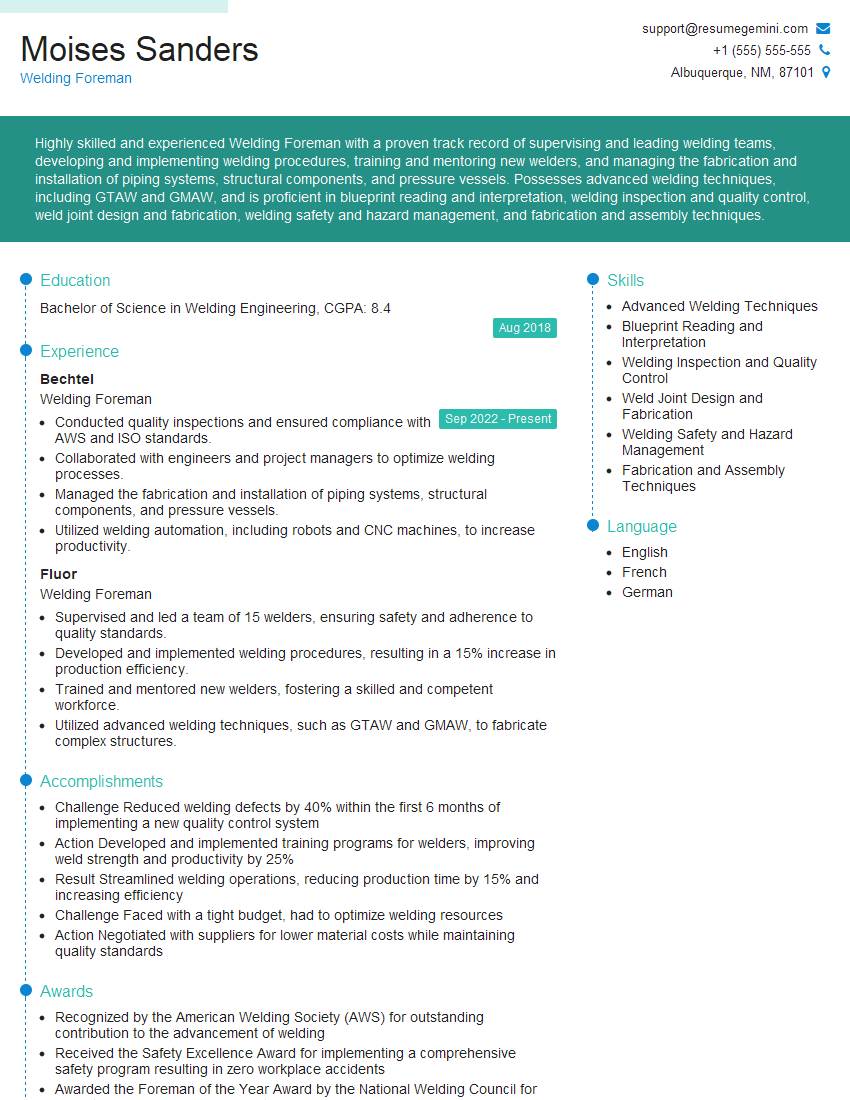
Mastering Welding Safety and Health is crucial for career advancement in this field. It demonstrates your commitment to responsible practices and protects both yourself and your colleagues. To significantly improve your job prospects, create an ATS-friendly resume that highlights your skills and experience effectively. ResumeGemini is a trusted resource to help you build a professional and impactful resume. We provide examples of resumes tailored to Welding Safety and Health to guide you. Let us help you craft a resume that showcases your expertise and lands you your dream job!
Explore more articles
Users Rating of Our Blogs
Share Your Experience
We value your feedback! Please rate our content and share your thoughts (optional).
What Readers Say About Our Blog
Really detailed insights and content, thank you for writing this detailed article.
IT gave me an insight and words to use and be able to think of examples