Interviews are opportunities to demonstrate your expertise, and this guide is here to help you shine. Explore the essential Welding Symbols and Terminology interview questions that employers frequently ask, paired with strategies for crafting responses that set you apart from the competition.
Questions Asked in Welding Symbols and Terminology Interview
Q 1. Explain the purpose and importance of welding symbols.
Welding symbols are a standardized graphical language used in engineering drawings and fabrication specifications to communicate precisely how a weld should be executed. They are crucial because they eliminate ambiguity and ensure that all parties involved – engineers, designers, welders, and inspectors – have a clear, consistent understanding of the weld requirements. Think of them as a blueprint specifically for the weld joint, dictating everything from the type of weld to its dimensions and location. Without them, misinterpretations could lead to costly errors, structural failures, and safety hazards.
Q 2. Describe the different types of welding symbols and their applications.
Welding symbols are categorized by the type of weld they represent. Some common types include:
- Fillet Welds: These are used to join two members at an angle, creating a triangular reinforcement. They’re common in structural steel fabrication.
- Groove Welds: These are used to join two members edge-to-edge or butt-to-butt, often requiring complete penetration for full strength. They’re essential in pressure vessels and pipelines.
- Spot Welds: Used to join sheet metal, these welds create a localized fusion point. You’ll find them frequently in automotive bodywork.
- Plug and Slot Welds: These are used to create a weld in a hole (plug) or slot in a member.
- Seam Welds:** Used extensively in pipe welding or for joining sheet metal, they’re continuous welds running along a seam.
The specific application dictates which symbol is used. For instance, a high-pressure pipeline will require the precise specification of a groove weld using a specific symbol, while building a simple metal frame might only need a simple fillet weld symbol.
Q 3. Interpret a welding symbol showing a fillet weld with a specific size and length.
Let’s say a welding symbol shows a 6mm fillet weld, 50mm long, on the arrow side. The symbol would have a small triangle representing the fillet weld, with the number ‘6’ indicating the leg size (6mm). An arrow pointing to the joint would indicate the location. A short horizontal line next to the symbol, with the number 50, would indicate the length. This would mean a 6mm fillet weld should be applied along the specified joint on the arrow side for a total length of 50mm. If the symbol features a supplementary symbol on the other side (tail) of the reference line, that indicates the same weld is also required on the opposite side.
Q 4. What are the basic components of a welding symbol?
The basic components of a welding symbol include:
- Reference Line: A horizontal line that acts as the baseline for the symbol.
- Arrow: Points to the joint where the weld is to be applied.
- Tail (Optional): Located at the other end of the reference line. Provides supplementary information for welds on the opposite side of the joint.
- Welding Symbol(s): Placed on or near the arrow, this indicates the type of weld and other specifications like weld size.
- Dimensions and Other Specifications: These are placed on the reference line or tail, indicating details like weld size, length, pitch, and other aspects.
Q 5. Explain the meaning of reference lines, arrow side, other side, and the tail of a welding symbol.
The reference line acts as the base for all other elements. The arrow indicates where the weld is to be placed, and the location described by the arrow is considered the ‘arrow side’. The ‘other side’ refers to the opposite side of the joint from where the arrow is pointing. Information placed on the tail of the symbol pertains to welds applied to the ‘other side’.
Q 6. How do you interpret weld size, location, and type from a welding symbol?
The weld size is usually shown as a number near the welding symbol, representing the leg size for fillet welds or the throat size for groove welds. The location is indicated by the arrow and the reference line, specifying whether the weld is on the arrow side, other side, or both. The weld type is indicated by the specific symbol used – a triangle for a fillet weld, a different shape for a groove weld, etc.
Q 7. What are the standard welding symbols for groove welds, fillet welds, and spot welds?
The standard symbols are often variations on a theme, but generally:
- Groove Welds: Typically shown as a symbol depicting the cross-section of the weld (e.g., a square, V, or U shape), alongside size specifications.
- Fillet Welds: Represented by an isosceles triangle (or a similar symbol), with the leg size indicated.
- Spot Welds: Represented by a small circle or dot, often with a diameter specification.
It’s important to consult relevant welding codes (like AWS D1.1) for definitive symbol interpretations. The symbols may vary slightly according to the code and the complexity of the weld.
Q 8. Describe the significance of weld joint design and its relationship to welding symbols.
Weld joint design is the cornerstone of any successful welding project. It dictates how two or more pieces of metal are joined, directly impacting the strength, durability, and overall quality of the final product. Welding symbols act as a blueprint, providing concise instructions on how to execute that design. Think of it like an architect’s drawing for a building: the design is the overall structure, while the welding symbol specifies the precise details of how the ‘bricks’ (weld beads) are to be laid.
A poorly designed weld joint, regardless of how skillfully executed, will be structurally weak and prone to failure. The welding symbol ensures that the intended design is clearly communicated to the welder, minimizing errors and ensuring consistent results. For example, the symbol might specify the type of weld (e.g., fillet, groove), its size, and the required penetration depth, ensuring the final weld meets the design specifications for strength and integrity.
Q 9. How do you indicate the type of weld to be used (e.g., SMAW, GMAW, etc.) on a welding symbol?
The type of welding process is not directly indicated on the standard welding symbol itself. The welding symbol primarily focuses on the geometric aspects of the weld. The specific welding process (SMAW, GMAW, GTAW, etc.) is usually specified in the accompanying written instructions or specifications. This is because different processes might achieve the same weld geometry with varied parameters. While the symbol shows what weld is needed, the process documents tell how it should be created. Imagine a recipe: the symbol is the picture of the finished cake, while the process documents give the exact ingredients and baking instructions.
Q 10. Explain the role of welding symbols in manufacturing processes.
Welding symbols are absolutely crucial in manufacturing. They act as a universal language, ensuring clear communication between designers, engineers, welders, and inspectors. This prevents costly mistakes and ensures consistent quality across large-scale projects. Imagine building a bridge – each weld must be precise, and the symbols guarantee that all welds are executed to the same high standard, irrespective of the welder involved. The symbols also contribute to efficient workflow. A clear, unambiguous symbol speeds up fabrication, reducing overall production time and costs.
In a manufacturing setting, the welding symbol becomes part of the manufacturing process documentation, used alongside other drawings and specifications. This ensures traceability and helps in quality control checks throughout the process.
Q 11. How do welding symbols contribute to safety and quality control?
Welding symbols directly contribute to both safety and quality control. By clearly specifying the required weld parameters (size, type, etc.), they reduce the chances of human error, which is a major factor in welding accidents. For example, an incorrectly sized weld might lead to structural failure, posing a significant safety risk. Moreover, the symbol allows for standardized inspection procedures, ensuring that the finished weld meets the required specifications. This helps prevent the use of sub-standard welds, minimizing the risk of failure and enhancing overall safety and product reliability.
Consistent use of symbols also facilitates quality control checks. Inspectors can easily verify that the completed welds conform to the specified design by referring to the symbol. This ensures that only high-quality products leave the production line.
Q 12. How do you differentiate between a continuous weld and an intermittent weld using welding symbols?
The difference between a continuous and intermittent weld is indicated by the length of the weld symbol’s ‘weld-all-around’ symbol (a circle) or the length of the weld symbol itself on a particular leg of the joint. For a continuous weld, the symbol is shown as a continuous line along the joint. For an intermittent weld, the symbol is shown as a series of dashes or a combination of dashes and spaces representing the weld’s length and spacing. The spacing and length of intermittent welds are specified numerically on the welding symbol to denote the length of the weld and the space in between welds. These dimensions ensure consistent spacing and lengths for intermittent welds.
Example: A long dash representing a continuous weld versus a series of short dashes with numbers indicating length and spacing for an intermittent weld.
Q 13. Explain the use of supplementary symbols in welding.
Supplementary symbols in welding provide additional information that is not directly related to the weld’s geometry, but is crucial to its successful execution. These symbols indicate details such as weld finishing requirements (e.g., grinding, chipping), the type of backing (if any), or the need for specific pre- or post-weld heat treatments. These symbols are placed near the main symbol, providing comprehensive instructions to the welder. For instance, a symbol might indicate the requirement for a specific type of backing or the necessity for a particular post-weld heat treatment process to ensure the desired properties of the weld.
Using supplementary symbols ensures that all relevant aspects of the welding process are clearly communicated, contributing to consistent weld quality and efficient production. It’s like adding detailed notes to a recipe; while the main instructions are clear, the supplementary details ensure perfect execution.
Q 14. What are some common welding defects, and how can you identify them based on welding symbols and inspection?
Common welding defects include porosity (small holes), incomplete penetration (weld doesn’t fully fuse), undercutting (groove at the weld toe), and cracks. Welding symbols, while not directly showing defects, guide the welder and inspector toward the expected weld geometry. Deviations from this geometry during inspection – through visual examination, radiography, or ultrasonic testing – indicate defects. For example, if the weld profile shows significant undercutting (visible as a groove along the edges), it indicates a deviation from the intended weld geometry specified in the symbol, and signifies a defect that needs to be addressed.
The process of inspection verifies whether the actual weld meets the specifications laid out by the welding symbol. Any discrepancy is a defect. The type and severity of the defect determine whether the weld needs rework or rejection. This process ensures structural integrity and safety.
Q 15. What are the different types of weld preparations (e.g., bevel, V-groove, U-groove), and how are they represented in welding symbols?
Weld preparations, also known as joint designs, are crucial for ensuring a strong and reliable weld. They dictate how the edges of the base metal are shaped before welding to achieve proper penetration and fusion. Common types include:
- V-groove: A simple preparation where both pieces of metal are beveled to form a ‘V’ shape. This is suitable for many applications and allows for good weld penetration. It’s represented in a welding symbol by a single arrow pointing to the ‘V’ shape, with the angle of the bevel often specified.
- U-groove: Similar to a V-groove but with a wider and deeper bevel, typically used for thicker materials to ensure complete penetration. It is represented similarly to the V-groove, but with a wider ‘U’ shape indicated.
- Bevel Groove: A single bevel preparation where only one piece of metal is beveled. It’s often used when one piece is significantly thicker than the other. The symbol would show a single bevel on one side of the joint.
- J-groove: One side has a ‘J’ shape bevel; usually used for thicker materials to ensure penetration and save material compared to a U-groove. It’s represented by a ‘J’ shaped symbol.
- Square Groove: The simplest preparation, where no beveling is done. Suitable for thinner materials where complete penetration is easily achieved. Represented by simply showing square edges in the symbol.
The specific dimensions (angle of bevel, root opening, etc.) of the preparation are usually indicated in the welding symbol’s reference line or notes.
Example: A V-groove with a 60-degree angle would be shown with a ‘V’ shaped symbol and ‘60°’ written in the symbol’s reference line.
Career Expert Tips:
- Ace those interviews! Prepare effectively by reviewing the Top 50 Most Common Interview Questions on ResumeGemini.
- Navigate your job search with confidence! Explore a wide range of Career Tips on ResumeGemini. Learn about common challenges and recommendations to overcome them.
- Craft the perfect resume! Master the Art of Resume Writing with ResumeGemini’s guide. Showcase your unique qualifications and achievements effectively.
- Don’t miss out on holiday savings! Build your dream resume with ResumeGemini’s ATS optimized templates.
Q 16. How do welding symbols relate to relevant welding codes and standards (e.g., AWS, ASME)?
Welding symbols are intrinsically linked to welding codes and standards like those published by the American Welding Society (AWS) and the American Society of Mechanical Engineers (ASME). These codes establish minimum requirements for weld quality, testing, and inspection. The welding symbol provides a concise way to communicate the specifics of a weld joint – including preparation, type of weld, dimensions, and required inspection – ensuring the work conforms to the relevant standards. The symbol acts as a shorthand representation of what a detailed written specification might otherwise describe. For example, an ASME Section IX welding symbol would explicitly state the requirements for a given weld according to that code, and failure to adhere to those requirements would have significant implications.
Example: An AWS D1.1 structural welding code might dictate specific weld types and preparations for different structural members. The welding symbol would then reflect these code requirements, indicating, for instance, the required weld process (e.g., SMAW), the necessary preheat, or post-weld heat treatment. Incorrect symbols could lead to non-compliance issues, jeopardizing structural integrity.
Q 17. What are the implications of incorrect welding symbols on a project?
Incorrect welding symbols can have serious consequences, ranging from minor rework to catastrophic failure. Misinterpretations can lead to:
- Inadequate weld penetration: leading to weak joints prone to failure.
- Incorrect weld type: resulting in welds that don’t meet the necessary strength or toughness requirements for the application.
- Cost overruns: due to rework, repairs, or delays caused by mismatched welds.
- Safety hazards: in cases where structural integrity is compromised.
- Legal issues: if the welds do not comply with building codes or regulations.
In essence, an incorrect welding symbol translates into a communication breakdown, potentially resulting in a dangerous and costly failure. Imagine a bridge with welds done based on a misinterpreted symbol – the consequences are unacceptable.
Q 18. Explain the importance of clear and accurate welding symbol documentation.
Clear and accurate welding symbol documentation is paramount for consistent, high-quality welding. It provides a standardized, unambiguous language for welders, inspectors, and engineers, ensuring everyone is on the same page about the requirements of the weld joint. This avoids costly mistakes, ensures safety, and streamlines the overall welding process. The clarity offered prevents misunderstandings and ensures that the final product meets the required specifications. Think of it like a blueprint – without precise instructions, the building won’t be constructed correctly.
Q 19. Describe a situation where you had to interpret a complex welding symbol.
I once encountered a symbol specifying a double-sided weld with different preparations on each side, including a fillet weld on one side and a bevel groove on the other, plus additional requirements for backing, root opening, and specific welding processes. I used a step-by-step approach:
- Identify the main components: I broke down the symbol into its constituent parts – each side’s preparation, the weld type on each side, and the supplementary symbols.
- Consult relevant codes and standards: I referred to the relevant welding code to determine the minimum requirements for each aspect of the symbol.
- Create a detailed sketch: I made a detailed drawing of the joint based on my interpretation of the symbol to visualize the desired outcome. This helped me to catch any inconsistencies or ambiguities before starting any welding.
- Verify the interpretation: I discussed my interpretation with senior colleagues to ensure its accuracy before proceeding with any welding operations.
This methodical approach ensured I understood the complexities and could communicate my interpretation effectively to the welding team.
Q 20. How would you explain welding symbols to someone with no welding experience?
Imagine a welding symbol as a simplified instruction manual for a weld. It’s a visual shorthand that tells the welder exactly how to prepare the metal parts and what kind of weld to create. It’s like a recipe for a perfect weld. Different parts of the symbol represent different aspects of the weld, such as the type of weld (like a straight line, an ‘X’, or a ‘V’), the shape of the joint before welding, and even the required quality checks. These instructions ensure the weld is strong and reliable, just as following a cooking recipe ensures a successful meal.
Q 21. What are some common mistakes made when using or interpreting welding symbols?
Common mistakes in using or interpreting welding symbols include:
- Ignoring supplementary symbols: Overlooking details like weld size, dimensions, or specific process requirements leads to inaccurate welding.
- Misinterpreting the reference line: Incorrectly positioning the symbols relative to the reference line can alter the intended weld configuration.
- Lack of understanding of the different types of welds and preparations: This can result in an incorrect interpretation of the symbol, leading to a flawed weld.
- Not checking for inconsistencies or omissions: Sometimes symbols can be incomplete or contain contradictions. A thorough check is necessary.
- Failing to communicate effectively: If there are ambiguities, clarification should be sought from the design engineer to avoid any misinterpretations.
Regular training, careful review, and referencing the relevant welding codes and standards are essential to prevent these mistakes. A meticulous and questioning approach is crucial to avoiding costly and potentially dangerous errors.
Q 22. What resources do you use to confirm your understanding of welding symbols and codes?
Confirming my understanding of welding symbols and codes relies on a multi-pronged approach. I primarily use the official standards documents published by organizations like the American Welding Society (AWS) and the International Organization for Standardization (ISO). These documents provide the definitive interpretations of symbols and their associated parameters.
- AWS D1.1: This is the structural welding code, a bible for many projects. I frequently consult its detailed explanations of symbols and their application in structural steel fabrication.
- ISO 2553: This international standard provides a comprehensive guide to welding symbols, ensuring consistency across global projects.
- Relevant Industry Handbooks: In addition to the standards, I use reputable welding handbooks and reference materials which often provide clear visual aids and practical examples to further solidify my understanding.
- Online Resources (with Caution): While online resources can be helpful for quick references, I always cross-check information found online against the primary standards to ensure accuracy. It’s crucial to rely on trusted and validated sources.
Essentially, my approach prioritizes the official standards and verified resources, ensuring the information I use is accurate and up-to-date.
Q 23. How do you ensure that welding symbols are consistent across various drawings and documents?
Consistency in welding symbols across drawings and documents is paramount to avoid misinterpretations and costly errors. This is achieved through a combination of standardized procedures and careful attention to detail.
- Template Utilization: Employing standardized drawing templates with pre-defined symbol locations and formats significantly reduces inconsistencies.
- Detailed Symbol Key: Every drawing should include a clear and comprehensive welding symbol key that defines each symbol used in that specific document. This serves as a quick reference for all parties involved.
- Version Control: Utilizing a robust version control system for drawings and specifications prevents accidental use of outdated or conflicting information.
- Regular Cross-Checks: A thorough review process, involving multiple engineers or welders, is critical to identify inconsistencies before work begins. A second set of eyes often catches mistakes that might be overlooked otherwise.
- Software & CAD Standards: Using CAD software with built-in welding symbol libraries and adhering to strict company-defined CAD standards also promotes consistency across all documents.
Think of it like building with LEGOs – using the same instruction manual and consistent brick colors ensures the final product matches the design. Maintaining consistency in welding symbols follows the same principle.
Q 24. How do changes in design affect the interpretation of welding symbols?
Design changes inevitably impact the interpretation of welding symbols. A modification in the joint design, material thickness, or even the overall geometry of the component will necessitate alterations in the welding symbol to reflect the required welding parameters.
For example, a change from a fillet weld to a groove weld requires a complete revision of the corresponding symbol. Similarly, if the base metal changes, the welding process and parameters might need adjusting, thus altering the symbol’s specifications (e.g., adding a process designation).
Therefore, any design change necessitates a careful review and potential update of the associated welding symbols to maintain accuracy and prevent errors during fabrication. It’s not just about the symbol itself but also the underlying welding procedures which may require simultaneous modifications.
Q 25. How would you handle a discrepancy between welding symbols and the accompanying written specifications?
Discrepancies between welding symbols and written specifications are unacceptable and must be resolved immediately. This situation necessitates a thorough investigation to determine the correct information.
My approach would involve the following steps:
- Identify the Discrepancy: Clearly document the specific conflict between the symbol and written specification.
- Trace the Source: Determine which document is the source of the correct information – was the symbol updated but the written specification overlooked, or vice-versa?
- Consult Relevant Standards: Refer back to the applicable welding codes and standards to determine which information aligns with best practices and regulations.
- Escalate to Engineering: If resolution can’t be reached, the discrepancy should be escalated to the engineering team responsible for the design and specifications. This should happen promptly and through the appropriate channels.
- Document Resolution: Once the correct information is determined, this should be formally documented, updating both the drawing and written specifications for clarity and consistency. This helps in preventing similar issues in future.
This systematic approach ensures that only accurate and consistent information is used, preventing costly mistakes and potential safety hazards.
Q 26. How do you verify the accuracy of welding symbols before commencing work?
Verifying the accuracy of welding symbols is a critical step before commencing any welding work. It’s about mitigating risks and ensuring the quality of the final product. My verification process includes:
- Thorough Review of Drawings: A detailed examination of all welding symbols on the relevant drawings, paying close attention to every detail such as the reference line, arrow side, and all supplementary symbols.
- Cross-Referencing with Specifications: Comparing the information presented in the welding symbols with the accompanying written specifications to ensure consistency and avoid contradictions.
- Checking for Completeness: Ensuring all necessary information is present in the welding symbol, including the type of weld, dimensions, and any specific requirements.
- Consulting with Weld Engineers/Inspectors: When in doubt, discussing ambiguous aspects of the welding symbols with experienced weld engineers or inspectors to obtain clarification and confirm correct interpretation. This is especially crucial for complex projects.
- Using Checklists: Implementing checklists during the review process to ensure all critical aspects of the welding symbols are checked systematically.
This comprehensive verification strategy helps avoid misinterpretations and ensures that the welding work is carried out according to the design intent.
Q 27. Describe your experience using and interpreting welding symbols in a real-world project.
In a recent project involving the fabrication of a large pressure vessel, I was responsible for interpreting and applying welding symbols across multiple drawings and sub-assemblies. The design incorporated various weld types, including fillet welds, groove welds, and plug welds, each with specific dimensional requirements.
The project involved significant use of AWS D1.1. I started by creating a comprehensive welding symbol key for each assembly to aid in understanding and ensuring consistency amongst the welders. I ensured that all welding symbols aligned precisely with the project specifications and material selection. During the fabrication process, I regularly inspected the completed welds to ensure that they conformed to the specified welding symbols, referring back to the standards to validate the construction methods and procedures.
One particular challenge arose when a design change required a modification to a specific groove weld. Using my understanding of the standard, I quickly updated the welding symbol and communicated the changes to the welders and inspectors, preventing potential errors and delays. The project’s successful completion highlighted the critical role of accurate welding symbol interpretation in delivering a safe and high-quality pressure vessel.
Key Topics to Learn for Welding Symbols and Terminology Interview
- Basic Welding Symbol Components: Understanding the reference line, arrow, tail, and their significance in interpreting welding instructions.
- Weld Types: Familiarize yourself with different weld types (e.g., fillet, groove, spot, etc.) and their representations in symbols. Practice identifying them in drawings and specifying them correctly.
- Weld Dimensions: Mastering the interpretation of symbol elements related to weld size, length, and spacing. This includes understanding how to calculate dimensions from symbol interpretations.
- Weld Joint Designations: Learn to recognize and interpret symbols indicating different joint types (e.g., butt, lap, tee, corner) and their implications for welding procedures.
- Process Specifications: Understanding how welding symbols incorporate information about the welding process (e.g., SMAW, GMAW, GTAW) and filler metal to be used. Be prepared to explain the differences and applications of common processes.
- Surface Finishing Symbols: Learn how symbols indicate required surface finishing treatments after welding (e.g., grinding, chipping). Understand the impact of surface finish on the final product.
- Supplementary Symbols: Familiarize yourself with the meaning and application of various supplementary symbols indicating weld characteristics like backing, backing removal, and preheating.
- Practical Application: Practice interpreting complex welding symbols and translating them into practical welding procedures. Work through examples and visualize the process represented by the symbols.
- Troubleshooting Symbol Interpretations: Develop the ability to identify potential ambiguities or inconsistencies in welding symbols and propose solutions for clarification. Understand the importance of precise communication.
Next Steps
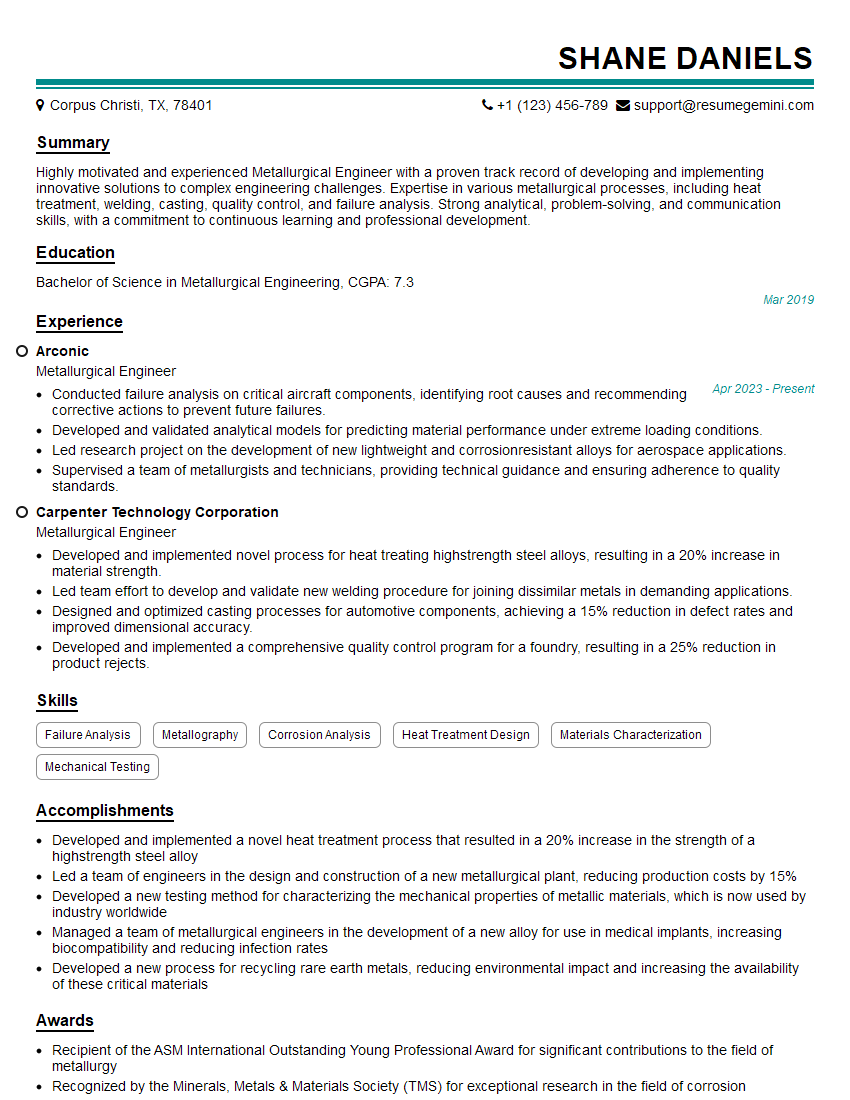
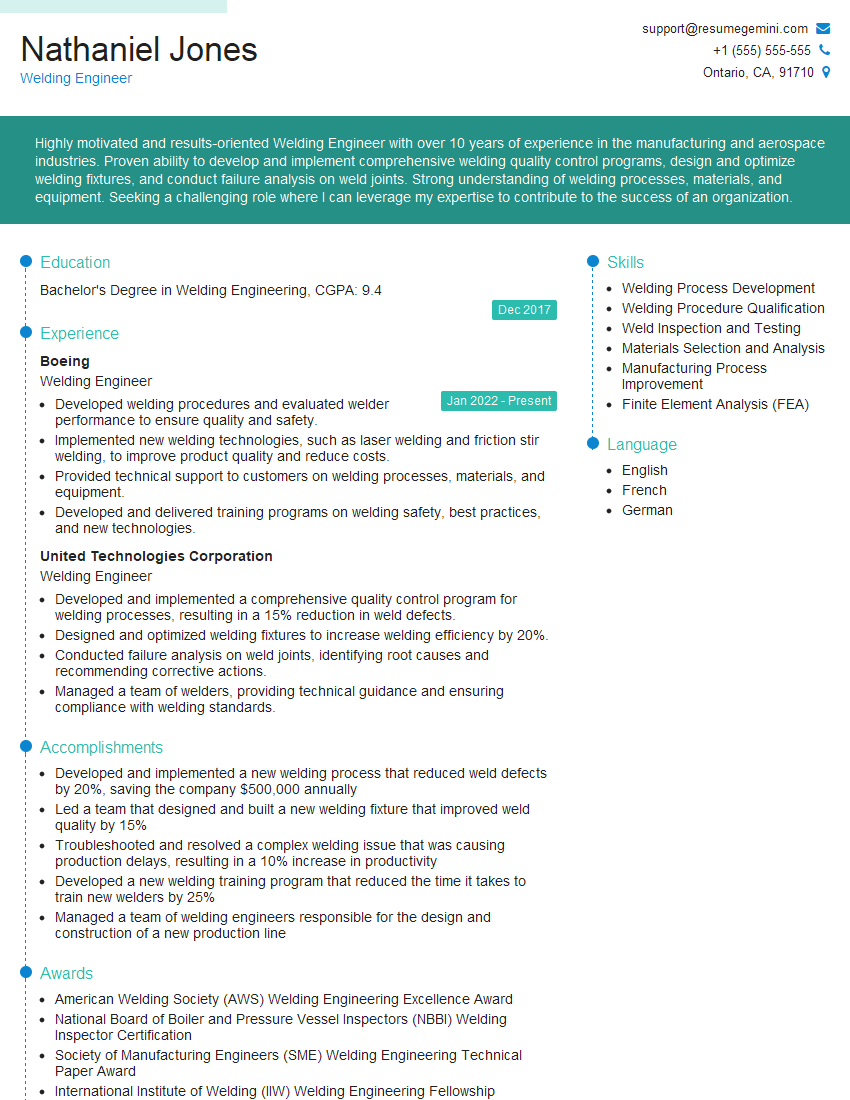
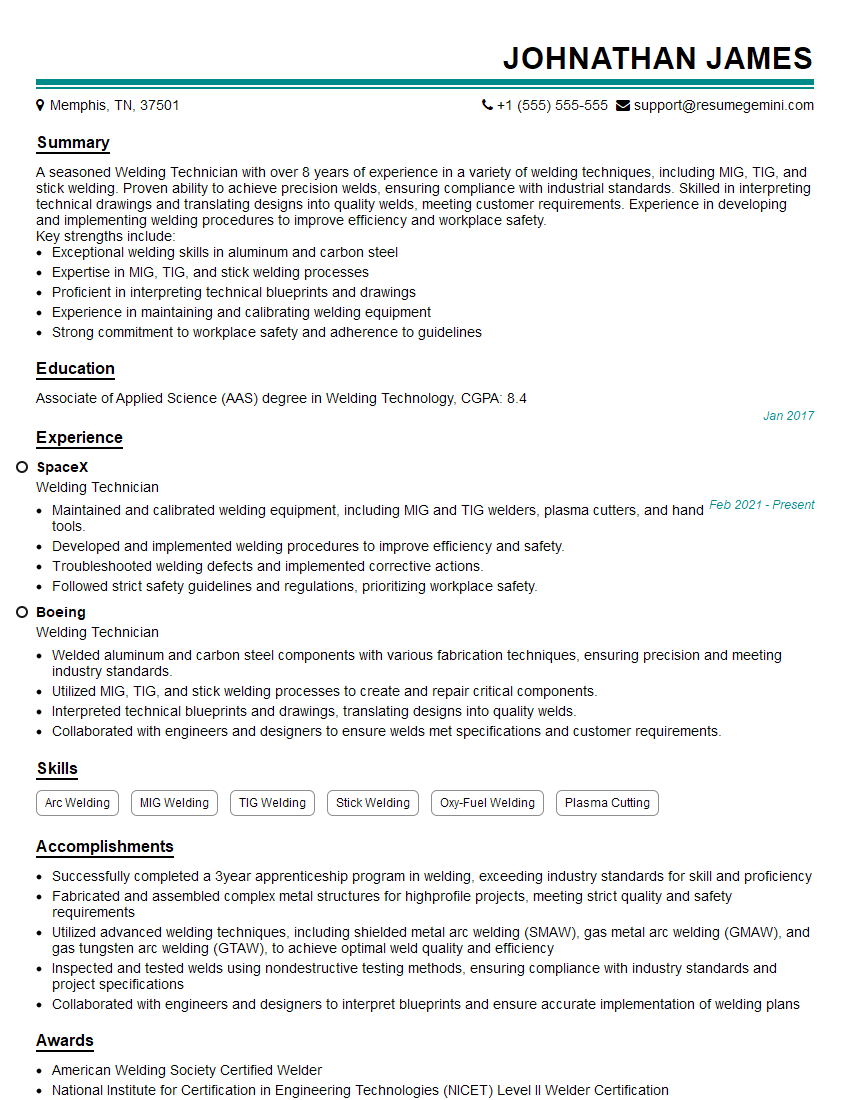
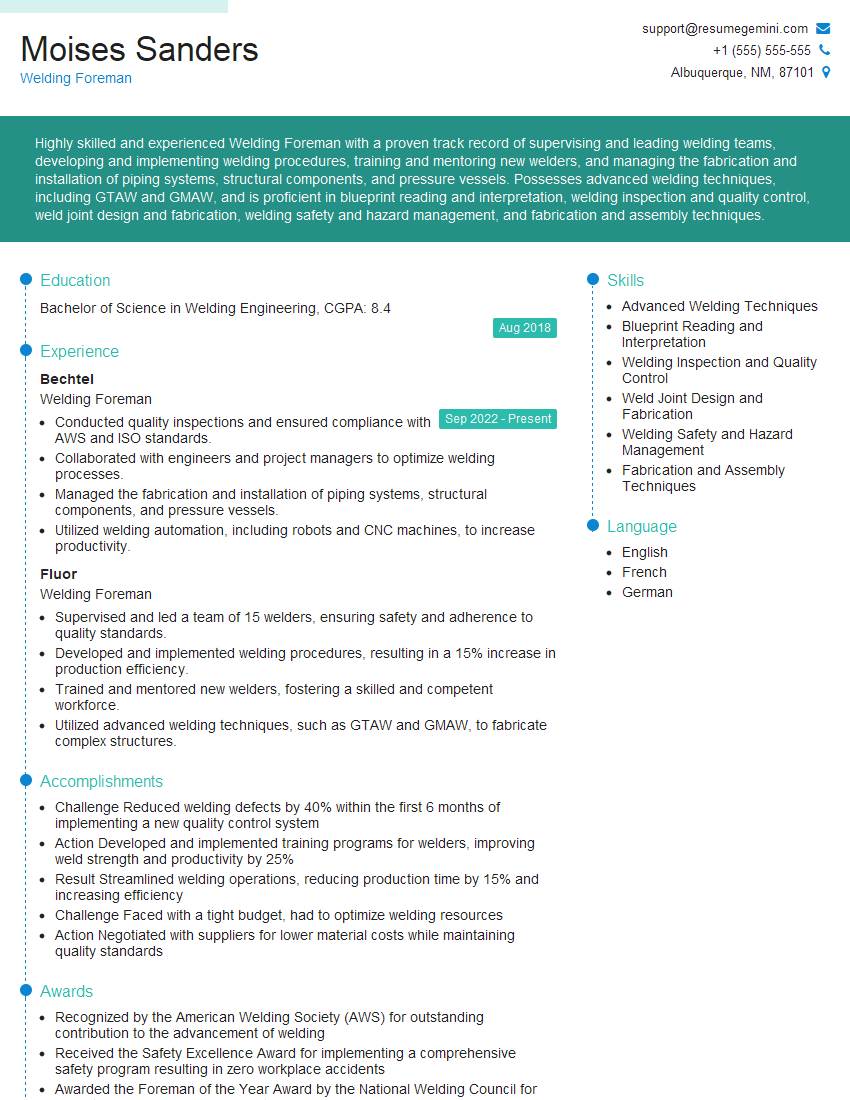
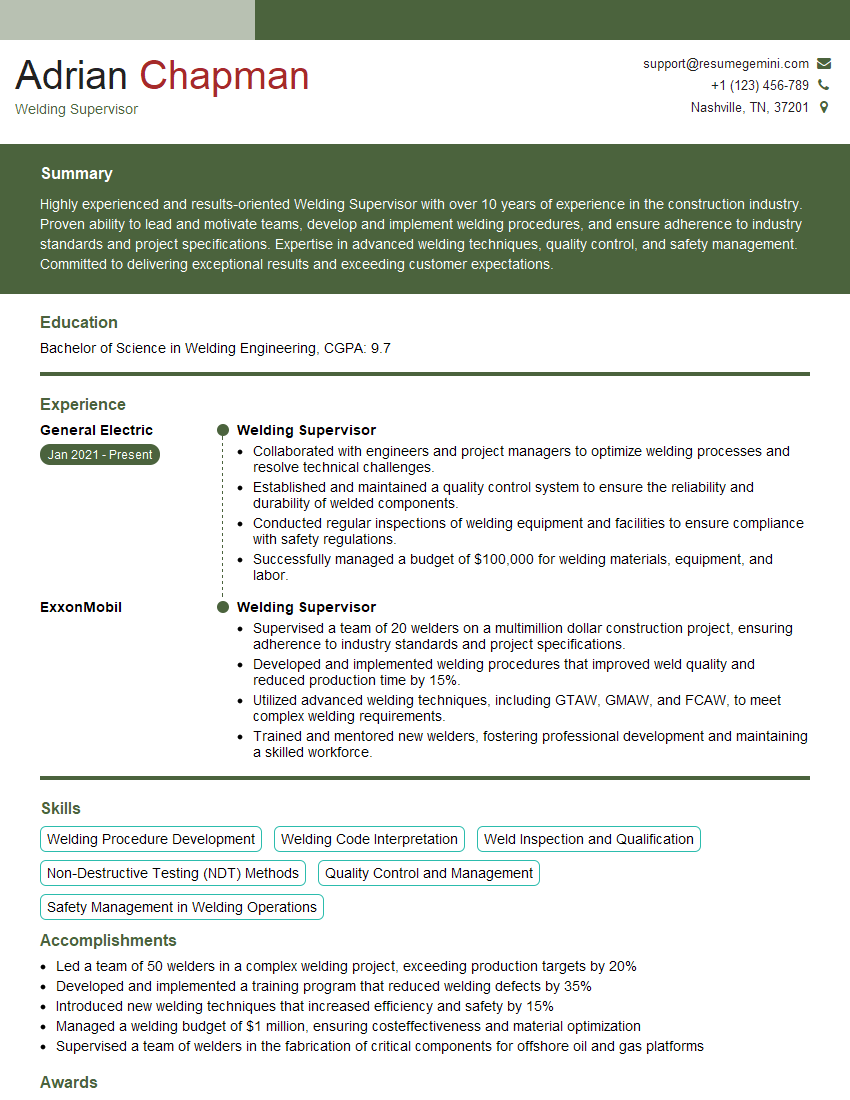
Mastering welding symbols and terminology is crucial for advancing your career in welding and related fields. A strong understanding demonstrates technical proficiency and attention to detail – highly valued attributes in this industry. To maximize your job prospects, create an ATS-friendly resume that showcases your skills and experience effectively. ResumeGemini is a trusted resource for building professional resumes that stand out to employers. We offer examples of resumes tailored to Welding Symbols and Terminology to help you get started. Investing time in crafting a compelling resume will significantly increase your chances of landing your dream welding job.

Explore more articles
Users Rating of Our Blogs
Share Your Experience
We value your feedback! Please rate our content and share your thoughts (optional).
What Readers Say About Our Blog
Really detailed insights and content, thank you for writing this detailed article.
IT gave me an insight and words to use and be able to think of examples