Every successful interview starts with knowing what to expect. In this blog, we’ll take you through the top Work Zone Traffic Control interview questions, breaking them down with expert tips to help you deliver impactful answers. Step into your next interview fully prepared and ready to succeed.
Questions Asked in Work Zone Traffic Control Interview
Q 1. Explain the MUTCD (Manual on Uniform Traffic Control Devices).
The MUTCD, or Manual on Uniform Traffic Control Devices, is the standard used in the United States to ensure consistency and safety in traffic control. Think of it as the rulebook for all things related to traffic signs, signals, markings, and devices. It dictates the design, placement, and application of these devices to guide drivers safely and efficiently through roadways, including work zones. It’s crucial because it promotes uniformity, understanding, and predictability for drivers across different states and jurisdictions. This minimizes confusion and improves safety significantly. The MUTCD is regularly updated to reflect advancements in traffic engineering and safety best practices.
Q 2. Describe different types of traffic control devices and their applications.
Various traffic control devices are used in work zones, each serving a specific purpose. Some key examples include:
- Signs: These provide advance warning, regulatory information (speed limits, lane closures), and guidance. Examples include temporary speed limit signs, lane closure signs, and detour signs.
- Signals: These use lights to control traffic flow, often replacing or supplementing standard traffic signals. Flashing arrow boards guide traffic into designated lanes, while traffic signals may be adjusted to accommodate the work zone.
- Pavement Markings: These include temporary lane lines, crosswalks, and other markings that help drivers navigate the altered roadway geometry. Think of temporary lane stripes guiding drivers around a construction site.
- Devices: This broad category includes things like cones, drums, barricades, and vertical panels. These physically define the work zone boundaries and guide drivers around obstacles.
- Channelizing Devices: Cones, drums, and barricades are used to guide traffic safely and efficiently through the work zone, preventing drivers from straying into the work area.
- Lighting and Illumination: Work zone lighting is crucial, especially at night, to enhance visibility for both workers and drivers. This may involve temporary lighting systems, high-intensity lighting, and reflective materials.
The application of each device depends on factors such as the type of work, the location, the traffic volume, and the time of day. For instance, a large highway project would require a much more extensive and robust traffic control plan than a smaller, less impactful roadside repair.
Q 3. How do you develop a safe and efficient traffic control plan?
Developing a safe and efficient traffic control plan requires a systematic approach. It’s like creating a detailed roadmap for traffic flow within the work zone. Here’s a step-by-step process:
- Site Assessment: Carefully assess the work zone’s location, traffic conditions, and potential hazards.
- Design Development: Design the traffic control layout, considering the MUTCD guidelines and best practices. This involves selecting appropriate devices and determining their placement.
- Plan Review and Approval: Have the plan reviewed by relevant authorities for compliance and approval.
- Implementation: Implement the plan meticulously, ensuring all devices are properly placed and functioning correctly.
- Monitoring and Adjustment: Monitor the plan’s effectiveness, making adjustments as needed to address unforeseen issues or improve efficiency.
- Documentation: Maintain thorough documentation of the plan, its implementation, and any changes made.
For example, a plan for a nighttime highway lane closure would significantly differ from a daytime construction project on a low-traffic side street. The former might require more intense lighting, advanced warning signs, and perhaps even a police escort.
Q 4. What are the key considerations for nighttime work zone traffic control?
Nighttime work zone traffic control presents unique challenges. Reduced visibility is the primary concern. Here are key considerations:
- Increased Lighting: Adequate lighting is paramount. This often involves deploying high-intensity lighting, such as portable work lights, to illuminate the work area and signage.
- High-Visibility Materials: Employing highly reflective materials on signs, barricades, and other devices is essential to increase their visibility in low-light conditions.
- Enhanced Signage: Larger, more prominent signs with enhanced reflectivity are needed to alert drivers of the work zone in low visibility.
- Driver Fatigue: Drivers are more prone to fatigue at night, so extra caution and clear, well-lit warnings are crucial to mitigate potential accidents.
- Reduced Traffic Volumes: While traffic volume is typically less at night, this can mean drivers are less alert and less prepared to see a work zone suddenly.
Imagine a situation where a highway is being repaved at night. Without ample lighting and reflective materials, drivers might not see the lane closure until they’re very close, leading to potential accidents. Therefore, a robust nighttime plan focuses on maximizing visibility to counter the reduced lighting conditions.
Q 5. Explain the importance of pre-construction planning in work zone safety.
Pre-construction planning is fundamental to work zone safety. It’s the groundwork that ensures a safe and efficient operation from the outset. This involves:
- Traffic Studies and Analysis: Thoroughly assessing traffic patterns, volumes, and speeds to determine the best approach for managing traffic flow.
- Detailed Design of the Traffic Control Plan: This involves creating a comprehensive plan that complies with MUTCD guidelines and incorporates all the necessary traffic control devices.
- Stakeholder Coordination: Involving all parties—contractors, engineers, regulatory agencies, and local authorities—to ensure everyone is informed and on the same page.
- Worker Training: Providing adequate training to workers on safe work practices and the proper use of traffic control devices.
- Emergency Procedures: Developing a detailed emergency response plan to handle unexpected situations such as vehicle accidents or equipment malfunctions.
For instance, neglecting a traffic study and failing to anticipate peak traffic times can lead to significant delays and congestion, endangering both workers and drivers. A well-thought-out pre-construction plan mitigates these risks.
Q 6. How do you handle unexpected events or emergencies in a work zone?
Unexpected events require immediate and decisive action. A clear emergency response plan is vital. When an unexpected event happens (accident, equipment failure, etc.):
- Immediate Response: Prioritize safety. Quickly assess the situation and take immediate steps to ensure the safety of workers and drivers. This might involve stopping traffic, providing first aid, or securing the area.
- Emergency Services Notification: Call emergency services (police, fire, ambulance) as needed. Provide them with accurate information about the location and nature of the emergency.
- Traffic Control Adjustment: Adapt the traffic control plan to address the emergency. This may involve rerouting traffic, adding more signage, or increasing the number of personnel on site.
- Investigation: Once the immediate danger has passed, conduct a thorough investigation to determine the cause of the event and identify any areas for improvement in the traffic control plan.
- Documentation: Document the emergency event, the response actions taken, and any lessons learned.
Think of a sudden power outage during nighttime work. The immediate action is to immediately increase lighting using backup sources and to alert emergency services and potentially local authorities regarding the reduced visibility and risks.
Q 7. What are your strategies for communicating effectively with workers and drivers in a work zone?
Effective communication is crucial for work zone safety. This includes clear communication between workers and between workers and drivers.
- Worker Communication: Regular safety briefings, clear instructions, and established communication protocols are essential to ensure workers understand their roles and responsibilities.
- Driver Communication: Employ clear and consistent signage, warning lights, and pavement markings. This ensures drivers are fully aware of the work zone and how to navigate it safely. Use of message boards with clear and concise information is also highly effective. When needed, flaggers can also communicate directly with drivers to guide them through the work zone.
- Technology: Consider using technology like variable message signs (VMS) to provide drivers with real-time updates on delays or changes to traffic patterns.
Imagine a situation where a worker misinterprets instructions. Clear and consistent communication among workers, using defined channels like daily briefings and visual aids, eliminates such misunderstandings. Similarly, clear signage and message boards prevent drivers from misinterpreting work zone information, improving safety for everyone.
Q 8. Describe your experience with flagging procedures and safety protocols.
Flagging procedures are crucial for guiding traffic safely around work zones. My experience encompasses all aspects, from understanding hand signals and their precise meaning to employing proper body positioning and maintaining constant vigilance. Safety protocols go hand-in-hand with flagging, focusing on personal protective equipment (PPE) like high-visibility vests and appropriate footwear, ensuring that flagger placement considers sight distance and traffic flow. For example, I’ve worked on projects where we meticulously planned flagger stations based on traffic volume and speed studies, minimizing risk of accidents. I also have experience in training new flaggers, ensuring everyone is up to speed on the latest safety guidelines.
- Hand signals: I am proficient in all standard hand signals for stopping, slowing, and directing traffic, including those used in low-visibility situations.
- PPE: I always ensure the use of high-visibility clothing, hard hats, safety glasses, and appropriate footwear, and I insist on the same standards for everyone working under my supervision.
- Situational awareness: I continually assess the traffic flow and adjust flagging procedures as needed to ensure everyone’s safety.
Q 9. How do you ensure compliance with OSHA regulations in a work zone?
OSHA compliance is paramount in work zone safety. My approach is proactive and multi-faceted. It begins with a thorough understanding of all relevant OSHA standards, particularly those concerning traffic control, personal protective equipment (PPE), and hazard communication. We start each project by conducting a comprehensive job hazard analysis (JHA) to identify potential hazards and develop control measures. This analysis informs our traffic control plan, which details all aspects of worker and traffic safety, from lane closures to signage. We regularly inspect the work zone to ensure compliance and address any issues immediately. For example, if a piece of equipment malfunctions, we shut down the operation until it’s repaired and safe to continue. We document all aspects of our safety program, including training records and incident reports, maintaining comprehensive records for audit purposes. Failure to comply with OSHA could lead to fines, project delays, and potentially serious injuries or fatalities.
Q 10. Explain your understanding of lane closures and traffic diversions.
Lane closures and traffic diversions are essential elements of work zone traffic control, designed to ensure the safety of workers while minimizing disruptions to the public. Understanding the principles of traffic engineering is critical here. I’ve been involved in designing and implementing various lane closure strategies, from single lane closures using cones and drums to more complex multi-lane closures requiring temporary barriers and advanced warning signs. The process involves considering traffic volume, speed, and the available road space. Diversions require planning alternate routes and employing clear and concise signage to guide motorists. I utilize software like [mention a relevant software if you know it] to model traffic flow and simulate different closure scenarios to optimize safety and efficiency. For example, I’ve coordinated a complete highway closure overnight to safely complete bridge repairs, requiring careful coordination with law enforcement and emergency services.
Q 11. What are the best practices for managing pedestrian and bicycle traffic in a work zone?
Managing pedestrian and bicycle traffic in a work zone necessitates dedicated measures beyond those for vehicular traffic. This includes clearly marked pedestrian walkways separate from the work area, possibly using barriers or temporary fencing. For bicycles, designated routes are critical, often separated from vehicle traffic or slowed using traffic calming measures. High-visibility signage is essential, clearly indicating the presence of the work zone and alternative routes for pedestrians and cyclists. In some cases, temporary crosswalks or pedestrian bridges may be necessary. Regular patrols of the work zone help ensure that pedestrians and cyclists adhere to designated routes and that safety measures are effective. I recall a project where we installed temporary bike lanes separated from the main work zone by a clear barrier, greatly improving the safety of cyclists.
Q 12. How do you assess and mitigate risks in a work zone?
Risk assessment in a work zone is a systematic process that involves identifying hazards, analyzing their potential severity and likelihood, and developing mitigation strategies. This begins with a thorough site survey to identify potential hazards, considering factors such as traffic volume, environmental conditions, and equipment operation. I use a combination of qualitative and quantitative risk assessment techniques to prioritize risks and develop control measures. For example, if a high-speed road is adjacent to the work zone, then we implement measures to reduce traffic speed or physically separate traffic from the workers. The risk assessment process is documented, regularly reviewed, and updated as necessary to account for changing conditions.
Q 13. Describe your experience with traffic control software or planning tools.
I have extensive experience using traffic control software and planning tools to optimize work zone safety and efficiency. Specifically, I am proficient in [mention specific software names and versions if possible, e.g., ‘AutoTURN’ for sight distance analysis, ‘TrafficPlan’ for traffic simulation’]. These tools help in creating detailed traffic control plans, optimizing lane closures and signal timing, and conducting simulations to predict traffic flow and identify potential issues. The software aids in generating professional-quality plans and reports required for permit applications and documentation. For example, using [Software Name], we were able to analyze various traffic diversion scenarios to minimize traffic congestion during a major road repair project. The ability to visualize different scenarios and quantify their impacts greatly aided in decision-making.
Q 14. How do you coordinate with local authorities and emergency services for work zone operations?
Coordination with local authorities and emergency services is vital for successful and safe work zone operations. This begins with early engagement, informing relevant agencies (police, fire, EMS, and transportation departments) of the project, its scope, and its planned duration. Detailed traffic control plans are submitted for review and approval, outlining all aspects of traffic management, including lane closures, detours, and emergency access points. Regular communication is maintained throughout the project, ensuring they are aware of any changes or unexpected events. Dedicated communication channels (radio, phone) ensure rapid response in case of emergencies. I’ve worked on many projects requiring close collaboration with local police to manage traffic flow and ensure emergency vehicles have unimpeded access to the work zone.
Q 15. Explain your understanding of work zone signage and pavement markings.
Work zone signage and pavement markings are crucial for guiding drivers safely through construction or maintenance areas. They act as a visual communication system, alerting drivers to changes in traffic patterns and potential hazards. Proper signage is paramount to preventing accidents.
Signage includes temporary signs like advance warning signs (e.g., ‘Construction Ahead’), lane closures signs, speed limit reductions, and detour signs. The placement and type of signs are determined by the Manual on Uniform Traffic Control Devices (MUTCD), ensuring consistency and clarity. For example, a diamond-shaped sign indicates a warning, while a rectangular sign usually provides regulatory information.
Pavement markings complement signage. These include temporary lane lines, arrows, crosswalks, and symbols that guide drivers through the work zone. High-visibility paint and materials are essential for optimal visibility, especially at night or in poor weather. For instance, using reflective tape on pavement markings dramatically improves nighttime visibility.
Think of it like this: signage is the ‘voice’ warning drivers and giving instructions, while pavement markings are the ‘road map’ guiding them physically through the altered roadway.
Career Expert Tips:
- Ace those interviews! Prepare effectively by reviewing the Top 50 Most Common Interview Questions on ResumeGemini.
- Navigate your job search with confidence! Explore a wide range of Career Tips on ResumeGemini. Learn about common challenges and recommendations to overcome them.
- Craft the perfect resume! Master the Art of Resume Writing with ResumeGemini’s guide. Showcase your unique qualifications and achievements effectively.
- Don’t miss out on holiday savings! Build your dream resume with ResumeGemini’s ATS optimized templates.
Q 16. How do you ensure the proper training and certification of your traffic control team?
Ensuring proper training and certification for my traffic control team is non-negotiable. It’s a multi-step process focusing on both theoretical knowledge and practical skills. We use a combination of methods:
- Classroom training: This covers the MUTCD, relevant safety regulations, and best practices for work zone safety.
- Hands-on training: This involves practical exercises in setting up and managing traffic control devices, including flagger training, proper placement of cones and barrels, and use of temporary traffic signals.
- Certification: All team members obtain appropriate certifications (e.g., flaggers, traffic control persons) recognized by our state’s Department of Transportation or other relevant authorities.
- Regular refresher training: To ensure knowledge remains up-to-date and skills are honed, we conduct regular refreshers and updates on new regulations or techniques.
- On-the-job mentoring: Experienced team members mentor new hires, guiding them through real-world scenarios.
By investing in comprehensive training and certification, we reduce the risk of accidents and ensure consistent compliance with safety standards. I view it as an investment in the safety of both the workers and the traveling public.
Q 17. What are the common causes of work zone accidents, and how can they be prevented?
Work zone accidents stem from several factors: driver inattention, speeding, impairment, inadequate traffic control, and poor planning.
- Driver Behavior: Distracted driving, speeding, and failure to heed warning signs are primary causes. Impaired driving further exacerbates the risks.
- Inadequate Traffic Control: Insufficient or poorly placed signage, incorrect lane markings, or lack of adequate warning distances contribute to confusion and accidents.
- Poor Work Zone Planning: Inadequate planning, such as failing to account for peak traffic times or not having a clear traffic management plan, increases the risk.
- Worker Safety: Lack of proper personal protective equipment (PPE) for workers also contributes to accidents.
Prevention strategies include comprehensive planning that considers traffic volumes and patterns, implementation of robust traffic control measures conforming to the MUTCD, regular inspections of the work zone, and worker training emphasizing safety protocols and awareness. Enforcing speed limits and promoting driver awareness campaigns are also crucial.
For example, in one project we experienced a near-miss due to insufficient signage. We immediately added more advanced warning signs and improved lane markings, effectively preventing further incidents.
Q 18. How do you manage traffic congestion during work zone operations?
Managing traffic congestion during work zone operations requires a multi-pronged approach. We begin with careful planning that incorporates traffic modeling to predict potential congestion points.
- Advanced warning signs: Placing signs well in advance of the work zone allows drivers to adjust their routes or travel times.
- Alternative routes: Providing clear detour routes and signage for drivers reduces congestion in the immediate work zone area.
- Lane closures and shifts: Minimizing lane closures and efficiently managing shifts using temporary traffic signals ensures smooth traffic flow.
- Traffic signal optimization: Utilizing adaptive traffic signal systems that adjust to real-time conditions can mitigate congestion.
- Coordination with local authorities: Working closely with law enforcement and transportation agencies to manage traffic flow around the work zone is key.
- Real-time monitoring: Using traffic cameras and monitoring systems allows for adjustments based on real-time conditions. This enables rapid responses to unexpected events.
In one project, we anticipated heavy congestion and, by implementing the measures above, successfully reduced delays by 20% compared to previous similar projects. Careful planning is crucial; it’s always better to be proactive rather than reactive.
Q 19. What are your strategies for dealing with aggressive or impatient drivers?
Dealing with aggressive or impatient drivers requires a calm and professional approach. Our strategy focuses on de-escalation and maintaining safety.
- Clear communication: Our traffic control personnel are trained to communicate clearly and respectfully, even when faced with aggressive drivers. Using clear and concise hand signals is essential.
- Maintaining a safe distance: Traffic control personnel should maintain a safe distance from aggressive drivers to avoid confrontations.
- Law enforcement support: In cases of extreme aggression, we promptly contact law enforcement for assistance.
- Video recording: Dash cameras on work vehicles provide evidence of driver behavior in case of incidents.
- Driver awareness campaigns: Supporting public awareness initiatives that promote patience and respect in work zones is beneficial in the long run.
We treat every encounter as an opportunity to reinforce safe driving practices. Our goal is not confrontation, but to keep our workers and drivers safe. We understand that frustrations can arise, but safety should always be the priority.
Q 20. Describe your experience with temporary traffic signal installations and maintenance.
I have extensive experience in temporary traffic signal (TTS) installations and maintenance. This involves careful planning, precise placement, and routine inspections.
- Planning and design: Accurate planning, based on site-specific conditions and traffic patterns, is vital. This involves determining the optimal locations for TTS units and coordinating with utility companies.
- Installation: Our team follows strict procedures during installation, ensuring proper grounding, wiring, and testing of all components to meet MUTCD guidelines and local regulations. The use of advanced equipment such as automated traffic signal detection systems further improves the effectiveness and safety of the TTS.
- Maintenance: Regular inspections are crucial. We check for damaged equipment, ensure proper functioning of lights and signals, and address issues promptly. Preventive maintenance, such as cleaning and lubrication, extends the lifespan of the equipment.
- Troubleshooting: Our team is trained to troubleshoot common problems quickly and efficiently to minimize disruption to traffic flow. We maintain detailed records of maintenance and repairs.
We are proficient in various types of TTS, including those with vehicle detection capabilities and those that can be remotely controlled and monitored. Our focus is always on maintaining safety and efficiency throughout the operation.
Q 21. Explain your experience in incident management and response within work zones.
Incident management and response within work zones are critical. Our procedures prioritize safety and efficient resolution of any issues.
- Emergency response plan: We have a detailed plan outlining procedures for responding to incidents such as accidents, equipment failures, or medical emergencies.
- Communication system: Clear and reliable communication between traffic control personnel, emergency services, and work crew is vital. We utilize two-way radios, cell phones, and other communication tools.
- First aid and CPR training: Our team is trained in first aid and CPR to provide immediate assistance in case of injuries.
- Incident documentation: Thorough documentation of each incident, including details of the event, actions taken, and outcomes, is essential for analysis and improvement.
- Post-incident review: We conduct a thorough review of each incident to identify areas for improvement in our safety procedures and traffic control measures.
A quick response and efficient incident management not only protect workers and drivers but also minimize disruption to traffic and project schedules. We strive for continuous improvement in our emergency response protocols.
Q 22. How do you maintain accurate records and documentation of work zone activities?
Maintaining accurate records in a work zone is paramount for safety, regulatory compliance, and project management. It’s like keeping a meticulous diary for the entire project’s lifespan. We utilize a multi-pronged approach:
Digital Logbooks: We use specialized software or apps to digitally record daily activities, including weather conditions, personnel present, equipment used, incidents, and any changes to the traffic control plan. This ensures easy access, searchability, and minimizes data loss.
Photographs and Videos: Comprehensive visual documentation is crucial. We take photos and videos of the work zone setup, traffic flow, signage placement, and any incidents. This acts as irrefutable evidence in case of disputes or investigations.
Incident Reports: Any incidents, near misses, or accidents are immediately documented using standardized forms. These reports detail the time, location, parties involved, and the actions taken. This helps identify trends and prevent future incidents.
Inspection Checklists: Regular inspections of the work zone are conducted using detailed checklists. These checklists ensure all traffic control devices are functioning properly and are in compliance with regulations. The results are meticulously recorded.
All these records are stored securely and are easily accessible to relevant parties, including supervisors, clients, and regulatory authorities.
Q 23. Describe your experience in using different types of traffic control equipment.
My experience with traffic control equipment is extensive, covering a wide range of devices crucial for work zone safety. I’m proficient in using:
Traffic Cones and Barricades: These are fundamental for channeling traffic and defining work zone boundaries. Proper placement and spacing are key, and I’m adept at configuring them for various scenarios, from simple lane closures to complex highway work.
Signs and Pavement Markings: I’m skilled in selecting and placing appropriate warning signs, directional signs, and speed limit signs, ensuring they are compliant with regulations and clearly visible to drivers. Temporary pavement markings, such as lane lines and arrows, are also applied correctly to guide traffic.
Channelizing Devices: I have experience using various types, including drums, tubes, and delineators, to guide traffic smoothly and safely through the work zone. The selection depends on the specific conditions and traffic volume.
Flashing Lights and Arrow Boards: These are vital for alerting drivers to the presence of a work zone and guiding them through it. I ensure these devices are properly positioned and maintained for maximum visibility.
Temporary Traffic Signals (TTS): I’m familiar with the operation and programming of TTS systems, which are often used for more complex work zones requiring precise traffic management. This includes understanding the phasing and timing requirements to ensure efficient traffic flow.
My experience encompasses both the practical deployment and the regulatory requirements associated with these devices, ensuring compliance and maximum safety.
Q 24. What are your strategies for minimizing delays and disruptions to traffic flow?
Minimizing delays and disruptions in a work zone requires proactive planning and on-the-ground adaptability. My strategies include:
Optimized Traffic Control Plans: We develop detailed plans that consider traffic volume, road geometry, and the nature of the work being performed. This includes choosing the least disruptive work methods and scheduling work during off-peak hours when possible.
Effective Communication: Clear and timely communication with drivers is vital. This includes using appropriate signage, variable message signs, and public announcements to inform drivers of delays and alternate routes.
Regular Monitoring and Adjustment: We continuously monitor traffic flow and make adjustments to the traffic control plan as needed based on real-time conditions. This might involve adjusting the timing of temporary signals or repositioning traffic control devices.
Coordination with Other Agencies: When working on roads with multiple users (e.g., public transportation, emergency services), seamless coordination is crucial to prevent conflicts and disruptions.
Pilot Car Operations: For particularly complex or high-risk situations, pilot cars might be employed to escort vehicles through the work zone, providing a safe and controlled environment.
By combining these strategies, we aim to minimize the impact on traffic flow and keep commuters moving efficiently and safely.
Q 25. How do you adapt your traffic control plan to changing weather conditions?
Adapting to changing weather conditions is critical for maintaining safety and efficiency in a work zone. It’s like adjusting a sailing ship’s course based on the wind and waves. We employ these strategies:
Contingency Plans: Our traffic control plans include contingency plans for various weather scenarios, such as heavy rain, snow, fog, or high winds. These plans specify alternative procedures and safety measures to be implemented.
Reduced Visibility Measures: In low-visibility conditions, we enhance the use of high-intensity lighting, reflective devices, and fog lights on equipment. Visibility is crucial for preventing accidents.
Weather Monitoring: We constantly monitor weather forecasts and adjust our work schedule or traffic control plan as needed. This may include suspending work altogether during severe weather events.
Emergency Response: We have pre-established emergency response procedures to handle unexpected weather-related events, including how to quickly and safely clear the work zone if necessary.
Material and Equipment Protection: During inclement weather, we take steps to protect materials and equipment from damage, minimizing disruption and cost overruns.
By proactively addressing weather-related challenges, we ensure the safety of workers and the public, while minimizing delays.
Q 26. How do you measure the effectiveness of your traffic control plan?
Measuring the effectiveness of a traffic control plan involves both quantitative and qualitative assessments. Think of it like reviewing the performance of a complex machine: you need various metrics to understand its efficiency.
Traffic Flow Data: We use traffic counters and video monitoring to measure speed, volume, and density of traffic both inside and outside the work zone. This data is compared to baseline data to assess the impact of the traffic control measures.
Delay Measurements: We track the delays experienced by drivers, often using GPS data or travel time surveys. This helps quantify the impact of the work zone on commuting times.
Accident and Incident Rates: We carefully monitor the number of accidents and near misses within the work zone. A low rate indicates the effectiveness of safety measures.
Worker Feedback: We solicit feedback from workers regarding the effectiveness and practicality of the traffic control plan. This provides valuable insights into on-the-ground challenges and potential improvements.
Public Feedback: We collect feedback from the public through surveys or online channels to understand their experience navigating the work zone. This helps identify areas for improvement.
By combining these data points, we gain a comprehensive understanding of our traffic control plan’s success and areas that need refinement.
Q 27. Describe a challenging situation you faced in a work zone and how you resolved it.
During a highway resurfacing project, we encountered an unexpected underground utility line. It was like discovering a hidden minefield. This created a significant challenge, as it wasn’t indicated on the existing utility maps. Here’s how we resolved it:
Immediate Stoppage: We immediately stopped work in the affected area to prevent damage to the utility line and potential worker injury.
Emergency Notification: We contacted the utility company and relevant authorities, providing them with the exact location and details.
Safety Zone Establishment: We expanded the work zone safety perimeter to ensure worker and public safety while the utility line was assessed.
Utility Line Verification: The utility company sent a team to verify the line’s location, type, and condition.
Traffic Control Adjustment: We adjusted our traffic control plan to accommodate the unexpected closure and rerouted traffic as necessary.
Revised Plan: Working with the utility company, we revised the work plan to safely accommodate the utility line, ensuring minimal further disruption.
Communication with Stakeholders: We communicated the delay and any changes to traffic patterns to the public through appropriate channels.
While the situation was initially alarming, our prompt response and collaborative approach minimized disruption and ensured the safety of everyone involved. This experience highlighted the importance of thorough planning, proactive communication, and adaptability in dealing with unexpected situations in work zones.
Key Topics to Learn for Work Zone Traffic Control Interview
- Traffic Control Plans & Drawings: Understanding and interpreting traffic control plans, including symbols, devices, and their placement.
- Safety Regulations & Compliance: Knowledge of OSHA regulations and best practices for worker and public safety in work zones.
- Traffic Control Devices & Their Use: Practical application of cones, barrels, signs, flaggers, and other devices in various work zone scenarios.
- Incident Management & Emergency Response: Handling unexpected events, such as accidents or equipment malfunctions, within the work zone.
- Work Zone Setup & Take Down Procedures: Safe and efficient methods for establishing and removing traffic control measures.
- Communication & Coordination: Effective communication with workers, supervisors, and the public to ensure safety and efficiency.
- MUTCD (Manual on Uniform Traffic Control Devices): Familiarity with the MUTCD guidelines and their practical implications.
- Problem-Solving in Dynamic Environments: Adapting traffic control strategies to changing conditions and unexpected challenges.
- Technology in Traffic Control: Understanding the role of technology, such as electronic signage and temporary traffic signals.
Next Steps
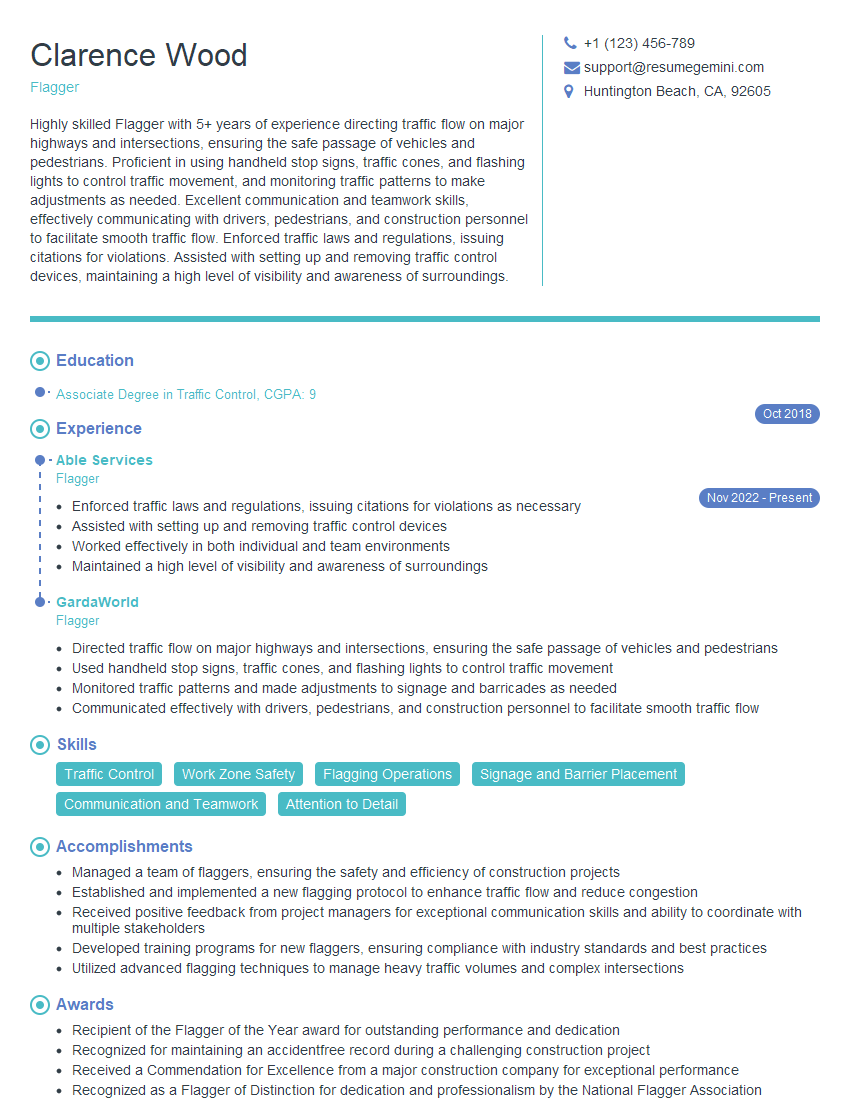
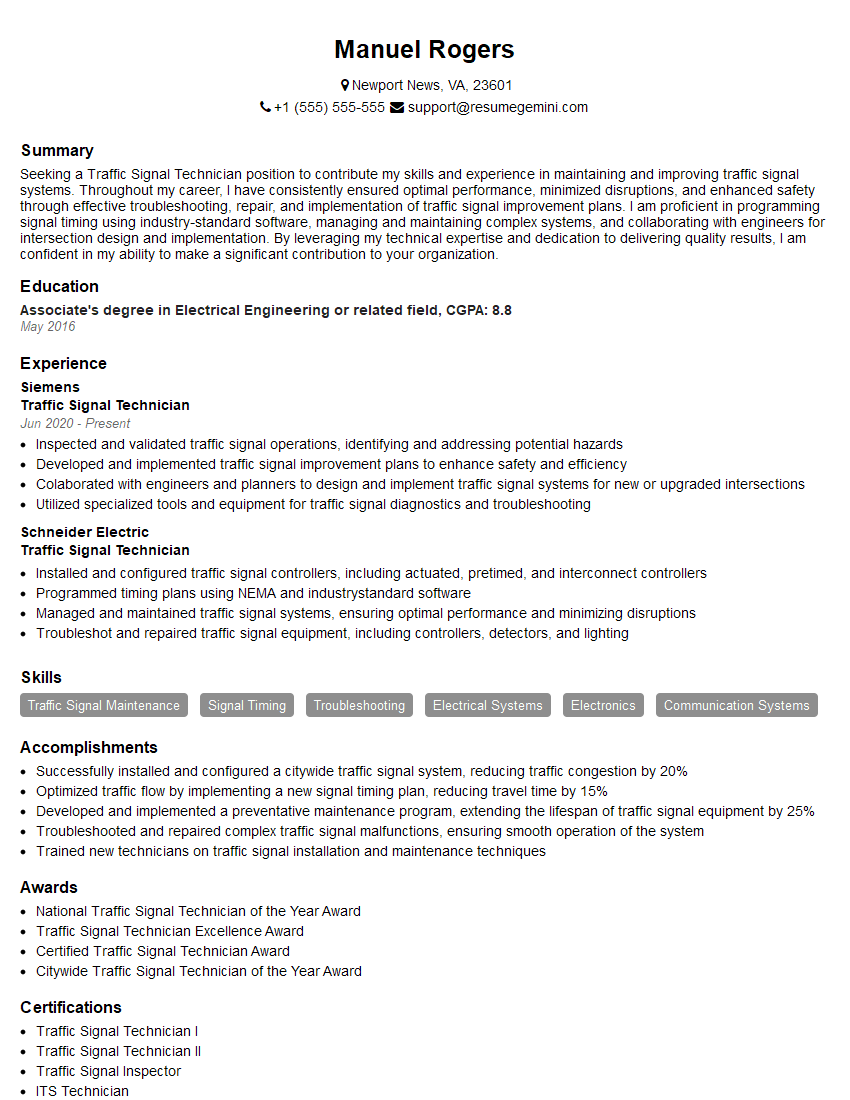
Mastering Work Zone Traffic Control opens doors to rewarding careers with excellent growth potential in the construction, transportation, and utility sectors. A strong understanding of safety regulations and practical application is highly valued by employers. To significantly enhance your job prospects, focus on building an ATS-friendly resume that highlights your skills and experience effectively. ResumeGemini is a trusted resource to help you create a professional and impactful resume that gets noticed. We provide examples of resumes tailored specifically to Work Zone Traffic Control to guide you in showcasing your qualifications.
Explore more articles
Users Rating of Our Blogs
Share Your Experience
We value your feedback! Please rate our content and share your thoughts (optional).
What Readers Say About Our Blog
Really detailed insights and content, thank you for writing this detailed article.
IT gave me an insight and words to use and be able to think of examples