Are you ready to stand out in your next interview? Understanding and preparing for Zero Trust Network Architecture interview questions is a game-changer. In this blog, we’ve compiled key questions and expert advice to help you showcase your skills with confidence and precision. Let’s get started on your journey to acing the interview.
Questions Asked in Zero Trust Network Architecture Interview
Q 1. Explain the core principles of Zero Trust Network Architecture.
Zero Trust Network Architecture (ZTNA) operates on the principle of “never trust, always verify.” It shifts from a perimeter-based security model to one that verifies every access request, regardless of its origin (inside or outside the network). This means every user, device, and application is treated as untrusted until its identity and security posture are explicitly verified.
- Least Privilege Access: Granting users only the necessary access rights to perform their jobs, minimizing the potential damage from compromised accounts.
- Microsegmentation: Dividing the network into smaller, isolated segments to limit the impact of a breach.
- Strong Authentication: Utilizing multi-factor authentication (MFA) and other robust methods to verify identities.
- Data Protection: Employing encryption and data loss prevention (DLP) techniques to safeguard sensitive information.
- Continuous Monitoring and Security Assessment: Constantly assessing the security posture of users, devices, and applications and taking proactive measures to mitigate risks.
Imagine a building with a single, large entrance. Traditional security focuses on securing that entrance. ZTNA is like having a separate, secure access point for every room, requiring individual verification before entry into each.
Q 2. What are the key differences between a traditional network security model and a Zero Trust model?
The core difference lies in the trust model. Traditional networks operate on an “implicit trust” model, assuming that anything inside the network perimeter is safe. ZTNA, in contrast, operates on an “explicit trust” model, verifying every access request regardless of location.
- Perimeter Security vs. Identity-Based Security: Traditional models rely on perimeter firewalls and VPNs for security. ZTNA leverages identity and context to grant access.
- Trust vs. Verification: Traditional models trust everything within the network, while ZTNA verifies every user, device, and application before granting access.
- Reactive vs. Proactive: Traditional security often reacts to breaches. ZTNA proactively prevents unauthorized access.
Think of it this way: a traditional castle has a strong outer wall (perimeter). If the wall is breached, everything inside is compromised. A Zero Trust model is like a fortress with individual locked rooms, each requiring a separate key (verification) for access, greatly limiting the damage of a single breach.
Q 3. Describe the role of micro-segmentation in a Zero Trust environment.
Microsegmentation plays a crucial role in ZTNA by dividing the network into smaller, isolated segments. If one segment is compromised, the attacker’s lateral movement is restricted, limiting the damage they can inflict. Each segment has its own security policies and controls.
For example, a company might segment its network to isolate the accounting department from the marketing department. Even if an attacker gains access to the marketing network segment, they would not automatically have access to the accounting segment’s sensitive data. This significantly reduces the attack surface and limits the impact of a successful breach.
Implementing microsegmentation involves using tools like virtual LANs (VLANs), software-defined networking (SDN), and network access control (NAC) to create and manage these isolated segments.
Q 4. How does Zero Trust address the challenges of lateral movement?
Lateral movement – the ability of an attacker to move from one compromised system to another within a network – is a major concern in traditional network architectures. ZTNA directly addresses this by minimizing the impact of a compromised system. Since access is granted based on identity and context, even if a user’s credentials are stolen, the attacker will only have access to the resources that the user was specifically authorized to access. Microsegmentation further limits the attacker’s ability to move laterally by isolating compromised systems from the rest of the network.
Instead of having wide-open access within the network, each resource is individually protected and only accessible with proper authentication and authorization. This limits the attacker’s options after an initial compromise.
Q 5. Explain the importance of identity and access management (IAM) in Zero Trust.
Identity and Access Management (IAM) is the cornerstone of Zero Trust. It’s the mechanism that verifies and controls user access to resources. Without a robust IAM system, the “never trust, always verify” principle is impossible to implement. IAM ensures that only authorized users and devices can access specific resources, and only when they need to.
A strong IAM system includes features like:
- Centralized Identity Management: A single system to manage all user identities and permissions.
- Strong Authentication: Multi-factor authentication (MFA) and other strong authentication methods.
- Authorization: Defining what actions users can perform on different resources.
- Access Control Policies: Defining rules that govern access to resources based on user roles, location, device posture, and other factors.
Imagine a bank vault. IAM is like the combination lock and the security guard system. It controls who can access the vault (resources) and under what conditions.
Q 6. What are some common authentication methods used in Zero Trust?
Zero Trust environments heavily rely on strong authentication methods, often employing multi-factor authentication (MFA) as a baseline. Common methods include:
- Passwords (with MFA): Passwords are still used but supplemented with additional factors for enhanced security.
- Biometrics: Fingerprint scanners, facial recognition, and other biometric methods.
- Hardware Security Tokens: Physical devices (like USB keys) that generate one-time passwords.
- Software Tokens: Mobile authenticator applications that generate one-time passwords.
- Certificates: Digital certificates to verify the identity of users and devices.
- Contextual Authentication: Authentication that takes into account location, device posture, and other factors.
The goal is to make it exceedingly difficult for attackers to gain unauthorized access even if they compromise one authentication factor. The more factors, the stronger the authentication.
Q 7. Discuss the role of least privilege access in Zero Trust.
Least privilege access (LPA) is a critical security principle in ZTNA. It dictates that users and applications should only be granted the minimum necessary permissions to perform their tasks. This principle significantly reduces the potential impact of a compromised account or application. If a user’s account is compromised, the attacker won’t have access to any more resources than those specifically assigned to that user.
For example, an accountant might only have access to the accounting system, not the entire company network. Even if their account is compromised, the attacker wouldn’t be able to access other sensitive systems. Regularly reviewing and adjusting user permissions is essential to maintain the principle of least privilege.
Q 8. How does Zero Trust handle remote access?
Zero Trust fundamentally changes how we approach remote access. Instead of granting broad network access based on location (inside/outside the network), Zero Trust assumes no implicit trust. Every access request, regardless of origin, is verified and authorized based on its context.
Think of it like this: a traditional network is like an open office; anyone inside has access to everything. Zero Trust is like a highly secure facility; every individual, regardless of whether they’re an employee or a visitor, needs specific credentials and authorization for each room or resource they need to access.
Remote access in a Zero Trust environment typically involves:
- Multi-Factor Authentication (MFA): This is crucial, requiring multiple verification methods (password, OTP, biometrics) to confirm the user’s identity.
- Device Posture Assessment: Before granting access, the system checks if the remote device meets security requirements (e.g., up-to-date antivirus, firewall enabled).
- Least Privilege Access: Users only receive access to the specific resources and applications they need, nothing more.
- Secure Access Service Edge (SASE): This combines network security functions (like firewall, CASB) with wide area network (WAN) optimization, offering secure access from anywhere.
- Virtual Desktop Infrastructure (VDI): Instead of directly accessing corporate resources, users might connect to a virtual desktop hosted in the cloud, further isolating corporate data.
For example, a remote employee trying to access a sales database would need to authenticate with MFA, prove their device is secure, and only then would they get access to the database, not the entire network.
Q 9. What are the benefits of implementing a Zero Trust architecture?
Implementing Zero Trust offers numerous benefits, leading to a significantly more secure and resilient IT infrastructure. Key benefits include:
- Reduced attack surface: By limiting access to only what’s needed, the impact of a successful breach is minimized. Even if an attacker gains access, they are confined to a limited set of resources.
- Improved data security: Data breaches are significantly less likely due to the inherent restrictions on access and increased visibility.
- Enhanced compliance: Zero Trust helps organizations meet regulatory requirements like GDPR and HIPAA by providing strong data protection and access control mechanisms.
- Better visibility and control: Comprehensive logging and monitoring provide a clear picture of user activity and potential threats, enabling faster incident response.
- Simplified security management: While implementation is complex, once established, Zero Trust can streamline security administration by automating many tasks.
- Improved agility: The flexible architecture adapts easily to changes in the workforce and technology landscape.
Imagine a scenario where a company’s database is compromised. In a traditional network, the attacker might have free rein. In a Zero Trust environment, the attacker’s access is significantly limited, minimizing damage.
Q 10. What are the challenges of implementing a Zero Trust architecture?
Implementing Zero Trust is a significant undertaking, presenting several challenges:
- Complexity: It requires a fundamental shift in security architecture and requires significant planning and coordination across various teams.
- Cost: Implementing and maintaining Zero Trust involves investing in new technologies, training, and ongoing management.
- Integration challenges: Integrating new tools and technologies with existing systems can be complex and time-consuming.
- Legacy system compatibility: Older systems may not be compatible with Zero Trust principles, requiring upgrades or replacement.
- Skill gap: Organizations need skilled personnel to design, implement, and manage a Zero Trust architecture.
- User experience: Implementing stringent access controls might impact user productivity if not properly managed.
For example, integrating Zero Trust with a legacy application might require significant code changes and testing, adding time and cost to the project. Careful planning and phased implementation are key to mitigating these challenges.
Q 11. How do you ensure continuous monitoring and logging in a Zero Trust environment?
Continuous monitoring and logging are essential pillars of a Zero Trust environment. It’s about seeing everything and reacting promptly.
This is achieved through:
- Security Information and Event Management (SIEM): A SIEM system aggregates logs from various sources, providing a centralized view of security events. This allows for real-time threat detection and response.
- User and Entity Behavior Analytics (UEBA): UEBA monitors user and entity activity to identify anomalies that might indicate malicious behavior. This is crucial for detecting insider threats.
- Network traffic analysis: Monitoring network traffic for suspicious patterns and unauthorized activity is paramount.
- Cloud Security Posture Management (CSPM): For cloud deployments, CSPM tools continuously assess the security configuration of cloud resources.
- Centralized logging: All security-relevant events must be logged centrally for analysis and auditing.
Consider this: if a user attempts to access a file they shouldn’t, a well-configured monitoring system will detect it, log the event, and possibly block the access. This immediate visibility is key to preventing breaches.
Q 12. Explain the concept of Software Defined Perimeter (SDP) and its role in Zero Trust.
A Software Defined Perimeter (SDP) is a network access control technology that enhances security by hiding internal resources from the internet and only establishing secure connections when authorized.
In a Zero Trust context, SDP plays a crucial role by providing a highly secure way for authorized users to access internal resources. It eliminates the concept of a traditional network perimeter, ensuring that only authenticated and authorized users can access internal resources, regardless of their location. Instead of exposing services directly to the internet, SDP creates a secure, on-demand connection only when required.
Think of it like this: imagine a building with only one entrance and an extremely strict security system. Nobody can see or access the inside until they go through the main gate and complete security checks. SDP does the same thing for the network. It keeps the internal network hidden until you are authenticated.
Q 13. How does Zero Trust address the threat of insider threats?
Zero Trust addresses insider threats by applying the ‘never trust, always verify’ principle to all users, including employees. While it cannot completely eliminate the risk, it significantly reduces the damage an insider can cause.
Here’s how Zero Trust mitigates insider threats:
- Least privilege access: Employees are given only the access they absolutely need to perform their job, limiting potential damage if their credentials are compromised or they act maliciously.
- Data loss prevention (DLP): DLP tools monitor data movement to prevent sensitive information from leaving the network without authorization.
- UEBA: Monitoring user behavior helps detect anomalies that indicate malicious activity, even from trusted insiders.
- Regular security awareness training: Educating employees about security best practices reduces the likelihood of accidental or intentional security breaches.
- Mandatory access control: Strict control over data and resource access ensures even privileged users can only access what they’re authorized for.
For example, if an employee tries to download sensitive data to a personal device, DLP will detect it and prevent the transfer.
Q 14. What are some common security tools and technologies used in a Zero Trust implementation?
Many security tools and technologies are used in Zero Trust implementations. The specific tools depend on the organization’s size, infrastructure, and security needs. Some common ones include:
- Multi-Factor Authentication (MFA) solutions: (e.g., Okta, Duo Security, Azure MFA)
- Identity and Access Management (IAM) systems: (e.g., Active Directory, Azure Active Directory, Okta)
- Security Information and Event Management (SIEM) systems: (e.g., Splunk, QRadar, LogRhythm)
- Endpoint Detection and Response (EDR) tools: (e.g., CrowdStrike, Carbon Black, SentinelOne)
- Data Loss Prevention (DLP) tools: (e.g., McAfee DLP, Symantec DLP, Microsoft DLP)
- Software Defined Perimeter (SDP) solutions: (e.g., Cato Networks, Aryaka Networks)
- Zero Trust Network Access (ZTNA) solutions: (e.g., Netskope, Zscaler)
- Cloud Access Security Broker (CASB): (e.g., Netskope, McAfee CASB)
Remember that a successful Zero Trust implementation relies on the effective integration of multiple security layers working together, not just individual tools.
Q 15. Describe your experience with implementing Zero Trust in a cloud environment.
Implementing Zero Trust in a cloud environment requires a fundamental shift from perimeter-based security to a model where every access request is verified, regardless of its origin. My experience involves architecting and deploying Zero Trust solutions on major cloud platforms like AWS, Azure, and GCP. This includes leveraging cloud-native security services like identity and access management (IAM), virtual private clouds (VPCs), and micro-segmentation.
For example, in a recent project migrating a large enterprise application to AWS, we implemented a Zero Trust model using IAM roles and policies to restrict access to specific resources. We also integrated a cloud access security broker (CASB) to monitor and control user access to cloud applications and data. We leveraged AWS’s security information and event management (SIEM) capabilities for robust logging and threat detection. This ensured that only authorized users and applications could access specific resources, minimizing the attack surface and ensuring data confidentiality and integrity.
Another critical aspect was implementing continuous monitoring and automated remediation. This involved integrating security tools with cloud monitoring services to detect and respond to anomalies in real-time, thereby minimizing the impact of potential security breaches.
Career Expert Tips:
- Ace those interviews! Prepare effectively by reviewing the Top 50 Most Common Interview Questions on ResumeGemini.
- Navigate your job search with confidence! Explore a wide range of Career Tips on ResumeGemini. Learn about common challenges and recommendations to overcome them.
- Craft the perfect resume! Master the Art of Resume Writing with ResumeGemini’s guide. Showcase your unique qualifications and achievements effectively.
- Don’t miss out on holiday savings! Build your dream resume with ResumeGemini’s ATS optimized templates.
Q 16. How do you handle legacy applications in a Zero Trust environment?
Handling legacy applications in a Zero Trust environment presents unique challenges due to their often outdated security protocols and lack of integration capabilities. The approach is iterative and strategic, focusing on risk prioritization. We start by assessing the application’s security posture, identifying vulnerabilities, and determining its business criticality.
For less critical applications, remediation might involve deploying security proxies or gateways to filter and inspect traffic. These act as a bridge, allowing legacy apps to participate within the Zero Trust architecture without requiring major code changes. For mission-critical applications, refactoring or even re-platforming becomes necessary, albeit a more time-consuming and expensive process. The goal is to gradually modernize them, eventually replacing them with cloud-native applications built with inherent security features.
Imagine an old banking system with limited API access. Instead of a full rewrite, we might introduce a secure API gateway that acts as an intermediary, validating all requests before allowing access to the legacy application. This allows us to enforce strong authentication and authorization policies without modifying the application itself.
Q 17. What are the key performance indicators (KPIs) for measuring the success of a Zero Trust implementation?
Measuring the success of a Zero Trust implementation requires a multi-faceted approach using key performance indicators (KPIs). These KPIs should track security efficacy, operational efficiency, and user experience.
- Reduced Breach Time: The time taken to detect and respond to security incidents should significantly decrease.
- Improved Threat Detection Rate: The percentage of security threats accurately identified and prevented should increase.
- Decreased Mean Time To Recovery (MTTR): The time required to restore services after an incident should be shorter.
- Lowered Dwell Time: The time an attacker remains undetected within the system should decrease significantly.
- User Experience Metrics: Monitoring factors such as login time and application access delays helps assess the impact of Zero Trust on user productivity.
- Security Compliance Score: Tracking adherence to relevant regulations and standards, such as SOC 2 or ISO 27001.
Regularly reviewing these KPIs and adjusting the Zero Trust strategy based on the data is crucial for continuous improvement and ensuring the effectiveness of the implemented security posture.
Q 18. How do you ensure compliance with relevant regulations and standards in a Zero Trust environment?
Ensuring compliance with relevant regulations and standards in a Zero Trust environment requires a proactive and integrated approach. This begins with a thorough understanding of applicable regulations (e.g., GDPR, HIPAA, PCI DSS) and industry best practices.
We use a risk-based approach, mapping the regulatory requirements to specific controls within the Zero Trust architecture. This involves documentation of the security controls, demonstrating their effectiveness in meeting the compliance requirements, and implementing regular audits and assessments.
For instance, meeting GDPR compliance might involve using data encryption at rest and in transit, implementing fine-grained access controls, and maintaining detailed audit logs of all data accesses. This documentation should be thoroughly vetted and auditable to demonstrate compliance.
Furthermore, automation plays a critical role. Automated compliance checks can continuously monitor the environment for any deviations from defined security policies, triggering alerts and facilitating timely remediation. Regular security assessments and penetration testing are also essential to identify and address vulnerabilities.
Q 19. Explain how Zero Trust can be implemented in different network environments (e.g., on-premise, cloud, hybrid).
Zero Trust principles apply across various network environments—on-premise, cloud, and hybrid—but the implementation details differ. The core concept remains consistent: ‘never trust, always verify’.
- On-Premise: This often involves implementing micro-segmentation, deploying strong authentication mechanisms (e.g., multi-factor authentication), and using network access control (NAC) solutions to manage device access. Legacy systems may require gateway solutions to bridge the gap to a Zero Trust framework.
- Cloud: Cloud environments leverage cloud-native security tools like IAM, CASBs, and cloud-based firewalls. Micro-segmentation in the cloud is crucial to isolating workloads and applications, further minimizing the impact of potential breaches.
- Hybrid: A hybrid approach combines on-premise and cloud elements. This requires careful integration of on-premise security solutions with cloud security tools, creating a unified security posture. Secure gateways and VPN solutions are essential to connect and secure communication between on-premise and cloud resources. Secure access service edge (SASE) solutions are gaining popularity for simplifying security management in hybrid environments.
Regardless of the environment, a robust identity and access management system is fundamental for Zero Trust. This system should provide granular control over access rights and enforce strong authentication and authorization policies across all resources.
Q 20. What are some of the risks associated with poorly implemented Zero Trust architecture?
Poorly implemented Zero Trust architectures can lead to several significant risks, undermining the very security they aim to enhance. These risks include:
- Increased Complexity and Management Overhead: A poorly designed Zero Trust deployment can create an excessively complex environment, making it difficult to manage and maintain. This complexity can lead to configuration errors and vulnerabilities.
- Performance Degradation: Excessive security checks and verifications can impact application performance, leading to user frustration and reduced productivity. Careful planning and optimization are essential to mitigate this.
- Security Gaps: Incomplete implementation or improperly configured components can leave security gaps, negating the benefits of Zero Trust. Thorough testing and validation are crucial.
- Lack of Visibility: Without proper monitoring and logging, it’s challenging to track user activity and identify security threats, potentially delaying incident response. Continuous monitoring is vital.
- Integration Challenges: Integrating Zero Trust with existing legacy systems and applications can be complex. Poor integration planning can lead to incompatibility issues and security vulnerabilities.
These risks highlight the importance of careful planning, phased implementation, and thorough testing throughout the Zero Trust deployment process.
Q 21. Describe your experience with different Zero Trust vendors and solutions.
My experience encompasses various Zero Trust vendors and solutions, including both cloud-native offerings and specialized vendors. I have worked with solutions from major cloud providers like AWS, Azure, and GCP, leveraging their built-in security services. I’ve also integrated with solutions from vendors specializing in specific aspects of Zero Trust, such as secure access service edge (SASE) providers and identity and access management (IAM) solutions.
For example, in one project we used a SASE platform to consolidate network security functions like Secure Web Gateway (SWG), Cloud Access Security Broker (CASB), and Zero Trust Network Access (ZTNA) into a single solution. This simplified management and provided unified policy enforcement across various locations and devices. In another project we integrated a specialized IAM solution to improve authentication and authorization capabilities for legacy applications, addressing limitations of existing systems.
The selection of a vendor and solution depends heavily on the organization’s specific requirements, existing infrastructure, and budget. Evaluating the solutions based on factors like scalability, manageability, integration capabilities, and security features is crucial for selecting the optimal fit.
Q 22. How do you address the challenges of integrating Zero Trust with existing security infrastructure?
Integrating Zero Trust with existing infrastructure is a phased approach, not a rip-and-replace. Think of it like renovating a house – you don’t tear down the whole thing at once. You start with high-value assets and gradually expand. The key is identifying critical systems and data first. We begin by assessing the current security posture, identifying gaps, and prioritizing areas for Zero Trust implementation. This often involves a combination of techniques such as micro-segmentation, leveraging existing security information and event management (SIEM) systems, and integrating with existing identity providers (IdPs). For instance, we might start by implementing strong multi-factor authentication (MFA) across all critical systems before moving on to more granular access control policies. Existing firewalls can be repurposed to enforce micro-segmentation policies, directing traffic only to authorized resources. The process requires careful planning, resource allocation, and a strong change management strategy to minimize disruption and ensure a smooth transition.
Challenges include legacy systems lacking the necessary APIs for integration, requiring custom scripting or proxy solutions. Also, budget constraints can impact the speed of implementation. Thorough planning and prioritization are essential to mitigate these challenges. For example, a phased rollout might start with securing access to sensitive data stores, followed by securing application servers, and finally extending Zero Trust principles to less critical systems.
Q 23. Explain your understanding of different Zero Trust deployment models.
Zero Trust deployment models vary depending on an organization’s needs and infrastructure. A common approach is a perimeter-centric model, where the focus is on securing the network perimeter. Think of it as reinforcing the walls of a castle. This provides a good starting point but may not fully embrace Zero Trust’s core principles. A more comprehensive approach is a distributed model, where security policies are enforced at the application or even data level. Imagine each room in the castle having its own independent lock and key, allowing for granular access control. This approach utilizes micro-segmentation and robust access control mechanisms like attribute-based access control (ABAC). Another model is the identity-centric model, where access is granted based on the user’s identity and context. Here, the focus shifts to the individual, ensuring that only authorized individuals, verified and authenticated, have access, regardless of location. Each model has its advantages and disadvantages. The choice depends on factors such as existing infrastructure, budget, and risk tolerance. Often, a hybrid approach combining elements of several models is the most practical solution.
Q 24. How do you balance security and usability in a Zero Trust environment?
Balancing security and usability in Zero Trust is crucial. Overly restrictive policies can hinder productivity, leading to user frustration and workarounds that compromise security. Think of it like a security system in a building – it should protect the building without making it impossible to enter or exit. The solution lies in implementing least privilege access, granular controls, and robust authentication methods while minimizing friction for legitimate users. This requires a thorough understanding of user workflows and the applications they need to access. For instance, providing appropriate access only to specific files or applications based on user roles, rather than blanket access, is a critical step. Using context-aware access control, where access is granted based on location, device posture, and time of day, helps further refine security policies while minimizing disruption to user workflow. Implementing self-service password reset tools reduces support tickets and improves user experience.
Q 25. Discuss your experience with security automation and orchestration in a Zero Trust context.
Security automation and orchestration are fundamental to effective Zero Trust implementation. Manual processes are slow, prone to errors, and simply can’t keep up with the dynamic nature of modern networks. Automation streamlines tasks such as user provisioning, policy enforcement, and incident response. Orchestration allows for coordinated actions across different security tools. For instance, we can automate the process of onboarding a new employee, automatically provisioning access to the required resources, and enforcing the appropriate security policies using tools like Ansible or Terraform. In case of a security incident, orchestrated tools can automatically isolate the affected system, contain the breach, and initiate incident response procedures. This automation is crucial for maintaining security posture at scale, reducing human error, and accelerating response time to threats. It’s important to select tools that integrate well with your existing infrastructure and allow for customized workflows tailored to your organization’s specific needs.
Q 26. What are some emerging trends and technologies in Zero Trust architecture?
Several emerging trends are shaping the future of Zero Trust. AI and machine learning are playing an increasingly important role in threat detection and response, allowing for more adaptive and intelligent security policies. The rise of SASE (Secure Access Service Edge) is converging network and security functions into a cloud-delivered service, simplifying deployment and management of Zero Trust architectures. DeFi (Decentralized Finance) concepts are being explored for more secure and transparent identity management and access control. Furthermore, improvements in post-quantum cryptography are being developed to address future threats posed by quantum computing. Finally, a growing focus on privacy-enhancing technologies helps to ensure the privacy and confidentiality of sensitive data even in a Zero Trust environment.
Q 27. Describe a time you had to troubleshoot a security issue related to a Zero Trust implementation.
In a recent project, we encountered an issue where users were unexpectedly locked out of certain applications after a scheduled software update. Initial investigation revealed that the update had inadvertently changed the authentication mechanism, breaking compatibility with existing access policies. Our team swiftly responded, utilizing log analysis and network monitoring tools to identify the root cause. We leveraged our automation platform to rollback the update and implement a temporary workaround, restoring access for users. Following this, we collaborated with the application vendor to patch the incompatibility, and updated our access policies to align with the updated authentication mechanism. This incident reinforced the importance of rigorous testing and thorough documentation for all software updates, and the critical role of robust monitoring and automation tools in incident response.
Q 28. How would you approach designing a Zero Trust architecture for a specific organization?
Designing a Zero Trust architecture starts with a thorough understanding of the organization’s assets, data, and users. We begin by conducting a comprehensive risk assessment to identify critical systems and sensitive data, prioritizing these areas for initial Zero Trust implementation. Next, we define the security policies based on the principle of least privilege, ensuring that users have only the necessary access rights. This involves careful consideration of user roles, workflows, and application dependencies. We then select appropriate security technologies, including identity and access management (IAM) systems, multi-factor authentication (MFA), micro-segmentation tools, and data loss prevention (DLP) solutions. The design considers scalability and integration with existing infrastructure. A phased rollout approach is typically implemented, starting with high-value assets and gradually expanding the Zero Trust perimeter. Throughout the process, continuous monitoring and evaluation are essential to ensure the effectiveness of the architecture and address any emerging security risks.
Key Topics to Learn for Zero Trust Network Architecture Interview
- Zero Trust Principles: Understand the core tenets of “never trust, always verify,” least privilege access, and micro-segmentation.
- Identity and Access Management (IAM): Explore various authentication methods (multi-factor authentication, single sign-on), authorization models (RBAC, ABAC), and identity providers.
- Network Segmentation: Learn about techniques like VLANs, micro-segmentation, and software-defined networking (SDN) to isolate network resources.
- Data Security and Encryption: Discuss data loss prevention (DLP), data encryption at rest and in transit, and key management strategies.
- Security Information and Event Management (SIEM): Understand how SIEM systems play a crucial role in monitoring and responding to security incidents within a Zero Trust environment.
- Cloud Security in Zero Trust: Explore how Zero Trust principles are applied in cloud environments (e.g., AWS, Azure, GCP), including cloud access security brokers (CASB).
- Practical Application: Consider real-world scenarios like securing remote access, protecting sensitive data in the cloud, and responding to security breaches within a Zero Trust framework.
- Troubleshooting and Problem Solving: Be prepared to discuss common challenges in implementing Zero Trust and how to troubleshoot connectivity issues, access control problems, and security vulnerabilities.
- Emerging Technologies: Explore the intersection of Zero Trust with technologies like AI/ML for threat detection and automation.
Next Steps
Mastering Zero Trust Network Architecture significantly enhances your cybersecurity career prospects, opening doors to high-demand roles with excellent compensation packages. To maximize your job search success, it’s crucial to have a resume that effectively showcases your skills and experience to Applicant Tracking Systems (ATS). Building an ATS-friendly resume is key to getting noticed by recruiters. We highly recommend using ResumeGemini, a trusted resource, to create a professional and impactful resume tailored to the specific requirements of Zero Trust Network Architecture roles. Examples of resumes specifically crafted for this field are available to help guide you.

Compliance Officer Resume Sample
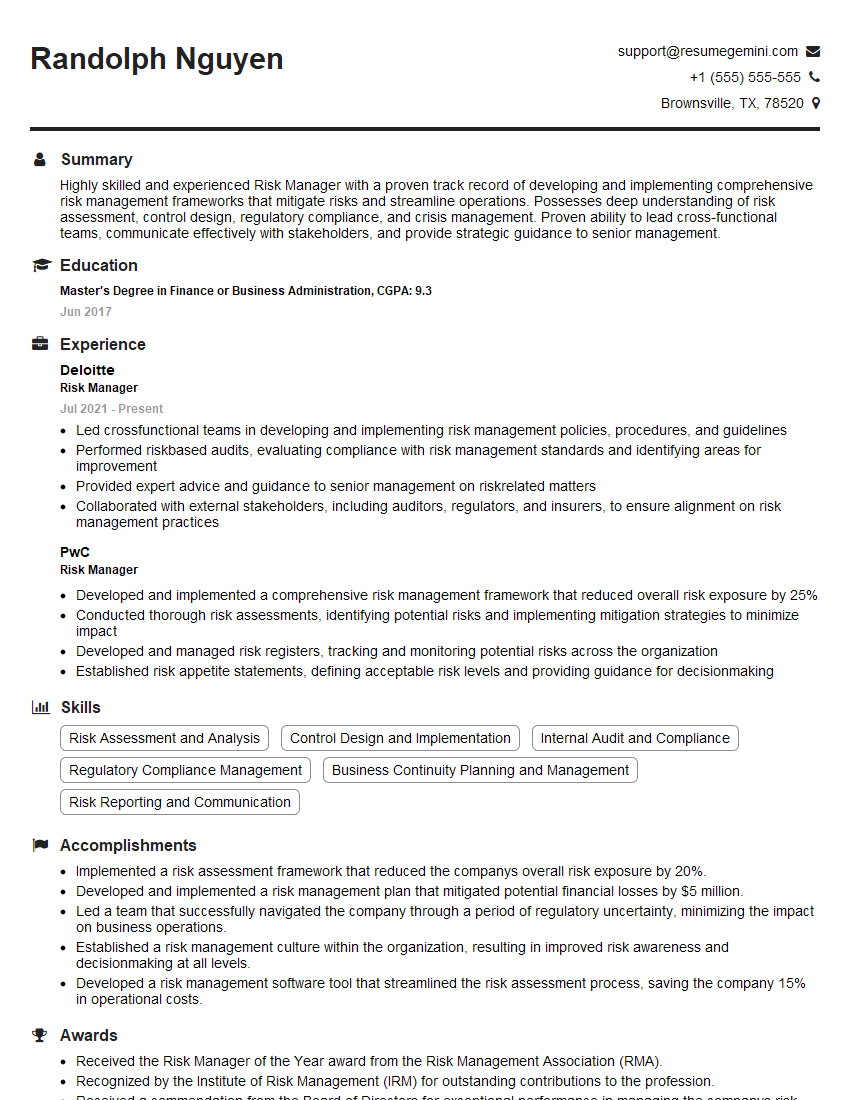
Risk Manager Resume Sample
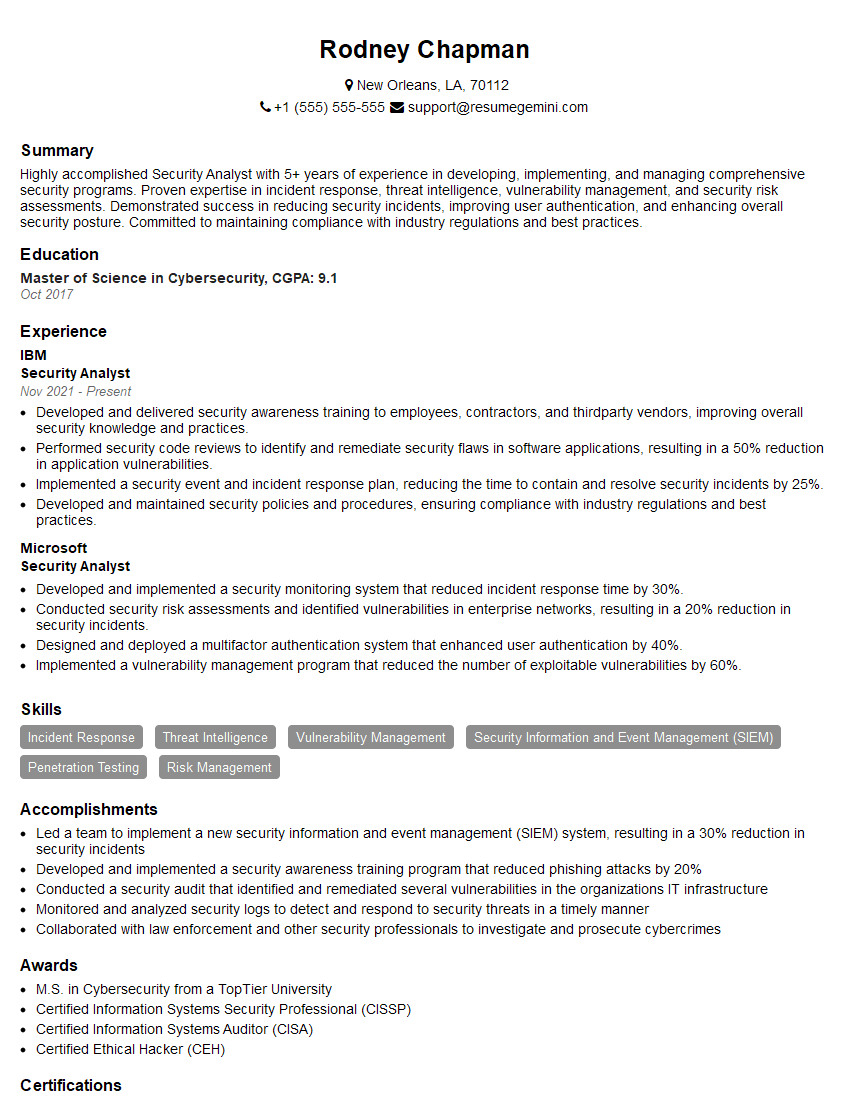
Security Analyst Resume Sample
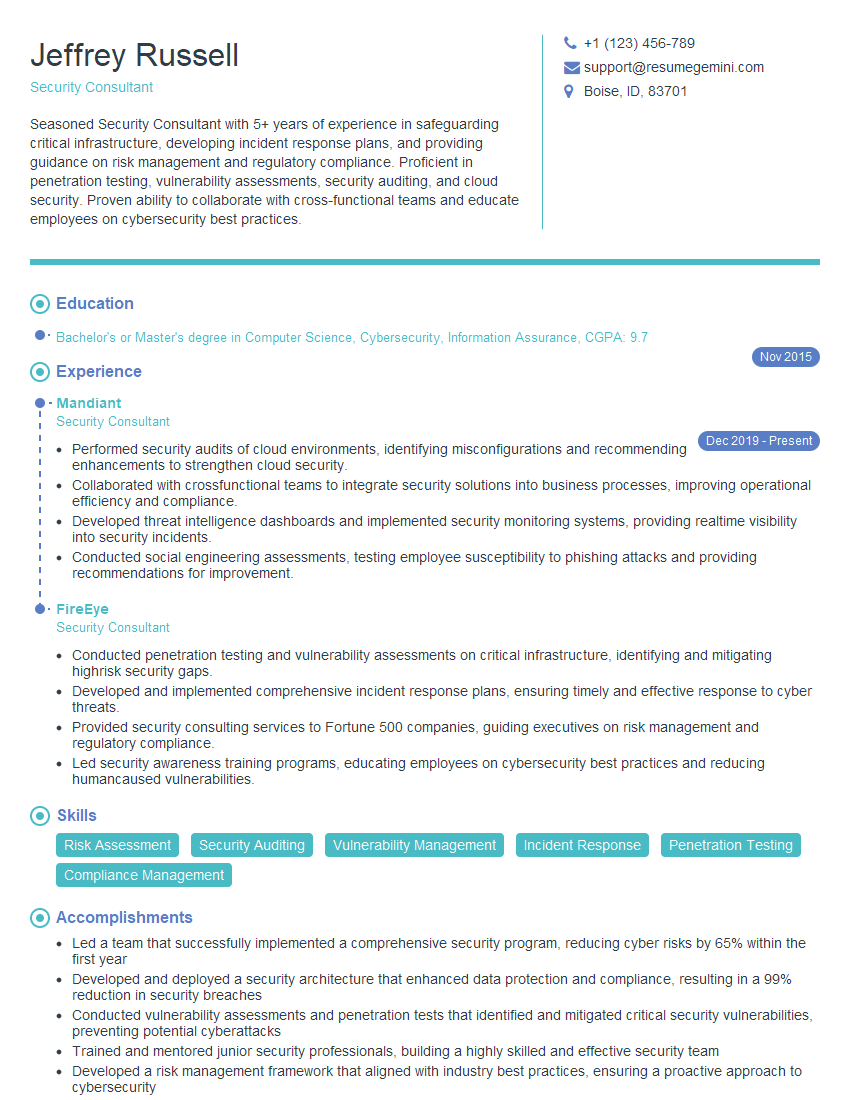
Security Consultant Resume Sample
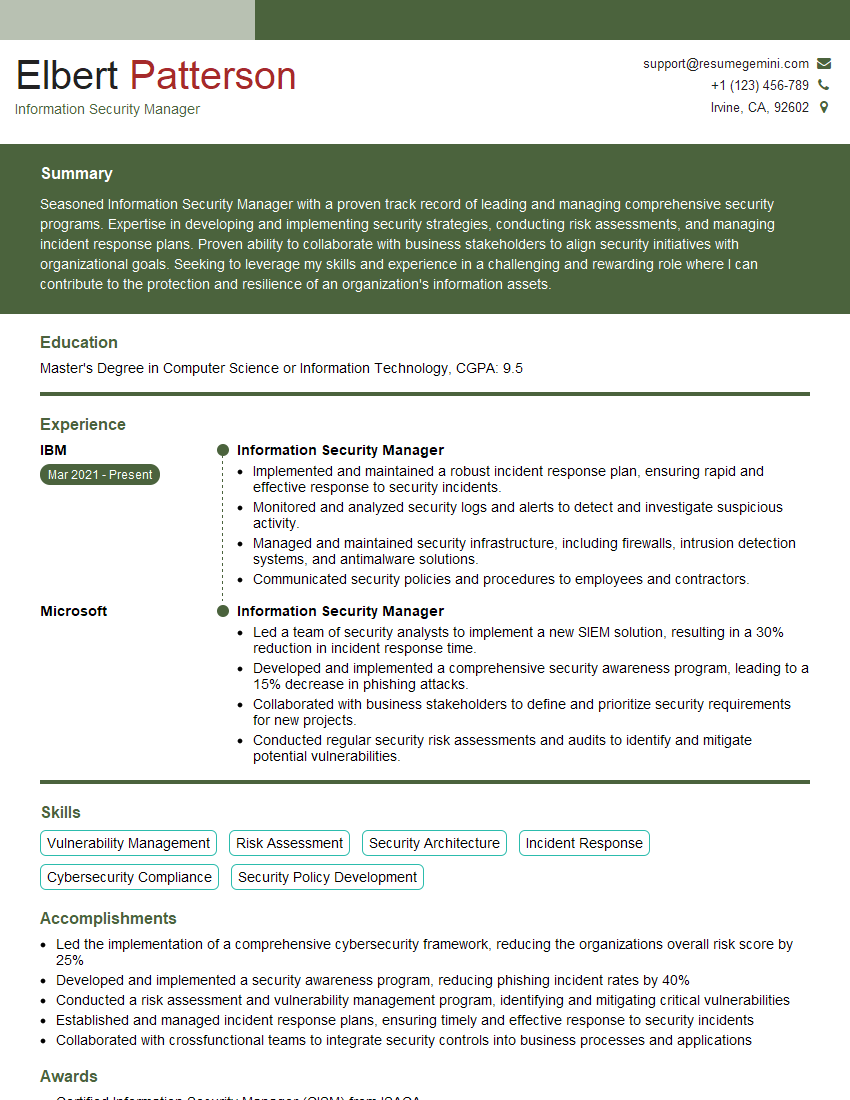
Information Security Manager Resume Sample
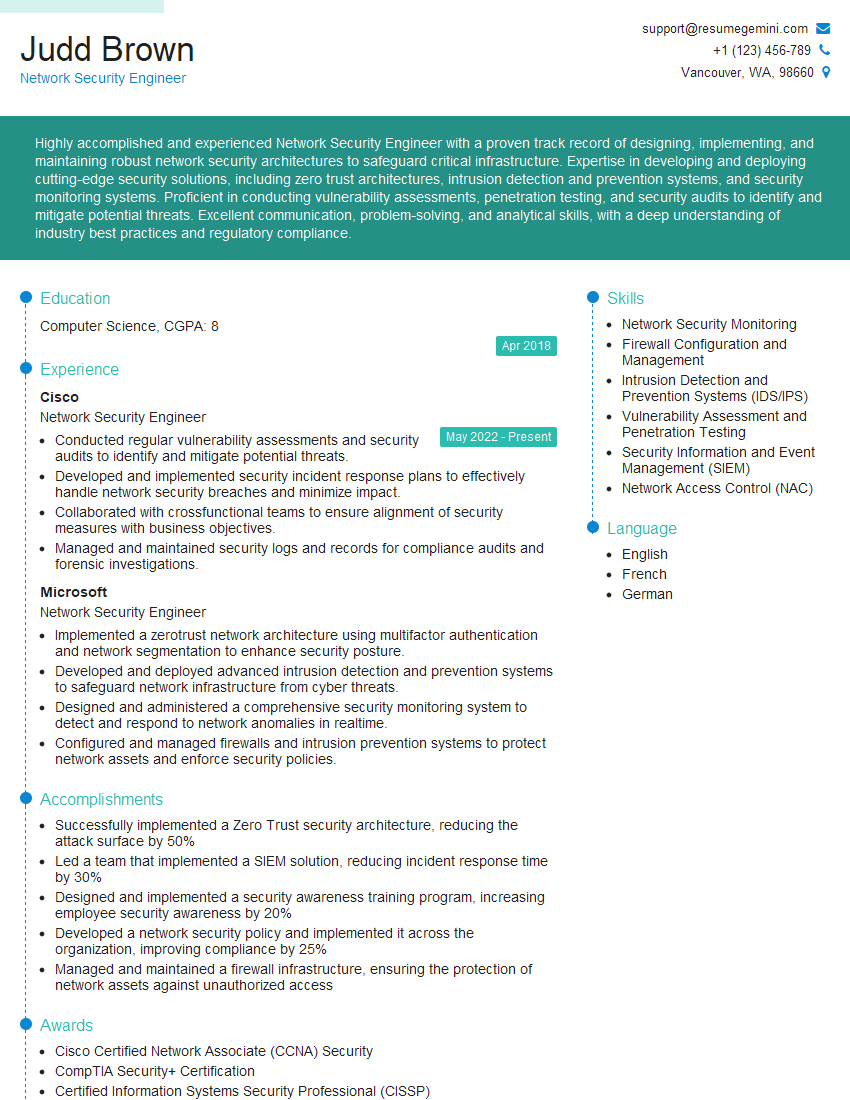
Network Security Engineer Resume Sample
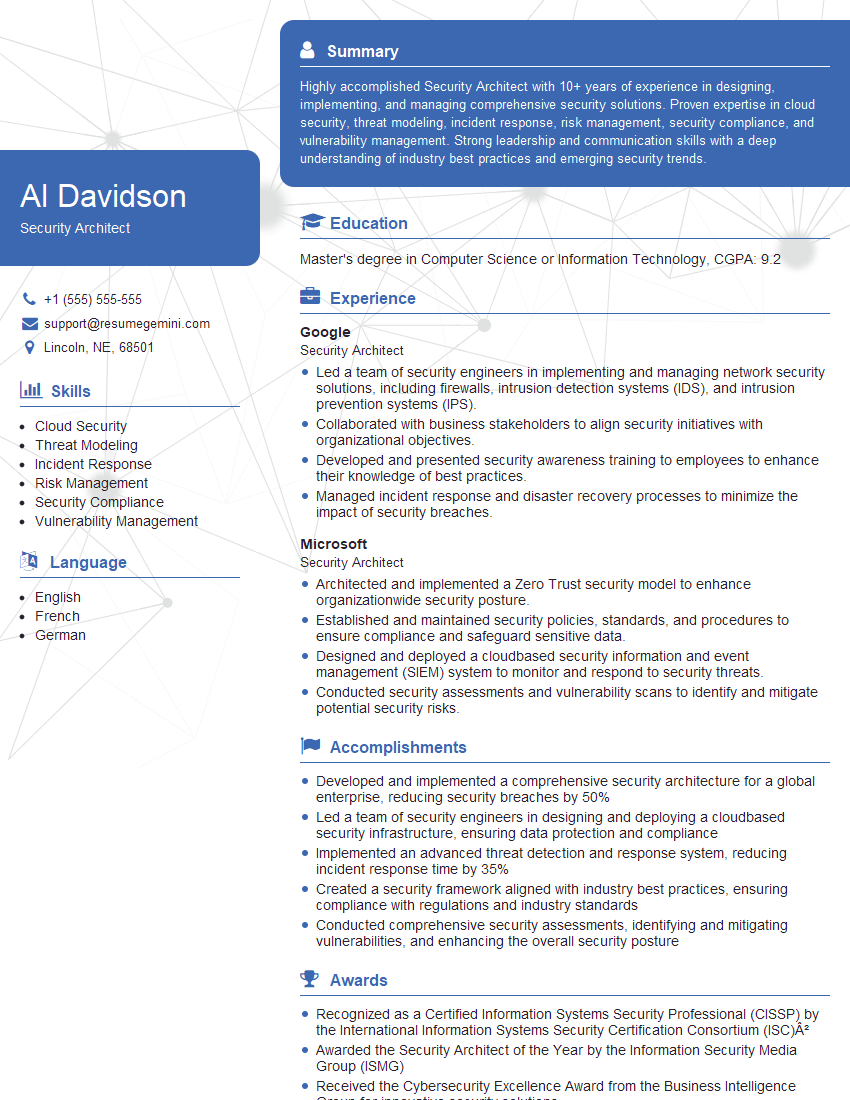
Security Architect Resume Sample
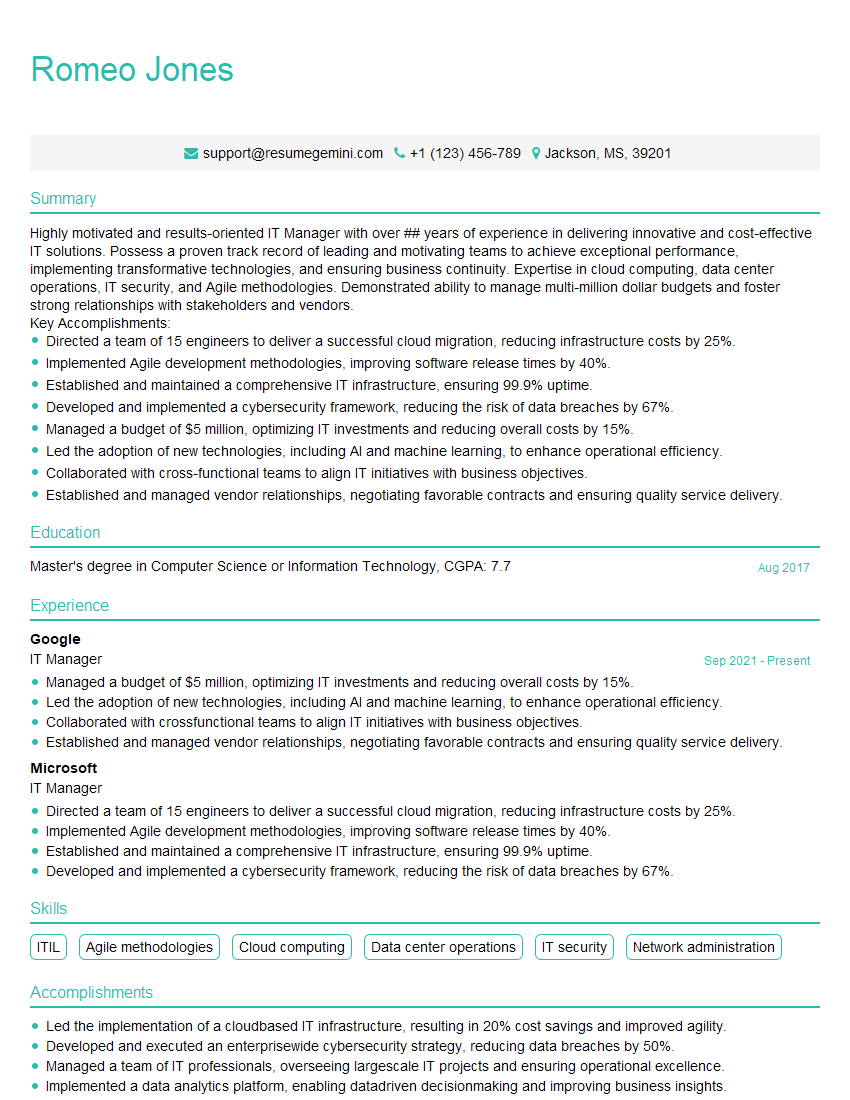
IT Manager Resume Sample
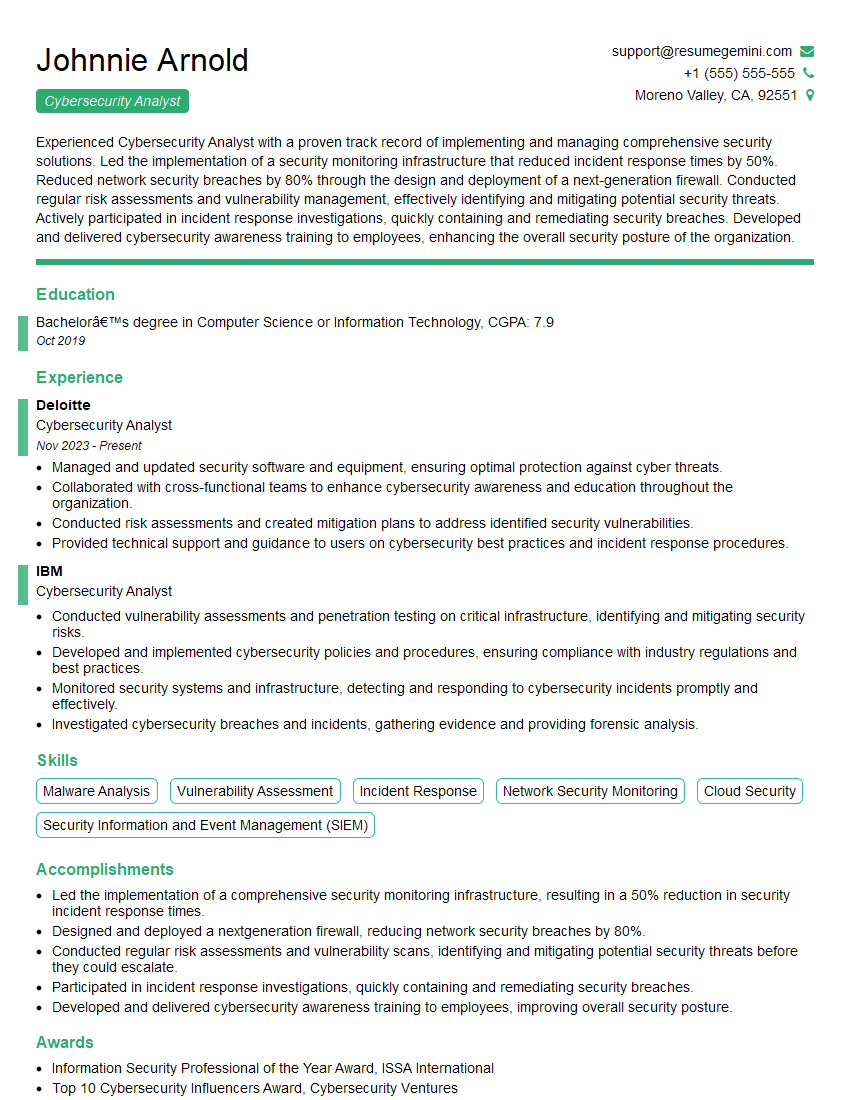
Cybersecurity Analyst Resume Sample
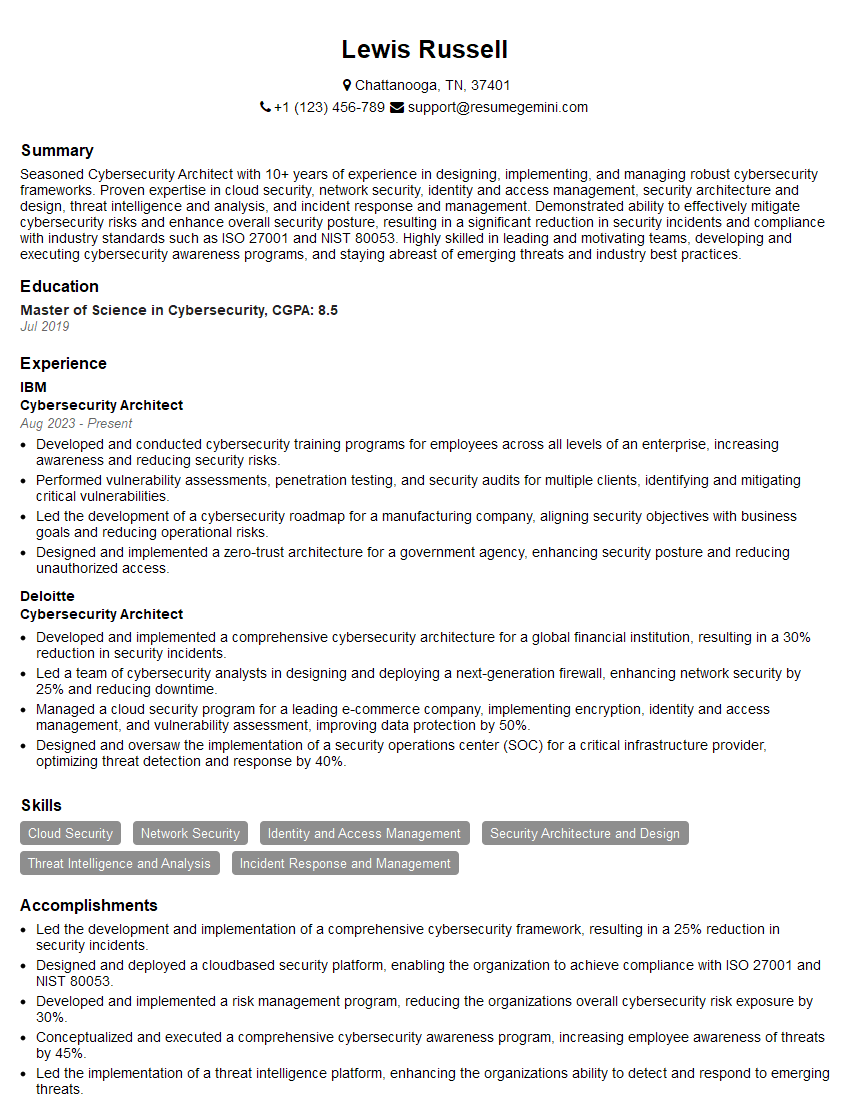
Cybersecurity Architect Resume Sample
Explore more articles
Users Rating of Our Blogs
Share Your Experience
We value your feedback! Please rate our content and share your thoughts (optional).
What Readers Say About Our Blog
Really detailed insights and content, thank you for writing this detailed article.
IT gave me an insight and words to use and be able to think of examples