Unlock your full potential by mastering the most common Experience in performing preventive maintenance on vehicles interview questions. This blog offers a deep dive into the critical topics, ensuring you’re not only prepared to answer but to excel. With these insights, you’ll approach your interview with clarity and confidence.
Questions Asked in Experience in performing preventive maintenance on vehicles Interview
Q 1. What are the key components of a preventative maintenance schedule for a gasoline engine?
A preventative maintenance schedule for a gasoline engine focuses on regularly checking and replacing components to prevent major failures and extend engine life. Think of it like regular checkups for your body – it’s much better to catch small issues before they become big problems.
- Engine Oil and Filter Change: This is the cornerstone of preventative maintenance. Dirty oil loses its lubricating properties, leading to engine wear. The filter removes contaminants.
- Air Filter Replacement: A clogged air filter restricts airflow to the engine, reducing performance and fuel efficiency. Imagine trying to breathe through a straw – it’s harder, right?
- Spark Plug Inspection/Replacement: Worn spark plugs misfire, reducing engine power and fuel economy. They need periodic replacement.
- Coolant System Flush and Fill: Coolant prevents overheating, and a flush removes contaminants that can damage the engine’s cooling system.
- Belt and Hose Inspection: Cracked or worn belts and hoses can lead to major engine damage. Regular inspection is crucial.
- Fluid Level Checks: Regularly checking power steering fluid, brake fluid, and transmission fluid prevents low-fluid related issues.
The frequency of these services depends on factors such as vehicle make, model, and driving conditions; always consult your owner’s manual for recommended intervals.
Q 2. Describe the process of checking and replacing engine oil and filter.
Changing engine oil and the filter is a fundamental task. It’s best performed on a level surface with the engine warm (but not hot) for optimal oil flow.
- Warm-up the engine: Run the engine for a few minutes to warm the oil.
- Position the drain pan: Place a drain pan under the oil drain plug.
- Remove the drain plug: Carefully unscrew the drain plug, allowing the oil to drain completely. Be cautious – the oil will be hot.
- Remove the oil filter: Use an oil filter wrench to loosen and remove the old filter. Have a rag ready as oil will spill.
- Install the new filter: Lubricate the rubber gasket on the new filter with fresh oil and screw it on hand-tight. Don’t overtighten.
- Replace the drain plug: Once the oil has finished draining, reinstall the drain plug, tightening it securely.
- Add new oil: Refer to your owner’s manual for the correct oil type and amount. Use a funnel to add the new oil.
- Check the oil level: Use the dipstick to check the oil level and add more if needed.
- Run the engine: Run the engine for a few minutes, then check for leaks around the drain plug and oil filter.
- Check the oil level again: Once the engine has been running, turn it off and check the oil level one final time.
Remember to properly dispose of the used oil and filter.
Q 3. How do you inspect brake pads and rotors for wear and tear?
Inspecting brake pads and rotors is critical for safety. Insufficient braking power can lead to accidents. You can perform a visual inspection, but ideally, a mechanic should measure pad thickness with a caliper.
- Visual Inspection: Carefully examine the brake pads through the wheel openings. Look for significant wear (thin pads), cracking, or glazing (shiny, smooth surface).
- Rotor Inspection: Inspect the brake rotors for scoring (grooves), excessive rust, or warping (uneven surface). Excessive wear can indicate problems with the braking system.
- Thickness Measurement (Professional): A mechanic will use a caliper to precisely measure brake pad thickness. If the pads are below the manufacturer’s minimum thickness, replacement is necessary. They may also measure rotor thickness for excessive wear.
If you see significant wear or damage, have a qualified mechanic inspect and replace the components.
Q 4. What are the common signs of a failing transmission?
Transmission problems can be subtle at first, but ignoring them can lead to costly repairs. Think of the transmission as the gearbox of your car – it’s responsible for smoothly changing gears.
- Slipping or delayed engagement: The transmission may slip between gears or exhibit delayed engagement when shifting.
- Rough shifting: Jerky or harsh shifting indicates internal problems within the transmission.
- Whining or grinding noises: Unusual noises, especially during shifting, often signal internal damage or low fluid levels.
- Fluid leaks: Transmission fluid leaks indicate potential seals or gasket problems.
- Overheating: The transmission may overheat, resulting in reduced performance or inability to shift.
If you experience any of these symptoms, seek professional help immediately. Ignoring transmission problems can lead to catastrophic failure and significant repair costs.
Q 5. Explain the procedure for checking and topping off various vehicle fluids (coolant, power steering, brake fluid).
Checking and topping off fluids is straightforward but important. Low fluid levels can cause serious damage to vehicle systems.
- Coolant: Locate the coolant reservoir (usually a translucent tank). The reservoir will have minimum and maximum fill lines. Add coolant if needed, ensuring the mixture is the correct type for your vehicle (usually a 50/50 mix of coolant and distilled water). Never open a hot radiator cap.
- Power Steering Fluid: Locate the power steering fluid reservoir (often marked with a power steering symbol). Check the fluid level and add fluid if necessary, using the correct type of power steering fluid.
- Brake Fluid: Find the brake fluid reservoir (usually a small container with a master cylinder). Check the fluid level; low levels may indicate a leak. Adding brake fluid requires caution, and you should consult a mechanic if you are unsure.
Always consult your owner’s manual for the correct type of fluid and location of reservoirs for your specific vehicle model.
Q 6. How often should a vehicle’s tire pressure be checked, and what are the consequences of improper inflation?
Tire pressure should be checked at least monthly, or even more frequently in extreme temperatures. Think of tires as balloons – their pressure changes with temperature.
Frequency: At least once a month, and more often if extreme temperature changes occur.
Consequences of Improper Inflation:
- Underinflation: Increased tire wear, reduced fuel efficiency, and risk of tire failure.
- Overinflation: Reduced tire traction, harsh ride, and increased risk of tire blowouts.
Always check your tire pressure when tires are cold (not driven recently) and use a reliable pressure gauge. Refer to your vehicle’s owner’s manual or the sticker on the driver’s side doorjamb for the recommended tire pressure.
Q 7. Describe the process of inspecting and replacing a serpentine belt.
Inspecting and replacing a serpentine belt is a relatively straightforward task, but it’s crucial to do it correctly to avoid engine damage. The serpentine belt is like a drive belt that runs multiple components, so a broken belt can cause your engine to completely stop.
- Visual Inspection: Inspect the belt for cracks, fraying, glazing, or excessive wear. Look for any signs of damage or deterioration.
- Tension Check: Using a tension gauge, check if the belt tension is appropriate. If the belt is too loose or too tight, it could indicate a worn-out belt or other issues.
- Belt Removal: Loosen the tensioner pulley (usually a specific bolt or lever), allowing the belt to be removed from the pulleys.
- Installation of New Belt: Route the new belt onto the pulleys following the correct path (refer to your owner’s manual). Ensure the belt is properly seated on all pulleys. Tighten the tensioner pulley to the specified tension according to your vehicle’s manual.
- Test and Inspect: Run the engine to ensure the belt is properly seated and there are no squealing sounds, indicating possible misalignment or excessive tension. Inspect the surrounding areas for leaks.
If you’re uncomfortable performing this task, it is best to seek professional assistance.
Q 8. How do you identify and address a leaking hose or seal?
Identifying a leaking hose or seal starts with a visual inspection. Look for wet spots, discoloration, or puddles under the vehicle, paying close attention to areas where hoses and seals are commonly found, such as around the engine, transmission, and power steering components. Often, you’ll see a telltale trail of fluid leading to the leak’s source.
For subtle leaks, you may need to use a pressure tester on the system in question. For example, a radiator pressure tester helps pinpoint leaks in the cooling system. Once the leak is located, the solution depends on the severity and location. A small crack in a hose might be repairable with a hose clamp and sealant. However, severely damaged hoses or seals need replacement. Before installing a replacement hose, be sure to clean the area, use the correct clamps and ensure proper fit. Always check for any underlying issues that caused the leak in the first place. For example, a corroded hose clamp might lead to leaks, so you need to address that too.
Q 9. What are the potential consequences of neglecting preventative maintenance?
Neglecting preventative maintenance is like ignoring the warning lights on your car’s dashboard – it might seem fine for a while, but the consequences can be severe and costly. Ignoring routine checks and maintenance can lead to premature wear and tear on vital components, resulting in major breakdowns and costly repairs.
- Reduced Fuel Efficiency: Dirty air filters and improperly maintained engines consume more fuel.
- Safety Hazards: Worn-out brakes, failing steering components, and bald tires are serious safety risks.
- Increased Repair Costs: Small problems ignored often snowball into far more extensive and expensive repairs.
- Reduced Vehicle Lifespan: Consistent neglect drastically shortens the lifespan of your vehicle.
For instance, I once worked on a vehicle where the owner had ignored a small oil leak for months. The leak escalated, causing catastrophic engine damage that required a complete rebuild costing thousands more than a timely oil change and leak repair would have cost.
Q 10. Explain the importance of regularly rotating tires.
Regular tire rotation is crucial for even wear and tear. Tires wear at different rates due to factors like driving style and road conditions. Front tires often wear faster than rear tires, especially on front-wheel-drive vehicles. Rotating tires ensures that all four tires wear down at roughly the same rate, maximizing their lifespan.
Think of it like walking around a track; if you always walked on the same part of the track, that section would wear down much quicker than the rest. A typical rotation pattern might involve moving the front tires to the rear and the rear tires to the front, possibly crossing them (left front to right rear, and vice versa). The exact rotation pattern depends on the vehicle’s drive type (front-wheel, rear-wheel, all-wheel). Proper tire rotation extends the life of your tires, improves handling, and enhances vehicle safety.
Q 11. How do you diagnose a problem with a vehicle’s starting system?
Diagnosing a starting system problem requires a systematic approach. First, confirm the battery has sufficient charge using a voltmeter. A reading below 12.6V suggests a weak battery. Next, check the battery terminals for corrosion and ensure tight connections. Clean corrosion with a wire brush and baking soda solution if needed.
If the battery is good, check the starter motor itself. You can do a starter motor continuity test, and if it shows continuity, the starter is likely fine. You’ll need a multimeter for this. Listen for clicking sounds when attempting to start the engine; this often points to a faulty solenoid or low battery voltage. If clicking continues even after charging and cleaning the terminals, it’s likely a starter solenoid issue or starter motor problem itself. If there are no sounds at all, a lack of power to the starter is the issue, and you’d then trace the wiring for issues. Sometimes it’s a simple fuse issue; other times, it could be a more complex problem with the ignition system.
Q 12. What tools and equipment are essential for performing preventative maintenance?
The essential tools and equipment for preventative maintenance vary depending on the task, but a basic set includes:
- Jack and Jack Stands: For safe vehicle lifting.
- Socket Set and Wrenches: Various sizes for removing and tightening bolts and nuts.
- Screwdrivers (Phillips and Flathead): For various tasks.
- Pliers: Needle-nose, slip-joint, etc.
- Multimeter: For electrical testing.
- Torque Wrench: Ensures proper tightening of bolts to prevent damage.
- Wheel Chocks: For safety.
- Gloves and Safety Glasses: Protect against injury.
- Owner’s Manual: For vehicle-specific maintenance information.
More specialized tools like pressure testers, diagnostic scanners, and specialized wrenches may be needed for more complex tasks. Proper tools and the right safety gear ensures that tasks are performed correctly and prevent injury during maintenance.
Q 13. How do you interpret diagnostic trouble codes (DTCs)?
Diagnostic Trouble Codes (DTCs) are numerical codes stored in the vehicle’s onboard computer (OBD-II system). These codes indicate specific problems within various vehicle systems. A diagnostic scanner reads these codes. Each code corresponds to a specific issue, which can be looked up in a repair manual or online DTC database.
For example, a code like P0171 might indicate a System Too Lean (Bank 1). This code directs attention to a potential problem with the air/fuel mixture in one of the engine banks. Interpreting DTCs involves more than just looking up the code’s meaning; it requires analyzing related codes, understanding vehicle systems, and using diagnostic tools to confirm the cause. It’s often not sufficient to just fix the issue pointed to by the code, but to also understand *why* that issue arose. For instance, a lean code could be due to a faulty oxygen sensor, a vacuum leak, or other related reasons.
Q 14. Describe your experience with different types of vehicle lifts and safety procedures.
I have experience with various vehicle lifts, including two-post lifts, four-post lifts, and scissor lifts. Each type has its advantages and disadvantages. Two-post lifts are versatile and commonly used but require proper spotting and safety procedures. Four-post lifts are more stable and allow for easier access to undercarriage components. Scissor lifts are compact but typically have a lower lifting capacity.
Safety procedures are paramount when using any lift. Always ensure the vehicle is properly secured, using wheel chocks and the lift’s safety mechanisms. Never work under a vehicle supported solely by a jack—always use jack stands. Regularly inspect lifts for any signs of wear and tear or damage and follow manufacturer’s guidelines for safe operation. Before lifting a vehicle I always visually inspect the lift, vehicle, jack points and areas of support for any potential issues. A quick visual inspection has saved me from several potential accidents or damage to vehicles.
Q 15. What safety precautions do you take when working under a vehicle?
Safety is paramount when working under a vehicle. My first step is always ensuring the vehicle is securely supported. This means using jack stands, never relying solely on a jack. I place the stands on a firm, level surface, ensuring they’re rated for the vehicle’s weight. I always chock the wheels – both front and rear – to prevent accidental rolling. Before even beginning work, I visually inspect the area to make sure there are no obstacles that could trip me or damage the vehicle. Then, I wear appropriate personal protective equipment (PPE), including gloves, safety glasses, and sturdy work boots. In some instances, depending on the task, I may also use a creeper for easier access and less strain on my back. Finally, I’ll often have a spotter nearby, especially if I’m working underneath something heavy or in a less-than-ideal environment.
For example, I once had to replace a brake line on a heavy-duty pickup truck. I carefully positioned jack stands, placed wheel chocks, and had a colleague observe while I worked underneath. This teamwork and adherence to safety protocols ensured a safe and efficient repair.
Career Expert Tips:
- Ace those interviews! Prepare effectively by reviewing the Top 50 Most Common Interview Questions on ResumeGemini.
- Navigate your job search with confidence! Explore a wide range of Career Tips on ResumeGemini. Learn about common challenges and recommendations to overcome them.
- Craft the perfect resume! Master the Art of Resume Writing with ResumeGemini’s guide. Showcase your unique qualifications and achievements effectively.
- Don’t miss out on holiday savings! Build your dream resume with ResumeGemini’s ATS optimized templates.
Q 16. How do you handle unexpected problems during a maintenance procedure?
Unexpected problems are a regular part of vehicle maintenance. My approach is systematic and methodical. First, I identify the problem precisely. This involves a visual inspection, checking relevant components, and potentially using diagnostic tools. Second, I consult repair manuals, diagrams, or online resources for possible causes and solutions. If I need to troubleshoot an electrical issue, for example, I might use a multimeter to check voltages and current flows. Third, I prioritize the safety of myself and the vehicle. If I cannot immediately address the issue or if safety is compromised, I halt the procedure and seek assistance or advice. If possible, I make temporary repairs to allow safe operation until a more comprehensive fix can be implemented.
For instance, while replacing a fuel filter, I accidentally damaged a fuel line. Instead of continuing, I immediately secured the area, notified my supervisor, and then waited for the correct replacement parts and instructions before continuing the repair.
Q 17. Explain your experience with different types of engines (gasoline, diesel, hybrid).
I have extensive experience with gasoline, diesel, and hybrid engines. Gasoline engines are familiar territory, and I’m proficient in maintaining various components such as the ignition system, fuel injection system, and various sensors. Diesel engines require a deeper understanding of fuel systems (including common rail systems), turbochargers, and emission control systems like Diesel Particulate Filters (DPFs). I understand the importance of proper fuel filtration and lubrication for long engine life in diesel vehicles. With hybrid systems, I’m well versed in the interaction between the internal combustion engine, electric motors, battery packs, and their associated control systems. This involves understanding the intricacies of high-voltage systems and taking the necessary safety precautions when working on them.
I once worked on a fleet of delivery vans, encompassing both gasoline and diesel engines. This experience honed my abilities in diagnosing and resolving various engine-related problems, effectively adjusting my approach to different engine technologies.
Q 18. Describe your experience with computerized diagnostic systems.
Computerized diagnostic systems are essential in modern vehicle maintenance. I’m proficient in using OBD-II scanners and manufacturer-specific diagnostic tools. I understand how to interpret diagnostic trouble codes (DTCs), which pinpoint potential problems within the vehicle’s various systems. Beyond simply reading codes, I understand how to use the diagnostic tool to monitor live data, which helps me assess the performance of sensors, actuators, and other components in real-time. This allows for a more in-depth understanding of the issue and aids in making accurate diagnoses. I’m also familiar with using specialized software to access more detailed information and perform advanced diagnostics.
For example, a recent issue involved a vehicle with a check engine light. Using an OBD-II scanner, I pulled the code, which pointed to a faulty oxygen sensor. Then, using live data, I confirmed the sensor was malfunctioning and replaced it, resolving the issue.
Q 19. How do you maintain your tools and equipment?
Maintaining my tools and equipment is crucial for both safety and efficiency. After each use, I thoroughly clean my tools, removing any dirt, grease, or debris. I regularly inspect tools for damage, such as cracks or worn handles. Damaged tools are immediately replaced or repaired to prevent injuries and inaccurate work. I store my tools in a well-organized manner, keeping them in their designated cases or on a tool board to prevent damage and ensure easy access. I also regularly lubricate moving parts of tools, like ratchet mechanisms, to ensure smooth operation and prolong their lifespan. Power tools are always maintained according to manufacturer’s recommendations, including checking cords for damage and ensuring proper grounding.
For example, my socket set is meticulously organized and regularly inspected. Each socket is cleaned and checked for wear after every use. This meticulous approach ensures that my tools are always reliable and safe to use.
Q 20. What are the common causes of overheating in an engine?
Engine overheating is a common problem with several potential causes. A failing thermostat can prevent proper coolant circulation, leading to overheating. Low coolant levels, often due to leaks, are another frequent culprit. A clogged radiator, restricting coolant flow, also causes overheating. Problems with the water pump, responsible for circulating coolant, can also lead to overheating. Finally, issues with the cooling fan, which helps dissipate heat, can contribute to overheating. In severe cases, a blown head gasket can lead to coolant mixing with oil and subsequent overheating.
I once encountered a case of overheating where a simple visual inspection revealed a significant coolant leak. Promptly addressing that leak resolved the overheating issue.
Q 21. How do you troubleshoot a vehicle that won’t start?
Troubleshooting a vehicle that won’t start is a systematic process. I begin by checking the battery, ensuring it has sufficient charge and proper connections. Next, I check the starter motor to see if it’s engaging properly. I listen for clicking sounds or check if the starter is receiving power. I’ll then inspect the ignition system, including spark plugs and ignition coils, to ensure that the engine is receiving a spark. For fuel-injected vehicles, I’ll check the fuel pump to ensure it’s functioning correctly and delivering fuel to the engine. I’ll also verify that the fuel injectors are spraying fuel correctly. If there’s no crank or the engine cranks but won’t start, I then might look at issues within the engine’s electronic control system. This could involve checking sensors, the engine control module (ECM), and other electronic components. Often using diagnostic tools is key at this point.
In one instance, a car wouldn’t start. Initially, I suspected a dead battery, but after testing, it showed sufficient charge. A further investigation revealed a faulty crankshaft position sensor. Replacing the sensor resolved the no-start issue.
Q 22. Explain your experience with wheel alignment and balancing.
Wheel alignment and balancing are crucial for optimal vehicle performance, tire life, and driver safety. Alignment refers to adjusting the angles of the wheels to ensure they point in the correct direction, minimizing tire wear and improving handling. Balancing involves distributing the weight of the wheel and tire evenly to eliminate vibrations.
My experience encompasses using specialized alignment equipment to measure caster, camber, and toe angles. I’ve worked on a variety of vehicles, adjusting these angles to manufacturer specifications using shims, tie rod adjustments, and other techniques. For balancing, I’m proficient in using a wheel balancer to identify and correct imbalances by adding or removing weights. I regularly check for worn suspension components that could impact alignment, ensuring a complete and effective service. For example, I once diagnosed a persistent vibration issue that wasn’t immediately apparent as a balancing problem. Further investigation revealed a slightly bent wheel, requiring replacement to achieve a perfect balance and eliminate the vibration.
Q 23. How do you maintain accurate records of maintenance performed?
Maintaining accurate maintenance records is essential for tracking vehicle history, ensuring warranty compliance, and facilitating future repairs. I utilize a digital system that allows for detailed recording of all services, including date, mileage, parts used, labor performed, and customer signatures. This system generates comprehensive reports, facilitating easy access to the vehicle’s maintenance history. The system also integrates with inventory management, automatically tracking parts usage and ordering replacements when needed. Additionally, I always maintain a paper-based backup system for redundancy. A clear and comprehensive record helps identify patterns and trends in vehicle maintenance, which aids in proactive maintenance planning and cost optimization.
Q 24. Describe your experience with different types of suspension systems.
My experience includes working with various suspension systems, including MacPherson struts, double wishbone, multi-link, and solid axle systems. Each system offers different characteristics in terms of ride comfort, handling, and cost. I understand the components of each system – struts, shocks, springs, control arms, bushings, and ball joints – and their roles in vehicle stability and control. I’m adept at diagnosing issues like worn shocks (leading to excessive bouncing), broken springs (resulting in uneven ride height), and damaged control arms (causing poor handling and alignment issues). For instance, I once diagnosed a recurring clunking noise in a vehicle with a multi-link rear suspension. After a thorough inspection, I found a worn bushing in one of the control arms, which was replaced to resolve the problem. I can perform both repair and replacement of components on all of these suspension types.
Q 25. What are the common causes of poor fuel economy?
Poor fuel economy can stem from several factors, both mechanical and behavioral. Mechanical issues include:
- Problems with the air intake system (dirty air filter, leaks)
- Malfunctioning oxygen sensor (incorrect fuel-air mixture)
- Faulty fuel injectors (inefficient fuel delivery)
- Low tire pressure (increased rolling resistance)
- Issues with the catalytic converter or exhaust system (restricted exhaust flow)
- Aggressive driving (rapid acceleration and braking)
- Excessive idling
- Carrying excessive weight
Q 26. How do you identify and address a problem with the vehicle’s electrical system?
Troubleshooting electrical system issues often requires a systematic approach. I start by visually inspecting wiring harnesses, connectors, and components for signs of damage or corrosion. Then I use a multimeter to check voltage, current, and continuity in various circuits. I’m experienced using diagnostic scanners to read trouble codes (DTCs) from the vehicle’s onboard computer, which provide clues about potential problems. For example, a recent issue involved intermittent headlight failure. Using the diagnostic scanner, I identified a fault code related to the headlamp control module. After testing the module’s power supply and ground connections, I determined the module needed replacement, which resolved the issue.
Q 27. Explain your experience working with different makes and models of vehicles.
Throughout my career, I’ve worked on a wide range of vehicle makes and models, from domestic cars and trucks to imported vehicles. This experience has provided me with a thorough understanding of the variations in design, technology, and maintenance requirements across different brands. My familiarity extends to various engine types, transmission systems, and electronic control units (ECUs). I understand the unique service requirements for different vehicles and am comfortable accessing and interpreting manufacturer-specific diagnostic information. This broad experience allows me to adapt quickly to different vehicle systems and efficiently diagnose and resolve maintenance issues.
Q 28. Describe a situation where you had to troubleshoot a complex maintenance issue.
I once encountered a complex issue with a vehicle experiencing intermittent engine misfires and rough idling. Initial diagnostic tests yielded no clear fault codes. I systematically checked fuel pressure, spark plugs, ignition coils, and mass airflow sensor. While all initial tests appeared normal, I suspected a problem with the crankshaft position sensor (CKP sensor), which plays a crucial role in engine timing. After carefully testing the CKP sensor’s signal using an oscilloscope, I confirmed a weak and intermittent signal, indicating a failing sensor. Replacing the CKP sensor immediately resolved the misfire and rough idling problems. This case highlighted the importance of methodical troubleshooting, even when initial diagnostic tests don’t provide clear answers. Thorough testing and the use of specialized diagnostic equipment are crucial in identifying and resolving complex mechanical issues.
Key Topics to Learn for Experience in performing preventive maintenance on vehicle Interviews
- Vehicle Inspection Procedures: Understanding comprehensive pre- and post-maintenance inspection techniques, including visual checks, diagnostic tool usage, and recording findings accurately.
- Fluid Changes & Lubrication: Practical experience in changing engine oil, transmission fluid, coolant, brake fluid, and other essential fluids; understanding fluid types and their importance.
- Tire Maintenance: Knowledge of proper tire inflation, rotation, balancing, and tread depth inspection; identifying signs of wear and tear and recommending replacements.
- Brake System Maintenance: Experience inspecting brake pads, rotors, calipers, and lines; understanding brake bleeding procedures and safety precautions.
- Electrical System Checks: Familiarity with basic electrical diagnostics, including battery testing, alternator checks, and troubleshooting minor electrical issues.
- Suspension & Steering System Checks: Inspecting components for wear and tear, identifying potential issues like worn shocks, struts, or tie rod ends.
- Preventive Maintenance Schedules: Understanding the importance of adhering to manufacturer-recommended maintenance schedules and adapting to varying vehicle types and operating conditions.
- Safety Procedures and Regulations: Demonstrating knowledge of proper safety protocols, including the use of personal protective equipment (PPE) and safe handling of hazardous materials.
- Troubleshooting and Problem-Solving: Describing your approach to diagnosing and resolving mechanical issues, highlighting your ability to identify root causes and implement effective solutions.
- Record Keeping and Documentation: Explaining your experience in maintaining accurate and detailed records of maintenance performed, including parts used and labor hours.
Next Steps
Mastering preventive vehicle maintenance is crucial for career advancement in the automotive industry, opening doors to higher-paying roles and increased responsibility. A strong, ATS-friendly resume is your key to unlocking these opportunities. ResumeGemini can help you create a compelling resume that showcases your skills and experience effectively. We provide examples of resumes tailored to highlight experience in performing preventive maintenance on vehicles, helping you stand out from the competition. Invest time in crafting a professional and impactful resume – it’s your first impression with potential employers.

Maintenance Manager Resume Sample

Maintenance Supervisor Resume Sample

Field Service Technician Resume Sample

Service Technician Resume Sample
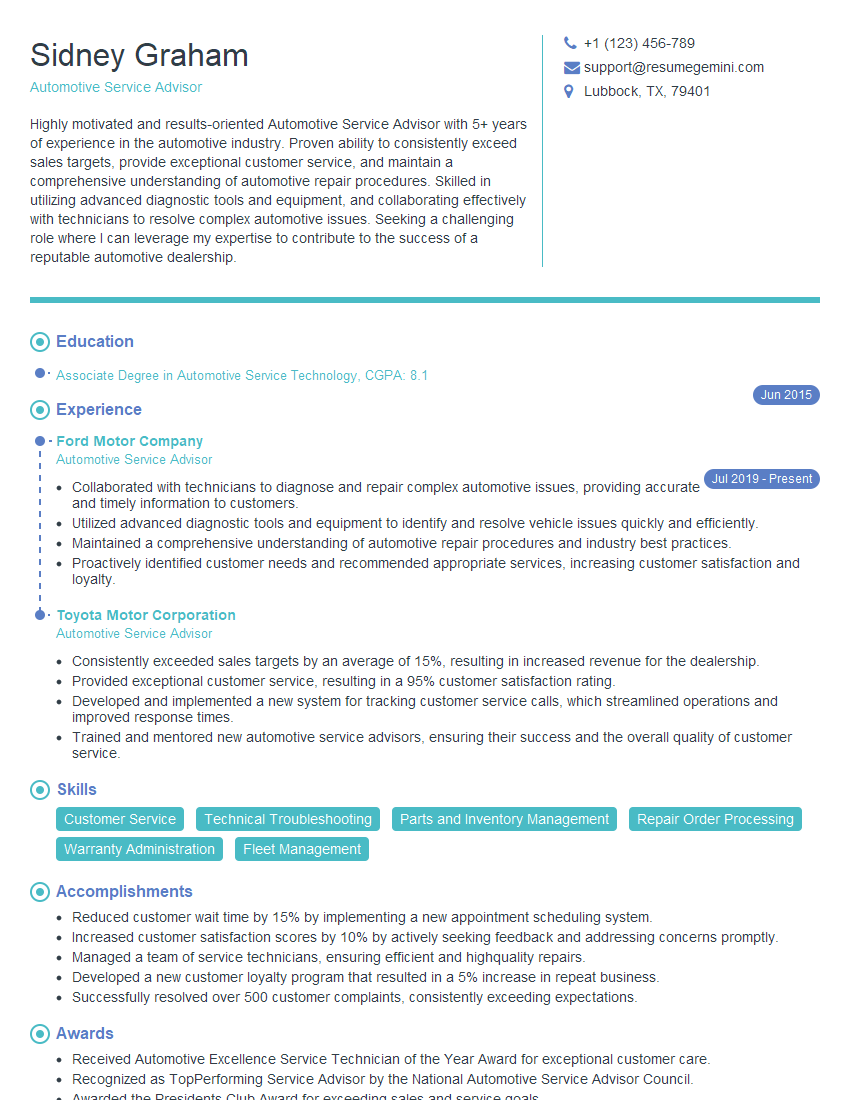
Automotive Service Advisor Resume Sample
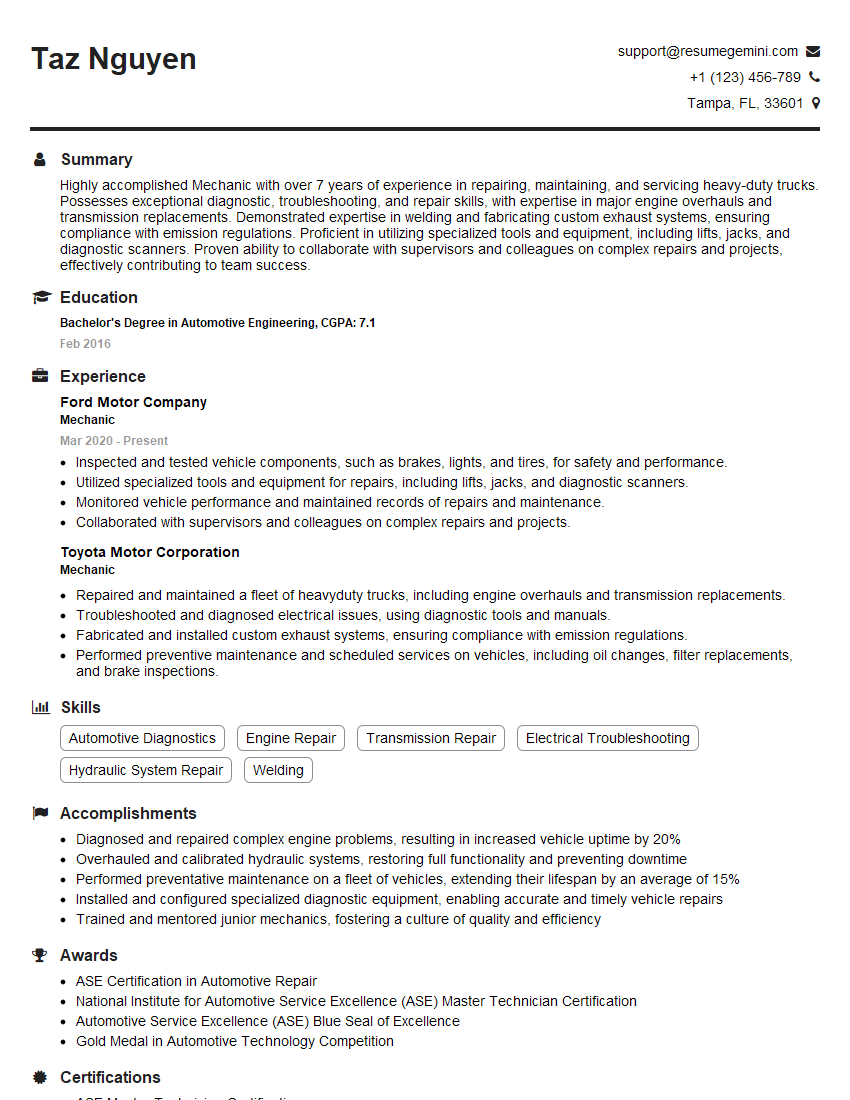
Mechanic Resume Sample
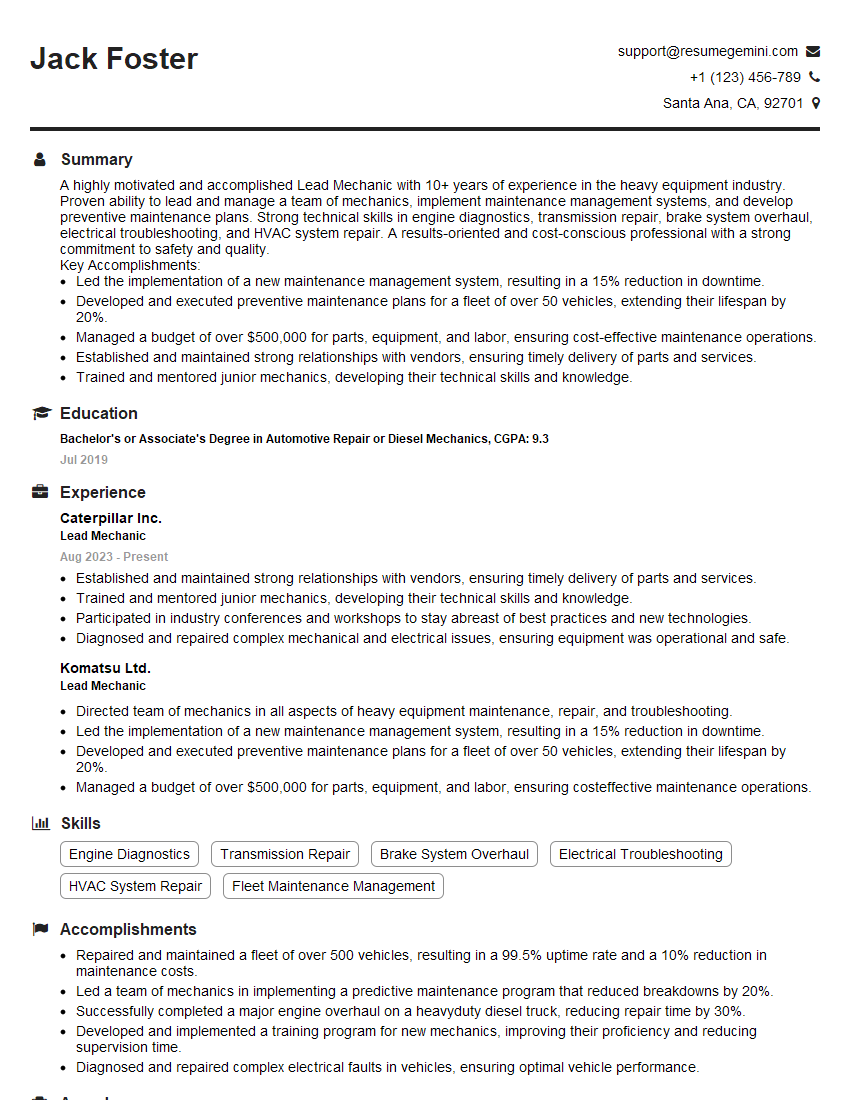
Lead Mechanic Resume Sample
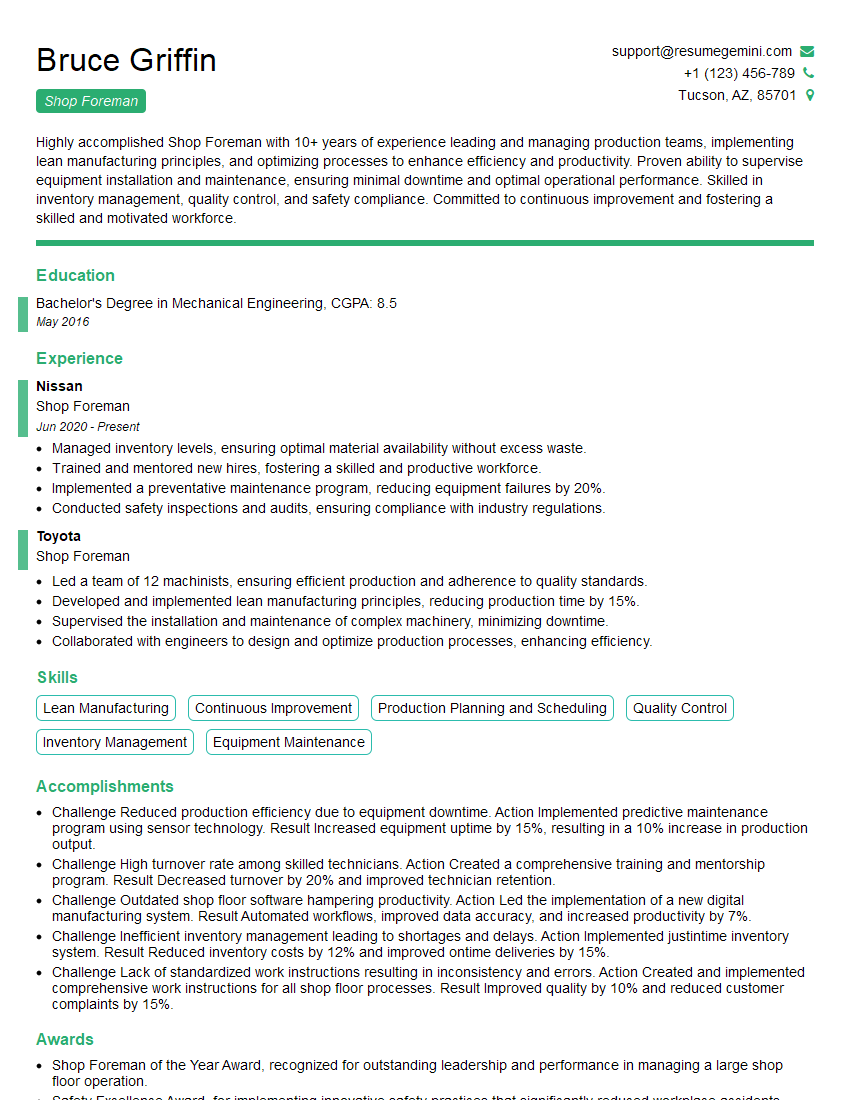
Shop Foreman Resume Sample
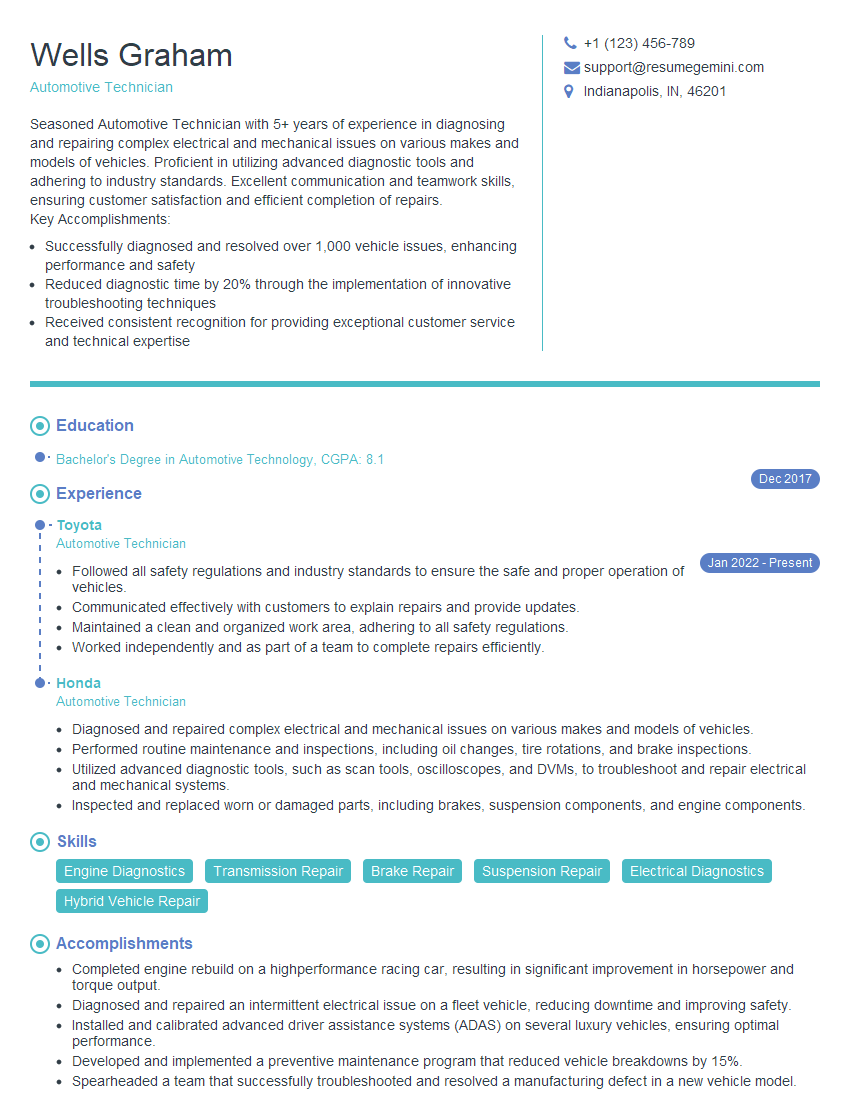
Automotive Technician Resume Sample
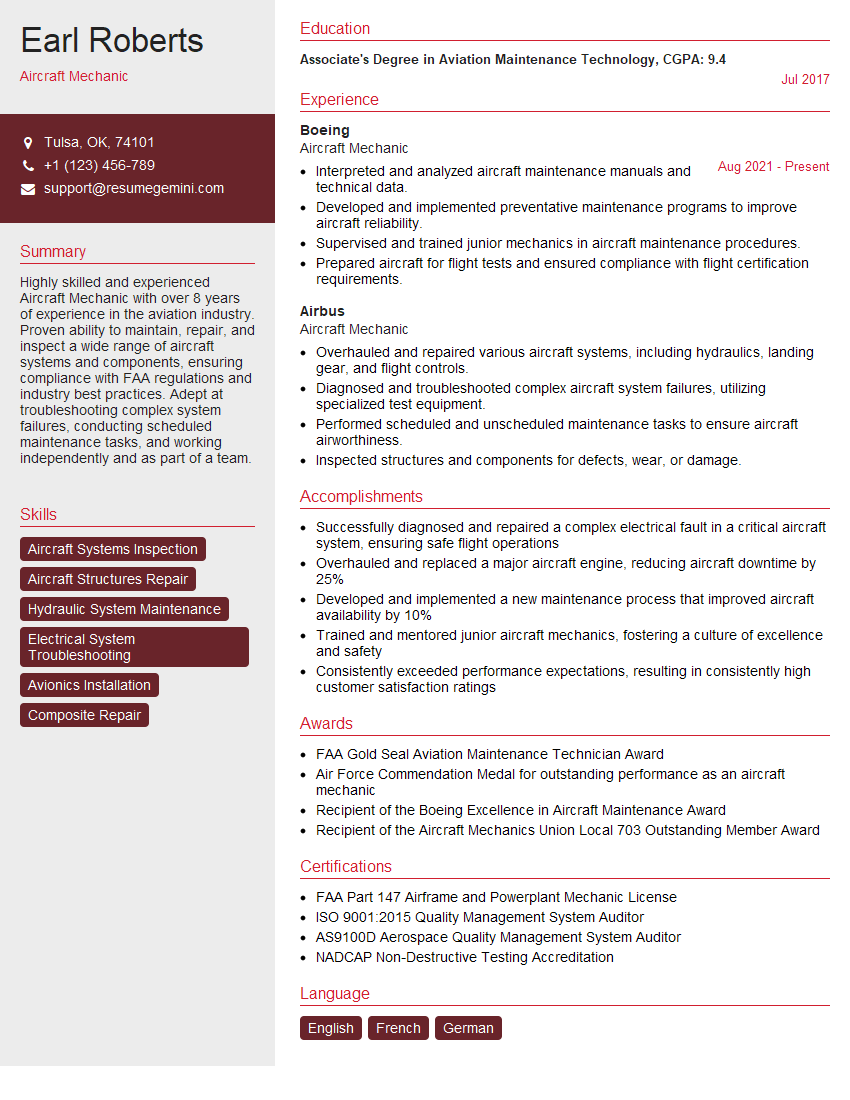
Aircraft Mechanic Resume Sample
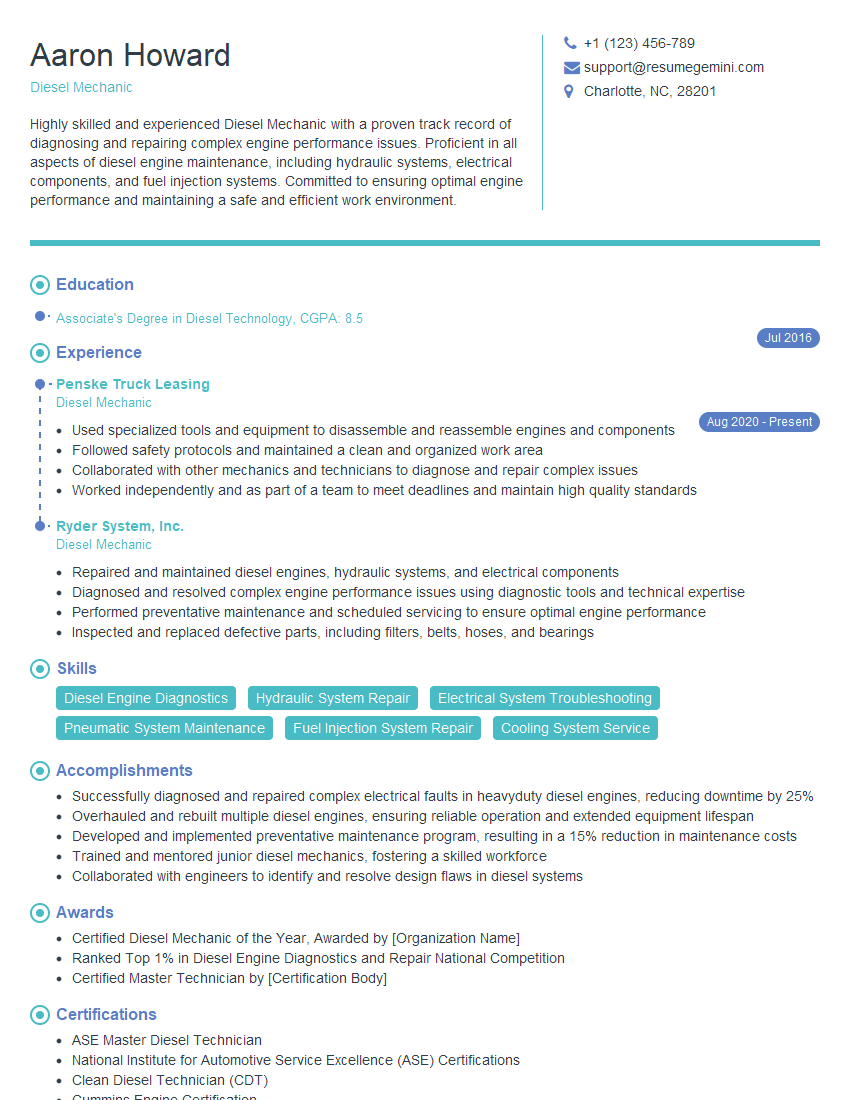
Diesel Mechanic Resume Sample
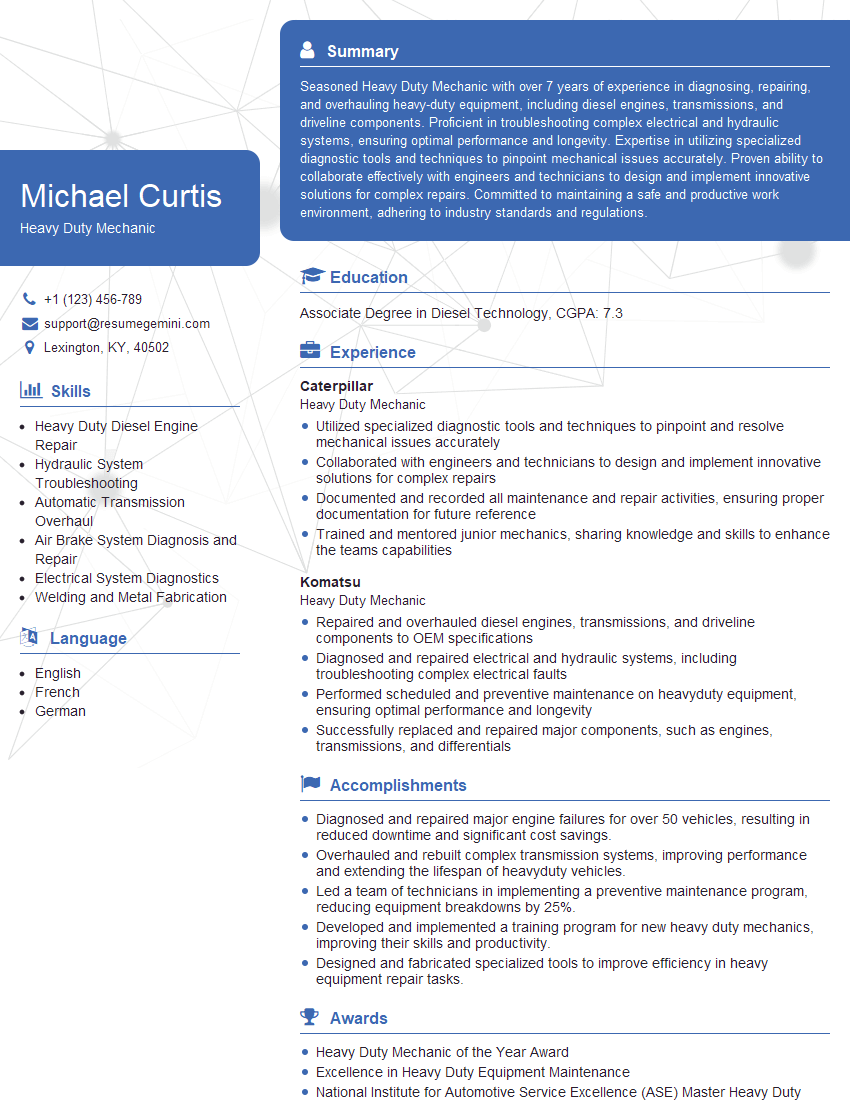
Heavy Duty Mechanic Resume Sample
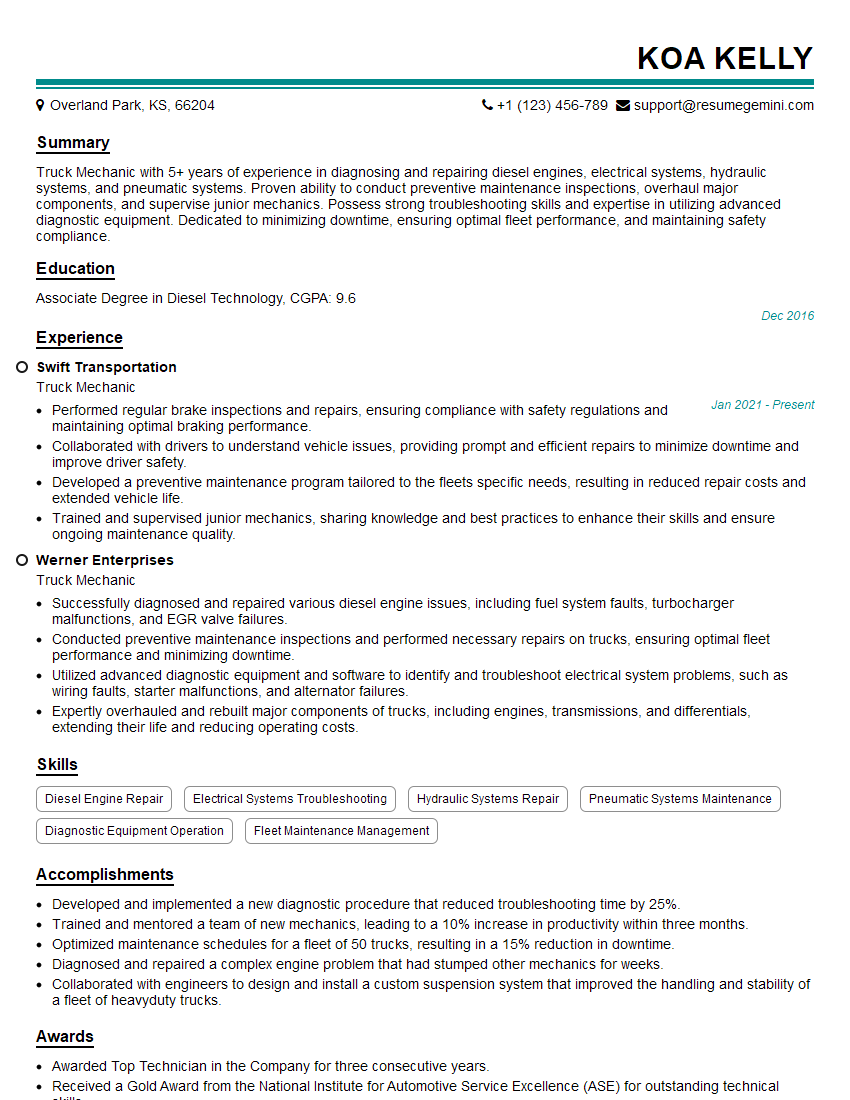
Truck Mechanic Resume Sample
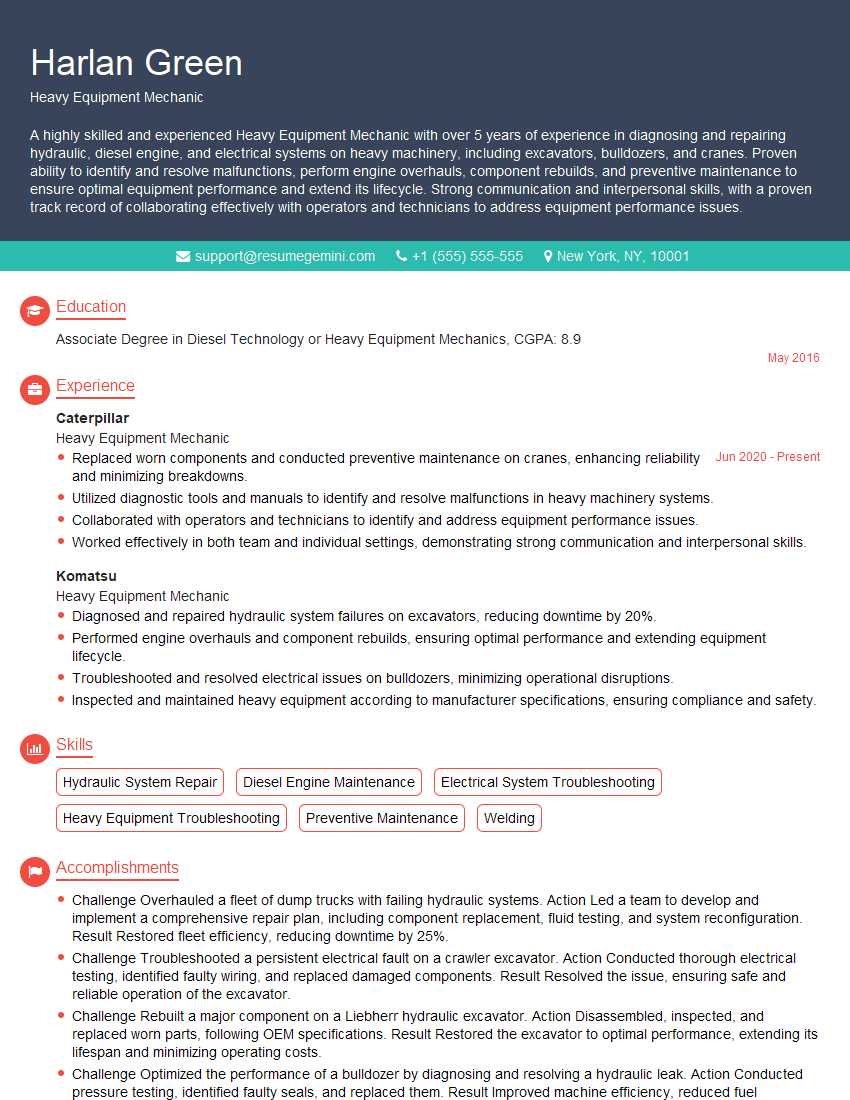
Heavy Equipment Mechanic Resume Sample
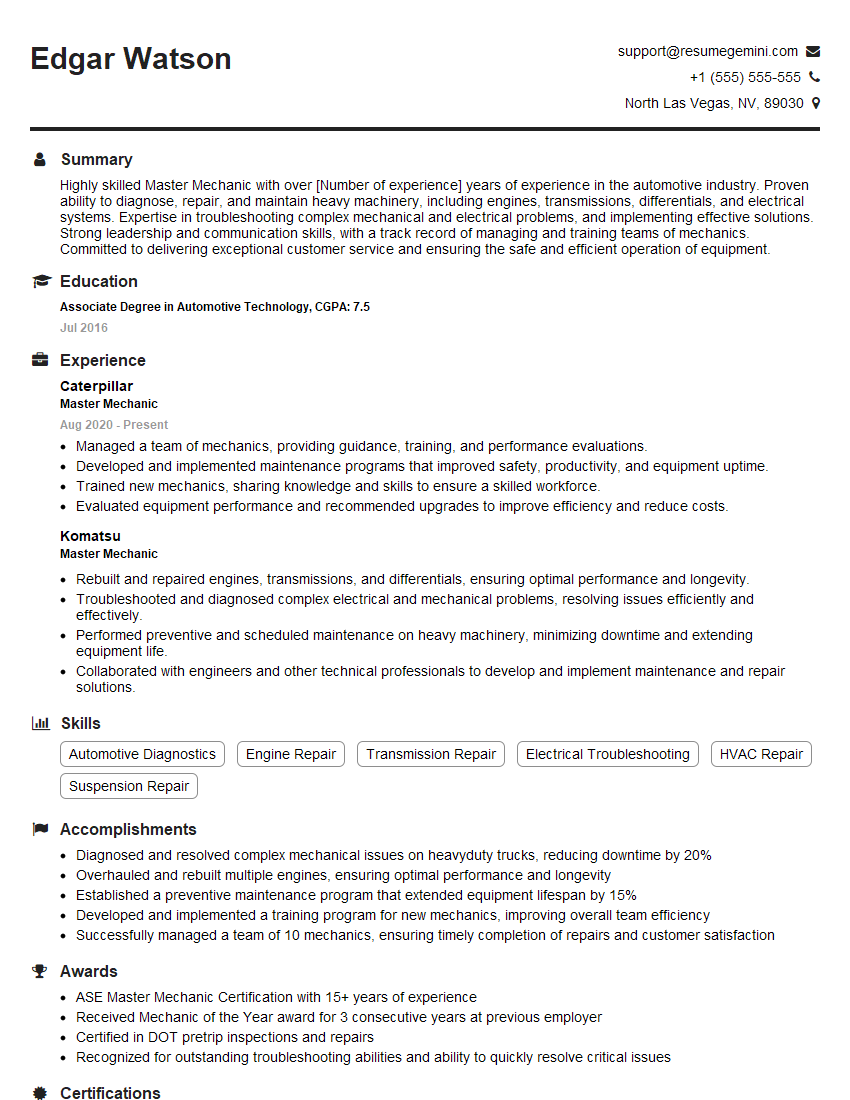
Master Mechanic Resume Sample
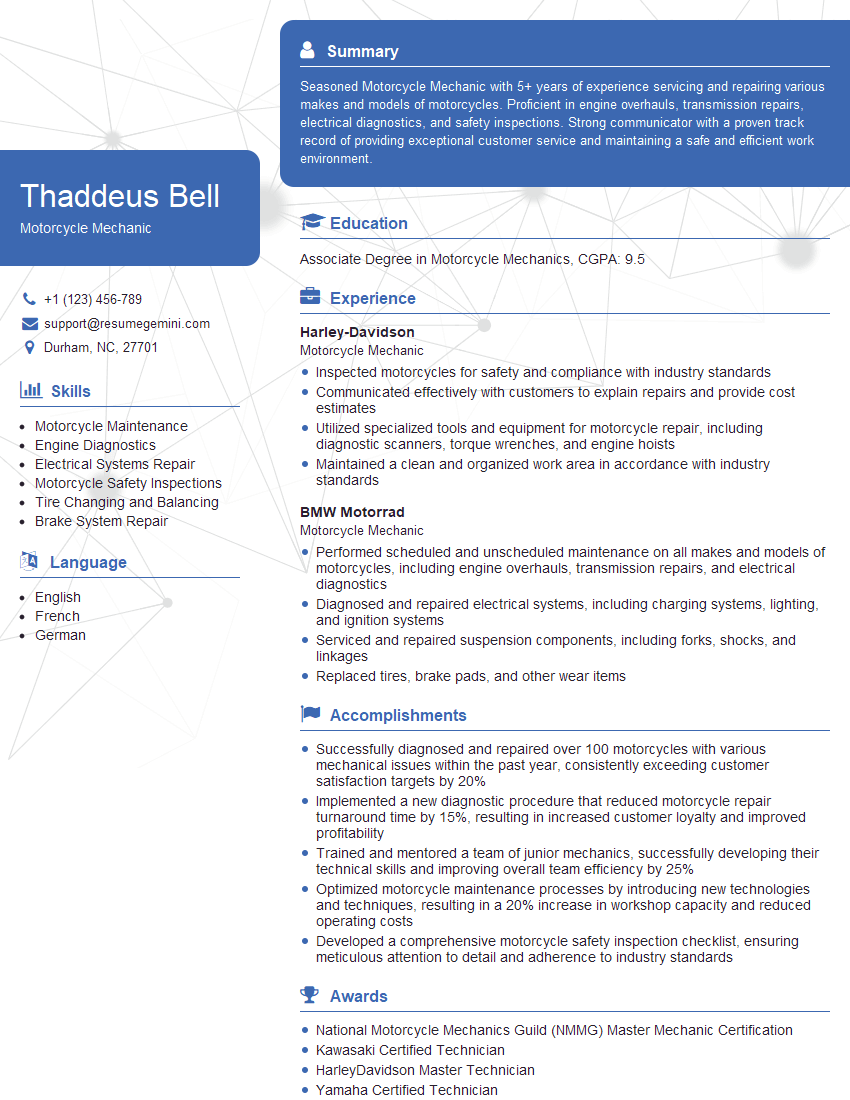
Motorcycle Mechanic Resume Sample
- Maintenance Manager
- Maintenance Supervisor
- Field Service Technician
- Service Technician
- Automotive Service Advisor
- Mechanic
- Lead Mechanic
- Shop Foreman
- Automotive Technician
- Aircraft Mechanic
- Diesel Mechanic
- Heavy Duty Mechanic
- Truck Mechanic
- Heavy Equipment Mechanic
- Master Mechanic
- Motorcycle Mechanic
Explore more articles
Users Rating of Our Blogs
Share Your Experience
We value your feedback! Please rate our content and share your thoughts (optional).
What Readers Say About Our Blog
Really detailed insights and content, thank you for writing this detailed article.
IT gave me an insight and words to use and be able to think of examples