Cracking a skill-specific interview, like one for Ability to create and execute lesson plans that meet curriculum standards, requires understanding the nuances of the role. In this blog, we present the questions you’re most likely to encounter, along with insights into how to answer them effectively. Let’s ensure you’re ready to make a strong impression.
Questions Asked in Ability to create and execute lesson plans that meet curriculum standards Interview
Q 1. Describe your process for creating a lesson plan aligned with specific learning objectives.
Creating a lesson plan begins with clearly defined learning objectives. These objectives should be SMART – Specific, Measurable, Achievable, Relevant, and Time-bound. For example, instead of a vague objective like “Students will learn about fractions,” a SMART objective would be “Students will be able to solve 10 addition and subtraction fraction problems with 80% accuracy by the end of the lesson.”
My process then involves:
- Backward Design: I start with the assessment – how will I know students have met the objective? This informs the activities and instruction.
- Curriculum Alignment: I meticulously check the lesson against relevant curriculum standards (e.g., Common Core, state standards), ensuring all learning objectives are addressed and assessed.
- Content Selection: I carefully choose materials and resources that support the objectives and engage students. This might involve using different textbooks, online resources, or even hands-on activities.
- Activity Sequencing: I structure the lesson logically, incorporating different instructional strategies such as direct instruction, group work, and independent practice.
- Differentiation Planning: I build in opportunities for differentiation from the start, anticipating the various needs of my learners.
- Time Allocation: I realistically allocate time to each segment of the lesson, ensuring adequate time for instruction, activities, and assessment.
Finally, I review and refine the plan, sometimes even piloting parts of it with a small group before full implementation. This iterative process ensures a well-structured and effective lesson.
Q 2. How do you ensure your lesson plans meet diverse learning styles and needs?
Addressing diverse learning styles is crucial for inclusive teaching. I use a variety of instructional strategies to cater to visual, auditory, kinesthetic, and reading/writing learners.
- Visual Learners: I use diagrams, charts, videos, and graphic organizers.
- Auditory Learners: I incorporate lectures, discussions, and audio recordings.
- Kinesthetic Learners: I include hands-on activities, experiments, role-playing, and movement breaks.
- Reading/Writing Learners: I use texts, writing assignments, and research projects.
Furthermore, I consider students’ individual needs, such as learning disabilities (e.g., dyslexia, ADHD) or cultural backgrounds, adapting my approach to create a welcoming and accessible learning environment. For example, I might provide graphic organizers for students with organizational difficulties or offer multilingual resources for English language learners. Providing choices in assignments also caters to individual preferences and learning styles.
Q 3. Explain how you differentiate instruction to address varying student abilities within a single classroom.
Differentiated instruction means tailoring teaching to meet the diverse needs of all students within a single classroom. It’s not about different lessons, but rather adjusting the how of learning.
I differentiate instruction through:
- Content: Offering varying levels of complexity in the material, such as providing different reading levels or varying the depth of the content explored.
- Process: Allowing students to demonstrate their learning in diverse ways – through projects, presentations, essays, or performances. This provides choices that cater to individual strengths.
- Product: Giving students choices in how they present their understanding. For instance, some might prefer a written report, while others may create a video or presentation.
- Learning Environment: Creating flexible grouping arrangements. This might involve independent work, small group collaboration, or whole-class discussions depending on the activity.
For example, in a math class, I might provide a differentiated worksheet with varying levels of difficulty. High-achieving students could solve more complex problems, while others could focus on mastering foundational skills. I might also offer extension activities for advanced learners and extra support for those who need it.
Q 4. What strategies do you employ to assess student learning and adjust lesson plans accordingly?
Assessment is ongoing and integral to effective teaching. It’s not just about grades; it’s about understanding student learning and adjusting my instruction accordingly.
My strategies include:
- Formative Assessment: Ongoing checks for understanding throughout the lesson. This could include quick quizzes, exit tickets, class discussions, or informal observations.
- Summative Assessment: Larger-scale assessments at the end of a unit or learning period, like tests, projects, or presentations.
- Data Analysis: Analyzing assessment results to identify areas where students are struggling or excelling. This data informs my future lesson planning and interventions.
- Feedback: Providing timely and specific feedback to students. This helps them understand their strengths and weaknesses and guides their learning.
For example, if an exit ticket reveals that many students struggled with a specific concept, I would adjust my next lesson to re-teach that concept using a different approach or provide additional support. Regular monitoring and adjustments based on data ensure that my instruction remains effective and responsive to student needs.
Q 5. How do you incorporate technology effectively into your lesson plans?
Technology enhances learning by making it more engaging and accessible. I strategically integrate technology to support various learning styles and objectives.
My approaches include:
- Interactive Simulations and Games: Engaging students through interactive simulations and educational games that reinforce key concepts.
- Educational Apps and Software: Utilizing apps and software that provide personalized learning experiences and adaptive assessments.
- Online Research and Collaboration Tools: Facilitating collaborative projects and research using online tools.
- Multimedia Presentations: Creating dynamic presentations using multimedia elements such as videos, images, and audio.
- Educational Websites and Videos: Leveraging high-quality educational resources available online.
For instance, in a history lesson, I might use a virtual field trip to explore ancient Rome, or in a science class, I could have students use simulation software to conduct an experiment that would be impractical in a classroom setting. I always ensure that technology use is purposeful and enhances, rather than detracts from, the learning experience.
Q 6. How do you maintain accurate records of lesson plans and student progress?
Maintaining accurate records is essential for effective teaching and accountability. I utilize a combination of digital and physical tools.
- Digital Lesson Plan Storage: I use a digital platform (e.g., Google Drive, Microsoft Teams) to store and organize lesson plans, making them easily accessible and shareable.
- Gradebook Software: I utilize a gradebook system (e.g., Google Classroom, PowerSchool) to track student progress and grades efficiently.
- Student Portfolios (Digital or Physical): I might create digital or physical portfolios to showcase student work and growth over time.
- Anecdotal Records: I keep written notes on individual student progress, particularly regarding areas of strength and challenge.
This system allows for easy access to information, enabling me to track student progress, reflect on teaching practices, and demonstrate accountability.
Q 7. Describe your experience using specific curriculum frameworks (e.g., Common Core, Next Generation Science Standards).
I have extensive experience using the Common Core State Standards (CCSS) and have familiarity with Next Generation Science Standards (NGSS). I understand the structure and expectations of both frameworks.
For example, when planning a lesson using CCSS in English Language Arts, I carefully consider the reading standards (e.g., reading informational text, determining central ideas), writing standards (e.g., writing informative/explanatory texts), and speaking and listening standards (e.g., engaging in collaborative discussions). I ensure my lesson aligns with the specific grade level expectations outlined in the standards.
Similarly, with NGSS in science, I focus on the three dimensions of learning: scientific and engineering practices, disciplinary core ideas, and crosscutting concepts. This ensures that students are not just memorizing facts but also developing critical thinking, problem-solving, and scientific reasoning skills.
I use the standards as a guide to develop rigorous and relevant lessons that prepare students for success.
Q 8. How do you collaborate with colleagues to develop and implement curriculum?
Curriculum development is a collaborative effort. I believe in a team-based approach where everyone’s expertise is valued. We start by reviewing curriculum standards and aligning them with learning objectives. I typically facilitate brainstorming sessions, where we discuss different teaching methodologies, identify potential challenges, and brainstorm innovative solutions. For example, when developing a unit on fractions, we might collaborate to decide on the best balance between concrete manipulatives, visual representations, and abstract problem-solving. We then divide tasks based on individual strengths – perhaps one colleague excels at creating engaging activities, while another is proficient in designing assessments. Regular check-ins and feedback loops are crucial throughout the process, ensuring alignment and addressing any emerging concerns. This collaborative model ensures a comprehensive and well-rounded curriculum that caters to diverse learning styles.
- Brainstorming Sessions: Facilitating group discussions to generate ideas and solutions.
- Task Division: Assigning roles based on individual strengths and expertise.
- Regular Feedback: Consistent communication and revision to ensure alignment and quality.
Q 9. What resources do you utilize to stay current with best practices in curriculum development and instructional design?
Staying current in education requires a multi-faceted approach. I regularly attend professional development workshops and conferences to learn about new pedagogical strategies and emerging technologies. I’m also an active member of several professional organizations, such as the National Council of Teachers of Mathematics (NCTM) or similar organizations relevant to my subject area, which offer valuable resources and networking opportunities. I subscribe to educational journals and read relevant research articles to stay informed about current trends in instructional design and best practices. Furthermore, I utilize online platforms like ASCD (Association for Supervision and Curriculum Development) and Edutopia for access to webinars, articles, and lesson plans. Finally, I regularly review and analyze student performance data to inform my teaching practices and identify areas for improvement in my curriculum design.
- Professional Development: Attending workshops, conferences, and webinars.
- Professional Organizations: Membership in relevant professional bodies.
- Journal Articles and Research: Staying abreast of the latest research and best practices.
- Online Resources: Utilizing online platforms like ASCD and Edutopia.
- Data Analysis: Analyzing student performance data to inform teaching and curriculum improvement.
Q 10. How do you adapt lesson plans to address unexpected challenges or disruptions in the classroom?
Flexibility is key in teaching. Unexpected disruptions, whether it’s a school-wide event or a sudden student need, require adaptability. My approach is to have a flexible lesson plan framework. I identify the core learning objectives and then design activities that can be adjusted based on time constraints or student needs. For instance, if a scheduled field trip is cancelled, I might shift to a virtual tour or a guest speaker presentation. If students are struggling with a particular concept, I’ll use formative assessment data to adjust the pace or provide additional support through differentiated instruction. This might involve small group work, one-on-one tutoring, or modifying assignments to better meet individual learning needs. The key is to remain calm, assess the situation, and make informed decisions that ensure students continue to learn and progress.
- Flexible Lesson Plan Framework: Prioritizing core objectives and designing adaptable activities.
- Formative Assessment: Regularly checking for understanding and adjusting accordingly.
- Differentiated Instruction: Providing varied support based on student needs.
- Contingency Planning: Having backup plans in case of disruptions.
Q 11. Describe your experience with formative and summative assessment strategies.
Formative and summative assessments are essential components of effective instruction. Formative assessments, such as exit tickets, quick quizzes, and informal observations, are ongoing checks for understanding that inform my teaching in real-time. They allow me to identify areas where students are struggling and adjust my instruction accordingly. For example, if many students miss a particular question on an exit ticket, I know I need to revisit that concept. Summative assessments, such as unit tests or projects, provide a comprehensive evaluation of student learning at the end of a unit or course. These assessments align directly with the learning objectives outlined in the curriculum. I use a variety of summative assessment types, including multiple-choice questions, essays, presentations, and performance-based tasks, to allow for a diverse evaluation of student understanding. The data from both formative and summative assessments inform my future lesson planning and curriculum adjustments.
- Formative Assessment Examples: Exit tickets, quick quizzes, class discussions, observations.
- Summative Assessment Examples: Unit tests, projects, presentations, portfolios.
- Data-Driven Instruction: Using assessment data to inform future instruction and curriculum development.
Q 12. How do you ensure your lesson plans are engaging and motivating for students?
Engaging students requires a multi-pronged approach. I start by connecting the curriculum to students’ lives and interests. Real-world examples, relevant case studies, and opportunities for student choice and voice can significantly increase engagement. I incorporate a variety of teaching methods, including collaborative activities, hands-on projects, technology integration, and game-based learning, to cater to diverse learning styles and maintain student interest. For example, a history lesson might involve a student-led debate or a simulation, while a math lesson could incorporate a coding project or a real-world problem-solving challenge. Clear learning objectives, consistent feedback, and opportunities for student success build confidence and motivation. Creating a positive and supportive classroom environment is also crucial for fostering student engagement.
- Real-World Connections: Connecting curriculum to students’ lives and interests.
- Varied Teaching Methods: Using diverse strategies to cater to different learning styles.
- Student Choice and Voice: Providing opportunities for student autonomy and input.
- Positive Classroom Environment: Creating a supportive and inclusive learning space.
Q 13. What methods do you use to provide constructive feedback to students?
Providing constructive feedback is a crucial aspect of effective teaching. I focus on being specific, timely, and actionable in my feedback. Instead of simply saying “good job,” I provide specific examples of what the student did well and areas for improvement. For instance, “Your analysis of the historical context was thorough and insightful, particularly your use of primary sources. To strengthen your argument, consider incorporating a counter-argument and addressing potential weaknesses.” I always aim to be encouraging and supportive, focusing on the student’s progress and potential for growth. I use a variety of methods to deliver feedback, including written comments on assignments, verbal feedback during class discussions, and individual conferences. Regular feedback loops ensure students understand expectations and receive the support they need to succeed.
- Specific and Actionable Feedback: Providing concrete examples of strengths and areas for improvement.
- Timely Feedback: Providing feedback promptly to allow for timely revisions.
- Encouraging and Supportive Tone: Focusing on the student’s progress and potential.
- Varied Feedback Methods: Using written comments, verbal feedback, and individual conferences.
Q 14. Explain your approach to incorporating real-world applications into your lesson plans.
Incorporating real-world applications is essential for making learning relevant and meaningful. I strive to connect classroom learning to students’ everyday experiences and future aspirations. This can involve using real-world case studies, incorporating current events into lessons, inviting guest speakers from relevant professions, or engaging students in community-based projects. For example, a science lesson on energy conservation could involve designing an energy-efficient home model or conducting an energy audit at school. A math lesson on statistics could involve analyzing real-world data related to sports, weather, or social issues. By connecting abstract concepts to tangible applications, I help students develop a deeper understanding of the subject matter and its relevance to their lives.
- Real-World Case Studies: Using real-world examples to illustrate concepts.
- Current Events Integration: Connecting lessons to current events and issues.
- Guest Speakers: Inviting professionals to share their experiences.
- Community-Based Projects: Engaging students in hands-on projects that benefit the community.
Q 15. How do you address student misconceptions or misunderstandings during instruction?
Addressing student misconceptions requires a multi-pronged approach that combines careful observation, effective questioning, and responsive instruction. It’s not about simply correcting a wrong answer, but about understanding the underlying thinking that led to the misconception.
Firstly, I actively listen to student responses, paying close attention to their reasoning. I use open-ended questions to probe their understanding, such as “Can you explain how you arrived at that answer?” or “What information led you to believe that?” This helps me identify the root of the misunderstanding.
Secondly, I use various instructional strategies to address the misconception. This might involve revisiting key concepts using different representations, like visual aids or real-world examples. For instance, if students misunderstand fractions, I might use manipulatives like fraction circles or relate it to sharing pizza slices. I also utilize peer teaching, where students explain concepts to each other, reinforcing their own understanding while helping others grasp the material.
Finally, I provide opportunities for students to apply their newly corrected understanding through practice activities and formative assessments. This allows me to monitor their progress and offer further support if needed. For example, after addressing the fraction misconception, I’d incorporate fraction word problems into their practice assignments and provide immediate feedback.
Career Expert Tips:
- Ace those interviews! Prepare effectively by reviewing the Top 50 Most Common Interview Questions on ResumeGemini.
- Navigate your job search with confidence! Explore a wide range of Career Tips on ResumeGemini. Learn about common challenges and recommendations to overcome them.
- Craft the perfect resume! Master the Art of Resume Writing with ResumeGemini’s guide. Showcase your unique qualifications and achievements effectively.
- Don’t miss out on holiday savings! Build your dream resume with ResumeGemini’s ATS optimized templates.
Q 16. How do you create a positive and inclusive learning environment in your classroom?
Creating a positive and inclusive learning environment is paramount to successful teaching. It’s about fostering a sense of belonging and respect where every student feels safe, valued, and empowered to learn.
I start by building strong relationships with my students, getting to know their individual needs and learning styles. I actively listen to their concerns and celebrate their achievements. I create classroom routines and expectations collaboratively, ensuring that students feel a sense of ownership and responsibility.
I utilize differentiated instruction to cater to diverse learning needs. This might involve providing varied materials, adapting assignments, or offering different ways to demonstrate understanding. For example, some students might excel in writing, while others might prefer visual or kinesthetic activities. I make sure to offer a range of options.
I explicitly teach social-emotional skills, such as empathy, respect, and conflict resolution. We discuss classroom community agreements, focusing on how to treat each other respectfully and productively. I also actively incorporate diverse perspectives and materials into my curriculum to reflect the rich tapestry of our classroom community.
Q 17. What strategies do you use to manage classroom behavior effectively?
Classroom behavior management is proactive, not reactive. It’s about establishing clear expectations, consistently reinforcing positive behaviors, and addressing negative behaviors fairly and efficiently. I believe in creating a classroom culture where students feel motivated to behave appropriately, rather than relying solely on punishment.
My approach centers around preventative strategies. I clearly communicate rules and expectations from day one, and we collaboratively develop classroom routines and procedures. I ensure students understand the reasons behind rules, making them less arbitrary and more meaningful.
Positive reinforcement is a cornerstone of my approach. I frequently praise and reward students for positive behaviors, both individually and as a class. I utilize a system of positive reinforcement, such as a classroom economy or reward chart, to motivate students and celebrate their achievements. I also incorporate non-verbal cues and proximity control to subtly redirect minor disruptions.
When addressing misbehavior, I focus on restorative practices. I try to understand the underlying reasons for the behavior, rather than simply focusing on punishment. I use calm and consistent communication to address the issue, working with the student to find a solution. If necessary, I will collaborate with parents and administrators to provide comprehensive support.
Q 18. How do you use data to inform your instructional decisions?
Data-driven instruction is crucial for effective teaching. I use data from various sources – formative assessments, summative assessments, observations, and student work – to inform my instructional decisions and improve student learning outcomes. This isn’t about simply collecting data; it’s about using it strategically to refine my teaching and tailor it to individual student needs.
I regularly analyze data from formative assessments, such as quizzes, exit tickets, and classwork, to identify areas where students are struggling or excelling. This data informs my lesson planning, allowing me to adjust my instruction to address identified weaknesses or deepen understanding in areas where students are strong.
Summative assessments, such as unit tests and projects, provide a broader picture of student learning. Analyzing this data helps me evaluate the effectiveness of my overall instruction and identify areas for improvement in curriculum or pedagogy. For instance, if a significant number of students struggle with a particular concept, I might re-teach it using a different approach or incorporate additional support materials.
Beyond formal assessments, I also observe students during lessons, noting their participation, engagement, and understanding. Anecdotal notes and observations contribute valuable insights that supplement data from assessments. This allows for a more holistic understanding of student learning and informs instructional decisions.
Q 19. Describe your experience developing assessments aligned with learning objectives.
Developing assessments aligned with learning objectives is essential for accurately measuring student understanding. My approach is to ensure that assessments directly reflect the skills and knowledge outlined in the learning objectives. This requires careful planning and consideration at the outset of unit design.
First, I clearly define the learning objectives for each unit. These objectives should be specific, measurable, achievable, relevant, and time-bound (SMART). For example, instead of a vague objective like “understand fractions,” I would have a more specific objective like “Students will be able to add and subtract fractions with unlike denominators, accurately solving 80% of problems on a given assessment.”
Then, I design assessments that directly measure the stated objectives. I use a variety of assessment types – multiple-choice questions, short-answer questions, essay questions, projects, and presentations – to ensure a comprehensive evaluation of student understanding. The types of assessment used are chosen strategically to evaluate different aspects of learning.
Finally, I pilot test assessments and revise them as needed based on student performance and feedback. This iterative process helps to ensure that the assessments are fair, reliable, and accurately reflect student mastery of the learning objectives. I also ensure assessments provide specific feedback to students, allowing them to understand their strengths and areas for improvement.
Q 20. How do you incorporate student feedback into your lesson plan development?
Student feedback is invaluable in shaping my lesson plans and improving teaching effectiveness. I actively solicit and incorporate student feedback throughout the learning process, using various strategies to gather information and make adjustments.
I use formative assessments, such as exit tickets and quick writes, to gather immediate feedback on student understanding during lessons. This allows me to adjust my instruction in real-time, addressing misconceptions or clarifying areas of confusion. For example, if many students struggle with a particular problem on an exit ticket, I know I need to revisit that concept during the next lesson.
I also use summative assessments, such as unit tests or projects, to get a broader understanding of student learning and identify areas for improvement in future instruction. Student performance on these assessments guides revisions to my lesson plans for the following year or for future iterations of the course.
In addition to formal assessments, I regularly seek informal feedback from students through class discussions, individual conferences, and surveys. I encourage students to provide constructive criticism, both about the content and my teaching methods. This feedback is vital in ensuring that my lesson plans are engaging, relevant, and effective for all learners.
Q 21. What is your philosophy of teaching and learning?
My philosophy of teaching and learning is grounded in the belief that all students are capable of learning and achieving success. I believe in creating a learner-centered classroom where students are actively involved in their own learning, taking ownership of their education and developing critical thinking skills.
I believe in fostering a collaborative learning environment where students learn from each other and from me. I encourage students to work together, share their ideas, and support each other’s learning. I also incorporate inquiry-based learning, which encourages students to ask questions, investigate topics, and construct their own understanding.
Assessment is viewed as an integral part of the learning process, not just a means of evaluation. I use assessments to monitor student progress, provide timely feedback, and guide instruction. I believe that all feedback should be constructive and focused on helping students improve their understanding and skills.
Differentiated instruction is essential to meet the diverse needs of all learners. I recognize that students learn at different paces and in different ways. I provide varied instructional strategies and materials to cater to individual learning styles and abilities. I strive to create a classroom where all students feel supported, challenged, and empowered to reach their full potential.
Q 22. Describe a time you had to revise a lesson plan based on student performance.
Revising lesson plans based on student performance is a crucial aspect of effective teaching. It’s not about failure, but about adapting to ensure all students are learning. For example, while teaching a unit on fractions in 5th grade, I noticed many students struggled with visualizing equivalent fractions. My initial lesson plan focused heavily on abstract calculations.
Based on their performance on a formative assessment (a quick quiz and observation of their work during activities), I realized a shift was needed. I revised the plan to incorporate more hands-on activities. This included using manipulatives like fraction circles and bars, along with real-world examples like cutting pizzas or sharing candy. I also incorporated more visual aids, such as diagrams and interactive online tools. The revised plan included more small-group activities allowing for more individual attention and peer support. The post-revision assessment showed a significant improvement in student understanding, demonstrating the effectiveness of responsive lesson planning.
Q 23. How do you ensure your lesson plans are accessible to students with disabilities?
Ensuring lesson plan accessibility for students with disabilities is paramount. My approach follows the principles of Universal Design for Learning (UDL), which focuses on creating flexible learning environments that cater to individual needs.
- Differentiated Instruction: I provide varied methods of learning, offering textual, auditory, and visual materials. For instance, while explaining a historical event, I might use a slideshow presentation, a podcast, and primary source documents.
- Assistive Technology: I familiarize myself with available assistive technologies, such as text-to-speech software, screen readers, and visual aids, and incorporate them as needed.
- Individualized Education Programs (IEPs): I carefully review each student’s IEP to understand their specific needs and learning goals, tailoring my lessons and assessments accordingly. This might involve adjusting the complexity of tasks, providing extended time, or offering alternative assessment methods.
- Collaboration with Support Staff: I maintain close communication with special education teachers, therapists, and other support staff to ensure a coordinated approach to meet each student’s needs effectively.
Q 24. Explain your process for selecting appropriate instructional materials and resources.
Selecting appropriate instructional materials and resources is a strategic process. It involves considering the curriculum standards, student learning styles, and available resources. My process is as follows:
- Alignment with Standards: I begin by carefully reviewing the relevant curriculum standards to ensure the materials align with the learning objectives.
- Student Needs: I consider my students’ diverse learning styles and needs. Are there visual learners, auditory learners, kinesthetic learners in the class?
- Resource Evaluation: I evaluate potential resources based on their accuracy, relevance, engagement potential, and accessibility. I look for resources that offer a variety of formats like videos, interactive simulations, and readings. I also check for bias and ensure the resources are age-appropriate.
- Resource Variety: I strive to use a variety of resources to cater to different learning styles and maintain student interest.
- Feasibility: I consider the practicality of using the resources, taking into account factors such as cost, availability, and technical requirements.
Q 25. How do you use technology to enhance student engagement and collaboration?
Technology significantly enhances student engagement and collaboration. I integrate it thoughtfully and purposefully, avoiding simply adding technology for technology’s sake.
- Interactive Whiteboards: I use interactive whiteboards to create engaging presentations and facilitate collaborative brainstorming sessions.
- Online Collaboration Tools: Platforms like Google Classroom, or similar learning management systems, allow students to collaborate on projects, share documents, and participate in online discussions.
- Educational Apps and Websites: I utilize educational apps and websites that offer interactive simulations, games, and virtual field trips.
- Presentation Software: I use presentation software (PowerPoint, Google Slides) to present information visually engaging way and to support students in creating their own presentations.
- Video Conferencing: For project work and guest speakers, video conferencing tools are very useful.
Crucially, I ensure that the technology supports, not replaces, meaningful learning experiences and active participation.
Q 26. Describe your experience with project-based learning or other innovative teaching methods.
I have extensive experience with project-based learning (PBL). In a recent 7th-grade science class, students undertook a PBL project focused on designing and building a sustainable water filtration system.
This involved researching different filtration methods, designing prototypes, testing their effectiveness, and presenting their findings to the class. Students worked collaboratively in groups, developing crucial problem-solving, research, and communication skills. The project was structured around guiding questions, milestones, and regular feedback sessions. The culminating event was a science fair where they showcased their systems and explained their design choices. This PBL approach fostered deep understanding and genuine engagement far beyond traditional lectures and worksheets. The innovative aspect here was that students had a high degree of ownership over their learning journey and were responsible for making key decisions in the process, leading to increased motivation and knowledge retention.
Q 27. How do you balance curriculum coverage with student-centered learning?
Balancing curriculum coverage with student-centered learning is a delicate act, but achievable. It’s not an either/or situation; rather, it’s about integrating them effectively.
I use backward design, starting with the desired learning outcomes (based on the curriculum) and then designing engaging activities that lead students to achieve those outcomes. For example, while teaching the American Revolution, I wouldn’t just lecture on the causes and consequences. Instead, I would use primary source documents, create debates on key events, and have students create multimedia presentations. This approach allows for in-depth learning within a structured framework. Regular formative assessments ensure I’m on track in covering the required content while adapting the pace and activities based on student progress. This ensures all students are engaged and making progress towards meeting curriculum expectations.
Q 28. What are your strengths and weaknesses as a curriculum developer/instructor?
My greatest strength lies in my ability to create engaging and accessible lesson plans that cater to diverse learners. I’m skilled at differentiating instruction to meet individual needs and integrating technology effectively. I’m also a strong communicator and collaborator, adept at working with colleagues and support staff to ensure student success.
An area for continued development is my proficiency in incorporating certain cutting-edge technologies into my lessons. While I’m comfortable with many tools, staying current with rapidly evolving educational technology requires ongoing effort and professional development. I actively seek out opportunities to enhance my skills in this area through workshops, online courses, and collaboration with tech-savvy colleagues.
Key Topics to Learn for Ability to create and execute lesson plans that meet curriculum standards Interview
- Understanding Curriculum Standards: Deeply familiarize yourself with the specific curriculum standards relevant to the grade level and subject you’re applying for. This includes understanding the learning objectives, assessment criteria, and overall pedagogical approach.
- Lesson Plan Design: Master the art of creating well-structured lesson plans. This involves outlining clear learning objectives, selecting appropriate teaching strategies, designing engaging activities, and incorporating diverse assessment methods.
- Differentiation and Inclusion: Learn how to adapt lesson plans to meet the diverse needs of all learners, including students with IEPs or 504 plans. Demonstrate your understanding of inclusive teaching practices.
- Assessment and Evaluation: Explore various assessment strategies – formative and summative – and how to use them effectively to gauge student understanding and inform future instruction. Be prepared to discuss different types of assessments and their purpose.
- Technology Integration: Showcase your ability to seamlessly integrate technology into your lesson plans to enhance engagement and learning outcomes. Be ready to discuss specific tools and their pedagogical applications.
- Classroom Management and Engagement: Discuss strategies for creating a positive and productive learning environment. Highlight your ability to manage student behavior effectively and maintain student engagement throughout the lesson.
- Reflection and Improvement: Demonstrate an understanding of the importance of reflecting on your teaching practice and using data to inform improvements in your lesson planning and delivery. Show your commitment to continuous professional development.
Next Steps
Mastering the ability to create and execute effective lesson plans that align with curriculum standards is crucial for career advancement in education. A strong understanding of these principles demonstrates your commitment to student success and positions you as a highly sought-after educator. To enhance your job prospects, it’s essential to create a resume that highlights these skills effectively. An ATS-friendly resume is key to getting your application noticed. We recommend using ResumeGemini, a trusted resource, to build a professional and impactful resume that showcases your abilities. Examples of resumes tailored to highlight your expertise in creating and executing lesson plans that meet curriculum standards are available to help you get started.
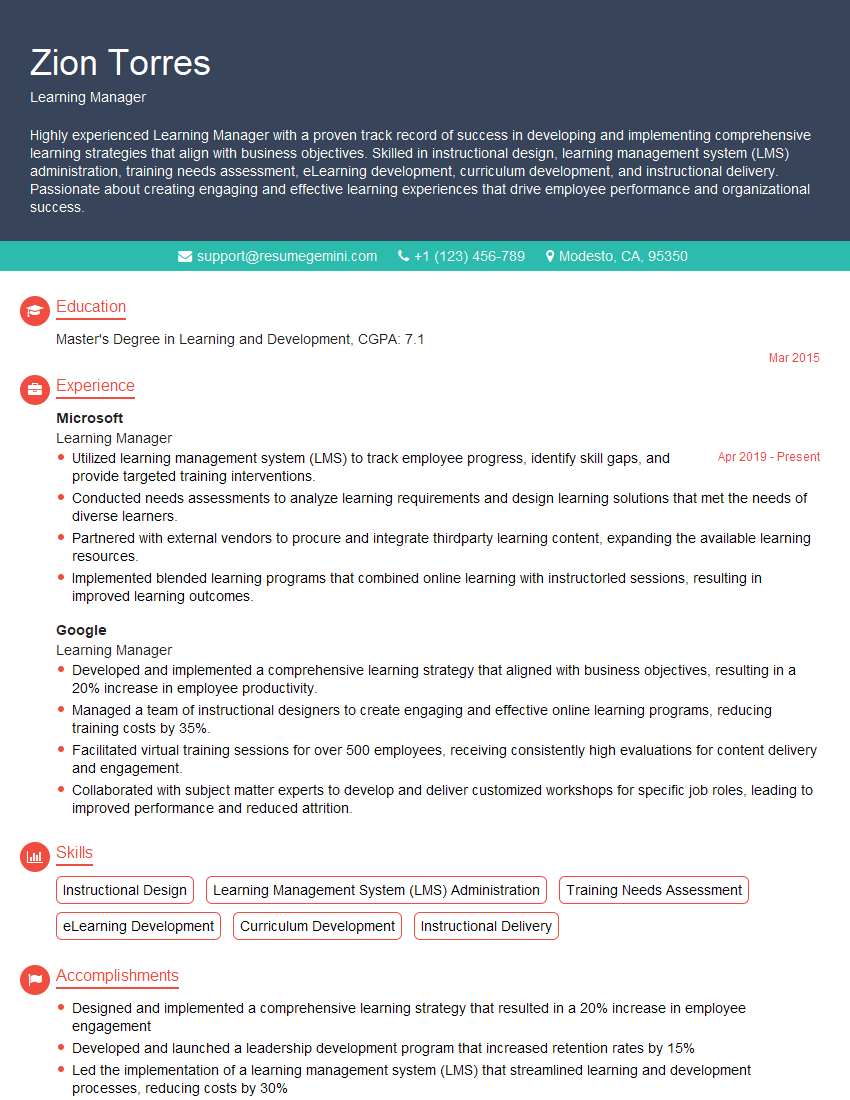
Learning Manager Resume Sample
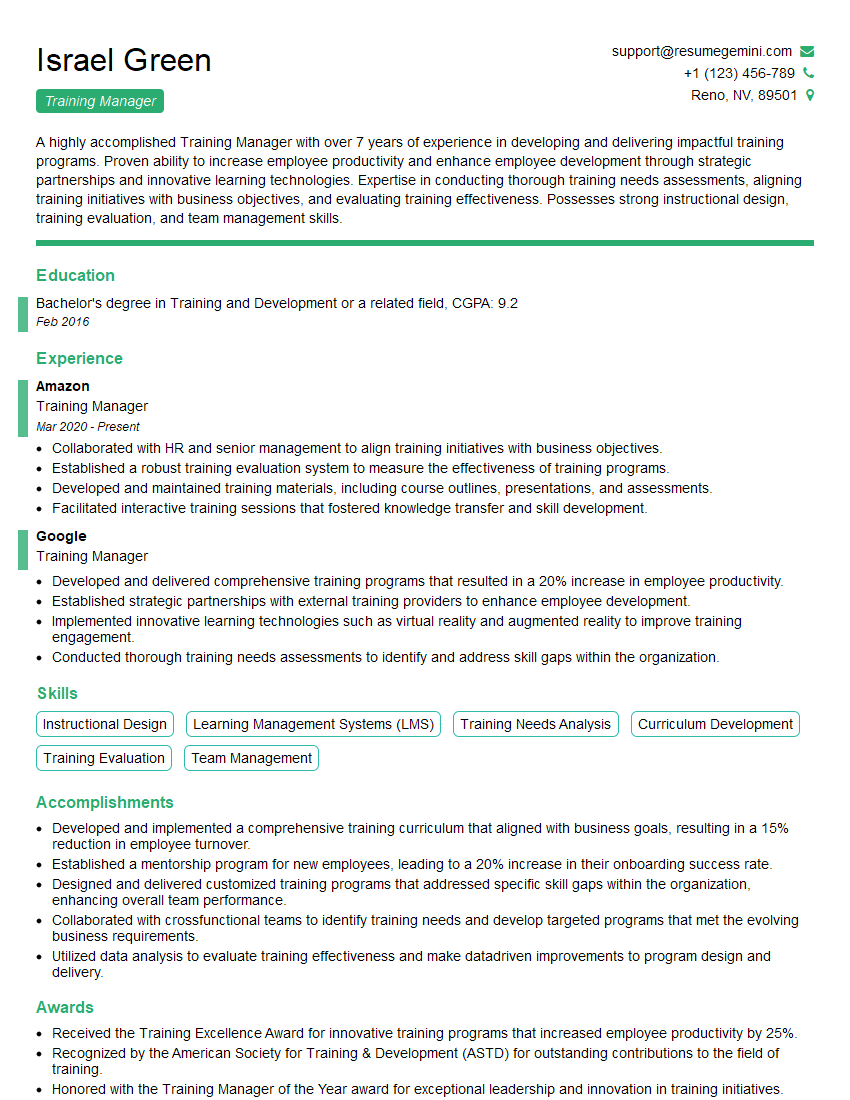
Training Manager Resume Sample
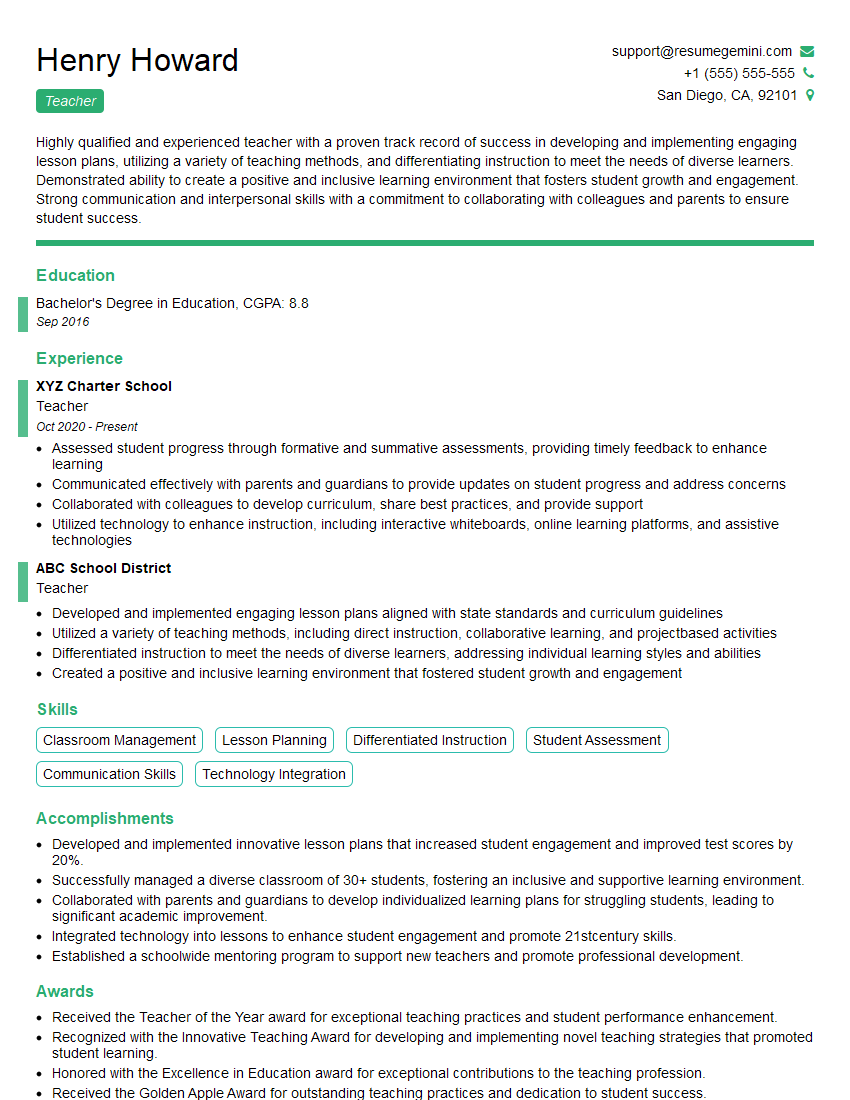
Teacher Resume Sample

Instructor Resume Sample

Professor Resume Sample

Curriculum Developer Resume Sample
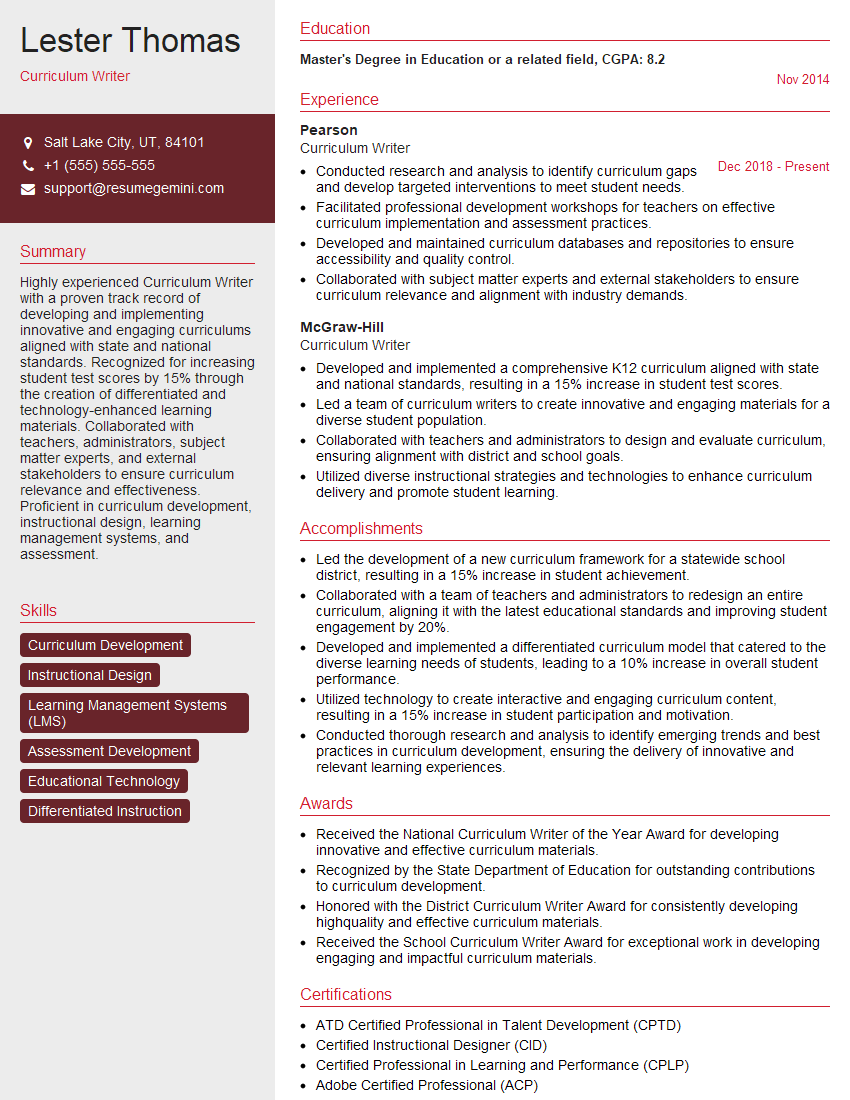
Curriculum Writer Resume Sample

Training Specialist Resume Sample
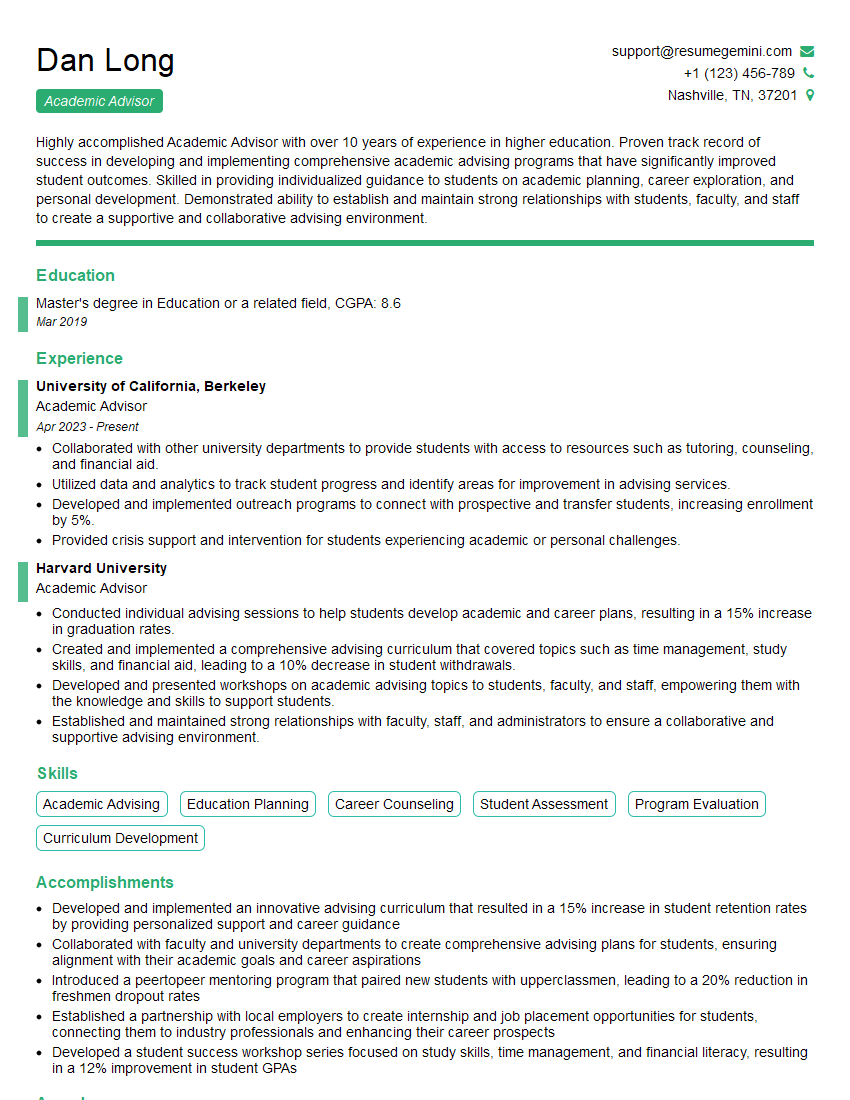
Academic Advisor Resume Sample
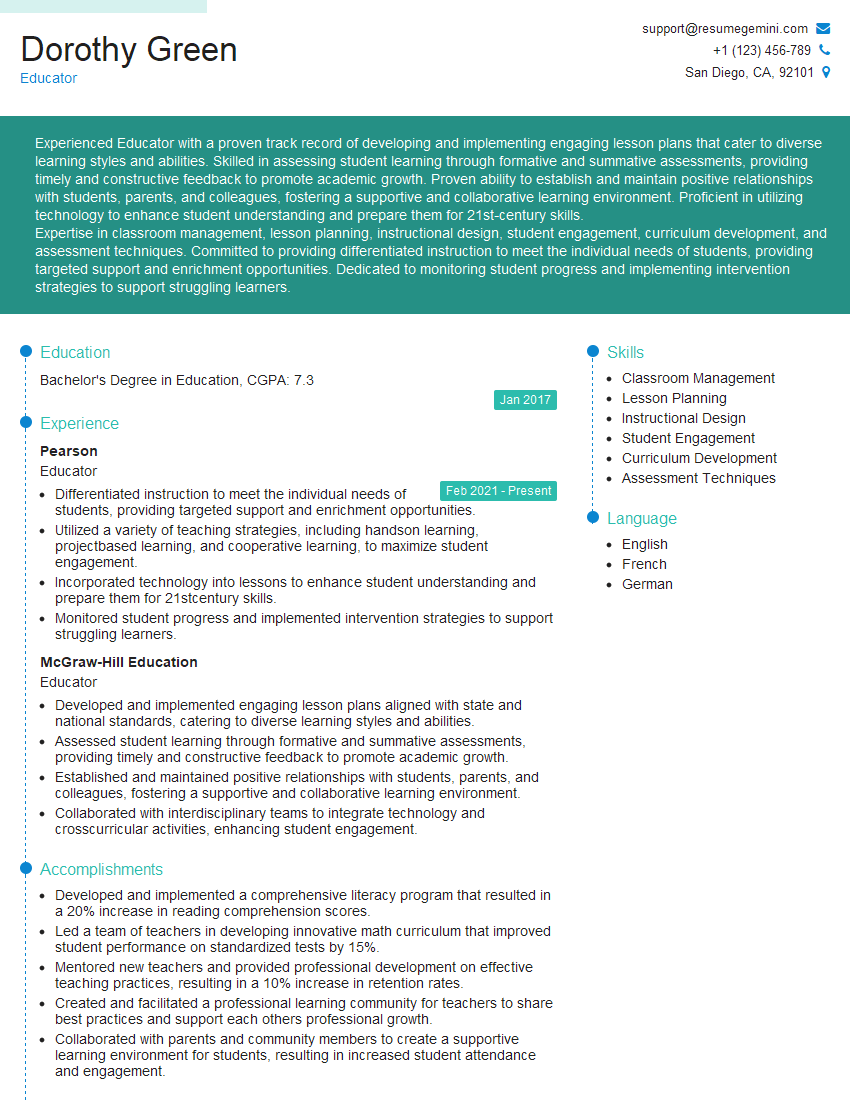
Educator Resume Sample
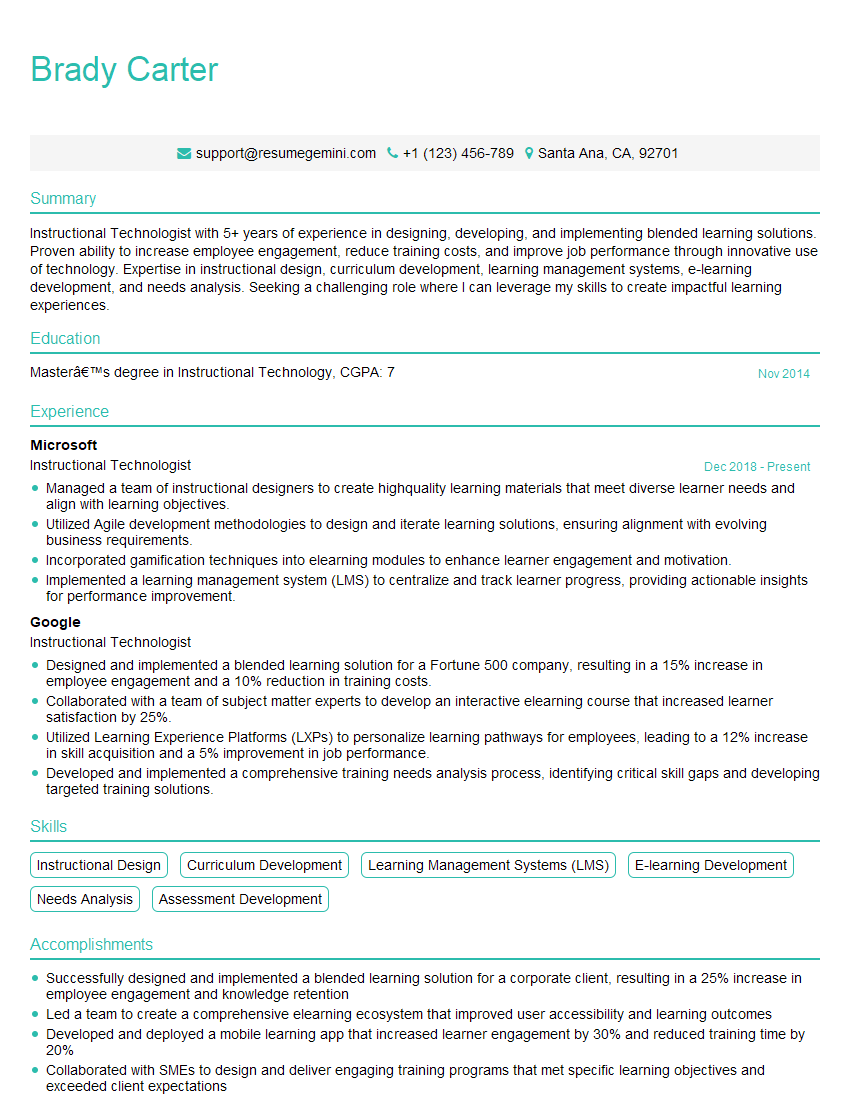
Instructional Technologist Resume Sample
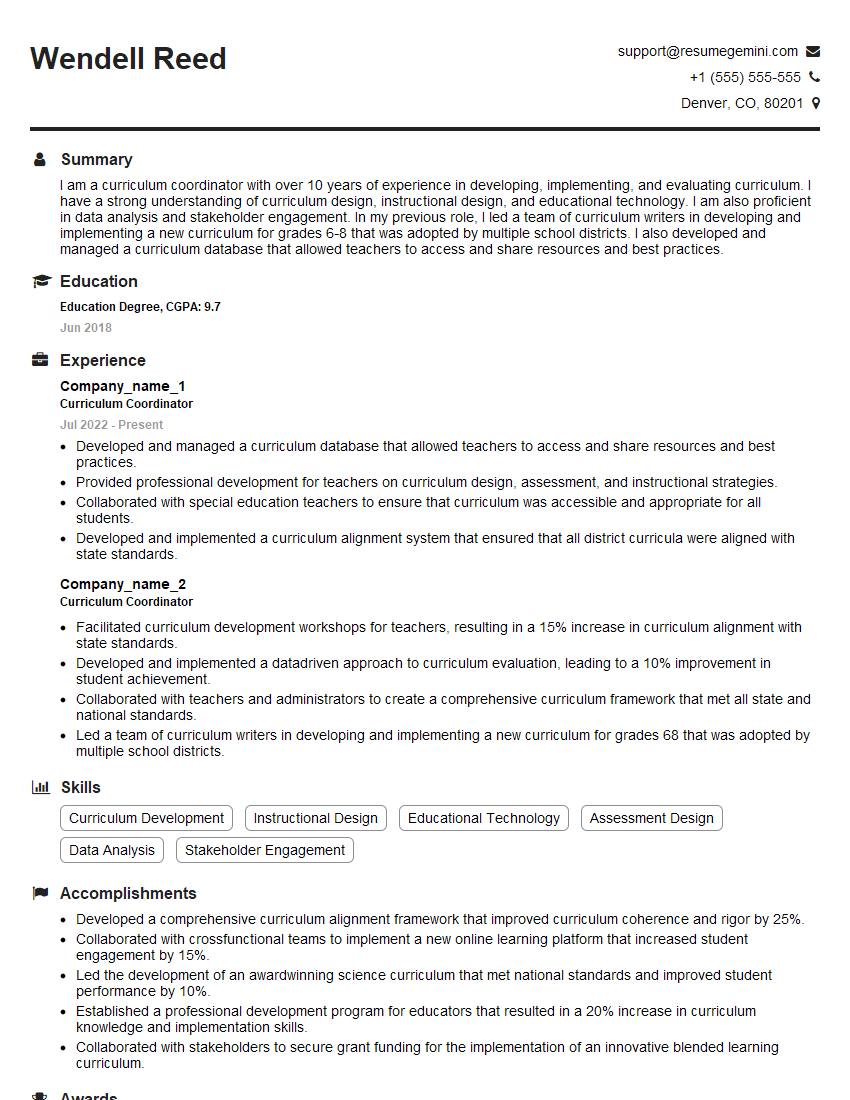
Curriculum Coordinator Resume Sample
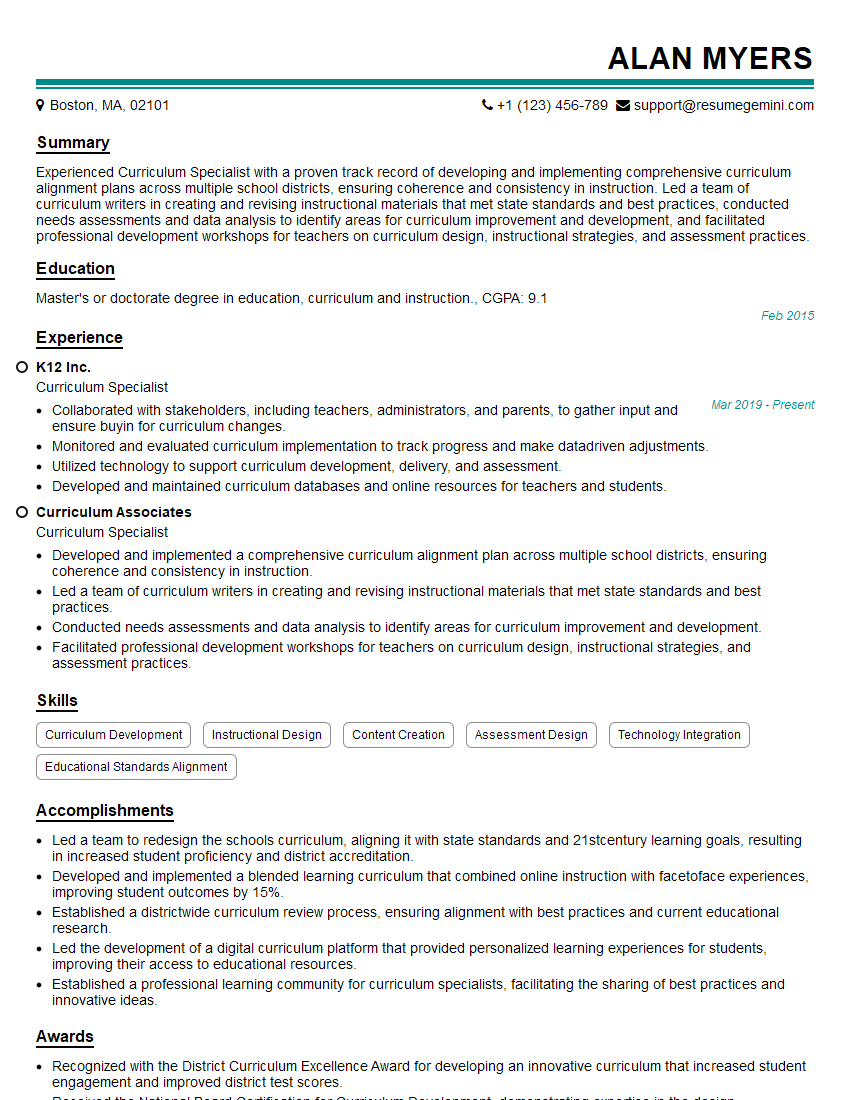
Curriculum Specialist Resume Sample
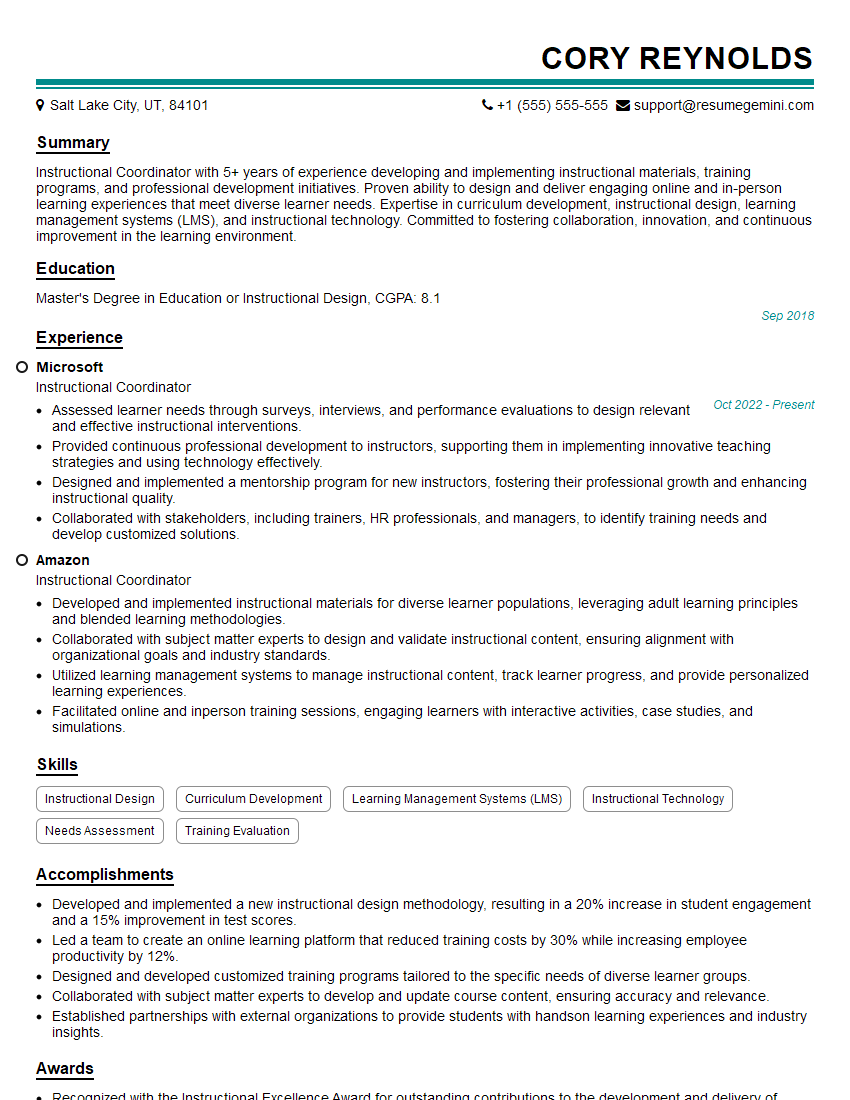
Instructional Coordinator Resume Sample
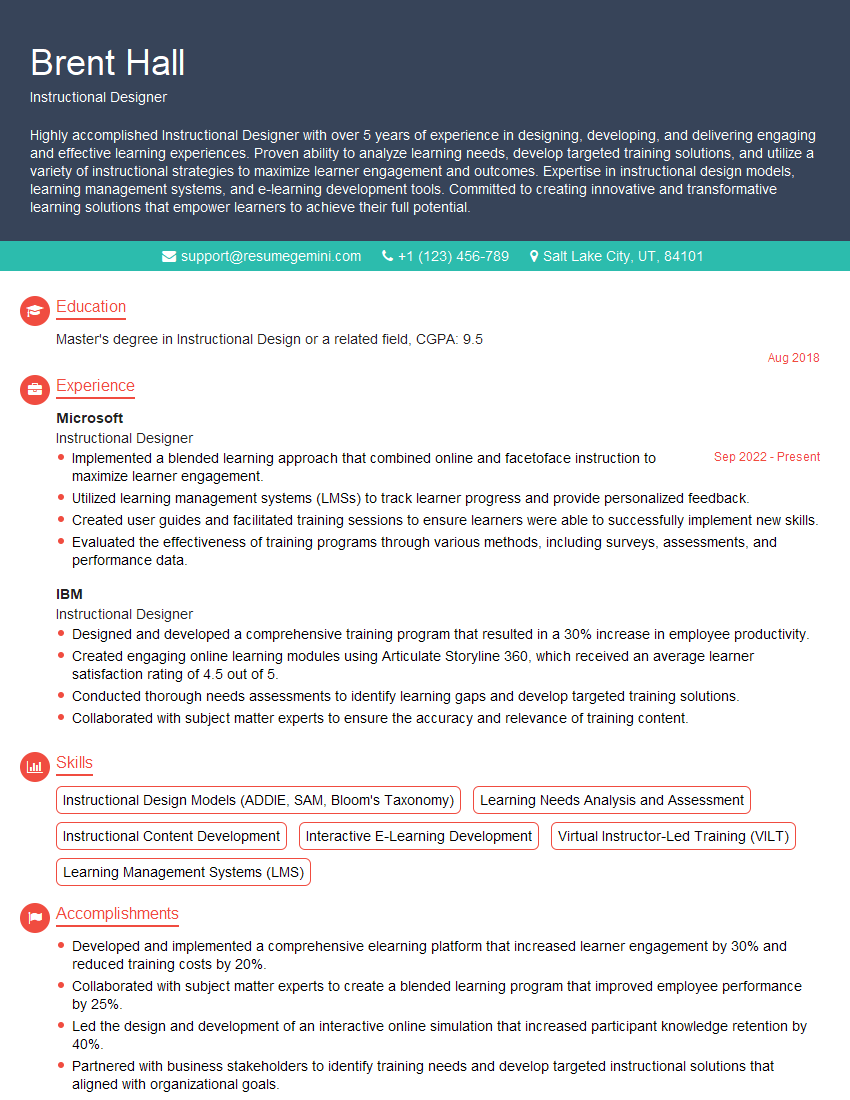
Instructional Designer Resume Sample

Educational Technologist Resume Sample
Explore more articles
Users Rating of Our Blogs
Share Your Experience
We value your feedback! Please rate our content and share your thoughts (optional).
What Readers Say About Our Blog
Really detailed insights and content, thank you for writing this detailed article.
IT gave me an insight and words to use and be able to think of examples