Cracking a skill-specific interview, like one for Ash Leaching and Toxicity Assessment, requires understanding the nuances of the role. In this blog, we present the questions you’re most likely to encounter, along with insights into how to answer them effectively. Let’s ensure you’re ready to make a strong impression.
Questions Asked in Ash Leaching and Toxicity Assessment Interview
Q 1. Explain the process of ash leaching and the factors influencing it.
Ash leaching is the process where water or other liquids percolate through ash, dissolving and extracting soluble constituents. Think of it like making tea – the hot water (leachant) dissolves the soluble compounds (in this case, potentially harmful elements) from the tea leaves (ash). The resulting liquid is called leachate. Several factors influence the leaching process. These include:
- Ash Composition: The chemical composition of the ash, including the concentration of various elements and their chemical forms, dictates how readily they dissolve. For instance, a highly alkaline ash might readily release certain metals.
- Particle Size: Finer ash particles have a larger surface area exposed to the leachant, leading to increased dissolution and leaching. Think about how crushed sugar dissolves faster than a sugar cube.
- Leachant Properties: The pH, ionic strength, and temperature of the leachant directly impact the solubility of different elements. A more acidic leachant will generally dissolve more metals.
- Contact Time: Longer contact between ash and the leachant results in greater leaching.
- Water Content: The presence of moisture in the ash promotes leaching, while dry conditions inhibit it.
Understanding these factors is crucial for predicting and mitigating the environmental risks associated with ash disposal.
Q 2. Describe different methods used to assess the toxicity of ash leachate.
Toxicity assessment of ash leachate involves several methods. The most common is the Toxicity Characteristic Leaching Procedure (TCLP), a standardized test designed to simulate leaching under worst-case conditions. Other methods include:
- Synthetic Precipitation Leaching Procedure (SPLP): This method simulates the leaching process in a more environmentally relevant scenario, using less aggressive conditions than TCLP.
- Batch Leaching Tests: These involve mixing the ash with a leachant in a container and analyzing the leachate after a specified time. They are simpler than TCLP and SPLP but less standardized.
- Column Leaching Tests: These tests use columns packed with ash to simulate the leaching process in a landfill. This mimics a more realistic scenario.
- Bioassays: These tests utilize living organisms (e.g., bacteria, algae, or plants) to assess the toxicity of the leachate based on their growth or survival. They directly measure the effect on biological systems.
The choice of method depends on the specific application and regulatory requirements.
Q 3. What are the key regulatory requirements for managing ash disposal?
Regulatory requirements for ash disposal vary depending on the type of ash and location, but generally focus on protecting human health and the environment. Key aspects include:
- Compliance with TCLP or equivalent leaching tests: The leachate must meet specific regulatory limits for various toxic substances.
- Appropriate disposal methods: Ash may be landfilled, recycled, or used in other applications, subject to stringent regulations governing site selection, design, and monitoring.
- Environmental monitoring: Regular monitoring of groundwater, surface water, and soil is needed to ensure that leaching does not contaminate the surrounding environment.
- Permitting and reporting: Operators must obtain permits and regularly submit reports to regulatory authorities detailing ash management practices and monitoring results.
- Long-term liability: Owners and operators are often held liable for potential environmental damage caused by ash leaching for extended periods.
Failure to comply with regulations can lead to significant penalties and legal repercussions.
Q 4. How do you interpret TCLP and other leaching tests results?
TCLP and other leaching test results are typically reported as the concentration of various constituents in the leachate (e.g., mg/L or µg/L). Interpreting these results involves comparing them to regulatory limits. If the concentration of any constituent exceeds the regulatory limit, the ash is considered hazardous. However, interpretation isn’t just about comparing to a limit. Consider:
- Data Variability: There’s inherent variability in leaching tests; multiple tests should ideally be performed.
- Context: The regulatory limits and the results need to be interpreted in the context of the ash’s source, its intended use, and the specific site conditions.
- Potential Synergistic Effects: The combined effect of multiple contaminants in leachate can be more toxic than the sum of their individual effects.
A proper interpretation needs expertise in both the chemical analysis and environmental regulations. For example, a slightly elevated concentration that is still below the regulatory limit in a less sensitive environment may still warrant close monitoring.
Q 5. Discuss the various chemical constituents of concern in ash leachate.
Several chemical constituents in ash leachate are of concern due to their toxicity. These include:
- Heavy Metals: Arsenic (As), lead (Pb), mercury (Hg), chromium (Cr), cadmium (Cd), and others are highly toxic, even at low concentrations. They can bioaccumulate in the food chain.
- Cyanide: This compound is highly toxic to many organisms.
- Polycyclic Aromatic Hydrocarbons (PAHs): These organic compounds are known carcinogens.
- Chlorinated organic compounds: These can be persistent and bioaccumulate in the environment and pose significant health risks.
- Alkaline compounds: While not directly toxic in low concentrations, high alkalinity can alter soil and water chemistry, harming organisms and making the water unpotable.
The specific constituents of concern depend heavily on the source of the ash. For instance, coal ash will have different constituents compared to municipal solid waste incinerator ash.
Q 6. Explain the different types of ash and their varying leaching characteristics.
Different types of ash exhibit varying leaching characteristics due to their diverse compositions. Some examples include:
- Coal Combustion Ash (Fly Ash and Bottom Ash): These contain significant amounts of heavy metals and other potentially toxic substances. Leaching behavior varies depending on the type of coal and combustion conditions.
- Municipal Solid Waste Incinerator Ash (MSWI Ash): This ash contains a complex mixture of substances, including heavy metals, PAHs, and chlorinated compounds. It generally exhibits higher leaching potential for a wider range of toxic substances compared to coal ash.
- Biomass Ash: The composition varies widely depending on the type of biomass used. Some biomass ashes are relatively benign, while others can contain significant concentrations of heavy metals.
- Industrial Process Ashes: These ashes often contain specific contaminants related to the industrial process; their leaching characteristics need to be assessed on a case-by-case basis.
The variability in composition necessitates tailored assessment of leaching potential for each ash type.
Q 7. How would you design a leaching test for a specific type of ash?
Designing a leaching test for a specific type of ash involves several steps:
- Characterize the ash: Thorough characterization of the ash’s physical and chemical properties is essential to determine potential contaminants. This includes particle size distribution, chemical composition, and mineralogical analysis.
- Select appropriate leaching test method: The choice of the test method (TCLP, SPLP, batch, column, etc.) depends on the regulatory requirements and the specific research questions. For regulatory compliance, TCLP is often mandated.
- Determine leachant and conditions: The type and properties of the leachant (e.g., deionized water, acetic acid) need to be specified. Factors such as contact time, liquid-to-solid ratio, and temperature should be determined based on the selected method and the specific research objectives. For example, simulating a specific landfill scenario might need a different leachant and time period than a regulatory test.
- Conduct the test and analyze the results: The test is performed according to the selected method. The leachate is then analyzed for various constituents using appropriate analytical techniques (e.g., ICP-MS, HPLC). Statistical analysis is key to understanding data variability.
- Interpret and report the results: The results are interpreted in context of the specific ash type, relevant regulations, and potential environmental impacts. A well-written report is critical for clarity and effective communication.
The design must be carefully documented and justified to ensure its validity and reproducibility.
Q 8. Describe the potential environmental impacts of ash leaching.
Ash leaching, the process where water dissolves harmful substances from ash, poses significant environmental risks. Imagine a landfill filled with coal ash – rainwater percolating through it dissolves heavy metals like arsenic, lead, and chromium, along with other pollutants. These contaminants then leach into groundwater, impacting drinking water sources and harming aquatic life. Surface runoff can also carry these leached pollutants into nearby streams and rivers, harming ecosystems further. Soil contamination from ash leaching can also affect plant growth and create a chain reaction of environmental damage.
- Groundwater contamination: This is arguably the most serious risk, leading to the need for costly water treatment and potentially jeopardizing public health.
- Surface water pollution: This can impact aquatic life, making rivers and streams unsuitable for drinking, fishing, and recreation.
- Soil contamination: Affecting plant life and potentially entering the food chain through bioaccumulation.
- Air pollution: Particulate matter from ash can be re-suspended in the air, posing respiratory risks.
Q 9. What are the remediation strategies for ash-contaminated sites?
Remediation strategies for ash-contaminated sites are multifaceted and depend on the extent and nature of the contamination. Think of it like cleaning up a spill – you need to assess the damage before deciding on the best cleaning method. Common strategies include:
- Excavation and disposal: This involves removing the contaminated ash and transporting it to a properly lined landfill, a costly but effective method for highly contaminated areas.
- Cap and cover systems: This approach involves placing a layer of impermeable material over the ash to prevent water infiltration and subsequent leaching. This is a more cost-effective solution for less severely contaminated sites.
- Phytoremediation: Using plants to absorb and remove contaminants from the soil. This is a more environmentally friendly approach, but it’s slower and might not be effective for all contaminants.
- In-situ stabilization/solidification: Chemical treatments are used to bind the contaminants within the ash, preventing their leaching. This can be cost-effective but requires careful selection of chemicals to avoid creating other environmental problems.
- Bioremediation: Utilizing microorganisms to break down or transform contaminants into less harmful substances. This is a promising approach, but it can take a longer time to achieve desired results.
The choice of remediation strategy often involves a risk assessment and cost-benefit analysis. A combination of methods is often employed for optimal results.
Q 10. How do you assess the risks associated with ash leaching to human health and the environment?
Risk assessment for ash leaching involves a combination of techniques. Think of it like a detective investigating a crime scene – they need to gather evidence and interpret the findings to determine the culprit and potential damage. We use similar methods to assess the risk posed by ash leaching. This usually involves:
- Toxicity characterization: Laboratory tests to identify and quantify the hazardous substances present in the ash. This involves leaching tests (e.g., TCLP, ASTM methods) to simulate the release of contaminants under different conditions.
- Exposure assessment: Determining the pathways and routes through which humans and the environment might be exposed to the leached contaminants (e.g., groundwater ingestion, inhalation, dermal contact). This often involves modeling the movement of contaminants through the soil and groundwater.
- Risk characterization: Combining toxicity and exposure data to estimate the potential adverse health effects and environmental impacts. This frequently involves using risk assessment models and frameworks (e.g., USEPA risk assessment guidelines).
The results of this assessment help determine the level of risk and inform remediation decisions. A high-risk scenario might warrant immediate and extensive cleanup, while a low-risk scenario might allow for a more monitoring-based approach.
Q 11. Explain the role of pH in ash leaching behavior.
pH plays a crucial role in ash leaching. Imagine pH as a scale measuring acidity or alkalinity; a lower pH indicates acidity, while a higher pH indicates alkalinity. The pH of the leaching solution significantly affects the solubility of many metals and other contaminants. For instance, many heavy metals are more soluble and thus more readily leached at lower pH (acidic conditions), while others are more soluble at higher pH (alkaline conditions). The specific pH dependence varies for each element and compound. A slight change in pH can dramatically alter the leaching behavior of the ash.
For example, chromium(VI) is highly mobile and toxic at low pH, while it becomes less mobile and less toxic at higher pH as it converts to the less soluble chromium(III) form. Understanding the pH-dependent solubility of contaminants is critical for predicting and managing ash leaching.
Q 12. Discuss the influence of particle size on leaching kinetics.
Particle size is another critical factor influencing leaching kinetics. Think of it like dissolving sugar – a finer sugar dissolves faster than a coarser sugar. Smaller ash particles have a larger surface area relative to their volume, leading to increased interaction with the leaching solution. This increased surface area accelerates the release of contaminants into the solution. Larger particles have a smaller surface area, resulting in slower leaching kinetics. Therefore, the leaching rate is often inversely proportional to particle size.
The smaller the particle size, the faster the leaching rate and the greater the potential for contaminant release into the environment. This implies that a thorough understanding of the particle size distribution of the ash is crucial for accurate leaching assessments.
Q 13. What are the limitations of current ash leaching assessment methods?
Current ash leaching assessment methods have limitations. While methods like the Toxicity Characteristic Leaching Procedure (TCLP) and various ASTM leaching tests provide valuable data, they don’t always perfectly replicate real-world conditions. Some key limitations include:
- Simplified leaching conditions: Laboratory tests often use simplified leaching conditions that may not accurately represent the complex geochemical interactions occurring in the environment.
- Limited consideration of long-term effects: Most tests focus on short-term leaching behavior, neglecting potential long-term changes in leachate composition.
- Lack of standardization: Different laboratories may use slightly different protocols, leading to variations in results.
- Difficulty in predicting long-term behavior: Extrapolating short-term laboratory results to predict long-term environmental behavior can be challenging.
- Focus on specific contaminants: Many tests focus on specific contaminants of concern and may not account for interactions between different contaminants.
These limitations highlight the need for continuous improvement and development of more sophisticated and realistic ash leaching assessment methods. Methods such as column leaching tests and field monitoring can help overcome some of these limitations.
Q 14. How do you determine the appropriate sampling strategy for ash leaching analysis?
Determining the appropriate sampling strategy for ash leaching analysis is crucial for obtaining representative results. It’s like taking a representative sample from a cake – you want to ensure the sample accurately reflects the overall composition of the cake. The sampling strategy should consider:
- Homogeneity of the ash: If the ash is relatively homogeneous, a smaller number of samples might suffice. However, for heterogeneous ash, a larger number of samples collected from various locations is necessary.
- Spatial variability: The spatial variability of the ash needs to be accounted for. Samples should be collected from different locations and depths to capture potential variations in contaminant concentrations.
- Temporal variability: The temporal variability should also be addressed, especially in dynamic systems. Repeated sampling over time might be required to assess seasonal changes in leaching behavior.
- Sample size: The sample size needs to be sufficient to provide statistically reliable results.
- Sampling techniques: Appropriate sampling techniques (e.g., grab samples, composite samples) should be chosen based on the characteristics of the ash and the study objectives.
A well-defined sampling plan is essential for ensuring the accuracy and reliability of the ash leaching analysis. This plan needs to be thoroughly documented and adhered to throughout the sampling process.
Q 15. Describe the role of geochemistry in understanding ash leaching.
Geochemistry plays a crucial role in understanding ash leaching by providing the framework to predict the behavior of elements within the ash matrix and the surrounding environment. It helps us understand the chemical composition of the ash, the mineralogical phases present, and how these phases will react with water or other leaching solutions.
For instance, geochemistry helps determine which elements are readily soluble (like sodium and potassium) and which are less soluble (like heavy metals bound to mineral structures). Understanding the pH, redox potential, and the presence of complexing agents in the leachate (the liquid that has leached through the ash) is critical in predicting the mobility of different elements. We use geochemical models and databases to predict the speciation (chemical form) of elements, which directly impacts their solubility and therefore their potential for leaching.
Imagine trying to understand how a specific type of candy dissolves in water. Geochemistry is like the detailed recipe for that candy – specifying the ingredients (elements in the ash), how they are combined (mineralogy), and how they react with the water (leaching solution) to form the final dissolved product (leachate).
Career Expert Tips:
- Ace those interviews! Prepare effectively by reviewing the Top 50 Most Common Interview Questions on ResumeGemini.
- Navigate your job search with confidence! Explore a wide range of Career Tips on ResumeGemini. Learn about common challenges and recommendations to overcome them.
- Craft the perfect resume! Master the Art of Resume Writing with ResumeGemini’s guide. Showcase your unique qualifications and achievements effectively.
- Don’t miss out on holiday savings! Build your dream resume with ResumeGemini’s ATS optimized templates.
Q 16. Explain the concept of equilibrium partitioning and its relevance to ash leaching.
Equilibrium partitioning describes the distribution of elements between different phases – in this case, the solid ash phase and the aqueous leachate phase. It assumes that the leaching process has reached a state of equilibrium, where the rate of dissolution equals the rate of precipitation or adsorption. In reality, true equilibrium is rarely achieved in leaching tests, but the concept is useful in understanding the potential for element release.
The relevance to ash leaching is significant because it dictates how much of a given element will end up in the leachate. Factors influencing equilibrium partitioning include the pH of the leachate, the presence of competing ions, and the surface area of the ash particles. A higher pH might increase the solubility of certain metals, while the presence of other ions can compete for binding sites on the ash surface, reducing the amount of a specific element leached.
Think of it like brewing tea. The tea leaves (ash) contain various compounds. The hotter the water (more aggressive leachate), the more compounds will dissolve into the water (leachate) until equilibrium is reached – a point where the rate of compound release from the leaves equals the rate of compounds settling back onto the leaves. The final concentration in the tea is determined by the equilibrium partitioning.
Q 17. How do you interpret and report ash leaching data?
Interpreting and reporting ash leaching data involves a multi-step process. First, we carefully examine the concentrations of different elements in the leachate. These are typically reported in milligrams per liter (mg/L) or parts per million (ppm). We then compare these concentrations to regulatory limits or environmental quality standards.
Beyond simple concentration values, we consider the variability in the data. Multiple replicate tests are crucial, and statistical methods (discussed later) help assess the uncertainty and reliability of the results. The report should include details of the leaching procedure used (e.g., TCLP, discussed below), the characteristics of the ash (particle size distribution, pH), and the quality control measures taken during the analysis. Visualizations, such as graphs showing element concentrations, are helpful for clear communication.
Finally, the report needs a clear conclusion summarizing the potential environmental risk based on the leaching data, taking into account the regulatory context and any potential uncertainties. It may also include recommendations for further investigation or management strategies.
For example, a report might state: “The leaching test results indicate that arsenic concentrations in the leachate exceed the regulatory limit of 5 mg/L in 70% of the replicates, suggesting a potential environmental risk that requires further investigation and remediation.”
Q 18. What are the key differences between TCLP and other leaching procedures?
The Toxicity Characteristic Leaching Procedure (TCLP) is a standardized method designed to simulate the leaching of hazardous constituents from waste under specific conditions. It is widely used in the US for regulatory purposes. Other leaching procedures, such as the European standard EN 12457-2, the Dutch standard NEN 7345, or the Synthetic Precipitation Leaching Procedure (SPLP), differ in the leachant used, the liquid-to-solid ratio, and the duration of the test.
Key differences often include the pH of the leachant (TCLP uses a buffered acetic acid solution at pH 4.93, while others might use deionized water or different buffers), the contact time between the leachant and the ash, and the shaking intensity. These differences lead to variations in the measured leachate concentrations, making direct comparisons between results obtained from different methods challenging. The choice of the appropriate leaching procedure depends heavily on the regulatory context and the specific objectives of the assessment.
Imagine comparing different recipes for making tea. TCLP is like using a specific blend of tea leaves and a specific brewing temperature, while other procedures might use different types of tea or different brewing methods. The resulting tea will have varying concentrations of different compounds.
Q 19. Discuss the use of statistical methods in analyzing ash leaching data.
Statistical methods are essential for analyzing ash leaching data because they help account for the inherent variability in the results. Replicate tests are almost always performed, leading to datasets with multiple measurements for each element. Descriptive statistics (mean, standard deviation, median) provide a summary of the data.
More advanced methods, like analysis of variance (ANOVA), help determine if differences between different ash samples or leaching conditions are statistically significant. Principal component analysis (PCA) can reduce the dimensionality of datasets with numerous elements, helping visualize patterns and correlations. Regression analysis can be used to explore relationships between element concentrations and other factors (e.g., pH, particle size).
For instance, ANOVA can be used to test if there is a statistically significant difference in the average lead concentration in the leachate between two different types of ash. PCA might be used to identify groups of elements that tend to leach together, giving insights into the geochemical processes governing element release.
Q 20. How do you address uncertainty in ash leaching assessment?
Uncertainty in ash leaching assessment arises from various sources including the inherent variability in ash composition and the limitations of the leaching procedures themselves. The choice of leaching method introduces uncertainty because different procedures yield different results. Analytical errors during the measurement of element concentrations also contribute to uncertainty.
To address uncertainty, we employ several strategies. Replicate testing is paramount, allowing us to quantify the variability within a single ash sample. Error propagation techniques are used to assess the combined impact of uncertainties in individual measurements on the overall results. Sensitivity analysis can identify the parameters that have the largest influence on the leaching behavior and focus efforts on reducing uncertainty in those parameters. Uncertainty analysis, often using Monte Carlo simulation, provides a probability distribution for the final results, reflecting the range of possible outcomes.
Imagine shooting arrows at a target. Even with perfect skill, there will be some scatter due to random variation. Replicate testing is like shooting multiple arrows; statistical analysis tells us how tightly clustered the arrows are and how accurately we know the center of the group. This helps better quantify the confidence in where the center of the target truly lies.
Q 21. What are the potential long-term consequences of ash disposal?
The long-term consequences of ash disposal depend on factors like the chemical composition of the ash, the disposal method employed, and the surrounding environment. Potential long-term consequences include:
- Groundwater contamination: Leaching of toxic elements can contaminate groundwater resources, impacting drinking water supplies and ecosystems.
- Soil contamination: Ash can contaminate soil through surface runoff or leaching, potentially affecting soil fertility and plant growth. Heavy metal contamination poses significant risk to plant health and bioaccumulation in the food chain.
- Air pollution: Wind erosion of ash can lead to the release of fine particles into the air, impacting air quality and human health.
- Ecosystem disruption: The release of toxic elements into the environment can have cascading effects on aquatic and terrestrial ecosystems, affecting biodiversity and ecosystem services.
- Long-term leaching: Some elements may leach slowly over decades or even centuries, posing a persistent threat to the environment.
Careful site selection, appropriate disposal methods (e.g., secure landfills with engineered barriers), and long-term monitoring programs are critical to mitigate these potential risks.
Q 22. Describe the various regulatory frameworks for managing ash disposal in your region.
Regulatory frameworks for ash disposal vary significantly depending on location and the type of ash (e.g., coal fly ash, municipal solid waste incineration ash). In my region, [Insert your region here, e.g., the European Union], we primarily operate under the umbrella of [Insert relevant legislation, e.g., the Waste Framework Directive] and its associated daughter directives. This legislation sets stringent limits on the leaching of various contaminants from ash disposed of in landfills or used in other applications. Specific regulations focus on the following:
- Landfilling: Strict limits are imposed on the concentration of leachable heavy metals (e.g., arsenic, cadmium, chromium, lead, mercury) and other hazardous substances in the leachate generated from ash disposed in landfills. These limits are often determined by standardized leaching tests such as the EN 12457-2 (monolith test) and the EN 12457-3 (column test).
- Alternative Uses: If ash is used in construction materials (e.g., cement, concrete), regulations might stipulate specific limits on its composition, focusing on preventing the release of hazardous substances into the environment through leaching or other mechanisms. These are often material-specific and could be governed by national building codes and standards.
- Monitoring and Reporting: Regular monitoring of leachate quality is mandated, with reports submitted to the regulatory authorities. Failure to comply can result in significant penalties.
It’s crucial to understand that these regulations are constantly evolving, adapting to scientific advancements and growing environmental awareness. Staying abreast of these changes is paramount for responsible ash management.
Q 23. How do you manage conflicting data in ash leaching analysis?
Conflicting data in ash leaching analysis is a common challenge. It can arise from several sources, including variations in sample preparation, analytical methodologies, and the inherent heterogeneity of ash itself. My approach involves a systematic process:
- Data Verification: I first meticulously review the raw data, checking for analytical errors, outliers, and inconsistencies in the methodology employed. This might involve reviewing quality control data, such as blank and duplicate analyses.
- Methodological Assessment: I carefully assess the methodologies used in generating the conflicting data, considering the different leaching tests employed (e.g., EN 12457, TCLP) and the limitations of each. The choice of leaching test significantly impacts the results. A more aggressive test like the TCLP will likely yield higher concentrations of leachable constituents than the EN 12457 method.
- Statistical Analysis: Statistical techniques, such as ANOVA or t-tests, can be used to determine if the differences between data sets are statistically significant. This helps to distinguish between genuine differences and random variations.
- Data Reconciliation: If the differences are deemed significant, I investigate possible explanations. This could involve further analysis, perhaps using alternative analytical methods or exploring the impact of different sample preparation techniques. In some cases, a weighted average of the results, considering their associated uncertainties, might be considered.
- Expert Judgement: Ultimately, expert judgment is often needed to interpret and integrate the available data, taking into consideration all available information, including the chemical characteristics of the ash and the specific regulatory context.
A clear chain of custody and comprehensive documentation of all analytical procedures is essential to trace potential sources of error and support any conclusions drawn.
Q 24. Describe your experience with different analytical techniques for ash characterization.
My experience encompasses a wide range of analytical techniques for ash characterization. These techniques can be broadly classified into those that assess the physical and chemical properties:
- Physical Characterization: This includes techniques like particle size analysis (laser diffraction, sieve analysis), specific surface area determination (BET method), and X-ray diffraction (XRD) to identify crystalline phases.
- Chemical Characterization: This is critical for assessing leaching potential. Techniques include:
- Inductively Coupled Plasma Optical Emission Spectrometry (ICP-OES): Used for the determination of elemental composition (heavy metals, etc.).
- Inductively Coupled Plasma Mass Spectrometry (ICP-MS): Provides more sensitive detection of trace elements.
- Atomic Absorption Spectrometry (AAS): Another technique for elemental analysis, particularly useful for specific elements.
- X-ray Fluorescence Spectrometry (XRF): Used for rapid bulk elemental analysis.
- Sequential Extraction Procedures (e.g., BCR): Provide information on the different fractions of metals, indicating their bioavailability and leaching potential.
- Leaching Tests (e.g., EN 12457, TCLP): Crucial for assessing the potential for release of contaminants into the environment under defined conditions.
The choice of techniques depends on the specific research question and the resources available. For example, while ICP-MS offers high sensitivity, it might be more expensive than ICP-OES. Selecting the appropriate techniques requires a good understanding of their strengths and limitations.
Q 25. How would you approach a situation where ash leaching exceeds regulatory limits?
Exceeding regulatory limits for ash leaching is a serious situation requiring prompt and decisive action. My approach would be:
- Confirmation and Investigation: I would first verify the results through repeat analyses, ensuring that the data is reliable and not due to analytical errors. I’d also thoroughly investigate the potential causes of the exceedances. This may involve examining the ash composition, the leaching test methodology, and the environmental conditions of the disposal site.
- Risk Assessment: A comprehensive risk assessment would be conducted to evaluate the potential environmental and human health impacts of the exceedances. This assessment would consider factors such as the concentration of contaminants, the pathways of exposure, and the vulnerability of the receiving environment.
- Mitigation Strategies: Based on the risk assessment, appropriate mitigation strategies would be developed. These could include:
- Treatment of the ash: This might involve physical or chemical treatment to reduce the leachability of contaminants. Examples include stabilization/solidification, washing, or vitrification.
- Modified disposal methods: This might involve selecting an alternative disposal method, such as deep well injection or secure landfill with enhanced monitoring.
- Engineering controls: This could include the use of liners and leachate collection systems in landfills to prevent contaminant migration.
- Regulatory Reporting: I would promptly report the exceedances and the proposed mitigation strategies to the relevant regulatory authorities, complying fully with all reporting requirements.
- Monitoring and Evaluation: Once mitigation strategies are implemented, I would establish a monitoring program to verify their effectiveness and ensure that leaching remains within regulatory limits. This is crucial for long-term environmental protection.
The specific actions would depend heavily on the nature and extent of the exceedances, the local regulations, and the available resources.
Q 26. Explain your experience with risk assessment methodologies for ash disposal.
My experience in risk assessment for ash disposal involves utilizing various methodologies, adapting them to the specifics of each situation. These methodologies typically involve the following steps:
- Hazard Identification: This involves identifying the potential hazards associated with the ash, such as the presence of heavy metals, dioxins, furans, and other potentially toxic substances. The characteristics of the ash, including its chemical composition and physical properties, are critical at this stage.
- Exposure Assessment: This step quantifies the potential exposure pathways for humans and the environment. This involves considering the potential for leaching, the transport of contaminants through air, water, or soil, and the potential uptake by plants and animals.
- Toxicity Assessment: This step assesses the toxicity of the identified hazards, using data from toxicological studies and environmental standards to determine their potential to cause adverse health effects.
- Risk Characterization: This involves combining the hazard identification, exposure assessment, and toxicity assessment to estimate the overall risk posed by the ash disposal. This often entails calculating a risk quotient (RQ) comparing exposure levels to toxicity levels.
- Risk Management: This step involves developing and implementing strategies to reduce or mitigate the risks identified in the risk characterization phase. These strategies could involve choosing alternative disposal methods, implementing engineering controls, or developing treatment technologies.
I’ve applied various risk assessment frameworks, including those based on probabilistic and deterministic approaches. Choosing the appropriate framework depends on the data available and the specific requirements of the project. For instance, a probabilistic model is more suitable when dealing with uncertainties in the data, while a deterministic model is sufficient when data is more certain.
Q 27. What are the emerging trends in ash leaching research and management?
Emerging trends in ash leaching research and management reflect a growing emphasis on sustainability and resource recovery. Some key trends include:
- Enhanced Leaching Tests: Research is focusing on developing more realistic and representative leaching tests that better predict long-term contaminant release under field conditions.
- Advanced Treatment Technologies: Significant effort is devoted to developing innovative and cost-effective treatment technologies for reducing the leachability of ash, including techniques that facilitate resource recovery.
- Beneficial Reuse of Ash: There’s an increasing focus on finding beneficial uses for ash as a secondary resource in construction materials, agriculture, and other applications, minimizing its environmental impact.
- Life Cycle Assessment (LCA): LCA is being increasingly used to evaluate the environmental impacts of ash management throughout its entire life cycle, from generation to disposal or reuse, informing more sustainable decision-making.
- Data Analytics and Modeling: Advanced data analysis and modeling techniques are being employed to better predict ash leaching behavior and optimize ash management strategies.
- Regulatory Advancements: Regulatory frameworks are evolving to incorporate new scientific knowledge and promote sustainable ash management practices. This often involves stricter regulations on ash disposal and incentives for beneficial reuse.
These trends aim to move away from simply considering ash as a waste material to exploring its potential as a valuable resource. This approach promotes circular economy principles and contributes to a more sustainable future.
Q 28. Describe your proficiency in using relevant software and modeling tools.
My proficiency in relevant software and modeling tools is a crucial aspect of my work. I’m highly skilled in using various software packages, including:
- Statistical software (e.g., R, SPSS, Minitab): Used for data analysis, statistical modeling, and hypothesis testing.
- Geochemical modeling software (e.g., PHREEQC, Visual MINTEQ): Used to simulate the chemical reactions that govern contaminant leaching and to predict contaminant fate and transport in the environment.
- GIS software (e.g., ArcGIS): Used for spatial analysis and visualization of environmental data, such as mapping contaminant concentrations or visualizing leachate plumes.
- Spreadsheet software (e.g., Microsoft Excel): Essential for data management, calculations, and creating reports.
Furthermore, I have experience in developing custom scripts and programs using programming languages like Python to automate tasks, such as data processing and analysis. I am adept at integrating diverse data sources and analytical outputs for comprehensive interpretations of ash leaching behavior and environmental risk assessment. This combination of software expertise allows me to conduct thorough and rigorous assessments, ensuring that recommendations are robust and well-supported.
Key Topics to Learn for Ash Leaching and Toxicity Assessment Interview
- Regulatory Frameworks: Understanding relevant environmental regulations and standards (e.g., TCLP, EPA methods) governing ash disposal and management.
- Leaching Mechanisms: A thorough grasp of the chemical and physical processes involved in leaching heavy metals and other contaminants from ash.
- Toxicity Characterization: Methods for assessing the toxicity of leached substances, including bioassays and ecotoxicological assessments.
- Sample Preparation and Analysis: Practical experience with sample collection, preparation, and analysis techniques (e.g., ICP-OES, AAS).
- Data Interpretation and Reporting: Ability to interpret analytical results, assess risks, and prepare comprehensive reports.
- Risk Assessment and Management: Applying risk assessment principles to evaluate the potential environmental impacts of ash disposal and develop mitigation strategies.
- Waste Management Strategies: Familiarity with various ash management options, including landfilling, beneficial reuse, and other innovative technologies.
- Case Studies and Problem Solving: Ability to apply theoretical knowledge to real-world scenarios and troubleshoot potential problems.
- Emerging Technologies: Awareness of advancements in ash leaching and toxicity assessment, such as advanced analytical techniques and sustainable waste management approaches.
Next Steps
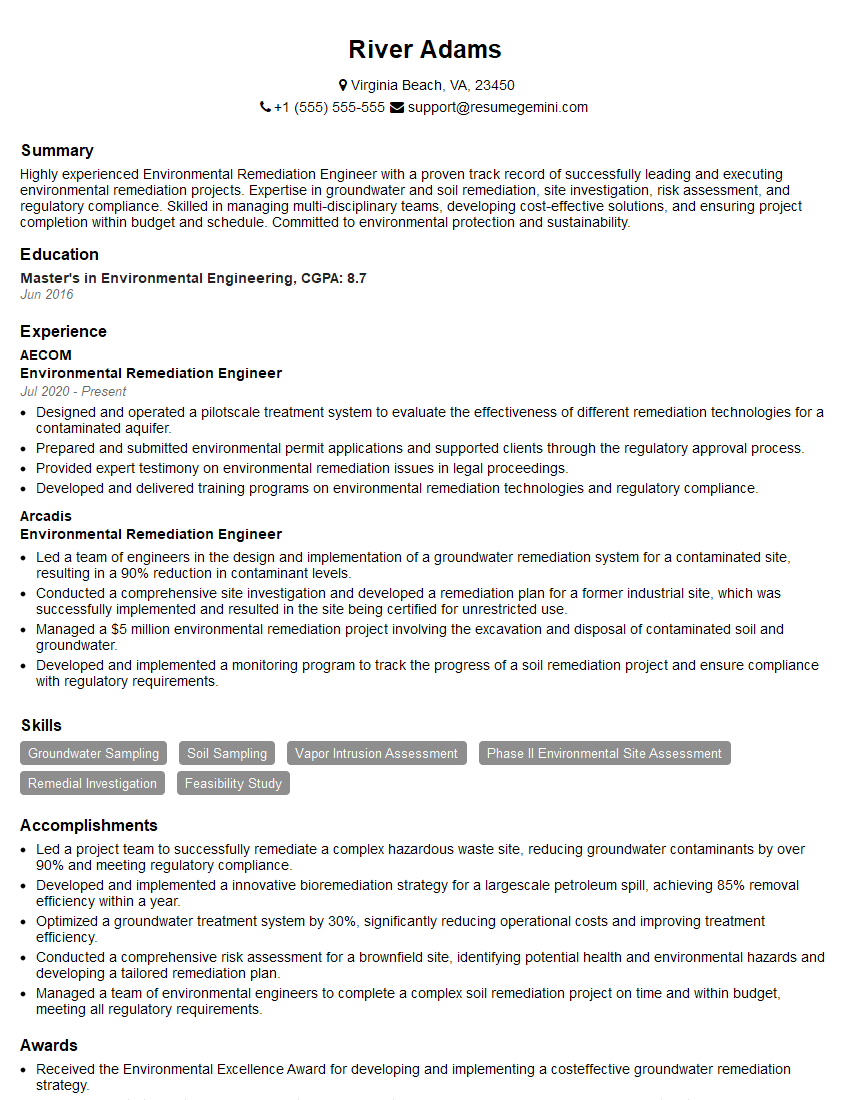
Mastering Ash Leaching and Toxicity Assessment opens doors to exciting career opportunities in environmental consulting, regulatory agencies, and the energy sector. A strong understanding of these concepts is highly valued by employers seeking individuals with expertise in sustainable waste management and environmental protection. To significantly increase your chances of landing your dream role, crafting an ATS-friendly resume is crucial. ResumeGemini is a trusted resource that can help you build a professional and impactful resume tailored to highlight your skills and experience in this field. Examples of resumes specifically tailored to Ash Leaching and Toxicity Assessment are available through ResumeGemini to help you get started.
Explore more articles
Users Rating of Our Blogs
Share Your Experience
We value your feedback! Please rate our content and share your thoughts (optional).
What Readers Say About Our Blog
Really detailed insights and content, thank you for writing this detailed article.
IT gave me an insight and words to use and be able to think of examples