Feeling uncertain about what to expect in your upcoming interview? We’ve got you covered! This blog highlights the most important Bodywork and Paint interview questions and provides actionable advice to help you stand out as the ideal candidate. Let’s pave the way for your success.
Questions Asked in Bodywork and Paint Interview
Q 1. Describe your experience with different types of automotive paint.
My experience encompasses a wide range of automotive paints, from single-stage acrylic lacquers, offering a simple, cost-effective solution, to complex multi-stage systems like basecoat-clearcoat. Single-stage paints combine color and clear coat in one application, making them quick and easy, ideal for smaller jobs or older vehicles. However, they are less durable and chip more easily. Basecoat-clearcoat systems, on the other hand, offer superior depth, shine, and durability due to the separate application of color (basecoat) and a protective clear coat. This allows for more complex color effects like metallics and pearlescents. I’ve also worked extensively with urethane paints, known for their resilience and resistance to scratches and UV damage, often preferred for high-performance vehicles. Finally, I am familiar with waterborne paints, an increasingly popular environmentally friendly option offering a good balance between performance and reduced VOC (Volatile Organic Compound) emissions. The choice of paint depends greatly on the vehicle, the budget, and the desired level of protection and aesthetic finish. For example, a classic car might benefit from a single-stage acrylic lacquer to retain its vintage character, while a modern luxury car would warrant a high-quality basecoat-clearcoat urethane system.
Q 2. Explain the process of repairing a damaged car fender.
Repairing a damaged car fender is a multi-step process requiring precision and attention to detail. First, I’d assess the damage, determining the extent of the dent or crack. Then, I’d carefully remove any loose or damaged paint and rust using appropriate tools like a wire brush, scraper, and sanding block. For deeper damage, I may need to use a body hammer and dolly to carefully manipulate the metal back into shape. Then comes the body filler application. I’d select a filler appropriate for the size and type of damage—a lightweight filler for minor imperfections and a heavier-duty filler for larger repairs. Multiple thin coats are applied, allowing each to dry before sanding it smooth. After the filler is perfectly smooth, I’d prime the repaired area to provide a good surface for the paint to adhere to. Once the primer is dry, I’d sand it again to get a flawless base. Finally, I’d apply the basecoat, clearcoat, and any additional layers like color sanding and buffing to achieve the original factory finish.
Q 3. How do you identify and address different types of paint damage?
Identifying and addressing different types of paint damage requires a keen eye and experience. Common issues include scratches, chips, fading, oxidation, bubbling, and peeling. Scratches range from superficial surface abrasions to deeper damage reaching the primer or metal. Chips are small areas of missing paint, often caused by stone chips or minor impacts. Fading results from prolonged sun exposure, weakening the pigment and clear coat. Oxidation is a dulling and clouding of the paint’s surface. Bubbling and peeling are signs of underlying issues like poor paint adhesion, moisture intrusion, or rust. The repair strategy depends on the type and severity of damage. Superficial scratches may only require polishing or a touch-up pen. Deeper scratches or chips may necessitate sanding, priming, and repainting. Fading requires a thorough cleaning, polishing, and potentially a repainting. Oxidation can be addressed with polishing and waxing. Bubbling and peeling demand extensive repair, addressing the underlying cause before repainting. For example, if a bubble is caused by rust, then the rust must be removed before filling and repainting.
Q 4. What safety precautions do you take when using automotive paints and solvents?
Safety is paramount when working with automotive paints and solvents. I always work in a well-ventilated area, ideally a dedicated spray booth with proper exhaust systems. I wear a respirator to protect my lungs from paint fumes and dust particles, safety glasses to shield my eyes from splashes, and gloves to protect my skin from solvents and paint. I follow all safety data sheets (SDS) meticulously, understanding the specific hazards associated with each product. Proper disposal of waste paint and solvents is also critical, following all local regulations and using designated waste containers. Flammable materials are stored away from ignition sources and any spills are cleaned up immediately. I regularly check my equipment to ensure it is in good working order and use appropriate safety equipment for specific tasks, like using a grinder with a dust mask and safety shield.
Q 5. What are the common causes of paint bubbling or peeling?
Paint bubbling or peeling is usually a sign of poor adhesion, moisture intrusion, or improper surface preparation. Poor adhesion can result from insufficient cleaning or preparation of the surface before painting. Moisture trapped between the paint layers can cause bubbling and lifting as the water expands. Rust is a major culprit, as it expands and pushes up the paint. Sometimes, the use of incompatible paints or primers can also lead to peeling. In short, inadequate surface preparation, moisture intrusion, and rust are the primary culprits. For instance, if there’s existing rust under the paint, the rust will expand, causing the paint to blister and peel. Fixing the issue requires addressing the underlying problem—removing rust, addressing moisture, and ensuring proper surface preparation before repainting.
Q 6. Describe your experience with different body filler products.
My experience includes working with a variety of body fillers, each with its own unique properties. Lightweight fillers are excellent for minor scratches and imperfections, offering easy sanding and minimal shrinkage. Heavy-duty fillers are designed for larger repairs and significant damage, providing superior strength and filling capacity. There are also specific fillers for aluminum and other materials. The choice of filler is determined by the size and type of damage being repaired. For example, a small ding may only require a lightweight filler, while a large dent or hole may require a heavy-duty filler possibly in multiple applications. I’m also familiar with fillers designed for specific substrates, ensuring optimal adhesion and durability. I always choose fillers based on the material being repaired and the specific requirements of the project. Proper mixing and application of filler is crucial for a successful repair.
Q 7. How do you prepare a car body for painting?
Preparing a car body for painting is a crucial step, as the quality of the prep work directly impacts the final finish. The process starts with a thorough cleaning of the surface using degreasers, wax removers, and appropriate solvents to remove all dirt, grease, wax, and other contaminants. Next, any existing damage is repaired, this may include filling dents, repairing cracks, and addressing rust. The repaired areas are then sanded smooth using a progression of increasingly finer grits of sandpaper, ensuring the transitions are seamless. After repairing and sanding, a primer is applied to provide a uniform surface and improve the adhesion of the topcoat. The primer is then sanded smooth, creating a perfect surface for the paint. Before the final paint application, any dust or debris is removed, and the surface is thoroughly cleaned again, ensuring there are no contaminants that could affect the finish. This comprehensive preparation process is essential for a high-quality, long-lasting paint job that will stand the test of time. The attention to detail during this stage is crucial for an optimal outcome. A rushed or poorly executed prep job can ruin even the best paint.
Q 8. What techniques do you use to achieve a smooth, even paint finish?
Achieving a flawless paint finish requires a meticulous approach, combining proper surface preparation with precise application techniques. It’s like baking a cake – if your base isn’t right, the final product suffers.
Proper Surface Preparation: This is the most crucial step. It involves thorough cleaning to remove any contaminants (grease, dust, old wax), followed by sanding to achieve a perfectly smooth surface. Different grits of sandpaper are used, starting with coarser grits to remove imperfections and gradually moving to finer grits for a progressively smoother finish. This is akin to refining a sculpture, gradually removing material to reveal the perfect form.
Primer Application: A high-quality primer acts as a bonding agent and provides a uniform base for the topcoat. Multiple thin coats are applied, allowing each to dry thoroughly before applying the next, preventing runs and sags.
Paint Application: The paint is applied in thin, even coats using a spray gun, ensuring consistent wet-on-wet coverage. The spray gun’s pressure and distance from the surface are carefully controlled to avoid orange peel (a textured surface) or runs. I always use a wet-on-wet technique, allowing the coats to slightly blend and create a seamless finish. This is akin to watercolor painting, allowing the colors to flow and blend naturally.
Clear Coat Application: Finally, a clear coat is applied for protection and shine. Like the paint, multiple thin coats are applied, ensuring even coverage. The clear coat not only protects the paint job but also enhances the gloss and depth of the color.
Q 9. How do you match paint colors accurately?
Accurate color matching is critical for a professional finish. It’s not just about finding a similar color; it’s about achieving a precise match. Think of it like matching threads for intricate embroidery – even a slight difference stands out.
Using a Spectrophotometer: I use a spectrophotometer, a device that measures the color’s spectral reflectance. This instrument provides a numerical code that precisely identifies the color. This code is then used to mix the paint to an exact match, eliminating guesswork.
Color Charts and Formulas: When a spectrophotometer isn’t available, I use color charts and formulas provided by paint manufacturers. These charts provide a visual comparison and detailed mixing instructions. However, it’s more of an art than a science and often requires multiple attempts to obtain a perfect match.
Test Spots: Before applying paint to the entire vehicle, I always apply test spots in a less visible area to check the color match under different lighting conditions. This helps avoid costly mistakes if there is a slight deviation.
Q 10. Describe your experience with different types of sanding equipment and techniques.
Sanding is a critical step in bodywork and paint preparation, requiring skill and precision. The wrong technique can easily damage the surface or leave swirl marks.
Types of Sanding Equipment: I use a range of equipment including hand sanding blocks (for detailed areas), pneumatic sanders (for larger areas), and random orbital sanders (for a smoother, less swirl-prone finish). The choice depends on the area and level of surface damage.
Sanding Techniques: Different sanding techniques are used depending on the surface and the desired result. For example, I use a crisscross pattern with finer grits to ensure even sanding and avoid leaving sanding scratches. On curved surfaces, the sanding must follow the contours to avoid causing dips and unevenness. This takes practice and a keen eye for detail.
Grit Selection: The grit of the sandpaper is also crucial. Coarser grits (lower numbers, like 80 grit) remove larger imperfections, while finer grits (higher numbers, like 2000 grit) refine the surface for a smooth finish. This is similar to selecting the right tools for a carpentry project – the wrong tool can ruin the wood.
Q 11. How do you handle complex body damage repairs?
Complex body damage repairs require a methodical approach, combining expertise in metalworking, welding, and paint techniques. Think of it like reconstructive surgery – precision and attention to detail are paramount.
Assessment and Planning: The first step is to carefully assess the damage, determining the extent of the structural damage. I create a detailed repair plan, including the necessary steps, materials, and equipment.
Metal Replacement or Repair: Depending on the damage, parts may need to be replaced or repaired. This often involves cutting, shaping, and welding new metal panels. Precision is crucial to ensure proper fit and alignment.
Welding Techniques: Different welding techniques are used depending on the material and the type of repair. Mig welding is common for steel repairs, while specialized welding is used for aluminum. Spot welding is often used in certain areas to prevent excessive heat distortion.
Body Filler Application: Once the metalwork is complete, body filler is used to smooth out any imperfections. This requires careful application and sanding to achieve a perfectly smooth surface. The filler must be applied in thin coats to avoid shrinkage and cracking.
Q 12. How do you determine the appropriate repair methods for different types of damage?
Determining the appropriate repair method depends on the type and severity of the damage. A small dent is repaired differently than a severely crushed panel.
Minor Damage: Minor dents and scratches can often be repaired using paintless dent repair (PDR) techniques or spot repairs. PDR involves carefully manipulating the metal from behind to remove the dent without damaging the paint. Spot repairs focus on a small section, minimizing the repair area.
Moderate Damage: Moderate damage, such as dents with paint damage, might require body filler and sanding to repair the surface before repainting. The area of repair is carefully sanded to blend seamlessly with the surrounding surface.
Severe Damage: Severe damage, such as significant collision damage, requires extensive metalwork, possibly involving panel replacement, welding, and frame straightening before any body filler or paint is applied. This involves careful alignment and measuring to restore the vehicle’s original structure.
Q 13. What experience do you have with frame straightening?
Frame straightening, also known as chassis straightening, requires specialized skills and equipment to restore a vehicle’s structural integrity after a collision. It’s like putting a broken bone back into place, except it’s the car’s skeleton.
Frame Measuring: The process starts with precise measurements to identify the areas of damage and the extent of misalignment. Specialized measuring tools, such as laser measuring systems, are used to obtain accurate data.
Pulling and Straightening: A frame straightening machine, often a powerful hydraulic press, is used to apply controlled force to the damaged frame members, gently pulling them back into alignment. This requires a keen understanding of the vehicle’s structural design.
Welding and Reinforcement: Once straightened, welds may be necessary to reinforce repaired or replaced sections. This ensures the long-term strength and stability of the frame.
Verification and Re-measurement: After the straightening, careful re-measurement is conducted to ensure the frame is back to factory specifications. This often involves multiple cycles of measuring, pulling, and verification to attain perfect alignment.
Q 14. Describe your knowledge of different welding techniques.
Welding is a fundamental skill in bodywork, requiring proficiency in different techniques depending on the materials and repair requirements. It’s like being a skilled blacksmith, working with metal to achieve a precise and strong bond.
MIG Welding (Metal Inert Gas): Commonly used for steel repairs, MIG welding uses a continuous wire feed to create a strong weld. It’s versatile and relatively easy to learn but requires careful control of the wire feed speed and voltage.
TIG Welding (Tungsten Inert Gas): TIG welding uses a non-consumable tungsten electrode to create precise welds, often preferred for aluminum and other non-ferrous metals. It requires a higher level of skill but results in cleaner, more visually appealing welds.
Spot Welding: Used to join sheet metal, especially during panel replacement or repair, this technique creates a series of small welds using specialized equipment. It’s a very fast technique ideal for joining overlapping sheet metal components and minimizing heat distortion.
Resistance Spot Welding: This technique uses electrical resistance to generate the necessary heat to join two pieces of metal with a current pulse. It is quick, commonly used in manufacturing, but often requires specialized equipment not generally present in smaller shops.
Q 15. What is your experience with using measuring tools and body alignment techniques?
Accurate measurements are the cornerstone of successful bodywork. My experience encompasses using a wide range of tools, from simple measuring tapes and rulers to sophisticated laser measuring systems and digital angle finders. These tools allow for precise assessment of damage and ensure proper panel alignment.
Body alignment techniques involve restoring a vehicle’s frame and panels to their original manufacturer’s specifications. This often requires pulling or pushing panels back into position using specialized equipment like frame racks and pulling systems. I’m proficient in using these tools to achieve precise alignment, ensuring the vehicle is structurally sound and aesthetically pleasing. For instance, I recently repaired a car that had sustained significant damage to its front end. Using a combination of laser measurements and frame-pulling techniques, I was able to restore the chassis to its original dimensions, ensuring the car’s doors and hood aligned perfectly. This involved meticulously measuring and correcting any deviations from factory specifications.
Career Expert Tips:
- Ace those interviews! Prepare effectively by reviewing the Top 50 Most Common Interview Questions on ResumeGemini.
- Navigate your job search with confidence! Explore a wide range of Career Tips on ResumeGemini. Learn about common challenges and recommendations to overcome them.
- Craft the perfect resume! Master the Art of Resume Writing with ResumeGemini’s guide. Showcase your unique qualifications and achievements effectively.
- Don’t miss out on holiday savings! Build your dream resume with ResumeGemini’s ATS optimized templates.
Q 16. How familiar are you with automotive collision repair software?
I’m highly familiar with various automotive collision repair software packages, including Audatex, Mitchell, and CCC. These systems are crucial for estimating repair costs, ordering parts, and managing the entire repair process. My proficiency extends to using these software’s features for creating detailed estimates based on vehicle damage assessments. This includes generating repair plans that accurately reflect the labor and material costs involved in each step of the repair process. For example, I regularly utilize Audatex to generate comprehensive estimates, incorporating digital photos of damage and detailed descriptions of the necessary repairs. This software also helps streamline communication with insurance adjusters and ensures transparency throughout the repair process.
Q 17. How do you estimate the cost of body and paint repairs?
Estimating the cost of body and paint repairs is a multi-step process requiring a keen eye for detail and a thorough understanding of labor rates and material costs. I begin by conducting a comprehensive assessment of the damage, meticulously documenting each area needing repair. This includes identifying the extent of damage to individual panels, the need for replacement parts, and the complexity of the repairs needed. Then, I utilize estimating software, taking into account factors such as labor rates, material costs (paint, primers, parts), and the time required to complete each step. For example, a minor dent repair might be relatively inexpensive, while a major collision requiring extensive panel replacement and painting could cost significantly more. I always factor in potential unforeseen complications and provide a detailed breakdown of the estimated costs to the client for complete transparency. This often includes a contingency buffer to cover unexpected issues that might arise during the repair process.
Q 18. What is your experience with working on different car makes and models?
Throughout my career, I have worked on a diverse range of car makes and models, from domestic vehicles to luxury imports. My experience spans various body styles, from sedans and SUVs to trucks and vans. This broad experience has provided me with a deep understanding of the unique characteristics and repair procedures for different vehicle platforms. For instance, I am equally comfortable repairing the intricate bodywork of a high-end European sports car as I am repairing the robust construction of a heavy-duty pickup truck. This diverse experience allows me to adapt my approach to the specific needs of each vehicle, ensuring the highest quality of repair regardless of make and model.
Q 19. What is your experience with various body repair techniques, such as dent pulling or panel replacement?
My experience in body repair encompasses a wide array of techniques, including dent pulling, panel replacement, and welding. Dent pulling involves carefully manipulating damaged metal back into its original shape using specialized tools. This requires patience and precision to avoid damaging the surrounding areas. Panel replacement is necessary when the damage is too extensive for repair. This includes preparing the new panel, ensuring proper fit and alignment, and expertly blending it into the existing bodywork. Welding techniques are used to repair damaged structural components or join replacement panels securely. I am proficient in various welding methods like MIG and TIG welding to ensure strong, durable repairs. For example, I recently repaired a vehicle with a severely dented fender using a combination of dent pulling and panel replacement. The dent was initially addressed through careful pulling to minimize the need for panel replacement, improving cost-effectiveness. When replacing sections, precision measurements and proper alignment techniques were vital in achieving the desired result.
Q 20. Describe your experience with color blending and pearl effects.
Color blending and pearl effects require a high level of skill and attention to detail. Color blending involves seamlessly matching the repaired area to the surrounding paint, ensuring a consistent finish. This process involves carefully selecting the correct paint formula and applying multiple coats to achieve a perfect match. Pearl effects add depth and complexity to the paint finish. This requires specialized paint and techniques to achieve the desired shimmer and iridescence. The correct application requires a keen understanding of light refraction and color theory. I’ve had experience dealing with various challenges in achieving a perfect match, for example, paint fading due to sun exposure. To overcome this, a meticulous colour analysis and blending process was used to achieve an almost invisible repair. My process prioritizes precise mixing and application to ensure a flawless blend, minimizing the appearance of repairs.
Q 21. What are your troubleshooting skills when dealing with paint issues?
Troubleshooting paint issues requires a systematic approach. I start by carefully examining the problem area to identify the root cause. This might include analyzing the paint finish for issues like orange peel, runs, or fisheyes. Then, I investigate factors like environmental conditions (humidity, temperature), paint preparation, and application techniques. For example, if orange peel appears, I might adjust the spray gun settings or the distance to the surface. If runs occur, it could be due to excessive paint or slow drying time. Systematic troubleshooting using my extensive knowledge ensures solutions can be implemented to achieve a flawless result. Documenting the process and its outcome ensures learnings are carried forward to improve efficiency and outcomes.
Q 22. What is your familiarity with different types of clear coats?
Clear coats are the final layer in a paint job, providing UV protection, gloss, and durability. There are several types, each with its own properties:
- Acrylic Lacquers: These dry quickly, are relatively easy to apply, and offer good gloss, but they are less durable and more susceptible to chipping than other options. They’re often used for quick repairs or less demanding applications.
- Acrylic Urethanes: This is the most common type used today. They offer excellent durability, gloss retention, and chemical resistance, making them ideal for automotive applications. They require more precise application and longer drying times than lacquers.
- Urethane-based Clear Coats: This is another high-performance option, often offering even greater hardness and scratch resistance than acrylic urethanes. They are usually more expensive and may require specialized equipment for application.
- Waterborne Clear Coats: Environmentally friendly options that use water as the primary solvent. They offer good performance, but require careful application and may have longer drying times.
The choice of clear coat depends on factors like budget, desired durability, and environmental concerns. For high-end automotive work, I prefer using high-quality acrylic urethanes for their balance of performance and ease of application.
Q 23. How do you maintain your tools and equipment?
Maintaining my tools and equipment is paramount to producing high-quality work and ensuring my safety. My routine includes:
- Daily Cleaning: After each job, I thoroughly clean all spray guns with the appropriate solvent, following the manufacturer’s instructions. I also clean sanding blocks, mixing containers, and other tools to prevent contamination and ensure proper functionality.
- Regular Maintenance: Spray guns require regular servicing, including replacing worn parts like needles and nozzles. I also maintain my air compressor, ensuring its filters are clean and the air is free of moisture. I inspect all equipment for any damage and repair or replace as needed.
- Proper Storage: I store my tools in a clean, dry place, protecting them from dust, moisture, and extreme temperatures. Spray guns are stored with appropriate covers to prevent the nozzles from clogging.
- Sharp Tool Maintenance: Sanding tools, especially, need regular sharpening to ensure they perform effectively and safely. Dull tools lead to uneven sanding and risk injury.
This methodical approach ensures my tools remain in top condition, leading to more efficient work and a consistently high quality of finish.
Q 24. Describe your experience with environmental regulations related to automotive paint disposal.
I have extensive experience with environmental regulations concerning automotive paint disposal. I’m fully aware of the hazards posed by solvents and paint waste. My practice adheres strictly to local, state, and federal regulations. This involves:
- Proper Waste Segregation: I meticulously separate different types of waste, including solvent-soaked rags, paint overspray, and empty containers. Each waste stream is handled according to the specific regulations.
- Using Designated Containers: All waste is collected in clearly labeled, approved containers. These containers are regularly emptied by licensed waste disposal companies.
- Record Keeping: I maintain detailed records of all waste generated, including the type and quantity of materials. This documentation is essential for compliance audits.
- Staying Updated: I regularly stay informed on changes in environmental regulations through industry publications and training courses. This ensures I am always compliant with the latest requirements.
Environmental responsibility is not just a regulation, but an ethical obligation. I take pride in my commitment to sustainable practices in my work.
Q 25. Explain your approach to working within tight deadlines and high-volume repair shops.
High-volume repair shops demand efficiency and precision. My approach to tight deadlines involves:
- Prioritization and Planning: I carefully assess each job, prioritize tasks based on urgency and complexity, and create a detailed workflow plan.
- Time Management: I am adept at estimating time requirements accurately and managing my time effectively to meet deadlines.
- Efficient Techniques: I employ efficient techniques throughout the process, from preparation to finishing. This includes using appropriate tools, optimizing workflow, and minimizing downtime.
- Communication: Maintaining clear communication with my colleagues and supervisors is vital to ensure a smooth workflow and address any potential bottlenecks.
I’ve thrived in fast-paced environments and have a proven track record of consistently delivering high-quality work even under pressure. For example, during a particularly busy period last year, I successfully completed 15 car repairs within a two-week deadline, without compromising on quality.
Q 26. How do you handle customer complaints or concerns regarding repair work?
Customer satisfaction is paramount. When handling complaints, I follow these steps:
- Active Listening: I listen attentively to the customer’s concerns, allowing them to fully explain their issues without interruption.
- Empathy and Understanding: I show empathy and understand their frustration. I acknowledge their feelings and validate their concerns.
- Thorough Investigation: I thoroughly investigate the issue, examining the repair work and documenting my findings.
- Honest and Transparent Communication: I communicate my findings honestly and transparently, explaining the cause of the problem and outlining the solution.
- Resolution: I work collaboratively with the customer to find a mutually acceptable solution, whether it’s a repair, a refinishing, or another appropriate course of action.
My goal is to restore customer confidence and ensure they are happy with the outcome. A recent example involved a minor imperfection in a clear coat; I promptly rectified the issue, exceeding the customer’s expectations, and turning a potential negative experience into a positive one.
Q 27. What are your strengths and weaknesses as an automotive body and paint technician?
My strengths lie in my meticulous attention to detail, my proficiency in various paint techniques, and my ability to work efficiently under pressure. I’m also a highly motivated and reliable individual who takes pride in the quality of my work. My experience working with diverse paint systems and repair methods ensures I can adapt to any challenge.
One area for improvement is enhancing my knowledge of the latest advancements in waterborne paint technology. While I have experience with it, further training would allow me to increase efficiency and further reduce environmental impact. I am actively seeking opportunities to expand my skills in this area.
Q 28. Where do you see yourself in 5 years in this field?
In five years, I see myself as a highly skilled and respected automotive body and paint technician, potentially in a supervisory role. I envision myself mentoring junior technicians and contributing to the improvement of shop processes. I also aim to stay abreast of the latest industry innovations and technologies, contributing to the ongoing evolution of the craft. My long-term goal is to become a recognized expert, perhaps specializing in a particular niche, like classic car restoration.
Key Topics to Learn for Your Bodywork and Paint Interview
- Vehicle Damage Assessment: Understanding different types of damage (dents, scratches, rust, etc.), their severity, and the appropriate repair methods.
- Repair Techniques: Practical knowledge of dent repair (PDR), panel beating, welding, filler application, and sanding techniques. Understanding the importance of proper surface preparation.
- Paint Preparation and Application: Mastering color matching, mixing paint, applying primer, base coat, and clear coat, and understanding different paint systems (e.g., water-based, solvent-based).
- Safety Procedures and Regulations: Familiarity with safety protocols in the workshop, including the proper handling of chemicals and equipment, and adherence to industry standards.
- Tools and Equipment: Demonstrating knowledge of various tools and equipment used in bodywork and paint, including their proper use and maintenance.
- Estimating and Costing: Understanding the process of assessing repair costs, including labor, materials, and potential complications.
- Problem-solving and Troubleshooting: Ability to identify and address common issues during the repair process, such as paint defects, imperfections in bodywork, and addressing unexpected challenges.
- Quality Control and Finishing: Understanding the importance of achieving a high-quality finish, including polishing, buffing, and detailing techniques.
Next Steps
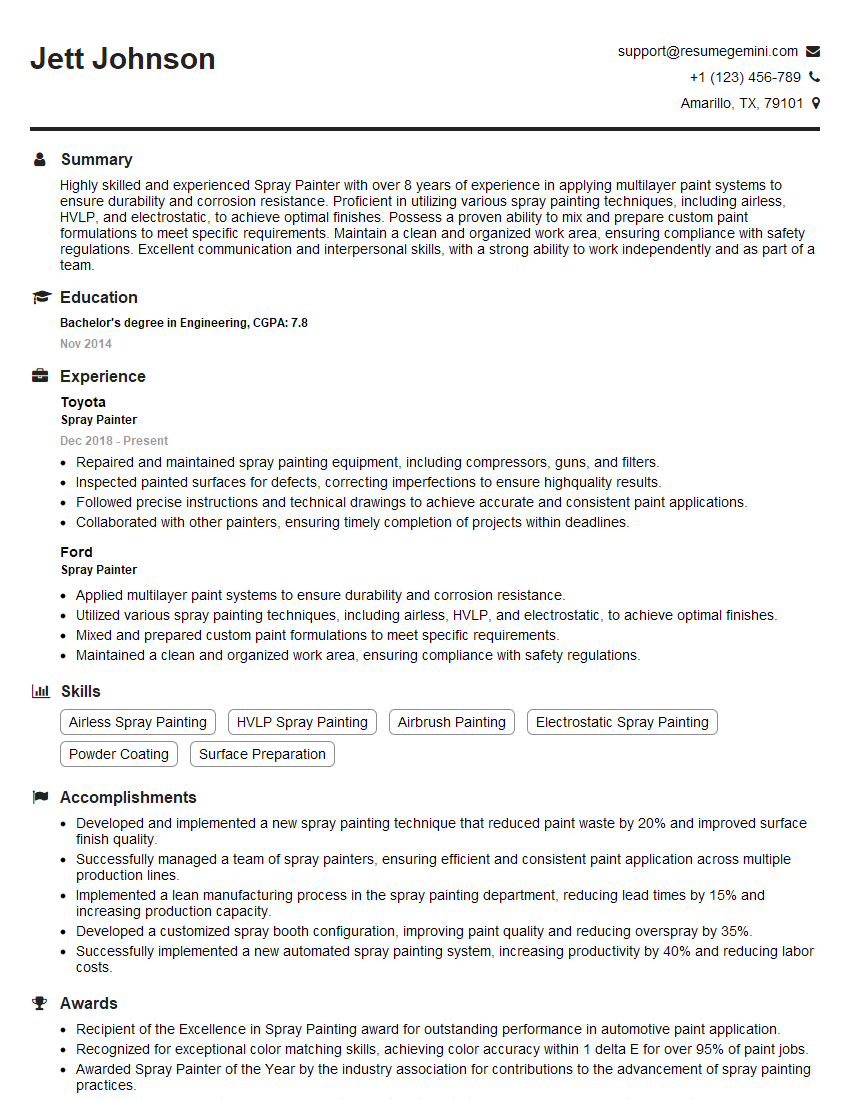
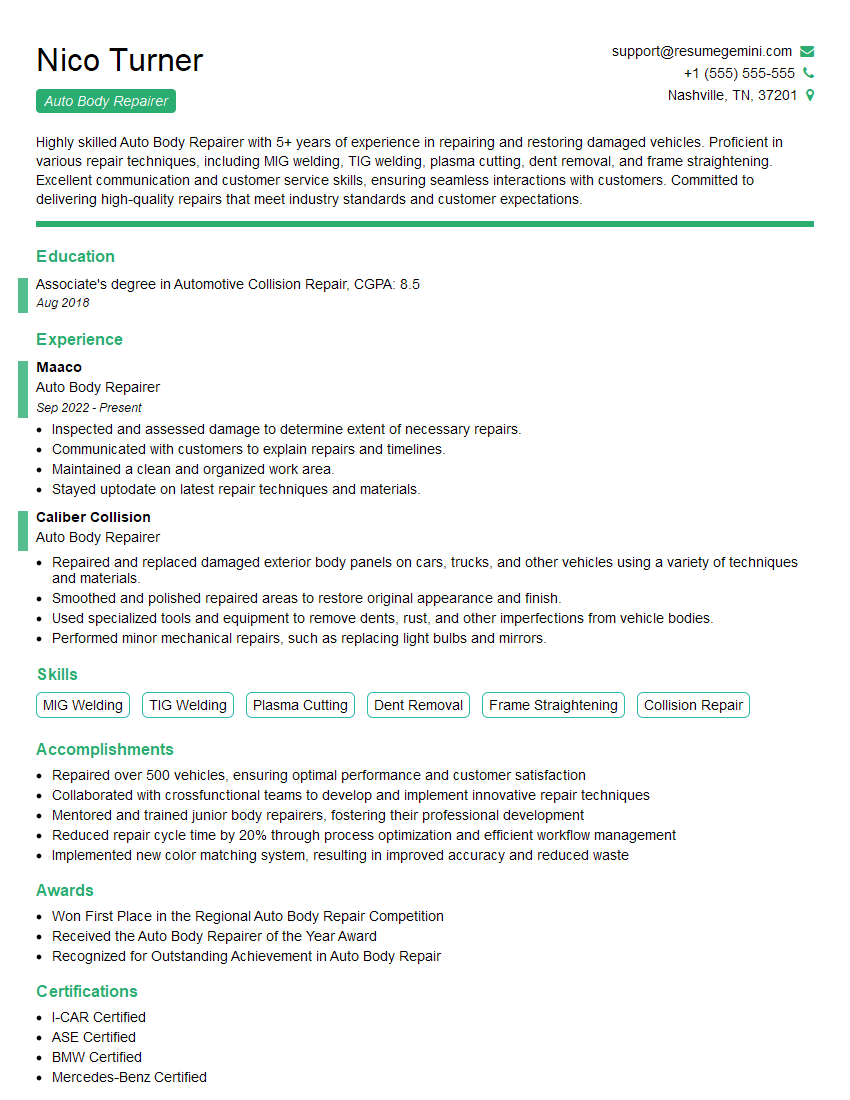
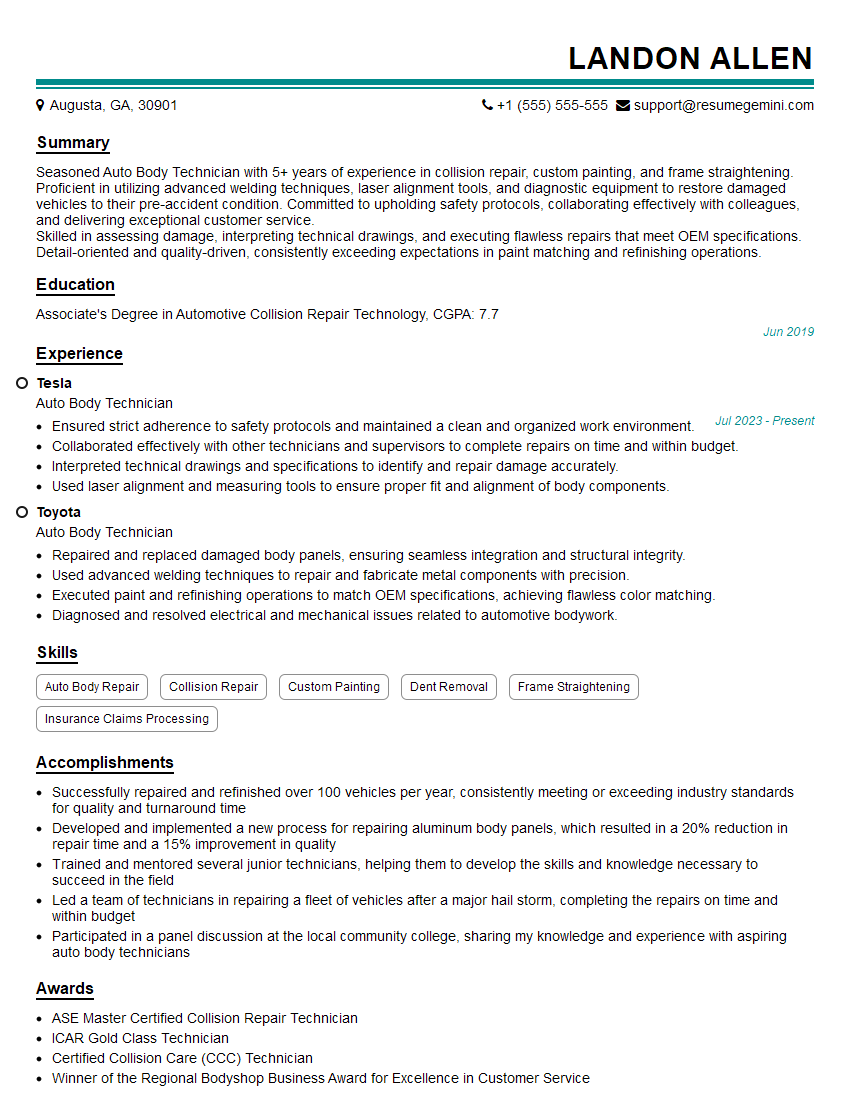
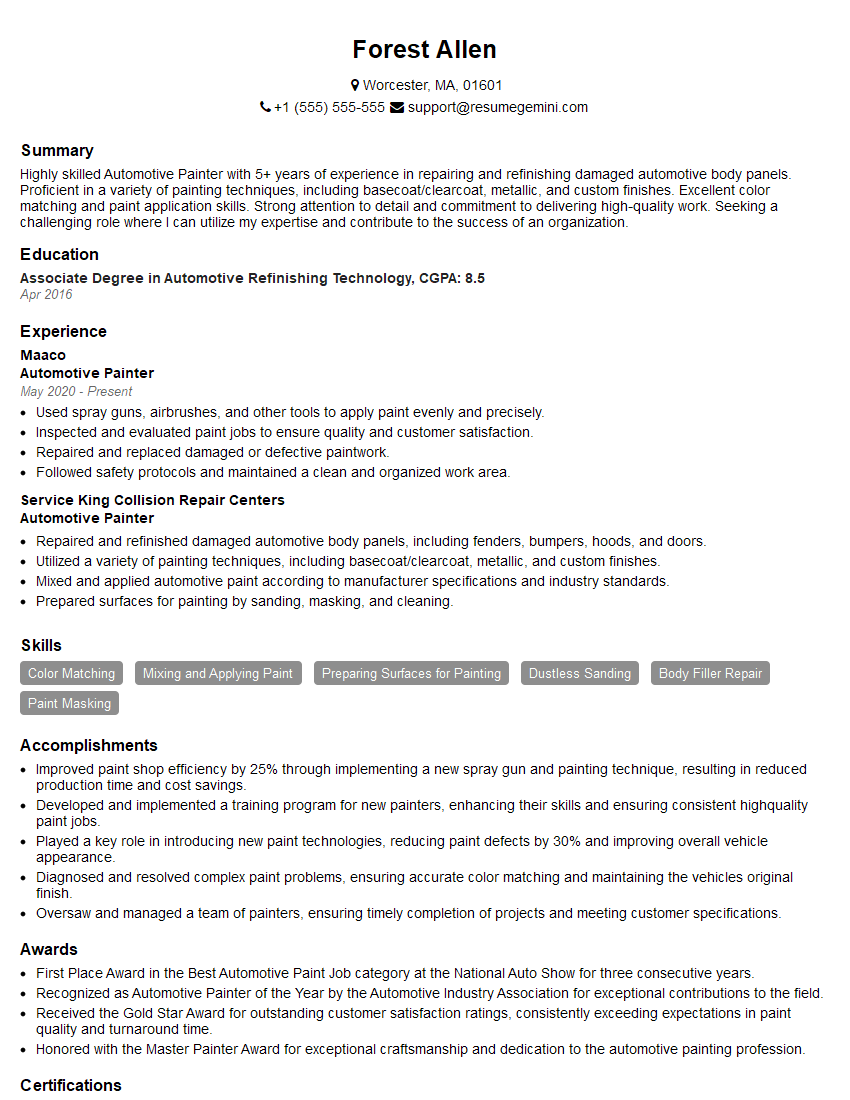
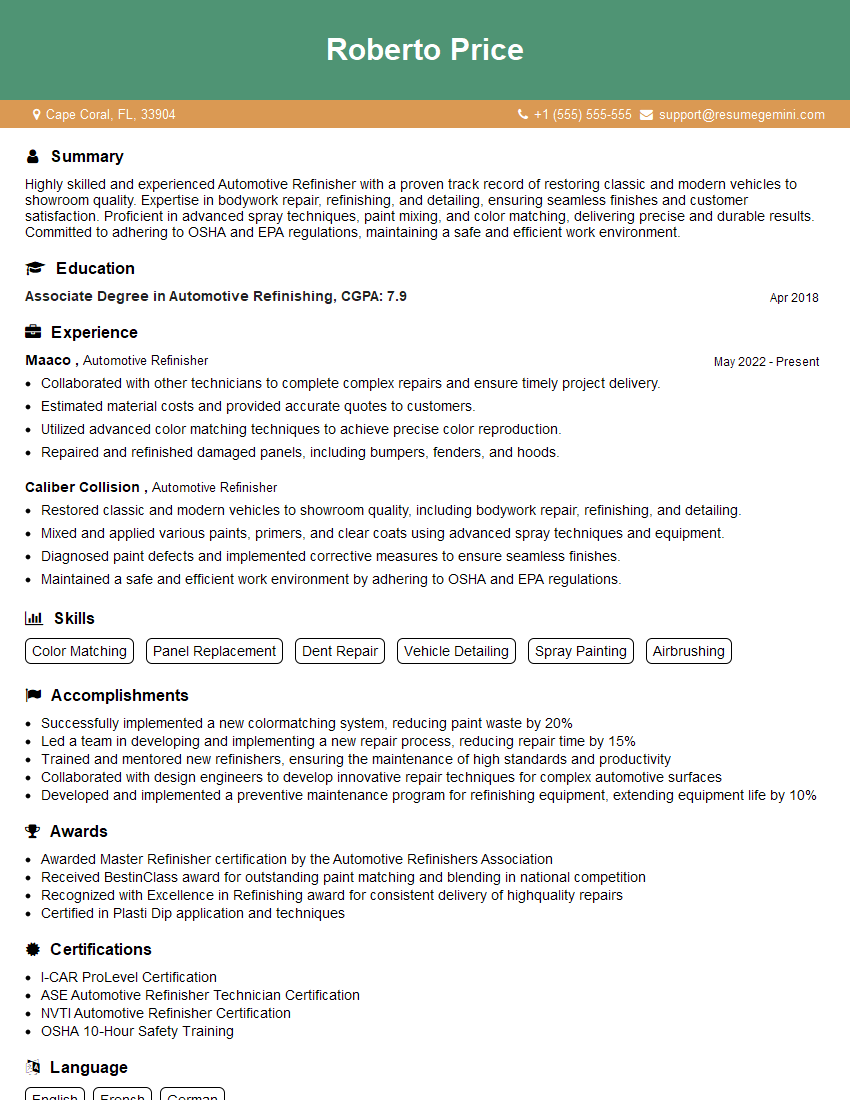
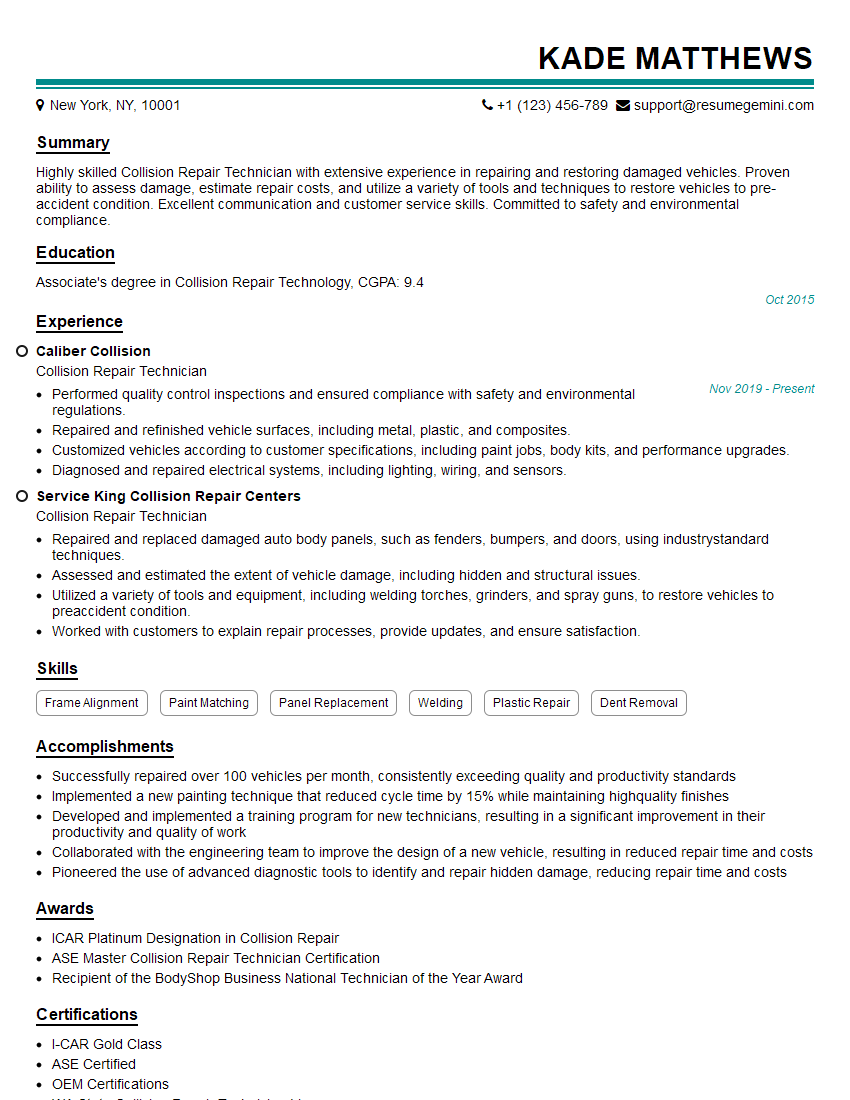
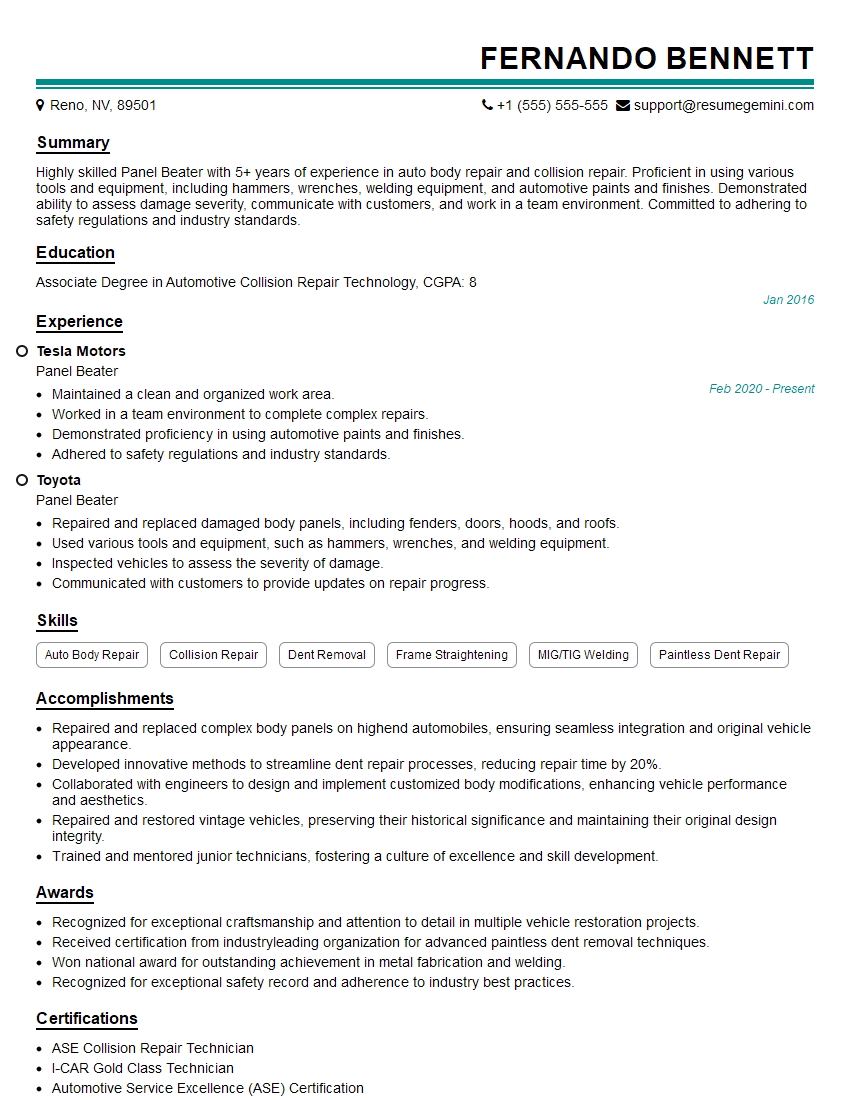
Mastering bodywork and paint skills opens doors to a rewarding and diverse career with opportunities for specialization and advancement. To maximize your job prospects, creating a strong, ATS-friendly resume is crucial. ResumeGemini is a trusted resource that can help you build a professional resume that highlights your skills and experience effectively. We provide examples of resumes tailored to the Bodywork and Paint industry to help you get started. Invest time in crafting a compelling resume – it’s your first impression on potential employers.
Explore more articles
Users Rating of Our Blogs
Share Your Experience
We value your feedback! Please rate our content and share your thoughts (optional).
What Readers Say About Our Blog
Really detailed insights and content, thank you for writing this detailed article.
IT gave me an insight and words to use and be able to think of examples