Preparation is the key to success in any interview. In this post, we’ll explore crucial Ceramic Decoration interview questions and equip you with strategies to craft impactful answers. Whether you’re a beginner or a pro, these tips will elevate your preparation.
Questions Asked in Ceramic Decoration Interview
Q 1. Describe your experience with different ceramic decorating techniques (e.g., hand-painting, decal application, screen printing).
My experience encompasses a wide range of ceramic decorating techniques. Hand-painting allows for intricate detail and unique artistic expression. I’ve worked extensively with both underglaze and overglaze hand-painting, mastering different brushstrokes and achieving a variety of textures. Decal application offers efficiency for mass production, allowing for precise reproduction of complex designs. I’m proficient in selecting and applying decals, ensuring proper adhesion and preventing bubbling or blurring. Screen printing provides a fast and effective method for applying consistent designs across many pieces. I’m skilled in creating and using screens, managing ink viscosity, and achieving sharp, clean prints. I’ve also experimented with other techniques such as stamping, sponging, and sgraffito, constantly seeking to expand my artistic repertoire.
Q 2. Explain the process of applying underglaze and overglaze decorations.
Applying underglaze and overglaze decorations involves distinct processes. Underglaze decoration is applied to the bisque-fired ware before the glaze is applied. This means the design is embedded under a protective layer of glaze. The process involves carefully applying the underglaze pigments, allowing them to dry, and then applying the glaze. The piece is then fired to fuse the glaze and the underglaze colors. Overglaze decoration, on the other hand, is applied after the piece has been glazed and fired. This means the design sits on top of the glaze. Overglaze colors are typically lower firing and therefore require a lower temperature second firing. The process involves applying the overglaze colors, often with finer brushes and delicate detail work, followed by a lower-temperature firing to set the colors. This approach allows for more vibrant, intense colors that are less susceptible to wear and tear.
Q 3. What are the different types of glazes and their properties?
Glazes are crucial in ceramic decoration, impacting both the aesthetic and functional properties of the finished piece. There are numerous types, each with unique characteristics. High-fire glazes are fired at higher temperatures (typically cone 6 or higher) and often yield a more durable, harder surface with vibrant colors. Low-fire glazes are fired at lower temperatures (cone 06 or lower) and are easier to work with for some techniques. Matt glazes create a non-reflective, velvety finish. Gloss glazes produce a smooth, high-shine surface. Crackle glazes develop a network of fine cracks during cooling, adding textural interest. Crystal glazes develop unique crystalline formations during the firing process. The selection of the glaze depends largely on the desired aesthetic effect, the type of clay body being used, and the firing temperature of the kiln.
Q 4. How do you ensure the consistency of color and design across multiple pieces?
Consistency is paramount in ceramic decoration. To ensure uniformity across multiple pieces, I employ several strategies. For hand-painting, I use consistent pigment mixing ratios and maintain a consistent application technique. I utilize templates or stencils for complex designs to maintain accuracy. For decal application and screen printing, I meticulously prepare the screens and maintain even ink pressure and application. I also regularly calibrate my equipment and maintain detailed records of my color mixes to reference for future productions. A controlled environment, managing variables like humidity and temperature, also contributes to consistent outcomes. Regular checks during each production run are vital to catch and correct any inconsistencies early.
Q 5. Describe your experience with different kiln firing techniques and temperatures.
My experience covers various kiln firing techniques and temperatures. I’m proficient in both electric and gas kilns. Bisque firing, the initial firing of the clay body, typically takes place at a range of 1800-2000°F (982-1093°C) to harden the clay. Glaze firing temperatures vary depending on the glaze type, usually between 1700°F (927°C) and 2300°F (1260°C). I understand the importance of controlled heating and cooling rates to prevent thermal shock and cracking. I have experience with both rapid and slow firing schedules, adjusting them based on the specific requirements of the clay body and the glazes used. Understanding the temperature profiles for various kiln types and materials is critical for achieving optimal results.
Q 6. How do you troubleshoot common problems encountered during the ceramic decoration process (e.g., cracking, crazing, pinholes)?
Troubleshooting is a key skill in ceramic decoration. Cracking can result from rapid temperature changes, improper clay preparation, or insufficient drying. Crazing, a network of fine cracks in the glaze, often indicates incompatibility between the glaze and the clay body. Pinholes can occur due to trapped air bubbles in the clay or glaze. My approach to troubleshooting involves analyzing the problem, identifying the root cause, and implementing corrective measures. For example, if I encounter cracking, I might slow down the cooling rate in the kiln or adjust the clay preparation process. For crazing, I would likely choose a more compatible glaze or clay body. Addressing pinholes may require adjustments in the application of glaze or altering the drying process of the clay.
Q 7. What safety precautions do you take while working with ceramic materials and equipment?
Safety is paramount in my ceramic practice. I always wear a dust mask when working with dry clay or glaze powders to prevent inhalation of harmful particles. Safety glasses are worn to protect my eyes from flying debris during grinding or sanding. Gloves protect my hands from chemicals and irritants. I work in a well-ventilated area to reduce the risk of inhaling fumes from glazes or kilns. I follow all manufacturers’ instructions when handling chemicals and glazes, and I properly dispose of hazardous waste according to regulations. Proper kiln operation and maintenance are essential to prevent accidents. Regular safety checks and training are vital to maintaining a safe working environment.
Q 8. Explain your experience with different types of ceramic materials (e.g., porcelain, earthenware, stoneware).
My experience spans a wide range of ceramic materials, each with its unique properties influencing decoration techniques. Porcelain, known for its translucency and high firing temperature, allows for delicate detail and vibrant colors. I often use underglaze and overglaze techniques on porcelain, achieving a rich, layered effect. Earthenware, being more porous and lower-firing, is excellent for rustic or folk-art styles. I frequently employ slip painting and majolica techniques on earthenware, embracing its inherent texture. Stoneware, falling between porcelain and earthenware in terms of porosity and firing temperature, offers a versatility I appreciate. It’s ideal for both bold, high-relief decorations and subtle surface designs. I’ve worked extensively with stoneware, using a variety of glazes and decorating techniques to achieve different aesthetic effects.
For instance, I recently completed a commission involving a large porcelain vase where the intricacy of the design necessitated the use of fine brushes and multiple firings to achieve the desired depth of color and detail. In contrast, a recent earthenware mug project allowed me to experiment with slip trailing, a technique that perfectly complements the material’s inherent texture.
Q 9. How do you maintain the quality and consistency of your work?
Maintaining quality and consistency is paramount. My approach involves a multi-faceted strategy. Firstly, I meticulously manage my materials. This includes sourcing high-quality clays, glazes, and pigments from reputable suppliers and storing them appropriately. Secondly, I follow precise procedures, meticulously documenting each step of the process – from initial sketching and clay preparation to glazing and firing. This allows for repeatability and helps identify areas for improvement. Finally, I regularly test and refine my techniques, adjusting variables like firing temperature and glaze application to ensure consistent results. I maintain detailed records of these experiments, creating a valuable reference library for future projects. Think of it like a skilled baker using a precise recipe and consistently checking the oven temperature – it’s all about control and attention to detail.
Q 10. Describe your understanding of color theory and its application in ceramic decoration.
Color theory is fundamental to my work. Understanding the color wheel – primary, secondary, and tertiary colors – their relationships, and how they interact is essential. I utilize complementary colors to create visual interest and contrast, analogous colors for harmony, and triadic colors for a more vibrant palette. I also consider the impact of color temperature (warm vs. cool) and value (lightness vs. darkness) on the overall composition. The application varies depending on the ceramic material and the desired aesthetic effect. For example, I might use a vibrant red and green combination on a stoneware piece for a bold statement, while opting for softer, analogous shades of blue and green on a delicate porcelain vase to maintain an elegant feel.
Furthermore, I account for how the firing process itself affects color. Glazes can interact with the clay body and each other in unexpected ways, and understanding those interactions is key to achieving the desired outcome. I often create test tiles to preview glaze interactions and color combinations before applying them to finished pieces.
Q 11. How do you manage your time and workload effectively in a fast-paced production environment?
In a fast-paced environment, efficient time management is crucial. I employ a project management approach, breaking down large projects into smaller, manageable tasks with clearly defined deadlines. Prioritization is key. I focus on high-priority projects first, using tools like Kanban boards to visualize workflows and track progress. I also practice batch processing where possible – performing similar tasks in one go, like glazing multiple pieces at once. Furthermore, I proactively address potential bottlenecks by maintaining well-organized workspaces and anticipating potential issues. For instance, if I know a particular firing process takes longer, I schedule it in advance to avoid delays.
Q 12. What software or tools are you familiar with for designing or creating ceramic decorations?
While I value the artistic freedom of hand-painting, I also leverage digital tools to enhance my workflow. I’m proficient in Adobe Illustrator and Photoshop for creating initial designs, exploring color palettes, and developing complex patterns. These programs are invaluable for generating precise templates and scaling designs consistently across different ceramic pieces. I also utilize CAD software occasionally, particularly when working on three-dimensional designs or sculptural elements. While I don’t rely heavily on 3D printing for ceramic creation itself, I might utilize it for creating moulds for slip casting in specialized situations.
Q 13. Describe your experience with different types of brushes and painting techniques.
My brush collection is extensive and diverse, ranging from fine sable brushes for delicate details to broader hog bristle brushes for bold strokes. Each brush type suits specific techniques. I frequently use synthetic brushes for applying underglazes, and natural hair brushes (like sable or squirrel) for overglazes, due to their ability to create smooth, controlled strokes. I’m proficient in various painting techniques, including dry brushing for textural effects, wet-on-wet blending for color transitions, and stippling for creating patterns. The choice of technique largely depends on the desired effect and the piece’s scale and material. For example, I would utilize fine-tipped brushes for painting intricate floral designs on a small porcelain plate, whereas a broader brush might be suitable for applying a wash of color to a larger stoneware bowl.
Q 14. How do you adapt your techniques to work with different sizes and shapes of ceramic pieces?
Adapting techniques to different sizes and shapes requires careful planning and execution. For larger pieces, I adjust my brushstrokes accordingly and might break the decoration process into sections to maintain consistency and avoid fatigue. For intricate designs on smaller pieces, I often use magnification tools and employ more precise painting techniques. Curved surfaces require adapting the brush angles and pressure to create smooth, even applications. I might also use masking techniques or stencils to aid in achieving consistent patterns on irregularly shaped pieces. I often practice the technique on similar test pieces of clay before attempting the decoration on the final piece, ensuring I can manage the application smoothly and effectively.
Q 15. How do you prepare a ceramic piece for decoration?
Preparing a ceramic piece for decoration is a crucial first step that significantly impacts the final outcome. It involves several stages, ensuring a clean, even surface receptive to the chosen decorative technique. Think of it like preparing a canvas before painting – you wouldn’t start without priming it!
- Cleaning: The piece must be thoroughly cleaned to remove any dust, grease, or manufacturing residue. This often involves washing with warm soapy water and a soft sponge, followed by a meticulous rinse and thorough drying.
- Bisque Firing: Most decorations require a bisque firing. This initial firing at a lower temperature (around 1800°F or 980°C) hardens the clay body, making it more durable and less porous, preventing the decoration from being absorbed. It creates a suitable base for the decoration.
- Surface Preparation (Optional): Depending on the decoration technique, additional preparation might be needed. For example, some techniques benefit from a light sanding to create a more even surface or applying a sealant for better adhesion. For underglaze painting, a smooth surface is vital. For decal application, a clean surface is essential for proper adhesion.
For instance, I once worked on a large batch of ceramic vases. A thorough cleaning process, including a final wipe with a lint-free cloth, ensured that the delicate hand-painted designs adhered perfectly and didn’t show any imperfections.
Career Expert Tips:
- Ace those interviews! Prepare effectively by reviewing the Top 50 Most Common Interview Questions on ResumeGemini.
- Navigate your job search with confidence! Explore a wide range of Career Tips on ResumeGemini. Learn about common challenges and recommendations to overcome them.
- Craft the perfect resume! Master the Art of Resume Writing with ResumeGemini’s guide. Showcase your unique qualifications and achievements effectively.
- Don’t miss out on holiday savings! Build your dream resume with ResumeGemini’s ATS optimized templates.
Q 16. How do you ensure the durability of your ceramic decorations?
Ensuring the durability of ceramic decorations requires careful attention to several factors throughout the process. The longevity of the decoration directly correlates to the choice of materials and the firing process.
- Material Selection: Using high-quality, kiln-fired glazes, underglazes, or enamels is crucial. These materials are specifically designed to withstand high temperatures and resist chipping, scratching, and fading over time. Cheap materials are likely to wear away or crack over time.
- Proper Firing: The temperature and duration of the firing process directly influence the decoration’s durability. Under-firing can result in weak adhesion and cracking, while over-firing can cause the colors to dull or even melt.
- Glaze Application: For glaze decoration, proper application is critical. An uneven glaze layer is prone to cracking, and air bubbles can cause imperfections. Using multiple glaze layers fired separately can sometimes improve durability.
- Protective Coatings (Optional): Depending on the type of decoration, adding a protective layer like a clear glaze after the decoration is fired can offer additional protection against scratches and wear. This is particularly useful for hand-painted details or intricate designs.
For example, in one project, we used a durable, lead-free glaze to create a series of outdoor ceramic planters. Even after several years of exposure to harsh weather, the vibrant colors and designs remained intact.
Q 17. What are the common challenges in ceramic decoration, and how do you overcome them?
Ceramic decoration presents unique challenges that demand creative problem-solving skills. Some common issues include:
- Crazing: This refers to the formation of a network of fine cracks in the glaze. It usually happens due to different rates of thermal expansion between the glaze and the clay body. Solution: Carefully selecting compatible glazes and ensuring proper firing temperatures is essential.
- Pinholing: Small holes in the glaze surface which can mar the overall appearance. These can be caused by trapped air bubbles during glaze application or firing. Solution: Ensure proper glaze mixing, avoid vigorous stirring to minimize air incorporation and use appropriate firing techniques.
- Color Bleeding: Colors bleeding together during firing can ruin carefully designed patterns. Solution: Using appropriate underglazes and ensuring adequate drying time between layers is crucial.
- Chipping and Cracking: This can be caused by too much stress on the piece during handling or firing, or from poor quality materials. Solution: Handle pieces with care and use high-quality clay and glazes. Ensure proper cooling after firing.
I once encountered significant crazing in a large batch of mugs. By carefully analyzing the glaze formulation and adjusting the firing schedule, we were able to resolve the issue and deliver a flawless product.
Q 18. Describe your experience with quality control procedures in ceramic decoration.
Quality control is paramount in ceramic decoration. My approach is multi-faceted, ensuring consistently high standards are met.
- Raw Material Inspection: We meticulously inspect all raw materials – clays, glazes, and underglazes – to ensure they meet our stringent quality standards and are free from defects. We maintain detailed records of material batches.
- Process Monitoring: Each stage of the decoration process is closely monitored. This includes checking for uniform glaze application, proper drying times, and adherence to the specified firing schedule. We use detailed checklists and photographic records.
- Visual Inspection: After firing, each piece undergoes a thorough visual inspection for any defects, such as crazing, pinholing, or color inconsistencies. This helps to identify and rectify any problems immediately.
- Random Sampling: We conduct random sampling and testing to assess the overall quality of our decorations, ensuring consistency in product quality. These tests include durability tests (scratch, impact resistance, water absorption) and color fastness tests.
This rigorous quality control process minimizes defects and ensures the final products consistently meet high standards.
Q 19. How do you handle customer feedback and requests regarding ceramic designs?
Customer feedback is invaluable. I actively encourage and welcome feedback on all aspects of design, from color palettes to functionality.
- Open Communication: I maintain open communication channels with clients, offering regular updates and soliciting their input throughout the design process. This collaborative approach ensures the final product meets their expectations.
- Customization Options: I offer various customization options, allowing clients to personalize their ceramic pieces with unique designs or modifications. I explain the technical possibilities and limitations clearly.
- Addressing Concerns: If a client expresses dissatisfaction, I actively investigate the issue, determine the cause, and propose appropriate solutions. This might involve re-creating the piece or offering a partial or full refund, depending on the situation.
For instance, a customer once requested a specific shade of blue that was challenging to achieve. By carefully experimenting with glaze mixtures and adjusting the firing temperature, I managed to create a shade that perfectly matched their vision and delighted the customer.
Q 20. What are your strengths and weaknesses as a ceramic decorator?
My strengths lie in my meticulous attention to detail, my creativity, and my ability to consistently deliver high-quality work. I am also proficient in a wide range of ceramic decoration techniques and adept at problem-solving. I thrive in a collaborative environment and enjoy translating client visions into tangible works of art.
My weakness, if I had to identify one, would be that I sometimes spend a disproportionate amount of time perfecting details. While this ensures high quality, it can sometimes impact project timelines. I am actively working on improving my time management skills to address this.
Q 21. How do you stay updated on the latest trends and techniques in ceramic decoration?
Staying updated on the latest trends and techniques in ceramic decoration is crucial. I employ several strategies:
- Industry Publications: I regularly read industry publications, journals, and blogs to keep abreast of new materials, techniques, and design trends.
- Workshops and Seminars: I attend workshops and seminars offered by experienced ceramic artists and industry experts. This provides hands-on experience and the chance to network with others in the field.
- Online Communities: I actively participate in online forums and communities dedicated to ceramic art. These platforms facilitate knowledge sharing and expose me to different perspectives and innovative ideas.
- Museum Visits and Gallery Shows: I frequently visit museums and art galleries featuring ceramic artwork. This exposes me to various styles and techniques, inspiring creativity and enhancing my design skills.
Recently, I attended a workshop on raku firing which significantly expanded my creative repertoire and allowed me to incorporate this exciting technique into my work.
Q 22. Describe your experience with different types of kilns (e.g., electric, gas, wood-fired).
My experience encompasses a wide range of kiln types, each offering unique advantages and challenges in ceramic decoration. Electric kilns, for instance, provide precise temperature control and consistent firing cycles, making them ideal for consistent results in production settings. I frequently use them for bisque firing and glazing. Gas kilns, on the other hand, offer a more rapid firing process and can achieve higher temperatures, beneficial for certain glazes and clay bodies that require intense heat. They also often offer a more even heat distribution than electric kilns, which is crucial for larger pieces. Finally, wood-fired kilns are where the true artistry comes alive. The unpredictable nature of the flames creates unique and stunning effects on the ceramics. I’ve used them to achieve beautiful variations in color and texture, but the process demands significant experience and understanding of combustion dynamics and the impact of different wood types on glaze reactions. The control is less precise, but the results are often spectacularly unique.
Q 23. How do you maintain your tools and equipment?
Maintaining my tools and equipment is paramount to producing high-quality work. This involves a multi-faceted approach. After each use, I meticulously clean all my tools – brushes, sponges, palettes – with warm water and soap, ensuring the removal of any glaze or clay residue. For intricate tools, I use small brushes and toothpicks to get into the crevices. Kiln maintenance involves regular inspection for cracks or damage, and I perform thorough cleaning after each firing to remove ash and debris. This keeps the kiln operating efficiently and extends its lifespan. I also keep detailed records of each firing cycle, including temperatures and duration, to track performance and identify any potential issues. Proper storage of materials is crucial; I keep my glazes organized and labeled, protecting them from dust and moisture. For example, my brushes are stored upright in a designated container to maintain their shape and prevent damage to the bristles.
Q 24. What is your experience with designing and producing custom ceramic decorations?
I have extensive experience in designing and producing custom ceramic decorations. This usually begins with a collaborative discussion with the client to understand their vision, whether it’s for a single piece or a large batch. I then translate their ideas into sketches and designs, incorporating their preferred colors, patterns, and styles. I can translate even the most abstract ideas into tangible designs. For example, one client wanted a series of plates depicting their family’s travels; I used underglaze painting to depict iconic landmarks and incorporated subtle color variations to create depth. From design to execution, I manage every stage. I’m proficient in various techniques, including hand-painting, decal application, and sgraffito, allowing for flexibility in achieving diverse aesthetic results. I always provide mock-ups and samples to ensure the client is satisfied before proceeding with the full-scale production.
Q 25. Describe your experience working with different types of decals.
My experience with different decal types is broad, ranging from standard ceramic decals to more specialized options. I’m skilled in applying both water-slide decals (which require soaking before application) and dry-transfer decals (which are applied directly using pressure). Water-slide decals are easier to apply to curved surfaces, while dry-transfer decals offer crisper lines and more intricate detail. Each type has its strengths and weaknesses, and my choice depends on the specific project requirements. For instance, for a project requiring fine detail and a sharp image, I would opt for a high-quality dry-transfer decal. I also have experience working with custom-printed decals, which offer unmatched design flexibility. Understanding the properties of each type of decal – its firing temperature, adherence to different clay bodies, and potential color shifts during firing – is critical for achieving consistent and high-quality results.
Q 26. What are some common mistakes to avoid during ceramic decoration?
Several common mistakes can significantly impact the quality of ceramic decoration. One common error is applying glazes too thickly, which can lead to cracking or uneven surfaces. Another is failing to properly clean the ceramic piece before decorating, leading to glaze inconsistencies or poor adhesion. Incorrect firing temperatures and cycles are also frequent pitfalls; each glaze and clay type requires specific firing parameters. Using unsuitable glaze combinations can result in undesirable chemical reactions. Finally, not adequately preparing the surface before applying decals can cause peeling or bubbling. To avoid these issues, meticulous preparation, adherence to specific glaze instructions, and careful kiln operation are paramount. For example, I always check the manufacturer’s instructions for each glaze to ensure that it’s compatible with the clay and that the correct firing temperature and cycle are used.
Q 27. How do you ensure the proper cleanup and disposal of ceramic materials and waste?
Proper cleanup and disposal of ceramic materials and waste is crucial for both environmental responsibility and personal safety. I diligently clean my workspace after each project. Glaze spills are immediately wiped up and disposed of according to local regulations, typically in designated hazardous waste containers. Clay scraps are collected and allowed to dry before being disposed of responsibly, often through recycling programs for clay waste. Water used for cleaning is collected and filtered to reduce the environmental impact. Used brushes and tools are meticulously cleaned, extending their life and avoiding cross-contamination. Safety is paramount; I wear protective gear like gloves and a mask when handling hazardous materials and ensure proper ventilation in my workspace to minimize the inhalation of dust and glaze particles. I maintain detailed records of waste disposal to comply with all environmental regulations.
Q 28. How would you approach a project requiring a specific glaze effect or unique design?
Approaching a project requiring a specific glaze effect or unique design involves a systematic approach. First, I conduct thorough research on the desired effect, examining existing examples and consulting glaze recipes and technical literature. If the effect involves a custom glaze, I will experiment with different glaze formulations, adjusting the ratios of ingredients until I achieve the desired look. This often involves multiple test firings and careful observation of the results. For unique designs, I might incorporate various techniques. For example, I could combine underglaze painting with luster glazes to achieve a striking contrast in texture and shine. For a client desiring a rustic, crackle glaze effect, I would carefully control the firing process and the application of a crazing glaze. Thorough documentation is crucial throughout this process, enabling reproducibility and iterative refinement. The key is a methodical blend of experimentation, technical knowledge, and an artistic eye.
Key Topics to Learn for Ceramic Decoration Interview
- Glaze Chemistry and Application: Understanding glaze composition, application techniques (dipping, spraying, brushing), and firing processes to achieve desired effects.
- Underglaze and Overglaze Decoration: Distinguishing between underglaze and overglaze techniques, their respective properties, and appropriate design choices for each.
- Kiln Operation and Firing Schedules: Knowledge of different kiln types, appropriate firing temperatures and cycles for various glazes and decorations, and troubleshooting common firing issues.
- Design Principles and Aesthetics: Applying design principles like balance, contrast, and harmony to create visually appealing and functional ceramic pieces.
- Hand-Building and Wheel-Throwing Techniques (if applicable): Demonstrating understanding of basic ceramic construction methods relevant to the specific decoration techniques used.
- Color Theory and Pigment Mixing: Understanding color mixing, color palettes, and the interaction of colors in ceramic decoration.
- Surface Preparation and Decoration Techniques: Knowledge of various surface preparation methods (e.g., sanding, polishing) and diverse decoration techniques (e.g., stamping, sgraffito, decal application).
- Quality Control and Troubleshooting: Identifying and addressing common defects in ceramic decoration, such as crazing, pinholing, and uneven glaze coverage.
- Safety Procedures and Studio Practices: Demonstrating awareness of safety protocols related to kiln operation, glaze handling, and studio hygiene.
- Sustainability and Environmental Considerations: Understanding environmentally friendly practices in ceramic decoration, including glaze selection and waste management.
Next Steps
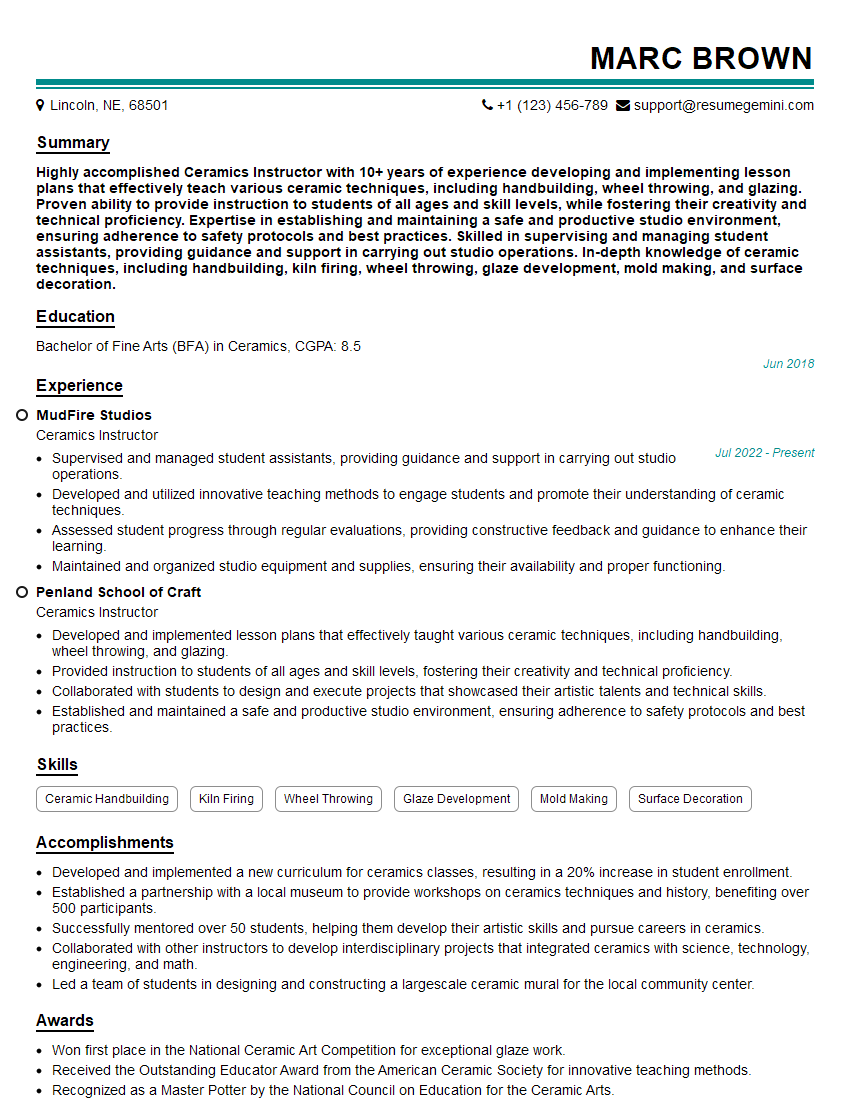
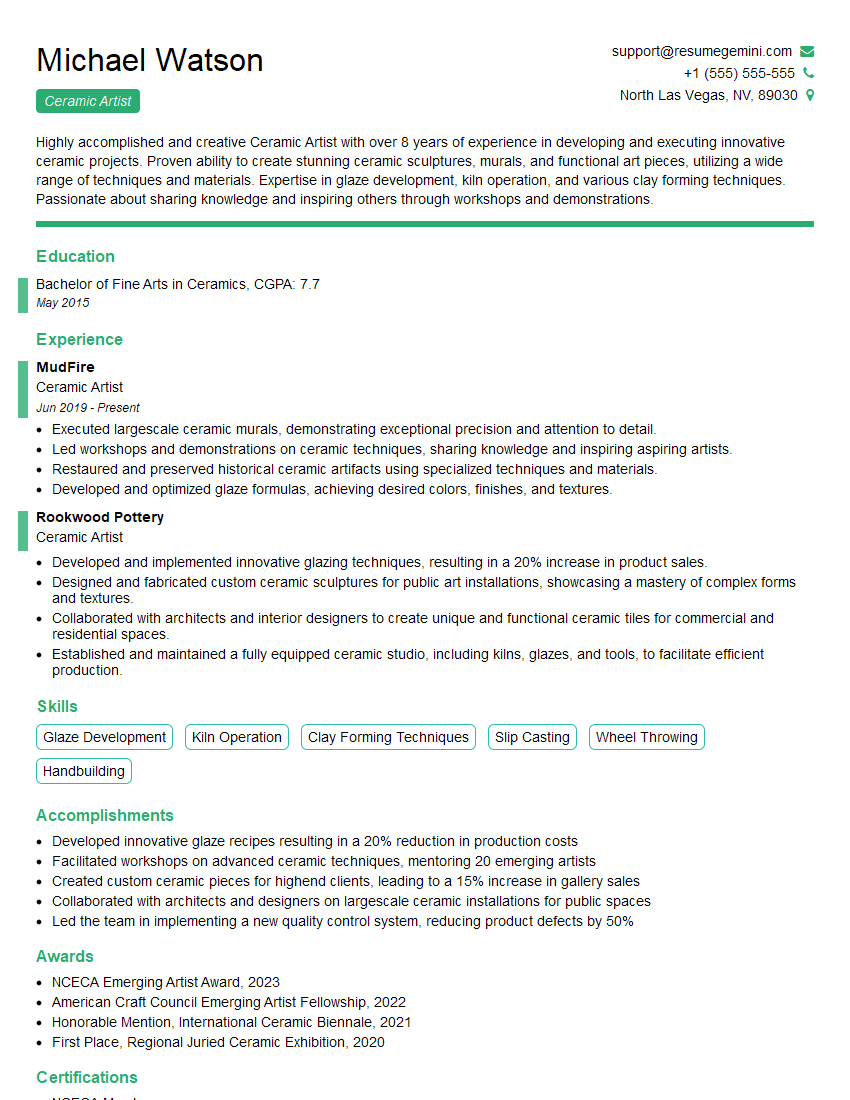
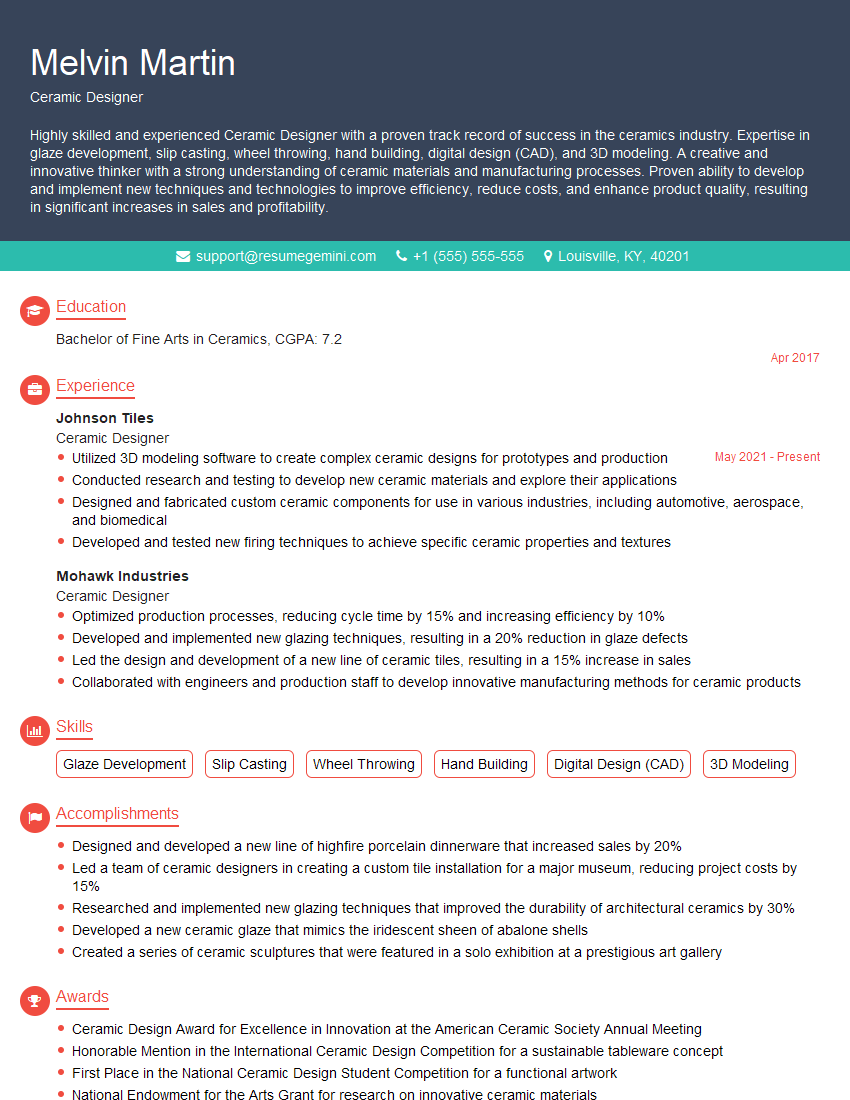
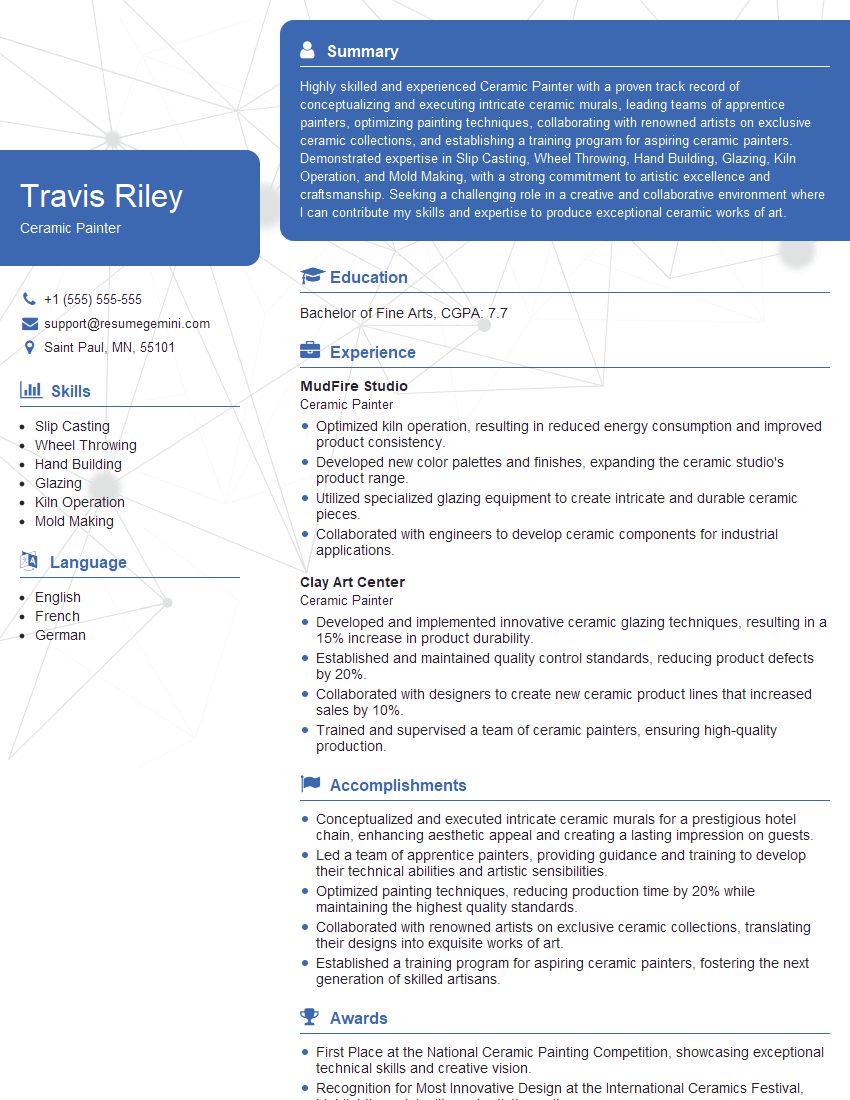
Mastering ceramic decoration opens doors to exciting career opportunities in studios, manufacturing, and design. A strong understanding of these techniques will significantly enhance your marketability. To increase your chances of landing your dream job, create a resume that showcases your skills effectively. An ATS-friendly resume is crucial for getting past applicant tracking systems. ResumeGemini is a trusted resource to help you build a professional and impactful resume. They provide examples of resumes tailored specifically to the Ceramic Decoration field, helping you present yourself in the best possible light to potential employers.
Explore more articles
Users Rating of Our Blogs
Share Your Experience
We value your feedback! Please rate our content and share your thoughts (optional).
What Readers Say About Our Blog
Really detailed insights and content, thank you for writing this detailed article.
IT gave me an insight and words to use and be able to think of examples