Cracking a skill-specific interview, like one for Customer Satisfaction and Feedback Analysis, requires understanding the nuances of the role. In this blog, we present the questions you’re most likely to encounter, along with insights into how to answer them effectively. Let’s ensure you’re ready to make a strong impression.
Questions Asked in Customer Satisfaction and Feedback Analysis Interview
Q 1. Explain the Net Promoter Score (NPS) and its limitations.
The Net Promoter Score (NPS) is a widely used metric that gauges customer loyalty and satisfaction. It’s based on a single question: “On a scale of 0 to 10, how likely are you to recommend [Company/Product/Service] to a friend or colleague?” Responses are categorized into three groups: Promoters (9-10), Passives (7-8), and Detractors (0-6). The NPS is calculated by subtracting the percentage of Detractors from the percentage of Promoters.
While NPS is simple and easily understood, it has limitations. It provides a single, overarching score that might not pinpoint specific areas for improvement. It doesn’t delve into the why behind the score – a score of 70 might be driven by different factors across different customer segments. Furthermore, the simple question may not accurately reflect the nuanced feelings of customers, and responses can be influenced by factors beyond the company’s control such as current mood or external events. For example, a customer might give a low score due to a temporary personal issue rather than an actual problem with the product. Therefore, it’s crucial to supplement NPS with qualitative feedback to understand the underlying reasons for scores and gain actionable insights.
Q 2. How do you identify and prioritize key areas for customer satisfaction improvement?
Identifying and prioritizing areas for improvement requires a systematic approach. First, I’d analyze both quantitative and qualitative data. Quantitative data (NPS, customer churn rate, satisfaction scores from surveys) highlight overall trends, while qualitative data (customer reviews, feedback forms, interviews) reveal the root causes. For instance, consistently low scores in a specific product feature would indicate a priority area.
Next, I would segment the customer base. Different customer segments (e.g., demographics, usage patterns) might have varying needs and pain points. Prioritization should consider the impact on each segment. A framework like the Pareto principle (80/20 rule) can be valuable; it suggests that 80% of the problems often stem from 20% of the causes, allowing for focused efforts. Finally, a prioritization matrix (e.g., using impact vs. effort) helps to determine which areas provide the highest return on investment for improvement efforts.
Q 3. Describe your experience with different customer feedback collection methods (e.g., surveys, interviews, focus groups).
I have extensive experience with various customer feedback collection methods. Surveys are efficient for gathering large-scale quantitative data, especially when using online platforms. However, surveys can be limited in providing detailed, in-depth understanding. Interviews offer rich qualitative data, allowing for probing and follow-up questions, leading to a deeper grasp of customer experiences. They are particularly useful for exploring complex issues. Focus groups, involving small groups of customers, allow for observing group dynamics and identifying common themes. This method excels at understanding perceptions and opinions, especially when exploring new ideas or potential changes.
The choice of method depends on the research objective. For instance, when launching a new product, focus groups can provide valuable insights, followed by post-launch surveys to track satisfaction. For understanding specific customer complaints, individual interviews provide more in-depth insights.
Q 4. How do you analyze qualitative customer feedback data?
Analyzing qualitative data involves a systematic approach. First, the data is transcribed and cleaned. Then, I employ techniques like thematic analysis, identifying recurring themes and patterns in the feedback. This could involve manually coding the text or using qualitative data analysis software. For example, if many customers mention slow loading times, that becomes a key theme.
Next, I perform sentiment analysis, identifying the emotional tone of the feedback (positive, negative, neutral). This helps determine the overall sentiment towards specific aspects of the product or service. Tools can automate aspects of sentiment analysis but human review is critical to ensure accuracy. Finally, I summarize the findings and create reports that highlight key themes, trends, and actionable insights. This might include creating word clouds, sentiment charts, or summary tables.
Q 5. How do you measure the effectiveness of customer satisfaction initiatives?
Measuring the effectiveness of customer satisfaction initiatives requires tracking key metrics before, during, and after implementing changes. This includes monitoring changes in NPS, customer satisfaction scores, customer churn rate, and customer lifetime value. Qualitative feedback (post-initiative surveys, interviews) is vital for understanding whether the improvements actually address the identified issues.
For instance, if we improve a product’s ease of use, we would track the number of support tickets related to that feature, measure post-improvement NPS scores, and conduct follow-up interviews to see if the changes have resulted in positive feedback. A control group – a set of customers who didn’t experience the changes – allows us to isolate the impact of the initiative. By comparing metrics before and after the initiative, and comparing the treatment group with the control group, we can accurately assess effectiveness.
Q 6. How would you handle conflicting customer feedback?
Conflicting customer feedback is common. It’s crucial to avoid dismissing any feedback outright. Instead, I analyze the conflicting feedback to identify potential underlying causes. For instance, some customers might love a specific feature while others hate it. This could indicate the need for segmentation; the feature might be relevant to some customer segments but not others.
To resolve conflicts, I delve into the specifics. What are the different perspectives, and what aspects are causing the conflict? Qualitative data, such as detailed customer interviews or feedback forms, helps to uncover the nuances. In some cases, the conflict highlights areas requiring further research or innovation to meet diverse customer needs. I might create different versions of the product to cater to diverse needs, or redesign the feature to address the concerns that are driving negative feedback.
Q 7. What are some common biases in customer feedback data, and how can they be mitigated?
Several biases can skew customer feedback data. Sampling bias occurs when the feedback doesn’t accurately represent the entire customer base (e.g., only surveying highly engaged customers). Confirmation bias refers to the tendency to focus on feedback that confirms pre-existing beliefs. Response bias occurs when customers provide answers they think are socially desirable rather than honest ones, especially with sensitive issues. Survivorship bias involves only considering feedback from current customers, ignoring those who have churned.
Mitigation strategies include employing diverse data collection methods, using stratified sampling to ensure representation across different customer segments, asking open-ended questions to encourage genuine feedback, and using anonymity to encourage honesty. Careful analysis, including exploring both positive and negative feedback, is crucial. Combining quantitative and qualitative data helps to identify and mitigate biases by offering different lenses through which to view customer opinion.
Q 8. Explain the importance of customer segmentation in feedback analysis.
Customer segmentation is crucial for effective feedback analysis because it allows us to move beyond broad generalizations and understand the nuances of customer experience across different groups. Instead of treating all customers as a homogenous mass, we divide them into meaningful segments based on shared characteristics like demographics (age, location, income), behavior (purchase history, frequency of interaction), or psychographics (values, lifestyle, attitudes). This targeted approach allows for more precise analysis and identification of specific pain points and opportunities for improvement within each segment.
For example, imagine a clothing retailer analyzing customer feedback. Segmenting by age might reveal that younger customers value trendy designs and fast shipping, while older customers prioritize quality materials and comfortable fits. Without segmentation, the retailer might miss these crucial differences, leading to ineffective improvements. Analyzing feedback from each segment separately allows for tailored solutions that resonate with each group, ultimately boosting overall customer satisfaction.
Q 9. Describe your experience using customer feedback analysis tools and software.
Throughout my career, I’ve extensively used various customer feedback analysis tools and software. My experience ranges from basic survey platforms like SurveyMonkey and Qualtrics for collecting and analyzing quantitative data to more advanced tools such as CustomerGauge, Medallia, and Clarabridge which offer advanced text analytics and sentiment analysis capabilities. I’m proficient in using these tools to not only gather data, but also to perform sentiment analysis on qualitative data such as open-ended survey responses and social media comments. This helps to identify prevalent themes and underlying emotions related to customer experiences. For instance, using Clarabridge, I’ve been able to identify recurring negative sentiment around a specific product feature, leading to targeted improvements.
I also have experience working with dedicated CRM (Customer Relationship Management) systems that incorporate feedback mechanisms and provide insights into customer interactions across various touchpoints. The ability to integrate data from various sources—surveys, reviews, support tickets— provides a holistic view of customer sentiment.
Q 10. How do you present your customer satisfaction findings to stakeholders?
Presenting customer satisfaction findings to stakeholders requires a clear, concise, and visually compelling approach. I typically begin with a high-level summary of key findings, highlighting both positive and negative aspects. I then delve deeper into specific segments, presenting data in a way that’s easily understandable, using charts, graphs, and tables to illustrate trends and patterns. For example, I might use a bar chart to show CSAT scores across different customer segments or a word cloud to visualize the most frequently mentioned themes in open-ended feedback.
Beyond the data, I emphasize actionable insights and recommendations. I avoid overwhelming stakeholders with raw data; instead, I focus on presenting clear, concise conclusions and actionable steps based on my analysis. The presentation is always tailored to the audience; a technical team will appreciate a deeper dive into the methodology, while executives are primarily interested in the impact on business outcomes.
Q 11. How do you translate customer feedback into actionable insights?
Translating customer feedback into actionable insights requires a structured approach. I typically follow these steps:
- Identify recurring themes: Analyze feedback data to identify common issues, compliments, and suggestions.
- Prioritize based on impact: Focus on issues affecting the largest number of customers or those with the most significant negative impact on the business.
- Develop solutions: Brainstorm solutions based on the identified issues, considering both short-term fixes and long-term improvements.
- Implement and track: Put the solutions into action and monitor their effectiveness through ongoing feedback collection and analysis.
For instance, if consistent negative feedback points to a cumbersome checkout process on a website, the actionable insight would be to redesign the checkout flow for improved usability. Tracking metrics like cart abandonment rate and conversion rate after the redesign would measure the effectiveness of the implemented solution.
Q 12. How do you identify root causes of customer dissatisfaction?
Identifying the root causes of customer dissatisfaction requires a systematic approach often using techniques like the ‘5 Whys’. This iterative questioning technique helps drill down to the underlying cause of a problem by repeatedly asking ‘why’ until the root cause is identified. Additionally, I often conduct qualitative analysis of open-ended feedback, customer interviews, and focus groups to gather richer, contextual information. This allows a deeper understanding of the reasons behind the surface-level complaints.
For example, a customer might complain about late delivery. The ‘5 Whys’ process might reveal the root cause is a shortage of warehouse staff, impacting order processing and shipping timelines. Qualitative data from interviews might further reveal the staffing shortage is due to low employee morale and high turnover rates.
Q 13. What are some key metrics you use to track customer satisfaction?
Several key metrics are used to track customer satisfaction. These include:
- Customer Satisfaction Score (CSAT): Measures how satisfied customers are with a specific interaction or product. It’s typically measured using a rating scale (e.g., 1-5 or 1-10).
- Net Promoter Score (NPS): Measures customer loyalty and willingness to recommend a product or service. It’s based on a single question asking customers how likely they are to recommend the company on a scale of 0-10.
- Customer Effort Score (CES): Measures the ease of interacting with a company. It assesses how much effort customers had to expend to resolve an issue or complete a task.
- Customer Churn Rate: Tracks the percentage of customers who stop doing business with a company within a given period.
These metrics, used in conjunction with qualitative feedback, provide a comprehensive understanding of customer sentiment and areas needing improvement.
Q 14. Explain the relationship between customer satisfaction and customer loyalty.
Customer satisfaction and customer loyalty are intrinsically linked; they’re not interchangeable but rather exist on a spectrum. High customer satisfaction is a strong predictor of customer loyalty. When customers consistently have positive experiences, they’re more likely to become repeat customers and advocates for the brand. However, satisfaction alone doesn’t guarantee loyalty. Other factors like perceived value, competitive offerings, and emotional connection play a significant role.
Think of it like this: satisfaction is about fulfilling customer expectations, while loyalty is about exceeding them and fostering a long-term relationship. A satisfied customer might try a competitor if a better offer comes along, while a loyal customer is more likely to stay regardless of other options. Therefore, businesses should strive for not just satisfying customers but exceeding their expectations to build lasting loyalty.
Q 15. How do you measure customer effort score (CES)?
Customer Effort Score (CES) measures how easy it was for a customer to interact with your company to resolve an issue or complete a task. It’s a crucial metric because reducing customer effort directly correlates with increased loyalty and satisfaction. We typically measure CES using a single question, often formatted like this: “How easy was it to do business with us today?” The answer is usually given on a scale of 1 to 7 (or 1 to 5, or 1 to 10), with 1 being very difficult and 7 being very easy.
How we analyze the results: We calculate the average CES score across all respondents. Scores above a certain threshold (this threshold varies based on industry benchmarks and internal targets) indicate good customer effort, while lower scores highlight areas needing improvement. We also segment the data by demographic information (age, location, etc.) and interaction channel (phone, email, web) to pinpoint specific pain points. For example, if we find a low CES score related to the website, we can analyze user sessions to understand the navigational issues driving this.
Example: If our average CES score is 6.5 out of 7, it suggests customers generally find it easy to interact with us. However, if we see a significantly lower score (e.g., 3.5) for customers contacting us via phone, we’ll investigate reasons for this lower satisfaction, potentially through follow-up interviews to understand pain points.
Career Expert Tips:
- Ace those interviews! Prepare effectively by reviewing the Top 50 Most Common Interview Questions on ResumeGemini.
- Navigate your job search with confidence! Explore a wide range of Career Tips on ResumeGemini. Learn about common challenges and recommendations to overcome them.
- Craft the perfect resume! Master the Art of Resume Writing with ResumeGemini’s guide. Showcase your unique qualifications and achievements effectively.
- Don’t miss out on holiday savings! Build your dream resume with ResumeGemini’s ATS optimized templates.
Q 16. Describe your experience with A/B testing for customer satisfaction improvements.
A/B testing is invaluable for optimizing customer satisfaction. We frequently use it to test different versions of surveys, emails, website designs, or even support processes to see which version leads to better customer outcomes. For example, we might A/B test two different versions of a survey introduction – one short and concise, the other more detailed – to see which yields higher completion rates and more insightful feedback.
Process: We define a clear hypothesis (e.g., “A shorter survey introduction will increase completion rates”), create two distinct versions (A and B), deploy them to randomly selected segments of our customer base, and track key metrics like completion rates, response time, and the sentiment expressed in open-ended responses. We then use statistical analysis to determine if the differences between the versions are statistically significant. If Version B significantly outperforms Version A, we implement it across the board.
Example: We once A/B tested two versions of an email requesting feedback on a recent product update. Version A contained a lengthy description of the update, while Version B focused on a concise summary and a clear call to action. Version B resulted in a significantly higher click-through rate to the feedback form, showing that a more concise approach improved engagement.
Q 17. How do you utilize customer feedback in product development?
Customer feedback is the lifeblood of our product development process. We use it at every stage, from initial concept design to post-launch improvements. We analyze feedback through various channels – surveys, reviews, social media monitoring, customer support interactions, and user testing.
Integration with Development: We use a dedicated feedback management system to consolidate all incoming customer comments. This system allows us to categorize feedback by topic (e.g., feature requests, bug reports, usability issues), prioritize issues based on severity and frequency, and track their progress throughout the development cycle. We often integrate directly with our product backlog, linking specific feedback items to development tasks to ensure issues are directly addressed.
Example: A recurring theme in customer reviews highlighted a cumbersome process for managing a specific feature. This feedback was prioritized and translated into a user story for our development team, leading to a redesigned interface that simplified the process and improved overall user experience.
Q 18. How do you prioritize customer feedback based on urgency and impact?
Prioritizing customer feedback requires a structured approach. We employ a framework that considers both the urgency and impact of the feedback. We typically use a matrix that plots feedback items based on these two dimensions.
The Prioritization Matrix:
- High Urgency, High Impact: These are critical issues that require immediate attention. Examples include major bugs affecting a large number of users or security vulnerabilities.
- High Urgency, Low Impact: These are urgent but relatively minor issues. Examples include minor cosmetic bugs or easily resolved technical glitches.
- Low Urgency, High Impact: These are important issues that can be addressed in the future. Examples include major feature requests or significant usability improvements.
- Low Urgency, Low Impact: These are minor issues that can be addressed later or potentially ignored.
Example: A bug causing system crashes (high urgency, high impact) would be prioritized over a suggestion for a minor UI change (low urgency, low impact). We use a weighted scoring system to quantify urgency and impact, allowing for objective prioritization when multiple items compete for resources.
Q 19. How familiar are you with statistical analysis techniques relevant to customer feedback?
I’m highly proficient in various statistical analysis techniques relevant to customer feedback analysis. This includes descriptive statistics (mean, median, standard deviation) to understand central tendencies and data distributions, inferential statistics (t-tests, ANOVA) to compare different groups, and regression analysis to understand relationships between variables. Additionally, I’m experienced in using various statistical software packages like R and SPSS for advanced analysis.
Specific Techniques:
- Sentiment Analysis: Using Natural Language Processing (NLP) techniques to gauge the emotional tone of customer feedback (positive, negative, neutral).
- Topic Modeling: Identifying recurring themes and topics within large volumes of unstructured text data.
- Correlation Analysis: Identifying relationships between different feedback aspects (e.g., correlation between CES and customer churn).
Example: We used regression analysis to determine the relationship between Net Promoter Score (NPS) and customer lifetime value (CLTV), revealing a strong positive correlation. This insight helped us prioritize initiatives focused on increasing NPS, knowing it would positively impact our bottom line.
Q 20. How do you ensure customer feedback data privacy and security?
Protecting customer feedback data privacy and security is paramount. We adhere to strict data privacy regulations (such as GDPR, CCPA) and implement robust security measures throughout the entire feedback lifecycle.
Security Measures:
- Data Encryption: All customer data is encrypted both in transit and at rest.
- Access Control: Access to customer data is restricted to authorized personnel only, with clear roles and permissions.
- Data Anonymization: Whenever possible, we anonymize or aggregate data to prevent individual identification.
- Regular Security Audits: We conduct regular security audits to identify and address any vulnerabilities.
- Secure Data Storage: We utilize secure cloud-based storage solutions that meet industry best practices.
Transparency: We are transparent with our customers about how their data is collected, used, and protected. Our privacy policy clearly outlines these processes.
Q 21. What are some best practices for designing effective customer surveys?
Designing effective customer surveys requires careful planning and execution. The key is to create surveys that are short, engaging, and relevant to the customer’s experience. Avoid lengthy questionnaires; keep them concise to maintain participant engagement.
Best Practices:
- Clear Objective: Define the specific goals you want to achieve with your survey.
- Target Audience: Tailor the questions and language to resonate with your target audience.
- Mix of Question Types: Use a mix of question types (multiple choice, rating scales, open-ended questions) to gather both quantitative and qualitative data.
- Logical Flow: Organize questions in a logical and intuitive order.
- Keep it Concise: Aim for a survey length that can be completed in 5-10 minutes.
- Incentivize Participation: Offer an incentive (discount, entry into a draw) to encourage participation.
- Pilot Testing: Test your survey with a small group before launching it to a larger audience.
- Analyze and Act: Analyze the results thoroughly and use the insights to improve your products or services.
Example: Instead of asking a broad question like “How was your experience?”, consider more specific questions like “How easy was it to find what you were looking for?” or “How satisfied were you with the customer service you received?” This approach provides more actionable insights.
Q 22. How do you handle negative customer feedback effectively?
Negative feedback, while challenging, is a goldmine of improvement opportunities. My approach is multifaceted and focuses on empathy, action, and learning. First, I acknowledge the customer’s frustration and validate their feelings. A simple, sincere response like, “I understand your frustration, and I apologize for the inconvenience,” goes a long way. Then, I thoroughly investigate the issue, involving the relevant teams to understand the root cause. This might involve reviewing logs, talking to staff, or even replicating the customer’s experience. Once the cause is identified, we implement a solution and communicate that solution back to the customer, updating them on our progress. Finally, we analyze the negative feedback to identify patterns and trends. Are multiple customers complaining about the same issue? This helps us proactively prevent future problems. For example, if many customers complain about long wait times, we might need to adjust staffing levels or streamline our processes.
I also believe in turning negative feedback into positive engagement. By addressing concerns promptly and effectively, we can often turn a disgruntled customer into a loyal advocate. For example, offering a small gesture of goodwill, such as a discount or a complimentary service, can show our commitment to their satisfaction and rebuild trust.
Q 23. Describe your experience with using customer journey mapping.
Customer journey mapping is a powerful tool I use regularly to visualize the customer experience from their initial contact to their final interaction with our business. It helps identify pain points, areas for improvement, and opportunities to enhance satisfaction. My experience involves collaborating with various teams—marketing, sales, customer service—to gather data through customer surveys, interviews, focus groups, and analyzing website analytics. We then map out every touchpoint, including both online and offline interactions. For example, we might map a customer’s journey from discovering our product online, to making a purchase, to receiving customer support. The map visually represents each step, highlighting potential friction areas. Once we identify these pain points (e.g., a complex checkout process, unclear product information), we brainstorm solutions and implement them, tracking the impact on key metrics like conversion rates and customer satisfaction scores.
For instance, in a recent project, our customer journey map revealed a significant drop-off in the checkout process due to confusing payment options. By simplifying the payment options and adding clearer instructions, we saw a substantial increase in conversions and a positive shift in customer feedback.
Q 24. How do you ensure the accuracy and reliability of customer feedback data?
Ensuring data accuracy and reliability is paramount. I employ several strategies to achieve this. First, we use multiple feedback channels – surveys, reviews, social media monitoring, and direct customer interactions. This helps us get a more holistic view and mitigate bias associated with a single data source. Second, we carefully design our surveys and feedback forms, ensuring they are clear, concise, and unbiased. Avoid leading questions or loaded language. Third, we analyze the data using robust statistical methods, checking for outliers and inconsistencies. We also consider the sample size and representativeness of our data, ensuring our findings are generalizable to the broader customer base. Finally, we regularly audit our feedback collection and analysis processes to identify areas for improvement and maintain data integrity.
For example, we might use techniques like sentiment analysis to automatically categorize feedback as positive, negative, or neutral, helping us quickly identify trends. We also implement rigorous quality control checks to identify and remove duplicate or fraudulent entries. This multi-layered approach assures us that the data informing our decisions is reliable and accurate.
Q 25. How do you use customer feedback to improve customer service processes?
Customer feedback is the lifeblood of continuous service improvement. We use feedback in several ways: Firstly, we use it to identify areas requiring immediate attention, like resolving specific customer complaints or addressing recurring issues. For example, if multiple customers report difficulty navigating our website, we prioritize improving the site’s usability. Secondly, we analyze feedback to understand the root causes of problems. Are our processes inefficient? Do we need more training for our staff? Are our communication channels unclear? By understanding the ‘why’ behind the feedback, we can implement effective solutions. Thirdly, we track key metrics such as customer satisfaction (CSAT) scores, Net Promoter Score (NPS), and Customer Effort Score (CES) to monitor the effectiveness of our improvements. This allows for data-driven decision-making and ensures our efforts are truly improving customer experience.
For example, by analyzing customer feedback on wait times, we might discover that our call center staffing is inadequate during peak hours. We can then adjust staffing levels, implement a callback system, or improve our IVR to reduce wait times and enhance customer satisfaction.
Q 26. How do you balance different customer segments’ needs and feedback?
Balancing the needs of different customer segments requires a nuanced approach. We segment our customers based on various factors – demographics, purchase history, engagement levels, and feedback patterns. This allows for targeted analysis and tailored responses. We don’t treat all feedback equally; we weigh it according to the segment’s size and importance to the business. For example, feedback from our high-value, long-term customers might hold more weight than that from one-time buyers. However, we carefully consider all feedback, recognizing that even seemingly minor issues could affect the overall customer experience. We utilize different methods for collecting feedback from diverse segments, tailoring our approach to ensure each group feels heard and understood. We might use different survey platforms or communication channels to effectively reach and engage with various customer groups. This ensures that our strategies for improvement effectively address the needs and concerns of all significant customer segments.
For instance, we may discover that younger customers prefer using social media for support, while older customers prefer phone calls. We then optimize our communication strategies to address their specific preferences.
Q 27. Describe a time when you had to overcome a challenge related to customer feedback analysis.
One significant challenge involved a sudden surge in negative reviews related to a newly launched product feature. Initially, our analysis focused solely on the negative comments, leading to a reactive and potentially costly fix. However, upon deeper investigation and qualitative analysis, we discovered that the majority of the negative feedback stemmed from a lack of proper user training and documentation. We had focused so much on the technical aspects of the new feature’s development that we neglected clear user instructions. The challenge was shifting from a purely technical solution to a comprehensive communication strategy. We quickly produced tutorials, FAQs, and improved in-app guidance. The results were impressive – not only did the negative reviews subside, but overall customer satisfaction improved significantly.
This experience taught me the importance of a holistic approach to feedback analysis, considering both quantitative and qualitative data, and taking into account factors beyond just the product itself. It underscored the critical role of communication and user experience in overall customer satisfaction.
Q 28. How do you stay up-to-date with best practices in customer satisfaction and feedback analysis?
Staying current in this dynamic field requires a multi-pronged approach. I regularly attend industry conferences and webinars, participating in workshops and networking opportunities to learn from leading experts. I subscribe to relevant industry publications and journals, staying informed about the latest research, trends, and best practices. I also actively engage with online communities and forums dedicated to customer experience and feedback analysis. This allows me to learn from the experiences of other professionals and stay abreast of emerging technologies and methodologies. Furthermore, I actively participate in professional development courses and certifications, deepening my expertise and ensuring my skills remain relevant and cutting-edge.
For example, I recently completed a certification in advanced analytics for customer experience, enhancing my skills in predictive modeling and data visualization for improved insights and decision-making. This continuous learning ensures I remain at the forefront of my profession and adapt my approach to meet the ever-evolving needs of the industry.
Key Topics to Learn for Customer Satisfaction and Feedback Analysis Interview
- Understanding Customer Journey Mapping: Learn how to visually represent the customer experience and identify pain points for improvement. Practical application: Analyze a customer journey map to pinpoint areas needing attention based on feedback data.
- Qualitative vs. Quantitative Analysis: Master the differences and applications of both approaches. Practical application: Explain how to combine survey results (quantitative) with open-ended feedback (qualitative) for a comprehensive understanding.
- Metrics and KPIs: Become fluent in key metrics like CSAT, NPS, CES, and how to interpret them in context. Practical application: Discuss how different KPIs inform strategic decision-making regarding product development or customer service improvements.
- Data Collection Methods: Explore various methods like surveys, interviews, focus groups, and social media monitoring. Practical application: Evaluate the strengths and weaknesses of different methods for specific business contexts.
- Feedback Analysis Techniques: Learn about thematic analysis, sentiment analysis, and other methods for interpreting large datasets. Practical application: Describe how you would use text analysis software to identify recurring themes in customer reviews.
- Reporting and Presentation of Findings: Practice effectively communicating your analysis to stakeholders. Practical application: Outline how you would present key insights from a customer feedback analysis to senior management, highlighting actionable recommendations.
- Root Cause Analysis: Develop skills in identifying the underlying reasons for customer dissatisfaction. Practical application: Explain how you would use a “5 Whys” analysis to drill down to the root cause of a recurring customer complaint.
Next Steps
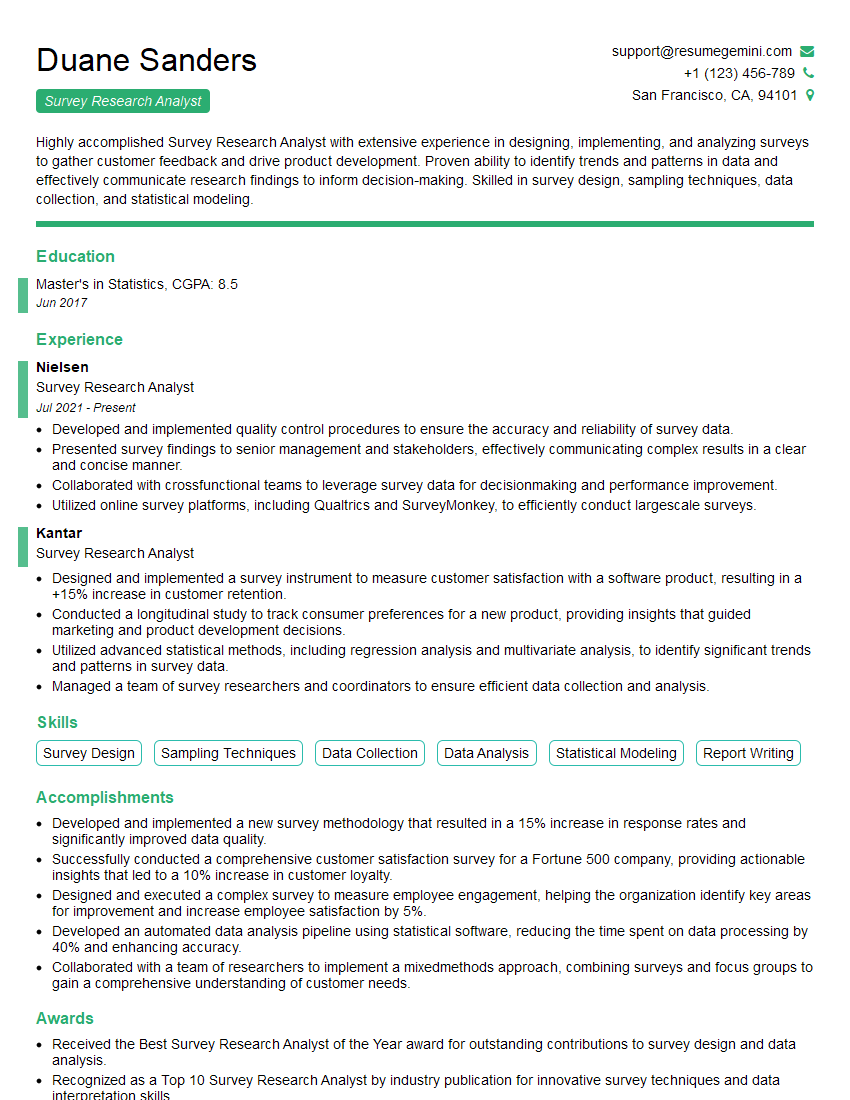
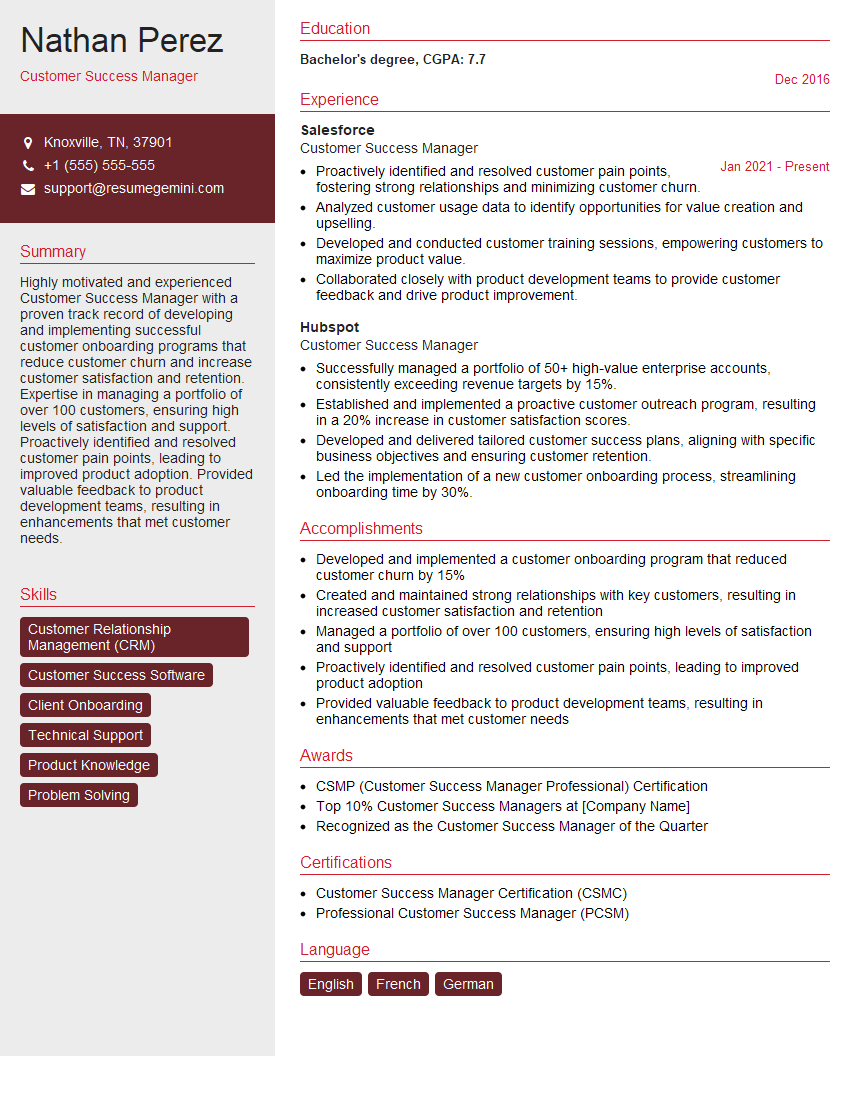
Mastering Customer Satisfaction and Feedback Analysis is crucial for career advancement in today’s customer-centric business environment. It demonstrates valuable analytical skills and a deep understanding of customer needs, opening doors to leadership roles and higher earning potential. To maximize your job prospects, focus on creating an ATS-friendly resume that showcases your skills effectively. ResumeGemini is a trusted resource to help you build a professional and impactful resume. We provide examples of resumes tailored to Customer Satisfaction and Feedback Analysis to guide you in crafting the perfect application.
Explore more articles
Users Rating of Our Blogs
Share Your Experience
We value your feedback! Please rate our content and share your thoughts (optional).
What Readers Say About Our Blog
Really detailed insights and content, thank you for writing this detailed article.
IT gave me an insight and words to use and be able to think of examples